








%201.avif)









Lasers/Skin Damage/Dark Circles Articles
Articles on laser treatments for skin damage, sun damage, pigmentation, and dark circles from Epione Beverly Hills.

What to Avoid After Laser Treatment on Face: Care Tips
After laser treatment on your face, avoid direct sun exposure, hot water, active skincare ingredients, makeup too soon, touching or picking at your skin, strenuous exercise, and skipping your aftercare routine. These seven mistakes are the most common reasons people slow down their own healing or end up with uneven results.
Laser treatments, from gentle resurfacing to more intensive fractionated CO2 sessions like Coolaser, work by controlled micro-injury to the skin. That injury is what triggers new collagen and fresher skin underneath. But the days right after treatment are fragile. What you do (or don't do) during recovery directly affects how smooth, even, and fast your results turn out. Here's a complete, practical guide to protect your investment and heal the right way.
Quick Checklist: Do's and Don'ts After Laser Treatment
The seven habits that most often slow healing share a common thread: each interferes with the skin's ability to repair itself when it's most vulnerable.
Here’s What to Avoid After Laser Treatment on Face
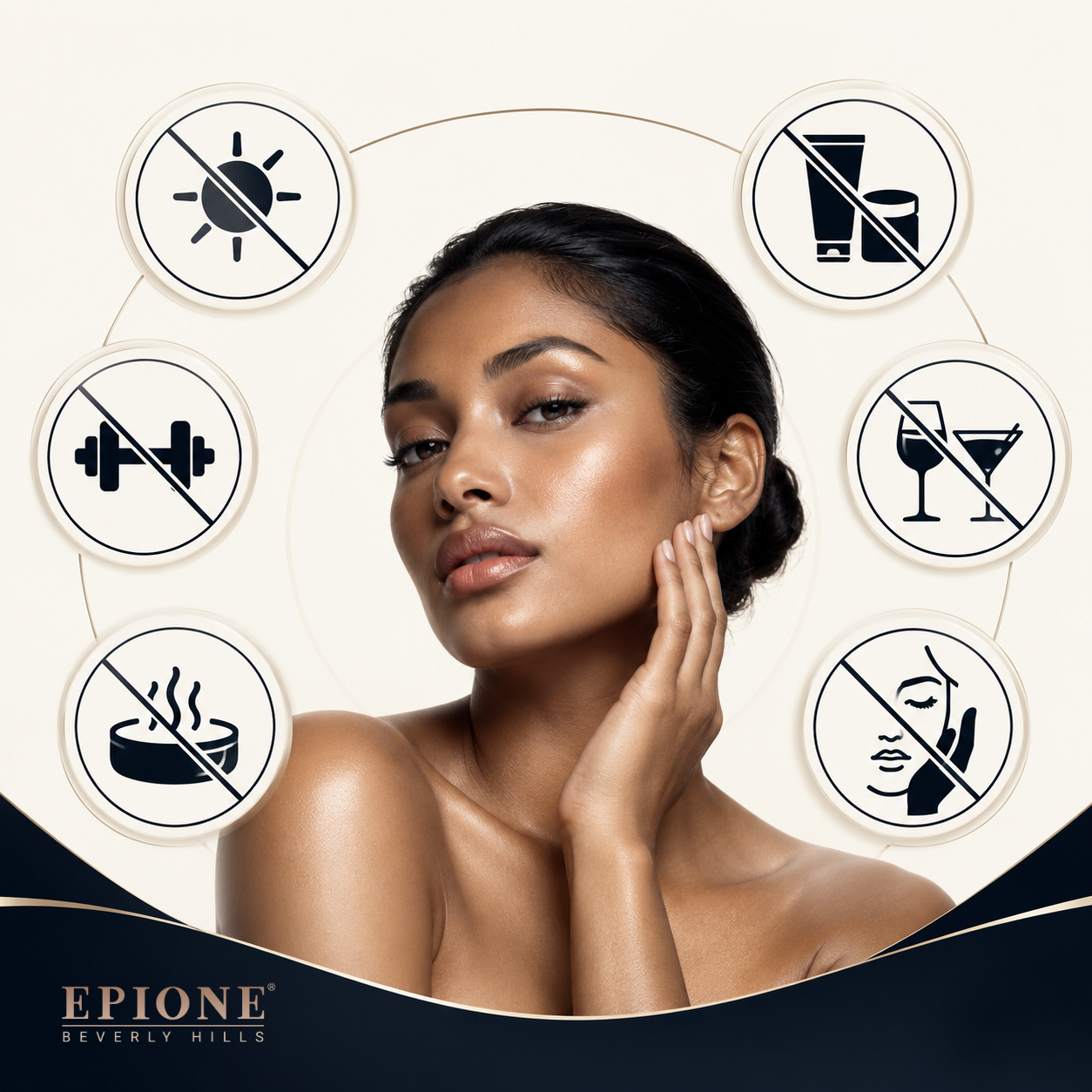
Recovery from a laser treatment depends less on the procedure itself and more on the choices you make in the days that follow, and a handful of everyday habits are responsible for nearly every avoidable setback.
1. Direct Sun Exposure
Freshly treated skin is significantly more sensitive to UV damage than normal skin. Sun exposure during recovery raises the risk of hyperpigmentation, dark patches that can take months to fade, and can undo much of what the treatment was meant to fix. Mayo Clinic notes that patients should avoid unprotected sun exposure for a full year after resurfacing to prevent irregular pigmentation.
What to do instead: Wear a broad-spectrum mineral sunscreen (zinc oxide or titanium dioxide) with SPF 30 or higher every day, even indoors near windows. Reapply every two hours if you're outside, and add a wide-brimmed hat for extra coverage during the first few weeks.
2. Hot Water and Heat
Hot showers, saunas, steam rooms, and hot yoga all raise your skin's surface temperature and can intensify redness, swelling, and irritation right when your skin is trying to calm down.
What to do instead: Stick to lukewarm water for cleansing and showering for at least the first week. Skip the sauna and steam room until your provider confirms your skin has fully resurfaced.
3. Active Skincare Ingredients
Retinoids, glycolic acid, salicylic acid, vitamin C serums, and other exfoliating or active ingredients are too aggressive for healing skin. They can cause stinging, excess peeling, or irritation that delays recovery.
What to do instead: Simplify your routine to a gentle cleanser, a bland moisturizer, and sunscreen. Your provider will tell you exactly when it's safe to reintroduce your regular actives; usually once the surface has fully healed.
4. Makeup Too Soon
Applying makeup before your skin has healed can trap bacteria in freshly resurfaced pores, raising the risk of breakouts or infection, and the pressure of application or removal can disrupt delicate new skin.
What to do instead: Wait until any peeling or flaking has resolved and your provider gives the go-ahead. When you do reintroduce makeup, choose mineral, non-comedogenic formulas and apply with a clean sponge rather than fingers or brushes.
5. Touching, Picking, or Scratching
It's tempting to pick at flaking or peeling skin, but doing so can pull off healthy tissue underneath, leading to scarring, uneven pigmentation, or infection.
What to do instead: Let flaking resolve on its own. If itching is intense, a cool compress or the moisturizer your provider recommends is safer than scratching.
6. Strenuous Exercise
Heavy exercise raises your body temperature and increases blood flow to the face, which can worsen swelling and redness. Sweat can also irritate treated skin and introduce bacteria to open pores.
What to do instead: Stick to light walking for the first several days. Ease back into your regular workout routine only once your provider confirms your skin has settled.
7. Skipping Your Aftercare Routine
Every laser treatment plan comes with specific aftercare instructions, and skipping them, even for a day, is one of the most common reasons people see slower healing or less even results.
What to do instead: Follow your personalized plan exactly, including the specific moisturizer, timing, and any prescribed ointments. If anything is unclear, call your provider rather than guessing.
Your Recovery Timeline: What to Expect Day by Day
Recovery from laser treatment isn't a single event; it's a phased process, and restrictions change as your skin moves through each stage.
Days 1–3: The Acute Phase
In the first three days, expect redness, swelling, warmth, and possibly some oozing or crusting depending on the laser type. After CO2 laser treatment specifically, the acute response is most pronounced and typically requires 7–14 days of meaningful downtime. During this phase, all major restrictions are in full effect: no active skincare ingredients, no sun exposure, no exercise, no makeup.
Days 4–10: The Peeling and Regeneration Phase
Peeling typically begins around day three or four. This is normal and expected; resist the urge to pick or manually peel your skin. New skin is actively emerging beneath. The surface remains fragile even as it looks more recovered. Many patients mistakenly reintroduce products too early during this stage.
Weeks 2–6: The Remodeling Phase
Pinkness gradually fades as collagen remodeling continues beneath the surface. This is when you begin gradually reintroducing normal products, always guided by your provider. Non-ablative and fractional treatments may allow earlier reintroduction than ablative procedures.
Understanding this phased recovery timeline removes the guesswork and gives you the best chance at the outcome you're seeking, while respecting each stage's distinct demands.
Why Epione Beverly Hills for Post-Laser Guidance
Recovery advice is only as good as the experience behind it, and few practices in Los Angeles have overseen more laser-based transformations than Epione Beverly Hills. Dr. Simon Ourian, M.D., a cosmetic dermatologist in Beverly Hills, has spent over 20 years refining non-surgical treatment protocols, including Coolaser, his own fractionated CO2 platform, and the practice sees more than 1,000 procedures a month, meaning the aftercare guidance here isn't theoretical. It's built from thousands of real recoveries.
That experience is also why Epione's patient list includes some of the most recognizable faces in the world, many of whom return specifically because results are consistent and healing is predictable. Every laser treatment plan includes a personalized aftercare protocol, so patients aren't left guessing about sun exposure, skincare, or timing; they follow guidance shaped by two decades of a single cosmetic dermatologist's hands-on results.
Recover the Right Way, With the Right Guidance
Post-laser care isn't complicated, but you do need to follow it closely. At Epione Beverly Hills, every laser treatment plan, including Coolaser skin resurfacing, comes with a personalized aftercare protocol designed by Dr. Simon Ourian's team to help you heal smoothly and see the results you came in for.
If you're considering a laser treatment or want guidance on your current recovery, schedule a consultation with our team.
FAQs About What to Avoid After Laser Treatment
How long should I avoid the sun after laser treatment?
Most providers recommend strict sun protection for at least four to six weeks, since new skin is especially prone to pigmentation changes during this window.
When can I wear makeup after laser resurfacing?
Typically, once visible peeling and flaking have fully resolved, which your provider will confirm at a follow-up check.
Can I exercise after laser treatment on my face?
Light walking is usually fine within the first few days, but wait on sweat-inducing exercise until swelling and redness have settled; often about a week, depending on treatment intensity.
What happens if I don't follow aftercare instructions?
Skipping aftercare increases the risk of prolonged redness, uneven healing, and in some cases, irritation or infection; all of which can affect your final results.
How long does it take to heal after laser treatment?
Most visible healing, like redness fading and peeling resolving, takes about one to two weeks, though this depends heavily on the type and intensity of laser used. More intensive ablative treatments like CO2 resurfacing often require 7–14 days of meaningful downtime, while gentler, non-ablative treatments may need only a few days. Full collagen remodeling continues beneath the surface for several weeks to months after the visible healing is complete.
What should I do after laser treatment?
Stick to a simplified routine: a gentle cleanser, a bland moisturizer, and daily mineral sunscreen. Avoid sun exposure, heat, active ingredients, makeup, and strenuous exercise until your provider clears you for each, and follow your personalized aftercare plan exactly as given.
CO2 Laser vs. Coolaser: What's the Difference in Results?
When patients research laser resurfacing options, they often encounter confusion between traditional CO2 lasers and newer Coolaser technology. Both target similar skin concerns, but their approaches and outcomes differ significantly. Understanding these differences helps explain why recovery time, comfort, and long-term results vary between treatments.
Traditional CO2 lasers like UltraPulse deliver powerful ablative energy that removes damaged skin layers through controlled thermal injury. This aggressive approach produces dramatic results for severe scarring and deep wrinkles but requires weeks of healing time. The intense heat generated during treatment can cause prolonged redness, swelling, and potential complications in certain skin types.
Coolaser technology represents an evolution in fractional resurfacing, using proprietary pattern delivery to create precise microscopic columns of treatment while preserving surrounding healthy tissue. This controlled approach reduces thermal damage and accelerates healing while maintaining excellent outcomes. The team at Epione Beverly Hills has observed consistently natural-looking results with significantly improved patient comfort during the recovery process.
How Traditional CO2 Lasers Work
Traditional CO2 laser systems like UltraPulse and AcuPulse operate by delivering concentrated carbon dioxide laser energy to vaporize damaged skin tissue. The laser creates controlled thermal wounds that trigger the body's healing response, stimulating new collagen production as the skin repairs itself. This process effectively removes sun damage, wrinkles, and scar tissue while encouraging skin renewal from deeper layers.
The mechanism relies on water absorption within skin cells, causing rapid heating and tissue vaporization. Traditional systems deliver this energy in either continuous wave or pulsed formats, with pulsed delivery offering better control over thermal damage. However, even pulsed traditional CO2 lasers generate significant heat that spreads beyond the intended treatment zone, contributing to extended downtime and potential complications.
Dr. Ourian explains that while traditional CO2 lasers produce excellent results for severe skin damage, their aggressive nature limits treatment options for patients with darker skin types or those seeking minimal downtime. The risk of post-inflammatory hyperpigmentation increases with traditional systems, particularly when treating patients with Fitzpatrick skin types III and above.
Key characteristics of traditional CO2 laser treatment include:
- Extended recovery period: Healing typically requires 2-3 weeks with significant redness persisting for months
- Aggressive tissue removal: Deep ablation addresses severe damage but increases complication risks
- Limited skin type candidacy: Higher risk of pigmentation changes in darker skin tones
- Dramatic single-session results: Substantial improvement possible in one treatment for appropriate candidates
The powerful nature of traditional CO2 systems makes them valuable tools for specific cases requiring aggressive intervention. Patients with extensive sun damage, deep wrinkles, or severe acne scarring may benefit from this approach when performed by experienced practitioners. However, the extended healing time and potential complications make traditional CO2 lasers less suitable for many patients seeking facial rejuvenation.
Dr. Ourian and his team carefully evaluate each patient's skin type, concerns, and lifestyle factors when considering traditional CO2 laser treatment. The decision process includes assessing healing capacity, sun exposure habits, and tolerance for extended downtime to ensure optimal outcomes while minimizing risks.
Coolaser Technology Advantages
Coolaser represents a significant advancement in fractional CO2 laser technology, utilizing proprietary algorithms to control treatment depth and thermal spread with unprecedented precision. The system creates microscopic treatment columns while preserving larger areas of healthy tissue between treated zones. This approach maintains the collagen-stimulating benefits of CO2 laser resurfacing while dramatically reducing recovery time and patient discomfort.
The cooling technology integrated into the Coolaser system helps minimize thermal damage to surrounding tissues during treatment. Unlike traditional CO2 lasers that rely primarily on pulse duration to control heat, Coolaser actively manages tissue temperature throughout the procedure. This temperature control allows for more comfortable treatments and faster healing while maintaining excellent clinical outcomes for wrinkles, scarring, and skin texture concerns.
Epione Beverly Hills has observed consistently superior patient satisfaction with Coolaser treatments compared to traditional CO2 laser procedures. The controlled ablation pattern creates optimal conditions for natural collagen remodeling without the prolonged inflammation associated with more aggressive systems. Patients typically return to normal activities within days rather than weeks, making Coolaser suitable for busy professionals and those with active lifestyles.
Primary benefits of Coolaser technology include:
- Faster recovery timeline: Most patients heal within 5-7 days with minimal social downtime
- Controlled treatment depth: Precise ablation targeting specific skin layers while preserving healthy tissue
- Natural-appearing results: Gradual improvement over 3-6 months mimics natural aging reversal
- Broader skin type compatibility: Reduced pigmentation risk allows treatment of diverse skin tones safely
The precision offered by Coolaser technology enables customized treatment approaches for individual patient needs. Dr. Ourian can adjust treatment parameters to address specific concerns like fine lines around the eyes, deeper wrinkles, or acne scarring while maintaining patient comfort and safety. This flexibility makes Coolaser suitable for both maintenance treatments and more comprehensive rejuvenation procedures.
For patients seeking additional collagen stimulation, the experts at Epione often combine Coolaser with Neustem treatments to provide immediate volume restoration alongside long-term skin quality improvement. This combination approach addresses multiple aging concerns simultaneously while maintaining the accelerated recovery timeline that makes Coolaser attractive to many patients.
Choosing the Right Treatment for Your Skin Concerns
Patient selection plays a crucial role in achieving optimal outcomes with either traditional CO2 lasers or Coolaser technology. The severity of skin damage, patient lifestyle, healing capacity, and aesthetic goals all influence treatment recommendations. Patients with mild to moderate concerns often achieve excellent results with Coolaser, while those requiring more aggressive intervention may benefit from traditional CO2 laser treatment followed by appropriate recovery planning.
Skin type considerations significantly impact treatment selection, particularly for patients with darker complexions who face higher risks of post-inflammatory hyperpigmentation with aggressive laser treatments. Coolaser's controlled thermal profile makes it safer for a broader range of skin types, while traditional CO2 lasers require careful patient selection and potentially modified treatment protocols. The team at Epione Beverly Hills evaluates each patient's Fitzpatrick skin type, tanning history, and healing patterns before recommending specific laser treatments.
Combining laser resurfacing with complementary treatments often produces superior outcomes compared to single-modality approaches. Dr. Ourian frequently pairs laser treatments with collagen-stimulating injectables like Neustem or Radiesse to address both surface texture and deeper structural concerns. This comprehensive approach targets multiple aspects of skin aging while optimizing recovery time and patient satisfaction with overall results.
Factors influencing treatment selection include:
- Severity of skin damage: Deep scars and extensive sun damage may require traditional CO2 laser power
- Recovery time availability: Coolaser suits patients needing faster return to normal activities
- Skin type and pigmentation risk: Darker skin tones generally benefit from Coolaser's controlled approach
- Combination treatment goals: Pairing laser with injectables requires coordinated treatment planning
The consultation process at Epione involves comprehensive skin analysis, medical history review, and lifestyle assessment to determine the most appropriate treatment approach. This thorough evaluation helps ensure realistic expectations and optimal outcomes while minimizing potential complications or patient dissatisfaction with results.
Long-term maintenance planning also influences initial treatment selection, as patients choosing less aggressive options like Coolaser may require periodic touch-up treatments to maintain results. Dr. Ourian and his team develop customized treatment schedules that balance patient goals with practical considerations like budget, time availability, and tolerance for repeated procedures.
What is the Best Skin Routine to Use After I Get a Laser Treatment?
Laser skin resurfacing is a transformative procedure that can address a multitude of concerns ranging from fine lines and wrinkles to hyperpigmentation and acne scarring. While the technology used during the appointment does the heavy lifting of stimulating collagen and removing damaged cells, the period immediately following the session is arguably just as important for the final outcome. The skin is in a highly vulnerable state after being exposed to concentrated light energy, requiring a specialized approach to topical care that differs significantly from a standard daily beauty routine.
The primary goal of post-laser skincare is to support the natural healing process while minimizing the risk of adverse reactions such as infection, prolonged redness, or PIH (post-inflammatory hyperpigmentation). Because the laser creates controlled micro-injuries or removes the outermost layers of the epidermis, the skin's natural moisture barrier is temporarily compromised. This means that products which are usually beneficial, such as exfoliants or strong retinoids, can become irritants that stall recovery if introduced too early.
A structured and disciplined approach ensures that the investment made in a professional treatment yields the most vibrant and youthful results possible. Patients must transition into a "recovery mode" that prioritizes soothing ingredients and physical shields against environmental stressors. By understanding the specific needs of treated tissue, individuals can navigate the peeling and redness phases with confidence, knowing that they are providing their cells with the necessary tools for rapid and healthy regeneration.
The Immediate Recovery Phase and Initial Cleansing
During the first forty-eight hours following a laser session, the skin often feels warm, tight, and sensitive, similar to a significant sunburn. This is the stage where the inflammatory response is most active, and the focus must remain entirely on calming the surface and maintaining a clean environment. It is crucial to avoid any friction or scrubbing, as the new skin underneath is exceptionally delicate and prone to damage if handled roughly.
Cleaning the face should be done with lukewarm water and a soap-free, non-foaming cleanser that does not contain any fragrances or active acids. Many people make the mistake of using hot water to rinse their face, but heat can exacerbate swelling and discomfort during this window. Instead, cool or tepid water helps to soothe the heat sensation while gently removing any residual ointments or environmental debris that may have settled on the skin throughout the day.
When drying the face, the use of a clean, soft microfiber towel is recommended to prevent the introduction of bacteria to the site. Rather than wiping or rubbing, the skin should be gently patted until it is just damp. This moisture is actually beneficial when applying subsequent layers of hydration, as it helps to lock in the products more effectively.
You’ll want to be aware of the proper method for maintaining hygiene without disrupting the healing tissue.
- Use only lukewarm or cool water when rinsing the treated area to avoid thermal irritation.
- Apply a gentle, non-foaming cleanser using only the fingertips in a light, circular motion.
- Rinse thoroughly to ensure no surfactant residue remains on the skin surface.
- Pat the skin dry with a fresh, sterile towel instead of rubbing or pulling at the skin.
- Wash your hands thoroughly before touching any part of the face to prevent cross-contamination.
Following this cleansing protocol prepares the skin for the application of healing balms and moisturizers. Once the debris and excess oils are removed, the skin is better equipped to absorb the nutrients found in medical-grade recovery formulas. Most clinicians will suggest repeating this process twice daily, unless specific instructions for more frequent soaking are provided based on the depth of the laser treatment.
The transition from cleansing to moisturizing is the most critical juncture in the early days of recovery. Because the skin is effectively "open" or thinner than usual, transepidermal water loss occurs at a much higher rate. If the skin is allowed to dry out or form hard scabs, the risk of scarring increases and the healing time is prolonged. A consistent layer of emollient protection acts as a secondary barrier while the primary one is being rebuilt.
Essential Hydration and Barrier Repair Strategies
In the world of post-laser recovery, hydration is synonymous with success. This involves both internal hydration by drinking plenty of water and external hydration through the application of occlusive and humectant ingredients. Ingredients like hyaluronic acid are excellent during this phase because they can hold many times their weight in water, providing a plump, hydrated environment that encourages cellular migration and repair.
Beyond simple hydration, the skin requires lipids and ceramides to repair the cracks in its defensive wall. After a laser treatment at Epione, patients are often advised to look for products specifically formulated for compromised skin. These products typically lack the preservatives and alcohols found in over-the-counter lotions, which can cause stinging or chemical burns on freshly treated areas. A thick, ointment-based product is often preferred over a light lotion for the first few days to provide a physical shield.
Applying these moisturizers should be a frequent task throughout the day. It is not enough to apply a cream in the morning and evening; the skin should look and feel "moist" at all times. If the skin begins to feel tight or itchy, it is a signal that another layer of hydration is needed. Maintaining this constant state of moisture prevents the formation of crusts and allows the skin to shed its old layers naturally and smoothly.
- Ceramides: These essential lipids help to rebuild the skin's natural barrier and prevent moisture loss.
- Hyaluronic Acid: A powerful humectant that draws moisture into the deeper layers of the epidermis.
- Petrolatum or Aquaphor: Occlusive agents that create a physical seal to protect the skin from the air.
- Panthenol (Vitamin B5): Known for its soothing properties and ability to improve skin hydration and elasticity.
- Centella Asiatica: A botanical extract that aids in wound healing and reduces redness and inflammation.
The choice of moisturizer can change as the skin moves through different stages of peeling. In the first three days, a heavy ointment might be necessary to keep the area protected. As the skin begins to close and the initial redness fades, a transition to a cream-based moisturizer can provide comfort without feeling overly greasy. This flexibility allows the user to respond to the changing texture and needs of their skin in real time.
Consistency during this middle phase of recovery prevents the common pitfall of premature peeling. It can be tempting to pick at flaking skin, but doing so can lead to permanent changes in skin pigmentation or even scarring. By keeping the skin saturated with high-quality emollients, the dead cells will eventually lift away on their own during the gentle cleansing process, revealing the healthy, glowing skin underneath without any trauma.
Sun Protection and Environmental Defense
Perhaps the most non-negotiable part of a post-laser skin routine is the application of sun protection. Laser treatments make the skin significantly more photosensitive, meaning that even a few minutes of unprotected exposure to the sun can lead to dark spots or burns. This sensitivity can last for several weeks or even months depending on the intensity of the treatment, making sunscreen the most important anti-aging tool in the recovery kit.
Physical sunscreens containing zinc oxide or titanium dioxide are generally preferred over chemical filters for post-procedure care. Physical blockers sit on top of the skin and reflect UV rays away rather than absorbing them, which is less likely to cause irritation to the heat-sensitive tissue. Furthermore, these minerals often have inherent anti-inflammatory properties that can help calm the appearance of lingering redness.
Sunscreen application should be treated with the same diligence as a prescription medication. It must be applied every single morning, even if the person intends to stay indoors, as UV rays can penetrate through windows and contribute to skin damage. For those who must go outside, additional physical protection such as wide-brimmed hats and large sunglasses should be utilized to provide a secondary layer of defense against the elements.
- Step 1: Select a mineral-based sunscreen with an SPF of 30 or higher that is free of fragrances and oils.
- Step 2: Apply a generous amount to the entire treated area at least fifteen minutes before any potential light exposure.
- Step 3: Reapply the product every two hours if you are near a window or outdoors to maintain a consistent shield.
- Step 4: Layer the sunscreen over your moisturizer to ensure the skin remains hydrated while being protected from UV rays.
- Step 5: Continue this rigorous application for at least three months post-treatment to safeguard the new skin from hyperpigmentation.
Strict adherence to sun safety prevents the reversal of the laser's benefits. If a patient undergoes a treatment to remove sun damage only to expose the healing skin to the sun immediately after, the body may respond by producing even more melanin as a defense mechanism. This results in the very hyperpigmentation the patient was trying to fix, effectively neutralizing the professional efforts of the clinical team.
Beyond UV rays, environmental factors like wind, extreme cold, and pollution can also stress the skin during the healing window. High-velocity wind can strip moisture away, leading to "windburn" on top of the laser recovery. Staying in a controlled, clean environment as much as possible during the first week allows the skin to focus its energy on repair rather than fighting off external pollutants or temperature fluctuations.
Managing the Peeling Process and Avoiding Irritants
As the skin begins to heal, a process called "milled peeling" or bronzing may occur. This is where the old, laser-treated skin begins to dry up and flake away. It is vital during this time to resist the urge to use any mechanical exfoliants, such as loofahs, spinning brushes, or facial scrubs. Even the use of a washcloth can be too aggressive for the new skin that is working to establish itself.
During this time, several common skincare ingredients must be completely removed from the routine. Anything that increases cell turnover or has an acidic pH can cause significant pain and damage. This includes Alpha Hydroxy Acids (AHAs) like glycolic or lactic acid, Beta Hydroxy Acids (BHAs) like salicylic acid, and all forms of Vitamin A, including retinol and tretinoin. These actives should only be reintroduced once the skin has fully returned to its normal texture and sensitivity levels.
Instead of trying to speed up the peeling, the goal should be to let it happen at its own pace. The underlying skin is not yet ready to be the primary interface with the world, so the flaking skin actually serves as a temporary biological bandage. Patience is the most valuable asset during this week of recovery, as rushing the process rarely leads to a better result and often leads to unnecessary complications.
- Avoid Retinoids: Stop all use of Vitamin A derivatives for at least two weeks before and after the laser procedure.
- No Chemical Acids: Refrain from using toners or serums containing glycolic, lactic, or salicylic acids until cleared by a professional.
- Skip Vitamin C: While an antioxidant, high-concentration Vitamin C can be too acidic and irritating for raw, healing skin.
- Ditch the Scrubs: Physical exfoliants should be avoided for several weeks to prevent micro-tears in the new epidermis.
- Check for Alcohol: Ensure that no products in the temporary routine contain denatured alcohol, which can severely dehydrate the skin.
By simplifying the routine to only the most basic, nourishing products, the skin is given a clear path to recovery. Most patients find that a "less is more" philosophy during these fourteen days leads to a much more comfortable experience. Once the peeling has completely finished and the pinkness has subsided, the skin will look remarkably refreshed and smooth, signaling that it may be time to slowly reintroduce active ingredients.
The reintroduction of a standard routine should be done gradually. Rather than applying all previous products at once, it is wise to introduce one active serum at a time, checking for any signs of reactive redness or stinging. This cautious approach ensures that the skin’s new barrier is strong enough to handle more potent formulations without regressing into a state of inflammation or sensitivity.
Optimizing Long-Term Results Through Maintenance
The period following a laser treatment is an opportunity to reset one's skincare habits for the better. Once the initial healing is complete, the focus shifts from recovery to maintenance and enhancement. The skin is now more receptive to high-quality ingredients, and a well-curated routine can extend the longevity of the laser results for months or even years. This is the time to invest in medical-grade antioxidants and peptides that support collagen production.
Antioxidants like Vitamin C (once the skin is no longer sensitive) play a huge role in protecting the new skin from oxidative stress and pollution. When paired with a daily sunscreen, these serums create a formidable defense against the aging process. Furthermore, incorporating peptides can help sustain the collagen-building signals that the laser initiated, ensuring that the firming and smoothing effects continue to develop over time.
Regular follow-ups and a commitment to professional-grade skincare are what separate a good result from a life-changing one. The skin is a living organ that responds to its environment and the way it is treated daily. By treating the post-laser period as the start of a new chapter in skin health, individuals can maintain the clarity, tone, and texture achieved through advanced dermatological technology.
The Path to Lasting Radiance
Reaching the final stage of the laser journey is an exciting time for any patient. The initial discomfort and peeling phase have passed, revealing a complexion that is more even, vibrant, and youthful. However, the best skin routine after a laser treatment does not truly end; it evolves into a permanent commitment to protection and nourishment. The key takeaways from this recovery period should serve as the foundation for how the skin is treated moving forward.
One of the most important perspectives to maintain is that the skin is now a fresh canvas. It is far easier to prevent new damage than it is to correct it later. Maintaining the habit of daily sun protection is the single most effective way to preserve the clarity and health of the skin. If a patient can commit to this one step, they will significantly slow the reappearance of age spots and fine lines, making future laser sessions even more effective.
The journey toward healthy skin is a collaborative effort between the clinical expertise of the provider and the diligent aftercare performed by the patient at home. When these two elements align, the transformation is often profound. By following a structured, gentle, and protective routine, the skin is allowed to flourish, eventually reaching a state of health that reflects the high standard of care provided during the initial treatment.
How Do I Keep My Skin Looking Tight and Firm as I Go Through Menopause?
The transition into menopause marks a period of profound physiological change that is immediately reflected in the health and appearance of the skin. Estrogen plays a vital role in the maintenance of skin thickness, hydration, and elasticity by supporting the activity of fibroblasts. When estrogen levels plummet, the skin’s ability to produce collagen and hyaluronic acid diminishes rapidly, often resulting in a noticeable loss of firmness and the onset of "crepey" texture. In fact, studies suggest that women can lose up to thirty percent of their skin's collagen during the first five years of menopause, making this a critical window for aesthetic intervention.
Beyond the loss of structural proteins, menopausal skin often suffers from an impaired lipid barrier, which leads to increased transepidermal water loss. This chronic dehydration exacerbates the appearance of fine lines and makes the skin appear dull and fragile. The shift in hormone ratios also causes a redistribution of facial fat, often leading to hollowing in the mid-face and the development of jowls along the jawline. Addressing these changes requires a sophisticated approach that moves beyond simple topical moisturization and into the realm of deep dermal remodeling and volume restoration.
The goal of maintaining skin firmness during this stage is to proactively replace what the body is no longer producing. High-end aesthetic medicine at Epione focuses on "bio-identical" rejuvenation: using treatments that signal the body to behave as it did in its pre-menopausal state. By utilizing technologies that trigger neocollagenesis and replenish dermal volume, women can navigate this transition while keeping their skin resilient and lifted. Consistency and a multi-layered strategy are the keys to successfully managing the unique challenges of menopausal skin aging.
Restoring Dermal Density with Biostimulators
One of the most effective ways to counteract the rapid collagen loss of menopause is through the use of biostimulatory injectables. Unlike traditional fillers that simply provide temporary volume, biostimulators like Sculptra (poly-L-lactic acid) or Radiesse (calcium hydroxylapatite) work by physically thickening the dermis. These agents act as a biological signal to dormant fibroblasts, encouraging them to produce a fresh matrix of Type I collagen. This process helps to restore the "snap-back" quality of the skin that is often lost when estrogen levels decline.
For the menopausal patient, biostimulators are particularly valuable because they provide a global improvement in skin quality rather than just filling a specific wrinkle. When placed in the lateral face and jawline, these products create a supportive scaffold that helps to resist the sagging associated with hormonal aging. The results develop gradually over several months, providing a subtle and natural-looking restoration of facial contours. This "inside-out" rejuvenation is essential for rebuilding the foundation of the skin that menopause tends to erode.
In addition to face-wide treatments, biostimulators can be used to treat the neck and décolletage, areas that frequently show aging more quickly during menopause. The skin in these regions is thinner and has fewer oil glands, making it highly susceptible to the effects of collagen depletion. By applying hyper-diluted biostimulatory techniques, the experts at Epione can smooth out horizontal neck lines and "chest wrinkles," ensuring that the entire appearance remains harmonious and youthful.
- Dermal Thickening: Biostimulators increase the actual mass of the dermis, providing a more opaque and resilient skin surface.
- Structural Lifting: Strategic placement along the bone structure helps to lift the soft tissues of the lower face and reduce jowl formation.
- Natural Integration: The volume created is composed of the patient's own natural collagen, ensuring a soft and authentic feel.
- Long-term Resilience: The structural changes induced by biostimulators last significantly longer than the effects of traditional hyaluronic acid gels.
The process of biostimulation is a journey that mirrors the body's natural healing cycles. Because menopausal skin may heal slightly more slowly than younger skin, the clinical team at Epione often recommends a series of sessions to achieve the desired density. Once the foundation is rebuilt, the results can last for two years or more, providing a stable defense against further hormonal changes. This approach allows women to feel more in control of their appearance during a time of significant transition.
Following these treatments, it is common to notice an improvement in skin luminosity as well as firmness. This is because the new collagen fibers provide a smoother surface for light to reflect off of, and the increased dermal density helps the skin retain moisture more effectively. By investing in the biological health of the skin tissue, patients are able to achieve a level of rejuvenation that looks refreshed and vibrant without ever appearing "over-done."
Energy-Based Tightening for Structural Integrity
Energy-based devices are indispensable tools for maintaining skin firmness during and after menopause. Technologies such as Ultherapy use micro-focused ultrasound to reach the deep structural layers of the skin, including the SMAS layer that supports the facial architecture. This deep-tissue heating causes immediate contraction of existing collagen and sets off a months-long production of new, stronger fibers. For menopausal skin, which is naturally losing its grip on the underlying structures, this deep tightening provides a non-surgical way to keep the face lifted.
Radiofrequency (RF) treatments, such as Thermage or Morpheus8, offer another layer of firming by targeting the dermis and the sub-dermal fat layers. RF energy is particularly good at improving the "crepey" texture that often appears on the cheeks and around the mouth during menopause. These treatments can be customized to provide both skin tightening and textural refinement. When used annually, energy-based therapies act as a "maintenance deposit" in the skin's structural bank, helping to offset the yearly loss of elasticity.
The beauty of these energy-based options is their ability to treat the skin without incisions or downtime. This is particularly beneficial for the menopausal patient whose skin may be more sensitive or slow to heal from invasive procedures. By using controlled thermal energy, the practitioners at Epione can achieve a significant lifting effect while keeping the surface of the skin entirely intact. This "no-needle" approach to tightening is a popular choice for those looking for a discreet but powerful rejuvenation.
- Deep Tissue Heating: Ultrasound energy targets the foundational layers of the face to provide a structural lift from within.
- Collagen Contraction: Immediate tightening of existing fibers provides an initial boost in firmness followed by long-term remodeling.
- Customizable Depth: Practitioners can adjust the depth of the energy delivery to address specific concerns like jawline laxity or fine surface lines.
- Skin Texture Refinement: Radiofrequency energy helps to smooth out the thin, paper-like texture associated with estrogen loss.
The experience of an energy-based tightening session is often compared to a deep warmth or a light prickly sensation. Because the energy is delivered in precise pulses, the treatment is manageable for most patients. The cumulative nature of these results means that each session builds upon the last, gradually creating a firmer and more youthful complexion. This steady improvement is ideal for managing the gradual changes that occur during the menopausal transition.
After a session of energy-based tightening, the skin may appear slightly flushed for a few hours, but there is typically no bruising or peeling. This allows patients to return to their social and professional lives immediately with a subtle "lifted" glow. Over the following ninety days, as the body produces fresh collagen, the full firming effects become apparent. This long-term biological response is what makes energy devices a cornerstone of high-end menopausal skincare.
Topical Strategies and Medical-Grade Fortification
While clinical treatments address the deep layers of the skin, a rigorous at-home regimen is necessary to maintain the surface integrity during menopause. Medical-grade skincare is essential here because it contains higher concentrations of active ingredients that can actually penetrate the skin barrier. For menopausal skin, the priority is on retinoids, peptides, and high-potency antioxidants. Retinoids are particularly important as they are one of the few ingredients proven to stimulate collagen production and increase skin thickness when used consistently.
Hydration is the other primary concern for the menopausal complexion. Since the skin loses its ability to hold water, products containing multi-molecular weight hyaluronic acid and ceramides are vital for repairing the lipid barrier. These ingredients act as a "seal," preventing moisture from escaping and giving the skin a plumper, more hydrated appearance. The experts at Epione often recommend a "layering" approach to hydration, using serums and rich creams together to provide maximum protection throughout the day and night.
Finally, the daily use of a broad-spectrum sunscreen cannot be overstated. Estrogen-depleted skin is more vulnerable to UV damage, which can lead to rapid collagen degradation and the formation of "age spots." Protecting the skin from the sun ensures that the collagen produced during clinical treatments remains intact. By combining the best of medical science with a dedicated home care routine, women can effectively manage the external signs of menopause and keep their skin looking its absolute best.
- Retinoid Therapy: Encourages cellular turnover and stimulates the production of fresh collagen to counteract dermal thinning.
- Peptide Integration: Provides the building blocks for protein synthesis, helping to firm and smooth the skin's surface.
- Antioxidant Protection: Vitamin C and E neutralize the free radicals that accelerate aging and contribute to dullness.
- Barrier Repair: Ceramides and essential fatty acids restore the skin's protective layer to prevent dryness and sensitivity.
This three-pronged approach of biostimulators, energy-based tightening, and medical-grade skincare creates a comprehensive safety net for the skin during menopause. By addressing the changes at every level, from the deep foundation to the surface texture, the transition can be managed with grace and confidence. This holistic methodology is what differentiates a standard beauty routine from a high-end clinical strategy designed for lasting results.
Understanding that every woman's journey through menopause is different, the team at Epione Beverly Hills takes the time to personalize each protocol. Some may require more focus on volume restoration, while others may benefit more from surface resurfacing. This bespoke attention ensures that the treatments are as effective as possible. The end goal is to empower women to feel as vibrant and resilient on the outside as they feel on the inside.
Navigating the Future of Menopausal Beauty
Maintaining skin firmness during menopause is an active process that requires a shift in perspective. Instead of trying to "fix" a single problem, the focus becomes the long-term health and vitality of the entire facial structure. This proactive mindset allows for a more subtle and natural transition, where the signs of aging are softened rather than erased. As we continue to understand more about the hormonal impact on skin, the treatments available will only become more targeted and effective.
The psychological benefit of maintaining one's appearance during this time should not be overlooked. For many women, seeing a firm and healthy reflection in the mirror provides a boost of confidence that carries over into all areas of life. It is a form of self-care that honors the changes the body is going through while refusing to let those changes define one's aesthetic. High-end aesthetic medicine is a powerful tool for self-assurance during this stage of life.
Epione remains committed to providing the most advanced solutions for menopausal skin, ensuring that every patient has access to the latest regenerative technologies. Whether you are just beginning the perimenopausal phase or are well into the transition, it is never too late to start a firming protocol. By taking the first step toward a consultation, you can develop a plan that will keep your skin looking tight, firm, and radiant for years to come.
What Should I Expect for Recovery Time After an Advanced Laser Skin Resurfacing Procedure?
The evolution of laser technology has dramatically shifted the expectations surrounding post-procedural downtime. In the early days of aesthetic medicine, skin resurfacing often required weeks of seclusion as the epidermis underwent a slow and often painful healing process. Today, advanced systems have refined the delivery of light energy to target specific concerns, such as hyperpigmentation, fine lines, and acne scarring, without causing unnecessary trauma to the surrounding tissue. This precision is the hallmark of a luxury clinical experience, where the goal is to maximize the biological response while minimizing the interruption to a patient's daily life.
Understanding the recovery timeline is essential for any patient planning an aesthetic intervention. While the physical healing of the skin occurs relatively quickly, the underlying cellular remodeling continues for weeks or even months. During the initial recovery phase, the focus is on protecting the new skin cells and supporting the skin’s natural barrier function. In a high-end environment like Epione, this process is managed through a combination of cutting-edge technology and a personalized aftercare protocol that ensures the transition from the treatment room to the public eye is seamless and discreet.
The duration of recovery is influenced by several factors, including the depth of the laser penetration and the patient’s individual skin physiology. Modern "fractional" and "cool" laser technologies work by creating microscopic zones of treatment, leaving the surrounding skin intact to facilitate rapid healing. This approach offers a strategic advantage, as it provides the dramatic results of traditional resurfacing with a safety profile and recovery speed that better suits the busy schedules of high-profile individuals and professionals.
The Initial 24 to 48 Hours: The Reactive Phase
The first stage of recovery begins immediately after the laser session and typically lasts for the first two days. During this window, the skin may feel warm and appear flushed, similar to the sensation of a moderate sunburn. This is a natural inflammatory response as the body begins the process of repairing the micro-injuries created by the laser. In a luxury setting, this discomfort is mitigated through the use of specialized cooling masks and calming serums applied immediately following the procedure.
Patients are generally advised to keep the skin hydrated and protected from any environmental irritants during this time. It is common to experience a sensation of tightness as the skin begins to contract and heal. At Epione, the clinical team provides detailed instructions on how to cleanse the skin gently without disrupting the delicate repair process. This phase is characterized by a "glow" that may transition into a deeper pink hue before the skin begins its next phase of renewal.
While the physical symptoms are usually mild, this is the most critical time for sun protection. The newly treated skin is highly sensitive to UV radiation, and even brief exposure can lead to complications or diminished results. Most patients choose to spend these first 48 hours indoors or in very controlled environments. The focus is on allowing the skin’s internal temperature to return to baseline and ensuring that the inflammatory response is productive rather than excessive.
- Immediate Cooling: Application of chilled compresses or specialized hydrogel masks to pull heat away from the dermal layers.
- Hydration Saturation: Using medical-grade serums rich in hyaluronic acid to maintain moisture levels within the skin cells.
- Environmental Shielding: Avoiding hot showers, saunas, and intense exercise that could increase blood flow and heat in the face.
- Topical Barriers: Applying a thin layer of a prescribed protective balm to prevent trans-epidermal water loss.
- Elevation and Rest: Sleeping with the head slightly elevated to minimize any potential swelling in the treated areas.
The transition from the reactive phase to the regenerative phase is usually marked by a significant decrease in the sensation of heat. By the end of the second day, most patients find that the initial redness has stabilized and any minor swelling has begun to subside. This is the point where the precision of the laser technology becomes most apparent, as the skin remains intact and manageable rather than weeping or crusting, which was common with older laser generations.
High-end clinics prioritize the patient's comfort during this window by providing direct access to the clinical staff for any questions. This psychological safety is as important as the physical healing, as it ensures the patient remains calm and confident in the process. When the skin is treated with the level of care found at Epione, the "downtime" feels less like a medical recovery and more like a focused period of self-care and rejuvenation.
The use of proprietary technologies like the Coolaser further refines this experience. Because these lasers are designed to avoid overheating the tissue, the inflammatory response is much more controlled. This results in a "cleaner" recovery where the skin moves quickly through the redness phase and into the visible improvement phase. For the patient, this means less time hiding away and more time enjoying the emerging results.
Days 3 to 7: The Regenerative Phase
As the patient enters the middle of the first week, the skin begins the visible process of exfoliation. This is not the heavy peeling associated with chemical peels of the past, but rather a subtle "bronzing" or "sandpaper" texture. This represents the old, damaged skin cells being pushed to the surface as new, healthy tissue forms underneath. This phase is often the most exciting for patients, as the first glimpses of improved texture and tone begin to appear.
During these days, it is vital to resist the urge to pick or scrub the skin. The exfoliation should happen naturally through gentle cleansing. The experts at Epione emphasize that premature removal of the healing skin can lead to irritation or even scarring. The skin during this window is a testament to the body’s incredible ability to regenerate itself when provided with the right triggers and the right environment.
By day five or six, most of the subtle flaking has concluded, revealing a brighter and more uniform complexion. The redness has typically faded to a light pink "glow" that can easily be covered with mineral makeup if necessary. For many, this marks the end of "social downtime," allowing them to return to their normal routines with the confidence that their skin looks refreshed and healthy.
- Gentle Cleansing: Using a non-foaming, pH-balanced cleanser twice daily to remove debris without stripping the skin.
- Moisture Maintenance: Continuing the use of heavy-duty hydrators to support the new skin’s barrier function.
- Strict Sun Avoidance: Wearing a broad-spectrum, physical sunblock (zinc or titanium-based) whenever near windows or outdoors.
- Mineral Makeup Integration: Using high-quality mineral pigments that allow the skin to breathe while concealing any lingering pinkness.
- Patience with Exfoliation: Allowing the microscopic skin flakes to fall away naturally during the washing process.
This phase is where the long-term benefits of the laser begin to take root. Below the surface, the heat from the laser has stimulated the fibroblasts to begin producing new collagen. This process, known as neocollagenesis, will continue to improve the skin's firmness and elasticity over the coming months. While the visible recovery might be over in a week, the "aesthetic recovery", the time it takes to see the full result, is just beginning.
In a luxury clinic, the follow-up appointment often occurs during this window. This allows the practitioner to evaluate the healing progress and adjust the aftercare routine as the skin's needs change. For instance, the doctor may introduce a mild retinoid or a vitamin C serum once the skin is sufficiently resilient, further enhancing the laser's effects. This ongoing guidance is what ensures the investment in the procedure yields the highest possible return.
The ability to return to the public eye within five to seven days is a significant advantage of precision dermatology. It allows individuals to maintain their aesthetic standards without taking extended leaves of absence. This efficiency is why advanced resurfacing has become a staple for those who view skincare as a vital component of their overall professional and personal presentation.
The Final Polish: Days 8 and Beyond
Once the first week has passed, the skin enters a state of continued refinement. While the "recovery" in the traditional sense is complete, the skin remains in a heightened state of sensitivity for several weeks. It is during this time that the "gold standard" results truly manifest. The pores appear smaller, fine lines are softened, and the overall complexion takes on a luminous quality that is difficult to achieve through topical products alone.
The primary task for the patient during this extended phase is maintenance and protection. The new skin is pristine and should be treated as such. Continued use of high-quality, medical-grade skincare is essential to prolong the results of the laser. This is also the time when patients often notice that their products seem to "work better," as the laser has removed the barrier of dead skin cells that previously hindered absorption.
Regular check-ins with the clinical team at Epione ensure that the skin stays on the right trajectory. As the months pass, the cumulative effect of the new collagen becomes visible in the form of tighter, more resilient skin. This longevity is the true value of advanced laser resurfacing; it is not just a temporary fix but a reset of the skin's biological age.
- SPF Discipline: Maintaining a daily routine of high-factor sun protection to prevent the return of pigment and UV damage.
- Antioxidant Support: Using serums like Vitamin C and E to protect the new skin from free radical damage and environmental pollutants.
- Advanced Hydration: Transitioning to lighter, daily moisturizers that still provide deep hydration and barrier support.
- Gradual Activity Resumption: Reintroducing intense workouts and heat-based activities as the skin's internal temperature regulation stabilizes.
The final section of this article underscores that the recovery process is a vital bridge between the clinical procedure and the final aesthetic outcome. A well-managed recovery is what allows the artistry and precision of the laser treatment to shine. By choosing a clinic that prioritizes the patient experience from start to finish, you ensure that the journey toward better skin is as refined and effective as the results themselves.
Key takeaways for the patient include the necessity of a dedicated one-week window for the most visible healing, the absolute requirement for sun protection, and the importance of professional guidance throughout the process. The transition from the "pink" phase to the "polished" phase is a rewarding experience that marks the beginning of a new chapter in your skin's health.
Recovery from advanced laser skin resurfacing is a predictable and manageable process when performed by an expert using the right technology. It is an investment of time that pays dividends in the form of a clearer, smoother, and more youthful complexion. For those who demand the best, the precision and care offered by the gold standard of aesthetic medicine make the path to rejuvenation a journey worth taking.
What is Neustem and Why is It Different From Regular Fillers?
Traditional dermal fillers provide immediate volume but offer minimal long-term benefits beyond their temporary presence. When the product metabolizes, patients return to their baseline appearance with little lasting improvement. This creates a cycle of repeated treatments without building the underlying facial structure that creates naturally youthful contours.
Neustem represents a fundamental shift in injectable treatment philosophy. Rather than simply filling space temporarily, this approach delivers immediate volume while simultaneously stimulating the body's natural collagen production. The result is both instant improvement and progressive enhancement that continues developing long after the initial treatment.
Dr. Simon Ourian developed and refined the Neustem technique to address the limitations he observed with conventional filler approaches. By combining immediate structural support with biological collagen stimulation, patients achieve more natural, longer-lasting results. This dual-action mechanism creates facial rejuvenation that improves over time rather than simply maintaining a temporary correction.
How Neustem Creates Immediate and Long-Term Results
The fundamental difference between Neustem and traditional fillers lies in the biological response each treatment generates. Standard hyaluronic acid fillers like Juvederm and Restylane provide immediate volume through gel placement but create minimal collagen stimulation. While these products effectively restore contours temporarily, they don't address the underlying collagen loss that drives facial aging.
Neustem works through a completely different mechanism that addresses both immediate volume needs and long-term structural improvement. The treatment provides instant volumization while triggering the body's natural collagen production process. This creates a foundation for ongoing improvement that extends far beyond the initial correction period.
The experts at Epione Beverly Hills have observed that patients treated with Neustem continue experiencing improvement for months following their initial treatment. This progressive enhancement occurs as new collagen develops throughout the treated areas. Unlike traditional fillers that gradually diminish, Neustem builds natural facial architecture that supports long-term rejuvenation.
- Immediate volume restoration: Neustem provides instant lifting and contouring comparable to traditional fillers but with superior integration into facial tissues
- Collagen stimulation mechanism: The treatment triggers natural collagen production that continues developing for months after the initial procedure
- Bone structure support: Neustem can restore and enhance underlying bone structure, creating more comprehensive facial rejuvenation than surface-level filling
- Reversible safety profile: Like hyaluronic acid fillers, Neustem can be dissolved if needed, providing treatment flexibility and patient confidence
Dr. Ourian emphasizes that this dual-action approach creates more natural-looking results because the treatment works with the body's healing mechanisms rather than simply occupying space. Patients develop their own enhanced collagen matrix rather than relying solely on synthetic volume. This biological integration explains why Neustem results often improve over the months following treatment.
The progressive nature of Neustem results means patients often require fewer maintenance treatments compared to traditional filler approaches. As the stimulated collagen develops, it provides ongoing structural support that extends the benefits of the initial treatment. This creates both better aesthetic outcomes and improved treatment value over time.
Combining Neustem with Advanced Laser Treatments
While Neustem addresses volume loss and structural support, many patients benefit from combining injectable treatments with precision laser resurfacing. Coolaser technology provides controlled skin tightening and texture improvement that complements the volumizing effects of Neustem. This combination approach addresses multiple aspects of facial aging simultaneously.
The team at Epione Beverly Hills frequently combines Neustem with Coolaser treatments to achieve comprehensive facial rejuvenation. Coolaser's precision depth control and faster recovery make it ideal for patients seeking both volume restoration and skin quality improvement. The controlled thermal zones created by Coolaser stimulate additional collagen production that works synergistically with Neustem's volumizing effects.
For patients with more extensive skin damage or deeper textural concerns, UltraPulse laser resurfacing may be recommended alongside Neustem treatments. While UltraPulse requires longer recovery, it provides powerful resurfacing capabilities for severe sun damage or scarring. The combination of volume restoration through Neustem and comprehensive resurfacing through UltraPulse can create dramatic rejuvenation results.
- Coolaser precision: Controlled depth ablation with faster recovery complements Neustem's volume restoration for comprehensive facial improvement
- UltraPulse power: Extensive resurfacing capabilities address severe skin damage while Neustem restores lost facial volume and structure
- Radiesse combination: Some patients benefit from combining Neustem with Radiesse for enhanced structural support and additional collagen stimulation
- Sequential treatment protocols: Strategic timing of laser and injectable treatments optimizes healing and maximizes collagen development
Dr. Ourian and his team carefully evaluate each patient's specific aging concerns to determine the optimal combination of treatments. Some patients achieve their goals with Neustem alone, while others benefit from comprehensive protocols that include laser resurfacing. The key is matching treatment selection to individual anatomical needs and aesthetic goals.
Recovery coordination becomes important when combining Neustem with laser treatments. Coolaser's minimal downtime makes it easier to coordinate with injectable treatments, while UltraPulse requires more extensive recovery planning. The experts at Epione provide detailed protocols to ensure optimal healing and results when combining multiple treatment modalities.
Understanding Treatment Selection and Patient Candidacy
Determining candidacy for Neustem versus traditional fillers requires careful evaluation of patient goals, anatomy, and aging patterns. Patients primarily seeking temporary volume enhancement may find traditional fillers sufficient for their needs. However, those interested in building long-term facial structure and ongoing improvement typically benefit more from the Neustem approach.
Age-related volume loss patterns help guide treatment selection at Epione Beverly Hills. Younger patients with minimal volume loss might achieve excellent results with traditional fillers, while those with more extensive structural changes often benefit from Neustem's collagen-building properties. The progressive nature of facial aging makes Neustem particularly valuable for patients in their 40s and beyond.
Skin quality considerations also influence treatment recommendations. Patients with good skin texture but isolated volume loss may focus primarily on injectable treatments. Those with combined volume loss and skin quality issues often achieve better results by incorporating laser treatments like Coolaser or UltraPulse alongside their Neustem protocol.
- Volume loss severity: Extensive structural volume loss responds better to Neustem's long-term collagen building compared to temporary filler replacement
- Treatment timeline: Patients seeking immediate results only may prefer traditional fillers, while those interested in progressive improvement benefit from Neustem
- Skin quality factors: Combined volume loss and texture issues often require integrated treatment approaches using both Neustem and precision laser resurfacing
- Maintenance preferences: Patients wanting to reduce long-term treatment frequency often prefer Neustem's collagen-stimulating properties over repeated filler replacement
The reversible nature of Neustem provides additional safety and flexibility compared to permanent volume enhancement options. Dr. Ourian notes that this reversibility allows for treatment adjustments as facial aging continues or aesthetic preferences evolve. Patients can achieve long-term improvement while maintaining treatment flexibility.
Budget considerations may also influence treatment selection, though the long-term value proposition of Neustem often favors the collagen-stimulating approach. While initial treatment costs may be higher, the extended benefits and reduced maintenance requirements often create better value over time. The team at Epione Beverly Hills helps patients understand both immediate costs and long-term treatment economics when making decisions.
Should You Choose CoolPeel Over Aggressive CO2 Resurfacing?
The choice between CoolPeel and aggressive CO2 resurfacing isn't just about downtime. It's about matching the right level of intervention to your specific skin concerns while minimizing unnecessary thermal damage. Many patients assume they must choose between dramatic results with extended recovery or minimal improvement with gentle treatments.
CoolPeel represents a middle ground in CO2 resurfacing, delivering controlled ablation with reduced thermal injury compared to traditional aggressive settings. However, the "one-size-fits-all" approach may not provide optimal outcomes for patients with severe acne scarring, deep wrinkles, or significant sun damage. The key lies in understanding which level of intervention will actually solve your specific concerns.
Dr. Simon Ourian has developed treatment protocols that offer the precision of controlled-depth resurfacing without the prolonged downtime of traditional aggressive CO2 methods. These approaches consider your skin type, damage severity, and recovery preferences to deliver natural-looking results. The goal is achieving meaningful improvement while maintaining skin health and minimizing complications.
Understanding the limitations of standard CoolPeel approaches
CoolPeel technology aims to remove the superficial layer of damaged skin while minimizing heat penetration to deeper tissues. This approach reduces immediate inflammation and shortens initial recovery time compared to traditional CO2 resurfacing. However, the limited depth of treatment may require multiple sessions for patients with moderate to severe skin damage. The standardized settings don't account for individual variations in skin thickness, damage patterns, or healing response.
The thermal profile of CoolPeel differs significantly from aggressive CO2 resurfacing, but this doesn't necessarily translate to better outcomes for all patients. Superficial treatment may improve mild texture irregularities and fine lines effectively. However, deeper scars, significant wrinkles, and advanced sun damage often require more precise intervention at controlled depths. The challenge lies in achieving adequate treatment depth while maintaining the gentler recovery profile.
Dr. Ourian's experience with thousands of CO2 resurfacing cases has revealed that patient satisfaction depends more on outcome quality than minimal downtime alone. Many patients initially attracted to gentler options later seek more definitive treatment when results don't meet their expectations. The team at Epione Beverly Hills focuses on delivering results that justify the treatment investment, whether that requires gentle or more intensive intervention.
- Depth limitations: CoolPeel's superficial treatment may not reach deeper scars or advanced sun damage effectively
- Multiple sessions: Patients with moderate damage often need several treatments, increasing total cost and time investment
- Standardized settings: One-size-fits-all approach doesn't optimize treatment for individual skin characteristics
- Plateau effect: Gentle treatments may reach a limit in improvement potential for severe concerns
The controlled-depth approach used in Coolaser technology addresses many of CoolPeel's limitations while maintaining faster recovery than traditional aggressive methods. This proprietary system delivers precise ablation columns with reduced thermal spread, allowing treatment of deeper concerns without excessive tissue damage. The customizable depth settings enable targeting of specific damage patterns while preserving healthy surrounding tissue.
Patients seeking significant improvement in skin texture, scarring, or deep wrinkles often find that investing in more precise treatment delivers better value than multiple gentler sessions. The experts at Epione emphasize that proper technique and depth control matter more than the specific technology used. Advanced training and experience allow for optimal outcomes regardless of the chosen approach intensity.
Advanced alternatives that balance results with recovery
Coolaser technology represents a significant advancement in controlled-depth CO2 resurfacing, offering precision that surpasses both traditional aggressive methods and basic CoolPeel approaches. The proprietary treatment pattern creates smaller ablation columns with reduced thermal damage, allowing deeper treatment with faster healing. This approach addresses moderate to severe skin concerns while maintaining a reasonable recovery timeline. The customizable depth settings enable targeting of specific damage without unnecessary tissue trauma.
The integration of collagen stimulation treatments like Neustem with precise resurfacing creates synergistic improvements that exceed either treatment alone. Neustem provides immediate volume restoration while stimulating long-term collagen production, addressing both surface texture and underlying structural support. This combination approach allows for more conservative resurfacing depths while achieving comprehensive rejuvenation. The reversible nature of Neustem also provides safety advantages over permanent filler materials in the delicate facial areas.
For patients requiring maximum correction of severe scarring or deep wrinkles, UltraPulse technology offers the most powerful resurfacing available when properly managed. Dr. Ourian and his team utilize this aggressive approach selectively, with careful attention to skin type and healing capacity. The extended downtime associated with UltraPulse treatment is often justified by the dramatic improvement achieved in a single session. Proper patient selection and post-treatment care minimize complications while maximizing results.
- Coolaser precision: Controlled depth with reduced thermal damage for optimal healing and natural results
- Neustem integration: Immediate volume plus long-term collagen stimulation for comprehensive improvement
- UltraPulse power: Maximum correction capability for severe damage when properly indicated
- Customized protocols: Treatment intensity matched to individual damage patterns and recovery preferences
The decision between treatment intensities should be based on realistic outcome expectations rather than recovery preferences alone. Patients with severe acne scarring or significant photoaging may find that gentler treatments provide insufficient improvement to justify the investment. The team at Epione Beverly Hills conducts detailed consultations to align treatment recommendations with patient goals and lifestyle considerations.
Radiesse offers another valuable option for patients seeking structural improvement with collagen stimulation benefits. This treatment provides immediate support for sagging tissue while promoting long-term collagen growth. When combined with appropriate resurfacing techniques, Radiesse can address both volume loss and surface texture concerns. The structural support provided helps maintain resurfacing results over time.
Making the right choice for your specific concerns
Patient satisfaction with CO2 resurfacing depends heavily on setting appropriate expectations and choosing treatment intensity that matches damage severity. Mild surface irregularities and fine lines respond well to gentler approaches like CoolPeel or conservative Coolaser settings. However, patients with acne scarring, deep wrinkles, or significant sun damage typically require more intensive intervention to achieve meaningful improvement. The key lies in honest assessment of baseline damage and realistic goal-setting.
The recovery timeline varies significantly based on treatment depth, individual healing capacity, and post-treatment care compliance. Gentler treatments like CoolPeel typically involve 3-5 days of mild redness and peeling, while more intensive approaches may require 7-14 days for initial healing. However, the total improvement timeline including collagen remodeling extends 3-6 months regardless of treatment intensity. Dr. Ourian emphasizes that patients should consider long-term results rather than focusing solely on immediate recovery.
Cost considerations extend beyond the initial treatment price to include potential need for additional sessions, complementary treatments, and long-term maintenance. Multiple gentle treatments may ultimately cost more than a single comprehensive approach while delivering inferior results. The experts at Epione provide detailed treatment plans that outline total investment requirements for achieving patient goals. This transparency allows informed decision-making based on value rather than initial price alone.
- Damage assessment: Honest evaluation of severity determines appropriate treatment intensity for optimal results
- Recovery planning: Consider both immediate downtime and long-term improvement timeline in treatment selection
- Cost analysis: Compare total investment including multiple sessions versus comprehensive single treatment
- Outcome priorities: Balance convenience preferences with result expectations for patient satisfaction
The combination approach utilizing both resurfacing and injectable treatments often provides superior results compared to either modality alone. Neustem's immediate volume restoration combined with Coolaser's texture improvement addresses multiple aging concerns simultaneously. This comprehensive strategy may justify slightly longer recovery time through dramatically enhanced outcomes. Patients seeking maximum improvement often prefer this integrated approach.
Individual skin characteristics including thickness, elasticity, and healing capacity influence optimal treatment selection more than age or damage type alone. Dr. Ourian's evaluation process considers these factors along with patient lifestyle and expectations to recommend appropriate intervention levels. The goal is achieving meaningful improvement while maintaining skin health and patient satisfaction. This personalized approach ensures treatment recommendations align with individual circumstances rather than following standardized protocols.
What's the Difference Between HALO Hybrid Laser and Traditional CO2?
Choosing between laser treatments often comes down to understanding the fundamental differences in how various technologies work. HALO hybrid laser represents a newer approach that combines two wavelengths (ablative and non-ablative) in a single treatment, while traditional CO2 lasers provide fully ablative resurfacing. The decision between these approaches depends on your specific skin concerns, recovery tolerance, and desired outcomes.
The confusion surrounding laser options stems from marketing claims that don't always explain the actual mechanisms behind each treatment. HALO's hybrid approach targets different skin depths simultaneously, creating controlled thermal zones without fully removing the surface layer. Traditional CO2 lasers, by contrast, completely vaporize tissue in treated areas, requiring the skin to regenerate from deeper layers.
Dr. Simon Ourian has observed that patients often assume newer technology automatically means better results. However, the effectiveness of any laser treatment depends on matching the technology to the specific problem being addressed. Understanding how HALO differs from traditional CO2 (and advanced alternatives like Coolaser) helps ensure you choose the most appropriate treatment for your concerns.
How HALO Hybrid Technology Actually Works
HALO's dual-wavelength system uses both 1470nm (non-ablative) and 2940nm (ablative) wavelengths delivered simultaneously through the same handpiece. The non-ablative wavelength penetrates deeper into the dermis to stimulate collagen without breaking the surface, while the ablative component creates microscopic channels in the epidermis. This combination allows for some resurfacing benefits while maintaining an intact skin barrier between treated zones.
The hybrid approach means HALO doesn't provide the same level of surface renewal as fully ablative treatments. The preserved skin between ablative zones helps maintain barrier function and reduces recovery time compared to traditional CO2 lasers. However, this also limits the treatment's ability to address significant textural irregularities, deeper scars, or advanced photoaging that requires more aggressive resurfacing.
Recovery from HALO typically involves 3-5 days of redness and mild peeling, with most patients returning to normal activities within a week. The treatment can be effective for mild to moderate skin concerns, particularly when patients prioritize minimal downtime over maximum correction. The experts at Epione note that HALO works best for patients with relatively minor textural issues who cannot accommodate longer recovery periods.
Key characteristics of HALO hybrid technology include:
- Dual wavelength delivery: Combines 1470nm non-ablative and 2940nm ablative wavelengths for simultaneous deep and surface treatment
- Preserved skin islands: Maintains intact epidermis between ablative zones to support faster healing and reduced downtime
- Moderate depth control: Provides customizable treatment intensity but cannot achieve the precision of advanced fractional systems
- Limited surface renewal: Hybrid approach restricts the extent of epidermal regeneration compared to fully ablative treatments
The treatment protocol typically requires 1-3 sessions depending on the severity of concerns being addressed. Results develop gradually over 3-6 months as collagen remodeling occurs in response to the controlled thermal injury. While HALO can improve overall skin quality, texture, and mild scarring, it may not provide sufficient correction for patients with significant photoaging or deeper structural issues.
Dr. Ourian and his team often recommend HALO for patients who want moderate improvement with minimal disruption to their schedules. The treatment serves as a middle ground between aggressive resurfacing and gentler non-ablative options, though this compromise approach may require multiple sessions to achieve desired results.
Traditional CO2 Laser Mechanisms and Limitations
Traditional CO2 lasers operate at 10,600nm wavelength and work by completely vaporizing tissue in targeted areas, creating uniform ablative zones across the treatment area. This full ablation removes damaged surface layers and stimulates complete regeneration of the epidermis. The depth of ablation can be controlled through pulse duration, energy settings, and the number of passes, allowing for customizable treatment intensity.
The fully ablative nature of traditional CO2 creates more dramatic results than hybrid approaches, particularly for significant photoaging, deep wrinkles, and textural irregularities. However, this comes with extended downtime (typically 7-14 days of significant redness and peeling) and higher risks of complications including infection, scarring, and pigmentation changes. The extensive thermal damage from older CO2 systems can also lead to prolonged healing and unpredictable results.
Recovery from traditional CO2 involves substantial wound care requirements, with patients experiencing significant redness, swelling, and oozing for the first week. The newly regenerated skin remains pink for several weeks to months, requiring diligent sun protection and gentle skincare. While results can be dramatic, the recovery process and potential complications make traditional CO2 less suitable for many patients' lifestyles and risk tolerance.
Limitations of traditional CO2 laser treatments include:
- Extensive thermal damage: Older CO2 systems create significant heat spread beyond targeted areas, leading to prolonged healing
- Uniform ablation patterns: Traditional systems lack the precision targeting available with advanced fractional technologies
- Higher complication risks: Extended open wounds increase chances of infection, scarring, and pigmentation issues, particularly in darker skin types
- Extended social downtime: Appearance during healing makes this option impractical for many patients' professional and social commitments
The healing process requires 2-3 weeks before patients can comfortably appear in public, with full results taking 3-6 months to develop. While traditional CO2 can address severe photoaging and deep scars effectively, the extensive recovery and risk profile have led many practitioners to adopt more advanced alternatives. The team at Epione Beverly Hills has found that newer technologies often provide superior outcomes with significantly reduced recovery times.
Traditional CO2 also carries higher risks of permanent complications, particularly hyperpigmentation in patients with darker skin types. The extensive thermal injury and prolonged healing phase create more opportunities for complications compared to advanced fractional systems that minimize collateral damage while maximizing therapeutic effects.
Advanced Alternatives That Outperform Both Options
Coolaser represents a significant advancement over both HALO and traditional CO2 by providing fully ablative resurfacing with dramatically reduced thermal damage and faster recovery. The technology uses controlled-depth ablation with proprietary pulse patterns that create precise microscopic columns while preserving more healthy tissue between treatment zones. This approach delivers the dramatic results of traditional CO2 with recovery times closer to HALO.
The precision of Coolaser allows Dr. Ourian to customize treatment depth and density based on each patient's specific concerns, from fine lines to deep scars. The reduced thermal spread minimizes collateral damage while ensuring complete ablation in targeted areas. Patients typically experience 3-5 days of recovery compared to 1-2 weeks with traditional CO2, while achieving superior correction of textural issues, wrinkles, and scarring.
For patients requiring additional structural support and long-term collagen stimulation, the experts at Epione often combine Coolaser with Neustem treatments. Neustem provides immediate volume correction along with ongoing collagen stimulation, addressing both surface texture and underlying volume loss. This combination approach often produces more comprehensive rejuvenation than laser treatment alone.
Superior treatment alternatives include:
- Coolaser precision resurfacing: Delivers fully ablative results with controlled depth and minimal thermal damage for faster recovery
- Neustem collagen stimulation: Provides immediate structural support plus long-term collagen growth for comprehensive volume restoration
- UltraPulse advanced targeting: Offers extremely powerful resurfacing capabilities for severe scarring and photoaging when maximum correction is needed
- Radiesse structural enhancement: Stimulates collagen while providing immediate lifting and support for sagging skin and volume loss
These advanced treatments can be customized and combined based on individual patient needs, something not possible with standardized HALO protocols. The ability to precisely control treatment parameters allows for optimal outcomes while minimizing recovery time and complication risks. Dr. Ourian frequently combines multiple modalities to address different aspects of aging simultaneously.
The combination approach often produces results that exceed what any single treatment can achieve. For example, Coolaser addresses surface texture and fine lines while Neustem restores volume and stimulates long-term collagen production. This comprehensive strategy provides both immediate improvement and ongoing enhancement as new collagen develops over the following months.
Epione Beverly Hills has found that patients appreciate having treatment options customized to their specific concerns rather than being limited to one-size-fits-all approaches. The advanced alternatives allow for precise targeting of individual issues while maintaining safety and minimizing downtime, ultimately providing superior value compared to compromise solutions like HALO.
Is Pixel CO2 Laser Effective for Moderate Acne Scarring?
Moderate acne scarring affects millions of patients seeking smoother, more even skin texture. Traditional fractional CO2 lasers like Pixel have been standard treatment options for years, creating controlled thermal zones to stimulate collagen remodeling. However, newer laser technologies and combination approaches now offer superior results with improved recovery profiles.
The effectiveness of any laser treatment depends on matching the technology to your specific scar type and skin characteristics. Rolling scars, boxcar depressions, and textural irregularities each respond differently to various laser parameters and treatment depths. Understanding these differences helps determine whether Pixel CO2 represents the optimal choice for your particular scarring pattern.
Dr. Simon Ourian and his team at Epione Beverly Hills evaluate multiple factors when developing acne scar treatment protocols. Skin type, scar depth, healing capacity, and downtime tolerance all influence the selection of laser technology and treatment parameters. This comprehensive assessment ensures patients receive the most effective approach for their individual needs.
How Pixel CO2 Laser Addresses Moderate Acne Scars
Pixel CO2 laser creates microscopic columns of thermal injury in a fractional pattern across the skin surface. This controlled damage stimulates the body's natural healing response, promoting new collagen formation and gradual scar remodeling. The fractional approach leaves surrounding tissue intact, supporting faster recovery compared to fully ablative treatments.
The treatment works by removing damaged tissue layers while heating deeper structures to contract existing collagen fibers. This dual mechanism addresses both surface irregularities and underlying structural issues that contribute to scar visibility. Multiple treatment sessions typically produce progressive improvement as collagen continues remodeling over several months.
However, Pixel CO2 has limitations in terms of precision and thermal control compared to newer laser technologies. The relatively uniform treatment pattern may not optimally address the varied topography of acne scars. Additionally, the moderate thermal injury can require extended healing periods while potentially limiting the depth of correction achievable in a single session.
Key characteristics of Pixel CO2 treatment include:
- Fractional resurfacing pattern: Creates microscopic treatment zones while preserving surrounding tissue for faster healing
- Multiple session requirement: Moderate improvement per treatment typically requires 3-5 sessions for optimal results
- Extended downtime period: Recovery involves 7-14 days of redness, swelling, and potential crusting or peeling
- Progressive collagen remodeling: Results continue improving for 3-6 months as new collagen forms and matures
The team at Epione Beverly Hills has observed that while Pixel CO2 can produce meaningful improvement in moderate acne scarring, newer technologies often deliver superior outcomes. Advanced laser systems offer better precision, controlled thermal zones, and more predictable healing patterns. These improvements translate to enhanced results with potentially reduced treatment sessions.
Patient selection remains critical for Pixel CO2 success, as certain skin types and scar patterns respond more favorably than others. Deeper scars may require more aggressive treatments, while sensitive skin types might experience prolonged healing or pigmentation changes. Dr. Ourian evaluates these factors carefully when determining optimal treatment approaches.
Advanced Laser Alternatives for Superior Scar Improvement
Coolaser technology represents a significant advancement over traditional fractional CO2 systems like Pixel. The proprietary treatment pattern creates smaller, more precisely controlled thermal columns with reduced surrounding tissue damage. This enhanced precision allows for deeper scar correction while maintaining faster recovery times compared to conventional fractional treatments.
The controlled depth capability of Coolaser enables customization of treatment intensity based on individual scar characteristics. Shallow rolling scars receive lighter treatment parameters, while deeper boxcar depressions can be addressed with more aggressive settings within the same session. This flexibility maximizes improvement while minimizing unnecessary thermal injury to healthy tissue.
UltraPulse laser offers extremely powerful resurfacing capabilities for patients with more severe scarring components mixed with moderate areas. The high-energy delivery can achieve dramatic texture improvement in fewer sessions compared to Pixel CO2. However, the increased power requires careful patient selection and extended recovery planning.
Advanced laser options provide several advantages over Pixel CO2:
- Enhanced precision control: Coolaser delivers exact treatment depth with minimal thermal spread for natural-looking results
- Faster recovery profiles: Reduced thermal damage translates to shorter healing periods and quicker return to activities
- Fewer required sessions: More effective per-treatment improvement often reduces total number of sessions needed
- Customizable parameters: Advanced systems allow real-time adjustment based on individual scar patterns and responses
The experts at Epione have found that combining advanced laser treatments with collagen-stimulating injectables produces synergistic results. Neustem provides immediate structural support while stimulating long-term collagen growth throughout the treatment area. This combination approach addresses both surface texture and underlying volume deficits that contribute to scar visibility.
Dr. Ourian's experience with thousands of acne scar patients has demonstrated the importance of treatment customization over standardized protocols. While Pixel CO2 follows relatively fixed parameters, newer systems allow real-time adjustment based on tissue response and individual healing patterns. This adaptability leads to more consistent outcomes across diverse patient populations.
Comprehensive Treatment Strategies for Optimal Results
Effective acne scar treatment often requires addressing multiple contributing factors beyond surface texture irregularities. Volume loss, skin laxity, and compromised collagen structure all play roles in overall scar appearance. Comprehensive treatment protocols combine laser resurfacing with volumizing and skin-tightening procedures for maximal improvement.
Neustem injectable therapy complements laser treatments by providing immediate volume correction while stimulating ongoing collagen production. The dual-action formula addresses structural deficits that laser alone cannot fully correct. Patients often notice enhanced results when combining Neustem with advanced laser treatments compared to either approach alone.
The timing and sequencing of combined treatments significantly influences final outcomes and recovery experience. Dr. Ourian and his team have developed protocols that optimize healing while maximizing collagen stimulation from multiple treatment modalities. This coordinated approach often produces more dramatic improvement than sequential individual treatments.
Comprehensive acne scar protocols typically include:
- Advanced laser resurfacing: Coolaser or UltraPulse for precise texture correction with controlled thermal injury
- Volumizing injectable therapy: Neustem to restore lost volume while stimulating long-term collagen growth
- Recovery optimization: Specialized skincare protocols to support healing and enhance treatment results
- Maintenance planning: Long-term strategies to preserve improvement and address ongoing skin aging
Patient education plays a crucial role in achieving optimal outcomes with any acne scar treatment approach. Understanding realistic timelines, proper aftercare, and the importance of sun protection helps ensure successful healing and long-lasting results. The team at Epione Beverly Hills provides comprehensive guidance throughout the entire treatment process.
While Pixel CO2 laser can effectively treat moderate acne scarring, the evolution of laser technology has produced superior alternatives with better precision and recovery profiles. Patients considering acne scar treatment benefit from evaluation by experienced practitioners who can recommend the most appropriate technology and treatment combination for their individual needs and goals.
What is an AcuPulse Laser and How Does It Work on Scars?
Scarring affects millions of people, from acne scars that persist for decades to surgical scars that create ongoing texture irregularities. While various laser technologies promise improvement, understanding which devices deliver consistent results without excessive risk becomes crucial for patients seeking real solutions. The technology behind scar treatment has evolved significantly, making older approaches less relevant in modern practice.
AcuPulse laser represents an earlier generation of fractional CO2 technology designed to address scarring through controlled thermal injury to the skin. The device creates microscopic columns of ablation, theoretically stimulating collagen production while leaving surrounding tissue intact for faster healing. However, the system's customizable settings can create inconsistent results, particularly when aggressive parameters lead to thermal damage beyond the intended treatment zone.
The fundamental challenge with AcuPulse technology lies in its limited precision control compared to newer laser systems. Dr. Simon Ourian has observed that while the device can produce improvements in some patients, the unpredictable thermal spread and longer recovery times make it less ideal for achieving optimal scar revision outcomes. Modern alternatives offer more predictable results with enhanced safety profiles.
Understanding Laser Scar Treatment Technology
Fractional CO2 lasers work by creating controlled microscopic injuries that stimulate the body's natural healing response. The concept relies on removing damaged tissue while promoting new collagen formation in the deeper layers of skin. However, the execution of this concept varies dramatically between different laser systems, with newer technologies offering significantly improved precision and control.
AcuPulse attempts to customize treatment through adjustable pulse duration and energy settings, but this variability often leads to inconsistent outcomes. The system's thermal profile can extend beyond intended treatment zones, creating unnecessary damage that prolongs healing and increases complication risks. This limitation becomes particularly problematic when treating delicate areas or patients with darker skin types who face higher risks of post-inflammatory hyperpigmentation.
The experts at Epione have found that successful scar treatment requires not just ablative technology, but precise control over depth, thermal damage, and healing response. Modern laser systems like Coolaser address these requirements through proprietary pattern technology that minimizes thermal spread while maximizing collagen stimulation. The controlled depth capabilities allow for customized treatment based on scar type and patient skin characteristics.
Advanced scar treatment considerations include:
- Thermal control: Precise energy delivery prevents excessive heat damage that can worsen scarring or create new texture irregularities
- Depth customization: Different scar types require specific treatment depths, from superficial texture improvement to deep dermal remodeling
- Healing optimization: Faster recovery reduces infection risk and improves patient compliance with post-treatment care protocols
- Skin type compatibility: Advanced systems accommodate various skin types without increasing pigmentation risks or healing complications
Dr. Ourian's approach to scar treatment emphasizes combining the most advanced laser technology with complementary treatments for comprehensive improvement. Coolaser provides the precision ablation needed for texture improvement while maintaining faster recovery times compared to older CO2 systems. The controlled thermal damage allows for predictable healing patterns and consistent collagen stimulation across different scar types.
The team at Epione Beverly Hills has developed protocols that maximize results while minimizing downtime through careful treatment planning and post-procedure care. This comprehensive approach addresses not just the immediate texture improvement from laser treatment, but the long-term collagen remodeling necessary for lasting scar improvement. Patient selection and realistic expectation setting remain crucial components of successful outcomes.
Comparing Treatment Options for Scar Improvement
Effective scar treatment requires understanding the advantages and limitations of available technologies rather than relying on older systems with known drawbacks. UltraPulse laser provides extremely powerful resurfacing capabilities for severe scarring, though it requires longer downtime and careful patient selection to avoid complications. The system's aggressive ablation can produce dramatic improvements in deep acne scarring and surgical scars when properly applied.
For patients seeking moderate improvement with shorter recovery periods, Pixel CO2 offers fractional resurfacing that may require multiple sessions but provides gradual improvement with manageable downtime. However, severe scarring often requires more powerful intervention than Pixel technology can provide. The choice between different ablative approaches depends on scar severity, patient lifestyle, and tolerance for recovery time.
The integration of injectable treatments with laser therapy has revolutionized scar treatment outcomes at Epione. Neustem provides immediate volume correction for depressed scars while stimulating long-term collagen production that enhances laser results. This dual-action approach addresses both the immediate structural deficits and the underlying collagen deficiency that perpetuates scar appearance.
Contemporary scar treatment advantages include:
- Precision targeting: Modern lasers allow selective treatment of scar tissue while preserving healthy surrounding skin for optimal healing
- Customizable intensity: Treatment depth and energy can be adjusted based on individual scar characteristics and healing capacity
- Combined modalities: Injectable treatments enhance laser results by addressing volume loss and providing additional collagen stimulation
- Predictable outcomes: Advanced technology provides more consistent results with fewer complications compared to older laser systems
Dr. Ourian and his team have found that combining Coolaser treatment with strategic Neustem injection produces superior results for most scar types. The laser addresses surface texture irregularities through controlled ablation, while the injectable component provides structural support and ongoing collagen stimulation. This combination approach often achieves better outcomes than either treatment alone.
The recovery process with modern scar treatment has become significantly more manageable compared to older technologies like AcuPulse. Patients typically experience shorter healing times with less risk of complications when treated with advanced systems that minimize thermal damage. The improved precision allows for more aggressive treatment of the actual scar tissue while protecting surrounding healthy skin.
Long-term Results and Treatment Planning
Successful scar treatment extends beyond the immediate laser procedure to encompass comprehensive treatment planning and realistic timeline expectations. Most patients require multiple sessions spaced appropriately to allow complete healing between treatments. The experts at Epione develop individualized protocols based on scar type, extent, and patient-specific factors that influence healing capacity and final outcomes.
The longevity of scar treatment results depends heavily on the depth and quality of collagen remodeling achieved during the healing process. Coolaser technology promotes more predictable collagen formation compared to systems with less precise thermal control. The controlled injury pattern stimulates fibroblast activity while minimizing the inflammatory response that can lead to irregular healing or worsened scarring.
Maintenance treatments may be necessary to sustain optimal results, particularly for patients with ongoing acne or those exposed to factors that compromise skin healing. Dr. Ourian emphasizes the importance of comprehensive skin health in maintaining scar treatment outcomes. Sun protection, appropriate skincare, and prompt treatment of new acne lesions all contribute to preserving the improvements achieved through professional treatment.
Factors affecting long-term scar treatment success include:
- Collagen quality: Advanced laser systems promote organized collagen formation rather than the disorganized fibrosis characteristic of scar tissue
- Treatment depth: Appropriate depth selection ensures adequate remodeling without excessive tissue destruction that could impair healing
- Healing optimization: Post-treatment care protocols significantly influence final outcomes and complication rates
- Patient compliance: Adherence to sun protection and skincare recommendations protects the investment in professional treatment
The team at Epione Beverly Hills monitors patient progress through regular follow-up appointments that assess healing patterns and determine optimal timing for additional treatments. This ongoing relationship ensures that any concerns are addressed promptly and that treatment plans can be adjusted based on individual response patterns. The comprehensive approach to patient care extends well beyond the initial consultation and treatment sessions.
Modern scar treatment has evolved to provide more predictable and satisfying outcomes compared to earlier technologies like AcuPulse. The combination of advanced laser systems with complementary injectable treatments allows for comprehensive improvement that addresses both surface texture and underlying structural deficits. Patients considering scar treatment benefit from consultation with experienced practitioners who can recommend the most appropriate technologies for their specific needs and goals.
Can UltraPulse Laser Cause Pigmentation Problems?
UltraPulse laser technology delivers powerful fractional CO2 resurfacing, but this intensity comes with significant pigmentation risks that patients need to understand before treatment. The aggressive nature of UltraPulse creates substantial thermal injury zones around treatment areas, which can trigger inflammatory responses leading to post-inflammatory hyperpigmentation or hypopigmentation. These pigmentation changes can persist for months or even become permanent in some cases.
The risk becomes particularly pronounced in patients with darker skin types (Fitzpatrick III-VI), where melanocytes react more aggressively to thermal trauma. Even patients with lighter skin tones who have a history of melasma, sun damage, or hormonal pigmentation changes face elevated risks when treated with traditional high-energy fractional lasers. Dr. Simon Ourian has observed these complications throughout his extensive experience with laser resurfacing technologies.
Understanding these risks has led to the development of more sophisticated laser technologies that deliver comparable results without the pigmentation dangers. The team at Epione Beverly Hills utilizes advanced treatment protocols that prioritize both effectiveness and safety, particularly for patients concerned about pigmentation complications. This approach focuses on controlled thermal delivery and innovative alternatives that minimize inflammatory responses while maximizing skin improvement.
Understanding UltraPulse Pigmentation Mechanisms
UltraPulse laser systems work by creating controlled thermal injury zones in the skin, stimulating collagen production through the wound healing response. However, this thermal damage extends beyond the immediate treatment zones, creating areas of collateral heating that can disrupt normal melanocyte function. The inflammatory cascade triggered by this thermal injury releases cytokines and growth factors that can stimulate or suppress melanin production unpredictably.
The depth and intensity of UltraPulse treatments compound these risks, as deeper thermal penetration affects more melanocyte populations. Higher energy settings, often necessary for significant skin improvements, create larger thermal injury zones and more pronounced inflammatory responses. The extended healing period following UltraPulse treatments (typically 7-14 days) provides ample opportunity for pigmentation irregularities to develop as the skin recovers.
Post-treatment care becomes critical but cannot eliminate the inherent pigmentation risks associated with UltraPulse technology. Even with perfect sun protection and appropriate healing protocols, some patients will experience pigmentation changes due to the aggressive nature of the treatment itself. Dr. Ourian emphasizes that prevention through appropriate technology selection often proves more effective than attempting to manage pigmentation complications after they occur.
The specific pigmentation risks associated with UltraPulse include:
- Post-inflammatory hyperpigmentation: Dark patches developing in treatment areas due to excessive melanin production triggered by thermal injury and inflammation
- Post-inflammatory hypopigmentation: Light patches where thermal damage disrupts melanocyte function, leading to reduced melanin production in affected areas
- Irregular pigment distribution: Patchy or mottled appearance where some areas heal with normal pigmentation while others become lighter or darker
- Persistent pigmentation changes: Long-term or permanent alterations in skin color that resist standard lightening treatments and may require additional interventions
These complications occur more frequently with UltraPulse than with newer laser technologies that control thermal delivery more precisely. The experts at Epione have documented significantly lower pigmentation complication rates with alternative approaches that deliver comparable skin improvements. This data has influenced treatment protocol development, prioritizing technologies that minimize thermal damage while maximizing clinical outcomes.
Recovery from UltraPulse pigmentation complications can require months of additional treatments and may not always achieve complete correction. The psychological impact of unexpected pigmentation changes often proves more challenging than the original skin concerns patients sought to address. This reality underscores the importance of selecting appropriate technologies based on individual risk factors rather than simply pursuing the most aggressive treatment available.
Safer Alternatives for Skin Resurfacing
Coolaser technology represents a significant advancement in fractional CO2 laser delivery, addressing many of the pigmentation concerns associated with traditional systems like UltraPulse. The proprietary pattern and controlled depth capabilities of Coolaser create smaller thermal injury zones with more precise energy delivery, reducing the inflammatory response that triggers pigmentation changes. This controlled approach allows for effective skin resurfacing while minimizing the collateral thermal damage that leads to melanocyte disruption.
The faster recovery associated with Coolaser treatments (typically 3-5 days versus 7-14 days with UltraPulse) reduces the window for pigmentation complications to develop. Shorter healing periods mean less opportunity for inflammatory processes to trigger abnormal melanin production or distribution. Dr. Ourian has observed consistently lower rates of pigmentation complications with Coolaser across all skin types, including patients who might be considered high-risk for traditional laser resurfacing.
Neustem technology offers an entirely different approach to comprehensive skin rejuvenation without the thermal risks associated with ablative lasers. This innovative treatment stimulates immediate collagen production while providing long-term structural improvements through targeted growth factor delivery. The absence of thermal injury eliminates pigmentation risks while delivering results that often exceed those achieved with traditional laser resurfacing.
Key advantages of safer resurfacing alternatives include:
- Controlled thermal zones: Coolaser creates precise treatment areas with minimal collateral heating, reducing inflammatory responses that trigger pigmentation changes
- Non-thermal stimulation: Neustem achieves comprehensive skin improvement through biological stimulation rather than thermal injury, eliminating pigmentation risks entirely
- Predictable outcomes: Advanced technologies deliver consistent results across different skin types without the unpredictable pigmentation responses seen with UltraPulse
- Faster recovery: Reduced healing times minimize opportunities for pigmentation complications while allowing patients to return to normal activities sooner
The combination of Coolaser and Neustem provides comprehensive skin rejuvenation that addresses texture, tone, and structural concerns without pigmentation risks. This approach allows treatment of patients who might be considered unsuitable candidates for UltraPulse due to skin type or pigmentation history. The team at Epione Beverly Hills has refined protocols that maximize the benefits of these technologies while eliminating the anxiety associated with potential pigmentation complications.
Patient satisfaction rates prove consistently higher with safer alternatives due to predictable outcomes and absence of unexpected complications. The psychological comfort of knowing pigmentation problems are extremely unlikely allows patients to focus on their positive results rather than worry about potential adverse effects. This peace of mind contributes significantly to overall treatment satisfaction and patient confidence in their skin improvement journey.
Comprehensive Treatment Planning for Optimal Results
Effective skin rejuvenation requires assessment of individual risk factors, treatment goals, and long-term skin health objectives rather than simply selecting the most aggressive technology available. Dr. Ourian evaluates skin type, pigmentation history, healing patterns, and lifestyle factors to determine the most appropriate treatment approach for each patient. This comprehensive assessment often reveals that safer alternatives will deliver superior outcomes with significantly reduced risks.
Radiesse treatments complement laser technologies by providing structural support and additional collagen stimulation without thermal risks. The calcium hydroxylapatite microspheres in Radiesse create scaffolding for new collagen growth while immediately improving skin structure and support. This combination approach allows for comprehensive rejuvenation that addresses multiple aging concerns simultaneously while maintaining safety profiles.
Treatment sequencing becomes particularly important when addressing complex skin concerns that might traditionally require aggressive laser resurfacing. The experts at Epione often recommend beginning with safer technologies to establish baseline improvements, then adding complementary treatments to achieve comprehensive results. This staged approach allows for continuous improvement while maintaining safety and predictability throughout the treatment process.
Essential components of comprehensive treatment planning include:
- Risk assessment: Thorough evaluation of skin type, pigmentation history, and healing patterns to identify patients at higher risk for complications with aggressive treatments
- Technology selection: Choosing appropriate treatments based on individual factors rather than assuming more aggressive approaches deliver better results
- Combination protocols: Utilizing multiple complementary technologies to achieve comprehensive results while maintaining safety profiles across all treatment components
- Long-term planning: Developing treatment sequences that build upon previous improvements while maintaining skin health and avoiding cumulative risks
The integration of multiple advanced technologies allows for customized treatment approaches that exceed the results possible with any single technology, including UltraPulse. Patients achieve comprehensive skin improvement without accepting the pigmentation risks associated with aggressive thermal treatments. This approach proves particularly valuable for patients with active lifestyles who cannot accommodate extended recovery periods or accept unpredictable complications.
Follow-up protocols focus on maintaining and enhancing results rather than managing complications, creating a more positive treatment experience overall. The absence of pigmentation concerns allows patients to appreciate their improvements fully and consider additional enhancements as desired. Dr. Ourian and his team have documented superior long-term patient satisfaction with comprehensive approaches that prioritize safety alongside effectiveness, creating lasting relationships built on trust and consistent positive outcomes.
How Much Downtime Do You Have After UltraPulse CO2 Laser?
UltraPulse CO2 laser downtime represents one of the most significant concerns patients face when considering aggressive skin resurfacing. This powerful laser technology delivers dramatic results for severe scarring, deep wrinkles, and extensive sun damage, but the recovery period can extend well beyond what many patients expect or can accommodate. Understanding the complete recovery timeline helps patients make informed decisions about their treatment approach.
The traditional UltraPulse system creates substantial thermal injury to achieve its resurfacing effects, resulting in prolonged healing phases that can impact work and social schedules for weeks. Most patients experience significant swelling, crusting, and redness that requires careful wound care and sun avoidance during the vulnerable healing period. The intensity of this recovery process has led many practitioners and patients to seek alternatives that provide comparable results with more manageable downtime requirements.
Dr. Simon Ourian has developed advanced techniques and treatment protocols that address the limitations of traditional CO2 laser systems while maintaining excellent clinical outcomes. The team at Epione Beverly Hills offers multiple approaches to skin resurfacing that allow patients to achieve their aesthetic goals without the extended recovery periods associated with aggressive laser treatments. These innovations have transformed how patients approach comprehensive skin rejuvenation and scar treatment.
Understanding UltraPulse Recovery Timeline
UltraPulse CO2 laser recovery typically follows a predictable but extended timeline that requires significant lifestyle adjustments during the healing process. The initial 48 to 72 hours involve the most intense swelling and discomfort, with the treated skin appearing red and beginning to develop protective crusting. Patients must follow strict wound care protocols during this critical period to prevent complications and ensure optimal healing outcomes.
The crusting and peeling phase generally extends from day three through day ten, during which the damaged skin layers gradually shed to reveal new tissue underneath. This process cannot be rushed or forced, as premature removal of crusts can lead to scarring or pigmentation problems. Most patients find this phase challenging both physically and cosmetically, as makeup cannot be applied and social activities may need to be curtailed.
Complete healing from UltraPulse treatment typically requires three to four weeks, with some patients experiencing lingering redness for up to three months depending on their skin type and healing response. The experts at Epione have observed that certain skin types, particularly those with higher melanin content, face increased risks of post-inflammatory hyperpigmentation that can extend the visible recovery period significantly. This extended timeline has prompted the development of alternative approaches that provide similar benefits with reduced recovery requirements.
- Initial swelling phase: 48-72 hours of significant facial swelling requiring cold compresses and elevation
- Crusting period: 7-10 days of protective crust formation that must not be disturbed or removed prematurely
- Raw skin exposure: 10-14 days of pink, sensitive new skin that requires gentle care and sun protection
- Residual redness: 4-12 weeks of persistent redness that may require makeup or continued social restrictions
The psychological impact of this extended recovery often proves as challenging as the physical healing process for many patients. Professional obligations, social commitments, and personal confidence can all be affected during the weeks-long healing period. Dr. Ourian has found that patients who understand the complete recovery timeline before treatment tend to have more realistic expectations and better overall satisfaction with their results.
Modern alternatives to traditional UltraPulse treatments have emerged specifically to address these recovery concerns while maintaining the clinical effectiveness patients seek. The team at Epione Beverly Hills has refined techniques that dramatically reduce downtime while achieving comparable or superior aesthetic outcomes for most skin concerns. These advances allow patients to pursue aggressive skin improvement without the lifestyle disruption associated with traditional CO2 laser treatments.
Advanced Alternatives with Reduced Downtime
Coolaser technology represents a significant advancement over traditional UltraPulse systems by providing controlled depth penetration with minimal thermal damage to surrounding tissues. This precision approach allows for powerful resurfacing effects while dramatically reducing the inflammatory response and healing time associated with conventional CO2 treatments. Dr. Ourian has refined Coolaser techniques to achieve results that often exceed traditional laser outcomes while requiring only days rather than weeks of recovery.
The key advantage of Coolaser lies in its ability to create smaller, more controlled columns of thermal injury that heal rapidly while stimulating robust collagen production. Unlike UltraPulse systems that create broader zones of thermal damage, Coolaser preserves healthy tissue between treatment zones to accelerate healing and reduce complications. This approach proves particularly beneficial for patients with darker skin types who face higher risks of pigmentation problems with traditional aggressive laser treatments.
Neustem treatment offers another powerful alternative for patients seeking skin improvement without extended downtime, combining immediate volumizing effects with long-term collagen stimulation. Dr. Ourian developed this innovative approach to address both structural volume loss and skin quality concerns through a single treatment that requires minimal recovery time. The combination of immediate results with progressive improvement over months provides patients with both instant gratification and lasting benefits.
- Coolaser precision: Controlled depth ablation that preserves healthy tissue for faster healing and natural results
- Reduced thermal damage: Smaller treatment columns that minimize inflammation and accelerate recovery timelines
- Neustem enhancement: Immediate volume restoration plus collagen stimulation without surgical downtime requirements
- Combined protocols: Strategic treatment combinations that maximize results while maintaining manageable recovery periods
Radiesse treatment provides additional structural support and collagen stimulation for patients dealing with both volume loss and skin quality concerns. The experts at Epione often combine Radiesse with other modalities to create comprehensive rejuvenation protocols that address multiple aging concerns simultaneously. This approach allows patients to achieve dramatic improvements without the extended recovery periods associated with surgical or aggressive laser interventions.
The strategic combination of these advanced treatments often produces superior results compared to any single aggressive procedure while maintaining patient comfort and lifestyle compatibility. Epione Beverly Hills has developed specific protocols that layer these treatments for maximum benefit while ensuring recovery remains manageable for busy patients. This comprehensive approach represents the future of aesthetic medicine, where results and convenience work together rather than in opposition.
Optimizing Recovery and Results
Proper pre-treatment preparation significantly impacts both the recovery timeline and final outcomes regardless of which resurfacing approach patients choose. Dr. Ourian emphasizes the importance of optimizing skin health before any laser treatment through appropriate skincare protocols and nutritional support. The team at Epione provides comprehensive preparation guidelines that can reduce healing time and improve results for all patients.
Post-treatment care protocols prove equally critical in determining both the speed of recovery and the quality of final results. Advanced wound care techniques, appropriate sun protection, and strategic use of healing-promoting treatments can dramatically improve patient experiences during recovery. Epione Beverly Hills provides detailed aftercare instructions and ongoing support to ensure optimal healing for every patient.
The timing of treatments relative to patient schedules and seasonal factors also influences recovery success and patient satisfaction with their experience. Strategic treatment planning allows patients to optimize their recovery periods around work commitments, social obligations, and sun exposure risks. Dr. Ourian and his team work closely with each patient to develop treatment timelines that maximize results while minimizing lifestyle disruption.
- Pre-treatment optimization: Skin preparation protocols that enhance healing capacity and reduce complication risks
- Advanced wound care: Specialized post-treatment care that accelerates healing and improves final outcomes
- Strategic timing: Treatment scheduling that aligns with patient lifestyle and seasonal considerations for optimal recovery
- Ongoing support: Comprehensive follow-up care that ensures proper healing and addresses any concerns promptly
Long-term maintenance protocols help patients preserve and enhance their results while avoiding the need for repeated aggressive treatments. The experts at Epione develop individualized maintenance plans that keep skin healthy and youthful-looking for years after initial treatment. This proactive approach often prevents the need for future aggressive interventions while maintaining excellent aesthetic outcomes.
Patient education throughout the treatment and recovery process ensures realistic expectations and optimal compliance with care protocols. Epione Beverly Hills prioritizes thorough communication about recovery timelines, expected results, and proper care techniques to maximize patient satisfaction and clinical outcomes. This comprehensive approach to patient care distinguishes advanced practices from those that focus solely on the treatment procedure itself.
UltraPulse vs Coolaser: Which Laser is Better for Wrinkles?
Wrinkles demand precision laser treatment that delivers results without excessive downtime or complications. Many patients research UltraPulse and Coolaser technology, seeking the most effective approach for their specific concerns. The choice between these laser systems significantly impacts both your results and recovery experience.
Traditional laser resurfacing often creates unpredictable healing with extended downtime periods. Modern fractional technology has revolutionized wrinkle treatment by targeting precise zones while preserving surrounding tissue. Dr. Simon Ourian has refined laser protocols that maximize collagen remodeling while minimizing thermal damage to healthy skin.
The key lies in understanding how different laser systems interact with your skin type and wrinkle depth. Some lasers create excessive heat damage that prolongs healing and increases complication risks. Advanced systems like Coolaser provide controlled energy delivery that stimulates collagen without compromising skin integrity or creating unnecessary inflammation.
How Coolaser Technology Outperforms UltraPulse for Wrinkles
Coolaser represents the evolution of fractional CO2 technology with proprietary cooling mechanisms that protect surrounding tissue. The system creates microscopic treatment columns with precise depth control, allowing customized treatment for different wrinkle severities. Unlike UltraPulse systems that deliver high-energy pulses with significant thermal spread, Coolaser maintains tissue integrity through advanced cooling protocols.
The controlled ablation process removes damaged skin layers while immediately stimulating fibroblast activity for new collagen formation. Dr. Ourian has observed consistently superior healing patterns with Coolaser compared to traditional high-energy systems. Patients experience reduced inflammation and faster epithelialization, leading to quicker return to normal activities.
UltraPulse technology delivers extremely powerful energy bursts that can effectively treat severe photodamage but often at the cost of extended recovery periods. The high-energy delivery creates significant thermal zones around each treatment column, increasing inflammation and healing time. For many patients seeking wrinkle improvement, this aggressive approach exceeds what's necessary for optimal results.
- Precision depth control: Coolaser allows exact treatment depth adjustment for different wrinkle types and skin areas
- Reduced thermal damage: Advanced cooling minimizes heat spread to surrounding healthy tissue during treatment
- Faster epithelialization: Controlled ablation promotes quicker skin barrier restoration and healing
- Natural collagen remodeling: Precise energy delivery stimulates fibroblasts without excessive inflammatory response
The team at Epione Beverly Hills has documented significantly reduced downtime with Coolaser treatments compared to traditional high-energy systems. Most patients resume normal activities within 5-7 days versus 10-14 days typically required with UltraPulse technology. This improvement stems from the controlled tissue injury that promotes healing without excessive inflammation.
Recovery quality matters as much as treatment effectiveness when addressing facial wrinkles. Coolaser patients experience more comfortable healing with reduced risk of post-inflammatory hyperpigmentation or scarring. The precise energy delivery creates optimal conditions for collagen remodeling while maintaining skin barrier function throughout the healing process.
Combining Laser Resurfacing with Advanced Injectable Treatments
Wrinkle correction often requires addressing both surface texture and underlying volume loss or structural changes. Coolaser effectively improves skin texture and stimulates new collagen formation, but deeper wrinkles may benefit from concurrent injectable treatments. Dr. Ourian frequently combines laser resurfacing with Neustem or Radiesse to address multiple aging factors simultaneously.
Neustem provides immediate volume restoration while stimulating long-term collagen production through advanced hyaluronic acid technology. The treatment lifts and smooths wrinkles from beneath while the laser addresses surface irregularities and skin quality. This combination approach delivers both immediate improvement and continued enhancement over several months.
Radiesse offers structural support through calcium hydroxylapatite microspheres that provide immediate lifting while stimulating natural collagen growth. The experts at Epione often recommend Radiesse for deeper nasolabial folds or marionette lines combined with Coolaser for overall skin rejuvenation. This dual approach addresses wrinkles at multiple tissue levels for comprehensive improvement.
- Immediate volume restoration: Neustem instantly fills wrinkles while providing scaffolding for new collagen formation
- Long-term collagen stimulation: Both Neustem and Radiesse promote ongoing tissue improvement beyond initial results
- Structural support enhancement: Radiesse microspheres provide framework for natural collagen organization and skin lifting
- Reversible safety profile: Neustem can be dissolved if needed, offering flexibility in treatment adjustments
The synergistic effects of combining laser resurfacing with collagen-stimulating injectables often exceed results achieved with either treatment alone. Patients at Epione Beverly Hills typically see continued improvement for 12-18 months as new collagen forms and skin quality enhances. This prolonged improvement timeline provides excellent value compared to treatments requiring frequent repetition.
Treatment timing requires careful consideration to optimize healing and results. Dr. Ourian typically performs injectable treatments 2-4 weeks before laser resurfacing to allow initial swelling resolution. This sequence ensures accurate laser depth settings while maximizing the collagen-stimulating benefits of both treatment modalities.
Recovery Expectations and Long-Term Results
Coolaser recovery follows predictable stages that allow patients to plan activities and manage expectations effectively. Initial healing occurs within 3-5 days with epithelialization completing the skin barrier restoration. The controlled ablation creates optimal conditions for collagen remodeling without excessive inflammation or unpredictable healing patterns.
Post-treatment care significantly influences final results and recovery comfort. The team at Epione provides detailed protocols including gentle cleansing, appropriate moisturizing, and sun protection guidelines. Proper wound care during the initial healing phase prevents complications while supporting optimal collagen formation and skin quality improvement.
Long-term results continue developing for 6-12 months as new collagen matures and skin texture improves. Patients notice gradual enhancement in skin firmness, wrinkle depth reduction, and overall facial rejuvenation. Unlike temporary treatments, laser-stimulated collagen formation provides lasting improvement that ages naturally with proper skincare maintenance.
- Predictable healing timeline: Most patients complete initial recovery within one week with gradual continued improvement
- Minimal complication risk: Controlled energy delivery reduces chances of scarring, hyperpigmentation, or prolonged inflammation
- Long-lasting collagen improvement: Results continue enhancing for months as new collagen matures and strengthens
- Natural aging progression: Laser-stimulated tissue improvement ages gracefully without creating artificial or temporary effects
Follow-up treatments may be recommended 12-18 months later depending on individual aging patterns and skin quality goals. Dr. Ourian evaluates each patient's response and determines optimal maintenance schedules based on their specific results and concerns. This personalized approach ensures continued satisfaction while avoiding over-treatment.
The investment in quality laser technology and expert technique provides superior long-term value compared to repeated less-effective treatments. Patients who choose Coolaser at Epione Beverly Hills typically require fewer future interventions due to the comprehensive collagen remodeling and skin quality improvement achieved with properly performed treatments.
What is UltraPulse CO2 Laser and What Can It Treat?
UltraPulse CO2 laser represents one of the most powerful fractional laser systems available for skin resurfacing. This technology creates controlled thermal injury to stimulate collagen production and remove damaged skin layers. However, the intensity that makes UltraPulse effective also creates extended downtime and potential complications that many patients want to avoid.
The fundamental challenge with traditional CO2 lasers like UltraPulse lies in their aggressive approach to skin resurfacing. While they can achieve dramatic results for severe scarring and deep wrinkles, the recovery process often involves weeks of redness, swelling, and peeling. Additionally, certain skin types face increased risk of pigmentation changes or scarring from the intense thermal damage.
Dr. Simon Ourian and his team at Epione Beverly Hills have developed more sophisticated approaches that deliver comparable or superior results with significantly reduced downtime. By combining advanced laser technologies with innovative injectable treatments, patients can achieve the dramatic improvements they seek without the prolonged recovery associated with traditional UltraPulse treatments.
Understanding UltraPulse CO2 Laser Technology
UltraPulse CO2 laser works by delivering short bursts of high-energy carbon dioxide laser light to the skin. These pulses create microscopic columns of thermal injury that extend deep into the dermis. The surrounding healthy tissue helps accelerate healing while the controlled damage triggers the body's natural collagen production response.
The fractional approach means the laser treats only a percentage of the skin surface during each session, leaving healthy tissue between the treatment zones. This pattern allows for faster healing compared to fully ablative treatments that remove entire layers of skin. However, the depth and intensity of UltraPulse treatments still require significant recovery time for most patients.
Dr. Ourian has observed that while UltraPulse can be effective for certain conditions, the aggressive nature often creates more thermal damage than necessary. This excess thermal injury extends recovery time and increases the risk of complications, particularly in patients with darker skin tones or those prone to hyperpigmentation.
The primary applications for UltraPulse CO2 laser include:
- Deep acne scarring: Powerful ablation can remodel severely depressed scars, though multiple sessions may be required
- Extensive sun damage: Removes damaged skin layers and stimulates new collagen formation throughout the treatment area
- Surgical scars: Can improve the appearance of raised or depressed surgical scars through controlled tissue remodeling
- Advanced photoaging: Addresses severe wrinkles, texture irregularities, and age spots in a single treatment session
The reality is that many patients seeking these improvements can achieve better results with less risk using more advanced technologies. Coolaser, for example, provides precise control over treatment depth while minimizing thermal damage to surrounding tissue. This precision translates to faster healing and more predictable outcomes.
The team at Epione Beverly Hills has found that combining laser treatments with collagen-stimulating injectables often produces superior long-term results. Rather than relying solely on the trauma-induced healing response of aggressive laser treatments, this approach provides both immediate improvement and sustained collagen production over time.
Advanced Alternatives to UltraPulse Treatment
Coolaser technology represents a significant advancement over traditional UltraPulse systems for most skin concerns. The key difference lies in the controlled delivery system that creates smaller, more precise treatment columns while generating less thermal damage. This precision allows Dr. Ourian to achieve the collagen stimulation and tissue remodeling benefits without the extended downtime associated with UltraPulse treatments.
The proprietary fractional pattern used in Coolaser treatments provides more even healing and reduces the risk of texture irregularities that can occur with aggressive CO2 treatments. Patients typically experience 3-5 days of mild redness and peeling rather than the 2-3 weeks of significant downtime common with UltraPulse. This makes treatment more practical for patients with professional or social commitments.
Neustem injectable therapy offers another powerful alternative for patients seeking the collagen stimulation benefits of laser treatments. Developed and refined by Dr. Simon Ourian, this treatment provides immediate volume restoration while stimulating long-term collagen production. The combination of immediate and progressive improvement often exceeds what can be achieved with laser treatments alone.
The most effective approaches for conditions traditionally treated with UltraPulse include:
- Precision laser resurfacing: Coolaser delivers controlled ablation with faster recovery and lower complication risk
- Collagen stimulation therapy: Neustem provides immediate and long-term collagen production without surface damage
- Structural volume restoration: Radiesse offers both immediate correction and sustained collagen stimulation for deeper concerns
- Combination protocols: Multiple modalities address different aspects of skin aging for comprehensive improvement
The experts at Epione have found that patients often achieve better outcomes by addressing skin concerns through multiple mechanisms rather than relying on a single aggressive treatment. Laser resurfacing can improve surface texture while injectable treatments restore volume and stimulate deeper collagen production.
Recovery considerations play a crucial role in treatment selection. While UltraPulse may require weeks of downtime and carries risks of prolonged redness or pigmentation changes, advanced alternatives allow patients to return to normal activities within days. This practical advantage makes treatment accessible to a broader range of patients who cannot accommodate extended recovery periods.
Optimal Treatment Selection for Your Concerns
The decision between UltraPulse and more advanced treatment options depends on several factors including skin type, specific concerns, and recovery preferences. Dr. Ourian evaluates each patient's unique situation to determine the most effective approach with the lowest risk profile. In many cases, newer technologies provide superior results with significantly less downtime and complication risk.
For patients with severe acne scarring, the combination of precise laser resurfacing and collagen-stimulating treatments often produces better long-term results than aggressive single-modality approaches. Coolaser can address surface texture irregularities while Neustem restores volume to depressed areas and stimulates ongoing collagen production. This comprehensive approach targets multiple aspects of scar formation.
Skin type considerations are particularly important when evaluating UltraPulse treatment. Patients with darker skin tones or those prone to hyperpigmentation face increased risks with aggressive CO2 treatments. The controlled thermal delivery of advanced alternatives significantly reduces these risks while maintaining treatment effectiveness.
Key factors in treatment selection include:
- Skin type and pigmentation risk: Advanced technologies offer better safety profiles for diverse skin types
- Severity of concerns: Moderate to severe issues often respond better to combination approaches than single aggressive treatments
- Recovery timeline preferences: Modern alternatives provide comparable results with dramatically reduced downtime
- Long-term improvement goals: Collagen-stimulating treatments provide progressive enhancement beyond initial healing
The team at Epione Beverly Hills has consistently found that patient satisfaction increases when treatment selection prioritizes both results and recovery experience. While UltraPulse may seem appealing for its aggressive approach, the extended downtime and potential complications often overshadow the benefits for most patients.
Treatment customization allows Dr. Ourian and his team to address each patient's specific concerns while minimizing risks and downtime. This might involve combining gentle laser resurfacing with targeted injectable treatments, or using multiple sessions of less aggressive treatments to achieve gradual improvement without significant recovery periods.
Does Coolaser Really Reduce Downtime Compared to UltraPulse?
When considering laser resurfacing for skin rejuvenation, downtime becomes a critical factor in treatment selection. Many patients ask whether newer technologies like Coolaser truly offer faster recovery compared to established systems like UltraPulse. The answer involves understanding how different laser technologies affect tissue and healing processes.
UltraPulse has been the gold standard for aggressive resurfacing, delivering extremely powerful energy to remove damaged skin layers. While effective for severe sun damage and deep scarring, this intensity often requires weeks of recovery with significant social downtime. The thermal damage extends deeper into surrounding tissue, prolonging the healing process and increasing the risk of complications in certain skin types.
Coolaser represents a significant advancement in ablative resurfacing technology, designed specifically to minimize downtime while maintaining excellent results. Dr. Simon Ourian developed techniques using Coolaser's controlled depth capabilities to achieve natural-looking rejuvenation with dramatically reduced recovery periods. The system creates precise ablation patterns with minimal thermal spread, allowing skin to heal faster and more predictably than traditional CO2 lasers.
Understanding Coolaser's Downtime Advantage
The primary difference between Coolaser and UltraPulse lies in thermal damage control and precision. Coolaser utilizes advanced algorithms to deliver energy in smaller, more controlled columns, creating microscopic treatment zones surrounded by healthy tissue. This approach stimulates collagen production while preserving enough intact skin to accelerate healing. The result is effective resurfacing with significantly less inflammation and shorter recovery periods.
UltraPulse operates with a different philosophy, removing entire layers of damaged skin through high-energy pulses. While this approach can achieve dramatic results for severely photodamaged skin, the extensive thermal injury requires longer healing times. Patients typically experience 7-14 days of significant peeling and redness, followed by weeks of pinkness that may require makeup coverage. The intensity also increases the risk of hyperpigmentation in patients with darker skin tones.
The team at Epione Beverly Hills has extensively studied recovery patterns between these technologies. Coolaser patients typically return to normal activities within 3-5 days, with only mild redness and minimal peeling. The controlled depth allows for predictable healing without the prolonged inflammation associated with more aggressive systems. This makes Coolaser particularly attractive for patients with busy lifestyles who cannot accommodate extended downtime.
Key advantages of Coolaser's approach include:
- Controlled thermal damage: Precision energy delivery minimizes collateral tissue injury, reducing inflammation and accelerating healing
- Smaller treatment columns: Microscopic ablation zones preserve surrounding healthy tissue to support faster recovery
- Customizable depth: Adjustable settings allow treatment intensity to match individual skin concerns without over-treatment
- Reduced pigmentation risk: Lower thermal spread decreases the likelihood of post-inflammatory hyperpigmentation in all skin types
Dr. Ourian's experience with both systems demonstrates clear differences in patient recovery experiences. UltraPulse patients often require pain management and extensive post-care protocols due to the aggressive nature of treatment. The healing process involves significant peeling and crusting that can be uncomfortable and socially limiting. Additionally, the risk of complications increases with the intensity of thermal damage.
Coolaser's gentler approach doesn't compromise results while dramatically improving the treatment experience. The experts at Epione observe that patients maintain their daily routines with minimal interruption, returning to work and social activities much sooner than traditional CO2 laser patients. This advantage becomes particularly important for professionals, public figures, or anyone who cannot afford extended recovery periods.
Comparing Recovery Timelines and Expectations
Recovery timeline differences between Coolaser and UltraPulse become apparent within the first 24-48 hours post-treatment. UltraPulse patients typically experience significant swelling and weeping that requires constant wound care and monitoring. The aggressive ablation creates essentially a controlled burn that must heal from the bottom up. This process naturally takes time and requires careful management to prevent infection or scarring.
Coolaser patients experience a markedly different recovery trajectory. The controlled depth and reduced thermal spread result in minimal swelling and surface disruption. Most patients describe the sensation as similar to a mild sunburn that resolves quickly. The microscopic treatment pattern allows normal skin function to continue while treated areas heal, maintaining the skin's natural barrier function throughout recovery.
The team at Epione Beverly Hills provides detailed recovery timelines to help patients set appropriate expectations. UltraPulse recovery typically involves 3-5 days of significant social downtime, followed by 1-2 weeks of noticeable peeling and redness. Complete healing and final results may take 2-3 months as collagen remodeling continues. During this time, sun protection becomes critical as healing skin remains vulnerable to pigmentation changes.
Realistic recovery expectations for each system include:
- UltraPulse timeline: 7-14 days initial healing, 4-6 weeks for complete recovery, 3-6 months for final results
- Coolaser timeline: 3-5 days mild redness, 1-2 weeks complete healing, 2-4 months for optimal collagen remodeling
- Social downtime: UltraPulse requires 7-10 days off work/social activities, Coolaser typically 1-3 days maximum
- Makeup application: UltraPulse patients wait 7-14 days for cosmetics, Coolaser patients often resume makeup within 2-3 days
Dr. Ourian emphasizes that faster recovery doesn't mean compromised results with Coolaser technology. The controlled ablation still triggers significant collagen production and skin remodeling. The difference lies in achieving these biological responses without the extensive tissue damage that prolongs healing. This represents a fundamental advancement in laser technology rather than a trade-off between results and recovery.
Individual factors also influence recovery differences between the two systems. Patients with darker skin tones particularly benefit from Coolaser's reduced thermal damage, as the lower inflammation decreases pigmentation risks. Similarly, patients with sensitive skin or those prone to prolonged healing find Coolaser's gentler approach more suitable for their skin type and healing capacity.
Treatment Selection and Combination Approaches
Choosing between Coolaser and UltraPulse depends on individual skin concerns, recovery capacity, and aesthetic goals. Severe sun damage, deep wrinkles, or extensive scarring may benefit from UltraPulse's aggressive approach despite longer recovery times. However, most patients seeking skin rejuvenation achieve excellent results with Coolaser's more refined technology. The key lies in matching treatment intensity to actual skin needs rather than defaulting to maximum aggression.
Modern aesthetic medicine often combines treatments for optimal outcomes with manageable recovery. Dr. Ourian frequently pairs Coolaser resurfacing with Neustem for comprehensive facial rejuvenation. Neustem provides immediate volume restoration and stimulates long-term collagen production, while Coolaser addresses surface texture and fine lines. This combination approach achieves dramatic improvements without the extended downtime of aggressive single treatments.
The experts at Epione also utilize Radiesse in conjunction with laser resurfacing for patients requiring structural support along with surface improvements. Radiesse provides immediate lifting effects while stimulating collagen production over time. When combined with Coolaser's precise resurfacing, patients achieve both surface refinement and deeper structural improvements. The synergistic effects often exceed what either treatment accomplishes alone.
Strategic treatment combinations offer several advantages:
- Comprehensive results: Multiple modalities address different aspects of aging for complete facial rejuvenation
- Reduced treatment intensity: Combination approaches often require less aggressive settings per treatment while achieving superior outcomes
- Optimized recovery: Spreading improvements across multiple treatments prevents overwhelming the healing process
- Cost effectiveness: Combined treatments often provide better value than multiple separate procedures over time
Patient selection becomes crucial when deciding between aggressive single treatments versus combination approaches. Younger patients with mild to moderate concerns typically benefit from Coolaser's precision and quick recovery. More mature patients with significant damage may require the intensity of UltraPulse despite longer downtime. Dr. Ourian's assessment considers not just skin condition but lifestyle factors, healing capacity, and realistic recovery expectations.
The future of laser resurfacing continues evolving toward more precise, comfortable treatments with minimal downtime. Coolaser represents this progression, offering professional-grade results without the harsh recovery traditionally associated with effective laser treatments. As technology advances, the goal remains achieving maximum improvement with minimum disruption to patients' lives and comfort.
Can You Combine Coolaser With Other Treatments Like Fillers?
Combining laser resurfacing with injectable treatments has become increasingly popular among patients seeking comprehensive facial rejuvenation. The question isn't whether you can combine Coolaser with fillers, but rather how to sequence these treatments for optimal results. Understanding the science behind treatment layering helps patients achieve more dramatic improvements than single procedures alone.
Most aging faces present multiple concerns simultaneously. Surface texture irregularities, fine lines, and volume loss typically occur together, making single-treatment approaches less effective. Coolaser addresses the textural component through controlled ablation, while injectable treatments like Neustem and Radiesse restore volume and stimulate collagen production.
The timing and sequencing of combination treatments requires careful planning. Dr. Simon Ourian emphasizes that successful treatment layering depends on understanding how each procedure affects tissue healing and how treatments can enhance rather than compete with each other. Proper coordination maximizes results while minimizing unnecessary downtime.
Strategic Timing for Coolaser and Injectable Combinations
The sequence of treatments significantly impacts both safety and effectiveness. Coolaser creates controlled micro-injuries in the skin that trigger natural healing responses. During this healing phase, the skin becomes more receptive to collagen-stimulating treatments but also more sensitive to additional interventions.
Most patients benefit from completing their Coolaser treatment first, allowing initial healing to occur before introducing injectable treatments. This approach takes advantage of the skin's heightened healing response while avoiding complications from treating compromised tissue. The experts at Epione typically recommend waiting 2-4 weeks between laser and injectable treatments.
However, certain combinations work synergistically when properly timed. Neustem treatments can actually support the healing process after Coolaser by providing structural support and additional collagen stimulation. The key lies in understanding each patient's specific healing timeline and tissue response.
- Coolaser followed by Neustem: Enhances collagen production during peak healing phase, providing both immediate volume and long-term texture improvement
- Radiesse after initial Coolaser healing: Adds structural support while stimulating additional collagen, particularly effective for deeper facial folds and sagging areas
- UltraPulse with delayed injectable timing: More aggressive resurfacing requires longer healing intervals before introducing volume treatments
- Multiple Coolaser sessions with strategic filler placement: Allows for progressive improvement while maintaining facial volume throughout treatment series
The recovery timeline varies significantly based on treatment combinations. Coolaser alone typically involves 5-7 days of initial healing with continued improvement over several months. Adding injectable treatments extends this timeline but often produces more comprehensive results than sequential single treatments spaced months apart.
Dr. Ourian and his team carefully evaluate each patient's skin condition, healing capacity, and aesthetic goals before recommending specific combination protocols. This individualized approach ensures that treatment sequencing enhances rather than compromises results while maintaining patient safety throughout the process.
Addressing Multiple Aging Concerns Simultaneously
Different facial areas often require different treatment approaches even within the same patient. The perioral area might need aggressive texture improvement from Coolaser, while the cheeks require volume restoration through Neustem. Understanding how to layer treatments across facial zones maximizes overall rejuvenation.
Coolaser's precision allows for targeted treatment of specific texture concerns without affecting areas designated for injectable treatments. This controlled approach means that different facial regions can be on different treatment timelines. The team at Epione Beverly Hills often treats the most damaged areas first, then adds volume treatments as healing progresses.
Volume loss and texture damage interact in complex ways. Severe volume loss can make texture irregularities appear more pronounced, while poor skin quality can limit the effectiveness of volume treatments. Addressing both simultaneously often produces more natural-looking results than treating each concern separately.
- Texture-first approach: Coolaser resurfacing followed by Neustem for areas needing both surface improvement and volume restoration
- Volume-supported healing: Strategic Radiesse placement provides structural support during Coolaser healing phase in appropriate candidates
- Zone-specific treatment: Different facial areas receive customized treatment combinations based on their specific aging patterns
- Progressive layering: Multiple treatment sessions allow for gradual improvement while maintaining natural facial proportions
The interaction between surface treatments and volume restoration creates synergistic effects. Improved skin quality from Coolaser enhances the appearance of volume treatments, while restored facial support from injectables provides a better foundation for surface improvements. This dual benefit often exceeds the sum of individual treatment effects. Many patients describe this pairing as a non-surgical facelift, since Coolaser and fillers together address both skin quality and volume loss without surgery.
Patients frequently report higher satisfaction with combination approaches compared to single treatments. The comprehensive improvement addresses the multifaceted nature of facial aging more completely. However, the team at Epione emphasizes that combination treatments require more planning, monitoring, and patient compliance with aftercare protocols.
Treatment Selection Based on Individual Concerns
Not every patient requires the same combination approach. Skin type, aging patterns, lifestyle factors, and personal goals all influence optimal treatment selection. Some patients achieve excellent results with Coolaser alone, while others need comprehensive multi-treatment protocols for their desired outcomes.
Younger patients often benefit from preventive combinations that maintain current appearance while addressing early signs of aging. Coolaser treatments combined with Neustem can prevent progression of fine lines while maintaining facial volume. This proactive approach often requires less aggressive treatments with shorter recovery periods.
More advanced aging typically requires more comprehensive treatment combinations. Severe photodamage might need UltraPulse resurfacing followed by multiple injectable treatments to restore both surface quality and facial structure. Dr. Ourian evaluates each case individually to determine the most effective treatment sequence.
- Mild aging concerns: Coolaser with CoolPeel settings plus targeted Neustem placement for subtle enhancement with minimal downtime
- Moderate texture and volume loss: Standard Coolaser protocols followed by comprehensive Neustem treatment for balanced improvement
- Advanced aging: UltraPulse resurfacing combined with Radiesse for structural support and multiple follow-up treatments
- Maintenance protocols: Regular Coolaser treatments with periodic injectable refreshing to maintain long-term results
Patient lifestyle significantly influences treatment selection and timing. Those with limited downtime availability might benefit from multiple smaller treatments rather than comprehensive single sessions. The flexibility of combination approaches allows for customization based on personal schedules and recovery capacity.
Results from combination treatments typically develop over several months as healing progresses and collagen production increases. The experts at Epione Beverly Hills prepare patients for this timeline and provide detailed aftercare instructions to optimize outcomes. Understanding this extended improvement period helps patients maintain realistic expectations while achieving their aesthetic goals.
What is the Cost of Coolaser Treatment Compared to Other Lasers?
Laser resurfacing costs vary dramatically based on technology, treatment depth, and recovery requirements. Traditional CO2 lasers like UltraPulse deliver powerful results but require extensive downtime and carry higher risks. Coolaser technology changes this equation by offering precision ablation with controlled depth and reduced thermal damage.
The investment in laser treatment reflects both the technology used and the expertise required for optimal results. Dr. Ourian developed specific protocols for Coolaser that maximize precision while minimizing recovery time. This approach allows patients to achieve natural-looking improvements without the extended healing periods associated with aggressive resurfacing.
Understanding treatment costs requires examining what each technology delivers and how recovery impacts your life. The team at Epione Beverly Hills evaluates multiple factors when recommending laser options, including skin type, damage severity, and downtime tolerance. These considerations directly influence both treatment selection and overall investment.
Coolaser Technology and Pricing Structure
Coolaser represents a significant advancement in fractional CO2 technology, using smaller treatment columns and controlled thermal zones to reduce healing time. The proprietary pattern delivery system creates precise ablation while preserving surrounding tissue for faster recovery. This technology requires specialized training and equipment, which influences treatment pricing compared to older laser systems.
The controlled depth capability of Coolaser allows Dr. Ourian to customize treatment intensity based on specific skin concerns and patient goals. Lighter treatments for fine lines require different parameters than deeper ablation for severe scarring or sun damage. This precision means patients receive exactly the treatment depth needed without unnecessary tissue damage or extended recovery.
Recovery time represents a hidden cost that many patients overlook when comparing laser options. Traditional aggressive CO2 treatments may require 2-3 weeks of significant downtime, impacting work and social activities. Coolaser's faster healing reduces these indirect costs while delivering comparable results.
- Precision ablation technology: Smaller treatment columns create controlled wounds that heal faster than traditional large-zone ablation
- Customizable depth control: Treatment intensity adjusts to specific concerns without unnecessary tissue damage or extended recovery
- Reduced thermal damage: Lower heat spread to surrounding tissue minimizes inflammation and accelerates healing process
- Proprietary delivery system: Advanced pattern technology ensures even treatment coverage with optimal tissue preservation
The investment in Coolaser technology reflects years of development and refinement by Dr. Ourian and his team. The specific protocols used at Epione Beverly Hills maximize results while minimizing complications and recovery time. This expertise ensures patients receive optimal outcomes from their treatment investment.
Comparing costs requires understanding what each technology delivers in terms of results and recovery. Coolaser's advanced approach may represent higher upfront investment but often proves more cost-effective when considering total treatment time and recovery impact.
Traditional Laser Costs and Recovery Considerations
UltraPulse and similar aggressive CO2 lasers typically cost less per session but may require multiple treatments for optimal results. The powerful resurfacing capability addresses severe damage effectively but comes with extended downtime and higher complication risks. These factors create additional costs that extend beyond the initial treatment price.
Traditional fractional lasers like Pixel CO2 offer moderate resurfacing with manageable recovery times. However, addressing significant scarring or sun damage often requires multiple sessions to achieve results comparable to single Coolaser treatments. The cumulative cost of multiple sessions can exceed single advanced treatments.
Recovery requirements significantly impact the true cost of traditional laser treatments. Extended healing periods affect work schedules, social activities, and may require additional skincare products or professional treatments. Dr. Ourian considers these factors when discussing treatment options with patients at Epione Beverly Hills.
- Multiple session requirements: Traditional lasers often need 3-4 treatments to match single Coolaser results, increasing total investment
- Extended downtime costs: Two-week recovery periods impact work and activities, creating indirect financial considerations
- Higher complication risks: Aggressive traditional settings increase chances of scarring or pigmentation changes requiring correction
- Limited customization options: Fixed parameters prevent treatment optimization for individual skin types and concerns
The team at Epione evaluates total treatment value rather than focusing solely on per-session costs. This comprehensive approach considers results durability, recovery impact, and long-term satisfaction when recommending treatment options. Patients benefit from understanding these complete cost considerations.
Traditional laser pricing may appear attractive initially but often proves more expensive when factoring in multiple sessions, extended recovery, and potential complications. Coolaser's precision technology addresses these concerns while delivering superior results in fewer treatments.
Value Comparison and Treatment Combinations
Combining Coolaser with complementary treatments often provides superior value compared to laser-only approaches. Neustem injections stimulate immediate volume restoration plus long-term collagen production, addressing both surface texture and underlying structure. This combination approach maximizes results while optimizing recovery time and overall investment.
Radiesse provides structural support and collagen stimulation that enhances laser resurfacing outcomes. The combination addresses multiple aging factors simultaneously, often producing results that exceed individual treatments. Dr. Ourian frequently combines these approaches to optimize patient outcomes while managing total treatment costs.
Treatment timing and staging can significantly impact overall costs and results. Strategic combination protocols developed at Epione Beverly Hills maximize each treatment's effectiveness while minimizing total sessions required. This approach often proves more cost-effective than sequential individual treatments.
- Neustem and Coolaser combination: Addresses volume loss and texture simultaneously while promoting long-term collagen production
- Radiesse structural support: Provides immediate lift and framework that enhances laser resurfacing results and longevity
- Strategic treatment timing: Proper scheduling maximizes each procedure's effectiveness while minimizing total sessions required
- Comprehensive approach benefits: Addressing multiple concerns simultaneously often costs less than separate individual treatments
The experts at Epione Beverly Hills design treatment plans that maximize value while achieving optimal results. This comprehensive approach considers both immediate costs and long-term benefits when developing patient-specific protocols. The investment in advanced technology and expert technique often provides superior value compared to multiple traditional treatments.
Understanding true treatment value requires examining results durability, recovery impact, and overall satisfaction rather than focusing solely on initial costs. Coolaser technology represents an investment in advanced precision that often proves more cost-effective than traditional alternatives when considering complete treatment outcomes.
Can Coolaser Effectively Treat Severe Acne Scars?
Severe acne scarring presents one of the most challenging cosmetic concerns, leaving deep indentations and irregular texture that can persist for decades. Unlike superficial post-acne marks that fade over time, true atrophic scars require professional intervention to restore smooth skin texture. The depth and complexity of severe scarring demands precise treatment approaches that can penetrate damaged tissue while promoting comprehensive healing.
Traditional scar treatments often fell short because they either lacked sufficient power to address deep scarring or created excessive thermal damage that prolonged recovery. The challenge lies in achieving adequate tissue ablation while maintaining controlled healing that produces natural-looking results. Modern laser technology has evolved to provide more sophisticated solutions that can tackle severe scarring with improved precision and reduced downtime.
Dr. Simon Ourian has observed significant improvements in severe acne scar treatment outcomes using advanced laser systems combined with strategic collagen stimulation approaches. The key to successful severe scar treatment involves understanding the different scar types and selecting appropriate depth settings for optimal tissue remodeling. Patients with severe scarring often see dramatic improvements when treatments are properly customized to their specific scar characteristics and skin type.
How Coolaser addresses severe acne scars
Coolaser technology represents a significant advancement in fractional CO2 laser treatment, specifically designed to provide controlled tissue ablation with reduced thermal damage. The system creates microscopic treatment columns that penetrate deep into scar tissue while leaving surrounding skin intact for faster healing. This fractional approach allows for aggressive treatment of severe scars while maintaining the skin's natural healing capacity and reducing the risk of complications.
The proprietary pattern technology in Coolaser enables precise depth control that can be adjusted for different scar types within the same treatment area. Boxcar scars require different depth settings than rolling scars, and the system's flexibility allows Dr. Ourian to customize treatment parameters for optimal results. The controlled thermal effect stimulates collagen production while minimizing the heat spread that can cause prolonged redness and healing complications.
Clinical outcomes with Coolaser show significant improvement in severe acne scarring with fewer treatment sessions compared to traditional fractional lasers. The reduced thermal damage translates to faster epithelialization and less post-treatment downtime, making it suitable for patients who cannot afford extended recovery periods. The natural collagen remodeling process continues for months after treatment, providing progressive improvement in skin texture and scar depth.
- Precise depth control: Coolaser allows customized penetration depth for different scar types, ensuring optimal treatment of both shallow and deep atrophic scars
- Reduced thermal damage: The controlled heat distribution minimizes surrounding tissue injury, resulting in faster healing and reduced risk of post-inflammatory complications
- Fractional technology: Microscopic treatment columns preserve healthy tissue between treatment zones, accelerating recovery while maintaining treatment effectiveness
- Progressive improvement: Collagen remodeling continues for 6-12 months after treatment, providing ongoing enhancement of skin texture and scar reduction
The team at Epione Beverly Hills has documented excellent results using Coolaser for severe acne scarring, with most patients achieving 70-80% improvement in scar appearance after a series of treatments. The controlled nature of the treatment allows for aggressive approaches to severe scarring while maintaining patient comfort and safety. Recovery typically involves 5-7 days of initial healing, followed by gradual improvement over several months as new collagen forms and matures.
Dr. Ourian often combines Coolaser treatments with complementary approaches to maximize severe scar improvement and address multiple aspects of skin damage. The laser component addresses texture and depth, while additional treatments can enhance volume restoration and overall skin quality. This comprehensive approach ensures that patients achieve the most significant possible improvement in their severe acne scarring.
Comparing laser options for severe scar treatment
UltraPulse CO2 laser remains the gold standard for severe acne scar treatment when maximum power and depth penetration are required. This fully ablative system can address the most challenging scar cases by completely removing damaged tissue layers and stimulating aggressive collagen remodeling. However, the powerful nature of UltraPulse requires longer recovery times and carries higher risks of pigmentation changes, particularly in darker skin types.
Pixel CO2 fractional laser offers a middle ground between gentle treatments and aggressive resurfacing, making it suitable for moderate to severe scarring. The fractional approach reduces downtime compared to fully ablative treatments while still providing significant improvement in scar texture and depth. Multiple treatment sessions are typically required for severe cases, but the gradual improvement approach may be preferred by patients seeking minimal disruption to their daily activities.
The experts at Epione evaluate each patient's specific scar characteristics, skin type, and lifestyle factors when selecting the optimal laser approach for severe acne scarring. Coolaser frequently emerges as the preferred choice due to its ability to achieve aggressive results with controlled recovery, but some cases benefit from the maximum power of UltraPulse or the gentle progression of Pixel CO2. The decision process considers not only the severity of scarring but also the patient's healing capacity and tolerance for downtime.
- UltraPulse advantages: Maximum power for extremely severe scarring, complete tissue ablation, dramatic single-treatment results, excellent for fair skin types
- Pixel CO2 benefits: Moderate resurfacing with shorter recovery, suitable for gradual improvement approach, lower complication risk, good for maintenance treatments
- Coolaser superiority: Optimal balance of effectiveness and recovery, precise depth control, reduced thermal damage, suitable for most skin types and scar severities
- Treatment selection factors: Scar depth and type, skin color and healing history, lifestyle and downtime tolerance, previous treatment responses
Dr. Ourian and his team often begin with Coolaser for most severe acne scar cases due to its excellent safety profile and predictable results. The controlled nature of the treatment allows for assessment of healing response before determining if additional sessions or alternative approaches are needed. This conservative yet effective strategy ensures optimal outcomes while minimizing risks associated with overly aggressive initial treatments.
Some patients with extremely severe scarring may benefit from a staged approach using different laser systems for maximum improvement. The initial Coolaser treatment can address overall texture and moderate depth concerns, followed by targeted UltraPulse treatment for the deepest scars if needed. This combination approach allows for comprehensive scar improvement while managing recovery time and minimizing complications.
Enhancing results with combination treatments
Neustem injection therapy provides an excellent complement to laser resurfacing for severe acne scar treatment by addressing volume loss and stimulating additional collagen production. The hyaluronic acid-based formula developed and refined by Dr. Ourian provides immediate volume restoration to lift depressed scars while triggering long-term collagen stimulation. This dual-action approach enhances the texture improvements achieved with laser treatment while restoring the three-dimensional structure of healthy skin.
The timing of combination treatments requires careful consideration to optimize healing and maximize results without overwhelming the skin's repair capacity. Neustem can be administered before laser treatment to improve skin structure and healing capacity, or after the initial healing phase to enhance volume restoration and collagen stimulation. The reversible nature of the treatment provides additional safety and allows for adjustments if the healing response differs from expectations.
Radiesse injection offers another collagen-stimulating option for severe acne scar treatment, providing immediate structural support combined with long-term tissue improvement. The calcium hydroxylapatite microspheres create a scaffold for new collagen growth while providing immediate volume to lift depressed scars. However, the permanent nature of the collagen stimulation requires precise placement and conservative dosing to avoid overcorrection in scar treatment applications.
- Neustem benefits: Immediate volume restoration with long-term collagen growth, reversible for safety, bone structure support for comprehensive facial improvement, developed specifically for optimal results
- Radiesse advantages: Strong structural support for deep scars, significant collagen stimulation, longer-lasting volume correction, excellent for patients seeking maximum longevity
- Timing considerations: Pre-treatment conditioning versus post-laser enhancement, healing capacity assessment, cumulative improvement planning over multiple sessions
- Safety protocols: Conservative dosing for scar applications, proper injection depth and technique, monitoring for healing interactions, adjustment capabilities for optimal outcomes
The team at Epione Beverly Hills has developed protocols for combining laser resurfacing with injectable treatments that maximize severe acne scar improvement while maintaining patient safety. The comprehensive approach addresses both the textural and volumetric aspects of severe scarring for more complete restoration of normal skin appearance. Most patients see enhanced results when laser and injectable treatments are properly coordinated compared to either treatment alone.
Combination treatment planning requires thorough assessment of individual scar characteristics and healing patterns to determine the optimal sequence and timing of interventions. Dr. Ourian evaluates factors such as scar depth, skin thickness, previous treatment history, and healing response to customize combination protocols for each patient. This personalized approach ensures that severe acne scar patients achieve maximum improvement while minimizing treatment-related complications and optimizing their investment in scar correction.
How Does Coolaser vs CO2 Laser for Dark Skin Compare in Terms of Safety and Pigmentation Risk?
For many years, the field of laser dermatology was largely restricted to patients with lighter skin tones due to the aggressive nature of early resurfacing technologies. Traditional CO2 lasers, while incredibly effective at vaporizing damaged tissue and smoothing deep wrinkles, rely on intense heat to achieve results. In patients with higher melanin content, this heat often serves as a primary trigger for the melanocytes, leading to a high incidence of post-inflammatory hyperpigmentation. This long-lasting darkening of the skin can often be more difficult to treat than the original concern, making traditional CO2 a risky choice for ethnic skin.
The introduction of the Coolaser has fundamentally changed this safety equation by introducing a mechanism that prioritizes temperature regulation. Unlike a standard CO2 laser that can cause significant thermal spread to the surrounding healthy tissue, the Coolaser utilizes a cooling device that numbs and protects the skin surface before the laser pulse is delivered. This ensures that the energy is focused precisely on the target area without over-stimulating the pigment-producing cells in the deeper layers of the dermis. For patients in Beverly Hills with diverse backgrounds, this technology represents a bridge between high-efficacy results and a protected healing process.
Safety in laser resurfacing is not just about the procedure itself but also about the predictability of the recovery. Traditional CO2 lasers often result in a "raw" skin surface that remains vulnerable to environmental triggers for weeks. During this extended downtime, any exposure to heat or UV light can lead to a cascade of pigment issues. The Coolaser, by contrast, focuses on a rapid and controlled healing phase. Because the initial thermal trauma is so much lower, the skin's barrier functions are restored much faster, which inherently lowers the window of risk for developing secondary pigmentation problems.
Comparing Thermal Impact and Pigment Activation
The primary scientific difference between these two modalities is the "thermal relaxation time" and the way energy is dissipated. Standard CO2 lasers produce a significant amount of residual heat that lingers in the skin after the beam has passed. This heat travels horizontally, affecting cells that were not intended to be treated. In darker skin, this collateral damage is the leading cause of "ghosting" or dark patches. The Coolaser is engineered to deliver its energy in a way that minimizes this horizontal spread, keeping the treatment localized and the surrounding melanocytes dormant.
Another factor is the depth of penetration. While both lasers can reach the deeper layers of the skin to treat scars and wrinkles, the Coolaser does so with a much higher degree of precision, often removing only 30-millionth of an inch of tissue at a time. This allows the practitioner to "stop" exactly where the damage ends, preventing unnecessary trauma to the deeper skin layers where melanin activity is most concentrated. This granular control is essential for safely treating areas like the neck or the under-eyes, where the skin is naturally thinner and more prone to scarring.
In clinical settings, the results of these two lasers are often judged by the uniformity of the final skin tone. Patients treated with traditional CO2 may experience a "checkerboard" pattern or uneven redness if the laser was not perfectly calibrated for their skin type. The Coolaser was developed specifically to avoid these issues. By maintaining a cool surface temperature, the device ensures that the skin heals with a consistent color and texture, regardless of the patient's baseline melanin levels.
- Energy Delivery: Traditional CO2 uses a continuous or long-pulse beam, whereas Coolaser uses short, controlled pulses.
- Cooling Mechanism: Coolaser integrates a specialized cooling device to protect the epidermis; standard CO2 often relies on external cooling or none at all.
- Ablation Precision: Coolaser removes tissue in thinner, more controlled increments to prevent over-treatment.
- Melanocyte Protection: The reduced thermal footprint of the Coolaser keeps pigment-producing cells from overreacting.
- Post-Care Requirements: Coolaser recovery focuses on hydration and cooling, while CO2 often requires more intensive wound management.
Following these technological differences, the patient experience varies significantly. A person undergoing a Coolaser treatment can expect a predictable timeline of redness that resolves into a healthy glow within a few days. Those opting for traditional CO2 must prepare for a much more intensive process, often involving significant peeling and a longer period of social seclusion. This makes the Coolaser the preferred option for active individuals who cannot afford the risks associated with older, high-heat systems.
The long-term safety profile of the Coolaser is backed by its history of use in diverse populations. Because it was pioneered in a global hub like Beverly Hills, it has been refined across thousands of patients with varying degrees of skin sensitivity. This real-world application has proven that the risk of permanent pigmentary change is drastically reduced when the laser is designed with cooling as a core feature rather than an afterthought.
Managing Post-Treatment Hyperpigmentation Risk
Even with the safest technology, the risk of pigmentation is never zero, especially in Fitzpatrick skin types IV through VI. The "secret" to the success of the Coolaser is the comprehensive protocol that surrounds the laser session. This includes pre-treatment skin conditioning and a very specific post-procedure regimen. By suppressing the skin's pigment-producing mechanisms before the laser even touches the skin, clinicians can further widen the safety margin, ensuring that the healing process remains uncomplicated.
If a patient were to use a traditional CO2 laser without these safeguards, the risk of developing post-inflammatory hyperpigmentation (PIH) could be as high as 30 to 50 percent in some ethnic groups. With the Coolaser, these risks are minimized through the combination of the cold-pulse technology and the expertise of the clinical team. The focus is on a "low-inflammation" healing environment, which is the key to preventing the skin from turning dark as a defense mechanism.
The recovery instructions for the Coolaser are specifically designed to keep the skin "calm." This involves avoiding any activity that could increase the skin's internal temperature, such as hot showers, steam rooms, or heavy exercise, for the first few days. By keeping the skin cool during the initial 48-hour window, the patient ensures that the benefits of the laser are locked in without the side effects of heat-induced inflammation.
The following steps are typically used to manage this critical phase.
- Step 1: Apply a specialized cooling spray or fan to the skin immediately after each laser pass to dissipate any residual warmth.
- Step 2: Use a medical-grade healing ointment to create an occlusive barrier that prevents moisture loss and external irritation.
- Step 3: Strictly avoid any direct sun exposure or sources of intense heat for the first 72 hours post-treatment.
- Step 4: Gradually introduce gentle, non-irritating cleansers to remove flaking skin without causing friction or tears.
- Step 5: Monitor the skin for any signs of lingering redness, which can be treated with topical anti-inflammatories if necessary.
This methodical approach to post-care is what allows the Coolaser to deliver such high-definition results with such a low risk profile. It is a partnership between the technology and the patient's adherence to a cooling-focused lifestyle for the first week of healing. When these steps are followed, the skin emerges from the recovery phase looking not just younger, but remarkably even and clear.
The final outcome of a Coolaser treatment is often a more vibrant and "luminous" skin tone. By removing the dull, pigmented cells that accumulate over time due to sun damage and acne, the laser reveals a fresh layer of skin that reflects light more uniformly. For patients with darker skin, this "glow" is the ultimate aesthetic goal, and achieving it safely is the primary reason why the Coolaser remains a sought-after alternative to traditional resurfacing.
Conclusion of the Safety Debate
When choosing between a Coolaser and a CO2 laser, the decision for patients with ethnic skin is clear: precision and cooling must take priority over raw power. While a CO2 laser can provide a dramatic one-time result, the potential for permanent pigmentary damage makes it a high-stakes gamble for many. The Coolaser provides a more controlled, "gentle" path to the same destination, allowing for the correction of deep scars and wrinkles without compromising the natural beauty of the patient's skin tone.
The evolution of these technologies reflects a broader understanding of skin biology. We now know that the skin's response to injury is highly dependent on its baseline melanin levels, and the tools we use must be sophisticated enough to account for these differences. The Coolaser is a testament to this progress, offering a solution that is as inclusive as it is effective. It has set a new standard for what a "safe" laser treatment looks like in the 21st century.
For anyone in Beverly Hills or elsewhere looking for the best in skin resurfacing, the focus should always be on the track record of the technology and the provider. By prioritizing the health of the melanocytes and the integrity of the skin barrier, the Coolaser offers a level of confidence that traditional CO2 lasers simply cannot match. It is the definitive choice for those who value their skin's health as much as its appearance.
Which Laser Skin Resurfacing for Ethnic Skin Provides the Most Precision With Minimal Downtime?
The landscape of aesthetic medicine has evolved significantly to address the unique structural and physiological characteristics of ethnic skin. For many years, patients with higher melanin content faced limited options for laser resurfacing due to the risk of post-inflammatory hyperpigmentation or scarring from heat-intensive devices. Today, the focus has shifted toward technologies that prioritize thermal control and fractional delivery. These innovations allow for the correction of acne scars, fine lines, and uneven pigmentation while maintaining the integrity of the surrounding tissue.
Precision in laser treatments for darker skin tones requires a delicate balance between efficacy and safety. Traditional ablative lasers often strip the surface of the skin entirely, which can lead to prolonged redness and a higher chance of complications in skin of color. Modern approaches focus on cooling the epidermis while delivering energy to the deeper layers. This method ensures that the laser identifies the specific concern, such as a deep scar or a sunspot, without causing a cascade of inflammation that triggers excess melanin production.
Achieving the best results involves understanding the specific needs of different ethnicities, ranging from Asian and Mediterranean to African and Hispanic backgrounds. Each group may have different tendencies regarding scar formation and pigment stability. By using advanced platforms like the Coolaser, practitioners can customize the depth and intensity of the treatment. This level of customization is what ultimately dictates the length of the downtime and the quality of the final aesthetic outcome.
Understanding the Unique Needs of Melanated Skin
Patients with darker skin tones naturally possess more active melanocytes, which are the cells responsible for producing pigment. When these cells are exposed to excessive heat or trauma from a laser, they often respond by overproducing melanin as a protective mechanism. This results in dark patches that can take months to resolve, defeating the purpose of the original cosmetic procedure. Consequently, the most precise lasers for these patients are those that operate with short pulse durations or integrated cooling systems.
The structural density of ethnic skin also tends to be greater, often providing a more robust foundation against early signs of aging but making certain types of scarring more stubborn. Treatment must be deep enough to stimulate collagen synthesis in the dermis while remains gentle enough on the surface to prevent thermal spread. This dual requirement is why older CO2 lasers were often avoided for these populations. The shift toward non-ablative or specialized ablative technologies has opened new doors for safe rejuvenation.
Choosing a provider who understands the nuances of various skin types is just as important as the technology itself. A thorough assessment of the patient’s skin history, including their tendency to develop keloids or darkening after a scratch, is a necessary first step. This information helps in selecting the correct energy settings and pre-treatment protocols that prepare the skin for the laser energy. Once the skin is properly prepped, the procedure can proceed with a focus on specific correction.
- Pre-treatment Conditioning: Using specialized creams to suppress melanin activity before the procedure begins.
- Surface Cooling: Utilizing a cold air or contact cooling mechanism to protect the top layer of skin from heat.
- Fractional Delivery: Dividing the laser beam into thousands of microscopic treatment zones to leave healthy skin intact.
- Post-procedure Care: Applying soothing serums and strict sun protection to ensure the healing process remains controlled.
Maintaining the health of the skin after a laser treatment is essential for preventing any secondary pigment issues. The recovery phase for ethnic skin often involves a specific regimen of hydration and anti-inflammatory topicals. Because the most advanced lasers minimize the initial wound, patients can usually return to their normal activities much faster than they could in the past. This makes modern resurfacing an attractive option for busy individuals who cannot afford weeks of seclusion.
The ultimate goal of any resurfacing treatment is to reveal a smoother and more even complexion. By focusing on precision, the laser can erase years of sun damage or the persistent remnants of adolescent acne. When the treatment is performed correctly, the skin appears refreshed and rejuvenated without looking overdone or unnaturally pale. This balance is the hallmark of high-quality aesthetic care for diverse populations.
The Advantages of Coolaser Technology
One of the most significant breakthroughs for ethnic skin resurfacing is the development of the Coolaser. This technology is designed to bypass the traditional pitfalls of heat-based lasers by cooling the treatment area before the laser energy is even applied. By numbing and protecting the skin through temperature control, the device can effectively vaporize damaged skin cells with extreme accuracy. This reduces the risk of burning and significantly shortens the time required for the skin to heal.
The precision of this method allows for the treatment of very delicate areas, such as the skin around the eyes or the mouth, which are often the first to show signs of aging. In many cases, patients with darker skin were told to avoid these areas due to the high risk of complications. With the Coolaser, the energy is delivered in a way that targets the epidermis and superficial dermis without the lingering heat that causes long-term inflammation.
The versatility of this laser also makes it ideal for treating various conditions simultaneously. Whether a patient is dealing with large pores, fine wrinkles, or texture irregularities, the settings can be adjusted to address each concern in a single session. This efficiency is a primary reason why it has become a preferred choice for those seeking comprehensive skin renewal. The following steps outline how a typical session is conducted to ensure maximum safety and comfort.
- Step 1: The skin is thoroughly cleansed to remove any oils, makeup, or environmental debris.
- Step 2: A specialized cooling device or topical agent is used to lower the temperature of the skin surface.
- Step 3: The practitioner passes the laser handpiece over the target areas, delivering precise pulses of light.
- Step 4: The treated area is monitored for immediate reaction to ensure the energy levels are optimal.
- Step 5: A protective ointment or healing serum is applied to the skin to begin the recovery process.
Following these steps ensures that every patient receives a standardized yet personalized treatment experience. The systematic approach to cooling and pulsing is what sets this technology apart from older, more aggressive methods. Patients often report feeling only a slight snapping sensation during the procedure, which is a major improvement over the intense heat associated with traditional resurfacing.
The recovery from this type of laser is typically characterized by a few days of redness similar to a mild sunburn. Unlike traditional lasers that might cause crusting or oozing for a week or more, the Coolaser encourages a faster cellular turnover. This means the dull, damaged outer layers of skin flake away gently, revealing the brighter skin underneath. Most people find they can return to work and social obligations within a very short window.
Addressing Pigmentation and Texture Concerns
Pigmentation issues such as melasma or post-inflammatory hyperpigmentation are among the most common reasons patients with ethnic skin seek laser help. These conditions can be particularly frustrating because they often resist topical treatments and chemical peels. Precision lasers work by breaking down the excess pigment into smaller particles that the body can then naturally clear away. This process must be done carefully to avoid stimulating even more pigment production.
Texture concerns, including deep-set acne scars or enlarged pores, require the laser to penetrate deep enough to trigger a healing response. When the laser creates these controlled micro-injuries, the body produces new collagen and elastin. Over the course of several weeks, the skin fills in the depressions caused by scarring and tightens the overall surface. For ethnic skin, the key is to achieve this deep stimulation without over-heating the surface.
The combination of pigment correction and texture refinement leads to a more uniform and youthful appearance. Many patients notice that their skin not only looks better but also feels smoother to the touch. This dual-action benefit is why laser resurfacing remains a gold standard in the aesthetic industry. By choosing the right technology, patients can achieve these results with a high degree of confidence in their safety.
- Precision Targeting: The ability to treat specific spots without affecting the surrounding healthy tissue.
- Minimal Thermal Spread: Keeping the heat localized to prevent damage to the melanocytes in darker skin.
- Rapid Healing: Formats that allow the skin to close and repair itself in a fraction of the usual time.
- Consistent Results: Achieving predictable outcomes across a wide variety of skin tones and conditions.
The reliability of these modern systems has made laser resurfacing accessible to a much broader demographic. Previously, many people of color were cautioned against these treatments entirely. Now, with the right equipment and expertise, these same individuals can enjoy the benefits of clear and glowing skin. The evolution of laser technology reflects a deeper commitment to inclusivity in the field of dermatology and plastic surgery.
As the skin continues to heal in the weeks following the procedure, the results become increasingly apparent. The gradual improvement in tone and texture is often more desirable than an instant, drastic change, as it looks more natural. Patients are encouraged to maintain their results through a healthy lifestyle and a dedicated skincare routine. This long-term approach ensures that the investment in laser resurfacing pays off for years to come.
Comparing Laser Types for Diverse Skin Tones
When evaluating the different types of lasers available, it is important to distinguish between those that are safe for ethnic skin and those that are not. Er:YAG lasers and certain fractional devices are generally considered safer than traditional CO2 lasers for darker skin. The Er:YAG laser, for instance, has a higher affinity for water, which allows it to vaporize skin cells with less heat. This makes it a very precise tool for surface-level imperfections and fine lines.
Fractional lasers work by treating only a percentage of the skin’s surface at one time. By leaving bridges of untreated skin between the laser spots, the body can heal the treated areas much faster. This reduces the overall inflammatory response, which is the primary trigger for pigment problems in ethnic skin. While multiple sessions may be required to achieve the same result as a full ablative treatment, the safety profile is significantly improved.
Non-ablative lasers are another option, as they do not remove any skin at all. Instead, they heat the underlying tissue to stimulate collagen while keeping the surface intact. These treatments have almost zero downtime but often require more sessions to see a noticeable difference in deep scars or wrinkles. For many patients, the choice between these technologies depends on their specific goals and how much time they can dedicate to the recovery process.
- Ablative Lasers: These remove the outer layers of skin and are best for deep wrinkles and significant scarring.
- Non-Ablative Lasers: These stimulate collagen without damaging the surface, making them ideal for preventative care.
- Fractional Technology: This can be either ablative or non-ablative and is known for balancing results with safety.
- Cooling-Enhanced Lasers: These integrate temperature control to protect the skin, specifically designed for darker tones.
Understanding these categories helps patients have more informed conversations with their providers. It is not just about the name of the laser, but how the energy is delivered and how the skin is protected during the process. A skilled practitioner will often use a combination of techniques or adjust the laser settings mid-treatment to address different areas of the face. This level of detail is what defines a premium resurfacing experience.
The best laser is the one that is tailored to the individual’s unique biology. Factors such as skin thickness, oil production, and the presence of underlying conditions all play a role in how the skin will react. By prioritizing precision and cooling, modern aesthetic centers can offer solutions that were once considered too risky. The result is a safer, more effective path to skin rejuvenation for everyone, regardless of their ethnic background.
The Clinical Importance of Post-Laser Management
The period immediately following a laser treatment is a critical window for determining the final outcome. In ethnic skin, the inflammatory response stays active longer than in lighter skin tones. This means that the skin remains sensitive to triggers like heat, friction, and UV radiation for several weeks. Proper management involves more than just staying out of the sun; it requires a proactive approach to calming the skin and supporting the barrier function.
Clinicians often recommend specific ingredients like ceramides, hyaluronic acid, and antioxidants to help the skin recover. These components assist in rebuilding the lipid barrier, which is often temporarily disrupted during resurfacing. By keeping the skin hydrated and protected, the risk of developing post-treatment complications is nearly eliminated. This stage of care is just as important as the laser session itself for achieving the desired results.
Patients must also be diligent about their follow-up appointments. These visits allow the provider to monitor the healing process and make any necessary adjustments to the skincare regimen. If any signs of redness or darkening appear, they can be addressed quickly before they become permanent. This collaborative approach between the patient and the clinical team ensures that the journey to better skin is smooth and successful.
The long-term benefits of laser resurfacing for ethnic skin are substantial. Beyond the immediate aesthetic improvements, many patients experience a boost in self-confidence and a simplified daily routine. When the skin is clear and even, there is less need for heavy makeup to hide imperfections. This freedom is one of the most rewarding aspects of undergoing a professional resurfacing treatment.
As technology continues to advance, the precision and safety of these procedures will only increase. Future developments may include even more sophisticated sensors that can adjust laser energy in real-time based on the skin’s immediate reaction. For now, the combination of expert technique and specialized tools like the Coolaser remains the pinnacle of care for diverse skin types.
Achieving Lasting Rejuvenation and Confidence
The journey toward clear, youthful skin is a highly personal experience that requires a thoughtful approach. For individuals with ethnic skin, the stakes are often higher due to the risks associated with improper laser use. However, when precision is prioritized, the results can be truly transformative. By addressing the root causes of skin concerns rather than just the symptoms, laser resurfacing provides a foundation for long-term skin health.
Choosing a path that includes minimal downtime allows patients to integrate these advanced treatments into their lives without major disruptions. The ability to achieve significant correction in a single weekend is a testament to how far aesthetic technology has come. It is no longer necessary to choose between safety and efficacy; modern solutions offer both in a way that respects the unique beauty of every skin tone.
The most successful outcomes are those where the patient feels supported and informed throughout the entire process. From the initial consultation to the final reveal, the focus should always be on the health and integrity of the skin. With the right technology and a commitment to excellence, achieving a radiant and even complexion is an attainable goal for everyone.
Microneedling vs Coolaser for Dark Circles: What Works Long-Term
Quick Answer: For long-term results on under-eye dark circles, neither microneedling nor Coolaser alone is the universal answer. Microneedling works best for circles caused by thin skin and mild pigment, with results lasting 6 to 12 months across 3 to 6 sessions. Coolaser works best for pigment-driven and sun-damaged dark circles, with results lasting 1 to 2 years from a single deeper treatment. The right choice depends on what is actually causing your dark circles, and many patients get the best long-term outcome from a combination.
Patients searching for "microneedling vs Coolaser for dark circles" are usually trying to make a decision that should not be made on price or marketing alone. Under-eye dark circles have four distinct causes, and microneedling and Coolaser address those causes very differently. The treatment that delivers the longest-lasting results for one patient may do almost nothing for another. This guide breaks down which treatment wins for each cause, how long the results actually last, and when combining the two is the smarter choice.
Epione has been a Beverly Hills destination for under-eye rejuvenation since 1998. Dr. Simon Ourian developed the Coolaser to address the limitations of traditional ablative lasers, particularly around the delicate eye area and for patients with medium to deep skin tones who were previously poor candidates for laser resurfacing. The comparison below reflects 28 years of clinical experience treating dark circles in Los Angeles, not generic blog content.
What Actually Causes Under-Eye Dark Circles?
Before comparing treatments, the most important question is what type of dark circles you have. There are four primary causes, and they often overlap in the same patient. Understanding which one (or ones) you have determines whether microneedling, Coolaser, both, or neither will deliver lasting results.
- Pigmentation-driven dark circles (hyperpigmentation): Excess melanin in the under-eye skin. Often genetic, often triggered or worsened by sun exposure. Looks brown or tan. More common in patients with medium to deep skin tones.
- Vascular dark circles: Visible blood vessels showing through thin under-eye skin. Looks blue, purple, or pink. Often hereditary. Worse when tired, dehydrated, or in cold weather.
- Structural dark circles (tear trough hollows): Volume loss creates a shadow under the eye. Looks darker in overhead lighting and disappears when you tilt your head back. This is a shadow, not pigment or vessels.
- Skin-thickness dark circles: Naturally thin skin lets everything underneath show through. Often gets worse with age as the skin thins further.
Most patients have at least two of these contributing factors. A consultation with an experienced cosmetic physician should always start with identifying which causes are present, because that determines everything that follows. You can explore all dark circle removal options at Epione before deciding on a path. Learn whether dark circles are permanent or treatable.
Microneedling vs Coolaser: Which Works Better for Each Cause?
This is the comparison that actually matters. Below is how each treatment performs against each type of dark circle, based on clinical research and 28 years of treating dark circles in Beverly Hills.
For pigmentation-driven dark circles: Coolaser wins for most patients. It directly targets excess melanin and removes the pigmented top layer of skin while stimulating new collagen below. Microneedling can also help by improving cell turnover and product penetration, but it works more slowly and indirectly. A peer-reviewed clinical trial published in 2022 documented significant improvement in infraorbital dark circles from microneedle radiofrequency, but the strongest gains were in skin texture and wrinkles rather than in pure pigment reduction. For straight pigmentation, Coolaser is the more direct tool.
For vascular dark circles: Microneedling has a small edge. By stimulating collagen and thickening the skin, microneedling can make visible blood vessels less prominent over time. Coolaser does not target vessels directly, though the resulting skin thickening can help. Neither treatment is dramatic for purely vascular circles, and patients with this type often benefit more from filler or hyaluronic acid placement that masks the vessels with volume.
For structural dark circles (hollows): Neither treatment is the right primary choice. Hollows are a shadow caused by volume loss, and the gold-standard fix is hyaluronic acid filler placed in the tear trough. Microneedling and Coolaser can be added as adjunct treatments to improve skin quality, but neither addresses the underlying volume issue.
For skin-thickness dark circles: Microneedling wins. Its primary mechanism is stimulating collagen production, which thickens the under-eye skin over a series of sessions. The visible result is less "see-through" skin and a brighter overall appearance. Coolaser stimulates collagen too, but the energy levels appropriate for the thin under-eye area are typically lower, so microneedling's repeated stimulation often delivers more skin-thickening over time.
How Long Do the Results Actually Last?
This is the question most comparison content avoids, because the honest answer is more nuanced than "until you need to do it again." Long-term results depend on the treatment, the cause of your dark circles, your aftercare, and how you protect the area from sun and lifestyle factors that re-trigger pigmentation.
Microneedling results timeline:
- Initial visible improvement: 2 to 6 weeks after the first session
- Full collagen remodeling from a treatment series: 2 to 3 months after the final session
- Typical session count: 3 to 6 sessions spaced 4 to 6 weeks apart
- How long results last: 6 to 12 months without maintenance, longer with quarterly touch-ups
- Maintenance protocol: 1 to 2 sessions per year after the initial series
Coolaser results timeline:
- Initial visible improvement: 1 to 2 weeks after the procedure, once initial healing is complete
- Full collagen remodeling: 3 to 6 months as new collagen continues to build
- Typical session count: 1 deeper treatment, or 2 to 3 lighter treatments depending on the depth chosen
- How long results last: 12 to 24 months without maintenance
- Maintenance protocol: 1 lighter Coolaser session annually, or a switch to lower-intensity skin treatments between Coolaser cycles
Sun protection makes a bigger difference than any other variable, especially for patients treating pigmentation-driven dark circles. Patients who use SPF 50+ daily and reapply consistently often double the longevity of their results. Patients who skip sun protection sometimes see pigmentation return within 6 months regardless of which treatment they chose.
Can You Combine Microneedling and Coolaser for Dark Circles?
Yes, and for many patients with mixed-cause dark circles, the combination delivers better long-term results than either treatment alone. The two treatments target different layers and mechanisms, so they complement each other when sequenced properly.
A typical combination protocol at a Beverly Hills practice looks like this:
- Start with Coolaser for the deeper resurfacing and pigment correction. One treatment establishes the baseline improvement.
- Wait 6 to 8 weeks for initial healing and collagen activation to complete.
- Add microneedling sessions spaced 4 to 6 weeks apart, typically 2 to 3 sessions, to continue building skin thickness and refine results.
- Maintenance phase: Switch to quarterly microneedling for ongoing collagen stimulation, and reserve repeat Coolaser for once-yearly or every-other-year refresh treatments.
The two treatments should never be performed on the same day or within 2 to 3 weeks of each other. The under-eye skin is the thinnest skin on the body, and overlapping aggressive treatments increases the risk of pigmentation changes and irritation. Patients who try to compress the timeline often see worse long-term results, not faster ones.
Is Microneedling or Coolaser Safer for Darker Skin Tones?
This is one of the most important questions for patients in Los Angeles, where the patient population spans every Fitzpatrick skin type. The answer matters because the wrong choice can trigger post-inflammatory hyperpigmentation, the exact problem most patients are trying to treat in the first place.
Traditional ablative lasers (CO2, erbium) carry a meaningful risk of hyperpigmentation or hypopigmentation in patients with Fitzpatrick IV, V, and VI skin tones. The pigment-targeting mechanism that makes them effective on lighter skin makes them risky on darker skin. This is why many Beverly Hills practices simply do not offer aggressive laser resurfacing to patients with darker skin tones.
Microneedling is generally considered safe across all skin tones because its mechanism is mechanical injury rather than light-based pigment targeting. Patients with medium to deep skin tones can typically have microneedling treatments without elevated risk of pigmentation changes, provided aftercare and sun protection are followed.
Coolaser was specifically developed for use on a broader range of skin types than traditional ablative lasers. The pre-cooling mechanism reduces thermal injury to surrounding tissue, which lowers the risk of pigmentation changes compared to standard CO2 or erbium resurfacing. Coolaser may be used on most skin tones and may be safer and more effective than other lasers on darker skin types that previously could not safely undergo laser treatment. That said, patients with Fitzpatrick V and VI skin should always discuss their full medical and aesthetic history with an experienced cosmetic physician before any laser-based treatment, including Coolaser.
Which Treatment Is Right for You?
The honest answer is that no article can tell you that. What an article can do is help you walk into a consultation with the right questions, knowing which causes of dark circles you might have and what each treatment does well.
A good consultation for under-eye dark circles should include all of the following:
- A specific assessment of which causes are contributing to your dark circles, ideally using overhead lighting and a stretch test to identify hollows versus pigment versus vessels
- A treatment recommendation that addresses the actual cause, not a one-size-fits-all package
- An honest discussion of what each treatment will and will not do, and how long results should last in your specific case
- A clear explanation of session count, spacing, and maintenance protocol
- A skin tone and history assessment that confirms the recommended treatment is safe for you specifically
- A discussion of complementary treatments (filler, topical regimens, sun protection protocols) that will extend the longevity of your results
For some patients, microneedling alone is the right call. For others, Coolaser is the better starting point. For many, a combination protocol delivers the most natural, longest-lasting outcome. The wrong move is choosing a treatment based on whichever one your provider happens to offer rather than which one actually addresses your specific dark circles.
Ready to Find the Right Treatment for Your Dark Circles?
Epione has been performing under-eye treatments in Beverly Hills since 1998. Dr. Simon Ourian and the clinical team start every dark circle consultation with a cause assessment, then build a personalized treatment plan that may include Coolaser, microneedling, fillers, topical regimens, or a combination. Learn more about Coolaser laser skin resurfacing or contact Epione to schedule a consultation and find out which approach is right for your specific dark circles.
Hyperpigmentation Treatment for Olive Skin: What Actually Works
Olive skin tones, technically classified under the Fitzpatrick IV and V scales, possess a unique biological profile that requires a sophisticated approach to pigment correction. While this skin type is naturally resilient to premature aging compared to lighter tones, it is significantly more prone to hyper-pigmentation and melasma. This occurs because the melanocytes in olive skin are more reactive; any inflammation or heat can trigger an overproduction of melanin, leading to stubborn dark patches. Traditional laser treatments that rely on intense heat often carry a high risk of "rebound" pigmentation, making specialized clinical expertise essential for safe results.
Navigating the landscape of high-end dermatological treatments for olive skin means prioritizing modalities that bypass the surface pigment to target the underlying discoloration. The challenge lies in the fact that olive skin contains a higher baseline of melanin, which can inadvertently absorb laser energy intended for the dark spot itself. In a luxury clinical setting, the standard of care has moved toward cold-laser technology and picosecond energy delivery. These methods prioritize mechanical pressure or rapid cooling over thermal energy, effectively breaking down pigment while keeping the surrounding skin calm and protected.
Patients seeking these solutions often have a history of trying topical lighteners with limited success. While medical-grade creams containing hydroquinone or cysteamine can be helpful, they often fail to reach the deeper dermal pigment that characterizes chronic sun damage or hormonal melasma. A professional clinical intervention provides a multi-layered strategy that addresses both the superficial and deep layers of the skin. By combining advanced technology with customized pre-treatment and post-treatment protocols, luxury providers can achieve a level of clarity and uniformity that is simply not possible with at-home regimens alone.
The Evolution of the Coolaser System
The cornerstone of effective hyper-pigmentation treatment for olive skin at premier clinics is the transition toward non-thermal energy. The Coolaser technology, a proprietary innovation used at Epione Beverly Hills, was specifically designed to meet the needs of diverse skin tones. Unlike older CO2 lasers that could cause significant heat damage, this system uses a specialized cooling mechanism that chills the skin before and during the delivery of light pulses. This ensures that the energy is directed precisely at the hyper-pigmented cells without causing the inflammation that triggers further pigment production in olive skin.
This specialized approach is particularly effective for treating solar lentigines, age spots, and the complex patterns of melasma. Because the laser treats the skin in a fractional manner, it leaves microscopic pillars of tissue untouched, which accelerates the healing process and maintains the skin's natural barrier. For the patient, this means a significantly lower risk of complications and a more comfortable experience. The results are visible as the treated pigment gradually rises to the surface and flakes away, revealing a brighter and more even-toned complexion underneath.
The success of such a system is also dependent on the ability of the practitioner to calibrate the device for the specific depth of the pigment. Melanin can reside in the epidermis, the dermis, or both. A thorough clinical assessment using high-definition skin imaging allows the provider to map the pigmentation accurately. This level of detail is a hallmark of the luxury clinical experience, ensuring that every pulse of energy is optimized for the patient’s unique physiological needs.
- Skin Analysis: Digital mapping is used to determine the exact depth and density of the hyper-pigmentation.
- Surface Cooling: The area is pre-cooled to protect the epidermal melanin and increase patient comfort.
- Laser Pass: Controlled pulses of light are delivered to the targeted spots, breaking down the concentrated melanin.
- Post-Laser Soothing: Calming agents and specialized serums are applied to immediately reduce redness and support repair.
- Homecare Integration: A personalized regimen of tyrosinase inhibitors is provided to prevent the formation of new pigment during the healing phase.
The period following a clinical pigmentation treatment is a critical window where the skin is highly sensitive to environmental triggers. In olive skin, the primary goal is to suppress any inflammatory response that could lead to post-inflammatory hyper-pigmentation (PIH). Professional providers often supplement laser sessions with medical-grade topical agents that regulate the enzyme responsible for melanin production. This comprehensive approach ensures that the clarity achieved during the treatment is preserved and enhanced over the long term.
Most luxury clinical protocols involve a series of sessions spaced several weeks apart. This gradual approach is the safest way to treat olive skin, as it avoids the "shock" of aggressive single-session treatments. Between sessions, the skin has ample time to regenerate and for the immune system to clear away the shattered pigment particles. Patients often report that their skin not only looks clearer but also feels smoother and more resilient as the treatment also stimulates modest collagen renewal.
Biostimulatory and Light-Based Alternatives
While lasers are often the primary choice for pigment correction, other luxury clinical solutions offer synergistic benefits. Blue Light Therapy and specialized chemical peels are frequently integrated into treatment plans for olive skin to address different aspects of discoloration. Blue light is particularly effective for pigment caused by acne scarring, as it targets the bacteria that lead to inflammation while simultaneously brightening the skin surface. This is a gentler alternative for those who may not yet be candidates for more intensive laser work.
Chemical peels in a luxury setting are far removed from the generic options found in standard spas. Clinical-grade peels for olive skin utilize specific acids like mandelic, kojic, and azelaic acid, which are known for their ability to lighten pigment without the risk of burning or scarring. These peels are often "stacked" or customized by the provider to address multiple skin layers in one session. When used in conjunction with laser therapy, they can provide a comprehensive "glow" while speeding up the turnover of pigmented cells.
The integration of these modalities requires a high degree of clinical oversight. A senior medical team will monitor the skin’s reaction at every stage, adjusting the intensity of the treatments based on how the melanin is responding. This adaptive approach is what defines a leader in the field of aesthetic medicine. It provides the patient with the security of knowing that their results are being managed with the utmost precision and care.
- Kojic and Azelaic Peels: These agents inhibit the pigment-producing enzyme tyrosinase, providing a gentle brightening effect.
- Blue Light Therapy: Non-invasive light energy that treats surface-level discoloration and prevents acne-related spots.
- Glutathione Infusions: Often offered in luxury settings to provide systemic antioxidant support and skin brightening from the inside out.
- Fractional Radiofrequency: While primarily for texture, this can be adjusted to help break up deep dermal pigment in certain olive skin cases.
Beyond the immediate aesthetic goals, the long-term health of the skin is the primary concern in any luxury clinical setting. Olive skin is particularly sensitive to UV radiation, even on cloudy days, and the "memory" of the skin's melanocytes means that one day of unprotected sun exposure can undo months of clinical work. Therefore, the most effective solutions are always paired with a rigorous education on sun protection and environmental defense.
Luxury clinics often provide proprietary skincare lines that are designed to work in tandem with their in-office procedures. These products contain high concentrations of antioxidants like Vitamin C and E, along with advanced SPF formulations that do not leave a "white cast" on olive skin. This seamless integration of clinical treatment and at-home maintenance is what produces the world-class results that patients expect from the industry’s top providers.
The Role of Hormonal and Lifestyle Factors
The management of hyper-pigmentation in olive skin is rarely just about the surface of the skin; it often involves a deeper look at internal triggers. Melasma, in particular, is frequently driven by hormonal fluctuations, such as those occurring during pregnancy or through the use of certain medications. A luxury clinical setting provides the time and expertise to discuss these factors, ensuring that the treatment plan addresses the root cause of the pigment rather than just the symptoms.
- Hormonal Assessment: Discussing potential triggers such as birth control or thyroid health to manage melasma expectations.
- Medication Review: Identifying any photosensitizing medications that could increase the skin's reactivity to laser energy.
- Nutritional Support: Recommending a diet rich in antioxidants to support the skin's natural defense against oxidative stress.
- Stress Management: High cortisol levels can sometimes exacerbate inflammatory skin conditions, including certain types of pigmentation.
By taking a holistic view of the patient's health, the provider can develop a more robust and effective strategy. This might include recommending lifestyle adjustments alongside a series of laser sessions to ensure the best possible outcome. This level of personalized care is what distinguishes a top-tier Beverly Hills practice from a standard clinic. It creates a partnership between the patient and the provider that is focused on achieving and maintaining a flawless complexion.
The final phase of any successful pigmentation protocol is the transition to a maintenance program. Once the desired level of clarity is achieved, occasional "refresh" sessions can prevent the re-accumulation of sun damage. These sessions are typically less intensive than the initial treatment phase and are designed to keep the skin's turnover rate at an optimal level. This proactive approach ensures that olive skin remains radiant, clear, and youthful for years to come.
Achieving a Flawless and Radiant Complexion
The journey to clear skin for those with olive tones is a process of precision, patience, and professional guidance. While the challenges of reactive melanin are real, the advancements in modern laser technology have made it possible to achieve remarkable results safely. By choosing a clinic that specializes in diverse skin types and utilizes non-thermal systems, patients can overcome the most stubborn cases of hyper-pigmentation. The goal is not just to remove dark spots, but to reveal the healthy, luminous skin that has been hidden beneath them.
The sophistication of current clinical offerings reflects a new era in aesthetic medicine where safety and efficacy are no longer mutually exclusive. Patients can now undergo transformative procedures with the confidence that their natural skin tone will be respected and protected. This shift has empowered countless individuals with olive and medium skin tones to pursue the clear, even-toned complexion they have always desired.
The most effective hyper-pigmentation solution is one that is as unique as the patient themselves. In the hands of a skilled clinical team, the latest innovations in laser and light therapy can be harnessed to create a bespoke path to beauty. With the right technology and a commitment to specialized care, achieving a flawless and radiant complexion is an attainable reality for every skin type.
Key Takeaways for Olive Skin Rejuvenation
Successfully treating hyper-pigmentation in olive skin requires a move away from aggressive, heat-heavy procedures toward more refined, cooling-based technologies. The primary focus should always be on preventing inflammation, as this is the leading cause of rebound pigment in medium to dark skin tones. A comprehensive approach that includes medical-grade homecare, consistent sun protection, and a series of specialized laser treatments offers the highest probability of success.
By prioritizing a luxury clinical setting, patients gain access to the most advanced tools and the highest level of expertise. This ensures that every aspect of the treatment, from the initial mapping to the final maintenance session, is handled with the precision required for olive skin. The result is a more uniform, vibrant, and youthful appearance that reflects the very best of modern aesthetic science.
What is the Science of Micro-Trauma in Laser Resurfacing and How It Triggers Repair?
The evolution of aesthetic medicine has shifted from aggressive surgical interventions to sophisticated energy-based treatments that leverage the body’s own biological potential. At the heart of this shift lies the concept of controlled micro-trauma, a paradoxical approach where localized injury is used to promote long-term skin health. Laser resurfacing utilizes specific wavelengths of light to target water or pigment in the skin, creating microscopic zones of thermal damage that signal the immune system to initiate a repair sequence. This process does not merely mask imperfections but physically replaces aged or damaged skin cells with a fresh, organized matrix of collagen and elastin.
Understanding the science of micro-trauma requires an appreciation for the skin’s inherent resilience and its ability to remodel itself in response to stress. When a laser beam interacts with the dermis, it generates a heat-induced stimulus that causes immediate contraction of existing collagen fibers while simultaneously triggering a biochemical alarm. This alarm system involves the release of growth factors and cytokines that orchestrate a multi-phase healing journey. Through the expertise of the clinical team at Epione, these treatments are calibrated to maximize the regenerative signal while minimizing downtime, ensuring that the inflammatory response remains productive rather than destructive.
The biological foundation of this technology is rooted in the principle of selective photothermolysis, which allows for precise targeting of tissue without harming the surrounding areas. By fractionating the laser beam into thousands of tiny columns, practitioners can leave islands of untreated skin between the micro-injories. These untreated areas serve as a reservoir of healthy cells and nutrients, significantly accelerating the re-epithelialization process. This strategic application of injury ensures that the skin’s barrier is restored quickly while the deeper dermal layers continue to undergo transformative remodeling for months following the procedure.
The Mechanism of Fractional Photothermolysis
Fractional technology revolutionized the field of dermatology by introducing a way to deliver high-energy treatment with a manageable safety profile. Unlike older ablative methods that removed the entire surface of the skin, fractional lasers create microscopic treatment zones that penetrate deep into the dermis. This targeted approach creates a grid of thermal injury, which is essential for triggering the repair mechanisms without the risks associated with total tissue removal. The precision of this method allows for deeper penetration, reaching the layers where collagen production is most active.
The microscopic columns of damage created by the laser are known as microscopic epidermal necrotic debris. These columns are surrounded by healthy tissue, which is the key to the rapid healing seen in modern resurfacing. Because the injury is so localized, the body does not perceive it as a massive trauma that requires scar tissue formation. Instead, it views the micro-trauma as a signal to refresh the local environment, leading to the synthesis of high-quality Type I collagen rather than the disorganized Type III collagen often found in scars.
Patients often wonder how such small injuries can lead to significant changes in skin quality over time. The answer lies in the cumulative effect of these microscopic zones and the subsequent cellular communication that occurs. As the laser interacts with the tissue, it sets off a chain reaction that reaches far beyond the immediate site of the beam. This systemic-like local response ensures that the entire treated area benefits from the influx of regenerative cells and nutrients.
- Microscopic Treatment Zones: These are the precise columns of skin that are heated or ablated by the laser.
- Thermal Relaxation Time: This refers to the time it takes for the tissue to lose fifty percent of its heat, a crucial factor in preventing collateral damage.
- Chromophores: These are the target molecules, such as water or melanin, that absorb the laser energy to create the desired micro-trauma.
- Ablative vs. Non-Ablative: This distinction determines whether the surface of the skin is vaporized or if the heat is delivered solely to the underlying layers.
The healing process following these micro-injuries is divided into several overlapping stages that transform the skin from the inside out. Immediately following the treatment, the body enters the inflammatory phase, where blood vessels dilate and white blood cells rush to the area to clear away any debris. This is followed by the proliferative phase, where fibroblasts begin to lay down new extracellular matrix components. The final stage, known as remodeling, can last for several months as the new collagen matures and becomes more organized, leading to firmer and smoother skin.
At Epione, the selection of laser parameters is a highly technical process that considers the patient’s skin type, the severity of the concerns, and the desired recovery window. By adjusting the density and depth of the micro-trauma, the clinical team can tailor the biological response to suit specific needs. This level of customization ensures that the repair trigger is strong enough to yield results but controlled enough to maintain the integrity of the skin's protective functions.
The Role of Heat Shock Proteins in Skin Repair
One of the most fascinating aspects of the science of micro-trauma is the activation of heat shock proteins. These are a family of proteins that are produced by cells in response to stressful conditions, such as the thermal energy delivered during a laser session. Heat shock proteins act as molecular chaperones, ensuring that other proteins are folded correctly and protecting cells from further damage. Their presence is a hallmark of the regenerative process, as they help to stabilize the cellular environment during the intense period of remodeling.
When the laser generates heat within the dermis, it specifically triggers the expression of HSP70, a protein known to play a vital role in wound healing. This protein helps to regulate the inflammatory response and promotes the migration of keratinocytes, which are the primary cells in the outer layer of the skin. By stimulating these molecular pathways, laser resurfacing does more than just damage old tissue; it actively enhances the skin’s ability to repair itself more efficiently than it would under normal circumstances.
The presence of these proteins also helps to explain why the skin often appears more radiant and resilient after the initial healing phase has passed. The heat-induced stress encourages a cellular "cleanup" process where damaged components are broken down and recycled. This molecular housekeeping is essential for maintaining the longevity of the skin’s structural proteins and preventing the accumulation of the environmental damage that leads to visible aging.
- HSP47 Activation: This specific protein is a collagen-specific chaperone that is essential for the proper assembly of new collagen fibers.
- Cytokine Signaling: Small proteins are released that act as messengers, telling the body exactly where to send repair cells.
- Fibroblast Proliferation: The micro-trauma serves as a wake-up call for fibroblasts, the cells responsible for creating the skin's structural framework.
- Angiogenesis: The formation of new blood vessels ensures that the newly forming tissue has a steady supply of oxygen and nutrients.
The interaction between thermal energy and cellular biology is a delicate balance that requires a deep understanding of tissue optics. If the heat is too low, the heat shock proteins may not be sufficiently activated to cause a meaningful change. Conversely, if the heat is too high or applied too broadly, the risk of complications increases. This is why the precision offered by the technology at Epione is so critical for achieving the desired therapeutic outcome.
As the skin moves through the various stages of repair, the influence of these biological markers begins to fade, leaving behind a reinforced dermal matrix. This new structure is more capable of resisting the forces of gravity and environmental stressors. The science suggests that by periodically inducing this controlled micro-trauma, patients can effectively "train" their skin to maintain a more youthful and active state of regeneration.
The Wound Healing Cascade and Neocollagenesis
The transition from micro-trauma to visible skin improvement is governed by the wound healing cascade, a series of biological events that are both predictable and profound. Neocollagenesis, or the birth of new collagen, is the ultimate goal of any resurfacing treatment. This process begins shortly after the laser makes contact and continues for many weeks. The initial micro-injuries act as a catalyst, breaking down old, solar-elastotic fibers and making room for a more youthful arrangement of proteins.
During the proliferative phase of healing, the body produces a significant amount of hyaluronic acid and other glycosaminoglycans. These molecules are essential for maintaining skin hydration and providing a scaffold for the new collagen to grow. The result is an increase in skin volume and a reduction in the appearance of fine lines and wrinkles. Because the laser creates thousands of these tiny repair sites, the entire surface of the treated area undergoes a comprehensive structural upgrade.
It is important to note that the quality of the new collagen is just as important as the quantity. Controlled micro-trauma encourages the formation of organized, parallel fibers that mimic the structure of young skin. This is a stark contrast to the disorganized "basket-weave" pattern of collagen found in aged or sun-damaged skin. Through the strategic application of laser energy, practitioners can influence the architecture of the skin at a microscopic level.
- Initial Contact: The laser energy is absorbed by target chromophores, converting to heat.
- Controlled Injury: Microscopic columns of tissue are either vaporized or thermally altered.
- Inflammatory Response: The body sends signaling molecules to the site to begin the repair process.
- Granulation Tissue Formation: New connective tissue and tiny blood vessels form to fill the micro-zones.
- Matrix Remodeling: Collagen fibers are refined and strengthened over the course of several months.
The success of neocollagenesis depends heavily on the post-treatment environment and the overall health of the patient. Providing the skin with the necessary building blocks, such as vitamin C and amino acids, can further enhance the results of the laser treatment. At Epione, patients are often guided on how to support their internal biology to ensure that the micro-trauma triggers the most robust repair possible.
Over time, the cumulative effect of these cellular changes leads to a noticeable improvement in skin elasticity and firmness. While the initial redness and swelling subside within a few days, the deeper work of remodeling continues quietly beneath the surface. This delayed gratification is a hallmark of laser resurfacing, where the best results often appear three to six months after the procedure has been completed.
Optimizing the Depth and Density of Micro-Trauma
The effectiveness of laser resurfacing is not just about the technology itself, but about how that technology is applied to the unique landscape of an individual's skin. Depth and density are the two primary variables that determine the extent of the micro-trauma and the subsequent repair response. Depth refers to how far the laser energy penetrates into the layers of the skin, while density refers to the percentage of the skin surface that is affected by the micro-trauma.
For superficial concerns like mild pigment changes or fine texture issues, a lower density and shallower depth may be sufficient. However, for deep wrinkles or significant acne scarring, the laser must reach the deeper reticular dermis to stimulate a more profound remodeling of the tissue. Balancing these factors is an art form that requires a thorough understanding of skin anatomy and the physics of light. At Epione, every treatment is calibrated to find the "sweet spot" where maximum results are achieved with an acceptable level of recovery.
If the density of the micro-trauma is too high, the islands of healthy skin become too small to facilitate rapid healing, which can lead to prolonged redness or an increased risk of infection. On the other hand, if the density is too low, the overall improvement may be subtle and require multiple sessions to achieve the desired effect. The goal is to create enough injury to force a significant biological response without overwhelming the skin’s natural defenses.
- Tailored Energy Settings: Adjusting the millijoules per microscopic treatment zone to control the depth of penetration.
- Variable Density Patterns: Choosing how closely the micro-columns are spaced based on the skin's tolerance.
- Pulse Duration Control: Managing the speed at which energy is delivered to minimize unnecessary heat spread.
- Cooling Mechanisms: Using integrated cooling to protect the epidermis while the deeper layers are being treated.
The science of micro-trauma also accounts for the different ways that various skin types react to thermal stress. For instance, darker skin tones require a more cautious approach to avoid post-inflammatory hyperpigmentation. In these cases, the clinical team may opt for a lower density or specific wavelengths that are less likely to trigger melanin production. This precision ensures that the benefits of laser resurfacing are accessible to a wide range of patients safely.
The mastery of these variables is what separates a standard treatment from a transformative one. By understanding the intricate relationship between the laser’s parameters and the skin’s biological response, practitioners can achieve results that look natural and enduring. The ability to precisely control the repair trigger is the foundation of modern aesthetic dermatology.
The Long-Term Biological Benefits of Controlled Injury
The benefits of laser-induced micro-trauma extend far beyond the immediate aesthetic improvements. By regularly stimulating the skin’s repair mechanisms, patients can effectively slow down the visible aging process. This "pro-aging" approach focuses on maintaining the structural integrity of the dermis and ensuring that the cellular turnover remains efficient. The skin becomes better at retaining moisture, resisting environmental damage, and maintaining its natural glow.
Research has shown that the new collagen produced after laser resurfacing is more resilient and has a longer lifespan than the collagen it replaces. This means that the structural improvements gained from the treatment can last for years, provided the skin is protected from further sun damage. Furthermore, the process of micro-trauma helps to clear out "senescent" cells: older cells that no longer function correctly but remain in the skin, contributing to inflammation and aging.
By clearing away these dysfunctional cells and replacing them with vibrant new ones, laser resurfacing acts as a form of biological renewal. The skin’s immune system is also bolstered by the temporary inflammatory response, leading to a more robust defense against future stressors. This holistic view of skin health is a core philosophy at Epione, where the focus is on creating lasting change through scientific excellence.
- Enhanced Elasticity: The new elastin and collagen fibers provide better snap-back and resistance to sagging.
- Improved Pore Structure: As the surrounding tissue becomes firmer, the appearance of enlarged pores is often reduced.
- Uniform Pigmentation: The repair process helps to break up and remove excess melanin, leading to a more even skin tone.
- Thicker Dermal Layer: Repeated treatments can lead to a measurable increase in the thickness of the dermis, providing better support for the surface.
The psychological impact of these physical changes should not be underestimated. When the skin reflects a healthier and more youthful state, it often leads to an increase in confidence and overall well-being. Knowing that these changes are rooted in solid biological principles rather than temporary fillers provides patients with a sense of security in their aesthetic journey.
In the years following a successful series of treatments, the skin continues to benefit from the foundational changes made during the repair phase. The increased collagen density provides a buffer against the natural loss of volume that occurs with age. This makes laser resurfacing an invaluable tool for anyone looking to invest in the long-term health and appearance of their skin through the power of controlled micro-trauma.
Biological Integration and Skin Health
The intersection of technology and biology represents the future of skincare, where the goal is to work with the body rather than against it. Controlled micro-trauma is not about causing harm; it is about providing a specific, measured stimulus that encourages the skin to perform at its peak. This biological integration ensures that the results of laser resurfacing are not just superficial, but are deeply woven into the very fabric of the skin. By understanding the nuances of the wound healing cascade, patients can better appreciate the sophisticated nature of these treatments.
The journey from the initial laser pulse to the final remodeling of the collagen matrix is a testament to the skin’s incredible capacity for renewal. Each microscopic zone of injury serves as a beacon for the body’s regenerative forces, drawing in the cells and proteins necessary for a total transformation. At Epione, this process is managed with the utmost care, ensuring that every patient benefits from the latest advancements in laser science and tissue biology.
The science of micro-trauma teaches us that growth and renewal often require a catalyst. In the context of the skin, that catalyst is the precise application of light energy to trigger a sophisticated repair response. As we continue to refine our understanding of these biological pathways, the potential for non-surgical skin rejuvenation will only continue to expand, offering even more effective ways to maintain a youthful and healthy appearance.
What is the Recovery Time for Coolaser vs Traditional CO2 Laser Treatments?
Laser skin resurfacing has undergone a massive transformation since the introduction of early ablative technologies. Historically, patients seeking to correct deep wrinkles, acne scarring, or significant sun damage had to commit to a traditional CO2 laser procedure, which essentially vaporized the top layers of skin. While effective, this method required a grueling recovery period characterized by weeping, crusting, and prolonged erythema. The advent of modern alternatives has aimed to provide similar structural improvements while respecting the patient’s need for a functional, short-term healing process.
The primary difference in recovery stems from how the laser energy interacts with the dermal and epidermal layers. Traditional CO2 lasers are non-fractionated and deliver high heat that lingers in the skin, causing a significant inflammatory response. In contrast, the Coolaser technology used by the team at Epione utilizes a unique fractional approach combined with a superficial cooling system. This cooling effect protects the skin surface while the laser pulses work beneath, creating a "controlled injury" that triggers repair without the catastrophic surface trauma seen in older models.
For the modern patient, time is the most valuable commodity, and the choice of laser often hinges on how quickly they can return to professional and social obligations. Understanding the nuances of the healing phase is essential for setting realistic expectations and ensuring a successful aesthetic outcome. While both lasers aim to reveal smoother, younger-looking skin, the journey to that result follows two very different paths. Epione has pioneered the use of cooling-based resurfacing to bridge the gap between high-impact results and low-impact recovery.
Immediate Post-Treatment Sensations and Visual Changes
In the hours immediately following a traditional CO2 laser session, the skin is often raw and requires a thick layer of occlusive ointment to protect the exposed tissue. The heat from the laser continues to radiate within the skin, leading to a sensation similar to a severe sunburn. Patients must be prepared for significant swelling and a "weeping" phase that can last for several days. This necessitates a strict at-home environment where the patient is focused entirely on wound care and preventing infection.
Coolaser treatments offer a much more manageable immediate experience. Because the skin is cooled before and during the pulse, the residual heat is drastically reduced. Patients usually leave Epione with skin that looks pink or mildly red, similar to a moderate sunburn, but without the open wounds associated with traditional ablation. The discomfort is minimal, and most individuals find that they do not need prescription pain medication during the initial hours. This ease of experience is a direct result of the precision with which the cooling laser targets the specific depth of the skin concern.
The visible transition of the skin also differs significantly between the two modalities. With a CO2 laser, the skin often turns a dark brown or grey color before eventually peeling away in large flakes. With Coolaser, the skin may undergo a subtle bronzing effect and then experience a very fine, sandpaper-like peeling that is easily managed with moisturizer. The following list outlines the typical day-by-day progression for a patient recovering from a Coolaser session.
- Day 1: The skin appears red and may feel warm to the touch. Patients apply a gentle barrier cream provided by the clinic.
- Day 2: Redness begins to fade into a light tan color, and minor swelling around the eyes or jawline starts to subside.
- Day 3: A very fine peeling process begins, usually starting around the mouth and nose where there is the most movement.
- Day 4: Most of the old skin has shed, revealing a fresh, pinkish layer of new tissue that is exceptionally smooth.
- Day 5: The pinkness fades into a healthy glow, and most patients feel comfortable applying makeup and returning to social activities.
- Day 7: The skin is fully healed, and the patient begins to see the early stages of collagen remodeling and texture improvement.
This rapid turnaround is why Coolaser has become a favorite for those with busy lifestyles. Instead of losing half a month to recovery, patients can schedule a treatment on a Wednesday and be back in the office by the following Monday. This efficiency does not come at the cost of efficacy, as the laser still penetrates deeply enough to stimulate long-term structural changes. At Epione, the goal is to provide maximum impact with a minimized footprint on the patient’s life.
The long-term success of either treatment relies heavily on the patient’s adherence to sun protection. Because the new skin is highly sensitive to ultraviolet radiation, skipping sunscreen can lead to post-inflammatory hyperpigmentation. This risk is notably higher with traditional CO2 lasers due to the depth and intensity of the initial injury. Patients are advised to stay indoors as much as possible during the first week of healing, regardless of which laser they choose.
Comparing the Intensity of the Healing Phase
When evaluating recovery, one must consider not just the length of time, but the intensity of care required during that time. Traditional CO2 resurfacing is a major medical event for the skin. It requires frequent soaking of the face with saline or vinegar solutions and the constant reapplication of heavy greases to prevent scabbing. This labor-intensive process is critical because any scab that forms prematurely can lead to permanent scarring. This level of care can be overwhelming for patients who are not prepared for the commitment.
Coolaser recovery is significantly more "passive." While the skin still needs to be kept clean and hydrated, there is no need for the aggressive soaking or debridement required by traditional CO2 methods. The experts at Epione emphasize a simple, three-step routine of cleansing, moisturizing, and protecting. This simplicity reduces the risk of user error during the healing process, leading to more consistent results across the patient population. It also makes the procedure much more approachable for those who are wary of intensive medical recoveries.
Furthermore, the risk profile of the two treatments is markedly different. Traditional CO2 lasers carry a higher risk of permanent pigment changes, either lightening (hypopigmentation) or darkening (hyperpigmentation) of the skin. This is due to the uncontrolled heat spread that can damage melanocytes. Because Coolaser protects the surrounding tissue with its cooling mechanism, the risk of these complications is dramatically lower. The following list highlights the key differences in recovery intensity and safety.
- Pain Management: Traditional CO2 often requires sedative medication or nerve blocks; Coolaser is usually managed with topical numbing.
- Oozing and Crusting: These are common with traditional CO2 but are virtually non-existent with the Coolaser protocol at Epione.
- Risk of Infection: The open wounds of a CO2 laser are highly susceptible to bacteria; the intact barrier of Coolaser is much safer.
- Social Downtime: A CO2 patient may need 14 days of seclusion; a Coolaser patient is typically "camera ready" in 5 to 7 days.
- Redness Duration: Post-laser redness (erythema) can last for months after a CO2 treatment but usually fades within a week after Coolaser.
The reduced inflammatory response of Coolaser also means that the skin returns to its natural pH and moisture balance much faster. This prevents the "reactive" breakouts or extreme dryness that can plague patients for weeks after an older laser treatment. By respecting the skin’s biological limits, modern cooling lasers provide a more elegant and sophisticated solution to aging concerns. This approach aligns with the overall philosophy at Epione of utilizing technology to enhance natural beauty without unnecessary trauma.
Patients often ask if the shorter recovery means the laser is "weaker." In reality, it is simply more precise. By delivering the energy in a fractionated or cooled manner, we can reach the same therapeutic depths as a traditional CO2 laser without causing the collateral damage that leads to long downtimes. It is a matter of working smarter, not harder, with the skin's anatomy. This precision allows for the treatment of delicate areas like the neck and around the eyes with a level of safety that was previously unattainable.
Managing Long-Term Results and Follow-Up Care
The final phase of recovery is actually a months-long process of collagen synthesis. While the surface of the skin heals within days or weeks, the underlying remodeling continues for up to six months. During this time, patients will notice their skin becoming progressively firmer and more even-toned. For traditional CO2 laser patients, this "reward" comes after a very difficult start. For Coolaser patients at Epione, the improvement feels like a continuous upward trajectory from the moment they finish their short healing week.
Follow-up appointments are a vital part of the recovery process to ensure that the skin is responding correctly to the treatment. During these visits, the clinical team can adjust the patient's skincare routine to optimize the results. For example, once the initial peeling is finished, introducing specific antioxidants or growth factors can amplify the collagen-building effects of the laser. This coordinated effort between the patient and the clinic ensures that the investment in the procedure yields the highest possible return.
The choice between these two paths often comes down to the severity of the skin issues and the patient's lifestyle. While some very extreme cases of deep scarring might still be directed toward a more aggressive ablative approach, the vast majority of patients find that Coolaser provides the perfect balance. It delivers the "wow" factor of a total resurfacing without the "woe" of a month-long recovery. The following list provides a summary of the options available for post-laser maintenance.
- Hydration Focus: Use medical-grade hyaluronic acid to keep the new skin cells plump and resilient.
- Sun Shielding: Transition to a physical sunblock containing zinc or titanium to prevent new UV damage.
- Gentle Cleansing: Avoid all scrubs or active acids (like retinol or glycolic acid) for at least two weeks post-treatment.
- Supportive Topicals: Incorporate vitamin C and peptides once the skin is fully healed to support ongoing collagen production.
- Professional Assessment: Schedule regular skin checks at Epione to monitor the long-term health and clarity of the complexion.
The transition back to a regular skincare routine should be gradual. The new skin is effectively "baby skin.” It is fresh, unblemished, and sensitive. Treating it with care during the first month after the procedure will ensure that the results last for years. Most patients find that they can significantly reduce their use of heavy foundations or concealers once the laser has erased the imperfections that they were previously trying to hide.
The future of laser technology continues to move toward even more personalized and rapid-recovery options. We are seeing a shift where the "downtime" is no longer a mandatory trade-off for significant results. By choosing a clinic that stays at the forefront of these advancements, patients can enjoy the benefits of 2026-era science. At Epione, the commitment to providing the safest and most efficient path to beautiful skin remains the top priority, ensuring that every patient can face the world with confidence and minimal interruption.
Perspective on the Evolution of Laser Healing
The shift from traditional CO2 to Coolaser represents a broader movement in aesthetic medicine toward "regenerative" rather than just "destructive" treatments. In the past, the only way to get the body to fix the skin was to cause a major injury. Today, we understand how to send the right signals to the skin cells using light and temperature without having to destroy the entire surface. This nuanced approach is better for the skin's long-term health and much easier on the patient’s psychological well-being during the recovery phase.
The recovery time is a small price to pay for a transformation that can take a decade off a person's appearance. However, by choosing a cooling-based system, that price is made significantly smaller. Whether you are treating fine lines, sunspots, or texture issues, the goal is to get back to your life as quickly as possible, looking like a refreshed version of yourself. The expertise found at Epione ensures that your recovery is not just fast, but also a foundation for healthy, radiant skin that lasts.
As we continue to refine these protocols, the experience of "having work done" becomes less about the recovery and more about the results. The days of hiding behind bandages for weeks are quickly becoming a relic of the past. With the right technology and an expert clinical team, the journey to flawless skin is shorter and more comfortable than it has ever been. It is an exciting time for patients who want to invest in themselves without having to put their lives on hold.
Will I Look Red and Peeling After a Laser Treatment, or Can I Go Out That Night?
The decision to undergo a laser skin treatment often involves balancing the desire for transformative results with the practical realities of a busy social or professional calendar. Patients frequently ask whether they can attend a dinner party or a business meeting on the same day they receive a procedure. The answer is not a simple yes or no, as it depends heavily on the depth of the laser, the specific skin concerns being addressed, and the individual inflammatory response of the patient's skin. Modern advancements in aesthetic technology have created a spectrum of options, ranging from "lunchtime" procedures with zero downtime to deep resurfacing treatments that produce significant clinical changes.
The immediate appearance of the skin following a laser session is primarily dictated by how the light energy interacts with the various layers of the dermis and epidermis. Some lasers are designed to leave the surface of the skin entirely intact while targeting pigment or stimulating collagen underneath. Others intentionally create microscopic thermal zones to trigger a more robust healing response. Understanding which category a chosen treatment falls into is the first step in determining whether a night out is feasible or if a quiet evening at home is the better choice for recovery.
The Spectrum of Laser Intensity and Initial Skin Reaction
Different laser systems produce vastly different visual outcomes in the hours following an appointment. Vascular lasers, which target redness and broken capillaries, might only leave the skin looking slightly flushed, similar to the effect of a brisk workout. On the other hand, fractional CO2 lasers or erbium systems are much more intensive. These devices work by removing thin layers of skin or creating deep channels of heat, which naturally leads to a more pronounced sunburned appearance. The goal of these treatments is to induce controlled rejuvenation, so some level of visible reaction is actually a sign that the procedure was effective.
Many patients opt for mid-level treatments that provide a balance between efficacy and convenience. These procedures often utilize fractional non-ablative technology, which heats the tissue without vaporizing the top layer of the skin. While this significantly reduces the risk of heavy peeling, it does not entirely eliminate the possibility of temporary redness or slight swelling. The way a person's skin reacts to heat is highly individual; some people maintain a pale complexion even after heat exposure, while others turn bright pink at the slightest provocation. This biological variability makes it difficult to provide a universal guarantee regarding one's appearance immediately after a session.
To better understand the various levels of intensity and what they mean for your social life, consider the following categories of laser reactions:
- Mild Erythema: This is a light pinkish hue that typically fades within a few hours. It is common with superficial treatments meant for glow and texture.
- Moderate Redness: This resembles a mild sunburn and may be accompanied by a sensation of heat. It is standard for pigment-correcting lasers.
- Intense Redness and Swelling: Often seen with deep resurfacing, this stage involves a bright red complexion that can last for several days.
- Micro-Crusting or Bronzing: Small, sand-like grains may appear on the skin surface a few days after fractional treatments as the old skin is pushed out.
- Active Peeling: The shedding of dead skin cells usually begins three to five days after more aggressive ablative or semi-ablative procedures.
The transition from the treatment room to a social setting is most successful when the patient has been properly prepared for the specific side effects of their chosen laser. If the skin is merely pink, high-quality mineral makeup can often suffice to mask the redness, allowing for a seamless return to daily activities. However, if the skin feels tight, hot, or looks significantly inflamed, applying heavy cosmetics can actually irritate the area and prolong the recovery process. It is always advisable to prioritize skin health over a single social engagement to ensure the best possible long-term aesthetic outcome.
Furthermore, the environment of the planned outing should be taken into consideration. A dimly lit restaurant might be a safe choice for someone with mild redness, whereas an outdoor event under bright lights or in a warm environment could exacerbate swelling and discomfort. Heat from the sun or even a crowded room can cause blood vessels to dilate, making any post-laser redness appear more prominent than it was immediately following the procedure. Planning for a period of rest allows the skin to begin the repair process without the interference of environmental stressors or irritating topical products.
Understanding the Peeling Process and Timeline
Peeling is a secondary phase of the laser recovery process and rarely happens on the very first night. Instead, the skin typically goes through a sequence of changes as it sheds damaged cells to reveal the fresh, healthy tissue underneath. For the first twenty-four to forty-eight hours, the primary concern is usually redness and perhaps a "bronzed" look where the skin appears slightly darker or tanned. This is caused by the microscopic columns of treated tissue rising to the surface. It is only after this initial phase that the actual peeling or flaking begins to manifest.
The intensity of the peeling is directly proportional to the depth of the laser treatment. With superficial peels or light laser toning, the peeling might be so fine that it is only noticeable when applying moisturizer or looking closely in a magnifying mirror. With deeper resurfacing, the skin may flake off in larger patches. This is a natural and necessary part of the rejuvenation cycle, as it clears away sun damage, fine lines, and irregular pigmentation. Attempting to pick or pull at this peeling skin is strictly discouraged, as it can lead to scarring or post-inflammatory hyperpigmentation.
If you are wondering how to manage the peeling phase over the course of a week, here is a general step-by-step guide to the process:
- Days 1 and 2: Focus on keeping the skin hydrated and protected from the sun while the initial redness is at its peak.
- Day 3: You may notice the skin starting to feel tight or looking slightly darker in certain areas.
- Days 4 and 5: Peeling usually begins around the mouth and nose, eventually spreading to the rest of the treated areas.
- Days 6 and 7: The majority of the visible flaking should subside, leaving behind a fresh and slightly pink new layer of skin.
- Day 8 and beyond: The skin begins to settle into its new texture, and you can typically return to your full skincare and makeup routine.
Once the peeling begins, the goal shifts from calming redness to maintaining a barrier of moisture. Frequent application of a bland, non-irritating emollient is necessary to keep the flaking skin soft and prevent itching. During this time, the skin is exceptionally sensitive to ultraviolet light, making strict sun avoidance and the use of a broad-spectrum physical sunscreen non-negotiable. Even a few minutes of unprotected exposure can compromise the results of the laser and cause new pigment issues to develop in the delicate new skin.
Many patients find that they can return to work during the peeling phase if they are comfortable with a slightly flaky appearance. Because the peeling is not usually painful, it is more of a cosmetic inconvenience than a physical limitation. However, if your job involves public speaking or being in front of a camera, you may want to schedule your laser appointment so that the heaviest peeling days fall over a weekend. Proper timing ensures that you can navigate the recovery process with minimal disruption to your professional and personal life.
Factors That Influence Social Readiness Post-Treatment
A person's "social readiness" after a laser treatment is subjective and depends on their comfort level with their appearance. Some individuals are unfazed by a bit of redness and are happy to go out with nothing more than a layer of healing ointment. Others prefer to wait until every trace of the procedure has vanished before resuming their social calendar. Beyond personal preference, several physiological factors can influence how quickly the skin returns to a state where it looks "normal" to the casual observer.
Skin type, age, and overall health all play a role in the speed of the inflammatory response and the subsequent healing. Younger skin often recovers more quickly due to a more robust cellular turnover rate. Similarly, individuals with a very fair complexion might show redness more vividly than those with deeper skin tones, though the latter must be more cautious about pigment changes. The specific area treated also matters; the skin around the eyes is much thinner and more prone to swelling than the skin on the forehead or cheeks, which can affect whether one feels ready to go out.
To ensure you are as comfortable as possible for any potential outings, follow this bold-lead list of preparation tips:
- Pre-Procedure Hydration: Drink plenty of water in the days leading up to your appointment to support skin resilience.
- Avoid Blood Thinners: Refrain from alcohol and certain supplements that can increase the risk of bruising or prolonged redness.
- Cooling Compresses: Use cold packs as directed after the treatment to help constrict blood vessels and reduce heat.
- Sleep Elevation: Keep your head propped up with extra pillows on the first night to minimize facial swelling.
- Gentle Cleansing: Use only the mildest, fragrance-free cleansers to avoid further irritating the treated skin surface.
The choice of skincare products used immediately after the laser is also a critical factor. Using the wrong product, such as one containing retinol, vitamin C, or exfoliating acids, can turn a manageable amount of redness into a significant inflammatory event. It is vital to use only the products recommended by your practitioner during the initial healing window. These products are specifically formulated to support the skin barrier without causing stinging or increased blood flow to the area.
The best way to determine if you can go out the night of a laser treatment is to have a candid discussion with your provider about your schedule. If you have a high-profile event, the treatment plan can often be adjusted. For example, a series of lighter treatments might be substituted for one aggressive session to ensure you never have significant downtime. This customized approach allows for the achievement of aesthetic goals without forcing a compromise on important social commitments.
The Role of Advanced Technology in Minimizing Downtime
The evolution of laser technology has been largely driven by the demand for effective results with less recovery time. In the past, laser resurfacing was a major undertaking that required weeks of seclusion. Today, many of the devices available are designed to deliver energy with extreme precision, sparing the surrounding tissue and significantly shortening the inflammatory phase. This means that for a large number of modern laser procedures, the "red and peeling" phase is much more manageable than it used to be.
Fractional technology, in particular, has revolutionized the patient experience. By treating only a fraction of the skin's surface at a time, the device leaves bridges of untouched skin that facilitate rapid healing. This approach reduces the overall trauma to the skin, which in turn limits the duration and intensity of post-treatment redness. Patients can often enjoy the benefits of collagen stimulation and pigment correction while only appearing slightly flushed for a day or two, making it much easier to fit these treatments into a busy lifestyle.
When considering a laser treatment, it is helpful to compare the different categories of devices and their typical impact on your appearance:
- Non-ablative Toning Lasers: Minimal to no redness; usually possible to go out immediately.
- Intense Pulsed Light (IPL): Mild redness and darkening of spots; makeup can usually cover this the same day.
- Fractional Non-Ablative Lasers: Moderate redness for 24-48 hours; social activities may be resumed with light makeup.
- Fully Ablative Lasers: Significant redness, swelling, and peeling; requires 7-10 days of social downtime.
- Hybrid Lasers: Combines technologies to customize the downtime based on the patient's specific needs.
Beyond the laser itself, the use of adjunctive therapies can also speed up the recovery process. Some clinics use specialized cooling systems during the procedure to protect the skin and reduce the initial heat response. Post-treatment masks, serums, and even light therapy can be utilized to calm the skin and jumpstart the repair mechanism. These additions can be the difference between a patient feeling "red and peeling" and feeling "refreshed and glowing" in a much shorter timeframe.
As technology continues to advance, the boundaries of what is possible with minimal downtime continue to expand. However, even with the most advanced devices, the skin still requires time to process the energy delivered during a session. Respecting the healing process and following post-care instructions is the only way to ensure that the initial redness settles into the clear, vibrant complexion that laser treatments are designed to produce. By understanding the technology and the biological response, patients can make informed decisions about when to schedule their appointments.
Navigating Post-Laser Expectations and Long-Term Results
The ultimate goal of any laser treatment is a long-term improvement in skin quality, and the short-term appearance is merely a stepping stone toward that objective. While it can be tempting to focus solely on whether you will look red on a specific evening, it is more productive to look at the broader picture of skin health. The redness and peeling are signs of a biological "reset" that clears away old damage and stimulates the production of new structural proteins. Embracing this process, even if it requires a few days of social modification, is often the key to achieving the best possible aesthetic results.
It is also important to remember that the full results of a laser treatment are not visible the moment the peeling stops. While the skin will look fresher and smoother almost immediately, the deeper benefits of collagen remodeling take weeks or even months to fully manifest. This means that the slight inconvenience of a few days of redness is a small price to pay for months of improved skin tone and texture. Patience is a virtue in the world of medical aesthetics, and those who allow their skin the time it needs to heal properly are rewarded with the most natural and long-lasting outcomes.
In summary, the question of whether you can go out the night after a laser treatment depends on three main factors: the intensity of the laser, your individual skin sensitivity, and the nature of the event you plan to attend. For light, non-ablative treatments, a night out is usually perfectly fine. For deeper resurfacing, it is wiser to plan for a few days of downtime. By consulting with an experienced professional and following a dedicated post-care routine, you can manage the "red and peeling" phase effectively and enjoy the transformative power of modern laser technology.
Optimal Recovery Strategies for Lasting Radiance
The period following a laser treatment is a critical window where the skin is highly receptive to healing nutrients but also highly vulnerable to damage. To bridge the gap between the initial treatment and the final radiant result, one must adopt a philosophy of "protective recovery." This means viewing the days after the procedure not just as a time of waiting, but as an active phase of the treatment itself. The way you treat your skin during the red and peeling phase directly influences how the new skin will look and how long the results will last.
Consistency in post-care is the most effective way to minimize the duration of redness. When the skin is kept cool and hydrated, the inflammatory signaling is dampened, which allows the tissue to move more quickly into the repair phase. This often involves the use of specialized recovery balms that provide a breathable barrier against the environment. These products are designed to mimic the skin's natural lipids, preventing moisture loss and reducing the sensation of tightness that often precedes peeling. A well-hydrated skin surface also peels more evenly, preventing the patchy look that can sometimes occur with dry, neglected skin.
Beyond topical care, lifestyle choices play a significant role in how the skin handles the post-laser period. Avoiding strenuous exercise for the first forty-eight hours is often recommended, as increased blood flow and sweat can irritate the treated area and prolong redness. Similarly, avoiding hot showers, saunas, and spicy foods can help keep the skin's temperature stable. By creating a calm environment for the body, you allow it to direct all its energy toward cellular repair and collagen synthesis. This holistic approach ensures that the "redness" phase is as brief and unremarkable as possible.
Laser Resurfacing for Dark Skin: How to Avoid Post-Inflammatory Hyperpigmentation
The evolution of aesthetic medicine has made skin resurfacing accessible to a wider demographic than ever before, yet the concern regarding post-inflammatory hyperpigmentation remains a primary hurdle. Post-inflammatory hyperpigmentation, often referred to as PIH, is a condition where the skin produces excess melanin in response to injury or inflammation. For many patients, especially those with darker skin tones or Fitzpatrick scales IV through VI, the heat generated by traditional CO2 lasers can trigger this defensive response. This leads to dark spots or uneven patches that can take months to resolve, often frustrating the very goal of the resurfacing treatment.
Fortunately, the landscape of laser technology has shifted toward "cold" or fractionated energy delivery systems that prioritize the integrity of the skin’s surface. Unlike older ablative technologies that strip away the entire top layer of the skin, modern approaches create microscopic treatment zones while leaving the surrounding tissue intact. This method significantly reduces the inflammatory cascade that leads to pigment production. By limiting the thermal footprint on the epidermis, clinicians can stimulate collagen and correct texture issues without sending the body's pigment-producing cells into overdrive.
At Epione, the selection of technology is guided by the understanding that every patient's biological response to light energy is unique. Minimizing the risk of PIH is not just about the machine used, but also about the pre-treatment protocols and the specific wavelengths employed. When the laser energy is delivered in ultra-short pulses or through non-ablative methods, the "photo-acoustic" effect often takes precedence over the "photo-thermal" effect. This distinction is crucial for maintaining an even skin tone while still achieving the deep structural benefits of resurfacing.
The Superiority of Non-Ablative and Fractional Technology
Non-ablative fractional lasers represent a significant breakthrough for patients concerned about pigmentary changes. These lasers work by heating the targeted tissue without vaporizing the skin's surface layer. Because the protective barrier of the skin remains functional throughout the healing process, the risk of external irritation and subsequent inflammation is drastically lowered. This controlled heating triggers a natural healing response that replaces old, damaged cells with fresh, organized collagen fibers. This process is gradual and gentle, making it a preferred choice for those with sensitive or melanin-rich skin.
The precision of fractional delivery means that only a percentage of the skin is treated during any single session. This "bridge" of untreated skin allows for rapid re-epithelialization, which is the process of the skin's surface sealing itself back up. When the skin heals quickly, the duration of the inflammatory phase is shortened. Since PIH is directly tied to the length and intensity of inflammation, this rapid recovery is the best defense against unwanted darkening. Patients can expect a more uniform complexion and a smoother texture without the long period of redness associated with traditional peels.
Beyond the technology itself, the expertise of the practitioner plays a vital role in preventing adverse reactions. A skilled clinician knows how to adjust the fluence, pulse duration, and cooling settings to match the patient’s specific needs. For example, using integrated cooling tips or Zimmer chillers during the procedure helps to pull heat away from the surface, protecting the melanocytes from thermal stress. This holistic approach to energy management ensures that the laser energy reaches the deeper dermis where it is needed, while the surface remains cool and stable.
- Non-Ablative Fractional Lasers: These deliver heat in columns to stimulate collagen without breaking the skin surface.
- Picosecond Technology: Uses ultra-short bursts of energy to shatter pigment and improve texture with minimal heat.
- Cool-Scan Technology: Advanced scanning patterns that prevent heat buildup in a single localized area.
- Clear and Brilliant: A gentle fractional laser often referred to as a "baby Fraxel" for its low-intensity approach.
- Thulium Lasers: Wavelengths specifically chosen for their affinity for water, providing effective resurfacing with a lower PIH profile.
The integration of these tools allows for a "low and slow" approach to skin transformation. While an aggressive ablative treatment might provide results in one session, it carries a much higher risk profile for many individuals. By opting for a series of less intense treatments, patients can reach their aesthetic goals with virtually no risk of long-term pigmentary issues. This strategy is particularly effective for treating melasma, fine lines, and acne scarring in populations that were previously told they were not candidates for laser work.
Post-treatment care is equally important in the fight against PIH. Even with the safest laser, the skin is temporarily more vulnerable to UV radiation and environmental stressors. Following a strict regimen of mineral-based sunscreens and anti-inflammatory topicals can further suppress the melanocytes. This comprehensive care cycle ensures that the inflammatory response is kept at a minimum from the moment the laser touches the skin until the final results are realized.
Moreover, the psychological peace of mind that comes with a low-risk procedure cannot be overstated. Patients who have spent years struggling with hyperpigmentation are often hesitant to try new treatments for fear of making the situation worse. Providing a safe, predictable path to clearer skin allows these individuals to invest in their appearance with confidence. The move toward non-ablative and picosecond technology has effectively democratized skin resurfacing, making it a safe reality for everyone regardless of their ethnic background.
- Pre-Conditioning Phase: Using specialized topicals to "quiet" the pigment cells before the laser session begins.
- The Treatment Session: The application of the chosen laser technology with constant surface cooling.
- Immediate Post-Care: Application of soothing serums and cooling masks to drop the skin temperature quickly.
- Home Recovery: Following a specific skincare routine designed to nourish and protect the new skin.
- Follow-up Assessment: Monitoring the skin's progress and adjusting future settings for optimal safety and results.
The result of this meticulous process is skin that looks refreshed, tight, and luminous. Because the risk of PIH is mitigated, the patient does not have to worry about the "rebound" darkening that used to be a common side effect of laser resurfacing. Instead, they enjoy a steady improvement in skin quality. This focus on safety and precision is what distinguishes modern laser centers from those using outdated or overly aggressive protocols.
In addition to preventing dark spots, these minimal-risk treatments also address the redness and vascularity that can contribute to an uneven skin tone. By targeting multiple chromophores in the skin, a well-selected laser can clear away both red and brown discolorations simultaneously. This multi-modality approach results in a "global" improvement of the skin’s appearance, making the face look younger and more vibrant without looking like it has undergone a medical procedure.
Advanced Strategies for High-Risk Skin Types
For patients who are particularly prone to hyperpigmentation, specialized "cold" lasers and picosecond devices offer the most advanced solution. These devices operate in the trillionths of a second, which is so fast that the energy does not have time to convert into heat that can damage the surrounding skin. Instead, it creates a mechanical effect that breaks up imperfections. This "photo-mechanical" approach is revolutionary because it bypasses the heat-based inflammation that is the primary trigger for post-inflammatory hyperpigmentation.
Another effective strategy involves the use of hybrid lasers that combine different wavelengths. By using a combination of a non-ablative wavelength and a very light ablative wavelength, the practitioner can customize the depth of the treatment. This allows for the correction of deep wrinkles or scars while keeping the superficial risk very low. This level of customization is essential for treating delicate areas like the neck or the skin around the eyes, where the tissue is thinner and more reactive.
The use of topical "lightening" agents in conjunction with laser therapy is also a common practice for high-risk individuals. Ingredients like kojic acid, tranexamic acid, or vitamin C can be used to prepare the skin in the weeks leading up to the procedure. These agents work by inhibiting tyrosinase, the enzyme responsible for melanin production. When the skin is properly "prepped," it is much less likely to react negatively to the stimulus of the laser, resulting in a smoother and safer recovery period.
- Skin Tone Assessment: Determining the Fitzpatrick skin type and the patient's history of scarring or darkening.
- Patch Testing: Performing a test spot in a discreet area to observe how the skin responds to the laser energy.
- Energy Calibration: Setting the laser to the lowest effective dose to minimize thermal spread.
- Interval Management: Spacing treatments further apart to ensure the skin has fully recovered between sessions.
The evolution of laser resurfacing has moved from a "one-size-fits-all" mentality to a highly personalized science. The ability to fine-tune the delivery of energy means that clinicians can now treat conditions that were once considered untouchable. From stubborn melasma to deep-seated acne scars, the new generation of lasers provides a path to clear skin that does not come at the expense of pigment stability. This progress is a direct result of understanding the cellular mechanics of the skin and how they react to light.
By prioritizing the health of the basement membrane and the epidermis, modern resurfacing techniques preserve the skin's natural defenses. This leads to a more resilient complexion that is better able to withstand the aging process. The long-term benefits of these treatments go beyond simple aesthetics; they contribute to the overall health and function of the skin. As the body replaces damaged cells with healthy ones, the skin becomes thicker, more hydrated, and more reflective of light.
For those seeking the highest level of safety, the combination of advanced technology and a cautious, expert-led approach is the only way to go. The risk of PIH is a manageable variable when the right tools are in the hands of an experienced clinical team. By choosing treatments that respect the skin's biology, patients can achieve the radiant results they desire without the fear of unwanted side effects. The future of skin resurfacing is here, and it is safer, gentler, and more effective than ever before.
- Precision Cooling: The use of cryogen sprays or chilled tips to keep the epidermis at a safe temperature.
- Micro-Fractional Beam: Small spot sizes that leave more healthy tissue for faster, safer healing.
- Uniform Energy Distribution: Advanced optics that prevent "hot spots" within the laser beam itself.
- Variable Pulse Control: The ability to shorten the pulse to prevent heat from leaking into surrounding pigment cells.
This focus on thermal management is the cornerstone of modern laser safety. When heat is contained and controlled, the skin can focus its energy on repair rather than defense. This shift in the skin's internal environment is what allows for the beautiful, even-toned results that patients have come to expect from top-tier aesthetic centers. The days of "no pain, no gain" in laser resurfacing have been replaced by a philosophy of gentle, consistent, and safe improvement.
Achieving Lasting Clarity and Skin Health
A successful laser journey does not end when the patient leaves the office. The ultimate goal is to maintain the clarity and texture achieved through the procedure for as long as possible. This involves a commitment to a skin-positive lifestyle, which includes daily sun protection and a nourishing skincare routine. Because the new skin is healthier and more organized, it is often more receptive to high-quality topical ingredients, allowing for better penetration and efficacy of home-care products.
The perspective offered by the clinical team is that resurfacing is an investment in the skin's future. By removing the cumulative damage of the past, patients are giving their skin a "clean slate." This not only improves the current appearance but also slows down the visible signs of aging moving forward. The cumulative effect of regular, low-risk laser treatments can be more transformative than a single aggressive procedure, leading to a naturally youthful look that stands the test of time.
The key to minimizing the risk of post-inflammatory hyperpigmentation lies in the combination of non-ablative fractional technology, ultra-short pulse durations, and expert clinical oversight. By choosing a path that avoids excessive heat and protects the skin's surface, patients of all skin types can safely enjoy the benefits of laser resurfacing. The journey to a glowing, even-toned complexion is no longer a gamble, but a controlled and predictable process that honors the delicate balance of the skin's natural biology.
The ability to treat a global range of skin tones with confidence is a hallmark of a modern aesthetic practice. It requires a deep understanding of physics, biology, and the specific needs of the individual. As we continue to refine these techniques, the barriers to entry for skin resurfacing will continue to fall, allowing more people to experience the confidence that comes with clear, healthy skin. For those concerned about PIH, the message is clear: there has never been a safer or more effective time to explore the possibilities of laser skin resurfacing.
The clarity and luminosity that follow a well-executed laser treatment are more than just surface-deep. They represent a fundamental improvement in the skin's structure and a reduction in the inflammatory markers that drive aging. By selecting the right laser and the right clinical partner, you are choosing a path of rejuvenation that is as safe as it is beautiful. The minimal downtime and high safety profile of today’s advanced lasers make them an ideal choice for anyone looking to put their best face forward.
What Makes Epione a Global Destination for Cosmetic Dermatology and Laser Scar Revision?
The reputation of Epione as a world-class center for aesthetic medicine is built on a foundation of constant innovation and a commitment to non-invasive excellence. Located in the heart of Beverly Hills, the clinic serves as a beacon for patients who seek the most advanced treatments available in the modern market. Unlike many traditional practices that rely on standard surgical protocols, this facility focuses on the "Era of the Subtle Edit," a philosophy that prioritizes refined, natural improvements over dramatic transformations. This approach resonates with a global clientele that values discretion and the preservation of their unique facial identity.
Dr. Simon Ourian has cultivated a practice that attracts international royalty, Hollywood A-listers, and discerning individuals from across the globe. The clinic is not merely a local provider but a research-driven institution where new methods for skin resurfacing and facial contouring are born. By moving away from the "one-size-fits-all" mentality, the team ensures that every patient receives a bespoke plan that addresses their specific biological and aesthetic needs. This level of personalized care is a significant factor in why so many patients are willing to travel thousands of miles for a single consultation.
The global reach of the brand is further amplified by its pioneering work in laser scar revision, a field that requires immense precision and specialized equipment. For many patients, scars are more than just physical marks; they are reminders of past trauma or skin conditions that affect their self-esteem. Epione provides a sense of hope by offering solutions that were previously thought impossible. Through the use of custom-calibrated energy devices, the clinic can treat a variety of scar types on almost all skin tones, breaking down barriers that once limited the effectiveness of laser therapy for many populations.
Proprietary Technologies and Innovative Procedures
One of the primary reasons patients choose this facility over others is the access to exclusive, proprietary technologies that are not available elsewhere. These tools are often developed or customized by Dr. Simon Ourian to address the limitations of standard aesthetic devices. For example, while many lasers struggle to safely treat darker skin tones due to the risk of hyperpigmentation, the systems utilized here are designed with advanced cooling mechanisms to protect the epidermis while delivering therapeutic energy to the deeper layers.
These innovations allow for a degree of control that is essential for high-stakes cosmetic work. When treating delicate areas of the face or complex scar tissue, the margin for error is incredibly thin. By using devices that offer higher resolution and more adjustable parameters, the clinical team can tailor the intensity of the treatment to the specific thickness and sensitivity of the patient’s skin. This focus on safety and efficacy has made the practice a trusted name for those who want the best possible outcomes with the least amount of risk.
- Coolaser System: A revolutionary resurfacing tool that uses light pulses to vaporize damaged skin cells while simultaneously cooling the surface to minimize discomfort and downtime.
- Neustem Injections: A proprietary dermal filler technique used to provide structural support and fill in deep depressions caused by acne scarring or volume loss.
- Coolbeam Technology: A specialized laser designed specifically for the removal of stretch marks and the improvement of skin elasticity without surgery.
- Vibra-Technique: A method of using vibration to reduce the sensation of pain during injectable treatments, ensuring a more pleasant experience for the patient.
The integration of these tools into a cohesive treatment plan is what creates the "Epione look"—an appearance of health, vitality, and effortless beauty. Patients are often surprised by how quickly they can see results, with many laser treatments showing significant improvement in skin texture and tone within just a week. This efficiency is a hallmark of the practice, appealing to those who lead busy, high-profile lives and cannot afford lengthy recovery periods.
The development of these technologies is an ongoing process, as the field of cosmetic dermatology is constantly evolving. The clinic stays at the forefront of this evolution by investing heavily in the latest research and clinical trials. This proactive stance ensures that patients always have access to the "next generation" of aesthetic care, often years before these methods become mainstream. It is this dedication to progress that maintains the clinic's status as a world leader in the industry.
The Artistic Philosophy of Dr. Simon Ourian
What truly sets the results at this clinic apart is the unique background of its founder. Dr. Simon Ourian is not only a medical professional but also a classically trained sculptor. He views the human face through the lens of anatomy, symmetry, and proportion, much like an artist views a block of marble. This sculptural perspective allows him to identify the subtle shadows and highlights that contribute to an aged or tired appearance, and more importantly, how to correct them without making the face look "worked on."
- Symmetry and Balance: Every treatment begins with a meticulous measurement of the patient's features to ensure that any enhancement maintains facial harmony.
- Natural Proportions: The goal is never to create "more" volume, but rather to place volume in a way that mimics the natural fat pads of a youthful face.
- Subtle Definition: Using light and shadow to enhance the jawline, chin, and cheekbones creates a more photogenic and refined profile.
- Holistic Assessment: The entire face is considered as a single unit, ensuring that any single change complements the surrounding features.
This artistic approach is especially critical for laser scar revision. Scars are often irregular in shape and texture, requiring a practitioner who can "see" the final result before the treatment even begins. By combining the precision of the Coolaser with a deep understanding of how skin heals and reflects light, Dr. Simon Ourian can virtually erase the appearance of even deep pitting or raised keloids. This is why many refer to him as an "architect of the face."
The synergy between art and science is evident in every patient interaction. During the consultation phase, the focus is on understanding the patient's internal self-image and how their external appearance can better reflect that. This empathetic and artistic approach builds a strong bond of trust, which is essential when performing procedures on the most visible part of a person's body. It is this reputation for "artistic integrity" that draws people from all corners of the world to the Camden Drive office.
Global Impact and Celebrity Endorsement
While the technical and artistic merits of the clinic are substantial, its global visibility has been significantly bolstered by its association with some of the most famous faces in the world. When celebrities like the Kardashians or international supermodels openly share their positive experiences, it validates the clinic's methods on a massive scale. This "word-of-mouth" at the highest level of society has transformed the practice into a cultural touchstone for modern beauty.
- International Clientele: Patients from over seventy countries travel to Beverly Hills specifically for these treatments, often flying in on private jets for their appointments.
- Social Media Presence: With millions of followers on platforms like Instagram, the clinic provides a window into the possibilities of non-surgical aesthetics for a global audience.
- Cultural Influence: The "Epione look" has helped define current beauty standards, moving the needle toward a more refined and polished aesthetic.
The impact of this global fame is twofold. First, it allows the clinic to see an incredibly diverse range of skin types and conditions, further honing the expertise of the clinical staff. Second, it creates a standard of luxury and professionalism that must be maintained at every level of the patient experience. From the moment a patient calls to schedule their visit to the final follow-up, every detail is handled with the discretion and care expected of a world-class institution.
However, the team at Epione remains committed to making these advanced treatments accessible to anyone who seeks them. While the clinic serves the elite, the techniques developed there have influenced the broader field of dermatology, making safer and more effective treatments available to the general public. This role as a "thought leader" in the industry is a point of pride for the entire organization, as it ensures that the benefits of their innovations reach as many people as possible.
Excellence in Laser Scar Revision
Laser scar revision is perhaps the most challenging aspect of cosmetic dermatology, as it involves working with damaged, unpredictable tissue. Epione has become the global destination for this specific need because of its multi-modal approach. Rather than relying on a single laser, the team often combines different wavelengths and delivery systems to address the various components of a scar, such as its color, height, and stiffness. This comprehensive strategy leads to much higher success rates than traditional methods.
- Breaking Down Scar Tissue: High-energy pulses target the dense collagen fibers of a scar, encouraging them to reorganize into a more natural pattern.
- Color Correction: Specific lasers target the redness or brown pigmentation often associated with scarring, helping the area blend into the surrounding skin.
- Textural Smoothing: Resurfacing lasers like the Coolaser remove the irregular top layers of the scar, resulting in a smoother surface that is less noticeable to the touch.
This expertise is particularly vital for acne scar removal, which is a common concern for patients of all ages. Acne can leave behind a variety of scar types, from deep "icepick" scars to wide "rolling" scars. By utilizing a combination of laser resurfacing and precision fillers like Neustem, the experts at Epione can rebuild the skin's surface from the bottom up. This transformative work has helped thousands of individuals regain their confidence and move past the embarrassment often associated with chronic skin conditions.
The success of these treatments is not just measured in physical changes, but in the emotional well-being of the patients. The ability to look in the mirror and not see a scar that has bothered you for years is a powerful experience. It is this "life-changing" aspect of the work that continues to drive the clinical team to push the boundaries of what is possible in laser medicine. Their dedication to results is what truly makes the practice a global leader in scar revision.
A Commitment to Luxury and Patient Care
A global destination must offer more than just medical excellence; it must provide an environment that reflects the quality of the care. The Beverly Hills clinic is designed to be a sanctuary of luxury and comfort, ensuring that patients feel pampered from the moment they arrive. This attention to the "patient journey" is a critical component of the brand's identity, as it helps to alleviate the anxiety often associated with medical procedures.
- Luxurious Environment: The office features chic, modern design and state-of-the-art treatment rooms that prioritize patient comfort and privacy.
- Elite Clinical Team: Every staff member is trained to the highest standards, ensuring that every interaction is professional, compassionate, and informative.
- Comprehensive Follow-Up: The care does not end when the procedure is over; the team provides detailed aftercare instructions and remains available for any questions during the recovery process.
This focus on the total experience is why patients return year after year for maintenance and new procedures. They know that at Epione, they are not just another appointment; they are valued guests who are receiving the absolute best that cosmetic science has to offer. This culture of excellence is cultivated from the top down, with Dr. Simon Ourian setting a personal example of dedication and artistry.
Ultimately, what makes the practice a global destination is the combination of all these factors: proprietary technology, artistic vision, a world-class reputation, and an unwavering commitment to the patient. It is a place where the future of beauty is being written every day, one patient at a time. Whether you are seeking a subtle facial refresh or complex scar revision, you can trust that you are in the hands of the leading experts in the field.
Is There a Painless Acne Scar Removal Technology Safe for Darker Skin Tones?
Treating acne scars in patients with a wider range of skin tones has historically been one of the most challenging aspects of aesthetic dermatology. Traditional laser resurfacing often relied on high levels of heat to vaporize damaged tissue, which carried a significant risk of triggering post-inflammatory hyperpigmentation (PIH) or even permanent hypopigmentation in individuals with more melanin. This forced many patients to choose between living with their scars or risking long-term discoloration. However, the development of fractional technology and cooling-integrated systems has finally bridged this gap, allowing for dramatic results across the entire Fitzpatrick scale.
The primary concern for darker skin is the activity of melanocytes, the cells responsible for skin pigment. When these cells are exposed to the intense heat of a standard CO2 laser, they can overreact, leading to dark patches that are often more difficult to treat than the original scars. To bypass this issue, modern protocols focus on "cold" or "fractionated" energy delivery. By breaking the laser beam into thousands of microscopic columns, the technology leaves the surrounding skin intact, which significantly reduces the inflammatory response and ensures the pigment-producing cells remain stable throughout the healing process.
At the heart of this innovation is the Coolaser, a proprietary technology pioneered by Dr. Simon Ourian. This system represents a major advancement for patients of color because it separates the resurfacing process from the heat generation that causes pain and pigmentary issues. By pre-cooling the skin before and during the application of light pulses, the procedure remains comfortable for the patient while effectively vaporizing the scar tissue at a microscopic level. This balanced approach provides the precision needed to smooth out deep pitting without compromising the safety of the patient's natural skin tone.
Safety and Efficacy of Coolaser for Diverse Skin Types
The Coolaser protocol differs from standard laser treatments primarily through its use of a dual-mode, high-definition system. While many lasers use a continuous beam that can create "hot spots" on the skin, the technology used at Epione flashes series of light pulses that are absorbed by the water in the skin cells. This causes the instantaneous vaporization of the superficial damaged cells without heating the deeper layers of the dermis to a dangerous degree. This "cool" vaporization is the key to preventing the thermal damage that leads to scarring or discoloration in darker skin.
For patients concerned about pain, the protocol includes the application of a medical-grade topical numbing cream, which renders the session virtually painless. Most individuals describe the sensation as a light flick or a cool tingling rather than the intense burning often associated with older laser models. This high level of comfort, combined with the safety profile for melanin-rich skin, has made the Coolaser the gold standard for acne scar removal in Los Angeles and beyond. The ability to treat the skin with such precision allows for the successful removal of ice pick, boxcar, and rolling scars in a single cohesive strategy.
Furthermore, the results of this technology are not just superficial. The light pulses trigger the body's natural regenerative processes, encouraging the production of fresh collagen and elastin. Over the weeks following the treatment, the skin continues to remodel itself, gradually filling in the depressions caused by acne and creating a more uniform texture. Because the experts at Epione can control the depth of the laser with extreme accuracy, removing as little as 30 millionths of an inch of tissue at a time, the treatment is entirely customizable to the patient's specific scar depth and skin sensitivity.
- Melanin Protection: Utilizing ultra-short light pulses to prevent the overheating of pigment-producing cells.
- Integrated Cooling: Constant thermal regulation of the skin surface to minimize discomfort and inflammation.
- Fractionated Energy: Treating only microscopic zones of the skin to accelerate healing and reduce the risk of PIH.
- Precision Vaporization: Removing damaged layers with microscopic accuracy to smooth even the most stubborn pitting.
The transition from scarred to smooth skin is a journey that requires both the right technology and an experienced hand. Patients with darker skin tones often require a more conservative initial approach, with parameters adjusted to ensure the skin responds positively before increasing the intensity. This is where the clinical expertise of Dr. Simon Ourian is most evident. By evaluating how the skin reacts in real-time, he can calibrate the Coolaser to deliver the maximum possible improvement while maintaining a 100% safety margin for the patient's specific complexion.
Beyond the laser itself, the success of the treatment often depends on the pre-and post-care products used. For patients with darker skin, the team at Epione often recommends a specialized skincare regimen from the MDO line to prepare the melanocytes and support the skin's barrier function. This comprehensive approach ensures that the skin is in its healthiest state before the procedure, which further reduces the likelihood of any adverse pigmentary changes and speeds up the overall recovery time.
Synergistic Approaches: Combining Coolaser and Neustem™
In many cases, acne scars involve significant volume loss where the skin has become tethered to the underlying tissue. While the Coolaser excels at resurfacing the texture and smoothing the edges of the scars, deep indentations may require additional support from beneath. This is where the combination of Coolaser and Neustem™ dermal fillers becomes particularly effective. Developed and utilized by Dr. Simon Ourian, Neustem™ is injected directly into the pitted areas to lift the skin back to its original level, providing an immediate improvement in the skin's appearance.
This dual-modality approach is highly safe for darker skin because it avoids the need for the aggressive, deep laser passes that might otherwise be required to reach the bottom of a deep scar. By using Neustem™ to fill the "hole" and Coolaser to smooth the surface, the total energy delivered to the skin is reduced, further enhancing the safety profile for patients of color. The fillers used in this protocol also contain ingredients that promote long-term collagen synthesis, meaning the skin continues to improve in quality long after the initial procedure is complete.
The combination of these two technologies allows for a "seamless" restoration of the face. While standard fillers might look obvious if placed improperly, the precision techniques used by the experts at Epione ensure that the filler integrates perfectly with the surrounding tissue. This is especially important for darker skin, where any irregularities in volume can create shadows that highlight the very scars the patient is trying to hide. The result is a smooth, luminous complexion that looks natural in any light.
- Step 1: Digital Skin Analysis: Using advanced imaging to determine the specific depth and type of each acne scar.
- Step 2: Topical Anesthesia: Applying a high-potency numbing agent to ensure the patient remains completely comfortable.
- Step 3: Coolaser Resurfacing: Passing the precision laser over the skin to vaporize damaged tissue and stimulate new collagen.
- Step 4: Neustem™ Infiltration: Carefully injecting biostimulatory fillers into deep pits to restore lost volume and lift tethered scars.
- Step 5: Post-Treatment Protection: Applying specialized serums and SPF to protect the newly treated skin and prevent pigmentation.
Following this protocol, patients can typically return to their daily routines with minimal interruption. While there may be some light flaking or redness for a few days, it is vastly different from the weeks of "raw" skin associated with traditional ablative lasers. This reduced downtime is a significant advantage for active individuals who cannot afford to take time off for a prolonged recovery. The team at Epione provides detailed aftercare instructions to ensure that the skin heals evenly and that the new collagen architecture is properly supported.
The long-term benefits of this combined approach are permanent for many types of scars. Once the surface has been smoothed and the depressions have been filled with new collagen, the skin maintains its improved texture indefinitely. While some patients may choose to have a maintenance session every few years to address new signs of aging, the correction of the acne scars themselves is a lasting transformation. This provides a sense of finality for patients who have struggled with the psychological impact of scarring for most of their lives.
Longevity and Professional Expertise in Diverse Skin Care
The durability of acne scar removal depends heavily on the practitioner's ability to trigger a robust healing response without causing secondary damage. In darker skin, this is a delicate balance. The experts at Epione have spent decades refining these protocols to ensure they provide the best possible results for every patient, regardless of their background. This commitment to specialized care is why the practice has become a world leader in the treatment of complex skin conditions.
For those seeking the "best" technology, it is important to remember that the device is only as good as the person operating it. Dr. Simon Ourian’s deep understanding of the unique biology of darker skin allows him to push the boundaries of what is possible with the Coolaser and Neustem™. By treating the skin with the respect it deserves, he is able to achieve transformations that were previously considered impossible for patients with darker complexions. This expertise provides a level of security that is essential when dealing with something as visible and personal as the face.
Practical clarity for the patient means knowing that a solution exists that does not require them to compromise their safety or their comfort. The Coolaser is a testament to the power of modern medical science to solve old problems in new, more inclusive ways. For anyone with darker skin who has been told they are not a candidate for laser treatments, the protocols at Epione offer a new horizon of hope and a path toward the clear, confident skin they have always desired.
- Non-Invasive Confidence: Achieving smoother skin without the need for surgical excision or deep chemical peels.
- Universal Safety: A protocol proven effective for the most sensitive and melanin-rich skin types.
- Rapid Healing: Specialized cooling technology ensures that the skin recovers in a fraction of the time of traditional lasers.
As we look toward the future of dermatology, the trend is clearly moving toward these gentler, more intelligent technologies. The days of "no pain, no gain" are over; today, the best results are achieved through precision, cooling, and a deep respect for the skin's natural healing abilities. At Epione, this future is already the daily standard of care, providing patients from all over the world with a safe, painless, and effective way to leave their acne scars in the past.
Choosing the right treatment is the first step in a life-changing process. By opting for a protocol like the Coolaser, you are choosing a technology that was designed with your skin’s unique needs in mind. The result is not just a change in your appearance, but a restoration of the confidence that acne scars often take away. With the guidance of the clinical team at Epione, you can finally put your best face forward.
Which Laser Skin Resurfacing for Hyperpigmentation is Best for Olive Skin?
Olive skin, technically classified as Fitzpatrick Type IV, presents a unique set of challenges and opportunities in the world of cosmetic dermatology. While this skin type is naturally more resistant to the fine lines and sun damage that plague lighter complexions, it is significantly more prone to hyperpigmentation and uneven tone. When olive skin is exposed to traditional high-heat lasers, the melanocytes, the cells responsible for pigment, can overreact, leading to dark patches known as post-inflammatory hyperpigmentation (PIH). This makes the selection of the correct laser technology and a conservative treatment protocol absolutely essential for a safe and successful outcome.
The goal for patients with olive skin is to achieve a clearer, more uniform complexion without triggering the body's defensive pigment response. This requires moving away from aggressive, fully ablative CO2 lasers, which can create excessive thermal damage. Instead, modern aesthetics favors technologies that use ultra-short pulses of energy or advanced cooling systems to protect the epidermis. By focusing on "cold" energy or fractional delivery, clinicians can effectively break up stubborn melanin deposits while keeping the surrounding tissue calm and stable.
At Epione, we specialize in treating olive and Mediterranean skin tones with a high degree of precision. The philosophy revolves around gradual improvement and skin protection, ensuring that the quest for a glow does not result in unwanted discoloration. Achieving the "clean girl" aesthetic or simply a more radiant face requires a deep understanding of how melanin-rich skin behaves under the light. With the right approach, laser resurfacing can be a transformative tool that reveals a brighter, smoother, and more even-toned version of yourself.
The Advantages of the Coolaser for Olive Skin
The Coolaser is often considered the gold standard for olive skin because it was specifically engineered to overcome the limitations of standard resurfacing devices. Traditional lasers often generate a significant amount of heat that lingers in the skin, which is the primary trigger for PIH in Type IV complexions. The Coolaser addresses this by utilizing a specialized cooling device that chills the treatment area immediately before and during the application of light pulses. This temperature control ensures that the laser energy targets the pigment and imperfections without overheating the melanocytes.
This technology is a dual-mode, high-definition laser that allows for incredible control over the depth of treatment. Because the energy is delivered in microscopically thin columns, the skin is able to heal much faster than it would with non-fractionated lasers. For patients with olive skin, this means the "vulnerable" window where the skin is most reactive to sunlight and heat is significantly shortened. The result is a smoother texture and a reduction in hyperpigmentation with a safety profile that was previously unavailable for darker complexions.
- Pre-Cooling Phase: A specialized cooling device is applied to the skin to lower the surface temperature and provide a numbing effect.
- Light Pulse Delivery: Short, precise flashes of laser light are emitted to vaporize damaged cells and break up concentrated melanin.
- Collagen Stimulation: The controlled energy penetrates into the dermis to trigger the production of new collagen and elastin fibers.
- Post-Treatment Protection: A soothing barrier cream and high-SPF sunscreen are applied to shield the newly treated skin as it begins to regenerate.
- Healing Process: Over the next several days, the superficial layers of skin gently peel away to reveal the brighter, clearer tissue underneath.
The precision of this method allows Dr. Simon Ourian to treat only as deeply as necessary, whether the goal is removing sun spots or refreshing the overall skin tone. Because the device removes tissue in increments as small as a 30-millionth of an inch, the risk of scarring or permanent pigment change is virtually eliminated. This level of microscopic control is what makes the procedure a global destination for patients with olive and medium-brown skin who have been turned away by other clinics.
Consistency and patience are vital when using the Coolaser for hyperpigmentation. While many patients see a noticeable difference after just one session, a series of treatments may be recommended to address deeper pigment issues. By spacing these sessions out, the skin is given ample time to recover and strengthen between interventions. This methodical approach ensures that the final result is a naturally radiant complexion that looks as though it has been perfected by time rather than by a machine.
The Role of Picosecond Lasers in Pigment Correction
Picosecond lasers, such as PicoSure or PicoWay, have revolutionized the treatment of hyperpigmentation in olive skin by utilizing photo-acoustic energy rather than photo-thermal energy. This means the laser works by creating a mechanical pressure wave that shatters the pigment into tiny, dust-like particles that the body can then naturally eliminate. Because there is very little heat involved in this process, the risk of triggering PIH is significantly lower than with older Q-switched or CO2 technologies.
- Non-Thermal Mechanism: The laser emits pulses in one-trillionth of a second, which is too fast to generate significant heat in the surrounding skin.
- Targeted Pigment Shattering: The energy specifically seeks out dark spots and melasma while leaving the healthy, unpigmented skin untouched.
- Minimal Downtime: Most patients experience only mild redness that resolves within a few hours, making it a true "no-downtime" procedure.
- Safety for All Tones: Because the laser is effectively "colorblind" to the background skin tone, it can be used safely on even very dark olive complexions.
For patients at Epione, picosecond technology is an excellent option for those who want to address specific spots or general dullness without a lengthy recovery. It is particularly effective for melasma, a notoriously difficult form of hyperpigmentation that often worsens with heat. By using pressure instead of fire to treat the skin, we can achieve a clearer tone that remains stable over the long term. This gentle approach aligns perfectly with the modern preference for non-invasive, high-efficacy skincare.
The ease of these treatments makes them a staple for maintenance in a busy lifestyle. A session typically takes less than twenty minutes, and the lack of a "raw" healing phase means patients can return to their social lives immediately. However, it is important to remember that even with "cold" lasers, sun protection remains the most critical factor in preventing the return of pigment. The laser can clear the existing damage, but only consistent SPF and protective habits can keep the new, healthy skin looking its best.
Gentle Resurfacing with Clear + Brilliant
For olive-skinned individuals who are just beginning to notice the early signs of sun damage and uneven tone, the Clear + Brilliant laser provides a gentle yet effective entry point into resurfacing. Often referred to as a "baby Fraxel," this non-ablative fractional laser creates thousands of microscopic treatment zones in the upper layers of the skin. This triggers the body’s natural healing process to replace damaged, pigmented tissue with healthy, glowing skin without the intensity of a full resurfacing session.
- Fractional Delivery: Only a fraction of the skin is treated at once, allowing for rapid healing and reduced risk of complications.
- Two-Wavelength System: The device offers a 1440nm handpiece for texture and a 1927nm Permea handpiece specifically designed for pigmentation and radiance.
- Enhanced Permeability: The Permea setting increases the skin's ability to absorb topical antioxidants and pigment inhibitors by up to 17 times.
- Versatility: It is safe for all skin types and can be used on the face, neck, and chest to ensure a uniform appearance.
Clear + Brilliant is an excellent choice for maintaining the "glass skin" look that is so central to current beauty trends. By incorporating these sessions into a regular skincare regimen, patients can stay ahead of the aging process and prevent pigment from ever becoming deeply rooted. At Epione, we often pair this treatment with specialized serums to maximize the brightening effect. The result is a subtle, cumulative improvement that keeps the skin looking consistently fresh and vibrant.
While the results of a single session are subtle, a series of four to six treatments can lead to a significant transformation in skin quality. Patients often report that their pores look smaller, their skin feels softer, and their makeup applies more smoothly. Because the downtime is limited to about 12 to 24 hours of redness, it is easily managed within a weekend. This balance of results and convenience has made it one of the most popular preventative treatments for olive-skinned patients worldwide.
The Importance of Pre-Treatment Skin Preparation
For patients with olive skin, the work begins long before the laser ever touches the face. Preparing the skin with specific ingredients can "quiet" the melanocytes and reduce the likelihood of a reactive pigment spike after the procedure. This preparation period typically lasts two to four weeks and involves the use of tyrosinase inhibitors, which are ingredients that block the enzyme responsible for melanin production. By temporarily slowing down this process, we create a much safer environment for the laser to perform its work.
- Pigment Inhibitors: Ingredients like kojic acid, azelaic acid, or hydroquinone are often prescribed to prep the skin.
- Sun Avoidance: Total sun avoidance and the use of broad-spectrum SPF 50 are non-negotiable in the weeks leading up to a treatment.
- Hydration Support: Strengthening the skin barrier with ceramides and hyaluronic acid ensures the tissue is resilient enough to heal quickly.
- Exfoliation Pause: Stopping the use of strong retinoids or chemical exfoliants a few days before the laser prevents excess sensitivity.
At Epione, we provide every patient with a detailed preparation protocol tailored to their specific skin type and the intensity of their planned laser. This proactive approach is a major reason why our success rates with olive skin are so high. We treat the laser as just one part of a larger clinical journey, ensuring that every variable is controlled for the best possible outcome. When the skin is properly prepared, the laser can be used more effectively and with much greater peace of mind.
Post-treatment care is equally vital for maintaining a clear complexion in olive-skinned patients. The first 72 hours after a laser session are the most critical, as the skin is in a state of inflammation and is highly sensitive to UV radiation. Even a few minutes of unprotected sun exposure during this window can lead to persistent PIH. We emphasize the use of gentle, non-irritating products and a "hands-off" approach to peeling to ensure the new skin emerges without any complications.
Maintaining Your Results for the Long Term
Hyperpigmentation is often a chronic condition that requires ongoing management rather than a one-time fix. For individuals with olive skin, the tendency to produce excess pigment will always be a biological factor. Therefore, the laser should be viewed as a tool to "reset" the skin, which must then be maintained through a disciplined daily routine. Long-term success involves a combination of sun protection, antioxidant use, and periodic maintenance treatments to keep the complexion clear and bright.
- Daily SPF 50: This is the single most important product for anyone with olive skin, as UV light is the primary driver of all hyperpigmentation.
- Vitamin C Serums: Applying a high-quality antioxidant every morning helps to neutralize the free radicals that trigger pigment production.
- Nightly Retinoids: Using a gentle retinoid encourages cellular turnover, preventing old, pigmented cells from accumulating on the surface.
- Regular Maintenance: Returning for a gentle laser session or chemical peel every few months helps to sustain the results of more intensive treatments.
By committing to this holistic approach, patients can enjoy the benefits of their laser resurfacing for years to come. The goal is to create a lifestyle of skin health that supports the natural beauty of olive skin while mitigating its inherent risks. At Epione, we pride ourselves on being partners in this journey, providing the technology and expertise needed to navigate the complexities of melanin-rich skin with confidence.
The best laser for hyperpigmentation on olive skin is the one that is used with the most care and expertise. Whether it is the proprietary Coolaser, a picosecond device, or a gentle fractional laser, the success depends on the provider’s ability to customize the settings for your unique biology. When you choose a clinic that understands and respects the nuances of your skin tone, you can achieve a radiant, even complexion that truly reflects your inner vitality.
What’s the Difference Between Specialists in Cosmetic Dermatology and Med-Spas for Non-Surgical Treatments?
Non-surgical cosmetic treatments, such as Botox®, dermal fillers, microneedling, laser resurfacing, and RF skin tightening, have grown in popularity over the past decade. With this rise in demand, patients often face a choice between receiving treatments at an office specializing in cosmetic dermatology versus a med-spa. Understanding the differences between these options is key to achieving safe, effective, and aesthetically refined results.
Specialists in Cosmetic Dermatology vs. Med-Spas: Key Differences
Specialists in cosmetic dermatology deal with skin health, including both medical and cosmetic care. Their training provides comprehensive knowledge of skin anatomy, disease management, and procedural safety. When it comes to non-surgical treatments, providers can assess the underlying causes of skin concerns, treat medical conditions, and offer cosmetic enhancements within a medically supervised environment.Med-spas, on the other hand, are primarily focused on aesthetic services. While many employ licensed professionals, the depth of medical training can vary, and oversight may be limited. Med-spas excel at offering convenience and luxury, but not all practitioners have the same level of anatomical expertise, particularly for advanced injectables, laser treatments, or complex combination protocols.
Why Expertise Matters for Non-Surgical Treatments
Non-surgical treatments are highly dependent on precise technique, product choice, and understanding facial anatomy. Even subtle misplacement of fillers or improper laser settings can lead to asymmetry, overcorrection, or complications. Patients seeking high-end results with safety and longevity benefit from choosing providers with medical expertise and extensive aesthetic experience.
Dr. Simon Ourian and Epione
At Epione, Dr. Simon Ourian exemplifies the gold standard for non-surgical facial rejuvenation. Combining his deep knowledge of cosmetic dermatology and aesthetic artistry, Dr. Ourian delivers results that are both safe and sophisticated. His approach emphasizes natural beauty, balance, and longevity, whether performing injectables, collagen-stimulating treatments, or advanced laser procedures.Dr. Ourian evaluates each patient’s facial structure, skin quality, and aging patterns to design personalized protocols that maximize effectiveness while minimizing downtime. This level of precision ensures results that are subtle, refined, and aligned with the luxury standards expected in Los Angeles aesthetics.
Choosing the Right Provider
When deciding between a specialist in cosmetic dermatology and a med-spa, patients should consider medical expertise, treatment complexity, safety protocols, and aesthetic philosophy. Advanced procedures, combination treatments, or any case involving anatomical concerns are often best performed by a highly trained medical professional, particularly one experienced in high-end aesthetic results.
Conclusion
While both specialists in cosmetic dermatology and med-spas offer non-surgical cosmetic treatments, the key distinction lies in medical training, safety, and expertise. With Dr. Simon Ourian at Epione, patients receive the confidence of medical precision paired with artistic mastery, ensuring non-surgical enhancements that are elegant, harmonious, and distinctly Los Angeles in quality.This article is based on publicly available online information and has not been independently reviewed for medical accuracy or safety. It is not a substitute forprofessional medical advice. Please consult your doctor or a qualified healthcare provider for personalized guidance and recommendations.
How to Budget for an Entire “Refresh” Non-Surgical Plan
Planning a full facial refresh with non-surgical treatments involves more than just selecting individual procedures; it requires strategic budgeting, long-term planning, and an understanding of how multiple modalities work together to achieve natural, harmonious results. Patients seeking a comprehensive approach often combine Botox®, dermal fillers, thread lifts, chemical peels, laser treatments, and skin-tightening therapies. The total cost of such a plan depends on the number of treatments, frequency of maintenance, and the degree of personalization required for the individual’s anatomy and aesthetic goals.
Factors Affecting Non-Surgical Refresh Costs
Several key considerations influence budgeting for a complete non-surgical plan:Number and Type of Treatments: Combining different procedures such as fillers for volume, Botox® for dynamic wrinkles, and lasers for skin texture can enhance results but adds to overall costs. Each modality has its own pricing structure.Maintenance Frequency: Non-surgical treatments are generally temporary. Botox® typically lasts 3–6 months, hyaluronic acid fillers can last 6–24 months, and collagen-stimulating treatments like Sculptra® develop gradually over time. Budgeting must account for periodic touch-ups to maintain results.Customization and Personalization: A truly effective refresh plan is tailored to each patient’s unique facial structure, aging patterns, and desired outcome. Personalized treatment plans often involve multiple sessions and modalities to ensure subtle, elegant rejuvenation.
Strategic Planning with an Expert
Partnering with an experienced aesthetic practitioner can optimize both results and budgeting. Dr. Simon Ourian of Epione is renowned for designing comprehensive non-surgical refresh plans that maximize the synergy between different treatments. He carefully assesses facial proportions, skin quality, and patient goals to create a cohesive plan that delivers natural-looking, long-lasting results.By strategically scheduling treatments and combining modalities, patients can achieve a refreshed, harmonious appearance while managing costs efficiently. Dr. Ourian emphasizes gradual enhancement over dramatic transformation, ensuring that the overall investment delivers elegance, balance, and longevity.
Conclusion
Budgeting for a complete non-surgical facial refresh requires careful consideration of treatment types, maintenance schedules, and personalized protocols. While costs vary depending on complexity and frequency, thoughtful planning ensures that results are cohesive, natural, and long-lasting. Under the guidance of Dr. Simon Ourian at Epione, patients can enjoy a refined, luxury approach to non-surgical rejuvenation. His expertise ensures every treatment harmonizes with facial anatomy and lifestyle, reflecting the sophisticated standards of Los Angeles aesthetic care.This article is based on publicly available online information and has not been independently reviewed for medical accuracy or safety. It is not a substitute for professional medical advice. Please consult your doctor or a qualified healthcare provider for personalized guidance and recommendations.
What Non-Surgical Treatments Are Effective for Lip Lines (Smoker’s Lines)?
Lip lines, often referred to as smoker’s lines or perioral wrinkles, are vertical creases that appear around the lips due to aging, sun exposure, and repetitive lip movements. While these lines are common, there are multiple non-surgical treatments available that can effectively smooth and rejuvenate the lip area without the need for invasive procedures.
Non-Surgical Options for Lip Lines
- Dermal Fillers: Targeted hyaluronic acid (HA) fillers restore volume and support to the lip area, softening vertical lines while maintaining natural lip shape and movement. Fillers can also subtly enhance lip contour for a more youthful appearance.
- Laser Resurfacing: Fractional or ablative laser treatments improve skin texture by stimulating collagen production and resurfacing damaged layers of skin. Lasers are particularly effective for fine lines around the lips, helping to reduce their visibility gradually.
- Microneedling: Microneedling, sometimes combined with platelet-rich plasma (PRP), induces collagen production and improves skin elasticity. This minimally invasive procedure is ideal for softening perioral lines while promoting natural skin rejuvenation.
- Combination Approaches: Many patients benefit from a customized treatment plan that combines fillers with laser resurfacing or microneedling. This multi-modal approach addresses both volume loss and surface texture, delivering comprehensive, natural-looking results.
Dr. Simon Ourian’s Expert Approach
At Epione, Dr. Simon Ourian evaluates each patient’s facial anatomy, lip structure, and aesthetic goals to create a bespoke treatment plan. His approach balances precision and artistry, ensuring that enhancements:
- Preserve natural facial expressions
- Maintain harmony with surrounding features
- Restore elegance and youthfulness without overcorrection
Dr. Ourian’s meticulous techniques are designed to produce subtle yet noticeable improvements, reflecting the high-end standards of Los Angeles aesthetic care.
Post-Treatment Care and Maintenance
Following treatment, patients are advised to avoid excessive rubbing or pressure on the lips, maintain proper hydration, and use gentle skincare products. With appropriate care, results from fillers, lasers, or microneedling can be long-lasting, and periodic touch-ups help sustain the smooth, youthful appearance of the lips.
Conclusion
Non-surgical treatments for lip lines offer effective solutions for restoring a youthful, elegant smile without surgery. With Dr. Simon Ourian at Epione, patients receive expert evaluation, customized treatment plans, and refined techniques that soften smoker’s lines while maintaining natural beauty. Whether through fillers, laser resurfacing, or microneedling, these approaches provide subtle, sophisticated results that enhance both lip contour and overall facial harmony.This article is based on publicly available online information and has not been independently reviewed for medical accuracy or safety. It is not a substitute for professional medical advice. Please consult your doctor or a qualified healthcare provider for personalized guidance and recommendations.
What’s the Difference Between Superficial and Deep Laser Resurfacing?
Laser resurfacing is one of the most effective non-surgical treatments for improving skin tone, texture, and overall radiance. By removing damaged skin layers and stimulating collagen production, laser technology helps smooth fine lines, reduce pigmentation, and restore a youthful glow. However, not all laser treatments are the same. Understanding the difference between superficial and deep laser resurfacing is essential when choosing the right procedure for your skin.
What Is Superficial Laser Resurfacing?
Superficial laser resurfacing targets the outermost layer of the skin (epidermis) to gently refine surface imperfections. It is ideal for patients seeking mild rejuvenation with minimal downtime. These treatments are often used to: Improve skin tone and texture, Reduce fine lines and early signs of aging, Address sun damage and mild pigmentation, Minimize enlarged pores and dullness. Because superficial lasers focus on surface-level renewal, they involve shorter recovery periods, typically just a few days of mild redness or flaking. Common technologies include fractional non-ablative lasers and light chemical-based laser peels, both designed to deliver a refreshed, even complexion without disrupting daily routines.
What Is Deep Laser Resurfacing?
Deep laser resurfacing penetrates into the dermis, the deeper skin layer where collagen and elastin reside. This approach is suited for more advanced skin concerns such as:
- Wrinkles and deeper lines
- Acne scars or surgical scars
- Severe sun damage or hyperpigmentation
- Skin laxity and loss of elasticity
By stimulating collagen remodeling, deep laser resurfacing provides dramatic, long-term rejuvenation, but it also requires a longer recovery time, often ranging from one to two weeks. Patients may experience temporary redness, swelling, and mild peeling as new, healthy skin emerges.
Choosing the Right Laser Depth
The ideal laser treatment depends on skin type, concern severity, and aesthetic goals. Patients with lighter skin tones and moderate to severe aging may benefit from deeper resurfacing, while those with darker or more sensitive skin often achieve excellent results with a superficial approach.
Dr. Simon Ourian’s Expertise at Epione
At Epione, Dr. Simon Ourian is renowned for his mastery in non-surgical skin rejuvenation using advanced laser technologies. He meticulously evaluates each patient’s skin tone, texture, and treatment history to determine the safest and most effective laser depth. His individualized approach ensures natural-looking, luminous results that preserve the integrity of the skin.Dr. Ourian’s precision, artistry, and commitment to patient safety reflect the Los Angeles standard of excellence. Whether performing a gentle superficial laser or a transformative deep resurfacing, his goal is to deliver skin that looks youthful, smooth, and effortlessly refined.
The Takeaway
Both superficial and deep laser resurfacing can dramatically enhance skin quality when performed by an expert. By entrusting your treatment to Dr. Simon Ourian at Epione, you can achieve beautifully balanced, radiant skin through a customized plan that aligns with your unique aesthetic goals.This article is based on publicly available online information and has not been independently reviewed for medical accuracy or safety. It is not a substitute for professional medical advice. Please consult your doctor or a qualified healthcare provider for personalized guidance and recommendations.
What Lifestyle Habits Affect Non-Surgical Treatment Results?
While non-surgical aesthetic treatments such as Botox®, dermal fillers, laser resurfacing, and microneedling can deliver beautiful, natural-looking results, the longevity and quality of those results depend greatly on daily lifestyle choices. Healthy habits not only prolong the effects of treatments but also enhance the skin’s natural radiance and resilience. Conversely, poor lifestyle factors, like excessive sun exposure, smoking, or dehydration, can accelerate the aging process and diminish the benefits of professional care.Sun Protection Is Essential: Excessive UV exposure is one of the most significant factors that prematurely age the skin and degrade the results of aesthetic treatments. Ultraviolet light breaks down collagen and elastin, leading to fine lines, laxity, and pigmentation. To protect your investment:
- Apply broad-spectrum SPF 30 or higher daily
- Reapply sunscreen every two hours when outdoors
- Wear protective hats and sunglasses
- Avoid tanning beds and prolonged sun exposure
Protecting your skin from UV rays is one of the most effective ways to extend the longevity of non-surgical results and maintain a smooth, even complexion.Hydration and Nutrition: Hydrated skin looks plumper, smoother, and more youthful, qualities that complement filler and skin rejuvenation treatments. Drink plenty of water, and incorporate antioxidant-rich foods such as berries, leafy greens, and omega-3 fatty acids to nourish your skin from within. Limiting alcohol and caffeine can also help maintain hydration and reduce puffiness.Avoid Smoking and Excessive Alcohol: Smoking accelerates collagen breakdown and constricts blood vessels, reducing oxygen delivery to the skin. This leads to dullness, wrinkles, and poor healing after cosmetic procedures. Similarly, excessive alcohol consumption can dehydrate skin and increase inflammation, negatively affecting both skin tone and elasticity.Prioritize Rest and Stress Management: Quality sleep and stress management are often overlooked aspects of aesthetic longevity. Chronic stress increases cortisol levels, which can lead to inflammation and premature aging. Adequate rest allows the skin to repair and regenerate, helping non-surgical treatments last longer and look more natural.Maintain a Consistent Skincare Routine: Using medical-grade skincare recommended by your provider helps sustain the benefits of procedures such as laser treatments, chemical peels, and microneedling. Products containing vitamin C, retinoids, peptides, and hyaluronic acid can maintain elasticity, brightness, and hydration between visits.
Dr. Simon Ourian’s Holistic Approach at Epione
At Epione, Dr. Simon Ourian takes a holistic approach to beauty, combining advanced non-surgical techniques with personalized lifestyle guidance. He educates patients on how nutrition, skincare, sun protection, and overall wellness work together to enhance and preserve aesthetic results.Dr. Ourian’s refined philosophy centers on natural, elegant, and long-lasting outcomes, ensuring that each patient’s appearance evolves gracefully over time. His emphasis on education and prevention reflects the high standards of Los Angeles aesthetic medicine, where maintaining youthful vitality is both an art and a science.By integrating healthy habits with expert aesthetic care, patients can enjoy longer-lasting, radiant, and balanced results, a true reflection of Dr. Ourian’s signature Los Angeles approach to timeless beauty.This article is based on publicly available online information and has not been independently reviewed for medical accuracy or safety. It is not a substitute for professional medical advice. Please consult your doctor or a qualified healthcare provider for personalized guidance and recommendations.
Are Non-Surgical Treatments Covered by Insurance?
Non-surgical cosmetic procedures have surged in popularity due to their minimally invasive nature, natural-looking results, and short recovery times. However, many patients wonder whether insurance covers treatments such as Botox®, dermal fillers, laser resurfacing, or RF microneedling. The simple answer is that, in most cases, non-surgical aesthetic procedures are considered elective and are not covered by health insurance.Insurance providers typically classify coverage based on medical necessity. Treatments intended to correct a medical condition, such as reconstructive surgery after trauma or surgery for congenital deformities, may be partially covered. In contrast, procedures performed solely for enhancing appearance, restoring youthful contours, or reducing signs of aging fall outside standard insurance plans. Patients seeking these procedures are usually responsible for the full cost, investing in their appearance as part of a preventative and aesthetic strategy rather than addressing a medical condition.At Epione, world-renowned cosmetic expert Dr. Simon Ourian helps patients navigate these questions with transparency and guidance. He provides detailed consultations that explain treatment options, expected results, and costs, ensuring each patient can make informed decisions about their aesthetic journey. By understanding insurance limitations, patients can focus on creating a personalized, results-driven plan that prioritizes safety, longevity, and natural beauty.
Why Patients Invest in Non-Surgical Cosmetic Treatments
While insurance may not cover the costs, patients frequently choose non-surgical procedures for several compelling reasons:Preventative and Maintenance Benefits: Early intervention with treatments like Botox®, dermal fillers, and skin-tightening procedures can slow the visible signs of aging, reducing the need for more invasive treatments later in life.Minimal Downtime and Safety: Non-surgical options allow patients to maintain a busy lifestyle while achieving noticeable yet subtle rejuvenation. Techniques like laser therapy, microneedling, and RF treatments stimulate collagen and improve skin texture with minimal disruption.Tailored, High-End Results Under Dr. Ourian’s care, every procedure is customized to the patient’s anatomy,facial structure, and aesthetic goals. This ensures that results are proportionate, natural, and reflective of Los Angeles’s sophisticated standards.Even without insurance coverage, investing in non-surgical cosmetic treatments at Epione provides a safe, predictable, and refined path to youthful, radiant skin. Dr. Simon Ourian’s meticulous approach blends artistry, technology, and individualized care, ensuring patients achieve elegant results that stand the test of time.This article is based on publicly available online information and has not been independently reviewed for medical accuracy or safety. It is not a substitute for professional medical advice. Please consult your doctor or a qualified healthcare provider for personalized guidance and recommendations.
What Non-Surgical Treatment Is Best for Under-Eye Hollows?
Under-eye hollows, also known as tear troughs, are a common cosmetic concern that can make the face appear tired, aged, or sunken. These delicate areas require careful attention because the skin is thin, sensitive, and prone to swelling or bruising. For individuals seeking non-surgical under-eye rejuvenation, hyaluronic acid tear trough fillers are widely recognized as the best non-surgical treatment for under-eye hollows..
Why Hyaluronic Acid Fillers Are Ideal for Under-Eye Hollows
Hyaluronic acid fillers work by restoring lost volume beneath the eyes, lifting the skin slightly and filling in depressions that cause shadows. Unlike topical creams or other superficial treatments, these fillers address the problem at its source, creating a smoother transition between the lower eyelid and cheek. The result is a natural-looking refresh that brightens the eyes and reduces the appearance of fatigue. Hyaluronic acid is particularly suitable for under-eye treatment because it is biocompatible, reversible, and hydrating, allowing for precise adjustments while maintaining softness and flexibility.
How Does Tear Trough Filler Compare to Other Non-Surgical Options?
Hyaluronic acid filler is not the only non-surgical treatment for under-eye hollows, but it is the most direct. Biostimulator treatments such as Neustem™ encourage the skin to rebuild its own collagen over several weeks, making them better suited to patients with thinning, crepey under-eye skin than to those with true volume loss. Laser treatments like Coolaser address pigmentation and skin texture rather than hollowness itself, and are often combined with filler when dark circles and hollows occur together. For isolated under-eye hollows, hyaluronic acid filler remains the gold standard: results are immediate, adjustable, and fully reversible.
Who Is a Good Candidate for Under-Eye Filler?
The best candidates have true volume loss — a visible depression between the lower eyelid and cheek — with reasonably firm, healthy skin. Patients with significant puffiness, under-eye bags, or very loose skin may see better results from alternative or combination treatments, which is why an in-person assessment matters. During a consultation at Epione, Dr. Ourian evaluates the cause of each patient's under-eye shadows, since hollows, pigmentation, and bags each call for a different approach.
Dr. Simon Ourian’s Expertise in Non-Surgical Under-Eye Treatments
At Epione, Dr. Simon Ourian, M.D., is internationally recognized for his mastery in tear trough correction and non-surgical under-eye rejuvenation. His approach emphasizes subtlety and precision. Using advanced micro-injection techniques, Dr. Ourian carefully maps the delicate under-eye area, so that fillers are placed with the utmost accuracy. This meticulous technique avoids common issues such as puffiness, overcorrection, or uneven contours, which can sometimes occur with less experienced practitioners. The result is a refreshed, rested, and naturally youthful appearance, without any visible signs of cosmetic intervention.
Benefits of Non-Surgical Under-Eye Treatments
Immediate improvement: Patients often notice enhanced brightness and reduced shadowing right after treatment. Minimal downtime: Mild swelling or bruising may occur but typically resolves within a few days. Customizable results: Treatment is tailored to each patient’s unique facial anatomy and desired outcome. Non-invasive: Avoids the risks and recovery time associated with surgical procedures.
Achieving Natural, Long-Lasting Results
Under-eye hollows can profoundly impact overall facial aesthetics. With Dr. Simon Ourian’s expertise at Epione, patients achieve a balanced, harmonious rejuvenation that restores vitality while preserving natural expression. The subtlety of this treatment ensures that the eyes look refreshed and luminous, reflecting timeless beauty rather than overt cosmetic alteration. For anyone seeking the best non-surgical treatment for under-eye hollows, hyaluronic acid fillers administered by a skilled expert like Dr. Ourian offer a safe, effective, and elegant solution. This article is based on publicly available online information and has not been independently reviewed for medical accuracy or safety. It is not a substitute for professional medical advice. Please consult your doctor or a qualified healthcare provider for personalized guidance and recommendations.
Learn more about permanent dark circle removal.
Introduction to eyelid surgery
Eyelid plastic surgery also known as Blepharoplasty is a surgical procedure done for the purpose of restoring droopy eyelids and giving your eyes a new refreshing look. Eyelid surgery involves removing excess tissue from your upper or lower eyelids (or both).The reasons why many women and men worldwide have turned to this aesthetic procedure are the dropping or baggy upper or lower eyelids, excess skin on the eyelids that causes problems with your vision, sagging eyebrows and bags that appear under the eyes. All these problems are, in most cases, caused by aging and may give you a tired and worn appearance. Plastic surgery for eyelids is a way to solve these problems and give your face a younger look.Even though Blepharoplasty is mostly performed as a single procedure, you may also consider a few other aesthetic procedures that may help, such as skin resurfacing, facelift or/and brow lift.
Is plastic surgery for eyelids the right choice for me?
If your eyes cannot open completely due to the sagging or drooping eyelids, than eyelid surgery is a procedure that might help you. By submitting yourself to this procedure you will be able make your eyes look younger. What you should be hoping to achieve with this surgical procedure is an improvement when it comes to your appearance. Eyelid surgery will result in a firmer area around the eyes and more youthful appearance.If you suffer from any circulatory or ophthalmological condition you should seek professional advice from a medical specialist in this area to determine if an eyelid surgery is a good option for you. After a green light given by an expert, a consultation with a plastic surgeon will take place.
Understanding Blepharoplasty – What to expect?
A professional plastic surgeon will give you an advice on any additional surgery that would increase overall success and the outcome of your eyelid surgery. He might recommend skin resurfacing as a complementary procedure that will help remove unnecessary wrinkles around the eye area or a correction procedure to smooth your forehead or drooping eyebrow.After you and your surgeon come to a mutual decision, you will discuss the technique which is indicated for your surgery. Everything will be outlined, from any additional surgery, type of anesthesia which is to be used, to any possible risks. For a professional aesthetic surgeon it is of the essence to make his patient more comfortable and familiar with every possible detail of the operation.A successful eyelid surgery will surely contribute to your self-confidence and will bring out a new you. Feeling good about who you are and how you look like is very important and it will contribute to a more positive way of life and thinking.
Amazing breakthroughs in cosmetic surgery – Waking up the sleeping beauty
Today, cosmetic surgery has advanced to a great level. Cosmetic surgeons have many solutions to offer to their clientele when it comes to the corrective and cosmetic surgery procedures and cosmetic treatments. Cosmetic surgery solutions have a purpose to transform your appearance, maintain your beauty and youth, and give you one more reason to be fully satisfied with yourself. Before making a decision on any permanent change that can be done on your face, skin or body, you should learn more about the procedures offered and consult with experts in this field.These procedures can be divided in a few categories. Procedures and treatments done on a head and facial area, chest and breast area, abdomen and trunk area, skin surgery and treatments as well as the hair treatments, are opening doors to the modern age.These procedures are not only popular and done by women, men are also getting more and more familiar with cosmetic surgery and its advantages. Making a positive change, removing unwanted flaws of the human body and transforming into a healthier and more satisfied person are the achievements Epione’s team is working to accomplish every day.With the latest trends in this field, Epione is proud to offer Acne scar, stretch-marks, mole and tattoo removal, Coolaser, CoolBeam, Cosmelan, CoolFractional Laser treatments, Botox injections, OptiLipo, hand rejuvenation and vein treatments are some of the treatments done on a human body giving it a more youthful and appealing look.Cosmetic surgery of the facial area has also many options to offer. Shaping parts of your face to achieve a desired look and rejuvenating your skin will contribute in an overall feeling of satisfaction and wellness of your inner and outer being.The face is the most exposed part of one’s body. It is subjected to many outside influences and therefore it tends to age much faster, and through time it will need more attention and a proper care. A face lift surgery will have a positive impact on your face and it will return its youthful look. A nose surgery for example, will not only help in an aesthetic way but it can also solve breathing problems caused by a nose deviation. Treatments done with Radiesse or Juvederm or Restylane maybe used to fill unwanted wrinkles and give your face a fresh look.Cosmetic surgery Los Angeles is not about creating fake beauty. It is about recreating and sustaining the natural beauty of an individual. Waking up the sleeping beauty from within and stepping into the modern world while using the advancements given, is one step towards a new life and inner happiness.
Laser Lip Treatment
Why do people get lip enhancement? Well, for a very basic reason: because our lips start to get thinner and smaller with age and they don’t seem to be where or how they should be. Yet, lip enhancement is as much popular in young people as it is in older ones. Luscious, pouty lips are the symbol of modern day beauty. Among all the other lip enhancement treatments, Laser Lip treatment is getting equally favorable among the celebrities as well other common people. Several other options for lip enhancement surgeries are also available but laser is safer, more reliable and it lasts much longer.The Laser lip treatment basically starts with two preliminary steps, plumping and enhancing. In the plumping process, the lips are plumped up by using a filler injection. Although no pain is usually experienced in this laser lip treatment process, some patients might require small amounts of anesthetic. The next step involves refining. As one treatment of filler might not be enough, plumping would need to be performed two or three times. However, physicians determine if further refinement is needed or not.Finally comes laser surgery. A very precise laser beam traces a path through the lips which helps resurfacing the skin by removing all the wrinkles and lines cutting through it. This laser lip treatment gives a fresher and smoother look for the new plump and gorgeous lips.Like all laser surgeries, the laser lip treatment is also safe and involves minor or temporary side effects. What makes it even better is the fact that it involves no incisions. Plus, the procedure doesn’t cost too much. The results can be extremely dramatic and up to the desired expectations.Your physician might advice you to avoid usage of certain medicines a week before the laser lip treatment. Ice compresses may also be advised in order to relieve the pain and redness if any. Normally, the patients can go back to their daily routine right after their laser lip treatment. The swelling and bruising will heal within 2 weeks. If you experience any kind of cold sores or infection at the treated area, you should immediately consult your physician for counter medications.If for some reason you are unable to get a laser lip treatment, you must consider other alternatives as well. Theses alternates include Fat Transfer, Collagen, Dermalogen, Hyaluronic Acid or Alloderm, all of which depend on the amount of enhancement you need. If you don’t need much, your physician might suggest the use of fillers only.Considering how prominent features our lips are on our faces, the laser lip treatment should not be left in the hands of inexperienced surgeons. Make sure you choose the best qualified and experienced practitioner so that you get the look you desire rather than one you will regret.
What is Psoriasis, Vitiligo, and Rosacea??
Psoriasis
According to the Nation Institutes of Health Psoriasis is a chronic (long-lasting), non-contagious, skin disease of scaling and inflammation that affects greater than 3 percent of the United States population, or more than 5 million adults. There are five types of psoriasis of which plaque is the most common. Typical symptoms for plaque psoriasis include:
- Plaques or lesions of red skin that are often covered with loose, silver scales. Plaques may be itchy, painful and sometimes crack and bleed. Psoriasis is most common in the knees, elbows, stomach, feet, hands, and face
- Crust on the scalp.
- Discoloration and pitting of the fingernails and toenails. The nails may also detach from the nail bed.
There are a variety of causes of psoriasis though some abnormality of the immune system is thought to be key culprit. Psoriasis episodes may be triggered by stress and/or injury to dry skin. Psoriasis also appears to have a genetic component, often running in families though commonly skipping a generation.Treatment for psoriasis ranges from steroids and salicylic acid applied topically; to phototherapy; to systematic and biologic medications for very serious cases.
Vitiligo
According to the National Institutes for Health 1 to 2 million people in the United States have this disorder. Half the people who have vitiligo develop it before age 20; most develop it before their 40th birthday. The disorder affects both sexes and all races equally; however, it is more noticeable in people with dark skin. Vitiligo may appear in childhood. Adult onset generally occurs in men and women in their late 30s.The main sign of vitiligo is a loss of pigment that produces milky-white patches or depigmentation on your skin. This occurs when the body's cells that produce melanin doe or cease melanin production resulting in slowly enlarging white patches on the skin.There is no proven definite cause of vitiligo though there are several theories. Some believe it's an immune system disorder though there are reports of single event triggers (stress or sunburn for example). It's also believed that the increased occurrence of vitiligo within families indicates a hereditary component.There is no known cure for vitiligo. The goal of treatment is to stop or slow the progression of pigment loss. Sometimes it is possible to attempt to return some color to the skin. Treatment options include steroids applied topically or taken orally and photochemotherapy. In extreme cases surgical intervention may be an option, including skin grafting and melanocyte transplants.
Rosacea
National Institutes for Health data indicates that approximatelyt 14 million people in the United States have rosacea. This disease is most common in:
- Women (especially during menopause)
- People with fair skin
- Adults between the ages of 30 and 60.
Signs of rosacea include redness, papules, and swelling on the face. Though sometimes confused with adult acne, rosacea symptoms do not include blackheads. Rosacea frequently begins as a tendency to blush easily and may progress to persistent redness in the center of the face. Eventually this may spread to the forehead, cheeks, nose and chin. In extreme case the nose may thicken to produce a condition called rhinophyma.There is no known cause for rosacea though there environmental, genetic and vascular factors have been implicated. Rosacea suffers are urged to avoid oil-based facial creams and always protect themselves from the sun. Keeping the face physically cool by avoiding hot showers, baths and rooms is also recommended.
Treatment Options include
- Oral antibiotics
- Topical treatment such as Metronidazole cream or gel or creams containing azelaic acid
- Isotretinoin (This medication has serious side effects and is not suitable for everyone.)
- Medications to reduce flushing
- Nutraceuticals that target facial redness, inflammation and flushing
- Anti-inflammatory agents
- Oral non-steroidal anti-inflammatory agents
- Lasers can be used to reduce the appearance of blood vessels
The Non-Surgical Facelift Invented by Dr. Simon Ourian
When looking in the mirror, most people's eyes are immediately drawn to their facial flaws. This can be a constant source of insecurity. While wrinkles might give us character, they can also adversely emphasize our age. Coolaser is a non-surgical method to arrest the appearance of the aging process. The treatment is relatively quick and easy, especially compared to a traditional surgical facelift, resulting in healthier and smoother skin.
How Coolaser Works as a Non-Surgical Facelift
Doctor Simon Ourian™, Medical Director of Epione Beverly Hills, pioneered the development of the Coolaser. "I wasn't happy with the other laser modalities that were available," says Doctor Ourian™, "so I set about to create a treatment process that gave me the precision I needed." Coolaser utilizes a laser light that is absorbed by the water in your skin cells. The absorption in turn causes the instantaneous vaporization or destruction of the cell. As Doctor Ourian™ passes the laser light over your skin, a mere 30 millionth of an inch of tissue is removed at a time. This incredible control allows your Doctor Ourian™ to treat only as deeply as needed, from removing wrinkles to merely refreshing your overall skin appearance. After the damaged skin is removed, new skin will quickly re-grow in its place.
How to Prepare for Coolaser Treatment
You should avoid sunbathing or tanning for up to two months before your treatment. If you have cold sores, you may also want to discuss this with Doctor Ourian™; this treatment may cause stress to your skin and trigger an outbreak. "In this situation I may prescribe a prophylactic course of an anti-viral medication such as Valtrex or Zovirax," says Doctor Ourian™.
What to Expect During the Procedure
The Coolaser procedure is simple:
- Visit Doctor Ourian™'s clinic for an initial consultation. There you will discuss your expectations, as well as your medical history.
- After this is done, you will make another appointment for the treatment.
- Then, after following the pre-treatment instructions given to you, you will go to the office on your appointed day and the staff will prepare you by cleaning and numbing your face.
- The entire process will take between 30 minutes and two hours, depending on the extent of the treatment.
Coolaser Recovery and Aftercare
After your treatment, you may experience some swelling. Cold compresses will help with this. Your skin may be sensitive, but refrain from picking at any crusting or you run the risk of scarring. And continue to avoid excessive heat, such as sunbathing or tanning booths. Acetaminophen is recommended for the pain. Last, but not least, temporarily refrain from strenuous activity and keep your skin moist to encourage even healing. The cost for each treatment can range depending on what area is being treated.
The Benefits of Coolaser Skin Resurfacing
The benefits of laser skin resurfacing are obvious—with no cutting, minimal or no bleeding, it evens out skin pigmentation, removes or reduces wrinkles, reduces scars and acne scars and removes discoloration. The results of laser skin resurfacing are long lasting. The minor lines and blemishes will be gone, leaving you with a fresh perspective on your appearance. As with other subtle procedures, you will still look like you, only better.