











%201.avif)









Laser Hair Removal Articles
Expert articles on laser hair removal, treatment areas, and what to expect from the team at Epione Beverly Hills.

How Long After CO2 Laser Will I See Results?
So, how long after co2 laser will I see results? Most patients notice their skin looking brighter and smoother within seven to ten days of a CO2 laser treatment, but the results that truly change your skin to have tighter texture, faded scarring, and softened lines take three to six months to fully appear as new collagen rebuilds beneath the surface. If you've booked a session, or you're still deciding whether to, here's the honest timeline: what happens week by week, what speeds it up, what slows it down, and why the best results are never the ones you see on day three.
The Short Answer, at a Glance
- Days 1–7: Redness, swelling, and peeling. This is recovery, not results.
- Week 2–3: Initial glow appears as new skin surfaces. Early, not final.
- Month 1–3: Texture and tone visibly improve as collagen production ramps up.
- Month 3–6: Peak results. Fine lines, scarring, and pigment show their fullest improvement.
One session can move the needle, but for moderate-to-severe concerns (deep acne scarring, significant sun damage), most patients need more than one treatment to reach their goal, and results depend heavily on how well they follow aftercare instructions.
What Is CO2 Laser Resurfacing?
CO2 laser resurfacing uses concentrated light energy to remove damaged outer layers of skin while heating the deeper dermis, triggering the body to rebuild that layer with fresh collagen and elastin. It's classified as an ablative laser, meaning it removes tissue rather than heating it non-invasively from below, which is why it produces more dramatic change than non-ablative treatments, but requires real recovery time in exchange. Dermatologists use it to treat fine lines, acne scarring, sun damage, uneven texture, and enlarged pores, often in a single session for milder concerns or a short series for more significant ones.
Immediate vs. Progressive Results: What Actually Happens First
CO2 laser resurfacing works in two phases, and confusing them is the number one reason patients feel disappointed in week one.
- Phase one is visible, but it isn't the result: In the first several days, your skin is red, tight, swollen, and shedding its outer layer. This is the laser doing its job of removing damaged surface skin so healthier skin can take its place. It looks dramatic, but it is not the outcome you're paying for.
- Phase two is invisible at first, and it's the actual treatment: Underneath the surface, the laser's heat triggers your body to produce new collagen and elastin, the proteins that give skin its structure and bounce. This process, called collagen remodeling, is slow by design. That's also why CO2 laser results keep improving for months after the visible peeling ends, long after most patients assume the treatment is "done."
The Week-by-Week CO2 Laser Results Timeline

Recovery and results don't move in a straight line; the visible ups and downs from day one through month six mark distinct stages in how your skin heals and rebuilds.
Week 1
Redness, swelling, and peeling. Expect your skin to look and feel sunburned, then tighten, with visible flaking or peeling around day 3–5. Avoid makeup during this window. This is the least flattering week, and the one most patients wrongly judge the treatment by.
Week 2–3
The "new skin" glow. Once peeling completes, a layer of pink, fresh skin is revealed. Many patients report their first real "wow" moment here: skin looks tighter and more even than before treatment. This is genuine improvement, but it's early-stage. Redness can linger at a lower level for several more weeks, especially in fairer skin tones.
Month 1
Texture starts changing. Pores may look smaller, mild acne scarring starts to soften, and skin tone evens out. This is collagen remodeling beginning to show on the surface.
Month 2-3
Visible tightening. This is typically when patients and the people around them start commenting unprompted. Fine lines soften, skin feels firmer, and photos start looking noticeably different from "before."
Month 3-6
Peak results. Collagen production generally peaks in this window. Deeper concerns, moderate acne scarring, sun damage, and etched-in lines show their most significant improvement here. If you planned a second treatment for a more severe concern, you'll usually schedule it here.
Recovery Symptoms: What's Normal (and What's Not)
Redness, swelling, tightness, and visible peeling are all expected in the days after treatment; they're signs the skin is shedding damaged tissue, not signs something has gone wrong. Mild oozing or crusting in the first 24–48 hours, itching as new skin forms, and a sunburn-like sensation through the first week are all part of typical healing.
What isn't normal: fever, spreading redness with warmth or pain days after the initial healing period, pus-like drainage, or blistering beyond what your provider described for your specific treatment intensity. Any of these warrant a call to your provider rather than a wait-and-see approach; they can indicate infection or a reaction that needs attention before it affects your results.
What Affects How Fast You See Results
Not every patient follows the same timeline. A few factors consistently speed things up or slow them down:
- Treatment intensity: A lighter, more conservative laser setting means shorter downtime but a more gradual, subtler result. A more aggressive setting produces faster, more dramatic change, with more upfront recovery time.
- Skin type and tone: Fairer skin tends to show redness longer but often reveals visible change sooner. Deeper skin tones need more careful settings to avoid pigment changes, which can mean a more gradual approach with a longer but safer timeline.
- Severity of the concern: Fine lines and mild sun damage respond faster than deep acne scarring or significant skin laxity, which may need multiple sessions spaced months apart.
- Age and baseline skin health: Younger skin generally produces collagen faster than older skin, which can shift the "peak results" window later for some patients.
Ablative vs. Fractional: Why the Type of CO2 Laser Changes the Timeline
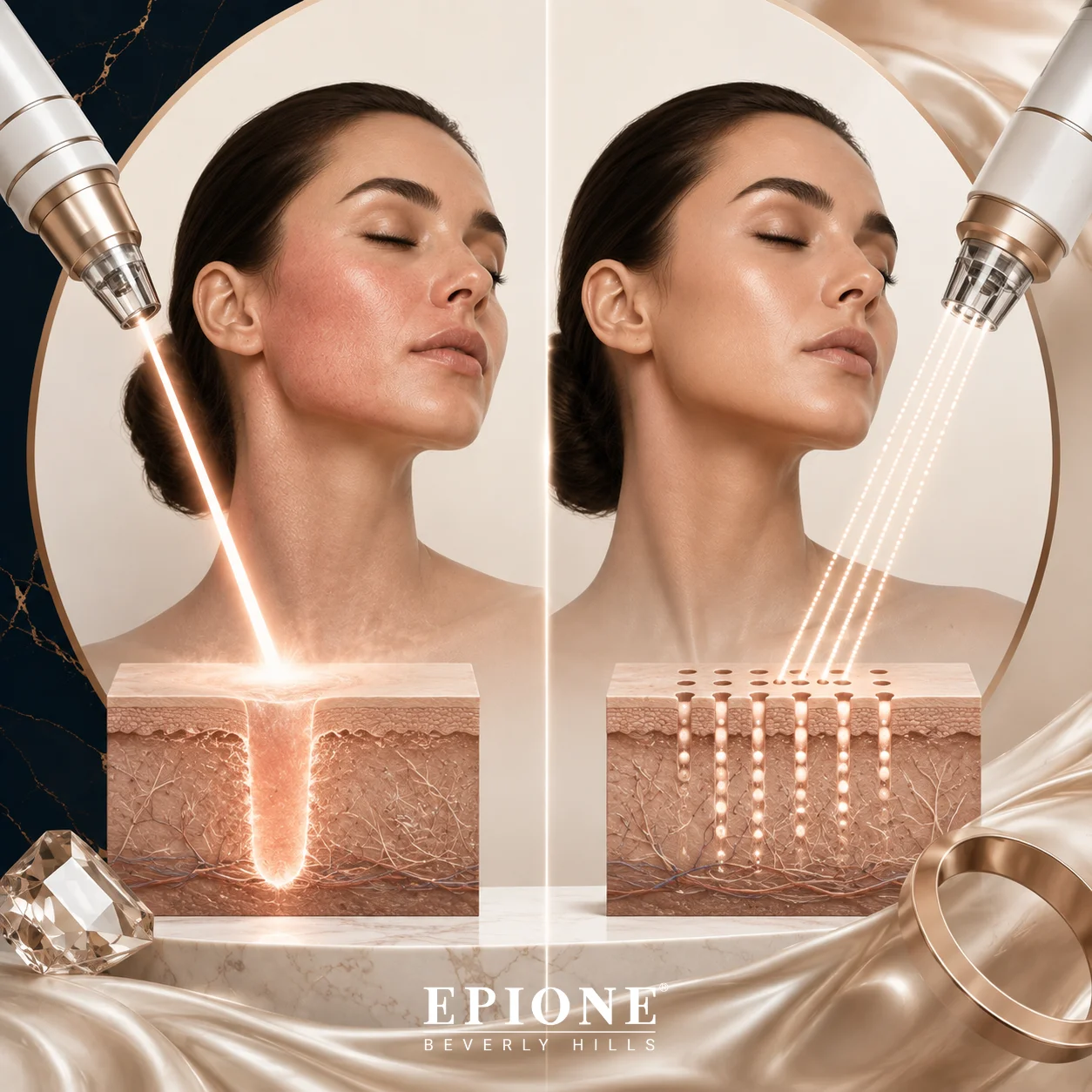
Not all CO2 lasers work the same way, and the type you use affects both recovery time and how quickly results appear.
Fully ablative CO2 lasers treat the entire treated area's surface at once. Recovery is longer, often 10–14 days of visible healing, but results tend to appear faster and more dramatically because more tissue is being resurfaced in a single pass.
Fractional CO2 lasers treat the skin in a pattern of microscopic columns, leaving surrounding tissue untouched to speed healing. Downtime is shorter, typically 5–7 days, but because less tissue is treated per session, full results build more gradually and often require a series of treatments rather than one.
Before booking, ask your provider which approach they're using; it directly changes how long you should expect to wait, and how many sessions your specific concern will realistically need.
Setting Realistic Expectations by Concern
"When will I see results?" depends heavily on what you're treating:
- Fine lines and early sun damage: Often the fastest to respond; visible improvement by month 1, continuing through month 3.
- Acne scarring: Slower and more session-dependent. Noticeable softening by month 2–3, with continued improvement over 6+ months, especially for deeper or pitted scarring.
- Pigment and sun spots: Initial fading is often visible within weeks, but full evening-out of tone typically takes a full collagen cycle; 3 to 6 months.
- Skin laxity and texture: The slowest category to change, since it depends most heavily on new collagen formation. Most patients see the bulk of tightening between months 3 and 6.
What the Research Shows About CO2 Laser Results
The improvement patients see isn't anecdotal; it's well documented in clinical literature. Research on fractional CO2 laser therapy shows that up to 80% of patients report an acceptable reduction in fine lines and wrinkles, with efficacy comparable to traditional, fully ablative CO2 treatment but with a notably faster recovery. Reepithelialization, the skin's surface healing over, typically takes seven to ten days with a CO2 laser, which lines up with the week-one recovery window most patients experience before the "new skin" phase begins.
How Aftercare Speeds (or Slows) Your Results
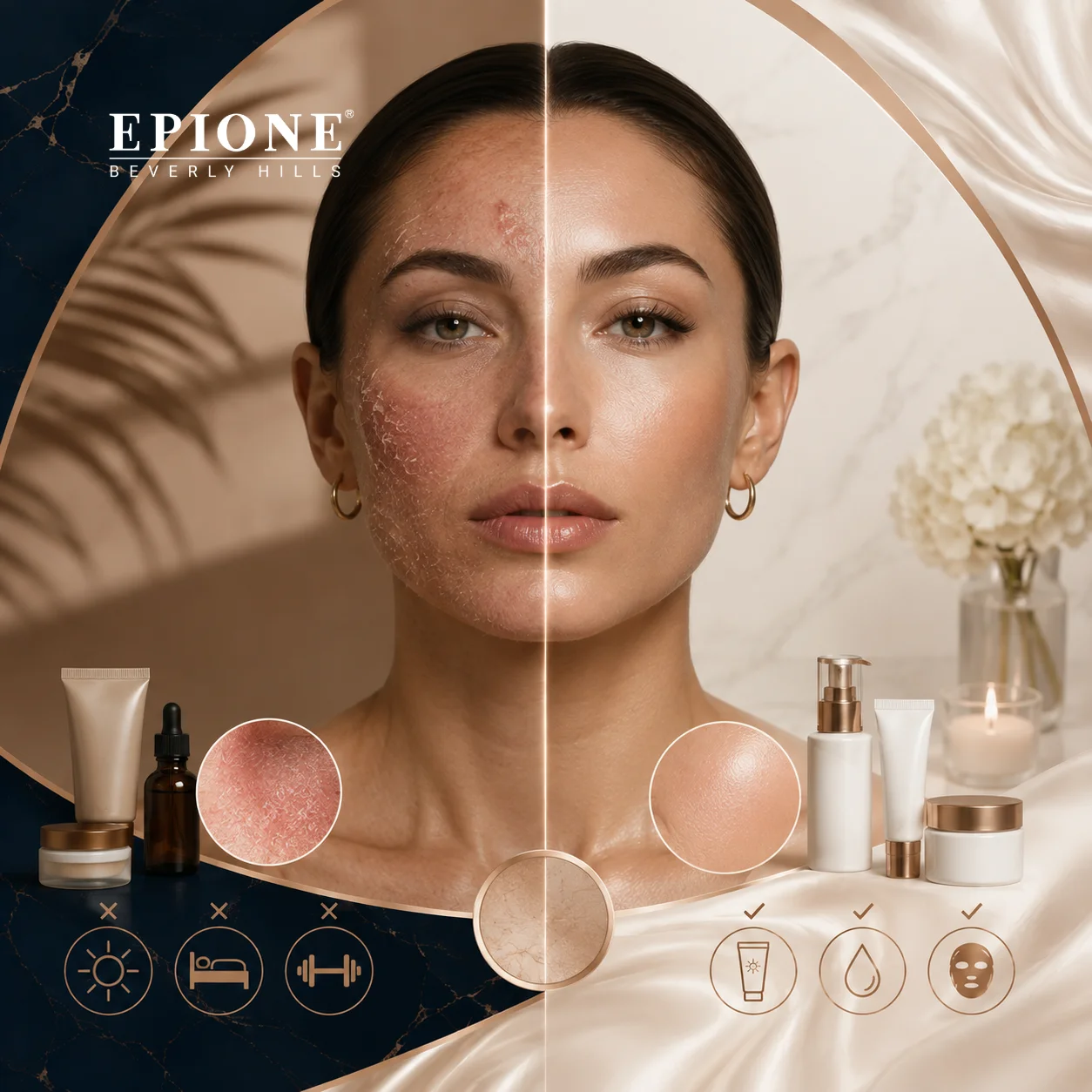
Aftercare isn't a formality; it's the difference between a good result and a great one, or a fast one and a slow one. Sun protection is non-negotiable, since new skin is significantly more vulnerable to UV damage, and unprotected exposure during healing can cause pigment irregularities that delay or undo your results. Gentle, consistent hydration supports the skin barrier as it rebuilds, helping the visible "glow" phase arrive on schedule rather than late, while introducing active ingredients like retinoids or exfoliating acids too soon can irritate healing skin and extend redness and peeling well past the typical week-one window.
Following your provider's specific timeline for reintroducing skincare and makeup matters more than general internet advice, since every patient's settings and skin are different; what speeds recovery for one person can slow it for another.
Common Myths About "Instant" CO2 Laser Results
- "If I don't see a dramatic change in week one, it didn't work." In reality, week one is recovery, not results. Judging the treatment here is the most common source of disappointment.
- "More redness means better results." Redness reflects how your skin is responding to the procedure, not how much collagen you'll ultimately produce. Two patients with identical settings can heal at different visible rates.
- "One session fixes everything." For mild concerns, one session can be transformative. For moderate-to-severe scarring or laxity, a single session is often the start of a process, not the finish line, and a provider who promises otherwise is setting you up for disappointment.
Epione's Approach to Laser Resurfacing
Not every laser is the same, and no two patients have the same timeline. At Epione Beverly Hills, Dr. Simon Ourian built Coolaser® himself after two decades of treating skin at every tone and severity. It’s a proprietary system unavailable anywhere else, developed specifically to address the trade-off between result depth and downtime. Every plan he sets matches your specific skin type and concern, with settings and technique chosen based on how your skin actually heals, not a default protocol.
That experience shapes what you're told before treatment, not just during it: a realistic session count set upfront, so you know going in whether your concern needs more than one round to reach full results, and aftercare guidance built around your specific treatment rather than generic skincare advice. That's why patients searching for a cosmetic dermatologist in Beverly Hills consistently land at Epione.
The Bottom Line
CO2 laser results aren't a single moment; they're a months-long process that starts with visible recovery and ends with skin change that doesn't fade the day you leave the office. If you're weighing whether laser resurfacing is right for you, the honest answer depends on your skin, your goals, and the specific approach your provider recommends.
Epione's laser resurfacing treatments, including the signature Coolaser treatment, are built around exactly this kind of personalized approach; book a consultation to talk through what a realistic timeline looks like for your skin.
Frequently Asked Questions
How soon will I see results after my first CO2 laser session?
Early signs like smoother texture and a brighter tone typically appear around week two to three, once peeling resolves. The fuller result continues building for months afterward.
Will one session be enough to see results?
For fine lines and mild sun damage, often yes. For deeper acne scarring or significant laxity, most patients need a series of sessions to reach their goal.
How long am I going to peel for?
Visible peeling generally lasts about 5–7 days with fractional treatments, or up to 10–14 days with fully ablative treatments.
How long is my face going to be red?
Intense redness typically fades within the first week or two; a lighter pinkness can linger for several additional weeks, especially in fair skin.
How long do CO2 laser results last?
Because the treatment stimulates your own collagen production, results can last one to several years, though ongoing sun protection and skincare significantly affect longevity.
Finding the Best Los Angeles Ingrown Hair Treatment
Plucking or shaving unwanted hair from the face is a daily routine for many Los Angeles women and men. Whether on the chin, upper lip or eyebrow region, shaved and plucked hair will grow back. Endless amounts of money may be spent on expensive home hair removal treatments that prove to be ineffective. Often when hair does grow back, it becomes ingrown, causing a red and tender bump on the affected area. Having an ingrown hair is not only painful, but embarrassing as well. Ingrown facial hair may become infected in some instances, leading to an even larger sore area that may result in an unsightly scar. Because hair grows so quickly after being removed with tweezers, a razor, or any other home method, the risk of a hair follicle becoming infected from an ingrown hair increases.Laser hair removal has become a promising Los Angeles ingrown hair treatment. In a city where many people seek fame, health and beauty, having unwanted hair may cause hassles, especially for those regularly attending auditions or scheduling photo shoots. Whether seeking stardom or not, ingrown facial hair is inconvenient and painful for anyone. Those who discover the benefits of Los Angeles ingrown hair treatment will find it a wonderful investment. Los Angeles ingrown hair treatment can eliminate the need to waste large amounts of money on ineffective home hair removal products. Due to the popularity of this Los Angeles ingrown hair treatment, prices are very affordable and often yield satisfactory results. Los Angeles is home to many different locations offering Los Angeles ingrown hair treatment. Fast and relatively painless, the procedure is simple and places patients back in their usual activities quickly.After facial hair is removed, women will feel more self confident and enjoy smooth skin. Wasting time with tweezers or lotions can become a thing of the past. Men will not only enjoy a continually smooth face, but the convenience of not having to shave or worry about razor bumps and irritation. Overall, Los Angeles ingrown hair treatments can be a practical and affordable solution for those suffering from the pain and embarrassment of ingrown facial hair.
Beverly Hills Laser Hair Removal
Laser Hair Removal is something everybody must’ve heard of. Laser hair removal is probably one of the most common among the laser treatments. Los Angeles is the Mecca of all kind of cosmetic surgeries and laser treatments. Beverly Hills Laser Hair Removal is the best way to get your unwanted hair off your body. Excessive body hair, both in men and women, may be due to several causes. These causes can be hormonal imbalance or due to affects of some medications. What adds to the discomfort is to shave and wax these hairs every other day. Beverly Hills Laser Hair Removal is a longer lasting, though not permanent, relief from unwanted hair and their everyday removal.Before going deep into the Beverley Hills laser hair removal procedure, let’s have an overview of how the hair grows. The hairs grow and regrow from tiny cavities in our skin which are called hair follicles. Naturally, these follicles shrink with time and hair growth either stops or slows down but by that age you’d be more concerned about wrinkles rather than hairs. So, Beverly Hills Laser Hair Removal ensures that you don’t spend most of your age shaving or waxing.So now we have an idea about hair follicles and may be already enlisted it in our list of hateful things but these follicles are also responsible of hair growth on your scalp, so the Beverly Hills Laser Hair Removal is not about passing a high power laser beam from your head to toe. The Beverly Hills Laser Hair Removal treatment focuses on part of the body from where the subject wants the hairs to be removed. The hairs from the area to be treated are normally shaven prior to the procedure and an anesthetic cream is applied to the area. A pulsating laser beam is focused on the area. This laser is absorbed by the hair follicles and the heat destroys the pigment in these follicles resulting in disability of these follicles.The treatment might require multiple sittings depending on the patient, but the effect is often quite significant after each sitting. The results; however, also vary from person to person as the results of Beverly Hills laser hair removal treatment are better for those with fair skin and dark hair. That does not mean it won’t work on dark skinned or light haired people. It is important that you consult a good physician and practitioner about the possibilities and limitations prior to the Beverly Hills laser hair removal. There are some precautions to be followed prior to the treatment, like avoiding tanning, sun exposure, waxing or electrolysis.Beverly Hills Laser Hair Removal side effects are typically minimal. Patient can experience mild pain or redness on the treated area. Some very uncommon risks are incomplete removal of hair and discoloration of the affected area. If you are looking for a physician and consultant in Beverly Hills Laser Hair Removal treatments, Epione has got them all for you. Make sure you consult them in order to have a further in depth knowledge about this.
Ingrown Hair Removal: Treatments That Actually Work (and How to Prevent Them)
What is an ingrown hair?
Put simply, an ingrown hair is a condition whereby the new hair grows back into the skin. Instead of breaking the skin surface, at the follicle, the hair "turns back in on itself." The result is red, sore, and often infected skin. The red bumps are unsightly, and can be painful.
Where do ingrown hairs occur most?
You are more prone to develop ingrown hair on your face, under your arms, or at the bikini line. Typically, these surface areas are hotter, making it easy for bacteria to get a start. In addition, these body areas tend to get covered with clothing, and friction from the clothing can only irritate the skin more. If the condition is bad enough, some form of ingrown hair removal may become necessary.
How to prevent ingrown hairs
Many personal habits can also make the problem of ingrown hair occur more frequently. In men, the biggest culprit is "dry shaving," or not preparing the skin for shaving. Clean your face well, prior to shaving, then use a shaving cream. This softens the hair, removes dead skin, and helps hair grow upward and outward.
For ladies, the biggest culprit is shaving legs too quickly in the shower. A little hot, steamy water will help to soften the hair and skin, making it easier to shave. Again, shaving cream helps. The need for ingrown hair removal is greatly decreased with good shaving habits.
Perhaps the last thing to mention here is the need to use fresh blades. More often than not, a dull blade will make ingrown hair problems more frequent. Older blades are also very full of bacteria, from normal use.
How to remove ingrown hairs at home
There are some simple things you can do for ingrown hair removal that can be done at home. The first technique to try is using a buffered fatty alcohol. It is different from your normal drug store variety isopropyl alcohol. It won't sting as much, will still kill bacteria, and will still act as an astringent for the skin. Use a cotton ball, and dab the affected area. Don't rub or scrub with alcohol pads. Let the area air dry.
You can also use a good topical cream for ingrown hair removal. Typically, these products also contain an anti-inflammatory, to help reduce swelling. Clean the area first, and then apply the cream.
Another great technique for ingrown hair removal on the face is to use a salt solution. Mix a cup of water with 1.5 tsp of salt. Take a cotton ball, and dab the mixture on the affected area. Don't rinse. Repeat for a couple of days. Don't use this product with strong exfoliators, as it may make the problem worse. If the salt mixture is not helping, discontinue use.
You can also make an ingrown hair removal salt scrub for the body. One technique is to simply rub Epsom salt over the area, for a good exfoliating technique. You can also soak in a bath that contains 2 cups of Epsom salts. This type of bath really softens up the irritated ingrown hairs, and helps them grow outward again.
Ingrown hair removal does not have to be a hassle. There are lots of good home made and commercial products available to help. With some simple, common sense habits, you can even greatly reduce the frequency of the problem and if past ingrown hairs have left marks behind, ingrown hair scar removal can address the damage that's already done.".
Ingrown Hair Treatment Options in California
If you are one of the many residents of California that suffer from frequent bouts with ingrown hair, you might want to consider treatment by some local specialist. Ingrown hair treatment options in California are many. So, let’s take a look at two of the best options for the people of the Golden State.Ingrown hair treatment typically happens in one of two ways: treatment of the problem after symptoms occur or treatment of the cause of the problem. This is what we mean. An ingrown hair occurs when hair is cut, leaving behind a sharp tip on the cut hair. Often, this hair will then curl back on itself, and the tip end of the hair will start growing back into the skin. So, treatments that target the symptoms center on trying to get the hair “unstuck”, and growing in the right direction again. On the other hand, treatments that center on the cause of ingrown hair attempt to eliminate the hair all together. In this way, they prevent the ingrown hair from ever happening.Ingrown hair treatment options now include medical treatments for the removal of hair. They have the desired effects of depilatory creams (hair removal creams), and typically last a whole lot longer.The most popular of ingrown hair treatment options in California would be laser hair removal. There are qualified physicians located throughout the state that offer this procedure. You will need to weigh the benefits and costs of both. Access to a practitioner, though, should not be an issue.Laser hair removal has become a very popular ingrown hair treatment option in California for some time now. The procedure involves the use of a laser beam to destroy the hair follicle, and thus the hair. The intense laser light targets a pigment called melanin in the hair. The intense heat of the laser is what destroys the follicle.The technique is popular, because it is safe, has few side effects, and provides you with a long term solution to hair. In some cases, people have been able to stay free of unwanted hair for years. The cost of the procedure is minimal, in comparison to other forms of cosmetic surgery. There is typically no “downtime” from the procedure either. This combination of ease, lack of risk, and moderate cost has done as much as anything for making this a popular ingrown hair treatment option in California.Ease of access, moderate price, and low risk of side effect have made laser hair removal a popular ingrown hair treatment options in California. It works by targeting the source of the problem, and provide long term solutions to the nasty problem of ingrown hair. After you have done your research, have a talk with a practitioner in your area.
Ingrown Hair Treatment in Los Angeles
Ingrown hair treatment available in the Los Angeles, CA area is very diverse. There are treatments available to fit any budget. You can find everything from simple lotions and creams all the way to medical treatments like laser hair removal. If you live in the Los Angeles, CA region, here is a list of some of your options.A good place to start would be with the topical creams and lotions available on the market. This type of ingrown hair treatment remains popular in the Los Angeles area for price reasons. It also makes sense for those people who only have an occasional issue with ingrown hair.Another perennial favorite in the Los Angeles area for ingrown hair treatment has been to use hair removal products. The hair removal product has the advantage of being able to remove the hair all the way to the follicle. It also has the advantage of keeping hair away for an extended period of time, eliminating some of the frequent need to shave. So, less shaving means less opportunity to develop ingrown hair from shaving. Again, this type of treatment is inexpensive. Some hair removal products may cause bad rashes or irritation for some people, so discontinue use of any product that causes burning, and severe irritation. If you want to be cautious, try removing hair in just a small area first, to see if you react to the product. Overall, though, this type of ingrown hair treatment works well.Once you get past the creams and lotions and the hair removal products, the ingrown hair treatment options for people in Los Angeles, CA move toward the medical procedures like laser hair removal. These procedures will be readily available though a specialist in cosmetic medicine. They are more expensive in the short term, but offer some real advantages in the long term.Laser hair removal involves the use of a concentrated laser beam to “super heat” hair follicles, thus destroying them. The treated area is very targeted, so as not to damage the surrounding skin. This type of treatment has remained popular in Los Angeles for the long term benefits it brings, with little side effects. As you can see , there are lots of options for the treatment of ingrown hair. Do some research, and choose the ingrown hair treatment option that works best for you.
Infected Ingrown Hair: Signs, Treatment, and When to Worry
Ingrown hairs are not out of the ordinary. Typically all men and women get rid of their body hair by either shaving or waxing. And why shouldn't they? Every body desires a smooth silky skin. No wonder they look wonderful. Yet, it is very common to see itchy bumps on the skin a few days after going through the hair removal routine. If you take a closer look at those, you'll see hair growing inside your skin instead of growing out.
What causes an ingrown hair to become infected?
One of the main causes of these ingrown hairs is that these hairs are cut too short, either with a blade, wax or any other method. When the hair starts to re-grow, it is trapped in the skin and grows inwards instead of growing straight outwards. These ingrown hairs can grow on any area you remove your hair from. Ingrown hair is not a very serious problem itself, and there are several remedies to treat this problem. However, carelessness can lead to infection and severe damage.
Signs of an infected ingrown hair
The ingrown hair can damage the skin which makes it prone to bacteria. These bacteria can form infections in the skin and lead to infected ingrown hair problem. The infection can be redness, itchiness, pain and even pus formations and blisters. An infected hair follicle is referred to as folliculitis in medical terms, while the chronic razor-bump condition is known as pseudofolliculitis barbae. Infected ingrown hairs are mainly caused by carelessness, thus proving that prevention is much better than cure. It is better to get rid of ingrown hairs before the problem becomes worse.
How to treat an infected ingrown hair
In case you were not so thoughtful and the ingrown hair you had becomes infected ingrown hair, your best option is to consult a physician. Normally physicians would prescribe a skin treatment cream or lotion.
If the infection hasn't gone too bad or hasn't yet started in the ingrown hair, rubbing and exfoliating the skin with a scrub can help in letting the hairs come out of the skin. Once noticed, don't let the infected ingrown hair stay in the skin. You can also use tweezers to pull the infected ingrown hair out of the skin. Hydrogen peroxide also helps in reducing the infection. However, a physician must be consulted before applying any kind of chemical or medication to the skin affected by the infected ingrown hair.
Can laser hair removal prevent infected ingrown hairs?
Although it is not a permanent problem, infected ingrown hair problems can make your skin look worse than it looked before hair removal. The best option is to totally avoid infected ingrown hair through better hair removal methods. Laser hair removal removes the hair without the risk of developing ingrown hair. Laser hair removal can also get rid of infected ingrown hairs as well. This treatment might take an hour or longer time depending upon the area you wish to be treated. Laser hair removal might require you to take multiple sessions. The number of sessions may also vary from patient to patient. Usually patients do experience slight pain and burns on the area of treatment. Yet, any severer affect must be discussed immediately with the physician. Your physician will also educate you about the after-treatment dos and don'ts.
Preventing infected ingrown hairs
Although curable, the cause of infected ingrown hair should essentially be prevented as earlier as possible. Always use a clean blade and soften your skin with warm water or shaving cream before any hair removal process. This would save you a lot of time, money and suffering.