











%201.avif)









Ask Dr. Ourian: Answers to Your Aesthetic Treatment Questions
Explore Dr. Simon Ourian's answers to common questions about melasma, skin tightening, laser treatments and stretch marks.
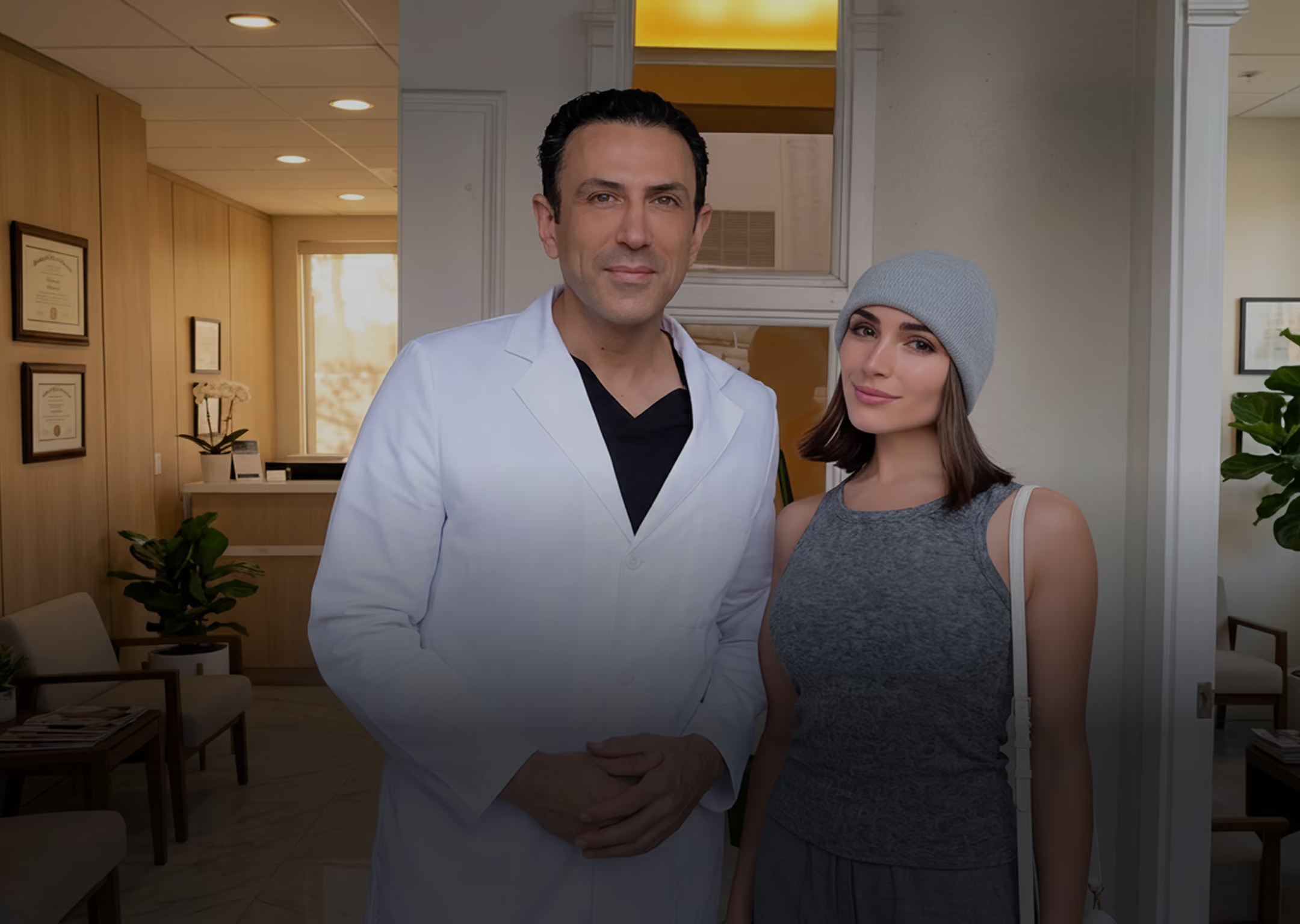

The same questions get asked in the consultation room every week, and the answers have never been written down anywhere
A patient sits down, and before anything else, she asks whether her melasma will come back. Another asks why her skin tightening treatment did nothing. Another was told her skin is too dark for lasers and has believed it for six years.
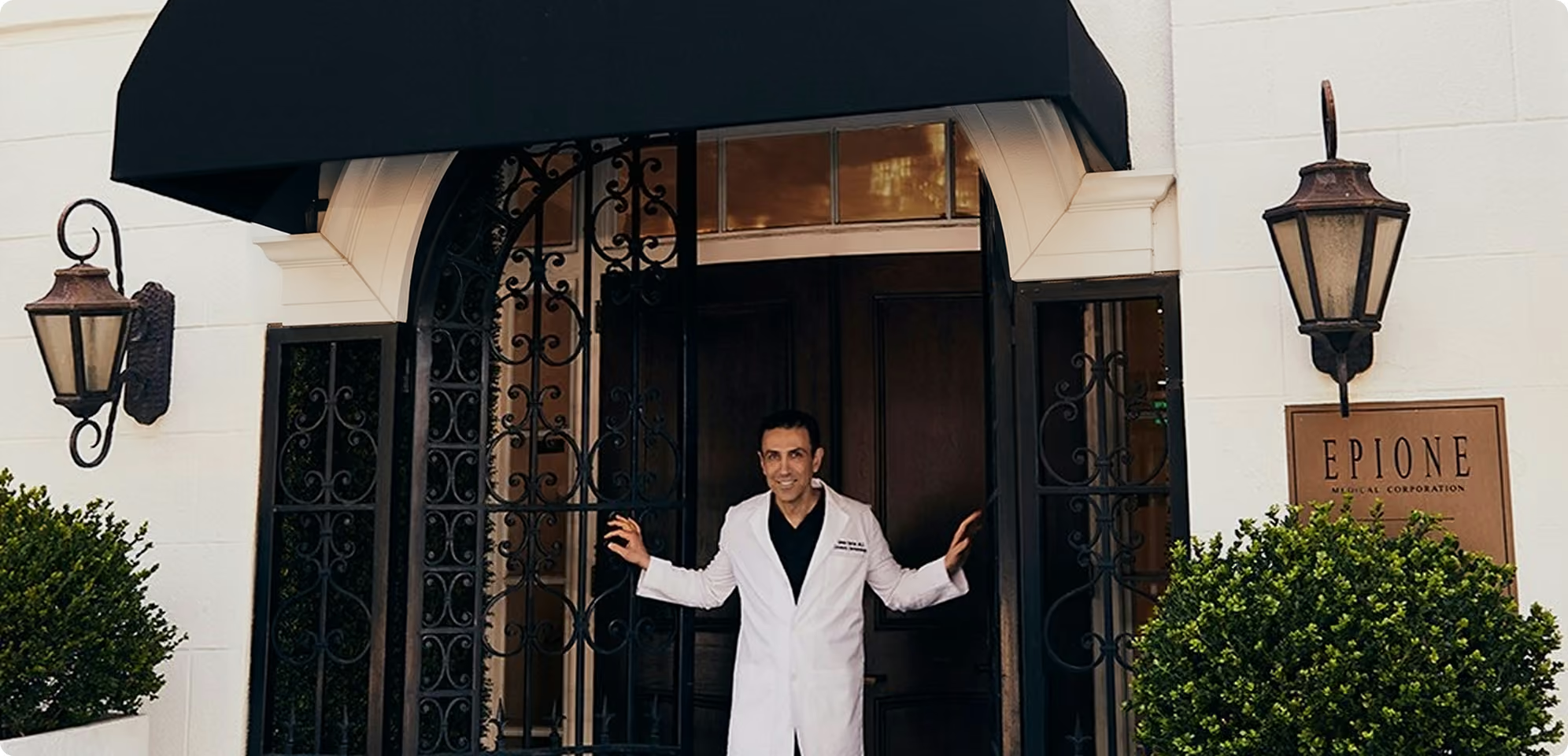
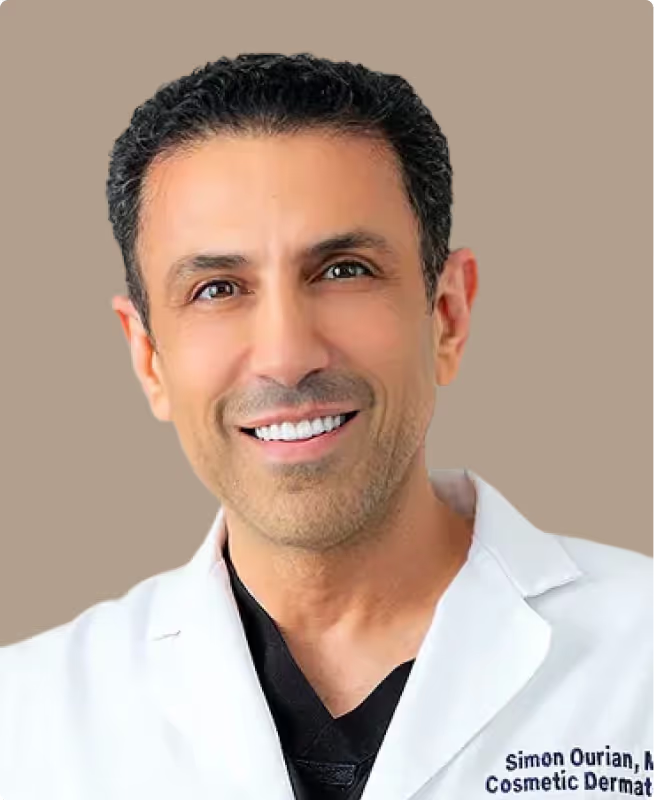
Dr. Ourian has answered these questions several thousand times. Each answer took a few minutes, was heard by one person, and then existed nowhere.
Meanwhile the same questions are being answered publicly, at enormous volume, by people who do not perform the procedures. A thirty second video rewards a confident claim and has no room for the conditions attached to it. A treatment that works on one skin type gets presented as working on everyone. A result that took five sessions is shown as one. The number of sessions a clinic sells becomes the number a patient believes she needs. What gets left out is almost always the part that decides whether the treatment is right for the person watching.
By the time someone reaches a consultation, the question she walked in with has usually already been answered for her. Frequently by someone who has never held the device.
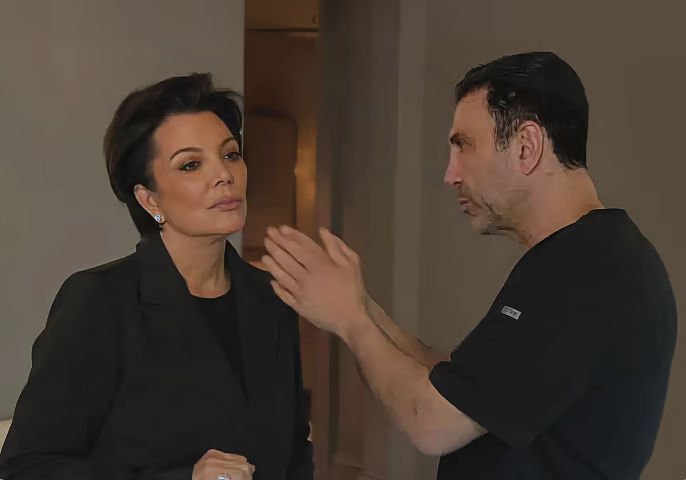
Ask Dr. Ourian exists to move those answers out of the room. Each month, five questions are put to Dr. Ourian directly. He answers out loud. The answers are transcribed, structured, and published under his name after he has read them. Where he gives a number, it is his own observation from his own patients, and it is labelled that way rather than presented as published research. Where he says a treatment will not work, that runs too.
This is not a blog and it is not marketing copy with his photograph attached. It is a record of what he says when someone is sitting across from him.
TL;DR
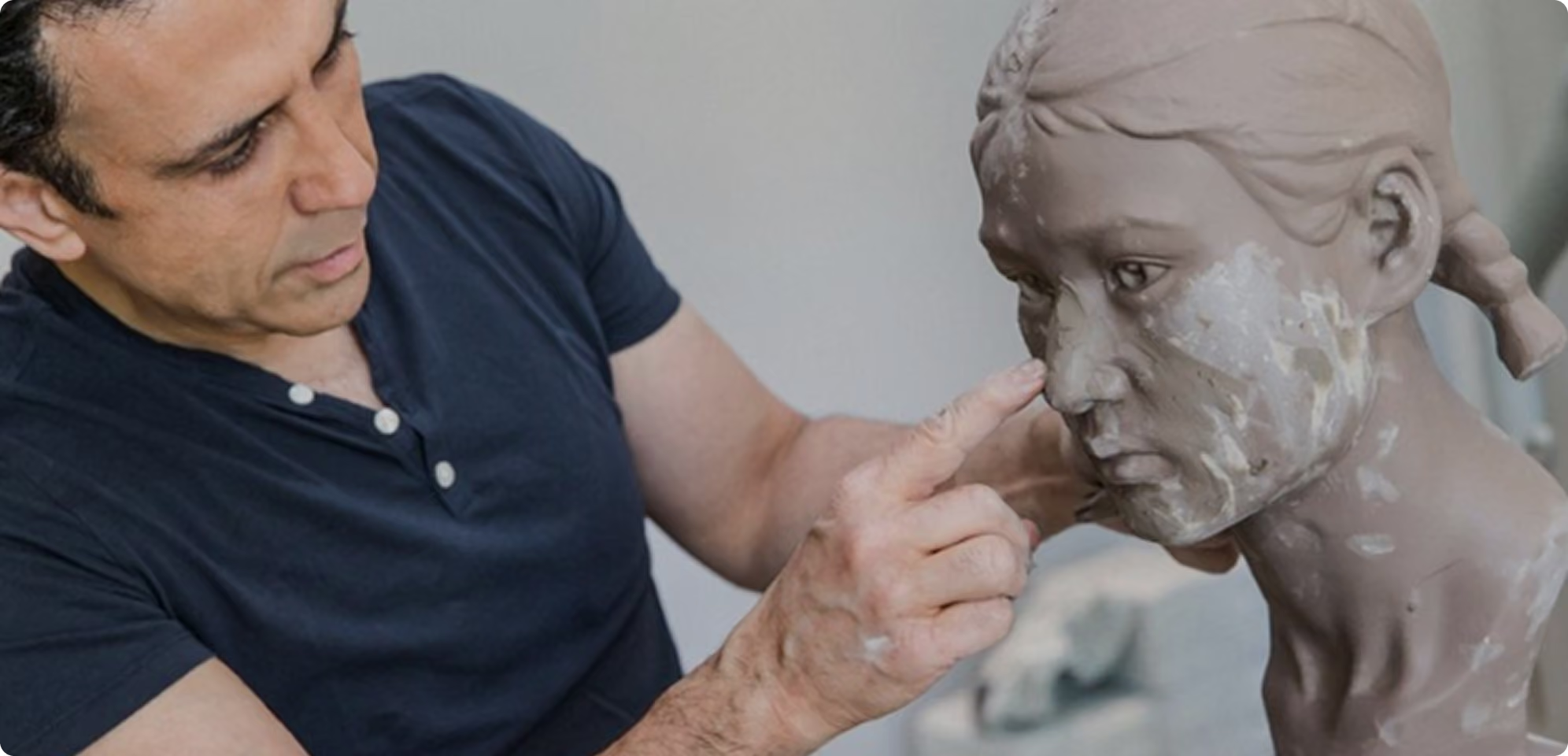
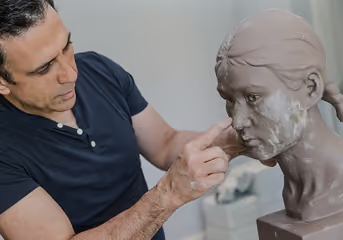
Ask Dr. Ourian is a question and answer section of epionebh.com answering the questions patients ask most often about aesthetic treatment.
Answers come from Dr. Simon Ourian directly, recorded and transcribed, not written on his behalf.
Five new questions are published each month.
Numbers cited are his observations from his own patient population, stated as such, not published research.
Questions are chosen from two sources: what gets asked repeatedly in his consultation room, and what is currently being answered incorrectly in public.
The section does not give individual treatment recommendations, does not promise permanence where none exists, and does not publish prices.
Dr. Simon Ourian is founder and medical director of Epione Beverly Hills, with close to 30 years of practice.
How the questions get chosen
Five per month, from two places.
The first is the consultation room. Some questions get asked so often that Dr. Ourian answers them several times a week, and the answer has never been recorded. Those go to the front.
The second is the open internet. We look at what is being asked publicly about a treatment and what is currently being said back. When the common answer is wrong, incomplete, or true only for one type of patient, that question moves up the list.
Questions that belong to a medical encyclopedia are not answered here. What melasma is has been documented thoroughly by people whose job that is. What happens to melasma in the eighteen months after you treat it has not.
What this section does not do
It does not tell you what treatment you need. That requires seeing your skin in person, under the right light, with your history in front of him.
It does not promise permanence where there is none. Several answers here explain why a result will not hold on its own, and what maintaining it actually requires.
It does not quote prices. Every plan at Epione is built for the individual patient, and a number printed on a page would be wrong for most people reading it.
Question index
Why does melasma come back?
Roughly 30 to 40 percent of melasma patients see some recurrence within a year. Sun spots treated in the same session rarely come back at all. The difference is not the laser and it is not the patient. A sun spot is a finished deposit of pigment. Melasma is an active process, and treatment suppresses it rather than ending it.
What is the difference between thin skin and loose skin?
Thin skin has lost dermal thickness. Loose skin has lost the structure underneath it. Energy-based tightening acts on the dermis, so it can improve thin skin and can do very little for skin hanging over a foundation that has changed shape. Most of what patients call loose skin is not a surface problem, which is why treating the surface produces a result they cannot see.
How many laser hair removal sessions do you actually need?
Most patients need three to five sessions spaced six to eight weeks apart, not the flat six that clinics commonly sell. The number is set by hair growth cycles rather than by severity. A laser can only destroy a follicle that is actively growing, and only a portion of follicles are in that phase at any moment, which is why the interval between sessions matters more than the total booked.
Is laser resurfacing safe on darker skin?
Yes. Fitzpatrick IV and above makes up roughly 60 to 70 percent of Dr. Ourian's practice. What changes is not whether the treatment can be done but how the energy reaches its target, because the risk in melanin-rich skin is the inflammatory response after treatment rather than the resurfacing itself.
Can white stretch marks still be treated?
Yes, with a realistic target. Mature white stretch marks improve roughly 30 to 50 percent over two to five sessions in Dr. Ourian's patients. They do not disappear. The gap between that number and the one used in marketing is why most patients arrive believing the marks are untreatable at all.
Ask a question
If there is something you have been trying to get a straight answer to, send it. Questions that come up repeatedly get added to the list.
Frequently asked questions
Who is Dr. Simon Ourian?
Dr. Simon Ourian is the founder and medical director of Epione Beverly Hills, a cosmetic dermatology practice he established in 1998. He has close to 30 years of practice and developed the Coolaser® and Neustem® technologies used at Epione.
Are the answers in this section written by Dr. Ourian?
Yes. Each question is asked to him directly and answered out loud. The answers are recorded and transcribed, then edited for length and structure only. Nothing is added that he did not say, and he reads every article before it publishes.
How often is new content published in this section?
Five new questions are answered each month. Questions are drawn from what patients ask most often in consultation and from what is being answered incorrectly in public.
Are the statistics in these articles from published studies?
No. Figures attributed to Dr. Ourian are observations from his own patient population and are labelled that way. Where a figure comes from published literature, the source is cited. Numbers do not appear without one of those two frames.
Can I get a treatment recommendation from this section?
No. These articles explain how treatments behave in general and what Dr. Ourian looks for. Determining what any individual patient needs requires an in-person examination of the skin.
Why does this section not list prices?
Epione does not publish a fixed price menu. Treatment plans are built per patient based on skin type, the concern being addressed, and the technologies appropriate to both, so a published number would be inaccurate for most people reading it.