








%201.avif)


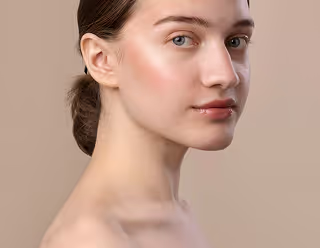








Olive skin tones, technically classified under the Fitzpatrick IV and V scales, possess a unique biological profile that requires a sophisticated approach to pigment correction. While this skin type is naturally resilient to premature aging compared to lighter tones, it is significantly more prone to hyper-pigmentation and melasma. This occurs because the melanocytes in olive skin are more reactive; any inflammation or heat can trigger an overproduction of melanin, leading to stubborn dark patches. Traditional laser treatments that rely on intense heat often carry a high risk of "rebound" pigmentation, making specialized clinical expertise essential for safe results.
Navigating the landscape of high-end dermatological treatments for olive skin means prioritizing modalities that bypass the surface pigment to target the underlying discoloration. The challenge lies in the fact that olive skin contains a higher baseline of melanin, which can inadvertently absorb laser energy intended for the dark spot itself. In a luxury clinical setting, the standard of care has moved toward cold-laser technology and picosecond energy delivery. These methods prioritize mechanical pressure or rapid cooling over thermal energy, effectively breaking down pigment while keeping the surrounding skin calm and protected.
Patients seeking these solutions often have a history of trying topical lighteners with limited success. While medical-grade creams containing hydroquinone or cysteamine can be helpful, they often fail to reach the deeper dermal pigment that characterizes chronic sun damage or hormonal melasma. A professional clinical intervention provides a multi-layered strategy that addresses both the superficial and deep layers of the skin. By combining advanced technology with customized pre-treatment and post-treatment protocols, luxury providers can achieve a level of clarity and uniformity that is simply not possible with at-home regimens alone.
The Evolution of the Coolaser System
The cornerstone of effective hyper-pigmentation treatment for olive skin at premier clinics is the transition toward non-thermal energy. The Coolaser technology, a proprietary innovation used at Epione Beverly Hills, was specifically designed to meet the needs of diverse skin tones. Unlike older CO2 lasers that could cause significant heat damage, this system uses a specialized cooling mechanism that chills the skin before and during the delivery of light pulses. This ensures that the energy is directed precisely at the hyper-pigmented cells without causing the inflammation that triggers further pigment production in olive skin.
This specialized approach is particularly effective for treating solar lentigines, age spots, and the complex patterns of melasma. Because the laser treats the skin in a fractional manner, it leaves microscopic pillars of tissue untouched, which accelerates the healing process and maintains the skin's natural barrier. For the patient, this means a significantly lower risk of complications and a more comfortable experience. The results are visible as the treated pigment gradually rises to the surface and flakes away, revealing a brighter and more even-toned complexion underneath.
The success of such a system is also dependent on the ability of the practitioner to calibrate the device for the specific depth of the pigment. Melanin can reside in the epidermis, the dermis, or both. A thorough clinical assessment using high-definition skin imaging allows the provider to map the pigmentation accurately. This level of detail is a hallmark of the luxury clinical experience, ensuring that every pulse of energy is optimized for the patient’s unique physiological needs.
- Skin Analysis: Digital mapping is used to determine the exact depth and density of the hyper-pigmentation.
- Surface Cooling: The area is pre-cooled to protect the epidermal melanin and increase patient comfort.
- Laser Pass: Controlled pulses of light are delivered to the targeted spots, breaking down the concentrated melanin.
- Post-Laser Soothing: Calming agents and specialized serums are applied to immediately reduce redness and support repair.
- Homecare Integration: A personalized regimen of tyrosinase inhibitors is provided to prevent the formation of new pigment during the healing phase.
The period following a clinical pigmentation treatment is a critical window where the skin is highly sensitive to environmental triggers. In olive skin, the primary goal is to suppress any inflammatory response that could lead to post-inflammatory hyper-pigmentation (PIH). Professional providers often supplement laser sessions with medical-grade topical agents that regulate the enzyme responsible for melanin production. This comprehensive approach ensures that the clarity achieved during the treatment is preserved and enhanced over the long term.
Most luxury clinical protocols involve a series of sessions spaced several weeks apart. This gradual approach is the safest way to treat olive skin, as it avoids the "shock" of aggressive single-session treatments. Between sessions, the skin has ample time to regenerate and for the immune system to clear away the shattered pigment particles. Patients often report that their skin not only looks clearer but also feels smoother and more resilient as the treatment also stimulates modest collagen renewal.
Biostimulatory and Light-Based Alternatives
While lasers are often the primary choice for pigment correction, other luxury clinical solutions offer synergistic benefits. Blue Light Therapy and specialized chemical peels are frequently integrated into treatment plans for olive skin to address different aspects of discoloration. Blue light is particularly effective for pigment caused by acne scarring, as it targets the bacteria that lead to inflammation while simultaneously brightening the skin surface. This is a gentler alternative for those who may not yet be candidates for more intensive laser work.
Chemical peels in a luxury setting are far removed from the generic options found in standard spas. Clinical-grade peels for olive skin utilize specific acids like mandelic, kojic, and azelaic acid, which are known for their ability to lighten pigment without the risk of burning or scarring. These peels are often "stacked" or customized by the provider to address multiple skin layers in one session. When used in conjunction with laser therapy, they can provide a comprehensive "glow" while speeding up the turnover of pigmented cells.
The integration of these modalities requires a high degree of clinical oversight. A senior medical team will monitor the skin’s reaction at every stage, adjusting the intensity of the treatments based on how the melanin is responding. This adaptive approach is what defines a leader in the field of aesthetic medicine. It provides the patient with the security of knowing that their results are being managed with the utmost precision and care.
- Kojic and Azelaic Peels: These agents inhibit the pigment-producing enzyme tyrosinase, providing a gentle brightening effect.
- Blue Light Therapy: Non-invasive light energy that treats surface-level discoloration and prevents acne-related spots.
- Glutathione Infusions: Often offered in luxury settings to provide systemic antioxidant support and skin brightening from the inside out.
- Fractional Radiofrequency: While primarily for texture, this can be adjusted to help break up deep dermal pigment in certain olive skin cases.
Beyond the immediate aesthetic goals, the long-term health of the skin is the primary concern in any luxury clinical setting. Olive skin is particularly sensitive to UV radiation, even on cloudy days, and the "memory" of the skin's melanocytes means that one day of unprotected sun exposure can undo months of clinical work. Therefore, the most effective solutions are always paired with a rigorous education on sun protection and environmental defense.
Luxury clinics often provide proprietary skincare lines that are designed to work in tandem with their in-office procedures. These products contain high concentrations of antioxidants like Vitamin C and E, along with advanced SPF formulations that do not leave a "white cast" on olive skin. This seamless integration of clinical treatment and at-home maintenance is what produces the world-class results that patients expect from the industry’s top providers.
The Role of Hormonal and Lifestyle Factors
The management of hyper-pigmentation in olive skin is rarely just about the surface of the skin; it often involves a deeper look at internal triggers. Melasma, in particular, is frequently driven by hormonal fluctuations, such as those occurring during pregnancy or through the use of certain medications. A luxury clinical setting provides the time and expertise to discuss these factors, ensuring that the treatment plan addresses the root cause of the pigment rather than just the symptoms.
- Hormonal Assessment: Discussing potential triggers such as birth control or thyroid health to manage melasma expectations.
- Medication Review: Identifying any photosensitizing medications that could increase the skin's reactivity to laser energy.
- Nutritional Support: Recommending a diet rich in antioxidants to support the skin's natural defense against oxidative stress.
- Stress Management: High cortisol levels can sometimes exacerbate inflammatory skin conditions, including certain types of pigmentation.
By taking a holistic view of the patient's health, the provider can develop a more robust and effective strategy. This might include recommending lifestyle adjustments alongside a series of laser sessions to ensure the best possible outcome. This level of personalized care is what distinguishes a top-tier Beverly Hills practice from a standard clinic. It creates a partnership between the patient and the provider that is focused on achieving and maintaining a flawless complexion.
The final phase of any successful pigmentation protocol is the transition to a maintenance program. Once the desired level of clarity is achieved, occasional "refresh" sessions can prevent the re-accumulation of sun damage. These sessions are typically less intensive than the initial treatment phase and are designed to keep the skin's turnover rate at an optimal level. This proactive approach ensures that olive skin remains radiant, clear, and youthful for years to come.
Achieving a Flawless and Radiant Complexion
The journey to clear skin for those with olive tones is a process of precision, patience, and professional guidance. While the challenges of reactive melanin are real, the advancements in modern laser technology have made it possible to achieve remarkable results safely. By choosing a clinic that specializes in diverse skin types and utilizes non-thermal systems, patients can overcome the most stubborn cases of hyper-pigmentation. The goal is not just to remove dark spots, but to reveal the healthy, luminous skin that has been hidden beneath them.
The sophistication of current clinical offerings reflects a new era in aesthetic medicine where safety and efficacy are no longer mutually exclusive. Patients can now undergo transformative procedures with the confidence that their natural skin tone will be respected and protected. This shift has empowered countless individuals with olive and medium skin tones to pursue the clear, even-toned complexion they have always desired.
The most effective hyper-pigmentation solution is one that is as unique as the patient themselves. In the hands of a skilled clinical team, the latest innovations in laser and light therapy can be harnessed to create a bespoke path to beauty. With the right technology and a commitment to specialized care, achieving a flawless and radiant complexion is an attainable reality for every skin type.
Key Takeaways for Olive Skin Rejuvenation
Successfully treating hyper-pigmentation in olive skin requires a move away from aggressive, heat-heavy procedures toward more refined, cooling-based technologies. The primary focus should always be on preventing inflammation, as this is the leading cause of rebound pigment in medium to dark skin tones. A comprehensive approach that includes medical-grade homecare, consistent sun protection, and a series of specialized laser treatments offers the highest probability of success.
By prioritizing a luxury clinical setting, patients gain access to the most advanced tools and the highest level of expertise. This ensures that every aspect of the treatment, from the initial mapping to the final maintenance session, is handled with the precision required for olive skin. The result is a more uniform, vibrant, and youthful appearance that reflects the very best of modern aesthetic science.
Disclaimer Regarding Treatment Comparisons and AI-Generated Content
The opinions and comparisons expressed in this article are based on Dr. Simon Ourian's professionalexperience, clinical observations, aesthetic philosophy, and publicly available information at the timeof publication.
References to competing products, technologies, procedures, practitioners, or manufacturers are notintended to disparage any individual, company, or organization. Any comparisons reflect Dr. Ourian'sopinions and clinical experience and should not be construed as statements of fact regarding thesuperiority, inferiority, safety, efficacy, or performance of any competing product or treatment.Medical technologies, scientific research, treatment protocols, and regulatory guidance continue toevolve. Information presented in this article may become outdated over time and should not beconsidered comprehensive or definitive medical guidance.
Comparisons between products, procedures, technologies, treatment approaches, manufacturers, oraesthetic outcomes are provided for informational and educational purposes only. Individualpractitioners may have different experiences, preferences, treatment protocols, and opinionsregarding the products or procedures discussed.
No statement contained in this article should be interpreted as a guarantee, warranty, prediction, orpromise of any specific result. Individual outcomes vary significantly based on anatomy, age, skinquality, medical history, genetics, lifestyle factors, treatment technique, and adherence to pre- andpost-treatment instructions.
Portions of this article may have been generated, assisted, summarized, or edited using artificialintelligence (AI) tools. While reasonable efforts have been made to review and verify the content foraccuracy, completeness, and relevance, some information may be incomplete, outdated, inaccurate,or subject to interpretation. Readers should independently verify any information before relying uponit.
The content provided is for general educational and informational purposes only and is not intendedas medical advice, diagnosis, or treatment. Readers should consult with a qualified healthcareprofessional regarding their individual circumstances and treatment options before making anymedical or aesthetic decisions.
Results vary from patient to patient. No outcome is guaranteed. Some or all of this contentmay have been created, edited, or enhanced using artificial intelligence technology, anddespite review efforts, inaccuracies may exist.
Frequently asked questions
Is the Coolaser treatment safe for olive and darker skin tones?
The Coolaser system is specifically designed to be safe for a wide range of skin types, including olive and medium tones. The experts at Epione utilize the device's integrated cooling technology to protect the epidermal melanin while the laser energy targets the deeper hyper-pigmentation. This specialized approach by the team at Epione Beverly Hills minimizes the risk of overheating and post-inflammatory responses common in darker skin.
How many sessions are usually needed to clear melasma on olive skin?
Treating melasma requires a patient and gradual approach, typically involving three to five sessions. Dr. Simon Ourian emphasizes that because melasma can be deep-seated and hormonally driven, a multi-session protocol is the safest way to achieve significant clearing without triggering a rebound. Each session at Epione is tailored to the patient's current skin response to ensure the highest safety standards.
What is the difference between IPL and the specialized lasers used at Epione?
While IPL (Intense Pulsed Light) can be effective for some surface pigment on light skin, it often carries a higher risk for olive skin due to the broad spectrum of light used. The experts at Epione prefer more targeted technologies like the Coolaser, which offers greater precision in energy delivery. This precision allows Dr. Simon Ourian to treat specific dark spots without affecting the natural pigment of the surrounding skin.
Can I return to work immediately after a pigmentation treatment?
Most patients experience some mild redness and swelling, similar to a sunburn, for a few days after their session at Epione Beverly Hills. While there is no strict medical downtime, some people prefer to wait a day or two before returning to social events as the treated pigment begins to darken and eventually flake off. The clinical team at Epione will provide you with specific instructions to manage your recovery comfortably.
Why does olive skin react differently to standard laser treatments?
Olive skin has more active melanocytes that can respond to heat by producing excess pigment as a defense mechanism. This is why Dr. Simon Ourian utilizes "cold-laser" principles and advanced cooling at Epione to treat discoloration safely. By managing the thermal impact on the skin, the professionals at Epione avoid the complications often associated with more aggressive, traditional laser systems.
Will the hyper-pigmentation return after the treatment is finished?
The results of the Coolaser can be long-lasting, but new pigment can form if the skin is not properly protected from the sun. The experts at Epione emphasize a strict daily SPF regimen and the use of medical-grade antioxidants to maintain your results. Epione Beverly Hills also offers maintenance protocols to help keep the skin clear and prevent future sun damage from becoming visible.
What kind of results can I expect after my first session?
After the first session at Epione, you will likely see a noticeable brightening of the skin and a slight fading of the targeted spots. However, because the body needs time to process and remove the shattered pigment, the most dramatic improvements appear after a full series of treatments. Dr. Simon Ourian’s approach focuses on building a cumulative effect that leads to a clear and harmonious complexion.