


Acne Scars Articles
Learn about non-surgical acne scar treatments, laser options, and recovery in articles from Epione Beverly Hills.
How Do I Fix Deep Acne "Pitting" That Makeup Won't Cover?
Deep acne pitting, clinically referred to as atrophic scarring, represents a significant challenge for individuals seeking a smooth complexion. These indentations occur when the skin fails to produce enough collagen during the healing process following a severe inflammatory acne breakout. Because the damage is located deep within the dermal layers, traditional topical creams and high-coverage foundations often fail to create an even surface. Makeup is designed to alter color and provide a slight blurring effect, but it cannot fill the physical voids or "pits" that catch the light and create visible shadows on the face.
Addressing these structural concerns requires a shift from cosmetic camouflage to regenerative clinical interventions. When the skin loses its underlying support structure, the resulting depressions, whether they are ice pick, boxcar, or rolling scars, become permanent fixtures of the anatomy. Scientific advancements in aesthetic medicine have introduced several modalities that focus on remodeling the skin from the inside out. By triggering the body’s natural wound-healing response or physically lifting the depressed tissue, it is possible to significantly reduce the depth and visibility of even the most stubborn acne pitting.
The process of choosing the right intervention begins with an assessment of the scar type and the patient's skin physiology. Not all pitting is created equal, and a singular approach rarely yields the comprehensive results that patients desire. Successful treatment plans often involve a combination of resurfacing technologies and volumizing agents. This multi-layered strategy ensures that the surface texture is refined while the deeper volume loss is addressed, providing a holistic improvement that makes the reliance on heavy, pore-clogging makeup a thing of the past.
The Clinical Path to Smoothing Atrophic Scars
Before embarking on a treatment journey, it is essential to understand the biological mechanisms that allow the skin to repair itself. Most professional treatments for deep pitting rely on the principle of controlled micro-injury. By creating precise, localized "damage," the skin is forced to enter a state of rapid repair, synthesizing new collagen and elastin fibers. This new tissue fills the depressions, gradually pulling the surface of the scar upward to meet the surrounding healthy skin. Consistency is key, as collagen remodeling is a biological process that unfolds over several months rather than a few days.
Patients should also be aware that the age and severity of the pitting influence the total number of sessions required. Older scars that have become fibrotic or "tethered" to deeper tissues may require more aggressive interventions to break the restrictive bands of collagen. Modern techniques have been refined to maximize these corrective results while minimizing the downtime typically associated with deep skin resurfacing. Understanding the sequence of professional care helps set realistic expectations for the transition from textured skin to a clear, makeup-free appearance.
- Initial Consultation: A thorough skin analysis is performed to categorize the specific types of acne scars present on the face.
- Surface Preparation: The skin is cleansed and often treated with a topical numbing agent to ensure comfort during the procedural phase.
- Energy Application: Advanced laser or radiofrequency devices are used to target the pitted areas and stimulate deep cellular regeneration.
- Post-Treatment Cooling: Specialized serums or cooling masks are applied to soothe the area and kickstart the recovery process.
- Home Care Integration: A specific skincare regimen is provided to protect the new skin cells and enhance the overall collagen production.
- Follow-up Assessment: The skin is monitored over several weeks to determine if additional sessions are needed to reach the desired level of smoothness.
The healing timeline is a critical component of the recovery phase, as the skin undergoes several stages of transformation. Immediately following a procedure, there may be temporary redness or swelling, which is a sign that the inflammatory response has been successfully triggered. This is a positive indicator that the body is beginning to mobilize the necessary resources to rebuild the dermal matrix. Within a week, the surface typically begins to shed, revealing fresher and more resilient skin underneath that appears brighter and more uniform.
Over the subsequent months, the deeper remodeling continues beneath the surface. Patients often notice that the "shadows" created by pitting begin to fade as the indentations become shallower. This progressive improvement is why many practitioners recommend a series of treatments spaced several weeks apart. By layering the effects of each session, the cumulative increase in collagen density provides a durable solution that outperforms any temporary cosmetic fix or over-the-counter scar cream.
Advanced Resurfacing Technologies for Texture Correction
One of the most effective ways to treat deep pitting is through fractional laser technology. Unlike older, fully ablative lasers that removed the entire top layer of skin, fractional devices create thousands of microscopic treatment zones. This leaves small bridges of untouched skin between the treated areas, which facilitates faster healing and reduces the risk of complications. This technology is particularly adept at treating boxcar and rolling scars, as it can be calibrated to reach the exact depth where the scarring originates without damaging the surrounding tissue.
In addition to lasers, radiofrequency microneedling has emerged as a powerful tool for deep texture issues. This method uses fine needles to deliver heat energy directly into the dermis. The combination of physical micro-channels and thermal energy provides a double stimulus for collagen production. This is often preferred for patients with darker skin tones who may be more prone to pigmentation issues with traditional laser treatments. The versatility of these energy-based devices allows for a highly customized approach to skin smoothing.
- Ablative Laser Resurfacing: This method removes thin layers of skin with high precision to "sand down" the edges of deep pits.
- Fractional CO2 Therapy: A powerful option for significant pitting that targets the deep dermis while preserving the surface integrity.
- Non-Ablative Infrared Lasers: These tools heat the underlying tissue without damaging the surface, making them ideal for those who cannot afford long downtime.
- Radiofrequency Microneedling: A technique that combines mechanical and thermal stimulation to tighten the skin and fill in deep indentations.
The choice between these technologies depends largely on the patient's lifestyle and the specific depth of the pitting. While more aggressive treatments may offer faster results, they often require a longer recovery period. Conversely, gentler options may require more sessions but allow the patient to return to their daily activities almost immediately. It is this balance of efficacy and convenience that defines modern aesthetic dermatology, allowing individuals to customize their path to clearer skin based on their unique needs.
Furthermore, the integration of specialized cooling technologies has revolutionized the patient experience. By keeping the surface of the skin cool while the deeper layers are being treated, clinicians can use higher energy levels safely. This leads to more significant collagen induction without the discomfort or prolonged redness associated with older methods. As the technology continues to evolve, the ability to erase the evidence of past acne becomes increasingly accessible to those who have struggled for years with difficult-to-hide texture issues.
Volumizing and Subcision Techniques for Deep Voids
For scars that are particularly deep or have become anchored to the underlying muscle or fat, surface treatments alone may not be sufficient. In these cases, subcision is a valuable technique. This involves using a specialized needle to gently break the fibrous bands that pull the skin downward. Once these bands are released, the "pit" can rise back to its natural position. Subcision is frequently paired with other treatments to ensure the scar does not re-tether during the healing process.
Dermal fillers are another essential tool in the fight against deep acne pitting. While many people associate fillers with lip enhancement or cheek volume, they are incredibly effective at "spot-filling" individual acne scars. By placing a small amount of hyaluronic acid or a collagen-stimulating filler directly beneath the pit, the indentation is instantly lifted. This provides an immediate improvement in the skin's profile, making it much easier for makeup to glide over the surface smoothly.
- Hyaluronic Acid Fillers: These provide an immediate lift to depressed scars and can be adjusted easily for a natural look.
- Biostimulatory Injectables: These substances, such as poly-L-lactic acid, work over time to encourage the body to grow its own permanent collagen.
- Subcision Therapy: A manual technique used to disconnect the scar tissue from deeper structures, allowing the skin to level out.
- Bellafill: A long-lasting dermal filler specifically FDA-approved for the correction of moderate to severe atrophic acne scars.
The use of fillers in scar revision is an art form that requires a deep understanding of facial anatomy. The goal is not just to fill a hole, but to blend the treated area seamlessly with the surrounding tissue. When done correctly, the result is a soft, natural texture that looks like healthy skin rather than "filled" skin. This approach is particularly beneficial for patients who have a few prominent scars that they find especially difficult to cover with traditional cosmetics.
Combining these injectable treatments with energy-based resurfacing creates a synergistic effect. While the fillers provide the necessary volume to lift the deep pits, the lasers refine the surface texture and address any lingering redness or pigmentation. This comprehensive strategy addresses all aspects of the scar leading to a transformation that is visible even under the harshest lighting conditions.
Maintaining Results and Preventing Future Damage
Once the deep pitting has been addressed through professional intervention, maintaining the health of the skin is paramount. The new collagen fibers that have been synthesized are durable, but they are not immune to the effects of aging or environmental damage. A consistent skincare routine that includes sun protection is non-negotiable. Ultraviolet radiation breaks down collagen and can cause existing scars to darken, making them more noticeable. Using a broad-spectrum sunscreen daily ensures that the investment made in clinical treatments is protected for the long term.
Incorporating active ingredients like retinoids and antioxidants can also help sustain the results. Retinoids promote cell turnover and continue to support collagen production at a baseline level, while antioxidants protect the skin from oxidative stress. Together, these elements create a healthy environment for the skin to thrive. Regular professional maintenance, such as mild chemical peels or light laser treatments, can also help keep the skin's surface polished and prevent any new imperfections from taking hold.
- Daily Sunscreen Use: Protects newly formed collagen from being degraded by harmful UVA and UVB rays.
- Retinoid Application: Encourages ongoing cellular renewal and helps maintain a smooth, even surface texture.
- Antioxidant Serums: Neutralizes free radicals that can lead to premature skin aging and the breakdown of dermal support.
- Hydration Focus: Keeping the skin well-hydrated ensures that it remains plump and resilient, which minimizes the appearance of minor imperfections.
The journey from struggling with deep acne pitting to enjoying smooth, clear skin is a transformative experience. It is not just about the physical change, but the boost in confidence that comes with no longer needing to hide behind heavy layers of foundation. Patients often report a newfound freedom in their daily lives, as they can engage in activities like swimming or exercise without worrying about their makeup rubbing off and revealing the texture beneath.
The key to success lies in a professional, medical-grade approach. Over-the-counter solutions and DIY home treatments often lack the potency required to affect change in the deep dermis. By working with experienced clinicians who have access to the latest technologies, individuals can achieve results that were once thought impossible. The transition from "pitted" to "polished" is a gradual process, but with the right tools and expertise, it is entirely within reach.
The Epione Approach to Permanent Texture Improvement
When it comes to addressing the most stubborn acne scars, the expertise provided by the clinical team at Epione Beverly Hills is unparalleled. The philosophy here is centered on high-tech, minimally invasive solutions that deliver maximum impact. We understand that deep pitting is more than a cosmetic annoyance; it can impact an individual's self-esteem and social interactions. By utilizing proprietary techniques like the Coolaser, Dr. Simon Ourian and his team can target deep atrophic scars with a level of precision that traditional methods simply cannot match.
The Coolaser technology is a hallmark of the Epione experience, offering a way to resurface the skin with significantly less downtime than standard CO2 lasers. This device works by vaporizing the damaged skin cells while simultaneously cooling the area to prevent thermal damage to healthy tissue. This dual-action approach is particularly effective for deep pitting because it allows for deeper penetration and more significant collagen stimulation. Patients at Epione often see a dramatic improvement in skin smoothness, allowing them to finally achieve the "filter-like" complexion they have been chasing with makeup.
The results achieved at Epione Beverly Hills are designed to be long-lasting and natural-looking. We prioritize the health and integrity of the skin, ensuring that every treatment plan is tailored to the specific needs and skin type of the patient. Whether it involves the Dermalase system for texture or carefully placed fillers for volume, our goal is to provide a comprehensive solution that makes the skin look as though the acne never occurred. By choosing a world-class facility like Epione, patients can trust that they are receiving the highest standard of care in the field of aesthetic dermatology.
Is Pixel CO2 Laser Effective for Moderate Acne Scarring?
Moderate acne scarring affects millions of patients seeking smoother, more even skin texture. Traditional fractional CO2 lasers like Pixel have been standard treatment options for years, creating controlled thermal zones to stimulate collagen remodeling. However, newer laser technologies and combination approaches now offer superior results with improved recovery profiles.
The effectiveness of any laser treatment depends on matching the technology to your specific scar type and skin characteristics. Rolling scars, boxcar depressions, and textural irregularities each respond differently to various laser parameters and treatment depths. Understanding these differences helps determine whether Pixel CO2 represents the optimal choice for your particular scarring pattern.
Dr. Simon Ourian and his team at Epione Beverly Hills evaluate multiple factors when developing acne scar treatment protocols. Skin type, scar depth, healing capacity, and downtime tolerance all influence the selection of laser technology and treatment parameters. This comprehensive assessment ensures patients receive the most effective approach for their individual needs.
How Pixel CO2 Laser Addresses Moderate Acne Scars
Pixel CO2 laser creates microscopic columns of thermal injury in a fractional pattern across the skin surface. This controlled damage stimulates the body's natural healing response, promoting new collagen formation and gradual scar remodeling. The fractional approach leaves surrounding tissue intact, supporting faster recovery compared to fully ablative treatments.
The treatment works by removing damaged tissue layers while heating deeper structures to contract existing collagen fibers. This dual mechanism addresses both surface irregularities and underlying structural issues that contribute to scar visibility. Multiple treatment sessions typically produce progressive improvement as collagen continues remodeling over several months.
However, Pixel CO2 has limitations in terms of precision and thermal control compared to newer laser technologies. The relatively uniform treatment pattern may not optimally address the varied topography of acne scars. Additionally, the moderate thermal injury can require extended healing periods while potentially limiting the depth of correction achievable in a single session.
Key characteristics of Pixel CO2 treatment include:
- Fractional resurfacing pattern: Creates microscopic treatment zones while preserving surrounding tissue for faster healing
- Multiple session requirement: Moderate improvement per treatment typically requires 3-5 sessions for optimal results
- Extended downtime period: Recovery involves 7-14 days of redness, swelling, and potential crusting or peeling
- Progressive collagen remodeling: Results continue improving for 3-6 months as new collagen forms and matures
The team at Epione Beverly Hills has observed that while Pixel CO2 can produce meaningful improvement in moderate acne scarring, newer technologies often deliver superior outcomes. Advanced laser systems offer better precision, controlled thermal zones, and more predictable healing patterns. These improvements translate to enhanced results with potentially reduced treatment sessions.
Patient selection remains critical for Pixel CO2 success, as certain skin types and scar patterns respond more favorably than others. Deeper scars may require more aggressive treatments, while sensitive skin types might experience prolonged healing or pigmentation changes. Dr. Ourian evaluates these factors carefully when determining optimal treatment approaches.
Advanced Laser Alternatives for Superior Scar Improvement
Coolaser technology represents a significant advancement over traditional fractional CO2 systems like Pixel. The proprietary treatment pattern creates smaller, more precisely controlled thermal columns with reduced surrounding tissue damage. This enhanced precision allows for deeper scar correction while maintaining faster recovery times compared to conventional fractional treatments.
The controlled depth capability of Coolaser enables customization of treatment intensity based on individual scar characteristics. Shallow rolling scars receive lighter treatment parameters, while deeper boxcar depressions can be addressed with more aggressive settings within the same session. This flexibility maximizes improvement while minimizing unnecessary thermal injury to healthy tissue.
UltraPulse laser offers extremely powerful resurfacing capabilities for patients with more severe scarring components mixed with moderate areas. The high-energy delivery can achieve dramatic texture improvement in fewer sessions compared to Pixel CO2. However, the increased power requires careful patient selection and extended recovery planning.
Advanced laser options provide several advantages over Pixel CO2:
- Enhanced precision control: Coolaser delivers exact treatment depth with minimal thermal spread for natural-looking results
- Faster recovery profiles: Reduced thermal damage translates to shorter healing periods and quicker return to activities
- Fewer required sessions: More effective per-treatment improvement often reduces total number of sessions needed
- Customizable parameters: Advanced systems allow real-time adjustment based on individual scar patterns and responses
The experts at Epione have found that combining advanced laser treatments with collagen-stimulating injectables produces synergistic results. Neustem provides immediate structural support while stimulating long-term collagen growth throughout the treatment area. This combination approach addresses both surface texture and underlying volume deficits that contribute to scar visibility.
Dr. Ourian's experience with thousands of acne scar patients has demonstrated the importance of treatment customization over standardized protocols. While Pixel CO2 follows relatively fixed parameters, newer systems allow real-time adjustment based on tissue response and individual healing patterns. This adaptability leads to more consistent outcomes across diverse patient populations.
Comprehensive Treatment Strategies for Optimal Results
Effective acne scar treatment often requires addressing multiple contributing factors beyond surface texture irregularities. Volume loss, skin laxity, and compromised collagen structure all play roles in overall scar appearance. Comprehensive treatment protocols combine laser resurfacing with volumizing and skin-tightening procedures for maximal improvement.
Neustem injectable therapy complements laser treatments by providing immediate volume correction while stimulating ongoing collagen production. The dual-action formula addresses structural deficits that laser alone cannot fully correct. Patients often notice enhanced results when combining Neustem with advanced laser treatments compared to either approach alone.
The timing and sequencing of combined treatments significantly influences final outcomes and recovery experience. Dr. Ourian and his team have developed protocols that optimize healing while maximizing collagen stimulation from multiple treatment modalities. This coordinated approach often produces more dramatic improvement than sequential individual treatments.
Comprehensive acne scar protocols typically include:
- Advanced laser resurfacing: Coolaser or UltraPulse for precise texture correction with controlled thermal injury
- Volumizing injectable therapy: Neustem to restore lost volume while stimulating long-term collagen growth
- Recovery optimization: Specialized skincare protocols to support healing and enhance treatment results
- Maintenance planning: Long-term strategies to preserve improvement and address ongoing skin aging
Patient education plays a crucial role in achieving optimal outcomes with any acne scar treatment approach. Understanding realistic timelines, proper aftercare, and the importance of sun protection helps ensure successful healing and long-lasting results. The team at Epione Beverly Hills provides comprehensive guidance throughout the entire treatment process.
While Pixel CO2 laser can effectively treat moderate acne scarring, the evolution of laser technology has produced superior alternatives with better precision and recovery profiles. Patients considering acne scar treatment benefit from evaluation by experienced practitioners who can recommend the most appropriate technology and treatment combination for their individual needs and goals.
Can Coolaser Effectively Treat Severe Acne Scars?
Severe acne scarring presents one of the most challenging cosmetic concerns, leaving deep indentations and irregular texture that can persist for decades. Unlike superficial post-acne marks that fade over time, true atrophic scars require professional intervention to restore smooth skin texture. The depth and complexity of severe scarring demands precise treatment approaches that can penetrate damaged tissue while promoting comprehensive healing.
Traditional scar treatments often fell short because they either lacked sufficient power to address deep scarring or created excessive thermal damage that prolonged recovery. The challenge lies in achieving adequate tissue ablation while maintaining controlled healing that produces natural-looking results. Modern laser technology has evolved to provide more sophisticated solutions that can tackle severe scarring with improved precision and reduced downtime.
Dr. Simon Ourian has observed significant improvements in severe acne scar treatment outcomes using advanced laser systems combined with strategic collagen stimulation approaches. The key to successful severe scar treatment involves understanding the different scar types and selecting appropriate depth settings for optimal tissue remodeling. Patients with severe scarring often see dramatic improvements when treatments are properly customized to their specific scar characteristics and skin type.
How Coolaser addresses severe acne scars
Coolaser technology represents a significant advancement in fractional CO2 laser treatment, specifically designed to provide controlled tissue ablation with reduced thermal damage. The system creates microscopic treatment columns that penetrate deep into scar tissue while leaving surrounding skin intact for faster healing. This fractional approach allows for aggressive treatment of severe scars while maintaining the skin's natural healing capacity and reducing the risk of complications.
The proprietary pattern technology in Coolaser enables precise depth control that can be adjusted for different scar types within the same treatment area. Boxcar scars require different depth settings than rolling scars, and the system's flexibility allows Dr. Ourian to customize treatment parameters for optimal results. The controlled thermal effect stimulates collagen production while minimizing the heat spread that can cause prolonged redness and healing complications.
Clinical outcomes with Coolaser show significant improvement in severe acne scarring with fewer treatment sessions compared to traditional fractional lasers. The reduced thermal damage translates to faster epithelialization and less post-treatment downtime, making it suitable for patients who cannot afford extended recovery periods. The natural collagen remodeling process continues for months after treatment, providing progressive improvement in skin texture and scar depth.
- Precise depth control: Coolaser allows customized penetration depth for different scar types, ensuring optimal treatment of both shallow and deep atrophic scars
- Reduced thermal damage: The controlled heat distribution minimizes surrounding tissue injury, resulting in faster healing and reduced risk of post-inflammatory complications
- Fractional technology: Microscopic treatment columns preserve healthy tissue between treatment zones, accelerating recovery while maintaining treatment effectiveness
- Progressive improvement: Collagen remodeling continues for 6-12 months after treatment, providing ongoing enhancement of skin texture and scar reduction
The team at Epione Beverly Hills has documented excellent results using Coolaser for severe acne scarring, with most patients achieving 70-80% improvement in scar appearance after a series of treatments. The controlled nature of the treatment allows for aggressive approaches to severe scarring while maintaining patient comfort and safety. Recovery typically involves 5-7 days of initial healing, followed by gradual improvement over several months as new collagen forms and matures.
Dr. Ourian often combines Coolaser treatments with complementary approaches to maximize severe scar improvement and address multiple aspects of skin damage. The laser component addresses texture and depth, while additional treatments can enhance volume restoration and overall skin quality. This comprehensive approach ensures that patients achieve the most significant possible improvement in their severe acne scarring.
Comparing laser options for severe scar treatment
UltraPulse CO2 laser remains the gold standard for severe acne scar treatment when maximum power and depth penetration are required. This fully ablative system can address the most challenging scar cases by completely removing damaged tissue layers and stimulating aggressive collagen remodeling. However, the powerful nature of UltraPulse requires longer recovery times and carries higher risks of pigmentation changes, particularly in darker skin types.
Pixel CO2 fractional laser offers a middle ground between gentle treatments and aggressive resurfacing, making it suitable for moderate to severe scarring. The fractional approach reduces downtime compared to fully ablative treatments while still providing significant improvement in scar texture and depth. Multiple treatment sessions are typically required for severe cases, but the gradual improvement approach may be preferred by patients seeking minimal disruption to their daily activities.
The experts at Epione evaluate each patient's specific scar characteristics, skin type, and lifestyle factors when selecting the optimal laser approach for severe acne scarring. Coolaser frequently emerges as the preferred choice due to its ability to achieve aggressive results with controlled recovery, but some cases benefit from the maximum power of UltraPulse or the gentle progression of Pixel CO2. The decision process considers not only the severity of scarring but also the patient's healing capacity and tolerance for downtime.
- UltraPulse advantages: Maximum power for extremely severe scarring, complete tissue ablation, dramatic single-treatment results, excellent for fair skin types
- Pixel CO2 benefits: Moderate resurfacing with shorter recovery, suitable for gradual improvement approach, lower complication risk, good for maintenance treatments
- Coolaser superiority: Optimal balance of effectiveness and recovery, precise depth control, reduced thermal damage, suitable for most skin types and scar severities
- Treatment selection factors: Scar depth and type, skin color and healing history, lifestyle and downtime tolerance, previous treatment responses
Dr. Ourian and his team often begin with Coolaser for most severe acne scar cases due to its excellent safety profile and predictable results. The controlled nature of the treatment allows for assessment of healing response before determining if additional sessions or alternative approaches are needed. This conservative yet effective strategy ensures optimal outcomes while minimizing risks associated with overly aggressive initial treatments.
Some patients with extremely severe scarring may benefit from a staged approach using different laser systems for maximum improvement. The initial Coolaser treatment can address overall texture and moderate depth concerns, followed by targeted UltraPulse treatment for the deepest scars if needed. This combination approach allows for comprehensive scar improvement while managing recovery time and minimizing complications.
Enhancing results with combination treatments
Neustem injection therapy provides an excellent complement to laser resurfacing for severe acne scar treatment by addressing volume loss and stimulating additional collagen production. The hyaluronic acid-based formula developed and refined by Dr. Ourian provides immediate volume restoration to lift depressed scars while triggering long-term collagen stimulation. This dual-action approach enhances the texture improvements achieved with laser treatment while restoring the three-dimensional structure of healthy skin.
The timing of combination treatments requires careful consideration to optimize healing and maximize results without overwhelming the skin's repair capacity. Neustem can be administered before laser treatment to improve skin structure and healing capacity, or after the initial healing phase to enhance volume restoration and collagen stimulation. The reversible nature of the treatment provides additional safety and allows for adjustments if the healing response differs from expectations.
Radiesse injection offers another collagen-stimulating option for severe acne scar treatment, providing immediate structural support combined with long-term tissue improvement. The calcium hydroxylapatite microspheres create a scaffold for new collagen growth while providing immediate volume to lift depressed scars. However, the permanent nature of the collagen stimulation requires precise placement and conservative dosing to avoid overcorrection in scar treatment applications.
- Neustem benefits: Immediate volume restoration with long-term collagen growth, reversible for safety, bone structure support for comprehensive facial improvement, developed specifically for optimal results
- Radiesse advantages: Strong structural support for deep scars, significant collagen stimulation, longer-lasting volume correction, excellent for patients seeking maximum longevity
- Timing considerations: Pre-treatment conditioning versus post-laser enhancement, healing capacity assessment, cumulative improvement planning over multiple sessions
- Safety protocols: Conservative dosing for scar applications, proper injection depth and technique, monitoring for healing interactions, adjustment capabilities for optimal outcomes
The team at Epione Beverly Hills has developed protocols for combining laser resurfacing with injectable treatments that maximize severe acne scar improvement while maintaining patient safety. The comprehensive approach addresses both the textural and volumetric aspects of severe scarring for more complete restoration of normal skin appearance. Most patients see enhanced results when laser and injectable treatments are properly coordinated compared to either treatment alone.
Combination treatment planning requires thorough assessment of individual scar characteristics and healing patterns to determine the optimal sequence and timing of interventions. Dr. Ourian evaluates factors such as scar depth, skin thickness, previous treatment history, and healing response to customize combination protocols for each patient. This personalized approach ensures that severe acne scar patients achieve maximum improvement while minimizing treatment-related complications and optimizing their investment in scar correction.
What is the Best Treatment for Acne Scar Removal That Doesn't Involve Long Clinical Downtime?
The journey to clear skin often feels incomplete when the active breakouts are gone, but the structural remnants of acne remain. For many, the physical indentations and discolorations left behind are more distressing than the original blemishes themselves. In the past, addressing these scars required aggressive resurfacing that left the skin raw and demanded weeks of clinical downtime. However, modern aesthetic medicine has shifted toward precision-based treatments that prioritize cellular regeneration without significantly disrupting a patient's professional or social life.
The primary goal of any modern acne scar treatment is to remodel the skin’s architecture from the inside out. This involves breaking down the fibrous bands of scar tissue and triggering the body’s natural production of collagen and elastin. By using fractional technology, practitioners can target microscopic zones of the skin while leaving the surrounding tissue untouched. This selective approach is what allows the skin to heal rapidly, often reducing a recovery period that once took weeks down to just a few days.
Achieving a smooth complexion requires a sophisticated understanding of different scar types, such as icepick, boxcar, and rolling scars. Each of these requires a slightly different approach to energy delivery and depth. When precision is applied through advanced tools, the skin can be resurfaced with extreme accuracy, ensuring that only the damaged areas are treated. This tailored methodology is the hallmark of high-end clinical care, offering a path to rejuvenation that is both safe and remarkably efficient.
The Evolution of Minimally Invasive Resurfacing
The transition from traditional ablative lasers to contemporary fractional systems has revolutionized how clinicians approach acne scarring. Older technologies often functioned by removing the entire surface layer of the skin, which led to significant oozing, crusting, and a high risk of infection. While effective, the trade-off was a recovery process that few modern professionals could accommodate. Today, the focus is on achieving the same dramatic results through "micro-channeling" and cooling technologies that protect the epidermal barrier.
One of the most significant advancements in this field is the ability to manage thermal energy. Heat is often the culprit behind prolonged redness and post-inflammatory hyperpigmentation, especially in patients with darker skin tones. By integrating cooling mechanisms directly into the laser handpiece, the surface of the skin remains protected while the corrective energy reaches the deeper dermal layers. This innovation has made laser resurfacing accessible to a much wider demographic, providing consistent results across all skin types.
Furthermore, the rise of combination therapies has enhanced the efficiency of scar removal. Rather than relying on a single modality, experts often pair lasers with biostimulatory injectables or specialized topical serums. These additions support the skin’s healing environment, ensuring that the new collagen produced is organized and healthy. The result is a more uniform skin texture that continues to improve for months following the initial procedure, all while keeping the initial "social downtime" to an absolute minimum.
- Initial Consultation: A thorough mapping of the scar types and depths to determine the most effective laser settings.
- Topical Preparation: The application of a high-strength numbing cream to ensure the patient remains comfortable during the session.
- Precision Pulsing: The delivery of laser energy in microscopic columns to trigger a healing response in the dermis.
- Cooling Integration: The use of a specialized cooling device to soothe the skin and reduce immediate inflammation.
- Post-Care Application: Finishing the treatment with a protective, nutrient-rich ointment to seal the micro-channels and promote repair.
Following these specific steps allows the skin to begin its regenerative process immediately. Because the "wounds" created by the laser are microscopic, the skin's barrier remains largely intact, which prevents the heavy scabbing seen in older treatments. Most patients describe the sensation as similar to a mild sunburn, which is easily managed with basic topical care. This streamlined process is why many choose these advanced laser options over more invasive surgical alternatives.
The speed of the actual procedure is also a major benefit for those with busy schedules. Most sessions can be completed in under an hour, making it a viable option for a "Friday afternoon" treatment that allows for a weekend of rest before returning to work on Monday. This convenience has made non-surgical scar removal one of the most requested procedures in modern aesthetic clinics. When the technology is used correctly, the transformation is as convenient as it is effective.
Why the Coolaser Stands Out for Scar Removal
The Coolaser represents a pinnacle in the development of scar removal technology, specifically designed to address the limitations of standard lasers. Developed to provide a "middle ground" between light treatments and aggressive surgery, it utilizes a unique dual-mode fractional CO2 pulse. This allows the laser to vaporize the very top layer of the skin with incredible precision, removing only a tiny fraction of an inch at a time. This level of control is essential for smoothing out the jagged edges of boxcar and icepick scars.
What truly sets this technology apart is its temperature management. By cooling the skin before and during the pulse, the laser minimizes the "collateral" heat damage to surrounding healthy cells. This reduction in thermal stress is the reason why patients experience such a rapid recovery. Instead of the deep, painful burns associated with traditional CO2 lasers, the Coolaser creates a controlled exfoliation that encourages the growth of fresh, baby-soft skin without the long-term redness.
The versatility of the Coolaser also means it can be adjusted to treat different areas of the face with varying levels of intensity. For example, thicker skin on the cheeks may require a deeper setting to reach submerged scar tissue, while the skin around the eyes can be treated more gently. This high-definition approach ensures that the entire face is rejuvenated harmoniously. The following list highlights the key advantages of this specific technology.
- High-Definition Accuracy: The ability to remove tissue just 30-millionth of an inch at a time for perfect smoothing.
- Dual-Mode Functionality: Combining fractional resurfacing with intense cooling to protect the skin's integrity.
- Broad Applicability: Safe for a wide variety of skin tones, including those traditionally at risk for laser complications.
- Minimal Side Effects: A significant reduction in the swelling and peeling that typically follows laser treatments.
The clinical success of this technology is rooted in its ability to stimulate the skin’s "repair mode" without overwhelming its defenses. When the skin perceives the controlled pulses of the laser, it rushes to produce new, organized collagen fibers. Over time, these fibers fill in the depressions caused by acne, effectively "lifting" the scars from below. This biological response is what creates the long-lasting, natural-looking results that patients desire.
As the treated skin flakes away over the first week, a clearer and more even surface is revealed. Many patients report that their skin looks as though an "Instagram filter" has been permanently applied. This glow is the result of the laser removing the dull, damaged cells that trap light and emphasize texture issues. By revealing the healthy skin underneath, the Coolaser provides a comprehensive renewal that addresses both the depth of the scars and the overall quality of the skin.
The Role of Regenerative Injectables in Scar Revision
While lasers are excellent for resurfacing the surface and stimulating the dermis, some scars are deep enough to require a structural "boost" from below. This is where collagen-stimulating injectables like Neustem come into play. Unlike traditional fillers that simply add temporary volume, these advanced formulas are designed to integrate with the skin's tissue and encourage long-term regeneration. When used in conjunction with laser treatments, they provide a multi-dimensional approach to scar removal.
These injectables are particularly effective for "rolling" scars, which are characterized by broad depressions that give the skin a wavy appearance. By injecting the formula directly under the scar, the clinician can physically lift the skin to be flush with the surrounding surface. At the same time, the ingredients in the injectable act as a scaffold, providing a base for new collagen to grow. This dual action ensures that the improvement is not only immediate but also sustained over several years.
The combination of laser resurfacing and biostimulatory injectables is often referred to as the "gold standard" for complex acne scarring. This approach ensures that every layer of the skin is addressed, from the superficial texture to the deep structural deficits. Because both treatments are minimally invasive, they can often be performed in the same clinical setting with very little added recovery time. This holistic strategy is what delivers the most dramatic and satisfying transformations.
- Customized Volume: Tailoring the amount of filler to the specific depth and size of each individual scar.
- Collagen Scaffolding: Providing a structure that encourages the body to build its own permanent tissue.
- Immediate Smoothing: Seeing a visible reduction in the depth of scars the moment the treatment is finished.
- Synergistic Healing: Using the injectable to enhance the regenerative environment created by the laser.
This integrated method allows for a "bespoke" treatment plan that evolves with the patient's needs. During the healing process, the skin continues to firm and tighten, further masking the remnants of old acne. The results are often so natural that observers simply notice the patient looks refreshed and clear-headed, without any obvious signs of "work" having been done. This subtle yet powerful improvement is the ultimate goal of high-end aesthetic medicine.
Maintaining the results of these treatments requires a commitment to skin health and sun protection. UV exposure is the leading cause of collagen breakdown, which can make scars appear more prominent over time. By following a professional-grade skincare regimen and attending occasional maintenance sessions, patients can enjoy their smooth, scar-free skin for a lifetime. This long-term perspective is essential for anyone looking to truly move past the legacy of their acne.
Maximizing Results with Professional Post-Care
The period following a laser treatment is a vital time for the skin’s regeneration. While the downtime is minimal, the skin is in a sensitive state and requires specific nutrients to heal effectively. High-quality clinical teams provide detailed protocols that involve soothing ointments and gentle cleansers designed to support the skin's barrier. Avoiding irritants like harsh scrubs or retinoids during this first week is crucial for preventing unnecessary inflammation.
Hydration is perhaps the most important factor in the recovery process. Laser-treated skin needs a moist environment to allow for even cell turnover and to prevent the micro-channels from drying out too quickly. Using specialized healing sprays and ointments helps to keep the skin comfortable and significantly speeds up the "peeling" phase. When the skin is well-hydrated, the transition from the old, scarred tissue to the new, smooth surface is almost seamless.
Lastly, the psychological impact of a successful scar removal treatment cannot be overstated. For many, acne scars are a reminder of a difficult period in their lives, and removing them offers a fresh start. The confidence gained from having clear skin often translates into other areas of life, from professional interactions to personal relationships. This emotional transformation is why clinicians are so dedicated to perfecting the techniques that offer the best results with the least amount of disruption.
A Refined Approach to Skin Restoration
Achieving a flawless complexion is as much an art as it is a science. When addressing acne scars, the best treatments are those that respect the natural biology of the skin while utilizing the most advanced technology available. By focusing on precision and cooling, it is now possible to erase years of damage in a matter of days. This shift toward high-efficiency, low-downtime procedures has made skin restoration a practical reality for everyone.
The key takeaways for anyone considering this journey are the importance of technology selection and the value of expert guidance. A treatment like the Coolaser offers a level of safety and predictability that simply wasn't possible a decade ago. When this is paired with regenerative injectables, the results are comprehensive and long-lasting. This multifaceted approach ensures that the skin is not just repaired, but truly rejuvenated.
The best treatment is one that aligns with the patient's lifestyle and aesthetic goals. For those who cannot afford to take weeks away from their responsibilities, the modern fractional laser is the ideal solution. It provides a path to clear, smooth skin that is dignified, effective, and fast. By investing in the right care, patients can finally put their best face forward and enjoy the confidence that comes with a truly radiant complexion.
Is There a Painless Acne Scar Removal Technology Safe for Sensitive Skin?
Acne scars often remain as a lingering reminder of past skin struggles, impacting both physical appearance and personal confidence. For individuals with sensitive skin, the search for an effective removal technology is frequently hindered by fears of irritation, prolonged redness, or painful recovery periods. Traditional resurfacing methods can sometimes be too aggressive for reactive skin types, leading many to believe that they must simply live with the texture and indentations left behind by inflammatory acne.
Modern advancements in aesthetic medicine have changed this narrative entirely by prioritizing patient comfort and skin safety. The introduction of proprietary cooling technologies and precision laser systems has made it possible to address deep pitting and surface irregularities without the trauma associated with older ablative techniques. By focusing on controlled energy delivery and epidermal protection, these new-age solutions provide a path toward smooth skin that respects the delicate nature of sensitive complexions.
At the forefront of this technological shift is the development of non-surgical protocols that eliminate the need for incisions or heavy anesthesia. These treatments are designed to stimulate the body’s natural regenerative processes while maintaining the integrity of the skin’s surface. For those seeking a solution that is both gentle and powerful, understanding the mechanics of how these specialized lasers work is the first step toward achieving a clear, rejuvenated aesthetic.
The Evolution of Laser Technology for Sensitive Skin
The history of laser skin resurfacing was once dominated by high-heat systems that required significant downtime and posed risks for those with easily irritated skin. However, the engineering behind modern devices now allows for much greater selectivity. Instead of indiscriminately heating the tissue, advanced systems like Coolaser target specific depths with a cooling spray that precedes the laser pulse. This prevents the surface of the skin from overheating, which is the primary cause of pain and post-treatment sensitivity in traditional procedures.
Sensitive skin requires a more nuanced approach because the barrier function is often more reactive to external stimuli. When treating acne scars on such individuals, the goal is to trigger collagen production without causing a systemic inflammatory response. Precision is the key factor here, as the technology must be able to distinguish between damaged scar tissue and healthy surrounding cells. By using short pulses of light energy, the experts at Epione can vaporize microscopic layers of skin with incredible accuracy, leaving the surrounding areas untouched and healthy.
This level of control ensures that even the most reactive skin types can undergo treatment with minimal risk of adverse effects. The integration of cooling mechanisms not only manages the temperature of the dermis but also acts as a natural numbing agent, significantly reducing the sensation of the laser. This makes the procedure a viable option for those who have previously avoided professional scar revision due to a low pain tolerance or concerns about how their skin might react to intense heat.
- Initial Consultation: A thorough assessment is performed to identify scar types and skin sensitivity levels.
- Surface Preparation: The skin is cleansed and a topical numbing cream is applied to ensure total comfort.
- Cooling Application: A specialized device emits a cooling mist to lower the skin’s surface temperature.
- Laser Resurfacing: Short pulses of laser energy are directed at the scarred areas to vaporize damaged cells.
- Collagen Stimulation: The thermal energy reaches the deeper layers to trigger the growth of new, healthy skin.
- Post-Treatment Care: Soothing ointments are applied, and the patient receives detailed instructions for home recovery.
The transition from the clinical setting back to daily life is remarkably smooth with this technology. Because the procedure is non-invasive, most patients find that they can return to their normal routines almost immediately, with only minor redness that resembles a light sunburn. This lack of significant social downtime is a major benefit for busy individuals who cannot afford a week of recovery.
Furthermore, the results of such treatments are not just superficial; they are rooted in the biological restructuring of the skin. As the new collagen fibers begin to organize and strengthen over the weeks following the session, the indentations from acne scars start to fill in from the bottom up. This gradual improvement ensures that the final look is natural and harmonious with the rest of the facial features, providing a long-term solution rather than a temporary fix.
How Coolaser Protects the Skin Barrier
The proprietary Coolaser system is a cornerstone of the dermatological offerings at Epione Beverly Hills, specifically because of its unique ability to handle sensitive and diverse skin tones. Unlike standard CO2 lasers that can sometimes cause hyperpigmentation in darker or more sensitive skin, this technology is designed to be inclusive. The "cool" aspect of the laser refers to the temperature regulation that occurs throughout the entire duration of the treatment, which is vital for preventing the heat-induced trauma that often leads to scarring or pigment changes in reactive patients.
By utilizing a wavelength that is highly absorbed by the water in skin cells, the laser can achieve vaporization at a very superficial level. This means that the depth of the treatment can be customized to the exact micrometer, allowing for the removal of fine lines or the leveling of deep boxcar scars without unnecessary depth. For the sensitive skin patient, this means the skin barrier is respected, and the inflammatory window is kept as short as possible, promoting a faster and more comfortable healing process.
- Non-Invasive Nature: No cutting or stitches are required, which minimizes the risk of infection and secondary scarring.
- Precision Control: The ability to treat only 30 millionths of an inch of tissue at a time provides unparalleled safety.
- Temperature Regulation: The integrated cooling system prevents the "burning" sensation common in older laser models.
- Versatility: The technology is effective for various scar types, including rolling, boxcar, and even certain ice pick scars.
Dr. Simon Ourian developed this specific method after recognizing the limitations of existing laser technologies. He wanted a tool that offered the power of an ablative laser with the safety profile of a non-ablative one. The result is a system that has become a favorite among celebrities and skin enthusiasts alike who demand high-performance results without the baggage of traditional surgery.
The efficacy of the treatment is often enhanced when combined with other non-surgical modalities. For instance, if a patient has particularly deep "pitted" scars, dermal fillers may be used in conjunction with the laser to provide immediate volume while the laser works on long-term texture. This multi-layered approach ensures that every aspect of the scar, from its depth to its color and edges, is addressed in a single, cohesive treatment plan.
Addressing Atrophic and Hypertrophic Scars Safely
Acne scars generally fall into two categories: atrophic (depressed) and hypertrophic (raised). Sensitive skin can host both types, and each requires a slightly different focus during the removal process. Atrophic scars, which are the most common, benefit from the collagen-boosting effects of the Coolaser, as the new tissue helps to "plump" the skin and level out the indentations. Hypertrophic scars, on the other hand, require the laser to flatten the excess tissue and reduce the redness that often accompanies them.
When dealing with sensitive skin, the inflammatory response must be carefully managed to prevent the formation of new hypertrophic tissue. This is why the cooling and precision of the technology used at Epione is so critical. By keeping the treatment area at an optimal temperature, the risk of triggering an overactive healing response is significantly lowered. Patients can feel confident that they are improving their skin's appearance without inadvertently causing new issues.
- Rolling Scars: These have rounded edges and give the skin a wavy appearance; they respond well to deep collagen stimulation.
- Boxcar Scars: Defined by sharp, vertical edges, these require precise resurfacing to blend the edges with surrounding skin.
- Ice Pick Scars: These are narrow but deep; they may require a combination of laser work and specialized fillers like Neustem.
- Post-Inflammatory Erythema: The lingering redness after an acne breakout is often cleared by the light energy of the laser.
Each session is tailored to the individual's specific scar pattern. During the procedure, the laser is passed over the skin in a controlled manner, with the intensity adjusted based on the thickness of the scar tissue and the sensitivity of the specific area, such as the thinner skin around the eyes or mouth. This bespoke approach is what allows for such high success rates across a wide demographic of patients.
The experience is often described by patients as a series of cold snaps followed by a mild tingling. Because the skin surface is protected by the cooling device, the "painless" nature of the treatment is a reality for the vast majority of people. This accessibility has opened the door for many who previously felt that their skin was too delicate for professional intervention, allowing them to finally achieve the smooth, clear complexion they have long desired.
The Role of Regenerative Injectables in Scar Revision
While laser technology is exceptional for resurfacing the skin's texture, some acne scars involve a significant loss of underlying tissue. In these cases, Dr. Simon Ourian often incorporates Neustem, a proprietary dermal filler and collagen stimulator, into the treatment protocol. For sensitive skin patients, this is an excellent addition because the injections are targeted and do not require the heat energy that a laser does. Neustem works by providing an immediate lift to depressed scars while also signaling the body to produce its own natural collagen over time.
This combination of laser and injectable technology provides a 360-degree approach to scar removal. The laser handles the surface irregularities and pigmentation, while the injectable addresses the structural deficits. Because Neustem is formulated to be long-lasting and biocompatible, it minimizes the risk of reaction in sensitive individuals. The procedure is quick, often taking less than thirty minutes, and fits perfectly into a non-surgical lifestyle.
- Immediate Results: Unlike lasers which require healing time to see the final effect, fillers provide an instant smoothing of the skin.
- Biostimulation: The filler acts as a scaffold for new tissue growth, meaning the skin continues to improve for months.
- No Downtime: Injections typically involve very little swelling, allowing patients to return to work the same day.
- Customizable Volume: The amount of product used can be precisely controlled to match the depth of each individual scar.
At Epione, the philosophy is that no two faces are the same, and therefore no two treatments should be identical. By having multiple tools at their disposal, ranging from the high-tech Coolaser to the artistic application of Neustem, the clinical team can craft a result that is uniquely suited to the patient's goals. This is particularly important for those with sensitive skin who may need a slower, more deliberate progression of treatments to achieve their desired outcome without stress.
The integration of these technologies represents the pinnacle of modern cosmetic dermatology. We are no longer in an era where "no pain, no gain" is the standard. Instead, we have moved into a period of "smart aesthetics," where the focus is on maximizing the body's natural healing potential through gentle, yet highly effective, technological prompts.
Long-Term Skin Health and Maintenance
Achieving smooth skin is a journey that continues beyond the initial treatment sessions. For those with sensitive skin, the maintenance phase is just as important as the procedure itself. The skin's new collagen requires protection from UV damage and environmental pollutants to remain resilient. Dr. Simon Ourian emphasizes the importance of a dedicated skincare regimen that supports the skin's barrier while continuing to promote cell turnover.
The results of a Coolaser treatment are considered long-lasting because the laser actually removes the damaged tissue and replaces it with healthy skin. However, aging and lifestyle factors can still affect the skin's appearance over time. Periodic maintenance treatments can help to sustain the "glow" and ensure that any new irregularities are addressed before they become permanent. For sensitive skin, this might mean a very light "refresh" treatment once a year to keep the texture refined and the pores tight.
- Sun Protection: Daily use of a high-SPF, mineral-based sunscreen is non-negotiable for preserving scar-free skin.
- Hydration: Keeping the skin's moisture barrier intact helps to prevent the irritation that can lead to new breakouts and potential scarring.
- Gentle Exfoliation: Using mild AHAs or enzymes can keep the skin surface smooth without the harshness of physical scrubs.
- Follow-Up Consultations: Regular check-ins with the team at Epione ensure that the skin is responding well and remaining healthy.
By viewing acne scar removal as a comprehensive process rather than a one-time event, patients can enjoy the benefits of their treatment for many years. The confidence that comes with clear skin often leads to a more proactive approach to general health and self-care, creating a positive cycle of well-being. Sensitive skin, when treated with the respect and advanced technology it deserves, can be just as vibrant and smooth as any other skin type.
The evolution of these painless technologies has effectively removed the barriers to entry for scar revision. Whether you are dealing with the remnants of teenage acne or adult-onset breakouts, the modern medical landscape offers solutions that are safe, quick, and remarkably comfortable. The transition from scarred to smooth is now a matter of choosing the right technology and the right experts to guide you through the process.
The Epione Approach to Aesthetic Excellence
Choosing a provider for acne scar removal is a decision that should be based on both the technology available and the expertise of the practitioner. Dr. Simon Ourian and his team at Epione Beverly Hills have spent decades refining these non-surgical techniques to ensure they meet the highest standards of safety and efficacy. The global reputation of the clinic is built on a foundation of innovation, where the latest scientific breakthroughs are applied with an artistic eye for natural beauty.
For the sensitive skin patient, the peace of mind that comes from being in an authoritative and experienced environment cannot be overstated. From the moment you enter the office for a consultation to the final follow-up, the focus remains on your comfort and the health of your skin. The use of proprietary technologies like Coolaser and Neustem ensures that you are receiving a level of care that is not available anywhere else in the world, specifically designed to bypass the pain and risks of traditional plastic surgery.
The goal of acne scar removal is to allow your natural beauty to shine through without the distraction of textural irregularities. By utilizing painless, sensitive-skin-safe technology, the experts at Epione provide a transformative experience that restores both the skin and the spirit. The path to a clear complexion is no longer a source of anxiety, but rather an empowering step toward the best version of yourself.
The Future of Non-Surgical Restoration
The advancements we see today are only the beginning of a larger trend toward minimally invasive and regenerative medicine. As we move further into 2026, the integration of real-time feedback systems and biological topicals will continue to enhance the precision of treatments like the Coolaser. For individuals with sensitive skin, this means that the options for scar removal will only become more refined, effective, and accessible over time.
The shift toward non-surgical solutions is driven by a global demand for treatments that fit into a modern, active lifestyle. Patients no longer want to choose between looking their best and being able to show up for their daily responsibilities. By choosing a provider that leads in the field of aesthetic technology, you are ensuring that your skin receives the benefits of these rapid innovations.
Practical clarity in skin rejuvenation comes from understanding that science has finally caught up with our desire for gentle, effective care. There is no longer a need to endure painful procedures or settle for subpar results. The technology exists to transform your skin safely and comfortably, provided you seek out the specialized expertise required to handle its precision.
How Does Dr. Simon Ourian’s Proprietary Laser Scar Revision Handle Deep Acne Pitting?
Living with the aftermath of severe acne often involves more than just managing occasional breakouts; it frequently results in permanent structural changes to the skin known as atrophic scarring. These depressions, commonly referred to as pits, occur when the skin fails to produce enough collagen during the healing process of an inflammatory lesion. Unlike superficial pigment changes, deep acne pitting affects the mid to deep layers of the dermis, creating a "shadowed" texture that can be difficult to conceal with traditional cosmetics or standard skincare routines.
Traditional resurfacing methods often struggle with deep pitting because they either lack the depth required to reach the scar base or they generate excessive heat that risks damaging the surrounding healthy tissue. Dr. Simon Ourian has addressed these limitations through the development of proprietary laser techniques designed specifically for complex skin topographies. By focusing on the unique cellular environment of a scar, this technology allows for a targeted intervention that addresses both the visible depression and the underlying tethered tissue that pulls the skin downward.
The success of any scar revision treatment depends on its ability to trigger a controlled wound healing response. When the laser energy interacts with the skin, it creates microscopic channels of thermal impact while leaving the surrounding areas intact. This "fractionated" approach is essential for deep pitting, as it allows the practitioner to reach the necessary depths to stimulate remodeling without the risks associated with fully ablative procedures. Epione utilizes this precision to ensure that the treatment is both effective for the scar and safe for the patient’s overall skin health.
The Mechanism of Deep Tissue Remodeling
The core of Dr. Simon Ourian’s approach lies in the proprietary Coolaser technology, which differs significantly from standard CO2 or Erbium lasers. While traditional lasers rely heavily on heat to vaporize skin, the Coolaser utilizes a specific wavelength and a cooling mechanism that protects the epidermis. This allows the laser energy to penetrate deeply into the "pitted" areas, breaking down the rigid, fibrous scar tissue that keeps the depression locked in place. Once these fibers are disrupted, the skin is free to begin a more natural leveling process.
As the laser energy reaches the dermal layer, it triggers the activation of fibroblasts, which are the cells responsible for producing collagen and elastin. In cases of deep acne pitting, the "floor" of the scar is often thin and lacking in structural support. By stimulating a surge of new collagen production exactly where the pit is deepest, the treatment essentially rebuilds the skin from the bottom up. Over the weeks following a session at Epione, patients notice that the depressions begin to "fill in" as the new tissue provides the necessary volume to match the surrounding skin level.
Handling deep pitting also requires a nuanced understanding of the different types of acne scars, such as ice pick, boxcar, and rolling scars. Each of these structures reacts differently to laser energy, and a one size fits all approach is rarely successful. The proprietary methods used by Dr. Simon Ourian allow for the customization of pulse duration and energy intensity, ensuring that a sharp boxcar scar receives the edge softening it needs while a deeper ice pick scar receives the targeted vertical energy required for closure.
- Initial Surface Cooling: The skin is prepped with a specialized cooling sapphire tip to numb the area and protect the surface from thermal damage.
- Precision Vaporization: The laser is deployed in short pulses to remove micro fractions of the scarred tissue at the base of the pit.
- Dermal Stimulation: Thermal energy is delivered to the deeper layers to initiate the inflammatory cascade necessary for collagen synthesis.
- Protective Aftercare Application: A proprietary blend of soothing nutrients is applied to the treated area to facilitate rapid healing and enhance the remodeling phase.
The recovery process after a proprietary laser treatment at Epione is often more manageable than that of conventional deep chemical peels or older laser models. Because the Coolaser technology is designed to be "cool" to the touch during the procedure, the intense redness and crusting often associated with scar revision are significantly minimized. Most patients experience a sensation similar to a mild sunburn, which quickly transitions into a peeling phase as the old, scarred skin makes way for the new, smoother tissue emerging from beneath.
Longevity is a key advantage of this approach, as the new collagen produced is the patient’s own biological material. Unlike temporary fillers that might be used to plump up a scar for a few months, laser revision creates a permanent change in the skin’s architecture. While multiple sessions may be required for the deepest pits, the progress made in each session at Epione is cumulative. This means that with each subsequent treatment, the skin becomes thicker, more resilient, and progressively more even in texture.
Comparative Benefits for Diverse Skin Tones
One of the most significant challenges in laser scar revision is treating patients with darker skin tones, as traditional lasers carry a high risk of post-inflammatory hyperpigmentation. Dr. Simon Ourian’s proprietary technology was developed with this diversity in mind. By controlling the heat and focusing on mechanical vaporization rather than purely thermal destruction, the laser can be used safely on a wider range of ethnicities. This inclusivity ensures that patients of all backgrounds can seek relief from deep acne pitting without the fear of trading scars for dark spots.
The precision of the proprietary laser also allows for "spot treating" specific scars without affecting the entire face. For many patients, acne pitting is localized to the cheeks or temples, and treating the healthy skin in between is unnecessary. Epione’s approach focuses energy exactly where it is needed, which further reduces recovery time and minimizes the overall stress on the skin. This targeted methodology is a hallmark of the clinical excellence provided by the team, ensuring that the treatment is as efficient as it is effective.
In addition to improving the depth of the pits, the laser revision also addresses the surrounding skin quality. Acne prone skin often has enlarged pores and uneven pigmentation, which can make the pitting look more prominent. The proprietary laser helps to shrink the appearance of pores and blend the skin tone, creating a more uniform canvas that further hides the remnants of previous scarring. This multi-functional benefit is why many patients choose Dr. Simon Ourian for their comprehensive skin transformations.
- Ice Pick Scars: Narrow, deep pits that reach into the mid dermis and require high intensity, focused pulses to stimulate closure.
- Boxcar Scars: Broad depressions with sharp, defined edges that need "edge softening" to blend the scar with the surrounding skin.
- Rolling Scars: Sloping depressions that give the skin a wavy appearance, best treated by breaking the underlying fibrous bands.
- Hypertrophic Areas: Occasionally, acne leads to raised scars, which the laser can flatten to create a more even surface.
Integrating the laser treatment into a broader skincare plan is essential for maintaining the results. The experts at Epione often recommend specific medical grade topicals that support collagen production and protect the new skin from environmental damage. Sun protection is particularly vital during the months following laser revision, as the new tissue is more sensitive to UV rays. By following the prescribed maintenance routine, patients can ensure that their newly smoothed skin remains healthy and vibrant for the long term.
The goal of treating deep acne pitting is to restore the patient’s confidence. Deep scars can be a constant reminder of past struggles with skin health, often affecting social interactions and self esteem. By providing a technological solution that actually changes the physical structure of the scar, Dr. Simon Ourian offers more than just a cosmetic fix; he provides a way for patients to move forward with a clear and smooth complexion. This commitment to life changing results is what defines the work done at Epione.
A New Perspective on Skin Texture
The journey from pitted skin to a smooth surface is a process of reclamation. It requires a combination of advanced physics, biological understanding, and clinical artistry. When you choose a proprietary approach, you are choosing a method that has been refined through years of experience and thousands of successful outcomes. The ability to look in the mirror and see a smooth, even texture where there once were deep shadows is a powerful experience that justifies the meticulous nature of the treatment.
Practical clarity is essential for any patient embarking on this path. It is important to understand that while a single session can produce visible results, the best outcomes for deep pitting are usually achieved through a series of treatments. This allows the collagen to build in layers, creating a natural and durable fill for the pits. The team at Epione is dedicated to guiding each patient through this process, providing realistic expectations and exceptional care at every stage of the revision.
As you consider your options for scar treatment, remember that your skin is a dynamic organ capable of incredible healing when given the right stimulus. Dr. Simon Ourian’s proprietary laser technology provides that stimulus in the most precise and controlled way possible. By addressing the deep architecture of your acne scars, you can finally achieve the smooth, radiant skin you deserve. The expertise found at Epione is your greatest ally in the fight against the permanent marks of the past.
How Does Proprietary Laser Scar Revision Work for Deep-Seated Acne Scars?
The presence of deep-seated acne scars, particularly those categorized as icepick, boxcar, or rolling scars, presents a unique challenge for dermatological science. These indentations are not merely surface imperfections but are the result of significant collagen destruction and the formation of tethering fibrous bands during the inflammatory phase of acne. When the skin heals, it often pulls the surface downward, creating the pitted appearance that many patients find difficult to conceal with makeup or topical treatments. Traditional resurfacing methods often struggle to reach the necessary depth to release these bands without causing excessive damage to the surrounding healthy tissue.
Proprietary laser technology has been developed specifically to bridge this gap in treatment efficacy. By utilizing precise energy delivery systems, these lasers can target the deeper layers of the skin with extreme accuracy. The goal is to create a controlled wound-healing response that encourages the body to replace disorganized scar tissue with healthy, fresh collagen fibers. This process, known as neocollagenesis, is the key to filling in the "craters" left behind by severe acne. Because the energy is so focused, the treatment can address the structural integrity of the skin from the inside out, providing a more permanent and visible improvement in texture.
One of the most significant advantages of using a proprietary system is the ability to customize the wavelength and pulse duration to the specific needs of the scar tissue. Not all acne scars are the same; some are characterized by redness, while others are defined by deep loss of volume. A proprietary approach allows the clinician to modulate the laser’s intensity to break up the fibrotic tissue that keeps the scar anchored in place. As these bands are released, the skin surface is allowed to "float" back up to its natural level, resulting in a significantly smoother and more reflective complexion.
The Mechanical and Biological Impact of Targeted Laser Energy
The science behind proprietary scar revision involves two primary mechanisms: the thermal stimulation of fibroblasts and the mechanical disruption of abnormal collagen bundles. When the laser energy hits the target, it creates microscopic channels of heat that stimulate the fibroblasts to produce new Type I and Type III collagen. This new collagen is more organized and elastic than the stiff, knotted tissue that makes up a scar. Over a series of treatments, this new framework builds up the skin’s foundation, effectively pushing the floor of the scar upward until it aligns with the surrounding healthy skin.
Furthermore, the "fractional" nature of these proprietary systems ensures that the skin’s healing capacity is never overwhelmed. By treating only a fraction of the skin at a time, the laser leaves "islands" of healthy tissue that act as reservoirs for rapid cellular repair. This allows for deeper penetration than traditional fully ablative lasers, which are limited by the amount of surface damage the skin can safely tolerate. With proprietary fractional technology, the laser can reach the deep reticular dermis, where the most stubborn acne scars are rooted, without increasing the risk of prolonged downtime or complications.
The precision of these systems also allows for the treatment of "micro-zones" that are often missed by standard equipment. In the case of icepick scars, which are very narrow but very deep, the laser beam must be extremely focused to deliver the energy directly into the pit. Proprietary optics allow for this level of detail, ensuring that the energy is not wasted on the surface but is instead concentrated where it can do the most good. This leads to a higher rate of success in treating the most resistant types of acne scarring that were once thought to be permanent.
- Deep Dermal Penetration: The laser reaches the foundational layers to stimulate collagen where it is needed most.
- Fibrotic Release: Thermal energy breaks the tethering bands that pull the skin into a depressed shape.
- Vascular Targeting: Specific wavelengths reduce the persistent redness often associated with newer acne scars.
- Surface Refinement: The laser smooths the edges of boxcar scars to make them less visible to the naked eye.
- Rapid Healing: Fractional delivery ensures that the skin recovers quickly with minimal risk of infection.
- Texture Equalization: The overall result is a more uniform skin surface that reflects light evenly.
The biological transformation that occurs following a proprietary laser session continues for several months. While some immediate tightening is often observed due to the contraction of existing collagen fibers, the most dramatic results appear as the new collagen matures.
This is a progressive journey, as the skin continues to remodel and refine its structure long after the actual procedure has ended. Patients often notice that their skin feels firmer and more resilient, in addition to the visible reduction in the depth and width of their scars.
Safety is a cornerstone of the proprietary approach, especially when dealing with the delicate skin of the face. By utilizing advanced cooling systems and intelligent pulse delivery, the risk of overheating the skin is virtually eliminated. This is particularly important for patients with darker skin tones, who are naturally more prone to pigmentary changes. The ability to deliver high energy to the depths of the scar while keeping the surface cool is a technological feat that has redefined the possibilities of scar revision for a diverse patient population.
The psychological impact of successfully treating deep acne scars should not be minimized. For many, these scars are a painful reminder of a difficult period in their lives, affecting their self-esteem and social interactions. Providing a path to clear, smooth skin is about more than just aesthetics; it is about restoring a sense of normalcy and confidence. The proprietary laser method offers a level of hope that was previously unavailable, allowing individuals to finally move past the physical evidence of their struggle with acne.
- Initial Assessment: The clinician identifies the specific types of scars and their depths across the face.
- Surface Preparation: The skin is thoroughly cleansed and a topical numbing agent is applied for comfort.
- Energy Calibration: The proprietary laser settings are adjusted based on the patient's skin type and scar severity.
- The Procedure: The laser is passed over the targeted areas, delivering precise pulses of light energy.
- Post-Treatment Cooling: Soothing gels and cooling masks are applied to calm the skin and reduce redness.
- Healing Phase: The patient follows a specialized skincare routine to support the remodeling of the collagen.
The transition from a scarred complexion to a smooth one is a testament to the power of modern medical engineering. By harnessing the properties of light and heat, clinicians can now "edit" the skin’s history. This is not a superficial fix, but a deep-seated biological change that addresses the root cause of the imperfection. As the skin becomes more uniform, the need for heavy, corrective cosmetics decreases, allowing the patient's natural beauty to shine through without the shadows created by uneven texture.
As technology continues to advance, the gap between surgical results and non-invasive laser outcomes continues to shrink. Proprietary systems are at the lead of this movement, offering a level of sophistication that was once unimaginable. For those who have tried everything from chemical peels to microneedling without success, the deep-seated approach of proprietary lasers represents the gold standard in scar revision. It is a targeted, efficient, and scientifically sound method for reclaiming the skin you were always meant to have.
Customization and Long Term Maintenance of Results
One of the defining features of a proprietary laser system is its versatility in treating different areas of the body. While acne scars are most common on the face, they can also appear on the back, chest, and shoulders. The skin in these areas is thicker and heals differently than facial skin, requiring a different set of laser parameters. A proprietary system allows the clinician to switch modes to account for these anatomical differences, ensuring that the energy is sufficient to penetrate the thicker dermis of the back without causing unnecessary trauma.
The longevity of the results achieved through proprietary laser scar revision is one of its most attractive features. Because the treatment stimulates the production of the patient’s own natural collagen, the improvements are structural and long-lasting. Unlike temporary fillers that eventually dissolve, the new collagen becomes a permanent part of the skin’s architecture. While the aging process will continue, the corrected scars will not "return" to their previous state, as the underlying fibrotic bands have been permanently disrupted and replaced.
To ensure the best possible outcome, patients are encouraged to maintain a skin-healthy lifestyle that supports collagen production. This includes a diet rich in antioxidants, proper hydration, and most importantly, diligent sun protection. UV rays are the primary enemy of collagen, and protecting the newly formed tissue from sun damage is essential for preserving the smoothness and elasticity of the skin. By following these simple guidelines, patients can enjoy the results of their laser treatment for many years to come.
- Collagen Quality: The new tissue is more resilient and reflects the characteristics of healthy, unscarred skin.
- Skin Elasticity: Improvements in the deep dermis lead to a "snappier," more youthful skin quality overall.
- Pore Refinement: The heat from the laser also helps to shrink enlarged pores, which often accompany acne scarring.
- Patient Comfort: Modern proprietary systems prioritize the patient experience, making the process much more tolerable.
The decision to pursue scar revision is a significant step toward self-improvement. It requires a commitment to the process and a trust in the technology and the clinician performing the procedure. For those who choose the proprietary route, the reward is a transformation that is both visible and life-changing. The ability to look in the mirror and see smooth, clear skin is a powerful motivator that justifies the investment in high-end laser technology.
The goal of proprietary laser scar revision is to restore the skin to its optimal state. By addressing the deep-seated issues that cause acne scars, this technology provides a solution that is as effective as it is safe. It is a shining example of how innovation in the medical field can directly improve the quality of life for individuals around the world. With the right approach and the right technology, the path to smooth skin is clearer than ever before.
The Role of Expertise in Proprietary Scar Treatments
At Epione, the approach to treating deep-seated acne scars is rooted in the belief that every patient deserves a bespoke solution. The clinical team understands that a "standard" laser setting is often insufficient for the complexities of severe scarring. By utilizing proprietary technology, the experts at Epione can fine-tune every aspect of the treatment, from the depth of penetration to the thermal intensity. This level of control is what allows for the consistent, high-quality results that have made the office a destination for skin rejuvenation.
The consultation process at Epione is designed to educate the patient on the biological realities of their scars. By explaining how the proprietary laser interacts with the dermal layers, the team ensures that the patient has realistic expectations and a clear understanding of the healing timeline. This partnership between the patient and the provider is essential for achieving the best results. When a patient understands the "why" behind the treatment, they are more likely to adhere to the post-care protocols that are vital for success.
Choosing Epione for scar revision means choosing a legacy of excellence and innovation. Dr. Simon Ourian has spent years refining the protocols used in the office to ensure that they represent the pinnacle of aesthetic safety and efficacy. The use of proprietary technology is a reflection of this commitment, providing patients with access to treatments that are not available elsewhere. Whether the goal is to erase the marks of teenage acne or to smooth out the skin after a more recent flare-up, Epione provides the expertise and the tools necessary for a total skin transformation.
Is There a Painless Acne Scar Removal Technology Safe for Darker Skin Tones?
Treating acne scars in patients with a wider range of skin tones has historically been one of the most challenging aspects of aesthetic dermatology. Traditional laser resurfacing often relied on high levels of heat to vaporize damaged tissue, which carried a significant risk of triggering post-inflammatory hyperpigmentation (PIH) or even permanent hypopigmentation in individuals with more melanin. This forced many patients to choose between living with their scars or risking long-term discoloration. However, the development of fractional technology and cooling-integrated systems has finally bridged this gap, allowing for dramatic results across the entire Fitzpatrick scale.
The primary concern for darker skin is the activity of melanocytes, the cells responsible for skin pigment. When these cells are exposed to the intense heat of a standard CO2 laser, they can overreact, leading to dark patches that are often more difficult to treat than the original scars. To bypass this issue, modern protocols focus on "cold" or "fractionated" energy delivery. By breaking the laser beam into thousands of microscopic columns, the technology leaves the surrounding skin intact, which significantly reduces the inflammatory response and ensures the pigment-producing cells remain stable throughout the healing process.
At the heart of this innovation is the Coolaser, a proprietary technology pioneered by Dr. Simon Ourian. This system represents a major advancement for patients of color because it separates the resurfacing process from the heat generation that causes pain and pigmentary issues. By pre-cooling the skin before and during the application of light pulses, the procedure remains comfortable for the patient while effectively vaporizing the scar tissue at a microscopic level. This balanced approach provides the precision needed to smooth out deep pitting without compromising the safety of the patient's natural skin tone.
Safety and Efficacy of Coolaser for Diverse Skin Types
The Coolaser protocol differs from standard laser treatments primarily through its use of a dual-mode, high-definition system. While many lasers use a continuous beam that can create "hot spots" on the skin, the technology used at Epione flashes series of light pulses that are absorbed by the water in the skin cells. This causes the instantaneous vaporization of the superficial damaged cells without heating the deeper layers of the dermis to a dangerous degree. This "cool" vaporization is the key to preventing the thermal damage that leads to scarring or discoloration in darker skin.
For patients concerned about pain, the protocol includes the application of a medical-grade topical numbing cream, which renders the session virtually painless. Most individuals describe the sensation as a light flick or a cool tingling rather than the intense burning often associated with older laser models. This high level of comfort, combined with the safety profile for melanin-rich skin, has made the Coolaser the gold standard for acne scar removal in Los Angeles and beyond. The ability to treat the skin with such precision allows for the successful removal of ice pick, boxcar, and rolling scars in a single cohesive strategy.
Furthermore, the results of this technology are not just superficial. The light pulses trigger the body's natural regenerative processes, encouraging the production of fresh collagen and elastin. Over the weeks following the treatment, the skin continues to remodel itself, gradually filling in the depressions caused by acne and creating a more uniform texture. Because the experts at Epione can control the depth of the laser with extreme accuracy, removing as little as 30 millionths of an inch of tissue at a time, the treatment is entirely customizable to the patient's specific scar depth and skin sensitivity.
- Melanin Protection: Utilizing ultra-short light pulses to prevent the overheating of pigment-producing cells.
- Integrated Cooling: Constant thermal regulation of the skin surface to minimize discomfort and inflammation.
- Fractionated Energy: Treating only microscopic zones of the skin to accelerate healing and reduce the risk of PIH.
- Precision Vaporization: Removing damaged layers with microscopic accuracy to smooth even the most stubborn pitting.
The transition from scarred to smooth skin is a journey that requires both the right technology and an experienced hand. Patients with darker skin tones often require a more conservative initial approach, with parameters adjusted to ensure the skin responds positively before increasing the intensity. This is where the clinical expertise of Dr. Simon Ourian is most evident. By evaluating how the skin reacts in real-time, he can calibrate the Coolaser to deliver the maximum possible improvement while maintaining a 100% safety margin for the patient's specific complexion.
Beyond the laser itself, the success of the treatment often depends on the pre-and post-care products used. For patients with darker skin, the team at Epione often recommends a specialized skincare regimen from the MDO line to prepare the melanocytes and support the skin's barrier function. This comprehensive approach ensures that the skin is in its healthiest state before the procedure, which further reduces the likelihood of any adverse pigmentary changes and speeds up the overall recovery time.
Synergistic Approaches: Combining Coolaser and Neustem™
In many cases, acne scars involve significant volume loss where the skin has become tethered to the underlying tissue. While the Coolaser excels at resurfacing the texture and smoothing the edges of the scars, deep indentations may require additional support from beneath. This is where the combination of Coolaser and Neustem™ dermal fillers becomes particularly effective. Developed and utilized by Dr. Simon Ourian, Neustem™ is injected directly into the pitted areas to lift the skin back to its original level, providing an immediate improvement in the skin's appearance.
This dual-modality approach is highly safe for darker skin because it avoids the need for the aggressive, deep laser passes that might otherwise be required to reach the bottom of a deep scar. By using Neustem™ to fill the "hole" and Coolaser to smooth the surface, the total energy delivered to the skin is reduced, further enhancing the safety profile for patients of color. The fillers used in this protocol also contain ingredients that promote long-term collagen synthesis, meaning the skin continues to improve in quality long after the initial procedure is complete.
The combination of these two technologies allows for a "seamless" restoration of the face. While standard fillers might look obvious if placed improperly, the precision techniques used by the experts at Epione ensure that the filler integrates perfectly with the surrounding tissue. This is especially important for darker skin, where any irregularities in volume can create shadows that highlight the very scars the patient is trying to hide. The result is a smooth, luminous complexion that looks natural in any light.
- Step 1: Digital Skin Analysis: Using advanced imaging to determine the specific depth and type of each acne scar.
- Step 2: Topical Anesthesia: Applying a high-potency numbing agent to ensure the patient remains completely comfortable.
- Step 3: Coolaser Resurfacing: Passing the precision laser over the skin to vaporize damaged tissue and stimulate new collagen.
- Step 4: Neustem™ Infiltration: Carefully injecting biostimulatory fillers into deep pits to restore lost volume and lift tethered scars.
- Step 5: Post-Treatment Protection: Applying specialized serums and SPF to protect the newly treated skin and prevent pigmentation.
Following this protocol, patients can typically return to their daily routines with minimal interruption. While there may be some light flaking or redness for a few days, it is vastly different from the weeks of "raw" skin associated with traditional ablative lasers. This reduced downtime is a significant advantage for active individuals who cannot afford to take time off for a prolonged recovery. The team at Epione provides detailed aftercare instructions to ensure that the skin heals evenly and that the new collagen architecture is properly supported.
The long-term benefits of this combined approach are permanent for many types of scars. Once the surface has been smoothed and the depressions have been filled with new collagen, the skin maintains its improved texture indefinitely. While some patients may choose to have a maintenance session every few years to address new signs of aging, the correction of the acne scars themselves is a lasting transformation. This provides a sense of finality for patients who have struggled with the psychological impact of scarring for most of their lives.
Longevity and Professional Expertise in Diverse Skin Care
The durability of acne scar removal depends heavily on the practitioner's ability to trigger a robust healing response without causing secondary damage. In darker skin, this is a delicate balance. The experts at Epione have spent decades refining these protocols to ensure they provide the best possible results for every patient, regardless of their background. This commitment to specialized care is why the practice has become a world leader in the treatment of complex skin conditions.
For those seeking the "best" technology, it is important to remember that the device is only as good as the person operating it. Dr. Simon Ourian’s deep understanding of the unique biology of darker skin allows him to push the boundaries of what is possible with the Coolaser and Neustem™. By treating the skin with the respect it deserves, he is able to achieve transformations that were previously considered impossible for patients with darker complexions. This expertise provides a level of security that is essential when dealing with something as visible and personal as the face.
Practical clarity for the patient means knowing that a solution exists that does not require them to compromise their safety or their comfort. The Coolaser is a testament to the power of modern medical science to solve old problems in new, more inclusive ways. For anyone with darker skin who has been told they are not a candidate for laser treatments, the protocols at Epione offer a new horizon of hope and a path toward the clear, confident skin they have always desired.
- Non-Invasive Confidence: Achieving smoother skin without the need for surgical excision or deep chemical peels.
- Universal Safety: A protocol proven effective for the most sensitive and melanin-rich skin types.
- Rapid Healing: Specialized cooling technology ensures that the skin recovers in a fraction of the time of traditional lasers.
As we look toward the future of dermatology, the trend is clearly moving toward these gentler, more intelligent technologies. The days of "no pain, no gain" are over; today, the best results are achieved through precision, cooling, and a deep respect for the skin's natural healing abilities. At Epione, this future is already the daily standard of care, providing patients from all over the world with a safe, painless, and effective way to leave their acne scars in the past.
Choosing the right treatment is the first step in a life-changing process. By opting for a protocol like the Coolaser, you are choosing a technology that was designed with your skin’s unique needs in mind. The result is not just a change in your appearance, but a restoration of the confidence that acne scars often take away. With the guidance of the clinical team at Epione, you can finally put your best face forward.
What Are the Best Non-Surgical Treatments for Acne Scars?
Acne scars are a common concern for patients of all ages, ranging from mild textural irregularities to deeper indentations. While surgical options exist, non-surgical treatments have become increasingly popular for their ability to smooth, restore, and rejuvenate the skin without invasive procedures or significant downtime. The best non-surgical acne scar treatments combine science, precision, and artistry to achieve natural, long-lasting results.
Top Non-Surgical Options for Acne Scar Treatment
Microneedling: Microneedling is a minimally invasive treatment that uses fine needles to create controlled micro-injuries in the skin. These micro-injuries stimulate the body’s natural healing response, triggering collagen and elastin production. Over time, this process plumps depressed scars and improves overall skin texture, giving a smoother, more even appearance.Laser Skin Resurfacing: Fractional and non-ablative lasers target deeper layers of the skin to remodel scar tissue and encourage healthy skin regeneration. Laser treatments can reduce redness, refine texture, and promote uniform skin tone, making them particularly effective for more pronounced or discolored acne scars.Collagen-Stimulating Injectables Biostimulatory injectables such as Sculptra® encourage the skin to generate its own collagen, gradually filling in deeper acne scars. This approach produces subtle, natural improvements over several months, complementing the effects of microneedling or laser therapy.
Why Custom Protocols Are Essential
At Epione, Dr. Simon Ourian develops personalized treatment plans for each patient. Acne scars vary in depth, pattern, and severity, and no single approach can address all types effectively. By combining microneedling, advanced laser technologies, and collagen-stimulating injectables, Dr. Ourian ensures that each scar is treated precisely and harmoniously with the surrounding skin.
The Benefits of Non-Surgical Acne Scar Treatments
- Minimally invasive: No incisions or sutures are required
- Reduced downtime: Most patients can resume daily activities quickly
- Collagen remodeling: Treatments stimulate natural tissue regeneration
- Long-lasting results: Gradual improvements continue over several months
- Natural-looking outcomes: Enhancements restore smoothness without altering facial character
Results You Can Expect
Under Dr. Ourian’s expert care, non-surgical acne scar treatments deliver clearer, radiant skin with improved texture and tone. Patients experience a visible reduction in both surface irregularities and deeper scars, resulting in a more youthful, confident complexion. Beyond the aesthetic improvements, these treatments also enhance self-assurance, making the transformation both visible and deeply personal.
Conclusion
For those seeking the best non-surgical acne scar treatment in Los Angeles, a combination of microneedling, laser resurfacing, and collagen-stimulating therapies offers a safe, effective, and elegant solution. At Epione, Dr. Simon Ourian’s meticulous, artistic approach emphasizes that acne scar revision is not just a treatment but a refined restoration of confidence, texture, and natural beauty.This article is based on publicly available online information and has not been independently reviewed for medical accuracy or safety. It is not a substitute for professional medical advice. Please consult your doctor or a qualified healthcare provider for personalized guidance and recommendations.
Acne Scar Removal: Which Treatment Works for Each Scar Type
Acne is a stubborn nightmare that about 9.4% of the global population is facing today. Did you know acne scars affect one out of every fifth person. Acne scars are quite prevalent. Acne can be a painful condition not just physically but also emotionally, and its aftermath — scarring. It is often a frustrating reminder of previous outbreaks. These scars vary widely in shape, size, and appearance, making each type a unique challenge. But even more stubborn than them are the scars, they leave behind. Here is a detailed explanation of the types of acne scars and the different methods of acne scar treatment With Dr. Simon Ourian and Epione with proven results.

Atrophic Scars
These scars appear as depressions on the surface of the skin where the acne was present earlier. Atrophic scars are the most common type of acne scars. They appear as indentations in the skin and occur when the skin does not produce enough collagen in response to an injury. There are three main types of atrophic scars:Icepick Scars: These are deep and narrow scars that extend into the dermis. Pitted vertically with steep edges, these are the most common types of scars related to acne. The skin looks as if it has been pierced by a sharp instrument, which is how it gets its name. Icepick scars are usually too deep to be corrected with dermabrasion.Boxcar Scars: These are broad, rectangular depressions with steep, defined edges. They can be shallow or deep and are mostly found on the cheeks and temples. Treatments include laser resurfacing, dermal fillers, and sometimes surgical removal.Rolling Scars: These scars have a wave-like appearance due to their wide and shallow depth. They are caused by fibrous bands of tissue that develop between the skin and the subcutaneous tissue below. Treatment involves breaking up the fibrous bands, and fillers to smooth out the skin's surface.
Hypertrophic Scars and Keloids
Unlike atrophic scars, hypertrophic scars and keloids are characterized by an excess of collagen, which causes the scar tissue to be raised above the skin.When your skin senses an injury, it floods the site with collagen to shore up the wound. The excess build-up appears as a raised bump called a hypertrophic scar, and it covers the same area as the pimple that caused it.A keloid scar is also raised, but it tends to grow beyond the perimeter of the original wound. It’s most common on dark skin.Hypertrophic Scars: These are raised scars that stay within the boundaries of the original wound. They may decrease in size over time and are often red and rigid. Treatments typically include steroid injections to reduce inflammation, silicone sheets to flatten the scar, and laser therapy.Keloids: Keloids are a more severe form of hypertrophic scars, extending beyond the original wound area and are likely to recur even after being removed. They are more common in darker skin types and treatment options include surgical removal, radiation, laser therapy, and injections of corticosteroids or other agents like interferon or fluorouracil.
Treatment
Through non-surgical acne scar removal in Beverly Hills, you can achieve the clearer skin you deserve. If you're dealing with the aftermath of acne, remember that you have options and, with the right treatment plan you can work towards clearer, smoother skin. Treating acne scars varies depending on the type of scar and the severity. Thankfully, several acne scar treatments have proven results in reducing the appearance of scars and improving the texture and tone of your skin. Two Non-Surgical methods that Dr. Simon Ourian uses is the innovative technology of the Coolaser™ and Neustem™ dermal fillers. These are designed to give you back control over your appearance, and are a full proof treatment to permanently solve the problem of acne scars.Dr. Simon Ourian the cosmetic dermatology specialist and cosmetic skin care clinic Epione use Coolaser™ and Neustem™ treatments to cause minimal side effects, so the patient can return to daily functioning shortly after treatment. The Coolaser™ and Neustem™ fillers certainly achieve satisfactory results in reducing atrophic scars.The Coolaser™ is a dual-mode, high-definition, fractionated Co2 laser and as its name suggests, it does not heat the skin but instead cools resulting in a non-invasive treatment that uses the innovative technology to remove the outer layer of damaged skin. It stimulates collagen production, leading to the formation of new skin cells that are smoother and more even in texture. Coolaser™ skin resurfacing involves passing precise wavelengths of light across the skin to trigger the body to supply new collagen to the skin, helping to remodel the skin and diminish the edges of acne scars to make them less noticeable. Coolaser™ treatments can target various types of acne scars, including icepick, boxcar, and rolling scars. Multiple sessions may be required for optimal results, and there is usually minimal downtime associated with the procedure.Neustem™Neustem™ dermal fillers, developed and used by Dr. Ourian is the second part of his innovative approach to non-surgical acne scar removal cosmetic treatments. Neustem fillers are a type of dermal filler made from substances like hyaluronic acid, poly-L-lactic acid, or calcium hydroxylapatite specifically designed to address skin imperfections, such as acne scars. Dr. Ourian injects the Neustem fillers directly into and around the acne scars. The fillers contain ingredients that help to promote collagen production, skin regeneration and have lasting results. This process helps to raise the depressed areas caused by acne scars, smoothing out the skin's surface.

What to Expect at Epione
Dr. Ourian's treatments leverage state-of-the-art technology and advanced dermatological techniques to reduce and eliminate the appearance of acne scars. What makes our treatments unique:Precision Technology: Utilizing the latest laser technologies and advanced dermal fillers, each treatment is tailored to match your skin type and scar severity for optimal results.Minimally Invasive: Experience minimal discomfort. Our treatments are designed to fit into your busy schedule.No Downtime: Patients can usually resume their daily activities immediately after the procedure. There's no need for a prolonged recovery period.Long-Lasting Results: Not only do our treatments help in reducing scars, but they also promote healthier skin, ensuring lasting clarity and smoothness for many years.Personalized Care and Expertise: At our clinic, your journey to flawless skin begins with a personalized consultation with Dr. Ourian. He will craft a custom treatment plan designed to achieve your desired outcomes, taking into account your skin type and specific needs.Both Coolaser™ treatment and Neustem™ dermal fillers present viable options for treating acne scars, with high rates of patient satisfaction and significant improvements in skin appearance.Achieve Flawless Beauty – Begin your journey to flawless skin with Dr. Simon Ourian. Book your session now!
Differentiating Between Acne Marks and Acne Scars: Here’s What You Should Know
Introduction
Acne is a skin concern that can leave behind reminders even after the blemishes have faded away. While some people use "marks" and "acne scars" interchangeably it's important to understand that these two skin issues are not the same. Knowing the distinctions between them is crucial for treatment and skin care. In this article we will provide you with information about acne marks and scars including how they develop, their characteristics and the best approaches to managing and preventing them.
What Sets Acne Marks Apart from Acne Scars?
Acne marks are areas with discoloration that remain after acne blemishes have healed. They are typically red or brown in color and tend to fade over time.On the other hand, acne scars result from changes in the skin’s texture due to collagen damage during the healing process. These scars often appear indented.
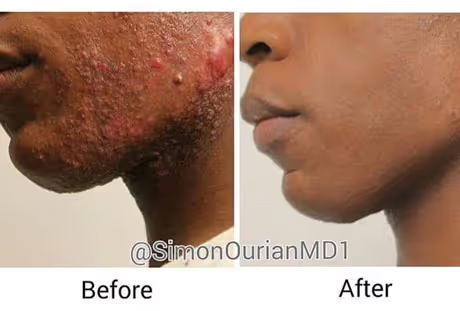
How Can You Address Acne and Its Scarring?
To address acne it is crucial to maintain a skincare routine and consider topical treatments or seek guidance from a dermatology doctor. When dealing with scars removal options such as laser therapy, chemical peels, or microneedling can be beneficial under the guidance of a professiona’s expertise.
What advice do experts give for treating acne and acne scars?
Dermatologists commonly suggest using treatments, taking medications, and undergoing in office procedures like laser therapy, chemical peels, or microneedling to address both acne and acne scars.In summary, having an understanding of the distinctions between acne marks and scars empowers individuals to make informed choices regarding their journey. By recognizing these differences and exploring treatments, individuals can strive for healthier skin while boosting their confidence. It's important to remember that you possess the knowledge and resources to present your face to the world.If you believe that professional acne and acne scars or marks treatments are for you, then schedule your consultation appointment with us: click here.
Laser Therapy to Treat Acne and Acne Scars
Introduction
Laser treatment for acne and its scars has become increasingly popular as a solution for achieving blemish-free skin. This article aims to give you an overview of the benefits and risks associated with this procedure. Whether you're contemplating laser treatment or simply looking to gain an understanding of its implications, this guide will provide insights into the factors worth considering.
What exactly is laser treatment for acne and acne scars? How does it work?
Laser therapy for treating acne and its scars is a procedure that employs focused laser beams to target and diminish both acne breakouts as well as the residual marks left by previous ones. The laser energy can penetrate the skin stimulating collagen production, reducing inflammation, and eliminating bacteria commonly associated with acne.An amazing example is the Coolaser®, an Epione-exclusive procedure, which uses advanced laser technology to resurface the skin and reduce the appearance of acne scars.

What are the potential advantages of opting for laser treatment to address acne and its scars?
The top two benefits of getting laser for acne and acne scars are:
- Minimize Scarring. Laser treatment can effectively reduce the visibility of acne scars by encouraging collagen production while smoothing out skin texture.
- Enhanced Skin Texture. Laser aids in improving skin texture and tone resulting in an even complexion.
What are the potential risks and side effects associated with laser treatment, for acne and acne scars?
There are a few risks and side effects related to laser treatment for acne and acne scars including:
- Skin Redness. After the procedure you may experience redness and irritation on the treated area.
- Swelling. Mild swelling might occur in the treated area.
- Changes in Skin Pigmentation. Laser treatment can cause permanent alterations in skin pigmentation.
- Rare Instances. While uncommon, there have been cases of scarring or infection.
How do you reduce the possibility of risks or side effects when doing laser treatments?
- Go to an expert. Make sure that you properly choose your provider. Pick someone with years of experience and hundreds of testimonials to back them up.
- Research. Utilize the wealth of information online and do diligent research on the treatment options available to you.
- Ask about aftercare. Discuss your aftercare regimen with your chosen provider. Ask about what to watch out for.
Is laser treatment for treating acne and acne scars?
Yes , laser treatment can be effective in addressing both acne and acne scars; however individual outcomes may vary.In conclusion, laser treatment is an amazing option for managing acne and its associated scarring. It is essential to seek the guidance of an expert provider to minimize potential risks and to ensure that the treatment is suitable to the patient and their needs.Schedule your consultation appointment with us: click here.
Clearing the Path: Getting Rid of Acne and its Scars
Introduction
When it comes to achieving healthy skin, dealing with acne and the lingering scars it leaves behind can be quite a journey. However, with the strategies and knowledge you can have your way towards a complexion that’s free from blemishes. Let’s explore methods and techniques for effectively removing acne and its scars. Whether you're aiming to prevent breakouts or fade existing scars this journey will equip you with the tools to achieve skin.
What does acne and acne scar removal entail?
Acne and acne scar removal refers to the process of treating both acne breakouts well as minimizing the visible marks or indentations left by past acne lesions on your skin. The ultimate goal of these treatments is to attain skin that’s free from blemishes.
- Acne Removal involves preventing instances of acne breakouts while treating existing ones. It may encompass treatments, medications, making lifestyle adjustments, and adopting proper skincare routines.
- Acne Scar Removal focuses on reducing the appearance of existing scars.
There are various approaches to improve the texture and appearance of acne-scarred skin. These include chemical peels, microneedling, dermal fillers, laser therapy, and surgical procedures. One’s treatment of choice should depend on the type and severity of the acne and its scars. It is important to seek guidance from experts for the best removal option per individual.

What should be done to remove acne and acne scars?
Acne Prevention and Treatment:Follow a skincare routine. Use treatments containing ingredients like salicylic acid or benzoyl peroxide. Consider prescription medications for acne. Adopt a lifestyle with nutrition and stress management.Acne Scars Removal:
- Avoid picking or squeezing acne lesions to prevent scarring.
- Explore topical products with scar fading ingredients like niacinamide, vitamin C, or peptides.
- Consider treatments such as chemical peels, microneedling, laser therapy, dermal fillers, or surgical procedures.
- Consult an expert who can provide guidance based on your skin type and the severity of your scars.
Which products are recommended for removing acne and acne scars?
To get rid of acne, it is advisable to use skincare products that contain ingredients like acid, benzoyl peroxide, or retinoids. If you're looking to diminish scars you may consider using products with niacinamide, vitamin C, or peptides. Additionally, exploring treatments such as chemical peels, microneedling, dermal fillers, or laser therapy could be beneficial.
What does laser acne scar removal involve?
Laser acne scar removal is a procedure that employs special types of lasers to improve the appearance of acne scars on the skin. The laser emits concentrated energy that specifically targets the tissue. This stimulates collagen production and removes damaged layers of skin. As a result, the treatment helps the texture of your skin and reduces the visibility of scars.Depending on the type and severity of your scars, a trained medical professional will determine which specific type of laser treatment is most suitable for you.Achieving radiant skin is attainable by implementing strategies for both preventing and treating acne as well as addressing acne scars. Remember that patience and consistency are key along this skincare journey. When necessary, seek guidance from trusted experts who can support you in achieving blemish free skin.We can help you get started on your journey towards newfound confidence. Schedule your consultation appointment with us: click here.
Flawless Beauty: How to conceal and remove acne and acne scars
Introduction
Perhaps the fastest way to achieve one’s desired appearance is by masking imperfections with makeup. When chosen and applied properly, skin care and makeup can be your friends in helping you hide acne and acne scars for a confident and radiant look.
What are the necessary steps to prepare your skin before applying makeup to conceal acne and acne scars?
The essential steps to get your skin ready, for makeup involve cleansing to remove impuritiesmoisturizing to hydrate your skin and using a primer to create a base for flawless makeup application. These steps ensure that your makeup stays in place and looks impeccable all day long.

Which are the recommended makeup products for those with acne?
For individuals with acne, it is advisable to choose comedogenic and oil-free makeup products that are often labeled as "acne friendly." Look for options like oil foundations or mineral based makeup as they are less likely to clog pores or worsen acne breakouts.
How should one apply foundation properly for coverage when trying to conceal acne and acne scars?
To achieve coverage while hiding acne and acne scars with foundation use either a sponge or brush to evenly apply the product. Begin from the center of your face. Blend outward ensuring application. Layer more foundation, if necessary, on blemishes or scars before setting everything with powder, for lasting coverage.
How does one permanently remove acne and acne scars?
While the application of makeup provides a quick fix in dealing with acne and acne scars, longer-lasting solutions such as professionally-done treatments is still advisable. At Epione Beverly Hills, Dr. Simon Ourian uses a combination of Coolaser® and Neustem™ injections to assist in the removal of acne and acne scars.Ask us about your acne and acne scar treatment options. Schedule your consultation appointment with us: click here.
Understanding Acne Scars: Types, Causes, and Treatment Options
Introduction
Acne scars can be a lasting reminder of past skin troubles, impacting not only your physical appearance but also your self-confidence. Understanding the different types, causes, and available treatment options for acne scars is essential for achieving smoother, clearer skin. In this comprehensive guide, we will explore the world of acne scars and address key questions about their types, causes, and the treatment options available.
What Are the Different Types of Acne Scars?
This section explains the common types of acne scars, such as ice pick, boxcar, rolling, and hypertrophic scars, providing insights into how each type appears on the skin.
- Ice Pick Scars: These are deep, narrow, and pitted scars that resemble small, V-shaped punctures. They often result from deep, inflammatory acne lesions.
- Rolling Scars: Rolling scars create a wave-like texture on the skin. They are shallow and caused by the fibrous bands of tissue that tether the skin to deeper structures.
- Hypertrophic Scars: Unlike most acne scars that are depressions in the skin, hypertrophic scars are raised and thicker. They develop when the body produces excess collagen during the healing process.
Understanding the type of acne scars you have is essential for choosing the most appropriate treatment to improve their appearance.

What Causes Acne Scars to Form?
Acne scars form as a result of damage to the skin's collagen and tissue during the acne healing process. When the skin is injured by severe acne lesions, the body's natural response is to produce too much or too little collagen, leading to different types of scars. Inflammation, as seen in inflammatory acne, plays a significant role in the scarring process. The type and severity of acne, as well as how it's managed, can influence the likelihood of scars forming. Proper acne care and treatment can help minimize the risk of scarring.
What Professional Treatments Are Available for Acne Scars?
Several professional treatments are available for acne scars:
- Chemical Peels: Chemical solutions are applied to the skin to remove the top layer, revealing smoother skin.
- Microneedling: Fine needles create tiny injuries in the skin, promoting collagen production and reducing scar appearance.
- Dermal Fillers: Injected into pitted scars, fillers raise and smooth the skin's surface.
- Laser Therapy: Laser treatments target scar tissue, stimulate collagen production, and reduce scar visibility. Dr. Simon Ourian’s Coolaser® is an amazing laser treatment of choice to reduce the appearance of acne and acne scars.
- Dermabrasion: A surgical procedure that resurfaces the skin, often used for deep scars.
- Subcision: A minor surgical procedure that breaks the fibrous bands that tether the skin, helping to elevate rolling scars.
- Punch Excision: During this procedure, a dermatologist removes individual ice pick scars and sutures the wound.
Understanding acne scars is essential for effective treatment. With various types, causes, and treatment options available, you can make informed choices for achieving smoother, scar-free skin. Whether you opt for at-home remedies or professional treatments, the key is personalization to your unique needs and preferences.The choice of treatment depends on the type and severity of your acne scars. Consulting a professional is crucial for personalized recommendations. Schedule your consultation appointment with us: click here.
A Simple Guide to Treating Acne and Acne Scars
Introduction
Acne is a skin issue that can leave marks known as acne scars. These scars can have an impact on how we look and feel about ourselves. Though dealing with acne and its scars can be challenging there are ways to significantly improve the condition of your skin. In this article we'll provide you with steps to manage and overcome acne while also addressing the issue of scars helping you achieve healthier and scar free skin.
How to Get Rid of Acne and Acne Scars?
Getting rid of acne and its scars involves a process that includes preventing breakouts as well as treating existing scars. Here's a step by step guide on how to handle both issues:
- Preventing and Treating Acne
- Establish a Skincare Routine: Begin with a skincare routine that involves gentle cleansing using non-comedogenic moisturizers and applying sunscreen when heading outdoors.
- Utilize Over the Counter Products: Look for cleansers, spot treatments, or serums containing ingredients such as salicylic acid, benzoyl peroxide, or alpha hydroxy acids (AHAs) to help manage acne.
- Prescription Medications: If you're dealing with acne it's best to consult a dermatology doctor who can provide you with oral medications like retinoids, antibiotics, or hormonal treatments.
- Lifestyle Habits: Taking care of your diet, exercising regularly, and managing stress helps reduce the appearance of acne. It's advisable to avoid smoking and excessive alcohol consumption, too.
- Preventing Scarring: It's crucial to refrain from picking or squeezing acne lesions as this could worsen the scars.
- Fading Acne Scars
- Topical Scar Fading Creams: Incorporating products containing niacinamide, vitamin C, or peptides into your skincare routine can gradually diminish the appearance of scars.
- Chemical Peels: Dermatology treatment providers have the expertise to perform chemical peels that exfoliate the skin to eliminate damaged layers and stimulate collagen production to reduce the appearance of scars.
- Microneedling: This procedure involves injuring the skin to activate the body’s natural healing response thus assists in gradually reducing the appearance of scars.
- Dermal Fillers: To address pitted scars, providers may opt for fillers that raise and smoothen the surface of one’s skin. For his clients, Dr. Simon Ourian uses his proprietary Neustem™ fillers.
- Laser Therapy: A range of laser treatments are available to target tissues by encouraging collagen production and reducing the visibility of scars. At Epione Beverly Hills, we have seen massive success in using Coolaser™ to reduce the appearance of acne scars.
- Silicone Products: Consistently using silicone sheets or gels can help flatten and fade scars over time.
- Get Professional Advice: It's always a good idea to consult doctors or skincare professionals who can provide sound recommendations especially for one’s specific skin type and the severity of scarring.

Which Products Are Recommended for Acne and Acne Scars?
The effectiveness of products for treating acne and acne scars can vary based on a number of factors such as skin type and the extent of the issues. Here are some suggested products that address one’s concerns:For Acne
- Salicylic acid-containing cleansers may help exfoliate the skin, clear out pores, and reduce inflammation.
- Benzoyl Peroxide effectively kills bacteria that cause acne while also reducing inflammation. It is available in creams, gels and spot treatments.
- Alpha Hydroxy Acids (AHAs) promote cell turnover, unclog pores, and improve overall skin texture. Common AHAs include acid and lactic acid.
- Prescription-based topical retinoids help prevent blockages and reduce inflammation by encouraging cell turnover.
- Oil-free moisturizers keep the skin adequately moisturized without triggering excess oil production even if you have oily or acne-prone skin.
- Sunscreen is essential for protecting the skin from sun damage. It is particularly crucial to avoid sun damage when using acne treatments.
When it comes to treating acne scars what are the options you can consider?
- Vitamin C Serum may help fade hyperpigmentation and improve the appearance of scars over time.
- Niacinamide is useful in reducing inflammation and enhancing the skin’s barrier which is beneficial for managing scars.
- Products with peptides stimulate collagen production, ultimately improving the texture of scars.
- Chemical exfoliants such as glycolic acid and salicylic acid are effective in promoting cell turnover which aids in scar fading.
However, keep in mind that the effectiveness of the above products may vary depending on your skin type, the type of acne you have, and the severity of your scarring. It's always a good idea to consult a doctor or provider who can provide recommendations based on your specific needs and concerns.Schedule your consultation appointment with us: click here.
Is Acne Seasonal?
Skin concerns are prominent among people of all age, sizes, and looks. Keeping up with skincare routines can certainly be a task, and it isn’t uncommon to suffer from acne and other irritating conditions.Many patients fear acne due to the appearance it can give the skin; the red spots and blotches can take a hit to someone’s self-confidence depending on its severity. At Epione, we understand how serious skin concerns can be. And when it comes to acne, we want to provide the most accurate and up-to-date information possible to help you gain control over your skin and your looks. Our friendly staff has done some research to answer a common question: Is acne seasonal? To learn more about acne treatment in Los Angeles, contact Dr. Ourian™ today.
What is Seasonal Acne?
Seasonal acne is defined as a type of acne that can improve or worsen during certain seasons in a very regular pattern. Most types of seasonal acne are so accurate that they can often be marked on a calendar; the second a certain season begins, the acne will either get better or worse.The changing months can often bring about a surprising and annoying round of acne for anyone dealing with skin problems. While seasonal acne is most likely to affect teenagers, any person can be seen with this condition. While seasonal acne can be unpredictable, and can appear for no apparent reason, there are other contributing factors which may influence the likelihood to contract seasonal acne.
What Factors Can Influence Seasonal Acne?
Seasonal acne, which can affect someone in the winter, summer, or fall seasons, can come about for a variety of reasons. While it’s genetic for some, it could be due to a variety of environmental factors for others.Some of the reasons why seasonal acne may occur:● Lack of sleep● Stress● Lack of daily hygiene routine● Buildup of dry skin● Dryness due to central heating units in the home● New products applied to the skin or hair● The wearing of too many scarves and hatsWearing certain clothing or products can cause the skin to become much more oily than usual, which is usually a catalyst for seasonal acne to occur. Seasonal acne can affect someone who is stressed, or whose skin is undergoing unfamiliar changes in certain environmental conditions.
How Can Seasonal Acne be Treated?
When you experience acne flare-ups, there are a variety of things you can do to treat this acne. Depending on how severe the acne is, and what caused it in the first place, there are steps you can take that will treat the skin and allow the acne to subside.You can opt for gentle cleansers and exfoliating products to help your skin rid itself of the oil and dirt that gets trapped in the pores. That way, not only can you treat existing acne, but you can prevent acne from building up altogether.Make sure to wash your face with warm, soapy water more often. You can do this in the shower or sink, and it only takes a few minutes. You’ll instantly feel better with a refreshing wash, and your skin will be free from the threat of blemishes or breakouts.
Acne Treatment in Los Angeles
At Epione, we are passionate about helping you treat your skin the right way. If you have serious seasonal acne breakouts, and you aren’t sure what the best method is of getting rid of it, you can contact one of our professional staff members to schedule a consultation right away. Acne can be an irritating and painful condition that leaves blemishes on the skin and a look that is less than desirable. To get your skincare treatments started as quickly as possible, feel free to contact us online or give us a call at (310) 651-6267 to speak with a representative!
What are the Worst Foods for Acne?

You remember the rumors going around the halls of your high school:“Eating pizza will give you a pizza face!”“Chocolate will only give you pimples…”“French Fries are the worst for your skin!”Well, it turns out there is a nugget of truth in these myths. You may be taken aback by the foods that made our list of the worst choices for acne. They include dairy, nuts, and – surprise! – sushi. We also included a bonus list of some little-known acne healing foods at the end of the article.For more information on acne scar removal in Los Angeles and which cosmetic procedures can benefit you, Contact Epione in Beverly Hills today.
Worst Foods for Acne
Chocolate
Until just recently, the idea that chocolate causes acne was considered a simple myth among scientists. However, in 2013 a small study from the Netherlands was published connecting chocolate to skin changes resulting in acne. As it turns out, eating chocolate causes inflammation. Plus, chocolate lowers the body’s defenses against microorganisms, so bacteria can infect pimples and worsen them.
Pizza
Here is another rumor that has been proven true. Eating simple carbohydrates causes acne. These are high-glycemic foods that cause spikes in your blood sugar, because the sugars are quickly digested and then dumped into your bloodstream all at once. The resulting high blood sugar causes hormonal changes and inflammation that leads to acne.
French Fries
Yes, this one is true as well. When you eat greasy, high fat foods like French fries, the foods travel down the digestive system to be broken down and used for energy. But high-in-saturated-fat fries can lead to hormonal reactions which cause acne.
Sushi
We’ve already established that high glycemic foods can contribute to acne breakouts. This is because they encourage an inflammatory response, in turn triggering the release of acne-promoting hormones. Well, did you know that there is a glycemic index that rates foods according to their effect on your blood sugar? There is, and a rating of 20 and above is considered a high-glycemic food. On this scale, sushi rice receives a 17 (which is pretty high.) So, if you are eating sushi regularly, as many of us do, you might want to consider cutting back.
Nuts
Nuts are high in protein and fat, which makes them difficult to digest. If these fats and proteins don’t properly digest, the immune system may create antibodies that inflame sebaceous glands and cause pimples.
Dairy
There is no definite link between dairy and acne, but there are theories about it. One theory is that milk contains components related to the hormone testosterone, which may stimulate oil glands in the skin, setting the stage for acne. Something to consider is that distinct kinds of dairy may affect your skin in different ways. If you find that cow’s milk causes breakouts, try yogurt or kefir. Or, you can switch to an alternative milk like goat’s milk or any number of nut milks widely available today. If cheese is a problem, try a vegan variety!
Spicy Foods
In regions where the people consume a lot of spicy foods, like South Asia and Latin America, it is a common conception that eating spicy causes acne. But is it true? Well, yes. Spicy foods often contain tomatoes and peppers, which contain acidic lycopene that can be an irritant to some people, throwing off their skin's pH levels and triggering breakouts.
What Helps Acne
A healthy, well-rounded diet and steady exercise routine will do wonders for your skin. But there are some little-known foods that are especially great if you want a pimple-free, healthy glow.
Fatty Fish
Salmon, Sardines, and Tuna all feed your body Omega-3s. They allow your skin to build new, healthy cells, making it look better. Don’t like fish? Take a fish oil pill daily. A 2012 study showed that taking fish oil helped improve the complexions of people with moderate to severe acne by controlling inflammation.
Probiotic Rich Foods
The most commonly known sources of probiotics are yogurt or kefir, but there are many non-dairy alternatives. Have you ever considered sauerkraut, miso, kimchi, or tempeh? These are all great sources of the beneficial bacteria. Research in the Journal of the American Academy of Dermatology shows that consuming probiotics may stymie the release of inflammatory proteins and decrease sebum production, preventing plugged pores.
Spirulina
What’s that you say? Spirulina is blue-green algae that is super nutritious and high in Gamma-linolenic acid (GLA). GLA is an essential fatty acid with anti-inflammatory properties. That’s great news if you want to get rid of acne. You can find Spirulina at your local health food market. Add it to your morning smoothie, sprinkle it on your cereal, or mix it into a salad.
Acne Scar Removal in Los Angeles
Dr. Simon Ourian™ at Epione Beverly Hills offers Acne Scar Removal, Microdermabrasion, and Laser Treatments for Acne Scars. To create the flawless skin you have always envisioned, come see Dr. Ourian™ today. Call 310.651.6267 to request a consultation.
What Causes Acne Scarring?
Scars from acne often seem like a double punishment. First, there’s the issue of actually dealing with the nasty pimples. Then there’s the fact that you now have marks there to remind you of the issue. Despite that fact, it is not uncommon for numerous individuals to battle acne well into their adult years. Even those who are lucky enough to experience a dramatic decline in acne related symptoms over time are still often times left with an irregular skin appearance due to the onset of acne-related scarring.Acne scars are most often the product of an inflamed lesion or blemish which occurs when the follicle, or pore, becomes engorged with excess oil, dead skin cells, and bacteria. The pore goes on to swell, causing a break in the follicle wall. If the rupture occurs near the skin's surface, the lesion typically minor and will heal rather quickly. More serious lesions will arise, however, when there is a deeper break in the follicle wall and when infected material spills out into the dermis to destroy otherwise healthy skin tissue.In order to repair the damage done to the dermis, the skin goes on to form new collagen fibers that provide the skin with extra strength and flexibility. Unfortunately, the finished "repair job" hardly ever looks as smooth or flawless as before the injury.
Types of Acne Scars
There are many different types of acne, some of which are more prone to scarring than others. Blackheads, whiteheads, and other non-inflamed blemishes typically don't cause scarring because these types of lesions do not injure skin tissue. Inflammatory acne, however, such as acne cysts or nodules, are way more likely to create long-term scarring as these types of acne affect deeper layers of the skin.There’s another type of acne scarring called hypertrophic, or keloid scarring, that happens if the body produces too much collagen, resulting in the creation of a raised mass of tissue on the skin's surface. Acne also is known to lead to atrophic, or depressed, scars as well, which develop when there is a loss of tissue. Ice pick and boxcar scars are two examples of atrophic scars.Various factors can make an individual more prone to developing acne scars, such as:• Genetics: If your family has a history of acne scarring, you are more likely to also experience the issue.• Non-Treatment: Individuals who do not treat their acne sooner rather than later are more likely to scar.• Picking and Touching: Picking at acne causes trauma to the skin that is more likely to result in scarring and prolong the healing process. Case in point: DO NOT pick, prod, or even touch the skin!
Avoiding Acne Scars
To go about avoiding acne scars, there are many steps that can be taken. First and foremost, treat acne as soon as it develops because the best thing you can do is to get all acne under control quickly and effectively before it spreads further or gets worse.Next, always pass up the temptation to pick or squeeze any pimples as doing so can force debris deeper into the dermis, spreading an infection to other tissue and worsening inflammation. Picking at scabs should also be avoided because scabs are a skin's natural "bandage" to protect any wound as it heals. Hence, picking a scab off a wound before it is ready prolongs the healing process and increases chances of scarring.Even with the most careful treatment, however, acne scars can and will develop. Luckily, there are many various procedures that can help with avoiding acne scars and help avoid dire effects on one’s self-esteem, confidence, and overall quality of life due to the appearance of acne scarring.Target and immediately treat active acne lesions with some of these effective treatment plans that can improve skin texture and reduce acne scarring:• Chemical Peels: An acid-based solution is applied topically to either the entire face or just in areas of pitted scarring to remove the outer layer of skin and stimulate collagen repair. Multiple sessions are necessary to optimize results.• Laser Resurfacing: A fractional laser delivers pixelated columns of laser heat in a controlled and predictable manner to either heat the skin or to remove the skin to elicit scar remodeling. It is best to ask an expert about which laser would best fit your needs and lifestyle, as the number of recommended treatments and the amount of downtime involved often varies.• fillers: Injectable hyaluronic acid like Belotero, Juvederm or Restylane is injected into depressions in the skin from acne scarring to help smoothen out the skin texture. Since fillers are temporary, they will need to be done via multiple sessions to maximize scar repair.A consult with a board-certified cosmetic physician can determine how to customize numerous options for both you and your skin. To learn about more ways of avoiding acne scars or to schedule a consultation to discuss further options-- including various scar removal treatment plans-- contact Epione, one of the most comprehensive, state of the art laser and aesthetic surgery centers of its kind in the world specializing in the most current technology available for skin, hair, and body contouring. Our staff is dedicated to providing all clients with the highest level of personal attention and care. Schedule a consultation today!
Los Angeles Acne Scar Removal
In the Los Angeles area, acne scar removal surgery is becoming more frequent. There have been some good strides made in perfecting this kind of surgery. In addition, this type of surgery can dramatically improve the appearance of the patient. The sheer emotional improvement of patients who get this surgery done is amazing. The good news of what this surgery can do for looks is being shared.By definition, an acne scar is what happens to your skin in reaction to an acne lesion. If your acne is very bad, your body may not be able to heal itself quickly enough to prevent a scar from forming. The scars can be red or purple in color. The scars are often rated also, depending upon the depth of the scar, and the shape. You can even get a keloid like scar. So, by definition, acne scar removal in Los Angeles, or any city, would be the process of trying to restore the natural look of the skin, prior to the acne breakout.Los Angeles acne scar removal experts tend to agree that there is a bit of a mystery behind why some acne forms scars, and some does not. It is also mystifying as to why certain people tend to develop the problem over others. The problem is genetic in nature, but the triggers are not fully understood.What Los Angeles acne scar removal experts do agree upon is that the large, deep, cystic style acne lesions are the ones that cause the worst damage. So, much of the treatment for this type of acne falls into the general category of “reactive treatments.”The process of fixing acne scars is tricky. However, Los Angeles acne scar removal patients are lucky, because some of the best cosmetic surgeons in the country reside there. Prior to surgery, your Provider will want to work with you to eliminate as much acne as possible. In order to prevent any potential scarring, you should not attempt to eliminate the acne yourself. You could end up only adding to the problem.Los Angeles acne scar removal patients will then be ready for a non-surgical procedure. There are techniques used for the procedure. Both involve the use of a laser. So, the difference centers on what each laser can do. most popular Los Angeles acne scar removal technique makes use of a device called the Coolaser. This particular laser is advantageous for this type of treatment, because the physician can employ to accurately target just the effected areas. This technique can be highly effective in smoothing out acne scars, and is also good at removing discoloration.On the back side of the surgery, you will experience approximately 2–3 days of swelling, and sunburn like red skin. You might also have some peeling. Some patients may require a second treatment 2–4 months.

Acne Scar Treatment
Acne is often a frightfully debilitating skin condition, and the resulting scars are always a painful reminder for the people who boldly face the world no matter how self-conscious they might feel. It is promising to note that acne scar removal is well within one's grasp. It is simply a matter of choosing the most suitable approach.Depending on their severity, these acne scars can be treated at home either with over-the-counter products or through carefully chosen natural alternatives. If the scars are particularly deep, or if the home treatment approach has not achieved the desired results, patients can approach medical professionals for a more effective solution.
Coolaser treatment can improve the look of wrinkles, fine lines around the mouth and eyes, facial scars, uneven skin pigmentation, sun damaged skin, and acne scars.Coolaser treatment treats wrinkles, improves the look of fine lines around the mouth and eyes, tightens skin, evens out uneven skin tone, removes sun damaged skin, sun spots, and scars.
Acne Scars Home Remedies
For less obvious scars, natural acne scar removal may be a good choice. Whenever possible, many people prefer to take a more homeopathic route in an effort to reduce the effects of chemicals on their sensitive skin. Of course, some people have better luck than others. This form of treatment may be a good way to start out, as it may reduce the cost of purchasing more expensive products right off the bat.Applying honey to acne scars is one of the most popular acne scar removal home remedies around. The natural healing properties of the honey will work on the scar tissue overnight. When the sweet substance is rinsed off in the morning it should have done a little bit of work on the affected area. Results generally only become visible after a few weeks. Over time, scars will lighten by a fractional amount. Aloe vera is another popular natural acne scar removal remedy. This gel is well-known to support the healing process. Applying the gel is said to lighten acne scars gradually over time.
Acne Scar Removal Products
When home remedies prove to be unsuccessful, as is the case with severe scarring, acne scar removal cream is the next logical step. Special moisturizing creams are often developed in an attempt to gradually lighten scars over time. These creams are generally quite gentle on one's skin, and will contain just a small amount of the chemicals needed to reduce the appearance of acne scars.In many cases, however, acne scar removal cream will be prescribed for use after cosmetic procedures. This is because the cream may not be able to get rid of the scars by the amount that the patient is looking for. It is important to note that scarring will never be completely invisible if patients only use these creams without pursuing another, more effective treatment first.For people who prefer to stay away from any cosmetic procedures, or for people who are happy to contend with minimal scarring, acne scar removal cream can be used in conjunction with cover-up products.
Laser Acne Scar Removal
Laser skin treatments are progressing in leaps and bounds, providing an effective means of reducing any unsightly scars or blemishes. This minimally invasive cosmetic treatment is surprisingly simple, and not at all as painful as some might say. This treatment involves the removal of the very outer layers of the skin -- generally the ones that bear the most obvious scar tissue.These outer layers are not particularly sensitive, which means that they can be removed safely, usually without complications. When the old layers of skin have been removed, the body is prompted to begin the healing process on the newer layer. This process is what assists in lifting the effects of scarring, making blemishes less apparent with each treatment. Modern laser acne scar removal treatments will last for roughly 20 minutes.Local anesthetic will often be used to numb the sensitive areas of the face, in an effort to reduce even the smallest amount of discomfort during the procedure. Although the procedure is minimally invasive, physicians will ensure that their patients are as comfortable as possible at all times.
Before and After Laser Acne Scar Removal

Before any laser skin treatment, patients will be urged to stay out of direct sunlight for at least a month. In some cases, a cosmetic physician will prescribe the use of a particular topical ointment before the treatment session as perhapsan antiviral and antibiotic medication. This is strictly as an added precaution, and should not be cause for concern. Following the necessary precautions will aid in speeding up the recovery process after the treatment.After the laser treatment, patients will notice a new layer of skin growing after about a week and a half. The treated area will be fairly sensitive and swollen directly after the laser session, and patients may experience some discomfort. Many doctors prescribe a small amount of medication to aid in pain management. In the first few months, patients will notice some redness or slight color changes.The new layer of skin is often susceptible to slight scabbing and itching. Patients must always avoid scratching the affected area, as this will do more harm than good. Doctors will often prescribe aftercare ointments to speed up the healing process.Acne Scar Removal CostWhile home remedies are certainly the most affordable option, the amount of time wasted on ineffective treatments may not be worth the trouble. Creams and over-the-counter scar reduction products may begin to lighten scars over lengthy periods of time, but the trial and error involved can be quite costly.
Acne Scar Removal
The search for acne scar removal methods and products that might alleviate the issue has gone on for generations. Acne is a rupturing of the skin and can cause severe damage. Occasionally it is necessary to seek relief through medical procedures. People find it normal when teenagers have acne scarring but the problem is not limited to young adults. When acne scars occur people usually start with home remedies and creams. Long before any seeing a doctor, people will try to remove acne scars on their own.
Home Remedies
Acne scar removal by using lemon juice, oils, baking soda and skins sloughing creams are often tried before moving on to something prescribed by a physician. Acne creams will work if the problem of acne scarring has not affected the skin’s inner surface. Finding the correct acne solution for your skin is sometimes difficult particularly if your skin is prone to scarring. This could create horrible results after using some products.
Microdermabrasion
Microdermabrasion is one method developed to relieve the damage of acne scarring. Once acne has taken over a person's face, scarring is likely to be severe and regular creams may have no effect. Microdermabrasion is a serious way of sloughing the skin, removing dead cells from the outer surface of the face. This process takes dead skin from the face, slowly removing the tissue that is scarred. This process may take time but it is non-surgical and not as expensive as some procedures.
Chemical Peels
The use of Chemical Peels to remove unattractive layers of outer skin is a poplar way to remove acne scarring. This procedure can give skin a new, youthful look. These products can be purchased over the counter or ordered online but for a truly effective chemical peel you may need to see a doctor.Many solutions are presented but one of the most effective products against acne is diet. What you eat creates a healthy colon system and promotes healthy skin. Detergents and foods may have the capacity to cause acne breakouts. Once these breakouts have started, sensitive skin has a difficult time restoring itself. The attack from outside bacteria does not help. Something as simple as your hand to your face may send your skin reeling into problems that can cause severe acne scarring.
New Coolaser Treatment Reduces Acne Scars and Boosts Patients’ Confidence
BEVERLY HILLS, Calif. — Epione Medical Corporation now offers a solution for the millions of adults and adolescents suffering from the devastating effects of acne scars. The practice’s revolutionary new Coolaser treatment uses advanced laser technology to resurface the skin and reduce the appearance of acne scars. Finally, patients can put their best face forward after years of embarrassment.“Severe acne cases can leave unsightly and embarrassing scars, pitting and skin unevenness that can remain for a lifetime,” said Dr. Simon Ourian™, medical director. “While acne scars often vary greatly in shape, type and color, Coolaser resurfacing has proved effective in varying cases and has helped patients finally feel good about their skin.”
Epione’s New Coolaser Treatment Shows Remarkable Success in Diminishing Acne Scars and Pitting
The Coolaser treatment, typically an hour long, uses lasers to remove the outermost layer of the skin. First, the entire face is numbed, using a topical cream.After this is done, a series of light pulses are flashed on the surface of the skin. The skin cells absorb the energy of the light, which causes the instantaneous vaporization of the superficial cells and results in a smoother, clearer and more even skin tone.Though healing takes 10 to 12 days, a significant percent improvement in the appearance of the scars may be expected, depending on the type and extent of scarring. A single session may not treat the acne scars entirely if they are too deep. These deeper acne scars can be corrected by injections under the skin to fill in or build up the pitted areas. The injections are done with fillers such as Radiesse, Juvéderm or Restylane.At the initial consultation appointment Dr. Ourian™ will determine if Coolaser resurfacing alone will treat the acne scars, or if a combination of resurfacing and fillers are needed. For more information about Acne skin treatments and other aesthetic services available at Epione Beverly Hills visit please call 310.598.2345.


%201.avif)


