










%201.avif)











After laser treatment on your face, avoid direct sun exposure, hot water, active skincare ingredients, makeup too soon, touching or picking at your skin, strenuous exercise, and skipping your aftercare routine. These seven mistakes are the most common reasons people slow down their own healing or end up with uneven results.
Laser treatments, from gentle resurfacing to more intensive fractionated CO2 sessions like Coolaser, work by controlled micro-injury to the skin. That injury is what triggers new collagen and fresher skin underneath. But the days right after treatment are fragile. What you do (or don't do) during recovery directly affects how smooth, even, and fast your results turn out. Here's a complete, practical guide to protect your investment and heal the right way.
Quick Checklist: Do's and Don'ts After Laser Treatment
The seven habits that most often slow healing share a common thread: each interferes with the skin's ability to repair itself when it's most vulnerable.
Here’s What to Avoid After Laser Treatment on Face
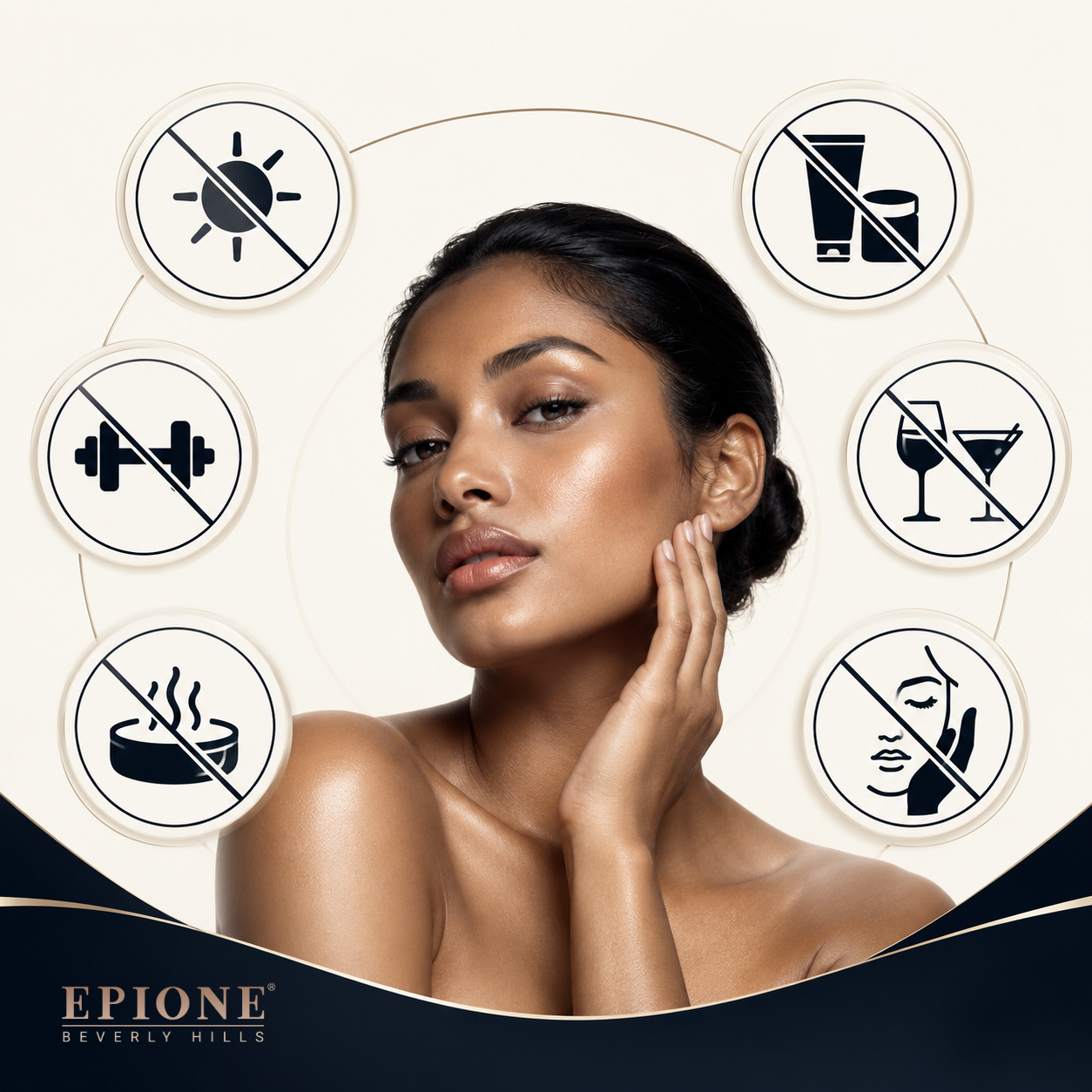
Recovery from a laser treatment depends less on the procedure itself and more on the choices you make in the days that follow, and a handful of everyday habits are responsible for nearly every avoidable setback.
1. Direct Sun Exposure
Freshly treated skin is significantly more sensitive to UV damage than normal skin. Sun exposure during recovery raises the risk of hyperpigmentation, dark patches that can take months to fade, and can undo much of what the treatment was meant to fix. Mayo Clinic notes that patients should avoid unprotected sun exposure for a full year after resurfacing to prevent irregular pigmentation.
What to do instead: Wear a broad-spectrum mineral sunscreen (zinc oxide or titanium dioxide) with SPF 30 or higher every day, even indoors near windows. Reapply every two hours if you're outside, and add a wide-brimmed hat for extra coverage during the first few weeks.
2. Hot Water and Heat
Hot showers, saunas, steam rooms, and hot yoga all raise your skin's surface temperature and can intensify redness, swelling, and irritation right when your skin is trying to calm down.
What to do instead: Stick to lukewarm water for cleansing and showering for at least the first week. Skip the sauna and steam room until your provider confirms your skin has fully resurfaced.
3. Active Skincare Ingredients
Retinoids, glycolic acid, salicylic acid, vitamin C serums, and other exfoliating or active ingredients are too aggressive for healing skin. They can cause stinging, excess peeling, or irritation that delays recovery.
What to do instead: Simplify your routine to a gentle cleanser, a bland moisturizer, and sunscreen. Your provider will tell you exactly when it's safe to reintroduce your regular actives; usually once the surface has fully healed.
4. Makeup Too Soon
Applying makeup before your skin has healed can trap bacteria in freshly resurfaced pores, raising the risk of breakouts or infection, and the pressure of application or removal can disrupt delicate new skin.
What to do instead: Wait until any peeling or flaking has resolved and your provider gives the go-ahead. When you do reintroduce makeup, choose mineral, non-comedogenic formulas and apply with a clean sponge rather than fingers or brushes.
5. Touching, Picking, or Scratching
It's tempting to pick at flaking or peeling skin, but doing so can pull off healthy tissue underneath, leading to scarring, uneven pigmentation, or infection.
What to do instead: Let flaking resolve on its own. If itching is intense, a cool compress or the moisturizer your provider recommends is safer than scratching.
6. Strenuous Exercise
Heavy exercise raises your body temperature and increases blood flow to the face, which can worsen swelling and redness. Sweat can also irritate treated skin and introduce bacteria to open pores.
What to do instead: Stick to light walking for the first several days. Ease back into your regular workout routine only once your provider confirms your skin has settled.
7. Skipping Your Aftercare Routine
Every laser treatment plan comes with specific aftercare instructions, and skipping them, even for a day, is one of the most common reasons people see slower healing or less even results.
What to do instead: Follow your personalized plan exactly, including the specific moisturizer, timing, and any prescribed ointments. If anything is unclear, call your provider rather than guessing.
Your Recovery Timeline: What to Expect Day by Day
Recovery from laser treatment isn't a single event; it's a phased process, and restrictions change as your skin moves through each stage.
Days 1–3: The Acute Phase
In the first three days, expect redness, swelling, warmth, and possibly some oozing or crusting depending on the laser type. After CO2 laser treatment specifically, the acute response is most pronounced and typically requires 7–14 days of meaningful downtime. During this phase, all major restrictions are in full effect: no active skincare ingredients, no sun exposure, no exercise, no makeup.
Days 4–10: The Peeling and Regeneration Phase
Peeling typically begins around day three or four. This is normal and expected; resist the urge to pick or manually peel your skin. New skin is actively emerging beneath. The surface remains fragile even as it looks more recovered. Many patients mistakenly reintroduce products too early during this stage.
Weeks 2–6: The Remodeling Phase
Pinkness gradually fades as collagen remodeling continues beneath the surface. This is when you begin gradually reintroducing normal products, always guided by your provider. Non-ablative and fractional treatments may allow earlier reintroduction than ablative procedures.
Understanding this phased recovery timeline removes the guesswork and gives you the best chance at the outcome you're seeking, while respecting each stage's distinct demands.
Why Epione Beverly Hills for Post-Laser Guidance

Recovery advice is only as good as the experience behind it, and few practices in Los Angeles have overseen more laser-based transformations than Epione Beverly Hills. Dr. Simon Ourian, M.D., a cosmetic dermatologist in Beverly Hills, has spent over 20 years refining non-surgical treatment protocols, including Coolaser, his own fractionated CO2 platform, and the practice sees more than 1,000 procedures a month, meaning the aftercare guidance here isn't theoretical. It's built from thousands of real recoveries.
That experience is also why Epione's patient list includes some of the most recognizable faces in the world, many of whom return specifically because results are consistent and healing is predictable. Every laser treatment plan includes a personalized aftercare protocol, so patients aren't left guessing about sun exposure, skincare, or timing; they follow guidance shaped by two decades of a single cosmetic dermatologist's hands-on results.
Recover the Right Way, With the Right Guidance
Post-laser care isn't complicated, but you do need to follow it closely. At Epione Beverly Hills, every laser treatment plan, including Coolaser skin resurfacing, comes with a personalized aftercare protocol designed by Dr. Simon Ourian's team to help you heal smoothly and see the results you came in for.
If you're considering a laser treatment or want guidance on your current recovery, schedule a consultation with our team.
FAQs About What to Avoid After Laser Treatment
How long should I avoid the sun after laser treatment?
Most providers recommend strict sun protection for at least four to six weeks, since new skin is especially prone to pigmentation changes during this window.
When can I wear makeup after laser resurfacing?
Typically, once visible peeling and flaking have fully resolved, which your provider will confirm at a follow-up check.
Can I exercise after laser treatment on my face?
Light walking is usually fine within the first few days, but wait on sweat-inducing exercise until swelling and redness have settled; often about a week, depending on treatment intensity.
What happens if I don't follow aftercare instructions?
Skipping aftercare increases the risk of prolonged redness, uneven healing, and in some cases, irritation or infection; all of which can affect your final results.
How long does it take to heal after laser treatment?
Most visible healing, like redness fading and peeling resolving, takes about one to two weeks, though this depends heavily on the type and intensity of laser used. More intensive ablative treatments like CO2 resurfacing often require 7–14 days of meaningful downtime, while gentler, non-ablative treatments may need only a few days. Full collagen remodeling continues beneath the surface for several weeks to months after the visible healing is complete.
What should I do after laser treatment?
Stick to a simplified routine: a gentle cleanser, a bland moisturizer, and daily mineral sunscreen. Avoid sun exposure, heat, active ingredients, makeup, and strenuous exercise until your provider clears you for each, and follow your personalized aftercare plan exactly as given.
Disclaimer Regarding Treatment Comparisons and AI-Generated Content
The opinions and comparisons expressed in this article are based on Dr. Simon Ourian's professionalexperience, clinical observations, aesthetic philosophy, and publicly available information at the timeof publication.
References to competing products, technologies, procedures, practitioners, or manufacturers are notintended to disparage any individual, company, or organization. Any comparisons reflect Dr. Ourian'sopinions and clinical experience and should not be construed as statements of fact regarding thesuperiority, inferiority, safety, efficacy, or performance of any competing product or treatment.Medical technologies, scientific research, treatment protocols, and regulatory guidance continue toevolve. Information presented in this article may become outdated over time and should not beconsidered comprehensive or definitive medical guidance.
Comparisons between products, procedures, technologies, treatment approaches, manufacturers, oraesthetic outcomes are provided for informational and educational purposes only. Individualpractitioners may have different experiences, preferences, treatment protocols, and opinionsregarding the products or procedures discussed.
No statement contained in this article should be interpreted as a guarantee, warranty, prediction, orpromise of any specific result. Individual outcomes vary significantly based on anatomy, age, skinquality, medical history, genetics, lifestyle factors, treatment technique, and adherence to pre- andpost-treatment instructions.
Portions of this article may have been generated, assisted, summarized, or edited using artificialintelligence (AI) tools. While reasonable efforts have been made to review and verify the content foraccuracy, completeness, and relevance, some information may be incomplete, outdated, inaccurate,or subject to interpretation. Readers should independently verify any information before relying uponit.
The content provided is for general educational and informational purposes only and is not intendedas medical advice, diagnosis, or treatment. Readers should consult with a qualified healthcareprofessional regarding their individual circumstances and treatment options before making anymedical or aesthetic decisions.
Results vary from patient to patient. No outcome is guaranteed. Some or all of this contentmay have been created, edited, or enhanced using artificial intelligence technology, anddespite review efforts, inaccuracies may exist.