





Non-Surgical Facelift


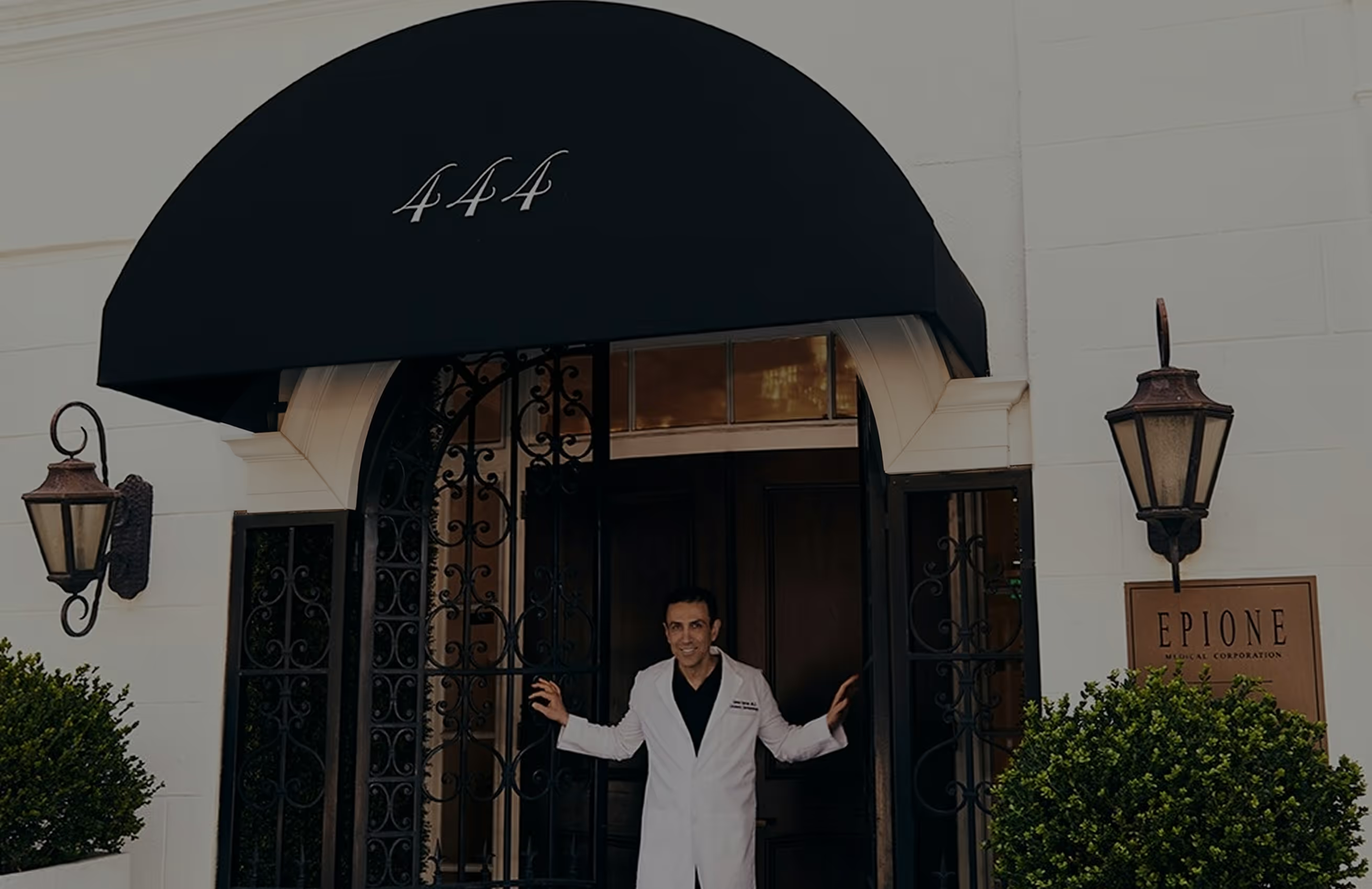
Using only advanced minimally-invasive techniques, Dr. Ourian can refresh your facial features, delivering results much like a traditional facelift. Using his experienced eye for cosmetic aesthetics, he delivers transformative results without the need for surgery. Find your path to a rejuvenated look through a non-surgical facelift in Beverly Hills.
What Is a Non-Surgical Facelift?
One of the most sought-after treatments at Epione in Beverly Hills is our fully non-surgical facelift. Unlike traditional surgical approaches, Epione's Non Surgical Facelift utilizes sophisticated, non-invasive techniques to enhance and refine the face with minimal downtime.
Through a carefully customized approach, it addresses a range of concerns from fine lines and skin laxity to the gradual loss of volume that affects facial structure over time. Each treatment is meticulously performed by Dr. Simon Ourian, ensuring results that are natural, balanced, and seamlessly integrated with your unique features.
The outcome is a refreshed, lifted, and more youthful appearance, achieved with precision, artistry, and a commitment to subtle, but elegant enhancement.

A Modern Method to Reverse Signs of Aging
Vibrant, rejuvenated facial features are within reach through our non-surgical facelift treatments. By carefully matching your treatment plan with your aesthetic goals, we can deliver results that achieve facial harmony and reduced signs of aging. Discover the difference a facelift can make when not a single incision is involved.
%201.avif)
Advantages of a Non-Surgical Facelift With Dr. Ourian
With over two decades of experience in Beverly Hills, Dr. Simon Ourian has helped countless patients achieve refined, natural-looking results. As a leading cosmetic dermatologist, he combines advanced techniques with an artistic eye to deliver some of the most sophisticated non-surgical facelift treatments available today.
At Epione, safety, precision, and patient satisfaction are paramount. Each treatment is thoughtfully customized to enhance your natural features, restore balance, and achieve a refreshed, youthful appearance. Dr. Ourian carefully designs every treatment plan to align with your individual goals, ensuring results that are subtle, elegant, and uniquely yours.

Is There a Recovery Period?
Traditional surgical facelifts often require weeks of recovery, with downtime largely spent managing swelling and discomfort. In contrast, a non-surgical facelift is designed to fit seamlessly into your lifestyle, with little to no downtime. Most patients are able to return to their daily activities the same day, experiencing only minimal and temporary side effects.
Mild redness or slight swelling may occur in the treated areas, but these effects typically resolve within a few days and rarely interfere with your routine. To support optimal healing and results, patients should avoid touching or applying pressure to the treated areas, strenuous exercise for 24–48 hours, excessive sun exposure, and heat-based activities such as saunas or hot showers. It is also recommended to avoid alcohol, harsh skincare products, and active ingredients such as retinol or exfoliants for several days, allowing the skin to heal smoothly and maintain the most refined outcome.
%201.avif)
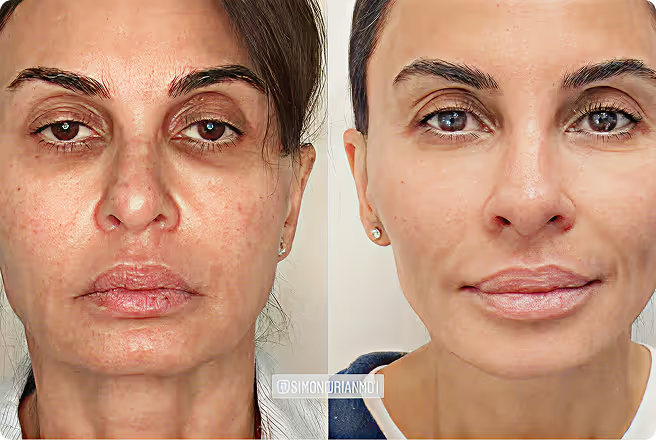
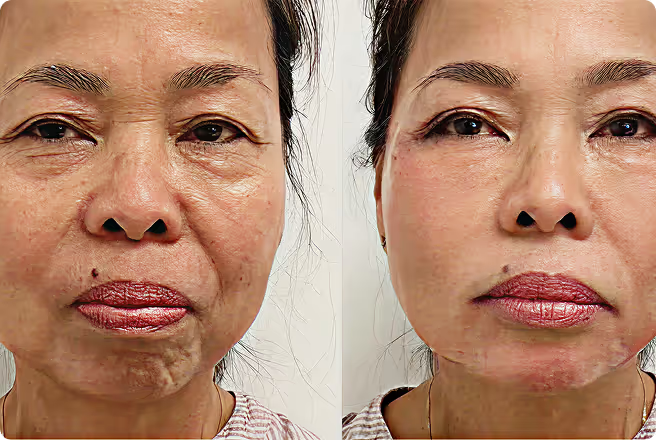
Non-Surgical Facelift Results
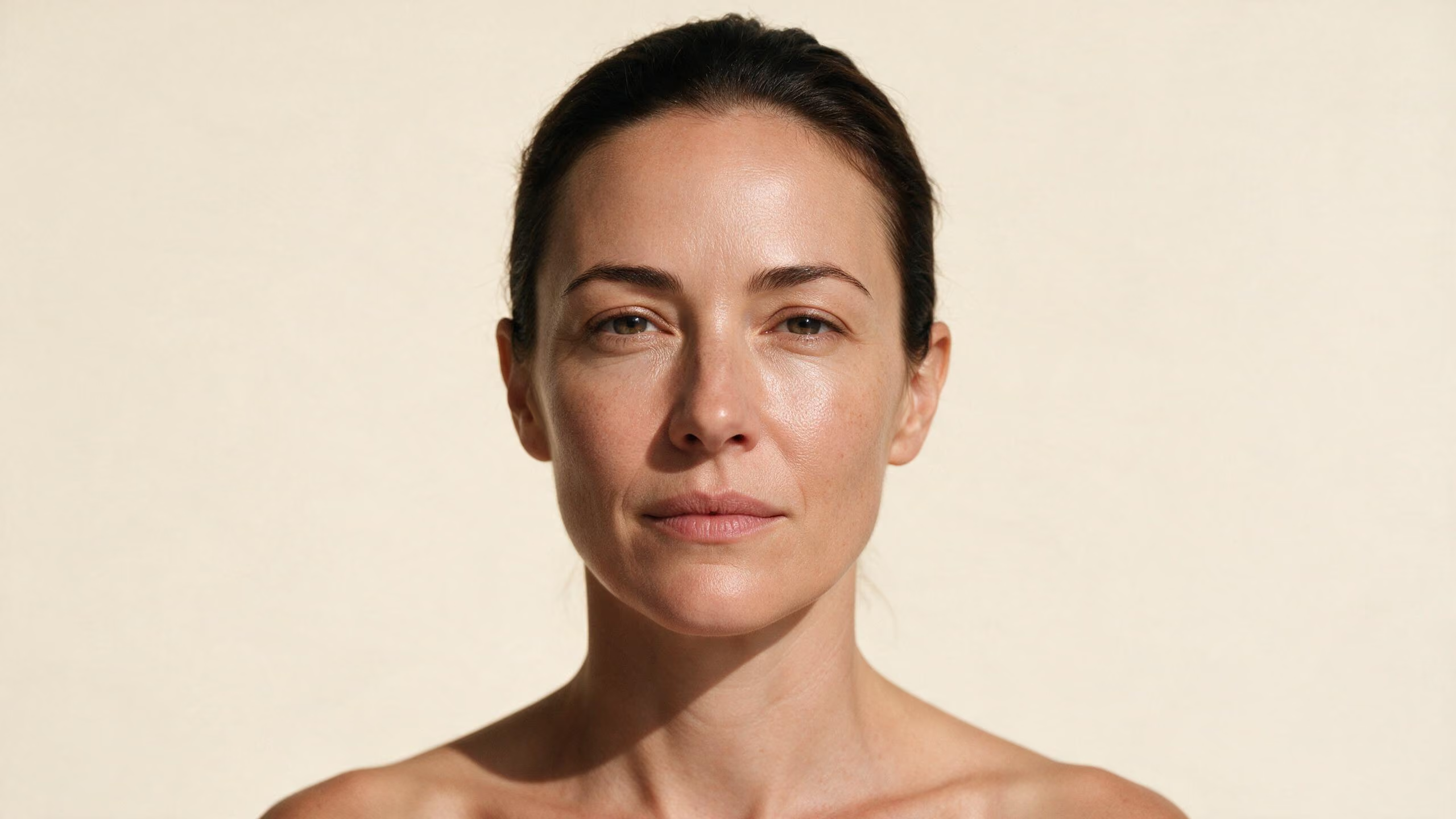
Patients can expect to see noticeable improvements almost immediately following their treatment. By combining our advanced techniques of Coolaser and Neustem, Dr. Simon Ourian is able to restore lost volume, enhance facial structure, and create a more lifted, youthful appearance with precision and artistry.
Beyond the immediate refinement, results continue to evolve as the skin responds and natural collagen support is enhanced, further improving texture, tone, and overall facial harmony. The outcome is subtle yet transformative. Never overdone, always balanced, and tailored to complement your unique features.
Results are long-lasting and may be maintained with occasional touch-up treatments, allowing you to preserve a refreshed and naturally rejuvenated appearance over time.

Surgical Facelift versus Non-Surgical Facelift
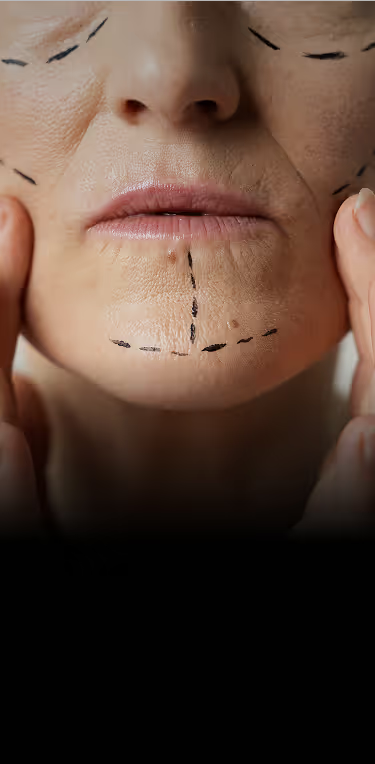
A non-surgical facelift is a great alternative to traditional surgical methods when performed by an experienced cosmetic specialist. Non-invasive techniques can deliver excellent results without the risk of infection, scarring, and other downsides of surgery. The cost of a non-surgical facelift is often lower than a surgical approach. Even better, you’ll enjoy immediate results that look natural, while a surgical facelift can often look stretched or artificial, with results only gradually appearing.
A non-surgical facelift also requires less commitment, as the changes will not be permanently locked in. Instead, patients can make minute alterations to the treatment plans as they wish to better match their ideals or even changing preferences.

"Dr. Simon Ourian is recognized as one of the world’s leading cosmetic dermatology doctors, known for his precise, natural approach to aesthetic medicine.
His work is defined by restraint, balance and unwavering commitment to safety, delivering results that enhance without appearing treated."
The Californian

Benefits of a Non-Surgical Facelift

Results that speak for themselves
We perform every treatment with precision and care to achieve the results you want. Achieve stunning results through proven treatments matched to your unique beauty.
Book Your Visit to Epione
If you’re ready to explore non-surgical facelift options in Beverly Hills, contact Epione today to schedule a consultation. Dr. Ourian will be pleased to discuss treatment options that can help you achieve the look you desire. With his expertise and advanced technologies, you can enjoy beautiful results with minimal downtime. Get ready for your new look and book your consultation with Dr. Ourian at Epione today.

Frequently asked questions
What is a non‑surgical facelift and how does it differ from traditional surgical options?
A non‑surgical facelift refers to a combination of injectable and energy‑based treatments designed to lift, tighten, and rejuvenate facial features without incisions or anesthesia. Unlike surgical facelifts, which reposition deep structures through incisions and require significant downtime, non‑surgical methods use fillers, neuromodulators, ultrasound, or radiofrequency to stimulate collagen and enhance underlying facial support. At Epione, clinicians evaluate each patient’s facial anatomy and aging pattern to tailor a blend of treatments for harmonious lifting. Dr. Simon Ourian explains that this approach offers natural‑looking results with minimal recovery time, making it a popular alternative for those seeking cosmetic improvement without surgery.
Which treatment technologies are commonly included in a non‑surgical facelift plan?
Non‑surgical facelifts can incorporate dermal fillers to restore lost volume, neuromodulators to soften dynamic lines, and energy‑based devices like ultrasound or radiofrequency to tighten deeper tissues. Each modality targets a different aspect of the aging face — structural support, muscle activity, and collagen stimulation — for comprehensive rejuvenation. The experts at Epione select combinations based on individual concerns, such as sagging cheeks, jowls, or loss of jawline definition. Dr. Simon Ourian notes that coordinating these treatments enhances lift and contour while respecting the face’s natural proportions.
Who is a good candidate for non‑surgical facelift treatments?
Good candidates are individuals showing early to moderate signs of aging, such as mild skin laxity, loss of mid‑face volume, or emerging jowls, who prefer to avoid surgical intervention. Those with deeper tissue descent or significant excess skin may be better served by a surgical facelift, but many people benefit from non‑surgical approaches first. At Epione, clinicians assess facial structure, skin quality, and aesthetic goals to determine the most effective plan. Dr. Simon Ourian emphasizes that realistic expectations and individualized protocols are central to successful outcomes.
What can patients expect in terms of immediate sensations and recovery?
During a non‑surgical facelift session, patients often receive topical numbing for comfort before injections or energy‑based treatment begins. Sensations can include gentle pressure from injectables or warming from energy delivery, all typically well tolerated. Afterward, some mild swelling, redness, or light tenderness may occur but generally resolves quickly, allowing most patients to resume normal activities shortly. At Epione, clinicians provide tailored aftercare instructions to support healing and maximize results. Dr. Simon Ourian explains that the minimal downtime is a key advantage that attracts many people to non‑surgical options.
How soon are results visible and how long do they last with non‑surgical facelift methods?
Results vary by the type of treatment used: fillers often provide immediate improvement in volume and contour, while energy‑based tightening unfolds gradually over weeks as collagen remodels. Many patients notice initial lift and smoothness almost right away, with ongoing enhancement over several months. The duration of results depends on the technologies used and individual factors, but maintenance sessions are typically recommended to sustain effects. At Epione, Dr. Simon Ourian provides personalized timelines so patients understand what to expect at each stage of improvement.
Can a non‑surgical facelift be combined with other cosmetic procedures for more comprehensive rejuvenation?
Yes. Combining non‑surgical facelift treatments with procedures like laser skin resurfacing, dark circle correction, or neck tightening can create a more complete facial refresh. At Epione, clinicians evaluate how different techniques interact to enhance overall balance, skin texture, and youthful contour. Dr. Simon Ourian notes that strategically pairing treatments allows for a customized plan that addresses multiple aging concerns without surgery. This blended approach helps patients achieve more harmonious and long‑lasting improvements.
What are common misconceptions about non‑surgical facelift options?
A common misconception is that non‑surgical facelifts deliver the same dramatic and permanent results as surgical facelifts. While non‑surgical methods yield meaningful enhancement, they work best when tailored to specific aging patterns and realistic goals. Another misunderstanding is that all non‑surgical options are temporary; while many are temporary, strategic planning and maintenance can sustain results effectively. At Epione, clinicians educate patients about the benefits, limitations, and expected progression of non‑surgical facelift options. Dr. Simon Ourian emphasizes informed decision‑making as a cornerstone of patient satisfaction.
Does a "non-surgical facelift" involve any downtime?
Most non-surgical procedures involve minimal to no downtime, allowing you to return to your normal activities immediately. Some patients may experience minor swelling or bruising for a day or two, but it is a fraction of the time required to recover from a surgical procedure, which is a major reason for the industry's shift.
Is a non-surgical facelift as effective as a surgical one?
While surgery is more permanent and can address extreme skin laxity, the non-surgical facelift at Epione is incredibly effective for mild to moderate aging. Dr. Simon Ourian can achieve a significant lift and contouring effect that often looks more natural because it restores lost volume rather than just pulling the skin tight.
What is the "zero-click" recovery actually like?
A zero-click recovery means that there is virtually no downtime required to hide the effects of the procedure. At Epione, the clinical team uses techniques that minimize bruising, allowing most patients to return to work or go out to dinner the same evening, although minor swelling may persist for a day.
How long does the Neustem facelift last?
The results of a Neustem treatment typically last between one and two years, depending on the patient's individual metabolism and lifestyle. Dr. Simon Ourian recommends periodic maintenance to ensure the structural support remains optimal and to adjust the look as natural aging continues.
Will I look "fake" or "over-filled" after a non-surgical facelift?
No, the hallmark of a treatment at Epione is a natural, refreshed appearance. Dr. Simon Ourian uses an artistic approach to ensure that the filler enhances your existing bone structure and facial harmony without creating an artificial or puffy look.
Can I combine a non-surgical facelift with other treatments?
Absolutely, many patients choose to combine their lift with laser resurfacing or under-eye treatments for a total facial rejuvenation. The experts at Epione often suggest these combinations to address skin texture and pigmentation alongside the structural lifting for a more comprehensive result.
Is a non-surgical facelift procedure painful?
Most patients find the treatment very manageable, often describing it as a series of small pinpricks or a feeling of pressure. Epione utilizes high-grade topical numbing agents and local anesthetics to ensure that the experience is as comfortable and stress-free as possible.
What happens if I don't like the results of my non-surgical facelift?
One of the major benefits of using hyaluronic acid-based fillers at Epione is that they are reversible. If a patient wishes to adjust or undo the treatment, Dr. Simon Ourian can use a special enzyme to safely dissolve the filler, though this is rarely necessary given the high level of patient satisfaction.
Who is the best candidate for this non-surgical facelift approach?
The ideal candidate is anyone noticing the early signs of sagging, loss of cheek volume, or a softening jawline but who is not ready for the risks or downtime of surgery. During a consultation at Epione, your anatomy will be carefully assessed to ensure that a non-surgical facelift is the right choice for your specific goals.
How long does a liquid facelift typically last for someone in their 40s?
The longevity of the results depends on the specific products used and the patient’s individual metabolism, but most patients at Epione enjoy their results for twelve to eighteen months. Neuromodulators like Botox usually need to be refreshed every three to four months, while dermal fillers in areas like the cheeks or jawline tend to last much longer. Dr. Simon Ourian will create a maintenance schedule to ensure your results stay consistent over time.
Is there a significant amount of swelling after the procedure?
Some minor swelling and redness are common immediately following the injections, but these typically resolve within a few days. The clinical team at Epione uses advanced techniques, such as micro-cannulas, to minimize trauma to the tissue and reduce the likelihood of bruising. Most patients find that any social downtime is minimal and can be easily managed with light makeup if necessary.
Can a liquid facelift fix sagging skin on the neck?
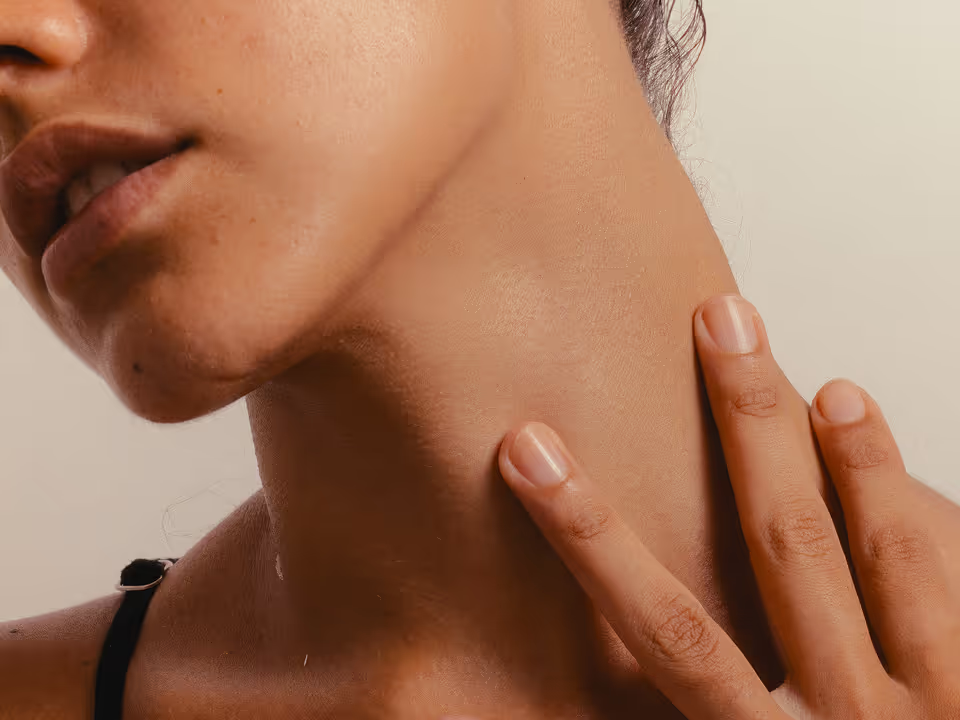
While a liquid facelift is excellent for the face and jawline, it has limited impact on significant skin laxity on the neck. For patients at Epione who are concerned about the "turkey neck" or deep neck bands, the team may recommend complementary treatments like Botox for the platysmal bands or specialized laser therapies. Dr. Simon Ourian can assess your specific concerns during a consultation to determine if injectables alone will meet your goals.
At what age should I start considering a liquid facelift?
There is no "perfect" age, as everyone ages at a different rate, but many patients find their mid-30s to be an ideal time for a liquid facelift. At this stage, the experts at Epione can focus on "prejuvenation," catching early volume loss before it leads to deeper folds. Starting earlier often means using less product over time to maintain a youthful look rather than trying to "correct" significant changes later.
How is a liquid facelift different from just getting lip fillers?
A liquid facelift is a comprehensive, full-face approach rather than a localized treatment. While it can include lip enhancement, the primary focus is on the structural pillars of the face, such as the temples, cheeks, and jawline. The goal at Epione is to harmonize the entire face so that the results look balanced and natural, rather than focusing on just one feature which can sometimes lead to an unbalanced appearance.
Can I switch from getting standard fillers to a high-definition facelift later?
Absolutely, and many patients find that their needs evolve as they age, making the transition to a high-definition facelift a natural progression. The experts at Epione can assess your previous treatments and integrate them into a more comprehensive structural plan. Dr. Simon Ourian specializes in adapting these protocols to ensure that as your face changes, your aesthetic strategy remains effective and provides the necessary support for a youthful appearance.
Does a high-definition facelift hurt more than a regular filler injection?
The comfort level is very similar for both procedures, as the clinical team at Epione uses advanced numbing techniques and very fine needles or cannulas. While a high-definition facelift involve more injection points, the use of vibration anesthesia and topical numbing ensures that the experience is quite manageable. Dr. Simon Ourian prioritizes patient comfort in every procedure, making the high-definition facelift a preferred choice for those who want significant results without the pain of surgery.
How do I know which option is right for my face?
The best way to determine the right path is through a personalized consultation with the specialists at Epione, where your facial structure and skin quality can be analyzed in detail. Generally, if you are concerned with only one specific area, standard fillers may be sufficient; however, if you notice overall sagging or a "tired" look, a high-definition facelift may be more appropriate. Dr. Simon Ourian will provide a recommendation based on your unique anatomy to ensure you achieve the most harmonious result.
Is there a risk of looking "overfilled" with a high-definition facelift?
When performed by the skilled clinical team at Epione, the risk of looking overfilled is virtually non-existent because the focus is on structural support rather than just adding volume. The high-definition facelift at Epione is designed to restore lost bone and fat shadows, which actually makes the face look more contoured and less "puffy." Dr. Simon Ourian uses his artistic expertise to ensure that the volume is placed in a way that mimics natural youthful anatomy.
Are the products used in a high-definition facelift different from standard fillers?
While both procedures use injectable fillers, a high-definition facelift often involves a wider variety of specialized products with different "G-prime" or lifting capacities. The experts at Epione select specific fillers for the jawline that are firmer, and softer ones for the lips or under-eyes. This curated selection of materials by Dr. Simon Ourian allows for the precise sculpting required for a high-definition result, whereas a standard filler treatment might only use one type of product.
Can a high-definition facelift fix a sagging neck?
While a liquid facelift primarily targets the face, the structural support provided to the jawline and chin at Epione can significantly improve the appearance of the upper neck. By defining the mandibular border, the skin of the neck is often pulled slightly tighter, creating a cleaner profile. For more significant neck sagging, the experts at Epione may suggest combining the facelift with other non-surgical tightening technologies to achieve a comprehensive result.
How long do I have to wait between a standard filler session and a high-definition facelift?
There is generally no required waiting period, and the specialists at Epione can often perform a high-definition facelift even if you have had fillers elsewhere recently. The most important factor is a thorough evaluation by the clinical team at Epione to see how the existing filler is sitting in the tissue. Dr. Simon Ourian can then design a high-definition plan that complements or adjusts your previous work to achieve the most balanced and aesthetic outcome possible.
How long does a high-end liquid facelift typically last?
The longevity of a liquid facelift depends on the specific products used and the patient's metabolism, but results generally last between twelve and twenty-four months. At Epione, we often use long-lasting fillers and bio-stimulators that provide a durable foundation, though we recommend minor touch-ups to maintain the optimal facial balance as the aging process continues.
Will a liquid facelift make my face look wider or puffy?
When performed correctly, a liquid facelift should actually make the face look more contoured and lifted rather than wider. Dr. Simon Ourian focuses on placing volume in strategic areas like the temples and mid-face to pull the features upward, which creates a slimming effect on the lower face and prevents the "overfilled" or puffy appearance.
Is there any downtime associated with a liquid facelift at Epione?
One of the primary benefits of this procedure is the minimal downtime, as most patients can return to their daily routines almost immediately. While some minor swelling or bruising can occur at the injection sites, the experts at Epione use advanced techniques to minimize these effects, often allowing patients to see their refreshed results within a few days.
Can a liquid facelift correct very deep wrinkles and significant sagging?
While a liquid facelift is excellent for volume restoration and softening moderate lines, very significant skin laxity may eventually require a combination of treatments. The clinical team at Epione often pairs injectables with skin-tightening laser procedures to address both volume loss and surface sagging, providing a more comprehensive result than fillers alone could achieve.
How does the provider ensure that the results look natural during facial expressions?
Natural movement is a priority at Epione Beverly Hills, which is why we use flexible fillers that move in harmony with your facial muscles. By placing the product in the correct anatomical layers and avoiding over-treatment in high-mobility areas, the provider ensures that your smile and expressions remain authentic and undistorted.
What is the difference between a standard filler appointment and a liquid facelift?
A standard appointment often focuses on a single concern, such as lip volume, whereas a liquid facelift is a global, multi-layered treatment designed to rejuvenate the entire face. Epione’s approach to the liquid facelift involves a comprehensive assessment of facial symmetry and structural support to create a balanced, youthful harmony that a single-area treatment cannot provide.
What makes a biostimulatory filler different from a regular filler?
Traditional fillers, such as those made of hyaluronic acid, primarily work by physically filling in a space to add volume immediately. In contrast, biostimulatory fillers like Neustem contain active ingredients that trigger your body to produce its own collagen over several months. The experts at Epione utilize this technology to provide a result that is integrated into your natural skin structure, offering superior longevity and a more organic appearance compared to standard gels.
How long does it take to see the full results of a Neustem treatment?
While you will notice an immediate improvement in facial volume and contouring due to the initial injection, the full biostimulatory benefits develop gradually. Over the course of three to six months, as your body synthesizes new collagen, you will see a continued improvement in skin firmness and texture. Dr. Simon Ourian recommends this approach for patients who prefer a subtle transformation that looks entirely natural as it evolves.
Is Neustem safe for patients with sensitive skin or allergies?
Safety is a core priority at Epione Beverly Hills, and Neustem is formulated with biocompatible materials that are designed to be well-tolerated by the body. During your consultation, the clinical team at Epione will review your medical history to ensure the treatment is appropriate for your specific skin type. Because the product works by stimulating your own natural tissue, it generally carries a very high safety profile when administered by an experienced specialist.
Which areas of the face benefit most from biostimulatory fillers?
Neustem is exceptionally effective for areas that require structural support and broad volumization, such as the temples, cheeks, and jawline. It is also an excellent choice for smoothing out the "marionette lines" around the mouth and refining the contours of the chin. Dr. Simon Ourian often uses these fillers to restore the natural "V-shape" of the face, providing a non-surgical lift that addresses sagging and hollowing across the entire mid and lower face.
Can this treatment be used on areas other than the face?
Yes, the versatile nature of Neustem allows it to be used for rejuvenation on various parts of the body. The experts at Epione frequently use biostimulatory fillers to thicken the skin on the neck and chest, as well as to restore a youthful appearance to the hands. By promoting collagen production in these areas, Epione Beverly Hills can address skin laxity and thinning that are often neglected by traditional facial treatments.
How many sessions of Neustem will I need to achieve my goals?
While many patients see a significant improvement after just one session, a series of two or three treatments may be recommended for optimal collagen building, depending on the initial level of volume loss. The clinical team at Epione will create a customized treatment plan tailored to your specific aesthetic needs. Because the results of a Neustem treatment are so long-lasting, the interval between maintenance sessions is typically much longer than with standard fillers.
Is there any downtime required after a biostimulatory injection?
Most patients at Epione Beverly Hills experience very little to no downtime and can return to their daily routines immediately following the procedure. Some minor swelling or bruising at the injection site is possible, but this typically resolves within a few days and can be easily covered with mineral makeup. Dr. Simon Ourian’s advanced injection techniques are designed to minimize discomfort and ensure a swift, comfortable recovery for every patient.
How does a liquid facelift differ from a traditional surgical facelift?
A liquid facelift uses injectables to restore volume and lift the skin from within, whereas a surgical facelift involves cutting and repositioning the skin and underlying tissues. At Epione, we find that many patients prefer the liquid option because it offers immediate results with no downtime and avoids the "pulled" or "operated" look that can sometimes occur with surgery.
Can a liquid facelift help with sagging jowls?
Yes, a liquid facelift is very effective at reducing the appearance of jowls by restoring volume to the midface and sharpening the jawline. Dr. Simon Ourian uses specific high-density fillers to create an upward pull, which tightens the lower face and creates a more defined transition between the face and neck.
Is there a risk of the filler moving or "migrating" over time?
When fillers are placed correctly into the deep structural layers of the face by the experts at Epione, the risk of migration is extremely low. We use premium products that are designed to integrate with your natural tissue, ensuring that the volume stays exactly where it was intended to provide the most natural and high-definition lift.
How long will it take to see the final results of the procedure?
One of the most exciting aspects of a liquid facelift is that the results are visible almost immediately. While there may be some very minor swelling for a day or two, patients at Epione Beverly Hills usually see their high-definition contours and lifted features the moment the treatment is finished.
What happens if I decide I don't like the results?
Most high-quality fillers used in a liquid facelift are made of hyaluronic acid, which is a substance that can be quickly and safely dissolved if necessary. However, because Epione’s clinical team focuses on a gradual and balanced approach, our patients are overwhelmingly satisfied with their natural and refreshed appearance.
Does the procedure hurt?
Most patients describe the sensation as a series of small pinpricks or a feeling of pressure. Epione Beverly Hills utilizes various comfort measures, including topical numbing creams and fillers that contain local anesthetic, to ensure that the high-definition liquid facelift is a comfortable and stress-free experience.
How often will I need to return for maintenance?
To keep your high-definition results looking their best, we typically recommend a maintenance visit every twelve to eighteen months. During these visits, Dr. Simon Ourian can perform subtle touch-ups to account for the natural aging process, ensuring that your facial balance and definition are always at their peak.
What is the primary difference between microdroplet filler and traditional filler injections?
Traditional filler often involves injecting larger volumes of product into a single area to create immediate lift or volume, whereas the microdroplet technique focuses on placing tiny amounts of filler across multiple layers of the skin. This approach, favored by the experts at Epione, allows for much greater precision and a more natural integration with the patient's own tissue, ensuring that the results are subtle and balanced.
Can microdroplet fillers be used to fix facial asymmetry?
Yes, this technique is exceptionally well-suited for correcting minor asymmetries because it allows the practitioner to add volume in very specific, small increments. By carefully mapping the face, Dr. Simon Ourian can identify exactly where a few microdroplets are needed to bring one side of the face into better alignment with the other, resulting in a more harmonious and symmetrical appearance.
How long does it take to see the final results of a microdroplet treatment?
While some improvement is visible immediately, the full effects of the treatment usually become apparent after about two weeks once any minor swelling has subsided. During this time, the product settles into the tissue, and at Epione Beverly Hills, patients are often encouraged to wait for this settling period before deciding if any further refinements are necessary.
Is the microdroplet technique safer than other filler methods?
All medical procedures carry some level of risk, but the microdroplet method is often considered safer because the smaller volumes of filler significantly reduce the likelihood of complications such as vascular compromise or the formation of large lumps. The clinical team at Epione prioritizes safety by using this meticulous method to ensure that the filler is placed exactly where it is intended to go.
Will I look "overfilled" if I choose this technique?
The hallmark of the microdroplet technique is its ability to avoid the overfilled or "puffy" look that can sometimes occur with traditional filler methods. Because the filler is distributed so thinly and precisely, it enhances the natural contours of the face without adding excessive bulk, a philosophy that Dr. Simon Ourian has championed to ensure his patients always look like themselves, only more refreshed.
How many sessions are typically required to achieve facial balance?
The number of sessions depends on the individual's starting point and their aesthetic goals, but many patients achieve their desired look in one or two sessions. Some prefer a more gradual approach, returning to Epione Beverly Hills over several months to slowly build up the desired contours, which can lead to even more natural-looking and long-lasting facial harmony.
Is there a specific age group that benefits most from microdroplet fillers?
This technique is versatile enough to benefit patients of almost any age, from younger individuals looking to enhance their natural features or correct asymmetry to older patients seeking to restore volume lost through the aging process. The experts at Epione tailor the microdroplet application to the specific needs of the patient's age and skin quality, ensuring age-appropriate and balanced results.
Does the microdroplet technique work for all types of dermal fillers?
While the technique can be adapted for various products, it is most commonly used with hyaluronic acid fillers due to their smooth consistency and the ability to dissolve them if needed. At Epione, the choice of filler is carefully matched to the microdroplet method and the specific area being treated to ensure the highest level of structural support and aesthetic refinement.