








%201.avif)









Our Blog

Is Laser Resurfacing Worth It? The Pros and Cons
Is laser resurfacing worth it if you have sun damage, acne scarring, or rough, uneven texture you want smoothed without surgery? For most people dealing with those three concerns, yes. If your main issue is sagging skin, the answer is usually no, since lasers can resurface the top layers of skin but can’t lift tissue the way a facelift does. Everything in between depends on your skin type, how much downtime you can take, and what you’re trying to fix.
At Epione Beverly Hills, Dr. Simon Ourian, M.D., has spent two decades refining his own fractional CO2 laser system, and the question he hears most in consultations isn’t “does this work,” it’s “is it worth it for me specifically.” Here’s how to think it through.
Pros and Cons of Laser Skin Resurfacing
Before getting into who it’s right for, here’s the quick version.
Pros
- Reaches sun damage, acne scars, and uneven texture that topical products can’t touch
- Triggers real collagen production, so results keep improving for months, not just the week after treatment
- A single ablative session can match what several rounds of a gentler treatment would take to achieve
- Can be calibrated by depth, intensity, and wavelength to fit a specific skin type and concern
- Treats the face, neck, chest, and hands using the same underlying technology
Cons
- Ablative treatments mean real downtime: redness and swelling for days, with full recovery taking about a month
- Carries a higher risk of post-inflammatory pigment changes for medium-to-deep skin tones if settings aren’t adjusted for them
- Doesn’t fix sagging skin or lost volume, only surface texture and damage
- Rarely a one-and-done fix for deeper scarring or heavy photodamage, which usually needs a series of sessions
- Off-limits, at least temporarily, for a handful of conditions: recent isotretinoin use, active cold sores, a keloid history, pregnancy
When Laser Resurfacing Is Worth It
Laser resurfacing is worth it when damage sits in the skin’s texture rather than its structure. That includes:
- Sun damage, brown spots, and the blotchy discoloration that builds up over years in the LA sun
- Fine lines and early wrinkles, especially around the eyes and mouth
- Acne scars and other shallow-to-moderate scarring
- Enlarged pores and rough, uneven texture
- Dull skin that’s lost its glow
The treatment removes the damaged outer layer of skin with a beam of light energy, triggering new collagen production underneath. As the skin heals, it comes back smoother and more even-toned. That collagen response is also why results keep improving for months after the appointment, not just the week after.
If you’ve tried topical retinoids or in-office facials and plateaued, laser resurfacing is often the next real step up, because it reaches deeper than anything applied to the skin’s surface.
Most patients start with the face, but the same technology treats the neck, chest, and hands, since sun damage and texture loss show up anywhere skin has had years of exposure. Settings and recovery time vary by area; thinner skin on the neck and chest generally needs a gentler pass than the face can handle, so a one-size protocol doesn’t work across the whole body.
When It’s Probably Not Worth It (Yet)

Laser resurfacing is not a lift. It improves fine lines, age spots, and uneven color, but it can’t fix sagging skin. If loose skin along the jawline, cheeks, or neck is your main complaint, a laser alone will likely disappoint you, no matter how skilled the provider is. That’s a structural problem, and it calls for a non-surgical facelift or a skin-tightening approach instead, sometimes paired with resurfacing rather than used in place of it.
A handful of other situations make resurfacing a poor fit. Providers generally advise against it if you:
- Have taken isotretinoin (commonly known by the brand name Accutane) within the past year, since it can interfere with normal healing
- Have an active cold sore, active acne breakout, or infection in the treatment area, since heat and healing can reactivate a herpes flare-up
- Have a history of keloid scarring or a connective tissue or autoimmune condition
- Are pregnant or breastfeeding
- Have had radiation therapy to the face, or have had laser resurfacing done before in the same area
None of these are permanent disqualifiers in every case; they’re reasons to book a consultation.
Is Laser Resurfacing Risky? What the Research Says
Every energy-based treatment carries some risk, and laser resurfacing is no exception. According to StatPearls’ clinical review of carbon dioxide laser resurfacing, the treatment produces its most predictable results on Fitzpatrick type I–II skin (fair-skinned patients) because it has fewer melanocytes, the pigment-producing cells that can overreact after treatment and cause lingering discoloration. The same risk holds true more broadly: people with brown or Black skin face a meaningfully higher chance of long-term pigment changes after laser treatment, along with smaller risks of infection, prolonged redness, and, with ablative lasers specifically, scarring.
This is exactly where the provider matters more than the device. A laser that isn’t adjusted for an individual’s skin tone can cause the pigment problems it’s meant to fix. At Epione, Dr. Ourian designed his system so every setting (depth, intensity, coverage) can be calibrated per patient rather than run on one default protocol, because standard settings that work well on lighter skin can misfire on deeper tones. That’s a meaningful difference if you’ve been told by another provider that your skin tone makes you a poor candidate.
The honest summary: laser resurfacing is low-risk when the laser and settings are matched to your skin, and higher-risk when they aren’t. Ask any provider you’re considering, directly, how they adjust their protocol for your specific skin tone.
CO2 Laser vs. Non-Ablative: Is the Stronger Option Worth It?
Not all lasers work the same way, and the type matters as much as the brand. Lasers used for skin resurfacing split into two broad categories:
- Ablative lasers (CO2 and erbium systems) remove the outer layer of skin and heat the layer beneath. They produce the most dramatic single-session results and reach deeper scarring and sun damage, but they also mean more downtime and longer-lasting visible redness as new skin grows in.
- Non-ablative lasers stimulate collagen without removing the surface layer. Recovery is short, often just a few hours of mild swelling, but results are more gradual and usually require several sessions spaced over weeks or months to match what a single ablative session can do.
Most providers today use fractional versions of either type, which treat the skin in microscopic columns rather than the entire surface at once. That approach shortens recovery and lowers the risk of side effects compared to older, full-field lasers, which is why fractional devices have become the preferred standard for both ablative and non-ablative treatment. The right path depends on your timeline: how much visible recovery you can handle and how quickly you want to see change.
Laser Resurfacing or a Chemical Peel: Which Is the Better Fit?

Chemical peels and laser resurfacing both aim to remove damaged skin and reveal a fresher layer underneath, but they do it differently. A peel uses an acid solution to dissolve and lift damaged cells off the surface. A laser uses targeted light energy, letting a provider control depth more precisely and treat a single problem area (say, acne scarring on the cheeks) without treating the whole face at the same intensity.
As a rule of thumb, peels are often a better starting point for surface-level dullness, mild discoloration, and early fine lines, especially for patients who want a lower-cost, lower-downtime option. Superficial peels barely reach the top layer and require almost no recovery, while medium and deep peels get closer to what a laser can do, with downtime to match. Laser resurfacing tends to pull ahead for acne scarring, deeper wrinkles, and stubborn sun damage, where the added precision and collagen stimulation make a visible difference a peel usually can’t match.
Patients working with Dr. Ourian often start with a peel and graduate to laser resurfacing once they’ve confirmed how their skin responds to treatment overall.
A Quick Self-Check Before You Book
Before scheduling a consultation, it helps to be honest with yourself about three things:
- What’s actually bothering you? Texture, scarring, and sun damage respond well to resurfacing. Sagging and volume loss require a different treatment.
- How much downtime can you realistically take? A week of visible redness is manageable for some schedules and impossible for others. Be honest about this before you book, not after.
- What’s your skin tone, and has a provider actually adjusted for it? If you have deeper skin and a provider hasn’t mentioned adjusting their settings, that’s worth asking about directly.
- Are you comparing cost against a real alternative, or against doing nothing? Pricing depends on the treatment area, number of sessions, and depth of correction, so it’s hard to judge “worth it” against a number pulled from a different practice’s price list. A consultation is the only way to get a plan and cost specific to your skin.
If your answers point toward resurfacing, the next step for acne scarring, sun damage, or dullness is a laser skin resurfacing consultation. For a more advanced, fully customized version of the same technology, ask about Dr. Ourian’s proprietary Coolaser system during that same visit. If sagging or lost volume is your main concern, a conversation about non-surgical skin tightening will serve you better than laser alone.
Why Epione Beverly Hills?

Dr. Simon Ourian, M.D., has been a cosmetic dermatologist in Beverly Hills for more than twenty years, treating thousands of patients at Epione. That volume matters for laser resurfacing, where outcomes depend heavily on hands-on repetition and judgment, not just the equipment in the room, which is why Dr. Ourian built and continues to refine his own Coolaser system rather than using a manufacturer’s default settings. That specialization shows up most clearly in how he treats acne scarring and uneven skin tone, two of the hardest cases in laser resurfacing to get right.
Dr. Ourian routinely pairs Coolaser with Neustem™, his regenerative injectable, to resurface damaged tissue from the surface while rebuilding volume underneath, a combination most practices can’t offer because they don’t have access to either proprietary technology. While many laser providers turn away patients with medium-to-deep skin tones outright, Dr. Ourian calibrates depth, wavelength, and intensity for each patient individually, the specific adjustments that determine whether resurfacing is safe for a given complexion.
Ready to Find Out If It’s Worth It for You?
The only way to know for certain whether laser resurfacing, Coolaser, or something else entirely is worth it for your skin is a direct evaluation by the physician who will be doing the work. Book a consultation with Dr. Ourian, virtual or in person, to bring your questions about recovery, cost, and candidacy directly to him, or start by browsing real patient results if you want to see what’s possible before you book.
FAQs About the Value of Laser Skin Resurfacing
Is laser resurfacing worth it if my main concern is mild sun damage?
Often, yes, and you may need less downtime than you’d expect. Mild sun damage and early texture concerns often respond to just one or two sessions, compared with the three to five sessions deeper photodamage or scarring usually requires.
Is laser resurfacing better than other treatments, like microneedling or fillers?
It depends on what you're trying to address. Microneedling and fillers work well for volume loss and fine lines but don’t remove damaged surface skin the way a laser does. For true texture correction, like acne scarring or sun-damaged skin that feels rough to the touch, laser resurfacing typically delivers a more complete result in fewer sessions, though providers often combine approaches once they've examined your skin.
Is laser skin resurfacing worth it if I have darker skin?
It can be, but only with a provider who adjusts wavelength and energy for your skin tone rather than using one default setting for everyone. Ask this question directly before booking.
What’s the difference between Coolaser and standard laser skin resurfacing?
Both use the same collagen-stimulating principle behind Dr. Ourian’s fractional CO2 technology. Coolaser is his further-refined version, built with an added cooling step that’s designed to bring recovery down even further. A consultation is the best way to determine which option fits your skin and goals.
Is CO2 laser resurfacing worth it?
It depends on your timeline. If you have deep, set-in acne scars or years of sun damage and can take a week away from being seen in public, CO2 delivers more change faster than a gentler option in a single session. Dr. Ourian’s fractional CO2 system was built to close that gap: it reaches ablative depth for real collagen remodeling while keeping recovery closer to a long weekend than the week or more associated with older, standard CO2 devices.
How Long Does Pigmentation Take to Fade After Laser?
Most patients notice visible lightening within 7 to 14 days after laser treatment, with full fading typically unfolding over 4 to 8 weeks as the body clears away broken-down pigment. So how long does pigmentation take to fade after laser, exactly? The answer depends on how deep the discoloration sits, your skin tone, and the type of laser used, but for most patients, patience through that first month is the difference between a good result and a great one.
If you've booked, or are considering, a laser session with a cosmetic dermatologist in Beverly Hills for sun spots, melasma, or post-acne marks, it helps to know what's actually happening under the surface, and why the fading process can't be rushed.
Why Pigmentation Forms in the First Place
Dark spots form when melanin, the pigment that gives skin its color, clusters in one area instead of distributing evenly. Sun exposure, hormonal shifts, and inflammation from acne are the three most common triggers. However, genetics plays a bigger role than most people expect.
Research on skin pigmentation shows that a combination of genetics, UV exposure, and certain medications shapes melanin production, which is why two people with similar sun habits can develop very different amounts of discoloration. Darker skin tones also carry more risk for one specific type of pigmentation: post-inflammatory hyperpigmentation, the dark marks left behind after acne or injury.
Research on acne-related pigmentation found this type affects a majority of Black and Hispanic patients and nearly half of Asian patients with acne, far more than lighter-skinned populations. That's worth knowing going in, because it shapes how a laser treatment plan should be built, not just how long results take.
How Laser Energy Breaks Down Pigment at the Cellular Level
A pigment-targeting laser delivers a precise wavelength of light that melanin absorbs, leaving the surrounding skin untouched. That burst of energy heats and fractures the pigment clusters into much smaller particles.
Here's the part patients often don't expect: the laser doesn't erase the spot in the room. It breaks the pigment down into fragments small enough for your body's own immune system to clear away. Specialized cells called macrophages move in over the following days and weeks, absorb the fragmented pigment, and carry it off through the lymphatic system. This is why fading is a process, not a moment. The treatment does the breaking; your body does the clearing.
This is also why same-day "before and after" photos can be misleading. Immediately after treatment, spots often look darker, not lighter, a sign the pigment has been successfully shattered and is now rising to the surface to shed.
How Long Does Pigmentation Take to Fade After Laser Treatment? The Realistic Timeline

Here's what a typical fading timeline looks like, broken into stages:
- Days 1–3: Treated spots darken and may look like coffee grounds sitting on the skin's surface. Mild redness or swelling around the area is normal.
- Days 4–7: The darkened pigment begins to flake or slough off naturally as the skin turns over. Avoid picking at it; let it shed naturally.
- Days 7–14: Most patients see the first real lightening here. Spots that once stood out start blending toward your natural skin tone.
- Weeks 3–6: Macrophage clearance continues quietly beneath the surface. Spots keep fading even though nothing visible is "happening" day to day.
- Weeks 6–8 and beyond: For most patients, fading reaches its final stage. Deeper or more stubborn pigmentation, like melasma, can take longer and sometimes needs a series of sessions spaced a few weeks apart rather than a single treatment.
That 7-to-14-day window for initial lightening, followed by 4 to 8 weeks for full resolution, holds true across most pigment-targeting lasers; though, as the next section covers, several factors can stretch or compress it.
Factors That Influence How Long Your Pigmentation Takes to Fade
No two patients fade at exactly the same rate. The biggest variables are:
- Depth of the pigment: Surface-level sun spots clear faster than pigment sitting deeper in the dermis, which needs more cellular turnover time to resolve.
- Skin tone: Deeper skin tones are more prone to a temporary rebound effect called post-inflammatory hyperpigmentation, where the treated area darkens again before it fades. This isn't a treatment failure; it's a normal part of how melanin-rich skin responds to any trauma, laser included, and it usually resolves within a few additional weeks.
- Laser type and settings: A gentler, lower-intensity laser works gradually over multiple sessions; a higher-intensity session delivers faster results but requires more downtime and more careful aftercare.
- Sun exposure during recovery: UV exposure is the single biggest accelerant of pigment rebound. Even brief, unprotected sun exposure in the weeks after treatment can undo progress and substantially prolong fading.
- Aftercare consistency: Patients who follow their provider's skincare routine precisely tend to see faster, more even fading than those who skip steps or reintroduce active ingredients too soon.
An evaluation with a cosmetic dermatologist before treatment is what accounts for most of these variables up front. At Epione, Dr. Ourian tailors laser skin resurfacing and Coolaser sessions to each patient's skin tone and pigment depth rather than applying one setting to everyone, which helps keep timelines predictable.
What to Expect Immediately After Your Laser Session
In the first 24 to 72 hours, it's normal to see:
- Darkening of the treated pigment (often described as looking like dirt or coffee grounds on the skin)
- Mild redness, warmth, or light swelling around the treated area
- Slight tightness or sensitivity, similar to mild sunburn
- Occasional pinpoint scabbing on deeper spots, which will flake off naturally
None of this means the treatment isn't working; it's a visible sign that the pigment has been successfully targeted. Call your provider if you see blistering, intense pain, or any sign of infection, as these are not typical reactions and should be evaluated right away.
How to Support and Speed Up the Fading Process

While nothing truly rushes the body's own clearance timeline, the right aftercare keeps fading on track and prevents setbacks:
- Wear SPF 30 or higher, daily, without exception. This is the single most important step. Treated skin is significantly more vulnerable to UV-triggered rebound pigmentation for several weeks post-treatment.
- Let flaking skin shed naturally. Picking or exfoliating too early can reinjure the area and restart the pigmentation cycle.
- Keep the area gently moisturized. A fragrance-free, barrier-supporting moisturizer helps skin recover its surface function faster.
- Pause retinoids and acids temporarily. Active ingredients that are normally beneficial for pigmentation can irritate freshly treated skin; your provider will tell you when it's safe to reintroduce them.
- Stay consistent with any prescribed brightening routine. Many patients combine laser treatment with a targeted at-home regimen to maintain results between sessions.
If your pigmentation is related to melasma or sun damage, a provider may also recommend complementary care alongside laser sessions; for example, patients treating hormonal pigmentation often pair laser work with ongoing melasma treatment, while sun-related spots are often addressed through dedicated age spot removal protocols or a broader skin-lightening plan.
When to Expect Your Final Results
For most patients treating sun spots or isolated dark marks, full fading is visible by the 8-week mark, with skin tone looking even and natural well before that if the pigmentation was shallow to begin with. Melasma and deeper, hormonally driven pigmentation behave differently; they often respond best to a series of sessions rather than one treatment, with visible improvement building gradually over two to three months.
The goal, in either case, isn't a dramatic overnight transformation. It's skin that looks like it was never discolored to begin with, subtle, natural, and undetectable as "treated." That's the standard a physician-led approach is built around, rather than chasing the fastest possible result at the expense of how the skin actually heals.
How Epione Beverly Hills Approaches Pigmentation Correction

Timeline aside, results come down to who's holding the laser. Dr. Simon Ourian has spent more than 20 years treating pigmentation, sun damage, and acne scarring in patients who need precision, not guesswork; he's treated thousands. That volume matters here: pigmentation correction isn't one-size-fits-all, and a provider who has seen thousands of variations across every skin tone and depth of discoloration is better equipped to set the right laser settings the first time, rather than adjusting after the fact.
This is also why Coolaser is part of Dr. Ourian's signature resurfacing technique, developed specifically to treat pigmentation and uneven tone without the downtime or risk associated with more aggressive approaches. It's not a treatment available at other practices. Dr. Ourian's work has been featured in Forbes, E! Online, Yahoo Finance, and The Globe and Mail, and his approach to non-surgical correction is part of why patients, including some of the most recognizable faces in the world, travel specifically to be treated by him rather than see someone closer to home.
None of that changes what fading pigment requires biologically. It does change how precisely that biology is guided, and how little is left to chance.
Ready to Start Your Pigmentation-Fading Timeline?
The only way to know exactly how your skin will respond is to have someone who treats pigmentation every day assess it. Book a consultation with Epione Beverly Hills to get a timeline and treatment plan built around your specific skin tone and pigment depth, not a generic protocol.
How Long Does Laser Resurfacing Last?
Laser skin resurfacing results typically last three to five years, and some patients see benefits for five to ten years with the right skincare and sun protection. The exact timeline depends on which laser treatment you choose, how deep it works, and how well you protect your skin afterward.
That range is wide on purpose. A single non-ablative session and a series of deeper fractional treatments produce very different results, and no two skin types age at the same rate. Understanding the question “how long does laser resurfacing last?” and what actually shortens or extends that window is the best way to set realistic expectations before you book a treatment.
How Laser Skin Resurfacing Works
Laser resurfacing doesn't just treat the surface of your skin. It uses targeted light energy to reach the deeper skin layer called the dermis, where collagen and elastin are produced. The laser creates controlled micro-injuries in this layer, which triggers your body's natural wound-healing response.
Over the following weeks and months, your skin replaces damaged tissue with new collagen. This process, called collagen remodeling, is why laser resurfacing results keep improving for up to six months after treatment and why they last years rather than days. You're not masking a problem with a product; you're prompting your skin to rebuild itself with stronger, more organized collagen fibers.
This is also why laser resurfacing results last longer than many topical treatments. A serum or peel works on the skin's surface and needs constant reapplication. A laser treatment changes the skin's structure, which is a slower process but far more durable.
How Long Do Laser Resurfacing Results Last by Treatment Type?
Not all laser resurfacing is the same, and the type of laser used has the biggest single impact on how long your results last.
Non-ablative lasers work beneath the skin's surface without removing the top layer. They have minimal downtime, and results generally last one to three years with good maintenance. These are a common entry point for patients who want visible improvement without significant recovery time.
Ablative lasers, like traditional CO2 lasers, remove the outer layer of skin to stimulate a more dramatic rebuilding response. Recovery takes longer, but results commonly last five to ten years, and some patients see benefits that persist even longer when paired with consistent sun protection.
Fractional lasers treat the skin in a grid-like pattern, leaving some surrounding tissue untouched to speed healing. This approach balances the deeper remodeling of ablative lasers with a shorter recovery window, and results typically fall in the three-to-seven-year range depending on treatment intensity.
Epione's signature Coolaser treatment uses a fractional, proprietary approach developed by Dr. Simon Ourian over more than two decades of practice. Because it's calibrated specifically to minimize downtime while maximizing collagen stimulation, patients often describe results that hold up well within the mid-range of these timelines, without the extended recovery associated with older, more aggressive laser systems.
Factors That Affect How Long Laser Resurfacing Results Last

Two patients can have the same procedure and see very different timelines. Here's what actually moves the needle:
Sun Exposure
This is the single biggest factor in how long laser skin resurfacing results last. UV damage breaks down the same collagen your treatment just rebuilt, which is why unprotected sun exposure is the most common reason results fade early. Daily SPF isn't optional maintenance; it's the difference between results that last three years and results that last eight.
Skin Type and Age
Younger skin with more existing collagen reserves tends to hold results longer. Skin that has already experienced significant sun damage, smoking-related aging, or volume loss may see a shorter window before touch-ups are worth considering.
Lifestyle Habits
Smoking, poor hydration, and inconsistent sleep all accelerate collagen breakdown. None of these will undo a treatment overnight, but they compound over the years that your results are meant to last.
Skincare Routine
A consistent skincare routine built around retinoids, antioxidants, and barrier-supporting ingredients helps maintain the collagen your laser treatment produced. Patients who treat laser resurfacing as a reset point and build a maintenance routine on top of it consistently report longer-lasting results than those who return to their pre-treatment habits.
Treatment Depth and Number of Sessions
A single mild session will naturally fade sooner than a series of deeper treatments. This isn't a flaw in the treatment; it's a trade-off between downtime and durability that's worth discussing directly with your provider.
What to Expect During Recovery
Recovery time depends almost entirely on which laser treatment you choose, and it's worth knowing before you book.
Non-ablative lasers have the shortest recovery. Expect mild redness and warmth for a few hours to a day, similar to a sunburn, with most patients back to normal activities and makeup the next day.
Fractional lasers, including Coolaser, involve more visible downtime: redness and swelling for 2–4 days, followed by light flaking or peeling as the skin renews itself over the following week. Most patients return to work within 3–5 days with mineral sunscreen on.
Ablative lasers require the longest recovery; typically 7–14 days of redness, swelling, and peeling, with new skin fully settling in over several weeks. The deeper remodeling that gives ablative treatments longer-lasting results also drives the longer downtime.
Across all three, the same rule applies: strict sun avoidance during recovery isn't optional. New skin is especially vulnerable to sun damage in the first few weeks, and protecting it during this window has a direct effect on how long your results ultimately last.
How to Extend Your Laser Resurfacing Results
You can meaningfully extend how long your results last with a few consistent habits:
- Make SPF non-negotiable, not just daily. Reapply every two hours if you're outside, and don't skip it on cloudy days; UV exposure is cumulative, and inconsistent reapplication is where most people's "I wear sunscreen" routine actually breaks down.
- Build a simple, consistent skincare routine around gentle cleansing, hydration, and a dermatologist-recommended retinoid once your skin has fully healed.
- Stay hydrated and prioritize sleep, both of which support the collagen production your treatment initiated.
- Schedule periodic touch-up sessions rather than waiting until results have fully faded. A single maintenance treatment every one to two years is often enough to keep results from resetting back to baseline.
- Avoid smoking, which breaks down collagen at a rate that can offset months of treatment benefit.
None of these require a dramatic lifestyle overhaul. They're the same habits dermatologists recommend for healthy skin; laser resurfacing just raises the stakes for staying consistent.
How to Choose the Right Laser Treatment for Longevity

If long-lasting results are your top priority, the conversation with your provider should go beyond "which laser" and into "which laser for your skin, at your age, with your sun exposure history." A patient in their thirties with minimal sun damage may get years of benefit from a lighter, non-ablative approach. A patient in their fifties looking to address deeper wrinkles may need the more intensive remodeling of a fractional or ablative treatment to see results that last as long. This is also where an in-person evaluation from a cosmetic dermatologist in Beverly Hills matters more than a generic recommendation.
Why Trust Epione With Your Laser Resurfacing Results
Longevity isn't just about the laser; it's about who's calibrating it. Dr. Simon Ourian has spent over twenty years refining laser resurfacing protocols, treating thousands of patients. That volume of experience is what allows him to match treatment depth to each patient's skin, age, and sun exposure history; the single biggest factor in how long results actually last.
This level of precision is also why Epione's signature Coolaser treatment has become a go-to for patients who want the durability of a deeper laser treatment without the extended downtime of older systems. It's the same proprietary technique that's earned Dr. Ourian coverage in Forbes, E! Online, and Yahoo Finance, and made him the dermatologist of choice for some of the world's most recognizable faces. When your results are meant to last years, the expertise behind the treatment matters as much as the technology itself.
Ready to See How Long Your Results Could Last?
How long laser resurfacing lasts comes down to three things you can mostly control: the type of treatment you choose, how diligently you protect your skin from the sun, and whether you maintain a consistent skincare routine afterward. Choose the right treatment depth for your goals, protect what you've built, and your results can comfortably last three to five years, with some lasting toward the ten-year mark.
If you're ready to learn which laser resurfacing approach fits your skin and timeline, book a consultation with Epione Beverly Hills to discuss Coolaser and other treatment options.
What to Avoid After Laser Treatment on Face: Care Tips
After laser treatment on your face, avoid direct sun exposure, hot water, active skincare ingredients, makeup too soon, touching or picking at your skin, strenuous exercise, and skipping your aftercare routine. These seven mistakes are the most common reasons people slow down their own healing or end up with uneven results.
Laser treatments, from gentle resurfacing to more intensive fractionated CO2 sessions like Coolaser, work by controlled micro-injury to the skin. That injury is what triggers new collagen and fresher skin underneath. But the days right after treatment are fragile. What you do (or don't do) during recovery directly affects how smooth, even, and fast your results turn out. Here's a complete, practical guide to protect your investment and heal the right way.
Quick Checklist: Do's and Don'ts After Laser Treatment
The seven habits that most often slow healing share a common thread: each interferes with the skin's ability to repair itself when it's most vulnerable.
Here’s What to Avoid After Laser Treatment on Face
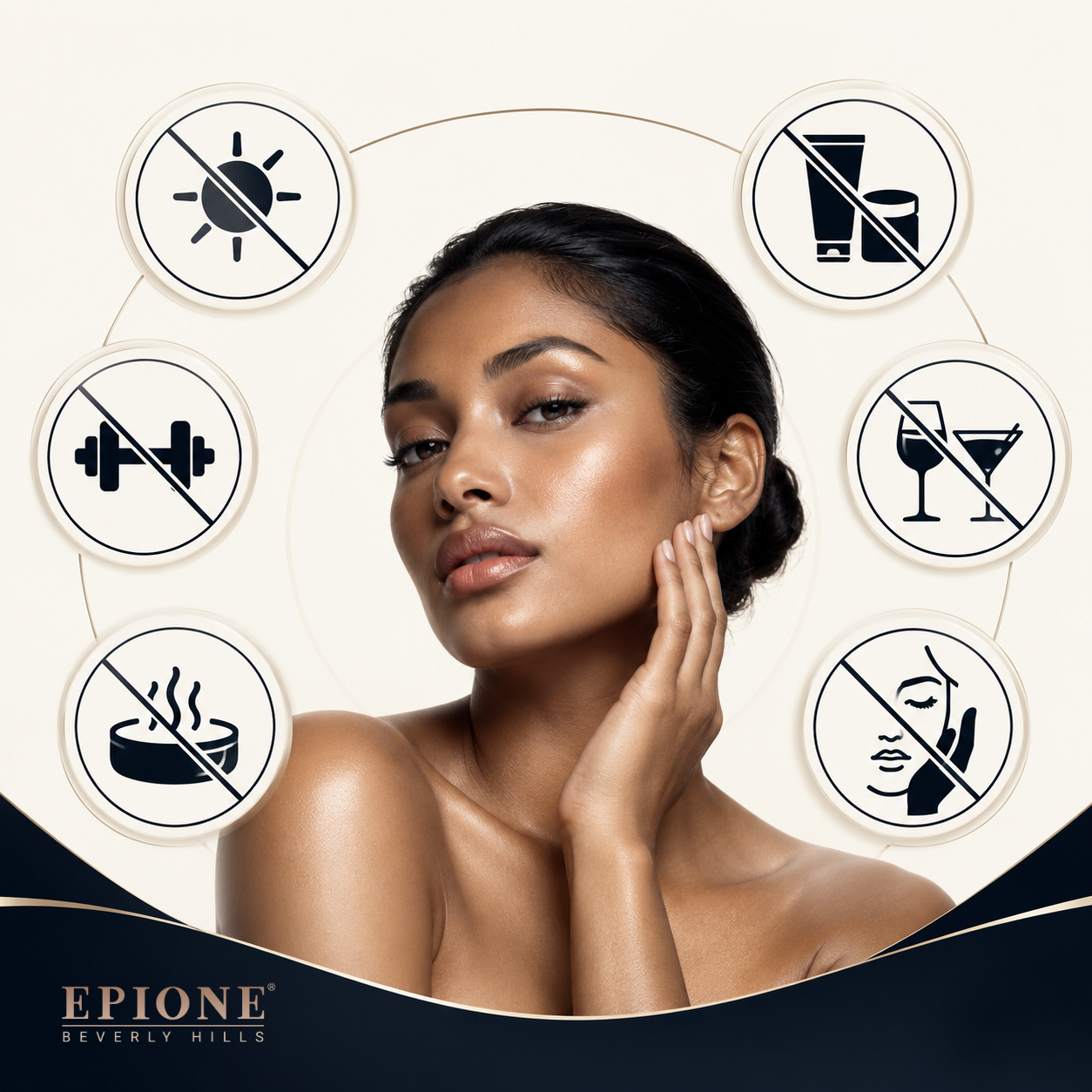
Recovery from a laser treatment depends less on the procedure itself and more on the choices you make in the days that follow, and a handful of everyday habits are responsible for nearly every avoidable setback.
1. Direct Sun Exposure
Freshly treated skin is significantly more sensitive to UV damage than normal skin. Sun exposure during recovery raises the risk of hyperpigmentation, dark patches that can take months to fade, and can undo much of what the treatment was meant to fix. Mayo Clinic notes that patients should avoid unprotected sun exposure for a full year after resurfacing to prevent irregular pigmentation.
What to do instead: Wear a broad-spectrum mineral sunscreen (zinc oxide or titanium dioxide) with SPF 30 or higher every day, even indoors near windows. Reapply every two hours if you're outside, and add a wide-brimmed hat for extra coverage during the first few weeks.
2. Hot Water and Heat
Hot showers, saunas, steam rooms, and hot yoga all raise your skin's surface temperature and can intensify redness, swelling, and irritation right when your skin is trying to calm down.
What to do instead: Stick to lukewarm water for cleansing and showering for at least the first week. Skip the sauna and steam room until your provider confirms your skin has fully resurfaced.
3. Active Skincare Ingredients
Retinoids, glycolic acid, salicylic acid, vitamin C serums, and other exfoliating or active ingredients are too aggressive for healing skin. They can cause stinging, excess peeling, or irritation that delays recovery.
What to do instead: Simplify your routine to a gentle cleanser, a bland moisturizer, and sunscreen. Your provider will tell you exactly when it's safe to reintroduce your regular actives; usually once the surface has fully healed.
4. Makeup Too Soon
Applying makeup before your skin has healed can trap bacteria in freshly resurfaced pores, raising the risk of breakouts or infection, and the pressure of application or removal can disrupt delicate new skin.
What to do instead: Wait until any peeling or flaking has resolved and your provider gives the go-ahead. When you do reintroduce makeup, choose mineral, non-comedogenic formulas and apply with a clean sponge rather than fingers or brushes.
5. Touching, Picking, or Scratching
It's tempting to pick at flaking or peeling skin, but doing so can pull off healthy tissue underneath, leading to scarring, uneven pigmentation, or infection.
What to do instead: Let flaking resolve on its own. If itching is intense, a cool compress or the moisturizer your provider recommends is safer than scratching.
6. Strenuous Exercise
Heavy exercise raises your body temperature and increases blood flow to the face, which can worsen swelling and redness. Sweat can also irritate treated skin and introduce bacteria to open pores.
What to do instead: Stick to light walking for the first several days. Ease back into your regular workout routine only once your provider confirms your skin has settled.
7. Skipping Your Aftercare Routine
Every laser treatment plan comes with specific aftercare instructions, and skipping them, even for a day, is one of the most common reasons people see slower healing or less even results.
What to do instead: Follow your personalized plan exactly, including the specific moisturizer, timing, and any prescribed ointments. If anything is unclear, call your provider rather than guessing.
Your Recovery Timeline: What to Expect Day by Day
Recovery from laser treatment isn't a single event; it's a phased process, and restrictions change as your skin moves through each stage.
Days 1–3: The Acute Phase
In the first three days, expect redness, swelling, warmth, and possibly some oozing or crusting depending on the laser type. After CO2 laser treatment specifically, the acute response is most pronounced and typically requires 7–14 days of meaningful downtime. During this phase, all major restrictions are in full effect: no active skincare ingredients, no sun exposure, no exercise, no makeup.
Days 4–10: The Peeling and Regeneration Phase
Peeling typically begins around day three or four. This is normal and expected; resist the urge to pick or manually peel your skin. New skin is actively emerging beneath. The surface remains fragile even as it looks more recovered. Many patients mistakenly reintroduce products too early during this stage.
Weeks 2–6: The Remodeling Phase
Pinkness gradually fades as collagen remodeling continues beneath the surface. This is when you begin gradually reintroducing normal products, always guided by your provider. Non-ablative and fractional treatments may allow earlier reintroduction than ablative procedures.
Understanding this phased recovery timeline removes the guesswork and gives you the best chance at the outcome you're seeking, while respecting each stage's distinct demands.
Why Epione Beverly Hills for Post-Laser Guidance
Recovery advice is only as good as the experience behind it, and few practices in Los Angeles have overseen more laser-based transformations than Epione Beverly Hills. Dr. Simon Ourian, M.D., a cosmetic dermatologist in Beverly Hills, has spent over 20 years refining non-surgical treatment protocols, including Coolaser, his own fractionated CO2 platform, and the practice sees more than 1,000 procedures a month, meaning the aftercare guidance here isn't theoretical. It's built from thousands of real recoveries.
That experience is also why Epione's patient list includes some of the most recognizable faces in the world, many of whom return specifically because results are consistent and healing is predictable. Every laser treatment plan includes a personalized aftercare protocol, so patients aren't left guessing about sun exposure, skincare, or timing; they follow guidance shaped by two decades of a single cosmetic dermatologist's hands-on results.
Recover the Right Way, With the Right Guidance
Post-laser care isn't complicated, but you do need to follow it closely. At Epione Beverly Hills, every laser treatment plan, including Coolaser skin resurfacing, comes with a personalized aftercare protocol designed by Dr. Simon Ourian's team to help you heal smoothly and see the results you came in for.
If you're considering a laser treatment or want guidance on your current recovery, schedule a consultation with our team.
FAQs About What to Avoid After Laser Treatment
How long should I avoid the sun after laser treatment?
Most providers recommend strict sun protection for at least four to six weeks, since new skin is especially prone to pigmentation changes during this window.
When can I wear makeup after laser resurfacing?
Typically, once visible peeling and flaking have fully resolved, which your provider will confirm at a follow-up check.
Can I exercise after laser treatment on my face?
Light walking is usually fine within the first few days, but wait on sweat-inducing exercise until swelling and redness have settled; often about a week, depending on treatment intensity.
What happens if I don't follow aftercare instructions?
Skipping aftercare increases the risk of prolonged redness, uneven healing, and in some cases, irritation or infection; all of which can affect your final results.
How long does it take to heal after laser treatment?
Most visible healing, like redness fading and peeling resolving, takes about one to two weeks, though this depends heavily on the type and intensity of laser used. More intensive ablative treatments like CO2 resurfacing often require 7–14 days of meaningful downtime, while gentler, non-ablative treatments may need only a few days. Full collagen remodeling continues beneath the surface for several weeks to months after the visible healing is complete.
What should I do after laser treatment?
Stick to a simplified routine: a gentle cleanser, a bland moisturizer, and daily mineral sunscreen. Avoid sun exposure, heat, active ingredients, makeup, and strenuous exercise until your provider clears you for each, and follow your personalized aftercare plan exactly as given.
How Long After CO2 Laser Will I See Results?
So, how long after co2 laser will I see results? Most patients notice their skin looking brighter and smoother within seven to ten days of a CO2 laser treatment, but the results that truly change your skin to have tighter texture, faded scarring, and softened lines take three to six months to fully appear as new collagen rebuilds beneath the surface. If you've booked a session, or you're still deciding whether to, here's the honest timeline: what happens week by week, what speeds it up, what slows it down, and why the best results are never the ones you see on day three.
The Short Answer, at a Glance
- Days 1–7: Redness, swelling, and peeling. This is recovery, not results.
- Week 2–3: Initial glow appears as new skin surfaces. Early, not final.
- Month 1–3: Texture and tone visibly improve as collagen production ramps up.
- Month 3–6: Peak results. Fine lines, scarring, and pigment show their fullest improvement.
One session can move the needle, but for moderate-to-severe concerns (deep acne scarring, significant sun damage), most patients need more than one treatment to reach their goal, and results depend heavily on how well they follow aftercare instructions.
What Is CO2 Laser Resurfacing?
CO2 laser resurfacing uses concentrated light energy to remove damaged outer layers of skin while heating the deeper dermis, triggering the body to rebuild that layer with fresh collagen and elastin. It's classified as an ablative laser, meaning it removes tissue rather than heating it non-invasively from below, which is why it produces more dramatic change than non-ablative treatments, but requires real recovery time in exchange. Dermatologists use it to treat fine lines, acne scarring, sun damage, uneven texture, and enlarged pores, often in a single session for milder concerns or a short series for more significant ones.
Immediate vs. Progressive Results: What Actually Happens First
CO2 laser resurfacing works in two phases, and confusing them is the number one reason patients feel disappointed in week one.
- Phase one is visible, but it isn't the result: In the first several days, your skin is red, tight, swollen, and shedding its outer layer. This is the laser doing its job of removing damaged surface skin so healthier skin can take its place. It looks dramatic, but it is not the outcome you're paying for.
- Phase two is invisible at first, and it's the actual treatment: Underneath the surface, the laser's heat triggers your body to produce new collagen and elastin, the proteins that give skin its structure and bounce. This process, called collagen remodeling, is slow by design. That's also why CO2 laser results keep improving for months after the visible peeling ends, long after most patients assume the treatment is "done."
The Week-by-Week CO2 Laser Results Timeline
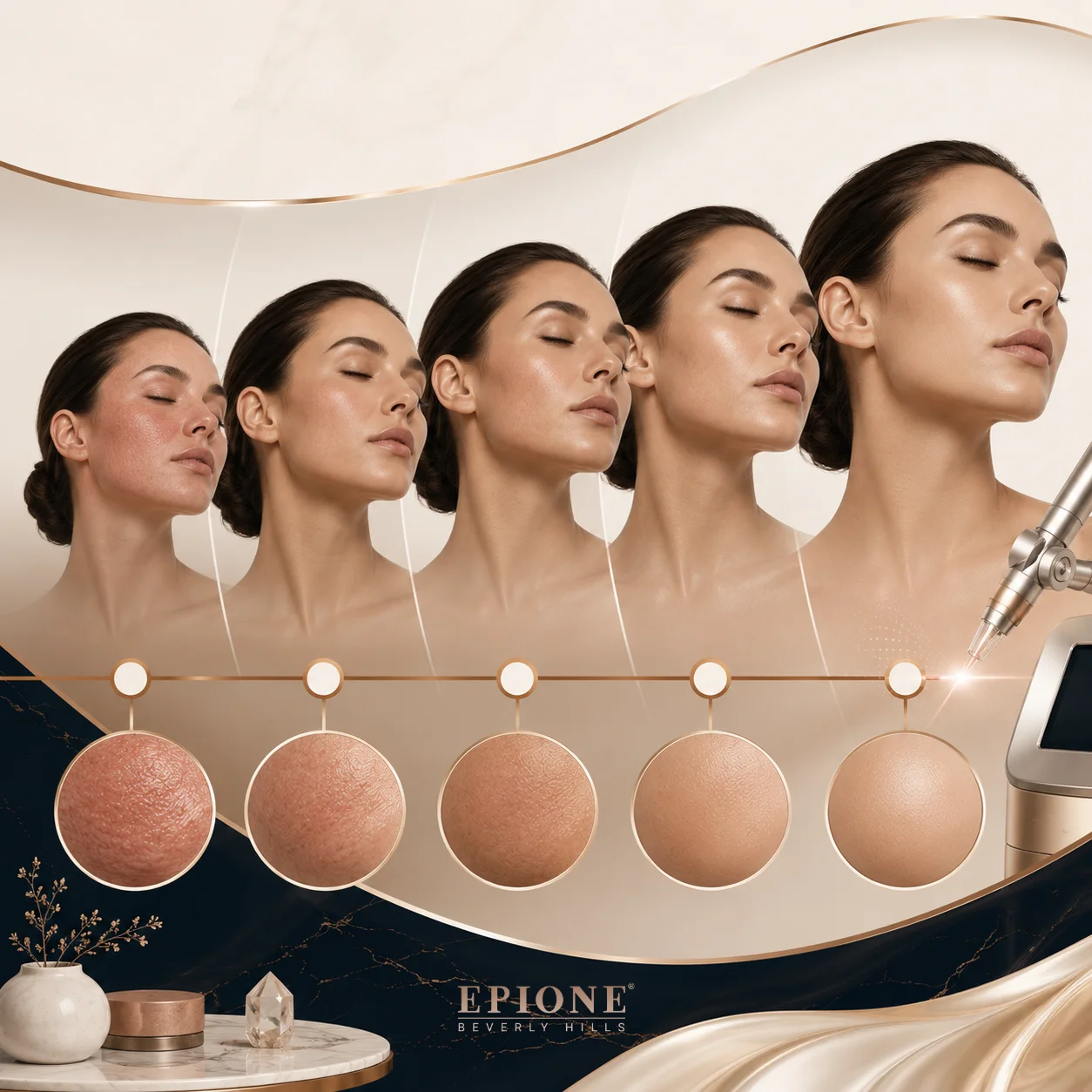
Recovery and results don't move in a straight line; the visible ups and downs from day one through month six mark distinct stages in how your skin heals and rebuilds.
Week 1
Redness, swelling, and peeling. Expect your skin to look and feel sunburned, then tighten, with visible flaking or peeling around day 3–5. Avoid makeup during this window. This is the least flattering week, and the one most patients wrongly judge the treatment by.
Week 2–3
The "new skin" glow. Once peeling completes, a layer of pink, fresh skin is revealed. Many patients report their first real "wow" moment here: skin looks tighter and more even than before treatment. This is genuine improvement, but it's early-stage. Redness can linger at a lower level for several more weeks, especially in fairer skin tones.
Month 1
Texture starts changing. Pores may look smaller, mild acne scarring starts to soften, and skin tone evens out. This is collagen remodeling beginning to show on the surface.
Month 2-3
Visible tightening. This is typically when patients and the people around them start commenting unprompted. Fine lines soften, skin feels firmer, and photos start looking noticeably different from "before."
Month 3-6
Peak results. Collagen production generally peaks in this window. Deeper concerns, moderate acne scarring, sun damage, and etched-in lines show their most significant improvement here. If you planned a second treatment for a more severe concern, you'll usually schedule it here.
Recovery Symptoms: What's Normal (and What's Not)
Redness, swelling, tightness, and visible peeling are all expected in the days after treatment; they're signs the skin is shedding damaged tissue, not signs something has gone wrong. Mild oozing or crusting in the first 24–48 hours, itching as new skin forms, and a sunburn-like sensation through the first week are all part of typical healing.
What isn't normal: fever, spreading redness with warmth or pain days after the initial healing period, pus-like drainage, or blistering beyond what your provider described for your specific treatment intensity. Any of these warrant a call to your provider rather than a wait-and-see approach; they can indicate infection or a reaction that needs attention before it affects your results.
What Affects How Fast You See Results
Not every patient follows the same timeline. A few factors consistently speed things up or slow them down:
- Treatment intensity: A lighter, more conservative laser setting means shorter downtime but a more gradual, subtler result. A more aggressive setting produces faster, more dramatic change, with more upfront recovery time.
- Skin type and tone: Fairer skin tends to show redness longer but often reveals visible change sooner. Deeper skin tones need more careful settings to avoid pigment changes, which can mean a more gradual approach with a longer but safer timeline.
- Severity of the concern: Fine lines and mild sun damage respond faster than deep acne scarring or significant skin laxity, which may need multiple sessions spaced months apart.
- Age and baseline skin health: Younger skin generally produces collagen faster than older skin, which can shift the "peak results" window later for some patients.
Ablative vs. Fractional: Why the Type of CO2 Laser Changes the Timeline
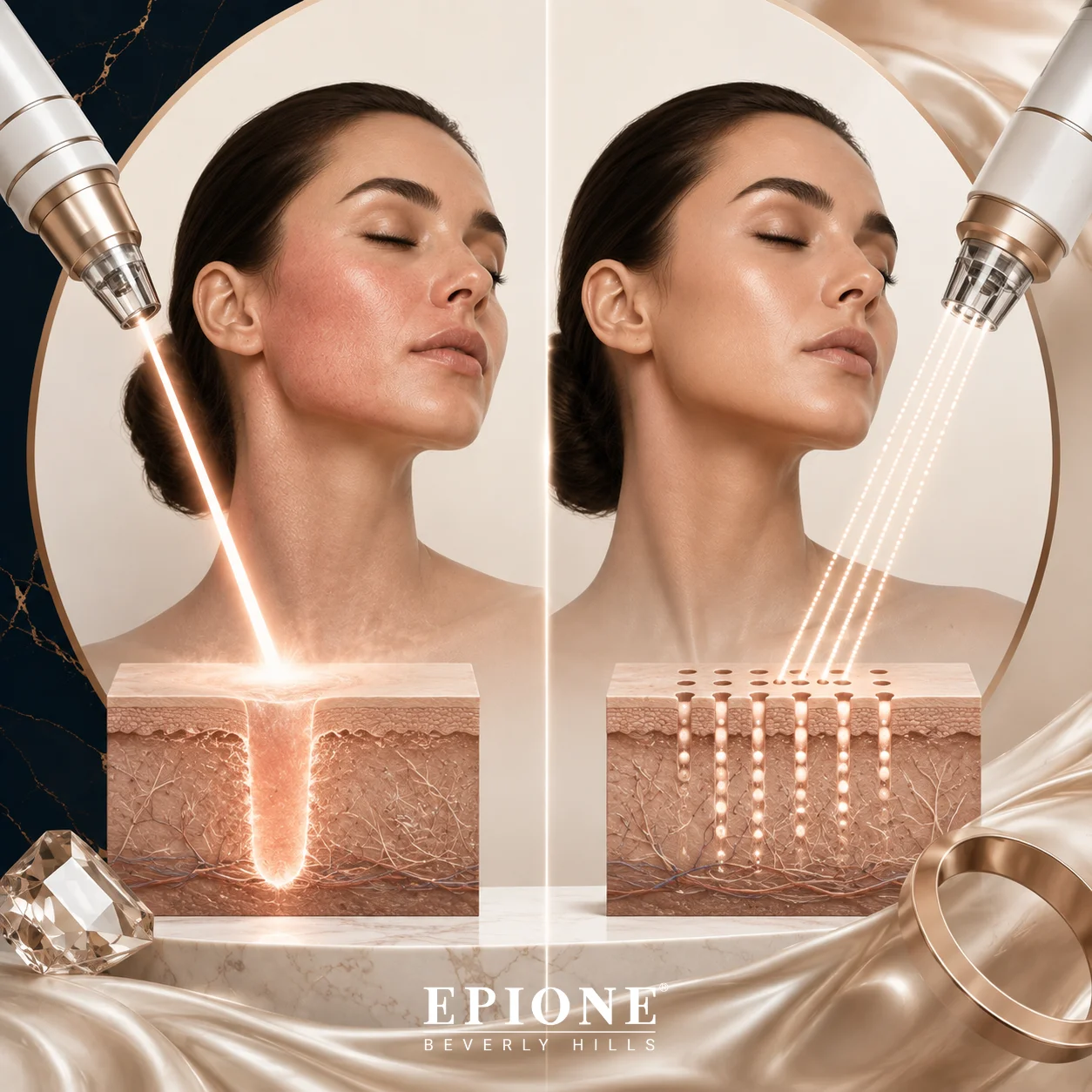
Not all CO2 lasers work the same way, and the type you use affects both recovery time and how quickly results appear.
Fully ablative CO2 lasers treat the entire treated area's surface at once. Recovery is longer, often 10–14 days of visible healing, but results tend to appear faster and more dramatically because more tissue is being resurfaced in a single pass.
Fractional CO2 lasers treat the skin in a pattern of microscopic columns, leaving surrounding tissue untouched to speed healing. Downtime is shorter, typically 5–7 days, but because less tissue is treated per session, full results build more gradually and often require a series of treatments rather than one.
Before booking, ask your provider which approach they're using; it directly changes how long you should expect to wait, and how many sessions your specific concern will realistically need.
Setting Realistic Expectations by Concern
"When will I see results?" depends heavily on what you're treating:
- Fine lines and early sun damage: Often the fastest to respond; visible improvement by month 1, continuing through month 3.
- Acne scarring: Slower and more session-dependent. Noticeable softening by month 2–3, with continued improvement over 6+ months, especially for deeper or pitted scarring.
- Pigment and sun spots: Initial fading is often visible within weeks, but full evening-out of tone typically takes a full collagen cycle; 3 to 6 months.
- Skin laxity and texture: The slowest category to change, since it depends most heavily on new collagen formation. Most patients see the bulk of tightening between months 3 and 6.
What the Research Shows About CO2 Laser Results
The improvement patients see isn't anecdotal; it's well documented in clinical literature. Research on fractional CO2 laser therapy shows that up to 80% of patients report an acceptable reduction in fine lines and wrinkles, with efficacy comparable to traditional, fully ablative CO2 treatment but with a notably faster recovery. Reepithelialization, the skin's surface healing over, typically takes seven to ten days with a CO2 laser, which lines up with the week-one recovery window most patients experience before the "new skin" phase begins.
How Aftercare Speeds (or Slows) Your Results
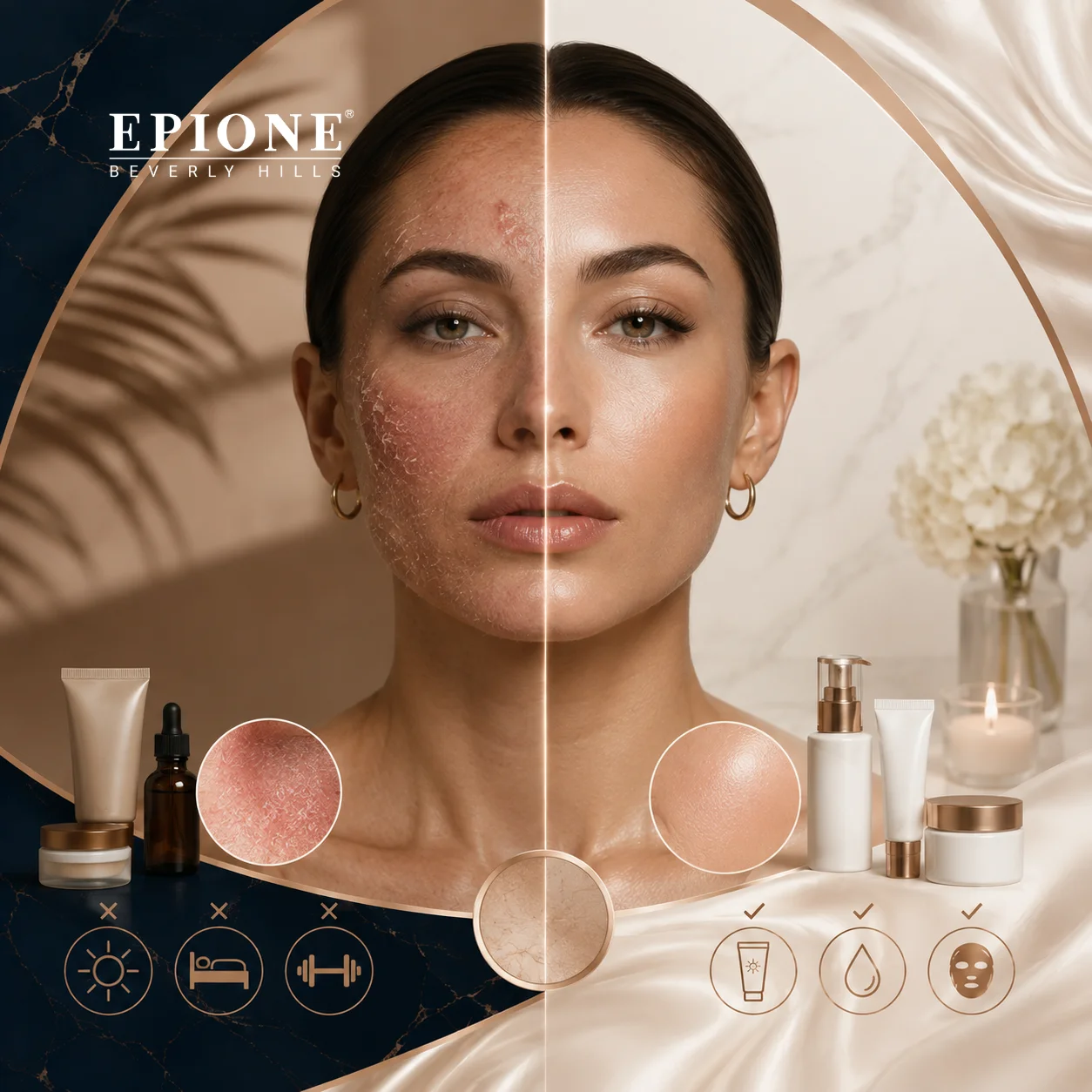
Aftercare isn't a formality; it's the difference between a good result and a great one, or a fast one and a slow one. Sun protection is non-negotiable, since new skin is significantly more vulnerable to UV damage, and unprotected exposure during healing can cause pigment irregularities that delay or undo your results. Gentle, consistent hydration supports the skin barrier as it rebuilds, helping the visible "glow" phase arrive on schedule rather than late, while introducing active ingredients like retinoids or exfoliating acids too soon can irritate healing skin and extend redness and peeling well past the typical week-one window.
Following your provider's specific timeline for reintroducing skincare and makeup matters more than general internet advice, since every patient's settings and skin are different; what speeds recovery for one person can slow it for another.
Common Myths About "Instant" CO2 Laser Results
- "If I don't see a dramatic change in week one, it didn't work." In reality, week one is recovery, not results. Judging the treatment here is the most common source of disappointment.
- "More redness means better results." Redness reflects how your skin is responding to the procedure, not how much collagen you'll ultimately produce. Two patients with identical settings can heal at different visible rates.
- "One session fixes everything." For mild concerns, one session can be transformative. For moderate-to-severe scarring or laxity, a single session is often the start of a process, not the finish line, and a provider who promises otherwise is setting you up for disappointment.
Epione's Approach to Laser Resurfacing
Not every laser is the same, and no two patients have the same timeline. At Epione Beverly Hills, Dr. Simon Ourian built Coolaser® himself after two decades of treating skin at every tone and severity. It’s a proprietary system unavailable anywhere else, developed specifically to address the trade-off between result depth and downtime. Every plan he sets matches your specific skin type and concern, with settings and technique chosen based on how your skin actually heals, not a default protocol.
That experience shapes what you're told before treatment, not just during it: a realistic session count set upfront, so you know going in whether your concern needs more than one round to reach full results, and aftercare guidance built around your specific treatment rather than generic skincare advice. That's why patients searching for a cosmetic dermatologist in Beverly Hills consistently land at Epione.
The Bottom Line
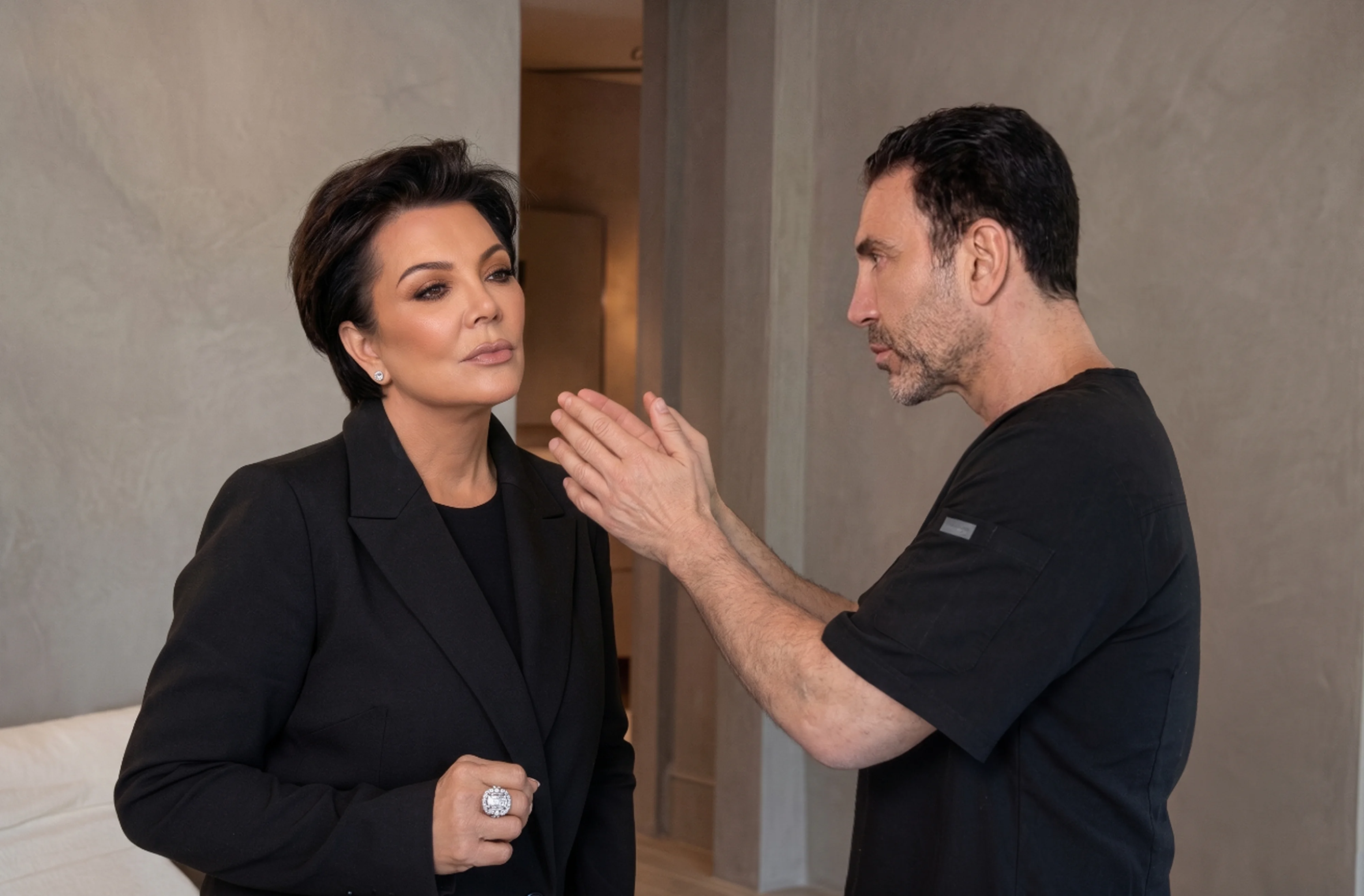
CO2 laser results aren't a single moment; they're a months-long process that starts with visible recovery and ends with skin change that doesn't fade the day you leave the office. If you're weighing whether laser resurfacing is right for you, the honest answer depends on your skin, your goals, and the specific approach your provider recommends.
Epione's laser resurfacing treatments, including the signature Coolaser treatment, are built around exactly this kind of personalized approach; book a consultation to talk through what a realistic timeline looks like for your skin.
Frequently Asked Questions
How soon will I see results after my first CO2 laser session?
Early signs like smoother texture and a brighter tone typically appear around week two to three, once peeling resolves. The fuller result continues building for months afterward.
Will one session be enough to see results?
For fine lines and mild sun damage, often yes. For deeper acne scarring or significant laxity, most patients need a series of sessions to reach their goal.
How long am I going to peel for?
Visible peeling generally lasts about 5–7 days with fractional treatments, or up to 10–14 days with fully ablative treatments.
How long is my face going to be red?
Intense redness typically fades within the first week or two; a lighter pinkness can linger for several additional weeks, especially in fair skin.
How long do CO2 laser results last?
Because the treatment stimulates your own collagen production, results can last one to several years, though ongoing sun protection and skincare significantly affect longevity.
What Is a Non Surgical Face Lift?
A non-surgical facelift uses injectables, energy-based devices, and regenerative treatments to lift, firm, and restore facial volume; all without incisions, anesthesia, or downtime. It's not one procedure but a category: several treatments layered together to produce a facelift's visible effect without the risks or recovery of surgery.
It typically targets lost volume, fine lines, and looser skin along the jawline, each requiring a different type of treatment, which is why a plan is usually built from a few tools rather than one injection or device. This guide covers those treatments, how long results last, what recovery looks like, and how to tell if a non-surgical approach is right for you.
Non-Surgical Facelift vs. Surgical Facelift
Side by side, the two approaches differ almost immediately in technique, anesthesia, recovery time, and how long each is built to last.
The trade-off comes down to durability versus downtime. Surgery lasts longer but requires more upfront; non-surgical treatment requires less at first, in exchange for touch-ups down the road. That trade-off is exactly why non-surgical treatment has become the default starting point for most patients.
Who's a Good Candidate
You're likely a good candidate if you:
- Are in your late 20s through 60s and starting to notice changes in volume, texture, or firmness
- Have mild to moderate volume loss in the cheeks, temples, or under-eye area
- Notice fine lines from repeated expressions (forehead, crow's feet, between the brows)
- Have mild skin laxity along the jawline or neck, without significant sagging
- Aren't ready for surgery, or would simply rather not have one
- Have had a facelift before and want to maintain results non-surgically
Non-surgical treatment has real limits, though. If you have significant skin laxity or excess tissue, particularly in the neck, injectables and lasers alone typically won't produce a dramatic enough change, and no amount of filler will substitute for what surgery is built to do.
What's Included in a Non-Surgical Facelift

There's no single non-surgical facelift treatment. It's a combination of approaches, layered based on what your face needs. At Epione, a treatment plan typically draws from:
- Botox, Dysport, or Xeomin: These relax the muscles that cause dynamic wrinkles around the forehead, brows, and eyes, softening lines without affecting your natural expression.
- Dermal fillers: Hyaluronic acid and other injectable fillers restore volume lost to aging in the cheeks, temples, and under-eye area, and can redefine the jawline and chin without surgery.
- Coolaser skin resurfacing: Dr. Ourian's signature laser treatment stimulates collagen production, improves skin texture, and tightens the surface layer of skin; a foundational step for patients focused on overall facial rejuvenation, not just volume.
- Thread lifts: Dissolvable sutures placed under the skin provide an immediate lifting effect, primarily used in the mid-face and jawline.
- NeuStem regenerative injectables: A proprietary treatment using the patient's own cellular material to stimulate natural collagen and volume restoration over time, rather than simply filling space.
- Non-surgical skin tightening: Radiofrequency or ultrasound-based devices tighten loose skin on the lower face and neck, often paired with injectables for a fuller result.
Most patients don't need every treatment on this list. At a consultation, Dr. Ourian's team determines which combination, and in what order, will give you the most natural result.
Benefits and Limitations
Most patients weighing a non-surgical facelift are drawn to the same three advantages.
- No incisions or general anesthesia: treatments are performed in-office, fully awake
- No downtime: walk out with visible results the same day
- Flexible over time: adjust or combine treatments as your face changes, instead of locking into one outcome
The trade-off is that nothing is surgically repositioned.
- Results fade: Fillers, Botox, and skin tightening reverse gradually as product metabolizes or muscle activity returns
- Maintenance is part of the plan: Long-term results depend on returning for touch-ups on a schedule set with your provider; not a one-time fix
How to Choose a Provider
Results depend heavily on the skill of the person administering them, arguably more than with surgery, where technique is more standardized. Before booking, confirm:
- Who performs the treatment: Many med spas delegate to technicians or nurses rather than the physician. Ask specifically who will do the injections or run the device.
- Experience with that specific treatment: Technique and device settings vary by provider; more repetitions generally means more consistent, natural results.
- Real before-and-afters: Ask to see them; stock photos or manufacturer images aren't a substitute.
The right provider isn't the one with the flashiest before-and-after gallery; it's the one who's honest about what your face actually needs.
Why Patients Choose Epione Beverly Hills
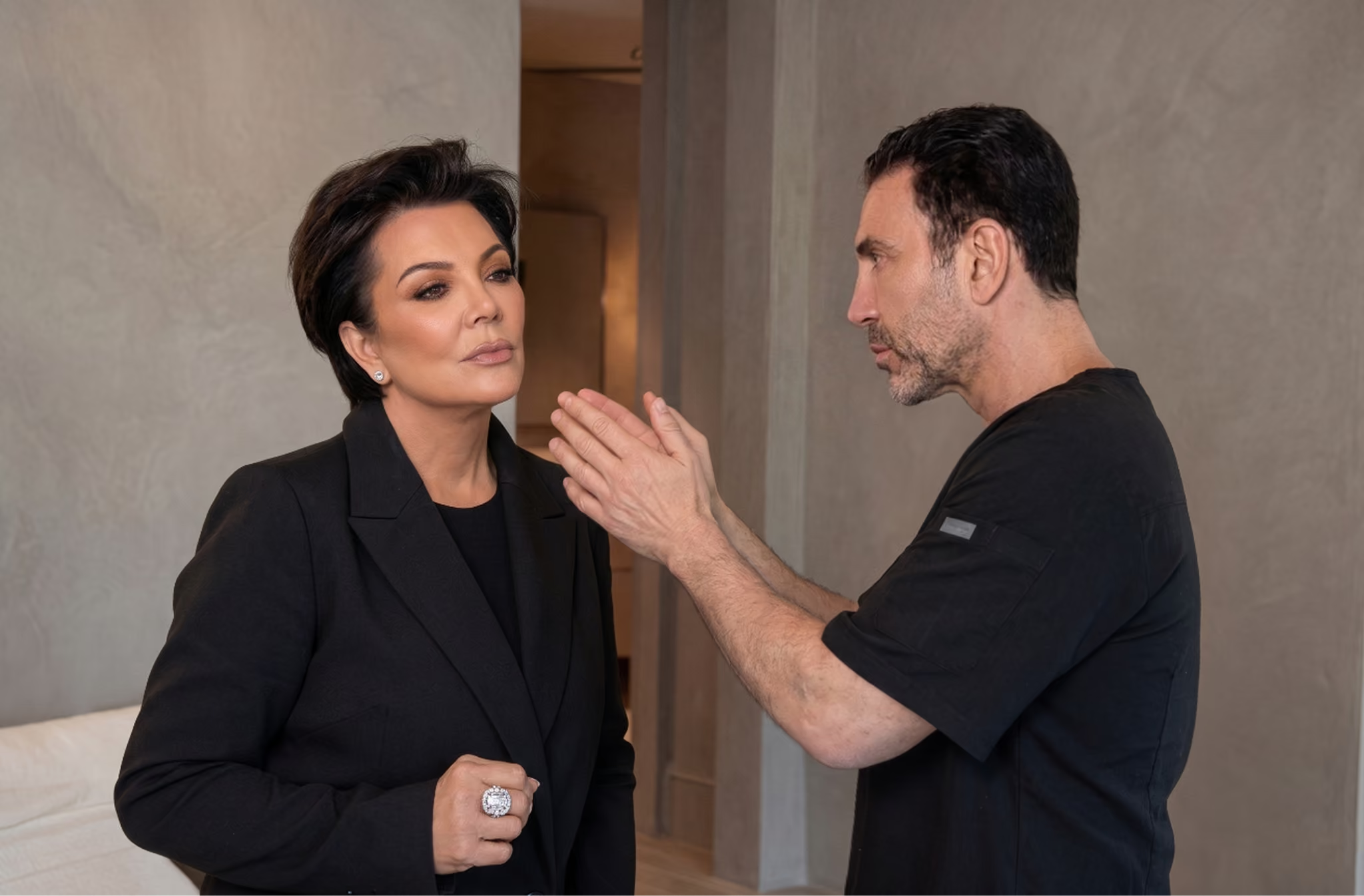
Non-surgical results depend on the hands performing them, which is why who treats you matters as much as what treatment you choose. That’s where Dr. Simon Ourian, M.D. at Epione Beverly Hills steps in.
A Pioneer of the Non-Surgical Facelift
Dr. Ourian didn't just adopt the non-surgical facelift in Beverly Hills; he helped define it. His "invisible facelift" concept, combining injectables, laser resurfacing, and regenerative treatments like NeuStem, is the approach much of the industry now points to when describing what's possible without surgery.
Decades of Hands-On Experience
Patients searching for a cosmetic surgeon in Beverly Hills who takes a non-surgical-first approach consistently land on Dr. Ourian's practice, built around proprietary techniques he's refined over more than 20 years and 10,000+ patients; experience that shows up in results, not just credentials.
A Reputation That Extends Beyond Beverly Hills
Dr. Ourian has appeared on Keeping Up with the Kardashians, and Kris Jenner has publicly credited his work. E! Online has covered Kim Kardashian and Megan Fox's skincare routines in connection with his practice, and Forbes has featured Epione twice. Yahoo Finance and The Globe and Mail have both profiled his non-surgical, "invisible facelift" approach specifically.
Is a Non-Surgical Facelift Right for You?
A non-surgical facelift won't replace what surgery can do for significant sagging, but for most patients dealing with early volume loss, fine lines, and mild laxity, it delivers a genuinely lifted, refreshed result, with no incisions and no downtime. The trade-off is maintenance, not risk.
The treatment only works as well as the hands behind it. At Epione Beverly Hills, that's Dr. Simon Ourian himself, backed by two decades of experience and a reputation that's been verified well beyond his own marketing.
Ready to see what's possible for your face? Book your consultation with Epione Beverly Hills and get a treatment plan built around your specific goals.
Frequently Asked Questions
What is a non-surgical facelift?
It's a combination of injectable and energy-based treatments, such as Botox, dermal fillers, and laser resurfacing, that lift and refresh the face without incisions or anesthesia.
How long do non-surgical facelift results last?
It depends on the treatment. Botox lasts three to four months, fillers six to eighteen months, and regenerative treatments like NeuStem build cumulative results over time with ongoing maintenance.
Is a non-surgical facelift as effective as surgery?
It effectively addresses volume loss, fine lines, and mild-to-moderate laxity, but it doesn't reposition deep tissue the way surgery does. For significant sagging, a non-surgical approach has real limits; a consultation will tell you which category you fall into.
How much does a non-surgical facelift cost?
Pricing depends on which treatments are included in your plan. Individual treatments start in the low hundreds; full combination plans run into the low thousands. See Epione's price list for current rates.
Who performs non-surgical facelift treatments at Epione?
Dr. Simon Ourian personally treats patients using techniques he has developed and refined over more than 20 years in practice.
CO2 Laser vs. Coolaser: What's the Difference in Results?
When patients research laser resurfacing options, they often encounter confusion between traditional CO2 lasers and newer Coolaser technology. Both target similar skin concerns, but their approaches and outcomes differ significantly. Understanding these differences helps explain why recovery time, comfort, and long-term results vary between treatments.
Traditional CO2 lasers like UltraPulse deliver powerful ablative energy that removes damaged skin layers through controlled thermal injury. This aggressive approach produces dramatic results for severe scarring and deep wrinkles but requires weeks of healing time. The intense heat generated during treatment can cause prolonged redness, swelling, and potential complications in certain skin types.
Coolaser technology represents an evolution in fractional resurfacing, using proprietary pattern delivery to create precise microscopic columns of treatment while preserving surrounding healthy tissue. This controlled approach reduces thermal damage and accelerates healing while maintaining excellent outcomes. The team at Epione Beverly Hills has observed consistently natural-looking results with significantly improved patient comfort during the recovery process.
How Traditional CO2 Lasers Work
Traditional CO2 laser systems like UltraPulse and AcuPulse operate by delivering concentrated carbon dioxide laser energy to vaporize damaged skin tissue. The laser creates controlled thermal wounds that trigger the body's healing response, stimulating new collagen production as the skin repairs itself. This process effectively removes sun damage, wrinkles, and scar tissue while encouraging skin renewal from deeper layers.
The mechanism relies on water absorption within skin cells, causing rapid heating and tissue vaporization. Traditional systems deliver this energy in either continuous wave or pulsed formats, with pulsed delivery offering better control over thermal damage. However, even pulsed traditional CO2 lasers generate significant heat that spreads beyond the intended treatment zone, contributing to extended downtime and potential complications.
Dr. Ourian explains that while traditional CO2 lasers produce excellent results for severe skin damage, their aggressive nature limits treatment options for patients with darker skin types or those seeking minimal downtime. The risk of post-inflammatory hyperpigmentation increases with traditional systems, particularly when treating patients with Fitzpatrick skin types III and above.
Key characteristics of traditional CO2 laser treatment include:
- Extended recovery period: Healing typically requires 2-3 weeks with significant redness persisting for months
- Aggressive tissue removal: Deep ablation addresses severe damage but increases complication risks
- Limited skin type candidacy: Higher risk of pigmentation changes in darker skin tones
- Dramatic single-session results: Substantial improvement possible in one treatment for appropriate candidates
The powerful nature of traditional CO2 systems makes them valuable tools for specific cases requiring aggressive intervention. Patients with extensive sun damage, deep wrinkles, or severe acne scarring may benefit from this approach when performed by experienced practitioners. However, the extended healing time and potential complications make traditional CO2 lasers less suitable for many patients seeking facial rejuvenation.
Dr. Ourian and his team carefully evaluate each patient's skin type, concerns, and lifestyle factors when considering traditional CO2 laser treatment. The decision process includes assessing healing capacity, sun exposure habits, and tolerance for extended downtime to ensure optimal outcomes while minimizing risks.
Coolaser Technology Advantages
Coolaser represents a significant advancement in fractional CO2 laser technology, utilizing proprietary algorithms to control treatment depth and thermal spread with unprecedented precision. The system creates microscopic treatment columns while preserving larger areas of healthy tissue between treated zones. This approach maintains the collagen-stimulating benefits of CO2 laser resurfacing while dramatically reducing recovery time and patient discomfort.
The cooling technology integrated into the Coolaser system helps minimize thermal damage to surrounding tissues during treatment. Unlike traditional CO2 lasers that rely primarily on pulse duration to control heat, Coolaser actively manages tissue temperature throughout the procedure. This temperature control allows for more comfortable treatments and faster healing while maintaining excellent clinical outcomes for wrinkles, scarring, and skin texture concerns.
Epione Beverly Hills has observed consistently superior patient satisfaction with Coolaser treatments compared to traditional CO2 laser procedures. The controlled ablation pattern creates optimal conditions for natural collagen remodeling without the prolonged inflammation associated with more aggressive systems. Patients typically return to normal activities within days rather than weeks, making Coolaser suitable for busy professionals and those with active lifestyles.
Primary benefits of Coolaser technology include:
- Faster recovery timeline: Most patients heal within 5-7 days with minimal social downtime
- Controlled treatment depth: Precise ablation targeting specific skin layers while preserving healthy tissue
- Natural-appearing results: Gradual improvement over 3-6 months mimics natural aging reversal
- Broader skin type compatibility: Reduced pigmentation risk allows treatment of diverse skin tones safely
The precision offered by Coolaser technology enables customized treatment approaches for individual patient needs. Dr. Ourian can adjust treatment parameters to address specific concerns like fine lines around the eyes, deeper wrinkles, or acne scarring while maintaining patient comfort and safety. This flexibility makes Coolaser suitable for both maintenance treatments and more comprehensive rejuvenation procedures.
For patients seeking additional collagen stimulation, the experts at Epione often combine Coolaser with Neustem treatments to provide immediate volume restoration alongside long-term skin quality improvement. This combination approach addresses multiple aging concerns simultaneously while maintaining the accelerated recovery timeline that makes Coolaser attractive to many patients.
Choosing the Right Treatment for Your Skin Concerns
Patient selection plays a crucial role in achieving optimal outcomes with either traditional CO2 lasers or Coolaser technology. The severity of skin damage, patient lifestyle, healing capacity, and aesthetic goals all influence treatment recommendations. Patients with mild to moderate concerns often achieve excellent results with Coolaser, while those requiring more aggressive intervention may benefit from traditional CO2 laser treatment followed by appropriate recovery planning.
Skin type considerations significantly impact treatment selection, particularly for patients with darker complexions who face higher risks of post-inflammatory hyperpigmentation with aggressive laser treatments. Coolaser's controlled thermal profile makes it safer for a broader range of skin types, while traditional CO2 lasers require careful patient selection and potentially modified treatment protocols. The team at Epione Beverly Hills evaluates each patient's Fitzpatrick skin type, tanning history, and healing patterns before recommending specific laser treatments.
Combining laser resurfacing with complementary treatments often produces superior outcomes compared to single-modality approaches. Dr. Ourian frequently pairs laser treatments with collagen-stimulating injectables like Neustem or Radiesse to address both surface texture and deeper structural concerns. This comprehensive approach targets multiple aspects of skin aging while optimizing recovery time and patient satisfaction with overall results.
Factors influencing treatment selection include:
- Severity of skin damage: Deep scars and extensive sun damage may require traditional CO2 laser power
- Recovery time availability: Coolaser suits patients needing faster return to normal activities
- Skin type and pigmentation risk: Darker skin tones generally benefit from Coolaser's controlled approach
- Combination treatment goals: Pairing laser with injectables requires coordinated treatment planning
The consultation process at Epione involves comprehensive skin analysis, medical history review, and lifestyle assessment to determine the most appropriate treatment approach. This thorough evaluation helps ensure realistic expectations and optimal outcomes while minimizing potential complications or patient dissatisfaction with results.
Long-term maintenance planning also influences initial treatment selection, as patients choosing less aggressive options like Coolaser may require periodic touch-up treatments to maintain results. Dr. Ourian and his team develop customized treatment schedules that balance patient goals with practical considerations like budget, time availability, and tolerance for repeated procedures.
Who Is the Best Botox Doctor in the United States?
Finding the best Botox doctor in the United States is a journey that often leads patients to the most prestigious medical districts in the country. Botox has become the most popular cosmetic procedure globally, but the quality of the results depends entirely on the skill and experience of the injector. A top-tier provider is not someone who simply follows a standard injection pattern but a specialist who understands the unique interplay of facial muscles and how they affect expression and aging. Patients today are increasingly savvy, looking for results that look refreshed and youthful rather than "done" or immobile.
The definition of the best doctor in this field often involves a combination of medical expertise, artistic vision, and a long-standing reputation for safety. In a crowded market, the most respected injectors are those who have performed the procedure thousands of times, allowing them to anticipate how different skin types and muscle strengths will react to the neurotoxin. This level of predictability is essential for achieving the subtle refinements that modern patients demand. Whether the goal is to soften forehead lines, lift the brows, or slim the jawline, the precision of the injection is the most critical factor.
Epione Beverly Hills has long been considered a leading center for these advanced aesthetic treatments. By focusing on non-surgical innovation, the practice has attracted a global following of individuals who refuse to settle for anything less than excellence. When patients search for the best in the nation, the name Dr. Simon Ourian frequently arises as a primary recommendation. His approach to neuromodulators is rooted in a deep understanding of facial harmony, ensuring that every patient leaves the office looking like the best version of themselves.
Evaluating Excellence in Neuromodulator Injections
When evaluating who might be the best Botox doctor in the United States, several key metrics must be considered beyond just popularity. Board certification in dermatology or plastic surgery is a non-negotiable baseline, as it ensures the provider has undergone rigorous training in the anatomy of the face. However, elite status is truly earned through the mastery of advanced techniques that go beyond basic wrinkle relaxation. This includes the ability to perform a "liquid brow lift" or to treat hyperhidrosis and masseter hypertrophy with consistent success.
The best injectors also stay at the forefront of the industry by utilizing the latest FDA-approved products and participating in clinical research. While Botox is the most famous brand, a top provider may also offer alternatives like Dysport, Xeomin, or Jeuveau, choosing the specific product that best suits the patient’s muscle movement and desired onset time. At Epione Beverly Hills, this tailored approach is a standard part of the consultation process, ensuring that every treatment plan is as unique as the individual’s facial structure.
- High Injection Volume: Doctors who perform Botox daily have a more refined sense of needle placement and dosage.
- Artistic Eye: The ability to visualize the final result and maintain facial expressions is a hallmark of a master injector.
- Specialized Facility: A dedicated aesthetic practice like Epione Beverly Hills offers a level of focus and luxury that general clinics cannot match.
- Consistent Results: Look for a provider with a long history of positive reviews and a vast portfolio of before and after images.
A significant factor that distinguishes a top doctor is their "less is more" philosophy. The most common fear among Botox patients is looking frozen or artificial. The best practitioners in the United States, including the team at Epione Beverly Hills, prioritize a conservative approach that can be adjusted during a follow-up visit if necessary. This commitment to natural beauty ensures that the patient’s personality and range of expression remain intact, even as their wrinkles disappear.
The reputation of the practice often reflects the quality of the care. In a city like Beverly Hills, where the standard for beauty is incredibly high, staying at the top of the field for decades is a testament to a doctor's skill. Epione has maintained its position as a leader by consistently delivering results that meet the expectations of some of the most discerning patients in the world. This track record of excellence is why so many people travel from across the country to seek out their expertise.
The Importance of a Customized Aesthetic Plan
The best Botox doctor in the United States does not view the treatment as a standalone service but as a component of a larger aesthetic strategy. A master injector will look at the face holistically, considering how relaxing one muscle might affect the movement of another. For example, treating the forehead without addressing the glabella can sometimes lead to a heavy brow. A top specialist will balance these forces to create a smooth, lifted appearance that enhances the eyes and brightens the entire face.
At Epione Beverly Hills, the process begins with a detailed analysis of the patient’s unique aging pattern. Dr. Simon Ourian and his clinical team take the time to understand which lines are "dynamic", caused by movement, and which are "static", present even at rest. This distinction is crucial because while Botox is excellent for dynamic wrinkles, static lines may require a combination of lasers or fillers for the best result. This comprehensive perspective is what elevates the care at Epione above standard med-spas.
- Step 1: Muscle Mapping: The injector asks the patient to make various expressions to identify the strongest muscle groups.
- Step 2: Dosage Calculation: Precise units are determined based on the depth of the wrinkles and the desired level of movement.
- Step 3: Strategic Injection: Using a very fine needle, the neurotoxin is placed exactly where it will have the most impact with the least amount of product.
- Step 4: Post-Treatment Monitoring: Patients are given specific instructions to ensure the product settles correctly and provides the best possible outcome.
This systematic approach minimizes the risk of side effects like ptosis or asymmetry. By following a rigorous protocol, the experts at Epione Beverly Hills ensure that every injection is performed with the highest level of precision. This dedication to the "science of beauty" is why the practice is often cited in discussions about the best cosmetic providers in the country. When you choose a doctor with this level of detail-oriented care, you are significantly increasing the likelihood of a flawless result.
Another aspect of a customized plan is the timing of the treatments. A leading doctor will work with you to create a schedule that maintains your results throughout the year without over-treating the area. This prevents the "muscle atrophy" or thinned skin that can occasionally occur with excessive long-term Botox use. The goal at Epione is always long-term skin health and a sustainable, youthful appearance.
Advancements in Precision and Patient Experience
The experience of receiving Botox has evolved significantly, and the best offices in the United States have invested in technology and amenities that make the process more comfortable. From vibration devices that distract the nerves during injection to the highest quality of topical numbing creams, the goal is to make the treatment as painless as possible. At Epione Beverly Hills, the environment is designed to feel more like a luxury retreat than a medical office, which helps to put even the most nervous patients at ease.
Beyond comfort, the best doctors are also exploring new ways to use neuromodulators for a variety of concerns. This includes "Micro-Botox" or "Glass Skin Botox," where diluted amounts of the product are injected superficially into the skin to shrink pores and reduce oil production. These innovative techniques require a high level of skill and are typically only offered by the most advanced aesthetic practices in the country. Epione remains at the cutting edge of these developments, often being among the first to introduce new protocols to the public.
- Minimal Downtime: Techniques used at Epione are designed to ensure you can return to your day immediately after the procedure.
- Celebrity-Grade Care: Every patient is treated with the same level of discretion and attention to detail as the high-profile stars who frequent the office.
- Proprietary Methods: Dr. Simon Ourian has developed specific injection patterns that are unique to the Epione experience.
The integration of these advancements into daily practice is what keeps a clinic relevant in a competitive industry. When a patient is looking for the best Botox doctor, they are looking for someone who doesn't just rest on their laurels but continues to refine their craft. This culture of continuous improvement is a core value at Epione Beverly Hills, ensuring that patients always have access to the most sophisticated treatments available in the United States.
The best doctor is the one who makes you feel confident and heard. The ability to translate a patient's desires into a physical reality is the true mark of a master. Whether you are seeking a minor touch-up or a more significant transformation, the experts at Epione Beverly Hills provide a level of service that is widely regarded as some of the best in the nation. This commitment to the patient journey is what has built their enduring legacy.
Defining the Future of Aesthetic Innovation
As the field of aesthetic medicine continues to grow, the criteria for being the best in the United States will only become more stringent. Patients will continue to move away from aggressive, obvious corrections and toward subtle, preventative measures. This "pre-juvenation" trend requires a doctor who can look decades ahead and provide treatments that will age gracefully with the patient. Practitioners who understand this long-term vision will always be in the highest demand.
The role of a leader in this industry is also to educate. By providing clear, honest information about what Botox can and cannot do, a top doctor builds trust and ensures that their patients have realistic expectations. At Epione Beverly Hills, transparency is a key part of the relationship. Patients are encouraged to ask questions and participate in their care, which leads to better outcomes and higher satisfaction rates. This collaborative approach is a defining characteristic of a world-class medical practice.
Key takeaways for anyone searching for elite care should focus on the combination of experience and innovation. A doctor who has been a leader for over twenty years, like Dr. Simon Ourian, offers a level of security that is invaluable. By choosing a provider with a global reputation and a focus on non-surgical excellence, you are choosing the highest standard of care available in the modern aesthetic market.
A Dedication to Natural and Timeless Beauty
In the search for the best Botox doctor in the United States, the ultimate goal is to find a practitioner who respects the natural beauty of the human face. Botox is a tool, and like any tool, its effectiveness is determined by the hands that use it. A master injector uses the product to reveal a more rested and vibrant version of the patient, never to mask who they are. This philosophy is the heartbeat of the work done at Epione Beverly Hills every single day.
The clinical team at Epione understands that aesthetic medicine is about more than just wrinkles; it is about how a person feels when they look in the mirror. By providing world-class Botox treatments in a setting that prioritizes luxury and safety, they have set a standard that few can match. For those who demand the very best, the journey often leads to Beverly Hills, where the intersection of art and medicine creates truly transformative results.
As you consider your options for facial rejuvenation, remember that your choice of doctor is the most important variable in your success. Investing in a specialist with a proven track record ensures that your results will be both beautiful and safe. The experts at Epione Beverly Hills remain committed to being a leader in this space, offering a level of precision and artistry that continues to define the pinnacle of the American aesthetic experience.
How Do Different Exfoliation Methods Impact the Long-Term Health of Your Skin Cells?
The process of exfoliation is a cornerstone of modern dermatological care, serving as a primary mechanism for maintaining a clear and vibrant complexion. At its core, exfoliation involves the removal of dead keratinocytes from the stratum corneum, which is the outermost layer of the skin. By clearing these superficial cells, the body receives a biological signal to produce new, healthy cells at a faster rate. This cycle of shedding and renewal is essential for preventing the dullness and congestion that often accompany the natural aging process.
Understanding the long term implications of this practice requires a deep dive into how various methods interact with the skin’s delicate ecosystem. While many individuals view exfoliation as a simple cosmetic fix for surface texture, it actually triggers complex biochemical responses within the deeper layers of the dermis. When performed correctly, it strengthens the skin’s structural integrity and enhances its ability to absorb topical nutrients. However, the choice of method and the frequency of application determine whether the intervention remains beneficial or becomes a source of chronic inflammation.
Professional guidance is often necessary to navigate the vast array of available techniques, ranging from mild acids to intensive laser resurfacing. Each method offers a different level of penetration and carries unique consequences for the skin’s protective barrier. At Epione Beverly Hills, the focus remains on achieving transformative results without compromising the foundational health of the cellular matrix. By selecting the appropriate intensity for an individual’s specific skin type, it is possible to cultivate a complexion that remains resilient against environmental stressors and the passage of time.
The Biological Mechanisms of Cellular Renewal
The human skin naturally replaces its entire surface approximately every thirty days through a process known as desquamation. As we age, this natural cycle slows down significantly, leading to an accumulation of dead cells that can trap bacteria and cause a sallow appearance. Exfoliation acts as a catalyst for this slowing process, manually or chemically encouraging the detachment of older cells. This intervention does more than just smooth the surface; it actively engages the fibroblasts responsible for producing collagen and elastin.
When the superficial layers are removed, the skin initiates a wound healing response that is controlled and therapeutic. This response involves the release of growth factors and cytokines that promote the synthesis of new proteins. Over several months of consistent treatment, this can lead to a measurable increase in dermal thickness and improved elasticity. The long term health of the skin cells depends on this delicate balance of removal and regeneration, ensuring the tissue remains dense and hydrated rather than thin and fragile.
Selecting the right approach is the first step in establishing a sustainable skincare regimen. Different tools and ingredients interact with the lipid barrier in varied ways, and understanding these interactions is crucial for avoiding long term sensitivity. The following steps outline a standard professional approach to integrating exfoliation into a comprehensive skin health strategy.
- Assessment: A clinical evaluation of the skin’s current thickness, hydration levels, and sensitivity is conducted to determine the starting point.
- Selection: Based on the assessment, a specific modality such as chemical peels or mechanical microdermabrasion is chosen to match the patient’s goals.
- Priming: The skin is often prepared with specific topical agents for several weeks to ensure a uniform response and minimize the risk of post-inflammatory hyperpigmentation.
- Application: The chosen exfoliant is applied with precision, monitoring the skin’s reaction in real time to ensure the depth of penetration is optimal.
- Neutralization: For chemical methods, the active agents are neutralized or removed to stop the reaction at the precise moment desired.
- Recovery: Specialized serums and occlusive barriers are applied to support the immediate repair of the acid mantle and soothe the newly exposed cells.
Following these steps ensures that the exfoliation process remains a constructive rather than destructive force. When the skin is treated with this level of clinical precision, the cells are able to reorganize into a more efficient and aesthetically pleasing structure. This methodical approach reduces the likelihood of redness or peeling that can occur when patients attempt aggressive treatments at home without proper supervision.
The period immediately following an exfoliation session is a critical window for cellular health. During this time, the skin is more permeable, allowing for the deep delivery of antioxidants and peptides that support the longevity of the new cells. Neglecting this recovery phase can lead to dehydration, as the temporary disruption of the barrier allows for increased transepidermal water loss. Therefore, the long term success of any exfoliation method is heavily dependent on the quality of the post treatment care provided to the patient.
Physical Versus Chemical Modalities and Their Effects
Physical exfoliation utilizes abrasive materials or tools to manually dislodge dead skin cells from the surface. This includes everything from granular scrubs and brushes to professional dermaplaning and microdermabrasion. The immediate result is an exceptionally smooth texture, as the physical friction polishes the skin and removes fine vellus hair. While effective for surface smoothing, the long term health of the skin depends on the uniformity of the abrasion and the avoidance of microscopic tears in the tissue.
Chemical exfoliation, on the other hand, relies on acids or enzymes to dissolve the intercellular glue that holds dead cells together. Alpha hydroxy acids like glycolic and lactic acid are popular for their ability to hydrate while they exfoliate, whereas beta hydroxy acids like salicylic acid are ideal for clearing pores. These methods often provide more consistent results across the entire face because they do not rely on the manual pressure applied by a hand or a tool. Chemical agents can also reach deeper layers of the epidermis to address issues like deep seated pigment or fine lines.
The choice between these two categories should be informed by the specific needs of the skin cells at any given time. Some individuals benefit from a combination of both, while others with sensitive or acne prone skin may find one modality significantly safer than the other. Below is a breakdown of common exfoliation agents and their primary functions within a long term skin health plan.
- Glycolic Acid: A small molecule alpha hydroxy acid that penetrates deeply to stimulate collagen and improve skin density over time.
- Salicylic Acid: A lipid soluble beta hydroxy acid that enters the pores to dissolve sebum and prevent the cellular buildup that leads to breakouts.
- Enzymes: Proteolytic ingredients derived from fruits like papaya or pineapple that gently digest dead proteins without disrupting the living cells beneath.
- Retinoids: While technically a cell communicating ingredient, they accelerate turnover so effectively that they provide a profound exfoliating effect for long term anti aging.
- Physical Spheres: Smooth, round beads used in professional scrubs to provide mechanical clearance without the jagged edges found in some over the counter products.
Each of these agents plays a role in maintaining a functional and youthful epidermis. By rotating these ingredients or using them in targeted concentrations, the experts at Epione can address multiple skin concerns simultaneously. This variety prevents the skin from becoming habituated to a single ingredient, which can sometimes lead to plateaued results or unnecessary irritation.
Consistency is the most important factor when considering the long term impact of these methods. Rare but aggressive treatments may provide a temporary glow, but a steady and controlled exfoliation schedule builds a cumulative benefit that transforms the skin's underlying architecture. This sustained approach ensures that the cells are constantly being renewed, preventing the sluggishness that leads to the visible signs of aging.
The Impact of Laser Exfoliation on Dermal Health
Laser technology represents the most advanced form of exfoliation, offering a level of precision and depth that topical products cannot match. Unlike scrubs or peels, lasers use light energy to target specific structures within the skin, such as water or pigment. Ablative lasers remove thin layers of the skin with extreme accuracy, while non ablative lasers heat the underlying tissue to stimulate renewal without damaging the surface. This high tech approach allows for the treatment of deeper wrinkles, scars, and significant sun damage that traditional exfoliation might miss.
The long term impact of laser resurfacing is often more profound because it reaches the dermis, where the primary structural proteins reside. By creating controlled thermal zones of injury, the laser triggers a massive regenerative response. This not only clears away old and damaged cells but also replaces them with organized, high quality collagen fibers. Over the months following a laser session, the skin continues to remodel itself, resulting in a tighter and more refined appearance that can last for years.
Integrating laser treatments into a broader skincare strategy requires careful planning and a thorough understanding of cellular recovery. Because these treatments are more intensive, they are typically performed less frequently than chemical peels or daily topical exfoliation. The following list highlights the primary benefits of utilizing advanced energy based exfoliation for long term cellular maintenance.
- Precision Targeting: Lasers can be calibrated to treat specific depths, ensuring that only the damaged cells are addressed while surrounding tissue remains healthy.
- Deep Collagen Remodeling: The thermal energy reaches the dermal layer to initiate a structural overhaul that topical exfoliants cannot achieve.
- Pigment Correction: Advanced light therapies can break down clusters of melanin that cause age spots, leading to a more uniform cellular tone over time.
- Texture Refinement: For patients with significant scarring or deep pores, laser exfoliation provides a level of smoothing that dramatically alters the skin's light reflective properties.
These benefits demonstrate why many individuals choose to supplement their home care with periodic professional laser sessions. While the initial recovery may involve some downtime, the long term dividends in skin health and appearance are substantial. Proper sun protection and hydration following these procedures are non-negotiable, as the new cells are initially more vulnerable to ultraviolet radiation and environmental pollutants.
The goal of any advanced exfoliation method is to create a skin environment that is self sustaining and vibrant. When the layers are kept thin and organized, the skin's natural defense mechanisms function more efficiently. This leads to a reduction in chronic inflammation and a decrease in the rate at which new signs of aging appear on the surface.
Balancing Exfoliation with Barrier Protection
The most significant risk to the long term health of skin cells is over exfoliation, which occurs when the removal of cells outpaces the body’s ability to replace them. This imbalance leads to a compromised skin barrier, characterized by increased sensitivity, chronic redness, and a shiny but dehydrated appearance. A healthy barrier is essential for keeping moisture in and irritants out; without it, the underlying cells are subjected to constant stress. This stress can lead to premature aging and a breakdown of the very collagen that exfoliation is intended to protect.
Maintaining the acid mantle is a primary concern for any reputable skincare professional. This thin, slightly acidic film on the surface of the skin is composed of lipids, sweat, and sebum. It acts as the first line of defense against pathogenic bacteria and environmental toxins. When exfoliation is too aggressive or too frequent, this mantle is stripped away, leaving the cells beneath exposed and defenseless. Therefore, a successful long term strategy must include ingredients that replenish the skin’s natural oils and support the microbiome.
To ensure that exfoliation remains a healthy practice for years to come, certain protective measures should be built into every routine. This holistic view recognizes that what you put back into the skin is just as important as what you take away. The following points represent the essential components of a barrier first exfoliation philosophy.
- Hydration Integration: Every exfoliating session should be followed by the application of humectants like hyaluronic acid to draw moisture into the newly exposed layers.
- Lipid Replenishment: Serums containing ceramides and fatty acids help to rebuild the intercellular cement that was temporarily disrupted during the exfoliation process.
- Sun Protection: Because exfoliation removes the protective layer of dead cells, the skin becomes more susceptible to DNA damage from the sun, making high SPF daily use mandatory.
- Rest Periods: Allowing the skin days of rest between active treatments gives the cells the time they need to complete their natural maturation process.
By adhering to these principles, the long term health of the skin is preserved. The skin becomes more than just smooth; it becomes resilient and capable of performing its protective functions effectively. This balanced approach prevents the "waxen" look associated with excessive chemical use and instead fosters a natural, healthy radiance that originates from within the cellular structure.
Educating patients on the signs of a healthy versus a stressed barrier is a core part of the mission at Epione Beverly Hills. When individuals understand how to read their skin’s signals, they can adjust their exfoliation frequency to match their current environmental conditions and hormonal states. This personalized awareness is the key to achieving lifelong skin health and avoiding the pitfalls of trending but potentially damaging skincare fads.
Sustaining Cellular Vitality Through Expert Guidance
The journey toward optimal skin health is an ongoing process that requires both patience and precision. While the immediate gratification of a smooth surface is a significant draw, the true value of exfoliation lies in its ability to influence the behavior of skin cells over decades. By consistently clearing the path for new growth and stimulating the deeper layers of the dermis, one can effectively slow the visible progression of aging. This proactive maintenance keeps the skin looking youthful and ensures it remains a functional barrier against the outside world.
Choosing a partner in this process is vital for ensuring that the methods used are safe and effective for your unique biological makeup. A one size fits all approach rarely works in dermatology, as every individual possesses a different skin thickness, sensitivity level, and regenerative capacity. Professional consultations allow for a tailored plan that evolves as your skin changes, ensuring that the intensity of exfoliation is always appropriate for your current needs. This level of customization is what separates standard skincare from a high performance clinical regimen.
In the long term, the most successful individuals are those who view exfoliation as one part of a comprehensive health strategy. This includes proper nutrition, adequate sleep, and the consistent use of high quality topical products. When all these elements work in harmony, the skin cells are provided with the environment they need to thrive. The result is a complexion that not only looks exceptional in the present but continues to improve in quality and resilience as the years go by.
Does Botox Hurt? What to Expect
Does Botox hurt? For the vast majority of patients, no, not in any way that lingers. Most people describe each injection as a quick pinch or brief sting, like a mosquito bite, that fades within seconds. There's no incision, no anesthesia, and no downtime. You can talk, laugh, and walk out the door minutes after your appointment ends.
That said, "does it hurt" is really three separate questions: what the needle feels like, how much that varies by the area being treated, and what can make the experience more or less comfortable for you specifically. Here's the honest answer to all three.
What Does Botox Actually Feel Like?
Botox in Los Angeles is delivered through an extremely fine needle, much finer than the ones used for a flu shot or a blood draw, and only a small amount of fluid is injected just under the skin. Most patients compare the sensation to a quick pinch, a light pinprick, or the snap of a thin rubber band against the skin. It's sharp but brief: each injection takes a second or two, and a typical Botox session involves somewhere between five and twenty of these small injections, depending on how many areas you're treating.
No deep tissue is involved, which is part of why the discomfort stays so minimal. Think of it less like getting a shot and more like a series of quick taps with a very thin pin.
How Much Does Each Injection Hurt, Area by Area?

Pain is subjective, so no one can promise you'll feel exactly what the next patient feels. But across patients and practitioners, there's a clear consensus: Botox sits near the bottom of the pain scale for cosmetic procedures. The needles are extremely thin, comparable to an insulin needle, which limits tissue trauma and keeps discomfort brief.
Injection site matters. The forehead and crow's feet generally involve minimal discomfort because of the skin and muscle structure there. The area between the brows can feel slightly sharper because the muscle is denser, but it's still momentary, not lasting pain.
Technique matters just as much as anatomy. Dr. Ourian notes that needle angle, injection speed, and precise knowledge of facial anatomy all affect how much, or how little, a patient feels. This is also where bruising risk is managed: a skilled injector avoids the small blood vessels that cause bruising in the first place.
What Affects How Much Botox Hurts?
What actually determines how much a Botox injection hurts:
- Individual pain tolerance: this varies naturally from person to person and isn't something a clinic can control
- Injection site: the forehead and crow's feet tend to hurt less than the denser glabella area
- Injector experience: an experienced injector uses finer technique, which measurably reduces discomfort
- Pre-treatment prep: proper skin prep and a relaxed patient reduce perceived pain
At Epione, patients are encouraged to speak up mid-treatment if anything feels uncomfortable so that the approach can be adjusted immediately rather than after the fact. Most patients say any pre-treatment anxiety disappears within the first few injections, once they realize how brief the sensation actually is.
How to Make Botox More Comfortable

A few simple steps can make an already-brief procedure feel even easier:
Before your appointment:
- Ask about topical numbing cream if you're especially sensitive to needles; many practices offer it for areas like the lips or crow's feet.
- Avoid alcohol and blood-thinning medications (like aspirin or ibuprofen) for 24 hours beforehand, which can reduce bruising and sensitivity at the injection sites.
- Eat a light meal beforehand; an empty stomach can make any needle-based procedure feel more intense.
During treatment:
- A cold compress or ice pack applied just before injections can numb the skin slightly and reduce sensation.
- Slow, steady breathing helps; many patients find that exhaling during each injection reduces the perceived sting.
After treatment:
- Mild redness or small bumps at the injection sites are normal and typically fade within an hour.
- Avoid rubbing or massaging the treated area for the rest of the day, and skip strenuous exercise for about 24 hours to help the product settle properly.
Normal Discomfort vs. When to Call Your Provider
Mild tenderness, light bruising, or slight swelling at the injection sites for a day or two is normal; it is a typical, temporary response to any needle-based treatment and isn't a sign anything went wrong.
Significant pain that worsens over several days, numbness that spreads beyond the treated area, drooping that affects your vision, or difficulty swallowing are not normal. These are rare but should be reported to your provider promptly. It's also worth knowing your own history here: some patients report longer-lasting side effects than others, which is one reason a thorough consultation, not just the injection itself, matters so much.
The Epione Difference: How Dr. Ourian Keeps Botox Comfortable
Technique matters more than needle size. Dr. Simon Ourian has performed Botox and other injectables for more than 20 years. He treats thousands of patients, which is exactly the kind of repetition that keeps injections fast, precise, and far less noticeable. An experienced injector places each unit at the right depth and angle on the first pass, and that precision keeps discomfort brief.
For patients who feel nervous about needles, Epione can apply a topical numbing cream or a cold compress before treatment, though most patients skip it once they realize how quick the injections are. Every Botox appointment ends with the same promise Epione makes across every treatment: results that look subtle, natural, and undetectable; never "done."

Book Your Botox Consultation in Beverly Hills
Hesitating about getting Botox because of the potential pain is normal, and it tends to disappear the moment the appointment is over. As the cosmetic dermatologist in Beverly Hills patients turn to for natural, surgical-level results without surgery, Dr. Ourian and the Epione team have made Botox one of the fastest, most predictable appointments on the calendar. Book a consultation today and get a straight answer about what Botox will feel like for your skin, your schedule, and your goals.
What's the Difference Between Sclerotherapy and Laser Vein Removal?
Unsightly veins on your legs, face, or other areas create both cosmetic concerns and potential health issues. Whether you're dealing with fine spider veins that appear as red or blue web-like patterns, or larger varicose veins that bulge beneath the skin, effective treatment options exist. The challenge lies in determining which approach delivers the best results for your specific situation.
Two primary methods dominate vein treatment: sclerotherapy and laser removal. Each technique targets problematic veins differently, with distinct advantages depending on vein characteristics, patient factors, and desired outcomes. Sclerotherapy involves injecting a solution directly into the vein, while laser treatments use focused light energy to collapse and eliminate the vessel.
Dr. Simon Ourian and his team at Epione Beverly Hills regularly evaluate patients presenting with various vein concerns. The selection between these approaches requires careful assessment of vein size, depth, location, and individual patient characteristics. Understanding the fundamental differences between these treatments helps patients make informed decisions about their vein removal journey.
Understanding Sclerotherapy Treatment
Sclerotherapy represents the gold standard for treating spider veins and smaller varicose veins through direct injection of a sclerosing agent. This FDA-approved procedure involves inserting a fine needle into the problematic vein and injecting a solution that causes the vein walls to swell, stick together, and seal shut. The treated vein eventually gets absorbed by the body and disappears over several weeks to months.
The sclerosing solutions used in modern practice include sodium tetradecyl sulfate, polidocanol, and hypertonic saline. Each agent works by damaging the inner lining of the blood vessel, triggering an inflammatory response that leads to vein closure. The choice of sclerosant depends on vein size, patient sensitivity, and physician preference based on clinical experience.
Treatment sessions typically last 15 to 45 minutes, depending on the number and complexity of veins being addressed. Most patients require multiple sessions spaced several weeks apart to achieve optimal results. The experts at Epione emphasize that patience is essential, as full results may take several months to become apparent as the body gradually absorbs the treated vessels.
Key advantages of sclerotherapy include:
- Proven effectiveness: Decades of clinical use demonstrate consistent results for appropriate vein types, with success rates exceeding 80% for spider veins
- Minimal invasiveness: The procedure requires only tiny needle injections without incisions or significant tissue trauma
- Versatile application: Effective for treating veins in various locations, including legs, face, and other body areas where laser access may be challenging
- Cost efficiency: Generally more affordable than laser treatments, especially when treating multiple veins simultaneously
Recovery from sclerotherapy involves wearing compression stockings for prescribed periods to maintain pressure on treated veins and optimize healing. Most patients resume normal activities immediately, though strenuous exercise and prolonged sun exposure should be avoided initially. Dr. Ourian and his team provide detailed post-treatment instructions to ensure optimal outcomes and minimize potential complications.
The procedure works best on smaller veins, typically those under 3 millimeters in diameter. Larger varicose veins may require alternative approaches or combination treatments for optimal results. Patient selection is crucial, as certain medical conditions, pregnancy, or medication use may contraindicate sclerotherapy treatment.
Laser Vein Removal Technology
Laser vein removal utilizes focused light energy to heat and destroy problematic blood vessels without breaking the skin surface. Different laser wavelengths target specific chromophores within the blood and vessel walls, generating heat that causes the vein to collapse and eventually disappear. This non-invasive approach offers precision treatment for various vein types and sizes.
Multiple laser technologies exist for vein treatment, each with specific wavelengths and delivery systems optimized for different applications. Nd:YAG lasers (1064nm) penetrate deeply to treat larger veins, while shorter wavelengths like KTP (532nm) work effectively on superficial spider veins. Intense pulsed light (IPL) systems use broad-spectrum light to target multiple vein types simultaneously.
The treatment process involves directing laser energy through the skin to the target vein, where light absorption generates heat sufficient to damage the vessel walls. Modern systems incorporate cooling mechanisms to protect surrounding skin and minimize discomfort. The experts at Epione Beverly Hills utilize advanced laser platforms that provide precise energy delivery while maintaining patient comfort throughout the procedure.
Laser vein removal offers several distinct benefits:
- Non-invasive approach: No needles or injections required, making treatment suitable for patients who prefer avoiding injections or have needle phobias
- Immediate treatment: Multiple veins can be addressed in single sessions without the need for individual injections into each vessel
- Broad application: Effective for both spider veins and some larger vessels, with adjustable parameters for different vein characteristics
- Minimal contact: The laser handpiece doesn't need to touch the skin directly, reducing infection risk and allowing treatment of sensitive areas
Treatment sessions typically require 15 to 30 minutes, depending on the area being treated and the number of veins present. Most patients describe the sensation as similar to rubber band snaps against the skin, with cooling systems helping minimize discomfort. Dr. Ourian emphasizes that while some patients achieve desired results after one session, multiple treatments are often necessary for optimal vein clearance.
Laser technology continues advancing, with newer systems offering improved precision, reduced discomfort, and better outcomes for various skin types. However, certain limitations exist, including reduced effectiveness on very large veins and potential complications in darker skin tones due to increased melanin absorption of laser energy.
Comparing Treatment Approaches
The choice between sclerotherapy and laser removal depends on multiple factors that must be carefully evaluated for each individual case. Vein characteristics represent the primary consideration, as different vessel types respond better to specific treatment modalities. Spider veins under 1 millimeter often respond well to either approach, while larger vessels typically require sclerotherapy or alternative interventions.
Location plays a crucial role in treatment selection, as certain areas favor one approach over another. Facial spider veins often respond excellently to laser treatment due to the precision possible with modern systems and the cosmetic importance of avoiding potential injection-related complications. Leg veins, particularly larger spider veins and small varicose veins, frequently achieve better results with sclerotherapy due to the direct action of sclerosing agents.
Patient factors significantly influence treatment recommendations, including pain tolerance, medical history, and lifestyle considerations. Some individuals cannot tolerate injections due to needle phobia or previous adverse reactions, making laser treatment the preferred option. Others may have skin types that respond poorly to laser energy, favoring sclerotherapy approaches. The team at Epione Beverly Hills conducts thorough evaluations to identify the most appropriate treatment path for each patient.
Factors influencing treatment selection include:
- Vein characteristics: Size, depth, location, and type of vessel determine which approach offers superior effectiveness and safety profiles
- Patient preferences: Individual tolerance for needles, desired downtime, and treatment timeline expectations influence the recommended approach
- Skin type considerations: Darker skin tones may experience better outcomes with sclerotherapy due to reduced risk of pigmentation changes from laser energy
- Medical history factors: Certain conditions, medications, or previous treatments may contraindicate one approach while favoring the alternative
Treatment outcomes vary between approaches, with sclerotherapy generally providing more predictable results for appropriate vein types. Success rates for sclerotherapy typically range from 60% to 90%, depending on vein characteristics and technique factors. Laser treatments show similar success rates for smaller vessels but may require more sessions to achieve comparable clearance.
Cost considerations often influence patient decisions, as sclerotherapy generally costs less per session than laser treatments. However, the total number of required sessions may offset initial cost differences. Dr. Ourian and his team provide comprehensive consultations that address both medical and financial aspects of vein treatment to help patients make informed decisions about their care.
What Is the Clinical Success Rate of Jawsome for Correcting Congenital Jawline Asymmetry?
Congenital jawline asymmetry presents a unique challenge for both patients and aesthetic providers because it involves underlying structural differences present from birth. Unlike age-related changes that occur over time, congenital issues often involve the bone structure, muscle attachments, or fat distribution that have never been perfectly balanced. Patients seeking correction have traditionally been directed toward orthognathic surgery, which involves breaking and resetting the jaw, a process that requires significant downtime and carries various surgical risks. However, the landscape of aesthetic medicine has shifted toward minimally invasive options that can mimic the look of surgical correction without the scalpel.
The Jawsome treatment was specifically developed to address these structural concerns using a multi-layered approach to dermal filler application. By focusing on the gonial angle, the mandibular body, and the chin, this technique allows for the creation of a symmetrical appearance even when the underlying bone is naturally uneven. The success of the procedure lies in its ability to camouflage skeletal discrepancies by strategically adding volume where the natural anatomy is recessed or underdeveloped. This provides a customized solution that respects the unique facial proportions of every individual while delivering the sharp, defined look that many patients desire.
Clinical success in the context of Jawsome is measured by the degree of symmetry achieved and the overall satisfaction of the patient with their profile. Because the treatment is performed in a controlled, office-based environment, the provider can make real-time adjustments to ensure the most balanced outcome possible. This level of precision is often difficult to replicate in a surgical setting where swelling and the nature of bone healing can lead to unpredictable final results. By using high-quality injectable materials, the procedure offers a predictable and highly effective way to manage congenital asymmetry with a success rate that mirrors the highest standards of modern cosmetic dermatology.
Understanding the Jawsome Procedure for Asymmetry
The journey toward a more balanced jawline begins with a comprehensive anatomical assessment to identify the specific areas where the asymmetry is most prominent. Congenital cases often feature one side of the jaw that is shorter, higher, or more recessed than the other, creating a tilted or uneven look in photographs and in the mirror. During a consultation, the provider examines the relationship between the jaw, the chin, and the midface to determine how much filler is needed to create a cohesive and harmonious appearance.
Once the treatment plan is established, the actual procedure is relatively quick but requires an artistic eye for facial mapping. The provider uses a specialized cannula or fine needle to place the filler deep against the bone or in the subcutaneous layers, depending on the desired effect. This depth is crucial for creating a sturdy "ledge" that mimics the look of bone, ensuring that the new jawline looks natural and feels firm to the touch rather than soft or doughy.
The results are typically visible the moment the treatment is finished, allowing the patient to participate in the process by providing feedback on the look of their profile. This interactive element is one of the reasons why the success rate for patient satisfaction is so high. Unlike surgery, where you have to wait months to see the final shape, this approach provides instant gratification and the ability to fine-tune the symmetry on the spot.
- Initial Consultation: A thorough mapping of the jawline is conducted to identify the precise points of congenital asymmetry.
- Numbing Process: Local anesthesia or a topical numbing cream is applied to the treatment areas to ensure maximum comfort during the injections.
- Precision Injections: The filler is strategically placed along the mandibular border and the chin to build out the recessed areas.
- Symmetry Check: The provider asks the patient to sit up and move their jaw to ensure the results look balanced from every angle and during movement.
- Final Refinements: Small amounts of additional filler are added if necessary to perfect the contour and achieve the desired level of definition.
The healing process for a non-surgical jawline treatment is significantly easier than any surgical alternative. Most patients experience only mild swelling or occasional bruising, which typically resolves within a few days. Because there are no incisions, there is no risk of scarring, and the patient can return to their normal activities almost immediately. This makes it an ideal choice for busy individuals who want to correct a lifelong insecurity without taking weeks off for a hospital recovery.
Following the procedure, it is important to follow basic aftercare instructions to ensure the filler settles properly. Patients are generally advised to avoid heavy exercise for the first twenty-four hours and to refrain from putting excessive pressure on the jawline. Over the next week, the filler integrates with the surrounding tissue, and any initial swelling subsides to reveal the final, refined shape of the new jawline.
Clinical Benefits of the Jawsome Technique
One of the most significant advantages of choosing a non-surgical route for congenital asymmetry is the ability to achieve high-definition results with minimal biological cost. Surgery often involves permanent changes that cannot be easily reversed if the patient is unhappy with the outcome. In contrast, the fillers used in the Jawsome technique are typically made of hyaluronic acid or other biocompatible materials that can be adjusted or dissolved if needed, providing a safety net that surgery simply cannot offer.
Furthermore, the technique allows for a level of customization that is tailored to the patient's specific gender and aesthetic goals. For men, the focus might be on creating a wider, more masculine gonial angle and a strong, square chin. For women, the goal is often a slimmer, more tapered "V-shape" that highlights the transition from the ear to the chin. The versatility of the Jawsome method means that the success rate is high across all patient demographics because the treatment is never a one-size-fits-all approach.
The longevity of the results is another factor that contributes to the high clinical success rate. While not permanent like surgery, modern high-density fillers can last anywhere from twelve to twenty-four months. Many patients find that subsequent treatments require less product, as the initial filler provides a foundation that helps maintain the shape over time. This makes the procedure a sustainable long-term solution for managing congenital issues without the need for repeated invasive operations.
- Immediate Correction: The patient leaves the office with a visibly more symmetrical and defined jawline in under an hour.
- Minimal Downtime: Most individuals return to work or social activities the same day or the following morning.
- High Safety Profile: Using FDA-approved fillers reduces the risk of the complications often associated with general anesthesia and invasive bone work.
- Reversibility: The option to adjust or reverse the treatment provides peace of mind for patients who are hesitant about permanent changes.
Beyond the physical changes, the psychological impact of correcting a congenital asymmetry is profound. Many people who grow up with an uneven jawline develop habits to hide it, such as tilting their head in photos or wearing their hair in a certain way. By providing a reliable and effective correction, the Jawsome technique helps patients feel more confident in their appearance, which is a major component of clinical success in aesthetic medicine.
The durability of these results is supported by the quality of the materials used and the skill of the injector. When performed by an experienced professional, the filler is placed in a way that resists migration and holds its shape against the movements of the face. This ensures that the symmetry remains consistent as the patient talks, eats, and smiles, providing a natural-looking enhancement that stands up to the rigors of daily life.
Comparing Non-Surgical and Surgical Outcomes
When evaluating the success rate of a cosmetic procedure, it is helpful to look at how it compares to the traditional "gold standard" of care. For decades, the only way to fix a crooked jaw was through orthognathic surgery. While surgery can move the bone itself, it is a major undertaking that involves a long list of potential side effects, including permanent nerve numbness, infection, and the need for braces before and after the operation. For many patients with mild to moderate congenital asymmetry, the risks of surgery outweigh the benefits.
The Jawsome technique provides a middle ground that addresses the aesthetic concerns of asymmetry without the trauma of bone surgery. In clinical practice, a successful outcome is one where the patient’s goals are met with the least amount of risk and recovery time. By this standard, non-surgical jawline contouring is often the more successful choice for those who do not require functional correction of their bite but simply want to improve their facial balance.
It is also important to consider the financial and time investments associated with different treatments. Surgery involves hospital fees, anesthesia costs, and time away from work, making it a very expensive endeavor. The non-surgical approach is more accessible and allows patients to budget for their aesthetic upkeep over time. This accessibility contributes to a higher overall "success" in the eyes of the general public, as more people can achieve their desired look without extreme financial or physical strain.
- Structural Alignment: Surgery physically moves bone; Jawsome uses filler to create the visual illusion of perfectly aligned bone.
- Recovery Period: Surgery requires weeks of liquid diets and healing; Jawsome requires no dietary restrictions and minimal rest.
- Procedural Time: Surgical cases take hours in an operating room; Jawsome takes approximately twenty to thirty minutes in a clinical office.
- Risk Level: Surgery carries risks of nerve damage and scarring; Jawsome has a low risk of temporary bruising or swelling.
The success of a non-surgical intervention also depends heavily on the patient's expectations. While Jawsome can do wonders for the appearance of the jawline, it does not change the bite or the internal skeletal structure. For patients whose asymmetry is purely an aesthetic concern, the success rate is nearly universal. For those who also have functional issues like TMJ or difficulty chewing, a combination of dental work and aesthetic fillers may be the most successful path forward.
The goal of any asymmetry correction is to create a face that looks "right" to the patient. When the jawline is balanced, the rest of the facial features, such as the nose and eyes, often appear more centered as well. This holistic improvement in facial harmony is the hallmark of the Jawsome technique, making it a highly sought-after procedure for those dealing with congenital imbalances.
Optimizing Your Results and Long-Term Success
To ensure the highest possible success rate, patients should be proactive about their consultation and follow-up care. Clear communication with the provider about which side of the face feels "weaker" or which specific angles are most bothersome helps the injector focus their efforts. Bringing in photos that show the asymmetry can also be a helpful tool for mapping out the treatment.
Long-term success is maintained through periodic touch-ups. Because the body naturally breaks down the filler over time, the jawline will gradually return to its original state if not maintained. However, because the Jawsome procedure is so quick and easy, most patients find that a yearly visit is a small price to pay for a permanently improved profile. This ongoing relationship with a trusted provider ensures that the results remain crisp and the symmetry is preserved as the face ages.
In addition to the filler itself, some patients may benefit from complementary treatments. For example, if a patient has a very strong masseter muscle on one side that contributes to the asymmetry, a small amount of Botox may be used to slim that muscle and enhance the effect of the Jawsome filler. This multi-modal approach is often the key to achieving the absolute best clinical results for complex congenital cases.
- The Consultation: Use this time to point out specific areas of concern and discuss your ideal jawline shape.
- The Procedure: Relax and provide feedback if the provider offers a mirror during the session.
- The Recovery: Follow all icing and activity instructions to minimize swelling and ensure the filler stays in place.
- The Maintenance: Schedule follow-up appointments before the filler has completely dissipated to maintain a consistent look.
The clinical success of Jawsome is not just about the volume of filler used, but the artistry with which it is applied. A successful treatment looks like it belongs on the patient’s face, enhancing their natural beauty rather than looking "overdone." This balance is what separates expert providers from the rest, and it is the primary reason why the Jawsome technique has gained such a strong reputation for excellence in the field of non-surgical contouring.
Patients who choose this route often report a significant boost in their self-esteem and a renewed interest in grooming or fashion that highlights their new profile. When a person no longer feels the need to hide a part of their face, it opens up a new level of confidence that carries over into their personal and professional lives. This emotional success is just as important as the clinical measurements of symmetry and definition.
A New Standard for Facial Symmetry
Addressing congenital jawline asymmetry no longer requires a trip to the operating room or a lengthy recovery period. The clinical success rate for non-surgical options like Jawsome has proven that strategic volume replacement can effectively mask skeletal imbalances and provide a sharp, symmetrical appearance. By prioritizing patient safety, comfort, and immediate results, this technique has redefined how we approach facial aesthetics. For those who have lived their entire lives with an uneven jawline, the ability to correct it in a single office visit is nothing short of life-changing.
The future of aesthetic medicine continues to lean toward these high-impact, low-downtime procedures. As filler technology improves and techniques become even more refined, the results will only get better. Patients can feel confident that they are receiving a treatment that is backed by clinical expertise and a track record of satisfied results. Whether the goal is a subtle tweak or a dramatic transformation, the ability to customize every injection ensures that the outcome is perfectly suited to the individual's needs.
Choosing a provider who specializes in these advanced techniques is the most important step in the process. A deep understanding of facial anatomy and a commitment to precision are what drive the success of the Jawsome method. By choosing a non-surgical path, patients are taking a proactive step toward a more balanced and confident future, enjoying the benefits of a sculpted jawline without the burdens of traditional surgery. The clarity and definition achieved through this process serve as a testament to the power of modern cosmetic innovation.
Is a Thread Lift Better Than Injectable Fillers for Sagging Skin?
When facial skin begins to lose its firmness and elasticity, patients often find themselves weighing different treatment options to restore a youthful contour. The choice between thread lifts and injectable fillers represents one of the most common decisions in modern cosmetic dermatology. Each approach offers distinct advantages, but understanding which technique best addresses your specific concerns requires careful evaluation of your skin condition, aesthetic goals, and lifestyle factors.
Thread lifts have gained popularity as a minimally invasive alternative to surgical facelifts, using specialized sutures to physically lift and reposition sagging tissue. Injectable fillers, particularly advanced formulations that stimulate collagen production, address volume loss while encouraging natural skin tightening over time. Dr. Ourian has observed that many patients benefit from understanding how these treatments work differently to achieve facial rejuvenation.
The decision between these approaches isn't always straightforward, as modern cosmetic dermatology often combines multiple techniques for optimal results. Factors such as the degree of skin laxity, the specific areas of concern, and individual healing characteristics all influence which treatment strategy will deliver the most satisfying outcomes. Understanding the mechanisms behind each option helps patients make informed decisions about their aesthetic journey.
Understanding Thread Lift Mechanisms and Limitations
Thread lifts work by inserting dissolvable sutures beneath the skin to create immediate mechanical lifting of sagging tissue. The threads are strategically placed to pull loose skin upward and backward, mimicking some effects of a surgical facelift without the extensive recovery time. This technique can provide noticeable improvement in jowls, cheek position, and neck definition, particularly in patients with mild to moderate skin laxity.
The immediate results from thread lifts appeal to many patients seeking quick improvement without significant downtime. However, the longevity of thread lift results depends heavily on the individual's skin quality and the degree of existing laxity. The experts at Epione Beverly Hills note that thread lifts work best when the underlying skin structure still has reasonable elasticity and thickness.
Thread lifts also stimulate some collagen production around the suture material, which can contribute to gradual skin improvement over several months. However, this collagen stimulation is generally localized to the immediate area around the threads and may not address broader skin quality concerns. The technique requires precise placement to avoid visible irregularities or asymmetry, making practitioner expertise crucial for optimal outcomes.
Several key considerations define thread lift candidacy and expected results:
- Skin laxity severity: Thread lifts work best for mild to moderate sagging, while severe laxity may require more comprehensive approaches
- Tissue thickness: Adequate skin thickness is necessary to properly anchor threads and achieve stable lifting without visible irregularities
- Facial anatomy: Certain facial structures and fat distribution patterns respond better to mechanical lifting than others
- Realistic expectations: Results are subtler than surgical lifting, and longevity typically ranges from 12 to 18 months depending on individual factors
The temporary nature of thread lift results means patients need to plan for repeat treatments to maintain their improved appearance. Some individuals experience thread migration or palpable irregularities, particularly if their skin is very thin or if they have extensive facial movement patterns. The technique also has limitations in addressing other signs of aging, such as skin texture, fine lines, or overall volume depletion.
Dr. Ourian emphasizes that thread lifts represent just one tool in comprehensive facial rejuvenation, often working best when combined with treatments that address skin quality and volume restoration. The mechanical lifting effect can create an excellent foundation for other interventions, but rarely provides complete correction of aging concerns when used in isolation.
Advanced Injectable Solutions for Comprehensive Skin Rejuvenation
Modern injectable treatments have evolved far beyond simple volume replacement, with advanced formulations offering both immediate improvement and long-term skin enhancement. Neustem represents a significant advancement in this field, providing immediate volume restoration while stimulating substantial collagen production over time. This dual-action approach addresses both the volume loss and skin quality changes that contribute to an aged appearance.
Neustem's unique formulation allows for precise placement in multiple facial layers, from deep structural support to superficial skin tightening. The treatment creates immediate lifting and contouring effects while encouraging the body's natural collagen production processes. Dr. Ourian developed and refined techniques for Neustem application that maximize both immediate and long-term results, often achieving improvements that continue developing for months after treatment.
Radiesse offers another powerful option for addressing sagging skin through its combination of immediate volume and robust collagen stimulation. The calcium hydroxylapatite microspheres provide structural support while encouraging significant tissue regeneration. This treatment works particularly well in areas where both lifting and skin quality improvement are needed, such as the jawline, cheeks, and neck region.
Key advantages of advanced injectable treatments include:
- Immediate volume restoration: Treatments like Neustem and Radiesse provide instant improvement in facial contours and skin tightness
- Progressive collagen stimulation: Long-term skin quality improvement continues developing for 6-12 months after treatment
- Reversibility options: Hyaluronic acid-based treatments can be adjusted or reversed if needed, providing safety and flexibility
- Comprehensive correction: These treatments address multiple aging concerns simultaneously, including volume, texture, and skin laxity
The collagen stimulation from advanced injectables often produces more comprehensive skin improvement than thread lifts alone. Patients typically notice continued enhancement in skin thickness, elasticity, and overall quality for many months following treatment. The experts at Epione have observed that this progressive improvement often exceeds patients' initial expectations.
Injectable treatments also offer superior customization options, allowing practitioners to address specific areas of concern with precision. The ability to layer different products and techniques enables comprehensive facial rejuvenation that addresses individual anatomy and aesthetic goals. This flexibility makes injectable approaches particularly suitable for patients with complex aging patterns or multiple areas of concern.
Combining Approaches for Optimal Skin Tightening Results
Rather than viewing thread lifts and injectables as competing treatments, many patients achieve superior results through strategic combination approaches. Thread lifts can provide immediate mechanical lifting while advanced injectables address volume restoration and skin quality enhancement. This combination strategy often produces more comprehensive and longer-lasting improvements than either treatment alone.
Coolaser treatments represent another crucial component in comprehensive skin rejuvenation, offering precision skin tightening with faster recovery than traditional laser resurfacing. The controlled depth penetration and reduced thermal damage make Coolaser an excellent complement to both thread lifts and injectable treatments. The team at Epione Beverly Hills often incorporates Coolaser to enhance skin texture and tightness while other treatments address volume and structural concerns.
The timing and sequencing of combined treatments require careful planning to optimize results and minimize recovery time. Some combinations work synergistically when performed simultaneously, while others benefit from staged approaches that allow each treatment to achieve its full effect. Dr. Ourian and his team develop individualized treatment plans that consider each patient's specific anatomy, lifestyle, and aesthetic goals.
Strategic treatment combinations offer several distinct advantages:
- Comprehensive addressing: Multiple aging mechanisms are corrected simultaneously, including volume loss, skin laxity, texture changes, and structural sagging
- Enhanced longevity: Combining treatments often extends the duration of results beyond what individual treatments achieve
- Improved naturalness: Multiple subtle improvements typically create more natural-looking results than dramatic single interventions
- Cost efficiency: Strategic combinations can achieve better overall value compared to multiple separate treatment sessions over time
The key to successful combination treatment lies in understanding how different techniques interact and complement each other. Thread lifts can provide the foundation lifting that makes injectable treatments more effective, while injectables can improve skin quality in ways that enhance thread lift longevity. Coolaser treatments can optimize skin texture and tightness to support both mechanical lifting and volume restoration.
Patients considering combination approaches should work with experienced practitioners who understand the nuances of treatment interaction and timing. The experts at Epione emphasize that successful combination treatments require not just technical expertise, but also artistic vision to create harmonious improvement across all facial areas. This comprehensive approach often delivers results that surpass what patients initially thought possible with non-surgical treatments.
What Are the Latest Innovations in Non-Surgical Facial Sculpting for Elite Patients?
The landscape of aesthetic medicine has undergone a radical transformation over the last several years. Elite patients no longer seek the overfilled or frozen appearance that once characterized cosmetic enhancements. Instead, the demand has shifted toward sophisticated, natural-looking results that prioritize facial harmony and long-term skin health. This evolution is driven by a new generation of technologies and techniques that allow for precise structural changes without the risks associated with general anesthesia or invasive surgical incisions.
Modern facial sculpting is now defined by its ability to stimulate the body’s own biological processes. While traditional dermal fillers remain a valuable tool, the most significant breakthroughs involve biostimulatory agents and advanced laser systems that rebuild the skin from the inside out. This approach ensures that the face retains its mobility and character while achieving a more youthful and defined contour. For the discerning patient, the goal is a refreshed version of themselves that appears effortless and authentic.
At the forefront of this movement is the integration of multi-modal treatment plans tailored to the individual’s unique anatomy. By combining various non-surgical interventions, practitioners can address multiple layers of the face simultaneously. This comprehensive strategy treats everything from deep structural volume loss to superficial texture irregularities. The result is a holistic rejuvenation that mirrors the complexity of the aging process itself, providing a level of refinement previously thought to be achievable only through a surgical facelift.
The Rise of Regenerative Biostimulators
One of the most significant shifts in non-surgical sculpting is the transition from passive volume replacement to active tissue regeneration. Elite patients are increasingly opting for biostimulatory injectables that encourage the production of type I collagen and elastin. Unlike standard hyaluronic acid fillers that simply occupy space, these advanced substances work by signaling the body to create a new structural matrix. This leads to a gradual improvement in skin density and firmness that looks entirely natural and lasts significantly longer than traditional temporary fixes.
These regenerative treatments are particularly effective for restoring the mid-face and jawline where structural support often fails over time. By strategically placing biostimulators, providers can create a subtle lift that counteracts the effects of gravity without the "pillowy" look often seen with excessive filler use. The focus has moved toward "invisible" enhancements that reinforce the facial framework. This technique is ideal for patients who want to maintain their appearance through proactive maintenance rather than reactive correction.
The versatility of these agents also allows for the treatment of areas that were previously difficult to manage without surgery. For example, the neck and décolletage can be revitalized using these same regenerative principles to smooth fine lines and tighten lax skin. Because these treatments rely on the patient's own biological response, the results evolve over several months, providing a discreet transformation that friends and colleagues may notice as a general "glow" or rested appearance rather than a specific cosmetic procedure.
- Initial Consultation: A thorough assessment of the patient’s facial anatomy and skin quality is conducted to determine the most effective placement of biostimulatory agents.
- Precision Mapping: The practitioner marks specific injection points that will provide the most significant structural lift and support.
- Controlled Administration: The biostimulator is carefully injected into the deep dermis or sub-dermal layers using ultra-fine needles or cannulas for maximum comfort.
- Post-Treatment Integration: Over the following weeks, the body begins to synthesize new collagen fibers around the injected material, gradually firming and lifting the treated areas.
The clinical team at Epione emphasizes the importance of patience during this process, as the most profound results typically appear between three and six months post-treatment. This slow reveal is a hallmark of high-end aesthetics, as it avoids the sudden, tell-tale signs of work being done. Most patients require a series of sessions to achieve their optimal foundation, after which maintenance treatments are spaced significantly further apart than traditional injectables.
By focusing on the underlying architecture of the face, these treatments provide a sustainable solution for aging. They not only improve the current aesthetic but also slow down the progression of future skin laxity by strengthening the dermal environment. This forward-thinking approach aligns perfectly with the lifestyles of elite patients who value efficiency, longevity, and subtlety in their self-care routines.
Advanced Laser Resurfacing and the Coolaser Innovation
While structural volume is essential, the quality of the skin’s surface is equally vital for a truly sculpted look. Traditional CO2 lasers were often avoided by busy professionals due to the extensive downtime and risk of hyperpigmentation. However, the development of proprietary systems like Coolaser has revolutionized skin resurfacing. This technology allows for the removal of damaged skin cells with extreme precision, often measuring the depth of treatment in millionths of an inch to ensure safety and rapid healing.
The Coolaser system is unique because it utilizes a cooling mechanism that protects the surrounding tissue while the laser energy targets specific imperfections. This makes it a preferred option for treating fine lines, sun damage, and even deep acne scarring across a wide variety of skin tones. By stimulating cell repair and collagen growth at a deeper level, the skin becomes tighter and more reflective, which naturally enhances the contours created by other sculpting techniques.
Elite patients often choose this modality because it provides the "finishing touch" to their facial rejuvenation. Even a perfectly contoured jawline can be undermined by dull, pigmented, or wrinkled skin. By resurfacing the epidermis and upper dermis, the light reflects more evenly off the face, highlighting the high points of the cheeks and the crispness of the jaw. This creates a multidimensional beauty that looks vibrant both on-camera and in person.
- Texture Refinement: The laser removes the outermost layers of dead skin to reveal a smoother, more even surface.
- Pigmentation Correction: Targeted light pulses break down excess melanin, effectively erasing sun spots and age spots.
- Pore Reduction: By stimulating collagen around the follicular openings, the laser helps to minimize the appearance of enlarged pores.
- Deep Line Smoothing: The thermal energy reaches into the dermis to tighten existing collagen fibers and trigger the production of new ones.
The procedure is typically performed under topical numbing, and many patients describe the sensation as a series of quick, warm snaps. Because of the precision involved, the recovery period is significantly shorter than that of older laser generations. Patients can often return to their normal social schedules within a few days, sporting a fresh and rejuvenated complexion that continues to improve as the skin heals.
Dr. Simon Ourian developed this specific laser protocol to meet the needs of his A-list clientele who cannot afford weeks of seclusion. The ability to achieve surgical-grade skin tightening and smoothing without the traditional side effects has made it a cornerstone of the Epione experience. It serves as a testament to how far aesthetic technology has come in balancing high-intensity results with patient convenience.
Hybrid Techniques and Multi-Layer Contouring
The most advanced non-surgical transformations today are rarely the result of a single device or product. Instead, the "hybrid" approach is the current gold standard for elite patients. This involves stacking different treatments to address the face as a 3D structure. For example, a patient might receive ultrasound-based skin tightening to lift the deep muscular layer, followed by biostimulators for mid-level volume, and finishing with a light laser peel for surface radiance.
This layered strategy allows the provider to customize the treatment to the patient’s specific aging pattern. Some individuals lose volume in the temples and cheeks first, while others primarily struggle with skin laxity along the jawline. By using a diverse toolkit, the specialists at Epione can sculpt a face that looks balanced from every angle. This prevents the common mistake of trying to fix every problem with a single modality, which often leads to an unnatural or distorted appearance.
Furthermore, the integration of technology like high-intensity focused ultrasound (HIFU) or radiofrequency (RF) energy allows for non-invasive lifting of the sub-muscular aponeurotic system (SMAS), the same layer targeted during a surgical facelift. When these energy-based devices are used in conjunction with precision injectables, the result is a "liquid lift" that truly rivals surgical outcomes in appropriate candidates. This synergy is what defines modern facial sculpting for the elite.
- Deep Tissue Tightening: Using ultrasound or RF energy to contract the deep structural layers of the face.
- Mid-Level Volumization: Utilizing biostimulators or high-G-prime fillers to restore the boney and fatty support of the mid-face.
- Superficial Skin Polishing: Employing light-based therapies or chemical peels to ensure the skin surface is flawless.
- Neuromodulator Refinement: Applying low-dose toxins to soften dynamic wrinkles without freezing facial expressions.
The expertise required to execute these hybrid plans is significant. It requires an artistic eye and a deep understanding of facial anatomy to know exactly where to add volume and where to tighten skin. At Epione Beverly Hills, the goal is always to enhance the patient's existing features, ensuring that the results remain timeless and sophisticated.
By distributing the "heavy lifting" across different modalities, practitioners can use less of any single product. This is the secret to the ultra-natural look that is so highly coveted. The face remains light and mobile because it isn't being weighed down by excessive amounts of filler. Instead, it is supported by a combination of tight skin, healthy collagen, and strategic, minimal volumization.
Strategic Precision and the Future of Facial Aesthetics
As we look toward the future of non-surgical sculpting, the focus is increasingly on hyper-personalization. The use of AI-driven diagnostic tools allows for a deeper analysis of the skin’s architecture than ever before. These tools can measure collagen density and subcutaneous fat distribution, helping the clinical team at Epione to predict how a patient will age and which treatments will be most effective for their specific biology.
This data-driven approach removes the guesswork from aesthetic medicine. Instead of a one-size-fits-all "cheek filler" or "jawline contouring" package, patients receive a bespoke roadmap for their facial journey. This may include preventative treatments for younger patients, often called "prejuvenation", or more corrective measures for those with established signs of aging. In both cases, the emphasis is on maintaining the integrity of the face over the long term.
The ultimate goal of these innovations is to make the transition into older age seamless. When facial sculpting is done correctly, it should be impossible for an observer to point to a specific procedure. Instead, the patient simply looks like a well-rested, exceptionally healthy version of themselves. This level of "quiet luxury" in aesthetics is what sets the premier clinics apart from the rest of the industry.
- Bio-Hacking Collagen: Using targeted topicals and internal supplements to support the results of clinical procedures.
- Micro-Dosing Techniques: Applying tiny amounts of product over multiple sessions to build results slowly and safely.
- Gender-Specific Sculpting: Tailoring techniques to respect the different anatomical goals of male and female facial structures.
The commitment to innovation at Epione Beverly Hills ensures that patients have access to the most sophisticated options available globally. By staying at the cutting edge of both technology and technique, Dr. Simon Ourian continues to redefine what is possible without a scalpel. The future of facial aesthetics is not about changing who you are, but about preserving the best version of yourself through science and artistry.
The evolution of non-surgical facial sculpting represents a major victory for patients who demand high-fidelity results without the trade-offs of surgery. As technology continues to advance, the line between surgical and non-surgical outcomes will only continue to blur, offering more options for those who value their time, their health, and their natural beauty.
The Epione Perspective on Long-Term Facial Harmony
Achieving and maintaining a sculpted facial profile is not a one-time event but a continuous partnership between the patient and their aesthetic provider. The most successful outcomes are seen in individuals who view their facial health as a long-term investment. By utilizing a combination of regenerative biostimulators and advanced laser resurfacing, patients can build a foundation of healthy tissue that resists the downward pull of aging more effectively than those who rely solely on temporary fillers.
At Epione, the philosophy centers on the idea that subtle, frequent maintenance is far superior to infrequent, dramatic corrections. This approach allows for adjustments as the face changes over time, ensuring that the proportions always remain harmonious. Whether it is refining the jawline or restoring the youthful "Ogee curve" of the cheek, the focus remains on the interplay of light and shadow across the facial planes.
The latest innovations have made it possible to achieve a level of detail that was once unimaginable. From the precise removal of micro-layers of skin with the Coolaser to the cellular-level signaling of new biostimulators, every tool is designed to work in concert with the body’s natural anatomy. This synergy creates results that are not just seen, but felt, as patients regain the confidence that comes with looking as vibrant as they feel.
The choice to pursue non-surgical facial sculpting is a choice for autonomy and precision. It allows elite patients to control their aesthetic narrative with minimal disruption to their personal and professional lives. By choosing a provider like Dr. Simon Ourian, who has pioneered many of these very techniques, patients ensure they are receiving the highest standard of care in the world of modern cosmetic dermatology.
Sculptra vs. Neustem: Immediate Results vs. Gradual Collagen Growth
Facial volume loss creates a complex treatment decision: do you need immediate correction or can you wait for gradual, natural-looking results? The choice between treatments like Neustem (which provides instant volume plus long-term collagen stimulation) and Sculptra (which builds collagen slowly over months) depends on your timeline, expectations, and specific concerns. Understanding how these different approaches work helps you make the right decision for your goals.
Most patients facing significant volume loss want to see improvement right away, but they also want results that continue getting better over time. This creates a unique challenge because traditional volume-replacement treatments provide immediate correction but limited long-term benefits, while collagen stimulators work slowly but offer more natural, lasting improvement. The key is understanding which approach (or combination) addresses your specific concerns most effectively.
Dr. Simon Ourian has developed treatment protocols that maximize both immediate correction and long-term collagen growth, recognizing that most patients don't want to choose between quick results and lasting improvement. His approach considers factors like the severity of volume loss, skin quality, recovery tolerance, and timeline expectations. The goal is always achieving natural-looking results that improve over time rather than requiring frequent touch-ups.
Understanding Immediate Volume Correction vs. Gradual Collagen Building
Immediate volume correction addresses visible concerns right away but works differently than treatments that stimulate your body's natural collagen production over time. Neustem provides instant volumizing while simultaneously triggering collagen synthesis, creating both immediate improvement and progressive enhancement over 12-18 months. This dual-action approach means you see results immediately that continue getting better, rather than waiting months for any visible change.
Sculptra works exclusively through gradual collagen stimulation, requiring multiple sessions spaced weeks apart with results appearing slowly over 4-6 months. While this creates very natural-looking improvement, it doesn't address immediate volume concerns or provide the structural support that some areas need. The treatment works well for overall facial rejuvenation but may not correct specific volume deficits effectively enough for patients with significant loss.
The experts at Epione Beverly Hills often combine immediate correction with long-term collagen building to optimize both timeline and longevity. For example, Neustem can provide immediate volume and lift while stimulating ongoing collagen production, and additional collagen stimulators can enhance the long-term results. This approach prevents the "waiting period" associated with gradual treatments while ensuring continued improvement over time.
Key differences in treatment approaches include:
- Immediate correction timeline: Neustem provides instant volume and lift, while Sculptra requires 4-6 months for visible results with no immediate improvement
- Collagen stimulation mechanism: Neustem triggers immediate and long-term collagen synthesis, while Sculptra works exclusively through gradual stimulation over multiple sessions
- Structural support capability: Neustem provides immediate bone structure support and lifting, while Sculptra primarily adds overall volume without targeted structural correction
- Treatment flexibility: Neustem allows precise placement and immediate adjustment, while Sculptra requires careful planning across multiple sessions with limited modification options
Dr. Ourian and his team evaluate each patient's specific volume loss pattern, timeline needs, and long-term goals to determine the most effective approach. Some patients benefit from immediate correction followed by gradual enhancement, while others may need structural support that only immediate volumizing can provide. The decision depends on factors like the severity of volume loss, skin quality, lifestyle considerations, and personal preferences regarding treatment timeline.
For patients with significant volume loss or structural changes, immediate correction often provides the foundation for optimal long-term results. Gradual treatments alone may not achieve adequate correction in areas that have lost substantial support, making the immediate volumizing and lifting effects of treatments like Neustem essential for comprehensive improvement.
Combining Immediate Results with Long-Term Collagen Growth
The most effective volume restoration often involves combining immediate correction with progressive collagen enhancement to achieve both instant improvement and continued advancement over time. Neustem excels in this approach by providing immediate volume and lift while stimulating long-term collagen production, essentially delivering both benefits in a single treatment. This eliminates the need to choose between immediate results and gradual improvement.
Radiesse offers another combination approach, providing immediate volume correction plus collagen stimulation over 12-18 months, though with different characteristics than Neustem. The treatment works well for areas needing structural support and gradual enhancement, but requires careful technique to avoid overfill risks. Many patients at Epione Beverly Hills combine these approaches strategically, using different treatments for different facial areas based on specific needs.
When skin quality issues accompany volume loss, adding laser treatments like Coolaser can enhance both immediate and long-term results by improving texture, tightening skin, and stimulating additional collagen production. This comprehensive approach addresses multiple aging concerns simultaneously rather than treating volume loss in isolation. The combination often produces more natural-looking, longer-lasting results than any single treatment.
Strategic combination approaches include:
- Immediate volume plus progressive enhancement: Neustem provides instant correction and ongoing collagen stimulation, with additional treatments added as needed for continued improvement
- Structural support plus gradual building: Radiesse offers immediate volume and structure with collagen stimulation, ideal for areas needing both immediate and long-term support
- Volume correction plus skin quality improvement: Coolaser combined with volume treatments addresses both loss of fullness and skin texture concerns simultaneously
- Targeted enhancement protocol: Different treatments for different facial areas based on specific volume loss patterns, recovery considerations, and timeline requirements
The team at Epione emphasizes the importance of treating volume loss as part of overall facial rejuvenation rather than an isolated concern. This means considering how volume correction interacts with skin quality, facial structure, and natural aging patterns. The goal is creating harmony between immediate improvement and long-term enhancement while maintaining natural facial expressions and proportions.
Dr. Ourian's approach to combination treatments focuses on maximizing efficiency while minimizing the total number of sessions needed for optimal results. By understanding how different treatments work together, patients can achieve comprehensive improvement without the extended timeline or multiple procedures that single-treatment approaches often require.
Choosing the Right Treatment Timeline for Your Goals
Your treatment timeline significantly impacts which approach will work best for your volume loss concerns and lifestyle requirements. If you need immediate improvement for a specific event or simply can't wait months for results, treatments like Neustem provide instant correction while still offering long-term collagen benefits. This immediate-plus-progressive approach suits most patients better than purely gradual treatments that require extended waiting periods.
Gradual treatments like Sculptra work well for patients who aren't in a hurry and prefer very subtle, progressive improvement over 4-6 months. However, this approach requires multiple sessions, careful planning, and patience with the slow timeline. It also may not achieve adequate correction for significant volume loss, potentially requiring additional treatments anyway.
The experts at Epione recommend considering both your immediate needs and long-term goals when selecting a treatment timeline. Most patients benefit from seeing some improvement right away, even if the full results develop over time. This approach maintains motivation and satisfaction throughout the treatment process while ensuring continued enhancement over months.
Timeline considerations for optimal treatment selection include:
- Immediate correction needs: Neustem provides instant volume and lift for patients who need to see improvement right away, with continued enhancement over 12-18 months
- Recovery time availability: Coolaser can be combined with volume treatments for patients who want to maximize results during planned downtime periods
- Multiple session tolerance: Sculptra requires 2-3 sessions spaced weeks apart, while Neustem often achieves optimal results in fewer appointments
- Long-term maintenance preferences: Treatments that stimulate ongoing collagen production typically require less frequent touch-ups than purely temporary volume correction
Dr. Ourian evaluates each patient's specific timeline requirements alongside their volume loss severity and treatment goals. Some patients benefit from immediate comprehensive correction, while others prefer a more gradual approach with staged improvements. The key is matching the treatment timeline to your lifestyle, expectations, and specific facial concerns.
For most patients dealing with noticeable volume loss, the combination of immediate correction and long-term collagen stimulation provides the best balance of quick satisfaction and lasting improvement. This approach eliminates the frustration of waiting months for visible results while ensuring continued enhancement over time, making it the preferred option for comprehensive volume restoration at Epione Beverly Hills.
What Is the Safest Non-Surgical Cosmetic Treatment for Lifting the Neck and Jawline?
Restoring definition to the lower face and neck has traditionally been the domain of invasive surgery. However, as medical technology has advanced, a new category of non-surgical lifting treatments has emerged as the preferred choice for those seeking rejuvenation without the risks of the operating room. The transition from a youthful, sharp jawline to a softer, sagging profile is often a result of both skin laxity and the migration of fat pads. Addressing these concerns safely requires a treatment that can penetrate the dermis to reach the structural foundation of the face without damaging the surface skin.
Safety in non-surgical lifting is defined by the precision of energy delivery. Unlike surgery, which involves physical manipulation and the risks associated with anesthesia, energy-based treatments utilize the body’s own healing mechanisms to create a lift. By applying controlled heat to the deep layers of the tissue, these devices cause immediate contraction of collagen fibers and trigger a long-term remodeling process. At Epione, the focus is on utilizing technologies that provide real-time feedback to the practitioner, ensuring the temperature remains within a therapeutic range that is effective yet safe.
For many patients, the primary concern when considering a neck or jawline lift is avoiding an unnatural or "over-tightened" appearance. The beauty of non-surgical options lies in their ability to provide a gradual, organic-looking improvement. Because the lift is generated by the production of new, healthy tissue, the results evolve over several months. This ensures that the transition is subtle and that the patient simply looks like a more refreshed version of themselves. This philosophy of conservative, high-impact care is a cornerstone of the patient experience at Epione Beverly Hills.
The most successful protocols for the neck and jawline often involve a multi-layered approach. While one technology might focus on tightening the skin’s surface, another works deeper to address the sub-dermal layers where sagging begins. This synergy allows for a comprehensive tightening effect that addresses both the "crepey" texture of the neck skin and the loss of definition along the jaw. By customizing the intensity and depth of the energy, the clinical team can tailor the treatment to the specific anatomical needs of the individual.
Before embarking on a lifting journey, it is essential to understand the stages of the treatment and what to expect during the biological transformation. A clear roadmap helps to set realistic expectations and ensures that the patient is fully prepared for the process of dermal remodeling. The following steps outline the typical experience for a patient seeking a non-surgical lift for the lower face and neck.
- Structural Assessment: The clinical team evaluates the degree of laxity and the quality of the underlying tissue to determine the best energy settings.
- Deep Tissue Priming: The area is cleansed and a conductive medium is applied to help the energy penetrate the skin smoothly and evenly.
- Thermal Energy Delivery: Targeted pulses are applied to the jawline and neck, focusing on the areas where the most lifting and tightening are required.
- Protective Aftercare: Soothing agents and sun protection are applied to the skin to support the immediate healing phase and protect the treated area.
Once the treatment is complete, the body begins the invisible work of neocollagenesis. During the first few weeks, the initial contraction of the collagen provides a slight "preview" of the results. However, the true transformation happens as the body builds a new, stronger scaffolding of proteins. This process is highly dependent on the patient’s overall health and their adherence to post-care instructions. Patients often find that their jawline becomes increasingly defined and the skin on their neck appears smoother and firmer with each passing month.
The longevity of these treatments is a significant benefit for those looking for a sustainable solution. While a surgical lift is more permanent, it also carries a much higher burden of risk and downtime. Non-surgical lifting can be maintained with periodic "touch-up" sessions, allowing the patient to age gracefully and maintain their results indefinitely. This proactive approach to aesthetics is increasingly popular among those who value a natural appearance and a low-risk profile.
When considering the various options available, it is important to look at the specific mechanisms that make a treatment safe. Each modality offers unique benefits, and the experts at Epione often combine them to achieve the best outcome. By understanding these technologies, patients can feel more confident in the safety and efficacy of their chosen path.
- Radiofrequency Tightening: Uses gentle heat to shrink-wrap the skin and stimulate the fibroblasts to produce more collagen and elastin.
- Micro-Focused Ultrasound: Delivers energy to the same foundational layer typically addressed in a surgical facelift, but without the need for incisions.
- Infrared Light Therapy: Provides deep heating to the dermis to improve skin elasticity and smooth out fine lines on the neck.
- Non-Invasive Sculpting: Helps to refine the jawline by addressing small pockets of stubborn fat that can obscure the underlying bone structure.
The integration of these tools allows for a level of precision that was previously impossible. For instance, the jawline requires a different approach than the thin, delicate skin of the neck. By using a device that can switch between different depths and energy levels, the practitioner can treat both areas in a single session with maximum safety. This versatility is what makes modern non-surgical lifting so effective for a wide range of patients, from those in their 30s looking for prevention to those in their 60s seeking restoration.
Beyond the physical tightening, these treatments often improve the overall health and radiance of the skin. The increased blood flow and cellular activity stimulated by the energy delivery help to nourish the skin from the inside out. This results in a complexion that is not only tighter but also more vibrant and even-toned. It is a holistic improvement that enhances the patient’s overall facial harmony.
To ensure the best and safest outcome, there are certain practices that patients should adopt before and after their sessions. These steps are designed to support the skin’s resilience and ensure that the lifting process is as effective as possible. Being an active participant in your recovery can significantly enhance the final results.
- Optimize Nutrition: Consuming foods high in Vitamin C and amino acids provides the body with the necessary building blocks for new collagen production.
- Avoid Anti-Inflammatories: Unless directed otherwise, avoiding certain medications can ensure that the body’s natural inflammatory response (which triggers healing) is not interrupted.
- Manage Expectations: Understand that non-surgical lifting is a gradual process and that the best results appear after three to six months.
- Follow Clinical Advice: Adhering to the specific pre-and post-care protocols provided by the clinic ensures the highest level of safety and efficacy.
The shift toward non-surgical lifting represents a broader trend in the cosmetic industry toward wellness and minimal intervention. It is about working with the body rather than against it. When you choose a path that emphasizes safety and natural regeneration, you are making an investment in your long-term appearance and health. The result is a look that is refreshed, defined, and authentically you.
As the technology continues to evolve, we can expect even more sophisticated methods for tightening the neck and jawline. The goal remains the same: to provide the highest level of aesthetic improvement with the lowest possible risk. For the patients at Epione Beverly Hills, this means access to the most advanced tools and the expertise required to use them safely and effectively.
Defining the Modern Profile
The search for the safest non-surgical treatment for the neck and jawline leads directly to the world of energy-based aesthetics. By utilizing the power of radiofrequency and ultrasound, it is possible to achieve a significant lift and a more defined profile without the complications of surgery. This approach respects the natural anatomy and provides a path to rejuvenation that is both effective and incredibly safe. The result is a sharper, more youthful silhouette that reflects the vitality of the person within.
Achieving skin confidence is about more than just a single treatment; it is about a commitment to excellence and a partnership with a trusted clinical team. When you choose to address the neck and jawline through non-invasive means, you are opting for a sophisticated and modern approach to aging. The ability to reclaim the definition of your youth without the traditional risks of plastic surgery is one of the greatest achievements of modern cosmetic medicine.
The best treatment is the one that makes you feel the most confident and comfortable. By prioritizing safety and natural results, you can ensure that your aesthetic journey is a successful and rewarding one. Your neck and jawline can be restored to their former firmness, providing a beautiful frame for your face and a renewed sense of self-assurance.
How Soon Do You See Botox Results?
When you invest in Botox treatment, you naturally want to know when you'll see the smoothing effects you're seeking. The anticipation can be intense, especially if this is your first treatment or you're preparing for a special event. Understanding the realistic timeline helps set proper expectations and allows you to plan accordingly.
Most patients begin noticing initial changes within 3-7 days after their Botox injections. However, this is just the beginning of the process, not the final result. The neurotoxin needs time to fully bind to nerve endings and gradually relax the targeted muscles that create dynamic wrinkles.
The complete transformation takes patience, with full results typically visible by the two-week mark. Dr. Ourian emphasizes that this timeline represents the gold standard, though individual experiences may vary slightly. Rushing to judge results too early often leads to unnecessary concern or premature touch-up appointments.
The Science Behind Botox Timeline
Botox works by blocking nerve signals that cause muscle contractions responsible for expression lines. When injected properly, the botulinum toxin molecules must travel to specific nerve terminals and bind to proteins that control neurotransmitter release. This biological process requires time to unfold naturally and cannot be rushed through any external intervention.
The initial 24-48 hours show little to no visible change, which is completely normal and expected. During this period, the Botox is beginning its molecular journey to the target sites. Some patients report feeling slight tightness or awareness in the treated areas, but dramatic visual changes are rare during this early phase.
Days 3-7 mark the onset period when most patients first notice their expressions beginning to soften. The muscles gradually lose their ability to contract fully, creating a more relaxed appearance. This is often when patients first realize they can no longer furrow their brow as deeply or create the same pronounced crow's feet when smiling.
Key factors that influence your personal timeline include:
- Muscle strength: Stronger facial muscles may require slightly longer to respond fully to the neurotoxin
- Metabolism rate: Faster metabolisms may process and distribute the Botox more quickly, potentially showing earlier results
- Injection technique: Precise placement and appropriate dosing by experienced practitioners like Dr. Ourian optimize timing
- Previous treatments: First-time patients may see results differently than those with multiple treatment histories
The experts at Epione Beverly Hills track patient responses carefully during this critical period. They understand that anxiety about timing is natural and provide detailed guidance about what to expect each day. Most patients find that once they understand the science, they can relax and allow the process to unfold naturally.
Professional assessment at the two-week mark provides the most accurate picture of your results. This is when Dr. Ourian and his team evaluate the treatment's success and determine if any adjustments might enhance the outcome. Judging results before this point can lead to premature conclusions about treatment effectiveness.
Factors That Affect Your Results Timeline
Individual biology plays the largest role in determining exactly when you'll see your Botox results appear. Age, skin thickness, muscle mass, and overall health all contribute to how quickly the neurotoxin takes effect. Younger patients with thinner skin may notice changes sooner, while those with more developed facial muscles might require the full two weeks to see complete results.
The specific areas treated also influence timing, as different facial muscles respond at varying rates. Forehead lines often show improvement quickly, sometimes within 3-4 days, because the frontalis muscle is relatively superficial. Crow's feet around the eyes may take slightly longer due to the complex network of small muscles in this area.
Injection technique significantly impacts both the timeline and quality of results. The team at Epione Beverly Hills uses precise placement strategies that optimize both safety and effectiveness. Proper depth, angle, and dosing ensure the Botox reaches its intended targets without affecting surrounding areas inappropriately.
Several lifestyle and biological factors can influence your timeline:
- Hydration levels: Well-hydrated skin may show results more readily than dehydrated tissue
- Sun exposure: Recent sun damage can affect how quickly skin responds to muscle relaxation
- Medication interactions: Certain supplements and medications may influence neurotoxin effectiveness
- Exercise habits: Intense facial movements post-treatment may impact how quickly results develop
Dr. Ourian emphasizes that patience during the development period leads to better long-term satisfaction. Rushing to conclusions or seeking premature touch-ups can disrupt the natural process and potentially lead to over-treatment. The goal is achieving natural-looking results that enhance your appearance without creating an artificial or frozen look.
Understanding your personal timeline becomes easier with experience, as most patients develop predictable response patterns. Those who maintain regular treatment schedules often find their results become more consistent and may even appear slightly faster with subsequent sessions. This is likely due to some cumulative effects and the practitioner's growing familiarity with how your muscles respond.
Maximizing Your Botox Results Timeline
Proper pre-treatment preparation can potentially optimize your results timeline, though it won't dramatically change the basic biological process. Avoiding blood-thinning medications and supplements for several days before treatment may reduce bruising and swelling that could mask early results. The experts at Epione provide detailed pre-treatment instructions tailored to each patient's medical history and current medications.
Post-treatment care plays a crucial role in allowing Botox to work effectively and potentially reach its full potential more efficiently. Avoiding excessive heat, intense exercise, and facial manipulation for the first 24-48 hours helps ensure the neurotoxin stays in its intended location. These precautions don't necessarily speed results but prevent interference with the treatment's effectiveness.
Following up appropriately allows for optimal outcome assessment and any necessary refinements. Dr. Ourian and his team schedule strategic check-ins to monitor progress and address any concerns. This professional guidance helps distinguish between normal progression and potential issues that might require attention.
Post-treatment optimization strategies include:
- Gentle facial movements: Light, normal expressions help distribute the Botox naturally without overdoing it
- Proper skincare: Maintaining good skin health supports the overall appearance as muscles relax
- Sun protection: Preventing additional damage allows the Botox results to show more dramatically
- Realistic expectations: Understanding that subtle, natural improvements are the goal rather than dramatic overnight changes
Most patients find that their satisfaction increases throughout the two-week development period as results gradually enhance. What might seem like minimal change at day five often becomes clearly visible improvement by day ten. This progressive enhancement is actually preferable to immediate dramatic changes, which would appear unnatural and obvious.
The team at Epione Beverly Hills educates patients about recognizing positive changes throughout the timeline. Sometimes the absence of new wrinkles forming is just as important as the softening of existing lines. Learning to appreciate these subtle improvements helps patients understand the true value of their investment and the skill involved in achieving natural-looking results.
Can Women Get Hair Restoration Treatment?
Women absolutely can and should consider hair restoration treatment when experiencing hair loss or thinning. Female hair loss affects millions of women worldwide, yet many believe hair restoration is primarily designed for men. This misconception prevents women from seeking effective solutions for a condition that significantly impacts confidence and quality of life.
Female pattern hair loss differs substantially from male pattern baldness in both presentation and progression. Women typically experience diffuse thinning across the crown and top of the scalp rather than distinct receding hairlines or bald spots. This pattern requires specialized assessment and treatment approaches that address the unique characteristics of female hair loss.
Dr. Simon Ourian at Epione Beverly Hills has extensive experience treating female hair loss, understanding that women's concerns and aesthetic goals differ from men's. The complexity of female hair loss often involves hormonal factors, nutritional deficiencies, stress, and genetic predisposition that require comprehensive evaluation before treatment planning.
Understanding Female Hair Loss Patterns
Female hair loss manifests in several distinct patterns that require different treatment approaches. The most common form, androgenetic alopecia or female pattern hair loss, affects approximately 40% of women by age 50. Unlike male pattern baldness, women rarely develop complete baldness but experience progressive thinning that can be equally distressing.
The Ludwig classification system describes three stages of female pattern hair loss. Stage I involves mild thinning at the crown, Stage II shows moderate thinning with visible scalp, and Stage III presents extensive thinning across the top of the head. Understanding these patterns helps Dr. Ourian and his team develop targeted treatment strategies for each patient's specific condition.
Hormonal changes play a significant role in female hair loss, particularly during menopause when declining estrogen levels allow androgens to affect hair follicles more dramatically. Pregnancy, thyroid disorders, and polycystic ovary syndrome (PCOS) also contribute to hair loss in women. These factors make comprehensive medical evaluation essential before beginning any restoration treatment.
- Androgenetic alopecia: Progressive thinning due to genetic sensitivity to DHT hormone affecting hair follicles over time
- Telogen effluvium: Temporary hair loss caused by stress, illness, or major life changes disrupting normal hair growth cycles
- Alopecia areata: Autoimmune condition causing patchy hair loss that may progress to complete scalp or body hair loss
- Traction alopecia: Hair loss from tight hairstyles, extensions, or chemical treatments causing physical damage to follicles
The team at Epione Beverly Hills recognizes that female hair loss often has multiple contributing factors requiring individualized treatment plans. Hormonal imbalances, nutritional deficiencies, medications, and styling practices all influence hair health and restoration success. Comprehensive evaluation ensures treatment addresses underlying causes rather than just symptoms.
Women's hair restoration goals typically focus on increasing overall density and maintaining natural-looking results rather than creating new hairlines. This approach requires careful planning to distribute grafts effectively across thinning areas while preserving existing hair. The expertise at Epione ensures treatments complement natural hair patterns for seamless integration.
Treatment Options for Female Hair Restoration
Hair transplant procedures work exceptionally well for women when performed by experienced practitioners who understand female-specific considerations. Follicular unit extraction (FUE) represents the gold standard for female hair restoration, allowing precise placement of individual follicles without linear scarring. This technique preserves styling flexibility and maintains natural appearance even with shorter hairstyles.
The donor area assessment proves particularly crucial for female candidates since women may have more diffuse thinning throughout the scalp. Dr. Ourian carefully evaluates donor hair quality and quantity to ensure sufficient healthy follicles for transplantation. Advanced techniques allow harvesting from optimal areas while maintaining donor site appearance.
Female hair transplants require specialized artistic skills to create natural-looking density patterns that complement feminine facial features. The experts at Epione Beverly Hills understand that women's hairlines should appear soft and irregular rather than sharp and defined. This attention to aesthetic detail ensures results that enhance rather than alter natural beauty.
- FUE hair transplant: Individual follicle extraction and placement providing natural results without linear scarring concerns
- Platelet-rich plasma (PRP): Concentrated growth factors from patient's blood stimulating existing hair follicles and improving transplant success
- Medical therapy combination: Minoxidil, finasteride alternatives, and hormonal treatments supporting overall hair health and growth
- Scalp micropigmentation: Cosmetic tattooing technique creating appearance of fuller hair density for women with extensive thinning
Non-surgical treatments often complement surgical restoration or serve as standalone solutions for early-stage hair loss. PRP therapy has shown particular promise for female patients, stimulating dormant follicles and improving hair quality. The team at Epione frequently combines PRP with transplant procedures to optimize healing and enhance results.
Medical therapies play an important role in female hair restoration, though options differ from those commonly prescribed for men. Hormonal considerations, pregnancy potential, and side effect profiles influence treatment selection. Dr. Ourian works closely with patients to develop comprehensive treatment plans that address both restoration goals and overall health considerations.
Candidacy and Expectations for Women
Determining candidacy for hair restoration involves evaluating multiple factors specific to female patients. Age considerations differ for women since hair loss patterns may continue evolving through hormonal changes. The experts at Epione assess current hair loss stage, progression rate, and realistic donor availability before recommending treatment timing.
Stable hair loss represents an important candidacy factor, though this criterion applies differently to women than men. Female hair loss often fluctuates with hormonal cycles, stress levels, and life changes. Dr. Ourian and his team consider these variables when planning treatments, sometimes recommending medical stabilization before surgical intervention.
Realistic expectations prove crucial for female hair restoration success since women's goals often focus on subtle density improvements rather than dramatic transformations. The consultation process at Epione Beverly Hills includes detailed discussions about achievable outcomes, treatment timelines, and long-term maintenance requirements. This thorough planning ensures patient satisfaction with results.
- Donor hair quality: Sufficient healthy follicles in permanent zones unaffected by hormonal hair loss patterns
- Realistic density goals: Understanding that hair restoration improves rather than completely reverses thinning patterns
- Commitment to aftercare: Following post-procedure instructions and maintaining ongoing hair health through recommended treatments
- Medical stability: Addressing underlying health conditions or hormonal imbalances that could affect treatment success
Women typically experience different recovery considerations than men due to styling preferences and social factors. The team at Epione provides detailed pre and post-operative instructions tailored to female patients' needs. This includes guidance on gentle styling techniques, product recommendations, and timeline expectations for returning to normal activities.
Long-term success requires ongoing attention to factors that contributed to original hair loss. Dr. Ourian emphasizes the importance of comprehensive hair health maintenance including appropriate medical treatments, nutritional support, and gentle hair care practices. This holistic approach ensures transplanted hair thrives while protecting remaining natural hair from further loss.
How Do You Avoid the Overfilled Lip Look While Still Getting More Volume?
The phenomenon of "duck lips" or an obviously overfilled mouth is a common concern for patients seeking to enhance their appearance. This undesirable look occurs when too much filler is injected into the lips in a single session, or when the product is placed too superficially, causing it to migrate above the vermilion border. When the filler overflows into the space between the nose and the upper lip, it creates a shelf-like protrusion that obscures the natural anatomy. Achieving significant volume without this artificial appearance requires a deep understanding of facial ratios and a commitment to anatomical precision.
A beautiful lip enhancement is not defined by size alone but by the relationship between the upper and lower lips and the surrounding facial structures. The "Golden Ratio" suggests that the lower lip should generally be slightly fuller than the upper lip to maintain a youthful and attractive balance. At Epione Beverly Hills, the goal is to enhance the lips in a way that looks like you were born with them. This involves respecting the original shape of the mouth and focusing on subtle refinements that add projection and height rather than just width and bulk.
Modern aesthetic medicine offers a variety of specialized fillers and techniques designed to prevent a "plastic" look. Avoiding overfilling starts with a thorough consultation where the clinical team evaluates your skin elasticity, muscle movement, and dental support. These factors dictate how much filler the lips can realistically hold without losing their natural movement. By prioritizing the structural integrity of the lip tissue, the experts at Epione can deliver impressive volume that remains soft, mobile, and completely undetectable as a cosmetic intervention.
Strategic Layering and Product Selection
The first secret to avoiding a heavy, overfilled look is the use of the right product for your specific lip type. Not all fillers are created equal; some are designed for deep structural support, while others are incredibly soft and flexible for surface hydration and fine lines. In a high-end clinic, a "multi-layered" approach is often used. A more robust filler may be placed deeper to provide a foundation and lift, while a thinner, more fluid filler is used closer to the surface to refine the edges and provide a smooth, pillowy texture.
Layering also refers to the timing of the treatments. Achieving significant volume is often better done over two or three sessions spaced several weeks apart. This allows the tissue to expand gradually and the initial filler to integrate with the surrounding cells before more volume is added. The experts at Epione Beverly Hills often recommend this "staged" approach for patients who want a dramatic change but wish to remain discreet. This prevents the "stretched" look that can occur when the skin is forced to accommodate a large amount of product all at once.
The injection technique itself plays a massive role in the final aesthetic. Using a micro-droplet technique ensures that the filler is distributed evenly throughout the lip, preventing the formation of lumps or "filler sausages." Precision placement into the "wet-dry" border of the lip ensures that the volume is concentrated where it looks most natural. By avoiding the outermost corners of the mouth, the provider prevents the mouth from looking unnaturally wide, which is a frequent tell-tale sign of over-aggressive filling.
- Micro-Droplet Precision: Small amounts of filler are placed at multiple points to ensure a smooth and even distribution.
- Incremental Volume: Adding filler over multiple sessions allows the lips to settle and prevents the "sausage" look.
- Border Definition: Focusing on the vermilion border provides a crisp edge without the need for excessive volume in the body of the lip.
- Proportionality Check: The provider constantly steps back to ensure the lips remain in balance with the nose, chin, and cheeks.
- Product Versatility: Using a combination of fillers with different viscosities mimics the natural feel of human tissue.
- Dynamic Assessment: The patient is asked to smile and speak during the procedure to ensure the filler moves naturally with the face.
The integration of these techniques allows for a customized result that enhances the patient’s natural beauty. For instance, someone with a very thin upper lip may require more focus on the Cupid’s bow and columellar pillars to create a lift, rather than just adding volume to the center. This architectural approach to the lips is what Dr. Simon Ourian is known for. It ensures that even with a significant increase in size, the lips retain their classic shape and do not appear flattened or distorted.
Choosing a provider who values artistry is just as important as the product itself. In a luxury setting like Epione, the injector views the lips as a three-dimensional sculpture. They consider how the lips look from the profile, not just the front. A common mistake in standard clinics is to over-project the upper lip, which can lead to a "trout pout." By carefully balancing the projection of the upper and lower lips, the clinical team ensures that the profile remains elegant and balanced.
Focusing on Definition Over Bulk
One of the most effective ways to make lips look larger without overfilling them is to focus on definition. When the borders of the lips are crisp and well-defined, they naturally catch the light in a way that makes them appear fuller. This can be achieved by placing a very small amount of filler along the white roll of the lip. This technique, often called "tracing," enhances the silhouette of the mouth and can even help to reduce the appearance of fine lines around the lips, providing a rejuvenated look without a massive increase in volume.
Another key area is the philtrum, the two vertical lines that run from the nose to the Cupid’s bow. Enhancing these pillars provides a structural framework that lifts the upper lip and makes the mouth look more youthful. When these pillars are well-defined, the upper lip looks more "turned up" and voluminous even if the actual amount of filler used is minimal. The team at Epione Beverly Hills utilizes these subtle anatomical markers to create a sophisticated result that emphasizes the natural architecture of the face.
In many cases, what a patient perceives as a need for more volume is actually a need for better hydration or a change in the lip's "flip." A "lip flip" using a tiny amount of a neuromodulator can relax the muscle around the mouth, allowing the upper lip to roll slightly upward. This reveals more of the pink tissue and provides a fuller look without adding any actual volume. This can be a perfect accompaniment to dermal fillers at Epione, allowing for a multifaceted enhancement that stays far away from the overfilled aesthetic.
- Tracing the Vermilion Border: Reinforcing the lip line to create a sharp, youthful edge that catches the light.
- Philtral Pillar Enhancement: Building the vertical lines under the nose to provide structural lift to the upper lip.
- Cupid’s Bow Refinement: Highlighting the central peaks of the lip to create a classic and attractive "M" shape.
- Hydration Fillers: Using specialized products that focus on skin quality and moisture rather than just projection.
The recovery process also influences the final perception of volume. It is important to remember that lips will always look "overfilled" for the first forty eight to seventy two hours due to the natural inflammatory response. Many patients panic during this window, but the swelling will subside, leaving behind the true result. Following the post-care instructions provided by Dr. Simon Ourian, such as using cold compresses and avoiding heat, will help the swelling go down more quickly, revealing the beautiful, natural volume underneath.
Regular maintenance is the final piece of the puzzle. Instead of waiting for the filler to disappear completely and then doing a massive "refill," the experts at Epione suggest smaller, more frequent "refresh" appointments. This keeps the volume consistent and prevents the cycle of going from "empty" to "overfilled." By maintaining a steady level of filler, the tissue stays adapted to the volume, and the results remain stable and natural-looking for years.
The Importance of a Bespoke Aesthetic Plan
Every set of lips is unique, and a "cookie-cutter" approach is a guaranteed way to end up with a look that doesn't suit your face. A high-end clinic like Epione treats every patient as a new canvas. During the initial consultation, the clinical team will discuss your history with fillers and what you like or dislike about your current lip shape. This allows them to create a bespoke plan that targets your specific goals while maintaining the overall harmony of your features.
For patients who already have some filler and are starting to look a bit overfilled, the first step may actually be to dissolve some of the old product. Over time, filler can sometimes migrate or settle in a way that looks lumpy. By starting with a "blank slate" using hyaluronidase to dissolve old filler, Dr. Simon Ourian can then rebuild the volume with modern techniques that prioritize symmetry and definition. This "reset" is often the best way to move from an artificial look to a natural, voluminous one.
The best way to avoid the overfilled look is to trust your face to a world-class provider. The experts at Epione Beverly Hills have the experience and the artistic eye to know exactly when to stop. Their goal is to help you achieve your beauty goals while ensuring you still look like yourself. This commitment to excellence and natural results is why Epione remains a top destination for those who want the very best in aesthetic medicine.
- Step 1: Attend a detailed consultation at Epione to analyze your lip anatomy and discuss your desired volume level.
- Step 2: If necessary, dissolve any old, migrated filler to ensure a smooth and symmetrical foundation for new injections.
- Step 3: Undergo a primary injection session using micro-droplet techniques to build the initial shape and volume.
- Step 4: Follow strict post-care instructions for forty eight hours to manage the initial inflammatory swelling.
- Step 5: Return to Epione Beverly Hills after two weeks for a follow-up to assess symmetry and decide if a small "top-off" is needed.
- Step 6: Maintain your look with regular, subtle maintenance appointments every six to nine months.
Achieving voluminous lips is a balance of science and art. When done correctly, the result is a soft, kissable, and beautiful pout that enhances your smile and boosts your confidence. By avoiding the pitfalls of overfilling and focusing on structural integrity, you can enjoy the benefits of dermal fillers while maintaining a sophisticated and natural appearance. Trusting the experts at Epione ensures that your journey to fuller lips is safe, successful, and perfectly tailored to you.
The confidence that comes from a beautiful, natural-looking enhancement is life-changing. Whether you are looking to restore volume lost to age or simply want to enhance your natural features, the modern tools and techniques available today make it possible to reach your goals without compromise. Your lips are a vital part of your facial expression and your identity, and they deserve the highest level of care and artistic vision available in the world of aesthetic medicine.
How Long Do Results Last From a Deep Plane Facelift?
Deep plane facelifts represent one of the most comprehensive surgical approaches to facial rejuvenation, targeting deeper tissue layers for more dramatic and longer-lasting results. Patients considering this procedure typically want to understand not just the immediate outcomes, but how long they can expect these results to maintain their effectiveness. The longevity of deep plane facelift results depends on multiple factors including surgical technique, individual healing response, skin quality, and ongoing aging processes.
While deep plane facelifts can provide impressive results lasting 10-15 years, the reality involves significant surgical risks, extended recovery periods, and the inevitable continuation of natural aging processes. Many patients discover that the dramatic improvement they seek can be achieved through advanced non-surgical treatments that offer both immediate results and progressive enhancement over time. Dr. Simon Ourian has pioneered techniques that address the same concerns as deep plane facelifts while providing more natural-looking outcomes and significantly reduced downtime.
The key to understanding facelift longevity lies in recognizing what creates lasting facial rejuvenation. Rather than relying solely on surgical repositioning of tissues, modern approaches focus on stimulating the body's natural collagen production while addressing surface texture, volume loss, and skin laxity through precision treatments. This comprehensive strategy often produces results that not only last longer but continue to improve over time as the skin's regenerative processes are enhanced.
Understanding Deep Plane Facelift Longevity Factors
The duration of deep plane facelift results depends heavily on the quality of skin and underlying tissues at the time of surgery. Patients with better skin elasticity, minimal sun damage, and strong bone structure typically maintain their results longer than those with significant photoaging or volume loss. However, even the best surgical outcomes cannot prevent the ongoing effects of gravity, sun exposure, and natural collagen breakdown that continue after recovery.
Individual healing responses play a crucial role in determining how long facelift results will last. Some patients develop excessive scar tissue that can distort results over time, while others may experience asymmetric healing that requires revision procedures. The surgical technique itself also impacts longevity, as overly aggressive tissue repositioning can create an unnatural appearance that becomes more obvious as swelling subsides and tissues settle into their new positions.
Lifestyle factors significantly influence the durability of surgical results. Smoking, excessive sun exposure, poor nutrition, and inadequate skincare can accelerate the breakdown of surgical improvements and lead to premature aging. Even patients who maintain excellent post-surgical care will continue to experience volume loss and skin texture changes that affect the overall appearance of their facelift results over time.
The experts at Epione Beverly Hills recognize that lasting facial rejuvenation requires addressing multiple aging factors simultaneously rather than relying on tissue repositioning alone. Modern treatments like UltraPulse laser resurfacing can dramatically improve skin texture and stimulate collagen production for results that continue improving for months after treatment. Coolaser technology provides precision skin tightening with minimal downtime, while Sculptra stimulates gradual collagen growth that enhances facial volume naturally over time.
- Skin quality and elasticity: Determines how well tissues maintain their new position and resist gravitational effects over time
- Healing response variation: Individual differences in scar formation and tissue adaptation affect long-term surgical outcomes significantly
- Ongoing aging processes: Continued volume loss and collagen breakdown impact even excellent surgical results within 5-7 years
- Lifestyle and maintenance factors: Sun protection, skincare, and overall health directly influence the longevity of any facial rejuvenation treatment
The reality of deep plane facelift longevity often differs from patient expectations. While initial results may be dramatic, the natural aging process continues, and many patients find themselves considering revision procedures or additional treatments within 7-10 years. This timeline varies significantly based on age at the time of surgery, genetic factors, and environmental influences that affect skin quality over time.
Dr. Ourian emphasizes that truly lasting facial rejuvenation comes from treatments that work with the body's natural processes rather than against them. Advanced laser treatments and collagen-stimulating procedures can provide substantial improvement while maintaining the face's natural expressions and movements, creating results that age more gracefully than surgical alternatives.
Non-Surgical Alternatives with Superior Longevity
Advanced laser technologies have revolutionized the approach to facial aging by addressing the root causes rather than simply repositioning existing tissues. UltraPulse CO2 laser resurfacing can achieve dramatic skin tightening and texture improvement that rivals surgical results while stimulating ongoing collagen production for months after treatment. This approach creates a foundation of healthier, more resilient skin that maintains its improvement longer than surgically repositioned tissues.
Coolaser technology represents a significant advancement in precision skin tightening, offering controlled depth ablation that stimulates collagen without the thermal damage associated with traditional laser treatments. The proprietary treatment pattern creates natural-looking results with faster recovery times, making it possible to achieve substantial improvement without the risks and downtime of surgery. Patients often see continued improvement for 6-12 months as new collagen formation progresses.
Collagen-stimulating treatments like Sculptra provide gradual volume restoration that mimics natural facial aging in reverse. Unlike surgical procedures that create immediate but static changes, these treatments work progressively to restore facial volume and structure over time. The results can last 2-3 years while providing a natural appearance that enhances rather than alters the patient's fundamental facial characteristics.
The team at Epione Beverly Hills has developed combination protocols that address multiple aging factors simultaneously for comprehensive rejuvenation. Radiesse provides immediate structural support while stimulating long-term collagen production, creating both instant improvement and progressive enhancement. When combined with precision laser treatments, these approaches can achieve results that surpass traditional surgical outcomes while offering superior longevity and natural appearance.
- Progressive collagen stimulation: Treatments like Sculptra and Radiesse create ongoing improvement that can last 2-3 years with natural-looking results
- Precision laser resurfacing: UltraPulse and Coolaser technologies provide dramatic skin tightening with continued improvement for 6-12 months post-treatment
- Combination treatment protocols: Addressing multiple aging factors simultaneously creates more comprehensive and longer-lasting results than single-approach treatments
- Natural aging compatibility: Non-surgical treatments age more gracefully with the face, maintaining natural expressions and avoiding surgical stigmata
The longevity advantage of non-surgical treatments becomes apparent when considering how they interact with ongoing aging processes. Rather than fighting against natural facial movements and expressions, these treatments enhance the skin's ability to maintain its structure and appearance over time. Patients often find that their results improve gradually and age more gracefully than surgical alternatives.
Dr. Ourian's approach focuses on creating results that enhance rather than alter fundamental facial characteristics. This philosophy ensures that treatments continue to look natural as patients age, avoiding the telltale signs of surgical intervention that can become more obvious over time. The combination of advanced laser technology with strategic collagen stimulation creates a foundation for lasting improvement that adapts to natural aging processes.
Maximizing Treatment Longevity Through Strategic Planning
The key to achieving lasting facial rejuvenation lies in understanding how different treatments work synergistically to address various aspects of aging. Rather than relying on a single dramatic intervention, strategic treatment planning considers the patient's current concerns, future aging patterns, and desired maintenance level. This approach allows for customized protocols that provide both immediate improvement and long-term benefits.
Neustem treatments represent a significant advancement in facial volume restoration, providing immediate results while stimulating ongoing collagen production. Dr. Ourian developed and refined this technique to create natural-looking enhancement that supports facial structure while encouraging the body's own regenerative processes. The dual-action approach means results continue improving over time rather than simply maintaining their initial appearance.
Maintenance protocols play a crucial role in extending treatment longevity and preventing the need for more aggressive interventions later. Regular Coolaser treatments can maintain skin quality and address early signs of aging before they become significant concerns. This proactive approach often proves more effective and cost-efficient than waiting for major changes to develop before seeking treatment.
The experts at Epione recommend personalized maintenance schedules based on individual aging patterns and treatment responses. Some patients benefit from annual laser treatments combined with periodic collagen stimulation, while others may need more frequent texture treatments and less frequent volume enhancement. This individualized approach ensures optimal results while minimizing unnecessary treatments and associated costs.
- Synergistic treatment combinations: Multiple modalities working together create more comprehensive and longer-lasting results than single treatments alone
- Proactive maintenance scheduling: Regular preventive treatments maintain results and prevent the need for more aggressive interventions over time
- Individualized aging assessment: Understanding personal aging patterns allows for targeted treatments that address specific concerns most effectively
- Progressive enhancement protocols: Treatments like Neustem provide immediate improvement while continuing to enhance results over 6-12 months
Long-term success in facial rejuvenation requires understanding that aging is an ongoing process that benefits from strategic intervention rather than dramatic correction. Patients who embrace maintenance treatments often achieve better long-term results than those who wait for significant changes before seeking treatment. This approach allows for subtle adjustments that maintain natural appearance while preventing major aging concerns.
The team at Epione Beverly Hills emphasizes education and realistic expectations in treatment planning. Understanding how different treatments work and age over time helps patients make informed decisions about their rejuvenation journey. This collaborative approach ensures that treatment goals align with realistic outcomes and maintenance expectations for optimal long-term satisfaction.
How Long Do I Have to Wait to Add More Filler if I Want More Symmetry?
The desire for facial symmetry is one of the primary drivers for patients seeking dermal filler treatments. Whether correcting an uneven lip line, balancing the cheeks, or refining a jawline, the goal is often to create a more harmonious and proportional appearance. However, the process of achieving this balance is rarely instantaneous. When filler is first injected, the tissue undergoes a natural inflammatory response. This leads to temporary swelling and sometimes minor bruising, which can temporarily mask the true shape and volume of the treated area, making it difficult to judge symmetry in the immediate hours following the procedure.
For many patients, the temptation to add more product arises just a few days after the initial session. This is often because one side may appear slightly different than the other due to uneven swelling or the way the filler is settling into the specific contours of the face. It is crucial to resist the urge for immediate "touch-ups" during this early phase. The experts at Epione Beverly Hills emphasize that what may look like asymmetry in the first few days is frequently just a byproduct of the healing process. Adding more filler to a swollen area can lead to overfilling once the inflammation eventually recedes.
Understanding the timeline of filler integration is key to a successful aesthetic outcome. Hyaluronic acid fillers are hydrophilic, meaning they attract water to the area to create volume. This process takes time to stabilize. By rushing into a second session too quickly, a patient risks creating a secondary layer of swelling on top of the first, which complicates the provider's ability to see the underlying anatomy clearly. At Epione, the focus is always on precision and safety, which requires a disciplined approach to the timing of subsequent injections.
The Two-Week Rule for Optimal Results
The standard recommendation for waiting to add more filler is a minimum of fourteen days. This two-week window allows the initial swelling to resolve completely and the filler to "set" within the tissue. During this time, the hyaluronic acid molecules are binding with the surrounding skin cells and attracting moisture to their final positions. Once this stabilization occurs, the clinical team at Epione Beverly Hills can perform an accurate assessment of the symmetry. This ensures that any additional product is placed exactly where it is needed to refine the look rather than simply adding bulk to a healing area.
During the first week, it is common for the treated area to feel slightly firm or even a bit uneven to the touch. This is not necessarily a sign that the filler was misplaced; rather, it is the body adjusting to the presence of the new material. As the days pass, the product softens and integrates, resulting in a more natural look and feel. Waiting the full two weeks provides a "blank canvas" for the experts at Epione to evaluate the results. If a minor adjustment is still required at that point, it can be done with a high degree of confidence that the final result will be symmetrical.
In some cases, the provider may even suggest waiting longer than two weeks, especially for areas with thicker skin or when a large volume of filler was used. The goal is to avoid the "stacking" effect, where multiple layers of filler are added before the previous ones have settled. By adhering to a structured timeline, Dr. Simon Ourian and his team ensure that each patient achieves a sophisticated, balanced appearance that enhances their natural features without looking overdone. This patience is what separates a standard cosmetic treatment from a world-class aesthetic transformation.
- Phase One (Days 1–3): Initial swelling and potential bruising are at their peak. Symmetry cannot be accurately judged during this stage.
- Phase Two (Days 4–7): Inflammation begins to subside, and the filler starts to integrate with the tissue. The area may feel firm or slightly lumpy.
- Phase Three (Days 8–13): The filler softens significantly, and the final shape begins to emerge as the product attracts moisture.
- Phase Four (Day 14): The "Two-Week Rule" is met. This is the ideal time for a follow-up at Epione to assess the need for more product.
- Phase Five (Post-Adjustment): If more filler is added, a new two-week window begins to monitor the secondary integration.
The clinical team at Epione Beverly Hills utilizes this phased approach to ensure that every adjustment is meaningful. When a patient returns for a follow-up, the provider will analyze the face from multiple angles and in different lighting to identify any subtle discrepancies. This level of detail is necessary for high-stakes areas like the lips or the under-eye hollows, where even a fraction of a millimeter can make a difference. By waiting for the tissue to be completely "quiet," the provider can achieve a level of symmetry that is both beautiful and predictable.
If asymmetry persists after the two-week mark, it is often due to the natural underlying bone structure or muscle activity rather than the filler itself. In these instances, the experts at Epione may recommend a different approach, such as using a neuromodulator to balance muscle pull or adding filler to a different facial plane to create a better foundation. This comprehensive view of facial dynamics is why a professional consultation is so important. It allows the provider to solve the root cause of the asymmetry rather than just treating the symptom with more volume.
Safety Considerations and Avoiding Overfilling
A significant risk of adding filler too soon is the potential for vascular compromise or excessive pressure on the tissue. When an area is already swollen, the blood vessels are slightly more compressed. Adding more volume into this environment can increase the risk of complications. Furthermore, overfilling, often referred to as "filler fatigue" or "pillow face", frequently occurs when patients and providers chase symmetry during the inflammatory phase. Once the swelling goes down, the patient is left with too much product, which can look unnatural and heavy.
At Epione, the safety protocols are designed to prevent these outcomes. The clinical team monitors the skin's health and capillary refill during every session. If the tissue appears stressed, the recommendation will always be to wait. This conservative approach protects the integrity of the skin and ensures that the filler remains a tool for enhancement rather than a cause for concern. Dr. Simon Ourian is known for his "global" approach to the face, looking at how the balance of one feature affects the others, which requires a stable and healed environment to execute properly.
Another reason for waiting is the ability to use different types of fillers for refinements. For example, the initial volume might be created with a robust filler, but the fine-tuning for symmetry might require a thinner, more flexible product. By waiting two weeks, the provider can see exactly where a softer touch is needed. This layering technique is a hallmark of the sophisticated work done at Epione Beverly Hills, providing a multi-dimensional result that mimics the natural variations of human tissue.
- Inflammation Management: Avoiding salt, alcohol, and strenuous exercise for the first forty eight hours helps the swelling resolve faster.
- Hydration: Drinking plenty of water supports the hyaluronic acid in settling and provides a clearer picture of the final volume.
- Sleeping Position: Keeping the head elevated for the first few nights prevents fluid from pooling unevenly in the face.
- No Pressure: Refraining from massaging or pushing on the filler allows it to stay in the precise location where the experts at Epione placed it.
The patient’s role in this process is one of observation rather than intervention. It is helpful to take photos every few days during the two-week waiting period to track how the swelling is changing. This visual record can be very useful during the follow-up appointment at Epione Beverly Hills, as it helps the clinical team understand the patient’s healing pattern. Often, a patient will realize that the asymmetry they were worried about on day three has completely resolved by day ten, proving the value of the waiting period.
The goal of any treatment at Epione is to help the patient feel confident and beautiful. Symmetry is a huge part of that, but it must be achieved through a safe and methodical process. Rushing the results can lead to dissatisfaction and the need for corrective procedures, such as dissolving the filler with hyaluronidase. By following the expert guidance of the clinical team and respecting the body's natural healing timeline, patients can ensure that their journey to symmetry is smooth, successful, and long-lasting.
Refining the Aesthetic Vision Over Time
Aesthetic refinement is often a journey rather than a single destination. Many patients find that their vision for their "ideal" look evolves as they see the initial results of their filler treatment. By waiting between sessions, patients have the time to live with their new look and decide if they truly want more volume or if they are happy with the subtle improvement already achieved. This "living with the results" phase is an important part of the psychological aspect of cosmetic medicine, ensuring that the final outcome aligns with the patient's long-term goals.
The experts at Epione Beverly Hills often treat facial rejuvenation as a progressive process. For those seeking significant changes in symmetry, it may take a few sessions spread over several months to reach the desired point. This gradual build-up allows the skin and underlying tissues to adapt to the new volume, resulting in a much more natural appearance than if all the filler were injected at once. This philosophy of gradual enhancement is a key reason why Epione remains a top choice for celebrities and discerning individuals who require undetectable yet impactful results.
- Step 1: Attend your initial injection appointment where the primary volume and shaping are performed by the Epione team.
- Step 2: Follow all post-care instructions strictly for the first seventy two hours to manage swelling and bruising.
- Step 3: Monitor the area for two full weeks, resisting the temptation to judge the results while inflammation is present.
- Step 4: Return to Epione Beverly Hills for a follow-up assessment with the clinical team to evaluate symmetry.
- Step 5: If necessary, receive a "touch-up" treatment with a small amount of filler to perfect the balance of the face.
The relationship between the patient and the provider at Epione is built on trust and a shared commitment to excellence. When Dr. Simon Ourian or his staff suggests waiting to add more filler, it is always with the patient's best interest in mind. The goal is to avoid the complications of overfilling and to ensure that every injection contributes to a masterpiece of facial harmony. This dedication to the "Two-Week Rule" is a small but vital part of the world-class care that defines the Epione experience.
The best way to achieve the symmetry you desire is to give your body the time it needs to heal. Fourteen days is a small investment of time for a result that will last for months or even years. By working closely with the experts at Epione Beverly Hills and following a structured timeline, you can achieve a balanced, symmetrical, and radiant appearance that looks as good as it feels. Your face is a work of art, and like any great masterpiece, it cannot be rushed.
Is It Possible to "Age in Reverse" Using Only Non-Surgical Treatments?
The concept of aging in reverse has transitioned from a biological impossibility to a tangible aesthetic goal thanks to the rapid evolution of non-invasive medical technology. While chronological aging remains inevitable, the visible markers of the passage of time, such as deep wrinkles, volume loss, and skin laxity, can be significantly mitigated or even undone. Modern aesthetic medicine focuses on cellular regeneration and structural restoration rather than merely stretching the skin, which allows for results that look remarkably natural and youthful. This shift in methodology has empowered individuals to maintain a vibrant appearance that aligns with their internal energy levels.
At the core of this transformation is the understanding that facial aging is a multi-layered process involving the skin, fat pads, and underlying bone structure. Non-surgical treatments are now designed to address each of these layers with surgical-grade precision. By stimulating the body’s own healing mechanisms, these procedures encourage the production of fresh collagen and elastin, effectively replacing aged tissue with healthy, resilient fibers. This regenerative approach ensures that the improvements are not just superficial but are rooted in the actual health and quality of the dermal layers.
Choosing to bypass the operating room does not mean settling for inferior results. On the contrary, many patients at Epione Beverly Hills find that non-surgical "liquid lifts" and energy-based therapies provide a level of nuance and customization that traditional surgery often lacks. These treatments allow for incremental adjustments that respect the unique symmetry and character of a person’s face. When executed by an expert like Dr. Simon Ourian, the result is a refreshed version of the self that appears as though the clock has been turned back by a decade or more.
The Science of Dermal Regeneration
The most critical component of reversing the signs of aging is the restoration of collagen, the protein responsible for skin firmness and elasticity. As we age, collagen production slows down, and existing fibers become fragmented and weak. Non-surgical technologies like fractional lasers and micro-focused ultrasound work by creating controlled thermal zones within the skin. This process triggers a robust wound-healing response, prompting the body to flood the area with new, tightly woven collagen fibers. Over several months, the skin becomes thicker, smoother, and more lifted from the inside out.
Beyond simple tightening, reversing age requires addressing the surface texture and pigment of the skin. Sun damage, age spots, and enlarged pores are telltale signs of time that can make a person look older than they feel. Advanced light-based therapies can target these imperfections with extreme accuracy, breaking down excess melanin and smoothing out irregularities. This clarifies the complexion and creates that "lit-from-within" glow often associated with youth. When the skin surface is clear and even, the overall perception of age shifts dramatically.
To maximize the biological response to these treatments, clinicians often recommend a specific sequence of interventions. This ensures that the skin is properly prepared and that each subsequent treatment builds upon the progress of the last. A strategic timeline is essential for achieving a result that looks seamless and holistic. Most patients who successfully "age in reverse" follow a structured plan that addresses both the structural integrity of the face and the fine details of the skin’s surface.
- Assessment of facial proportions and skin health to create a personalized multi-year aesthetic roadmap.
- Initialization of skin quality treatments to clear pigmentation and refine the surface texture.
- Implementation of deep-tissue tightening using ultrasound or radiofrequency to lift the foundation.
- Strategically placed biostimulatory injectables to restore lost volume in the cheeks and temples.
- Fine-tuning with neuromodulators to smooth expression lines around the eyes and forehead.
- Ongoing maintenance with medical-grade skincare to protect the newly generated collagen.
The longevity of these results depends heavily on the patient’s commitment to skin health and the skill of their provider. While a single treatment can produce a noticeable difference, true age reversal is usually the result of a cumulative effect. By regularly "banking" collagen through periodic maintenance sessions, patients can stay ahead of the natural aging process. This proactive approach prevents the need for drastic corrections later in life and keeps the facial contours looking consistent and refreshed year after year.
Furthermore, the psychological impact of seeing a more youthful reflection cannot be understated. Many people find that looking as young as they feel increases their confidence in both professional and social settings. This positive feedback loop often encourages better health habits, such as improved nutrition and sun protection, which further supports the aesthetic goals. It is a comprehensive lifestyle shift where medical technology and personal care work in tandem to defy the traditional expectations of aging.
Restoring Volume and Structural Contours
One of the primary reasons faces appear to age is the loss of deep fat pads and the gradual recession of bone, which leads to a sagging or "hollowed" appearance. In the past, the only solution was to pull the skin tighter through surgery, which often resulted in an unnaturally stretched look. Today, the use of advanced dermal fillers and biostimulators allows practitioners to rebuild the facial architecture from within. By restoring volume to the midface and jawline, the skin is naturally draped over a firmer foundation, creating a lift that looks entirely authentic.
These injectable treatments are not just about filling wrinkles; they are about restoring the mathematical proportions associated with youth. The "triangle of beauty", characterized by high cheekbones and a narrow, well-defined chin, often inverts as we age. Non-surgical contouring reverses this by adding volume where it has been lost and refining the jawline to eliminate the appearance of jowls. This structural reinforcement provides an immediate rejuvenation that continues to improve as biostimulatory products encourage the body's own tissue growth.
There are various types of non-surgical volume restorers, each with a specific density and longevity suited for different areas of the face. Understanding which product to use in which layer of the tissue is what separates a standard treatment from an expert-level rejuvenation. A comprehensive plan will often utilize a variety of these tools to ensure every aspect of the face is addressed with the appropriate level of support.
- Hyaluronic Acid Fillers: Provide immediate volume and hydration to lips, cheeks, and under-eye hollows.
- Calcium Hydroxylapatite: A thicker biostimulator used for deep contouring and jawline definition.
- Poly-L-lactic Acid: Gradually replaces lost collagen over several months for a very natural, long-lasting lift.
- Neuromodulators: Relax the muscles that cause "11" lines and crow's feet, preventing the skin from creasing.
The artistry involved in these procedures is significant. An expert clinician must understand how the face moves and how different light patterns affect the appearance of shadows and highlights. By strategically placing volume, a practitioner can eliminate tired shadows under the eyes or lift the corners of the mouth, instantly making a patient look more rested and approachable. This nuanced approach ensures that the patient still looks like themselves, only significantly more youthful and vibrant.
Post-treatment care for injectables is generally simple, involving ice and the avoidance of high-heat environments for a short period. Most patients can return to their social lives immediately, often with nothing more than a slight glow to indicate they have had a procedure. Over the following weeks, as the products integrate with the natural tissues, the results become even more harmonious. This ease of use makes non-surgical volume restoration a cornerstone of any age-reversal strategy.
Advanced Energy-Based Tightening
Energy-based devices have closed the gap between topical treatments and surgical lifts. Technologies such as high-intensity focused ultrasound (HIFU) and specialized radiofrequency platforms can reach the same deep layers of tissue that surgeons target during a facelift. By delivering precise thermal energy to the SMAS (Superficial Muscular Aponeurotic System) layer, these devices cause the tissue to contract and lift. This provides a structural correction for sagging jowls and loose neck skin without a single incision.
The beauty of these energy-based systems lies in their ability to work beneath the surface without damaging the epidermis. This means there is no "raw" healing phase, and the skin remains intact and protected. These treatments are particularly effective for patients who are starting to see the early signs of gravity taking hold but are not yet ready or willing to undergo a surgical procedure. The tightening effect is both immediate and progressive, with the most dramatic results appearing as the new collagen matrix matures.
Selecting the right technology requires a deep understanding of the patient's skin thickness and the degree of laxity present. Some devices are better for "shrink-wrapping" the skin to the muscle, while others focus on thickening the dermis to reduce the appearance of crepey skin. Often, a combination of different energies is used to provide a comprehensive tightening effect across the entire face and neck.
- Ultherapy: The gold standard for non-invasive lifting of the brow, chin, and neck using ultrasound.
- Radiofrequency Microneedling: Combines physical remodeling with thermal energy to tighten and smooth the skin.
- Cold Atmospheric Plasma: A newer technology used to tighten the delicate skin around the eyes and mouth.
- BroadBand Light (BBL): Targets the molecular signs of aging to keep skin cells behaving more like younger cells.
The results of these energy-based treatments are often described as "refreshing" the face. Patients notice that their jawline looks sharper in photos, their eyes appear more open, and their skin feels firmer to the touch. Because these changes happen gradually over two to six months, friends and family often comment that the patient looks like they have been on a long vacation or have improved their sleep habits. This subtlety is one of the most highly prized aspects of non-surgical age reversal.
Maintenance for energy-based tightening usually involves a single session every twelve to eighteen months. This "boost" helps to sustain the collagen levels and counteract the ongoing effects of gravity and environmental stress. When integrated into a long-term beauty plan, these treatments act as a powerful insurance policy against the visible signs of aging, allowing patients to age with a level of grace and control that was previously impossible.
The Role of Medical-Grade Skincare
No age-reversal plan is complete without a rigorous home care regimen using medical-grade products. While clinical treatments provide the heavy lifting, daily skincare maintains the health of the skin barrier and protects the investment made in the office. Products available through an aesthetic physician like Dr. Simon Ourian contain higher concentrations of active ingredients, such as stabilized Vitamin C, retinoids, and growth factors, than those found in over-the-counter stores. These ingredients are essential for continuing the process of cellular turnover and collagen protection between clinical visits.
A properly designed skincare routine works in synergy with professional treatments. For example, using a potent antioxidant serum every morning helps neutralize the free radicals that break down collagen, while a nighttime retinoid encourages the skin to shed dead cells and stay smooth. These products ensure that the skin surface remains as youthful as the structural work being done beneath it. Without this daily support, the results of even the most advanced laser or injectable will fade more quickly due to environmental damage.
Consistency is the most important factor when it comes to topical age reversal. The skin requires a steady supply of nutrients and protection to stay in a regenerative state. A simplified yet powerful routine is often more effective than a complicated one that is difficult to follow. Most experts recommend focusing on a few key "hero" ingredients that have been clinically proven to reverse the signs of aging over time.
- Retinoids: The gold standard for increasing cell turnover and smoothing fine lines.
- Vitamin C Serums: Vital for brightening the complexion and protecting against UV-induced aging.
- Hyaluronic Acid: Keeps the skin plump and hydrated, which minimizes the appearance of surface wrinkles.
- Peptides and Growth Factors: Signal the skin to produce more collagen and repair damaged tissue.
Sunscreen remains the most critical anti-aging product in any routine. It is estimated that up to 90% of visible skin aging is caused by the sun. Therefore, protecting the skin from UV rays is the only way to ensure that the "reverse aging" achieved through clinical treatments is not immediately undone. Modern sunscreens are formulated to be elegant and lightweight, making them easy to wear under makeup or as a stand-alone daily moisturizer.
By viewing skincare as a medical necessity rather than a luxury, patients can significantly enhance their aesthetic outcomes. The team at Epione Beverly Hills often helps patients curate a selection of products that specifically complement the treatments they are receiving in the clinic. This holistic approach ensures that every minute of every day, the skin is being nudged toward a more youthful and healthy state.
A New Perspective on Longevity and Beauty
The ability to age in reverse through non-surgical means represents a paradigm shift in how we view the human lifespan and our physical appearance. It is no longer about "fixing" a single flaw, but about managing the aging process as a whole. This proactive, multi-modality approach allows individuals to maintain their aesthetic identity while softening the harsher effects of time. It offers a path to beauty that is grounded in health, science, and the natural capabilities of the human body to regenerate itself.
Practical clarity is essential for anyone embarking on this journey. It is important to understand that while these treatments are incredibly powerful, they work best when started early and maintained consistently. Age reversal is a marathon, not a sprint, and the most successful patients are those who view their aesthetic care as an essential part of their overall wellness routine. By focusing on the quality of the skin and the harmony of the facial features, a truly timeless look can be achieved.
Perspective also plays a role in how we define success in age reversal. The goal is often to look like the best version of oneself at any age, with skin that is glowing, features that are defined, and a profile that remains sharp. The confidence gained from this process often translates into other areas of life, creating a sense of empowerment. As technology continues to advance, the boundaries of what is possible will only continue to expand, making the dream of aging in reverse an even more accessible reality for everyone.
Partnering with a facility like Epione Beverly Hills ensures that you are at the forefront of this aesthetic revolution. Dr. Simon Ourian’s expertise in blending technology with artistry allows for results that were once thought to be the exclusive domain of the surgical suite. For those who wish to maintain their youth without the intensity of surgery, the modern aesthetic landscape offers a wealth of opportunities to look as vibrant on the outside as they feel on the inside. The future of aging is not about decline, but about the artful maintenance of vitality.
Voluma vs. Neustem: Which Filler Lasts Longer?
Volume loss affects millions of patients seeking facial rejuvenation, creating the need for long-lasting dermal fillers. Traditional hyaluronic acid fillers like Voluma provide immediate results but offer limited longevity compared to advanced collagen-stimulating treatments. The choice between fillers significantly impacts both immediate outcomes and long-term facial enhancement.
Patients often focus solely on initial results without considering how their chosen treatment will perform over months and years. Voluma, while effective for immediate volume restoration, gradually breaks down through natural metabolic processes. This breakdown requires repeated treatments to maintain results, creating ongoing costs and appointment scheduling challenges.
Advanced treatments like Neustem address volume loss through dual mechanisms that provide both immediate correction and progressive improvement. The combination of instant volumization with collagen stimulation offers superior longevity compared to traditional approaches. Dr. Simon Ourian developed and refined Neustem specifically to overcome the limitations of conventional dermal fillers.
Understanding Filler Longevity and Mechanisms
Voluma belongs to the Juvederm family of hyaluronic acid fillers, designed specifically for cheek and midface volume restoration. The product uses Vycross technology to create a smooth, cohesive gel that integrates with facial tissues. Clinical studies demonstrate Voluma effectiveness lasting up to two years in ideal conditions, though individual results vary significantly based on metabolism, lifestyle, and injection technique.
The longevity of hyaluronic acid fillers depends entirely on the body's natural breakdown processes. Hyaluronidase enzymes gradually dissolve the filler material, requiring replacement injections to maintain volume. Patients with faster metabolisms, active lifestyles, or certain medical conditions may experience shorter duration results than clinical averages suggest.
Neustem operates through fundamentally different mechanisms that address volume loss more comprehensively. This advanced treatment provides immediate volume correction while simultaneously stimulating the body's natural collagen production processes. The dual approach creates both instant improvement and progressive enhancement that continues developing over several months following treatment.
The collagen stimulation component of Neustem distinguishes it from traditional hyaluronic acid approaches:
- Immediate volumization: Provides instant correction of volume loss while collagen development begins
- Progressive improvement: Continues enhancing facial structure for months after initial treatment through natural collagen growth
- Structural support: Creates lasting framework that supports facial tissues beyond filler material alone
- Reversible safety: Maintains the safety profile of hyaluronic acid with reversal options if needed
Patients choosing Neustem at Epione Beverly Hills typically observe initial results immediately, with continued improvement developing over three to six months. The experts at Epione have refined injection techniques that maximize both immediate correction and long-term collagen stimulation. This comprehensive approach addresses the root causes of volume loss rather than simply filling depleted areas.
The longevity comparison becomes clear when examining patient outcomes over extended periods. While Voluma may require touch-up treatments every 18 to 24 months, Neustem patients often maintain results significantly longer due to the structural improvements from collagen stimulation.
Clinical Outcomes and Patient Satisfaction
Patient satisfaction surveys reveal significant differences between traditional fillers and advanced collagen-stimulating treatments. Voluma patients report satisfaction with immediate results but express frustration with the gradual fade requiring repeated treatments. The predictable breakdown timeline creates ongoing maintenance commitments that many patients find inconvenient and expensive over time.
Studies comparing patient outcomes show that those receiving collagen-stimulating treatments report higher long-term satisfaction rates. The progressive improvement experienced with treatments like Neustem creates a sense of ongoing enhancement rather than gradual deterioration. Patients appreciate seeing continued improvements months after their initial treatment rather than watching results slowly diminish.
The psychological impact of progressive versus declining results affects patient confidence and treatment satisfaction significantly. Knowing that facial improvement continues developing creates positive anticipation, while watching filler gradually fade can create anxiety about scheduling the next appointment. This fundamental difference in patient experience influences overall satisfaction with cosmetic treatments.
Dr. Ourian's experience with thousands of patients reveals clear patterns in satisfaction and longevity:
- Sustained improvement: Neustem patients maintain results significantly longer than traditional filler patients
- Natural progression: Collagen stimulation creates gradual, natural-looking enhancement that doesn't appear artificial
- Reduced maintenance: Fewer touch-up appointments needed due to structural improvements in facial tissues
- Cost effectiveness: Superior longevity creates better value despite potentially higher initial investment
The team at Epione Beverly Hills tracks patient outcomes systematically to optimize treatment protocols and improve results. Data consistently shows that patients receiving Neustem experience longer-lasting satisfaction and require fewer follow-up treatments. The combination of immediate correction with progressive improvement addresses both patient expectations and long-term maintenance concerns.
Alternative treatments like Radiesse also provide collagen stimulation benefits, though with different risk profiles and application techniques. Some patients may benefit from combining approaches, such as using Coolaser for skin texture improvement alongside Neustem for volume restoration and structural enhancement.
Making the Right Choice for Your Goals
Treatment selection should align with individual patient goals, lifestyle, and long-term aesthetic plans. Patients seeking quick fixes with minimal commitment might initially prefer traditional fillers like Voluma. However, those prioritizing long-term results and natural improvement typically achieve better outcomes with advanced treatments like Neustem.
Budget considerations extend beyond initial treatment costs to include long-term maintenance requirements. While Voluma may appear less expensive initially, the need for more frequent touch-ups can result in higher cumulative costs over time. Calculating the total investment over several years provides a more accurate comparison between treatment options.
The expertise of the injector significantly influences outcomes regardless of the chosen product. Even superior products like Neustem require precise injection techniques to achieve optimal results. Dr. Ourian's extensive experience with advanced injection techniques maximizes the benefits of collagen-stimulating treatments while ensuring natural-looking outcomes.
Individual patient factors that influence treatment choice include:
- Age and skin condition: Younger patients with good skin quality may achieve excellent results with various options
- Volume loss severity: Significant volume depletion often benefits more from structural approaches like Neustem
- Lifestyle factors: Active patients or those with fast metabolisms may prefer longer-lasting collagen stimulation
- Aesthetic goals: Patients seeking dramatic, immediate changes versus those preferring gradual, natural improvement
The consultation process at Epione involves comprehensive facial analysis to determine the most appropriate treatment approach for each patient. Dr. Ourian and his team evaluate facial anatomy, skin quality, volume loss patterns, and patient goals to create customized treatment plans. This thorough assessment ensures that patients receive treatments most likely to achieve their desired outcomes.
Combination approaches often provide superior results compared to single-treatment strategies. Patients might benefit from Neustem for volume restoration combined with Coolaser for skin texture improvement, creating comprehensive facial rejuvenation that addresses multiple aging concerns simultaneously.
What Should I Look for in a Doctor to Make Sure I Don't Get "Pillowed" Face?
The phenomenon known as pillow face has become a significant concern for individuals seeking cosmetic injectables. This aesthetic mishap occurs when an excessive amount of dermal filler is injected into the soft tissues, resulting in a puffy, unnatural, and often distorted facial structure. Avoiding this outcome requires a deep understanding of how various filler materials interact with human anatomy over time. A patient must look beyond basic certifications and seek a practitioner who views the face as a dynamic three-dimensional canvas rather than a flat surface to be smoothed out at any cost.
A truly skilled physician understands that the goal of aesthetic medicine is to restore lost volume in a way that respects the original proportions of the individual. When fillers are placed too superficially or in quantities that overwhelm the natural fat pads, the face loses its defining shadows and contours. This leads to a monolithic appearance where the cheeks, under-eyes, and midface merge into a single, convex mass. To prevent this, the selection process for a provider must be rigorous, focusing on their specific philosophy regarding facial aging and their technical approach to volume restoration.
The initial consultation serves as a vital diagnostic tool for the patient to assess the provider’s eye for detail. A doctor who promises to erase every single wrinkle is often the same doctor who will inadvertently create a pillowed look. Instead, look for a professional who discusses the importance of bone structure and the underlying muscular movements that dictate how a face looks when smiling or talking. This comprehensive perspective ensures that the filler enhances the face in motion, not just in a static, unmoving photograph.
Identifying Technical Proficiency and Artistic Vision
The technical skill of an injector is perhaps the most critical factor in preventing a bloated aesthetic. High-quality results often stem from a "less is more" philosophy where the practitioner builds volume incrementally over several sessions. This allows the tissue to integrate the filler properly and prevents the sudden, shocking change associated with over-filling. A doctor should be able to explain the rheology of the products they use, as different fillers have varying levels of lift capacity and integration.
When evaluating a potential doctor, it is essential to ask about their specific techniques for midface rejuvenation. The midface is the most common area where pillowing occurs because many injectors attempt to lift the entire lower face by over-stuffing the malar region. A sophisticated injector will instead look at the temple, the jawline, and the deep medial fat pads to create a balanced lift. This nuanced approach requires years of specialized training and a commitment to staying updated on the latest biological research regarding filler migration and longevity.
- Initial Assessment: The doctor performs a comprehensive analysis of the patient's facial bone structure and skin elasticity before suggesting any specific product.
- Strategic Mapping: A plan is developed that identifies specific injection points designed to support the skin rather than simply inflating it.
- Incremental Application: Small amounts of filler are injected precisely into different layers of the tissue to ensure a multi-dimensional and realistic result.
- Post-Injection Evaluation: The practitioner massages the area if necessary and assesses the facial symmetry while the patient performs various facial expressions.
- Follow-up Protocol: A secondary appointment is scheduled for two weeks later to check for integration and determine if any minor refinements are needed.
The process of receiving dermal fillers should never feel rushed or standardized. Each face has unique asymmetries and volumetric needs that a generic injection pattern cannot address. By following a step-by-step methodology that prioritizes gradual enhancement, the risk of over-expansion is mitigated. This methodical pace allows the body’s natural inflammatory response to subside so the true result can be viewed before more product is added.
Furthermore, a top-tier doctor will always have a plan for long-term maintenance that does not involve perpetual topping off. Over time, filler can accumulate if new product is added before the old product has fully metabolized or integrated. A responsible practitioner will occasionally suggest dissolving old filler or skipping a treatment cycle to ensure the facial tissues are not being stretched beyond their natural capacity. This foresight is a hallmark of a provider who values the patient's long-term appearance over short-term financial gain.
Essential Qualifications for a Natural Outcome
Beyond technical steps, the credentials and specialized training of the doctor provide a baseline for safety and aesthetic judgment. Board certification in a core aesthetic specialty like dermatology or plastic surgery is a non-negotiable starting point. However, even within these fields, some providers focus more on surgery than on the art of liquid rejuvenation. It is beneficial to find a specialist who treats injectables as a primary pillar of their practice rather than an afterthought or a secondary service.
The aesthetic "eye" of the doctor is just as important as their medical degree. You can often judge a provider’s style by looking at their long-term patients or their before-and-after gallery. If every patient in the gallery has the same high, rounded cheekbones and identical lip shapes, it is a sign that the doctor uses a "cookie-cutter" approach. A diverse gallery showing subtle improvements across different age groups and ethnicities suggests that the doctor tailors their work to the individual’s existing beauty.
- Board Certification: Ensure the doctor is recognized by official medical boards in specialties related to facial anatomy.
- Aesthetic Philosophy: The provider should advocate for a natural, rested look rather than a frozen or overly plumped appearance.
- Anatomic Expertise: Look for a doctor who can explain the specific layers of the face, including the SMAS and deep fat compartments.
- Product Knowledge: A reputable expert uses a wide variety of FDA-approved fillers and knows which specific brand is best for different facial zones.
An expert who understands the nuances of various products will never use a one-size-fits-all filler for the entire face. For instance, a thicker, more robust filler might be used deep on the bone to provide structure, while a thinner, more cohesive filler is used for fine lines around the mouth. This layered approach mimics the natural composition of the face, where different tissues have different densities and movement patterns. Using the wrong product in the wrong area is a frequent cause of the heavy, "weighted down" look seen in pillowed faces.
Effective communication is another hallmark of a great doctor. They should be willing to say "no" if they believe more filler will lead to an unattractive result. A provider who agrees to every request for more volume without offering a professional critique is likely to eventually over-fill the patient. You want a partner in your aesthetic journey who is more concerned with the integrity of your face than with simply fulfilling a request for another syringe.
Modern Strategies to Prevent Over-Filling
The evolution of aesthetic medicine has led to new strategies that prioritize tissue health and natural movement. One such strategy is the use of biostimulators alongside or instead of traditional hyaluronic acid fillers. These products work by encouraging the body to produce its own collagen, which leads to a much more gradual and natural-looking restoration of volume. A doctor who is well-versed in these modern modalities can offer a more sophisticated treatment plan that avoids the "instant puffiness" sometimes associated with heavy HA filler use.
Another modern trend is the focus on the "lateral" face. Instead of placing all the product in the front of the cheeks, which causes the face to look wide when smiling, skilled injectors focus on the hairline and the lateral zygomatic arch. This pulls the skin back and up naturally, creating a lifting effect without adding bulk to the center of the face. Understanding these vector-based injection techniques is essential for any doctor who claims to specialize in natural-looking facial contouring.
- Micro-droplet Technique: Using tiny amounts of product spread over a larger area to avoid lumps and excessive localized swelling.
- Cannula Usage: Utilizing blunt-tipped cannulas to reduce trauma to the tissue and allow for smoother product distribution.
- Expression Analysis: Checking the results while the patient is laughing or talking to ensure the filler does not "bunch up" unnaturally.
- Ultrasound Guidance: Some advanced practitioners use handheld ultrasound to visualize previous filler and avoid areas of over-accumulation.
These advanced techniques require a level of dedication that goes beyond basic weekend certification courses. A doctor who invests in technology like ultrasound or who spends significant time studying the dynamics of facial expressions is clearly committed to avoiding the pitfalls of pillow face. Patients should feel empowered to ask about the tools and techniques being used during their procedure.
It is also important to consider the environment in which the injections are performed. A clinical setting that prioritizes safety and cleanliness is a reflection of the doctor’s overall professionalism. While a "med-spa" might offer convenience, a dedicated medical office often provides a higher level of oversight and access to a broader range of medical-grade treatments that can complement injectables, such as laser therapy or advanced skincare, which can improve skin snap-back and further reduce the need for excessive filler.
Long Term Maintenance and Facial Integrity
The ultimate goal of choosing the right doctor is to maintain a youthful appearance for decades, not just for a few months. This requires a practitioner who looks at the long-term trajectory of facial aging. As we age, our bones resorb and our fat pads shift. A doctor who simply chases wrinkles with filler will eventually run out of space, leading to the dreaded pillowed look. A visionary doctor will instead suggest treatments that address skin quality and structural integrity, ensuring that the filler has a solid foundation upon which to sit.
Consistency with a single, trusted provider can also help prevent over-filling. When a patient hops from one clinic to another, the new injector may not know exactly what was placed previously or where. This lack of continuity often leads to "filler stacking," where layers of different products are placed on top of one another. Staying with a doctor who keeps meticulous records of injection sites, depths, and product types is one of the best ways to ensure your face remains balanced and natural over time.
Prioritizing Structural Harmony over Surface Smoothness
To truly avoid the pillowed look, one must shift their perspective from wanting a face with zero lines to wanting a face with beautiful harmony. The most attractive faces have natural transitions between the cheeks, the eyes, and the mouth. When these transitions are erased by excessive filler, the face loses its character and its ability to convey emotion effectively. The right doctor will educate you on the importance of these transitions and will work to preserve them even as they address signs of aging.
The responsibility of the doctor is to act as a guardian of the patient’s natural beauty. This involves a combination of medical expertise, artistic intuition, and ethical practice. By choosing a doctor who values subtlety and structural support, you can enjoy the benefits of modern cosmetic treatments without the fear of losing your identity to an over-filled, pillowed appearance. Natural rejuvenation is an art form that requires patience, skill, and a deep respect for the human form.
The key takeaways for any patient should be the importance of a conservative approach and the value of professional honesty. A doctor who is willing to discuss the risks of over-filling and who provides a clear, multi-stage plan for your face is likely to deliver the best results. Look for a clinical environment that feels professional and an injector who listens more than they sell. Your face is your most prominent feature, and it deserves the care of someone who understands that the best work is often the work that no one realizes was done.
Who Does Kylie Jenner’s Lip Fillers?
The evolution of Kylie Jenner’s appearance has been a central topic of pop culture discourse for over a decade, sparking global trends and shifting beauty standards. While Jenner initially kept the details of her cosmetic enhancements private, she eventually became one of the most vocal proponents of high-quality, non-surgical intervention. By sharing her journey, she has highlighted the importance of choosing a practitioner who understands the delicate balance between volume and facial anatomy. This transparency has not only empowered her audience to make informed aesthetic choices but has also shone a light on the specific medical professionals who facilitate these transformations.
The search for the "perfect pout" led Jenner to evaluate numerous providers in the highly competitive Southern California market. In her early experience, she noted that some practitioners overfilled the tissue, leading to a look that she described as "crazy" and disproportionate. This common pitfall in aesthetic medicine occurs when an injector prioritizes size over structure, a mistake that can distort the natural movement of the mouth. Seeking a more refined and undetectable result, she eventually turned to a specialist known for his "less is more" philosophy and his expertise in facial sculpting.
Today, the name most closely associated with Jenner’s iconic look is Dr. Simon Ourian. Operating from his world-renowned clinic, Epione Beverly Hills, Dr. Ourian has become the primary architect of Jenner’s aesthetic maintenance. Their professional relationship is built on a shared vision of "natural-looking" enhancement, where the goal is to complement the patient’s existing features rather than replace them. As Jenner has matured, her aesthetic has shifted toward a more understated and elegant style, a transition that has been carefully managed by the clinical team at Epione.
The Role of Dr. Simon Ourian in Kylie Jenner’s Aesthetic
Dr. Simon Ourian has earned a reputation as the premier cosmetic expert for the entire Kardashian-Jenner family, with Kylie being one of his most high-profile regular patients. Jenner has publicly credited him with correcting her previous lip filler experiences and providing her with the "best" results she has ever had. His approach at Epione Beverly Hills involves a deep understanding of the Golden Ratio and how light interacts with the planes of the face. This ensures that when he adds volume to the lips, it does not disrupt the balance of the nose, chin, or cheekbones.
The technique used by Dr. Ourian is characterized by precision and patience. Rather than injecting a large bolus of filler in a single session, he often employs a "micro-droplet" method to build volume gradually. This allows the hyaluronic acid to integrate seamlessly with the natural lip tissue, preventing the formation of lumps or the dreaded "shelf" effect above the upper lip. Jenner has specifically mentioned that she prefers this gradual approach, as it allows for a more controlled and reversible outcome if her preferences change over time.
Beyond the physical application of the filler, the environment at Epione Beverly Hills provides a level of medical rigor that Jenner finds essential. Every treatment begins with a thorough consultation where facial symmetry is mapped using advanced digital tools. This scientific foundation ensures that the artistry is backed by anatomical facts. For a global icon whose face is constantly analyzed, this level of detail is the difference between a trend-chasing procedure and a timeless aesthetic enhancement.
- Initial Consultation: A comprehensive mapping of the facial features to determine the ideal lip proportions.
- Precision Numbing: The application of high-grade topical anesthetics and the use of the Vibrata tool to ensure comfort.
- Hyaluronic Acid Injection: The careful placement of Juvéderm or similar fillers using a needle or micro-cannula.
- Symmetry Check: The doctor evaluates the lips from multiple angles to ensure perfect balance between the top and bottom.
- Post-Care Instructions: Providing the patient with a specific recovery plan to minimize swelling and ensure longevity.
The products used at Epione are also a key factor in Jenner’s satisfaction. She has frequently mentioned her preference for Juvéderm, a hyaluronic acid-based filler that is naturally metabolized by the body over time. This choice reflects a broader trend toward safety and flexibility in aesthetic medicine. Because these fillers are reversible, they offer a safety net that permanent implants cannot provide. This flexibility has allowed Jenner to experiment with different levels of volume throughout her twenties, always returning to the expert hands at Epione for adjustments.
The "Kylie Effect" has had a massive impact on the industry, with requests for lip fillers skyrocketing whenever she mentions her visits to Dr. Ourian. However, the doctor himself is known for turning away patients who request looks that he deems unnatural or unsafe. This ethical boundary is part of what has cemented his status as a leader in the field. He views his work as a form of restorative art, and his partnership with Jenner serves as a global showcase for what is possible when modern science meets a refined aesthetic eye.
As Jenner continues to influence global beauty standards, her reliance on Dr. Simon Ourian remains a constant. Their collaboration has moved past simple volume addition and into the realm of "pre-juvenation" and skin quality management. At Epione Beverly Hills, the focus is now on maintaining her glow and ensuring that her features remain sharp and defined as she ages. This long-term approach to beauty is a signature of the care provided to all A-list clients at the clinic.
The Shift Toward "Quiet Luxury" and Natural Results
In recent years, the aesthetic world has seen a significant move away from the "Instagram Face" toward a more refined and natural look, often referred to as "Quiet Luxury." Kylie Jenner has been at the forefront of this movement, notably appearing with a more stripped-back and authentic version of herself. This transition often involves the expert use of hyaluronidase to dissolve old, migrated filler, followed by a more strategic and subtle re-injection process. The experts at Epione have been instrumental in helping her navigate this "aesthetic reversal" with grace and precision.
The process of dissolving and refining requires a high degree of skill, as the doctor must understand how the underlying tissue has responded to years of previous enhancements. Dr. Simon Ourian uses advanced imaging to identify where filler has persisted beyond its intended lifespan and targets those areas specifically. This "reset" allows Jenner to reclaim a more youthful and natural facial profile, proving that even the most famous lips in the world can benefit from a more conservative approach.
This shift does not mean that Jenner has stopped using fillers entirely, but rather that she is using them more intelligently. By focusing on "negative space" and the structural support of the lips, a doctor can create the illusion of fullness without the weight of excess product. This is often achieved by treating the philtral columns and the Cupid's bow to provide definition rather than just girth. It is a sophisticated technique that requires the steady hand of a master injector like those found at Epione Beverly Hills.
- Filler Dissolving: Using enzymes to remove old or migrated product and "reset" the facial canvas.
- Structural Re-injection: Placing small amounts of filler at the bone or muscle level to provide a lift.
- Surface Smoothing: Using light-based lasers to improve the texture and hydration of the lips from the outside in.
- Maintenance Micro-doses: Frequent but tiny touch-ups that keep the look consistent without overfilling.
The influence of this natural shift has been profound. Patients who once sought "Kylie Jenner lips" by asking for multiple syringes of filler are now asking for the "Dr. Ourian look", results that are detectable only by the patient's increased confidence. This evolution in taste is a reflection of a maturing industry where health and harmony are prioritized over volume for volume's sake. The clinic at Epione continues to lead this charge, offering treatments that enhance the patient's original character.
Jenner’s public discussion of her "de-influencing" era has sparked a 2026 trend of "dermal memory recovery," where the focus is on returning the skin to its healthiest, most elastic state. By combining subtle injectables with regenerative technologies like the Coolaser, Dr. Simon Ourian helps his patients achieve a glow that appears to come from within. This holistic view of beauty, where the lips are just one part of a healthy, radiant whole, is the hallmark of the contemporary Kardashian-Jenner aesthetic.
The goal of any high-end aesthetic treatment is to help the patient feel like the best version of themselves. Whether Jenner is appearing on a red carpet or sharing a candid moment on TikTok, her look is a testament to the skill of the clinical team at Epione. By embracing the "less is more" philosophy, she has shown that even the most high-profile individuals can benefit from a more thoughtful and medical-grade approach to cosmetic enhancement.
The Importance of Choosing the Right Injector
The story of Kylie Jenner’s lips is ultimately a cautionary tale about the importance of practitioner choice. Jenner herself has admitted that her early experiences were a result of choosing the wrong provider, which led to years of needing corrective work. This highlights a critical lesson for anyone considering lip fillers: the doctor is far more important than the product being used. While many medspas offer Juvéderm, only a handful of clinics like Epione Beverly Hills possess the specialized expertise to use it with the precision required for a celebrity-level result.
A top-tier injector like Dr. Simon Ourian provides more than just a service; they provide an artistic consultation that considers the patient's entire life and career. For Jenner, this means ensuring her lips look good in motion, during speech, and in high-definition photography. Achieving this requires a deep understanding of the perioral muscles and how they interact with dermal fillers. A doctor who lacks this understanding may produce a result that looks "good" in a still photo but appears stiff or unnatural when the patient speaks or smiles.
Safety is the other non-negotiable factor. The best injectors in the United States operate in sterile, accredited environments and have immediate access to all necessary medical protocols in the rare event of a complication. This commitment to patient safety is what allows high-profile individuals to trust their faces to a single practitioner for over a decade. At Epione, the culture of safety is integrated into every step of the patient journey, from the initial health screening to the final follow-up appointment.
- Anatomic Expertise: A doctor who understands the complex network of vessels and nerves in the face.
- Artistic Consistency: A portfolio that shows a clear, refined style across many different patients.
- Safety Infrastructure: A clinic that utilizes the best technology and adheres to the highest medical standards.
- Ethical Integrity: A practitioner who is willing to say "no" to maintain the integrity of the patient's look.
Jenner’s loyalty to Dr. Ourian is a powerful indicator of his standing in the medical community. In an era where celebrities are constantly offered free treatments from rising influencers, her choice to remain a paying client at Epione Beverly Hills speaks volumes about the value she places on his expertise. This professional bond has allowed for a level of customization that is simply not possible with a one-time visit to a new injector.
For the average patient, the "Kylie Jenner" experience serves as a blueprint for how to approach cosmetic work. It starts with finding an expert who prioritizes your health and your natural beauty above all else. By following in her footsteps and seeking out a leader in the field like Dr. Simon Ourian, patients can achieve results that bring them confidence and satisfaction for years to come. The United States is home to some of the finest aesthetic minds in the world, and by choosing a master of the craft, you are ensuring your own successful aesthetic journey.
The legacy of the Jenner-Ourian partnership is the professionalization of the "influencer" look. It has moved from the realm of social media trends into the realm of high-end medical science. As we move further into 2026, the focus on regenerative, non-surgical results will only continue to grow. Those who wish to look their best while maintaining their biological character will continue to look to the experts at Epione Beverly Hills as the gold standard for aesthetic excellence.
A Professional Perspective on Global Beauty Trends
The partnership between Kylie Jenner and Dr. Simon Ourian has redefined what it means to be a beauty icon in the digital age. By moving away from the "overfilled" look of the past and embracing a more refined, structured approach, they have set a new benchmark for the global aesthetic industry. The work performed at Epione Beverly Hills is a reminder that true beauty is not about changing who you are, but about enhancing the features you already possess with precision and care. Jenner’s journey from a self-conscious teenager to a confident, "quiet luxury" icon is a testament to the power of high-quality, non-surgical medicine when placed in the hands of a true master.
Key takeaways for those following this journey include the importance of patience, the value of reversible fillers, and the critical need for an expert injector who understands facial harmony. Whether you are looking for a subtle restoration or a more pronounced enhancement, the principles of safety and artistry remain the same. Dr. Simon Ourian continues to be a leader in this field, providing his patients with the tools and the expertise they need to look and feel their best. His influence on Jenner’s look has provided a global case study in the success of the "less is more" philosophy.
The best cosmetic work is that which remains invisible to the casual observer. The goal is a refreshed and rejuvenated appearance that allows the patient's personality and character to shine through. Through her long-term collaboration with the clinical team at Epione, Kylie Jenner has achieved exactly that. Her iconic pout remains a signature of her brand, but it is now one that is supported by a foundation of health, science, and expert medical care. For anyone looking to replicate her success, the path leads directly to the doors of Epione Beverly Hills.
Can You Regrow Hair Without a Transplant?
Hair loss affects millions of people worldwide, causing not just physical changes but significant emotional distress. Many assume that hair transplant surgery is their only option for meaningful regrowth. However, multiple non-surgical approaches can effectively stimulate hair regrowth and halt further loss.
The key to successful hair regrowth without transplant lies in understanding the underlying cause of your hair loss. Different types of hair loss respond to different treatments, making proper diagnosis crucial. Whether you're dealing with androgenetic alopecia, telogen effluvium, or other forms of hair loss, targeted approaches can produce significant results.
Dr. Ourian emphasizes that early intervention typically yields the best outcomes for non-surgical hair restoration. The sooner you address hair loss with appropriate treatments, the more follicles remain viable for regrowth. This window of opportunity makes professional evaluation essential when you first notice thinning or loss.
FDA-Approved Medications for Hair Regrowth
Finasteride represents the gold standard for treating male pattern baldness through oral medication. This prescription drug works by blocking the enzyme 5-alpha reductase, which converts testosterone to dihydrotestosterone (DHT). DHT is the primary hormone responsible for shrinking hair follicles in androgenetic alopecia. Clinical studies show that finasteride stops hair loss in approximately 90% of men and promotes regrowth in about 65% of users.
The medication typically requires three to six months of consistent use before visible improvements appear. Peak results usually occur after one to two years of treatment. The team at Epione Beverly Hills notes that younger patients with recent hair loss often see more dramatic results than those with long-standing baldness.
Minoxidil offers another proven approach available in both prescription and over-the-counter formulations. This topical medication increases blood flow to hair follicles and extends the growth phase of the hair cycle. Originally developed as a blood pressure medication, researchers discovered its hair growth properties when patients reported increased body hair as a side effect.
Key benefits of FDA-approved hair loss medications include:
- Proven efficacy: Clinical trials demonstrate significant hair regrowth in the majority of users when used consistently
- Non-invasive approach: No surgical procedures or recovery time required for treatment implementation
- Preventive benefits: These medications can halt further hair loss even when regrowth is minimal
- Combination potential: Multiple medications can often be used together for enhanced results under medical supervision
Both medications require ongoing use to maintain results, as hair loss typically resumes when treatment stops. Side effects are generally mild but can include scalp irritation with minoxidil and sexual side effects in a small percentage of finasteride users. The experts at Epione recommend thorough consultation to determine the most appropriate medication based on individual health factors and hair loss patterns.
Regular monitoring ensures optimal results and allows for treatment adjustments when necessary. Many patients see continued improvement for up to two years with consistent use of these medications.
Advanced Non-Surgical Hair Restoration Therapies
Platelet-rich plasma (PRP) therapy has emerged as a promising treatment for hair regrowth using the patient's own blood components. The process involves drawing a small amount of blood, concentrating the platelets through centrifugation, and injecting the platelet-rich solution into the scalp. These concentrated platelets release growth factors that stimulate dormant hair follicles and improve blood supply to existing follicles.
Multiple studies demonstrate PRP's effectiveness for both male and female pattern hair loss. The growth factors in PRP include platelet-derived growth factor, transforming growth factor, and vascular endothelial growth factor, all of which play crucial roles in hair follicle regeneration. Most patients require a series of three to four initial treatments spaced one month apart, followed by maintenance sessions every three to six months.
Low-level laser therapy (LLLT) provides another scientifically-backed approach to hair regrowth without surgery. FDA-cleared devices use specific wavelengths of red light to stimulate cellular activity in hair follicles. The photons are absorbed by weak cells, encouraging natural hair growth and increasing hair density. This therapy can be performed in-office or at home with appropriate devices.
Microneedling of the scalp enhances the effectiveness of topical treatments while stimulating natural healing responses. This minimally invasive procedure creates tiny punctures in the scalp, triggering the body's wound healing process and increasing absorption of growth-promoting solutions. Dr. Ourian and his team often combine microneedling with other treatments for synergistic effects.
Advanced therapy options include:
- PRP treatments: Utilize concentrated growth factors from your own blood to stimulate dormant hair follicles naturally
- Laser therapy: FDA-cleared devices deliver specific light wavelengths that energize hair follicle cells for improved growth
- Microneedling: Creates controlled micro-injuries that enhance product absorption and trigger natural healing responses
- Combination approaches: Multiple therapies used together often produce superior results compared to single treatments alone
These advanced therapies typically show initial results within three to six months, with continued improvement over time. Unlike medications, many of these treatments can provide lasting benefits even after the treatment series is complete. The team at Epione Beverly Hills customizes treatment protocols based on individual hair loss patterns and patient goals.
Patient compliance and realistic expectations are crucial for success with these advanced therapies. While results can be significant, the degree of improvement varies based on the extent of hair loss and individual response to treatment.
Lifestyle and Nutritional Approaches to Hair Health
Nutritional deficiencies play a significant role in hair loss that many people overlook. Iron deficiency, even without anemia, can cause diffuse hair thinning, particularly in women. Vitamin D deficiency has been linked to alopecia areata and androgenetic alopecia. B vitamins, especially biotin and B12, are essential for healthy hair growth, while zinc deficiency can cause hair loss and slow regrowth.
Protein intake directly affects hair health since hair follicles are among the most active cells in the body. Inadequate protein consumption can push hair follicles into the resting phase prematurely, leading to increased shedding and reduced regrowth. The recommended daily protein intake for optimal hair health is higher than the standard dietary guidelines, particularly for individuals experiencing hair loss.
Chronic stress significantly impacts hair growth through elevated cortisol levels and disrupted hormone balance. Stress can trigger telogen effluvium, where large numbers of hairs enter the resting phase simultaneously, leading to noticeable thinning several months later. Managing stress through meditation, exercise, adequate sleep, and stress reduction techniques can help restore normal hair growth patterns.
Sleep quality and duration affect hormone production and cellular repair processes essential for hair growth. Growth hormone, which promotes hair follicle activity, is primarily released during deep sleep stages. Chronic sleep deprivation can disrupt this process and contribute to hair loss. The experts at Epione emphasize that addressing these lifestyle factors enhances the effectiveness of any medical treatments.
Lifestyle optimization strategies include:
- Nutritional assessment: Comprehensive testing for deficiencies in iron, vitamin D, B vitamins, and other nutrients essential for hair growth
- Stress management: Implementation of proven stress reduction techniques to lower cortisol levels and support hormonal balance
- Sleep optimization: Establishing consistent sleep schedules and improving sleep quality to enhance natural growth hormone production
- Exercise programs: Regular physical activity improves circulation to the scalp and helps manage stress-related hair loss
Dietary modifications can produce noticeable improvements in hair quality within three to six months. Supplements may be recommended when dietary changes alone cannot address specific deficiencies. However, it's important to note that excessive supplementation of certain vitamins can actually worsen hair loss.
Professional guidance helps identify which lifestyle factors are most relevant to your specific situation. Dr. Ourian often recommends comprehensive evaluation of both medical and lifestyle factors to develop the most effective treatment approach. Combining lifestyle optimization with medical treatments typically produces superior results compared to either approach alone.
How Does Understanding Your Specific Hair Growth Phases Help Optimize the Results of Luxury Hair Restoration?
The biological journey of a single strand of hair is a complex, multi-stage process that dictates the overall density and health of the scalp. To achieve the highest level of success in hair restoration, one must look beyond the surface and understand the underlying rhythms of the hair follicle. Each follicle operates on its own internal clock, transitioning through periods of active growth, regression, and rest. When these cycles are disrupted by genetics, stress, or hormonal imbalances, the result is often thinning or premature shedding that can affect a person's confidence and appearance.
Luxury hair restoration distinguishes itself from standard treatments by prioritizing the physiological timing of these phases. Rather than applying a generic solution, a high-end approach involves analyzing the current state of the patient's scalp to determine which follicles are in an active state and which have entered a dormant period. This precision allows for the application of growth factors and regenerative technologies at the exact moment when the tissue is most capable of responding. By aligning medical expertise with natural biology, it is possible to transform a thinning scalp into a lush and vibrant landscape.
Understanding the specific nuances of these phases also manages expectations regarding the timeline of visible results. Hair does not grow in a continuous, linear fashion; rather, it emerges in waves as follicles re-enter the active phase. Patients who are educated on these cycles are better equipped to navigate the months following a procedure, knowing that temporary shedding is often a precursor to robust new growth. This foundational knowledge is what empowers individuals to commit to a long-term restoration plan that yields professional and undetectable outcomes.
The Mechanics of the Three Primary Growth Phases
The hair growth cycle is divided into three distinct stages: anagen, catagen, and telogen. The anagen phase is the period of active growth, during which cells in the root of the hair divide rapidly. This stage can last anywhere from two to seven years and determines the ultimate length of the hair. In a healthy scalp, approximately eighty five to ninety percent of hairs are in this phase at any given time. Supporting the anagen phase is the primary goal of any restoration effort, as this is when the follicle is most metabolically active and receptive to nutrient enrichment.
Following the growth stage is the catagen phase, a short transitional period that lasts about two to three weeks. During this time, the hair follicle shrinks and detaches from the dermal papilla, which is the blood supply that fuels growth. While this phase is brief, it is a critical turning point where the hair prepares to rest. Recognizing the percentage of hair in catagen can help a specialist identify if a patient is experiencing an accelerated shedding cycle that requires targeted intervention to prevent further loss.
- Monitor the duration of your growth cycles to identify any sudden shortening of the hair's natural length.
- Observe the amount of daily shedding to determine if an unusual number of follicles are entering the resting phase simultaneously.
- Track the quality of new growth to ensure that the follicles are producing thick, pigmented strands rather than fine vellus hairs.
- Consult with a specialist to map the density of active follicles across different regions of the scalp.
By keeping a close eye on these transitions, individuals can catch early signs of follicular miniaturization. This is the process where the anagen phase becomes progressively shorter, and the hair produced becomes finer and shorter until it eventually stops growing altogether. Early detection through phase analysis allows for more conservative and effective treatments. When the scalp is maintained in a state of prolonged anagen, the hair remains thick and resilient against the stressors of aging and environment.
Synchronizing Treatments with Follicular Receptivity
The true luxury advantage in hair restoration is the ability to time interventions so they coincide with the beginning of a new anagen cycle. When regenerative serums or light therapies are applied to a follicle that is just beginning to wake from its resting state, the impact is significantly magnified. The follicle is essentially "primed" to receive the stimulation, leading to a faster and more vigorous growth response. This strategic timing ensures that no resource is wasted and that the patient sees the maximum possible improvement from every session.
Furthermore, understanding the telogen or resting phase is vital for preventing post-treatment anxiety. Telogen typically lasts about three months before the hair is shed and the cycle repeats. If a restoration treatment triggers a large number of follicles to shift from rest back into growth, the old hairs must be pushed out to make room for the new ones. This can lead to a temporary increase in shedding that, while alarming to the uninformed, is actually a positive sign that the treatment is working effectively at a cellular level.
- Anagen Stimulation: Focus on extending the active growth period to increase overall hair length and density.
- Catagen Management: Reduce the triggers that cause premature transition into the regression phase.
- Telogen Synchronization: Align clinical appointments with the natural shedding and regrowth rhythms of the scalp.
- Follicle Awakening: Use targeted therapies to encourage dormant follicles to re-enter the active growth stage.
This high-level synchronization requires a provider who views hair restoration as a biological partnership. It moves the conversation away from "covering up" baldness and toward "revitalizing" the living system of the scalp. When the treatment plan respects the natural timing of the body, the resulting hair growth looks more natural and integrates seamlessly with existing strands. This harmony is what defines a successful luxury aesthetic experience, where the results are as enduring as they are beautiful.
Regenerative Therapies and the Dermal Papilla
At the heart of every hair follicle lies the dermal papilla, a cluster of cells that acts as the control center for the growth phases. These cells communicate with the rest of the follicle through chemical signals, telling it when to grow and when to rest. Luxury restoration often involves the use of advanced biologics that directly target these signaling pathways. By "talking" to the dermal papilla, these treatments can effectively override the signals for hair loss and reinforce the signals for growth and longevity.
This cellular communication is particularly important for patients experiencing androgenetic alopecia, where hormones like dihydrotestosterone (DHT) interfere with the dermal papilla’s instructions. A sophisticated restoration plan will include steps to protect these cells from hormonal interference while simultaneously providing them with the raw materials needed for hair production. This two-pronged approach ensures that the follicle remains healthy and capable of sustaining long-term growth, even in the face of genetic predispositions.
- Undergo a thorough scalp analysis to determine the current health of the dermal papilla and surrounding tissue.
- Incorporate specialized growth factors that mimic the body's natural signaling molecules to stimulate the root.
- Maintain a consistent schedule of treatments to ensure the follicle receives a steady stream of supportive nutrients.
- Avoid harsh chemical treatments that can cause inflammation and disrupt the delicate signaling process within the follicle.
By focusing on the dermal papilla, restoration experts can achieve a level of follicular health that topical over-the-counter products simply cannot reach. The goal is to create a robust environment where the hair can thrive throughout its entire life cycle. When the foundation is strong, the hair produced is of higher quality, possessing better color, texture, and tensile strength. This focus on the "root" of the problem is what allows for the restoration of a truly youthful and full head of hair.
Environmental and Nutritional Impacts on Growth Cycles
While clinical treatments provide the heavy lifting, the internal and external environment also plays a role in how long hair stays in the growth phase. Nutritional deficiencies, particularly in iron, vitamin D, and biotin, can cause a premature shift into the resting phase, leading to diffuse thinning. Likewise, chronic stress triggers the release of cortisol, which has been shown to negatively impact the hair follicle's ability to remain in the anagen stage. A luxury restoration journey often includes a holistic review of these factors to ensure the patient's body is fully supporting the clinical efforts.
Environmental stressors like UV radiation and pollution can also cause oxidative stress on the scalp, damaging the DNA of the hair cells and shortening the growth cycle. Protecting the scalp with specialized serums and antioxidants is essential for maintaining the results of a restoration procedure. When the external environment is optimized, the hair can reach its full genetic potential for thickness and shine. This comprehensive approach ensures that every aspect of the patient's lifestyle is aligned with their aesthetic goals.
- Nutritional Support: Provide the body with the specific amino acids and minerals required for keratin production.
- Stress Mitigation: Implement relaxation techniques to keep cortisol levels from disrupting the hair growth rhythm.
- UV Protection: Guard the scalp against sun damage that can weaken the hair's structural integrity.
- Scalp Hygiene: Maintain a clean and balanced scalp environment to prevent inflammation from clogging the follicles.
Addressing these variables creates a protective "halo" around the restoration process. It ensures that the investment made in clinical treatments is not undermined by avoidable environmental or internal factors. This level of detail is characteristic of the care provided at top-tier facilities, where every possible advantage is leveraged to achieve perfection. When the body and the clinic work in tandem, the results are nothing short of transformative.
The Epione Standard for Hair Vitality
Achieving a full and healthy head of hair is a nuanced endeavor that requires a deep respect for the body's natural processes. At Epione Beverly Hills, the approach to hair restoration is built on the foundation of understanding each patient's unique biological cycles. By combining the latest in regenerative science with a personalized understanding of hair growth phases, the team can deliver results that are both dramatic and completely natural. This commitment to excellence ensures that every patient receives a treatment plan that is as unique as their own DNA.
The perspective offered by the experts at Epione is one of long-term partnership and aesthetic mastery. They understand that hair restoration is not just about the number of hairs on the head, but about the quality and sustainability of that growth. By focusing on the anagen phase and protecting the health of the follicle at its most vulnerable stages, they help patients reclaim a sense of youth and vitality. This practical clarity in treatment design allows for a smooth and successful journey toward a more confident self.
The key takeaways for anyone seeking luxury hair restoration are the importance of timing, the value of regenerative signaling, and the necessity of a holistic environment. Whether you are in the early stages of thinning or looking for a significant restoration, understanding your hair's growth phases is the first step toward success. At Epione Beverly Hills, this knowledge is used to craft the most effective and luxurious path to hair renewal. With the right expertise and a respect for biology, a thick and youthful complexion of hair is well within reach.
Voluma vs. Neustem: Comparing Dermal Fillers for Facial Volume Loss
Facial volume loss represents one of the most visible signs of aging, affecting the cheeks, temples, and overall facial structure. As we age, fat pads diminish and bone density decreases, creating hollowed areas that traditional makeup cannot address. This volumetric change fundamentally alters facial proportions and contributes to an aged appearance.
Traditional dermal fillers like Juvederm Voluma provide immediate volume restoration through hyaluronic acid injection. While effective for temporary improvement, these solutions require regular maintenance every 12-18 months. The results remain static without promoting long-term tissue improvement or addressing underlying structural changes.
Advanced volume restoration approaches focus on both immediate correction and long-term tissue enhancement. Dr. Simon Ourian has developed techniques that combine immediate volume with collagen stimulation for sustainable results. These methods address not just the symptoms of volume loss but the underlying tissue quality and structure.
Understanding Voluma and Traditional Hyaluronic Acid Fillers
Juvederm Voluma represents the gold standard in hyaluronic acid fillers specifically designed for cheek and midface volume restoration. This FDA-approved treatment provides immediate results by attracting water molecules to plump treated areas. The cross-linked hyaluronic acid formula offers durability compared to other temporary fillers in the Juvederm family.
The treatment process involves strategic injection into the deep facial tissue using cannulas or needles. Results appear immediately after injection, with potential swelling subsiding within days. Most patients achieve their desired volume correction in a single session, though touch-ups may be necessary for optimal symmetry.
Voluma typically maintains results for 18-24 months before requiring repeat treatment. The hyaluronic acid gradually breaks down through natural metabolic processes, requiring ongoing maintenance. While reversible with hyaluronidase if necessary, the temporary nature means consistent investment for sustained results.
Key characteristics of Voluma include:
- Immediate volume restoration: Hyaluronic acid provides instant plumping effect upon injection
- Reversible results: Hyaluronidase can dissolve the filler if adjustments are needed
- Proven safety profile: FDA-approved with extensive clinical testing and widespread use
- Predictable duration: Results typically last 18-24 months with gradual metabolic breakdown
The experts at Epione recognize Voluma's effectiveness for patients seeking immediate, reversible volume correction. However, the temporary nature and lack of long-term tissue improvement limit its appeal for patients wanting lasting enhancement. The need for repeated treatments every 18-24 months creates ongoing costs and appointment requirements.
For patients primarily concerned with immediate results and reversibility, Voluma offers a reliable solution. The established track record and predictable outcomes make it suitable for first-time filler patients or those wanting temporary enhancement. However, those seeking long-term improvement may benefit from exploring advanced alternatives.
Advanced Volume Restoration with Neustem and Collagen Stimulators
Neustem represents a breakthrough approach to volume restoration that combines immediate correction with long-term collagen stimulation. Developed and refined by Dr. Ourian, this treatment addresses both immediate volume needs and underlying tissue quality. The dual-action approach provides instant results while promoting natural collagen production for sustained improvement.
The Neustem process involves precise injection techniques that support facial bone structure while encouraging collagen regeneration. Unlike temporary fillers that simply occupy space, Neustem actively improves tissue quality over time. Patients experience immediate volume restoration followed by continued improvement as collagen production increases.
Long-term results often surpass the initial treatment outcome as new collagen formation enhances facial structure naturally. The tissue improvement continues for months after treatment, creating more youthful facial contours. This regenerative aspect distinguishes Neustem from purely volumizing treatments like traditional hyaluronic acid fillers.
Additional collagen-stimulating options complement comprehensive volume restoration approaches:
- Radiesse treatment: Calcium hydroxylapatite provides structural support while stimulating collagen production
- Sculptra injections: Poly-L-lactic acid promotes gradual collagen growth for natural volume enhancement
- Combination approaches: Multiple modalities address different aspects of volume loss simultaneously
- Customized protocols: Treatment plans tailored to individual aging patterns and aesthetic goals
The team at Epione Beverly Hills emphasizes the importance of addressing volume loss comprehensively rather than simply filling empty spaces. This philosophy recognizes that sustainable results require improving tissue quality, not just adding temporary volume. The regenerative approach creates results that improve over time rather than gradually diminishing.
Patients choosing advanced volume restoration often experience results lasting several years rather than requiring annual touch-ups. The collagen stimulation continues benefiting facial structure long after the initial treatment. This approach proves particularly valuable for patients with significant volume loss or those seeking long-term aesthetic investment.
Choosing the Right Approach for Your Volume Loss
Treatment selection depends on multiple factors including the extent of volume loss, desired longevity, and individual aesthetic goals. Patients with mild to moderate volume loss may achieve excellent results with traditional fillers like Voluma. However, those with significant structural changes often benefit more from collagen-stimulating treatments that address underlying tissue quality.
Age and skin condition influence treatment recommendations significantly. Younger patients with good skin elasticity may respond well to simple volume replacement. Mature patients with compromised skin quality typically require comprehensive approaches that improve tissue structure while restoring volume.
Budget considerations extend beyond initial treatment costs to include long-term maintenance requirements. While advanced treatments may have higher upfront costs, the extended duration often provides better value over time. Dr. Ourian evaluates these factors during consultation to recommend the most appropriate approach for each patient's circumstances.
Factors influencing treatment selection include:
- Volume loss severity: Extensive loss may require structural support beyond simple filling
- Skin quality assessment: Compromised elasticity benefits from collagen-stimulating approaches
- Lifestyle considerations: Busy schedules may favor longer-lasting treatments with less frequent touch-ups
- Aesthetic philosophy: Preference for natural enhancement versus immediate dramatic change
Epione's comprehensive evaluation process examines facial anatomy, aging patterns, and individual goals to create customized treatment plans. This thorough assessment ensures patients receive the most appropriate intervention for their specific needs. The consultation process includes discussion of all available options with realistic outcome expectations.
Many patients benefit from combination approaches that leverage different treatment strengths. For example, immediate volume restoration with Neustem followed by additional collagen stimulation with Radiesse can address multiple aging concerns simultaneously. These comprehensive protocols often achieve superior results compared to single-modality treatments.
Is It Possible to Get a Non-Surgical Nose Job That Results in Undetectable Changes?
The concept of a non-surgical nose job, often referred to as a liquid rhinoplasty, has transformed the landscape of facial aesthetics. Historically, changing the shape of the nose required invasive surgery, significant downtime, and a permanent commitment to a new look. However, the introduction of high-quality dermal fillers has allowed for a more flexible and subtle approach to nasal contouring. When the goal is to achieve results that are virtually undetectable to the untrained eye, the technique used by the practitioner becomes the most critical factor in the success of the procedure.
An undetectable result is one where the nose looks naturally "better" without looking "done." This often involves correcting minor asymmetries, smoothing out a slight dorsal hump, or lifting a drooping nasal tip. Because the nose is the central anchor of the face, even a change of one or two millimeters can have a profound impact on facial harmony. The key to keeping these changes subtle lies in the conservative application of product and a deep understanding of the golden ratios that define a balanced human face.
Many patients seek out this treatment because they want to look like a refined version of themselves, not like they have undergone a major transformation. They want their friends and family to notice that they look refreshed or more attractive, but they do not necessarily want them to pinpoint the nose as the source of that improvement. Achieving this level of discretion requires a practitioner who views the procedure as an art form, prioritizing the preservation of the patient's unique character over a cookie-cutter aesthetic.
The Strategy of Micro-Augmentation for Natural Results
The most effective way to ensure that a non-surgical nose job remains undetectable is through a strategy of micro-augmentation. This involves the use of very small amounts of filler placed in strategic "anchor points" along the nasal structure. By adding volume to the areas surrounding a bump, for example, the practitioner can create the illusion of a straight bridge without actually removing any bone or cartilage. This additive process is much less traumatic than surgery and allows for real-time adjustments during the appointment.
At Epione Beverly Hills, the focus is on the long-term integration of the filler with the nasal tissues. The nose has very little soft tissue covering the bone and cartilage, which means that any excess filler or improper placement will be immediately visible. By using a microdroplet technique, the filler is dispersed in a way that mimics the natural feel of the nose. This prevents the "widened" look that can occur when too much product is placed in the bridge, a common tell-tale sign of a liquid rhinoplasty.
Furthermore, the choice of material plays a significant role in the subtlety of the outcome. A filler with high structural integrity, such as Neustem, is often preferred for the nose because it stays exactly where it is placed and does not spread into the surrounding tissue. This allows for the creation of sharp, clean lines and a defined tip that looks like it was shaped by nature. When the product is firm enough to provide support but flexible enough to move with the face, the results are seamless.
- Pre-Procedure Photography: High-resolution photos are taken from multiple angles to identify the subtle contours that need refinement.
- Topical Anesthetic: A medical-grade numbing cream is applied to ensure the patient remains comfortable throughout the delicate injection process.
- Incremental Injections: Dr. Simon Ourian places minute amounts of filler into the targeted areas, constantly assessing the profile from every side.
- Nasal Tip Elevation: If necessary, a small droplet is placed at the base of the columella to provide a subtle, youthful lift to the tip.
- Manual Sculpting: The filler is gently molded by hand to ensure it sits perfectly against the nasal bone and cartilage.
- Immediate Review: The patient is given a mirror to view the results, allowing for tiny final adjustments to ensure total satisfaction.
The immediate aftermath of a non-surgical nose job is usually characterized by very little swelling, which is one of the reasons it is often called a "lunchtime procedure." Because the injections are so targeted and use such fine needles, the trauma to the tissue is minimal. This lack of significant inflammation helps keep the results looking natural from the very first hour. Patients can typically return to their social lives without anyone suspecting they have just had a cosmetic enhancement.
Over the following few days, the filler integrates more fully with the skin, and any minor redness disappears. This is the period when the results truly "settle" and become undetectable. The light begins to catch the new contours of the nose in a way that looks healthy and balanced. Because the change was achieved through adding volume rather than removing structure, the nose often looks more "fit" for the face, creating a sense of overall facial symmetry that was previously missing.
Maintaining the Profile with Precision and Balance
Maintaining an undetectable result requires a commitment to the "less is more" philosophy during follow-up appointments. Since the fillers used in a non-surgical nose job are temporary, patients will eventually need a touch-up to maintain their new profile. The danger in these subsequent visits is the temptation to add more filler than is necessary. A skilled practitioner will only replace the volume that has been lost, ensuring that the nose does not become progressively larger or bulkier over time.
The anatomy of the nose is complex, consisting of various compartments of fat, muscle, and cartilage. A successful non-surgical nose job respects these boundaries. For instance, lifting the tip of the nose requires a different approach than smoothing the bridge. By treating each section of the nose as a distinct unit while keeping the overall harmony in mind, the experts at Epione can create a profile that is both aesthetically pleasing and anatomically correct.
In some cases, the non-surgical approach can even be used to "test drive" a new look for those considering surgery in the future. However, many patients find that the results of the liquid rhinoplasty are so satisfying and the process so easy that they choose to stick with the non-surgical route indefinitely. The ability to make small, incremental changes every year or two allows the nose to age gracefully alongside the rest of the face, which is something a one-time surgery cannot offer.
- Precision Placement: Injecting the filler deep enough to sit on the periosteum (the bone's surface) prevents surface irregularities.
- Profile Alignment: Ensuring the bridge of the nose starts at the correct point between the eyes for a natural look.
- Width Management: Avoiding the mid-nose area to prevent the nose from looking wider in the front view.
- Tip Definition: Using small droplets to create a refined point rather than a rounded or "bulbous" appearance.
The safety of the non-surgical nose job is a paramount concern, as the nose is a highly vascular area. This is why it is essential to seek out a provider with extensive experience and a deep knowledge of nasal anatomy. Using techniques like slow injection and aspirating the needle can significantly reduce risks. At Epione, the clinical team uses advanced protocols to ensure that every procedure is as safe as it is beautiful.
When performed correctly, the non-surgical nose job is one of the most rewarding procedures in aesthetic medicine. It provides a high level of patient satisfaction because the results are visible immediately, and the "disguise" is built into the technique itself. There are no bandages, no stitches, and no "surgical look." Just a more refined, balanced version of the patient's own nose that enhances their natural beauty without drawing unwanted attention.
The Art of Hidden Enhancements and Facial Symmetry
The ultimate test of a non-surgical nose job is whether it improves the overall look of the face without being the center of attention. When the nose is in balance, the eyes look brighter and the cheekbones look more defined. This is because the brain perceives facial beauty as a set of harmonious proportions. By fixing a small "distraction" on the nose, the rest of the facial features are allowed to shine. This is the essence of an undetectable cosmetic treatment.
Dr. Simon Ourian often emphasizes that the best work is the work that no one knows you had done. This philosophy is especially relevant for the nose, where even a slight over-correction can change a person's entire identity. By focusing on the "micro" details, such as the angle where the nose meets the forehead or the slight curve of the nostril, a practitioner can achieve a level of perfection that feels entirely organic to the patient's face.
The non-surgical nose job is a testament to how far aesthetic technology has come. We no longer have to choose between living with a feature we dislike or undergoing a major operation. We now have a middle ground that offers precision, safety, and most importantly, a result that remains your secret. It is a powerful tool for those who value their privacy and their natural appearance while still wanting to look their absolute best.
Refining the Aesthetic Path Forward
Choosing to undergo a non-surgical nose job is a step toward greater self-confidence for many. It removes a source of self-consciousness that may have persisted for years, allowing the individual to feel more comfortable in photographs and social interactions. Because the procedure is reversible if an enzyme like hyaluronidase is used, it also offers a level of security that surgery cannot match. This safety net allows patients to explore aesthetic improvements with less anxiety.
The future of nasal contouring lies in these minimally invasive, highly precise techniques. As fillers continue to evolve and become even more specialized, our ability to sculpt the face with undetectable results will only improve. For the patient at Epione Beverly Hills, this means access to a level of care that is at the forefront of the industry, combining the latest science with a timeless sense of beauty and balance.
The key takeaways for anyone considering this procedure are the importance of practitioner skill, the use of high-quality materials, and a conservative approach to volume. By following these principles, the non-surgical nose job becomes not just a medical procedure, but a subtle enhancement that respects the integrity of the human face. It is the perfect solution for the modern patient who demands excellence, safety, and a look that is uniquely and authentically theirs.
Dysport vs Botox: Which is Better?
When considering injectable treatments for dynamic wrinkles, patients often face the choice between Dysport and Botox. Both are FDA-approved botulinum toxin type A products that temporarily relax facial muscles responsible for expression lines. Understanding their differences helps you make an informed decision about which neurotoxin best suits your aesthetic goals.
The popularity of both treatments stems from their proven track record in reducing crow's feet, frown lines, and forehead wrinkles. While they work through the same mechanism of blocking nerve signals to muscles, subtle differences in formulation, onset time, and spread pattern can influence treatment outcomes. These variations make one option potentially more suitable than the other depending on your specific concerns and anatomy.
Dr. Simon Ourian has extensive experience with both Dysport and Botox, allowing patients at Epione Beverly Hills to benefit from personalized treatment selection. The choice between these neurotoxins involves considering factors like your lifestyle, treatment history, and desired timeline for results. A thorough consultation helps determine which option aligns best with your expectations and facial structure.
Formulation and Onset Differences
The molecular structure of Dysport and Botox creates distinct characteristics in how they perform during treatment. Dysport contains smaller protein molecules with less complex proteins attached to the botulinum toxin core. This streamlined formulation allows for faster onset of results, typically appearing within 2-3 days compared to Botox's 3-7 day timeline. The reduced protein load also means less risk of developing antibodies that could diminish treatment effectiveness over time.
Botox uses a more complex protein structure with additional protective proteins surrounding the active neurotoxin. While this creates a slightly longer onset time, it provides more predictable diffusion patterns and established dosing protocols. The team at Epione Beverly Hills finds that some patients prefer Botox's gradual onset, which allows for subtle day-by-day improvement rather than rapid change. This can be particularly appealing for first-time neurotoxin patients who want to ease into their results.
The concentration differences between these products also affect treatment planning. Dysport requires approximately 2.5-3 units to equal the effect of 1 unit of Botox, but this doesn't necessarily translate to higher costs since pricing typically reflects these conversion ratios. Dr. Ourian considers these dosing differences when developing treatment plans, ensuring patients receive equivalent muscle relaxation regardless of which product is chosen.
Key formulation considerations include:
- Onset speed: Dysport typically shows results 1-2 days earlier than Botox
- Protein complexity: Dysport has fewer accessory proteins, potentially reducing antibody formation risk
- Dosing ratios: Approximately 2.5-3 Dysport units equal 1 Botox unit in effectiveness
- Stability factors: Both products maintain potency when properly stored and handled
The molecular differences extend beyond just onset timing to influence how each product integrates with muscle tissue. Dysport's smaller molecules may allow for more efficient binding to nerve endings, contributing to its faster action. However, Botox's larger protein complex provides more controlled diffusion, which some practitioners prefer for precise treatments around delicate areas like the eyes.
Understanding these formulation differences helps explain why some patients respond better to one product over another. The experts at Epione often recommend trying both options over time to determine which provides superior results for your unique facial anatomy and muscle patterns.
Treatment Areas and Spread Patterns
The diffusion characteristics of Dysport and Botox create different advantages depending on the treatment area. Dysport tends to spread more readily after injection, making it particularly effective for treating larger muscle groups like the forehead. This broader diffusion pattern can create more natural-looking results across wide areas with fewer injection points. However, the increased spread requires careful placement to avoid affecting adjacent muscles that should remain active.
Botox demonstrates more localized action with less diffusion from the injection site. This precision makes it ideal for treating specific areas like crow's feet or precise brow shaping where controlled muscle relaxation is crucial. Dr. Ourian often selects Botox when treating areas that require exact placement to maintain natural facial expressions while eliminating unwanted lines. The predictable spread pattern also makes it suitable for patients who need asymmetry correction or have had previous treatments with unexpected results.
The glabellar area (frown lines between the eyebrows) responds well to both products, but the choice often depends on muscle thickness and patient goals. Dysport's enhanced spread can effectively address patients with stronger or more extensive muscle activity in this region. Botox provides excellent results when precise muscle targeting is needed to maintain eyebrow position while eliminating vertical frown lines.
Treatment area considerations include:
- Forehead lines: Dysport's spread advantage covers large muscle groups efficiently
- Crow's feet: Botox's precision prevents affecting nearby muscles that control natural expressions
- Frown lines: Both work well, with choice depending on muscle strength and spread needs
- Brow positioning: Botox offers more control for subtle brow lifting or asymmetry correction
The spread characteristics also influence injection technique and patient comfort. Dysport's broader diffusion often allows for fewer injection points, which can reduce discomfort during treatment. The team at Epione Beverly Hills considers patient sensitivity and previous treatment experiences when selecting between products. Some patients find the reduced number of injections with Dysport creates a more comfortable treatment experience.
Geographic spread patterns can also affect longevity in different facial areas. While both products typically last 3-4 months, some patients experience longer duration with one product over another in specific regions. This individual variation makes it valuable to track your response to each option over multiple treatment cycles.
Duration and Maintenance Considerations
The longevity of Dysport versus Botox results varies among individuals, but both typically provide 3-4 months of muscle relaxation. Some studies suggest Dysport may last slightly longer due to its enhanced binding efficiency, while others show equivalent duration between the products. Dr. Ourian and his team track patient results over time to identify patterns in how long each product maintains effectiveness for different individuals. This data helps optimize treatment timing and product selection for long-term aesthetic maintenance.
Maintenance schedules often depend more on individual metabolism and muscle strength than product choice. Patients with more active lifestyles or stronger facial muscles may find their results fade more quickly regardless of which neurotoxin they choose. The experts at Epione recommend scheduling follow-up treatments before complete muscle function returns to maintain consistent results. This proactive approach prevents the full reformation of dynamic wrinkles between sessions.
Cost considerations for maintenance involve both product pricing and treatment frequency. While Dysport typically costs less per unit, the higher unit requirements often equalize the total treatment cost compared to Botox. Some patients find they can extend time between Dysport treatments, potentially reducing annual maintenance costs. However, individual response varies significantly, making personal experience more valuable than general cost comparisons.
Maintenance strategy factors include:
- Treatment intervals: Both products typically require refreshing every 3-4 months
- Muscle memory: Consistent treatment helps maintain longer-lasting results over time
- Seasonal planning: Some patients time treatments around social events or seasonal activities
- Product switching: Alternating between products may help maintain effectiveness long-term
The concept of muscle memory plays an important role in maintenance planning. Regular neurotoxin treatments can help retrain muscles to remain in a more relaxed state, potentially extending results over time. Patients who maintain consistent treatment schedules often find they need less frequent touch-ups after the first year of regular maintenance.
Some individuals benefit from alternating between Dysport and Botox to prevent potential tolerance development. While true resistance to botulinum toxin is rare, switching products occasionally may help maintain optimal results. The team at Epione Beverly Hills monitors patient responses over multiple treatment cycles to identify the most effective long-term maintenance strategy for each individual.
Why Do Professional Skin Maintenance Protocols Outperform Standard Drugstore Skincare?
The disparity between professional skin maintenance and over-the-counter retail products is rooted in both chemistry and clinical capability. While drugstore skincare serves a purpose for basic hygiene and surface-level hydration, it is fundamentally restricted by regulatory standards that limit the potency of its active ingredients. These products are designed to be safe for the general population to use without professional supervision, which means their concentrations of retinols, acids, and antioxidants are often too low to trigger significant biological change. Consequently, they often sit on the surface of the skin rather than penetrating the barrier where true cellular remodeling occurs.
In contrast, professional protocols at Epione Beverly Hills are designed to interface with the skin’s deeper architecture. These treatments involve medical-grade formulations and energy-based devices that are only available in a clinical setting under the guidance of experts. By bypassing the stratum corneum—the outermost layer of dead skin cells—professional protocols can deliver corrective ingredients directly to the fibroblasts responsible for collagen and elastin production. This leads to a measurable improvement in the skin's density and resilience that far exceeds the capabilities of any cream found on a retail shelf.
Understanding the limitations of "off-the-shelf" solutions is essential for anyone serious about long-term skin health. Many consumers fall into a cycle of purchasing various drugstore serums that promise "miracle" results but fail to address the root causes of aging, such as deep-seated sun damage or structural volume loss. Professional care at Epione bridges this gap by providing a comprehensive analysis of the skin’s unique needs and deploying high-performance tools to address them. This results-oriented approach ensures that the investment in one’s appearance leads to visible, sustainable transformation rather than temporary surface smoothing.
The efficacy of professional care is also significantly enhanced by the use of advanced delivery systems and synergistic technologies. In a clinical environment, practitioners can combine various modalities, such as light therapy, micro-infusions, and laser energy, to create a multi-faceted attack on skin concerns. This layering of treatments allows for a level of customization that is impossible to replicate at home. For example, a professional protocol might involve preparing the skin with a medical-grade exfoliant before using a laser to create channels for a high-potency growth factor serum.
Before a patient transitions from a standard routine to a professional maintenance plan, there are several key phases of the process to understand. Each stage is designed to elevate the skin’s functional health and prepare it for more intensive rejuvenation. The following steps outline how a professional protocol at Epione systematically outperforms a standard home-based routine.
- Clinical Skin Mapping: Professionals use high-resolution imaging to identify damage below the surface that is invisible to the naked eye.
- Deep-Layer Exfoliation: Using medical-grade tools to remove the barrier of dead cells that prevents drugstore products from absorbing.
- Controlled Dermal Injury: Utilizing lasers or micro-needling to trigger the body’s natural wound-healing response and stimulate new collagen.
- Targeted Nutrient Delivery: Infusing the skin with sterile, high-concentration actives that are protected from oxidation and degradation.
The biological response to these professional interventions is vastly different from the reaction to a topical cream. When a drugstore product is applied, the skin may feel smoother due to silicones or temporary humectants, but the underlying structure remains unchanged. Professional protocols, however, initiate a cascade of cellular events that lead to the synthesis of new proteins. Over time, this thickens the dermis and improves the skin’s "snap-back" quality. This is why patients at Epione Beverly Hills often find they can use fewer products at home while achieving much better results.
Another critical factor is the stability and purity of the ingredients used in a clinical setting. Drugstore products are often formulated with stabilizers and fragrances to ensure a long shelf life and broad consumer appeal, but these additives can sometimes cause irritation or dilute the efficacy of the active components. Professional formulations used by the experts at Epione are typically more concentrated and focused on bio-availability. This means the skin receives a "cleaner" and more potent dose of the nutrients it needs to repair damage and maintain a youthful glow.
The longevity of professional results is perhaps the most compelling argument for making the switch. While a drugstore moisturizer must be applied daily to maintain its effect, the structural changes prompted by professional laser treatments or deep-tissue infusions can last for months or even years. This long-term value makes professional maintenance a more efficient choice for those who want to see real progress in their skin’s appearance and health. It shifts the focus from "covering up" imperfections to actually resolving them at a cellular level.
When comparing these two approaches to skincare, it is helpful to look at the specific areas where professional care provides a distinct advantage. Each of these pillars represents a clinical capability that is simply not available in a retail environment. By understanding these differences, patients can better appreciate the value of the expertise and technology provided at Epione.
- Bio-Active Potency: Clinical products contain much higher percentages of active ingredients like Vitamin C, Retin-A, and Glycolic Acid.
- Molecular Size: Professional formulations often use smaller molecular weights that are specifically engineered to penetrate the skin barrier.
- Energy Integration: The use of lasers and radiofrequency adds a physical dimension to skincare that no topical product can emulate.
- Expert Supervision: Professional protocols are adjusted in real-time based on the skin’s response, ensuring maximum safety and efficacy.
This level of precision is particularly important when treating complex conditions like melasma, deep-set acne scars, or significant laxity. These issues require a level of intervention that drugstore products are legally prohibited from providing. By seeking care from the clinical team at Epione, patients gain access to the most sophisticated tools in modern dermatology, allowing them to overcome challenges that have persisted despite years of using over-the-counter solutions.
The psychological impact of a professional protocol is also significant. There is a profound sense of confidence that comes from knowing your skin is being cared for by world-class experts using the best technology available. This eliminates the guesswork and frustration of "trial and error" with drugstore products. Instead of hoping for a result, patients at Epione Beverly Hills can expect one, backed by clinical evidence and a track record of success.
To maintain the superior results achieved through professional protocols, a supportive home care routine is still necessary, but its role changes. Instead of being the primary source of correction, home products become a tool for protection and maintenance. The clinical team at Epione works with each patient to curate a minimalist but powerful home regimen that complements their in-office treatments. This ensures that the skin remains in an optimal state between visits and that the professional results are protected from environmental stressors.
- Use Medical-Grade Maintenance: Incorporating products that contain the same high-quality actives used in the clinic.
- Adhere to the Timeline: Following the recommended frequency of professional sessions to keep collagen production at its peak.
- Protect the Investment: Being diligent with sun protection to prevent new damage from undermining the clinical work.
- Consult the Experts: Regularly updating your protocol with the clinical team as your skin’s needs evolve with age and season.
The evolution of skincare is moving toward a future where professional protocols are the foundation of every effective beauty routine. As consumers become more educated about the science of the skin, the demand for high-performance, clinical-grade care continues to grow. We are seeing a move away from the "hope in a jar" marketing of the past and toward the data-driven, energy-based results of the present. At Epione, we are proud to be at the forefront of this movement, providing patients with the tools they need to achieve their most radiant and healthy skin.
The choice between drugstore and professional care is a choice between surface-level maintenance and deep-level transformation. While the drugstore may offer convenience, only professional protocols can offer the structural changes required for true skin rejuvenation. It is an investment in the health of your body’s largest organ and a commitment to looking and feeling your best for years to come.
The Science of Lasting Beauty
The superiority of professional skin maintenance protocols is a matter of clinical fact. By utilizing advanced technology and medical-grade ingredients, these treatments provide a level of care that drugstore products simply cannot match. At Epione Beverly Hills, we focus on the deeper biological processes that govern skin health, ensuring that our patients achieve results that are both visible and enduring. This approach respects the complexity of the skin and provides a sophisticated solution for those who demand the very best for their appearance.
True skin confidence is built on a foundation of health and structural integrity. When you move beyond the limitations of over-the-counter products and embrace the power of professional protocols, you unlock the full potential of your skin. The journey to a more youthful and radiant complexion is one of professional expertise and technological innovation. It is an empowering transition that allows you to take control of the aging process and present your most vibrant self to the world.
As the industry continues to advance, the gap between retail and professional care will only widen. The focus will remain on safety, precision, and the ability to trigger the body’s natural regenerative powers. By choosing to partner with the experts at Epione, you are choosing a path of excellence and a future of beautiful, resilient skin. It is time to experience the difference that professional-grade care can make in your life.
How Does Stem Cell Therapy Regrow Hair?
Hair loss affects millions of people worldwide, creating both cosmetic concerns and emotional distress. Traditional treatments often provide limited results or come with significant side effects. The search for effective hair restoration solutions has led to breakthrough developments in regenerative medicine, particularly stem cell therapy.
Stem cell therapy represents a revolutionary approach to hair regrowth that harnesses the body's natural healing mechanisms. Unlike conventional treatments that may only slow hair loss, this advanced therapy actually stimulates dormant hair follicles back to life. The science behind stem cell hair restoration involves using powerful growth factors and regenerative cells to create an optimal environment for hair production.
Dr. Simon Ourian has been at the forefront of developing and refining stem cell applications for aesthetic medicine. His extensive research and clinical experience have contributed to understanding how these therapies can effectively address various types of hair loss. The precision and expertise required for successful stem cell hair restoration make proper medical supervision essential for optimal outcomes.
The Science Behind Stem Cell Hair Regeneration
Stem cells possess unique properties that make them incredibly effective for hair restoration applications. These specialized cells can differentiate into various tissue types and release powerful growth factors that stimulate cellular regeneration. When applied to the scalp, stem cells create a rejuvenating environment that awakens dormant hair follicles and promotes robust hair growth.
The hair growth cycle consists of three distinct phases: anagen (growth), catagen (transition), and telogen (resting). Many people experiencing hair loss have follicles stuck in the telogen phase, essentially dormant but still viable. Stem cell therapy works by shifting these resting follicles back into the active growth phase, resulting in new hair production.
Growth factors play a crucial role in the stem cell hair restoration process. These bioactive proteins signal cells to begin repair and regeneration processes throughout the scalp tissue. The combination of stem cells and growth factors creates a synergistic effect that not only stimulates new hair growth but also improves the health and thickness of existing hair.
Key mechanisms of stem cell hair regeneration include:
- Follicle revitalization: Dormant hair follicles receive concentrated growth signals that trigger them back into active production cycles
- Improved blood circulation: Enhanced vascular networks deliver more nutrients and oxygen to hair follicles for optimal growth conditions
- Cellular repair: Damaged follicular structures undergo regeneration, restoring their ability to produce healthy, thick hair strands
- Growth factor release: Sustained delivery of regenerative proteins maintains long-term improvement in hair density and quality
The experts at Epione emphasize that stem cell therapy addresses hair loss at the cellular level rather than simply masking symptoms. This fundamental approach explains why patients often see continued improvement months after treatment completion. The regenerative process continues working long after the initial procedure, with many patients reporting ongoing enhancement in hair thickness and coverage.
Clinical studies have demonstrated that stem cell therapy can be effective for various types of hair loss, including androgenetic alopecia and other conditions. The treatment's versatility makes it suitable for both men and women experiencing different patterns of hair thinning or loss.
Treatment Process and Clinical Applications
The stem cell hair restoration process begins with a comprehensive evaluation to determine the best approach for each patient's specific condition. Dr. Ourian conducts thorough assessments of hair loss patterns, scalp health, and overall medical history before developing customized treatment protocols. This individualized approach ensures that each patient receives the most appropriate stem cell therapy for their unique situation.
Stem cell harvesting typically involves extracting cells from the patient's own adipose tissue through a minimally invasive procedure. These autologous stem cells eliminate any risk of rejection while providing the most potent regenerative potential. The harvested cells undergo specialized processing to concentrate the most active components for maximum therapeutic benefit.
The injection process requires precise technique to ensure optimal distribution of stem cells throughout the treatment area. Multiple injection points across the affected scalp regions deliver concentrated doses of regenerative cells directly to hair follicles. The team at Epione Beverly Hills uses advanced injection protocols that maximize stem cell viability while minimizing patient discomfort during the procedure.
Clinical applications of stem cell hair therapy include:
- Male pattern baldness: Targeting receding hairlines and crown thinning with concentrated follicle stimulation for renewed growth
- Female hair thinning: Addressing diffuse hair loss patterns with comprehensive scalp rejuvenation and follicle activation
- Alopecia areata: Stimulating hair regrowth in patches of sudden hair loss through intensive cellular regeneration protocols
- Post-surgical enhancement: Accelerating healing and improving results following traditional hair transplant procedures
Recovery from stem cell hair therapy typically involves minimal downtime compared to surgical hair restoration options. Most patients can return to normal activities within a day or two of treatment. The injection sites may experience mild tenderness or swelling, but these effects usually resolve quickly without intervention.
Dr. Ourian and his team provide detailed post-treatment care instructions to optimize healing and results. Proper scalp care during the initial recovery period helps ensure that the stem cells can integrate effectively and begin their regenerative work. Patients receive ongoing monitoring to track progress and determine if additional treatments might enhance outcomes.
Expected Results and Long-Term Benefits
Stem cell hair therapy results typically develop gradually over several months as the regenerative process unfolds. Initial improvements may become visible within 6-8 weeks, with continued enhancement occurring for up to a year following treatment. This extended improvement timeline reflects the natural hair growth cycle and the ongoing effects of stem cell regeneration.
Hair thickness and density improvements often exceed patient expectations as stem cells work to revitalize multiple aspects of scalp health. Many patients notice not only new hair growth but also improved texture and strength of existing hair. The comprehensive regenerative effects address both cosmetic concerns and underlying follicle dysfunction for lasting results.
The longevity of stem cell hair restoration results varies among patients but generally provides benefits lasting several years. Unlike temporary solutions that require constant maintenance, stem cell therapy creates fundamental improvements in follicle function that persist long-term. Some patients may benefit from periodic maintenance treatments to sustain optimal results over time.
Long-term benefits of stem cell hair therapy include:
- Sustained hair growth: Revitalized follicles continue producing healthy hair for years following treatment completion
- Progressive improvement: Results often continue developing and improving for 12-18 months after the initial procedure
- Enhanced scalp health: Overall improvements in circulation and cellular function benefit hair growth beyond the treatment period
- Natural appearance: Hair growth follows natural patterns and characteristics, creating seamless integration with existing hair
The experts at Epione track patient outcomes extensively to understand the full potential of stem cell hair restoration. Long-term follow-up studies demonstrate that many patients maintain significant improvement in hair density and coverage years after treatment. These sustained results make stem cell therapy an attractive option for patients seeking lasting solutions to hair loss.
Patient satisfaction rates with stem cell hair therapy remain consistently high due to both the effectiveness of results and the minimally invasive nature of treatment. The combination of scientific innovation and clinical expertise available through experienced practitioners like Dr. Ourian ensures that patients receive the most advanced care possible for optimal outcomes.
Is PRP Hair Treatment Effective?
Platelet-rich plasma (PRP) hair treatment has gained significant attention as a non-surgical approach to hair loss. The procedure involves drawing your blood, concentrating the platelets, and injecting this platelet-rich solution into areas of thinning hair. Many patients wonder whether this treatment delivers meaningful results or if other options might be more effective.
The effectiveness of PRP for hair loss varies considerably between individuals and depends on factors like the stage of hair loss, underlying causes, and treatment consistency. Dr. Simon Ourian frequently evaluates patients considering PRP therapy and emphasizes the importance of realistic expectations. While some patients experience improvements in hair thickness and growth, others see minimal changes.
Understanding the science behind PRP and its limitations helps patients make informed decisions about hair restoration. The experts at Epione Beverly Hills often discuss comprehensive approaches that may include PRP alongside other treatments. This article examines the evidence for PRP effectiveness, what patients can realistically expect, and how to maximize treatment outcomes.
How PRP Hair Treatment Works
PRP therapy operates on the principle that concentrated platelets contain growth factors that can stimulate hair follicles. Your blood is drawn and processed in a centrifuge to separate and concentrate the platelets. This platelet-rich solution is then injected into the scalp in areas experiencing hair thinning or loss. The growth factors are intended to promote cellular regeneration and improve blood supply to hair follicles.
The treatment process typically takes about 60 to 90 minutes from blood draw to completion. Most practitioners recommend an initial series of three treatments spaced four to six weeks apart, followed by maintenance sessions every few months. The procedure involves multiple small injections across the affected areas, which can cause mild discomfort but is generally well-tolerated.
Research suggests that PRP may be most effective for androgenetic alopecia (male and female pattern baldness) in its early stages. The growth factors in platelets, including platelet-derived growth factor (PDGF) and transforming growth factor (TGF), theoretically support hair follicle health and stimulate the growth phase of the hair cycle. However, the concentration and quality of these growth factors vary significantly between individuals.
Key factors that influence PRP effectiveness include:
- Stage of hair loss: Early thinning responds better than advanced baldness where follicles have already miniaturized significantly
- Individual platelet count: Higher baseline platelet counts may produce more concentrated PRP solutions with greater growth factor content
- Processing method: Different centrifuge protocols and PRP preparation techniques can affect the final concentration and viability of platelets
- Injection technique: Proper depth and distribution of injections ensures the PRP reaches hair follicles effectively
Dr. Ourian notes that patient selection plays a crucial role in treatment outcomes. Individuals with recent onset hair thinning, diffuse thinning patterns, and good overall health tend to see better results. The treatment works by potentially extending the anagen (growth) phase of hair cycles and improving follicle health rather than creating new follicles.
The team at Epione frequently emphasizes that PRP is not a cure for hair loss but rather a supportive therapy. Patients with realistic expectations about gradual improvements in hair quality and density are generally more satisfied with their results. Combining PRP with other hair loss treatments often provides more comprehensive outcomes than PRP alone.
Clinical Evidence and Treatment Outcomes
Scientific studies on PRP for hair loss show mixed but generally positive results, though the quality of evidence varies. Several clinical trials have demonstrated statistically significant improvements in hair count, thickness, and patient satisfaction scores. However, the magnitude of improvement is typically modest, and not all patients respond to treatment.
A systematic review of multiple studies found that PRP treatments resulted in average increases of 20-30% in hair count and improvements in hair diameter. Most studies show peak results occurring 3-6 months after the initial treatment series, with gradual decline if maintenance treatments are not continued. The response rate varies widely between studies, with some showing 60-80% of patients experiencing some improvement while others report lower success rates.
The variability in results stems partly from differences in PRP preparation methods, injection techniques, and patient populations studied. Some studies use different centrifuge protocols, resulting in varying platelet concentrations and growth factor levels. Additionally, many studies have small sample sizes and limited follow-up periods, making it difficult to assess long-term effectiveness.
Factors that research has identified as predictors of better PRP outcomes include:
- Baseline hair density: Patients with moderate thinning rather than extensive hair loss show better responses
- Treatment consistency: Regular maintenance sessions appear necessary to sustain any initial improvements
- Age and hormonal status: Younger patients and those without significant hormonal imbalances tend to respond better
- Combination approaches: Studies combining PRP with topical treatments or other therapies often show enhanced results
The experts at Epione Beverly Hills emphasize that individual results can vary significantly from clinical trial averages. Some patients may experience substantial improvements while others see minimal changes despite similar baseline characteristics. This variability underscores the importance of thorough evaluation and realistic goal-setting before beginning treatment.
Dr. Ourian and his team often discuss alternative and complementary treatments with patients considering PRP therapy. While PRP may offer benefits for some individuals, other approaches might be more suitable depending on the specific pattern and cause of hair loss. The goal is finding the most effective strategy for each patient's unique situation rather than pursuing any single treatment modality.
Maximizing PRP Results and Alternative Approaches
Optimizing PRP outcomes requires attention to several factors beyond the basic treatment protocol. Proper patient preparation, including adequate hydration and avoiding certain medications that affect platelet function, can improve the quality of extracted PRP. Nutritional factors such as adequate protein intake, iron levels, and overall health status also influence hair growth and treatment response.
Combining PRP with other evidence-based hair loss treatments often produces better results than PRP alone. Topical minoxidil, oral medications, and specialized hair care regimens can work synergistically with PRP therapy. Some practitioners also recommend specific supplements or lifestyle modifications to support overall hair health and maximize treatment benefits.
The timing and frequency of PRP treatments significantly impact outcomes. Most protocols involve an initial series followed by maintenance sessions, but the optimal schedule varies between individuals. Some patients benefit from more frequent initial treatments, while others maintain results with less frequent maintenance. Monitoring progress and adjusting the treatment schedule accordingly helps optimize long-term outcomes.
Important considerations for maximizing PRP effectiveness include:
- Pre-treatment optimization: Addressing underlying health issues, nutritional deficiencies, and scalp conditions before beginning PRP
- Combination therapies: Integrating PRP with proven hair loss treatments like topical medications or specialized procedures
- Consistent follow-through: Maintaining regular treatment schedules and not discontinuing therapy prematurely
- Realistic timeline expectations: Understanding that visible improvements typically require 3-6 months and peak results may take longer
For patients who do not respond adequately to PRP or who have more advanced hair loss, alternative approaches may be more appropriate. Hair transplant procedures, scalp micropigmentation, and advanced topical treatments offer different mechanisms of action and may suit different patient needs. The team at Epione evaluates each patient's specific situation to recommend the most suitable approach.
Dr. Ourian emphasizes that successful hair restoration often requires a comprehensive strategy rather than relying on any single treatment. This might include addressing hormonal factors, optimizing nutrition, using appropriate topical treatments, and selecting the most suitable procedural interventions. The goal is creating a personalized plan that addresses the underlying causes of hair loss while providing realistic improvements in hair appearance and density.
Is It Possible to Get a Non-Surgical Nose Job With Zero Downtime?
The desire for a more balanced facial profile often leads individuals to consider the merits of rhinoplasty. While traditional surgical options involve significant anesthesia, incisions, and weeks of recovery, the modern aesthetic landscape offers a compelling alternative. The non-surgical nose job, often referred to as a liquid rhinoplasty, has revolutionized how practitioners approach nasal contouring. By utilizing injectable dermal fillers, a skilled professional can camouflage bumps, lift the nasal tip, and correct asymmetry without the need for an operating room.
A primary concern for many prospective patients is the impact a procedure will have on their professional and social schedules. The concept of zero downtime is highly attractive in a fast paced society where taking two weeks off for surgical recovery is not always feasible. In the context of non-surgical interventions, downtime refers to the period during which a patient must restrict their activities or hide visible signs of a procedure, such as bruising, significant swelling, or bandages.
At Epione Beverly Hills, the non-surgical nose job is designed to be an efficient experience that prioritizes both safety and convenience. Because the treatment involves injections rather than incisions, there is no need for general anesthesia or a long stay in a recovery room. Most patients find that they can walk into the clinic during a lunch break and return to their routines shortly thereafter. This accessibility has made the procedure a cornerstone of modern aesthetic medicine for those seeking subtle yet impactful changes.
The Mechanics of Rapid Recovery
The absence of downtime in a non-surgical nose job is primarily due to the localized nature of the treatment. Unlike surgery, which disrupts the bone and cartilage of the nose, fillers are placed strategically in the soft tissue layers. This approach avoids the extensive trauma that leads to the heavy bruising and black eyes commonly associated with traditional rhinoplasty. When the procedure is performed with a high level of precision, the physical impact on the surrounding tissues is kept to an absolute minimum.
During the session, a specialized filler, often composed of hyaluronic acid or a calcium based microsphere, is injected into specific points along the bridge or tip of the nose. These substances are biocompatible and integrate smoothly with the existing tissue. Because the filler adds volume to fill in depressions or create lift, the results are visible the moment the needle is withdrawn. This immediate gratification is one of the most rewarding aspects of the liquid approach for both the patient and the provider.
While the term zero downtime is frequently used, it is important to maintain realistic expectations regarding the body's natural response to any injection. Some patients may experience very minor redness at the injection sites or a slight sensation of tenderness for a few hours. However, these effects are typically so mild that they do not interfere with daily life. Most individuals find that any slight discoloration can be easily covered with a small amount of mineral makeup if necessary.
- Schedule a consultation to discuss your aesthetic goals and ensure you are a candidate for the non-surgical approach.
- Arrive at the clinic with a clean face, free of heavy makeup or topical creams in the treatment area.
- Undergo a brief numbing process, usually involving a topical cream or a local anesthetic integrated into the filler.
- Observe as the practitioner carefully injects the filler into the targeted areas to refine the nasal shape.
- Review the results in a mirror immediately following the injections to ensure the desired contour has been achieved.
- Receive specific post-treatment instructions regarding sun exposure and physical activity for the remainder of the day.
The efficiency of the process does not mean that the results are any less significant than those of more invasive methods. On the contrary, the ability to make micro-adjustments in real time allows for a level of customization that is difficult to achieve in a surgical setting. The patient is often awake and can provide feedback throughout the process, ensuring that the final look aligns perfectly with their personal preferences.
Following the appointment, the primary restriction is usually to avoid putting heavy pressure on the nose for the first twenty four to forty eight hours. This means being mindful when wearing heavy eyeglasses or sunglasses that might rest on the newly placed filler. Aside from this minor precaution, patients are generally free to resume their normal social and work interactions immediately after leaving the clinical setting.
Techniques for Minimizing Post-Treatment Visibility
Achieving a result that truly qualifies as having zero downtime depends heavily on the technique of the injector. Using a micro-cannula or very fine needles can significantly reduce the risk of hitting small blood vessels, which is the leading cause of bruising. Furthermore, a deep understanding of the complex vascular anatomy of the nose is essential to ensure that the filler is placed safely and effectively. This expertise is what differentiates a standard injection from a professional contouring session.
At Epione Beverly Hills, advanced techniques are utilized to ensure that the patient leaves the office looking refreshed rather than treated. By applying cold compresses immediately after the injection, the clinical team can further reduce the likelihood of any localized swelling. This proactive approach to patient care is a hallmark of the high standards maintained by the staff. It ensures that the transition from the clinic back to the real world is as seamless as possible.
The choice of filler material also plays a role in how the skin reacts post-procedure. Some fillers are specifically formulated to be highly cohesive, meaning they stay exactly where they are placed and do not migrate. This stability is crucial for maintaining the sharp, clean lines of a refined nasal bridge. When the material integrates well with the skin, it feels natural to the touch and does not cause the "puffy" appearance that can sometimes follow less precise treatments.
- Immediate Results: The changes to the nasal profile are visible instantly without waiting for swelling to subside.
- No General Anesthesia: Patients remain awake and alert throughout the procedure, avoiding the grogginess of surgery.
- Minimal Discomfort: The use of topical numbing agents and lidocaine-infused fillers makes the process virtually painless.
- Reversible Options: Many common fillers used in this procedure can be dissolved if the patient ever changes their mind.
- Precision Contouring: The liquid method allows for the correction of very small imperfections that might not warrant a full surgery.
The safety profile of the non-surgical nose job is another factor that contributes to the lack of downtime. Because there are no sutures to manage and no risk of wound infection in the traditional sense, the aftercare is incredibly simple. Patients do not need to worry about changing bandages or managing surgical drains. This simplicity provides a level of psychological comfort that is just as important as the physical ease of the recovery.
It is worth noting that while the physical downtime is nearly zero, the longevity of the results is temporary. Most fillers used for nasal reshaping last anywhere from twelve to eighteen months, depending on the individual's metabolism and the type of product used. This means that while you save time on recovery, you will eventually need maintenance sessions to preserve the look. Many patients find this trade off to be well worth the convenience and the lack of surgical risk.
Long Term Considerations for the Liquid Approach
Choosing a non-surgical nose job is often the first step for individuals who are curious about how a different nose shape might look on their face. Because it is a temporary intervention, it serves as a "test drive" for those who are not yet ready to commit to the permanence of a surgical rhinoplasty. The ability to return to work the very next day with a brand new profile allows patients to adjust to their new look in a low-pressure environment.
Over time, repeated non-surgical treatments can actually help to maintain the skin's elasticity in the treated area. However, it is vital to work with a provider who understands the cumulative effects of fillers. Over-filling the nose can lead to a widening of the bridge, which defeats the purpose of the refinement. A conservative and artistic approach is always the best path toward a result that remains elegant and natural over several years of maintenance.
The versatility of the liquid rhinoplasty also allows it to be used as a corrective measure for those who have already had surgery but are unhappy with minor irregularities. In these cases, the fillers can fill in small divots or smooth out uneven edges that might have resulted from the primary surgery. This avoid the need for a complex and risky revision surgery, which would involve even more downtime than the original procedure.
- Initial Evaluation: Dr. Simon Ourian examines the nasal structure to ensure fillers can safely achieve the desired outcome.
- Strategic Mapping: The areas for injection are marked to ensure symmetry and balance with the rest of the facial features.
- Controlled Injection: The filler is administered in small increments, with the practitioner pausing to assess the shape from multiple angles.
- Gentle Molding: The provider may lightly massage the area to ensure the filler is perfectly positioned within the tissue.
- Immediate Feedback: The patient is encouraged to look at the progress to ensure they are satisfied with the trajectory of the transformation.
The rise of the "lunchtime procedure" has changed the way people think about aesthetic enhancements. It has removed the stigma and the logistical hurdles that once prevented many people from pursuing the changes they desired. When you can enhance your appearance in less time than it takes to have a meal, the barrier to entry for self-improvement becomes much lower. This democratization of aesthetic care is a direct result of advancements in filler technology and injection techniques.
In the hands of an expert, the non-surgical nose job is a masterclass in subtlety and efficiency. It proves that significant aesthetic improvements do not always require significant sacrifices in terms of time or comfort. For the busy professional or the active parent, the promise of zero downtime is not just a marketing phrase; it is a clinical reality that makes personal transformation possible.
A Commitment to Refined Results
The journey to a more confident self-image does not have to be a painful or prolonged one. By choosing a path that utilizes the body’s existing structures and modern medical innovations, patients can achieve their goals with a sense of ease. The non-surgical nose job stands as a testament to how far the field of cosmetic dermatology has come, offering a bridge between desire and reality that is both safe and effective.
At Epione Beverly Hills, the philosophy centers on providing results that are as sophisticated as they are accessible. Dr. Simon Ourian and the clinical team believe that every patient deserves to look their best without having to put their life on hold. Their expertise in the non-surgical nose job ensures that the results are not only beautiful but also achieved with the utmost respect for the patient's time and well-being.
The evolution of these techniques continues to push the boundaries of what is possible in a non-surgical setting. As fillers become more advanced and techniques more refined, the gap between surgical and non-surgical results continues to close. For many, the choice is clear: a procedure that offers high impact results with zero downtime is the gold standard of modern beauty.
Is Laser Vein Removal Permanent?
Visible spider veins and varicose veins create cosmetic concerns that affect confidence and comfort. These damaged blood vessels appear as red, blue, or purple lines on the legs, face, and other areas of the body. While these veins won't disappear on their own, laser technology offers an effective solution for permanent removal.
The question of permanence in laser vein treatment depends on understanding how the procedure works and what causes veins to develop. Laser energy targets the hemoglobin in blood vessels, causing them to collapse and be naturally absorbed by the body. The treated veins are permanently destroyed and will not return, but this doesn't prevent new veins from forming over time due to genetics, aging, or lifestyle factors.
Dr. Simon Ourian and his team at Epione Beverly Hills use advanced laser technology to achieve optimal results with minimal downtime. The key to successful treatment lies in proper laser selection, precise energy delivery, and realistic patient expectations. Understanding the science behind vein formation and removal helps patients make informed decisions about their treatment goals.
How Laser Technology Permanently Destroys Veins
Laser vein removal works through selective photothermolysis, where specific wavelengths target hemoglobin in blood vessels. The laser energy heats the vessel walls, causing them to collapse and seal shut. This process permanently destroys the targeted vein, which is then gradually absorbed and eliminated by the body's natural healing processes.
The permanence of laser treatment applies specifically to the veins that receive direct laser energy. Once these vessels are destroyed, they cannot regenerate or reopen. The body redirects blood flow through healthy vessels, and the treated area shows visible improvement within weeks of the procedure. This biological process ensures that successfully treated veins are gone forever.
Different laser wavelengths penetrate to various depths, allowing practitioners to target specific types of veins effectively. Surface spider veins require different energy levels than deeper reticular veins. The experts at Epione Beverly Hills select appropriate laser parameters based on vein size, depth, and location to ensure complete destruction while protecting surrounding tissue.
Key factors that ensure permanent vein destruction include:
- Proper wavelength selection: Targeting hemoglobin absorption peaks for maximum vessel damage while preserving surrounding skin
- Adequate energy delivery: Sufficient heat generation to collapse vessel walls without causing thermal injury to adjacent tissue
- Complete vessel treatment: Ensuring the entire length of the vein receives appropriate laser energy for thorough destruction
- Optimal cooling protocols: Protecting the skin surface while allowing deep penetration for effective vein elimination
The permanence of individual vein treatment has been demonstrated through clinical studies and decades of patient outcomes. Treated vessels show complete disappearance on ultrasound imaging and do not return over time. However, this permanence applies only to the specific veins that receive laser treatment during the procedure.
Dr. Ourian emphasizes that while the laser permanently destroys targeted veins, the underlying factors that cause vein problems often persist. Genetics, hormonal changes, pregnancy, weight fluctuations, and prolonged standing can contribute to new vein formation. This means that while treated veins never return, maintenance treatments may be needed for new vessels that develop over time.
Factors That Influence Long-Term Results
The longevity of laser vein removal results depends on multiple factors beyond the permanence of the treatment itself. Patient age plays a significant role, as younger patients may develop new veins over decades of continued living. Genetic predisposition remains the strongest predictor of future vein problems, regardless of how effectively current veins are treated.
Hormonal influences significantly impact vein development and long-term results. Pregnancy, menopause, and hormone replacement therapy can trigger new spider vein formation even after successful laser treatment. The team at Epione Beverly Hills often recommends completing childbearing before extensive vein treatment, as pregnancy frequently causes new vein development that may require additional sessions.
Lifestyle factors directly affect the formation of new veins and the longevity of treatment results. Occupations requiring prolonged standing, lack of exercise, weight gain, and certain medications can accelerate new vein development. While these factors don't affect the permanence of treated veins, they influence whether additional treatments become necessary over time.
Elements that impact long-term satisfaction include:
- Genetic predisposition: Family history of vein problems increases likelihood of new vessel formation requiring future treatment
- Hormonal fluctuations: Pregnancy, menopause, and hormone therapy can trigger new spider vein development in treated areas
- Occupational factors: Jobs requiring prolonged standing or sitting contribute to venous pressure and new vein formation
- Age-related changes: Natural aging processes affect vessel integrity and may lead to new cosmetic vein concerns
Understanding these influencing factors helps patients maintain realistic expectations about their results. While laser treatment permanently removes existing veins, preventing all future vein problems requires addressing underlying causes. The experts at Epione recommend comprehensive evaluation to identify contributing factors and develop appropriate prevention strategies.
Most patients achieve excellent long-term satisfaction with their laser vein removal results when they understand the difference between treatment permanence and prevention of new problems. Regular follow-up appointments allow early detection and treatment of new veins before they become prominent. This proactive approach maintains smooth, clear skin appearance over many years following initial treatment.
Realistic Expectations for Permanent Results
Setting appropriate expectations requires distinguishing between the permanence of individual vein treatment and the prevention of all future vein problems. Laser technology permanently destroys treated vessels, but it cannot prevent new veins from developing due to ongoing genetic and environmental factors. This distinction helps patients understand what laser treatment can and cannot achieve long-term.
Most patients see dramatic improvement that lasts for years following their laser vein removal sessions. The treated veins disappear completely and never return, creating smoother, clearer skin in the treatment area. However, some patients may notice new, smaller veins developing over time, particularly if they have strong genetic predisposition or undergo hormonal changes like pregnancy.
Dr. Ourian and his team provide comprehensive consultation to help patients understand their individual risk factors and expected outcomes. Patients with minimal genetic predisposition and stable hormone levels often enjoy decades of clear skin following treatment. Those with strong family histories of vein problems may benefit from periodic maintenance sessions to address new vessel formation.
Realistic expectations for permanent laser vein removal include:
- Complete elimination: Treated veins disappear permanently and will never return to the same locations
- Gradual improvement: Results develop over 2-8 weeks as the body absorbs destroyed vessel remnants
- Possible maintenance: New veins may develop over time requiring additional treatment sessions based on individual factors
- Long-term satisfaction: Most patients report excellent results lasting many years with proper post-treatment care
The definition of "permanent" in laser vein removal refers to the destruction of specific targeted vessels rather than immunity from all future vein problems. This clarification helps patients appreciate the significant benefits of treatment while understanding that genetics and aging continue to influence their vascular health over time.
Epione Beverly Hills provides long-term follow-up care to help patients maintain their results and address any new concerns that develop. This ongoing relationship ensures that patients can enjoy clear, smooth skin for as long as possible while receiving prompt treatment for any new vein formation that occurs over the years.
What is the Best Skin Routine to Use After I Get a Laser Treatment?
Laser skin resurfacing is a transformative procedure that can address a multitude of concerns ranging from fine lines and wrinkles to hyperpigmentation and acne scarring. While the technology used during the appointment does the heavy lifting of stimulating collagen and removing damaged cells, the period immediately following the session is arguably just as important for the final outcome. The skin is in a highly vulnerable state after being exposed to concentrated light energy, requiring a specialized approach to topical care that differs significantly from a standard daily beauty routine.
The primary goal of post-laser skincare is to support the natural healing process while minimizing the risk of adverse reactions such as infection, prolonged redness, or PIH (post-inflammatory hyperpigmentation). Because the laser creates controlled micro-injuries or removes the outermost layers of the epidermis, the skin's natural moisture barrier is temporarily compromised. This means that products which are usually beneficial, such as exfoliants or strong retinoids, can become irritants that stall recovery if introduced too early.
A structured and disciplined approach ensures that the investment made in a professional treatment yields the most vibrant and youthful results possible. Patients must transition into a "recovery mode" that prioritizes soothing ingredients and physical shields against environmental stressors. By understanding the specific needs of treated tissue, individuals can navigate the peeling and redness phases with confidence, knowing that they are providing their cells with the necessary tools for rapid and healthy regeneration.
The Immediate Recovery Phase and Initial Cleansing
During the first forty-eight hours following a laser session, the skin often feels warm, tight, and sensitive, similar to a significant sunburn. This is the stage where the inflammatory response is most active, and the focus must remain entirely on calming the surface and maintaining a clean environment. It is crucial to avoid any friction or scrubbing, as the new skin underneath is exceptionally delicate and prone to damage if handled roughly.
Cleaning the face should be done with lukewarm water and a soap-free, non-foaming cleanser that does not contain any fragrances or active acids. Many people make the mistake of using hot water to rinse their face, but heat can exacerbate swelling and discomfort during this window. Instead, cool or tepid water helps to soothe the heat sensation while gently removing any residual ointments or environmental debris that may have settled on the skin throughout the day.
When drying the face, the use of a clean, soft microfiber towel is recommended to prevent the introduction of bacteria to the site. Rather than wiping or rubbing, the skin should be gently patted until it is just damp. This moisture is actually beneficial when applying subsequent layers of hydration, as it helps to lock in the products more effectively.
You’ll want to be aware of the proper method for maintaining hygiene without disrupting the healing tissue.
- Use only lukewarm or cool water when rinsing the treated area to avoid thermal irritation.
- Apply a gentle, non-foaming cleanser using only the fingertips in a light, circular motion.
- Rinse thoroughly to ensure no surfactant residue remains on the skin surface.
- Pat the skin dry with a fresh, sterile towel instead of rubbing or pulling at the skin.
- Wash your hands thoroughly before touching any part of the face to prevent cross-contamination.
Following this cleansing protocol prepares the skin for the application of healing balms and moisturizers. Once the debris and excess oils are removed, the skin is better equipped to absorb the nutrients found in medical-grade recovery formulas. Most clinicians will suggest repeating this process twice daily, unless specific instructions for more frequent soaking are provided based on the depth of the laser treatment.
The transition from cleansing to moisturizing is the most critical juncture in the early days of recovery. Because the skin is effectively "open" or thinner than usual, transepidermal water loss occurs at a much higher rate. If the skin is allowed to dry out or form hard scabs, the risk of scarring increases and the healing time is prolonged. A consistent layer of emollient protection acts as a secondary barrier while the primary one is being rebuilt.
Essential Hydration and Barrier Repair Strategies
In the world of post-laser recovery, hydration is synonymous with success. This involves both internal hydration by drinking plenty of water and external hydration through the application of occlusive and humectant ingredients. Ingredients like hyaluronic acid are excellent during this phase because they can hold many times their weight in water, providing a plump, hydrated environment that encourages cellular migration and repair.
Beyond simple hydration, the skin requires lipids and ceramides to repair the cracks in its defensive wall. After a laser treatment at Epione, patients are often advised to look for products specifically formulated for compromised skin. These products typically lack the preservatives and alcohols found in over-the-counter lotions, which can cause stinging or chemical burns on freshly treated areas. A thick, ointment-based product is often preferred over a light lotion for the first few days to provide a physical shield.
Applying these moisturizers should be a frequent task throughout the day. It is not enough to apply a cream in the morning and evening; the skin should look and feel "moist" at all times. If the skin begins to feel tight or itchy, it is a signal that another layer of hydration is needed. Maintaining this constant state of moisture prevents the formation of crusts and allows the skin to shed its old layers naturally and smoothly.
- Ceramides: These essential lipids help to rebuild the skin's natural barrier and prevent moisture loss.
- Hyaluronic Acid: A powerful humectant that draws moisture into the deeper layers of the epidermis.
- Petrolatum or Aquaphor: Occlusive agents that create a physical seal to protect the skin from the air.
- Panthenol (Vitamin B5): Known for its soothing properties and ability to improve skin hydration and elasticity.
- Centella Asiatica: A botanical extract that aids in wound healing and reduces redness and inflammation.
The choice of moisturizer can change as the skin moves through different stages of peeling. In the first three days, a heavy ointment might be necessary to keep the area protected. As the skin begins to close and the initial redness fades, a transition to a cream-based moisturizer can provide comfort without feeling overly greasy. This flexibility allows the user to respond to the changing texture and needs of their skin in real time.
Consistency during this middle phase of recovery prevents the common pitfall of premature peeling. It can be tempting to pick at flaking skin, but doing so can lead to permanent changes in skin pigmentation or even scarring. By keeping the skin saturated with high-quality emollients, the dead cells will eventually lift away on their own during the gentle cleansing process, revealing the healthy, glowing skin underneath without any trauma.
Sun Protection and Environmental Defense
Perhaps the most non-negotiable part of a post-laser skin routine is the application of sun protection. Laser treatments make the skin significantly more photosensitive, meaning that even a few minutes of unprotected exposure to the sun can lead to dark spots or burns. This sensitivity can last for several weeks or even months depending on the intensity of the treatment, making sunscreen the most important anti-aging tool in the recovery kit.
Physical sunscreens containing zinc oxide or titanium dioxide are generally preferred over chemical filters for post-procedure care. Physical blockers sit on top of the skin and reflect UV rays away rather than absorbing them, which is less likely to cause irritation to the heat-sensitive tissue. Furthermore, these minerals often have inherent anti-inflammatory properties that can help calm the appearance of lingering redness.
Sunscreen application should be treated with the same diligence as a prescription medication. It must be applied every single morning, even if the person intends to stay indoors, as UV rays can penetrate through windows and contribute to skin damage. For those who must go outside, additional physical protection such as wide-brimmed hats and large sunglasses should be utilized to provide a secondary layer of defense against the elements.
- Step 1: Select a mineral-based sunscreen with an SPF of 30 or higher that is free of fragrances and oils.
- Step 2: Apply a generous amount to the entire treated area at least fifteen minutes before any potential light exposure.
- Step 3: Reapply the product every two hours if you are near a window or outdoors to maintain a consistent shield.
- Step 4: Layer the sunscreen over your moisturizer to ensure the skin remains hydrated while being protected from UV rays.
- Step 5: Continue this rigorous application for at least three months post-treatment to safeguard the new skin from hyperpigmentation.
Strict adherence to sun safety prevents the reversal of the laser's benefits. If a patient undergoes a treatment to remove sun damage only to expose the healing skin to the sun immediately after, the body may respond by producing even more melanin as a defense mechanism. This results in the very hyperpigmentation the patient was trying to fix, effectively neutralizing the professional efforts of the clinical team.
Beyond UV rays, environmental factors like wind, extreme cold, and pollution can also stress the skin during the healing window. High-velocity wind can strip moisture away, leading to "windburn" on top of the laser recovery. Staying in a controlled, clean environment as much as possible during the first week allows the skin to focus its energy on repair rather than fighting off external pollutants or temperature fluctuations.
Managing the Peeling Process and Avoiding Irritants
As the skin begins to heal, a process called "milled peeling" or bronzing may occur. This is where the old, laser-treated skin begins to dry up and flake away. It is vital during this time to resist the urge to use any mechanical exfoliants, such as loofahs, spinning brushes, or facial scrubs. Even the use of a washcloth can be too aggressive for the new skin that is working to establish itself.
During this time, several common skincare ingredients must be completely removed from the routine. Anything that increases cell turnover or has an acidic pH can cause significant pain and damage. This includes Alpha Hydroxy Acids (AHAs) like glycolic or lactic acid, Beta Hydroxy Acids (BHAs) like salicylic acid, and all forms of Vitamin A, including retinol and tretinoin. These actives should only be reintroduced once the skin has fully returned to its normal texture and sensitivity levels.
Instead of trying to speed up the peeling, the goal should be to let it happen at its own pace. The underlying skin is not yet ready to be the primary interface with the world, so the flaking skin actually serves as a temporary biological bandage. Patience is the most valuable asset during this week of recovery, as rushing the process rarely leads to a better result and often leads to unnecessary complications.
- Avoid Retinoids: Stop all use of Vitamin A derivatives for at least two weeks before and after the laser procedure.
- No Chemical Acids: Refrain from using toners or serums containing glycolic, lactic, or salicylic acids until cleared by a professional.
- Skip Vitamin C: While an antioxidant, high-concentration Vitamin C can be too acidic and irritating for raw, healing skin.
- Ditch the Scrubs: Physical exfoliants should be avoided for several weeks to prevent micro-tears in the new epidermis.
- Check for Alcohol: Ensure that no products in the temporary routine contain denatured alcohol, which can severely dehydrate the skin.
By simplifying the routine to only the most basic, nourishing products, the skin is given a clear path to recovery. Most patients find that a "less is more" philosophy during these fourteen days leads to a much more comfortable experience. Once the peeling has completely finished and the pinkness has subsided, the skin will look remarkably refreshed and smooth, signaling that it may be time to slowly reintroduce active ingredients.
The reintroduction of a standard routine should be done gradually. Rather than applying all previous products at once, it is wise to introduce one active serum at a time, checking for any signs of reactive redness or stinging. This cautious approach ensures that the skin’s new barrier is strong enough to handle more potent formulations without regressing into a state of inflammation or sensitivity.
Optimizing Long-Term Results Through Maintenance
The period following a laser treatment is an opportunity to reset one's skincare habits for the better. Once the initial healing is complete, the focus shifts from recovery to maintenance and enhancement. The skin is now more receptive to high-quality ingredients, and a well-curated routine can extend the longevity of the laser results for months or even years. This is the time to invest in medical-grade antioxidants and peptides that support collagen production.
Antioxidants like Vitamin C (once the skin is no longer sensitive) play a huge role in protecting the new skin from oxidative stress and pollution. When paired with a daily sunscreen, these serums create a formidable defense against the aging process. Furthermore, incorporating peptides can help sustain the collagen-building signals that the laser initiated, ensuring that the firming and smoothing effects continue to develop over time.
Regular follow-ups and a commitment to professional-grade skincare are what separate a good result from a life-changing one. The skin is a living organ that responds to its environment and the way it is treated daily. By treating the post-laser period as the start of a new chapter in skin health, individuals can maintain the clarity, tone, and texture achieved through advanced dermatological technology.
The Path to Lasting Radiance
Reaching the final stage of the laser journey is an exciting time for any patient. The initial discomfort and peeling phase have passed, revealing a complexion that is more even, vibrant, and youthful. However, the best skin routine after a laser treatment does not truly end; it evolves into a permanent commitment to protection and nourishment. The key takeaways from this recovery period should serve as the foundation for how the skin is treated moving forward.
One of the most important perspectives to maintain is that the skin is now a fresh canvas. It is far easier to prevent new damage than it is to correct it later. Maintaining the habit of daily sun protection is the single most effective way to preserve the clarity and health of the skin. If a patient can commit to this one step, they will significantly slow the reappearance of age spots and fine lines, making future laser sessions even more effective.
The journey toward healthy skin is a collaborative effort between the clinical expertise of the provider and the diligent aftercare performed by the patient at home. When these two elements align, the transformation is often profound. By following a structured, gentle, and protective routine, the skin is allowed to flourish, eventually reaching a state of health that reflects the high standard of care provided during the initial treatment.
Does Smoking Affect the Longevity of a Hair Transplant?
The decision to undergo a hair restoration procedure involves a significant investment of time, emotion, and resources. Patients often approach the process with high expectations for a permanent solution to thinning hair or receding hairlines. However, the success of these procedures is not solely dependent on the skill of the surgeon or the technology used during the extraction and implantation phases. Lifestyle factors play a critical role in how the body accepts the new grafts and maintains them over the following decades. Among these factors, tobacco use remains one of the most detrimental variables influencing both the immediate healing phase and the eventual lifespan of the transplanted hair.
Nicotine and the various chemical compounds found in cigarettes exert a systemic effect on the body that is particularly hostile to hair follicle health. Because transplanted follicles are moved from a donor site to a recipient site, they undergo a period of vulnerability where they must re-establish a robust connection to the local blood supply. Any interference with this physiological integration can result in graft failure or a significant reduction in the density of the final result. Understanding the physiological relationship between smoking and hair growth is essential for anyone looking to maximize the return on their hair restoration surgery.
The longevity of a hair transplant is defined by the continued growth and health of the relocated follicles over many years. While these follicles are typically resistant to the hormones that cause androgenetic alopecia, they are not immune to the effects of poor vascularity and chronic inflammation. Smoking induces a state of chronic vasoconstriction, which narrows the small blood vessels responsible for nourishing the scalp. When the scalp is deprived of adequate oxygen and nutrients, the follicles may enter a weakened state, leading to premature shedding or a failure to thrive in their new environment.
The Physiological Impact of Nicotine on Scalp Health
Tobacco products contain nicotine, which acts as a potent vasoconstrictor that immediately reduces the diameter of blood vessels throughout the body. In the context of a hair transplant, this means that the tiny capillaries supplying the scalp are unable to deliver the volume of blood necessary for cellular repair and follicle integration. The reduction in blood flow leads to a condition known as ischemia, where the tissues are starved of oxygen. Without a steady supply of oxygenated blood, the delicate grafts may struggle to survive the initial days after the procedure, which is the most critical window for their long term viability.
Beyond the immediate restriction of blood flow, smoking introduces carbon monoxide into the bloodstream, which further complicates the recovery process. Carbon monoxide binds to hemoglobin much more effectively than oxygen does, essentially displacing the oxygen that your hair follicles desperately need to heal and grow. This internal environment of low oxygen and restricted circulation creates a hostile landscape for new grafts. Patients who continue to smoke often find that their healing time is extended, and the risk of complications such as skin necrosis or infection increases significantly.
The long term consequences of this diminished vascularity extend far beyond the first few weeks of recovery. Even if the grafts manage to take hold initially, the chronic lack of nutrients can lead to a gradual thinning of the hair shafts. This often results in a look that is less dense and less natural than what could have been achieved in a non smoker. The goal of any restoration is to create a lush, permanent result, but tobacco use actively works against the biological mechanisms required to sustain that growth over a lifetime.
- Vascular Constriction: Nicotine causes the blood vessels to narrow, significantly reducing the amount of blood that reaches the scalp and the newly implanted follicles.
- Oxygen Deprivation: Carbon monoxide reduces the oxygen carrying capacity of the blood, which starves the grafts of the essential elements needed for cellular survival.
- Delayed Wound Healing: Smoking impairs the body’s ability to repair surgical incisions, which increases the risk of visible scarring at both the donor and recipient sites.
- Increased Infection Risk: A compromised immune system and poor blood flow make it harder for the body to fight off bacteria during the early stages of recovery.
- Follicular Thinning: Over time, the lack of consistent nutrient delivery can cause the transplanted hair to grow back thinner and weaker than intended.
The relationship between smoking and surgical outcomes is well documented across all fields of medicine, but it is especially pronounced in hair restoration. At Epione, we emphasize that the first seventy two hours post surgery are the most vital for graft survival. During this time, the follicles are relying on simple diffusion from the surrounding tissue before they can hook up to new blood vessels. If the surrounding tissue is poorly oxygenated due to recent smoking, the probability of those grafts dying before they can establish a permanent blood supply increases.
Furthermore, the act of smoking involves more than just the chemical intake of nicotine. The physical process often involves changes in blood pressure and heart rate that can lead to increased bleeding during or after the procedure. Excessive bleeding can push grafts out of their microscopic incisions, a complication known as popping. When grafts are displaced or improperly seated because of blood pressure fluctuations, the final density of the hair transplant is compromised, leading to patchy results that fail to meet the patient’s aesthetic goals.
Finally, the impact on the donor area cannot be overlooked. For a hair transplant to be successful, the donor site must heal cleanly so that future procedures remain an option if further hair loss occurs. Smoking can lead to wider, more prominent scars in the donor region due to the poor collagen production and restricted blood flow associated with tobacco use. This not only affects the current aesthetic result but can also limit the available donor hair for any corrective or supplementary work needed later in life.
Timeline of Smoking Cessation for Optimal Results
For patients who are committed to achieving the best possible results, following a strict timeline for quitting smoking is highly recommended. Most specialists suggest that the process of quitting should begin at least several weeks before the scheduled surgery date. This allows the body time to clear out residual nicotine and for the vascular system to begin returning to a more normal state of function. The goal is to enter the surgery with a circulatory system that is fully capable of supporting the metabolic demands of the newly transplanted follicles.
The period following the surgery is equally critical, if not more so. Resuming smoking too soon after the procedure can interrupt the delicate process of revascularization. This is the stage where the body builds new blood vessels to feed the transplanted hair. If this process is stunted by nicotine, the longevity of the transplant is put at immediate risk. Most clinical advice points toward maintaining a smoke free lifestyle for at least a month following the procedure to ensure the grafts have firmly established themselves within the scalp.
While the primary focus is often on traditional cigarettes, it is important to note that vaping and nicotine patches also pose significant risks. Since nicotine itself is the primary vasoconstrictor, any product that delivers this chemical into the bloodstream will have a similar negative effect on hair transplant longevity. Patients should be prepared to abstain from all forms of nicotine delivery to safeguard their results. Adhering to a structured cessation plan is one of the most effective ways a patient can take control of their surgical outcome and ensure their new hair remains thick and healthy for years.
- Pre-Surgical Preparation: Stop all smoking and nicotine products at least three to four weeks before the procedure to improve systemic blood flow.
- Immediate Post-Op Abstinence: Avoid smoking for a minimum of three weeks after the surgery to allow for initial graft stabilization and wound closing.
- Long-Term Cessation: Maintain a smoke free lifestyle for several months to support the development of a permanent blood supply to the follicles.
- Monitoring Scalp Health: Watch for signs of poor circulation or slow healing and consult with your specialist if any concerns arise during the recovery phase.
The biological reality of hair growth is that it requires a high level of metabolic activity. Hair follicles are among the fastest dividing cells in the human body, and this rapid turnover demands a constant and rich supply of blood, minerals, and vitamins. When smoking enters the equation, it essentially creates a bottleneck in this delivery system. Even the most meticulously performed transplant cannot overcome a fundamental lack of biological support from the patient’s own body.
Beyond the internal chemical changes, smoking also contributes to oxidative stress. This process involves the release of free radicals that damage cell membranes and DNA. In the scalp, oxidative stress can accelerate the aging process of the hair follicles, potentially leading to a shorter lifespan for the transplanted hair. This means that while the hair might grow initially, it may begin to gray or thin prematurely compared to what would be expected in a non-smoking individual. The longevity of the procedure is therefore tied to the overall health of the scalp environment.
In addition to the direct effects on the hair, smoking can influence the way the skin on the scalp ages. Smokers often experience a loss of skin elasticity and a thinning of the dermis. Since the hair follicles reside within these layers of skin, any degradation in skin quality can affect the stability and appearance of the hair. A firm, healthy scalp provides a better foundation for transplanted grafts. By quitting smoking, patients are not just protecting their hair, but also the overall health and youthfulness of the skin that supports it.
How Smoking Impacts Long Term Aesthetic Outcomes
- Step 1: The patient smokes, causing immediate vasoconstriction and a spike in carbon monoxide levels within the bloodstream.
- Step 2: Reduced oxygen reaches the scalp, creating an environment where the newly transplanted grafts struggle to receive necessary nutrients.
- Step 3: The healing process slows down, leading to prolonged scabbing and an increased window for potential infection or graft displacement.
- Step 4: Follicular survival rates drop, meaning a lower percentage of the transplanted hairs successfully enter the growth phase.
- Step 5: Over the following months and years, the remaining hairs may grow thinner or shed earlier due to continued poor vascular health.
- Step 6: The final aesthetic result appears thinner and less natural than the patient anticipated, often requiring additional procedures to fix.
The visual impact of smoking on a hair transplant often becomes more apparent as the months go by. Initially, the patient might notice that their hair takes longer to start growing back than the typical three to four month window. When the hair does emerge, it may lack the luster and thickness seen in non-smoking patients. This is often because the follicle is functioning at a sub optimal level, producing a hair shaft that is smaller in diameter. Over time, these cumulative effects lead to a result that lacks the density required to fully camouflage the underlying scalp.
Moreover, the psychological toll of a subpar result can be significant. Patients undergo hair restoration to improve their confidence and appearance. Seeing a result that is patchy or thin due to preventable lifestyle factors can be deeply frustrating. It is important to view the recovery period as a partnership between the surgeon and the patient. While the surgeon provides the technical expertise, the patient provides the biological environment necessary for those techniques to flourish. Smoking effectively breaks this partnership by undermining the body's natural healing abilities.
Consistency in post operative care is the hallmark of a successful restoration. Those who prioritize their health by avoiding tobacco find that their results are more resilient and longer lasting. The investment in a hair transplant is meant to last a lifetime, and protecting that investment requires a commitment to healthy habits. By choosing to abstain from smoking, patients ensure that their scalp remains a fertile ground for the new follicles, allowing for a transformation that remains vibrant and full for decades to come.
Maximizing the Lifespan of Your Hair Restoration
Maintaining the longevity of a hair transplant involves a holistic approach to scalp health that extends well beyond the surgery day. While the follicles moved during the procedure are genetically programmed to be permanent, their environment determines how well they express that permanence. A healthy scalp with excellent circulation is the best insurance policy for a hair transplant. This means that in addition to avoiding smoking, patients should focus on a balanced diet rich in proteins, iron, and vitamins that support hair keratin production.
The experts at Epione often suggest that patients look at their hair transplant as a new beginning for their overall self care routine. When the scalp is treated with care, the transplanted hair can thrive and remain thick throughout the aging process. This includes protecting the scalp from excessive sun exposure, which can damage the skin and the follicles, and using gentle hair care products that do not irritate the transplanted area. The goal is to minimize inflammation and maximize the delivery of nutrients to the hair roots at all times.
The longevity of a hair transplant is a reflection of the patient's internal health. Smoking is perhaps the most significant avoidable risk factor that can jeopardize an otherwise perfect surgical outcome. By understanding the profound impact that nicotine and tobacco smoke have on the microcirculation of the scalp, patients can make informed decisions that prioritize their long term appearance. Choosing health over smoking is the most effective way to ensure that the restored hairline remains a source of confidence and pride for the rest of one's life.
How Does Understanding Your Unique Skin Type Lead to Better Clinical Results?
The efficacy of any aesthetic procedure is inextricably linked to the biological landscape upon which it is performed. While a particular laser or chemical peel may produce stunning results for one individual, the same treatment could be ineffective or even detrimental to another if their skin type is not properly considered. In the realm of high-end dermatology, a "one-size-fits-all" approach is a relic of the past. Modern clinical excellence is built upon the granular understanding of an individual’s unique skin characteristics, including its sebum production, melanin content, vascular reactivity, and barrier integrity.
When a practitioner understands a patient's unique skin type, they can navigate the complexities of the dermal layers with surgical precision. This knowledge acts as a roadmap, guiding the selection of energy levels in light-based therapies and the depth of penetration for resurfacing treatments. For example, skin with higher melanin content requires a vastly different laser wavelength and cooling protocol than fairer skin to avoid the risk of post-inflammatory hyperpigmentation. By identifying these variables at the outset, a doctor can maximize the therapeutic benefits while minimizing the potential for side effects.
Furthermore, a patient’s skin type dictates the pre-treatment and post-treatment care necessary to ensure a successful recovery. A person with naturally dry, sensitive skin will require a vastly different preparation regimen than someone with resilient, oily skin. By tailoring the entire clinical journey to the specific needs of the tissue, practitioners can ensure that the skin is in its optimal state to respond to treatment. This comprehensive, type-specific strategy is what defines the gold standard in aesthetic medicine and leads to the natural, refined results that patients desire.
The Clinical Classification of Skin Diversity
In a professional clinical setting, skin typing goes far beyond the basic categories of oily, dry, or combination. Top doctors utilize advanced classification systems, such as the Fitzpatrick Scale and the Baumann Skin Typing System, to assess a wider range of variables. The Fitzpatrick Scale, for instance, measures the skin’s response to ultraviolet radiation based on melanin concentration, which is a crucial data point for determining the safety of various laser treatments. Understanding where a patient falls on this spectrum allows the clinician to select the specific pulse duration and energy density that will be most effective for that individual’s genetic makeup.
Vascularity is another critical component of skin typing that is often overlooked in less specialized environments. Some individuals have a "hyper-reactive" vascular system, meaning their skin flushes easily or stays red for an extended period following a procedure. By identifying this trait during the initial assessment, the doctor can incorporate cooling technologies or anti-inflammatory protocols into the treatment plan from the beginning. This proactive management of the skin’s vascular response ensures a much more comfortable experience and a faster return to daily activities.
To arrive at a truly personalized clinical plan, the diagnostic process must be methodical and data-driven. A senior practitioner will often use a combination of visual inspection and digital analysis to uncover the hidden characteristics of the dermis. This multi-layered evaluation is the only way to ensure that the chosen interventions are perfectly aligned with the patient's biological reality.
- Visual assessment of pore size and sebum distribution to determine the baseline activity of the sebaceous glands.
- Evaluation of the skin’s "snap-back" or turgor to measure the current density of collagen and elastin fibers.
- Use of polarized light imaging to detect underlying sun damage and vascular irregularities not visible to the naked eye.
- Palpation of the tissue to assess the strength of the moisture barrier and the degree of transepidermal water loss.
- Review of the patient’s ethnic background to predict how the skin’s melanocytes will react to heat-based therapies.
These steps allow the clinician to move from a generic treatment to a highly specialized medical intervention. By grounding the clinical plan in these objective findings, the doctor removes the guesswork that often leads to unsatisfactory results. This scientific approach ensures that every laser pulse and every drop of filler is placed with the maximum benefit in mind, creating a result that is as safe as it is beautiful.
Optimizing Treatment Parameters for Type-Specific Success
Once the skin type is definitively established, the clinician can begin the process of calibrating the medical equipment to suit those specific needs. In laser resurfacing, for instance, the "spot size" and "fluence" (the energy delivered over a specific area) are adjusted to match the skin’s thickness and sensitivity. A patient with thin, delicate skin will require a more conservative approach with lower energy levels and higher frequency, whereas a patient with thicker, more resilient skin may benefit from deeper penetration. This customization is essential for achieving the desired level of remodeling without overwhelming the skin's ability to heal.
The same principle applies to chemical exfoliants and topical active ingredients used during a clinical session. The concentration and pH level of a chemical peel must be perfectly balanced to trigger the desired cellular turnover without causing excessive irritation or "burn." A patient with a compromised barrier will need a much gentler formula with added soothing agents, while a patient with significant congestion might require a more aggressive, oil-soluble solution. Understanding the unique chemistry of the patient's skin allows the doctor to act as a master chemist, blending the perfect solution for that individual's concerns.
The transition from the diagnostic phase to the treatment phase is a delicate balance of science and intuition. By following a structured protocol for customization, the practitioner ensures that the clinical results are both predictable and transformative. This methodical adjustment of parameters is a hallmark of high-end care and is reflected in the following clinical steps:
- Energy Calibration: Adjusting laser wavelengths to target specific chromophores while sparing the surrounding healthy tissue.
- Cooling Integration: Utilizing cryogen sprays or chilled tips to protect the epidermis in patients with heat-sensitive skin types.
- Depth Modification: Altering the needle depth in microneedling treatments to account for varying skin thickness across different facial zones.
- Product Layering: Selecting specific serums to be infused post-procedure based on whether the skin needs hydration, brightening, or oil control.
By focusing on these specific technical adjustments, the clinician ensures that the treatment is as effective as possible. This type-specific precision allows for the correction of deep-seated issues like acne scarring or stubborn hyperpigmentation with a much lower risk of complications. When the skin is treated according to its unique requirements, the results are not only more immediate but also more enduring, as the tissue is encouraged to repair itself in a way that is natural and healthy.
The Impact of Skin Typing on Long-Term Maintenance
Beyond the immediate clinical result, understanding your unique skin type is the key to maintaining your look over the long term. A customized maintenance plan prevents the "rebound" effects that can occur when the wrong products or lifestyle choices are made following a procedure. For example, someone with oily, acne-prone skin will need a maintenance routine that focuses on keeping the pores clear without triggering an inflammatory response. Conversely, someone with chronically dry skin will need a routine centered around lipid replenishment to maintain the results of a hydrating treatment.
The consultation process for skin typing also serves as a critical educational opportunity for the patient. When you understand why your skin reacts a certain way to the sun, cold weather, or specific ingredients, you are empowered to make better daily choices. This partnership between the patient and the clinician is what sustains aesthetic excellence over many years. By adhering to a type-specific regimen, the patient ensures that the skin remains a healthy, resilient canvas for any future clinical interventions.
A successful long-term strategy involves more than just a single procedure; it requires a commitment to a lifestyle that respects the skin's inherent nature. This involves a coordinated effort to manage environmental stressors and internal health in a way that supports the dermal architecture. The benefits of this disciplined approach are seen in the continued vibrancy and firmness of the skin as the years pass.
- Monitor the skin's response to seasonal changes and adjust the weight of moisturizers and the strength of exfoliants accordingly.
- Utilize specific antioxidants that target the types of free radical damage most common for your particular skin classification.
- Schedule regular professional "check-ups" to reassess skin type as it evolves with age, hormonal changes, and climate.
- Avoid "trendy" ingredients that may be popular in the media but are fundamentally incompatible with your specific skin barrier.
This level of detail ensures that your investment in clinical procedures is protected. By working with your skin's biology rather than against it, you achieve a level of harmony that manifests as a naturally youthful appearance. The insights gained from a professional skin typing session become a lifelong asset, allowing you to navigate the vast world of skincare with confidence and clarity.
The Foundation of Sustainable Aesthetic Results
The decision to undergo a clinical aesthetic procedure is an investment in your confidence and your future self. To ensure this investment yields the highest possible return, it must be built upon a foundation of expert skin typing. By understanding the unique nuances of your skin, a top doctor can craft a journey that is safe, effective, and perfectly tailored to your goals. This scientific rigor is what separates high-end clinical results from the inconsistent outcomes found elsewhere.
As you move forward in your aesthetic journey, remember that your skin is a dynamic and unique organ. It requires more than just a surface-level fix; it requires a deep, biological understanding. By prioritizing a thorough consultation and a type-specific treatment plan, you are choosing a path of excellence. This commitment to detail ensures that your results are not just a temporary change, but a lasting transformation that reflects your unique beauty.
The best clinical results are those that look like they have always been there. Achieving this level of natural refinement is only possible when the treatment is an extension of your own biology. By honoring your unique skin type, you unlock the full potential of modern aesthetic medicine and set the stage for a lifetime of beautiful, healthy, and resilient skin.
- Expert Evaluation: Always start with a professional assessment to move beyond basic retail skin categories.
- Bespoke Planning: Ensure every aspect of your treatment and recovery is customized to your specific skin reactions.
- Long-Term Partnership: View your skin type as a guide for your lifelong aesthetic strategy, allowing for graceful and consistent aging.
What Causes Hair Loss and Thinning?
Hair loss and thinning can be devastating for both men and women, affecting confidence and self-image in profound ways. While it's normal to lose 50-100 hairs per day as part of the natural growth cycle, excessive shedding or noticeable thinning indicates an underlying issue that requires attention. The causes of hair loss are surprisingly diverse, ranging from genetic predisposition to hormonal changes, medical conditions, and lifestyle factors.
Understanding what triggers hair loss is the first step toward finding an effective solution. Many people assume that all hair loss is genetic, but the reality is far more complex. Hormonal fluctuations, nutritional deficiencies, stress, medications, and even styling practices can contribute to thinning hair. The experts at Epione Beverly Hills regularly help patients identify the underlying causes of their hair loss to develop targeted treatment strategies.
The key to addressing hair loss effectively lies in early intervention and accurate diagnosis. When patients understand the specific factors contributing to their hair loss, they can make informed decisions about treatment options and lifestyle modifications. Dr. Simon Ourian emphasizes that a comprehensive evaluation is essential, as multiple factors often work together to cause hair thinning and loss.
Genetic and Hormonal Factors
Genetic predisposition remains the most common cause of hair loss, affecting both men and women through different patterns. Male pattern baldness typically begins with a receding hairline and crown thinning, while female pattern hair loss usually presents as diffuse thinning across the top of the scalp. This type of hair loss, known as androgenetic alopecia, is driven by sensitivity to dihydrotestosterone (DHT), a hormone derived from testosterone.
The genetic component of hair loss is complex, involving multiple genes inherited from both parents. Contrary to popular belief, the "balding gene" doesn't come exclusively from the mother's side of the family. Research has identified over 200 genetic variants associated with male pattern baldness, and these can be inherited from either parent. The timing and severity of genetic hair loss vary significantly, even among family members with similar genetic profiles.
Hormonal fluctuations beyond DHT sensitivity can trigger significant hair loss in both men and women. Women may experience hair thinning during pregnancy, postpartum, menopause, or due to polycystic ovary syndrome (PCOS). Thyroid disorders, both hyperthyroidism and hypothyroidism, can cause diffuse hair thinning that often reverses with proper treatment.
Key genetic and hormonal factors include:
- Androgenetic alopecia: DHT sensitivity causes progressive hair follicle miniaturization, leading to shorter, finer hair before complete loss
- Hormonal transitions: Pregnancy, childbirth, menopause, and PCOS create hormonal imbalances that disrupt the hair growth cycle
- Thyroid dysfunction: Both overactive and underactive thyroid conditions alter hair growth patterns and can cause widespread thinning
- Age-related changes: Natural hormonal shifts with aging affect hair density, texture, and growth rate in both men and women
Dr. Ourian and his team regularly evaluate patients for hormonal imbalances that may be contributing to hair loss. Blood tests can reveal thyroid dysfunction, hormonal imbalances, and nutritional deficiencies that affect hair growth. When hormonal causes are identified early, targeted treatments can often slow or reverse hair loss progression.
The interplay between genetics and hormones means that hair loss patterns can be unpredictable. Some individuals with strong genetic predisposition may not experience significant hair loss until a hormonal trigger occurs. Understanding these complex relationships helps patients and practitioners develop realistic expectations and treatment timelines for hair restoration efforts.
Medical Conditions and Medications
Numerous medical conditions can trigger temporary or permanent hair loss, often catching patients by surprise. Autoimmune conditions like alopecia areata cause the immune system to attack hair follicles, resulting in patchy hair loss that can progress to complete scalp or body hair loss. Scalp conditions such as seborrheic dermatitis, psoriasis, and fungal infections can also damage hair follicles and impede healthy growth.
Systemic diseases affecting the entire body frequently manifest through hair changes. Lupus, diabetes, and iron deficiency anemia can all cause diffuse hair thinning. Cancer treatments, including chemotherapy and radiation therapy, are well-known causes of dramatic hair loss, though this is usually temporary and reversible after treatment completion. The team at Epione Beverly Hills often works with patients recovering from medical treatments to optimize their hair regrowth process.
Medications prescribed for common conditions can have unexpected hair loss side effects. Blood thinners, antidepressants, beta-blockers, and even high-dose vitamin A supplements can contribute to hair thinning. Many patients don't realize that their new medication might be affecting their hair until significant thinning has occurred.
Common medical and medication-related causes include:
- Autoimmune conditions: Alopecia areata, lupus, and other autoimmune diseases cause the body to attack its own hair follicles
- Scalp infections: Fungal infections, severe dandruff, and inflammatory scalp conditions damage follicles and impede growth
- Chronic diseases: Diabetes, kidney disease, and liver dysfunction affect nutrient delivery and waste removal from hair follicles
- Medication side effects: Anticoagulants, antidepressants, cholesterol medications, and others can disrupt normal hair growth cycles
The experts at Epione emphasize the importance of reviewing all medications and supplements when evaluating hair loss. Sometimes, switching to alternative medications or adjusting dosages can help minimize hair loss while maintaining necessary medical treatment. Working closely with prescribing physicians ensures that hair concerns are balanced with overall health needs.
Recovery from medication-induced hair loss typically takes 3-6 months after discontinuing or changing the offending medication. This timeline reflects the natural hair growth cycle, as follicles need time to recover and produce new hair. Patience is essential during this recovery period, as new growth may initially appear fine or different in texture before returning to normal characteristics.
Lifestyle and Environmental Factors
Physical and emotional stress play significant roles in hair loss, often creating a delayed effect that surprises patients. Telogen effluvium, a condition where stress pushes hair follicles into the resting phase prematurely, can cause widespread hair shedding 2-3 months after the triggering event. Major life changes, illness, surgery, crash dieting, or emotional trauma can all trigger this type of hair loss.
Nutritional deficiencies increasingly contribute to hair thinning in modern society. Iron deficiency, particularly common in women, can cause diffuse hair loss even before anemia develops. Protein deficiency, vitamin D deficiency, and low levels of B vitamins (especially biotin and B12) all affect hair growth quality and quantity. Extreme dieting or restrictive eating patterns often lead to multiple nutritional deficiencies simultaneously.
Hair styling practices and chemical treatments can cause mechanical damage leading to breakage and thinning. Tight hairstyles like braids, ponytails, and buns create constant tension on hair follicles, potentially causing traction alopecia. Chemical processing through coloring, perming, or relaxing treatments weakens hair structure and can lead to breakage that mimics hair loss.
Major lifestyle factors affecting hair health include:
- Chronic stress: Physical and emotional stress disrupts the hair growth cycle, often causing delayed but significant shedding
- Nutritional deficiencies: Iron, protein, vitamin D, and B-vitamin deficiencies directly impact hair follicle function and growth
- Harsh styling practices: Tight hairstyles, excessive heat styling, and chemical treatments damage hair and follicles over time
- Poor sleep and lifestyle habits: Inadequate sleep, smoking, and excessive alcohol consumption impair circulation and nutrient delivery to hair follicles
Dr. Ourian frequently counsels patients on lifestyle modifications that can support hair health alongside medical treatments. Simple changes like improving nutrition, managing stress, and adopting gentler hair care practices can significantly impact treatment outcomes. These modifications work synergistically with medical interventions to optimize hair regrowth potential.
Environmental factors such as pollution, UV exposure, and harsh weather conditions also affect hair health over time. Protecting hair from environmental damage through appropriate products and practices helps maintain the integrity of existing hair while supporting new growth. The cumulative effect of lifestyle choices becomes more apparent with age, making prevention increasingly important for long-term hair health.
What Are the Hallmarks of a High-End Cosmetic Experience That Prioritizes Patient Comfort?
The modern landscape of aesthetic medicine has shifted from a focus on purely clinical outcomes to a more comprehensive view of the patient experience. In high-end environments, comfort is not an afterthought but a foundational element of the treatment protocol. This evolution reflects an understanding that when a patient is physically relaxed and emotionally at ease, their body’s inflammatory response is minimized, and their overall satisfaction with the results is significantly enhanced.
Prioritizing comfort involves a multi-sensory approach that begins the moment a patient interacts with the facility. Luxury clinics invest heavily in creating an atmosphere that neutralizes the typical anxieties associated with medical procedures. By replacing the sterile, intimidating sights and sounds of a traditional doctor's office with sophisticated design, calming acoustics, and personalized service, these institutions establish a sense of safety and tranquility that is essential for premium care.
Beyond the physical environment, the hallmark of a luxury experience is the integration of advanced medical strategies designed to eliminate discomfort. From the use of vibration anesthesia to refined injection techniques that minimize tissue trauma, the focus is on making even the most complex procedures feel effortless. For the discerning patient, the true measure of a high-end clinic is the ability to achieve transformative results without the traditional "price" of pain or prolonged recovery.
Advanced Pain Mitigation and Procedural Ease
The most critical hallmark of a luxury cosmetic experience is the deployment of sophisticated pain management technologies. While standard practices may rely on basic topical creams, a premium clinic like Epione utilizes a layered approach to anesthesia. This might include high-potency, custom-compounded numbing agents that penetrate deeper into the dermis, alongside specialized cooling devices that temporarily desensitize the nerves during laser or injectable treatments.
Innovation in this area also includes the use of distraction techniques and mechanical vibration devices. These tools work on the gate control theory of pain, where the sensation of vibration or cold reaches the brain faster than a needle prick, effectively blocking the discomfort. Such meticulous attention to the sensory experience ensures that patients remain calm and still, which in turn allows the practitioner to perform their work with much higher precision.
Furthermore, the choice of tools plays a significant role in patient comfort. Luxury practitioners often use ultra-thin, micro-polished needles and flexible cannulas that glide through the tissue rather than cutting it. This reduces the incidence of bruising and swelling, which are major sources of post-procedural discomfort. By minimizing the physical impact on the skin, the clinic ensures that the healing process begins immediately and proceeds with minimal interruption to the patient's lifestyle.
- Custom-Compounded Anesthetics: Using proprietary blends of numbing agents that are tailored to the specific sensitivity of the patient and the depth of the treatment.
- Micro-Cooling Systems: Integrated devices that deliver a continuous stream of chilled air or use contact-cooling tips to protect the skin and numb the treatment area.
- Acoustic and Vibration Therapy: Utilizing handheld devices that emit gentle pulses to confuse the nerve endings and significantly reduce the perception of pain.
- Precision Instrumentation: Using the highest grade of surgical-steel needles and blunt-tip cannulas to preserve the integrity of the vascular and nervous systems.
- Sedation Options: Providing a range of comfort levels, from light oral relaxation to more advanced options for patients with significant procedural anxiety.
The clinical team spends a significant amount of time assessing a patient's pain threshold during the initial consultation. This allows them to customize the comfort protocol specifically for that individual, rather than applying a generic solution. For some, this may mean a longer numbing period, while for others, it may involve the use of specific breathing techniques or environmental adjustments.
Education also plays a vital role in comfort. When a patient understands exactly what to expect, from the sensation of the initial pulse to the feeling of the product as it is placed, their fear of the unknown is mitigated. High-end practitioners act as guides through the process, providing constant communication and checking in on the patient's comfort levels at every stage of the procedure.
This commitment to procedural ease extends into the immediate post-treatment phase. Patients in luxury settings are often treated with soothing masks, LED light therapy to reduce redness, or oxygen infusions that accelerate the skin's recovery. These finishing touches ensure that the patient leaves the clinic feeling refreshed and cared for, rather than simply "processed."
Environmental Sophiteness and Psychological Safety
The psychological comfort of a patient is just as important as their physical ease. A high-end cosmetic clinic is designed to be a sanctuary, where every detail is calculated to lower the patient's heart rate and promote a state of mindfulness. This is achieved through the use of organic textures, soft lighting, and an absence of the clinical clutter that can trigger a stress response.
Privacy is perhaps the most significant component of psychological safety in a luxury setting. Knowing that one can enter and exit the facility without being observed by others provides a level of comfort that is essential for high-profile individuals. This discretion is maintained through private waiting suites, staggered scheduling, and a staff trained in the highest levels of professional confidentiality.
The relationship between the patient and the staff is also a hallmark of a comfort-focused experience. In a luxury clinic, the staff is trained to anticipate a patient's needs before they are even expressed. Whether it is providing a warm blanket, a specific beverage, or simply a quiet space to relax before an appointment, these small gestures aggregate into a powerful sense of being valued and protected.
- Private Consultation Suites: Ensuring that all discussions regarding a patient's concerns and medical history take place in a secure and comfortable environment.
- Sensory Curation: Using subtle aromatherapy and curated soundscapes to create an immersive environment that distances the patient from the outside world.
- Seamless Administrative Flow: Minimizing wait times and ensuring that all paperwork and financial transactions are handled with speed and discretion.
- Dedicated Recovery Areas: Providing a space for patients to rest and re-compose themselves after a treatment before returning to their day.
- Concierge Support: Assisting with everything from transportation to post-care meal planning to ensure the patient's focus remains entirely on their recovery.
This emphasis on environmental sophistication serves to validate the patient's decision to invest in themselves. When the surroundings reflect the high quality of the medical care, it reinforces the patient's trust in the provider. This trust is the ultimate comfort, as it allows the patient to release their worries and focus on the positive transformation that is taking place.
The staff's demeanor is equally important. A luxury clinic employs individuals who are not only technically proficient but also emotionally intelligent. They are trained to read a patient's body language and adjust their approach accordingly, providing either encouraging conversation or respectful silence as the situation dictates.
Finally, the follow-up care provided by a high-end clinic ensures that psychological comfort extends into the days and weeks following the procedure. Knowing that a medical professional is just a phone call away to answer questions about the healing process provides a safety net that standard clinics often fail to offer. This ongoing relationship is the cornerstone of a premium aesthetic experience.
Individualized Care and the Luxury of Time
In a high-volume aesthetic practice, time is often the enemy of comfort. In contrast, a luxury cosmetic clinic treats time as a resource to be used for the patient's benefit. Appointments are never rushed, allowing for a thorough dialogue between the patient and the practitioner. This luxury of time ensures that every question is answered, and every concern is addressed with the seriousness it deserves.
Individualized care means that no two treatment plans are identical. The practitioner takes the time to study the patient's unique facial dynamics, skin quality, and personal aesthetic preferences. This bespoke approach ensures that the results are tailored to the individual, which provides the ultimate long-term comfort: the confidence that one looks their absolute best.
The customization also applies to the pacing of the treatments. Some patients prefer to achieve their goals through a series of small, gradual steps, while others prefer a more comprehensive, single-session approach. A luxury clinic has the flexibility to accommodate these preferences, ensuring that the journey toward rejuvenation is as comfortable as the destination itself.
- Baseline Skin Analysis: Using digital tools to objectively measure hydration, elasticity, and damage levels before designing a treatment protocol.
- Vector Mapping: Analyzing how the face moves during speech and expression to ensure that injectables do not interfere with natural facial dynamics.
- Customized Recovery Timelines: Planning procedures around the patient's social and professional calendar to minimize stress and maximize convenience.
- Bespoke Product Formulations: Creating home-care regimens that are specifically mixed to support the results of in-office procedures.
This level of detail ensures that there are no surprises during the recovery process. When a patient knows exactly how their skin will behave in the days following a treatment, they can plan their lives accordingly, which significantly reduces the stress of "social downtime." This predictability is a key component of the comfort-first philosophy.
Moreover, the focus on individualized care means that the practitioner is always looking for the most efficient way to achieve the desired result. By using the most advanced techniques, they can often achieve in one session what might take three or four at a standard clinic. This efficiency is a form of comfort for the patient's schedule and their body, as it reduces the total amount of intervention required.
The luxury of time allows for a deeper human connection. Patients who feel seen and heard by their provider are more likely to be satisfied with their outcomes and feel comfortable returning for future maintenance. This bond of trust is the most enduring hallmark of a high-end cosmetic experience, turning a medical procedure into a transformative life event.
A Holistic Perspective on Aesthetic Well-being
The final section of this article must emphasize that comfort in a luxury aesthetic setting is not just about the absence of pain; it is about the presence of a comprehensive well-being strategy. This holistic view recognizes that physical appearance is deeply linked to internal health and emotional state. Therefore, a luxury clinic often incorporates wellness elements such as nutritional counseling or stress-management advice to support the skin's natural vitality.
Key takeaways for the modern aesthetic patient include the importance of seeking out facilities that prioritize non-invasive techniques and advanced pain management. The transition from the "no pain, no gain" mentality to a philosophy of "precision and ease" is what defines the leaders in the field. This evolution ensures that the pursuit of beauty is a positive, empowering experience rather than an arduous one.
The hallmarks of a high-end cosmetic experience are found in the seamless integration of medical excellence, environmental luxury, and personalized attention. For those who choose a premier facility like Epione, the journey toward aesthetic enhancement is characterized by a sense of deep comfort and security. This standard of care ensures that every patient leaves not only looking their best but feeling respected, rejuvenated, and completely at ease.