











%201.avif)










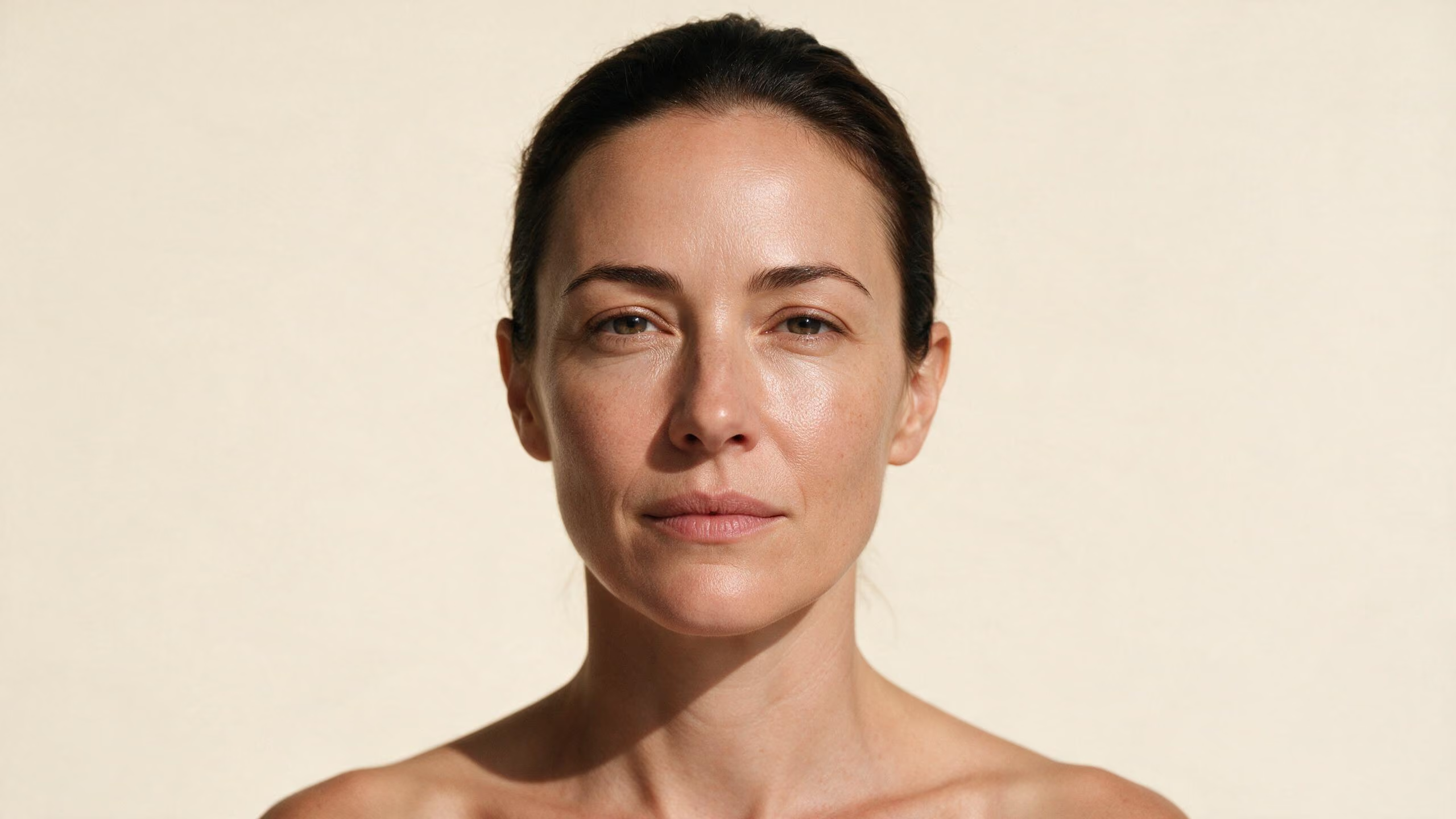
Your first consultation for non-surgical treatments is a critical step in achieving safe, natural, and effective aesthetic results. Asking the right questions not only clarifies your expectations but also helps you evaluate the expertise of your provider and the suitability of different treatment options. Whether you are considering Botox®, dermal fillers, RF skin tightening, microneedling, or laser resurfacing, being prepared can make the consultation productive and informative.
Key Questions to Ask During Your Initial Consultation
Practitioner Experience and Credentials: Understanding your provider’s training, certifications, and years of experience is essential. Ask about their background in aesthetic medicine, familiarity with different modalities, and expertise in facial anatomy. A skilled practitioner ensures treatments are safe, precise, and aligned with your unique facial structure.Available Treatment Options Discuss which procedures are most suitable for your goals. For example, Botox® and fillers may address dynamic wrinkles and volume loss, while RF skin tightening or HIFU can improve laxity and contour. Understanding the benefits and limitations of each option helps you make informed decisions.Expected Results and Longevity Ask what results you can realistically expect, how long effects last, and whether multiple sessions are required. Different treatments have varying durations; for instance, Botox® may last three to six months, whereas dermal fillers can last up to two years.Risks and Side Effects Inquire about potential complications, recovery time, and ways to minimize risks. Even minor side effects such as swelling, bruising, or redness should be explained so you can prepare appropriately.Product Selection and Technique The choice of products and injection techniques can significantly influence results. Discuss why certain fillers, neuromodulators, or devices are recommended for your needs and how they will be applied for natural, harmonious outcomes.Customized Plan and Follow-Up A tailored approach is crucial for achieving sophisticated and balanced results. Ask how treatments will be sequenced, how often maintenance sessions are needed, and what follow-up care is advised.
Why Consultation with Dr. Simon Ourian at Epione Matters
At Epione, Dr. Simon Ourian prioritizes transparency, individualized assessment, and high-end expertise. He takes the time to evaluate each patient’s anatomy, facial expressions, and aesthetic goals. Every consultation is designed to educate, clarify expectations, and instill confidence. His refined approach ensures enhancements look natural, elegant, and harmonious, reflecting the luxury standards of Los Angeles aesthetics.
Conclusion
A first consultation is more than just a meeting; it is the foundation for safe, effective, and natural-looking non-surgical facial rejuvenation. By asking thoughtful questions about experience, treatment options, risks, outcomes, and personalized planning, patients can make informed decisions. With guidance from Dr. Simon Ourian at Epione, every consultation provides clarity and reassurance, ensuring sophisticated results that enhance natural beauty while maintaining your unique identity.This article is based on publicly available online information and has not been independently reviewed for medical accuracy or safety. It is not a substitute for professional medical advice. Please consult your doctor or a qualified healthcare provider for personalized guidance and recommendations.
Disclaimer Regarding Treatment Comparisons and AI-Generated Content
The opinions and comparisons expressed in this article are based on Dr. Simon Ourian's professionalexperience, clinical observations, aesthetic philosophy, and publicly available information at the timeof publication.
References to competing products, technologies, procedures, practitioners, or manufacturers are notintended to disparage any individual, company, or organization. Any comparisons reflect Dr. Ourian'sopinions and clinical experience and should not be construed as statements of fact regarding thesuperiority, inferiority, safety, efficacy, or performance of any competing product or treatment.Medical technologies, scientific research, treatment protocols, and regulatory guidance continue toevolve. Information presented in this article may become outdated over time and should not beconsidered comprehensive or definitive medical guidance.
Comparisons between products, procedures, technologies, treatment approaches, manufacturers, oraesthetic outcomes are provided for informational and educational purposes only. Individualpractitioners may have different experiences, preferences, treatment protocols, and opinionsregarding the products or procedures discussed.
No statement contained in this article should be interpreted as a guarantee, warranty, prediction, orpromise of any specific result. Individual outcomes vary significantly based on anatomy, age, skinquality, medical history, genetics, lifestyle factors, treatment technique, and adherence to pre- andpost-treatment instructions.
Portions of this article may have been generated, assisted, summarized, or edited using artificialintelligence (AI) tools. While reasonable efforts have been made to review and verify the content foraccuracy, completeness, and relevance, some information may be incomplete, outdated, inaccurate,or subject to interpretation. Readers should independently verify any information before relying uponit.
The content provided is for general educational and informational purposes only and is not intendedas medical advice, diagnosis, or treatment. Readers should consult with a qualified healthcareprofessional regarding their individual circumstances and treatment options before making anymedical or aesthetic decisions.
Results vary from patient to patient. No outcome is guaranteed. Some or all of this contentmay have been created, edited, or enhanced using artificial intelligence technology, anddespite review efforts, inaccuracies may exist.