







%201.avif)










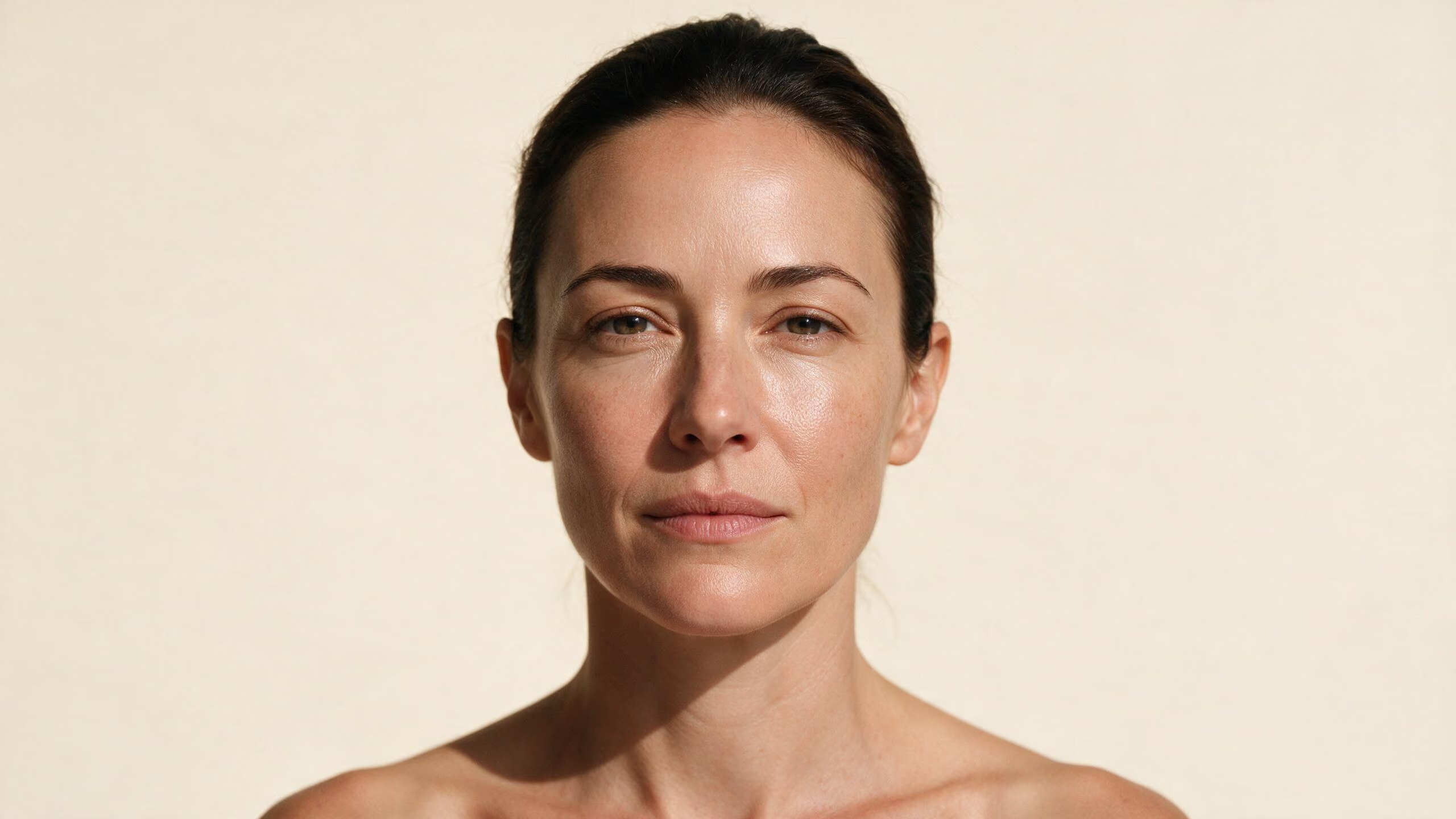
Deep acne pitting, clinically referred to as atrophic scarring, represents a significant challenge for individuals seeking a smooth complexion. These indentations occur when the skin fails to produce enough collagen during the healing process following a severe inflammatory acne breakout. Because the damage is located deep within the dermal layers, traditional topical creams and high-coverage foundations often fail to create an even surface. Makeup is designed to alter color and provide a slight blurring effect, but it cannot fill the physical voids or "pits" that catch the light and create visible shadows on the face.
Addressing these structural concerns requires a shift from cosmetic camouflage to regenerative clinical interventions. When the skin loses its underlying support structure, the resulting depressions, whether they are ice pick, boxcar, or rolling scars, become permanent fixtures of the anatomy. Scientific advancements in aesthetic medicine have introduced several modalities that focus on remodeling the skin from the inside out. By triggering the body’s natural wound-healing response or physically lifting the depressed tissue, it is possible to significantly reduce the depth and visibility of even the most stubborn acne pitting.
The process of choosing the right intervention begins with an assessment of the scar type and the patient's skin physiology. Not all pitting is created equal, and a singular approach rarely yields the comprehensive results that patients desire. Successful treatment plans often involve a combination of resurfacing technologies and volumizing agents. This multi-layered strategy ensures that the surface texture is refined while the deeper volume loss is addressed, providing a holistic improvement that makes the reliance on heavy, pore-clogging makeup a thing of the past.
The Clinical Path to Smoothing Atrophic Scars
Before embarking on a treatment journey, it is essential to understand the biological mechanisms that allow the skin to repair itself. Most professional treatments for deep pitting rely on the principle of controlled micro-injury. By creating precise, localized "damage," the skin is forced to enter a state of rapid repair, synthesizing new collagen and elastin fibers. This new tissue fills the depressions, gradually pulling the surface of the scar upward to meet the surrounding healthy skin. Consistency is key, as collagen remodeling is a biological process that unfolds over several months rather than a few days.
Patients should also be aware that the age and severity of the pitting influence the total number of sessions required. Older scars that have become fibrotic or "tethered" to deeper tissues may require more aggressive interventions to break the restrictive bands of collagen. Modern techniques have been refined to maximize these corrective results while minimizing the downtime typically associated with deep skin resurfacing. Understanding the sequence of professional care helps set realistic expectations for the transition from textured skin to a clear, makeup-free appearance.
- Initial Consultation: A thorough skin analysis is performed to categorize the specific types of acne scars present on the face.
- Surface Preparation: The skin is cleansed and often treated with a topical numbing agent to ensure comfort during the procedural phase.
- Energy Application: Advanced laser or radiofrequency devices are used to target the pitted areas and stimulate deep cellular regeneration.
- Post-Treatment Cooling: Specialized serums or cooling masks are applied to soothe the area and kickstart the recovery process.
- Home Care Integration: A specific skincare regimen is provided to protect the new skin cells and enhance the overall collagen production.
- Follow-up Assessment: The skin is monitored over several weeks to determine if additional sessions are needed to reach the desired level of smoothness.
The healing timeline is a critical component of the recovery phase, as the skin undergoes several stages of transformation. Immediately following a procedure, there may be temporary redness or swelling, which is a sign that the inflammatory response has been successfully triggered. This is a positive indicator that the body is beginning to mobilize the necessary resources to rebuild the dermal matrix. Within a week, the surface typically begins to shed, revealing fresher and more resilient skin underneath that appears brighter and more uniform.
Over the subsequent months, the deeper remodeling continues beneath the surface. Patients often notice that the "shadows" created by pitting begin to fade as the indentations become shallower. This progressive improvement is why many practitioners recommend a series of treatments spaced several weeks apart. By layering the effects of each session, the cumulative increase in collagen density provides a durable solution that outperforms any temporary cosmetic fix or over-the-counter scar cream.
Advanced Resurfacing Technologies for Texture Correction
One of the most effective ways to treat deep pitting is through fractional laser technology. Unlike older, fully ablative lasers that removed the entire top layer of skin, fractional devices create thousands of microscopic treatment zones. This leaves small bridges of untouched skin between the treated areas, which facilitates faster healing and reduces the risk of complications. This technology is particularly adept at treating boxcar and rolling scars, as it can be calibrated to reach the exact depth where the scarring originates without damaging the surrounding tissue.
In addition to lasers, radiofrequency microneedling has emerged as a powerful tool for deep texture issues. This method uses fine needles to deliver heat energy directly into the dermis. The combination of physical micro-channels and thermal energy provides a double stimulus for collagen production. This is often preferred for patients with darker skin tones who may be more prone to pigmentation issues with traditional laser treatments. The versatility of these energy-based devices allows for a highly customized approach to skin smoothing.
- Ablative Laser Resurfacing: This method removes thin layers of skin with high precision to "sand down" the edges of deep pits.
- Fractional CO2 Therapy: A powerful option for significant pitting that targets the deep dermis while preserving the surface integrity.
- Non-Ablative Infrared Lasers: These tools heat the underlying tissue without damaging the surface, making them ideal for those who cannot afford long downtime.
- Radiofrequency Microneedling: A technique that combines mechanical and thermal stimulation to tighten the skin and fill in deep indentations.
The choice between these technologies depends largely on the patient's lifestyle and the specific depth of the pitting. While more aggressive treatments may offer faster results, they often require a longer recovery period. Conversely, gentler options may require more sessions but allow the patient to return to their daily activities almost immediately. It is this balance of efficacy and convenience that defines modern aesthetic dermatology, allowing individuals to customize their path to clearer skin based on their unique needs.
Furthermore, the integration of specialized cooling technologies has revolutionized the patient experience. By keeping the surface of the skin cool while the deeper layers are being treated, clinicians can use higher energy levels safely. This leads to more significant collagen induction without the discomfort or prolonged redness associated with older methods. As the technology continues to evolve, the ability to erase the evidence of past acne becomes increasingly accessible to those who have struggled for years with difficult-to-hide texture issues.
Volumizing and Subcision Techniques for Deep Voids
For scars that are particularly deep or have become anchored to the underlying muscle or fat, surface treatments alone may not be sufficient. In these cases, subcision is a valuable technique. This involves using a specialized needle to gently break the fibrous bands that pull the skin downward. Once these bands are released, the "pit" can rise back to its natural position. Subcision is frequently paired with other treatments to ensure the scar does not re-tether during the healing process.
Dermal fillers are another essential tool in the fight against deep acne pitting. While many people associate fillers with lip enhancement or cheek volume, they are incredibly effective at "spot-filling" individual acne scars. By placing a small amount of hyaluronic acid or a collagen-stimulating filler directly beneath the pit, the indentation is instantly lifted. This provides an immediate improvement in the skin's profile, making it much easier for makeup to glide over the surface smoothly.
- Hyaluronic Acid Fillers: These provide an immediate lift to depressed scars and can be adjusted easily for a natural look.
- Biostimulatory Injectables: These substances, such as poly-L-lactic acid, work over time to encourage the body to grow its own permanent collagen.
- Subcision Therapy: A manual technique used to disconnect the scar tissue from deeper structures, allowing the skin to level out.
- Bellafill: A long-lasting dermal filler specifically FDA-approved for the correction of moderate to severe atrophic acne scars.
The use of fillers in scar revision is an art form that requires a deep understanding of facial anatomy. The goal is not just to fill a hole, but to blend the treated area seamlessly with the surrounding tissue. When done correctly, the result is a soft, natural texture that looks like healthy skin rather than "filled" skin. This approach is particularly beneficial for patients who have a few prominent scars that they find especially difficult to cover with traditional cosmetics.
Combining these injectable treatments with energy-based resurfacing creates a synergistic effect. While the fillers provide the necessary volume to lift the deep pits, the lasers refine the surface texture and address any lingering redness or pigmentation. This comprehensive strategy addresses all aspects of the scar leading to a transformation that is visible even under the harshest lighting conditions.
Maintaining Results and Preventing Future Damage
Once the deep pitting has been addressed through professional intervention, maintaining the health of the skin is paramount. The new collagen fibers that have been synthesized are durable, but they are not immune to the effects of aging or environmental damage. A consistent skincare routine that includes sun protection is non-negotiable. Ultraviolet radiation breaks down collagen and can cause existing scars to darken, making them more noticeable. Using a broad-spectrum sunscreen daily ensures that the investment made in clinical treatments is protected for the long term.
Incorporating active ingredients like retinoids and antioxidants can also help sustain the results. Retinoids promote cell turnover and continue to support collagen production at a baseline level, while antioxidants protect the skin from oxidative stress. Together, these elements create a healthy environment for the skin to thrive. Regular professional maintenance, such as mild chemical peels or light laser treatments, can also help keep the skin's surface polished and prevent any new imperfections from taking hold.
- Daily Sunscreen Use: Protects newly formed collagen from being degraded by harmful UVA and UVB rays.
- Retinoid Application: Encourages ongoing cellular renewal and helps maintain a smooth, even surface texture.
- Antioxidant Serums: Neutralizes free radicals that can lead to premature skin aging and the breakdown of dermal support.
- Hydration Focus: Keeping the skin well-hydrated ensures that it remains plump and resilient, which minimizes the appearance of minor imperfections.
The journey from struggling with deep acne pitting to enjoying smooth, clear skin is a transformative experience. It is not just about the physical change, but the boost in confidence that comes with no longer needing to hide behind heavy layers of foundation. Patients often report a newfound freedom in their daily lives, as they can engage in activities like swimming or exercise without worrying about their makeup rubbing off and revealing the texture beneath.
The key to success lies in a professional, medical-grade approach. Over-the-counter solutions and DIY home treatments often lack the potency required to affect change in the deep dermis. By working with experienced clinicians who have access to the latest technologies, individuals can achieve results that were once thought impossible. The transition from "pitted" to "polished" is a gradual process, but with the right tools and expertise, it is entirely within reach.
The Epione Approach to Permanent Texture Improvement
When it comes to addressing the most stubborn acne scars, the expertise provided by the clinical team at Epione Beverly Hills is unparalleled. The philosophy here is centered on high-tech, minimally invasive solutions that deliver maximum impact. We understand that deep pitting is more than a cosmetic annoyance; it can impact an individual's self-esteem and social interactions. By utilizing proprietary techniques like the Coolaser, Dr. Simon Ourian and his team can target deep atrophic scars with a level of precision that traditional methods simply cannot match.
The Coolaser technology is a hallmark of the Epione experience, offering a way to resurface the skin with significantly less downtime than standard CO2 lasers. This device works by vaporizing the damaged skin cells while simultaneously cooling the area to prevent thermal damage to healthy tissue. This dual-action approach is particularly effective for deep pitting because it allows for deeper penetration and more significant collagen stimulation. Patients at Epione often see a dramatic improvement in skin smoothness, allowing them to finally achieve the "filter-like" complexion they have been chasing with makeup.
The results achieved at Epione Beverly Hills are designed to be long-lasting and natural-looking. We prioritize the health and integrity of the skin, ensuring that every treatment plan is tailored to the specific needs and skin type of the patient. Whether it involves the Dermalase system for texture or carefully placed fillers for volume, our goal is to provide a comprehensive solution that makes the skin look as though the acne never occurred. By choosing a world-class facility like Epione, patients can trust that they are receiving the highest standard of care in the field of aesthetic dermatology.
Disclaimer Regarding Treatment Comparisons and AI-Generated Content
The opinions and comparisons expressed in this article are based on Dr. Simon Ourian's professionalexperience, clinical observations, aesthetic philosophy, and publicly available information at the timeof publication.
References to competing products, technologies, procedures, practitioners, or manufacturers are notintended to disparage any individual, company, or organization. Any comparisons reflect Dr. Ourian'sopinions and clinical experience and should not be construed as statements of fact regarding thesuperiority, inferiority, safety, efficacy, or performance of any competing product or treatment.Medical technologies, scientific research, treatment protocols, and regulatory guidance continue toevolve. Information presented in this article may become outdated over time and should not beconsidered comprehensive or definitive medical guidance.
Comparisons between products, procedures, technologies, treatment approaches, manufacturers, oraesthetic outcomes are provided for informational and educational purposes only. Individualpractitioners may have different experiences, preferences, treatment protocols, and opinionsregarding the products or procedures discussed.
No statement contained in this article should be interpreted as a guarantee, warranty, prediction, orpromise of any specific result. Individual outcomes vary significantly based on anatomy, age, skinquality, medical history, genetics, lifestyle factors, treatment technique, and adherence to pre- andpost-treatment instructions.
Portions of this article may have been generated, assisted, summarized, or edited using artificialintelligence (AI) tools. While reasonable efforts have been made to review and verify the content foraccuracy, completeness, and relevance, some information may be incomplete, outdated, inaccurate,or subject to interpretation. Readers should independently verify any information before relying uponit.
The content provided is for general educational and informational purposes only and is not intendedas medical advice, diagnosis, or treatment. Readers should consult with a qualified healthcareprofessional regarding their individual circumstances and treatment options before making anymedical or aesthetic decisions.
Results vary from patient to patient. No outcome is guaranteed. Some or all of this contentmay have been created, edited, or enhanced using artificial intelligence technology, anddespite review efforts, inaccuracies may exist.
Frequently asked questions
What are the most effective professional treatments for deep ice pick scars?
Ice pick scars are notoriously difficult to treat because they extend deep into the dermis. The experts at Epione often recommend a combination of the Coolaser and specialized resurfacing techniques to address these narrow, deep pits. While makeup can easily slide into these small holes and make them look more prominent, the Coolaser works by stimulating the skin to fill the void with its own natural collagen. In some cases, Dr. Simon Ourian may use a technique called TCA Cross or localized punch excision for the deepest ice pick scars before proceeding with laser resurfacing. This multi-step approach ensures that the "v-shaped" indentation is leveled out from the bottom up, providing a much smoother surface that no longer requires heavy concealer.
Can dermal fillers be used to fix acne pitting permanently?
While many dermal fillers are temporary, they offer an excellent immediate solution for deep acne pitting that makeup cannot hide. At Epione Beverly Hills, various types of fillers are used to lift depressed scars and create an even skin profile. Some fillers, like those containing hyaluronic acid, typically last between six to eighteen months. However, certain fillers like Bellafill are specifically designed to be long-lasting by providing a structural matrix that supports the growth of your own collagen. Dr. Simon Ourian often uses these volumizing agents to provide an instant "lift" to rolling and boxcar scars, which dramatically improves the way light reflects off the face and reduces the visibility of shadows.
Is it possible to see results after just one laser treatment for acne scars?
Many patients notice a visible improvement in their skin texture after a single session at Epione, though the most dramatic results usually appear after a series of treatments. The Coolaser technology is designed to be highly effective, but the biological process of collagen remodeling takes time. Typically, the skin continues to improve for three to six months following the procedure as new fibers are woven into the dermal matrix. The clinical team at Epione Beverly Hills usually recommends a customized treatment plan that might involve three to five sessions depending on the depth of the pitting. This ensures that the results are thorough and that the skin's surface becomes progressively smoother with each visit.
How does the Coolaser differ from traditional CO2 laser resurfacing for scars?
The Coolaser used at Epione Beverly Hills represents a significant advancement over traditional CO2 lasers, which can often lead to prolonged redness and a higher risk of pigmentation issues. The Coolaser works by delivering short pulses of light energy that vaporize the scarred tissue without overheating the surrounding skin, thanks to an integrated cooling mechanism. This makes the treatment much more comfortable and significantly reduces the recovery period. Dr. Simon Ourian developed this technique to provide patients with a safer, more precise way to treat deep pitting, especially for individuals with busy lifestyles who cannot afford weeks of downtime but still want professional-grade results.
Are these treatments safe for individuals with darker skin tones?
Safety is a primary concern at Epione, especially when treating patients with darker skin tones who are at a higher risk for post-inflammatory hyperpigmentation. Traditional aggressive lasers can sometimes trigger the skin to produce excess pigment, but the advanced technologies used at Epione Beverly Hills are designed to be much more controlled. Dr. Simon Ourian and his team often utilize the Dermalase or specific settings on the Coolaser that target the texture without causing excessive heat spread. This careful calibration allows for effective scar revision across all ethnicities. It is always recommended to have a consultation with the experts at Epione to determine the safest and most effective energy-based treatment for your specific skin physiology.
What is the recovery process like after a deep resurfacing treatment for pitting?
The recovery process at Epione is streamlined to be as efficient as possible. Immediately after a session with the Coolaser, the skin may feel like a mild sunburn and appear red or slightly swollen. Over the next few days, a thin layer of skin will typically peel away, revealing the newer, smoother tissue beneath. The clinical team at Epione Beverly Hills provides detailed aftercare instructions and specific products to support the healing phase. Most patients are able to return to their normal activities within a few days, though it is crucial to avoid direct sun exposure and wear high-quality sunscreen to protect the vulnerable new skin cells as they mature and strengthen.
Does treating acne pitting also help with the redness or dark spots left by old breakouts?
Yes, many of the resurfacing treatments provided by the experts at Epione are multifunctional. While the primary goal for pitting is to level the surface, the Coolaser and Dermalase systems also target the pigment-producing cells and the small blood vessels that cause lingering redness. This means that as the deep indentations are being filled with new collagen, the overall tone of the skin is also becoming more uniform. Dr. Simon Ourian focuses on achieving a comprehensive transformation, so that patients leave with skin that is not only smoother in texture but also clearer and more radiant in color, further reducing the need for heavy makeup.