







%201.avif)








Piel Artículos
Artículos sobre rejuvenecimiento, renovación y tratamientos cutáneos no quirúrgicos del Dr. Simon Ourian en Epione Beverly Hills.
Solicita una cita

modelo
¡Gracias! ¡Su presentación ha sido recibida!
¡Uy! Algo salió mal al enviar el formulario.
How Long After CO2 Laser Will I See Results?
So, how long after co2 laser will I see results? Most patients notice their skin looking brighter and smoother within seven to ten days of a CO2 laser treatment, but the results that truly change your skin to have tighter texture, faded scarring, and softened lines take three to six months to fully appear as new collagen rebuilds beneath the surface. If you've booked a session, or you're still deciding whether to, here's the honest timeline: what happens week by week, what speeds it up, what slows it down, and why the best results are never the ones you see on day three.
The Short Answer, at a Glance
- Days 1–7: Redness, swelling, and peeling. This is recovery, not results.
- Week 2–3: Initial glow appears as new skin surfaces. Early, not final.
- Month 1–3: Texture and tone visibly improve as collagen production ramps up.
- Month 3–6: Peak results. Fine lines, scarring, and pigment show their fullest improvement.
One session can move the needle, but for moderate-to-severe concerns (deep acne scarring, significant sun damage), most patients need more than one treatment to reach their goal, and results depend heavily on how well they follow aftercare instructions.
What Is CO2 Laser Resurfacing?
CO2 laser resurfacing uses concentrated light energy to remove damaged outer layers of skin while heating the deeper dermis, triggering the body to rebuild that layer with fresh collagen and elastin. It's classified as an ablative laser, meaning it removes tissue rather than heating it non-invasively from below, which is why it produces more dramatic change than non-ablative treatments, but requires real recovery time in exchange. Dermatologists use it to treat fine lines, acne scarring, sun damage, uneven texture, and enlarged pores, often in a single session for milder concerns or a short series for more significant ones.
Immediate vs. Progressive Results: What Actually Happens First
CO2 laser resurfacing works in two phases, and confusing them is the number one reason patients feel disappointed in week one.
- Phase one is visible, but it isn't the result: In the first several days, your skin is red, tight, swollen, and shedding its outer layer. This is the laser doing its job of removing damaged surface skin so healthier skin can take its place. It looks dramatic, but it is not the outcome you're paying for.
- Phase two is invisible at first, and it's the actual treatment: Underneath the surface, the laser's heat triggers your body to produce new collagen and elastin, the proteins that give skin its structure and bounce. This process, called collagen remodeling, is slow by design. That's also why CO2 laser results keep improving for months after the visible peeling ends, long after most patients assume the treatment is "done."
The Week-by-Week CO2 Laser Results Timeline
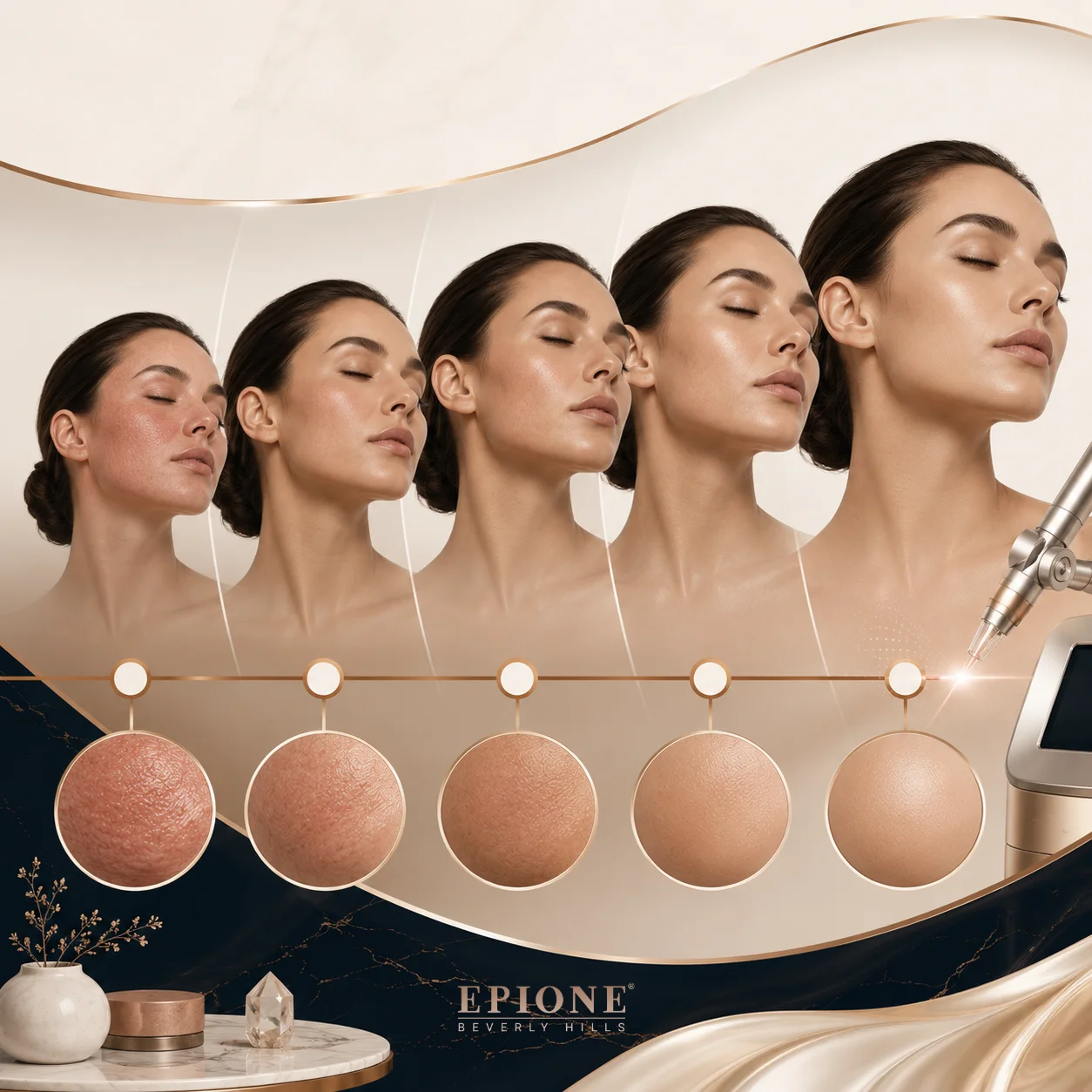
Recovery and results don't move in a straight line; the visible ups and downs from day one through month six mark distinct stages in how your skin heals and rebuilds.
Week 1
Redness, swelling, and peeling. Expect your skin to look and feel sunburned, then tighten, with visible flaking or peeling around day 3–5. Avoid makeup during this window. This is the least flattering week, and the one most patients wrongly judge the treatment by.
Week 2–3
The "new skin" glow. Once peeling completes, a layer of pink, fresh skin is revealed. Many patients report their first real "wow" moment here: skin looks tighter and more even than before treatment. This is genuine improvement, but it's early-stage. Redness can linger at a lower level for several more weeks, especially in fairer skin tones.
Month 1
Texture starts changing. Pores may look smaller, mild acne scarring starts to soften, and skin tone evens out. This is collagen remodeling beginning to show on the surface.
Month 2-3
Visible tightening. This is typically when patients and the people around them start commenting unprompted. Fine lines soften, skin feels firmer, and photos start looking noticeably different from "before."
Month 3-6
Peak results. Collagen production generally peaks in this window. Deeper concerns, moderate acne scarring, sun damage, and etched-in lines show their most significant improvement here. If you planned a second treatment for a more severe concern, you'll usually schedule it here.
Recovery Symptoms: What's Normal (and What's Not)
Redness, swelling, tightness, and visible peeling are all expected in the days after treatment; they're signs the skin is shedding damaged tissue, not signs something has gone wrong. Mild oozing or crusting in the first 24–48 hours, itching as new skin forms, and a sunburn-like sensation through the first week are all part of typical healing.
What isn't normal: fever, spreading redness with warmth or pain days after the initial healing period, pus-like drainage, or blistering beyond what your provider described for your specific treatment intensity. Any of these warrant a call to your provider rather than a wait-and-see approach; they can indicate infection or a reaction that needs attention before it affects your results.
What Affects How Fast You See Results
Not every patient follows the same timeline. A few factors consistently speed things up or slow them down:
- Treatment intensity: A lighter, more conservative laser setting means shorter downtime but a more gradual, subtler result. A more aggressive setting produces faster, more dramatic change, with more upfront recovery time.
- Skin type and tone: Fairer skin tends to show redness longer but often reveals visible change sooner. Deeper skin tones need more careful settings to avoid pigment changes, which can mean a more gradual approach with a longer but safer timeline.
- Severity of the concern: Fine lines and mild sun damage respond faster than deep acne scarring or significant skin laxity, which may need multiple sessions spaced months apart.
- Age and baseline skin health: Younger skin generally produces collagen faster than older skin, which can shift the "peak results" window later for some patients.
Ablative vs. Fractional: Why the Type of CO2 Laser Changes the Timeline
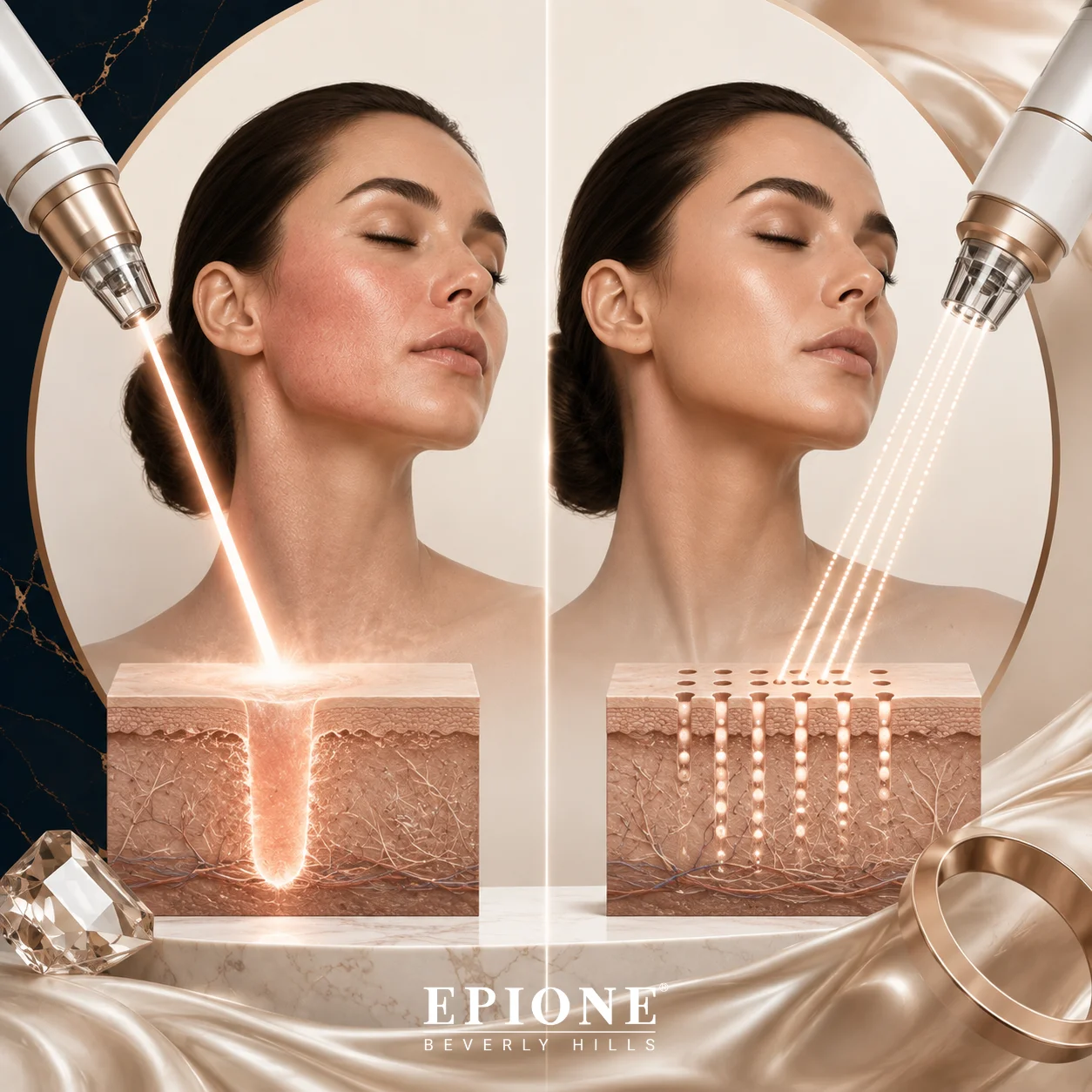
Not all CO2 lasers work the same way, and the type you use affects both recovery time and how quickly results appear.
Fully ablative CO2 lasers treat the entire treated area's surface at once. Recovery is longer, often 10–14 days of visible healing, but results tend to appear faster and more dramatically because more tissue is being resurfaced in a single pass.
Fractional CO2 lasers treat the skin in a pattern of microscopic columns, leaving surrounding tissue untouched to speed healing. Downtime is shorter, typically 5–7 days, but because less tissue is treated per session, full results build more gradually and often require a series of treatments rather than one.
Before booking, ask your provider which approach they're using; it directly changes how long you should expect to wait, and how many sessions your specific concern will realistically need.
Setting Realistic Expectations by Concern
"When will I see results?" depends heavily on what you're treating:
- Fine lines and early sun damage: Often the fastest to respond; visible improvement by month 1, continuing through month 3.
- Acne scarring: Slower and more session-dependent. Noticeable softening by month 2–3, with continued improvement over 6+ months, especially for deeper or pitted scarring.
- Pigment and sun spots: Initial fading is often visible within weeks, but full evening-out of tone typically takes a full collagen cycle; 3 to 6 months.
- Skin laxity and texture: The slowest category to change, since it depends most heavily on new collagen formation. Most patients see the bulk of tightening between months 3 and 6.
What the Research Shows About CO2 Laser Results
The improvement patients see isn't anecdotal; it's well documented in clinical literature. Research on fractional CO2 laser therapy shows that up to 80% of patients report an acceptable reduction in fine lines and wrinkles, with efficacy comparable to traditional, fully ablative CO2 treatment but with a notably faster recovery. Reepithelialization, the skin's surface healing over, typically takes seven to ten days with a CO2 laser, which lines up with the week-one recovery window most patients experience before the "new skin" phase begins.
How Aftercare Speeds (or Slows) Your Results
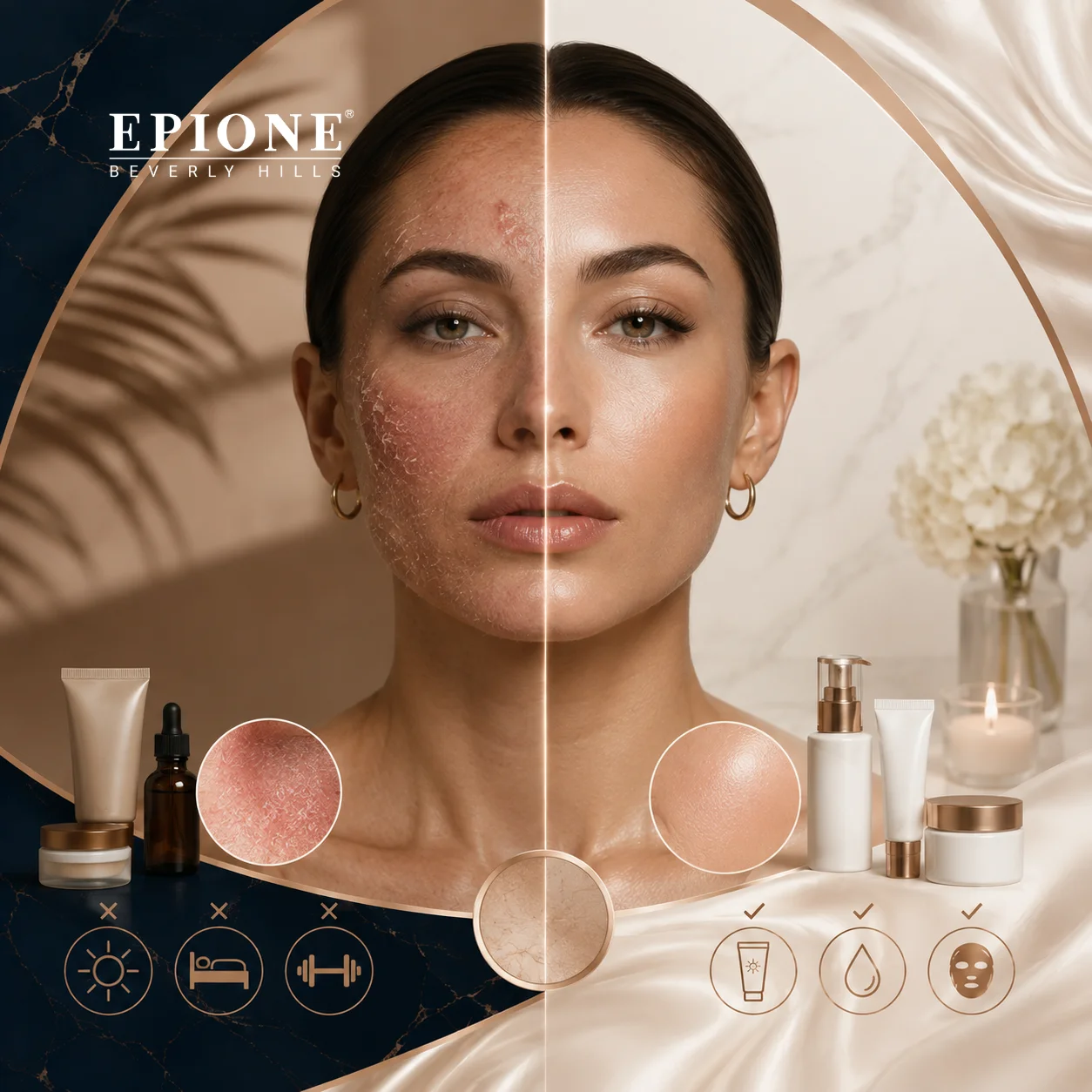
Aftercare isn't a formality; it's the difference between a good result and a great one, or a fast one and a slow one. Sun protection is non-negotiable, since new skin is significantly more vulnerable to UV damage, and unprotected exposure during healing can cause pigment irregularities that delay or undo your results. Gentle, consistent hydration supports the skin barrier as it rebuilds, helping the visible "glow" phase arrive on schedule rather than late, while introducing active ingredients like retinoids or exfoliating acids too soon can irritate healing skin and extend redness and peeling well past the typical week-one window.
Following your provider's specific timeline for reintroducing skincare and makeup matters more than general internet advice, since every patient's settings and skin are different; what speeds recovery for one person can slow it for another.
Common Myths About "Instant" CO2 Laser Results
- "If I don't see a dramatic change in week one, it didn't work." In reality, week one is recovery, not results. Judging the treatment here is the most common source of disappointment.
- "More redness means better results." Redness reflects how your skin is responding to the procedure, not how much collagen you'll ultimately produce. Two patients with identical settings can heal at different visible rates.
- "One session fixes everything." For mild concerns, one session can be transformative. For moderate-to-severe scarring or laxity, a single session is often the start of a process, not the finish line, and a provider who promises otherwise is setting you up for disappointment.
Epione's Approach to Laser Resurfacing
Not every laser is the same, and no two patients have the same timeline. At Epione Beverly Hills, Dr. Simon Ourian built Coolaser® himself after two decades of treating skin at every tone and severity. It’s a proprietary system unavailable anywhere else, developed specifically to address the trade-off between result depth and downtime. Every plan he sets matches your specific skin type and concern, with settings and technique chosen based on how your skin actually heals, not a default protocol.
That experience shapes what you're told before treatment, not just during it: a realistic session count set upfront, so you know going in whether your concern needs more than one round to reach full results, and aftercare guidance built around your specific treatment rather than generic skincare advice. That's why patients searching for a cosmetic dermatologist in Beverly Hills consistently land at Epione.
The Bottom Line
CO2 laser results aren't a single moment; they're a months-long process that starts with visible recovery and ends with skin change that doesn't fade the day you leave the office. If you're weighing whether laser resurfacing is right for you, the honest answer depends on your skin, your goals, and the specific approach your provider recommends.
Epione's laser resurfacing treatments, including the signature Coolaser treatment, are built around exactly this kind of personalized approach; book a consultation to talk through what a realistic timeline looks like for your skin.
Frequently Asked Questions
How soon will I see results after my first CO2 laser session?
Early signs like smoother texture and a brighter tone typically appear around week two to three, once peeling resolves. The fuller result continues building for months afterward.
Will one session be enough to see results?
For fine lines and mild sun damage, often yes. For deeper acne scarring or significant laxity, most patients need a series of sessions to reach their goal.
How long am I going to peel for?
Visible peeling generally lasts about 5–7 days with fractional treatments, or up to 10–14 days with fully ablative treatments.
How long is my face going to be red?
Intense redness typically fades within the first week or two; a lighter pinkness can linger for several additional weeks, especially in fair skin.
How long do CO2 laser results last?
Because the treatment stimulates your own collagen production, results can last one to several years, though ongoing sun protection and skincare significantly affect longevity.
Leer Artículo
September 8, 2026
Láser de CO2 Frente a Coolaser: ¿Cuál Es la Diferencia en los Resultados?
Cuando los pacientes investigan las opciones de rejuvenecimiento con láser, a menudo se confunden entre los láseres de CO2 tradicionales y la más reciente tecnología Coolaser . Ambos abordan problemas cutáneos similares, pero sus enfoques y resultados difieren significativamente. Comprender estas diferencias ayuda a explicar por qué el tiempo de recuperación, la comodidad y los resultados a largo plazo varían entre los tratamientos.
Los láseres de CO2 tradicionales, como UltraPulse, suministran una potente energía ablativa que elimina las capas de piel dañada mediante una lesión térmica controlada. Este enfoque agresivo produce resultados espectaculares en cicatrices graves y arrugas profundas, pero requiere semanas de recuperación. El calor intenso generado durante el tratamiento puede causar enrojecimiento prolongado, hinchazón y posibles complicaciones en ciertos tipos de piel.
La tecnología Coolaser representa una evolución en el rejuvenecimiento fraccionado, utilizando un sistema patentado de aplicación por patrones para crear columnas microscópicas precisas de tratamiento, preservando al mismo tiempo el tejido sano circundante. Este enfoque controlado reduce el daño térmico y acelera la curación, manteniendo resultados excelentes. El equipo de Epione Beverly Hills ha observado resultados consistentemente naturales con una mejora significativa en la comodidad del paciente durante el proceso de recuperación.
Cómo funcionan los láseres de CO2 tradicionales
Los sistemas de láser de CO2 tradicionales, como UltraPulse y AcuPulse, funcionan mediante la aplicación de energía concentrada de dióxido de carbono para vaporizar el tejido cutáneo dañado. El láser crea heridas térmicas controladas que activan la respuesta de curación del cuerpo, estimulando la producción de nuevo colágeno a medida que la piel se repara. Este proceso elimina eficazmente el daño solar, las arrugas y el tejido cicatricial, fomentando la renovación de la piel desde las capas más profundas.
El mecanismo se basa en la absorción de agua dentro de las células de la piel, lo que provoca un calentamiento rápido y la vaporización del tejido. Los sistemas tradicionales suministran esta energía en formatos de onda continua o pulsada, siendo la entrega pulsada la que ofrece un mejor control sobre el daño térmico. Sin embargo, incluso los láseres de CO2 tradicionales pulsados generan un calor significativo que se extiende más allá de la zona de tratamiento prevista, lo que contribuye a un tiempo de inactividad prolongado y posibles complicaciones.
El Dr. Ourian explica que, aunque los láseres de CO2 tradicionales producen excelentes resultados para daños cutáneos graves, su naturaleza agresiva limita las opciones de tratamiento para pacientes con tonos de piel más oscuros o para aquellos que buscan un tiempo de recuperación mínimo. El riesgo de hiperpigmentación postinflamatoria aumenta con los sistemas tradicionales, especialmente al tratar a pacientes con fototipos de piel Fitzpatrick III en adelante.
Las características clave del tratamiento con láser de CO2 tradicional incluyen:
- Periodo de recuperación prolongado: La curación suele requerir de 2 a 3 semanas, con un enrojecimiento significativo que puede persistir durante meses
- Eliminación agresiva de tejido: La ablación profunda trata daños graves, pero aumenta los riesgos de complicaciones
- Candidatos limitados según el tipo de piel: Mayor riesgo de cambios en la pigmentación en tonos de piel más oscuros
- Resultados espectaculares en una sola sesión: Es posible lograr una mejora sustancial en una sola sesión para los candidatos adecuados
La potencia de los sistemas de CO2 tradicionales los convierte en herramientas valiosas para casos específicos que requieren una intervención agresiva. Los pacientes con daño solar extenso, arrugas profundas o cicatrices de acné severas pueden beneficiarse de este enfoque cuando es realizado por profesionales experimentados. Sin embargo, el prolongado tiempo de recuperación y las posibles complicaciones hacen que los láseres de CO2 tradicionales sean menos adecuados para muchos pacientes que buscan un rejuvenecimiento facial.
El Dr. Ourian y su equipo evalúan cuidadosamente el tipo de piel, las preocupaciones y los factores del estilo de vida de cada paciente al considerar el tratamiento con láser de CO2 tradicional. El proceso de decisión incluye evaluar la capacidad de curación, los hábitos de exposición al sol y la tolerancia a un tiempo de inactividad prolongado para garantizar resultados óptimos y minimizar los riesgos.
Ventajas de la tecnología Coolaser
Coolaser representa un avance significativo en la tecnología de láser de CO2 fraccionado, utilizando algoritmos patentados para controlar la profundidad del tratamiento y la dispersión térmica con una precisión sin precedentes. El sistema crea columnas de tratamiento microscópicas mientras preserva áreas más grandes de tejido sano entre las zonas tratadas. Este enfoque mantiene los beneficios de estimulación de colágeno del rejuvenecimiento con láser de CO2, reduciendo drásticamente el tiempo de recuperación y las molestias del paciente.
La tecnología de enfriamiento integrada en el sistema Coolaser ayuda a minimizar el daño térmico a los tejidos circundantes durante el tratamiento. A diferencia de los láseres de CO2 tradicionales que dependen principalmente de la duración del pulso para controlar el calor, Coolaser gestiona activamente la temperatura del tejido durante todo el procedimiento. Este control de temperatura permite tratamientos más cómodos y una curación más rápida, manteniendo excelentes resultados clínicos para arrugas, cicatrices y problemas de textura de la piel.
Epione Beverly Hills ha observado una satisfacción del paciente consistentemente superior con los tratamientos Coolaser en comparación con los procedimientos de láser de CO2 tradicionales. El patrón de ablación controlado crea condiciones óptimas para la remodelación natural del colágeno sin la prolongada inflamación asociada con sistemas más agresivos. Los pacientes suelen retomar sus actividades normales en cuestión de días en lugar de semanas, lo que hace que Coolaser sea adecuado para profesionales ocupados y personas con estilos de vida activos.
Los principales beneficios de la tecnología Coolaser incluyen:
- Tiempo de recuperación más rápido: La mayoría de los pacientes se recuperan en 5-7 días con un tiempo de inactividad social mínimo
- Profundidad de tratamiento controlada: Ablación precisa que se dirige a capas específicas de la piel mientras preserva el tejido sano
- Resultados de apariencia natural: La mejora gradual durante 3-6 meses imita la reversión natural del envejecimiento
- Mayor compatibilidad con tipos de piel: El riesgo reducido de pigmentación permite tratar diversos tonos de piel de forma segura
La precisión que ofrece la tecnología Coolaser permite enfoques de tratamiento personalizados para las necesidades individuales de cada paciente. El Dr. Ourian puede ajustar los parámetros del tratamiento para abordar preocupaciones específicas como las líneas de expresión alrededor de los ojos, arrugas más profundas o cicatrices de acné, manteniendo al mismo tiempo la comodidad y seguridad del paciente. Esta flexibilidad hace que Coolaser sea adecuado tanto para tratamientos de mantenimiento como para procedimientos de rejuvenecimiento más integrales.
Para los pacientes que buscan una estimulación de colágeno adicional, los expertos de Epione a menudo combinan Coolaser con Neustem tratamientos para proporcionar una restauración inmediata del volumen junto con una mejora a largo plazo de la calidad de la piel. Este enfoque combinado aborda múltiples preocupaciones relacionadas con el envejecimiento de forma simultánea, manteniendo al mismo tiempo el cronograma de recuperación acelerada que hace que Coolaser sea atractivo para muchos pacientes.
Cómo elegir el tratamiento adecuado para las necesidades de su piel
La selección del paciente desempeña un papel crucial para lograr resultados óptimos, ya sea con láseres de CO2 tradicionales o con la tecnología Coolaser. La gravedad del daño cutáneo, el estilo de vida del paciente, su capacidad de cicatrización y sus objetivos estéticos influyen en las recomendaciones de tratamiento. Los pacientes con problemas leves a moderados suelen obtener excelentes resultados con Coolaser, mientras que aquellos que requieren una intervención más agresiva pueden beneficiarse del tratamiento con láser de CO2 tradicional seguido de una planificación de recuperación adecuada.
Las consideraciones sobre el tipo de piel influyen significativamente en la selección del tratamiento, especialmente en pacientes con tez más oscura que enfrentan mayores riesgos de hiperpigmentación posinflamatoria con tratamientos láser agresivos. El perfil térmico controlado de Coolaser lo hace más seguro para una gama más amplia de tipos de piel, mientras que los láseres de CO2 tradicionales requieren una selección cuidadosa del paciente y protocolos de tratamiento potencialmente modificados. El equipo de Epione Beverly Hills evalúa el tipo de piel Fitzpatrick, el historial de bronceado y los patrones de cicatrización de cada paciente antes de recomendar tratamientos láser específicos.
Combinar el rejuvenecimiento láser con tratamientos complementarios suele producir resultados superiores en comparación con los enfoques de una sola modalidad. El Dr. Ourian combina con frecuencia los tratamientos láser con inyectables estimuladores de colágeno como Neustem o Radiesse para abordar tanto la textura superficial como las preocupaciones estructurales más profundas. Este enfoque integral aborda múltiples aspectos del envejecimiento de la piel, optimizando al mismo tiempo el tiempo de recuperación y la satisfacción del paciente con los resultados generales.
Los factores que influyen en la selección del tratamiento incluyen:
- Gravedad del daño cutáneo: Las cicatrices profundas y el daño solar extenso pueden requerir la potencia del láser de CO2 tradicional
- Disponibilidad de tiempo de recuperación: Coolaser es adecuado para pacientes que necesitan un retorno más rápido a sus actividades normales
- Tipo de piel y riesgo de pigmentación: Los tonos de piel más oscuros generalmente se benefician del enfoque controlado de Coolaser
- Objetivos del tratamiento combinado: Combinar el láser con inyectables requiere una planificación del tratamiento coordinada
El proceso de consulta en Epione implica un análisis exhaustivo de la piel, una revisión del historial médico y una evaluación del estilo de vida para determinar el enfoque de tratamiento más adecuado. Esta evaluación exhaustiva ayuda a garantizar expectativas realistas y resultados óptimos, minimizando al mismo tiempo posibles complicaciones o la insatisfacción del paciente con los resultados.
La planificación del mantenimiento a largo plazo también influye en la selección del tratamiento inicial, ya que los pacientes que eligen opciones menos agresivas como Coolaser pueden requerir tratamientos de retoque periódicos para mantener los resultados. El Dr. Ourian y su equipo desarrollan programas de tratamiento personalizados que equilibran los objetivos del paciente con consideraciones prácticas como el presupuesto, la disponibilidad de tiempo y la tolerancia a los procedimientos repetidos.
Leer Artículo
August 22, 2026
¿Cómo Afectan los Diferentes Métodos de Exfoliación a la Salud a Largo Plazo de las Células de su Piel?
El proceso de exfoliación es un pilar del cuidado dermatológico moderno y sirve como mecanismo principal para mantener un cutis claro y radiante. En esencia, la exfoliación implica la eliminación de queratinocitos muertos del estrato córneo, que es la capa más externa de la piel. Al eliminar estas células superficiales, el cuerpo recibe una señal biológica para producir células nuevas y sanas a un ritmo más rápido. Este ciclo de descamación y renovación es esencial para prevenir la opacidad y la congestión que a menudo acompañan al proceso natural de envejecimiento.
Comprender las implicaciones a largo plazo de esta práctica requiere profundizar en cómo los diversos métodos interactúan con el delicado ecosistema de la piel. Aunque muchas personas ven la exfoliación como una simple solución cosmética para la textura superficial, en realidad desencadena complejas respuestas bioquímicas en las capas más profundas de la dermis. Cuando se realiza correctamente, fortalece la integridad estructural de la piel y mejora su capacidad para absorber nutrientes tópicos. Sin embargo, la elección del método y la frecuencia de aplicación determinan si la intervención sigue siendo beneficiosa o se convierte en una fuente de inflamación crónica.
A menudo es necesaria la orientación profesional para navegar por la amplia gama de técnicas disponibles, que van desde ácidos suaves hasta el rejuvenecimiento intensivo con láser. Cada método ofrece un nivel diferente de penetración y conlleva consecuencias únicas para la barrera protectora de la piel. En Epione Beverly Hills, el enfoque sigue siendo lograr resultados transformadores sin comprometer la salud fundamental de la matriz celular. Al seleccionar la intensidad adecuada para el tipo de piel específico de cada persona, es posible cultivar un cutis que permanezca resistente frente a los factores estresantes ambientales y el paso del tiempo.
Los mecanismos biológicos de la renovación celular
La piel humana reemplaza naturalmente toda su superficie aproximadamente cada treinta días mediante un proceso conocido como descamación. A medida que envejecemos, este ciclo natural se ralentiza significativamente, lo que provoca una acumulación de células muertas que pueden atrapar bacterias y causar un aspecto cetrino. La exfoliación actúa como catalizador de este proceso lento, fomentando manual o químicamente el desprendimiento de las células más viejas. Esta intervención hace más que simplemente suavizar la superficie; activa los fibroblastos responsables de producir colágeno y elastina.
Cuando se eliminan las capas superficiales, la piel inicia una respuesta de curación de heridas que es controlada y terapéutica. Esta respuesta implica la liberación de factores de crecimiento y citoquinas que promueven la síntesis de nuevas proteínas. Tras varios meses de tratamiento constante, esto puede conducir a un aumento medible en el grosor dérmico y una mejor elasticidad. La salud a largo plazo de las células cutáneas depende de este delicado equilibrio entre eliminación y regeneración, asegurando que el tejido permanezca denso e hidratado en lugar de delgado y frágil.
Seleccionar el enfoque correcto es el primer paso para establecer un régimen de cuidado de la piel sostenible. Diferentes herramientas e ingredientes interactúan con la barrera lipídica de diversas maneras, y comprender estas interacciones es crucial para evitar la sensibilidad a largo plazo. Los siguientes pasos describen un enfoque profesional estándar para integrar la exfoliación en una estrategia integral de salud cutánea.
- Evaluación: Se realiza una evaluación clínica del grosor actual, los niveles de hidratación y la sensibilidad de la piel para determinar el punto de partida.
- Selección: Según la evaluación, se elige una modalidad específica, como peelings químicos o microdermoabrasión mecánica, para adaptarse a los objetivos del paciente.
- Preparación: A menudo, la piel se prepara con agentes tópicos específicos durante varias semanas para garantizar una respuesta uniforme y minimizar el riesgo de hiperpigmentación posinflamatoria.
- Aplicación: El exfoliante elegido se aplica con precisión, monitoreando la reacción de la piel en tiempo real para asegurar que la profundidad de penetración sea óptima.
- Neutralización: Para los métodos químicos, los agentes activos se neutralizan o eliminan para detener la reacción en el momento preciso deseado.
- Recuperación: Se aplican sueros especializados y barreras oclusivas para favorecer la reparación inmediata del manto ácido y calmar las células recién expuestas.
Seguir estos pasos garantiza que el proceso de exfoliación sea una fuerza constructiva y no destructiva. Cuando la piel se trata con este nivel de precisión clínica, las células pueden reorganizarse en una estructura más eficiente y estéticamente agradable. Este enfoque metódico reduce la probabilidad de enrojecimiento o descamación que puede ocurrir cuando los pacientes intentan tratamientos agresivos en casa sin la supervisión adecuada.
El periodo inmediatamente posterior a una sesión de exfoliación es una ventana crítica para la salud celular. Durante este tiempo, la piel es más permeable, lo que permite la penetración profunda de antioxidantes y péptidos que favorecen la longevidad de las células nuevas. Descuidar esta fase de recuperación puede provocar deshidratación, ya que la alteración temporal de la barrera permite una mayor pérdida de agua transepidérmica. Por lo tanto, el éxito a largo plazo de cualquier método de exfoliación depende en gran medida de la calidad del cuidado postratamiento que se brinde al paciente.
Modalidades físicas frente a químicas y sus efectos
La exfoliación física utiliza materiales o herramientas abrasivas para desprender manualmente las células muertas de la superficie de la piel. Esto incluye desde exfoliantes granulares y cepillos hasta procedimientos profesionales como el dermaplaning y la microdermoabrasión. El resultado inmediato es una textura excepcionalmente suave, ya que la fricción física pule la piel y elimina el vello fino. Aunque es eficaz para alisar la superficie, la salud de la piel a largo plazo depende de la uniformidad de la abrasión y de evitar microdesgarros en el tejido.
La exfoliación química, por otro lado, se basa en ácidos o enzimas para disolver el pegamento intercelular que mantiene unidas las células muertas. Los alfahidroxiácidos, como el ácido glicólico y el láctico, son populares por su capacidad para hidratar mientras exfolian, mientras que los betahidroxiácidos, como el ácido salicílico, son ideales para limpiar los poros. Estos métodos suelen ofrecer resultados más uniformes en todo el rostro porque no dependen de la presión manual aplicada por una mano o una herramienta. Los agentes químicos también pueden llegar a capas más profundas de la epidermis para tratar problemas como la pigmentación profunda o las líneas de expresión.
La elección entre estas dos categorías debe basarse en las necesidades específicas de las células de la piel en cada momento. Algunas personas se benefician de una combinación de ambas, mientras que otras con piel sensible o propensa al acné pueden encontrar una modalidad significativamente más segura que la otra. A continuación, se presenta un desglose de los agentes exfoliantes comunes y sus funciones principales dentro de un plan de salud cutánea a largo plazo.
- Ácido glicólico: Un alfahidroxiácido de molécula pequeña que penetra profundamente para estimular el colágeno y mejorar la densidad de la piel con el paso del tiempo.
- Ácido salicílico: Un betahidroxiácido liposoluble que penetra en los poros para disolver el sebo y prevenir la acumulación celular que provoca brotes.
- Enzimas: Ingredientes proteolíticos derivados de frutas como la papaya o la piña que digieren suavemente las proteínas muertas sin alterar las células vivas subyacentes.
- Retinoides: Aunque técnicamente son ingredientes comunicadores celulares, aceleran la renovación de forma tan eficaz que proporcionan un profundo efecto exfoliante para el antienvejecimiento a largo plazo.
- Esferas físicas: Cuentas redondas y suaves utilizadas en exfoliantes profesionales para proporcionar una limpieza mecánica sin los bordes irregulares que se encuentran en algunos productos de venta libre.
Cada uno de estos agentes desempeña un papel en el mantenimiento de una epidermis funcional y joven. Al alternar estos ingredientes o utilizarlos en concentraciones específicas, los expertos de Epione pueden abordar múltiples preocupaciones de la piel simultáneamente. Esta variedad evita que la piel se habitúe a un solo ingrediente, lo que a veces puede estancar los resultados o provocar irritaciones innecesarias.
La constancia es el factor más importante al considerar el impacto a largo plazo de estos métodos. Los tratamientos poco frecuentes pero agresivos pueden proporcionar un brillo temporal, pero un programa de exfoliación constante y controlado genera un beneficio acumulativo que transforma la arquitectura subyacente de la piel. Este enfoque sostenido asegura que las células se renueven constantemente, evitando la lentitud que conduce a los signos visibles del envejecimiento.
El impacto de la exfoliación láser en la salud dérmica
La tecnología láser representa la forma más avanzada de exfoliación, ofreciendo un nivel de precisión y profundidad que los productos tópicos no pueden igualar. A diferencia de los exfoliantes o peelings, los láseres utilizan energía lumínica para actuar sobre estructuras específicas de la piel, como el agua o el pigmento. Los láseres ablativos eliminan capas finas de la piel con extrema precisión, mientras que los no ablativos calientan el tejido subyacente para estimular la renovación sin dañar la superficie. Este enfoque de alta tecnología permite tratar arrugas profundas, cicatrices y daños solares significativos que la exfoliación tradicional podría pasar por alto.
El impacto a largo plazo del rejuvenecimiento láser suele ser más profundo porque llega a la dermis, donde residen las proteínas estructurales primarias. Al crear zonas térmicas de lesión controlada, el láser desencadena una respuesta regenerativa masiva. Esto no solo elimina las células viejas y dañadas, sino que también las reemplaza con fibras de colágeno organizadas y de alta calidad. Durante los meses posteriores a una sesión de láser, la piel continúa remodelándose, lo que resulta en una apariencia más firme y refinada que puede durar años.
Integrar los tratamientos láser en una estrategia de cuidado de la piel más amplia requiere una planificación cuidadosa y una comprensión profunda de la recuperación celular. Debido a que estos tratamientos son más intensivos, generalmente se realizan con menos frecuencia que los peelings químicos o la exfoliación tópica diaria. La siguiente lista destaca los principales beneficios de utilizar la exfoliación avanzada basada en energía para el mantenimiento celular a largo plazo.
- Precisión en el objetivo: Los láseres pueden calibrarse para tratar profundidades específicas, asegurando que solo se actúe sobre las células dañadas mientras el tejido circundante permanece sano.
- Remodelación profunda del colágeno: La energía térmica llega a la capa dérmica para iniciar una reestructuración que los exfoliantes tópicos no pueden lograr.
- Corrección de pigmentación: Las terapias de luz avanzadas pueden descomponer los grupos de melanina que causan las manchas de la edad, lo que conduce a un tono celular más uniforme con el tiempo.
- Refinamiento de la textura: Para pacientes con cicatrices significativas o poros profundos, la exfoliación láser proporciona un nivel de suavizado que altera drásticamente las propiedades de reflexión de la luz de la piel.
Estos beneficios demuestran por qué muchas personas eligen complementar su cuidado en casa con sesiones profesionales de láser periódicas. Aunque la recuperación inicial puede requerir algo de tiempo de inactividad, los dividendos a largo plazo en la salud y apariencia de la piel son sustanciales. La protección solar adecuada y la hidratación después de estos procedimientos no son negociables, ya que las células nuevas son inicialmente más vulnerables a la radiación ultravioleta y a los contaminantes ambientales.
El objetivo de cualquier método de exfoliación avanzado es crear un entorno cutáneo autosostenible y vibrante. Cuando las capas se mantienen finas y organizadas, los mecanismos de defensa naturales de la piel funcionan de manera más eficiente. Esto conduce a una reducción de la inflamación crónica y a una disminución en la velocidad a la que aparecen nuevos signos de envejecimiento en la superficie.
Equilibrar la exfoliación con la protección de la barrera cutánea
El riesgo más significativo para la salud a largo plazo de las células cutáneas es la sobreexfoliación, que ocurre cuando la eliminación de células supera la capacidad del cuerpo para reemplazarlas. Este desequilibrio conduce a una barrera cutánea comprometida, caracterizada por una mayor sensibilidad, enrojecimiento crónico y una apariencia brillante pero deshidratada. Una barrera saludable es esencial para mantener la humedad dentro y los irritantes fuera; sin ella, las células subyacentes están sometidas a un estrés constante. Este estrés puede provocar un envejecimiento prematuro y una degradación del mismo colágeno que la exfoliación pretende proteger.
Mantener el manto ácido es una preocupación primordial para cualquier profesional del cuidado de la piel de renombre. Esta película fina y ligeramente ácida en la superficie de la piel está compuesta de lípidos, sudor y sebo. Actúa como la primera línea de defensa contra bacterias patógenas y toxinas ambientales. Cuando la exfoliación es demasiado agresiva o frecuente, este manto se elimina, dejando las células subyacentes expuestas e indefensas. Por lo tanto, una estrategia exitosa a largo plazo debe incluir ingredientes que repongan los aceites naturales de la piel y apoyen el microbioma.
Para garantizar que la exfoliación siga siendo una práctica saludable durante años, se deben incorporar ciertas medidas de protección en cada rutina. Esta visión holística reconoce que lo que se devuelve a la piel es tan importante como lo que se elimina. Los siguientes puntos representan los componentes esenciales de una filosofía de exfoliación que prioriza la barrera cutánea.
- Integración de hidratación: Cada sesión de exfoliación debe ir seguida de la aplicación de humectantes como el ácido hialurónico para atraer la humedad a las capas recién expuestas.
- Reposición de lípidos: Los sueros que contienen ceramidas y ácidos grasos ayudan a reconstruir el cemento intercelular que se vio alterado temporalmente durante el proceso de exfoliación.
- Protección solar: Debido a que la exfoliación elimina la capa protectora de células muertas, la piel se vuelve más susceptible al daño del ADN causado por el sol, por lo que el uso diario de un FPS alto es obligatorio.
- Periodos de descanso: Permitir que la piel descanse durante varios días entre tratamientos activos da a las células el tiempo que necesitan para completar su proceso natural de maduración.
Al seguir estos principios, se preserva la salud de la piel a largo plazo. La piel se vuelve algo más que tersa; se vuelve resistente y capaz de realizar sus funciones protectoras con eficacia. Este enfoque equilibrado evita el aspecto "ceroso" asociado al uso excesivo de productos químicos y, en su lugar, fomenta un resplandor natural y saludable que se origina desde el interior de la estructura celular.
Educar a los pacientes sobre las señales de una barrera cutánea sana frente a una estresada es una parte fundamental de la misión de Epione Beverly Hills. Cuando las personas entienden cómo interpretar las señales de su piel, pueden ajustar la frecuencia de exfoliación según sus condiciones ambientales y estados hormonales actuales. Esta conciencia personalizada es la clave para lograr una salud cutánea duradera y evitar los riesgos de las modas pasajeras en el cuidado de la piel que pueden resultar perjudiciales.
Mantener la vitalidad celular mediante la orientación de expertos
El camino hacia una salud cutánea óptima es un proceso continuo que requiere paciencia y precisión. Aunque la gratificación inmediata de una superficie tersa es un atractivo importante, el verdadero valor de la exfoliación reside en su capacidad para influir en el comportamiento de las células cutáneas a lo largo de las décadas. Al despejar constantemente el camino para el crecimiento nuevo y estimular las capas más profundas de la dermis, es posible ralentizar eficazmente la progresión visible del envejecimiento. Este mantenimiento proactivo mantiene la piel con un aspecto juvenil y garantiza que siga siendo una barrera funcional contra el mundo exterior.
Elegir un socio en este proceso es vital para garantizar que los métodos utilizados sean seguros y eficaces para su composición biológica única. Un enfoque único para todos rara vez funciona en dermatología, ya que cada individuo posee un grosor de piel, un nivel de sensibilidad y una capacidad regenerativa diferentes. Las consultas profesionales permiten elaborar un plan a medida que evoluciona a medida que su piel cambia, garantizando que la intensidad de la exfoliación sea siempre la adecuada para sus necesidades actuales. Este nivel de personalización es lo que separa el cuidado de la piel estándar de un régimen clínico de alto rendimiento.
A largo plazo, las personas con más éxito son aquellas que ven la exfoliación como una parte de una estrategia de salud integral. Esto incluye una nutrición adecuada, un sueño reparador y el uso constante de productos tópicos de alta calidad. Cuando todos estos elementos funcionan en armonía, las células de la piel disponen del entorno que necesitan para prosperar. El resultado es un cutis que no solo tiene un aspecto excepcional en el presente, sino que sigue mejorando en calidad y resistencia con el paso de los años.
Leer Artículo
August 16, 2026
¿Por Qué los Protocolos Profesionales de Mantenimiento de la Piel Superan a los Productos Estándar de Farmacia?
La disparidad entre el mantenimiento profesional de la piel y los productos comerciales de venta libre radica tanto en la química como en la capacidad clínica. Si bien el cuidado de la piel de farmacia cumple una función para la higiene básica y la hidratación superficial, está fundamentalmente restringido por estándares regulatorios que limitan la potencia de sus ingredientes activos. Estos productos están diseñados para ser seguros para el uso de la población general sin supervisión profesional, lo que significa que sus concentraciones de retinoles, ácidos y antioxidantes suelen ser demasiado bajas para desencadenar un cambio biológico significativo. En consecuencia, a menudo permanecen en la superficie de la piel en lugar de penetrar la barrera donde ocurre la verdadera remodelación celular.
Por el contrario, los protocolos profesionales en Epione Beverly Hills están diseñados para interactuar con la arquitectura más profunda de la piel. Estos tratamientos involucran formulaciones de grado médico y dispositivos basados en energía que solo están disponibles en un entorno clínico bajo la guía de expertos. Al evitar el estrato córneo —la capa más externa de células muertas—, los protocolos profesionales pueden administrar ingredientes correctivos directamente a los fibroblastos responsables de la producción de colágeno y elastina. Esto conduce a una mejora medible en la densidad y resiliencia de la piel que supera con creces las capacidades de cualquier crema que se encuentre en un estante comercial.
Comprender las limitaciones de las soluciones "listas para usar" es esencial para cualquiera que se tome en serio la salud de su piel a largo plazo. Muchos consumidores caen en un ciclo de compra de varios sueros de farmacia que prometen resultados "milagrosos" pero no abordan las causas fundamentales del envejecimiento, como el daño solar profundo o la pérdida de volumen estructural. El cuidado profesional en Epione cierra esta brecha al proporcionar un análisis integral de las necesidades únicas de la piel y desplegar herramientas de alto rendimiento para abordarlas. Este enfoque orientado a resultados garantiza que la inversión en la apariencia personal conduzca a una transformación visible y sostenible en lugar de un suavizado superficial temporal.
La eficacia del cuidado profesional también se ve significativamente mejorada por el uso de sistemas de administración avanzados y tecnologías sinérgicas. En un entorno clínico, los especialistas pueden combinar diversas modalidades, como terapia de luz, microinfusiones y energía láser, para crear un ataque multifacético a las preocupaciones de la piel. Esta superposición de tratamientos permite un nivel de personalización imposible de replicar en casa. Por ejemplo, un protocolo profesional podría implicar preparar la piel con un exfoliante de grado médico antes de usar un láser para crear canales para un suero de factores de crecimiento de alta potencia.
Antes de que un paciente pase de una rutina estándar a un plan de mantenimiento profesional, hay varias fases clave del proceso que debe comprender. Cada etapa está diseñada para elevar la salud funcional de la piel y prepararla para un rejuvenecimiento más intensivo. Los siguientes pasos describen cómo un protocolo profesional en Epione supera sistemáticamente a una rutina estándar basada en el hogar.
- Mapeo clínico de la piel: Los profesionales utilizan imágenes de alta resolución para identificar daños debajo de la superficie que son invisibles al ojo humano.
- Exfoliación de capas profundas: Uso de herramientas de grado médico para eliminar la barrera de células muertas que impide la absorción de los productos de farmacia.
- Lesión dérmica controlada: Utilización de láseres o microagujas para activar la respuesta natural de curación de heridas del cuerpo y estimular la producción de colágeno nuevo.
- Administración dirigida de nutrientes: Infusión en la piel de activos estériles de alta concentración que están protegidos contra la oxidación y la degradación.
La respuesta biológica a estas intervenciones profesionales es muy diferente a la reacción ante una crema tópica. Cuando se aplica un producto de farmacia, la piel puede sentirse más suave debido a las siliconas o humectantes temporales, pero la estructura subyacente permanece sin cambios. Los protocolos profesionales, sin embargo, inician una cascada de eventos celulares que conducen a la síntesis de nuevas proteínas. Con el tiempo, esto engrosa la dermis y mejora la elasticidad de la piel. Es por esto que los pacientes en Epione Beverly Hills a menudo descubren que pueden usar menos productos en casa mientras logran resultados mucho mejores.
Otro factor crítico es la estabilidad y pureza de los ingredientes utilizados en un entorno clínico. Los productos de farmacia a menudo se formulan con estabilizadores y fragancias para garantizar una larga vida útil y un atractivo masivo, pero estos aditivos a veces pueden causar irritación o diluir la eficacia de los componentes activos. Las formulaciones profesionales utilizadas por los expertos en Epione suelen ser más concentradas y enfocadas en la biodisponibilidad. Esto significa que la piel recibe una dosis más "limpia" y potente de los nutrientes que necesita para reparar el daño y mantener un brillo juvenil.
La longevidad de los resultados profesionales es quizás el argumento más convincente para hacer el cambio. Mientras que una crema hidratante de farmacia debe aplicarse a diario para mantener su efecto, los cambios estructurales provocados por los tratamientos láser profesionales o las infusiones de tejido profundo pueden durar meses o incluso años. Este valor a largo plazo hace que el mantenimiento profesional sea una opción más eficiente para quienes desean ver un progreso real en la apariencia y salud de su piel. Cambia el enfoque de "ocultar" las imperfecciones a resolverlas realmente a nivel celular.
Al comparar estos dos enfoques para el cuidado de la piel, es útil observar las áreas específicas donde el cuidado profesional proporciona una ventaja clara. Cada uno de estos pilares representa un capacidad clínica que simplemente no está disponible en un entorno comercial. Al comprender estas diferencias, los pacientes pueden valorar mejor la experiencia y la tecnología que ofrece Epione.
- Potencia bioactiva: Los productos clínicos contienen porcentajes mucho más altos de ingredientes activos como vitamina C, Retin-A y ácido glicólico.
- Tamaño molecular: Las fórmulas profesionales suelen utilizar pesos moleculares más pequeños, diseñados específicamente para penetrar la barrera cutánea.
- Integración de energía: El uso de láseres y radiofrecuencia añade una dimensión física al cuidado de la piel que ningún producto tópico puede emular.
- Supervisión experta: Los protocolos profesionales se ajustan en tiempo real según la respuesta de la piel, garantizando la máxima seguridad y eficacia.
Este nivel de precisión es especialmente importante al tratar afecciones complejas como el melasma, las cicatrices de acné profundas o la flacidez significativa. Estos problemas requieren un nivel de intervención que los productos de venta libre tienen prohibido proporcionar por ley. Al buscar atención con el equipo clínico de Epione, los pacientes acceden a las herramientas más sofisticadas de la dermatología moderna, lo que les permite superar desafíos que han persistido a pesar de años de usar soluciones de venta libre.
El impacto psicológico de un protocolo profesional también es significativo. Existe una profunda sensación de confianza que proviene de saber que su piel está siendo cuidada por expertos de clase mundial que utilizan la mejor tecnología disponible. Esto elimina las conjeturas y la frustración del método de "ensayo y error" con productos de farmacia. En lugar de esperar un resultado, los pacientes de Epione Beverly Hills pueden esperar obtenerlo, respaldado por evidencia clínica y un historial de éxito.
Para mantener los resultados superiores obtenidos mediante protocolos profesionales, sigue siendo necesaria una rutina de cuidado en casa, pero su función cambia. En lugar de ser la fuente principal de corrección, los productos para el hogar se convierten en una herramienta de protección y mantenimiento. El equipo clínico de Epione trabaja con cada paciente para diseñar un régimen doméstico minimalista pero potente que complemente sus tratamientos en el consultorio. Esto garantiza que la piel permanezca en un estado óptimo entre visitas y que los resultados profesionales estén protegidos de los factores estresantes ambientales.
- Utilice productos de mantenimiento de grado médico: Incorporando productos que contienen los mismos activos de alta calidad utilizados en la clínica.
- Cumpla con el cronograma: Siguiendo la frecuencia recomendada de las sesiones profesionales para mantener la producción de colágeno en su punto máximo.
- Proteja su inversión: Siendo diligente con la protección solar para evitar que nuevos daños comprometan el trabajo clínico realizado.
- Consulte a los expertos: Actualice periódicamente su protocolo con el equipo clínico a medida que las necesidades de su piel evolucionan con la edad y las estaciones.
La evolución del cuidado de la piel avanza hacia un futuro en el que los protocolos profesionales son la base de toda rutina de belleza eficaz. A medida que los consumidores se informan más sobre la ciencia de la piel, la demanda de cuidados de alto rendimiento y grado clínico sigue creciendo. Estamos viendo un alejamiento del marketing basado en "esperanzas en un frasco" del pasado hacia los resultados basados en datos y energía del presente. En Epione, nos enorgullece estar a la vanguardia de este movimiento, proporcionando a los pacientes las herramientas que necesitan para lograr una piel más radiante y saludable.
La elección entre el cuidado de farmacia y el profesional es una elección entre el mantenimiento superficial y la transformación profunda. Si bien la farmacia puede ofrecer comodidad, solo los protocolos profesionales pueden ofrecer los cambios estructurales necesarios para un verdadero rejuvenecimiento de la piel. Es una inversión en la salud del órgano más grande de su cuerpo y un compromiso para verse y sentirse lo mejor posible durante muchos años.
La ciencia de la belleza duradera
La superioridad de los protocolos profesionales de mantenimiento de la piel es un hecho clínico. Al utilizar tecnología avanzada e ingredientes de grado médico, estos tratamientos brindan un nivel de cuidado que los productos de farmacia simplemente no pueden igualar. En Epione Beverly Hills, nos enfocamos en los procesos biológicos más profundos que rigen la salud de la piel, asegurando que nuestros pacientes obtengan resultados que sean tanto visibles como duraderos. Este enfoque respeta la complejidad de la piel y ofrece una solución sofisticada para quienes exigen lo mejor para su apariencia.
La verdadera confianza en la piel se construye sobre una base de salud e integridad estructural. Cuando usted supera las limitaciones de los productos de venta libre y adopta el poder de los protocolos profesionales, libera todo el potencial de su piel. El camino hacia un cutis más joven y radiante es uno de experiencia profesional e innovación tecnológica. Es una transición empoderadora que le permite tomar el control del proceso de envejecimiento y mostrar su versión más vibrante al mundo.
A medida que la industria continúa avanzando, la brecha entre el cuidado minorista y el profesional solo se ampliará. El enfoque seguirá centrado en la seguridad, la precisión y la capacidad de activar los poderes regenerativos naturales del cuerpo. Al elegir asociarse con los expertos de Epione, usted elige un camino de excelencia y un futuro de piel hermosa y resistente. Es hora de experimentar la diferencia que el cuidado de grado profesional puede marcar en su vida.
Leer Artículo
July 19, 2026
¿Cómo ayuda la comprensión de su tipo de piel único a obtener mejores resultados clínicos?
La eficacia de cualquier procedimiento estético está intrínsecamente ligada al entorno biológico sobre el que se realiza. Si bien un láser o un peeling químico en particular pueden producir resultados asombrosos en una persona, el mismo tratamiento podría ser ineficaz o incluso perjudicial para otra si no se considera adecuadamente su tipo de piel. En el ámbito de la dermatología de alta gama, el enfoque de "talla única" es cosa del pasado. La excelencia clínica moderna se basa en una comprensión detallada de las características únicas de la piel de cada individuo, incluyendo su producción de sebo, contenido de melanina, reactividad vascular e integridad de la barrera cutánea.
Cuando un profesional comprende el tipo de piel único de un paciente, puede navegar por las complejidades de las capas dérmicas con precisión quirúrgica. Este conocimiento actúa como una hoja de ruta que guía la selección de los niveles de energía en las terapias basadas en luz y la profundidad de penetración en los tratamientos de rejuvenecimiento. Por ejemplo, la piel con mayor contenido de melanina requiere una longitud de onda láser y un protocolo de enfriamiento muy diferentes a los de una piel más clara para evitar el riesgo de hiperpigmentación postinflamatoria. Al identificar estas variables desde el principio, el médico puede maximizar los beneficios terapéuticos y minimizar la posibilidad de efectos secundarios.
Además, el tipo de piel del paciente determina los cuidados previos y posteriores necesarios para garantizar una recuperación exitosa. Una persona con piel naturalmente seca y sensible requerirá un régimen de preparación muy distinto al de alguien con piel resistente y grasa. Al adaptar todo el proceso clínico a las necesidades específicas del tejido, los profesionales pueden asegurar que la piel se encuentre en su estado óptimo para responder al tratamiento. Esta estrategia integral y específica para cada tipo de piel es lo que define el estándar de oro en medicina estética y conduce a los resultados naturales y refinados que los pacientes desean.
La clasificación clínica de la diversidad cutánea
En un entorno clínico profesional, la clasificación de la piel va mucho más allá de las categorías básicas de grasa, seca o mixta. Los mejores médicos utilizan sistemas de clasificación avanzados, como la Escala de Fitzpatrick y el Sistema de Clasificación de Piel de Baumann, para evaluar una gama más amplia de variables. La Escala de Fitzpatrick, por ejemplo, mide la respuesta de la piel a la radiación ultravioleta según la concentración de melanina, lo cual es un dato crucial para determinar la seguridad de diversos tratamientos con láser. Comprender en qué punto de este espectro se encuentra el paciente permite al clínico seleccionar la duración del pulso y la densidad de energía más eficaces para la composición genética de ese individuo.
La vascularidad es otro componente crítico de la clasificación de la piel que a menudo se pasa por alto en entornos menos especializados. Algunas personas tienen un sistema vascular "hiperreactivo", lo que significa que su piel se enrojece fácilmente o permanece roja durante un período prolongado después de un procedimiento. Al identificar este rasgo durante la evaluación inicial, el médico puede incorporar tecnologías de enfriamiento o protocolos antiinflamatorios en el plan de tratamiento desde el principio. Esta gestión proactiva de la respuesta vascular de la piel garantiza una experiencia mucho más cómoda y un retorno más rápido a las actividades diarias.
Para llegar a un plan clínico verdaderamente personalizado, el proceso de diagnóstico debe ser metódico y basado en datos. Un profesional experimentado a menudo utilizará una combinación de inspección visual y análisis digital para descubrir las características ocultas de la dermis. Esta evaluación de múltiples niveles es la única forma de garantizar que las intervenciones elegidas estén perfectamente alineadas con la realidad biológica del paciente.
- Evaluación visual del tamaño de los poros y la distribución del sebo para determinar la actividad basal de las glándulas sebáceas.
- Evaluación de la elasticidad o turgencia de la piel para medir la densidad actual de las fibras de colágeno y elastina.
- Uso de imágenes de luz polarizada para detectar daños solares subyacentes e irregularidades vasculares no visibles a simple vista.
- Palpación del tejido para evaluar la resistencia de la barrera de humedad y el grado de pérdida de agua transepidérmica.
- Revisión de los antecedentes étnicos del paciente para predecir cómo reaccionarán los melanocitos de la piel a las terapias basadas en calor.
Estos pasos permiten al clínico pasar de un tratamiento genérico a una intervención médica altamente especializada. Al fundamentar el plan clínico en estos hallazgos objetivos, el médico elimina las conjeturas que a menudo conducen a resultados insatisfactorios. Este enfoque científico garantiza que cada pulso de láser y cada gota de relleno se apliquen buscando el máximo beneficio, creando un resultado tan seguro como hermoso.
Optimización de los parámetros de tratamiento para un éxito específico según el tipo de piel
Una vez establecido definitivamente el tipo de piel, el clínico puede comenzar el proceso de calibración del equipo médico para satisfacer esas necesidades específicas. En el rejuvenecimiento con láser, por ejemplo, el "tamaño del punto" y la "fluencia" (la energía suministrada sobre un área específica) se ajustan para adaptarse al grosor y la sensibilidad de la piel. Un paciente con piel fina y delicada requerirá un enfoque más conservador con niveles de energía más bajos y mayor frecuencia, mientras que un paciente con piel más gruesa y resistente puede beneficiarse de una penetración más profunda. Esta personalización es esencial para lograr el nivel deseado de remodelación sin sobrepasar la capacidad de curación de la piel.
El mismo principio se aplica a los exfoliantes químicos y a los ingredientes activos tópicos utilizados durante una sesión clínica. La concentración y el nivel de pH de un peeling químico deben estar perfectamente equilibrados para activar la renovación celular deseada sin causar irritación excesiva o "quemaduras". Un paciente con una barrera comprometida necesitará una fórmula mucho más suave con agentes calmantes añadidos, mientras que un paciente con una congestión significativa podría requerir una solución más agresiva y soluble en aceite. Comprender la química única de la piel del paciente permite al médico actuar como un maestro químico, combinando la solución perfecta para las preocupaciones de ese individuo.
La transición de la fase de diagnóstico a la fase de tratamiento es un delicado equilibrio entre ciencia e intuición. Al seguir un protocolo estructurado de personalización, el profesional asegura que los resultados clínicos sean tanto predecibles como transformadores. Este ajuste metódico de los parámetros es un sello distintivo de la atención de alta gama y se refleja en los siguientes pasos clínicos:
- Calibración de energía: Ajuste de las longitudes de onda del láser para actuar sobre cromóforos específicos sin afectar el tejido sano circundante.
- Integración de enfriamiento: Uso de aerosoles criogénicos o puntas refrigeradas para proteger la epidermis en pacientes con piel sensible al calor.
- Modificación de profundidad: Ajuste de la profundidad de las agujas en tratamientos de microneedling para adaptarse al grosor variable de la piel en las distintas zonas faciales.
- Aplicación de productos por capas: Selección de sueros específicos para aplicar tras el procedimiento, según si la piel necesita hidratación, luminosidad o control de grasa.
Al centrarse en estos ajustes técnicos específicos, el profesional garantiza que el tratamiento sea lo más eficaz posible. Esta precisión según el tipo de piel permite corregir problemas profundos, como cicatrices de acné o hiperpigmentación persistente, con un riesgo mucho menor de complicaciones. Cuando la piel se trata según sus necesidades únicas, los resultados no solo son más inmediatos, sino también más duraderos, ya que se estimula al tejido a repararse de forma natural y saludable.
El impacto del tipo de piel en el mantenimiento a largo plazo
Más allá del resultado clínico inmediato, conocer su tipo de piel único es la clave para mantener su aspecto a largo plazo. Un plan de mantenimiento personalizado evita el efecto "rebote" que puede ocurrir al utilizar productos inadecuados o tomar decisiones de estilo de vida incorrectas tras un procedimiento. Por ejemplo, una persona con piel grasa y propensa al acné necesitará una rutina de mantenimiento centrada en mantener los poros limpios sin provocar una respuesta inflamatoria. Por el contrario, alguien con piel crónicamente seca necesitará una rutina centrada en la reposición de lípidos para mantener los resultados de un tratamiento hidratante.
El proceso de consulta para determinar el tipo de piel también sirve como una oportunidad educativa fundamental para el paciente. Cuando comprende por qué su piel reacciona de cierta manera al sol, al clima frío o a ingredientes específicos, adquiere la capacidad de tomar mejores decisiones diarias. Esta colaboración entre el paciente y el profesional es lo que sostiene la excelencia estética a lo largo de los años. Al seguir un régimen específico para su tipo de piel, el paciente garantiza que esta permanezca como un lienzo sano y resistente para futuras intervenciones clínicas.
Una estrategia exitosa a largo plazo implica algo más que un solo procedimiento; requiere el compromiso con un estilo de vida que respete la naturaleza inherente de la piel. Esto conlleva un esfuerzo coordinado para gestionar los factores estresantes ambientales y la salud interna de manera que se apoye la arquitectura dérmica. Los beneficios de este enfoque disciplinado se reflejan en la vitalidad y firmeza continuas de la piel con el paso de los años.
- Monitoree la respuesta de la piel a los cambios estacionales y ajuste la densidad de las cremas hidratantes y la intensidad de los exfoliantes en consecuencia.
- Utilice antioxidantes específicos que combatan los tipos de daño por radicales libres más comunes para su clasificación de piel particular.
- Programe revisiones profesionales periódicas para reevaluar su tipo de piel a medida que evoluciona con la edad, los cambios hormonales y el clima.
- Evite ingredientes "de moda" que puedan ser populares en los medios pero que sean fundamentalmente incompatibles con su barrera cutánea específica.
Este nivel de detalle garantiza que su inversión en procedimientos clínicos esté protegida. Al trabajar a favor de la biología de su piel y no en su contra, usted logra un nivel de armonía que se manifiesta como una apariencia naturalmente juvenil. Los conocimientos adquiridos en una sesión profesional de tipificación de piel se convierten en un activo para toda la vida, permitiéndole navegar por el vasto mundo del cuidado de la piel con confianza y claridad.
La base de unos resultados estéticos sostenibles
Decidir someterse a un procedimiento estético clínico es una inversión en su confianza y en su futuro. Para garantizar que esta inversión ofrezca el mayor rendimiento posible, debe construirse sobre una base de tipificación cutánea experta. Al comprender los matices únicos de su piel, un médico de primer nivel puede diseñar un proceso seguro, eficaz y perfectamente adaptado a sus objetivos. Este rigor científico es lo que diferencia los resultados clínicos de alta gama de los resultados inconsistentes que se encuentran en otros lugares.
A medida que avanza en su trayectoria estética, recuerde que su piel es un órgano dinámico y único. Requiere algo más que una solución superficial; requiere una comprensión biológica profunda. Al priorizar una consulta exhaustiva y un plan de tratamiento específico para su tipo de piel, está eligiendo un camino de excelencia. Este compromiso con los detalles garantiza que sus resultados no sean solo un cambio temporal, sino una transformación duradera que refleje su belleza única.
Los mejores resultados clínicos son aquellos que parecen haber estado ahí siempre. Alcanzar este nivel de refinamiento natural solo es posible cuando el tratamiento es una extensión de su propia biología. Al respetar su tipo de piel único, desbloquea todo el potencial de la medicina estética moderna y prepara el camino para una vida de piel hermosa, saludable y resistente.
- Evaluación experta: Comience siempre con una valoración profesional para ir más allá de las categorías básicas de cuidado de la piel comercial.
- Planificación a medida: Asegúrese de que cada aspecto de su tratamiento y recuperación esté personalizado según las reacciones específicas de su piel.
- Asociación a largo plazo: Considere su tipo de piel como una guía para su estrategia estética de por vida, lo que permite un envejecimiento elegante y constante.
Leer Artículo
July 13, 2026
¿Quién es el mejor dermatólogo para las Kardashian?
La familia Kardashian-Jenner ha alterado fundamentalmente el panorama global de la belleza al ser notablemente transparente sobre su mantenimiento estético. Durante casi veinte años, se han alejado del tradicional secretismo de Hollywood en torno a las "intervenciones" y, en su lugar, han convertido sus citas médicas en grandes eventos mediáticos. Esta estrategia no solo ha desmitificado la dermatología cosmética para millones de fans, sino que también ha elevado a sus proveedores elegidos al estatus de iconos globales. En 2026, la familia sigue marcando tendencias al priorizar tratamientos no invasivos y de alta tecnología que proporcionan un aspecto "filtrado" en la vida real, lo que convierte la elección de su principal experto en piel en un asunto de interés internacional.
Aunque las hermanas han experimentado con varios médicos en todo el mundo, su lealtad a un grupo central de especialistas de Beverly Hills ha permanecido notablemente constante. Esta continuidad es esencial para mantener su arquitectura facial altamente específica bajo el escrutinio de cámaras 8K y constantes actualizaciones en redes sociales. El "mejor" dermatólogo para la familia se define como alguien que puede ofrecer resultados a nivel quirúrgico sin el tiempo de inactividad de las operaciones tradicionales. Esto requiere un dominio de dispositivos basados en energía y estimuladores biológicos que puedan mantener la integridad de la piel mientras realzan su brillo natural.
El nombre que se ha vuelto sinónimo de la marca Kardashian es Dr. Simon Ourian. Su consulta en Epione Beverly Hills sirve como el centro principal para su mantenimiento estético. Ya sea un tratamiento láser de rutina o una compleja sesión de escultura facial, su trabajo es la base sobre la que se construyen sus looks icónicos. Este artículo explora su papel de larga data como el principal experto cosmético de la familia y por qué su enfoque innovador de la dermatología sigue siendo su elección preferida en un mercado médico en rápida evolución.
Dr. Simon Ourian: El principal arquitecto de la belleza Kardashian
El Dr. Simon Ourian es ampliamente reconocido como el mejor dermatólogo cosmético para las Kardashian, un título que ha ostentado durante más de una década. Como fundador de Epione Beverly Hills, ha desarrollado una serie de técnicas patentadas diseñadas específicamente para clientes de alto perfil que no pueden permitirse largos períodos de recuperación. Kim, Khloé y Kylie le han atribuido públicamente la textura y el contorno de su piel, a menudo compartiendo videos de sus tratamientos con sus cientos de millones de seguidores. Su capacidad para combinar la ciencia médica con un ojo artístico para la simetría facial es lo que lo convierte en el asesor más confiable de la familia.
La relación entre la familia y el Dr. Ourian va más allá de la simple prestación de servicios; es una asociación que ha moldeado la estética del "rostro de Instagram". Él es el pionero detrás de los procedimientos Coolaser y Coolbeam, que son elementos básicos en la rutina de cuidado de la piel de las Kardashian. Estos tratamientos se centran en eliminar imperfecciones y estimular el colágeno sin la fase de curación "cruda" asociada con los láseres de CO2 tradicionales. Al ser las primeras en mostrar estos avances, las Kardashian han ayudado al Dr. Ourian a construir una de las prácticas estéticas más exitosas del mundo.
En 2026, la influencia del Dr. Ourian en la familia sigue siendo tan fuerte como siempre. Él es el experto al que recurren para la "prejuvenación" y para mantener sus rasgos a medida que avanzan por las diferentes etapas de la vida. Su clínica está diseñada para ofrecer lo último en privacidad y atención de alta tecnología, proporcionando a la familia un entorno seguro para someterse a sus transformaciones. Esta combinación de innovación clínica y servicio de nivel de celebridad es la razón por la que sigue siendo el líder indiscutible en su círculo estético.
- Mapeo Facial Inicial: Utilización de imágenes 3D para asegurar que cualquier mejora esté en perfecta armonía con los rasgos naturales de la familia.
- Rejuvenecimiento con Coolaser: El método preferido de la familia para lograr una textura de piel suave y sin poros, y eliminar la pigmentación.
- Contorno No Quirúrgico: Uso de rellenos Neustem para afinar la línea de la mandíbula y los pómulos sin necesidad de implantes.
- Manejo del Dolor: El uso de Vibrata, una herramienta inventada por el Dr. Ourian, para hacer que los tratamientos inyectables sean prácticamente indoloros.
- Nutrición post-procedimiento: Un régimen personalizado de suplementos y sueros tópicos para apoyar la salud interna y la longevidad de la piel.
El impacto del trabajo del Dr. Ourian es visible en la consistencia de la apariencia de la familia. Incluso mientras viajan por el mundo y enfrentan un estrés constante, su piel se mantiene notablemente resistente. Esto se debe a su filosofía de mejora de "aspecto natural", donde el objetivo es parecer la mejor versión de uno mismo en lugar de una persona diferente. Jenner y sus hijas han señalado a menudo que su enfoque "súper natural" es lo que las hace volver a su clínica año tras año.
El Dr. Ourian también gestiona la salud de la piel de la familia a diario a través de su línea especializada de cuidado de la piel. Al cerrar la brecha entre los tratamientos clínicos y el mantenimiento en casa, asegura que los resultados de sus procedimientos sean duraderos. Este enfoque holístico es una razón clave por la que se le considera el "mejor" de la industria; no solo trata la piel una vez, sino que proporciona una hoja de ruta de por vida para su cuidado.
Diversificando el equipo dermatológico Kardashian
Aunque el Dr. Simon Ourian es el experto principal en trabajos cosméticos, las Kardashian también han comenzado a diversificar su cuidado dermatológico en 2026. A medida que la familia viaja con más frecuencia, han buscado a los mejores expertos en técnicas regionales específicas. Lo más notable es que Kim Kardashian recientemente fue noticia al invitar a un dermatólogo coreano de "primer nivel" a Estados Unidos para compartir protocolos avanzados de "K-Beauty". Este movimiento subraya el deseo de la familia de mantenerse a la vanguardia absoluta de la salud de la piel, incorporando las últimas innovaciones globales en su rutina con sede en Beverly Hills.
Esta búsqueda global de la excelencia es un sello distintivo de la marca Kardashian. No se conforman con un solo experto; quieren lo "mejor de lo mejor" para cada preocupación específica. Por ejemplo, mientras el Dr. Ourian se encarga de sus tratamientos con láser, también han trabajado con especialistas en Nueva York para reajustes estructurales quirúrgicos. Al utilizar un equipo multidisciplinario, se aseguran de que cada aspecto de su apariencia, desde la superficie de la piel hasta la estructura ósea subyacente, sea gestionado por una autoridad líder en ese campo específico.
La inclusión de técnicas dermatológicas coreanas se centra en gran medida en la estética de la "piel de cristal" y el uso de polinucleótidos (a menudo denominados inyecciones de esperma de salmón) para mejorar la elasticidad de la piel. Esto muestra un cambio en las preferencias de la familia hacia la medicina regenerativa, donde el objetivo es reparar la piel a nivel celular. Al combinar estos nuevos métodos con sus tratamientos establecidos en Epione, logran un nivel de vitalidad de la piel sin precedentes.
- Consultas con expertos globales: Buscando especialistas de nicho desde Seúl hasta París para incorporar diversas filosofías de cuidado de la piel.
- Inyecciones regenerativas: Utilizando lo último en terapia con células madre y polinucleótidos para promover la reparación biológica de la piel.
- Atención médica dirigida: Trabajando con dermatólogos médicos certificados para gestionar problemas de salud específicos como la psoriasis.
- Integración nutricional: Colaborando con marcas de biotecnología para crear "belleza desde el interior" a través de suplementos a base de péptidos.
Este enfoque basado en equipo permite a la familia mantener su aspecto icónico al tiempo que asegura que su piel se mantenga sana y funcional. Es una forma sofisticada de gestionar el envejecimiento que refleja la complejidad de sus vidas. Al ser transparentes sobre estas diversas consultas, han fomentado una perspectiva más global y científica sobre el cuidado de la piel entre su audiencia. Sin embargo, a pesar de estas incursiones en nuevos territorios, el núcleo de su estética sigue residiendo en el Dr. Ourian en Beverly Hills.
La tendencia de 2026 de "transparencia en la estética" ha hecho que la familia hable de sus proveedores médicos con más frecuencia que nunca. Esto incluye detallar la ciencia exacta detrás de sus tratamientos y explicar por qué eligen médicos específicos para tareas específicas. Este nivel de detalle ha convertido a las Kardashian en las máximas influencers en el espacio de la belleza médica, con sus respaldos capaces de cambiar tendencias enteras del mercado.
La evolución de la "estética Kardashian" en 2026
A medida que las hermanas Kardashian-Jenner entran en nuevas fases de sus vidas, sus objetivos estéticos se han desplazado hacia el "Lujo Silencioso". Este movimiento enfatiza un aspecto renovado y costoso, pero no obviamente "retocado". El Dr. Simon Ourian ha sido fundamental en esta transición, alejándose de los rellenos de alto volumen en favor de "retoques" sutiles y el tensado de la piel basado en energía. Este cambio asegura que, a medida que envejecen, lo hagan con un nivel de sofisticación que coincide con sus crecientes imperios empresariales.
El enfoque de "Lujo Silencioso" en dermatología busca un equilibrio entre la intervención de alta tecnología y el carácter natural. Requiere un médico que sepa decir "no" cuando un paciente ha alcanzado su límite estético, una característica por la que el Dr. Ourian es bien conocido en Beverly Hills. Al priorizar la calidad de la piel y la integridad estructural sobre los cambios drásticos, las Kardashian están estableciendo un nuevo estándar sobre cómo envejecer bajo los focos. Se espera que este enfoque de "menos es más" sea el tema dominante en su cuidado dermatológico durante los próximos años.
Esta evolución también se refleja en la elección de productos para el cuidado de la piel de la familia. Han dejado atrás las rutinas pesadas y de múltiples pasos en favor de productos específicos de grado médico que ofrecen resultados visibles. Los "3 Esenciales Diarios" del Dr. Ourian —limpiador, tónico e hidratante— se han convertido en básicos en sus tocadores, destacando su influencia en sus hábitos diarios. Esta constancia es el secreto detrás de sus cutis famosamente impecables, demostrando que los mejores resultados provienen de una combinación de atención clínica de élite y una rutina disciplinada en casa.
- Enfoque en la longevidad: Priorizar tratamientos que apoyen la salud de la piel durante varias décadas en lugar de solo unos pocos meses.
- Contorno sutil: Alejarse de la "cara rellena" excesiva en favor de ajustes precisos e indetectables en los planos faciales.
- Textura natural: Utilizando láseres avanzados como el Coolaser para asegurar que la piel parezca piel, con una textura visible pero saludable.
- Mantenimiento sobre transformación: Adoptar una filosofía de "poco y a menudo" para mantener su aspecto estable y fresco.
El legado de las elecciones dermatológicas de las Kardashian será su papel en la popularización de la medicina estética de alta gama. Al elegir al Dr. Simon Ourian como su experto principal, han demostrado al mundo que es posible mantener un aspecto juvenil e icónico a través de una colaboración dedicada con un maestro de la medicina. Su trayectoria sirve de inspiración para cualquiera que crea en el poder del autocuidado proactivo y en la importancia de encontrar al experto adecuado para guiarles a través del proceso de envejecimiento.
Para quienes preguntan quién es el mejor dermatólogo para las Kardashian, la respuesta en 2026 sigue siendo el Dr. Simon Ourian en Epione Beverly Hills. Aunque la familia continúa explorando las tecnologías médicas más avanzadas del mundo y consultando con expertos globales, el Dr. Ourian es la constante en el centro de su estrategia de belleza. Su trabajo define su estética, y su clínica sigue siendo el destino definitivo para cualquiera que busque el brillo al nivel Kardashian.
Leer Artículo
July 6, 2026
¿Qué provoca la pérdida de firmeza de la piel con el tiempo y cómo se puede ralentizar?
La integridad biológica de la piel se basa en una compleja estructura que, de forma natural, comienza a cambiar a medida que el cuerpo madura. Mantener una piel firme y elástica es una preocupación principal para las personas que buscan preservar una estética juvenil, sin embargo, los mecanismos detrás de la flacidez de la piel a menudo se malinterpretan. Esta disminución de la firmeza no es el resultado de un solo evento, sino más bien un proceso acumulativo que involucra la senescencia celular, el daño ambiental y la pérdida gradual de proteínas esenciales. Comprender estas causas subyacentes es el primer paso para desarrollar una estrategia integral para la salud de la piel a largo plazo.
La dermatología moderna ha identificado varias vías clave que contribuyen a los signos visibles del envejecimiento. En el centro de esta transición se encuentra la disminución de la producción de colágeno y elastina, las dos proteínas principales responsables de la fuerza y flexibilidad de la piel. A medida que estas fibras se vuelven menos densas y más fragmentadas, la piel pierde su capacidad de recuperación y permanece en un estado más relajado o flácido. Este proceso se acelera aún más por factores externos como la exposición crónica al sol y la contaminación, que desencadenan estrés oxidativo y respuestas inflamatorias dentro de las capas dérmicas.
Abordar la laxitud de la piel requiere un enfoque multifacético que combine elecciones de estilo de vida preventivas con intervención profesional. Al centrarse tanto en la salud interna como en la protección externa, las personas pueden influir en la velocidad a la que su piel pierde su soporte estructural. Los tratamientos clínicos avanzados y las aplicaciones tópicas de grado médico son ahora más accesibles que nunca, proporcionando vías para reforzar la base de la piel. El objetivo es crear un entorno donde la piel pueda optimizar sus capacidades regenerativas a pesar del inevitable paso del tiempo.
La base biológica de la elasticidad de la piel
Los componentes estructurales de la dermis proporcionan el soporte esencial necesario para una apariencia firme y contorneada. El colágeno actúa como el andamiaje de la piel, proporcionando resistencia a la tracción y previniendo la formación de arrugas y pliegues profundos. La elastina, aunque menos abundante que el colágeno, permite que la piel se estire y vuelva a su posición original después del movimiento. Juntas, estas proteínas crean una barrera resistente que soporta las tensiones físicas de la vida diaria y las expresiones faciales.
A medida que las personas envejecen, los fibroblastos responsables de sintetizar estas proteínas se vuelven menos activos y eficientes. Esta ralentización celular resulta en una pérdida neta de densidad de colágeno, que suele comenzar tan pronto como a mediados de los veinte. Además, las enzimas conocidas como metaloproteinasas de matriz comienzan a descomponer las fibras de colágeno existentes más rápidamente de lo que el cuerpo puede reemplazarlas. Este desequilibrio conduce a un adelgazamiento de la dermis, que se manifiesta como una pérdida de volumen y una disminución notable de la firmeza general de la piel.
Cuando el cuerpo experimenta este cambio, la transición de piel firme a flácida sigue una serie predecible de cambios fisiológicos. Estos cambios están influenciados tanto por factores genéticos intrínsecos como por impactos ambientales extrínsecos que dictan la salud de la matriz extracelular. Para comprender mejor cómo se transforma la piel, es útil observar la progresión de la degradación celular que ocurre a lo largo de varias décadas de vida.
- La producción de nuevas fibras de colágeno disminuye aproximadamente un uno por ciento cada año después de la edad adulta temprana.
- Las fibras de elastina sufren fragmentación y calcificación, lo que reduce la capacidad natural de recuperación de la piel.
- Los niveles de ácido hialurónico en la dermis disminuyen, lo que lleva a una hidratación reducida y una pérdida de volumen.
- La unión dermoepidérmica se aplana, reduciendo el intercambio de nutrientes entre las capas de la piel y debilitando la estabilidad estructural.
- Las almohadillas de grasa subcutánea en la cara comienzan a desplazarse o disminuir, eliminando el volumen subyacente que mantiene la piel tensa.
La reducción de estos componentes críticos crea un cambio visible en la textura y la caída de la piel en la cara y el cuerpo. Sin el soporte necesario de colágeno y elastina, la gravedad comienza a ejercer un efecto más pronunciado, lo que lleva al desarrollo de papada y párpados caídos. Por eso la intervención temprana es tan crucial, ya que es mucho más fácil preservar las estructuras proteicas existentes que reconstruirlas por completo una vez que se han perdido.
Factores externos que aceleran el proceso de envejecimiento
Si bien la genética juega un papel importante en cómo envejece la piel, las influencias ambientales suelen ser responsables de la mayor parte del daño cutáneo visible. La radiación ultravioleta del sol es la amenaza externa más significativa para la firmeza de la piel, ya que penetra profundamente en la dermis para destruir las fibras de colágeno. Este proceso, conocido como fotoenvejecimiento, crea una textura similar al cuero y aumenta significativamente la tasa de flacidez de la piel. Incluso la exposición solar incidental durante muchos años puede provocar un daño estructural sustancial que puede no hacerse evidente hasta más tarde en la vida.
La contaminación y la luz azul de los dispositivos electrónicos también están surgiendo como contribuyentes significativos a la degradación de la firmeza de la piel. Estos factores generan radicales libres, que son moléculas inestables que dañan las células sanas de la piel e interfieren con el proceso de reparación natural. Cuando la piel se defiende constantemente contra estos contaminantes, tiene menos recursos disponibles para dedicar a la producción de nuevo colágeno y elastina. Este estado de estrés oxidativo crónico crea un ciclo de daño que acelera la aparición de piel envejecida.
Abordar estas amenazas externas implica una combinación de protección y hábitos proactivos de cuidado de la piel que protegen la dermis del daño. El uso constante de barreras de alta calidad y antioxidantes puede neutralizar los radicales libres antes de que tengan la oportunidad de dañar la arquitectura subyacente de la piel. Establecer una rutina diaria centrada en la defensa es una de las formas más efectivas de ralentizar los signos visibles del envejecimiento y mantener una tez firme durante el mayor tiempo posible.
- Protección de amplio espectro: Usar un protector solar de alto SPF todos los días evita que los rayos UV descompongan el colágeno existente.
- Integración de antioxidantes: Aplicar sueros de vitamina C o E ayuda a neutralizar los contaminantes ambientales y los radicales libres.
- Mantenimiento de la hidratación: Mantener intacta la barrera de humedad de la piel previene la pérdida de agua transepidérmica y mantiene la tensión superficial.
- Defensa mecánica: Evitar movimientos faciales repetitivos o dormir en posiciones que compriman la piel puede prevenir los pliegues estructurales.
La combinación de protección tópica y hábitos saludables crea una defensa formidable contra los elementos. Al minimizar el impacto de estos factores estresantes externos, los procesos regenerativos naturales de la piel pueden funcionar de manera más efectiva. Esta postura proactiva es esencial para cualquiera que busque retrasar la aparición de la flacidez cutánea y mantener una apariencia más joven y vibrante a lo largo de su vida.
Vías clínicas para restaurar la firmeza
Cuando los cambios en el estilo de vida y los tratamientos tópicos ya no son suficientes para mantener la firmeza deseada, las intervenciones clínicas profesionales ofrecen resultados más transformadores. La medicina estética moderna ha evolucionado para centrarse en estimular los propios mecanismos de curación del cuerpo para producir colágeno y elastina nuevos. Estos tratamientos van desde terapias no invasivas basadas en energía hasta procedimientos más intensivos que remodelan las capas más profundas del tejido. La elección del tratamiento a menudo depende de la gravedad de la flacidez y de los objetivos específicos del individuo.
Los dispositivos basados en energía, como los que utilizan ultrasonido o radiofrecuencia, son particularmente efectivos para tensar la piel sin necesidad de cirugía. Estas tecnologías administran calor controlado en la dermis, provocando una contracción inmediata de las fibras de colágeno y desencadenando una respuesta de cicatrización a largo plazo. Durante los meses siguientes, la piel produce una nueva red de colágeno más densa que da como resultado una apariencia más firme y elevada. Este enfoque es ideal para abordar los primeros signos de flacidez alrededor de la línea de la mandíbula, el cuello y el área de las cejas.
El proceso de someterse a un tensado profesional de la piel generalmente implica una secuencia específica de pasos para asegurar el mejor resultado posible. Cada fase del tratamiento está diseñada para maximizar la respuesta de la piel y minimizar cualquier tiempo de inactividad asociado. Para aquellos que consideran estas opciones avanzadas, comprender la progresión típica de un plan de tratamiento clínico puede ayudar a gestionar las expectativas y proporcionar claridad en el camino hacia una piel más firme.
- Consulta y análisis de la piel para determinar las causas subyacentes de la flacidez y la tecnología más adecuada.
- Preparación de la superficie de la piel para asegurar una entrega óptima de energía o ingredientes activos.
- La aplicación de la modalidad elegida, como radiofrecuencia o energía láser, en las áreas objetivo.
- Cuidado post-tratamiento que incluye sueros especializados y protección solar para apoyar el proceso regenerativo.
- Evaluaciones de seguimiento para monitorear la mejora gradual en la densidad y firmeza de la piel durante varios meses.
Estos pasos clínicos son vitales para lograr un resultado que se vea natural y duradero. Al trabajar con la biología natural de la piel, estos tratamientos proporcionan un nivel de refuerzo estructural que no se puede lograr solo con productos tópicos. La integración de la tecnología en una estrategia de cuidado de la piel a largo plazo permite un enfoque más agresivo para combatir los efectos de la gravedad y el tiempo en la apariencia de la piel.
Influencias nutricionales y de estilo de vida en la tensión de la piel
La salud de la piel está profundamente conectada con el estado fisiológico general del cuerpo, lo que convierte a la nutrición y las elecciones de estilo de vida en componentes vitales de cualquier estrategia antienvejecimiento. Una dieta rica en aminoácidos, vitaminas y minerales proporciona las materias primas necesarias para la síntesis de colágeno. Específicamente, la vitamina C es un cofactor crítico en la producción de colágeno, y una deficiencia puede provocar el debilitamiento de las estructuras de la piel. Además, evitar el consumo excesivo de azúcar es esencial, ya que el azúcar puede conducir a un proceso llamado glicación, donde las moléculas de glucosa se adhieren a las proteínas y las vuelven quebradizas.
Un sueño adecuado y el manejo del estrés son igualmente importantes para mantener la firmeza de la piel. Durante el sueño, el cuerpo experimenta procesos de reparación intensivos, incluida la liberación de hormonas de crecimiento que estimulan la renovación celular y la producción de proteínas. El estrés crónico, por otro lado, aumenta los niveles de cortisol, lo que puede provocar la degradación del colágeno y afectar la capacidad de la piel para curarse a sí misma. Priorizar el descanso y la relajación no es solo una cuestión de bienestar mental, sino un requisito fundamental para preservar la integridad física de la piel.
Al alinear los hábitos diarios con las necesidades de la dermis, las personas pueden crear una base de salud que respalde todos los demás esfuerzos antienvejecimiento. Este enfoque holístico asegura que la piel se mantenga resistente de adentro hacia afuera, complementando los beneficios de los tratamientos profesionales y el cuidado tópico de la piel. La constancia en estas áreas es clave para ver mejoras a largo plazo en la tensión de la piel y la vitalidad general.
- Ingesta de proteínas: El consumo de proteínas magras proporciona los aminoácidos como la prolina y la glicina necesarios para la formación de colágeno.
- Niveles de hidratación: Beber suficiente agua mantiene la turgencia de las células de la piel, previniendo una apariencia marchita o desinflada.
- Dejar de fumar: Evitar el tabaco es crucial, ya que fumar constriñe los vasos sanguíneos y priva a la piel de oxígeno y nutrientes.
- Sueño de calidad: Dormir de siete a nueve horas permite que los mecanismos de reparación nocturna de la piel funcionen de manera óptima.
El efecto acumulativo de estas elecciones de estilo de vida puede ser profundo a lo largo de varios años. Si bien una sola comida saludable o una buena noche de sueño pueden no mostrar resultados inmediatos, el impacto a largo plazo en la firmeza de la piel es innegable. Apoyar el entorno interno del cuerpo asegura que la piel tenga todas las ventajas en su batalla continua contra el proceso natural de envejecimiento y la degradación ambiental.
Preservación estratégica de los contornos faciales
Mantener la firmeza de la piel es un esfuerzo de por vida que requiere una perspectiva proactiva e informada. La pérdida de elasticidad es un problema multifacético impulsado por cambios biológicos y presiones ambientales, pero es un proceso que se puede gestionar eficazmente a través de la ciencia moderna y un cuidado disciplinado. Al centrarse en la preservación del colágeno y la elastina, se puede mantener la integridad estructural que define una apariencia juvenil. La integración de un cuidado de la piel de alto rendimiento, la orientación profesional y las elecciones de estilo de vida saludables crea un efecto sinérgico que va más allá de las mejoras superficiales.
Las estrategias más exitosas son aquellas que se adaptan a las necesidades cambiantes de la piel a medida que se envejece. Lo que funciona en la treintena puede necesitar ser complementado con intervenciones clínicas más avanzadas en la cincuentena. Este enfoque adaptativo asegura que la piel siga recibiendo la estimulación y protección que necesita para mantenerse firme y resistente. También es importante recordar que la constancia es la herramienta más valiosa en cualquier régimen antienvejecimiento, ya que los beneficios tanto de los productos tópicos como de los tratamientos profesionales se acumulan con el tiempo.
En última instancia, lograr y mantener una piel firme se trata de empoderar al cuerpo para que funcione de la mejor manera. Ya sea a través de la aplicación de tecnologías avanzadas en Epione Beverly Hills o el simple acto de usar protector solar todos los días, cada esfuerzo contribuye a la longevidad de la salud de su piel. Adoptar una visión integral del envejecimiento de la piel permite abordar las causas fundamentales de la flacidez en lugar de solo tratar los síntomas, lo que lleva a resultados visibles y duraderos.
Leer Artículo
July 6, 2026
¿Cómo adaptar tu cuidado diario a tu tipo de piel único permite obtener mejores resultados clínicos?
La búsqueda de una piel impecable a menudo lleva a las personas a invertir en procedimientos clínicos de alta gama, sin embargo, el verdadero potencial de estos tratamientos está frecuentemente dictado por lo que sucede en casa. Lograr una tez radiante requiere un enfoque doble donde la experiencia profesional se une a un mantenimiento diario disciplinado. Cuando un paciente comprende su tipo de piel específico, puede seleccionar productos que armonicen con sus necesidades biológicas en lugar de actuar en su contra. Esta alineación crea un entorno fisiológico estable, permitiendo que la piel responda de manera más predecible a los estresores controlados introducidos durante los tratamientos médico-estéticos.
La medicina estética ha evolucionado hacia una visión más holística de la salud de la piel, reconociendo que la superficie de la piel es un órgano dinámico con niveles variables de producción de grasa, hidratación y sensibilidad. El uso de un régimen de cuidado de la piel genérico o inadecuado puede provocar inflamación crónica o deshidratación, lo que dificulta los procesos naturales de curación del cuerpo. Al adaptar el cuidado diario para abordar preocupaciones específicas como la sobreproducción de sebo o la pérdida de agua transepidérmica, los pacientes preparan su piel para manejar la intensidad de las herramientas clínicas. Esta preparación es el secreto para ir más allá de las mejoras temporales y hacia una vida de claridad cutánea y textura juvenil.
Establecer una base de salud a través de un cuidado diario adecuado asegura que cada dólar gastado en un entorno clínico rinda el mayor retorno posible. Los tratamientos profesionales están diseñados para desencadenar respuestas celulares específicas, como la síntesis de colágeno o la eliminación de pigmentos. Sin embargo, si la piel está desnutrida o irritada debido a un cuidado domiciliario inadecuado, esas respuestas celulares pueden ser lentas o inconsistentes. Cuando la piel está correctamente equilibrada, posee la integridad estructural necesaria para someterse a una transformación sin complicaciones innecesarias, lo que lleva a los resultados sofisticados que los pacientes modernos esperan de los proveedores de talla mundial.
La Importancia Biológica de la Identificación del Tipo de Piel
Antes de que pueda producirse cualquier mejora significativa, es obligatoria una evaluación precisa para determinar si la piel es grasa, seca, mixta o sensible. La piel grasa se caracteriza por glándulas sebáceas hiperactivas, lo que a menudo resulta en poros dilatados y una predisposición a la congestión. Por el contrario, la piel seca carece de lípidos suficientes, lo que lleva a una barrera comprometida que se siente tirante y puede parecer escamosa o apagada. Reconocer estas distinciones permite la selección de sistemas de aplicación, como geles ligeros para tipos de piel grasa o cremas ricas para tipos de piel seca, que optimizan la penetración de los ingredientes sin causar reacciones adversas.
La sensibilidad es otro factor crítico que a menudo se superpone con otros tipos de piel, requiriendo un enfoque cauteloso con los ingredientes activos. Aquellos con piel reactiva deben centrarse en agentes calmantes y la reparación de la barrera para prevenir el enrojecimiento y el escozor que pueden surgir de un autotratamiento agresivo. Cuando el tipo de piel se identifica correctamente, el régimen diario se enfoca en estabilizar el manto ácido. Esta estabilidad es vital porque protege las capas más profundas de la dermis de los patógenos ambientales y el estrés oxidativo, proporcionando un lienzo limpio y saludable para intervenciones médicas más intensivas.
La relación entre la piel y su entorno también está influenciada por la genética y los factores del estilo de vida. Si bien muchas personas creen que su tipo de piel es estático, puede cambiar debido a alteraciones hormonales, el envejecimiento o los cambios estacionales. El monitoreo continuo de cómo se siente y se ve la piel a lo largo del año asegura que la rutina diaria siga siendo relevante. Esta gestión proactiva previene el desarrollo de problemas secundarios, como el acné adulto o las líneas finas prematuras, que pueden complicar la hoja de ruta clínica. Un entorno cutáneo bien gestionado es significativamente más resistente durante la fase de recuperación de cualquier procedimiento profesional.
Optimización de la Piel para el Éxito Clínico
La transición del cuidado domiciliario al tratamiento clínico debe ser fluida, actuando el primero como un soporte fundamental para el segundo. Muchos tratamientos profesionales, como el rejuvenecimiento con láser o los peelings químicos, dependen de la capacidad de la piel para regenerarse rápidamente. Si la piel está crónicamente deshidratada, el proceso de curación se estanca, lo que puede aumentar el riesgo de hiperpigmentación postinflamatoria. Al utilizar sueros hidratantes y ceramidas en casa, los pacientes aseguran que sus células cutáneas tengan la energía y los recursos necesarios para reconstruir el tejido de manera eficiente después de una sesión clínica.
Además, ciertos ingredientes activos utilizados en el cuidado diario pueden preparar la piel para una mejor absorción del tratamiento. Por ejemplo, el uso constante de retinoides o exfoliantes suaves puede adelgazar la capa más externa de células muertas de la piel, permitiendo que la energía del láser o los agentes anestésicos tópicos penetren de manera más efectiva. Esta sinergia significa que el clínico a menudo puede lograr el resultado deseado con menos sesiones o ajustes de menor intensidad, minimizando las molestias y el tiempo de inactividad. La colaboración entre los hábitos diarios y la tecnología profesional es lo que diferencia un resultado cosmético estándar de una transformación clínica verdaderamente extraordinaria.
Para asegurar que la piel esté lista para una cita profesional, los pacientes deben seguir un protocolo de preparación específico. Este proceso está diseñado para maximizar la eficacia del tratamiento próximo, minimizando al mismo tiempo los posibles efectos secundarios. Seguir estos pasos ayuda a estabilizar la piel y asegura que esté en condiciones óptimas para la atención especializada proporcionada por los profesionales médicos.
- Hidratar Constantemente: Aumente la ingesta de agua y utilice productos a base de ácido hialurónico durante varios días antes de la cita para asegurar la turgencia celular.
- Evitar Irritantes: Suspenda el uso de exfoliantes físicos agresivos o ácidos de alta concentración al menos cuarenta y ocho horas antes del procedimiento clínico para evitar la sensibilidad excesiva.
- Protección Solar: Aplique un SPF de amplio espectro de forma rigurosa para evitar cualquier inflamación de base o daño solar que pueda interferir con los ajustes del láser.
- Limpieza Suave: Utilice un limpiador con pH equilibrado para mantener la barrera cutánea sin eliminar los aceites esenciales que protegen la superficie durante el tratamiento.
Seguir una fase de preparación estructurada permite al equipo médico trabajar con una piel tranquila y predecible. Cuando la piel no está combatiendo irritaciones externas, puede concentrar todo su poder regenerativo en los objetivos específicos del procedimiento. Esta concentración conduce a resultados más uniformes, especialmente en tratamientos dirigidos a irregularidades de pigmentación o textura. Los pacientes que siguen estos pasos preliminares a menudo informan de una experiencia más cómoda durante el procedimiento real y una transición mucho más suave a la fase de curación.
Una vez finalizado el tratamiento, la atención vuelve al cuidado diario para mantener y mejorar los resultados. El período post-tratamiento inmediato es cuando la piel es más vulnerable, pero también más receptiva a los agentes curativos. Utilizar productos formulados específicamente para su tipo de piel durante este período puede prevenir complicaciones como la formación de costras o la descamación excesiva. El mantenimiento a largo plazo asegura que el colágeno estimulado durante el tratamiento siga siendo apoyado por los nutrientes necesarios y la protección solar.
Abordando Preocupaciones Específicas de la Piel Mediante Ingredientes Dirigidos
Los ingredientes que se encuentran en los productos de cuidado diario de la piel sirven como los pilares para la salud de la piel a largo plazo. Para quienes luchan contra la hiperpigmentación, ingredientes como la vitamina C, el ácido kójico y la niacinamida son esenciales para suprimir la producción de melanina entre visitas clínicas. Cuando estas personas reciben tratamientos profesionales para aclarar la piel, la rutina diaria subyacente evita la formación de nuevas manchas, manteniendo eficazmente los resultados. Esto evita el efecto "yo-yo" en el que la piel luce excelente durante un mes después de un tratamiento, pero rápidamente vuelve a su estado anterior.
Para la piel envejecida, la atención a menudo se centra en péptidos y factores de crecimiento que apoyan la integridad estructural de la dermis. Estos ingredientes imitan las señales que el cuerpo utiliza para producir colágeno y elastina. Cuando se combinan con tratamientos clínicos de tensado de la piel o rellenos dérmicos, estos tópicos proporcionan un entorno de apoyo que puede extender la longevidad de los resultados. La piel se vuelve más elástica y más capaz de mantener los contornos creados por el profesional médico, lo que lleva a una apariencia más natural y fresca con el tiempo.
Seleccionar los productos adecuados requiere comprender cómo interactúan las diferentes formulaciones con la química natural de la piel. A continuación, se presentan varias categorías de ingredientes que se utilizan comúnmente para tratar tipos de piel y preocupaciones específicas.
- Humectantes: Estas sustancias, como la glicerina y la urea, atraen la humedad a la piel y son vitales para quienes tienen tipos de piel seca o deshidratada.
- Emolientes: Ingredientes como el escualano y el aceite de jojoba suavizan la superficie de la piel y ayudan a reparar una barrera cutánea agrietada o dañada.
- Antioxidantes: El ácido ferúlico y el extracto de té verde protegen la piel del daño ambiental y son necesarios para todo tipo de piel para prevenir el envejecimiento prematuro.
- Tensioactivos: Presentes en los limpiadores, deben ser lo suficientemente suaves para eliminar los residuos sin alterar la capa lipídica de la piel.
Integrar estos componentes en una rutina diaria crea un efecto acumulativo que mejora la calidad general de la tez. No se trata de usar los productos más caros, sino los más adecuados para las necesidades biológicas del individuo. Cuando la piel recibe exactamente lo que necesita, funciona de manera más eficiente como barrera protectora y como un activo estético. Esta eficiencia es lo que permite que los tratamientos clínicos rindan al máximo de su potencial, ya que no se ven obligados a compensar la falta de una salud cutánea básica.
La constancia es la pieza final del rompecabezas para lograr mejores resultados clínicos. El cuidado de la piel es una maratón, no una carrera de velocidad, y los beneficios de una rutina bien adaptada se acumulan a lo largo de semanas y meses. Saltarse pasos o cambiar de productos con frecuencia puede confundir la piel y provocar brotes o sensibilidad. Al mantener un régimen probado, los pacientes proporcionan a su piel la estabilidad que necesita para prosperar tanto antes como después de acudir a la consulta médica para recibir atención especializada.
El Papel de la Consulta Profesional en la Personalización del Cuidado
Aunque las opciones de venta libre son abundantes, una consulta profesional suele ser necesaria para descifrar verdaderamente las necesidades de la piel. Los expertos médicos pueden utilizar herramientas de diagnóstico y evaluaciones visuales para identificar problemas subyacentes que pueden no ser evidentes para el ojo inexperto, como el daño solar subsuperficial o las irregularidades vasculares. Esta visión profesional permite la creación de un plan de cuidado de la piel a medida que cierra la brecha entre la higiene básica y la intervención de grado médico. Un plan personalizado asegura que cada producto utilizado en casa trabaje hacia el mismo objetivo que los tratamientos clínicos.
La experiencia proporcionada durante una consulta también ayuda a navegar el complejo mundo del etiquetado de productos. Muchos productos afirman ser adecuados para todo tipo de piel, pero en realidad, sus niveles de pH o sistemas conservantes podrían ser problemáticos para ciertas personas. Un profesional médico puede filtrar el ruido del marketing para recomendar formulaciones respaldadas por la ciencia y probadas como compatibles con procedimientos clínicos específicos. Este nivel de precisión elimina el proceso de prueba y error que a menudo conduce a irritaciones cutáneas y recursos desperdiciados.
Desarrollar una estrategia a largo plazo para la salud de la piel implica un conjunto claro de acciones que integran el cuidado en casa con hitos profesionales. Este enfoque asegura que la piel siempre esté avanzando hacia un estado de mejora en lugar de simplemente reaccionar a los problemas a medida que surgen. Al seguir un cronograma estratégico, los pacientes pueden ver la progresión de la salud de su piel y sentirse seguros de las inversiones que están realizando.
- Evaluación Inicial: Reúnase con un especialista para determinar su tipo de piel exacto e identificar las principales preocupaciones que deben abordarse.
- Estabilización del Régimen: Dedique de cuatro a seis semanas a una rutina diaria recomendada para equilibrar los niveles de hidratación de la piel y fortalecer la barrera.
- Intervención Clínica: Programe tratamientos profesionales elegidos específicamente para complementar el entorno cutáneo ahora estabilizado.
- Mantenimiento y Ajuste: Revise regularmente los resultados de la rutina y realice pequeños ajustes basándose en la respuesta de la piel y cualquier cambio ambiental.
Un plan estructurado como este elimina la incertidumbre y proporciona un camino claro hacia el éxito. También fomenta una relación más profunda entre el paciente y el equipo clínico, ya que ambas partes trabajan hacia una visión compartida de la salud de la piel. Este esfuerzo colaborativo es la forma más efectiva de abordar problemas complejos como arrugas profundas, enrojecimiento crónico o cicatrices de acné persistentes. Cuando todos están en sintonía con respecto al cuidado diario, los resultados clínicos son inevitablemente más profundos y duraderos.
El resultado final de una rutina de cuidado de la piel bien adaptada es un nivel de confianza que se extiende más allá del espejo. Saber que la piel está sana, resistente y bien mantenida proporciona tranquilidad. Los pacientes ya no tienen que preocuparse por cómo reaccionará su piel a un nuevo tratamiento o a un cambio inesperado en el clima. Tienen las herramientas y el conocimiento para mantener su luminosidad, respaldados por la tecnología estética más avanzada disponible en el campo médico hoy en día.
Sinergia a Largo Plazo entre el Cuidado en Casa y los Resultados Clínicos
La verdadera medida de un recorrido estético exitoso es la longevidad de los resultados. Si bien un solo procedimiento puede proporcionar un impulso significativo, son los hábitos diarios los que determinan cuánto dura ese impulso. Piense en los tratamientos clínicos como una forma de restablecer la piel a un estado más juvenil, mientras que el cuidado diario es el mecanismo que evita que el reloj avance demasiado rápido. Sin este mantenimiento, los procesos naturales de envejecimiento y el daño ambiental eventualmente reclamarán el progreso logrado durante las sesiones profesionales.
Además, no se puede pasar por alto el beneficio psicológico de una rutina diaria. Tomarse el tiempo cada mañana y noche para cuidar la piel refuerza el compromiso con el bienestar general. Esta constancia a menudo conduce a mejores elecciones de estilo de vida, como una dieta mejorada y la evitación del sol, lo que apoya aún más la salud de la piel. La piel es un reflejo de la salud interna, y una rutina diaria dedicada sirve como un recordatorio constante para nutrir y proteger el órgano más grande del cuerpo.
La integración de productos tópicos de alta calidad y procedimientos médicos avanzados representa la cúspide del cuidado de la piel moderno. Al adaptar el cuidado diario al tipo de piel único, los pacientes desbloquean un nivel de éxito clínico que antes era inalcanzable. La piel se convierte en una versión más eficiente, más hermosa y más resistente de sí misma. Esta transformación no se trata solo de estética; se trata de lograr un estado de salud que irradia desde el interior y resiste el paso del tiempo.
Estableciendo las bases para una piel atemporal
En la era moderna de la estética, la distinción entre "belleza" y "medicina" se ha vuelto cada vez más difusa. Ahora entendemos que una tez hermosa es una tez sana, y la salud requiere una base de cuidado diario adecuado. Adaptar tus productos a tu tipo de piel es el primer y más importante paso en este camino. Esto asegura que se satisfagan las necesidades básicas de la piel, previniendo la inflamación crónica y la deshidratación que pueden socavar incluso los procedimientos clínicos más sofisticados. Esta salud fundamental es lo que permite que la piel brille verdaderamente después de una sesión profesional.
La colaboración entre un paciente y su proveedor clínico se basa en un compromiso compartido con la excelencia. Cuando un paciente asume la responsabilidad de su cuidado diario, se convierte en un participante activo en su propia transformación estética. Este empoderamiento conduce a una mejor comunicación, expectativas más realistas y, en última instancia, resultados más satisfactorios. El equipo clínico proporciona la tecnología y la experiencia, pero el paciente proporciona el entorno en el que esa experiencia puede florecer. Esta sinergia es el sello distintivo de una experiencia estética de clase mundial.
El objetivo es crear un entorno cutáneo tan saludable que requiera una intervención menos intensiva con el tiempo. A medida que la barrera de la piel se fortalece y sus procesos celulares se vuelven más eficientes, la frecuencia de los tratamientos correctivos puede disminuir, cambiando el enfoque hacia el cuidado preventivo y regenerativo. Este cambio representa el éxito definitivo en el cuidado de la piel: un estado en el que la piel se mantiene joven y vibrante a través de una combinación equilibrada de orientación clínica experta y mantenimiento diario personalizado.
Leer Artículo
July 4, 2026
¿Es posible revertir el envejecimiento utilizando únicamente tratamientos no quirúrgicos?
El concepto de revertir el envejecimiento ha pasado de la ciencia ficción a ser un objetivo estético tangible gracias a la rápida evolución de la medicina regenerativa y las terapias basadas en energía. Si bien el envejecimiento cronológico es inevitable, los marcadores visibles del proceso, como las arrugas profundas, las mejillas hundidas y la piel flácida, ahora pueden abordarse con una precisión notable utilizando herramientas mínimamente invasivas. Los pacientes modernos se están alejando cada vez más del aspecto "estirado" de los estiramientos faciales tradicionales en favor de una apariencia más holística y fresca que enfatiza la salud de la piel y el volumen estructural.
La intervención no quirúrgica funciona al dirigirse a la naturaleza multicapa del envejecimiento facial, que implica más que solo cambios a nivel superficial. A medida que envejecemos, perdemos densidad ósea, las almohadillas de grasa se desplazan o disminuyen, y la producción de proteínas esenciales como el colágeno y la elastina disminuye significativamente. Al utilizar una combinación estratégica de tratamientos, es posible estimular los mecanismos de reparación naturales del cuerpo, "reiniciando" eficazmente el reloj biológico de la piel y los tejidos subyacentes. Este enfoque permite una transformación gradual y de aspecto natural que puede mantenerse durante muchos años.
La eficacia de la "reversión del envejecimiento" no quirúrgica depende en gran medida de la adopción temprana de medidas preventivas y del uso de tecnologías de grado médico que penetran profundamente en la dermis. A diferencia de las cremas de venta libre que solo hidratan la superficie, los tratamientos clínicos modifican el comportamiento real de las células de la piel. Cuando estas terapias se personalizan a las necesidades anatómicas específicas de un paciente, el resultado es una restauración visible de la juventud que parece sin esfuerzo. Veamos los principales objetivos biológicos que abordan los tratamientos no quirúrgicos para crear una apariencia más joven.
- Densidad dérmica: Aumentar el grosor de la piel estimulando la actividad de los fibroblastos y la formación de nuevo colágeno.
- Restauración volumétrica: Reemplazar la grasa facial y el soporte óseo perdidos con rellenos dérmicos biocompatibles.
- Refinamiento de la superficie: Eliminar lesiones pigmentadas, daño solar y líneas finas mediante un rejuvenecimiento con láser avanzado.
- Modulación muscular: Suavizar las arrugas dinámicas causadas por expresiones faciales repetitivas utilizando neuromoduladores.
- Tensado de tejidos: Utilizar energía de radiofrecuencia o ultrasonido para contraer las fibras de piel sueltas y levantar la ceja o la línea de la mandíbula.
Al abordar estos cinco pilares, un profesional puede crear un plan de rejuvenecimiento integral que imita los resultados de procedimientos más invasivos. La clave es comenzar los tratamientos antes de que los signos del envejecimiento sean demasiado avanzados, ya que las opciones no quirúrgicas son más efectivas cuando apoyan las estructuras tisulares existentes. Sin embargo, incluso para pacientes con un envejecimiento más significativo, las innovaciones modernas pueden proporcionar una mejora sustancial con un tiempo de inactividad mínimo en comparación con la cirugía.
Mantener estos resultados requiere un compromiso con un programa de mantenimiento a largo plazo y un régimen de cuidado de la piel de grado médico. Debido a que el cuerpo continúa envejeciendo, la "reversión del envejecimiento" no quirúrgica es un proceso continuo de reposición y estimulación. Los pacientes que se asocian con un proveedor experto a menudo descubren que se ven mejor a los cincuenta que a los treinta debido a los beneficios acumulativos de una atención estética constante y de alta calidad.
El papel de la voluminización estructural
Una de las formas más profundas de parecer más joven sin cirugía es restaurar el "triángulo de la juventud", donde la parte más ancha del rostro está en las mejillas en lugar de en la línea de la mandíbula. A medida que envejecemos, este triángulo se invierte debido a la gravedad y la pérdida de volumen. Los rellenos dérmicos actúan como un andamiaje no quirúrgico, levantando el tercio medio facial y suavizando la transición entre el párpado inferior y la mejilla. Esta restauración de volumen elimina inmediatamente el aspecto cansado o demacrado que a menudo acompaña al proceso de envejecimiento.
Más allá de los rellenos simples, los inyectables bioestimuladores ofrecen una forma única de revertir el envejecimiento al alentar al cuerpo a construir su propio soporte estructural. Estos productos no solo rellenan un espacio; actúan como un catalizador para la regeneración tisular a largo plazo. A lo largo de varios meses, la piel se vuelve más firme y resistente a medida que nuevas fibras de colágeno se entrelazan en la matriz existente. Esta mejora gradual asegura que el paciente nunca parezca "operado", sino que luzca progresivamente más fresco y vital.
La precisión de las técnicas de inyección modernas permite un contorno sutil de la línea de la mandíbula y el mentón, que antes solo podían tratarse con implantes o cirugías de reducción ósea. Al definir estos contornos, el rostro recupera una sensación de estructura y juventud que define un perfil saludable. Para lograr un efecto antienvejecimiento verdaderamente integral, los principales especialistas en estética suelen recomendar una secuencia específica de pasos.
- El paciente se somete a un análisis facial tridimensional para identificar áreas de agotamiento significativo de volumen y laxitud cutánea.
- Se utiliza una capa fundamental de relleno de colocación profunda para imitar la estructura ósea y proporcionar un levantamiento inicial en la parte media del rostro.
- Se aplican rellenos de nivel medio para suavizar los pliegues nasolabiales y las líneas de marioneta sin abultar excesivamente la parte inferior del rostro.
- Se utilizan inyecciones superficiales o potenciadores de la piel para hidratar la piel desde el interior y suavizar las finas líneas verticales.
- Se colocan neuromoduladores estratégicamente para levantar las comisuras de la boca y la cola de la ceja.
Seguir este enfoque estructurado asegura que el rostro permanezca equilibrado y armonioso. Evita el error común de centrarse en una sola arruga mientras se ignoran los cambios estructurales subyacentes que realmente hacen que el rostro parezca más envejecido. Cuando el volumen se restaura correctamente, la piel se adapta naturalmente mejor sobre la estructura subyacente, reduciendo la apariencia de una flacidez menor.
La longevidad de estos tratamientos también ha mejorado, con muchos rellenos modernos que duran hasta dos años. Esto convierte la vía no quirúrgica en una estrategia viable a largo plazo para quienes desean evitar los riesgos y el tiempo de recuperación asociados con la anestesia general. Al reemplazar constantemente lo que el tiempo se lleva, los pacientes pueden "pausar" eficazmente su apariencia y mantener una silueta juvenil durante décadas.
Rejuvenecimiento y Tensado de Tejidos Basados en Energía
Si bien el volumen aborda la "envoltura" del rostro, la calidad de la piel en sí misma es un indicador importante de la edad. La exposición crónica al sol y los contaminantes ambientales conducen al "fotoenvejecimiento", caracterizado por manchas marrones, enrojecimiento y una textura coriácea. Los láseres de alta intensidad y las terapias basadas en luz pueden eliminar años de daño al eliminar las capas externas de piel muerta y calentar las capas subyacentes para desencadenar una respuesta de curación masiva. Este proceso da como resultado una piel que es literalmente más nueva y estructuralmente más sana.
Además del color y la textura, la laxitud de la piel es una preocupación principal para quienes buscan revertir el envejecimiento. Tecnologías como el ultrasonido microfocalizado o el microneedling con radiofrecuencia ofrecen una forma no invasiva de "tensar" la piel. Estos dispositivos entregan calor a la capa SMAS profunda —la misma capa que se aborda durante un lifting facial quirúrgico—, provocando una contracción inmediata y un levantamiento a largo plazo. Esto proporciona una elevación sutil pero significativa de las papadas y el área del cuello sin incisiones.
La belleza de los tratamientos basados en energía radica en su capacidad para tratar todo el rostro, cuello y escote como una unidad, asegurando una apariencia consistente en todas las áreas visibles. Muchos pacientes se centran solo en el rostro, pero un cuello envejecido o un escote "arrugado" pueden delatar rápidamente la verdadera edad de una persona. Aquí podemos destacar los beneficios específicos de incorporar dispositivos basados en energía en un plan de rejuvenecimiento.
- Eliminación de la Pigmentación: Romper los cúmulos de melanina para crear un tono de piel uniforme y radiante.
- Refinamiento de Poros: Calentar la dermis para tensar la piel alrededor de los poros, haciéndolos menos visibles.
- Corrección Vascular: Cerrar los capilares rotos y reducir el enrojecimiento crónico para una tez más clara.
- Remodelación del Colágeno: Forzar a la piel a reemplazar el colágeno viejo y desorganizado con fibras frescas y organizadas.
Después de una serie de estos tratamientos, la piel refleja la luz de manera más uniforme, lo cual es una característica clave de la juventud. El "brillo" asociado con la piel joven es en realidad el resultado de una superficie lisa y una alta hidratación interna, ambas restauradas mediante un rejuvenecimiento profesional. Este nivel de salud de la piel no se puede lograr solo con productos tópicos, ya que no pueden alcanzar las profundidades necesarias para estimular una verdadera renovación celular.
La integración de estas tecnologías permite un enfoque personalizado donde la intensidad se puede aumentar o disminuir según los requisitos de tiempo de recuperación del paciente. Algunos prefieren una única sesión agresiva con una semana de recuperación, mientras que otros optan por una serie de tratamientos "de la hora del almuerzo" que muestran resultados gradualmente. Esta flexibilidad es una razón importante por la que las opciones no quirúrgicas se han convertido en la elección preferida tanto para profesionales ocupados como para personas de alto perfil.
La Filosofía Multimodal de Rejuvenecimiento
Envejecer a la inversa rara vez es el resultado de un único tratamiento "milagroso"; es el producto de una filosofía multimodal. Esto significa usar diferentes herramientas para resolver diferentes problemas simultáneamente. Por ejemplo, se puede usar un láser para unificar el tono de la piel mientras un neuromodulador relaja la frente y un relleno añade volumen a las sienes. Este enfoque por capas asegura que se aborde cada aspecto del envejecimiento, creando un resultado que es mucho más que la suma de sus partes.
Un componente crítico de esta filosofía es el mantenimiento de la "edad biológica" de la piel. Esto implica el uso de tratamientos específicos para mantener las células funcionando como lo hacían en la juventud. Algunas terapias avanzadas ahora se centran en los marcadores epigenéticos de las células de la piel, ayudándolas a mantenerse en un estado de alta reparación y baja inflamación. Este aspecto preventivo de la medicina estética es lo que realmente permite a una persona envejecer con gracia y lentitud, manteniendo su apariencia con ajustes menores en lugar de grandes renovaciones.
Cuando un paciente se compromete con un plan no quirúrgico integral, los resultados suelen ser tan efectivos que pueden retrasar o incluso evitar por completo la necesidad de cirugía. El objetivo ya no es parecer una persona diferente, sino la mejor versión posible de uno mismo a cualquier edad. El éxito de este enfoque se evidencia en el creciente número de personas que mantienen una apariencia vibrante y juvenil hasta bien entrada la edad adulta a través de la atención clínica profesional.
- Integración Láser: Combinar diferentes longitudes de onda para tratar tanto arrugas profundas como pigmentación superficial en una sola sesión.
- Soporte Estructural: Utilizar bioestimuladores para reconstruir el grosor y la elasticidad de la piel durante un período de varios meses.
- Neuromodulación Preventiva: Usar pequeñas dosis de toxinas para prevenir la formación de líneas estáticas profundas antes de que se vuelvan permanentes.
Esta estrategia holística es lo que define la era moderna de la medicina estética. Requiere una profunda comprensión de la armonía facial y un ojo agudo para el detalle. Cuando es realizado por un maestro en la materia, los tratamientos no quirúrgicos pueden producir un aspecto "refrescado" que es prácticamente indistinguible de la vitalidad natural de la juventud. La ausencia de cicatrices y la preservación del movimiento facial natural hacen de este un camino ideal para quienes buscan una transformación discreta pero poderosa.
En manos de un experto, estas herramientas no son solo "tratamientos", sino instrumentos de arte. La capacidad de cambiar sutilmente la luz y las sombras en un rostro a través del volumen y la textura es lo que permite la ilusión de envejecer a la inversa. A medida que la tecnología sigue avanzando, la brecha entre los resultados quirúrgicos y no quirúrgicos sigue cerrándose, ofreciendo a los pacientes formas más seguras y accesibles de recuperar su apariencia juvenil.
La Importancia de la Visión de un Inyector Maestro
El factor más crítico para envejecer a la inversa de forma no quirúrgica es la visión y la habilidad del profesional. No basta con tener acceso a los mejores rellenos o láseres; uno debe saber exactamente dónde y cómo usarlos para crear un resultado equilibrado. Un inyector maestro mira el rostro como un todo, considerando cómo se mueve en tres dimensiones y cómo la luz incide en los diferentes planos. Esto evita el común aspecto de "relleno excesivo" y asegura que los resultados sean favorecedores desde todos los ángulos.
Además, un profesional de primer nivel priorizará la salud de la piel como base para todos los demás tratamientos. Una piel sana y bien vascularizada responde mejor a los láseres y retiene los rellenos por más tiempo. Por eso, un plan integral suele comenzar con estabilizando la barrera cutánea y corrigiendo cualquier condición inflamatoria subyacente. Al tratar la piel como un órgano vital en lugar de solo una superficie, los resultados de los procedimientos estéticos mejoran significativamente y son más duraderos.
La relación entre un paciente y su médico estético es un camino a largo plazo. A medida que el rostro continúa evolucionando, el plan de tratamiento debe ajustarse para afrontar nuevos desafíos. Este enfoque proactivo del envejecimiento es lo que permite obtener los resultados más exitosos de "rejuvenecimiento". Al adelantarse al proceso de envejecimiento con intervenciones sutiles y de alta calidad, los pacientes pueden disfrutar de una vida de confianza en su apariencia.
Puntos clave para un rejuvenecimiento a largo plazo
El verdadero rejuvenecimiento es un proceso multifacético que requiere abordar el volumen, la calidad de la piel y la actividad muscular al unísono. Si bien la cirugía puede eliminar el exceso de piel, no hace nada para restaurar la salud celular o el volumen perdido que realmente define un rostro joven. Los tratamientos no quirúrgicos ofrecen una forma más completa de rejuvenecer el rostro trabajando desde el interior, estimulando los propios poderes regenerativos del cuerpo para crear un cambio duradero.
Los pacientes deben ver sus tratamientos estéticos como una inversión en su autoimagen a largo plazo. Elegir productos de primera calidad y proveedores experimentados garantiza que los resultados sean seguros y estéticamente agradables. El objetivo es lograr un aspecto fresco y lleno de energía, que refleje la vitalidad interior del paciente. Con la combinación adecuada de herramientas médicas modernas, lucir diez o incluso quince años más joven sin una sola incisión es ahora una posibilidad realista.
El camino hacia una apariencia más joven es más exitoso cuando se basa en expectativas realistas y un compromiso con la calidad. El "rejuvenecimiento" no quirúrgico no es un milagro de la noche a la mañana, sino una serie de mejoras estratégicas que, en conjunto, suman una transformación significativa. Al adoptar las últimas innovaciones en medicina estética, puede tomar el control de cómo envejece y mantener un aspecto que se sienta auténtico a quien es.
Leer Artículo
July 2, 2026
¿Hay Alguna Manera de Tensar Mi Piel Después de Perder Mucho Peso?
La pérdida de peso significativa es un logro monumental que mejora la salud cardiovascular, la movilidad y la longevidad general. Sin embargo, para muchas personas, la transformación física a menudo viene acompañada de la presencia de piel flácida y suelta que no logra retraerse alrededor de los nuevos contornos corporales. Esto ocurre porque el estiramiento prolongado debido al exceso de peso daña las fibras de colágeno y elastina dentro de la dermis, privando a la piel de su capacidad natural de "recuperación". Cuando el volumen subyacente se elimina rápidamente, la piel sobreestirada puede colgar en pliegues, lo que provoca malestar físico e inseguridad.
Abordar el exceso de piel requiere un cambio de las estrategias de pérdida de grasa a protocolos de remodelación y tensado de la piel. Si bien el ejercicio puede desarrollar músculo para ayudar a rellenar parte del espacio vacío, no puede reducir físicamente la superficie de la piel una vez que se ha superado el umbral elástico. Las intervenciones clínicas suelen ser necesarias para cerrar la brecha entre un viaje exitoso de pérdida de peso y el resultado estético deseado. Estos tratamientos se centran en inducir una respuesta térmica o mecánica que obliga a la piel a contraerse y a producir nuevas proteínas de soporte de alta calidad.
El panorama moderno de la medicina estética ofrece un espectro de soluciones que van desde dispositivos de energía completamente no invasivos hasta el tensado quirúrgico mínimamente invasivo. Elegir el camino correcto depende del grado de laxitud de la piel, el área específica del cuerpo a tratar y la tolerancia del paciente al tiempo de recuperación. Al comprender las limitaciones biológicas de las cremas tópicas y el poder de las tecnologías médicas profesionales, las personas pueden tomar decisiones informadas para finalmente revelar los resultados de su arduo trabajo en el gimnasio y la cocina.
Tratamientos Energéticos No Invasivos para la Contracción de la Piel
Para pacientes con laxitud cutánea de leve a moderada, los tratamientos no invasivos basados en energía sirven como una potente primera línea de defensa. Estas tecnologías utilizan energía de radiofrecuencia, ultrasonido o láser para calentar las capas más profundas de la piel, manteniendo la superficie fresca y protegida. El calor controlado provoca una contracción inmediata de las fibras de colágeno existentes y desencadena una respuesta de curación a largo plazo que resulta en la producción de nueva elastina. Este proceso, conocido como neocollagénesis, tensa gradualmente la piel durante un período de varios meses, proporcionando un estiramiento sutil pero perceptible.
Uno de los principales beneficios de estas opciones no quirúrgicas es la ausencia de un período de recuperación tradicional. Dado que la superficie de la piel permanece intacta, los pacientes suelen poder retomar sus rutinas diarias inmediatamente después del procedimiento. Estos tratamientos son particularmente efectivos para áreas como el cuello, la parte superior de los brazos y el abdomen, donde la piel puede ser delgada o comenzar a mostrar signos de "piel de crepé" después de la pérdida de peso. La constancia es vital, ya que los mejores resultados suelen observarse después de una serie de sesiones que se basan en la base de colágeno creada en visitas anteriores.
- Terapia de Radiofrecuencia (RF): Esta modalidad utiliza energía eléctrica para calentar la dermis, haciendo que la piel se tense y se engrose con el tiempo.
- Ultrasonido Microfocalizado: Esta tecnología se dirige a las capas fundamentales de la piel para levantar y reafirmar las áreas de las cejas, el cuello y debajo de la barbilla.
- Reafirmación con Láser Infrarrojo: Se utiliza energía lumínica de alta intensidad para crear un calentamiento térmico profundo, ideal para alisar la textura de la piel.
- Estimulación por Crioterapia: La exposición breve a temperaturas frías a veces puede usarse en conjunto con el calor para inducir a la piel a un estado regenerativo.
El éxito del tensado basado en energía depende en gran medida de la biología interna del paciente y de su capacidad para producir nuevo colágeno. Factores como la edad, el tabaquismo y la ingesta nutricional desempeñan un papel importante en la forma en que la piel responde a estos estímulos térmicos. Los médicos suelen recomendar una dieta rica en vitamina C y aminoácidos para proporcionar los componentes básicos necesarios para la reparación de tejidos. Cuando se combinan con un estilo de vida saludable, estas herramientas no invasivas pueden reducir significativamente la apariencia de flacidez sin necesidad de incisiones.
Además, estos tratamientos pueden aplicarse estratégicamente en capas para abordar diferentes profundidades de la piel. Al combinar un láser de nivel superficial con un dispositivo de radiofrecuencia de mayor alcance, los profesionales pueden lograr un efecto de tensado "3D". Este enfoque asegura que cada capa del tejido sea estimulada, lo que lleva a una mejora más completa tanto en la firmeza como en la calidad general de la piel. A medida que la piel se vuelve más gruesa y resistente, se adapta naturalmente mejor a la estructura muscular y ósea subyacente.
Soluciones Quirúrgicas y Mínimamente Invasivas para la Laxitud Severa
En casos de pérdida de peso extrema, como después de una cirugía bariátrica, la cantidad de piel sobrante puede superar lo que los láseres no invasivos pueden tratar. Los procedimientos mínimamente invasivos como Renuvion o BodyTite ofrecen un punto intermedio entre los láseres y la cirugía mayor. Estas técnicas implican la inserción de una pequeña sonda debajo de la piel para aplicar energía dirigida directamente a la parte inferior de la dermis. Este calentamiento "interno" proporciona una contracción mucho más drástica de los septos fibrosos, que son los tejidos conectivos que anclan la piel al cuerpo.
Si los pliegues de piel son significativos, la cirugía escisional tradicional, a menudo denominada "lifting corporal" o "abdominoplastia", puede ser la vía más efectiva. Estos procedimientos implican la eliminación física del exceso de piel y el tensado de los músculos abdominales subyacentes. Si bien estas cirugías requieren un tiempo de recuperación más prolongado y resultan en cicatrices permanentes, proporcionan el cambio más definitivo e inmediato en el contorno corporal. Para muchos, la compensación de una cicatriz bien vale la eliminación de la piel pesada y colgante que interfiere con la ropa y el ejercicio.
- Coagulación de Plasma Subdérmico: Se utiliza una pequeña sonda para aplicar energía de plasma de helio debajo de la piel para una máxima contracción tisular.
- Liposucción con Tensado: Se elimina el exceso de grasa persistente mientras se calienta simultáneamente la piel desde el interior para prevenir la flacidez.
- Abdominoplastia: Un procedimiento quirúrgico que elimina grandes cantidades de exceso de piel y grasa de la sección media mientras se tensa la fascia.
- Braquioplastia (Lifting de Brazos): Esta cirugía se centra específicamente en la apariencia de "alas de murciélago" de la parte superior de los brazos mediante la eliminación de la piel flácida.
La decisión de optar por una opción mínimamente invasiva o quirúrgica se toma generalmente después de un examen físico exhaustivo y una discusión de los objetivos del paciente. Las técnicas mínimamente invasivas tienen la ventaja de sitios de punción más pequeños y una curación más rápida que la cirugía escisional completa, lo que las convierte en una opción atractiva para aquellos que están cerca de su objetivo pero tienen una "flacidez" persistente. Estos procedimientos a menudo se realizan bajo anestesia local o sedación ligera, reduciendo aún más los riesgos asociados con la anestesia general.
El cuidado postoperatorio es un componente crítico del camino quirúrgico y mínimamente invasivo. Usar prendas de compresión según las indicaciones ayuda a que la piel se adhiera a los nuevos contornos y reduce la hinchazón durante las semanas iniciales de curación. También se pueden recomendar masajes de drenaje linfático para eliminar el exceso de líquidos y asegurar un resultado suave y uniforme. Siguiendo un plan de recuperación estructurado, los pacientes pueden asegurarse de que el contorno final de su cuerpo refleje los músculos y la silueta ganados con esfuerzo que tanto se esforzaron en lograr a través de la pérdida de peso.
Optimización de la Salud de la Piel a través del Estilo de Vida y Tópicos
Si bien los tratamientos clínicos son la base para el tensado de la piel, los hábitos diarios y el apoyo tópico pueden mejorar y mantener los resultados. La hidratación es quizás el factor más pasado por alto en la elasticidad de la piel; la piel deshidratada es más fina y más propensa a la flacidez y las arrugas. Al mantener altos niveles de hidratación interna, la piel permanece turgente y más capaz de responder a los tratamientos profesionales de tensado. De manera similar, evitar la exposición excesiva al sol previene la degradación de la elastina existente, lo cual es esencial para mantener una apariencia firme.
Los productos tópicos que contienen retinoides, péptidos y factores de crecimiento pueden apoyar la integridad de la superficie de la piel. Si bien estas cremas no pueden solucionar una "bolsa" de piel flácida, pueden mejorar la textura "crepé" y el grosor de la epidermis. Esto hace que la piel se vea más sana y vibrante, lo que complementa los cambios estructurales logrados a través de procedimientos clínicos. Usar una crema hidratante de alta calidad que fortalezca la barrera cutánea también es beneficioso, ya que previene la pérdida de agua transepidérmica que puede hacer que la piel flácida se vea más pronunciada.
- Integración de Retinoides: Los derivados de la vitamina A ayudan a engrosar la piel con el tiempo al estimular la renovación celular y la síntesis de colágeno.
- Cremas Ricas en Péptidos: Estas formulaciones proporcionan a la piel las moléculas señalizadoras necesarias para mantener su soporte estructural.
- Dieta rica en proteínas: Consumir suficiente proteína asegura que el cuerpo tenga los aminoácidos necesarios para reconstruir los tejidos dérmicos.
- Hábitos de protección solar: La aplicación diaria de protector solar evita que los rayos UV destruyan el mismo colágeno que los tratamientos clínicos buscan construir.
La sinergia entre la intervención profesional y el cuidado en casa no se puede subestimar. Piense en los tratamientos clínicos como la "renovación" y el cuidado en casa como el "mantenimiento". Sin un mantenimiento adecuado, incluso los mejores resultados quirúrgicos o con láser pueden degradarse por los factores estresantes ambientales y una nutrición deficiente. Los pacientes que adoptan un enfoque holístico, combinando tecnología avanzada con un estilo de vida saludable para la piel, tienden a ver las mejoras más duraderas y satisfactorias en la firmeza de su cuerpo.
El camino hacia una piel más firme es una maratón, no una carrera de velocidad. La realidad biológica es que la piel tarda tiempo en remodelarse. Ya sea que esté utilizando láseres, radiofrecuencia o sometiéndose a un lifting quirúrgico, se requiere paciencia, ya que el cuerpo reemplaza lentamente las fibras viejas y dañadas por otras nuevas y resistentes. Al mantenerse comprometido con el proceso y trabajar con profesionales experimentados, finalmente podrá cerrar el capítulo de su viaje de pérdida de peso con un cuerpo que se sienta tan firme y joven como saludable.
La perspectiva de Epione sobre el contorno corporal post-pérdida de peso
En Epione Beverly Hills, reconocemos que la piel flácida es a menudo el último obstáculo para los pacientes que han transformado con éxito sus vidas a través de la pérdida de peso. Nuestro enfoque se basa en ofrecer alternativas de alta tecnología y no quirúrgicas que permiten a los pacientes recuperar su confianza sin el trauma de una cirugía mayor. Los expertos de Epione se especializan en el uso de modalidades de vanguardia para tensar la piel tanto desde el interior como desde el exterior. Dr. Simon Ourian ha sido pionero en técnicas que se centran en la precisión y en resultados de aspecto natural, asegurando que la piel siga los nuevos contornos más delgados del cuerpo de forma impecable.
Una de las opciones destacadas disponibles en Epione es el uso de tecnologías especializadas de radiofrecuencia y ultrasonido que están calibradas para tratar áreas específicas de preocupación. Entendemos que la flacidez de la piel en el cuello requiere un enfoque diferente al de la flacidez en el abdomen o los muslos. Al utilizar un protocolo de tratamiento personalizado, el equipo clínico de Epione Beverly Hills puede abordar las necesidades únicas de cada paciente. Nuestro objetivo es proporcionar un efecto tensor que no solo sea visible, sino que también mejore la salud general y el grosor de la piel, haciéndola más resistente contra los efectos de la gravedad y el envejecimiento.
Elegir Epione significa elegir un equipo que se mantiene a la vanguardia de la innovación estética. Evaluamos e integramos constantemente nuevas tecnologías que ofrecen mejores resultados con menos molestias. Desde el momento en que entra en nuestra oficina de Beverly Hills, nuestro enfoque es crear un plan integral que honre su logro de pérdida de peso. El Dr. Simon Ourian y todo el personal de Epione están dedicados a ayudarle a lograr la piel suave y firme que se merece, permitiendo que su apariencia física finalmente coincida con la fuerza y vitalidad que siente por dentro.
Leer Artículo
June 19, 2026
¿Cuánta hidratación diaria necesitas realmente para mantener un cutis terso y joven?
La búsqueda de una apariencia radiante y juvenil a menudo comienza con una pregunta fundamental sobre cuánta agua se debe consumir para ver resultados tangibles en la piel. La hidratación sirve como base biológica para la función celular, asegurando que los nutrientes se entreguen de manera eficiente y que las toxinas se eliminen del sistema. Cuando el cuerpo está adecuadamente hidratado, la piel parece más resistente y posee un brillo natural que los productos tópicos por sí solos no pueden replicar completamente. Sin embargo, la relación entre beber agua y la elasticidad de la piel es más compleja que simplemente alcanzar un objetivo numérico específico cada día.
La ciencia dermatológica sugiere que, si bien la hidratación sistémica es crucial, la piel suele ser el último órgano en recibir los beneficios del agua que se bebe. La capa más externa, conocida como estrato córneo, requiere un contenido de humedad específico para mantener su función de barrera y prevenir la pérdida de agua transepidérmica. Cuando esta barrera se ve comprometida debido a la deshidratación, la piel puede parecer opaca, escamosa y más propensa a las líneas finas. Comprender el volumen preciso de líquido necesario para apoyar estas funciones es esencial para cualquiera que busque preservar su vitalidad estética a largo plazo.
En esencia, la turgencia asociada a la juventud es un reflejo de tejidos dérmicos bien hidratados y estructuras de colágeno robustas. A medida que el cuerpo envejece, su capacidad para retener la humedad disminuye naturalmente, lo que hace que las estrategias de hidratación intencionales sean aún más importantes. Al examinar la intersección de las necesidades biológicas y los factores ambientales, las personas pueden adaptar sus hábitos diarios para apoyar mejor su cutis. Esta guía completa explora los requisitos específicos para mantener la salud de la piel y cómo las intervenciones profesionales pueden amplificar los efectos de su rutina diaria de hidratación.
Determinación de sus requisitos individuales de hidratación
La recomendación tradicional de beber sesenta y cuatro onzas de agua al día sirve como una base útil, pero rara vez tiene en cuenta los matices de la fisiología individual. Factores como el peso corporal, el nivel de actividad y el clima en el que vive desempeñan papeles importantes en la determinación de sus necesidades reales. Por ejemplo, alguien que vive en un ambiente seco o de gran altitud perderá humedad a través de su piel mucho más rápido que alguien en una región costera húmeda. En consecuencia, su ingesta diaria debe ajustarse al alza para compensar estos factores estresantes ambientales y mantener un nivel constante de turgencia de la piel.
Más allá de la actividad física y el clima, las elecciones dietéticas también influyen en la cantidad de agua adicional que su cuerpo requiere para mantener su piel con el mejor aspecto. El consumo de altos niveles de sodio o cafeína puede tener un efecto diurético, lo que podría provocar una deshidratación temporal que se manifiesta como hinchazón u ojeras. Para contrarrestar estos efectos, a menudo es necesario aumentar la ingesta de líquidos más allá de las recomendaciones estándar. Monitorear las señales físicas que envía su cuerpo es la forma más efectiva de asegurarse de que está cumpliendo con sus puntos de referencia de hidratación únicos.
- Verifique el color de su orina para asegurarse de que se mantenga de un color pajizo pálido durante todo el día.
- Esté atento a los signos de sed, ya que a menudo es un indicador tardío de que su cuerpo ya carece de líquidos suficientes.
- Observe la elasticidad de su piel pellizcando suavemente el dorso de su mano para ver qué tan rápido recupera su forma.
- Ajuste su ingesta en función de la intensidad de su ejercicio físico diario o exposición al aire libre.
Estos sencillos pasos de monitoreo le permiten adelantarse a la deshidratación antes de que comience a afectar su apariencia. Cuando mantiene un estado constante de hidratación, sus células cutáneas permanecen turgentes con líquido, lo que ayuda a alisar la superficie y minimizar la visibilidad de imperfecciones menores. Este soporte interno crea un lienzo más suave para cualquier aplicación posterior de cuidado de la piel o tratamientos profesionales. Los hábitos constantes son la clave para asegurar que su cutis se mantenga vibrante independientemente de los cambios estacionales externos.
El papel de los electrolitos y la calidad del agua
No es solo el volumen de agua lo que importa para un cutis juvenil, sino también la calidad y composición de esa hidratación. Los electrolitos como el sodio, el potasio y el magnesio son vitales porque regulan el movimiento del agua dentro y fuera de sus células. Sin un equilibrio adecuado de estos minerales, el agua puede simplemente pasar a través de su sistema sin ser absorbida eficazmente por las capas dérmicas. Incorporar alimentos ricos en minerales o suplementos de alta calidad puede mejorar la eficiencia de sus esfuerzos de hidratación y conducir a mejoras más notables en la textura de la piel.
Además, la fuente de su agua puede afectar su salud general y, por extensión, su piel. Generalmente se prefiere el agua filtrada que está libre de metales pesados y cloro excesivo, ya que estas sustancias a veces pueden contribuir a la inflamación sistémica. Si bien el enfoque principal a menudo está en el agua potable, es importante recordar que los alimentos hidratantes como los pepinos, la sandía y las verduras de hoja verde contribuyen significativamente a sus totales diarios. Estos alimentos proporcionan agua estructurada que a menudo está llena de antioxidantes que protegen aún más la piel del estrés oxidativo.
- Contenido mineral: Los minerales esenciales ayudan al cuerpo a retener la humedad dentro de las paredes celulares de manera más efectiva.
- Filtración de toxinas: El agua purificada reduce la ingesta de contaminantes ambientales que pueden apagar la piel.
- Hidratación Biodisponible: El agua obtenida de productos frescos a menudo contiene vitaminas que refuerzan la barrera cutánea.
- Temperatura Constante: El agua a temperatura ambiente a menudo se absorbe más fácilmente por el sistema digestivo que el agua helada.
Al centrarse en estos aspectos cualitativos de la hidratación, puede maximizar los beneficios de cada gota que consume. Este enfoque holístico asegura que su piel reciba el soporte estructural necesario para mantenerse firme y tersa. Cuando el entorno interno se optimiza, la apariencia externa de la piel sigue su curso de forma natural, reflejando una salud que va más allá de la superficie. Esta base de bienestar es lo que permite obtener los resultados más exitosos al buscar mejoras estéticas avanzadas.
Estrategias Avanzadas para Retener la Humedad
Beber agua es solo la mitad de la ecuación cuando se trata de mantener una tez turgente; la otra mitad es evitar que esa humedad se evapore. La barrera cutánea actúa como un escudo, y cuando está sana, retiene la hidratación en las capas más profundas de la dermis. El uso de humectantes tópicos como el ácido hialurónico puede aumentar significativamente la capacidad de la piel para retener agua. Estas moléculas son capaces de retener muchas veces su peso en humedad, proporcionando un efecto rellenador inmediato que disimula las líneas finas y crea un acabado húmedo y luminoso.
Sin embargo, los humectantes requieren una capa oclusiva para ser realmente efectivos, especialmente en climas más secos. Sin un sellador como una crema hidratante de alta calidad o un aceite facial, los humectantes pueden, de hecho, extraer la humedad de la piel y llevarla al aire. Este proceso, conocido como hidratación inversa, puede dejar la piel con una sensación más tirante y seca que antes. Para lograr los mejores resultados, es necesario un enfoque de hidratación tópica multicapa para asegurar que el agua que introduce en su cuerpo y aplica en su piel permanezca exactamente donde debe estar.
- Aplique un sérum hidratante que contenga ácido hialurónico sobre la piel ligeramente húmeda para maximizar la absorción.
- Aplique una crema hidratante rica en lípidos sobre su sérum para crear un sello protector contra el entorno.
- Utilice un exfoliante suave dos veces por semana para eliminar las células muertas de la piel que pueden impedir la penetración de la humedad.
- Finalice su rutina matutina con un protector solar de amplio espectro para evitar que el daño UV debilite la barrera cutánea.
Esta secuencia asegura que su piel reciba y retenga la hidratación necesaria para un brillo juvenil. Cuando estos pasos se realizan de forma constante, la piel se vuelve más resistente a los irritantes externos y a los factores de envejecimiento. El objetivo es crear un entorno sostenible donde la piel pueda repararse a sí misma y mantener su integridad estructural con el tiempo. Si bien las rutinas diarias son esenciales, hay momentos en que la piel requiere un impulso más intensivo para restaurar su equilibrio natural.
El Impacto del Entorno y el Estilo de Vida en la Salud Dérmica
Los factores externos a menudo dictan cuánto esfuerzo debe dedicarse a mantener los niveles de hidratación. La calefacción central en invierno y el aire acondicionado en verano despojan de humedad al aire, lo que a su vez extrae hidratación de su tez. Los vuelos largos y los altos niveles de estrés también contribuyen a una apariencia pálida o fatigada al alterar el equilibrio natural de líquidos del cuerpo. Reconocer estos desafíos le permite ajustar proactivamente su estrategia de hidratación antes de que su piel comience a mostrar signos de malestar.
Las elecciones de estilo de vida, como la calidad del sueño y el consumo de alcohol, también desempeñan un papel fundamental en el aspecto hidratado de su piel. Durante el sueño, el cuerpo experimenta un proceso de reparación donde los niveles de humedad se reequilibran y el tejido cutáneo se regenera. La falta de descanso interrumpe este ciclo, lo que a menudo conduce a un tono de piel deshidratado y desigual. El alcohol, por otro lado, es un deshidratante bien conocido que puede causar inflamación inmediata y pérdida de elasticidad a largo plazo si se consume en exceso. Equilibrar estos factores de estilo de vida es tan importante como la cantidad de vasos de agua que bebe cada día.
- Higiene del Sueño: Priorizar entre siete y nueve horas de descanso permite que la piel realice su rehidratación nocturna natural.
- Control de la humedad: Usar un humidificador en tu dormitorio puede contrarrestar los efectos secantes del control climático interior.
- Moderación del alcohol: Limitar las bebidas deshidratantes ayuda a mantener la respuesta inflamatoria natural de la piel.
- Manejo del estrés: Los niveles altos de cortisol pueden debilitar la barrera cutánea, dificultando la retención de la humedad esencial.
Abordar estas variables de estilo de vida crea un escudo integral contra los signos visibles del envejecimiento. Transforma la hidratación de una simple tarea en un componente estratégico de un régimen de belleza más amplio. Cuando tratas tu cuerpo con este nivel de cuidado, los resultados son evidentes en la claridad y firmeza de tu cutis. Esta mentalidad proactiva es esencial para cualquiera que vea el cuidado de su piel como una inversión a largo plazo en su confianza general.
Intervenciones profesionales para una hidratación profunda
Si bien el cuidado en casa y una ingesta adecuada de agua son los pilares de la salud de la piel, los tratamientos profesionales ofrecen un nivel de hidratación que no se puede lograr por medios tradicionales. Los procedimientos clínicos pueden administrar agentes hidratantes directamente en las capas más profundas de la piel, sorteando la barrera superficial que a menudo limita la eficacia de las cremas tópicas. Estos tratamientos son particularmente beneficiosos para personas que sufren de sequedad crónica o para quienes desean ver mejoras inmediatas y drásticas en el volumen y la textura de su piel.
La tecnología avanzada permite la infusión de vitaminas, antioxidantes y ácido hialurónico a través de sistemas de administración especializados. Estas sesiones no solo proporcionan un impulso masivo de hidratación, sino que también estimulan la producción natural de colágeno y elastina de la piel. Al abordar la hidratación a nivel celular, los tratamientos profesionales ayudan a "reiniciar" la piel, haciéndola más receptiva a tu rutina diaria en casa. Esta sinergia entre la experiencia clínica y la disciplina personal es el sello distintivo de una estrategia antienvejecimiento verdaderamente eficaz.
- Infusiones dérmicas: Tratamientos especializados que exfolian mientras infunden simultáneamente la piel con sueros hidratantes.
- Rellenos de ácido hialurónico: Inyecciones estratégicas que restauran el volumen perdido y atraen la humedad a áreas específicas del rostro.
- Rejuvenecimiento cutáneo con láser: Procedimientos que mejoran la capacidad general de la piel para retener la humedad al renovar las capas superficiales.
- Faciales de grado médico: Sesiones personalizadas que utilizan ingredientes de alta concentración para nutrir profundamente y rellenar el cutis.
Integrar estas opciones profesionales en tu calendario anual puede proporcionar el soporte estructural que el agua por sí sola podría no ofrecer. Estas intervenciones están diseñadas para trabajar con los procesos naturales de tu cuerpo, potenciando los efectos de tus hábitos saludables. Cuando la piel es tratada con este nivel de precisión, el resultado es una un cutis que luce naturalmente joven y elástico. Contar con la guía de expertos garantiza que estés utilizando las herramientas más eficaces disponibles para alcanzar tus objetivos estéticos.
El enfoque de Epione para una luminosidad duradera
Mantener un cutis terso y joven es un camino que requiere tanto un compromiso interno como un apoyo externo experto. En Epione Beverly Hills, nos centramos en comprender las necesidades biológicas únicas de cada individuo para crear un plan personalizado para la vitalidad de la piel. El equipo reconoce que la hidratación no es una solución única para todos y que la verdadera luminosidad proviene de una combinación de vida saludable y ciencia dermatológica de vanguardia. Al priorizar la salud de la barrera cutánea, puedes asegurarte de que tu rostro refleje la energía y la juventud que sientes por dentro.
Para un cutis hidratado, los aspectos fundamentales implican un equilibrio entre una ingesta constante de agua, dietas ricas en nutrientes y productos para el cuidado de la piel de alta calidad. Es importante ver la hidratación como un proceso continuo y no como una solución temporal para la piel seca. Cuando proporcionas a tu cuerpo los recursos que necesita, la piel responde volviéndose más firme y luminosa. Esta perspectiva holística te permite afrontar el proceso de envejecimiento con gracia y confianza, sabiendo que estás apoyando a tu cuerpo en todos los niveles.
La claridad práctica surge de simplificar tu rutina y centrarte en lo que realmente funciona para tu tipo de piel específico. Ya sea que estés ajustando tus objetivos diarios de ingesta de agua o buscando un tratamiento avanzado en Epione Beverly Hills, el objetivo sigue siendo el mismo: un cutis sano, hidratado y hermoso. Siguiendo estas pautas y consultando con profesionales, puedes alcanzar un nivel de salud cutánea que resista el paso del tiempo. Tu piel es un reflejo de tu bienestar general, y con el cuidado adecuado, seguirá radiante durante años.
Leer Artículo
June 17, 2026
¿Es realmente mejor un SPF más alto para prevenir el daño cutáneo a largo plazo?
La fotoprotección sigue siendo la piedra angular de la dermatología moderna y el mantenimiento estético. A medida que las personas son más conscientes de los efectos acumulativos de la radiación ultravioleta, la búsqueda de la defensa tópica más eficaz ha llevado a centrarse en el Factor de Protección Solar, comúnmente conocido como SPF. Si bien muchos consumidores creen que duplicar el número de SPF duplica la protección, la relación entre la clasificación y su eficacia es logarítmica en lugar de lineal. Comprender cómo estas clasificaciones se traducen en la prevención de mutaciones del ADN y degradación del colágeno es esencial para cualquiera que se tome en serio el mantenimiento de una piel joven y sana durante varias décadas.
El daño cutáneo a largo plazo es causado principalmente por dos tipos de luz ultravioleta que penetran en la atmósfera. Los rayos UVB son la causa principal del eritema o las quemaduras solares y desempeñan un papel importante en el desarrollo de cánceres de piel al dañar las capas más externas de la epidermis. Los rayos UVA penetran más profundamente en la dermis, donde descomponen las proteínas estructurales que mantienen la piel firme y elástica. Un SPF más alto indica principalmente una defensa más fuerte contra los UVB, pero las mejores formulaciones se etiquetan como de amplio espectro para garantizar que las estructuras dérmicas más profundas también estén protegidas de los efectos insidiosos de la exposición a los UVA.
La eficacia de cualquier protector solar depende en gran medida del grosor y la uniformidad de la aplicación. En entornos de laboratorio, el SPF se determina utilizando una densidad específica de producto que la mayoría de los consumidores no logran replicar en la vida diaria. Esta discrepancia significa que una persona que aplica una capa fina de SPF 50 puede estar recibiendo una protección real equivalente a un SPF 15 o 20. Al elegir un producto de mayor clasificación, las personas se proporcionan un margen de seguridad que compensa la aplicación fina y el desgaste natural a lo largo del día.
La realidad numérica de la filtración UV
La diferencia matemática entre las clasificaciones de SPF a menudo es malinterpretada por el público en general. Si bien es tentador asumir que un SPF 100 es el doble de potente que un SPF 50, la realidad es que la curva de protección se estabiliza significativamente después de cierto punto. Un SPF 15 filtra aproximadamente el 93 por ciento de los rayos UVB, mientras que un SPF 30 filtra alrededor del 97 por ciento. Cuando se sube a un SPF 50, la filtración aumenta a aproximadamente el 98 por ciento, y un SPF 100 alcanza alrededor del 99 por ciento. Esta pequeña ganancia incremental puede ser significativa para aquellos con fotosensibilidad extrema o antecedentes de irregularidades cutáneas.
La exposición acumulada a ese uno o dos por ciento final de radiación sin filtrar puede parecer insignificante durante una sola tarde, pero a lo largo de veinte o treinta años, contribuye a una porción significativa del fotoenvejecimiento. Para los pacientes que pasan mucho tiempo al aire libre o viven en entornos de gran altitud, ese margen de seguridad adicional es una inversión que vale la pena. El objetivo de los productos con alto SPF es minimizar la carga fotónica total que llega a las células viables de la piel, reduciendo así la frecuencia de los ciclos de reparación celular que eventualmente pueden conducir a un daño permanente.
La constancia en la aplicación es el factor secundario que determina si un SPF alto realmente funciona según lo previsto. Debido a que los protectores solares están sujetos a la degradación por la luz UV, el sudor y la fricción física, la clasificación inicial solo es válida durante un período de tiempo limitado. Los expertos enfatizan que el valor de un SPF alto se pierde en gran medida si el usuario adopta una falsa sensación de seguridad y permanece al sol más tiempo de lo que lo haría con un producto de menor clasificación.
- Aplica una cantidad de protector solar del tamaño de una moneda de cinco céntimos para el rostro y una onza completa para el cuerpo.
- Extiende el producto uniformemente sobre todas las superficies de piel expuestas, incluyendo las orejas y la parte posterior del cuello.
- Deja que la formulación se asiente durante quince minutos antes de salir al exterior para asegurar que se forme una película estable.
- Vuelve a aplicar el producto cada dos horas o inmediatamente después de nadar o de una sudoración intensa.
Mantener este riguroso horario asegura que la barrera protectora permanezca intacta contra el bombardeo constante de radiación. Muchas personas olvidan que los rayos UV pueden penetrar a través del cristal y las nubes, haciendo que la aplicación diaria sea necesaria incluso en días nublados o durante viajes largos. Cuando la película protectora se interrumpe, la piel es inmediatamente vulnerable al estrés oxidativo y a la formación de radicales libres.
Los beneficios a largo plazo de esta disciplina son visibles en la preservación de la membrana basal de la piel y la prevención de la elastosis solar. Al mantener la barrera constante, el cuerpo puede enfocar sus recursos internos en la renovación natural en lugar de una reparación de emergencia constante. Este enfoque proactivo es la forma más efectiva de prevenir la textura coriácea y las arrugas profundas asociadas con la exposición solar crónica.
Mecanismos del fotodaño y el envejecimiento celular
El impacto biológico de la radiación ultravioleta va mucho más allá de un bronceado temporal o una quemadura dolorosa. A nivel molecular, los fotones UV golpean el ADN dentro de las células de la piel, causando errores estructurales específicos conocidos como dímeros de pirimidina. Si las enzimas de reparación naturales del cuerpo no pueden seguir el ritmo del daño, estas mutaciones pueden conducir a un crecimiento celular descontrolado o a la muerte celular programada. Las clasificaciones de SPF más altas sirven como un filtro más robusto para ralentizar la velocidad a la que ocurren estas lesiones del ADN, proporcionando a los sistemas de defensa internos de la piel una carga de trabajo manejable.
Más allá del daño al ADN, la respuesta inflamatoria desencadenada por la exposición a los rayos UV conduce a la regulación al alza de las metaloproteinasas de matriz. Estas son enzimas que atacan y descomponen específicamente las fibras de colágeno y elastina en la matriz dérmica. Cuando estas fibras se destruyen, la piel pierde su capacidad de recuperar su posición original, lo que resulta en flacidez y líneas finas. Al reducir significativamente la afluencia de energía UV, un SPF alto ayuda a mantener a raya estas enzimas destructivas, ralentizando eficazmente el reloj biológico de la piel.
Además, la exposición solar crónica altera la distribución de los melanocitos, las células responsables del pigmento de la piel. Esto da como resultado la apariencia moteada a menudo llamada manchas de la edad o manchas hepáticas. Un SPF más alto proporciona un escudo más fiable contra los desencadenantes que hacen que estas células produzcan pigmento en exceso de forma desorganizada. Proteger la piel hoy garantiza una tez más uniforme y radiante en las décadas venideras.
- Protección de amplio espectro: Este término asegura que el producto defiende eficazmente contra los rayos UVA y UVB.
- Resistencia al agua: Indica que el producto mantiene su clasificación SPF durante cuarenta u ochenta minutos mientras el usuario está mojado.
- Bloqueadores físicos: Ingredientes como el óxido de zinc o el dióxido de titanio que reflejan los rayos UV lejos de la superficie de la piel.
- Filtros químicos: Ingredientes que absorben la radiación UV y la convierten en una cantidad insignificante de calor.
Elegir la combinación adecuada de estas características depende del estilo de vida y la sensibilidad cutánea de cada persona. Los bloqueadores físicos suelen preferirse para pieles reactivas, ya que permanecen en la superficie en lugar de ser absorbidos. Los filtros químicos son frecuentemente elegidos por su acabado ligero y su fácil integración en las rutinas cosméticas diarias. Ambos tipos son eficaces con niveles altos de SPF siempre que estén formulados correctamente y se utilicen en cantidades suficientes.
Independientemente del mecanismo, el objetivo principal sigue siendo la reducción de la dosis total de UV. La naturaleza acumulativa del daño solar significa que cada pequeña reducción en la exposición se suma a lo largo de la vida. Aunque un SPF 50 solo ofrezca un uno por ciento más de protección que un SPF 30 sobre el papel, ese uno por ciento representa una reducción significativa de los fotones que, de otro modo, estarían dañando tu piel.
Los factores ambientales también influyen en el rendimiento de un protector solar y en el nivel de SPF más adecuado. Quienes viven en regiones costeras o cerca de superficies reflectantes como la nieve o la arena blanca están expuestos a intensidades de radiación mucho mayores debido a la reflexión. En estos escenarios, un SPF más alto no es solo un lujo, sino una medida defensiva necesaria para contrarrestar el asalto UV multidireccional.
Integración Estratégica del Cuidado Solar en las Rutinas de Longevidad
Las estrategias antienvejecimiento más exitosas son aquellas que se integran sin problemas en la rutina diaria. El protector solar no debe verse como un producto de temporada para la playa, sino como un paso fundamental en el cuidado de la piel por la mañana, al igual que la limpieza o la hidratación. Cuando se utiliza consistentemente una protección SPF alta, actúa como un escudo preventivo que hace que todas las demás intervenciones de cuidado de la piel sean más efectivas. De poco sirve usar sueros caros si la estructura celular subyacente está siendo sistemáticamente desmantelada por la exposición solar diaria.
Las formulaciones modernas han evolucionado significativamente, alejándose de las pastas espesas y calcáreas del pasado. Los productos de alto SPF de hoy en día suelen estar enriquecidos con antioxidantes como la vitamina C, la vitamina E y la niacinamida. Estos ingredientes proporcionan una capa secundaria de defensa al neutralizar los radicales libres que logran eludir los filtros UV primarios. Este enfoque multicapa es el estándar de oro para prevenir la compleja cascada de eventos que conduce a la degradación cutánea a largo plazo.
Educarse sobre los matices de la protección solar es una herramienta poderosa en la lucha contra el envejecimiento. Al comprender que el SPF es una medida de tiempo y filtración, los usuarios pueden tomar decisiones más informadas sobre sus compras. No se trata solo del número en la botella, sino del compromiso con el proceso de aplicación y el reconocimiento de la piel como un órgano dinámico que requiere vigilancia constante.
- Verificar Fechas de Caducidad: Los filtros solares pueden degradarse con el tiempo, haciendo que la clasificación SPF sea inexacta o ineficaz.
- Aplicar sobre Piel Seca: Para una mejor adherencia, asegúrate de que la piel esté seca antes de aplicar tu producto de alto SPF.
- Cubre las zonas que a menudo se olvidan: Presta especial atención a la línea del cabello, el empeine de los pies y las manos.
Las manos y el cuello suelen ser las primeras zonas en mostrar signos de fotoenvejecimiento porque con frecuencia se descuidan en las rutinas de protección solar. Extender la aplicación de tu producto de alto SPF a estas áreas es vital para mantener una apariencia juvenil consistente en todo el cuerpo. A menudo, la disparidad entre un rostro bien protegido y unas manos dañadas por el sol es lo que revela la verdadera edad de una persona.
Finalmente, recuerda que la ropa y la sombra son los compañeros perfectos para un SPF alto. Los sombreros de ala ancha y la ropa con protección UV proporcionan una barrera física que no se desgasta ni requiere reaplicación. Cuando se utilizan junto con un protector solar de alta calidad, estos métodos ofrecen la defensa más completa posible contra los estragos a largo plazo del sol.
Maximizando los beneficios de la fotoprotección avanzada
Aunque el debate técnico sobre los números de SPF continúa, el consenso práctico entre los profesionales de la estética es que, en general, un SPF más alto es mejor para el consumidor promedio. Esto no se debe a que las matemáticas de un SPF 100 sean revolucionarias, sino porque proporciona un margen necesario contra el error humano. La mayoría de las personas no aplican suficiente producto, no lo reaplican con la frecuencia necesaria y no cubren cada centímetro de piel expuesta. Un SPF más alto compensa estos errores comunes, asegurando que la protección neta se mantenga dentro de un rango terapéutico.
El verdadero objetivo de usar productos de alto SPF es la preservación de la integridad de la piel a largo plazo. Al prevenir la degradación de la matriz dérmica hoy, evitas la necesidad de procedimientos correctivos más invasivos en el futuro. Es una forma de seguro biológico que rinde dividendos en forma de una textura más suave, menos problemas de pigmentación y un riesgo significativamente menor de problemas graves de salud de la piel. Invertir en una fórmula de alta calidad y alto SPF es un hábito fundamental para cualquiera que se dedique a la ciencia de la longevidad de la piel.
El mejor protector solar es el que realmente usarás todos los días. Encontrar una formulación que se sienta cómoda en tu piel y se adapte a tu estilo de vida es tan importante como el número en la etiqueta. Cuando combinas un SPF alto con hábitos consistentes y un enfoque de amplio espectro, creas un entorno donde tu piel puede prosperar y mantener su vitalidad natural durante el mayor tiempo posible.
Leer Artículo
June 17, 2026
¿Por qué una consulta de alta gama es el paso más importante para tu aspecto a largo plazo?
El camino hacia el refinamiento estético a menudo comienza con una preocupación específica, como una sola arruga o una pérdida de volumen en las mejillas. Sin embargo, abordar estos problemas de forma aislada sin un plan maestro integral puede llevar a resultados inconexos que no envejecen de manera armoniosa con la persona. Una consulta de alto nivel trasciende la simple identificación de defectos cosméticos al evaluar el rostro como un sistema dinámico e interconectado. Este enfoque arquitectónico es lo que distingue una solución temporal de una mejora sostenible que mantiene su integridad a lo largo de muchos años.
Durante una evaluación profesional, el enfoque pasa de la corrección inmediata a la preservación a largo plazo y el equilibrio estructural. Al comprender los marcadores anatómicos únicos de un paciente, un especialista puede predecir cómo ciertas intervenciones interactuarán con el proceso natural de envejecimiento. Esta previsión es crucial porque el rostro está en constante cambio, y lo que hoy parece ideal debe diseñarse para que luzca igualmente sofisticado dentro de diez años. Sin esta estrategia de alto nivel, los pacientes a menudo se encuentran persiguiendo síntomas en lugar de invertir en la salud fundamental de su apariencia.
El valor de una consulta de alto nivel radica en su capacidad para proporcionar claridad y expectativas realistas dentro de un marco clínico profesional. Sirve como un intercambio educativo donde el paciente adquiere una comprensión más profunda de su propia biología y de las tecnologías disponibles para apoyarla. Esta inversión inicial de tiempo y experiencia evita los errores comunes de sobrellenado o de elección de procedimientos incompatibles que podrían comprometer la estética a largo plazo. Establecer una hoja de ruta desde el principio asegura que cada tratamiento posterior contribuya a una visión de belleza cohesiva y armoniosa.
El Análisis Multidimensional de la Anatomía Facial
Una consulta de alto nivel comienza con un examen riguroso de las tres capas principales del rostro: la superficie de la piel, el volumen de los tejidos blandos y la estructura esquelética subyacente. La mayoría de las evaluaciones estándar solo observan la superficie, pero una evaluación de primer nivel considera cómo la recesión ósea y el desplazamiento de los depósitos de grasa afectarán el drapeado de la piel con el tiempo. Al identificar estos cambios estructurales profundos a tiempo, un profesional puede recomendar tratamientos que refuercen la base facial en lugar de simplemente enmascarar los síntomas superficiales del envejecimiento.
Más allá de la estructura física, la consulta también analiza las expresiones faciales y los movimientos musculares únicos del paciente. Un rostro en movimiento revela mucho más sobre los posibles patrones de envejecimiento que un rostro en reposo. Comprender cómo los músculos tiran de la piel permite la colocación estratégica de moduladores y rellenos que no inhiben la expresión natural. Esta atención al detalle asegura que el paciente nunca se vea "congelado" o "exagerado", que son los miedos más comunes de quienes buscan una mejora estética.
Cuando este nivel de detalle se aplica a una evaluación inicial, el profesional puede desarrollar un plan altamente sofisticado que evoluciona con el paciente. Este enfoque metódico asegura que el viaje estético sea una maratón en lugar de un sprint. Para lograr este nivel de precisión, la consulta suele seguir un camino estructurado de descubrimiento que revela las verdaderas necesidades de la arquitectura facial.
- Imágenes completas y mapeo digital de los contornos faciales para identificar asimetrías y deficiencias de volumen.
- Palpación manual de la piel para evaluar la elasticidad, el grosor y la salud de la matriz extracelular subyacente.
- Revisión detallada del historial médico del paciente y de intervenciones estéticas previas para evitar complicaciones inflamatorias.
- Discusión de factores de estilo de vida, como la exposición solar y la nutrición, que influirán en la longevidad de los resultados.
- Evaluación de los objetivos estéticos personales del paciente para asegurar que el plan clínico se alinee con su identidad deseada.
Estos pasos diagnósticos proporcionan los datos necesarios para crear un plan de tratamiento verdaderamente personalizado. Al ir más allá de la superficie, la consulta aborda las causas fundamentales del declive estético. Esta profundidad de análisis es lo que permite la creación de un aspecto que se siente auténtico y parece natural. Es la diferencia entre una aplicación genérica de relleno y una restauración magistral de proporciones juveniles.
Planificación Estratégica y Prevención de la Fatiga Estética
Uno de los beneficios más significativos de una consulta de alto nivel es el establecimiento de un cronograma estratégico para los tratamientos. La fatiga estética ocurre cuando un paciente recibe demasiados procedimientos demasiado rápido, o cuando los tratamientos se realizan en el orden incorrecto. Un profesional experimentado utiliza la consulta para espaciar las intervenciones, permitiendo que el tejido se cure y se asiente entre sesiones. Esta paciencia resulta en una transición mucho más natural que parece como si el paciente simplemente estuviera rejuveneciendo, en lugar de haber experimentado una transformación repentina.
La consulta también identifica qué tratamientos deben priorizarse para obtener los beneficios a largo plazo más impactantes. Por ejemplo, mejorar la calidad de la piel mediante el rejuvenecimiento con láser a menudo proporciona un mejor "lienzo" para los rellenos, lo que significa que se necesita menos producto para lograr un resultado superior. Al priorizar la salud de la piel y la integridad estructural, el clínico reduce el riesgo de que el rostro se vea pesado o distorsionado por el uso excesivo de productos. Esta filosofía conservadora pero efectiva es el sello distintivo de la medicina estética de alto nivel.
Seguir un cronograma profesional requiere un compromiso con una secuencia específica de intervenciones. Esta secuencia está diseñada para construirse sobre sí misma, con cada tratamiento mejorando los efectos del anterior. Para aquellos que buscan resultados duraderos, comprender el orden de las operaciones es tan importante como los tratamientos en sí.
- Fase Uno: Base y Textura: Centrándose en la salud de la piel y la estimulación de colágeno para crear una superficie resistente y suave.
- Fase Dos: Soporte Estructural: Abordando la pérdida profunda de volumen en el tercio medio facial y la línea de la mandíbula para proporcionar un efecto lifting sutil a los rasgos.
- Fase Tres: Refinamiento y Detalle: Utilizando técnicas precisas para suavizar las líneas finas y realzar rasgos específicos como los labios o los surcos lagrimales.
- Fase Cuatro: Mantenimiento a Largo Plazo: Estableciendo un programa regular de retoques menores para preservar los resultados iniciales indefinidamente.
Este enfoque por fases evita el aspecto de "todo de golpe" que a menudo caracteriza los trabajos estéticos de menor calidad. Permite que el círculo social del paciente note que luce renovado y vibrante sin identificar necesariamente el trabajo realizado. Al tratar el proceso estético como una relación continua en lugar de una transacción, la consulta asegura que el aspecto del paciente se mantenga consistente y de alta calidad durante toda su vida.
Mitigación de Riesgos Mediante Supervisión Clínica Experta
Una consulta de alto nivel es también una medida de seguridad vital que protege al paciente de posibles complicaciones y resultados insatisfactorios. En un entorno clínico de primera categoría, el profesional está capacitado para reconocer contraindicaciones sutiles que un proveedor menos experimentado podría pasar por alto. Esto incluye identificar tipos de piel específicos que pueden ser propensos a la hiperpigmentación o reconocer puntos de referencia anatómicos que deben evitarse para prevenir problemas vasculares. La consulta es el momento en que estos riesgos se evalúan y mitigan mediante una planificación cuidadosa.
Además, una consulta detallada permite gestionar la trampa del "tweakment", donde los pacientes buscan procedimientos pequeños y frecuentes de diferentes proveedores. Este enfoque fragmentado a menudo conduce a una pérdida de la armonía facial, ya que ningún proveedor tiene una visión clara de la estética general. Una consulta de alto nivel establece un único punto de supervisión clínica, asegurando que cada inyección y cada pulso láser formen parte de una estrategia unificada. Esta continuidad de la atención es la mejor manera de evitar el aspecto antinatural que resulta de técnicas y productos inconsistentes.
Cuando un paciente se compromete con un único entorno clínico de alto nivel, se beneficia de un estándar consistente de excelencia y seguridad. Este vínculo profesional se construye durante la reunión inicial, donde la confianza se establece a través de la transparencia y la experiencia. Una consulta exitosa sienta las bases para una experiencia segura y gratificante al adherirse a varios principios clave de excelencia clínica.
- Utilización únicamente de materiales y tecnologías de la más alta calidad, aprobados por la FDA y con historiales de seguridad comprobados.
- Estricta adherencia a protocolos estériles y técnicas de inyección avanzadas que minimizan los hematomas y la hinchazón.
- Comunicación clara sobre los posibles efectos secundarios y los cuidados post-tratamiento necesarios para cada procedimiento.
- Citas de seguimiento regulares para monitorear la integración de los productos y la salud del tejido cutáneo.
- Disposición a rechazar un tratamiento si no beneficia el aspecto a largo plazo o la seguridad del paciente.
Este nivel de rigor clínico es lo que diferencia a una clínica médica de alta gama de un spa médico estándar. Ofrece al paciente la seguridad de saber que su rostro está en manos de un profesional que prioriza su salud tanto como su belleza. La consulta es el vehículo principal para esta responsabilidad profesional, lo que la convierte en un paso indispensable para cualquiera que se tome en serio su apariencia.
La psicología de la longevidad estética
Más allá de los aspectos físicos y clínicos, una consulta de alta gama aborda el componente psicológico de la mejora estética. Un profesional experimentado ayuda al paciente a navegar por las motivaciones emocionales detrás de su deseo de cambio, asegurando que los objetivos sean saludables y sostenibles. Esta conversación a menudo implica gestionar las expectativas y ayudar al paciente a comprender que el objetivo de la medicina estética es parecer la mejor versión de sí mismo, no otra persona por completo. Esta alineación psicológica es esencial para la satisfacción a largo plazo.
Cuando un paciente se siente comprendido y escuchado durante la consulta, es más probable que esté satisfecho con los resultados de sus tratamientos. Este sentido de colaboración reduce la ansiedad a menudo asociada con los procedimientos cosméticos y permite al paciente disfrutar del proceso de mejora personal. El papel del profesional es actuar como curador de la belleza del paciente, filtrando el ruido de las tendencias para encontrar las mejoras atemporales que realmente servirán al individuo.
Este enfoque reflexivo de la medicina estética crea una sensación de confianza que irradia de adentro hacia afuera. Al centrarse en la autenticidad y el equilibrio, la consulta asegura que los resultados mejoren la vida del paciente tanto como su apariencia. El objetivo final es una apariencia refinada que se sienta congruente con la personalidad y la etapa de vida del paciente, proporcionando una sensación de armonía que perdura durante décadas.
- Identificar las características específicas que el paciente más valora para asegurar que sigan siendo el punto focal del rostro.
- Evitar procedimientos de moda que quizás no envejezcan bien o que podrían quedar estilísticamente anticuados en pocos años.
- Fomentar una filosofía de "menos es más" que priorice la elegancia sobre la modificación obvia.
- Construir una relación a largo plazo basada en el respeto mutuo y valores estéticos compartidos.
El resultado de esta preparación psicológica y física es un aspecto duradero y elegante. Al invertir en el proceso de consulta, el paciente no solo está comprando un procedimiento; está invirtiendo en una visión para su futuro yo. Esta visión es el activo más valioso en el mundo de la estética, proporcionando un camino claro a través de las complejidades de los tratamientos de belleza modernos.
La base de la excelencia estética
La importancia de una consulta de alta gama no puede subestimarse para cualquiera comprometido con una estética sofisticada y duradera. Es la única manera de asegurar que las intervenciones realizadas hoy seguirán luciendo apropiadas y hermosas en las décadas venideras. Al priorizar un análisis profundo de la anatomía, un cronograma estratégico para el cuidado y un alto estándar de seguridad clínica, se sienta las bases para una vida de confianza. Este paso inicial es la inversión más crítica que puede hacer en su marca personal y su bienestar a largo plazo.
Los resultados estéticos más exitosos nunca son un accidente; son el resultado de una planificación meticulosa y una ejecución experta. La consulta proporciona el espacio necesario para que esta planificación ocurra, alejando la conversación de soluciones rápidas y dirigiéndola hacia una visión holística de la salud y la belleza. A medida que el rostro evoluciona, el plan maestro establecido durante la consulta permite ajustes perfectos que mantienen la esencia juvenil del paciente sin que nunca parezca forzado.
El objetivo de una consulta de alta gama es empoderarte con el conocimiento y la estrategia necesarios para envejecer en tus propios términos. Acorta la brecha entre la tecnología actual y tus necesidades biológicas únicas, creando un camino personalizado hacia la excelencia. Cuando eliges comenzar con una evaluación exhaustiva, estás eligiendo un futuro donde tu aspecto permanece tan atemporal y vibrante como tu espíritu.
Leer Artículo
June 12, 2026
¿Qué Deben Esperar los Pacientes en Cuanto al Tiempo de Recuperación Después del Rejuvenecimiento Cutáneo con Láser Avanzado?
La evolución de la tecnología dermatológica ha transformado significativamente el panorama del rejuvenecimiento cutáneo, ofreciendo a los pacientes resultados que antes solo eran posibles mediante procedimientos quirúrgicos invasivos. El rejuvenecimiento cutáneo con láser avanzado se sitúa a la vanguardia de este cambio, utilizando columnas precisas de energía lumínica para eliminar las capas de piel dañadas y estimular la producción de nuevo colágeno. Si bien los resultados de estos tratamientos suelen ser transformadores, el proceso de recuperación sigue siendo una consideración primordial para cualquiera que planifique su procedimiento. Comprender los mecanismos biológicos de la curación ayuda a los pacientes a gestionar sus expectativas y a prepararse para los días posteriores a su visita a la clínica.
La recuperación no es un evento estático, sino un proceso fisiológico dinámico en el que el cuerpo trabaja para reemplazar el tejido tratado con células frescas y sanas. Durante los primeros días, la piel experimenta una respuesta inflamatoria controlada, que es un catalizador necesario para la producción de proteínas estructurales como el colágeno y la elastina. Las técnicas modernas, como las desarrolladas por el Dr. Simon Ourian, están diseñadas para maximizar esta respuesta regenerativa, minimizando al mismo tiempo el tiempo real que un paciente necesita para ausentarse de sus responsabilidades diarias. Este equilibrio entre eficacia y eficiencia es el sello distintivo de la medicina estética de alta gama.
La preparación para la fase de curación comienza mucho antes de que el láser toque la piel. La salud física del paciente, el tipo de piel y la adherencia a los protocolos previos al tratamiento influyen en la rapidez con la que la superficie de la piel se cierra y cicatriza. Dado que los láseres avanzados pueden personalizarse a diferentes profundidades, la experiencia de recuperación es altamente individualizada. Algunas personas pueden experimentar un leve "tiempo de inactividad social" en el que prefieren quedarse en casa debido al enrojecimiento, mientras que otras que se someten a un resurfacing más profundo pueden requerir un período de descanso más estructurado y cuidados tópicos específicos para asegurar el mejor resultado posible.
Las etapas de la curación inmediata post-láser
Las horas inmediatamente posteriores a una sesión de láser se caracterizan por una sensación a menudo comparada con una quemadura solar localizada. Esta sensación de calor es una señal de que la energía del láser ha alcanzado con éxito las capas dérmicas deseadas para desencadenar la respuesta de curación. Los pacientes suelen notar un enrojecimiento significativo y cierto grado de hinchazón, particularmente en áreas donde la piel es más fina, como alrededor de los ojos. Esta es la forma natural del cuerpo de enviar nutrientes y glóbulos blancos a la zona tratada para iniciar el proceso de reparación.
Durante las primeras cuarenta y ocho horas, la piel puede sentirse tirante o ligeramente con picazón a medida que la fase inflamatoria inicial alcanza su punto máximo. Es crucial durante este período mantener la piel hidratada y protegida de cualquier irritante externo. La barrera protectora de la piel se ve temporalmente comprometida, haciéndola más sensible a los cambios de temperatura y a los productos tópicos. Seguir un régimen específico asegura que la piel permanezca húmeda, lo que ha sido científicamente probado que acelera la migración de nuevas células cutáneas a través de la superficie tratada.
La progresión de la curación sigue una secuencia predecible a medida que las células dañadas se desprenden y son reemplazadas. Si bien cada individuo se cura a su propio ritmo, la mayoría de los procedimientos avanzados de resurfacing siguen un camino cronológico específico hacia la recuperación total. Adherirse a la orientación profesional durante estas etapas previene complicaciones y asegura que el resultado estético final sea tan vibrante y uniforme como se desea.
- Fase uno (Días 1 a 2): El enrojecimiento y la hinchazón intensos son más prominentes durante este período inicial, requiriendo la aplicación frecuente de ungüentos recetados.
- Fase dos (Días 3 a 4): La piel comienza a pasar de un tono rojo a una apariencia más bronceada a medida que comienza el proceso de microdescamación.
- Fase tres (Días 5 a 7): La descamación activa suele alcanzar su punto máximo y comienza a remitir, revelando una capa rosada y fresca de piel nueva debajo.
- Fase cuatro (Días 8 a 14): El enrojecimiento residual se desvanece gradualmente, y la mayoría de los pacientes se sienten cómodos volviendo a sus actividades sociales completas y usando maquillaje.
Una vez que la descamación física ha terminado, la piel entra en una fase secundaria de recuperación conocida como remodelación. Aunque la superficie parece curada, las capas más profundas siguen trabajando para organizar nuevas fibras de colágeno. Este proceso interno puede continuar durante varios meses, razón por la cual los beneficios completos de un tratamiento láser a menudo no son visibles hasta doce semanas después del procedimiento. Es durante este tiempo que la textura de la piel continúa refinándose y su firmeza general mejora.
Los pacientes a menudo se sorprenden por el "brillo" que aparece una vez que la descamación inicial ha terminado. Este resplandor es el resultado de una superficie cutánea más uniforme que refleja la luz de manera más eficiente que el tejido viejo y dañado que reemplazó. Sin embargo, esta nueva piel también es muy susceptible al daño UV, lo que hace que la estricta evitación del sol sea una parte no negociable de la estrategia de recuperación a medio plazo. Descuidar la protección solar durante esta ventana sensible puede provocar hiperpigmentación, deshaciendo potencialmente los beneficios logrados por el láser.
Optimización del Entorno de Recuperación
Crear un entorno ideal para que la piel prospere implica factores tanto internos como externos. La hidratación es quizás el componente más crítico, ya que el agua es necesaria para los procesos metabólicos celulares que impulsan la reparación de los tejidos. Se anima a los pacientes a aumentar su ingesta de agua y evitar sustancias como el alcohol o el exceso de cafeína, que pueden deshidratar el cuerpo y prolongar la duración de la hinchazón.
Mantener un ambiente fresco también ayuda, ya que el calor excesivo de las duchas o saunas puede exacerbar la inflamación en los primeros días.
El cuidado externo implica un enfoque minimalista del cuidado de la piel que se centra en la protección en lugar del tratamiento activo. Este no es el momento para retinoles, ácidos o exfoliantes agresivos, que pueden dañar el frágil tejido nuevo. En su lugar, la atención se centra en limpiadores con pH equilibrado y barreras oclusivas que sellan la humedad. Al proporcionar a la piel exactamente lo que necesita y nada más, los pacientes pueden evitar irritaciones innecesarias que podrían prolongar el tiempo de recuperación.
El equipo clínico proporciona instrucciones específicas adaptadas a la profundidad del tratamiento realizado. Estas pautas están diseñadas para mitigar los riesgos y facilitar la transición de la sala de procedimientos a la vida diaria. El cuidado adecuado es una colaboración entre el proveedor y el paciente, donde el esfuerzo constante en casa se traduce en una experiencia de curación más suave y rápida.
- Estrategia de Hidratación: Aplique una capa gruesa del emoliente recomendado varias veces al día para evitar que la piel se seque o forme costras.
- Exclusión Solar: Permanezca en interiores tanto como sea posible durante la primera semana y use barreras físicas como sombreros si son necesarias transiciones breves al aire libre.
- Limpieza Suave: Use agua fría y un limpiador sin jabón para dar golpecitos suaves en la piel hasta limpiarla, sin frotar ni tirar de las escamas sueltas.
- Posición al Dormir: Mantenga la cabeza elevada con almohadas adicionales durante las primeras noches para favorecer el drenaje linfático y reducir la hinchazón facial.
Más allá de las aplicaciones físicas, la paciencia es una parte vital del kit de herramientas de recuperación. Puede ser tentador rascar la piel que se está pelando o intentar acelerar el proceso, pero hacerlo aumenta el riesgo de cicatrices o pigmentación irregular. La piel debe desprenderse a su propio ritmo para asegurar que la capa subyacente esté lo suficientemente madura para enfrentar el entorno. La mayoría de los pacientes encuentran que, para el día siete, la parte más intensa del proceso ha quedado atrás.
También cabe destacar el aspecto psicológico de la recuperación. Es común sentir un poco de "arrepentimiento" el segundo o tercer día, cuando la hinchazón está en su punto máximo. Comprender que esto es una parte temporal y necesaria de la transformación ayuda a mantener una perspectiva positiva. En una semana, a medida que la hinchazón disminuye y la nueva piel emerge, esa vacilación inicial casi siempre es reemplazada por un alto nivel de satisfacción con los resultados que van apareciendo.
Manejo de Sensaciones Comunes Post-Tratamiento
Si bien la incomodidad suele ser manejable con opciones de venta libre, las sensaciones experimentadas durante la recuperación son distintas. Los pacientes a menudo describen una sensación de "tirantez" a medida que la piel se prepara para pelarse. Esta es una señal de que la capa superior ha llegado al final de su ciclo y está lista para ser reemplazada. Es importante distinguir entre el calor normal de la cicatrización y cualquier signo de irritación anormal, por lo que mantener la comunicación con la clínica es de gran ayuda.
La hinchazón es más común por la mañana debido a la acumulación de líquido al estar acostado. A medida que el paciente se mueve durante el día, la gravedad ayuda a dispersar este líquido. Si el tratamiento se centró en la parte inferior del rostro, la hinchazón podría migrar hacia la línea de la mandíbula antes de desaparecer por completo. Estos cambios son una parte normal del proceso del cuerpo al asimilar los efectos de la energía láser y no deben ser motivo de preocupación.
Hitos específicos durante la primera semana sirven como indicadores de que la recuperación progresa según lo previsto. Al observar estos cambios, los pacientes pueden sentirse seguros de que su cuerpo está respondiendo adecuadamente a la intervención clínica. La transición de la fase de "cuidados intensivos" a la fase de "mantenimiento" suele ser bastante clara y ocurre alrededor del final de la primera semana para la mayoría de los tratamientos avanzados.
- Las primeras 24 horas: Concéntrese en enfriar la piel y mantener una barrera protectora gruesa para calmar el calor inicial.
- Días 3 a 5: Esté atento al inicio de la descamación, que suele comenzar alrededor de la boca y la nariz, donde el rostro es más móvil.
- Día 7 y más allá: Cambie a un protector solar mineral de alta calidad y reanude una rutina de cuidado de la piel más normal, aunque suave.
El éxito a largo plazo del rejuvenecimiento cutáneo con láser depende en gran medida de cómo se trate la piel durante estos catorce primeros días críticos. Mientras el láser se encarga de descomponer el tejido viejo, el cuerpo del paciente se encarga de construir el nuevo. Cuando estas dos fuerzas se alinean mediante un cuidado posterior adecuado, los resultados pueden ser bastante espectaculares, a menudo durando años con el mantenimiento correcto.
El Dr. Simon Ourian a menudo señala que el mayor nivel de satisfacción del paciente se logra cuando hay una comprensión clara de este cronograma. No hay atajos para la curación biológica, pero ciertamente hay formas de hacer el proceso más cómodo. Siguiendo el camino estructurado establecido por los expertos clínicos, los pacientes pueden transitar el período de recuperación con facilidad y esperar con ilusión la apariencia renovada que les espera.
Resultados a largo plazo y mantenimiento de la salud de la piel
Una vez finalizado el período de recuperación, el enfoque pasa de la curación a la preservación. La nueva piel es, en efecto, un "lienzo en blanco", libre de muchas de las manchas solares, líneas finas e irregularidades de textura que estaban presentes antes. Para mantener la piel en este estado rejuvenecido, es esencial una estrategia a largo plazo que incluya el cuidado de la piel de grado médico y una protección solar constante. Esto asegura que la inversión realizada en el tratamiento láser siga dando sus frutos durante el mayor tiempo posible.
La producción de nuevo colágeno no se detiene una vez que el enrojecimiento desaparece. De hecho, la señalización celular desencadenada por el láser continúa influyendo en la densidad y elasticidad de la piel durante varios meses. Muchos pacientes notan que su piel luce aún mejor a los seis meses que al mes. Esta mejora gradual es uno de los aspectos más gratificantes de la tecnología láser avanzada, ya que los resultados parecen naturales y mejoran con el tiempo.
Las citas de seguimiento regulares permiten monitorear estos cambios a largo plazo. Durante estas visitas, el régimen de cuidado de la piel puede ajustarse para reflejar las necesidades cambiantes de la piel a medida que madura después del tratamiento. Establecer una relación con un proveedor de confianza asegura que la piel se mantenga sana y que cualquier preocupación futura se aborde de manera proactiva antes de que requiera una intervención más intensiva.
- Uso diario de protector solar: Incorpore un protector solar de amplio espectro con SPF 30 o superior en la rutina matutina todos los días, independientemente del clima.
- Soporte antioxidante: Utilice vitamina C tópica u otros antioxidantes para proteger la nueva piel de los contaminantes ambientales y el estrés oxidativo.
- Mantenimiento de la hidratación: Continúe utilizando hidratantes de alta calidad que refuercen la función de barrera de la piel y prevengan la pérdida de agua transepidérmica.
- Evaluaciones periódicas: Programe evaluaciones cutáneas profesionales para seguir el progreso y determinar si se necesitan tratamientos de mantenimiento ligeros.
El proceso de recuperación tras el láser es una prueba de la increíble capacidad del cuerpo para renovarse cuando se le proporcionan las herramientas y el entorno adecuados. Aunque la idea del tiempo de inactividad pueda parecer desalentadora, la realidad es que es un breve período de transición que conduce a una mejora duradera en la salud y el aspecto de la piel. Con los avances modernos, este proceso es más predecible y manejable que nunca.
El objetivo del rejuvenecimiento cutáneo con láser avanzado es ayudar a los pacientes a sentirse más seguros con su propia piel. Al eliminar los signos visibles del envejecimiento y el daño, el tratamiento permite que la vitalidad natural de una persona brille. El período de recuperación es simplemente el puente necesario entre la piel del pasado y la piel renovada y sana del futuro.
La visión de Epione sobre la recuperación con láser
En Epione Beverly Hills, el enfoque de la recuperación se basa en la seguridad del paciente y la excelencia estética. El Dr. Simon Ourian y su equipo reconocen que cada paciente tiene un estilo de vida único y diferentes grados de tolerancia al tiempo de inactividad. Por ello, el proceso de recuperación se discute en detalle durante la consulta inicial, asegurando que el plan de tratamiento elegido se alinee con el horario personal y profesional del paciente. Al personalizar la intensidad del láser, el equipo clínico puede adaptar la experiencia de recuperación a las necesidades individuales sin comprometer la calidad de los resultados.
La experiencia en Epione va mucho más allá del procedimiento en sí. El sistema integral de apoyo post-tratamiento está diseñado para proporcionar tranquilidad durante todo el proceso de curación. Los pacientes nunca se quedan solos para navegar por el proceso de recuperación; en su lugar, se les proporcionan los recursos y la orientación necesarios para gestionar cada etapa de la curación de forma eficaz. Este compromiso con la experiencia del paciente es lo que diferencia un tratamiento láser estándar de la atención de primera clase proporcionada por el Dr. Simon Ourian.
Las claves para una recuperación exitosa implican una combinación de precisión clínica y diligencia por parte del paciente. Cuando estos dos elementos se unen, el resultado es una transición fluida hacia una tez más joven y radiante. La inversión en el rejuvenecimiento láser avanzado es una inversión en la confianza en uno mismo, y el período de recuperación es el paso final para lograr esa transformación. A través de la orientación experta y una clara comprensión del cronograma de curación, los pacientes pueden abordar su procedimiento con entusiasmo en lugar de aprensión.
Leer Artículo
June 11, 2026
¿Cuántas Sesiones de Coolaser Necesita para Ver Resultados?
El número de Coolaser sesiones que necesita depende enteramente de sus preocupaciones cutáneas específicas, su gravedad y el plazo deseado para los resultados. A diferencia de las tecnologías láser más antiguas que requerían múltiples tratamientos por diseño, la precisión avanzada de Coolaser permite a muchos pacientes lograr resultados espectaculares en una sola sesión. Sin embargo, algunas afecciones se benefician de un enfoque por etapas para optimizar la curación y maximizar la mejora a largo plazo.
El estado actual de su piel juega un papel fundamental en la determinación de la frecuencia de las sesiones. Cicatrices de acné profundas, daño solar extenso o irregularidades severas en la textura pueden requerir de dos a tres sesiones espaciadas varios meses. Las arrugas moderadas, las líneas finas o las preocupaciones leves sobre la textura a menudo responden de manera excelente a un único tratamiento integral cuando se realiza con un control de profundidad adecuado.
Los expertos de Epione han descubierto que los objetivos del paciente influyen significativamente en la planificación del tratamiento. Aquellos que buscan la máxima mejora en una sola sesión pueden lograr resultados notables con la ablación de profundidad controlada de Coolaser. Otros prefieren un enfoque más gradual, utilizando configuraciones más suaves en múltiples sesiones para minimizar el tiempo de inactividad mientras se construye una mejora progresiva con el tiempo.
Factores que determinan el número de sesiones de Coolaser
La mayoría de los pacientes logran los resultados deseados en una a tres sesiones de Coolaser, pero varios factores clave influyen en el número exacto necesario para su situación. Comprender estas variables ayuda a establecer expectativas realistas y permite una planificación adecuada del tratamiento. El Dr. Ourian evalúa cada factor durante la consulta para crear un enfoque personalizado que equilibre la eficacia con sus requisitos de estilo de vida.
La gravedad de la afección cutánea representa el factor más significativo en la planificación de las sesiones. Las preocupaciones de leves a moderadas, como líneas finas, daño solar temprano o irregularidades superficiales de la textura, suelen responder completamente a una sesión bien ejecutada. La precisión de la tecnología Coolaser permite al equipo de Epione Beverly Hills lograr una mejora sustancial sin los requisitos de múltiples sesiones de los sistemas láser más antiguos.
Las afecciones más complejas requieren una cuidadosa consideración de la intensidad del tratamiento frente al tiempo de recuperación. Las cicatrices de acné profundas, el fotodaño avanzado o las variaciones significativas de la textura pueden beneficiarse de tratamientos por etapas. Este enfoque permite que cada sesión se dirija a capas de profundidad específicas mientras se mantienen las condiciones óptimas de curación para obtener resultados superiores a largo plazo.
- Profundidad de las cicatrices de acné: Las cicatrices atróficas superficiales (rolling scars) a menudo se resuelven en una sesión, mientras que las cicatrices profundas en forma de vagón (boxcar) o picahielo (ice pick) pueden necesitar de dos a tres tratamientos para un alisado completo y la normalización de la textura.
- Extensión del daño solar: Las manchas de la edad localizadas y los cambios leves en la textura responden a sesiones únicas, mientras que el fotodaño extenso en áreas más grandes puede requerir un tratamiento por etapas para obtener resultados uniformes.
- Variación del grosor de la piel: Las áreas de piel más gruesa, como las mejillas, pueden soportar un tratamiento más agresivo en una sola sesión, mientras que las áreas delicadas alrededor de los ojos pueden necesitar enfoques más suaves y de múltiples sesiones.
- Historial de tratamientos previos: La piel que se ha sometido a múltiples procedimientos puede requerir una planificación de sesiones modificada para tener en cuenta los cambios de colágeno existentes y los patrones de cicatrización.
El enfoque del Dr. Ourian enfatiza lograr la máxima mejora respetando la biología de la piel y la capacidad de cicatrización de cada paciente. La tecnología de profundidad controlada de Coolaser permite una focalización precisa que a menudo elimina la necesidad de múltiples sesiones que requieren los sistemas láser menos avanzados. Esta eficiencia se traduce en plazos de tratamiento generales más rápidos y un tiempo de inactividad acumulado reducido.
El enfoque combinado a menudo resulta más eficaz para casos complejos. Muchos pacientes de Epione combinan Coolaser con tratamientos como Neustem para una estimulación mejorada del colágeno o Radiesse para un soporte estructural adicional. Esta estrategia integral puede reducir el número total de sesiones de láser necesarias, al tiempo que mejora los resultados generales.
Expectativas de plazos para diferentes problemas de la piel
Comprender los plazos realistas le ayuda a planificar eficazmente y a reconocer el progreso a medida que se desarrolla. Los diferentes problemas de la piel siguen patrones de mejora predecibles, aunque las tasas de cicatrización individuales pueden variar significativamente. El equipo de Epione proporciona expectativas detalladas de los plazos basadas en su plan de tratamiento específico y en los patrones de respuesta de la piel observados en miles de procedimientos.
Las líneas finas y las mejoras en la textura de la superficie se hacen visibles en la primera semana a medida que emerge piel nueva. Estos cambios continúan desarrollándose durante tres a seis meses a medida que avanza la remodelación más profunda del colágeno. Los tratamientos de una sola sesión para estas preocupaciones suelen proporcionar la mejora completa dentro de este plazo, haciendo que las sesiones adicionales sean innecesarias para la mayoría de los pacientes.
Preocupaciones más profundas como cicatrices de acné o irregularidades significativas en la textura siguen plazos de mejora más largos. Los resultados iniciales aparecen en dos semanas, pero los cambios sustanciales se desarrollan durante seis a doce meses a medida que la regeneración de colágeno alcanza su máximo potencial. Los enfoques de múltiples sesiones para estas afecciones suelen espaciar los tratamientos de cuatro a seis meses para permitir una cicatrización completa y la maduración del colágeno entre sesiones.
- Resultados inmediatos (1-2 semanas): La nueva superficie de la piel revela una textura más suave, líneas finas reducidas y una calidad general de la piel mejorada a medida que la cicatrización avanza a través de las fases iniciales de regeneración.
- Mejora progresiva (1-3 meses): La producción de colágeno se acelera, creando una tensión continua, un refinamiento de la textura y una reducción gradual de la profundidad de las cicatrices a medida que la regeneración celular alcanza su actividad máxima.
- Resultados máximos (3-6 meses): La mejora máxima se hace evidente a medida que se completa la remodelación del colágeno, proporcionando resultados finales en la textura, el tensado y la reducción de cicatrices de la sesión de tratamiento.
- Estabilidad a largo plazo (6+ meses): Los resultados mantienen su estabilidad con un cuidado de la piel y protección solar adecuados, mientras que la estimulación natural del colágeno puede proporcionar mejoras sutiles continuas más allá del período de curación principal.
El Dr. Ourian subraya que unas expectativas realistas sobre los plazos evitan tratamientos adicionales innecesarios. Muchos pacientes consideran sesiones adicionales demasiado pronto en el proceso de mejora, antes de que se haya producido la remodelación completa del colágeno. Comprender estos plazos naturales ayuda a distinguir entre una curación incompleta y una intensidad de tratamiento insuficiente.
La decisión de realizar sesiones adicionales siempre debe esperar hasta que haya transcurrido el plazo completo de mejora. La tecnología de precisión de Coolaser suele alcanzar su potencial completo en un plazo de seis meses, lo que lo convierte en el punto más temprano para evaluar si un tratamiento adicional proporcionaría una mejora significativa. Acelerar este plazo puede comprometer los resultados y prolongar innecesariamente los períodos de recuperación generales.
Optimización de resultados con una planificación estratégica de sesiones
La planificación estratégica de sesiones maximiza la eficacia de Coolaser al tiempo que minimiza el tiempo total de tratamiento y el tiempo de inactividad. El enfoque varía significativamente según los objetivos individuales, la respuesta de la piel y los factores del estilo de vida. El Dr. Ourian y su equipo han desarrollado protocolos específicos que optimizan los resultados mediante una cuidadosa programación, control de profundidad e integración de tratamientos complementarios.
Las sesiones únicas e integrales funcionan mejor para los pacientes que buscan la máxima mejora con una interrupción mínima de sus horarios. Este enfoque utiliza toda la capacidad de precisión de Coolaser para abordar múltiples preocupaciones simultáneamente. La tecnología de profundidad controlada permite un tratamiento agresivo con una recuperación más rápida en comparación con los sistemas láser más antiguos, lo que hace que los enfoques de una sola sesión sean más viables que nunca.
Múltiples sesiones más ligeras atraen a los pacientes que priorizan un tiempo de inactividad mínimo o aquellos con piel particularmente sensible. Este enfoque escalonado construye la mejora progresivamente mientras se mantienen las actividades normales entre tratamientos. Cada sesión se dirige a aspectos específicos de la preocupación general, creando una mejora acumulativa que a menudo supera lo que pueden lograr las sesiones intensivas únicas.
- Sesión única integral: Tratamiento de máxima profundidad que aborda todas las preocupaciones simultáneamente, requiriendo un período de recuperación pero entregando resultados completos dentro de los seis meses de curación y desarrollo de colágeno.
- Enfoque progresivo por etapas: Dos o tres sesiones más ligeras espaciadas de cuatro a seis meses, minimizando los períodos de recuperación individuales mientras se construye una mejora acumulativa a lo largo de plazos extendidos.
- Integración de tratamientos combinados: Coolaser combinado con Neustem o Radiesse para mejorar la estimulación del colágeno y el soporte estructural, reduciendo potencialmente el total de sesiones láser necesarias para resultados óptimos.
- Optimización del momento estacional: Planificar las sesiones durante períodos de menor exposición solar para minimizar los riesgos de pigmentación y optimizar las condiciones de curación para obtener resultados y estabilidad superiores a largo plazo.
Los expertos de Epione Beverly Hills personalizan la planificación de las sesiones basándose en un análisis exhaustivo de la piel y una evaluación del estilo de vida. Este enfoque personalizado garantiza que la intensidad del tratamiento, el momento y las expectativas de recuperación se alineen perfectamente con los objetivos y circunstancias individuales. La precisión de la tecnología Coolaser permite tanto enfoques intensivos de una sola sesión como protocolos escalonados más suaves con la misma eficacia.
Una planificación adecuada de las sesiones también considera tratamientos complementarios que pueden mejorar los resultados generales. El volumen inmediato y la estimulación de colágeno a largo plazo de Neustem a menudo reducen el número de sesiones de Coolaser necesarias para problemas estructurales. De manera similar, Radiesse puede proporcionar un apoyo adicional para áreas que requieren tanto rejuvenecimiento como restauración de volumen, creando resultados más completos con menos procedimientos en total.
Leer Artículo
May 30, 2026
¿Cuáles son los retoques estéticos sutiles más solicitados para una estética "clean girl"?
La estética "clean girl" ha evolucionado de una tendencia de redes sociales a una filosofía fundamental para la dermatología cosmética moderna, que enfatiza la salud, la hidratación y la belleza sin esfuerzo. Este movimiento prioriza una tez radiante y una piel clara por encima del maquillaje pesado o los cambios estructurales drásticos. Los pacientes que buscan este look ya no piden rellenos para pómulos prominentes o expresiones congeladas. En cambio, solicitan "retoques" que refinen sus rasgos naturales manteniendo el movimiento y la textura de la piel real. El objetivo es lucir la mejor versión de sí mismas: descansadas, hidratadas y naturalmente pulidas.
En 2026, el cambio hacia la estética regenerativa se ha convertido en la piedra angular de este enfoque minimalista. En lugar de simplemente rellenar una línea o borrar una arruga, los tratamientos actuales se centran en estimular los propios procesos biológicos del cuerpo para reparar y rejuvenecer la piel desde dentro. Esto asegura que los resultados no solo sean sutiles, sino que también mejoren la salud a largo plazo del tejido. En el corazón de esta tendencia está el rechazo del aspecto "exagerado" en favor de un acabado sofisticado e indetectable que se alinea con una rutina de alto mantenimiento para un resultado de bajo mantenimiento.
Para comprender los procedimientos específicos que contribuyen a esta estética, es necesario analizar cómo la tecnología y la técnica han convergido. Desde terapias láser que perfeccionan el "lienzo" de la piel hasta inyectables que actúan como hidratantes internos en lugar de voluminizadores, el conjunto de herramientas para el look "clean girl" es más diverso que nunca. Estas mejoras están diseñadas para ser acumulativas y preventivas, a menudo comenzando entre los veinte y los treinta años para preservar la elasticidad de la piel y prevenir el grabado profundo de las líneas de expresión.
Definiendo la filosofía de mejora minimalista
La filosofía detrás de la estética "clean girl" se basa en el concepto de belleza "la piel primero". Esto significa que cualquier intervención cosmética debe apoyar la luminosidad y claridad natural de la piel. Los rellenos tradicionales, aunque siguen siendo útiles, se utilizan con más moderación y de formas diferentes a las de décadas anteriores. El enfoque ha pasado de la corrección a la mejora, donde el profesional actúa como un editor sutil del rostro. Esto requiere una profunda comprensión de la anatomía facial y un ojo artístico refinado para asegurar que el equilibrio del rostro permanezca intacto.
Los pacientes a menudo comienzan su viaje centrándose en la textura y el tono, que son los principales indicadores de una piel joven y saludable. Los poros grandes, el daño solar y el enrojecimiento menor se tratan con terapias basadas en luz que requieren poco o ningún tiempo de inactividad. Al aclarar la tez, se elimina la necesidad de bases de maquillaje pesadas, permitiendo al paciente adoptar el look "sin maquillaje" que define esta estética. Este énfasis en una base impecable hace que cualquier trabajo inyectable posterior parezca más natural e integrado.
- Inyecciones de hidratación: Uso de fórmulas finas de ácido hialurónico para aumentar la hidratación interna.
- Micro-Tox: Aplicación de pequeñas cantidades de neuromodulador para suavizar la textura de la piel sin detener el movimiento.
- Bioestimuladores de colágeno: Inyección de materiales que estimulan al cuerpo a generar su propio soporte estructural.
- Polinucleótidos: Utilización de fragmentos de ADN para reparar el daño celular y mejorar la elasticidad.
La transición hacia estos métodos sutiles refleja un deseo cultural más amplio de autenticidad. En un mundo donde los filtros digitales son omnipresentes, se valora la belleza que resiste el escrutinio en persona y en condiciones de alta definición. Por eso, muchos pacientes ahora prefieren una serie de tratamientos más pequeños y frecuentes en lugar de un procedimiento grande y transformador. Este enfoque de "mantenimiento" asegura que el paciente siempre se vea como sí mismo, simplemente consistentemente renovado.
El auge de los potenciadores cutáneos regenerativos
Uno de los avances más significativos en la búsqueda del look "clean girl" es el auge de los potenciadores cutáneos y los bioestimuladores. A diferencia de los rellenos dérmicos tradicionales que permanecen donde se inyectan para añadir volumen, los potenciadores cutáneos están diseñados para extenderse por la capa dérmica. Actúan como un hidratante inyectable, atrayendo agua a la piel para crear un efecto de "piel de cristal" de adentro hacia afuera. Esto proporciona un nivel de luminosidad que las cremas tópicas simplemente no pueden igualar, ya que la hidratación se entrega a las capas más profundas donde más se necesita.
Los bioestimuladores van un paso más allá al cambiar la composición real de la piel. A medida que envejecemos, nuestra producción natural de colágeno y elastina disminuye, lo que lleva a un adelgazamiento de la piel y una pérdida de elasticidad. Tratamientos como Sculptra o Radiesse, cuando se usan en formas diluidas "hiperdiluidas", no añaden volumen. En cambio, actúan como un andamio para el crecimiento de nuevo colágeno. Esto da como resultado una piel que se siente más gruesa, más firme y más resistente con el tiempo, lo cual es esencial para un look que se basa en la calidad de la piel en lugar de la cantidad de relleno.
- Paso 1: Se realiza un análisis exhaustivo de la piel para identificar áreas de deshidratación y pérdida de colágeno.
- Paso 2: Se selecciona una mezcla personalizada de bioestimuladores o potenciadores de ácido hialurónico según las necesidades de la piel.
- Paso 3: El producto se inyecta expertamente con una cánula o aguja fina en la parte media e inferior del rostro.
- Paso 4: Durante las semanas siguientes, la piel comienza a producir nuevas fibras y a retener más humedad.
- Paso 5: Normalmente se programa una sesión de seguimiento para asegurar que el brillo sea uniforme y duradero.
La popularidad de estos tratamientos se debe a su capacidad para ofrecer resultados "invisibles". Amigos y colegas podrían notar que un paciente luce particularmente saludable o descansado, pero es poco probable que sospechen de un procedimiento cosmético. Este es el objetivo final para quienes se adhieren a la estética minimalista. Proporciona una sensación de confianza que proviene de saber que la piel está funcionando a su nivel biológico óptimo.
Neuromoduladores y la tendencia del Baby Botox
El uso de neuromoduladores como Botox o Dysport ha experimentado una transformación radical para adaptarse a la estética "clean girl". Los días de la "frente congelada" han quedado en gran medida atrás en los círculos estéticos de alta gama. En su lugar, el "Baby Botox" o la microdosificación se ha convertido en el estándar. Esta técnica implica el uso de cantidades mucho más pequeñas del producto inyectadas de forma más superficial. Relaja los músculos lo suficiente como para suavizar las líneas finas y evitar que se conviertan en arrugas profundas, al tiempo que permite una gama completa de expresiones faciales.
Este enfoque es particularmente popular entre los pacientes más jóvenes que desean adelantarse al proceso de envejecimiento sin cambiar su apariencia. Al comenzar temprano con microdosis, pueden mantener el aspecto suave y "sin poros" de su piel indefinidamente. Además, el micro-Botox se puede usar para tratar más que solo arrugas. Cuando se inyecta de forma muy superficial, puede ayudar a reducir los poros y la producción de grasa, lo que contribuye directamente al acabado claro, mate pero húmedo, deseado por las entusiastas de la estética "clean girl".
- Posicionamiento de cejas: Elevar la cola de la ceja solo unos pocos milímetros para una mirada "despierta".
- Lip Flip: Usar una pequeña cantidad de producto para relajar el labio superior, haciéndolo parecer más voluminoso sin necesidad de relleno.
- Adelgazamiento de maseteros: Suavizar la línea de la mandíbula relajando los músculos masticatorios para una forma de rostro más ovalada.
- Suavizado de mentón: Eliminar la textura de "piel de naranja" en la barbilla para un perfil más definido.
La precisión requerida para estos ajustes sutiles es fundamental. Debido a que las cantidades utilizadas son tan pequeñas, la colocación debe ser perfecta para lograr el efecto deseado. Este cambio hacia la "distribución" de neuromoduladores por todo el rostro, en lugar de concentrarlos en una sola área, permite un resultado más armónico y equilibrado. Asegura que ninguna característica individual parezca "tratada", sino que todo el rostro luzca más simétrico y sereno.
Rejuvenecimiento con Láser y la Búsqueda de la Perfección
Mientras que los inyectables se encargan del volumen y el movimiento, los láseres son la herramienta principal para corregir el "lienzo" de la piel. Para la estética "clean girl", el enfoque está en los láseres no ablativos que proporcionan una luminosidad significativa con un tiempo de recuperación mínimo. Estos dispositivos actúan sobre la pigmentación y el enrojecimiento, borrando los signos del daño solar y unificando el tono de la piel. Un tono de piel uniforme es uno de los indicadores más potentes de juventud y salud, a menudo más que la ausencia de arrugas.
Los sistemas láser avanzados en 2026 son ahora capaces de un rejuvenecimiento multicapa. Pueden actuar simultáneamente sobre imperfecciones superficiales y problemas estructurales más profundos. Por ejemplo, los láseres fraccionados crean miles de zonas de tratamiento microscópicas, dejando la piel circundante intacta para acelerar la curación. Esto desencadena una respuesta de reparación masiva, lo que resulta en una textura más suave y poros más cerrados. Este aspecto "pulido" es un componente clave de la estética "clean girl", ya que proporciona la base perfecta para un estilo de vida minimalista.
- Afinamiento de la Textura: Suavizar pequeñas irregularidades, cicatrices de acné y poros dilatados para un acabado sedoso.
- Corrección de Pigmentación: Eliminar manchas solares, pecas y melasma para crear una tez luminosa y uniforme.
- Tratamiento Vascular: Reducir la apariencia de capilares rotos y el enrojecimiento facial general o rosácea.
- Tensado: Estimular un ligero efecto de "tensado" en la piel para definir la línea de la mandíbula y los pómulos.
La integración de la terapia láser en una rutina de belleza habitual se ha vuelto cada vez más común. En lugar de esperar a que se produzcan daños significativos, los pacientes utilizan tratamientos basados en luz como una forma de "pre-rejuvenecimiento". Este enfoque proactivo asegura que la piel se mantenga vibrante y clara, reduciendo la dependencia de procedimientos correctivos más adelante en la vida. Es este compromiso con un cuidado de la piel constante y de alta calidad lo que define verdaderamente el enfoque moderno de la belleza.
El Arte del Refinamiento Estructural Sutil
Más allá de la calidad de la piel, la estética "clean girl" a menudo implica ajustes muy pequeños en la estructura facial para mejorar la simetría y el reflejo de la luz. Esto se logra frecuentemente mediante técnicas de "micro-relleno". En lugar de la voluminización tradicional, se colocan pequeñas cantidades de relleno de alta cohesión en profundidad contra el hueso para proporcionar soporte donde pueda faltar. Esto puede afinar sutilmente la línea de la mandíbula o proporcionar un pequeño levantamiento al pómulo, creando un aspecto más "esculpido" que sigue pareciendo completamente natural.
Otra zona solicitada para una mejora sutil es la región debajo de los ojos. Las ojeras y los hundimientos pueden hacer que incluso la persona más sana parezca cansada. Utilizando un relleno muy fino y especializado en la zona del surco lagrimal, los profesionales pueden suavizar la transición entre el ojo y la mejilla. Esto elimina la sombra que crea el aspecto de agotamiento, haciendo que el paciente luzca instantáneamente más fresco y "limpio". La clave es rellenar la zona de forma conservadora, asegurando que no haya hinchazón y que el resultado permanezca indetectable incluso cuando el paciente sonríe.
La nariz también es un lugar común para una intervención minimalista a través de la rinoplastia no quirúrgica. Utilizando pequeñas cantidades de relleno, un profesional puede suavizar una pequeña protuberancia o levantar la punta de la nariz. Esto puede tener un impacto profundo en el equilibrio general del rostro sin necesidad de cirugía invasiva. Debido a que los cambios se miden en milímetros, la identidad del paciente permanece inalterada, pero su perfil se vuelve más refinado y armónico.
Elevando la Estética a través de la Ciencia Moderna
Las mejoras sutiles más solicitadas hoy en día son aquellas que cierran la brecha entre la belleza tradicional y la ciencia médica. La estética "clean girl" no se trata de vanidad, sino del empoderamiento que proviene de sentirse seguro en la propia piel. Al utilizar los últimos avances en medicina regenerativa e inyectables de precisión, los pacientes pueden lograr un aspecto que sea tanto aspiracional como auténtico. Esto representa una nueva era en dermatología cosmética donde el objetivo no es cambiar quién eres, sino revelar tu yo más radiante.
A medida que miramos hacia el futuro de la estética, es evidente que la demanda de sutileza seguirá creciendo. Los pacientes están más informados que nunca y valoran la experiencia de los profesionales que pueden ofrecer resultados de aspecto natural. El estilo "clean girl" es un testimonio de este cambio, demostrando que a veces los cambios más poderosos son aquellos que nadie puede ver, pero que todos pueden sentir. Es una inversión en el autocuidado que rinde frutos tanto en la apariencia como en el bienestar.
El camino para lograr esta estética es muy personal y requiere una colaboración entre el paciente y su equipo clínico. Al centrarse en la salud de la piel a largo plazo y en mejoras estratégicas y menores, es posible mantener una belleza atemporal que trasciende las tendencias. Este enfoque holístico asegura que el estilo "clean girl" no sea solo una fase pasajera, sino un estándar sostenible para la excelencia estética moderna.
Leer Artículo
May 25, 2026
¿Existen Tratamientos Láser de Cinco Estrellas Seguros para Tonos de Piel Sensibles o Étnicos?
El campo de la dermatología cosmética ha experimentado un cambio monumental en la forma en que aborda las necesidades de pacientes con diversos tipos de piel. Durante muchos años, el rejuvenecimiento láser tradicional se consideraba arriesgado o incluso inaccesible para aquellas personas con niveles más altos de melanina, a menudo denominados tonos de piel étnicos. El calor intenso de los láseres estándar podía provocar fácilmente hiperpigmentación postinflamatoria o incluso cicatrices permanentes en tez más oscuras. Sin embargo, a medida que ha crecido la demanda de un cuidado de la piel inclusivo, también lo ha hecho la sofisticación de la tecnología utilizada para tratar estas preocupaciones.
La piel sensible presenta sus propios desafíos, ya que puede reaccionar negativamente a la energía térmica agresiva utilizada en los procedimientos ablativos estándar. Los pacientes con piel reactiva a menudo enfrentan enrojecimiento prolongado, hinchazón y un mayor riesgo de infección al usar equipos genéricos. Esto ha llevado al desarrollo de tecnologías láser "frías" especializadas y terapias basadas en luz que priorizan la integridad de la barrera cutánea. Estas innovaciones permiten que personas que antes evitaban los láseres puedan finalmente tratar problemas como cicatrices de acné, daño solar y líneas de expresión.
En Epione Beverly Hills, la filosofía de atención se basa en la idea de que cada paciente merece acceso al más alto nivel de resultados estéticos, independientemente de su tipo de piel. Al utilizar sistemas patentados que han sido perfeccionados a través de décadas de experiencia clínica, la clínica puede ofrecer soluciones que son tanto potentes como protectoras. Este compromiso con la seguridad y la eficacia es lo que define una experiencia de tratamiento de cinco estrellas, alejándose de un enfoque único para todos y avanzando hacia una metodología más matizada e individualizada.
Coolaser: un avance para la piel rica en melanina
El sistema Coolaser es una piedra angular de los tratamientos especializados que se ofrecen a pacientes con tonos de piel étnicos. A diferencia de los láseres de CO2 tradicionales que pueden causar un daño térmico excesivo, el Coolaser utiliza un mecanismo de enfriamiento único que prepara la piel incluso antes de que se emita el pulso láser. Este enfoque de doble acción reduce significativamente la carga térmica en la epidermis, que es el factor principal para prevenir cambios de pigmentación no deseados. Al mantener la superficie de la piel fría, la energía láser puede penetrar de manera más efectiva en las capas más profundas donde realmente ocurren la remodelación del colágeno y la corrección del pigmento.
Esta tecnología es particularmente eficaz para tratar afecciones frecuentes en tonos de piel más oscuros, como el melasma y la hiperpigmentación postinflamatoria. Debido a que el dispositivo es altamente ajustable, el profesional puede ajustar con precisión la intensidad y la duración del pulso para que coincidan con la densidad de melanina específica del paciente. Este nivel de control es lo que hace que el procedimiento sea seguro para una amplia gama de personas, desde aquellas con tonos oliva claros hasta aquellas con tez muy profunda. El resultado es un tono de piel más uniforme y una textura más suave sin el aspecto "quemado" tradicional asociado con los modelos de láser más antiguos.
La versatilidad del Coolaser también se extiende a su capacidad para tratar áreas delicadas del rostro donde la piel es naturalmente más delgada y sensible. Esto lo convierte en una opción ideal para tratar las ojeras oscuras o las líneas de expresión alrededor de la boca, que suelen ser las primeras áreas en mostrar signos de envejecimiento. La siguiente lista detalla las formas específicas en las que el sistema Coolaser satisface las necesidades de la piel étnica y sensible durante el proceso de rejuvenecimiento.
- El dispositivo de enfriamiento integrado adormece la superficie y protege a los melanocitos del trauma inducido por el calor.
- Los pulsos de alta definición permiten la eliminación precisa de las células cutáneas dañadas sin afectar el tejido sano circundante.
- La tecnología fraccionada crea microcanales que activan una respuesta de curación mientras mantienen intacta la mayor parte de la barrera cutánea.
- Las longitudes de onda ajustables aseguran que la energía sea absorbida por el problema objetivo en lugar de por el pigmento natural de la piel.
- La naturaleza no invasiva del tratamiento permite un cronograma de curación más predecible con menos tiempo de inactividad social.
- La estimulación del colágeno en las capas profundas ayuda a rellenar el aspecto "picado" de las cicatrices del acné, una preocupación común en diversos tipos de piel.
El proceso de recuperación para este tipo de láser avanzado es notablemente diferente al de los tratamientos ablativos estándar. Los pacientes suelen experimentar una sensación similar a una quemadura solar leve durante unos días, seguida de una descamación suave de la piel. Esta exfoliación controlada revela una capa de piel más fresca y vibrante debajo. Debido a que el proceso es tan controlado, el riesgo de desarrollar el enrojecimiento persistente o la palidez "fantasmagórica" que a veces sigue al rejuvenecimiento tradicional queda prácticamente eliminado.
Mantener los resultados requiere un régimen postratamiento dedicado que incluya protección solar de alta calidad y agentes calmantes. El equipo clínico de Epione Beverly Hills trabaja en estrecha colaboración con cada paciente para proporcionar una hoja de ruta para su viaje cutáneo específico. Este enfoque de atención personalizada garantiza que la piel reciba apoyo durante las semanas críticas posteriores al procedimiento, permitiendo que el nuevo colágeno madure en un entorno estable. Esta asociación entre la tecnología y la orientación profesional es lo que crea un cambio duradero y transformador.
Terapia de Luz Azul para pigmentación y sensibilidad
Para las personas que requieren un toque más suave o cuya preocupación principal es el enrojecimiento vascular y la pigmentación superficial, la Terapia de Luz Azul ofrece una alternativa convincente. Este tratamiento no es un láser en el sentido tradicional; en cambio, utiliza un amplio espectro de longitudes de onda de luz para atacar materiales coloreados específicos en la piel. Esto permite que la energía sea absorbida por el enrojecimiento de los capilares rotos o el color marrón de las manchas solares sin el intenso impacto térmico de un rayo láser. Para aquellos con piel altamente sensible o reactiva, este suele ser el punto de partida preferido para el rejuvenecimiento.
La terapia de luz azul es excepcionalmente eficaz para unificar el tono de la piel y devolverle su luminosidad juvenil sin necesidad de un largo periodo de recuperación. Es una opción muy común para tratar el melasma o "paño del embarazo", que puede ser notoriamente difícil de controlar solo con productos tópicos. Debido a que la energía lumínica es tan precisa, puede penetrar en varios niveles de la dermis para alcanzar los vasos sanguíneos anormales mientras mantiene la superficie de la piel calmada. Esto la convierte en una opción increíblemente segura para pacientes propensos a la irritación o con antecedentes de reacciones adversas a tratamientos químicos.
El procedimiento en sí suele describirse como rápido y relativamente cómodo, lo que facilita su integración en un estilo de vida ajetreado. En Epione, la aplicación de esta tecnología basada en luz a menudo se combina con geles especializados que mejoran la penetración de la luz y protegen la piel.
Esta protección de doble capa es esencial para garantizar que el tratamiento sea una experiencia de cinco estrellas de principio a fin. Las ventajas específicas de incorporar la terapia de luz azul en una rutina para pieles sensibles se detallan en la siguiente sección.
- La absorción dirigida del exceso de pigmento ayuda a atenuar las manchas oscuras y las pecas sin aclarar el tono natural de la piel.
- La estabilización vascular reduce el enrojecimiento generalizado y la apariencia de las arañas vasculares visibles en el rostro.
- Las propiedades antimicrobianas de la luz pueden ayudar a eliminar el acné activo y prevenir futuros brotes en personas con piel sensible.
- La ausencia de una fase de "pelado" agresiva lo convierte en un tratamiento ideal para quienes no pueden permitirse tiempo de inactividad social.
- La mejora en la claridad y luminosidad de la piel suele ser visible tras una sola sesión, con beneficios acumulativos a lo largo del tiempo.
- El tratamiento puede utilizarse en la mayoría de las partes del cuerpo, incluidas las manos y el pecho, zonas que a menudo se descuidan en las rutinas habituales.
Debido a que la terapia de luz azul no implica la eliminación física de las capas de la piel, el riesgo de infección o cicatrización es extremadamente bajo. Esto lo convierte en un procedimiento de "nivel inicial" excelente para quienes se inician en la medicina estética o sienten aprensión ante tratamientos láser más intensivos. Sin embargo, su seguridad no debe confundirse con falta de potencia; los resultados pueden ser bastante espectaculares cuando el tratamiento se realiza en serie.
Tras la sesión, la piel puede verse ligeramente rosada durante unas horas, pero la mayoría de los pacientes pueden retomar sus actividades diarias de inmediato. Es vital seguir utilizando un protector solar de alto factor de protección, ya que la piel estará temporalmente más sensible a la luz ultravioleta. El objetivo es proporcionar una mejora constante y fiable en la calidad de la piel que respete la delicada naturaleza del cutis del paciente. Al centrarse en la luz en lugar del calor, esta terapia ofrece una vía única para la restauración cutánea que es a la vez eficaz y excepcionalmente amable con la piel.
El enfoque multicapa para la restauración de diversos tipos de piel
Lograr resultados óptimos en pieles étnicas y sensibles a menudo requiere más que un solo dispositivo; exige una combinación estratégica de modalidades. En Epione Beverly Hills, el plan de tratamiento de un paciente puede implicar una sinergia entre rejuvenecimiento láser, terapia de luz e inyectables de grado médico. Por ejemplo, un paciente con cicatrices de acné profundas y un cutis sensible podría recibir tratamientos Coolaser para suavizar la superficie, seguidos de rellenos dérmicos Neustem para elevar las depresiones más profundas. Este enfoque multicapa garantiza que se aborde cada aspecto de la anatomía de la piel sin sobrecargar ninguna capa en particular.
Esta metodología integral es especialmente importante para pacientes de diversos orígenes que pueden tener múltiples preocupaciones, como flacidez, tono desigual y líneas de expresión. Al distribuir el tratamiento entre diferentes tecnologías, el profesional puede lograr un resultado más equilibrado y natural. Esto evita el aspecto "artificial" que a veces puede ocurrir cuando se fuerza demasiado una sola modalidad en un intento de resolver todos los problemas a la vez. En su lugar, la piel es guiada gradualmente hacia su mejor estado posible mediante una serie de intervenciones meditadas y calculadas.
El papel de la experiencia del profesional es fundamental al tratar con las complejidades de la piel étnica y sensible. El Dr. Simon Ourian ha dedicado décadas a estudiar las características únicas de los diferentes tipos de piel, lo que le ha permitido desarrollar los ajustes y técnicas patentados que hacen posibles estos tratamientos de cinco estrellas. Esta profunda base de conocimientos es lo que permite a la clínica abordar casos desafiantes que otros centros podrían rechazar. El camino hacia la transformación de la piel está estructurado para garantizar que cada paso contribuya a la obra maestra final: un cutis claro y radiante.
- Consulta exhaustiva y análisis digital de la piel para identificar los desafíos únicos del tipo de piel del paciente.
- Personalización de los parámetros de láser y luz para garantizar la máxima seguridad según el nivel de melanina específico del paciente.
- Secuenciación estratégica de los tratamientos para permitir una cicatrización y síntesis de colágeno óptimas entre sesiones.
- Integración de cuidados tópicos avanzados para preparar la piel y mejorar el resultado estético final.
- Monitoreo continuo de la respuesta de la piel durante todo el tratamiento para ajustar los protocolos según sea necesario.
- Enfoque en el mantenimiento a largo plazo para proteger la inversión y prevenir la reaparición de problemas de pigmentación.
Cuando estos elementos se combinan, los resultados son muy superiores a los que se pueden lograr con tratamientos genéricos. Los pacientes a menudo reportan no solo un cambio en su apariencia, sino también en su confianza. Ya no sienten la necesidad de esconderse detrás de maquillaje pesado o filtros, ya que su tono de piel natural finalmente está claro y uniforme. Este es el verdadero poder de la medicina estética inclusiva: la capacidad de brindar resultados que cambian la vida de cada individuo, independientemente de su carga genética.
La evolución de la tecnología láser y de luz finalmente ha cerrado la brecha en el cuidado de quienes tienen piel sensible y étnica. Lo que alguna vez fue un campo con opciones limitadas es ahora un panorama de innovación y seguridad. Al elegir una clínica que prioriza estas tecnologías avanzadas, los pacientes pueden estar seguros de que están recibiendo la atención más segura y efectiva disponible. El futuro del rejuvenecimiento cutáneo está aquí, y es más diverso, preciso y gratificante que nunca.
Estándares de seguridad avanzados y perspectiva del paciente
Elegir un tratamiento láser de cinco estrellas es más que solo buscar resultados; se trata de la tranquilidad que brinda saber que estás en manos expertas. Para los pacientes con piel sensible o étnica, el miedo a un "procedimiento que sale mal" suele ser una barrera importante para buscar atención. Las clínicas profesionales abordan esto implementando protocolos de seguridad rigurosos y utilizando la tecnología más estable del mercado. En Epione Beverly Hills, cada sesión de láser está precedida por una evaluación exhaustiva de la salud actual de la piel del paciente, asegurando que el tratamiento solo se realice cuando la piel esté en su punto más resistente.
El uso de sistemas patentados como Coolaser es un testimonio de este compromiso con la seguridad. Al desarrollar herramientas diseñadas específicamente para minimizar el trauma, la clínica ha establecido un nuevo estándar de lo que significa ser una clínica "amigable con la melanina". Esta experiencia ha convertido a Epione en un destino global para pacientes que desean los mejores resultados posibles con el menor riesgo posible. El objetivo es brindar una experiencia de lujo que ofrezca excelencia clínica, asegurando que cada paciente se sienta valorado y comprendido durante todo su proceso.
Al final, la conclusión más importante es que los tonos de piel sensibles y étnicos ya no son una contraindicación para el rejuvenecimiento con láser y luz. Con la tecnología adecuada y un enfoque especializado, es posible lograr un cutis impecable y juvenil de forma segura. El Dr. Simon Ourian y el equipo de Epione continúan liderando el camino en este campo, brindando la claridad práctica y el dominio estético que los pacientes exigentes demandan. Al adoptar la ciencia del cuidado especializado de la piel, las personas de todos los orígenes pueden disfrutar de los beneficios de la dermatología moderna y revelar su versión más radiante.
Leer Artículo
May 14, 2026
¿Cómo se compara Neusculpt para el tensado de la piel con las alternativas quirúrgicas tradicionales?
El deseo de un físico firme y contorneado ha llevado tradicionalmente a muchos pacientes al quirófano para procedimientos como la abdominoplastia o los liftings corporales quirúrgicos. Si bien estos métodos invasivos son efectivos para eliminar cantidades significativas de tejido excedente, conllevan costos físicos y emocionales considerables. Los pacientes a menudo se enfrentan a largos períodos de recuperación, los riesgos asociados con la anestesia general y la inevitabilidad de cicatrices quirúrgicas permanentes que pueden ser difíciles de ocultar.
A medida que la tecnología estética ha avanzado, la brecha entre los resultados no invasivos y los resultados quirúrgicos se ha reducido significativamente. Los pacientes modernos buscan cada vez más soluciones que proporcionen una mejora estructural sin el trauma de un bisturí. Este cambio de preferencia ha allanado el camino para tecnologías innovadoras que aprovechan las propias respuestas biológicas del cuerpo para crear una apariencia más firme y juvenil en diversas áreas de tratamiento.
NeuSculpt ha surgido como un contendiente principal para aquellos que buscan evitar las complejidades de la cirugía tradicional. Desarrollado por Dr. Simon Ourian, este sistema patentado se centra en el doble objetivo de tensar los tejidos y mejorar la calidad de la piel. Al comprender las diferencias fundamentales entre la escisión quirúrgica mecánica y la remodelación térmica basada en energía, las personas pueden tomar decisiones informadas sobre qué camino se alinea mejor con su estilo de vida y sus objetivos estéticos.
El mecanismo de la transformación tisular
La diferencia más significativa entre NeuSculpt y la cirugía tradicional radica en cómo logran una apariencia más firme. Las alternativas quirúrgicas se basan en la eliminación física de la piel; un cirujano hace una incisión, estira la piel y extirpa el exceso. Si bien esto proporciona un cambio inmediato en el contorno, no hace nada para mejorar la salud celular o la elasticidad de la piel restante. En algunos casos, la piel incluso puede verse estirada o adelgazada después de un lifting quirúrgico.
NeuSculpt opera bajo un principio regenerativo utilizando energía de radiofrecuencia (RF). El dispositivo entrega calor controlado profundamente en las capas dérmicas y subdérmicas, provocando una contracción inmediata de las fibras de colágeno existentes. Más importante aún, esta energía térmica desencadena una respuesta curativa que estimula la producción de nuevo colágeno y elastina durante varios meses. El resultado es una piel que no solo está más firme, sino también más gruesa, suave y resistente.
Este enfoque aborda la causa raíz de la laxitud de la piel, el agotamiento de las proteínas estructurales, en lugar de solo enmascarar el síntoma. Dado que los expertos de Epione pueden calibrar la entrega de energía a profundidades específicas, el tratamiento es altamente personalizable. Puede dirigirse a las líneas finas superficiales mientras alcanza simultáneamente tejidos más profundos para proporcionar un lifting fundamental que imita los efectos de procedimientos más invasivos.
- Protocolo no invasivo: El tratamiento no requiere incisiones, lo que significa que no hay riesgo de cicatrices quirúrgicas o infecciones de heridas.
- Entrega de energía de precisión: Las ondas de radiofrecuencia se dirigen exactamente donde se necesitan para maximizar la estimulación del colágeno.
- Remodelación profunda de tejidos: La tecnología llega a las capas subdérmicas para tensar la "malla" estructural del cuerpo.
- Modulación simultánea de grasa: Además de tensar, el calor puede ayudar a descomponer pequeñas bolsas de grasa rebelde para una apariencia más definida.
- Sin anestesia: Los pacientes permanecen despiertos y cómodos durante toda la sesión, evitando los riesgos de la sedación.
- Versatilidad en múltiples áreas: El sistema es eficaz en el abdomen, los muslos, los brazos y otras zonas propensas a la flacidez.
La experiencia de someterse a una sesión de NeuSculpt es muy diferente a la de un día de cirugía. En lugar de un entorno hospitalario y un campo quirúrgico estéril, los pacientes de Epione Beverly Hills se relajan en una suite clínica mientras los aplicadores de RF se mueven sobre la piel. La sensación a menudo se describe como un calor profundo y relajante, similar a un masaje con piedras calientes. Esta ausencia de trauma físico es un gran atractivo para las personas que desean mantener su productividad diaria.
Además, el perfil de seguridad del tensado basado en energía es superior para una gama más amplia de candidatos. La cirugía a menudo requiere que los pacientes estén en óptimas condiciones físicas y con un peso muy específico para minimizar las complicaciones. NeuSculpt, al ser no quirúrgico, es accesible a un grupo demográfico más amplio, incluyendo aquellos que pueden no ser candidatos para la anestesia o aquellos que simplemente buscan una forma proactiva de manejar los primeros signos del envejecimiento.
Comparación de la recuperación y el impacto en el estilo de vida
La recuperación del tensado quirúrgico tradicional de la piel es un compromiso importante que a menudo implica semanas de movimiento restringido y cuidados especializados. Después de una abdominoplastia, por ejemplo, los pacientes deben usar prendas de compresión, manejar drenajes quirúrgicos y evitar la mayoría de las actividades físicas durante al menos un mes. El tiempo de inactividad social es significativo, ya que los hematomas y la hinchazón pueden persistir durante varias semanas, y el resultado final puede no ser completamente visible hasta un año a medida que las cicatrices maduran.
En contraste, NeuSculpt está diseñado para el individuo moderno y ocupado que no puede permitirse "pausar" su vida. Prácticamente no hay tiempo de inactividad asociado con el procedimiento. La mayoría de los pacientes salen de Epione y regresan a sus actividades normales, incluyendo el trabajo y el ejercicio ligero, el mismo día. Aunque puede aparecer un ligero enrojecimiento o una sensación de "tirantez" en la zona tratada, estos efectos son transitorios y no requieren ninguna gestión médica especializada.
Esta facilidad de recuperación permite un programa de tratamiento mucho más flexible. Dado que los resultados de NeuSculpt son acumulativos, los pacientes a menudo se someten a una serie de sesiones cortas para alcanzar su objetivo final. Este enfoque de "lento pero seguro" permite que la piel se adapte naturalmente a sus nuevos contornos, evitando el aspecto "estirado" que a veces puede resultar de una intervención quirúrgica excesivamente agresiva.
- Regreso al trabajo: Los pacientes suelen poder reanudar sus actividades profesionales inmediatamente después de su sesión en Epione Beverly Hills.
- Flexibilidad para el ejercicio: A diferencia de la cirugía, que prohíbe levantar objetos pesados durante semanas, el tensado no invasivo permite un rápido regreso al gimnasio.
- Cuidado posterior mínimo: No hay vendajes que cambiar ni suturas que controlar; una simple rutina de hidratación y protección solar suele ser suficiente.
- Sin cicatrices ocultas: Dado que la piel nunca se rompe, no hay necesidad de preocuparse por cómo ocultar o tratar las cicatrices a largo plazo.
También cabe destacar el impacto psicológico de una recuperación rápida. Los pacientes quirúrgicos a menudo experimentan un período de "depresión postoperatoria" debido al desgaste físico de la curación y a la apariencia inicial distorsionada de la zona tratada. Los pacientes de NeuSculpt evitan este bajón emocional, ya que comienzan a ver y sentir mejoras sin la carga de una recuperación dolorosa. La naturaleza gradual del cambio también proporciona una sensación de privacidad, ya que la transformación parece el resultado de un estilo de vida saludable en lugar de un procedimiento médico.
En Epione, el equipo clínico monitorea el progreso de cada paciente para asegurar que la piel responda de manera óptima. Al espaciar las sesiones adecuadamente, el cuerpo tiene tiempo para construir una base sólida de nuevo colágeno antes de aplicar el siguiente impulso de energía. Este enfoque metódico asegura que el tensado sea efectivo y duradero, proporcionando una alternativa sostenible al modelo quirúrgico de "una sola vez".
Longevidad y Valor: Quirúrgico vs. No Quirúrgico
Uno de los argumentos comunes a favor de la cirugía es su supuesta permanencia. Es cierto que una vez que la piel se elimina quirúrgicamente, no vuelve a crecer. Sin embargo, el proceso de envejecimiento continúa, y la piel restante seguirá perdiendo elasticidad con el tiempo. Esto significa que incluso los resultados quirúrgicos requieren mantenimiento y pueden verse comprometidos por las fluctuaciones de peso o el daño solar. El alto costo inicial de la cirugía, combinado con la pérdida de ingresos durante la recuperación, la convierte en una inversión financiera significativa.
NeuSculpt ofrece una propuesta de valor diferente. Si bien puede requerir más de una sesión para lograr el objetivo inicial, el costo total y el perfil de riesgo son mucho más bajos que los de un procedimiento en quirófano. Los resultados pueden durar varios años, especialmente cuando se complementan con un estilo de vida saludable y tratamientos de mantenimiento periódicos. Debido a que la tecnología del Dr. Simon Ourian mejora la calidad real de la piel, la "base" de la apariencia del paciente se eleva fundamentalmente.
Invertir en el tensado no quirúrgico es también una inversión en cuidado preventivo. Al estimular la producción de colágeno en una etapa más temprana del proceso de envejecimiento, los pacientes a menudo pueden retrasar o evitar por completo la necesidad de cirugía invasiva más adelante en la vida. Este enfoque proactivo mantiene la piel elástica y capaz de recuperarse, en lugar de permitir que la flacidez llegue a un punto en el que solo un bisturí pueda solucionarlo.
- Mejora de la Calidad de la Piel: La cirugía elimina piel; NeuSculpt la sana. La mejora en la textura y el tono es un beneficio único del enfoque de radiofrecuencia.
- Menor Perfil de Riesgo: Evitar el quirófano elimina el potencial de complicaciones mayores como hematomas o daño nervioso.
- Beneficios Acumulativos: Cada sesión se basa en la anterior, lo que permite un resultado altamente controlado y predecible.
- Facilidad de Mantenimiento: Una rápida sesión anual de "retoque" puede mantener los resultados indefinidamente sin nuevos períodos de recuperación.
El proceso de toma de decisiones en Epione siempre es colaborativo. Durante una consulta, el Dr. Simon Ourian evalúa el grado de flacidez de la piel y la anatomía específica del paciente para determinar si es un buen candidato para NeuSculpt. Si un paciente tiene una cantidad extrema de piel redundante, como después de una pérdida de peso masiva, la cirugía podría ser la única opción. Sin embargo, para la mayoría de las personas que buscan reafirmar su abdomen, muslos o brazos, la vía no quirúrgica ofrece un equilibrio convincente entre resultados y comodidad.
El "mejor" tratamiento es el que se adapta a la vida del paciente y le hace sentir más seguro. La capacidad de lograr un aspecto tonificado y tensado sin el trauma de la cirugía ha transformado el campo del contorno corporal. Al elegir la tecnología avanzada de radiofrecuencia, los pacientes pueden recuperar sus siluetas con un nivel de facilidad que antes era inimaginable en el mundo de la medicina estética.
El Arte y la Ciencia del Esculpido Corporal
Lograr un resultado de aspecto natural requiere más que solo maquinaria de alta tecnología; requiere una comprensión de la anatomía humana y el ojo artístico de un escultor. El Dr. Simon Ourian ha dedicado su carrera a perfeccionar estas técnicas no invasivas para asegurar que produzcan resultados que sean visibles y armoniosos. En manos de los expertos de Epione, NeuSculpt es una herramienta utilizada para remodelar los contornos del cuerpo de una manera que parece sin esfuerzo.
La sinergia entre la energía de radiofrecuencia y la capacidad regenerativa natural del cuerpo es lo que hace que esta tecnología sea tan revolucionaria. Al trabajar con el cuerpo en lugar de contra él, el tratamiento produce una transformación que se siente auténtica. Los pacientes a menudo informan que su piel se siente más firme al tacto y que su ropa les queda mejor, proporcionando un impulso en la autoestima que se irradia a todas las áreas de sus vidas.
Este compromiso con la excelencia no quirúrgica es lo que define la experiencia Epione. Al priorizar la seguridad y la comodidad del paciente, la clínica se ha convertido en un destino global para aquellos que se niegan a conformarse con los riesgos de la cirugía tradicional. El futuro del tensado de la piel está aquí, y se define por la precisión, la comodidad y un profundo respeto por la integridad del cuerpo humano.
Puntos clave para una silueta más definida
Al sopesar NeuSculpt frente a las alternativas quirúrgicas tradicionales, la elección a menudo se reduce a un equilibrio entre la intensidad deseada y el riesgo aceptable. La cirugía proporciona un cambio físico drástico y único, pero exige un alto precio en términos de recuperación y posibles complicaciones. NeuSculpt ofrece una alternativa sofisticada, basada en energía para reafirmar la piel que respeta el tiempo y el bienestar físico del paciente. La claridad práctica que ofrece esta tecnología permite a las personas perseguir sus ideales estéticos sin temor.
Para la mayoría de los pacientes, la capacidad de mejorar la calidad de la piel mientras se tensa el tejido es el factor decisivo. A diferencia de una abdominoplastia, que puede dejar la piel con un aspecto delgado o cicatrizado, los tratamientos de radiofrecuencia dejan la zona con un aspecto revitalizado y saludable. Esta mejora holística es un sello distintivo de la atención proporcionada por el equipo clínico de Epione Beverly Hills. El resultado es una apariencia más joven y tonificada que se siente como una extensión natural de uno mismo.
El cambio hacia la restauración no invasiva representa un movimiento más amplio en la medicina hacia menos trauma y resultados más específicos. Al elegir NeuSculpt, opta por una tecnología que ha sido perfeccionada a través de años de experiencia clínica y maestría artística. Ya sea que su objetivo sea tensar el abdomen después del embarazo o reafirmar los brazos para el verano, los especialistas de Epione están equipados para ayudarle a alcanzar sus objetivos con confianza y facilidad.
Leer Artículo
May 9, 2026
¿Qué Rellenos Bioestimuladores Son los Mejores para la Restauración del Volumen Facial a Largo Plazo?
A medida que el campo de la estética avanza hacia 2026, el enfoque del rejuvenecimiento facial ha pasado del simple "relleno" a la "regeneración". Los rellenos de ácido hialurónico tradicionales siguen siendo populares por sus resultados inmediatos, pero los pacientes que buscan mejoras sostenidas a largo plazo recurren cada vez más a los agentes bioestimuladores. Estos productos no solo se alojan en el tejido para ocupar espacio; actúan como un detonante biológico que instruye al cuerpo para sintetizar nuevas proteínas estructurales saludables.
El principal beneficio de los rellenos bioestimuladores es su capacidad para restaurar la arquitectura natural del rostro. A partir de los 30 y 40 años, comenzamos a perder las almohadillas de grasa profunda y la densidad ósea que definen nuestra forma facial. Aunque un relleno de gel tradicional puede imitar este volumen, termina disipándose. Los bioestimuladores, en cambio, crean un andamiaje que es reemplazado gradualmente por el propio colágeno y elastina del paciente, lo que conduce a un resultado mucho más duradero y fisiológicamente integrado.
En Epione, el equipo clínico utiliza estos productos avanzados para crear un "banco" de colágeno para el paciente. Al iniciar estos tratamientos a tiempo, las personas pueden ralentizar eficazmente el proceso de envejecimiento visible y mantener un contorno firme y juvenil. La elección del bioestimulador específico depende de la anatomía única del paciente, el grado de pérdida de volumen y si prefiere una transformación inmediata o más gradual.
El poder del ácido poli-L-láctico y la hidroxiapatita de calcio
Sculptra, compuesto de ácido poli-L-láctico (PLLA), es ampliamente considerado el estándar de oro para la voluminización facial global. A diferencia de otros inyectables, el PLLA es un polímero sintético biodegradable que se ha utilizado en implantes médicos durante décadas. Cuando se inyecta en la dermis profunda o contra el hueso, las micropartículas de PLLA estimulan una respuesta inflamatoria que recluta fibroblastos. Estas células comienzan entonces la tarea de depositar nuevas fibras de colágeno, que con el tiempo engrosan la piel y rellenan las áreas hundidas.
Radiesse, por otro lado, utiliza microesferas de hidroxiapatita de calcio (CaHA). Este producto es único porque ofrece un resultado de "doble acción". El vehículo de gel acuoso proporciona un levantamiento inmediato tras la inyección, mientras que las microesferas de CaHA permanecen para brindar una estimulación a largo plazo. Para los pacientes de Epione que desean ver un cambio visible el día de su cita y, al mismo tiempo, asegurar beneficios duraderos, Radiesse suele ser la opción preferida para áreas como la mandíbula y los pómulos.
Elegir entre estas dos potencias requiere una evaluación profesional de la calidad de la piel y la "sensación" deseada del resultado final. Sculptra tiende a producir un volumen más suave y difuso, ideal para las sienes y la zona media del rostro. Radiesse es un material más denso, lo que lo hace superior para crear una definición marcada y soporte estructural. Ambas opciones representan un salto significativo respecto a las soluciones temporales del pasado, ofreciendo un enfoque regenerativo para la salud estética.
- Consulta inicial: El equipo clínico evalúa el grosor de la piel del paciente y las áreas específicas de hundimiento o flacidez.
- Mapeo y preparación: Se marca el área de tratamiento para asegurar que el bioestimulador se distribuya en los vectores correctos para un levantamiento óptimo.
- Inyección de precisión: El producto se administra mediante técnicas especializadas, como el abanico o el tunelizado, para maximizar el área de superficie para el crecimiento de colágeno.
- Masaje postratamiento: Para Sculptra, a menudo se recomienda un protocolo de masaje específico para asegurar que las partículas de PLLA se dispersen uniformemente.
- Fase de síntesis de colágeno: Durante las semanas y meses siguientes, el cuerpo comienza a construir su propio tejido alrededor de las microesferas.
- Evaluación y refinamiento: Las citas de seguimiento permiten al Dr. Simon Ourian determinar si se necesitan sesiones adicionales para alcanzar el volumen deseado.
Los resultados de estos tratamientos no se ven de un día para otro, sino que aparecen en un periodo de tres a seis meses. Esta belleza de "liberación lenta" resulta muy atractiva para los pacientes que desean mantener su cuidado estético en privado. Como el cambio es gradual, parece que el paciente simplemente rejuvenece o ha adoptado un estilo de vida más saludable. Esta discreción es un sello distintivo de la atención sofisticada que brindan los expertos de Epione.
Además, la longevidad de estos resultados es una gran ventaja práctica. Mientras que un relleno estándar podría necesitar un retoque cada seis a nueve meses, los resultados bioestimulantes suelen persistir durante dos años o más. Esto se debe a que, una vez que su cuerpo ha generado su propio colágeno, ese tejido permanece como parte de su estructura facial hasta que envejece de forma natural con el paso del tiempo. Esto convierte a los bioestimuladores en una inversión altamente rentable para el mantenimiento facial a largo plazo.
Integración de bioestimuladores en un plan integral
Aunque Sculptra y Radiesse son los nombres más destacados, la categoría de los bioestimuladores se está expandiendo para incluir productos híbridos como Neustem de Epione. Estas nuevas fórmulas combinan el volumen inmediato del ácido hialurónico con los beneficios a largo plazo de la CaHA o el PLLA. Esto permite a los pacientes de Epione disfrutar de la "gratificación instantánea" de un relleno junto con la "póliza de seguro" de la estimulación de colágeno. Estos híbridos son particularmente efectivos para la parte inferior del rostro y el cuello, donde tanto el volumen como la calidad de la piel suelen verse comprometidos.
En 2026, también estamos viendo el auge de la "microbioestimulación", donde se utilizan versiones diluidas de estos productos como potenciadores de la piel. En lugar de inyectarse profundamente para dar volumen, se aplican de forma superficial para mejorar la elasticidad y la luminosidad de la piel. Esta versatilidad significa que la tecnología bioestimulante puede aplicarse a casi cualquier problema relacionado con el envejecimiento, desde mejillas hundidas hasta la piel fina y arrugada del escote o las manos.
El éxito de estos tratamientos en Epione se debe en gran medida al dominio del equipo clínico en la técnica de "estratificación". Al colocar un bioestimulador estructural en profundidad y un relleno hidratante o potenciador de forma más superficial, pueden abordar múltiples capas del envejecimiento simultáneamente. Este enfoque multidimensional garantiza que el rostro luzca joven desde todos los ángulos y durante cualquier expresión facial, evitando el aspecto estático o pesado que puede ocurrir solo con los rellenos tradicionales.
- Volumen sutil: Ideal para pacientes que desean evitar una apariencia "sobrecargada" o "hinchada".
- Mejora de la textura de la piel: El nuevo colágeno también mejora la suavidad y la luminosidad de la superficie cutánea.
- Definición de la mandíbula: La CaHA es particularmente efectiva para imitar el aspecto de una estructura ósea fuerte y juvenil.
- Restauración de sienes: Abordar el aspecto "hundido" que suele aparecer al llegar a los 40 y 50 años.
- Rejuvenecimiento de cuello y manos: Uso de bioestimuladores para engrosar la piel fina en estas zonas de alta visibilidad.
El impacto psicológico de estos resultados duraderos no puede ignorarse. Los pacientes reportan un mayor grado de satisfacción al no tener que preocuparse por que su relleno "desaparezca" cada pocos meses. Existe una sensación de permanencia y estabilidad que surge al saber que su cuerpo se ha reconstruido físicamente. El Dr. Simon Ourian enfatiza este aspecto regenerativo para ayudar a los pacientes a comprender que, en realidad, están mejorando la salud de su piel, no solo ocultando su edad.
Además, debido a que los resultados se basan en su propia biología, son intrínsecamente naturales. No existe riesgo de que el relleno se vea "azulado" bajo la piel fina (el efecto Tyndall) porque el volumen es proporcionado por su propio tejido. Esto convierte a los bioestimuladores en la opción preferida para áreas delicadas como las sienes o la parte media del rostro, donde la piel puede ser bastante translúcida. Los expertos de Epione están capacitados para asegurar que la profundidad de la inyección sea la perfecta para desencadenar la respuesta de colágeno más robusta.
Maximización de la longevidad y los resultados
Para aprovechar al máximo un tratamiento bioestimulador, se deben considerar ciertos factores del estilo de vida. Dado que los resultados dependen de la capacidad de su cuerpo para producir colágeno, una dieta saludable rica en vitamina C y aminoácidos puede apoyar el proceso. Además, proteger la piel del daño UV es esencial, ya que los rayos solares pueden descomponer el mismo colágeno que el tratamiento se esfuerza tanto por construir.
En Epione, a menudo se proporciona a los pacientes un régimen de cuidado posterior personalizado que puede incluir sueros tópicos específicos para mejorar aún más el proceso regenerativo. Al combinar el estímulo interno del relleno con el apoyo externo, el equipo clínico asegura el resultado más vibrante y duradero. Este enfoque integral es lo que separa a una práctica estética de clase mundial de un spa médico estándar.
Finalmente, es importante recordar que los bioestimuladores son un viaje, no un destino. Para la mayoría de los pacientes, se requiere una serie de dos a tres sesiones con varias semanas de diferencia para lograr el efecto completo. Esto permite que el colágeno se acumule en capas, creando una base densa y de soporte. Una vez que se establece esta "base", el mantenimiento se vuelve mucho más sencillo, requiriendo a menudo solo un pequeño retoque cada dos años para mantener los resultados con un aspecto fresco y refinado.
- Beneficios acumulativos: Cada sesión se basa en la anterior para obtener un resultado progresivamente mejor.
- Degradación natural: Debido a que el volumen es su propio tejido, se desvanece de forma natural y uniforme con el tiempo.
- Biocompatibilidad: Estos productos están diseñados para ser absorbidos de forma segura por el cuerpo a medida que realizan su función.
- Sinergia con dispositivos de energía: Los bioestimuladores a menudo funcionan aún mejor cuando se combinan con tratamientos de ultrasonido o radiofrecuencia.
La interacción entre los bioestimuladores y los dispositivos basados en energía como Ultherapy o Thermage es un área clave de innovación en 2026. Estos dispositivos utilizan calor para estimular aún más los fibroblastos que los rellenos ya han activado. Cuando se usan juntos en Epione, los resultados pueden ser verdaderamente transformadores, proporcionando un efecto de "lifting" no quirúrgico que compite con la cirugía tradicional para muchos candidatos.
En resumen, para aquellos que buscan lo mejor en la restauración del volumen facial a largo plazo, los rellenos bioestimuladores son la opción ganadora. Ofrecen una forma sofisticada y respaldada por la ciencia para revertir los signos del envejecimiento aprovechando los poderes curativos del propio cuerpo. Al elegir una práctica como Epione, donde el arte del Dr. Simon Ourian se encuentra con lo último en tecnología regenerativa, los pacientes pueden lograr un nivel de rejuvenecimiento tan duradero como hermoso.
Leer Artículo
April 26, 2026
¿Cómo Evito que Mi Piel se Vuelva Más Delgada a Medida que Envejezco?
El adelgazamiento de la piel, una condición médicamente conocida como atrofia dérmica, es uno de los marcadores más visibles del paso del tiempo. A medida que envejecemos, la capa media de la piel, conocida como la dermis, comienza a perder sus proteínas fundamentales, a saber colágeno y elastina. Estas proteínas son responsables de la resistencia, el grosor y la capacidad de "recuperación" de la piel. Cuando se agotan, la piel se vuelve más translúcida, frágil y propensa a las arrugas, a menudo pareciendo papel crepé fino. Abordar este problema requiere un enfoque multifacético que se dirige tanto a la textura superficial como a las capas estructurales profundas de la piel.
Si bien la genética influye en la rapidez con la que nuestra piel se adelgaza, los factores ambientales y las elecciones de estilo de vida son igualmente significativos. La exposición crónica al sol es la principal causa externa del adelgazamiento dérmico, ya que la radiación ultravioleta descompone las fibras de colágeno a un ritmo acelerado. Además, la disminución natural de los niveles hormonales, particularmente el estrógeno en las mujeres, puede conducir a una rápida reducción del grosor de la piel y la retención de humedad. Comprender estos desencadenantes es el primer paso para desarrollar una estrategia defensiva que preserve la integridad y el volumen juvenil de la piel.
Para combatir el adelgazamiento de manera efectiva, uno debe mirar más allá de los humectantes de venta libre que solo proporcionan hidratación superficial temporal. El verdadero engrosamiento dérmico ocurre cuando el cuerpo es impulsado a repararse a sí mismo a través de intervenciones clínicas controladas. Al aprovechar los últimos avances en medicina estética, es posible "redensificar" la piel de adentro hacia afuera. Este proceso no solo mejora la apariencia de la piel, sino que también mejora su función protectora, haciéndola más resistente a los hematomas y al daño ambiental.
El mecanismo biológico del adelgazamiento de la piel
Para entender cómo detener el adelgazamiento de la piel, es útil visualizar la piel como un colchón. El colágeno representa los resortes que brindan soporte, mientras que la elastina actúa como la tela que le permite estirarse y volver a su forma. Con el tiempo, los "resortes" pierden su tensión y la "tela" se desgasta. Este proceso se exacerba por una disminución del ácido hialurónico, un azúcar natural en la piel que retiene el agua. Sin una hidratación adecuada y proteínas estructurales, la dermis se encoge físicamente, lo que lleva a la apariencia delgada y hundida que muchos pacientes desean evitar.
Otro factor en el adelgazamiento de la piel es la ralentización de la renovación celular. En nuestra juventud, las células de la piel se regeneran cada veintiocho días aproximadamente, pero a medida que envejecemos, este proceso puede ralentizarse significativamente. Esto conduce a una acumulación de células viejas y secas en la superficie y una capa más delgada de células sanas y vibrantes debajo. Al estimular las capas más profundas de la piel para producir nuevas células y proteínas, podemos revertir eficazmente parte del adelgazamiento que ya ha ocurrido y proteger la piel contra el deterioro futuro.
La prevención siempre es más efectiva que la corrección, pero incluso para aquellos que ya han notado un adelgazamiento significativo, hay motivos para el optimismo. Los tratamientos clínicos modernos están diseñados para "despertar" a los fibroblastos, que son las células responsables de producir colágeno. Cuando estas células se activan a través de desencadenantes específicos basados en luz o mecánicos, comienzan a reconstruir la matriz dérmica. Esto da como resultado una piel que se siente más firme, se ve más opaca y muestra un brillo más saludable y juvenil.
- Agotamiento de colágeno: La pérdida gradual de proteínas estructurales que proporcionan a la piel su grosor y durabilidad.
- Daño UV: Exposición acumulada al sol que destruye la estructura dérmica e inhibe la síntesis de nuevas proteínas.
- Cambios hormonales: Disminuciones en hormonas esenciales que le indican a la piel que mantenga su humedad y densidad.
- Deficiencias nutricionales: Una falta de vitaminas y proteínas esenciales que son necesarias para la reparación y el crecimiento saludable de la piel.
- Vascularidad reducida: Una disminución del flujo sanguíneo a la superficie de la piel, lo que limita el suministro de oxígeno y nutrientes vitales.
Intervenciones Clínicas para la Redensificación Dérmica
Cuando las cremas tópicas ya no son suficientes, los tratamientos clínicos ofrecen la solución más sólida para la piel adelgazada. El resurfacing con láser es una de las herramientas más eficaces para este propósito. Al aplicar microlesiones controladas en la dermis, los láseres desencadenan la respuesta natural de cicatrización del cuerpo. Esta respuesta implica una afluencia masiva de nuevo colágeno y elastina, lo que engrosa físicamente la piel a lo largo de varios meses. Este es un método principal utilizado para restaurar una textura firme y saludable en rostros que han comenzado a mostrar signos de fragilidad.
Otro enfoque muy eficaz implica el uso de potenciadores cutáneos especializados y bioestimuladores. Estos no son rellenos tradicionales destinados a añadir grandes volúmenes; en cambio, son "microinyecciones" de sustancias hidratantes o que estimulan el colágeno. Estos tratamientos actúan a nivel celular para mejorar el "entorno interno" de la piel, haciéndola más resistente y densa. Esto es particularmente beneficioso para zonas delicadas como el cuello, el escote y la piel alrededor de los ojos, donde el adelgazamiento suele ser más evidente.
El éxito de estas intervenciones clínicas depende de un plan de tratamiento personalizado que tenga en cuenta el tipo de piel específico del paciente y el grado de adelgazamiento. Un enfoque de talla única rara vez funciona para la atrofia dérmica, ya que las necesidades de la piel cambian a medida que avanzamos por las diferentes etapas de la vida. Al combinar diferentes modalidades, como la terapia de luz, los peelings químicos y los inyectables, los profesionales pueden crear un efecto de "engrosamiento" integral que aborda todas las capas de la piel simultáneamente.
- Consulta y Análisis: Evaluación del grosor y la salud actuales de la piel para identificar el camino de tratamiento más eficaz.
- Estimulación de Tejidos Profundos: Utilización de energía láser o de radiofrecuencia para alcanzar las capas dérmicas donde se produce el colágeno.
- Optimización Tópica: Aplicación de sueros de grado médico post-tratamiento para mejorar la cicatrización y la producción de proteínas del cuerpo.
- Infusión de Hidratación: Uso de inyectables especializados para restaurar los niveles de ácido hialurónico que mantienen la piel tersa y densa.
- Protocolo de Mantenimiento: Establecimiento de un programa regular de tratamientos basados en luz para mantener los fibroblastos activos durante todo el año.
- Protección Cutánea: Implementación de una estrategia de protección de alto nivel para evitar que el nuevo colágeno sea destruido por el sol.
El Papel del Cuidado de la Piel de Grado Médico en la Preservación
Si bien los tratamientos clínicos hacen el trabajo pesado, un régimen diario de cuidado de la piel es esencial para mantener y proteger los resultados. El cuidado de la piel de grado médico difiere de los productos comerciales en su concentración de ingredientes activos y su capacidad de penetrar la superficie de la piel. Los retinoides, por ejemplo, son el estándar de oro para la piel adelgazada. Actúan aumentando la renovación celular y estimulando la producción de colágeno. Cuando se utilizan de forma constante bajo supervisión profesional, los retinoides pueden mejorar significativamente el grosor dérmico con el tiempo.
Los antioxidantes también desempeñan un papel crucial en la prevención del adelgazamiento de la piel. La vitamina C, por ejemplo, es un cofactor vital en la síntesis de colágeno. También protege el colágeno existente de los efectos dañinos de los radicales libres causados por la contaminación y la luz UV. Al aplicar un potente suero antioxidante cada mañana, los pacientes pueden crear un "escudo protector" que preserva la integridad de su matriz dérmica. Este paso preventivo es vital para asegurar que la piel permanezca gruesa y resistente con el paso de los años.
La hidratación es la pieza final del rompecabezas del cuidado de la piel. La piel fina suele ser piel deshidratada, lo que la hace parecer aún más frágil. El uso de productos que contienen ceramidas, ácidos grasos y ácido hialurónico ayuda a reparar la barrera cutánea y a retener la humedad. Esto no solo hace que la piel tenga mejor aspecto de inmediato, sino que también proporciona un ambiente saludable para que las células funcionen de manera óptima. Una dermis bien hidratada es una dermis más gruesa y resistente.
- Retinoides profesionales: Usar derivados de vitamina A de alta potencia para estimular la renovación constante de las células de la piel y el colágeno.
- Antioxidantes potentes: Incorporar vitamina C y E para neutralizar las amenazas ambientales que causan la degradación del colágeno.
- Reparación de la barrera: Utilizar ceramidas para fortalecer la capa externa de la piel y prevenir la pérdida de agua transepidérmica.
- Protección solar: Aplicar SPF de amplio espectro diariamente para bloquear los rayos UV, que son la causa principal del adelgazamiento de la piel.
- Factores de crecimiento: Usar sueros especializados que contienen moléculas señalizadoras para fomentar la reparación del tejido envejecido o dañado.
Hábitos de estilo de vida que favorecen la densidad de la piel
Más allá de la clínica y el tocador, nuestros hábitos diarios tienen un impacto profundo en el grosor de nuestra piel. La nutrición es un factor clave; el cuerpo requiere un suministro adecuado de proteínas, vitamina C y grasas saludables para construir y mantener el tejido cutáneo. Los suplementos de colágeno también han ganado popularidad, ya que proporcionan los aminoácidos necesarios para que el cuerpo sintetice sus propias proteínas estructurales. Una dieta rica en antioxidantes, que se encuentran en frutas y verduras coloridas, apoya aún más la capacidad de la piel para defenderse del adelgazamiento.
El sueño y el manejo del estrés son igualmente importantes. Durante el sueño profundo, el cuerpo lleva a cabo sus procesos de reparación más significativos, incluida la producción de hormonas de crecimiento que estimulan la regeneración de la piel. Por el contrario, el estrés crónico conduce a la producción de cortisol, una hormona conocida por descomponer el colágeno e inhibir su producción. Al priorizar el descanso y encontrar formas de manejar el estrés, las personas pueden apoyar la capacidad natural de su piel para permanecer gruesa y joven.
Finalmente, evitar hábitos que restrinjan el flujo sanguíneo es esencial. Fumar, por ejemplo, es increíblemente dañino para el grosor de la piel porque constriñe los pequeños vasos sanguíneos en las capas externas de la piel. Esto priva al tejido de oxígeno y los nutrientes necesarios para la síntesis de colágeno. Al mantener un estilo de vida saludable y evitar factores ambientales tóxicos, proporcionas a tu piel la mejor base posible para permanecer fuerte y densa durante toda la vida.
- Dieta rica en proteínas: Consumir proteínas adecuadas para proporcionar los componentes básicos para las fibras de colágeno y elastina.
- Hábitos de hidratación: Beber mucha agua para apoyar los niveles internos de humedad de la piel y la salud general.
- Higiene del sueño: Asegurar de siete a nueve horas de sueño de calidad para maximizar el ciclo de reparación natural del cuerpo.
- Dejar de fumar: Eliminar la nicotina para mejorar el flujo sanguíneo y el suministro de nutrientes a las capas dérmicas.
- Moderación del azúcar: Reducir la ingesta de azúcar para prevenir la glicación, un proceso que hace que el colágeno se vuelva quebradizo y propenso al adelgazamiento.
Estrategias avanzadas para mantener la integridad de la piel
Para quienes se toman en serio evitar que la piel se adelgace, se requiere una estrategia proactiva y a largo plazo. Esto implica más que simplemente reaccionar a los cambios a medida que ocurren; significa anticipar las necesidades de la piel y proporcionarle los recursos que necesita antes de que se produzca un adelgazamiento significativo. Las visitas regulares a un especialista pueden ayudar a identificar los primeros signos de atrofia dérmica, lo que permite la implementación de tratamientos sutiles y preventivos que mantienen la piel en un estado de renovación constante.
Este enfoque a menudo se denomina "banca" de colágeno. Al estimular la piel en la treintena y la cuarentena, se crea un reservorio de proteína estructural que le será muy útil en décadas posteriores. Es mucho más fácil mantener el grosor de la piel existente que reconstruirla una vez que se ha agotado gravemente. Esta visión a largo plazo para la salud de la piel es lo que permite a las personas de alto perfil mantener su piel radiante y densa hasta bien entrada la vejez.
El objetivo es tener una piel que no solo sea hermosa sino también funcional. La piel gruesa es piel sana; proporciona una mejor barrera contra el mundo y se cura más rápidamente de las lesiones menores. Al adoptar una combinación de excelencia clínica, cuidado de la piel de grado médico y elecciones de estilo de vida saludables, puede detener eficazmente el proceso de adelgazamiento y disfrutar de una piel que se siente firme, plena y vibrante a cualquier edad.
Mantener el resplandor de la densidad juvenil
El camino para mantener una piel gruesa es de constancia y calidad. El mundo de la medicina estética nos ha proporcionado herramientas notables para contrarrestar los efectos naturales del envejecimiento, pero estas herramientas deben usarse con prudencia y bajo la guía de expertos. Ya sea mediante el uso de láseres avanzados, bioestimuladores o tópicos de alta potencia, la capacidad de preservar la densidad de su piel está a su alcance.
Al adoptar un enfoque holístico y tratar la piel desde el interior a través de la nutrición y desde el exterior a través del cuidado clínico, puede lograr un resultado duradero y natural. Una piel más gruesa proporciona un mejor lienzo para todos los demás tratamientos estéticos y asegura que su rostro conserve su "elasticidad" y claridad juveniles. Con el plan adecuado, envejecer no tiene por qué significar volverse "de piel fina".
En cambio, puede ser un momento de belleza refinada, donde su piel refleje el cuidado y la inversión que le ha dedicado. Los expertos de Epione se dedican a ayudarle a navegar este proceso, proporcionando la última tecnología y el más alto nivel de atención para asegurar que su piel permanezca tan fuerte y hermosa como usted. El futuro de su piel está en sus manos, y con el apoyo adecuado, ese futuro es brillante y denso.
Leer Artículo
April 21, 2026
¿Existe una manera de mejorar la confianza en la piel sin someterse a un procedimiento quirúrgico mayor?
La búsqueda de una piel clara, vibrante y joven se ha asociado históricamente con un tiempo de recuperación considerable y el desgaste físico de la cirugía invasiva. Sin embargo, el panorama de la medicina estética ha cambiado drásticamente hacia intervenciones no quirúrgicas sofisticadas que ofrecen resultados comparables para muchas preocupaciones comunes. Los pacientes modernos a menudo buscan formas de abordar las líneas finas, la flacidez o los problemas de pigmentación sin las interrupciones en la vida que siguen a un lifting facial quirúrgico o un peeling químico profundo. Este cambio está impulsado por el deseo de mejoras sutiles y naturales que enfaticen las características existentes de una persona en lugar de alterar fundamentalmente su apariencia con un bisturí.
La medicina estética no quirúrgica utiliza tecnología de luz, sonido e inyectables para estimular los procesos de curación naturales del cuerpo. Al centrarse en la producción de colágeno y la renovación celular, estos tratamientos actúan de adentro hacia afuera para crear cambios duraderos en la arquitectura de la piel. Los pacientes encuentran que estos métodos ofrecen un enfoque más flexible para el envejecimiento, permitiendo mejoras incrementales que se pueden ajustar con el tiempo a medida que sus necesidades evolucionan. Esta adaptabilidad es una de las razones principales por las que los procedimientos no invasivos se han convertido en el estándar de oro para quienes buscan mantener un aspecto fresco en las diversas etapas de la vida.
La eficacia de estos tratamientos depende en gran medida de la experiencia del profesional y de la calidad de la tecnología utilizada. Las plataformas avanzadas ahora pueden dirigirse a capas específicas de la dermis con una precisión increíble, asegurando que el tejido circundante no se vea afectado. Esta precisión reduce el riesgo de complicaciones y acelera el proceso de recuperación, a menudo permitiendo a las personas regresar a sus rutinas diarias casi de inmediato. Comprender la variedad de opciones disponibles es el primer paso para recuperar la confianza en la piel a través de un plan de tratamiento personalizado y adaptado a los objetivos individuales.
La evolución del rejuvenecimiento cutáneo no quirúrgico
El rejuvenecimiento cutáneo ha evolucionado de procedimientos agresivos a terapias refinadas basadas en luz que proporcionan un impacto significativo con muy pocas molestias. Estas tecnologías funcionan creando zonas microscópicas de actividad térmica que activan el cuerpo para reemplazar las células cutáneas dañadas con tejido nuevo y sano. Este proceso es particularmente eficaz para corregir el daño solar, reducir la apariencia de los poros dilatados y suavizar la textura áspera de la piel. Dado que los tratamientos son controlados y personalizables, pueden aplicarse a diversos tipos de piel y sensibilidades con altos niveles de seguridad.
Elegir el método de rejuvenecimiento adecuado depende de los problemas específicos que el paciente desee resolver y de su tolerancia al tiempo de inactividad. Algunas personas pueden preferir una serie de sesiones suaves que proporcionen una mejora gradual, mientras que otras podrían optar por un tratamiento único y más intensivo para lograr resultados más rápidos. Independientemente del camino elegido, el objetivo subyacente sigue siendo el mismo: revelar una tez más luminosa y uniforme. El enfoque moderno se centra en mantener la integridad de la barrera cutánea al tiempo que se logran los cambios profundos necesarios para una verdadera transformación.
Antes de iniciar un tratamiento de rejuvenecimiento, es importante comprender la progresión típica de una sesión. La mayoría de los procedimientos cutáneos no quirúrgicos siguen un camino sistemático para garantizar la seguridad del paciente y maximizar el resultado estético. Los profesionales comienzan con una evaluación exhaustiva del estado actual de la piel para determinar la configuración más adecuada para el equipo.
- La piel se limpia a fondo para eliminar cualquier residuo o producto tópico que pueda interferir con la tecnología.
- Se puede aplicar una crema anestésica tópica en la zona objetivo para garantizar una comodidad total durante todo el procedimiento.
- El profesional utiliza un dispositivo especializado para aplicar energía en las capas dérmicas según los parámetros preestablecidos.
- Se aplican técnicas de enfriamiento o sueros calmantes inmediatamente después de la aplicación de energía para calmar la piel y reducir el enrojecimiento.
- Se proporcionan instrucciones detalladas de postratamiento para ayudar al paciente a mantener los resultados y proteger la piel recién tratada.
Después del procedimiento, la piel inicia un proceso de renovación natural que continúa durante varias semanas. Los pacientes suelen notar un "brillo" inmediato, pero las mejoras más significativas en la textura y el tono aparecen a medida que el nuevo colágeno madura. Es vital seguir un régimen estricto de protección solar durante este tiempo, ya que la piel fresca es más susceptible al daño ultravioleta. El uso constante de productos de cuidado de la piel de alta calidad puede mejorar aún más la longevidad de los resultados y mantener la piel con un aspecto saludable.
Muchos pacientes encuentran que una combinación de rejuvenecimiento y otras modalidades no quirúrgicas proporciona la mejora más completa en la confianza de la piel. Al abordar tanto la calidad de la superficie como la integridad estructural más profunda de la piel, se puede lograr un aspecto equilibrado y armonioso. Esta perspectiva holística asegura que ninguna área se vea sobretratada o desincronizada con el resto del rostro.
Restauración de volumen y estructura con inyectables
Una causa principal de la pérdida de confianza en la piel es la disminución gradual del volumen facial que ocurre a medida que envejecemos. Esta pérdida a menudo se manifiesta como ojeras, labios finos o una línea de la mandíbula flácida que puede hacer que una persona parezca cansada o mayor de lo que se siente. Los tratamientos inyectables ofrecen una solución no quirúrgica a estas preocupaciones al restaurar el volumen perdido y suavizar los pliegues profundos. Estos productos están diseñados para imitar sustancias naturales que se encuentran en el cuerpo, como el ácido hialurónico, para proporcionar una apariencia voluminosa e hidratada.
La versatilidad de los inyectables permite un contorneado preciso que antes solo se lograba mediante implantes quirúrgicos o injertos de grasa. Los profesionales pueden usar rellenos para levantar los pómulos, definir el mentón o incluso alisar la apariencia de la nariz sin una sola incisión. Este nivel de control permite un "lifting líquido" altamente personalizado que aborda las necesidades estructurales específicas de cada paciente. Dado que los resultados son visibles casi al instante, los pacientes pueden disfrutar de un impulso inmediato en su autopercepción y en la estética facial general.
La colocación estratégica de estos productos es esencial para mantener una apariencia natural que se mueva fluidamente con las expresiones faciales. Un médico experimentado comprende la compleja anatomía del rostro y sabe cómo equilibrar diferentes áreas para crear simetría y proporción. Este enfoque artístico asegura que las mejoras complementen la estructura ósea única del paciente en lugar de enmascararla.
- Rellenos Dérmicos: Estas sustancias añaden volumen a áreas como las mejillas y los labios, a la vez que rellenan los pliegues nasolabiales profundos.
- Neuromoduladores: Este tratamiento relaja los músculos subyacentes que causan arrugas dinámicas como las patas de gallo y las líneas de expresión.
- Bioestimuladores: Estas inyecciones estimulan al cuerpo a producir su propio colágeno durante varios meses para un soporte estructural duradero.
- Kybella: Un inyectable especializado utilizado para disolver las células de grasa persistentes debajo de la barbilla para crear un perfil más definido.
Una vez completado el tratamiento inicial, el mantenimiento de los resultados de los inyectables es relativamente sencillo. La mayoría de los rellenos duran entre seis meses y dos años, dependiendo del producto utilizado y del área tratada. Las citas de seguimiento regulares permiten realizar pequeños ajustes que mantienen el aspecto fresco y evitan que reaparezcan los signos del envejecimiento. Este enfoque proactivo para el mantenimiento facial es una piedra angular de la atención estética moderna.
Además de la restauración de volumen, los inyectables pueden utilizarse para mejorar la hidratación general y la elasticidad de la piel. Algunos productos más nuevos se centran menos en el relleno y más en la hidratación profunda de los tejidos, lo que le confiere a la piel una calidad jugosa y elástica. Esta doble acción de soporte estructural e hidratación superficial contribuye significativamente a una presencia más juvenil y segura.
Tecnologías de Tensado Cutáneo No Invasivas
Para quienes les preocupa la flacidez cutánea leve a moderada, las tecnologías de tensado no invasivas ofrecen una potente alternativa a un lifting tradicional. Estos dispositivos suelen utilizar energía de radiofrecuencia o ultrasonido para calentar las capas más profundas de la piel sin dañar la superficie. Este calentamiento controlado hace que las fibras de colágeno existentes se contraigan y estimula la producción de colágeno nuevo y más fuerte. Con el tiempo, esto conduce a un efecto lifting visible y una textura de piel más firme que luce completamente natural.
Los tratamientos de tensado son particularmente efectivos para el cuello, la línea de la mandíbula y el área de las cejas, donde la piel a menudo comienza a caer primero. A diferencia de la cirugía, que elimina el exceso de piel, estas tecnologías actúan mejorando la calidad y elasticidad de la propia piel. Esto significa que los resultados aparecen gradualmente, permitiendo que el paciente luzca progresivamente más descansado y rejuvenecido durante varios meses. Esta transición sutil es a menudo preferida por quienes desean evitar el aspecto "estirado" a veces asociado con los procedimientos quirúrgicos.
El nivel de comodidad y la falta de tiempo de inactividad asociados con estos tratamientos los convierten en una opción atractiva para personas ocupadas. La mayoría de las sesiones se pueden completar en menos de una hora, y los pacientes suelen poder maquillarse y volver al trabajo inmediatamente después. Debido a que la tecnología se dirige a las bases estructurales profundas de la piel, las mejoras son duraderas y proporcionan una base sólida para otras mejoras estéticas.
La preparación para una sesión de tensado cutáneo implica unos pocos pasos sencillos para asegurar que la piel esté en condiciones óptimas para la absorción de energía. A menudo se aconseja a los pacientes que se mantengan bien hidratados y que eviten ciertos medicamentos que podrían aumentar la sensibilidad. El proceso de tratamiento real está diseñado para ser eficiente, manteniendo al mismo tiempo los más altos estándares de excelencia clínica.
- Las áreas objetivo se delimitan para asegurar una entrega uniforme de energía en toda la zona de tratamiento.
- Se aplica un gel conductor a la piel para facilitar el movimiento suave de la pieza de mano del tratamiento.
- El dispositivo se mueve sobre la piel siguiendo un patrón sistemático, emitiendo pulsos de energía a la profundidad precisa requerida.
- El profesional monitorea la temperatura de la piel y el nivel de comodidad del paciente durante todo el proceso.
- Al finalizar, se aplica un agente tópico calmante para hidratar la piel y proporcionar una sensación refrescante.
El éxito del tensado de la piel depende en gran medida de la respuesta biológica del cuerpo al estímulo térmico. Aunque pueda ser visible cierta contracción inmediata, los verdaderos beneficios surgen a medida que se forma la nueva matriz de colágeno. La mayoría de los pacientes ven el pico de sus resultados entre tres y seis meses después de la sesión de tratamiento.
Mantener estos resultados requiere un compromiso con un estilo de vida saludable y una rutina de cuidado de la piel sólida. Proteger la piel de los factores estresantes ambientales y proporcionarle los nutrientes necesarios ayudará a mantener las nuevas fibras de colágeno. También se pueden programar sesiones periódicas de "retoque" para contrarrestar el proceso de envejecimiento natural continuo y mantener la apariencia firme y elevada lograda durante el tratamiento inicial.
Cuidado Integral para una Confianza Duradera
La verdadera confianza en la piel rara vez es el resultado de un solo procedimiento; más bien, proviene de una colaboración dedicada entre el paciente y su proveedor estético. Un enfoque integral implica ver la piel como un órgano dinámico que requiere diferentes tipos de apoyo en distintos momentos. Al combinar tratamientos de rejuvenecimiento, inyectables y tensado, se pueden abordar los tres pilares del envejecimiento: textura, volumen y flacidez. Esta estrategia multicapa asegura que la piel se mantenga sana y vibrante desde la superficie hasta sus cimientos estructurales.
En el centro de este proceso se encuentra una consulta personalizada donde se definen los objetivos y se gestionan las expectativas. Cada rostro es único, y un enfoque estandarizado en medicina estética rara vez produce los mejores resultados. Un plan a medida tiene en cuenta la anatomía del paciente, el tipo de piel y el estilo de vida para seleccionar la combinación más efectiva de herramientas no quirúrgicas. Este nivel de personalización es lo que permite el alto grado de satisfacción observado en pacientes que eligen vías no invasivas para el rejuvenecimiento.
Además, no debe subestimarse el impacto psicológico de mejorar la piel. Cuando una persona se siente bien con su apariencia, a menudo se traduce en una mayor confianza en entornos sociales y profesionales. Los procedimientos no quirúrgicos ofrecen una forma de lograr este impulso sin la ansiedad o la carga física de una operación importante. La capacidad de realizar pequeños cambios impactantes con el tiempo empodera a las personas para tomar el control de su proceso de envejecimiento de una manera que les resulte auténtica.
La Perspectiva de Epione sobre la Excelencia No Quirúrgica
La principal conclusión para cualquiera que busque mejorar la confianza en su piel es que la cirugía ya no es la única vía viable para obtener resultados transformadores. La tecnología estética moderna ha tendido un puente entre el cuidado básico de la piel y las operaciones invasivas, ofreciendo un punto intermedio que es eficaz y accesible. Al centrarse en soluciones no quirúrgicas, los pacientes pueden abordar las causas fundamentales del envejecimiento de la piel con precisión y seguridad. Este enfoque prioriza la salud a largo plazo de la piel al tiempo que ofrece los refinamientos estéticos que conducen a una apariencia más joven y fresca.
Elegir una vía no quirúrgica en Epione significa beneficiarse de una filosofía que valora la belleza natural y la comodidad del paciente por encima de todo. El objetivo nunca es crear un aspecto "retocado", sino más bien revelar una versión del paciente que se sienta más alineada con su vitalidad interior. Esta perspectiva reconoce que la confianza proviene de sentirse uno mismo, solo que más descansado y vibrante. El equipo clínico de Epione se dedica a guiar a los pacientes a través de este viaje con un enfoque en la educación y el cuidado personalizado.
En términos prácticos, el avance hacia opciones no invasivas representa un cambio significativo en la forma en que gestionamos nuestra apariencia. Permite un enfoque más proactivo y preventivo del envejecimiento, donde pequeñas intervenciones pueden evitar la necesidad de medidas más drásticas más adelante en la vida. Ya sea que la preocupación sean las manchas solares, las líneas finas o la pérdida de definición facial, existe una vía no quirúrgica disponible. Adoptar estos avances es un paso poderoso hacia el logro de una confianza duradera en la piel y el mantenimiento de una tez radiante durante años.
Leer Artículo
April 19, 2026
¿Cuál Es El Láser Más Efectivo Para Tonos De Piel Étnicos Para Eliminar La Hiperpigmentación?
Para personas con tonos de piel más oscuros, el desafío de eliminar manchas oscuras o melasma radica históricamente en el riesgo de lesión térmica. Los láseres tradicionales a menudo tienen dificultades para distinguir entre el pigmento "objetivo" (la mancha oscura) y el pigmento "natural" (el tono de la piel). Cuando un láser genera demasiado calor en la superficie, puede desencadenar una respuesta defensiva en la piel conocida como hiperpigmentación postinflamatoria (HPI), lo que, en efecto, reemplaza una mancha oscura por otra. Para abordar esto, la medicina estética moderna ha virado hacia tecnologías que priorizan la profundidad y la velocidad sobre el calor puro.
El secreto para tratar de forma segura los tipos de piel Fitzpatrick IV-VI reside en la longitud de onda y la duración del pulso del láser. Una longitud de onda más larga se considera el estándar de oro porque puede penetrar más profundamente en la dermis y ser menos absorbida por la melanina en la superficie. Al "evitar" la epidermis, la energía del láser puede alcanzar depósitos de pigmento más profundos sin sobrecalentar la superficie de la piel. Esto permite el tratamiento eficaz de afecciones persistentes como el melasma y el daño solar, manteniendo la integridad del tejido circundante.
Más allá de la longitud de onda, la velocidad a la que se entrega la energía ha revolucionado el perfil de seguridad para la piel étnica. Los láseres de picosegundos (que disparan en una billonésima de segundo) utilizan un efecto fotoacústico en lugar de fototérmico. En lugar de "cocinar" el pigmento, el láser crea una onda de presión rápida que fragmenta la melanina en partículas microscópicas, similares al polvo, que el cuerpo puede eliminar fácilmente. Esta disrupción mecánica es mucho más suave para la estructura biológica de la piel, lo que lo convierte en la opción preferida para quienes buscan una tez "clara y brillante" sin el tiempo de inactividad asociado a las tecnologías más antiguas.
Principales tecnologías láser para pieles ricas en melanina
Seleccionar el dispositivo adecuado es la decisión más crítica en un plan de tratamiento de pigmentación. No todos los láseres son iguales, y algunos que son muy efectivos en pieles claras pueden ser peligrosos para tez más oscuras. El objetivo es encontrar un sistema que ofrezca alta precisión y mecanismos de enfriamiento avanzados. En un entorno clínico profesional, a menudo se utiliza una combinación de estas tecnologías para tratar el pigmento a diferentes profundidades, asegurando un resultado completo y uniforme.
Los siguientes láseres son reconocidos como las opciones más seguras y efectivas para tonos de piel étnicos en 2026. Se clasifican según su mecanismo de acción principal y los tipos específicos de pigmentación que mejor se adaptan a tratar.
- Láseres Pico (Tecnología de Picosegundos): Estos son el estándar de oro moderno para la hiperpigmentación. Al entregar energía en ráfagas ultracortas, minimizan la acumulación de calor, que es la causa principal del oscurecimiento inducido por láser en pieles étnicas.
- Láser Nd:YAG 1064nm: Este láser es valorado por su profunda penetración. Se utiliza con frecuencia para el "tonificación láser", una técnica que emplea baja energía en múltiples sesiones para descomponer gradualmente el pigmento sin descamación visible ni tiempo de inactividad.
- Aerolase NeoSkin: Un láser único de 650 microsegundos que se comercializa específicamente como "indiferente al color". Es lo suficientemente rápido como para tratar el pigmento y el enrojecimiento sin sobrecalentar la piel, lo que lo hace seguro para todos los tipos de piel, incluido el Tipo VI.
- Coolaser®: Una tecnología patentada utilizada en Epione que se centra en el rejuvenecimiento suave de la piel. Elimina capas finas de piel dañada mientras enfría simultáneamente la superficie, lo que previene la respuesta inflamatoria que conduce a la HPI.
- Láseres de Tulio (1927nm): A menudo utilizados para pigmentación más superficial como las "manchas solares", estos se emplean con ajustes bajos en pieles étnicas para proporcionar un efecto de "luminosidad" con un riesgo muy mínimo de irritación.
El éxito de estos tratamientos depende en gran medida de la "fluencia" o nivel de energía utilizado. Para las pieles étnicas, la filosofía profesional suele ser "lento y gradual". Al utilizar ajustes de energía más bajos a lo largo de una serie de tratamientos, el profesional puede lograr una transformación espectacular sin cruzar nunca el umbral del daño cutáneo. Este enfoque paciente respeta el delicado equilibrio de la piel rica en melanina.
Además del propio láser, la refrigeración integrada es una característica innegociable. Los dispositivos que utilizan un flujo constante de aire frío (como un enfriador Zimmer) o una punta de zafiro refrigerada protegen la epidermis durante el pulso. Esta "prerrefrigeración" y "posrefrigeración" asegura que el calor se contenga solo dentro del pigmento objetivo, protegiendo aún más al paciente de cualquier efecto adverso.
Preparación de la piel para un resultado exitoso
El camino hacia una piel clara comienza mucho antes de que el láser toque el rostro. Para pacientes con tonos de piel étnicos, la "preparación" de la piel es un paso vital que mejora significativamente la seguridad y la eficacia. Esto implica el uso de agentes tópicos que suprimen temporalmente la actividad de los melanocitos (las células que producen pigmento). Al calmar estas células antes del procedimiento, el riesgo de que "reaccionen de forma exagerada" a la energía del láser se reduce considerablemente.
Una fase de preparación típica dura entre dos y cuatro semanas e implica una combinación de ingredientes de grado médico. Esta fase de preparación es lo que diferencia un procedimiento cosmético estándar de un tratamiento clínico de alto nivel. Asegura que la piel esté en un estado estable y no reactivo, permitiendo que el láser funcione de manera más eficiente.
- Inhibidores de la tirosinasa: Ingredientes como el ácido kójico, el ácido azelaico o la hidroquinona que bloquean la enzima responsable de la producción de pigmento.
- Retinoides: Estos aceleran la renovación celular, ayudando a llevar el pigmento más profundo a la superficie donde puede ser más fácilmente atacado por el láser.
- SPF de amplio espectro: La protección solar es obligatoria, ya que la exposición a los rayos UV puede "preparar" la piel para la hiperpigmentación, haciendo que los tratamientos con láser sean más arriesgados.
- Vitamina C: Un potente antioxidante que ayuda a iluminar la piel y a protegerla del daño de los radicales libres durante el proceso de curación.
Una vez que la piel está debidamente preparada, el tratamiento con láser se puede realizar con mucha mayor confianza. El paciente a menudo notará que su piel reacciona de manera más predecible y se cura más rápido cuando se ha sentado esta base. También permite al profesional utilizar de forma segura ajustes ligeramente más efectivos, ya que los mecanismos de defensa de la piel se han calmado temporalmente.
El cuidado post-tratamiento es igualmente importante. En los días posteriores a una sesión de láser, la piel debe tratarse con extrema delicadeza. Evitar el calor, incluyendo duchas calientes, saunas y ejercicio intenso, es crucial durante las primeras 48 horas. Esto previene la pigmentación de "rebote", donde la piel se oscurece en respuesta al calor generado durante la recuperación.
La importancia de la experiencia profesional
Si bien la tecnología es la herramienta, el profesional es el arquitecto. Tratar la hiperpigmentación en pieles étnicas requiere un profundo conocimiento de la anatomía facial y la física del láser. Un profesional debe ser capaz de reconocer la diferencia entre el melasma (que es hormonal y profundo) y la hiperpigmentación postinflamatoria (que es superficial). Tratar el melasma con el láser incorrecto o con demasiado calor puede, de hecho, empeorar significativamente la condición.
Una consulta profesional en una clínica de primer nivel como Epione implica un análisis digital de la piel que mapea la profundidad del pigmento. Esto permite al equipo clínico elegir la longitud de onda y la duración del pulso exactas necesarias para su caso específico. Este enfoque basado en datos elimina el "ensayo y error" que a menudo conduce a complicaciones en tonos de piel más oscuros.
El ojo artístico del profesional también asegura que los resultados sean armoniosos. Al eliminar manchas oscuras, es importante asegurar que la piel circundante también se rejuvenezca para que la apariencia final sea uniforme y radiante. Esta visión integral de la estética facial es lo que define una experiencia clínica de lujo.
- Prueba de parche: Realizar siempre una pequeña prueba en una zona para ver cómo reacciona tu piel única a los ajustes del láser.
- Protocolos personalizados: No hay dos tonos de piel iguales; tus ajustes deben adaptarse a tu nivel Fitzpatrick específico.
- Manejo a largo plazo: La hiperpigmentación suele ser crónica y requiere un plan de mantenimiento para evitar la reaparición de las manchas oscuras.
Al elegir un centro especializado en "piel de color", los pacientes obtienen acceso a un nivel de seguridad y experiencia que no se encuentra en los med-spas generales. El compromiso de utilizar la tecnología más avanzada y segura para pigmentos garantiza que cada paciente pueda alcanzar sus objetivos estéticos sin compromisos. El resultado es una tez luminosa y de tono uniforme que refleja tu belleza natural.
Leer Artículo
April 4, 2026
¿Cuál Es El Secreto Para Lucir Una Piel Lista Para La Alfombra Roja Antes De Una Aparición Pública Importante?
Lograr una tez impecable bajo el escrutinio de cámaras de alta definición y la intensa fotografía con flash es una proeza de ingeniería biológica. Para celebridades y figuras públicas, la preparación para un evento importante comienza semanas antes, centrándose en la intersección entre la salud celular y la estética superficial. El objetivo principal es crear una superficie que refleje la luz de manera uniforme, lo que requiere una piel perfectamente suave textura y óptima hidratación interna. Sin esta base, incluso la aplicación de maquillaje más experta puede parecer pesada o acartonada, sin lograr capturar el brillo etéreo asociado a la alfombra roja.
El secreto fisiológico reside en el manejo de la inflamación y la maximización de la capacidad de la piel para retener la humedad. Cuando la piel está bien hidratada de adentro hacia afuera, las células están turgentes y la barrera es resistente, lo que permite una luminosidad natural que emana desde el interior. Los tratamientos clínicos utilizados para estas apariciones se seleccionan específicamente por su capacidad para proporcionar resultados instantáneos sin el riesgo de enrojecimiento o irritación persistentes. Esto requiere una comprensión sofisticada de cómo las diferentes longitudes de onda de láser y los agentes tópicos interactúan con las capas dérmicas para producir un efecto de "filtro" visual inmediato.
Más allá de la consulta clínica, el camino hacia una piel lista para la alfombra roja implica una estricta adhesión a protocolos que protegen la piel de los factores estresantes ambientales. Las figuras públicas a menudo enfrentan altos niveles de estrés y deshidratación relacionada con los viajes, lo que puede provocar opacidad e hinchazón. Combatir estos efectos implica un enfoque holístico que combina tecnología avanzada con un régimen de estilo de vida enfocado. Al estabilizar el entorno de la piel, los expertos se aseguran de que los resultados de los tratamientos profesionales se muestren en todo su potencial cuando más importa.
Los fundamentos clínicos del resplandor de la alfombra roja
Para lograr una apariencia iluminada, los profesionales clínicos a menudo recurren a técnicas de rejuvenecimiento no ablativo. A diferencia de los peelings agresivos que requieren un tiempo de inactividad significativo, los tratamientos para la alfombra roja se centran en "pulir" la piel. Uno de los métodos más buscados implica el uso de energía de luz fraccionada para tratar imperfecciones menores y cerrar los poros. Este proceso estimula una rápida renovación del estrato córneo, la capa más externa de la piel, revelando una superficie fresca y vibrante que carece de la opacidad causada por la acumulación de células muertas.
Otro componente crítico es el uso de bioestimuladores inyectables y potenciadores de hidratación. Estos no están destinados a cambiar la forma del rostro, sino a mejorar la "calidad" de la piel misma. Al inyectar microgotas de ácido hialurónico o sustancias similares justo debajo de la superficie, la capacidad de retención de agua de la piel aumenta drásticamente. Esto crea un brillo húmedo y juvenil que es particularmente efectivo para suavizar las líneas finas alrededor de los ojos y la boca, áreas donde el maquillaje tiende a acumularse durante eventos largos.
El momento de estas intervenciones es el verdadero "secreto" conocido solo por profesionales experimentados. Algunos tratamientos se realizan mejor dos semanas antes de un evento para permitir que la piel se asiente, mientras que otros se realizan la mañana de la aparición para un efecto lifting temporal y de alto impacto. Dominar este cronograma asegura que el paciente llegue a su evento en la fase pico del ciclo regenerativo de su piel. La siguiente secuencia describe la cuenta regresiva profesional típica para una aparición pública importante.
- Catorce días antes: Someterse a un tratamiento de rejuvenecimiento ligero como Coolaser para abordar problemas de textura y pigmentación.
- Siete días antes: Recibir un facial de hidratación profunda que utiliza infusión de oxígeno para iluminar la tez.
- Tres días antes: Centrarse en el masaje de drenaje linfático para reducir cualquier hinchazón facial y definir la línea de la mandíbula.
- Un día antes: Aplicar una mascarilla de biocelulosa de grado médico para retener la humedad y calmar cualquier sensibilidad residual.
- Día del evento: Usar un dispositivo de enfriamiento especializado o un vasoconstrictor tópico para minimizar la apariencia de los poros y el enrojecimiento.
Mantener este cronograma requiere un alto nivel de disciplina, pero produce resultados inalcanzables solo con el cuidado en casa. La integración de la tecnología de enfriamiento es particularmente importante, ya que ayuda a "fijar" la piel y prevenir la vasodilatación que causa el enrojecimiento bajo las luces calientes del escenario. Al mantener la piel a una temperatura óptima, el equipo clínico asegura que el resplandor se mantenga constante durante toda la duración del evento.
Una vez preparada la superficie, el enfoque se traslada a la estabilidad a largo plazo de los resultados. Incluso los tratamientos "instantáneos" más efectivos se benefician de una base de piel sana. Por eso, muchas celebridades mantienen una relación durante todo el año con sus proveedores, asegurando que su piel esté siempre en un estado de preparación. El look de alfombra roja es esencialmente el "pico" de un ciclo continuo de mantenimiento profesional y cuidado de la piel de alto rendimiento.
Volumen estratégico y secretos de contorno
Si bien la textura de la superficie es vital, la estructura subyacente del rostro dicta cómo caen las sombras bajo la iluminación profesional. La piel lista para la alfombra roja a menudo implica un contorno sutil que realza la estructura ósea natural sin parecer obvio. Esto se logra mediante la colocación precisa de rellenos en áreas que captan la luz, como la parte superior de los pómulos y el puente de la nariz. Estos "puntos de luz" se crean biológicamente, reduciendo la necesidad de un contorno de maquillaje pesado que puede parecer artificial en persona.
Además del volumen, el manejo de los músculos faciales juega un papel en cómo aparece la piel durante las expresiones. Pequeñas "microdosis" de neurotoxinas se pueden usar para suavizar la frente y las patas de gallo, permitiendo al mismo tiempo un movimiento natural. Esto evita el aspecto "congelado" que puede exagerarse con los objetivos de la cámara. El objetivo es crear una apariencia relajada y fresca que parezca el resultado de unas largas vacaciones en lugar de un procedimiento clínico.
El cuello y el escote suelen ser las zonas más olvidadas en la preparación para eventos, sin embargo, son frecuentemente expuestas por la ropa de noche. Los profesionales tratan estas áreas con el mismo nivel de intensidad que el rostro, utilizando energía tensora y sueros hidratantes para asegurar una transición perfecta. Un look de alfombra roja solo es exitoso si la calidad de la piel es uniforme desde la frente hasta el pecho.
- Neustem Definición: Utilizando rellenos patentados para definir la línea de la mandíbula y el mentón para un perfil más atlético y joven.
- Coolaser Resurfacing: Un láser especializado que elimina imperfecciones y estimula el colágeno sin el daño por calor de los láseres tradicionales.
- Microdosificación: La aplicación de neurotoxinas en cantidades muy pequeñas para suavizar la superficie de la piel manteniendo la expresión.
- Infusión de Oxígeno: Administración de oxígeno puro y vitaminas directamente en los poros para un efecto iluminador inmediato.
La combinación de estas técnicas crea una belleza tridimensional que se mantiene perfecta desde cualquier ángulo. Cuando un paciente es fotografiado de perfil, la mandíbula definida y el cuello liso proporcionan una silueta impactante. Cuando es fotografiado de frente, la piel iluminada y los ojos brillantes transmiten una sensación de salud y vitalidad. Este enfoque integral es lo que diferencia un facial estándar de un protocolo profesional listo para eventos.
Cada tratamiento se personaliza según el tipo de piel único de cada individuo y los requisitos específicos del evento. Una aparición diurna al aire libre requiere un enfoque diferente al de una gala nocturna en interiores con iluminación artificial. Los expertos clínicos analizan estos factores para asegurar que los productos y niveles de energía utilizados funcionen de manera óptima bajo las condiciones ambientales específicas a las que se enfrentará el paciente.
El Papel del Mantenimiento en Casa y la Nutrición
El secreto para un brillo duradero también implica lo que el paciente hace en las horas que no está en la consulta. Se utilizan productos tópicos de grado profesional para cerrar la brecha entre tratamientos, proporcionando a la piel un suministro constante de factores de crecimiento y antioxidantes. Estos ingredientes protegen la piel recién revelada del daño oxidativo causado por la contaminación y la luz. Un kit de "alfombra roja" suele incluir una rutina simplificada pero altamente potente que se centra en la reparación y protección.
La salud interna es igualmente importante, ya que la piel es el primer órgano en mostrar signos de deficiencia nutricional o deshidratación. Los expertos suelen recomendar una dieta "limpia" en la semana previa a una aparición, evitando alimentos que causan retención de líquidos o inflamación, como el exceso de sal y azúcar. Aumentar la ingesta de grasas saludables, como las que se encuentran en los aguacates y el salmón, puede ayudar a fortalecer la barrera lipídica de la piel, contribuyendo a esa textura flexible tan deseada.
El sueño es quizás la herramienta más subestimada en el arsenal de la alfombra roja. Durante el sueño profundo, los mecanismos de reparación del cuerpo están en su punto máximo y aumenta el flujo sanguíneo de la piel. Privar a la piel de este tiempo de recuperación puede provocar una tez cetrina y ojeras que incluso los mejores tratamientos clínicos tienen dificultades para disimular por completo. Un paciente bien descansado proporciona el mejor lienzo posible para las etapas finales de la preparación para el evento.
- Aumentar la ingesta de agua a al menos tres litros al día para asegurar la turgencia celular y la eliminación de toxinas.
- Evitar productos de cuidado de la piel nuevos o no probados en la semana previa a un evento para prevenir reacciones alérgicas inesperadas.
- Usar una funda de almohada de seda para minimizar la fricción y prevenir la formación de líneas de sueño en el rostro.
- Practica la respiración profunda o la meditación para reducir los niveles de cortisol, que pueden desencadenar brotes o enrojecimiento.
Al gestionar estos factores externos e internos, el paciente se asegura de que su piel se mantenga calmada y receptiva a las intervenciones profesionales. Esta preparación holística es el sello distintivo de un veterano de la vida pública. Entienden que el "secreto" no es un único producto milagroso, sino un estilo de vida de cuidado constante y colaboración profesional. Esta sinergia es lo que crea los looks icónicos que definen la historia de la alfombra roja.
Los toques finales el día del evento a menudo implican un tratamiento "flash": un procedimiento rápido y no invasivo que proporciona un impulso final de luminosidad. Esto podría incluir una mascarilla refrescante o una sesión de diodo emisor de luz (LED) para calmar cualquier nerviosismo de última hora que pueda manifestarse como sensibilidad cutánea. Cuando el paciente finalmente pisa la alfombra, lo hace con la confianza de que su piel está en su mejor momento biológico absoluto.
Garantizar la salud de la piel a largo plazo después del evento
El camino hacia la alfombra roja no termina realmente cuando el evento ha concluido. El maquillaje pesado y las largas horas bajo luces intensas pueden pasar factura a la piel, requiriendo una fase de "recuperación" post-evento. Esto implica una limpieza exhaustiva pero suave para eliminar todos los rastros de productos cosméticos, seguida de una rutina de restauración intensiva. Regresar a la clínica para un tratamiento calmante puede ayudar a "restablecer" la piel y prevenir cualquier brote o falta de luminosidad post-evento.
Al tratar la piel con respeto tanto antes como después de una aparición importante, los pacientes pueden disfrutar de los beneficios de sus tratamientos durante mucho más tiempo. Este ciclo de preparación y recuperación mantiene la piel en un estado constante de mejora, en lugar de un ciclo de daño y reparación. Es esta visión a largo plazo la que permite a las figuras públicas mantener su aspecto "desafiante de la edad" a lo largo de décadas de apariciones.
El secreto para una piel de alfombra roja es la eliminación de las conjeturas. Cada paso del proceso está respaldado por la ciencia y ejecutado con precisión. Al confiar en la experiencia de un equipo clínico, las personas pueden alcanzar un nivel de belleza que es a la vez profundo y predecible. El resultado es una tez luminosa e impecable que sirve como el centro de atención perfecto para cualquier aparición pública.
El estándar Epione para la preparación de eventos
En el corazón de los looks más famosos de la alfombra roja se encuentra un compromiso con la innovación y el cuidado personalizado. El equipo de esta clínica de renombre mundial entiende que cada rostro es un lienzo único con su propio conjunto de desafíos y fortalezas. Al utilizar tecnologías patentadas y un ojo estético refinado, son capaces de crear resultados tan individuales como las personas que los lucen. El objetivo nunca es cambiar a la persona, sino revelar la versión más radiante de su ser natural.
El lujo de esta experiencia reside en la tranquilidad que proporciona. Cuando un paciente sabe que está en manos de los principales expertos estéticos del mundo, el estrés de una aparición pública se reduce significativamente. Esta calma interna contribuye aún más a la belleza de la piel, ya que la ausencia de hormonas del estrés permite que la tez se mantenga clara y vibrante. La orientación profesional es la pieza final del rompecabezas en el secreto para una piel lista para la alfombra roja.
Al elegir una clínica que se especializa en resultados estéticos de alto nivel, los pacientes obtienen acceso a un nivel de atención que suele estar reservado para la élite mundial. Desde la consulta inicial hasta el pulido final el día del evento, cada detalle se gestiona con la máxima profesionalidad. Esta dedicación al "secreto" de la salud de la piel asegura que cada cliente pueda pisar su propia versión de la alfombra roja con total confianza y un brillo legendario.
Conclusiones finales para una tez iluminada
El secreto para lograr y mantener una piel de alfombra roja implica una combinación estratégica de tiempo, tecnología y estilo de vida. La belleza de alta definición se construye sobre una base de hidratación profunda y textura suave, ambas mejor logradas a través de un rejuvenecimiento de grado profesional e hidratación inyectable. Al seguir una cuenta regresiva estructurada y evitar riesgos de última hora, cualquier persona puede elevar su piel a un estándar profesional.
La perspectiva es clave; recuerda que los looks impecables que se ven en los medios son el resultado de un esfuerzo de equipo coordinado y semanas de preparación. Aunque puedes lograr resultados significativos en casa, el brillo "milagroso" de la alfombra roja es producto de una intervención a nivel clínico. La claridad práctica con respecto a los costos y los tiempos de recuperación de estos tratamientos permite una experiencia sin estrés que culmina en una impresionante transformación visual.
La constancia sigue siendo el factor más importante en la salud de la piel. Si bien los tratamientos específicos para eventos proporcionan el factor "sorpresa" final, el verdadero secreto es el mantenimiento continuo que mantiene la piel resistente y receptiva. Al asociarte con un equipo clínico que comprende los matices de la luz y la piel, te aseguras de que tus apariciones más importantes estén siempre respaldadas por lo mejor que la medicina estética moderna tiene para ofrecer.
Leer Artículo
April 3, 2026
¿Por Qué La Restauración De La Piel Post-Tratamiento Es La Parte Más Pasada Por Alto Del Recorrido Estético?
La búsqueda de la perfección estética a menudo culmina en el momento en que un paciente abandona la sala de tratamiento. Ya sea que se someta a una sesión de rejuvenecimiento con láser, una aplicación de relleno dérmico o un procedimiento quirúrgico más intensivo, la meta psicológica se asocia con frecuencia a la finalización de la cita clínica. Esta perspectiva ignora la realidad fisiológica de que la piel es un órgano vivo que requiere una intervención específica para pasar de un estado de trauma controlado a uno de salud rejuvenecida. Sin una fase de restauración dedicada, la inversión inicial en un procedimiento cosmético puede verse comprometida por la inflamación, la deshidratación y los factores estresantes ambientales que dificultan la cascada de curación natural.
Comprender la complejidad de la barrera cutánea es fundamental para reconocer por qué la restauración es un componente innegociable de cualquier plan cosmético. Los tratamientos estéticos modernos a menudo funcionan induciendo una respuesta de curación controlada, indicando al cuerpo que produzca colágeno y elastina. Sin embargo, si la piel carece de los nutrientes necesarios y del entorno protector para llevar a cabo estas instrucciones, la textura y el tono resultantes pueden no cumplir con las expectativas. La naturaleza pasada por alto de esta fase se debe a un deseo cultural de gratificación instantánea, donde el tiempo de inactividad se considera un inconveniente en lugar de un período vital de reconstrucción biológica.
Para cerrar la brecha entre un procedimiento clínico y la satisfacción a largo plazo, es necesario un cambio en la forma en que los pacientes perciben el período de recuperación. No es simplemente un período de espera para que el enrojecimiento disminuya, sino una fase activa de apoyo tópico e interno. Cuando la piel se trata con los agentes restauradores adecuados, puede sellar la humedad de manera más efectiva y defenderse del estrés oxidativo que a menudo sigue a las intervenciones profesionales. Este enfoque proactivo asegura que la renovación celular estimulada durante el procedimiento conduzca a la formación de tejido nuevo de la más alta calidad.
La necesidad biológica de una recuperación activa de la piel
La piel funciona como un sofisticado sistema de defensa que se altera temporalmente durante la mayoría de los tratamientos estéticos. Cuando los láseres o los peelings químicos eliminan las capas externas de la epidermis, el tejido subyacente se vuelve vulnerable a la pérdida de agua transepidérmica. Esta deshidratación puede provocar un aspecto apagado e incluso desencadenar una respuesta inflamatoria secundaria que imita el proceso de envejecimiento. Al priorizar la restauración, los pacientes proporcionan a su piel los componentes estructurales necesarios para reconstruir la barrera de humedad y mantener una superficie resistente.
Además, la síntesis de nuevas proteínas estructurales como el colágeno no ocurre instantáneamente. Es un proceso lento y metódico que tiene lugar en las semanas posteriores a un tratamiento. Durante este tiempo, la piel requiere un entorno específico caracterizado por baja irritación y alta disponibilidad de nutrientes. Si la piel se descuida durante este período, las fibras de colágeno pueden no organizarse correctamente, lo que lleva a efectos reafirmantes subóptimos. Los protocolos de restauración proporcionan el andamiaje y las moléculas de señalización que guían este delicado ensamblaje biológico.
Muchos pacientes subestiman el impacto que los factores ambientales tienen en una capa dérmica en proceso de curación. La luz solar, la contaminación e incluso el calor doméstico pueden exacerbar la sensibilidad causada por un procedimiento clínico. Una rutina de restauración estructurada actúa como un escudo secundario, permitiendo que la piel concentre su energía en la reparación en lugar de la defensa. La siguiente secuencia describe la progresión estándar de una fase de recuperación saludable para asegurar los mejores resultados posibles.
- Limpie la zona con un limpiador suave y sin espuma para eliminar los residuos sin despojar a la piel de sus lípidos esenciales.
- Aplique un suero de ácido hialurónico de alto peso molecular para atraer la humedad a las capas más profundas de la epidermis.
- Aplique una capa de emoliente rico en lípidos sobre el suero para crear un sello oclusivo que evite la evaporación del agua.
- Incorpore un protector solar mineral de amplio espectro cada mañana para proteger la nueva piel vulnerable del daño ultravioleta.
- Observe la piel para detectar cualquier signo de enrojecimiento o calor excesivo y ajuste la frecuencia de aplicación tópica en consecuencia.
Los días inmediatamente posteriores a un procedimiento son los más críticos para establecer esta rutina. La constancia durante este período previene la formación de costras o descamación excesiva que puede conducir a la hiperpigmentación postinflamatoria. Al adherirse a un sistema estructurado, la piel puede pasar por la fase inflamatoria más rápidamente y entrar en la fase proliferativa de curación. Esta transición es donde las mejoras visibles en la textura y el tono realmente comienzan a manifestarse.
Una vez completada la curación inicial, el enfoque se desplaza hacia el mantenimiento de la barrera recién reparada. Esto implica una reintroducción gradual de ingredientes activos que apoyan la salud de la piel a largo plazo. Los pacientes que omiten este paso a menudo descubren que sus resultados se desvanecen más rápido de lo previsto porque la salud subyacente de la piel nunca se estabilizó por completo. Un plan de restauración integral asegura que la piel permanezca en un estado de máximo rendimiento mucho después de que el procedimiento inicial haya concluido.
Identificación de los elementos de una restauración eficaz
No todos los productos post-tratamiento son iguales, y usar la formulación incorrecta puede, de hecho, retrasar el proceso de curación. El objetivo de la restauración es calmar y reconstruir, lo que requiere ingredientes que la piel reconozca y pueda utilizar fácilmente. Las ceramidas, los ácidos grasos y el colesterol son los componentes básicos de la barrera cutánea y deben estar a la vanguardia de cualquier kit de recuperación. Estos ingredientes rellenan los espacios entre las células de la piel, evitando que los irritantes entren y que la humedad se escape.
Los antioxidantes también desempeñan un papel fundamental en el proceso de restauración. Los procedimientos a veces pueden generar radicales libres como subproducto de la respuesta inflamatoria del cuerpo. La introducción de vitaminas estabilizadas o extractos botánicos puede neutralizar estas moléculas antes de que causen daño al colágeno recién formado. Esta capa protectora es especialmente importante para los pacientes que viven en entornos urbanos donde la calidad del aire puede ser deficiente. La sinergia entre la hidratación y la protección define un resultado de restauración exitoso.
La textura de los productos reparadores utilizados es tan importante como los ingredientes activos que contienen. Durante las primeras etapas de la recuperación, a menudo se prefieren cremas más densas para proporcionar la máxima oclusión. A medida que la piel sana, las lociones o geles más ligeros pueden ser más apropiados para evitar la obstrucción de los poros. Comprender estos matices permite un enfoque personalizado que respeta las necesidades cambiantes de la piel.
- Cremas reparadoras de la barrera cutánea: Estas formulaciones utilizan lípidos biomiméticos para reparar físicamente la superficie dañada de la piel.
- Sueros hidratantes: Líquidos concentrados que aportan humectantes como la glicerina para rellenar la piel y reducir las líneas finas.
- Agentes calmantes: Ingredientes como el pantenol o la alantoína que reducen activamente la sensación de calor y picor.
- Protectores minerales: Escudos de óxido de zinc o dióxido de titanio que ofrecen protección física sin irritación química.
Seleccionar la combinación adecuada de estas herramientas requiere comprender el tratamiento específico realizado. Un tratamiento láser profundo requerirá una oclusión más intensiva que un peeling químico superficial. Los pacientes siempre deben consultar con su proveedor para asegurarse de que su cuidado en casa se alinee con los objetivos clínicos del procedimiento. Esta orientación profesional elimina las conjeturas y previene el uso de productos que podrían contener irritantes ocultos como fragancias o alcoholes secantes.
Cuando estos elementos se combinan eficazmente, la piel exhibe un brillo saludable que va más allá de los efectos inmediatos del procedimiento. El proceso de restauración esencialmente "pule" los resultados, refinando la superficie y asegurando que las estructuras internas sean robustas. Este nivel de cuidado transforma una simple solución cosmética en una transformación integral de la salud de la piel. Los pacientes que adoptan estos detalles son los que suelen reportar los niveles más altos de satisfacción con su viaje estético.
Mitos comunes que dificultan la recuperación
Una de las principales razones por las que se pasa por alto la restauración es el mito predominante de que la piel "necesita respirar" durante la recuperación. En realidad, una herida o un área tratada cicatriza mucho más eficientemente en un ambiente húmedo. Dejar que la piel se seque o forme una costra puede, de hecho, provocar cicatrices y pigmentación irregular. La dermatología moderna enfatiza la importancia de mantener la piel hidratada y cubierta para facilitar la migración de nuevas células a través de la superficie tratada.
Otra idea errónea es que la incomodidad sentida después de un procedimiento es una señal de que el tratamiento está funcionando y debe dejarse así. Si bien cierto nivel de sensación es normal, la inflamación prolongada es perjudicial para el resultado final. Enfriar y calmar activamente la piel no disminuye la eficacia del tratamiento; más bien, gestiona la respuesta del cuerpo para que el proceso de reparación siga siendo productivo y controlado. Ignorar esto conduce a un tiempo de inactividad innecesario y a posibles complicaciones.
Finalmente, muchas personas creen que su rutina de cuidado de la piel estándar es suficiente para el cuidado post-tratamiento. Los productos estándar a menudo contienen ácidos exfoliantes o retinoides que son demasiado agresivos para la piel comprometida. Usarlos prematuramente puede causar quemaduras químicas o sensibilidad severa. Una fase de restauración dedicada requiere una desviación temporal de los activos "antienvejecimiento" en favor de los ingredientes "pro-cicatrización".
- Evite el agua caliente durante las primeras cuarenta y ocho horas para evitar aumentar la temperatura interna de la piel.
- Use una funda de almohada limpia cada noche para minimizar el riesgo de introducción bacteriana en el área tratada.
- Manténgase hidratado aumentando la ingesta de agua para apoyar los niveles internos de humedad de la piel desde dentro.
- No pellizque ni arranque la piel suelta para evitar microdesgarros y marcas permanentes.
Al desmentir estos mitos, los pacientes pueden abordar su recuperación con una comprensión más clara de lo que su cuerpo necesita. La educación es la herramienta más eficaz para asegurar que se le dé prioridad a la fase de restauración. Cuando un paciente entiende el "porqué" detrás de cada paso, es mucho más probable que cumpla con el protocolo. Este cumplimiento es a menudo el factor decisivo entre un buen resultado y uno verdaderamente excepcional.
El beneficio psicológico de una recuperación estructurada es incalculable. Cuando un paciente participa activamente en su curación, se siente más en control del resultado. Esto reduce la ansiedad con respecto a los efectos secundarios temporales como el enrojecimiento o la hinchazón. En lugar de verlos como defectos, el paciente los ve como hitos en un proceso biológico bien gestionado. Esta perspectiva positiva contribuye a una mejor experiencia general con la medicina estética.
A medida que la industria evoluciona, la integración de tecnología tópica avanzada en el cuidado post-tratamiento solo se volverá más común. Estamos viendo una tendencia hacia kits de restauración personalizados que se adaptan a los marcadores genéticos de la piel de cada individuo. Este nivel de precisión asegura que la piel reciba exactamente lo que necesita para prosperar. Independientemente de la tecnología utilizada, el principio fundamental sigue siendo el mismo: el viaje no termina cuando el láser se apaga.
El papel de la orientación profesional en la salud de la piel
Navegar por el vasto mundo del cuidado de la piel puede ser abrumador, especialmente cuando la piel se encuentra en un estado sensible. Por eso, la participación de expertos clínicos es esencial para una fase de restauración exitosa. Los profesionales pueden monitorear el progreso de la piel y realizar ajustes en tiempo real al plan de recuperación. Pueden identificar los sutiles signos de un proceso de curación estancado o una sensibilidad emergente antes de que se convierta en un problema significativo. Esta supervisión proporciona una red de seguridad que el cuidado en casa por sí solo no puede ofrecer.
Los profesionales clínicos también tienen acceso a formulaciones de grado médico que contienen concentraciones más altas de ingredientes reparadores que las opciones de venta libre. Estos productos a menudo están formulados con sistemas de entrega que permiten que los activos penetren de manera más efectiva sin causar irritación superficial. Al utilizar herramientas de restauración de grado profesional, los pacientes pueden acelerar su tiempo de recuperación y mejorar la longevidad de sus mejoras estéticas. Este enfoque dirigido por expertos eleva toda la experiencia de un simple procedimiento a un servicio de salud de lujo.
El objetivo de cualquier intervención estética es ayudar al paciente a sentirse como la mejor versión de sí mismo. Este sentimiento se mantiene cuando la piel luce sana, vibrante y resistente a largo plazo. La orientación profesional asegura que la "chispa" inicial de un tratamiento se convierta en un resplandor duradero. La colaboración entre el paciente y el equipo clínico es la forma más efectiva de garantizar que ninguna parte del proceso sea pasada por alto.
Maximizar la longevidad a través del cuidado restaurador
El verdadero valor de la restauración post-tratamiento reside en su capacidad para proteger la inversión inicial. Los procedimientos estéticos pueden ser un compromiso financiero y emocional significativo, y descuidar la fase de recuperación es similar a comprar un vehículo de lujo y nunca cambiarle el aceite. Al establecer una base restauradora sólida, la piel está mejor equipada para mantener los cambios estructurales logrados durante el procedimiento. Esto resulta en una apariencia más natural que envejece con gracia con el tiempo.
Los aspectos clave para un proceso exitoso incluyen el reconocimiento de que la inflamación debe ser manejada, la hidratación debe ser priorizada y la protección debe ser absoluta. Estos tres pilares apoyan la piel a medida que experimenta la compleja transición de tratada a transformada. Cuando los pacientes ven la restauración como una parte integral del tratamiento en sí, desbloquean todo el potencial de la medicina estética moderna. El resultado no es solo una solución temporal, sino una mejora significativa en la salud y calidad de la piel.
En adelante, la conversación sobre los tratamientos estéticos siempre debe incluir una discusión detallada de la fase de restauración. Esta transparencia permite a los pacientes planificar sus vidas y sus presupuestos de cuidado de la piel de manera más efectiva. También establece expectativas realistas para el cronograma de resultados. Al sacar a la luz los aspectos pasados por alto del proceso, podemos asegurar que cada paciente logre la piel radiante y saludable que merece.
Leer Artículo
April 2, 2026
¿Es el Rejuvenecimiento Cutáneo con Coolaser Mejor Que el Láser de CO2 para Tonos de Piel Oscuros?
La evolución de la medicina estética ha dejado históricamente a los pacientes con tez más oscura en una posición desafiante en lo que respecta a los tratamientos con láser. Los láseres ablativos tradicionales, especialmente el láser de dióxido de carbono o CO2, funcionan vaporizando las capas más externas de la piel para desencadenar una respuesta de curación significativa. Si bien este enfoque es altamente efectivo para abordar arrugas profundas y problemas severos de textura en tipos de piel más claros, presenta un riesgo considerable para aquellos con puntuaciones más altas en la escala de Fitzpatrick. El calor intenso generado por la tecnología de CO2 puede activar inadvertidamente los melanocitos, lo que lleva a una decoloración duradera o a una pérdida permanente de pigmentación.
Los pacientes que buscan rejuvenecimiento cutáneo hoy en día requieren soluciones que no obliguen a comprometer la eficacia y la seguridad. La introducción de la tecnología Coolaser ha cambiado fundamentalmente el paradigma del rejuvenecimiento con láser al introducir un método que prioriza la protección epidérmica. Este enfoque especializado permite la corrección de cicatrices de acné, líneas finas y daño solar sin la inestabilidad térmica asociada con los modelos de láser más antiguos. Comprender la mecánica específica de cómo estas fuentes de luz interactúan con la melanina es crucial para cualquier paciente que esté considerando un procedimiento cutáneo transformador.
Elegir la modalidad correcta implica un análisis profundo de cómo se entrega la energía al tejido y cómo la piel gestiona esa carga térmica. Para aquellos con tonos de piel oscuros, la principal preocupación es casi siempre la prevención de la hiperpigmentación postinflamatoria. Debido a que el Coolaser fue diseñado específicamente para ser inclusivo con todos los tipos de piel, se ha convertido en el estándar de oro para diversas poblaciones de pacientes. La comparación de ambas tecnologías revela diferencias claras en el tiempo de recuperación, los perfiles de riesgo y la calidad del resultado estético final.
El riesgo fundamental asociado con los láseres de CO2 en pieles oscuras proviene de la naturaleza agresiva de la longitud de onda y el calor que deja. Cuando un láser de CO2 incide en la piel, crea una zona de daño térmico que se extiende más allá del área de tratamiento inmediato. En la piel rica en melanina, este calor actúa como una señal de trauma que le indica al cuerpo que produzca un exceso de pigmento como medida protectora. Esto a menudo resulta en manchas oscuras que pueden tardar meses o incluso años en resolverse, intercambiando eficazmente una preocupación cutánea por otra.
Además, el proceso de recuperación de un tratamiento tradicional con CO2 suele ser intenso y requiere un tiempo de inactividad considerable. La piel permanece en carne viva y vulnerable durante un período prolongado, durante el cual cualquier exposición al sol o irritación puede complicar aún más la curación de la piel oscura. Muchos profesionales que utilizan tecnología antigua simplemente se niegan a tratar a pacientes con tonos de piel más oscuros porque el margen de error es muy estrecho. Esto crea una barrera para la atención que las innovaciones modernas han buscado desmantelar a través de sistemas de entrega de energía más precisos.
El rejuvenecimiento cutáneo con láser eficaz para pieles oscuras requiere una estrategia que evite el pigmento superficial para alcanzar la dermis más profunda sin sobrecalentar el área circundante. Los siguientes puntos describen las razones específicas por las que los láseres de CO2 tradicionales a menudo se consideran de alto riesgo para pacientes con melanina significativa:
- Control de la difusión térmica: Los láseres de CO2 tradicionales a menudo carecen de las capacidades de enfriamiento rápido necesarias para evitar que el calor se propague a las células no objetivo.
- Sensibilidad de los melanocitos: La piel más oscura contiene células productoras de pigmento altamente activas que reaccionan agresivamente a las altas firmas de calor de los haces ablativos de CO2.
- Riesgo de hipopigmentación: En algunos casos, la intensidad del CO2 puede destruir completamente las células pigmentarias, dejando manchas blancas permanentes que son difíciles de camuflar.
- Eritema prolongado: El enrojecimiento prolongado después de un tratamiento con CO2 puede enmascarar el inicio de cambios pigmentarios más profundos en tez más oscuras.
El Coolaser ofrece una alternativa sofisticada al utilizar un proceso patentado que enfría la superficie de la piel antes y durante el pulso de energía láser. Este enfriamiento crea un amortiguador térmico que protege la epidermis mientras permite que el láser vaporice columnas microscópicas de tejido. Debido a que la superficie permanece relativamente fría, los melanocitos no se activan de la misma manera que lo harían con un haz de CO2 caliente. Esto hace que el procedimiento sea significativamente más predecible para los pacientes a quienes históricamente se les ha dicho que no son candidatos para tratamientos con láser.
Más allá de los beneficios de seguridad, el Coolaser es altamente eficaz para rejuvenecer la piel y revelar una textura más suave y uniforme. Aborda las mismas preocupaciones que un láser de CO2, como poros grandes y tono desigual, pero lo hace con una incidencia mucho menor de efectos secundarios. Esta precisión es la razón por la que la tecnología ha ganado tanta popularidad entre una amplia gama de celebridades y clientes de alto perfil. Los pacientes pueden esperar una experiencia más cómoda y un regreso mucho más rápido a sus rutinas diarias.
Someterse con éxito a un tratamiento Coolaser implica varias fases, desde la preparación inicial de la piel hasta el período crítico de postratamiento. Los siguientes pasos ilustran cómo se gestiona una sesión típica para garantizar los más altos niveles de seguridad y satisfacción del paciente:
- La piel se limpia a fondo y se aplica una crema anestésica tópica para garantizar la comodidad del paciente durante todo el proceso.
- Se utiliza un dispositivo de enfriamiento especializado para bajar la temperatura de la zona de tratamiento, preparando la epidermis para la energía láser.
- El profesional aplica los pulsos láser siguiendo un patrón preciso, dirigiéndose a zonas específicas de interés mientras mantiene la temperatura fría de la superficie.
- Después del tratamiento, se aplica una pomada calmante o un suero especializado a la piel para facilitar las etapas iniciales del proceso de curación.
- Se proporcionan al paciente instrucciones detalladas de cuidado posterior, enfatizando la importancia de la hidratación y la protección solar estricta durante la primera semana.
Los resultados de este enfoque refinado son visibles en pocos días, a medida que la piel vieja se desprende suavemente para revelar tejido nuevo. A diferencia de las semanas de supuración y formación de costras asociadas al CO2, los pacientes de Coolaser suelen experimentar una sensación similar a una quemadura solar leve. Esta recuperación manejable es particularmente beneficiosa para pieles oscuras, ya que reduce el período de tiempo en que la piel es más susceptible al daño ambiental. Los resultados consistentes en todas las etnias han consolidado esta tecnología como líder en el campo del rejuvenecimiento no quirúrgico.
Las prácticas estéticas modernas deben priorizar las necesidades fisiológicas únicas de cada paciente, independientemente de su origen étnico. Al alejarse de las plataformas láser de "talla única", los proveedores pueden ofrecer resultados transformadores sin el temor a complicaciones permanentes. El Coolaser representa este cambio hacia una tecnología inclusiva que respeta la complejidad de la piel rica en melanina. Esta evolución garantiza que los beneficios del rejuvenecimiento con láser sean accesibles para todos los que buscan mejorar la salud de su piel.
Las diferencias entre estas dos modalidades láser se hacen aún más evidentes al observar la salud a largo plazo de la barrera cutánea. Mientras que el CO2 a veces puede dejar la piel con una sensación de delgadez o excesivamente sensible durante meses, la lesión controlada de una sesión de Coolaser promueve una producción robusta de colágeno sin comprometer la integridad de la piel. La siguiente lista destaca las ventajas comparativas que los pacientes suelen notar al elegir Coolaser sobre los métodos tradicionales de CO2:
- Coolaser: Minimiza el riesgo de hiperpigmentación postinflamatoria mediante enfriamiento epidérmico integrado.
- Láser de CO2: Conlleva un riesgo significativamente mayor de causar manchas oscuras o cicatrices en tipos de piel Fitzpatrick IV-VI.
- Coolaser: Requiere menos tiempo de inactividad, y la mayoría de los pacientes regresan a sus actividades normales en un plazo de cinco a siete días.
- Láser de CO2: A menudo requiere dos semanas o más de recuperación intensiva y tiempo de inactividad social debido a la profundidad de la ablación.
A medida que la industria sigue avanzando, el énfasis en la seguridad para tonos de piel oscuros probablemente conducirá a mayores refinamientos en la tecnología láser. Sin embargo, el consenso actual entre los expertos líderes es que el enfoque de enfriamiento primero es la forma más fiable de lograr resultados significativos de rejuvenecimiento. Los pacientes siempre deben buscar una consulta con un proveedor que entienda los matices de la interacción láser-tejido. Esta orientación profesional es la mejor manera de determinar el plan de tratamiento más adecuado para los objetivos específicos de un individuo.
Elegir un proveedor con amplia experiencia en diversos tipos de piel es tan importante como la tecnología en sí misma. Un profesional cualificado sabrá cómo ajustar la configuración del Coolaser para tener en cuenta el grosor y la sensibilidad de la piel del paciente. Este enfoque personalizado garantiza que la energía sea lo suficientemente alta para ser efectiva, pero lo suficientemente baja para permanecer dentro del umbral seguro para la melanina. Es este equilibrio entre tecnología y experiencia lo que define el más alto estándar de la atención dermatológica moderna.
La evolución de la inclusividad en el rejuvenecimiento cutáneo con láser
El panorama de la dermatología cosmética ha cambiado significativamente desde los primeros días de la tecnología láser, cuando muchos procedimientos solo eran seguros para personas con piel muy clara. Hoy en día, el enfoque se ha desplazado hacia la creación de entornos inclusivos donde cada paciente puede encontrar una solución que funcione para su biología única. El desarrollo del Coolaser es un testimonio de este progreso, proporcionando un refugio seguro para aquellos que anteriormente habían sido excluidos de los beneficios del rejuvenecimiento cutáneo avanzado.
Al priorizar la protección de la superficie de la piel, la tecnología Coolaser ha eliminado eficazmente el principal obstáculo para tratar los tonos de piel oscuros. Esto significa que problemas como las cicatrices de acné profundas y el melasma, que son comunes en tez más oscuras, finalmente pueden abordarse con confianza. La capacidad de proporcionar estos resultados sin la amenaza inminente de hiperpigmentación es un hito importante en el campo de la medicina estética. Permite un enfoque más equitativo de la belleza y la salud de la piel que celebra la diversidad.
La elección entre Coolaser y CO2 debe guiarse por un compromiso con la seguridad y una comprensión exhaustiva de los riesgos involucrados. Para cualquier persona con un tono de piel oscuro, la evidencia favorece firmemente al Coolaser como la herramienta más adecuada y eficaz. Esta tecnología ofrece un camino hacia una piel radiante y suave que no requiere que el paciente asuma riesgos innecesarios con su pigmento natural. El futuro del rejuvenecimiento cutáneo es uno donde cada individuo puede alcanzar sus objetivos estéticos con tranquilidad.
- Seguridad del tratamiento: Coolaser está diseñado específicamente para ser seguro para todo tipo de piel, incluidos los tonos de piel oscuros, mientras que los láseres de CO2 generalmente no se recomiendan para tez más oscuras.
- Experiencia de recuperación: Los pacientes que eligen Coolaser pueden esperar un período de curación más corto y predecible en comparación con la recuperación intensiva requerida después de la ablación con láser de CO2.
- Mecanismo de acción: La integración del enfriamiento superficial es el factor clave que previene el daño térmico que típicamente conduce a la hiperpigmentación en pieles ricas en melanina.
Leer Artículo
March 23, 2026
¿Es el Tiempo de Recuperación de Coolaser Significativamente Menor Que el de los Láseres Tradicionales?
El panorama del rejuvenecimiento cutáneo se ha transformado con el desarrollo de tecnologías que priorizan la comodidad del paciente y una curación rápida. Durante años, el estándar para tratar arrugas profundas, cicatrices de acné y daños solares significativos fue el láser ablativo tradicional. Aunque muy efectivos, estos sistemas más antiguos funcionan vaporizando toda la capa superior de la piel, lo que requiere un período de recuperación prolongado y a menudo incómodo. Los pacientes que se sometían a estos procedimientos tradicionales a menudo tenían que planificar al menos dos semanas de aislamiento mientras su piel se curaba y regeneraba.
En contraste, la tecnología Coolaser desarrollada y utilizada en Epione representa un avance significativo en la ciencia dermatológica. Este sistema está diseñado para ofrecer los mismos resultados transformadores que los láseres ablativos, pero con una fracción del tiempo de inactividad asociado. El secreto reside en la precisión de la energía lumínica y el sistema de enfriamiento integrado que mantiene la superficie de la piel a una temperatura estable. Este enfoque permite que el láser se dirija a las imperfecciones dentro de la dermis sin causar un daño térmico generalizado al tejido sano circundante.
Entendiendo la respuesta fisiológica a la energía láser
Para apreciar por qué la recuperación varía tanto entre estas tecnologías, hay que entender cómo reacciona la piel a la lesión térmica. Los láseres tradicionales a menudo generan un alto grado de calor que se irradia a las células cutáneas circundantes, creando una zona de lesión mayor de lo estrictamente necesario para la reparación. Este "daño colateral" es lo que provoca la hinchazón prolongada, la formación de costras y la supuración asociadas con los métodos de rejuvenecimiento más antiguos. El cuerpo debe trabajar mucho más para eliminar el tejido dañado y reconstruir la barrera cutánea desde cero.
El sistema Coolaser cambia esta dinámica al utilizar una serie de pulsos de energía lumínica muy cortos y rápidos. Debido a que la energía se entrega tan rápidamente y va acompañada de un efecto de enfriamiento, el calor no tiene la oportunidad de extenderse a las células adyacentes. Esto crea una respuesta de curación altamente localizada que es mucho más eficiente para el cuerpo. En Epione, descubrimos que este enfoque dirigido desencadena la producción de colágeno con la misma eficacia que los métodos tradicionales, pero permite que la piel permanezca en gran medida intacta durante el proceso.
- Duración del pulso: Coolaser utiliza pulsos ultracortos para minimizar la propagación del calor.
- Mecanismo de enfriamiento: Un dispositivo de enfriamiento especializado protege la epidermis durante toda la sesión.
- Profundidad de la energía: El láser está ajustado para penetrar exactamente donde reside el daño.
- Eficiencia de curación: El tratamiento localizado significa que el cuerpo puede reparar la piel en días en lugar de semanas.
Al enfocar la energía con tanta precisión, la barrera protectora natural de la piel se preserva en un grado mucho mayor. Esta preservación es la razón principal por la que el riesgo de infección y enrojecimiento a largo plazo es mucho menor con esta tecnología avanzada. Los pacientes a menudo describen la sensación posterior al tratamiento como una quemadura solar leve en lugar de la intensa sensación de piel en carne viva típica de los peelings láser más antiguos. Esto hace que la transición de vuelta a la vida diaria y la aplicación de maquillaje sea mucho más rápida y predecible.
La experiencia de recuperación paso a paso
El cronograma de curación después de un tratamiento Coolaser es generalmente muy consistente en los diferentes tipos de piel. Debido a que el procedimiento es no ablativo o mínimamente ablativo, dependiendo de la intensidad, la piel no pasa por la fase dramática de "desprendimiento" que define el rejuvenecimiento tradicional. En cambio, la piel pasa por un ciclo rápido de inflamación seguido de rejuvenecimiento. Este proceso controlado es monitoreado de cerca por el equipo clínico de Epione para asegurar que el paciente esté cómodo y que la piel esté respondiendo óptimamente al tratamiento.
La mayoría de los pacientes descubren que pueden retomar sus obligaciones profesionales y sociales a los pocos días del procedimiento. Durante las primeras cuarenta y ocho horas, la piel puede aparecer enrojecida y sentirse algo tirante, similar a la sensación después de un día en la playa. Este es el período de máxima estimulación de colágeno, donde las capas subyacentes de la piel comienzan el trabajo de reparación. Seguir las instrucciones específicas de cuidado posterior proporcionadas por la clínica es esencial durante esta breve ventana para maximizar el resultado estético final.
- La piel se mantiene hidratada con un ungüento o suero especializado de grado médico.
- Se aconseja a los pacientes evitar la luz solar directa y usar un protector físico de amplio espectro.
- Cualquier hinchazón leve suele alcanzar su punto máximo en las primeras veinticuatro horas y luego disminuye rápidamente.
- Puede desarrollarse una textura muy fina, similar a la del papel de lija, a medida que las células viejas son reemplazadas por otras nuevas.
- Al cuarto o quinto día, la piel suele lucir más luminosa, suave y completamente curada.
La ausencia de una fase "en carne viva" prolongada significa que hay muy poca interrupción en el estilo de vida del paciente. En el entorno acelerado de la vida moderna, la capacidad de lograr una mejora cosmética significativa sin perder semanas de trabajo es una gran ventaja. Esta eficiencia es la razón por la que el Coolaser se ha convertido en un tratamiento preferido para personas de alto perfil que están frecuentemente en el ojo público. Los resultados son visibles e impactantes, pero el proceso para lograrlos sigue siendo discreto y manejable.
Comparación de resultados a largo plazo y calidad de la piel
Si bien la velocidad de recuperación es un gran punto a favor, significaría poco si los resultados fueran inferiores a los de los láseres tradicionales. Afortunadamente, el Coolaser es capaz de abordar una amplia gama de preocupaciones, desde líneas finas alrededor de los ojos hasta pigmentación profunda y problemas de textura. Debido a que el tratamiento se puede personalizar en términos de intensidad, ofrece un nivel de flexibilidad que los láseres tradicionales a menudo no tienen. Dr. Simon Ourian puede ajustar la configuración para proporcionar un ligero "embellecimiento" o un rejuvenecimiento más profundo y transformador, según las necesidades específicas del paciente.
La calidad de la piel producida después de un tratamiento con Coolaser suele ser superior porque el tejido no se somete a un estrés térmico extremo. Los láseres tradicionales a veces pueden dar lugar a una apariencia "cerosa" o excesivamente fina si el rejuvenecimiento es demasiado agresivo. El Coolaser promueve una capa dérmica sana y robusta que mantiene su elasticidad y rebote natural. Esto conduce a un aspecto rejuvenecido que parece completamente natural y envejece con gracia con el tiempo.
- Líneas finas: Se suavizan eficazmente mediante la estimulación de nuevas fibras de colágeno.
- Pigmentación: Las manchas solares y las manchas de la edad se descomponen y se eliminan.
- Cicatrices de acné: El láser ayuda a nivelar la superficie de la piel y a rellenar las depresiones.
- Tamaño de los poros: Es común una reducción significativa en la apariencia de los poros dilatados.
Mantener estos resultados es cuestión de un cuidado de la piel constante y protección solar. Muchos pacientes de Epione eligen someterse a una sesión de Coolaser una o dos veces al año para mantener su piel en óptimas condiciones. Esta estrategia de mantenimiento proactivo asegura que los signos del envejecimiento se aborden a medida que aparecen, en lugar de esperar a que se conviertan en problemas arraigados. La salud a largo plazo de la piel es siempre el objetivo principal, asegurando que los resultados sigan siendo hermosos durante años.
Un enfoque profesional para el rejuvenecimiento moderno
Elegir el tratamiento láser adecuado implica más que solo considerar la tecnología; requiere una evaluación de la habilidad del profesional y del estándar de atención de la clínica. En Epione, cada plan de tratamiento se basa en una profunda comprensión de la armonía facial y la salud de la piel. El Dr. Simon Ourian y su equipo reconocen que cada paciente tiene una tolerancia diferente al tiempo de inactividad y objetivos estéticos distintos. Por eso, el proceso de consulta es tan exhaustivo, asegurando que el Coolaser sea el adecuado para el estilo de vida y el tipo de piel de cada persona.
La integración de la tecnología de enfriamiento y la entrega precisa de energía representa la cúspide de la medicina estética actual. Permite un nivel de seguridad y previsibilidad que antes era inalcanzable en el campo del rejuvenecimiento cutáneo con láser. Al minimizar el trauma en la piel, podemos maximizar el potencial regenerativo de los propios mecanismos de curación del cuerpo. Esta filosofía de rejuvenecimiento "inteligente" es lo que define la experiencia del paciente en nuestras instalaciones de Beverly Hills.
- Los pacientes reciben un plan personalizado de preparación de la piel previo al tratamiento.
- El procedimiento en sí se realiza con la máxima atención al detalle y a la seguridad.
- Se ofrece apoyo post-tratamiento para guiar al paciente durante el breve período de recuperación.
- Las citas de seguimiento aseguran que los resultados cumplen y superan las expectativas.
El objetivo es proporcionar una experiencia transformadora que sea tan cómoda como efectiva. El cambio de los láseres tradicionales con largos tiempos de inactividad hacia sistemas como el Coolaser es un reflejo de nuestro compromiso con la atención centrada en el paciente. Cuando se puede lograr una tez radiante y juvenil sin la carga de una larga recuperación, la decisión de invertir en su apariencia se vuelve mucho más sencilla. El futuro del rejuvenecimiento de la piel está aquí, y es más rápido, seguro y efectivo que nunca.
La claridad práctica de una curación rápida
Para el paciente moderno, el tiempo es el bien más valioso. La capacidad de someterse a un procedimiento estético significativo un viernes y volver a la rutina normal el lunes o martes cambia las reglas del juego. Esta claridad práctica es lo que convierte al Coolaser en una opción tan popular en Epione. No hay conjeturas en la recuperación; es un proceso sencillo y rápido que produce resultados consistentes. Esta previsibilidad permite a los pacientes planificar sus tratamientos con confianza, sabiendo que sus horarios sociales y profesionales no se verán comprometidos.
Además, el tiempo de recuperación reducido se traduce en un perfil de riesgo general más bajo. Cuanto menos tiempo esté comprometida la barrera cutánea, menor será la probabilidad de que irritantes ambientales o patógenos causen problemas. Esto convierte al Coolaser en una opción más segura para una gama más amplia de candidatos, incluidos aquellos que pudieron haber dudado en probar láseres tradicionales en el pasado. Es una solución sofisticada para una clientela sofisticada que exige excelencia tanto en los resultados como en la experiencia.
- Eficiencia: Mejora significativa de la piel lograda en una única y breve sesión.
- Seguridad: El enfriamiento avanzado reduce el riesgo de quemaduras y enrojecimiento a largo plazo.
- Flexibilidad: Adecuado para diversas áreas, incluyendo la cara, el cuello y las manos.
- Previsibilidad: Los tiempos de recuperación consistentes facilitan la programación.
Al elegir una tecnología avanzada como el Coolaser, opta por un camino hacia la belleza que respeta su tiempo y su salud. La era del "sin dolor no hay ganancia" en la medicina estética ha quedado en gran parte atrás, reemplazada por una nueva era de soluciones inteligentes basadas en energía. Ya sea que busque borrar el daño del pasado o simplemente mantener su brillo actual, los expertos de Epione están listos para ayudarle a navegar su camino hacia una piel impecable. La transformación está a solo unos días.
Leer Artículo
March 23, 2026
¿Qué Láser de Rejuvenecimiento Cutáneo para Hiperpigmentación Es Mejor para Piel Oliva?
La piel oliva, clasificada técnicamente como Tipo IV de Fitzpatrick, presenta un conjunto único de desafíos y oportunidades en el mundo de la dermatología cosmética. Si bien este tipo de piel es naturalmente más resistente a las líneas finas y al daño solar que afectan a las pieles más claras, es significativamente más propensa a la hiperpigmentación y al tono desigual. Cuando la piel oliva se expone a láseres tradicionales de alta temperatura, los melanocitos, las células responsables del pigmento, pueden reaccionar de forma exagerada, lo que lleva a la aparición de manchas oscuras conocidas como hiperpigmentación postinflamatoria (HPI). Esto hace que la selección de la tecnología láser correcta y un protocolo de tratamiento conservador sean absolutamente esenciales para un resultado seguro y exitoso.
El objetivo para los pacientes con piel oliva es lograr una tez más clara y uniforme sin activar la respuesta pigmentaria defensiva del cuerpo. Esto requiere alejarse de los láseres de CO2 agresivos y completamente ablativos, que pueden crear un daño térmico excesivo. En cambio, la estética moderna favorece las tecnologías que utilizan pulsos de energía ultracortos o sistemas de enfriamiento avanzados para proteger la epidermis. Al centrarse en la energía "fría" o la entrega fraccionada, los médicos pueden descomponer eficazmente los depósitos de melanina persistentes mientras mantienen el tejido circundante calmado y estable.
En Epione, nos especializamos en el tratamiento de tonos de piel oliva y mediterráneos con un alto grado de precisión. Nuestra filosofía gira en torno a la mejora gradual y la protección de la piel, asegurando que la búsqueda de un brillo no resulte en una decoloración no deseada. Lograr la estética de "chica limpia" o simplemente un rostro más radiante requiere una profunda comprensión de cómo se comporta la piel rica en melanina bajo la luz. Con el enfoque correcto, el rejuvenecimiento con láser puede ser una herramienta transformadora que revele una versión más brillante, suave y de tono más uniforme de ti mismo.
Las ventajas del Coolaser para la piel oliva
El Coolaser a menudo se considera el estándar de oro para la piel oliva porque fue diseñado específicamente para superar las limitaciones de los dispositivos de rejuvenecimiento estándar. Los láseres tradicionales suelen generar una cantidad significativa de calor que permanece en la piel, lo cual es el principal desencadenante de la HPI en las complexiones Tipo IV. El Coolaser aborda esto utilizando un dispositivo de enfriamiento especializado que enfría el área de tratamiento inmediatamente antes y durante la aplicación de los pulsos de luz. Este control de temperatura asegura que la energía láser se dirija al pigmento y las imperfecciones sin sobrecalentar los melanocitos.
Esta tecnología es un láser de doble modo y alta definición que permite un control increíble sobre la profundidad del tratamiento. Debido a que la energía se entrega en columnas microscópicamente delgadas, la piel puede sanar mucho más rápido de lo que lo haría con láseres no fraccionados. Para los pacientes con piel oliva, esto significa que la ventana "vulnerable" donde la piel es más reactiva a la luz solar y al calor se acorta significativamente. El resultado es una textura más suave y una reducción de la hiperpigmentación con un perfil de seguridad que antes no estaba disponible para las complexiones más oscuras.
- Fase de preenfriamiento: Se aplica un dispositivo de enfriamiento especializado sobre la piel para reducir la temperatura de la superficie y proporcionar un efecto adormecedor.
- Aplicación de pulsos de luz: Se emiten destellos cortos y precisos de luz láser para vaporizar las células dañadas y descomponer la melanina concentrada.
- Estimulación de colágeno: La energía controlada penetra en la dermis para activar la producción de nuevas fibras de colágeno y elastina.
- Protección post-tratamiento: Se aplica una crema barrera calmante y un protector solar de alto SPF para proteger la piel recién tratada mientras comienza a regenerarse.
- Proceso de curación: Durante los siguientes días, las capas superficiales de la piel se desprenden suavemente para revelar el tejido más brillante y claro que se encuentra debajo.
La precisión de este método permite Dr. Simon Ourian tratar solo con la profundidad necesaria, ya sea que el objetivo sea eliminar manchas solares o refrescar el tono general de la piel. Dado que el dispositivo elimina tejido en incrementos tan pequeños como una treinta millonésima de pulgada, el riesgo de cicatrices o cambios permanentes en la pigmentación se elimina virtualmente. Este nivel de control microscópico es lo que convierte el procedimiento en un destino global para pacientes con piel de tono oliva y moreno medio que han sido rechazados en otras clínicas.
La constancia y la paciencia son vitales al usar el Coolaser para la hiperpigmentación. Aunque muchos pacientes notan una diferencia significativa después de una sola sesión, se puede recomendar una serie de tratamientos para abordar problemas de pigmentación más profundos. Al espaciar estas sesiones, la piel tiene tiempo suficiente para recuperarse y fortalecerse entre intervenciones. Este enfoque metódico asegura que el resultado final sea una tez naturalmente radiante que parece haber sido perfeccionada por el tiempo en lugar de por una máquina.
El papel de los láseres de picosegundos en la corrección de pigmentación
Los láseres de picosegundos, como PicoSure o PicoWay, han revolucionado el tratamiento de la hiperpigmentación en pieles de tono oliva al utilizar energía fotoacústica en lugar de energía fototérmica. Esto significa que el láser funciona creando una onda de presión mecánica que fragmenta el pigmento en partículas diminutas, similares al polvo, que el cuerpo puede eliminar de forma natural. Dado que hay muy poco calor involucrado en este proceso, el riesgo de desencadenar hiperpigmentación postinflamatoria (HPI) es significativamente menor que con las tecnologías Q-switched o de CO2 más antiguas.
- Mecanismo no térmico: El láser emite pulsos en una billonésima de segundo, lo cual es demasiado rápido para generar calor significativo en la piel circundante.
- Fragmentación de pigmento dirigida: La energía busca específicamente las manchas oscuras y el melasma, dejando intacta la piel sana y sin pigmentación.
- Tiempo de inactividad mínimo: La mayoría de los pacientes experimentan solo un enrojecimiento leve que se resuelve en pocas horas, lo que lo convierte en un verdadero procedimiento "sin tiempo de inactividad".
- Seguridad para todos los tonos: Dado que el láser es efectivamente "daltónico" al tono de piel de fondo, puede usarse de forma segura incluso en cutis de tono oliva muy oscuro.
Para los pacientes de Epione, la tecnología de picosegundos es una excelente opción para quienes desean tratar manchas específicas o la opacidad general sin una recuperación prolongada. Es particularmente eficaz para el melasma, una forma de hiperpigmentación notoriamente difícil que a menudo empeora con el calor. Al usar presión en lugar de fuego para tratar la piel, podemos lograr un tono más claro que se mantiene estable a largo plazo. Este enfoque suave se alinea perfectamente con la preferencia moderna por el cuidado de la piel no invasivo y de alta eficacia.
La facilidad de estos tratamientos los convierte en un elemento básico para el mantenimiento en un estilo de vida ajetreado. Una sesión suele durar menos de veinte minutos, y la ausencia de una fase de curación "cruda" significa que los pacientes pueden retomar su vida social de inmediato. Sin embargo, es importante recordar que incluso con láseres "fríos", la protección solar sigue siendo el factor más crítico para prevenir el regreso de la pigmentación. El láser puede eliminar el daño existente, pero solo un SPF constante y hábitos protectores pueden mantener la piel nueva y sana con su mejor aspecto.
Renovación suave con Clear + Brilliant
Para personas con piel de tono oliva que están empezando a notar los primeros signos de daño solar y tono desigual, el láser Clear + Brilliant ofrece un punto de entrada suave pero eficaz para la renovación de la piel. A menudo denominado "mini Fraxel", este láser fraccional no ablativo crea miles de zonas de tratamiento microscópicas en las capas superiores de la piel. Esto activa el proceso de curación natural del cuerpo para reemplazar el tejido dañado y pigmentado con piel sana y radiante sin la intensidad de una sesión completa de renovación.
- Aplicación fraccional: Solo se trata una fracción de la piel a la vez, lo que permite una curación rápida y reduce el riesgo de complicaciones.
- Sistema de doble longitud de onda: El dispositivo ofrece una pieza de mano de 1440 nm para la textura y una pieza de mano Permea de 1927 nm diseñada específicamente para la pigmentación y la luminosidad.
- Permeabilidad mejorada: La configuración Permea aumenta la capacidad de la piel para absorber antioxidantes tópicos e inhibidores de pigmentos hasta 17 veces.
- Versatilidad: Es seguro para todo tipo de piel y se puede usar en la cara, el cuello y el escote para asegurar una apariencia uniforme.
Clear + Brilliant es una excelente opción para mantener el aspecto de "piel de cristal" tan fundamental en las tendencias de belleza actuales. Al incorporar estas sesiones en una rutina regular de cuidado de la piel, los pacientes pueden adelantarse al proceso de envejecimiento y evitar que la pigmentación se arraigue profundamente. En Epione, a menudo combinamos este tratamiento con sueros especializados para maximizar el efecto iluminador. El resultado es una mejora sutil y acumulativa que mantiene la piel con un aspecto constantemente fresco y vibrante.
Aunque los resultados de una sola sesión son sutiles, una serie de cuatro a seis tratamientos puede conducir a una transformación significativa en la calidad de la piel. Los pacientes a menudo informan que sus poros se ven más pequeños, su piel se siente más suave y su maquillaje se aplica con mayor facilidad. Dado que el tiempo de inactividad se limita a unas 12 a 24 horas de enrojecimiento, se puede manejar fácilmente durante un fin de semana. Este equilibrio entre resultados y conveniencia lo ha convertido en uno de los tratamientos preventivos más populares para pacientes con piel morena en todo el mundo.
La importancia de la preparación de la piel antes del tratamiento
Para los pacientes con piel morena, el trabajo comienza mucho antes de que el láser toque el rostro. Preparar la piel con ingredientes específicos puede "calmar" los melanocitos y reducir la probabilidad de un pico de pigmentación reactiva después del procedimiento. Este período de preparación suele durar de dos a cuatro semanas e implica el uso de inhibidores de la tirosinasa, que son ingredientes que bloquean la enzima responsable de la producción de melanina. Al ralentizar temporalmente este proceso, creamos un entorno mucho más seguro para que el láser realice su trabajo.
- Inhibidores de pigmentos: Ingredientes como el ácido kójico, el ácido azelaico o la hidroquinona a menudo se recetan para preparar la piel.
- Evitar el sol: La evitación total del sol y el uso de un protector solar de amplio espectro con SPF 50 son innegociables en las semanas previas a un tratamiento.
- Soporte de hidratación: Fortalecer la barrera cutánea con ceramidas y ácido hialurónico asegura que el tejido sea lo suficientemente resistente para curarse rápidamente.
- Pausa en la exfoliación: Suspender el uso de retinoides fuertes o exfoliantes químicos unos días antes del láser previene la sensibilidad excesiva.
En Epione, proporcionamos a cada paciente un protocolo de preparación detallado adaptado a su tipo de piel específico y a la intensidad del láser planificado. Este enfoque proactivo es una de las principales razones por las que nuestras tasas de éxito con la piel morena son tan altas. Consideramos el láser como solo una parte de un viaje clínico más amplio, asegurando que cada variable esté controlada para obtener el mejor resultado posible. Cuando la piel está debidamente preparada, el láser se puede utilizar de forma más eficaz y con mucha mayor tranquilidad.
El cuidado postratamiento es igualmente vital para mantener una tez clara en pacientes con piel oliva. Las primeras 72 horas después de una sesión láser son las más críticas, ya que la piel se encuentra en un estado de inflamación y es muy sensible a la radiación UV. Incluso unos pocos minutos de exposición solar sin protección durante este período pueden provocar una hiperpigmentación postinflamatoria (HPI) persistente. Hacemos hincapié en el uso de productos suaves y no irritantes y en un enfoque de "no tocar" la descamación para asegurar que la nueva piel emerja sin complicaciones.
Mantener tus resultados a largo plazo
La hiperpigmentación es a menudo una condición crónica que requiere un manejo continuo en lugar de una solución única. Para las personas con piel oliva, la tendencia a producir un exceso de pigmento siempre será un factor biológico. Por lo tanto, el láser debe verse como una herramienta para "reiniciar" la piel, que luego debe mantenerse a través de una rutina diaria disciplinada. El éxito a largo plazo implica una combinación de protección solar, uso de antioxidantes y tratamientos de mantenimiento periódicos para mantener la tez clara y luminosa.
- SPF 50 diario: Este es el producto más importante para cualquier persona con piel oliva, ya que la luz UV es el principal causante de toda la hiperpigmentación.
- Sueros de vitamina C: Aplicar un antioxidante de alta calidad cada mañana ayuda a neutralizar los radicales libres que desencadenan la producción de pigmento.
- Retinoides nocturnos: El uso de un retinoide suave estimula la renovación celular, evitando que las células viejas y pigmentadas se acumulen en la superficie.
- Mantenimiento regular: Volver para una sesión láser suave o un peeling químico cada pocos meses ayuda a mantener los resultados de tratamientos más intensivos.
Al comprometerse con este enfoque holístico, los pacientes pueden disfrutar de los beneficios de su rejuvenecimiento con láser durante años. El objetivo es crear un estilo de vida de salud cutánea que apoye la belleza natural de la piel oliva y mitigue sus riesgos inherentes. En Epione, nos enorgullecemos de ser socios en este camino, proporcionando la tecnología y la experiencia necesarias para navegar con confianza las complejidades de la piel rica en melanina.
El mejor láser para la hiperpigmentación en piel oliva es aquel que se utiliza con el mayor cuidado y experiencia. Ya sea el Coolaser patentado, un dispositivo de picosegundos o un láser fraccionado suave, el éxito depende de la capacidad del proveedor para personalizar los ajustes según tu biología única. Cuando eliges una clínica que comprende y respeta los matices de tu tono de piel, puedes lograr una tez radiante y uniforme que realmente refleje tu vitalidad interior.
Leer Artículo
March 23, 2026
¿Cuál Es el Tratamiento Cosmético No Quirúrgico Más Seguro para la Salud de la Piel a Largo Plazo?
La evolución de la estética moderna ha pasado de centrarse en cambios inmediatos, a menudo fugaces, a una perspectiva más amplia sobre la longevidad de la piel. Para muchos pacientes, el objetivo ya no es solo corregir una arruga específica, sino invertir en la resistencia y calidad general de la piel para las próximas décadas. Seleccionar el tratamiento más seguro requiere analizar cómo interactúan las diferentes tecnologías con las capas vivas de la piel. A diferencia de las cirugías invasivas que pueden tensar el tejido, las intervenciones no quirúrgicas están diseñadas para trabajar en armonía con los sistemas de curación innatos del cuerpo.
La seguridad en este contexto se refiere no solo a la ausencia de riesgos quirúrgicos, sino también a la preservación de la barrera natural de la piel y su funcionalidad a largo plazo. Cuando un tratamiento se administra correctamente, debe mejorar la capacidad de la piel para producir colágeno y elastina sin causar inflamación crónica o cicatrices. Este enfoque proactivo del envejecimiento es lo que define la filosofía de Epione. Al elegir métodos que respetan el delicado equilibrio de la dermis, los pacientes pueden lograr un brillo radiante que refleja una verdadera salud en lugar de una apariencia "arreglada" superficial o artificial.
Las estrategias a largo plazo más efectivas implican una combinación de terapias basadas en luz e inyectables biocompatibles. Estas herramientas permiten un alto grado de precisión, lo que permite al profesional abordar las preocupaciones a nivel celular. Dado que estos tratamientos no requieren anestesia general ni incisiones significativas, se consideran significativamente más seguros para la población general. Dr. Simon Ourian ha dedicado su carrera a perfeccionar estos caminos no invasivos, asegurando que cada paciente reciba una atención que respalde su apariencia ahora y en el futuro.
El papel fundamental del rejuvenecimiento con láser
La tecnología láser se ha convertido en la piedra angular del mantenimiento de la piel a largo plazo debido a su capacidad para reiniciar el reloj de la piel mediante un rejuvenecimiento controlado. La herramienta más respetada en esta categoría es el Coolaser, que ofrece una ventaja única al suministrar energía a la piel mientras mantiene una temperatura superficial confortable. Esta tecnología es particularmente segura para el uso a largo plazo porque estimula a la piel a desprender las células dañadas y reemplazarlas con tejido fresco y sano. Las sesiones regulares pueden prevenir la acumulación de daño solar y contaminantes ambientales que contribuyen al envejecimiento prematuro.
Una de las razones por las que este método es preferido en Epione es su capacidad para tratar una amplia variedad de problemas de la piel simultáneamente. Ya sea que un paciente tenga líneas finas, pigmentación o pérdida de textura, el láser trabaja para unificar la apariencia de la piel. Al mantener una alta renovación celular, la piel permanece gruesa y resistente, lo cual es la principal defensa contra la flacidez que ocurre más adelante en la vida. Esta estrategia de "pre-rejuvenecimiento" es un componente clave de la atención que el Dr. Simon Ourian brinda a sus clientes a largo plazo.
Para garantizar los más altos estándares de seguridad durante los tratamientos con láser, la clínica utiliza una secuencia operativa específica. Este protocolo minimiza el riesgo de reacciones adversas y asegura que la piel esté debidamente preparada para la energía que recibirá. Los siguientes pasos detallan el procedimiento típico para un paciente enfocado en la salud de la piel a largo plazo:
- Mapeo diagnóstico de la piel: El equipo clínico utiliza imágenes avanzadas para identificar áreas de daño subyacente o deshidratación que pueden no ser visibles a simple vista.
- Preparación de la superficie: La piel se limpia a fondo y se aplica un anestésico tópico suave para garantizar una experiencia cómoda y sin estrés.
- Entrega controlada de pulsos: El láser se utiliza para emitir micropulsos de luz, cuidadosamente calibrados según el tipo de piel y el nivel de sensibilidad específicos del paciente.
- Enfriamiento regenerativo: Se utiliza un sistema de enfriamiento especializado durante todo el tratamiento para proteger la epidermis y reducir la posibilidad de enrojecimiento post-procedimiento.
- Soporte para la recuperación activa: Se aplican sueros especializados inmediatamente después de la sesión láser para nutrir la piel con los nutrientes que necesita para una reparación rápida.
Este enfoque metódico asegura que la piel sea estimulada, pero nunca sobrecargada. Cuando la piel es tratada con este nivel de cuidado, los resultados son acumulativos, lo que significa que cada sesión se basa en la anterior. Esto crea un camino sostenible hacia la belleza que evita los "altibajos" a menudo asociados con intervenciones cosméticas más agresivas. La mayoría de los pacientes de la clínica encuentran que esta constancia es el secreto de su piel perdurablemente joven.
Además, la seguridad de estos tratamientos se ve reforzada por su naturaleza no quirúrgica. No existen riesgos de daño nervioso o cicatrices permanentes que a veces pueden ocurrir con los estiramientos faciales tradicionales. Esto convierte al rejuvenecimiento con láser en una opción ideal para personas que desean mantener su apariencia sin asumir riesgos médicos innecesarios. Los expertos de Epione se enorgullecen de ofrecer estas sofisticadas alternativas a una audiencia global.
Inyectables biocompatibles e integridad estructural
Mientras que los láseres se encargan de la superficie y la textura, la salud estructural de la piel a menudo se mantiene mediante el uso estratégico de inyectables. Las opciones más seguras en esta categoría son aquellas que utilizan sustancias que se encuentran naturalmente en el cuerpo, como el ácido hialurónico o las microesferas a base de calcio. Estos materiales están diseñados para ser metabolizados lenta y seguramente por el cuerpo con el tiempo, proporcionando un andamiaje temporal pero duradero para la piel. Al rellenar los "huecos" que aparecen con la edad, estos tratamientos evitan que la piel se pliegue y forme arrugas profundas y permanentes.
En Epione, el uso de Neustem representa un gran avance en la seguridad y eficacia de los inyectables. Esta técnica patentada se centra en colocar volumen en las capas estructurales profundas en lugar de en la piel superficial. Esto no solo proporciona un levantamiento más natural, sino que también reduce el riesgo de bultos o de que el producto sea visible. Cuando la piel tiene un soporte subyacente adecuado, se mantiene tensa y sana, muy parecido a un puente bien sustentado. El Dr. Simon Ourian utiliza este enfoque para asegurar que los resultados de sus pacientes sean tan duraderos como hermosos.
La versatilidad de los inyectables modernos permite un enfoque integral para la salud facial. Más allá de simplemente rellenar líneas, estos productos pueden usarse para mejorar la hidratación interna de la piel y estimular la producción natural de colágeno. La siguiente lista destaca las diversas formas en que estas herramientas seguras y no quirúrgicas contribuyen a la vitalidad a largo plazo:
- Restauración de volumen natural: Rellenar áreas de pérdida de grasa en las mejillas y sienes para mantener una forma facial joven y equilibrada.
- Hidratación cutánea mejorada: Utilizando fórmulas especializadas que atraen la humedad a las capas profundas de la dermis para un brillo húmedo y saludable.
- Estimulación de colágeno: Productos que actúan como una señal para los fibroblastos del cuerpo para producir más proteínas de soporte natural de la piel.
- Definición de la línea de la mandíbula y el mentón: Reforzar la parte inferior del rostro para prevenir los primeros signos de flacidez en la mandíbula y mantener un perfil definido y saludable.
Al integrar estos tratamientos en una rutina de mantenimiento regular, los pacientes pueden "congelar" eficazmente su apariencia en el tiempo. La clave es empezar temprano y usar pequeñas cantidades conservadoras de producto. Esto evita el aspecto de "relleno excesivo" y asegura que los rasgos faciales permanezcan expresivos y naturales. El equipo clínico de la consulta está altamente capacitado para lograr este equilibrio, proporcionando resultados que con frecuencia se describen como indetectables.
La seguridad a largo plazo de estos productos está bien documentada en estudios clínicos. Dado que son biocompatibles, el cuerpo los acepta sin las respuestas inmunitarias que a veces desencadenan los implantes permanentes o los materiales sintéticos. Esto los convierte en una opción fiable para el paciente exigente que prioriza la salud tanto como la belleza. En Epione, el compromiso de utilizar solo materiales de la más alta calidad es un estándar de atención no negociable.
La importancia de una rutina sinérgica
Ningún tratamiento cosmético existe de forma aislada; el camino más seguro hacia la salud a largo plazo implica una sinergia entre los procedimientos clínicos y los hábitos diarios. El trabajo realizado por el Dr. Simon Ourian proporciona el "trabajo más pesado", pero la rutina de cuidado en casa del paciente asegura que esos resultados estén protegidos. Esta visión holística es lo que permite que la piel realmente prospere a lo largo de toda la vida. Una rutina bien diseñada protege la piel del daño UV y el estrés oxidativo, que son los principales impulsores del envejecimiento.
En la clínica de Beverly Hills, se educa a los pacientes sobre la ciencia de su propia piel. Este empoderamiento les permite tomar decisiones informadas sobre los productos que usan y el estilo de vida que llevan. El personal enfatiza que los mejores resultados se observan en quienes tratan su piel con el mismo respeto que le dan a su salud física general. Esto significa priorizar la hidratación, la nutrición y la protección solar como los pilares fundamentales de su estrategia de belleza.
Para ayudar a los pacientes a navegar por el complejo mundo del cuidado de la piel, la clínica ofrece una selección curada de productos diseñados para complementar sus tratamientos clínicos. Estas fórmulas suelen ser más potentes que las opciones de venta libre, proporcionando la concentración necesaria de ingredientes activos para marcar una verdadera diferencia. La siguiente lista describe los componentes clave de un régimen de salud cutánea a largo plazo:
- FPS 50+ de amplio espectro: La herramienta más importante para prevenir la degradación del colágeno y la formación de manchas oscuras.
- Sueros de vitamina C y E: Potentes antioxidantes que neutralizan los radicales libres causados por la contaminación y la luz azul.
- Hidratantes ricas en péptidos: Estos proporcionan los componentes básicos para la reparación de la piel y ayudan a mantener la función de barrera de la piel.
- Terapia nocturna con retinoides: Un ingrediente de referencia para mantener los poros limpios y la superficie de la piel suave y uniforme.
Al seguir este enfoque integral, los pacientes pueden extender los intervalos entre sus visitas clínicas mientras mantienen un alto nivel de calidad de la piel. El objetivo es crear un círculo virtuoso donde la piel esté constantemente protegida, nutrida y renovada. Esta es la filosofía que ha convertido a Epione en un líder mundial en medicina estética, atrayendo a quienes desean envejecer con gracia y confianza.
El camino hacia la salud cutánea de por vida es una inversión que rinde frutos en autoestima y vitalidad. Al elegir los tratamientos no quirúrgicos más seguros y apoyarlos con una rutina dedicada, usted está tomando el control de su futuro estético. Los expertos de la clínica están ahí para proporcionar la orientación y la tecnología necesarias para que ese camino sea un éxito. En manos de un profesional experto como el Dr. Simon Ourian, su piel puede seguir siendo su activo más hermoso durante años.
Una perspectiva profesional sobre la seguridad cosmética
La definición de "seguridad" en la industria cosmética se refina constantemente a medida que surge nueva investigación. Lo que se consideraba estándar hace una década a menudo ha sido reemplazado por métodos aún más suaves y efectivos. El Dr. Simon Ourian ha estado a la vanguardia de este cambio, abogando constantemente por soluciones no quirúrgicas que ofrecen un perfil de seguridad más alto que la cirugía plástica tradicional. Este compromiso con la innovación no se trata solo de los últimos aparatos; se trata de encontrar las formas más humanas y biológicamente respetuosas de realzar la forma humana.
Cuando un paciente elige un camino no quirúrgico, a menudo elige un camino que permite una mayor flexibilidad a medida que envejece. Los resultados quirúrgicos son permanentes y a veces pueden parecer "fuera de lugar" a medida que el resto del rostro continúa su progresión natural. Los tratamientos no quirúrgicos en Epione pueden ser ajustados año tras año para adaptarse perfectamente a las necesidades cambiantes del paciente. Esta adaptabilidad es una característica de seguridad significativa en sí misma, ya que evita la necesidad de cirugías correctivas más adelante en la vida.
Para cualquiera que esté considerando sus primeros pasos en el mundo de la estética, el enfoque siempre debe estar en el largo plazo. Los pacientes más exitosos son aquellos que valoran la constancia sobre la intensidad y que confían en el poder de la mejora gradual y natural. La siguiente lista resume por qué el enfoque no quirúrgico es la apuesta más segura para su yo futuro:
- Menores tasas de complicaciones: Sin necesidad de grandes incisiones, los riesgos de infección y cicatrización se eliminan prácticamente.
- Sin anestesia general: Evitar la sedación sistémica hace que estos tratamientos sean accesibles a un mayor número de pacientes con menos riesgos para la salud.
- Armonía biológica: Utilizar los propios mecanismos de curación del cuerpo conduce a resultados que se ven y se sienten más naturales.
- Avance gradual: Pequeños cambios permiten al paciente «envejecer a la inversa» sutilmente, manteniendo su identidad original.
A medida que avanzamos en la década, la línea entre la salud médica y la belleza estética seguirá difuminándose. Los tratamientos que promueven la salud celular producirán naturalmente los resultados más hermosos. En Epione, el futuro de la salud de la piel ya está aquí, ofreciendo una forma segura, eficaz y sofisticada de lucir lo mejor posible a cualquier edad. Ya sea que estés en tus veinte buscando prevención o en tus sesenta buscando restauración, el camino no quirúrgico ofrece el más alto nivel de seguridad y satisfacción.
El legado de la clínica de Beverly Hills es de excelencia y confianza. Al priorizar la seguridad y la salud a largo plazo de sus pacientes, el equipo ha creado un estándar de atención respetado a nivel mundial. Para quienes exigen lo mejor para su piel, la elección sigue siendo clara. La fusión de arte, ciencia y un profundo respeto por el cuerpo humano es el sello distintivo de la experiencia del Dr. Simon Ourian.
Leer Artículo
March 23, 2026
¿Qué preguntas debo hacer durante mi primera consulta de tratamientos no quirúrgicos?
Su primera consulta para tratamientos no quirúrgicos es un paso crítico para lograr resultados estéticos seguros, naturales y efectivos. Hacer las preguntas correctas no solo aclara sus expectativas, sino que también le ayuda a evaluar la experiencia de su proveedor y la idoneidad de diferentes opciones de tratamiento. Ya sea que esté considerando Botox®, rellenos dérmicos, tensado de piel con radiofrecuencia, microagujas o resurfacing láser, estar preparado puede hacer que la consulta sea productiva e informativa.
Preguntas clave para hacer durante su consulta inicial
Experiencia y credenciales del profesional: Comprender la capacitación, certificaciones y años de experiencia de su proveedor es esencial. Pregunte sobre su formación en medicina estética, familiaridad con diferentes modalidades y experiencia en anatomía facial. Un profesional capacitado garantiza que los tratamientos sean seguros, precisos y alineados con su estructura facial única.Opciones de tratamiento disponibles Discuta qué procedimientos son más adecuados para sus objetivos. Por ejemplo, Botox® y los rellenos pueden abordar arrugas dinámicas y pérdida de volumen, mientras que el tensado de piel con radiofrecuencia o HIFU puede mejorar la flacidez y el contorno. Comprender los beneficios y limitaciones de cada opción le ayuda a tomar decisiones informadas.Resultados esperados y duración Pregunte qué resultados puede esperar de manera realista, cuánto duran los efectos y si se requieren múltiples sesiones. Los diferentes tratamientos tienen duraciones variables; por ejemplo, Botox® puede durar de tres a seis meses, mientras que los rellenos dérmicos pueden durar hasta dos años.Riesgos y efectos secundarios Pregunte sobre posibles complicaciones, tiempo de recuperación y formas de minimizar riesgos. Incluso efectos secundarios menores como hinchazón, moretones o enrojecimiento deben ser explicados para que pueda prepararse adecuadamente.Selección de productos y técnica La elección de productos y técnicas de inyección puede influir significativamente en los resultados. Discuta por qué se recomiendan ciertos rellenos, neuromoduladores o dispositivos para sus necesidades y cómo se aplicarán para lograr resultados naturales y armoniosos.Plan personalizado y seguimiento Un enfoque personalizado es crucial para lograr resultados sofisticados y equilibrados. Pregunte cómo se secuenciarán los tratamientos, con qué frecuencia se necesitan sesiones de mantenimiento y qué cuidados de seguimiento se aconsejan.
Por qué es importante la consulta con Dr. Simon Ourian en Epione
En Epione, Dr. Simon Ourian prioriza la transparencia, la evaluación individualizada y la experiencia de alto nivel. Se toma el tiempo para evaluar la anatomía, expresiones faciales y objetivos estéticos de cada paciente. Cada consulta está diseñada para educar, aclarar expectativas e infundir confianza. Su enfoque refinado garantiza que las mejoras luzcan naturales, elegantes y armoniosas, reflejando los estándares de lujo de la estética de Los Angeles.
Conclusión
Una primera consulta es más que solo una reunión; es la base para un rejuvenecimiento facial no quirúrgico seguro, efectivo y de apariencia natural. Al hacer preguntas reflexivas sobre experiencia, opciones de tratamiento, riesgos, resultados y planificación personalizada, los pacientes pueden tomar decisiones informadas. Con la guía de Dr. Simon Ourian en Epione, cada consulta proporciona claridad y tranquilidad, asegurando resultados sofisticados que realzan la belleza natural mientras se mantiene su identidad única.Este artículo se basa en información en línea disponible públicamente y no ha sido revisado de manera independiente para verificar su precisión médica o seguridad. No es un sustituto del consejo médico profesional. Consulte a su médico o a un proveedor de atención médica calificado para obtener orientación y recomendaciones personalizadas.
Leer Artículo
December 5, 2025
¿Qué cuidados posteriores se requieren después del microneedling con radiofrecuencia?
La microagujas con RF, también conocida como microagujas con radiofrecuencia, es un tratamiento no quirúrgico altamente efectivo diseñado para mejorar la textura de la piel, reducir líneas finas y estimular la producción de colágeno. Aunque el procedimiento es mínimamente invasivo, el cuidado posterior al tratamiento adecuado es crucial para obtener resultados óptimos, una recuperación más rápida y la salud de la piel a largo plazo.
Cuidado Inmediato Posterior al Tratamiento
Después de una sesión de microagujas con RF, los pacientes pueden experimentar enrojecimiento leve, hinchazón o sensibilidad, que típicamente se resuelve en pocos días. Durante este período inicial de recuperación, el cuidado suave de la piel es esencial. Dr. Simon Ourian de Epione recomienda evitar exfoliantes fuertes, peelings químicos o exfoliantes potentes durante al menos una semana. La limpieza debe realizarse con productos suaves y no irritantes, y el uso de sueros calmantes puede ayudar a calmar la piel mientras mejora la hidratación.
Protección Solar y Consideraciones Ambientales
Uno de los aspectos más críticos del cuidado posterior a las microagujas con RF es la protección solar. La exposición a rayos ultravioleta (UV) puede comprometer la curación, aumentar el riesgo de pigmentación y disminuir los resultados de la estimulación de colágeno. Debe aplicarse diariamente protector solar de amplio espectro con SPF 30 o superior, junto con barreras físicas como sombreros. Además, evitar el calor excesivo, saunas y ejercicio vigoroso durante las primeras 48–72 horas puede prevenir la irritación y optimizar la recuperación.
Mantenimiento y Sesiones Repetidas
Aunque los resultados iniciales de las microagujas con RF a menudo pueden notarse en días, la remodelación de colágeno continúa durante varias semanas después del tratamiento. Dependiendo de la condición individual de la piel y los resultados deseados, Dr. Ourian puede recomendar sesiones repetidas espaciadas varias semanas para maximizar la inducción de colágeno y lograr una mejora duradera en textura, firmeza y tono. Seguir un plan de tratamiento estructurado asegura que la piel continúe mejorando gradualmente, creando resultados naturales y juveniles.
Orientación Personalizada de Cuidado Posterior
En Epione, Dr. Simon Ourian proporciona instrucciones personalizadas posteriores al tratamiento para cada paciente. Esto incluye orientación sobre humectantes, sueros, antioxidantes tópicos y técnicas de masaje suave si es apropiado. Su meticulosa atención al detalle asegura que los pacientes experimenten un tiempo de inactividad mínimo mientras protegen su inversión en rejuvenecimiento cutáneo no quirúrgico.
Salud de la Piel a Largo Plazo
La adherencia constante a los protocolos posteriores al tratamiento no solo mejora los resultados de las microagujas con RF, sino que también apoya la salud de la piel a largo plazo. Hábitos saludables como la hidratación adecuada, una dieta balanceada rica en antioxidantes y una rutina dedicada de cuidado de la piel pueden prolongar los beneficios de la inducción de colágeno, manteniendo una piel radiante, suave y resistente con el tiempo.
Conclusión
El cuidado de seguimiento adecuado después de las microagujas con RF es esencial para lograr los beneficios completos de este tratamiento innovador. Desde la limpieza suave y la protección solar hasta las sesiones repetidas estratégicas, cada paso contribuye a resultados óptimos. Bajo la guía de Dr. Simon Ourian en Epione, los pacientes reciben instrucciones personalizadas que aseguran que la recuperación sea segura, efectiva y elegante, reflejando los estándares sofisticados de la estética de Los Ángeles.Este artículo se basa en información pública disponible en línea y no ha sido revisado de forma independiente para verificar su precisión médica o seguridad. No sustituye el consejo médico profesional. Consulte a su médico o a un proveedor de atención médica calificado para obtener orientación y recomendaciones personalizadas.
Leer Artículo
December 4, 2025
¿Qué Tratamientos No Quirúrgicos Son Efectivos para la Flacidez de la Piel en la Zona del Tirante del Sostén?
La piel flácida o suelta a lo largo del área del sostén es una preocupación estética común para muchas personas, especialmente a medida que envejecen o después de fluctuaciones de peso. La piel en esta área puede perder elasticidad debido a la disminución de colágeno, la gravedad y factores del estilo de vida. Afortunadamente, los tratamientos no quirúrgicos ahora ofrecen opciones efectivas para tensar y rejuvenecer la piel de la espalda en el área del sostén sin cirugía invasiva ni tiempo de recuperación prolongado.
Opciones No Quirúrgicas para la Flacidez de la Piel de la Espalda
Varios tratamientos avanzados pueden abordar la flacidez de la piel de la espalda mientras mantienen el movimiento natural y la comodidad:
- Tensado Cutáneo con RF (Radiofrecuencia): La energía RF calienta las capas más profundas de la piel, estimulando la producción de colágeno y elastina. Esto conduce a un tensado gradual de la piel y una firmeza mejorada. La RF es particularmente efectiva para la flacidez leve a moderada y puede combinarse con otras modalidades para obtener resultados mejorados.
- HIFU (Ultrasonido Focalizado de Alta Intensidad): El HIFU emite energía de ultrasonido focalizada a las capas más profundas de la piel y el músculo superficial, desencadenando la remodelación del colágeno y efectos de lifting. Esta tecnología es ideal para áreas como la parte superior de la espalda donde la piel tiende a ceder o perder definición.
- Inyectables Bioestimuladores: Ciertos inyectables, como los rellenos estimuladores de colágeno, incentivan al cuerpo a producir su propio colágeno con el tiempo. Estos tratamientos pueden restaurar gradualmente el soporte y la suavidad en el área del sostén mientras preservan los contornos naturales.
Típicamente, se necesitan múltiples sesiones para lograr resultados óptimos, y el grado de mejora depende de la flacidez de la piel, la edad y la respuesta individual del colágeno.
Atención Experta en Epione
En Epione, Dr. Simon Ourian adopta un enfoque altamente personalizado para tratar la flacidez de la espalda en el área del sostén. Cada paciente se somete a una evaluación integral de la calidad de la piel, la flacidez y la estructura subyacente. Basándose en estos hallazgos, Dr. Ourian diseña un protocolo no quirúrgico a medida que puede combinar RF, HIFU o tratamientos bioestimuladores para maximizar el lifting, la suavidad y el rejuvenecimiento general. Dr. Ourian enfatiza resultados de apariencia natural que realzan la elegancia sin restringir el movimiento ni causar sobrecorrección. Al dirigirse estratégicamente a la estimulación de colágeno y el tensado de la piel, los pacientes logran mejoras sutiles y armoniosas que mantienen la estética suave y refinada asociada con los tratamientos del nivel de Los Ángeles.
Consideraciones Posteriores al Tratamiento
Después de los tratamientos no quirúrgicos de la espalda, se aconseja a los pacientes mantener la hidratación, apoyar la salud de la piel con cuidado de calidad y evitar la exposición excesiva al sol. Se espera una mejora gradual durante semanas o meses, con el proceso de remodelación del colágeno continuando mucho más allá de la sesión final.
Conclusión
Los tratamientos no quirúrgicos ofrecen una solución efectiva y mínimamente invasiva para la flacidez de la piel de la espalda en el área del sostén, combinando tecnología avanzada con precisión artística. Con Dr. Simon Ourian en Epione, los pacientes reciben planes de tratamiento personalizados de alta gama que restauran la firmeza, promueven la producción de colágeno y mantienen la elegancia natural. Ya sea mediante tensado cutáneo con RF, HIFU o inyectables bioestimuladores, las opciones no quirúrgicas proporcionan mejoras sutiles pero transformadoras para un contorno de espalda rejuvenecido y juvenil.Este artículo se basa en información pública disponible en línea y no ha sido revisado de forma independiente en cuanto a precisión médica o seguridad. No sustituye el consejo médico profesional. Consulte a su médico o a un proveedor de atención médica calificado para obtener orientación y recomendaciones personalizadas.
Leer Artículo
December 4, 2025
¿Qué es la "Terapia de Inducción de Colágeno"?
La terapia de inducción de colágeno (CIT) es un tratamiento de vanguardia, no quirúrgico, diseñado para estimular naturalmente la producción de colágeno del cuerpo. El colágeno, una proteína estructural vital, proporciona a la piel firmeza, elasticidad y suavidad. A medida que envejecemos, los niveles de colágeno disminuyen, lo que provoca arrugas, líneas finas, flacidez y textura irregular. La terapia de inducción de colágeno aborda estas preocupaciones al activar los mecanismos naturales de reparación de la piel, promoviendo la rejuvenecimiento desde el interior.
Cómo funciona la terapia de inducción de colágeno
La forma más común de terapia de inducción de colágeno es el microagujas, que consiste en crear microlesiones controladas en la piel utilizando agujas finas. Estas pequeñas punciones envían señales al cuerpo para producir nuevas fibras de colágeno y elastina, lo que resulta en una piel más suave, firme y resistente. La CIT también se puede combinar con tratamientos complementarios como plasma rico en plaquetas (PRP), sueros especializados o factores de crecimiento para mejorar aún más los resultados. A diferencia de los procedimientos invasivos, la terapia de inducción de colágeno es mínimamente invasiva, ofreciendo un rejuvenecimiento cutáneo efectivo con poco tiempo de recuperación. Los tratamientos se pueden personalizar para abordar preocupaciones específicas, incluyendo cicatrices de acné, daño solar, estrías, poros dilatados y líneas finas.
Beneficios de la terapia de inducción de colágeno
Mejora de la textura y el tono de la piel: Reduce la apariencia de cicatrices, pigmentación irregular y parches ásperos. Mayor firmeza y elasticidad: Estimula la producción natural de colágeno y elastina para una resistencia juvenil. Mínimamente invasivo: Seguro, preciso y bien tolerado con un tiempo de recuperación mínimo. Resultados personalizables: La profundidad, la configuración de las agujas y las terapias complementarias se pueden adaptar a las necesidades individuales de la piel. Complementario a otros tratamientos: Funciona de manera sinérgica con Botox®, rellenos y tratamientos con láser para un rejuvenecimiento integral.
Enfoque experto en Epione
En Epione, Dr. Simon Ourian adopta un enfoque meticuloso y personalizado para la terapia de inducción de colágeno. Cada paciente se somete a una evaluación exhaustiva de la piel para determinar la profundidad óptima del tratamiento, la frecuencia y la combinación de terapias. La experiencia de Dr. Ourian garantiza resultados que son tanto naturales como transformadores, mejorando la vitalidad de la piel sin necesidad de intervención quirúrgica. Al integrar la terapia de inducción de colágeno en un plan estético más amplio, Dr. Ourian logra un rejuvenecimiento facial armonioso que mantiene el equilibrio y la elegancia. Los pacientes pueden experimentar una tez refrescada y radiante mientras preservan sus características naturales, un sello distintivo de la precisión estética de nivel de Los Ángeles.
Conclusión
La terapia de inducción de colágeno representa una solución sofisticada y no quirúrgica para quienes buscan mejorar la textura, firmeza y luminosidad general de la piel. Con la guía de Dr. Simon Ourian en Epione, los pacientes reciben tratamientos altamente personalizados que maximizan la estimulación del colágeno, restauran la vitalidad juvenil y aseguran una tez suave y rejuvenecida. Este enfoque combina ciencia avanzada con arte refinado, convirtiendo a la terapia de inducción de colágeno en una piedra angular del rejuvenecimiento cutáneo moderno y de lujo. Este artículo se basa en información disponible públicamente en línea y no ha sido revisado de forma independiente en cuanto a precisión médica o seguridad. No sustituye el consejo médico profesional. Consulte a su médico o a un proveedor de atención médica calificado para obtener orientación y recomendaciones personalizadas.
Leer Artículo
December 4, 2025
¿Cuáles son las limitaciones de los tratamientos no quirúrgicos?
Los tratamientos no quirúrgicos han revolucionado la medicina estética, ofreciendo soluciones mínimamente invasivas para el rejuvenecimiento facial, la restauración de volumen y el contorneo sutil. Procedimientos como Botox®, rellenos dérmicos, microagujas, hilos tensores y terapias láser brindan resultados extraordinarios con poco tiempo de recuperación, lo que los hace muy populares entre los pacientes que buscan mejoras de aspecto natural. Sin embargo, es importante comprender las limitaciones de los tratamientos no quirúrgicos para garantizar expectativas realistas y resultados óptimos.
Comprender los Límites
Si bien los procedimientos no quirúrgicos son excelentes para refinar rasgos, restaurar volumen perdido y suavizar arrugas, no pueden replicar completamente los resultados de las intervenciones quirúrgicas en casos de envejecimiento significativo, laxitud extrema de la piel o cambios estructurales importantes. Por ejemplo:
- Flacidez severa o exceso de piel: Procedimientos como lifting facial, cirugía de párpados o lifting de cuello pueden ser necesarios para un levantamiento dramático que los métodos no quirúrgicos no pueden lograr.
- Cambios estructurales en la mandíbula o los pómulos: Deficiencias óseas profundas o asimetría significativa pueden requerir aumento quirúrgico para una corrección a largo plazo.
- Resultados duraderos: Las mejoras no quirúrgicas suelen ser temporales. Los efectos de Botox® duran de 3 a 6 meses, mientras que los rellenos pueden durar de 6 a 24 meses, y los tratamientos estimulantes de colágeno desarrollan resultados gradualmente con el tiempo.
Maximizar los Beneficios Dentro de las Limitaciones
A pesar de estas limitaciones, los tratamientos no quirúrgicos proporcionan beneficios extraordinarios cuando se abordan estratégicamente:
- Refinamiento: El contorneo y remodelación sutiles mejoran la armonía facial sin cambios drásticos.
- Restauración de volumen: Los rellenos dérmicos reemplazan el volumen perdido en pómulos, sienes y debajo de los ojos, creando una apariencia juvenil.
- Reducción de arrugas: Botox® y otros neuromoduladores suavizan líneas dinámicas mientras preservan la expresión natural.
- Textura y tono de la piel: Láseres, microagujas y peelings químicos mejoran la textura, pigmentación y luminosidad general.
La Experiencia Importa
La clave para lograr resultados seguros, naturales y sofisticados radica en la evaluación adecuada del paciente y la planificación del tratamiento. Dr. Simon Ourian de Epione es reconocido por su evaluación meticulosa de la anatomía facial, patrones de envejecimiento y objetivos individuales. Él equilibra cuidadosamente las expectativas del paciente con las capacidades realistas de los procedimientos no quirúrgicos, asegurando que las mejoras sean elegantes, proporcionales y armoniosas.
Conclusión
Los tratamientos no quirúrgicos son herramientas poderosas para el rejuvenecimiento facial, ofreciendo levantamiento sutil, volumen y mejora de la piel sin cirugía. Sin embargo, los pacientes deben reconocer sus limitaciones para casos que requieren cambios estructurales significativos o laxitud extrema. Con la orientación experta de Dr. Simon Ourian en Epione, los pacientes pueden lograr de manera segura resultados refinados, naturales y de alto nivel, optimizando los procedimientos no quirúrgicos para complementar sus rasgos mientras mantienen expectativas realistas.Este artículo se basa en información disponible públicamente en línea y no ha sido revisado independientemente para verificar su precisión médica o seguridad. No es un sustituto del consejo médico profesional. Consulte a su médico o a un proveedor de atención médica calificado para obtener orientación y recomendaciones personalizadas.
Leer Artículo
December 3, 2025
¿Qué es HIFU (Ultrasonido Focalizado de Alta Intensidad) para la Tensión de la Piel?
HIFU, o Ultrasonido Focalizado de Alta Intensidad, es un tratamiento avanzado no quirúrgico de tensado de la piel diseñado para levantar, reafirmar y rejuvenecer la piel. Al entregar energía de ultrasonido precisa a las capas más profundas de la piel, HIFU estimula la producción de colágeno, que disminuye naturalmente con la edad. Esto lo convierte en una alternativa altamente efectiva a los liftings faciales quirúrgicos para quienes buscan resultados sutiles y de apariencia natural sin incisiones, anestesia o tiempo de recuperación prolongado.
Cómo Funciona HIFU
A diferencia de los tratamientos tradicionales que solo se enfocan en la superficie, HIFU penetra la dermis profunda y la capa muscular superficial. La energía focalizada crea zonas microtérmicas que activan la respuesta de sanación del cuerpo, provocando la remodelación del colágeno y la contracción del tejido. A lo largo de varias semanas, los pacientes notan:
- Piel más levantada y firme
- Contornos faciales mejorados
- Textura y elasticidad más suaves
Los resultados son graduales, lo que hace de HIFU una opción discreta pero efectiva para pacientes que prefieren mejoras naturales sobre cambios dramáticos.
Áreas Tratadas con HIFU
HIFU puede utilizarse en múltiples áreas del rostro y cuello, incluyendo:
- Línea mandibular y papada
- Mejillas y zona media del rostro
- Cejas y frente
- Cuello y escote
Debido a que el tratamiento estimula el colágeno en lo profundo bajo la piel, no solo levanta sino que también fortalece el tejido con el tiempo, mejorando la estructura general y resistencia de la piel.
Por Qué Elegir HIFU en Epione
En Epione, Dr. Simon Ourian aporta experiencia incomparable a los tratamientos con HIFU. Él mapea cuidadosamente las zonas de tratamiento, tomando en cuenta la anatomía facial de cada paciente y los resultados deseados. Esta precisión asegura que el levantamiento y tensado sean uniformes y armoniosos con los contornos naturales, evitando una apariencia sobretratada o artificial. El enfoque del Dr. Ourian enfatiza resultados refinados y de alta gama que se alinean con los estándares sofisticados de la estética de Los Angeles. Los pacientes se benefician no solo de la última tecnología, sino también de planificación personalizada, protocolos de seguridad y seguimiento experto, maximizando tanto la comodidad como los resultados.
Recuperación y Longevidad
HIFU es un procedimiento mínimamente invasivo con poco tiempo de inactividad. La mayoría de los pacientes pueden reanudar sus actividades diarias inmediatamente después del tratamiento. Puede ocurrir algo de enrojecimiento leve o sensibilidad, pero típicamente se resuelve en unas pocas horas o un día. La remodelación del colágeno continúa durante 2 a 3 meses, con resultados que duran hasta un año o más dependiendo de la edad, calidad de la piel y factores de estilo de vida.
Conclusión
HIFU para tensado de la piel ofrece una solución innovadora y no quirúrgica para levantar y rejuvenecer el rostro y cuello. Con Dr. Simon Ourian en Epione, los pacientes reciben tratamientos personalizados, mapeo preciso y resultados elegantes y naturales que reflejan la estética de lujo de Los Angeles, California. Al estimular el colágeno en las capas más profundas, HIFU proporciona una alternativa sofisticada a la cirugía, ayudando a los pacientes a lograr contornos juveniles y piel más firme con mínimo tiempo de inactividad.Este artículo se basa en información pública disponible en línea y no ha sido revisado de forma independiente en cuanto a exactitud médica o seguridad. No sustituye el consejo médico profesional. Consulte a su médico o a un proveedor de atención médica calificado para orientación y recomendaciones personalizadas.
Leer Artículo
December 2, 2025
¿Qué es el "Zoom-Boom" y cómo se relaciona con los tratamientos no quirúrgicos?
En la era del trabajo remoto y las reuniones virtuales, ha surgido un nuevo fenómeno llamado "Zoom-boom". Este término se refiere a la mayor conciencia de líneas finas, arrugas, mejillas hundidas y otros signos sutiles de envejecimiento que se vuelven más notorios durante las videollamadas. La vista de cerca del propio rostro en cámara puede magnificar preocupaciones que podrían ser menos aparentes en la vida real, llevando a muchos a buscar soluciones cosméticas. Afortunadamente, los tratamientos estéticos no quirúrgicos pueden abordar los signos del "Zoom-boom" de manera sutil, natural y efectiva. Tratamientos como Botox®, rellenos dérmicos y procedimientos de estiramiento cutáneo son ideales para restaurar el equilibrio facial, suavizar líneas y mejorar el volumen sin cirugía invasiva. Estos enfoques ayudan a los pacientes a sentirse más seguros durante las interacciones virtuales mientras mantienen su apariencia natural.
Soluciones No Quirúrgicas para el Zoom-Boom
Botox® para Líneas de Frente y Ojos: Botox® es altamente efectivo para reducir arrugas dinámicas, incluyendo líneas de frente, líneas de entrecejo y patas de gallo, que a menudo se exageran en las videollamadas. Su aplicación precisa suaviza las líneas de expresión mientras mantiene el movimiento facial natural.Rellenos Dérmicos para Restauración de Volumen: La pérdida de volumen en las mejillas, debajo de los ojos y en la parte media del rostro puede contribuir a una apariencia cansada o hundida en cámara. Los rellenos de ácido hialurónico restauran contornos juveniles, elevan áreas flácidas y crean armonía facial sutil.Rejuvenecimiento y Estiramiento Cutáneo: Tratamientos como microneedling con radiofrecuencia, rejuvenecimiento láser y HIFU mejoran la textura de la piel, reducen líneas finas y tensan áreas laxas. Estos procedimientos realzan el brillo general, asegurando que la piel luzca fresca tanto en persona como en pantalla.
La Experiencia del Dr. Simon Ourian en Epione
En Epione, el especialista estético de renombre mundial Dr. Simon Ourian personaliza planes de tratamiento para abordar las preocupaciones específicas resaltadas por el efecto "Zoom-boom". Al evaluar cuidadosamente la anatomía facial, la calidad de la piel y los objetivos del paciente, asegura que las mejoras sean naturales, proporcionadas y listas para la cámara. El enfoque del Dr. Ourian enfatiza la sutileza, evitando la sobrecorrección mientras logra resultados sofisticados. Los pacientes disfrutan de mejoras que se traducen perfectamente de las interacciones de la vida real a las virtuales, aumentando la confianza sin hacer notorios los tratamientos.
¿Por Qué Abordar el Zoom-Boom?
A medida que las videollamadas continúan desempeñando un papel central tanto en la vida profesional como personal, abordar líneas finas, pérdida de volumen y desequilibrio facial puede tener un impacto significativo en la autoestima. Los tratamientos no quirúrgicos ofrecen una forma rápida y mínimamente invasiva de refrescar la apariencia y mantener un aspecto juvenil y vibrante, incluso bajo el escrutinio de una pantalla de computadora.
Conclusión
El fenómeno "Zoom-boom" ha hecho que muchas personas sean más conscientes del envejecimiento facial durante las reuniones virtuales. Los tratamientos no quirúrgicos como Botox®, rellenos y técnicas de rejuvenecimiento cutáneo proporcionan soluciones efectivas y sutiles que mejoran la apariencia en cámara y en la vida real. Con el arte y la experiencia del Dr. Simon Ourian en Epione, los pacientes pueden lograr resultados refinados y naturales que aumentan la confianza y mantienen la elegancia en cada entorno.Este artículo se basa en información públicamente disponible en línea y no ha sido revisado de forma independiente en cuanto a precisión médica o seguridad. No es un sustituto del consejo médico profesional. Consulte a su médico o a un proveedor de atención médica calificado para orientación y recomendaciones personalizadas.
Leer Artículo
December 2, 2025
Cómo Recuperarse Rápidamente de un Facial con Láser
Los faciales con láser son una forma altamente efectiva de rejuvenecer la piel, reducir líneas finas, mejorar la textura y tratar la pigmentación o cicatrices de acné. Sin embargo, la recuperación post-láser es un aspecto crucial para lograr resultados óptimos. Comprender cómo cuidar su piel después de un facial con láser puede acelerar significativamente la cicatrización, minimizar la incomodidad y mantener su resplandor radiante.
Comprender la Recuperación del Facial con Láser
El tiempo de recuperación después de un facial con láser depende en gran medida del tipo e intensidad del láser utilizado. Los tratamientos superficiales suelen producir enrojecimiento leve y sensibilidad durante uno o dos días, mientras que los láseres de resurfacing más profundos pueden causar hinchazón, descamación o decoloración temporal durante varios días. Seguir una rutina adecuada de cuidado de la piel post-láser es esencial para apoyar el proceso natural de cicatrización de la piel y prevenir complicaciones.
Consejos para una Recuperación Rápida
- Limpieza Suave: Use un limpiador suave y no abrasivo para eliminar las impurezas sin irritar la piel.
- Hidratación: Aplicar un suero o crema hidratante calmante ayuda a restaurar la humedad y acelerar la reparación.
- Protección Solar: Evite la exposición directa al sol y use un protector solar de amplio espectro SPF 30+ diariamente para prevenir la hiperpigmentación.
- Evite el Maquillaje Inicialmente: Permita que la piel respire durante al menos 24–48 horas antes de aplicar maquillaje, especialmente si ocurre enrojecimiento o descamación.
- Compresas Frías: Para la hinchazón o incomodidad, las compresas frías suaves pueden reducir la inflamación y mejorar el confort.
La Experiencia del Dr. Simon Ourian en Epione
En Epione, el Dr. Simon Ourian ofrece planes de cuidado post-láser personalizados adaptados al tipo de piel de cada paciente, la modalidad del láser y la intensidad del tratamiento. Su enfoque incluye sueros calmantes, medidas protectoras e instrucciones claras para minimizar el tiempo de inactividad y apoyar una recuperación rápida. El Dr. Ourian enfatiza la precisión y el lujo en el cuidado, asegurando que los pacientes no solo se recuperen rápidamente sino que también logren resultados duraderos y de apariencia natural.
Consideraciones Adicionales
- Tratamientos de Seguimiento: Dependiendo de la respuesta de su piel, el Dr. Ourian puede recomendar retoques o tratamientos complementarios como peelings químicos o microagujas para mejorar los resultados.
- Factores de Estilo de Vida: Un sueño adecuado, hidratación y evitar fumar o productos de cuidado de la piel agresivos pueden optimizar aún más la recuperación y los resultados.
Conclusión
Recuperarse rápidamente de un facial con láser es posible con cuidado adecuado, orientación profesional y atención a las necesidades de la piel. Con el Dr. Simon Ourian en Epione, los pacientes reciben apoyo experto post-láser, combinando lujo, precisión y estrategias efectivas de cuidado de la piel. Seguir un plan de recuperación personalizado no solo acelera la cicatrización sino que también maximiza los beneficios rejuvenecedores de su facial con láser, brindando la piel radiante, suave y juvenil que los pacientes de Los Ángeles esperan.Este artículo se basa en información disponible públicamente en línea y no ha sido revisado de forma independiente en cuanto a precisión médica o seguridad. No sustituye el consejo médico profesional. Consulte a su médico o a un proveedor de atención médica calificado para obtener orientación y recomendaciones personalizadas.
Leer Artículo
December 2, 2025
¿Qué Tratamientos No Quirúrgicos Son Efectivos para las Manchas Oscuras por Daño Solar?
Las manchas oscuras, también conocidas como manchas solares, manchas de la edad o hiperpigmentación, son una preocupación estética común causada por la exposición prolongada a los rayos ultravioleta (UV). Con el tiempo, el daño UV desencadena una sobreproducción de melanina, lo que resulta en una pigmentación irregular que puede afectar el rostro, las manos, el pecho y otras áreas expuestas al sol. Afortunadamente, existen varios tratamientos no quirúrgicos disponibles para reducir de manera segura y efectiva las manchas oscuras, restaurar la claridad y mejorar el tono general de la piel.
Tratamientos No Quirúrgicos para la Piel Dañada por el Sol
Terapia de Luz Pulsada Intensa (IPL) IPL es un tratamiento versátil no invasivo basado en luz que se dirige a lesiones pigmentadas en varias profundidades. Al descomponer los cúmulos de melanina, IPL ayuda a disminuir las manchas oscuras, mejora la textura de la piel y estimula la producción de colágeno para una rejuvenecimiento general. A menudo se recomiendan múltiples sesiones para obtener resultados óptimos.Láseres Q-Switched Los láseres Q-switched están diseñados para apuntar con precisión a áreas pigmentadas sin afectar el tejido circundante. Entregan energía que fragmenta el exceso de melanina, que es eliminada naturalmente por el cuerpo. Este tratamiento es particularmente efectivo para manchas solares persistentes, pecas y melasma.Peelings Químicos Los peelings químicos utilizan ácidos exfoliantes controlados para eliminar capas de piel dañada, revelando una piel más brillante y de tono más uniforme debajo. Dependiendo de la severidad de la pigmentación, los peelings superficiales a de profundidad media pueden adaptarse a tipos de piel individuales y resultados deseados.Terapias Tópicas Las cremas de prescripción médica que contienen ingredientes como hidroquinona, retinoides, vitamina C y otros agentes aclaradores pueden complementar los tratamientos en consultorio. Estas soluciones tópicas funcionan inhibiendo la producción de melanina y promoviendo la renovación celular, mejorando el tono con el tiempo.
El Enfoque Experto del Dr. Simon Ourian en Epione
En Epione, el Dr. Simon Ourian proporciona planes de tratamiento no quirúrgicos personalizados para pacientes que luchan contra la pigmentación inducida por el sol. Él evalúa cuidadosamente el tipo de piel, la profundidad de la pigmentación y los patrones de daño solar para seleccionar la combinación más efectiva de terapias. El Dr. Ourian a menudo integra tratamientos láser, IPL, peelings químicos y regímenes tópicos para un enfoque multimodal que maximiza los resultados mientras minimiza el riesgo.
Beneficios de los Tratamientos No Quirúrgicos para Manchas Solares
- Tiempo de recuperación mínimo en comparación con procedimientos quirúrgicos
- Tratamientos personalizables según la severidad de la pigmentación y la sensibilidad de la piel
- Resultados naturales y luminosos que mantienen la salud general de la piel
- Mejoría a largo plazo con mantenimiento continuo y protección solar
Protegiendo los Resultados y Previniendo Daño Solar Futuro
Incluso después de un tratamiento exitoso, la protección solar diaria es crítica para prevenir la recurrencia. El protector solar de amplio espectro, sombreros y ropa protectora son esenciales para mantener los resultados y preservar una piel joven y de tono uniforme.Al combinar tecnología avanzada, precisión experta y cuidado individualizado, Epione garantiza que los pacientes logren una piel más clara y luminosa con resultados de apariencia natural. Bajo la guía del Dr. Simon Ourian, los tratamientos no quirúrgicos para manchas oscuras inducidas por el sol proporcionan soluciones sofisticadas de alto nivel que reflejan los estándares de la estética de Los Ángeles.Este artículo se basa en información disponible públicamente en línea y no ha sido revisado de forma independiente para verificar su precisión médica o seguridad. No sustituye el consejo médico profesional. Por favor, consulte a su médico o a un proveedor de atención médica calificado para obtener orientación y recomendaciones personalizadas.
Leer Artículo
December 1, 2025
¿Qué es el Microneedling y es no quirúrgico?
Microneedling es un tratamiento de rejuvenecimiento cutáneo no quirúrgico altamente efectivo, diseñado para mejorar la calidad, textura y tono general de la piel. También conocido como terapia de inducción de colágeno, el microneedling implica la creación de microlesiones controladas en la piel mediante agujas finas de grado médico. Estas microlesiones estimulan la respuesta natural de curación del cuerpo, promoviendo la producción de colágeno y elastina, esenciales para una piel juvenil, suave y resistente.
Cómo Funciona el Microneedling
El microneedling es mínimamente invasivo y no requiere cirugía ni anestesia general, lo que lo hace ideal para pacientes que buscan un rejuvenecimiento cutáneo seguro y efectivo con mínimo tiempo de recuperación. El procedimiento puede tratar múltiples preocupaciones de la piel, incluyendo:
- Líneas finas y arrugas alrededor de los ojos, frente y boca
- Cicatrices de acné y cicatrices posquirúrgicas
- Hiperpigmentación y tono desigual de la piel
- Poros dilatados y textura irregular de la piel
- Flacidez general de la piel y pérdida de firmeza
Durante el tratamiento, pequeñas agujas penetran las capas superficiales de la piel, creando microcanales. Estos canales no solo desencadenan la producción de colágeno, sino que también permiten que sueros, factores de crecimiento y plasma rico en plaquetas (PRP) penetren más profundamente, maximizando la eficacia de los tratamientos complementarios.
Microneedling con PRP para Resultados Mejorados
Combinar microneedling con PRP (plasma rico en plaquetas) es una de las técnicas no quirúrgicas más avanzadas disponibles. El PRP utiliza la propia sangre del paciente para extraer factores de crecimiento que aceleran la curación, mejoran la textura y realzan la luminosidad de la piel. Cuando se aplica durante el microneedling, el PRP puede:
- Potenciar la producción de colágeno y elastina
- Reducir la pigmentación y líneas finas de manera más efectiva
- Promover una tez más suave, firme y juvenil
El Enfoque de Dr. Simon Ourian en Epione
En Epione, Dr. Simon Ourian personaliza los tratamientos de microneedling según el tipo de piel, preocupaciones de envejecimiento y objetivos estéticos de cada paciente. Ajusta cuidadosamente la profundidad de las agujas, frecuencia del tratamiento y terapias combinadas para asegurar resultados precisos y de apariencia natural. El enfoque meticuloso de Dr. Ourian fomenta mejoras en la textura, tono y elasticidad de la piel sin ser excesivamente agresivo, manteniendo los resultados refinados y luminosos esperados en la estética de Los Angeles.
Beneficios del Microneedling No Quirúrgico
El microneedling es un tratamiento seguro, efectivo y versátil adecuado para una amplia gama de pacientes. Las ventajas principales incluyen:
- Mínimo tiempo de recuperación, permitiendo a los pacientes retomar sus actividades diarias rápidamente
- Enfoque no quirúrgico con menor riesgo en comparación con procedimientos invasivos
- Tratamientos personalizables para abordar preocupaciones individuales de la piel
- Resultados naturales que mejoran la salud y apariencia general de la piel
Al aprovechar técnicas avanzadas y terapias complementarias, el microneedling en Epione proporciona una solución no quirúrgica altamente personalizada para una piel más suave, luminosa y de apariencia juvenil.Este artículo se basa en información disponible públicamente en línea y no ha sido revisado de manera independiente en cuanto a precisión médica o seguridad. No sustituye el consejo médico profesional. Consulte a su médico o a un proveedor de atención médica calificado para orientación y recomendaciones personalizadas.
Leer Artículo
December 1, 2025
¿Qué es un peeling químico y quién debería hacerlo?
Los peelings químicos son un pilar de la rejuvenecimiento cutáneo moderno, ofreciendo una solución no quirúrgica para mejorar la textura, el tono y la salud general de la piel. Mediante el uso de agentes químicos controlados, los peelings exfolian las capas externas de la piel, promoviendo la renovación celular y estimulando la producción de colágeno. Este proceso puede mejorar dramáticamente la apariencia de líneas finas, cicatrices de acné, irregularidades de pigmentación, daño solar y piel opaca o desigual. En Epione, el experto cosmético de renombre mundial Dr. Simon Ourian proporciona tratamientos personalizados de peeling químico, adaptando la profundidad, el tipo y la concentración a la tipo de piel, preocupaciones y objetivos estéticos de cada paciente. Su enfoque meticuloso garantiza resultados máximos con riesgo mínimo, brindando la piel radiante y juvenil que los clientes en Los Angeles, California esperan.
Tipos de Peelings Químicos
Peelings Superficiales: Los peelings superficiales o "ligeros" exfolian suavemente la capa más externa de la piel utilizando ácidos suaves como el ácido glicólico o ácido láctico. Estos peelings son ideales para pacientes que buscan iluminar su cutis, refinar la textura y abordar problemas menores de pigmentación. La recuperación es mínima, generalmente de uno a dos días. Peelings Medios: Los peelings de profundidad media, a menudo formulados con ácido tricloroacético (TCA), penetran más profundamente en la piel para tratar líneas finas, daño solar moderado y pigmentación más notoria. La curación puede requerir varios días, durante los cuales la piel puede descamarse o pelarse. Peelings Profundos: Los peelings profundos proporcionan un rejuvenecimiento dramático para preocupaciones más severas como arrugas profundas, cicatrices significativas o decoloración pronunciada. Debido a que penetran múltiples capas de la piel, la recuperación es más prolongada y requiere cuidados posteriores cuidadosos. Dr. Ourian evalúa cuidadosamente la candidatura para garantizar la seguridad y efectividad.
¿Quién Debería Considerar un Peeling Químico?
Los peelings químicos son adecuados para una amplia gama de pacientes, desde aquellos que buscan un brillo sutil hasta individuos que necesitan resurfacing cutáneo avanzado. Los candidatos ideales incluyen a aquellos que:
- Desean mejorar el tono o textura desigual de la piel
- Están lidiando con cicatrices de acné o poros dilatados
- Desean reducir líneas finas o signos tempranos de envejecimiento
- Buscan un enfoque no quirúrgico para refrescar su piel
El Enfoque Experto del Dr. Simon Ourian
La experiencia del Dr. Ourian radica en su capacidad para personalizar los peelings químicos según la anatomía, tipo de piel y estilo de vida de cada paciente. Su enfoque prioriza la seguridad, precisión y belleza natural, evitando tratamientos excesivamente agresivos mientras logra una piel luminosa y de apariencia saludable. Los pacientes en Epione experimentan una experiencia estética refinada y de alta gama donde los resultados son sutiles pero transformadores, reflejando los estándares de sofisticación esperados en Los Angeles, California. Un peeling químico en Epione no es solo un tratamiento; es una solución personalizada para restaurar suavidad, luminosidad y vitalidad juvenil, convirtiéndolo en una de las opciones no quirúrgicas más efectivas para el rejuvenecimiento cutáneo integral. Este artículo se basa en información pública disponible en línea y no ha sido revisado de forma independiente en cuanto a precisión médica o seguridad. No sustituye el consejo médico profesional. Consulte a su médico o a un proveedor de atención médica calificado para obtener orientación y recomendaciones personalizadas.
Leer Artículo
November 28, 2025
¿Qué tratamientos no quirúrgicos ayudan con la hiperpigmentación?
Hiperpigmentación, el oscurecimiento desigual de la piel causado por la producción excesiva de melanina, es una de las preocupaciones más comunes de la complexión en dermatología estética. Puede manifestarse como manchas solares, melasma, marcas postinflamatorias o manchas de la edad, y a menudo es desencadenada por factores como la exposición solar, hormonas, acné o lesiones en la piel. Si bien la hiperpigmentación puede ser persistente, una variedad de tratamientos no quirúrgicos pueden mejorar significativamente el tono de la piel y restaurar una complexión luminosa y uniforme. En Epione, el especialista en dermatología cosmética de renombre mundial Dr. Simon Ourian ha desarrollado un enfoque refinado y basado en la ciencia para tratar la hiperpigmentación. Sus protocolos personalizados combinan tecnologías avanzadas y cuidado de la piel de grado médico para ofrecer resultados precisamente dirigidos mientras mantienen la seguridad y minimizan el tiempo de recuperación.
Principales Tratamientos No Quirúrgicos para la Hiperpigmentación
Exfoliaciones Químicas: Las exfoliaciones químicas utilizan una exfoliación controlada para eliminar células superficiales opacas y descoloridas y estimular la renovación celular. Dependiendo del tipo de piel del paciente y la profundidad de la pigmentación, Dr. Ourian puede seleccionar una formulación de exfoliación ligera, media o profunda. Este tratamiento ayuda a desvanecer manchas oscuras, suavizar la textura y realzar la luminosidad con una recuperación mínima.Fotofaciales IPL (Luz Pulsada Intensa): Los fotofaciales IPL son ideales para tratar la pigmentación inducida por el sol, enrojecimiento y tono desigual. La energía lumínica se dirige al pigmento debajo de la superficie de la piel, descomponiendo la decoloración y promoviendo una piel más clara y brillante con el tiempo. Debido a que IPL también estimula el colágeno, los pacientes a menudo notan una mejora en firmeza y textura.Tratamientos con Láser Q-Switched: Los láseres Q-switched se encuentran entre las tecnologías más avanzadas para tratar pigmentación profunda o resistente. Al emitir pulsos ultracortos de energía, estos láseres fragmentan acumulaciones de pigmento sin dañar la piel circundante. Esto los hace efectivos para el melasma, pecas e hiperpigmentación postinflamatoria en una variedad de tonos de piel.Formulaciones Tópicas y Regímenes de Cuidado de la Piel Los sueros iluminadores y cremas de control de pigmento de grado médico que contienen ingredientes como hidroquinona, vitamina C, ácido kójico o retinol pueden complementar los tratamientos en consultorio. Dr. Ourian a menudo incorpora estos productos en planes de mantenimiento personalizados para extender y mejorar los resultados.
El Enfoque de Precisión de Dr. Simon Ourian
La maestría de Dr. Ourian radica en comprender que no hay dos casos de hiperpigmentación iguales. Él evalúa el tono de piel, profundidad del pigmento y objetivos individuales antes de elaborar una combinación personalizada de modalidades. Este enfoque multifacético garantiza máxima claridad y luminosidad mientras minimiza el riesgo, particularmente para pacientes con tipos de piel sensibles u oscuros. Al combinar arte, tecnología y experiencia médica, Dr. Simon Ourian ejemplifica el cuidado estético sofisticado y orientado a resultados que define a Epione. Sus métodos holísticos restauran el equilibrio y la luminosidad de la piel, revelando un brillo juvenil y de tono uniforme que refleja confianza y belleza atemporal.Este artículo se basa en información en línea disponible públicamente y no ha sido revisado de manera independiente en cuanto a precisión médica o seguridad. No sustituye el consejo médico profesional. Por favor consulte a su médico o a un proveedor de atención médica calificado para obtener orientación y recomendaciones personalizadas.
Leer Artículo
November 28, 2025
¿Qué Tipo de Tiempo de Recuperación Puedo Esperar con el Fotofacial IPL?
El fotofacial IPL (Luz Pulsada Intensa) es un tratamiento popular y no invasivo diseñado para mejorar el tono de la piel, reducir la pigmentación, corregir el daño solar y minimizar el enrojecimiento o las imperfecciones vasculares. Dado que se dirige a las capas más profundas de la piel sin ablacionar la superficie, la mayoría de los pacientes experimenta un tiempo de recuperación mínimo, lo que lo convierte en una opción atractiva para personas que buscan un rejuvenecimiento efectivo sin interrumpir sus rutinas diarias.
Comprendiendo el Fotofacial IPL y su Recuperación
Durante un fotofacial IPL, la luz de espectro amplio penetra la piel para dirigirse al exceso de pigmentación, capilares rotos y otras decoloraciones. La energía estimula los procesos naturales de curación de la piel, fomentando la producción de colágeno y la renovación cutánea con el tiempo. Entre las preocupaciones comunes que IPL puede abordar se encuentran:
- Manchas de la edad, manchas solares y pecas
- Enrojecimiento relacionado con rosácea
- Tono y textura desigual de la piel
- Lesiones vasculares leves
- Signos tempranos de fotoenvejecimiento
Debido a que IPL no es ablativo, la recuperación suele ser breve. La mayoría de los pacientes reporta solo enrojecimiento leve, calor o una ligera sensación de hormigueo inmediatamente después del tratamiento. Estos efectos generalmente se resuelven en unas pocas horas o un par de días, permitiendo a los pacientes reanudar sus actividades normales rápidamente. Algunas personas pueden experimentar una descamación menor o un oscurecimiento temporal de las manchas pigmentadas antes de que se desvanezcan gradualmente, lo cual es parte normal del proceso de renovación natural de la piel.
El Enfoque de Dr. Simon Ourian en Epione
En Epione, Dr. Simon Ourian personaliza los tratamientos de fotofacial IPL según el tipo de piel, tono y objetivos estéticos de cada paciente. Al ajustar cuidadosamente la configuración del dispositivo y los parámetros de pulso, garantiza el máximo rejuvenecimiento mientras minimiza el tiempo de recuperación. Esta precisión permite mejoras visibles en claridad, tono y luminosidad sin comprometer la belleza natural. Muchos pacientes eligen fotofaciales IPL como parte de un programa más amplio de mantenimiento de la piel. Cuando se combina con tratamientos complementarios como microagujas, peelings químicos o regímenes de cuidado tópico, IPL puede mejorar los resultados generales y mantener una piel juvenil y luminosa con el tiempo.
Por qué los Pacientes Eligen IPL
- Tiempo de recuperación mínimo, típicamente de unas pocas horas a 1-2 días
- No invasivo y seguro para la mayoría de los tipos de piel
- Reduce la pigmentación, el daño solar y el enrojecimiento
- Estimula el colágeno para un rejuvenecimiento gradual de la piel
- Puede realizarse en rostro, cuello, pecho y manos
Conclusión
El fotofacial IPL ofrece una solución sofisticada y efectiva para pacientes que buscan una piel más brillante, clara y de tono más uniforme sin una recuperación prolongada. Bajo la guía experta de Dr. Simon Ourian en Epione, los tratamientos se personalizan para lograr una mejora sutil y armoniosa que complementa las características naturales de cada paciente. El resultado es una piel radiante y rejuvenecida con una interrupción mínima de la vida diaria, un sello distintivo de la atención estética no quirúrgica de alta gama en Los Angeles, California.Este artículo se basa en información disponible públicamente en línea y no ha sido revisado de manera independiente en cuanto a precisión médica o seguridad. No es un sustituto del consejo médico profesional. Consulte a su médico o a un proveedor de atención médica calificado para obtener orientación y recomendaciones personalizadas.
Leer Artículo
November 28, 2025
¿Qué es el Lifting con Hilos y es No Quirúrgico?
El lifting con hilos ha surgido como una opción mínimamente invasiva popular para el rejuvenecimiento facial, ofreciendo a los pacientes una forma de elevar y tensar la piel flácida sin cirugía. A diferencia de los liftings faciales tradicionales, el lifting con hilos se considera no quirúrgico porque evita incisiones, anestesia general y períodos de recuperación prolongados. Este procedimiento innovador no solo reposiciona el tejido, sino que también estimula la producción natural de colágeno de la piel, mejorando la firmeza y textura con el tiempo.
Comprendiendo el Lifting con Hilos
El lifting con hilos utiliza hilos especializados y reabsorbibles fabricados con materiales como la polidioxanona (PDO) para elevar y sostener las áreas flácidas del rostro. Los hilos se insertan debajo de la piel utilizando agujas finas o cánulas, permitiendo al profesional reposicionar sutilmente el tejido y restaurar contornos juveniles. Durante los meses siguientes, los hilos estimulan la producción de colágeno, elastina y ácido hialurónico, mejorando la calidad de la piel y creando un rejuvenecimiento gradual y de apariencia natural. El lifting con hilos puede abordar múltiples áreas de preocupación, incluyendo:
- Flacidez de las mejillas y la zona media del rostro
- Definición de la línea mandibular y reducción de la papada
- Laxitud del cuello y piel floja
- Elevación sutil de las cejas y alisamiento de la frente
El Enfoque de Dr. Simon Ourian en Epione
En Epione, Dr. Simon Ourian es reconocido por su precisión y arte en el lifting con hilos. Cada tratamiento se personaliza según la anatomía facial, los patrones de envejecimiento y los objetivos estéticos. Dr. Ourian selecciona cuidadosamente el tipo, número y colocación de los hilos para realzar los contornos naturales mientras preserva la expresión facial y la simetría. Su método enfatiza la sutileza, evitando la sobrecorrección o una apariencia antinatural de "tirante". Al combinar el lifting con hilos con técnicas no quirúrgicas complementarias, como rellenos dérmicos o tratamientos de tensado de la piel, Dr. Ourian puede lograr un aspecto armonioso y renovado que evoluciona hermosamente con el tiempo.
Beneficios del Lifting con Hilos
- Mínimamente invasivo con menor tiempo de recuperación en comparación con liftings faciales quirúrgicos
- Resultados de elevación inmediatos con mejora gradual a medida que se desarrolla el colágeno
- Realce natural sin alterar las expresiones faciales
- Puede combinarse con otros tratamientos para un rejuvenecimiento integral
Conclusión
El lifting con hilos es una solución sofisticada y no quirúrgica para pacientes que buscan restaurar contornos juveniles, tensar la piel flácida y mejorar la textura sin los riesgos de la cirugía. Bajo el cuidado experto de Dr. Simon Ourian en Epione, el lifting con hilos se convierte en un proceso artístico de refinamiento y rejuvenecimiento, ofreciendo resultados elegantes y naturales. Para individuos que buscan realzar su apariencia facial de manera sutil y efectiva, el lifting con hilos representa una opción de primera línea en la medicina estética moderna.Este artículo se basa en información pública disponible en línea y no ha sido revisado independientemente en cuanto a precisión o seguridad médica. No sustituye el asesoramiento médico profesional. Por favor, consulte a su médico o a un proveedor de atención médica calificado para orientación y recomendaciones personalizadas.
Leer Artículo
November 27, 2025
¿Qué Opciones No Quirúrgicas Existen para el Aumento de Labios?
El aumento de labios no quirúrgico se ha convertido en uno de los procedimientos cosméticos más solicitados en Los Ángeles, ofreciendo una forma segura y efectiva de mejorar el volumen, la forma y la simetría sin los riesgos asociados con la cirugía. Entre las opciones disponibles, los rellenos de ácido hialurónico (AH) siguen siendo el estándar de oro para el aumento de labios. Estos inyectables avanzados pueden dar volumen, definir y contornear los labios mientras mantienen el movimiento natural y la suavidad.
Cómo Funciona el Aumento de Labios No Quirúrgico
Los rellenos de ácido hialurónico son sustancias biocompatibles que se encuentran naturalmente en el cuerpo, lo que los hace seguros y versátiles para uso cosmético. Cuando se inyectan en los labios, los rellenos de AH pueden:
- Agregar volumen sutil o dramático según la preferencia del paciente
- Mejorar la forma y el contorno de los labios para una mejor simetría y equilibrio
- Suavizar las líneas finas alrededor de la boca para una apariencia más juvenil
- Hidratar y mejorar la textura de los labios, dejándolos suaves y flexibles
A diferencia de los procedimientos quirúrgicos para los labios, el aumento de labios no quirúrgico ofrece resultados instantáneos con un tiempo de recuperación mínimo, permitiendo a los pacientes retomar sus rutinas diarias de inmediato. Los efectos también son temporales, durando típicamente de seis a doce meses, lo que permite realizar ajustes con el tiempo para lograr objetivos estéticos en evolución.
El Enfoque Distintivo de Dr. Simon Ourian
En Epione, Dr. Simon Ourian es reconocido internacionalmente por su arte en el aumento de labios no quirúrgico. Su enfoque enfatiza la precisión, proporción y sutileza, de modo que cada inyección complementa los rasgos faciales del paciente en lugar de dominarlos. Dr. Ourian evalúa cuidadosamente la anatomía facial, la forma de los labios y el equilibrio general para crear resultados que son armoniosos, naturales y personalizados. Ya sea que un paciente busque definición suave, un volumen sutil o la restauración de la plenitud juvenil, Dr. Ourian adapta cada tratamiento al individuo. Su experiencia minimiza el riesgo de sobrellenado o apariencia antinatural, produciendo labios que realzan la belleza sin lucir "artificiales".
Beneficios del Aumento de Labios No Quirúrgico
El aumento de labios no quirúrgico es ideal para quienes desean:
- Una apariencia refinada y elegante con tiempo de inactividad mínimo
- Un enfoque personalizable que se adapte a los objetivos estéticos personales
- Una transformación gradual y natural en lugar de un cambio repentino
Los pacientes salen de Epione con labios que no solo están visiblemente mejorados sino también naturalmente expresivos, manteniendo los movimientos sutiles y la suavidad que definen los labios juveniles.
Conclusión
Para quienes consideran el aumento de labios, los tratamientos no quirúrgicos ofrecen una opción segura, flexible y altamente efectiva. Bajo las manos expertas de Dr. Simon Ourian, los pacientes en Los Ángeles, California y más allá experimentan resultados personalizados de apariencia natural que resaltan su belleza única. A través de rellenos de ácido hialurónico y precisión artística, el aumento de labios no quirúrgico puede lograr elegancia, armonía y una apariencia renovada y segura, todo sin cirugía.Este artículo se basa en información públicamente disponible en línea y no ha sido revisado de forma independiente para verificar su exactitud médica o seguridad. No sustituye el consejo médico profesional. Consulte a su médico o a un proveedor de atención médica calificado para obtener orientación y recomendaciones personalizadas.
Leer Artículo
November 27, 2025
¿Qué es Profhilo y qué trata?
Profhilo es un innovador tratamiento inyectable no quirúrgico diseñado para hidratar, tensar y rejuvenecer la piel desde el interior. A diferencia de los rellenos dérmicos tradicionales, que agregan volumen a áreas específicas, Profhilo se enfoca en la remodelación de la piel y la bioestimulación. Contiene una alta concentración de ácido hialurónico puro, una molécula que se encuentra naturalmente en la piel, que mejora la hidratación, estimula la producción de colágeno y elastina, y mejora la elasticidad general de la piel.
Cómo Funciona Profhilo
Profhilo es único en su mecanismo. Una vez inyectado, se distribuye uniformemente en el área tratada, creando una red de hidratación y soporte estructural. Esto desencadena una respuesta natural en la piel, fomentando la síntesis de colágeno y elastina, lo que ayuda a reducir las líneas finas, la flacidez y las irregularidades texturales. Debido a que no agrega volumen, Profhilo es ideal para pacientes que buscan un levantamiento sutil y natural en lugar de un aumento dramático.
Áreas Tratadas con Profhilo
Profhilo es altamente versátil y puede utilizarse en múltiples áreas que comúnmente muestran signos tempranos de envejecimiento: Rostro – para suavizar líneas finas, restaurar firmeza y mejorar la textura de la piel Cuello – para reducir el aspecto crepé y tensar la piel flácida Escote – para rejuvenecer la piel dañada por el sol o envejecida Manos – para restaurar la hidratación y elasticidad
Profhilo en Epione con Dr. Simon Ourian
En Epione, Dr. Simon Ourian integra Profhilo en sus protocolos exclusivos de rejuvenecimiento cutáneo. Su enfoque combina arte, precisión y un profundo conocimiento de la anatomía facial para maximizar resultados de aspecto natural. Al enfocarse en áreas propensas al envejecimiento temprano, Dr. Ourian utiliza Profhilo para restaurar la luminosidad, mejorar la firmeza y potenciar la calidad general de la piel sin cambiar las proporciones faciales o las expresiones. Los pacientes experimentan una apariencia renovada y luminosa con una piel suave y juvenil que resplandece desde el interior. Profhilo complementa otros tratamientos no quirúrgicos, como microagujas, láseres o neuromoduladores, permitiendo una estrategia integral y mínimamente invasiva de rejuvenecimiento.
Por Qué Profhilo Es Revolucionario
Para las personas que buscan revitalización cutánea natural y no quirúrgica, Profhilo representa una opción transformadora. Su capacidad para estimular el colágeno, mejorar la elasticidad y proporcionar hidratación profunda lo hace ideal para quienes desean combatir los primeros signos de envejecimiento, prevenir la flacidez cutánea y lograr un brillo más saludable y juvenil. Bajo el cuidado experto de Dr. Ourian, Profhilo se convierte en más que un tratamiento; es una herramienta sutil y poderosa para el realce natural y atemporal. Este artículo se basa en información pública disponible en línea y no ha sido revisado de forma independiente para verificar su precisión médica o seguridad. No sustituye el consejo médico profesional. Por favor, consulte a su médico o a un proveedor de atención médica calificado para obtener orientación y recomendaciones personalizadas.
Leer Artículo
November 27, 2025
¿Qué Tratamientos No Quirúrgicos Pueden Mejorar la Textura de la Piel?
Una piel saludable y radiante comienza con la textura. La textura irregular de la piel, las áreas ásperas, las líneas finas y los poros dilatados son preocupaciones comunes que afectan la apariencia y el aspecto general del cutis. Afortunadamente, los tratamientos no quirúrgicos ofrecen soluciones altamente efectivas para mejorar la textura de la piel sin procedimientos invasivos ni tiempos de recuperación prolongados. Estos tratamientos abordan tanto las imperfecciones superficiales como los problemas estructurales más profundos, como la depleción de colágeno, para restaurar suavidad, firmeza y luminosidad.
Principales Opciones No Quirúrgicas para la Textura de la Piel
Varios tratamientos cosméticos no quirúrgicos han demostrado refinar y rejuvenecer la piel:Microagujas (Microneedling): Micro-lesiones controladas y diminutas estimulan la producción de colágeno y elastina, mejorando la textura, el tono y la firmeza.Rejuvenecimiento con Láser Fraccionado y Ablativo: Los láseres se enfocan en las capas dañadas de la piel, reduciendo líneas finas, pigmentación y aspereza mientras promueven la renovación desde el interior.Peelings Químicos: Los peelings cuidadosamente formulados exfolian las células muertas de la piel, suavizan las irregularidades superficiales e iluminan el cutis.Terapia de Radiofrecuencia (RF): La energía RF penetra la dermis, estimulando la remodelación del colágeno y tensando la piel para una apariencia más refinada.Cada uno de estos tratamientos puede realizarse de forma individual o combinarse para obtener un efecto sinérgico, dependiendo del tipo de piel del paciente, sus preocupaciones y los resultados deseados.
El Enfoque de Dr. Simon Ourian para la Textura de la Piel
En Epione, Dr. Simon Ourian personaliza los protocolos para cada paciente, combinando las tecnologías más apropiadas para lograr resultados naturales y armoniosos. Al combinar microagujas, láseres fraccionados, peelings químicos y tensado cutáneo con RF, aborda tanto las capas superficiales como profundas de la piel, mejorando simultáneamente la elasticidad, suavidad y luminosidad.La técnica meticulosa de Dr. Ourian garantiza que los tratamientos no solo sean efectivos, sino también seguros y mínimamente disruptivos. Los sistemas de enfriamiento, el control preciso de la energía y el cuidadoso manejo del tiempo reducen el enrojecimiento y el tiempo de recuperación, permitiendo a los pacientes regresar rápidamente a su vida diaria mientras disfrutan de mejoras visibles.
Los Resultados
Los pacientes bajo el cuidado de Dr. Ourian experimentan una piel notablemente más suave, uniforme y luminosa. Las líneas finas y las irregularidades texturales se reducen, los poros se ven más pequeños y la piel adquiere un brillo natural y juvenil. Al estimular el colágeno y promover la renovación celular, los tratamientos no quirúrgicos para la textura de la piel ofrecen resultados que evolucionan elegantemente con el tiempo, creando un cutis radiante y resiliente.En esencia, mejorar la textura de la piel hoy en día ya no se limita a intervenciones quirúrgicas. Con la experiencia de Dr. Simon Ourian y los avanzados tratamientos no quirúrgicos, los pacientes logran una piel refinada, suave y naturalmente luminosa, realzando la belleza de manera sutil pero transformadora.Este artículo se basa en información públicamente disponible en línea y no ha sido revisado de forma independiente en cuanto a precisión médica o seguridad. No sustituye el consejo médico profesional. Consulte a su médico o a un proveedor de atención médica calificado para obtener orientación y recomendaciones personalizadas.
Leer Artículo
November 27, 2025
El Dr. Simon Ourian analiza la terapia IPL: Abordando la pigmentación de la piel
El Dr. Simon Ourian comparte sus conocimientos sobre los peelings químicos, destacando sus beneficios, pero también advirtiendo sobre los posibles riesgos y efectos secundarios. BEVERLY HILLS, CALIFORNIA, ESTADOS UNIDOS, 26 de agosto de 2024 EINPresswire.com
La década de 2020 se ha convertido rápidamente en la década de la autoimagen. Numerosos tratamientos y procedimientos cosméticos han sido tendencia en el mundo de la estética.
Uno en particular son los peelings químicos. Los peelings químicos han ganado una tracción y popularidad significativas en los últimos años, siendo mencionados como parte de las rutinas de cuidado de la piel de muchas celebridades. El Dr. Simon Ourian, fundador de Epione Beverly Hills, se ha consolidado como la máxima autoridad en la comunidad estética. Su técnica y sus resultados han sido elogiados por algunas de las figuras más importantes del mundo de la moda y el entretenimiento. El Dr. Ourian se adentra en el tema y nos ofrece su perspectiva experta sobre los peelings químicos, sus ventajas y desventajas, y qué esperar al someterse a uno.
Ventajas:- Mejoran la textura de la piel: los peelings químicos ayudan a suavizar la piel áspera, haciéndola más suave y uniforme, y promueven la producción de colágeno, lo que puede mejorar la firmeza y elasticidad de la piel.- Pueden proporcionar un brillo radiante al eliminar las células muertas de la piel y promover la regeneración cutánea, lo que resulta en una tez más luminosa.- Minimizan la aparición de arrugas y líneas finas, principalmente al actuar alrededor de los ojos y la boca.- A menudo resultan en una piel más clara. Se asocian con el tratamiento del acné y la reducción de las cicatrices del acné.- Reducen la hiperpigmentación, las manchas solares y las manchas de la edad.- Los tratamientos pueden ser personalizables y adaptarse a las necesidades específicas del paciente, desde peelings superficiales hasta profundos.- Los peelings químicos son menos invasivos que otros procedimientos cosméticos como el tratamiento con láser o la cirugía.
Desventajas:-Los peelings químicos pueden causar enrojecimiento, sequedad e irritación en la piel, lo que puede durar desde unos pocos días hasta varias semanas.- Existe riesgo de cicatrización, especialmente en personas con antecedentes de queloides.- Algunos pacientes pueden experimentar hiperpigmentación (piel más oscura) o hipopigmentación (piel más clara) después de un peeling. Esto es más común en personas con tonos de piel más oscuros.- La piel recién tratada será más sensible al sol, lo que aumenta el riesgo de quemaduras solares y daño solar si no se protege adecuadamente.- Dependiendo de la profundidad del peeling, puede haber un período de recuperación con sensibilidad y descamación.- Los peelings químicos pueden ser costosos, especialmente los más profundos, y pueden requerirse múltiples sesiones para lograr los resultados deseados.- Existe un alto riesgo de infección si la piel no se cuida adecuadamente durante el proceso de curación."Los peelings químicos pueden ser una solución muy eficaz para mejorar la apariencia y el tacto de la piel. Es muy importante consultar con un dermatólogo o cirujano estético cualificado y experimentado para determinar si usted es el candidato adecuado." – Dr. Simon Ourian
Acerca del Dr. Simon Ourian y Epione Beverly Hills
El Dr. Ourian es un experto reconocido en dermatología cosmética y es elogiado por algunas de las figuras más importantes de Hollywood y de todo el mundo por sus técnicas de procedimientos no invasivos. Epione Beverly Hills ofrece tratamientos de vanguardia y atención personalizada para cada paciente. Para más información o para programar una consulta, visite www.epione.com o llame/envíe un mensaje de texto al (310) 651-6267.
Leer Artículo
September 13, 2024
Adoptando la belleza atemporal: ¿Cuál es el papel de la reducción de poros en el antienvejecimiento?
En la búsqueda de la belleza y la preservación del resplandor, existe una conexión notable entre la reducción de poros y el antienvejecimiento. En este artículo, desentrañaremos la correlación entre minimizar los poros y desafiar los efectos del tiempo en nuestra piel. Nos sumergimos en la ciencia, las estrategias y el potencial transformador de esta combinación, descubriendo los secretos para mantener la juventud de su piel. Ya sea que busque disminuir la visibilidad de los poros, combatir las líneas y arrugas, o simplemente desee preservar esa belleza atemporal dentro de usted, únase a nosotros mientras descubrimos cómo la reducción de poros desempeña un papel crucial en el arte del cuidado de la piel antienvejecimiento en Epione.
¿Cómo contribuyen los poros dilatados a la apariencia de la piel envejecida?
Los poros dilatados son una indicación común de piel envejecida e impactan su apariencia de diversas maneras:
- Elasticidad reducida: A medida que envejecemos, nuestra piel pierde elasticidad y los niveles de colágeno disminuyen, resultando en piel flácida y poros dilatados.
- Exposición solar: La exposición excesiva al sol puede dañar el colágeno de la piel, resultando en poros dilatados.
Reducir el tamaño de los poros es crucial en el cuidado de la piel antienvejecimiento, ya que los poros más pequeños y menos visibles contribuyen a una tez más suave y juvenil.
¿Cuáles son las técnicas y tratamientos disponibles para minimizar los poros en el contexto del cuidado de la piel antienvejecimiento?
1. Retinoides tópicos: El retinol y los retinoides de prescripción médica estimulan la producción de colágeno y exfolian la piel, reduciendo la apariencia de los poros.2. Peelings químicos: Estos peelings eliminan la capa superficial de la piel, promoviendo la producción de colágeno y mejorando la textura de la piel para hacer que los poros parezcan más pequeños.3. Microagujas: Al crear microlesiones en la piel, el microagujas estimula la producción de colágeno y reduce la visibilidad de los poros.4. Terapia láser: Los tratamientos láser tienen como objetivo impulsar la producción de colágeno, lo que puede ayudar a reducir la producción de aceite, resultando en poros más firmes y menos notorios.5. Dermoabrasión: La dermoabrasión implica eliminar la capa superficial de la piel, lo que promueve el crecimiento de células cutáneas frescas y disminuye la apariencia de los poros.La elección de una técnica o tratamiento depende de las preocupaciones y objetivos específicos relacionados con su piel. Es crucial consultar con un dermatólogo o especialista en cuidado de la piel para determinar el enfoque adecuado para alcanzar los objetivos de cuidado de la piel antienvejecimiento mientras se reduce la visibilidad de los poros.
¿Cuáles son los riesgos o efectos secundarios asociados con los métodos de reducción de poros para el antienvejecimiento?
Los riesgos potenciales o efectos secundarios asociados con los métodos de reducción de poros pueden incluir enrojecimiento, irritación y sensibilidad. Para minimizar estos riesgos, es importante seguir las instrucciones de cuidado proporcionadas por profesionales, usar productos de cuidado de la piel recomendados específicamente adaptados para su tipo de piel y limitar la exposición a la luz solar directa. Buscar orientación de profesionales es esencial para garantizar un tratamiento efectivo.
¿Cuánto tiempo suelen durar los resultados después de someterse a métodos de reducción de poros para el antienvejecimiento?
El período de tiempo que duran los resultados de los métodos de reducción de poros para el antienvejecimiento puede variar dependiendo de la técnica utilizada y factores individuales. Generalmente, estos resultados pueden persistir durante meses hasta un año o más. Es importante tener en cuenta que los tratamientos de seguimiento son necesarios para mantener los beneficios. Para determinar el calendario adecuado para mantener los resultados, es recomendable consultar con un dermatólogo o especialista en cuidado de la piel.Para concluir, la reducción de poros sirve como un componente fundamental en nuestra rutina de cuidado de la piel dirigida a desafiar los signos del envejecimiento y preservar la belleza de nuestra piel. A medida que navegamos a través del panorama cambiante de los avances, que este nuevo conocimiento sirva como su brújula hacia un futuro donde su piel irradie un encanto sin edad desde el interior. Abrace el poder transformador del autocuidado, busque orientación de expertos y emprenda un camino hacia la protección y mejora de su belleza atemporal con el especialista Dr. Ourian.
Leer Artículo
November 20, 2023
Magia del Microneedling: Revelando una piel más suave mediante la reducción de poros
Al buscar lograr una tez más fina, la microagujas ha ganado reconocimiento como una solución innovadora. La microagujas, reconocida por su capacidad para abordar preocupaciones de la piel, ofrece un enfoque para reducir el tamaño de los poros y revelar la piel impecable que deseas. En este artículo, exploraremos el ámbito de la microagujas y su potencial para minimizar efectivamente el tamaño de los poros. Ya sea que luches con una textura de poros desigual o simplemente busques una superficie de piel clara, únete a nosotros en un viaje para descubrir los beneficios transformadores de la microagujas para la reducción de poros en Epione.
¿Qué es exactamente la microagujas?
La microagujas, también conocida como terapia de inducción de colágeno, es un procedimiento que implica el uso de un dispositivo equipado con agujas estériles que crean pequeñas punciones controladas (microlesiones) en la superficie de la piel. Estas microlesiones activan el proceso natural de cicatrización de heridas del cuerpo, lo que lleva a una mayor producción de colágeno y elastina. La microagujas proporciona una tez más suave y revitalizada.
¿Cómo funciona la microagujas en la reducción de poros?
La microagujas funciona empleando estos mecanismos para disminuir el tamaño y mejorar la textura de la piel:1. Producción de colágeno: Las microlesiones controladas causadas por las agujas estimulan la respuesta natural de curación del cuerpo, lo que lleva a una mayor producción de colágeno. El colágeno, una proteína esencial para la estructura y firmeza de la piel, puede hacer que la piel esté más tensa y firme, resultando en poros agrandados visiblemente reducidos.2. Formación de elastina: Además del colágeno, la microagujas también promueve la formación de elastina, otra proteína para mantener la elasticidad de la piel. Una elasticidad mejorada ayuda a que los poros parezcan más pequeños y contribuye a la textura de la piel.3. Renovación celular: La microagujas tiene la capacidad de mejorar la renovación celular al eliminar células de piel muertas y promover el crecimiento de nuevas. Este proceso conduce a una textura de piel más fina y disminuye las irregularidades.4. Absorción mejorada de productos tópicos: La microagujas crea canales en la piel, facilitando la absorción de productos tópicos para el cuidado de la piel. Cuando se aplican productos específicos después de una sesión de microagujas, pueden penetrar la piel más profundamente.Al abordar estos factores, la microagujas se demuestra como un método para reducir el tamaño y mejorar la textura de la piel. Es una opción para personas que buscan una piel más refinada.
¿Existen riesgos o efectos secundarios asociados con la microagujas?
Algunos posibles efectos secundarios de la microagujas incluyen enrojecimiento, hinchazón y sensibilidad de la piel. Para minimizar los riesgos, es importante elegir un profesional capacitado, seguir las instrucciones de cuidado posterior diligentemente y discutir cualquier inquietud con un dermatólogo.
¿Cuál es el proceso de recuperación típico y el tiempo de inactividad asociado con los tratamientos de microagujas para la reducción de poros?
Después de los tratamientos de microagujas para la reducción de poros, la recuperación generalmente implica enrojecimiento e hinchazón leve que típicamente desaparece en unos pocos días. Puede experimentar algo de sensibilidad en la piel, y puede ocurrir una formación de costras menor en puntos específicos, pero tiende a sanar rápidamente. La cantidad de tiempo de inactividad varía según la intensidad del tratamiento y cómo responde su piel individualmente. Es crucial adherirse a las instrucciones de cuidado proporcionadas por su profesional para una curación y resultados óptimos.En resumen, la microagujas ofrece una solución para lograr una piel más fina mientras se dirige a varias preocupaciones de la piel como reducir el tamaño de los poros. Al adoptar este procedimiento bajo la guía de profesionales, desbloqueas un camino hacia una piel más suave y bellamente rejuvenecida. Tu viaje hacia una piel más fina es un testimonio del poder del autocuidado en este campo en evolución del cuidado de la piel. Contáctanos para obtener más información.
Leer Artículo
November 20, 2023
Explorando los beneficios de la reducción de poros con láser: Descubriendo secretos para una piel más suave
Muchos de nosotros soñamos con lograr una piel refinada, y el tamaño de nuestros poros puede impactar enormemente ese objetivo. Afortunadamente, existe una solución; en este artículo exploraremos el tratamiento con láser y cómo puede ayudar a desbloquear una piel más suave al reducir el tamaño de los poros. Ya sea que esté lidiando con poros, textura irregular o problemas persistentes de la piel, acompáñenos en un viaje para descubrir las maravillas del tratamiento con láser que pueden acercarlo a sus aspiraciones de cuidado de la piel.
¿En qué consiste la reducción de poros con láser?
La reducción de poros con láser es un procedimiento que aprovecha tecnología láser avanzada para apuntar y reducir el tamaño de los poros, logrando una piel refinada.
¿Cómo minimizan los láseres el tamaño de los poros?
Los tratamientos con láser emiten haces de energía debajo de la superficie de su piel. Estos láseres apuntan específicamente a las glándulas para disminuir la producción de grasa mientras estimulan la producción de colágeno para mejorar la elasticidad de la piel; con el tiempo, este efecto combinado conduce a poros menos visibles.
¿Qué otros problemas de la piel puede tratar eficazmente la reducción con láser, además de reducir el tamaño de los poros?
El láser utilizado para la reducción de poros también es capaz de abordar preocupaciones como cicatrices de acné, líneas finas, arrugas, tono de piel irregular, daño solar, lesiones vasculares y textura áspera de la piel, lo cual va más allá de reducir el tamaño de los poros.
¿Existen riesgos o efectos secundarios asociados con la reducción de poros con láser?
La reducción de poros con láser puede tener algunos efectos secundarios, como enrojecimiento, hinchazón y mayor sensibilidad de la piel. Para minimizar estos riesgos, es recomendable elegir un proveedor, seguir diligentemente las instrucciones de cuidado posterior al tratamiento y discutir cualquier inquietud con un dermatólogo. Dr. Ourian proporciona las respuestas.
¿Cómo es el proceso típico de recuperación después de los tratamientos de reducción de poros con láser?
El proceso de recuperación para la reducción de poros con láser generalmente implica experimentar algo de enrojecimiento e hinchazón leve que puede durar desde un día hasta un par de semanas. La duración del tiempo de inactividad puede variar dependiendo del tipo de tratamiento láser utilizado y cómo responda la piel de cada individuo. En resumen, embarcarse en el viaje hacia el logro de una piel mediante la reducción de poros con láser es una exploración que combina tecnología de vanguardia con cuidado personalizado de la piel. Ya sea que desee reducir el tamaño o abordar otras preocupaciones específicas de la piel mientras rejuvenece su cutis en general, los tratamientos con láser proporcionan un camino prometedor hacia el cumplimiento de sus objetivos de cuidado de la piel. El secreto para lograr el éxito es tomar decisiones informadas, elegir expertos y participar en conversaciones abiertas con profesionales del cuidado de la piel. Abrace el proceso y descubra la piel radiante que realmente merece.
Leer Artículo
November 20, 2023
Explorando los beneficios de la Neurotoxina: Refinamiento de poros revelado
El mundo del cuidado de la piel está en constante evolución, y uno de los desarrollos más emocionantes en la búsqueda de una piel impecable es el uso de Neurotoxin. Aunque Neurotoxin ha sido celebrado durante mucho tiempo por su capacidad para reducir las arrugas, también ha ganado atención como solución para el refinamiento de los poros. Acompáñenos en este recorrido mientras exploramos Neurotoxin, una solución para la reducción de poros, y cómo este notable tratamiento puede ofrecer no solo beneficios antiedad, sino también minimizar el tamaño de los poros, revelando una piel de aspecto juvenil.
¿Qué papel desempeña Neurotoxin en la reducción del tamaño de los poros?
Neurotoxin reduce eficazmente el tamaño de los poros al relajar los músculos que los rodean. Inhibe las contracciones musculares que pueden generar presión sobre la superficie de la piel y el consecuente agrandamiento de los poros. Además, Neurotoxin ayuda a regular la producción de grasa, lo que contribuye a que los poros sean menos notorios.
¿Hay áreas en el rostro donde Neurotoxin es particularmente efectivo para refinar los poros?
Neurotoxin demuestra su eficacia en la reducción del tamaño en regiones donde hay actividad muscular dinámica, como la frente, donde las contracciones musculares pueden contribuir al agrandamiento de los poros.
¿Cuáles son los posibles riesgos o efectos secundarios asociados con el uso de Neurotoxin?
Los posibles riesgos o efectos secundarios del uso de Neurotoxin para la reducción pueden incluir debilidad muscular o asimetría. Estas preocupaciones pueden minimizarse al seleccionar un proveedor calificado y al discutir sus inquietudes y expectativas antes del procedimiento.
¿Cuánto tiempo duran normalmente los resultados de la reducción con Neurotoxin?
Los efectos de Neurotoxin para reducir el tamaño de los poros suelen perdurar de 3 a 4 meses. Para mantener los beneficios, generalmente se recomienda realizar tratamientos de refuerzo cada mes.
¿Cuál es el proceso de recuperación típico y el tiempo de inactividad asociados con los tratamientos de Neurotoxin?
El proceso de recuperación y el tiempo de inactividad después de los tratamientos con Neurotoxin son mínimos. Los pacientes generalmente pueden retomar sus actividades después del procedimiento, aunque puede haber un leve enrojecimiento o hinchazón en los sitios de inyección que desaparece en uno o dos días. En conclusión, Neurotoxin, reconocido por su capacidad para reducir las arrugas, se ha convertido en un remedio no solo para lograr una piel juvenil y libre de arrugas, sino también para refinar los poros agrandados. Al adoptar este enfoque y explorar su potencial, las personas pueden descubrir un camino hacia una piel más tersa, radiante y que desafía el envejecimiento. La clave de este recorrido radica en obtener conocimiento, tomar decisiones informadas y buscar la orientación de profesionales que comprendan la intrincada conexión entre la ciencia y la belleza. A medida que se embarca en su búsqueda de una piel impecable y de aspecto rejuvenecido, recuerde que las posibilidades son infinitas. Su recorrido es un testimonio del poder del autocuidado y del ámbito en evolución del cuidado de la piel. Abrácelo de todo corazón mientras anticipa la llegada de la piel más refinada que desea con Dr. Ourian.
Leer Artículo
November 20, 2023
Conozca las estrategias para lograr poros más pequeños y un rostro impecable.
Muchos de nosotros aspiramos a tener un rostro juvenil, y un aspecto clave es reducir el tamaño de nuestros poros. Los poros son una parte de nuestra piel. A menudo se convierten en un punto focal de preocupación que afecta nuestra complexión general. En este artículo, exploraremos técnicas para minimizar el tamaño de los poros en su rostro, revelando un lienzo más suave y refinado para su belleza. Ya sea que tenga poros dilatados, problemas de congestión o simplemente quiera brindarle a sus poros un cuidado especial, estamos aquí para asistirlo en su viaje hacia el logro de un "Rostro Impecable" con Dr. Ourian.
¿Cuáles son los factores que comúnmente contribuyen a los poros congestionados?
Aquí hay algunos factores comunes que pueden llevar a poros congestionados:1. Producción Excesiva de Sebo (Grasa): Cuando la piel produce aceite, puede obstruir los poros y hacerlos parecer más grandes.2. Predisposición genética: Algunos individuos tienen poros.3. Envejecimiento: A medida que envejecemos, la elasticidad natural de la piel disminuye con el tiempo, lo que puede resultar en tamaño de poro.4. Exposición al sol: Los efectos dañinos de los rayos UV pueden descomponer el colágeno y la elastina en la piel, haciendo que los poros sean más notorios.5. Descuidar las prácticas de cuidado de la piel puede resultar en la acumulación de residuos y células muertas en los poros.Comprender estos factores es crucial para desarrollar estrategias para minimizar el tamaño de los poros en el rostro.
¿Qué rutina de cuidado de la piel está específicamente diseñada para reducir el tamaño de los poros en el rostro?
Para abordar la reducción del tamaño de los poros en el rostro, se recomienda seguir una rutina de cuidado de la piel que incluya un limpiador suave, tónico infusionado con sérum de niacinamida que contenga ácido salicílico o niacinamida, humectante no comedogénico y protector solar con SPF 30+. Además, incorporar exfoliación 2-3 veces por semana y aplicar una mascarilla de arcilla a la semana ayudará a mantener la salud general de los poros.
¿Algún consejo para manejar la piel del rostro, ya que a menudo contribuye a los poros dilatados?
Mantener la piel facial se puede lograr usando productos libres de aceite, eliminando el exceso de grasa durante el día cuando sea necesario e introduciendo ácido salicílico en su rutina diaria. Seguir consistentemente una rutina de reducción para su rostro puede generar beneficios a largo plazo como poros visiblemente más pequeños, textura de piel mejorada, menos brotes y una complexión general más uniforme.
¿Qué tratamientos o procedimientos realizados por dermatólogos pueden reducir efectiva e inmediatamente el tamaño de los poros?
Los dermatólogos están equipados con tratamientos que pueden proporcionar una reducción significativa e inmediata en el tamaño de los poros faciales. Estas opciones pueden incluir peelings químicos, microdermoabrasión, terapia láser, microneedling y extracciones. Se recomienda consultar a un experto en dermatología que pueda ofrecer recomendaciones basadas en su tipo de piel y preocupaciones.En resumen, lograr una complexión clara implica abordar el problema del tamaño de los poros. Al adoptar las estrategias y técnicas descritas en este artículo e implementarlas de manera consistente, puede esperar beneficios a largo plazo como piel más suave, poros minimizados y una complexión radiante. Recuerde que lograr los resultados deseados requiere paciencia, dedicación y compromiso para cuidar la salud y belleza de su piel. Así que manténgase decidido hacia un rostro radiante y de apariencia luminosa, comenzando por reservar su consulta.
Leer Artículo
November 20, 2023
Refinamiento de poros nasales: Conozca las estrategias efectivas para reducir los poros visibles
La nariz es prominente en nuestro rostro, pero también es un área donde muchos de nosotros luchamos con poros notorios. Los poros agrandados o congestionados en la nariz pueden ser preocupantes, impactando no solo nuestra confianza sino también nuestra impresión general. En este artículo, exploraremos técnicas adaptadas para refinar y minimizar los poros de la nariz. Ya sea que sus preocupaciones giren en torno a puntos negros, piel grasa o tamaño de poros, nuestro objetivo es ofrecer soluciones efectivas que le ayudarán a lograr una apariencia más radiante.
¿Qué desencadena el agrandamiento o la congestión de los poros en la nariz?
Existen factores que pueden causar que los poros de la nariz se agranden o congestionen:1. Producción excesiva de grasa: Cuando las glándulas sebáceas se vuelven hiperactivas, producen grasa que se acumula en los poros, haciéndolos parecer más grandes.2. Genética: Algunas personas heredan el tamaño de los poros de sus padres.3. Envejecimiento: A medida que la elasticidad natural de la piel disminuye con el tiempo, los poros son más notorios. 4. La exposición a los rayos UV del sol puede descomponer el colágeno y la elastina, agrandando los poros. El uso de productos de cuidado de la piel o maquillaje comedogénicos también puede empeorar la congestión y el agrandamiento de los poros. Comprender estos factores es crucial para implementar estrategias que refinen y reduzcan el tamaño de los poros en la nariz.
¿Qué recomendaciones sobre rutinas de cuidado de la piel o productos adaptados para reducir los poros de la nariz?
Considere incorporar un limpiador en su rutina junto con un tónico que contenga niacinamida. Usar un sérum que contenga ácido o niacinamida también puede ser beneficioso. No olvide continuar con un humectante sin aceite y aplicar protector solar de amplio espectro regularmente. Además, incorporar exfoliación 2-3 veces por semana y usar una mascarilla de arcilla a la semana puede ayudar a mantener la función saludable de los poros de la nariz.
¿Existen tratamientos o procedimientos dermatológicos que se puedan ofrecer para la reducción de los poros de la nariz?
Los dermatólogos están equipados para proporcionar tratamientos que producen resultados en la reducción de los poros de la nariz. Estas opciones de tratamiento abarcan peelings químicos, microdermoabrasión, terapia láser y extracciones. Se recomienda consultar con un dermatólogo que pueda evaluar su tipo de piel y preocupaciones para proporcionar recomendaciones y adaptar los procedimientos en consecuencia. En conclusión, el camino hacia el refinamiento y la minimización de los poros de la nariz no solo conduce a una tez más radiante, sino que también mejora la confianza en uno mismo y el bienestar general. Al adoptar las estrategias con cuidado, las personas pueden anticipar beneficios a largo plazo como tamaño reducido, textura de piel mejorada y una apariencia más vibrante que irradia confianza. Recuerde que la paciencia y el compromiso con la salud y belleza de su piel son factores clave para lograr el éxito en este esfuerzo. Contáctenos para obtener más información.
Leer Artículo
November 20, 2023
Desbloqueando la luminosidad: Nutriendo y minimizando los poros en piel seca
Ya sea que tenga piel naturalmente seca o esté experimentando actualmente sequedad temporal, lograr poros más pequeños puede ser un desafío considerable. El objetivo es minimizar los poros sin comprometer la hidratación y comodidad de su piel. En este artículo, exploraremos estrategias diseñadas específicamente para aquellos con piel seca. Nuestro objetivo es ayudarle a lograr una tez más uniforme mientras proporcionamos la humedad esencial que su piel necesita.
¿Cómo se puede reducir eficazmente el tamaño de los poros en el caso de piel seca?
Reducir eficazmente el tamaño de los poros para piel seca requiere adoptar un enfoque integral:1. Exfoliación suave: Incorpore un exfoliante químico u opte por una exfoliación física suave para eliminar las células muertas de la piel y mejorar su textura. Sin embargo, tenga cuidado de no excederse y limite las sesiones de exfoliación a 1-2 veces por semana para prevenir mayor resequedad de la piel.2. Hidratación: Aplique un humectante que hidrate profundamente su piel, asegurando que se mantenga nutrida e hidratada. Busque productos que contengan ceramidas, ácido hialurónico o glicerina.3. Protección solar: Para prevenir poros obstruidos y brotes, es importante usar productos de cuidado de la piel y maquillaje que sean no comedogénicos. Además, incorporar sueros hidratantes o productos con niacinamida puede ayudar a mejorar la textura de su piel y minimizar la apariencia de los poros. 4. Una dieta equilibrada que incluya antioxidantes, vitaminas y ácidos grasos esenciales también puede contribuir a mantener una piel saludable. Si tiene inquietudes o necesita asesoramiento, siempre es una buena idea consultar con un dermatólogo que pueda evaluar su piel y proporcionar recomendaciones personalizadas.
¿Cuáles son las posibles ventajas a largo plazo de reducir los poros en piel seca?
1. Textura de piel mejorada: Con el tiempo, la reducción de poros puede resultar en una textura de piel más uniforme.2. Retención de humedad mejorada: Cuidar sus poros puede ayudar a su piel a retener la humedad, reduciendo la sequedad e incomodidad.3. Prevención de problemas futuros: Mantener poros y piel saludables puede ayudar a prevenir preocupaciones como brotes y sequedad excesiva.4. Confianza aumentada: Lograr una tez bien hidratada a menudo conduce a una mayor confianza en sí mismo y bienestar general.
¿Existen tratamientos profesionales particularmente efectivos para nutrir la piel seca?
Los tratamientos profesionales como peelings químicos, microdermoabrasión, HydraFacial, terapia láser y rellenos dérmicos pueden ser efectivos tanto para nutrir la piel seca como para reducir el tamaño de los poros. Descubra todos estos tratamientos en Epione en Beverly Hills.En conclusión, nutrir sus poros en piel seca mientras reduce su visibilidad no solo promueve una piel más saludable y equilibrada, sino que también mejora la confianza en sí mismo y la comodidad. Siguiendo las técnicas descritas en este artículo y aplicándolas con constancia y paciencia, las personas con piel seca pueden esperar ver mejoras duraderas como una textura de piel más suave, visibilidad minimizada de los poros y una tez más resiliente, confiada y radiante.
Leer Artículo
November 20, 2023
¿Por qué se abren los poros? Entendiendo las razones
Nuestra piel sirve como línea de defensa, actuando como una barrera contra el mundo externo. Dentro de este marco, pequeñas aberturas llamadas poros desempeñan un papel en el mantenimiento de la salud y funcionalidad de nuestra piel. Sin embargo, ¿alguna vez se ha preguntado por qué estos poros, que son esenciales para nuestro bienestar, a veces parecen más grandes o más abiertos? En este artículo, descubriremos las causas subyacentes detrás de la apertura de los poros e identificaremos los diversos factores que contribuyen a este fenómeno. Desde la genética y el envejecimiento hasta influencias y prácticas de cuidado de la piel, conoceremos las complejidades de esta preocupación al arrojar luz sobre lo que impulsa la expansión de estas salidas en nuestra piel. Visite Epione hoy para obtener más información.
¿Qué desencadena la apertura de los poros?
Los poros pueden parecer más grandes debido al aumento en la producción de sebo. Cuando su piel genera aceite (sebo), este puede acumularse dentro de sus poros, haciendo que se estiren. Para reducir la apariencia de los poros, es importante incorporar una rutina de cuidado de la piel. Existen factores que contribuyen a los poros, como el envejecimiento, la genética, el daño solar, los poros obstruidos, los cambios hormonales y el uso de productos para el cuidado de la piel. Al comprender estos factores y tomar medidas, puede minimizar la visibilidad de los poros y lograr una piel de apariencia más saludable.
¿Cómo reducir los poros?
No puede reducir físicamente el tamaño de sus poros, pero hay pasos que puede tomar para hacer que se vean más pequeños y mejorar la salud general de su piel.1. Limpieza y exfoliación: Comience estableciendo una rutina de limpieza; use un limpiador que no obstruya los poros para eliminar la suciedad, el exceso de aceite y las células muertas de la piel. Lavar su rostro una vez al día suele ser suficiente. La exfoliación regular es crucial, ya que ayuda a eliminar las células muertas de la piel que pueden obstruir los poros y hacerlos parecer más grandes. Busque exfoliantes que contengan ácido salicílico o ácido glicólico y úselos algunas veces por semana.2. Protección solar: Proteja su piel de los rayos del sol. El daño solar puede descomponer el colágeno y la elastina, lo que afecta el tamaño de los poros. Haga el hábito de aplicar protector solar de amplio espectro con SPF 30 o superior todos los días.3. Retinoides tópicos: Considere usar cremas que están disponibles sin receta o con receta médica. Estas cremas pueden mejorar la textura de la piel, haciendo que los poros parezcan más pequeños con el tiempo.4. Mascarillas faciales: El uso de mascarillas de arcilla puede ser útil porque absorben el aceite y tensan la piel. Es mejor usarlas según sea necesario y no con demasiada frecuencia para evitar que su piel se reseque excesivamente.5. Tratamientos profesionales: Considere explorar tratamientos como peelings químicos y terapia láser. Estos tratamientos pueden conducir a mejoras notables en el tamaño de los poros.6. Dieta equilibrada: Mantener una dieta rica en antioxidantes, vitaminas y minerales es importante para apoyar la piel. Beber una cantidad adecuada de agua también es esencial para mantener su piel hidratada.7. Consulte a un dermatólogo: Si tiene preocupaciones sobre sus poros o problemas específicos de cuidado de la piel, es aconsejable buscar el consejo de un dermatólogo. Pueden proporcionar recomendaciones y sugerir tratamientos adaptados para abordar sus necesidades individuales.
¿Por qué necesitamos reducir los poros?
Reducir la apariencia de los poros es principalmente una preocupación estética dirigida a lograr una piel de apariencia más atractiva con una textura más refinada. Si bien no es esencial disminuir el tamaño de los poros para la salud de la piel, muchas personas desean minimizar su visibilidad debido a las siguientes ventajas:1. Apariencia mejorada: Tener poros de apariencia más pequeña resulta en una textura de piel más suave y uniforme, que a menudo se percibe como atractiva y juvenil.2. Mayor confianza: Una piel más clara y refinada puede mejorar la autoestima y la confianza, ya que generalmente se asocia con una piel más radiante.3. Riesgo reducido de poros obstruidos: Minimizar la apariencia de los poros puede ayudar a reducir las posibilidades de obstrucciones y brotes porque los poros más pequeños tienen menos probabilidades de atrapar aceite y residuos.En resumen, es importante comprender las razones detrás de la apertura de los poros, ya que satisface nuestra curiosidad y desempeña un papel en el logro de una piel saludable y radiante. Al comprender las causas e implementar prácticas de cuidado de la piel, podemos tomar activamente el control del bienestar de nuestra piel y apreciar la belleza de una piel más suave y refinada. Ya sea debido a la genética, factores ambientales o nuestras rutinas diarias de cuidado de la piel, el conocimiento adquirido de esta exploración nos capacita para tomar decisiones que desbloquean el secreto de tener una piel que se vea en su mejor estado.
Leer Artículo
November 20, 2023
Formas suaves de reducir los poros para piel sensible: Lo que necesita saber
Cuando se trata de lograr una piel más suave y refinada, las personas con piel sensible enfrentan su propio conjunto de desafíos. Si bien muchas personas se esfuerzan por reducir la apariencia de los poros, es crucial para aquellas con piel fácilmente irritable abordar este objetivo con precaución y consideración. En este artículo, exploraremos estrategias efectivas diseñadas específicamente para personas con piel sensible. Descubra cómo puede lograr una textura de piel más suave mientras prioriza la salud y comodidad de su piel sensible con Dr. Simon Ourian. Contacte nuestra oficina hoy.
¿Qué causa la sensibilidad en la piel?
La piel sensible puede atribuirse a factores que incluyen:1. Genética: Tener antecedentes familiares de piel sensible puede aumentar la probabilidad de experimentarla.2. Afecciones cutáneas: Condiciones como eczema, rosácea o alergias pueden contribuir a una mayor sensibilidad en la piel.3. Factores ambientales: La exposición a condiciones climáticas como contaminación o alérgenos pueden desencadenar reacciones de sensibilidad.4. Envejecimiento: A medida que envejecemos, nuestra piel tiende a volverse más sensible debido a la reducción de aceites y elasticidad.5. Cambios hormonales: Las fluctuaciones hormonales durante el embarazo o la menopausia también pueden impactar los niveles de sensibilidad de su piel.
¿Qué métodos para minimizar los poros para piel sensible?
Aquí hay algunas recomendaciones:1. Use un limpiador específicamente formulado para piel sensible. Esto ayudará a eliminar la suciedad y el exceso de grasa sin causar irritación. Además, considere usar un método de exfoliación como un exfoliante químico o un producto a base de enzimas. 2. Asegúrese de aplicar un protector solar de amplio espectro todos los días para proteger su piel del daño solar, que puede hacer que los poros sean más visibles.3. Si está considerando tratamientos como microdermoabrasión o peelings químicos, es recomendable consultar con un dermatólogo que pueda proporcionar orientación sobre las opciones para piel sensible.4. Mantenga una dieta que incluya muchos antioxidantes, vitaminas y minerales para apoyar la salud de la piel y mantener su piel hidratada usando una crema hidratante que ayude a mantener su barrera natural.5. Busque consejo de su médico de confianza: Si tiene preocupaciones con respecto a su piel y la minimización de poros, es recomendable consultar a un médico dermatólogo que pueda proporcionar recomendaciones. Es importante ejercer precaución al introducir productos para el cuidado de la piel, incorporándolos gradualmente en su rutina mientras realiza pruebas de parche para asegurar compatibilidad con su piel.
¿Con qué frecuencia deben las personas con piel sensible realizar tratamientos para reducir los poros?
Las personas con piel sensible deben limitar los tratamientos o rutinas para reducir los poros a 1-2 veces por semana para evitar cualquier irritación. Nuevamente, como los modos de tratamiento varían de paciente a paciente, es mejor consultar con un profesional.En conclusión, cuando se trata de reducir los poros para piel sensible, tomar un enfoque cauteloso y personalizado es esencial. Siguiendo las estrategias recomendadas descritas en este artículo, las personas con piel sensible pueden lograr una textura más refinada sin ningún riesgo de irritación. Tenga en cuenta que la paciencia y la constancia son aliadas en el camino hacia una piel de apariencia más hermosa.
Leer Artículo
November 20, 2023
Descubriendo las soluciones para el Melasma en el área de la boca: Es momento de recuperar la vitalidad de su piel
Este artículo servirá como su recurso para comprender, abordar y, en última instancia, recuperar la claridad y vitalidad de su piel. Conoceremos los factores que contribuyen a esta condición, sus síntomas y una variedad de soluciones de tratamiento para ayudarle a desbloquear una tez radiante y luminosa. Únase a nosotros mientras revelamos los secretos para lograr y rejuvenecer la piel, un viaje que le empodera para enfrentar el mundo con confianza y gracia.
¿Qué es exactamente el melasma alrededor de la boca?
El melasma alrededor de la boca se refiere a una condición de la piel caracterizada por manchas o decoloración en el área que rodea la boca. Afecta la piel al causar pigmentación, lo que puede crear apariencias similares a sombras, haciendo que el área de la boca parezca más oscura que sus alrededores.
¿Cuáles son algunos síntomas comunes del melasma alrededor de la boca?
El melasma alrededor de la boca a menudo se caracteriza por manchas de forma irregular o decoloración en el área. Estas pueden identificarse por cambios en la pigmentación, haciendo que la piel alrededor de la boca parezca más oscura o decolorada en comparación con la piel circundante.

¿Se puede prevenir eficazmente el melasma alrededor de la boca?
Prevenir el melasma alrededor de la boca puede ser bastante desafiante. Sin embargo, las personas pueden reducir su riesgo practicando protección solar, evitando la exposición al sol y siendo conscientes de los factores y la predisposición genética. Es aconsejable consultar a un dermatólogo para evaluar el riesgo y desarrollar estrategias.
¿Qué opciones de tratamiento están disponibles para el melasma alrededor de la boca?
Las opciones de tratamiento para el melasma alrededor de la boca pueden incluir el uso de agentes despigmentantes, someterse a peelings químicos u optar por terapia con láser. Estos tratamientos se enfocan en la producción de melanina de la piel pigmentada. Se concentran en las células pigmentadas para, en última instancia, mejorar el tono de la piel y mejorar la pigmentación en esta área sensible. La elección del tratamiento siempre debe ser guiada por un dermatólogo.
¿Cuánto tiempo suele tomar notar resultados al someterse a tratamiento para el melasma?
Los resultados del tratamiento del melasma alrededor de la boca pueden variar visiblemente, con mejoras visibles desde una semana hasta varios meses. El tiempo que duran los resultados difiere entre individuos. Es importante mantener los tratamientos y cuidar su piel para obtener beneficios a largo plazo. En resumen, a medida que descubrimos las técnicas para rejuvenecer la vitalidad de su piel en la lucha contra el melasma bucal, es importante recordar que la perseverancia y tomar decisiones informadas son sus mejores compañeros. Con comprensión y dedicación, puede embarcarse en una búsqueda para recuperar el brillo de su piel. ¡Es ahora su momento de brillar con tratamientos en Epione en Beverly Hills!
Leer Artículo
November 16, 2023
Es hora de abrazar la luminosidad de tus piernas: Cómo manejar el melasma en tus piernas
Este artículo servirá como una guía que ofrece información sobre cómo lidiar con el melasma, una afección de la piel que puede afectar a cualquier persona sin importar su confianza en sí misma. Aunque el melasma puede aparecer en varias partes del cuerpo, este artículo se enfoca en las piernas, donde abordar los cambios de pigmentación puede ser particularmente exigente. Conoceremos sus causas y descubriremos características, factores de riesgo a considerar y opciones de tratamiento disponibles que pueden ayudarle a recuperar su confianza para lucir con orgullo sus hermosas piernas. Acompáñenos mientras revelamos los secretos para lograr una tez radiante en las piernas, permitiéndole caminar con aplomo y seguridad.
¿Qué distingue al melasma en las piernas de otras áreas del cuerpo?
El melasma en las piernas es una afección de la piel caracterizada por pigmentación que conduce a manchas o decoloración en la piel de las piernas. Su ubicación distintiva genera desafíos particulares cuando se trata de tratar y manejar cambios de pigmentación en comparación con otras áreas afectadas por melasma. La prevención del melasma en las piernas se puede lograr practicando protección solar y minimizando la exposición al sol. Es importante considerar factores de riesgo como la genética y los cambios hormonales cuando se busca la prevención.
¿Cuáles son las razones por las que aparece melasma en las piernas?
Las principales causas del melasma en las piernas incluyen fluctuaciones hormonales, exposición a la luz solar, predisposición genética y, en cierto grado, irritación de la piel, así como ciertas condiciones médicas o medicamentos. Conozca más durante su consulta en Epione con Dr. Ourian.

¿Qué tratamientos están disponibles para abordar el melasma en las piernas?
Existen varias opciones de tratamiento para manejar el melasma en las piernas, incluyendo medicamentos tópicos, peelings químicos y terapia láser. Estos tratamientos se dirigen a la producción de melanina y a la piel pigmentada, y descomponen las células pigmentadas para finalmente mejorar el tono de piel y la pigmentación en esa área específica. La elección del tratamiento debe basarse en necesidades individuales y recomendaciones de un dermatólogo.
¿Existen riesgos o efectos secundarios asociados con los tratamientos de melasma para la pigmentación de las piernas?
Existen riesgos y efectos secundarios asociados con el tratamiento de la pigmentación de las piernas relacionada con melasma. Puede ocurrir enrojecimiento temporal, descamación de la piel o sensibilidad aumentada. Para minimizar o manejar estos riesgos de manera efectiva, es recomendable seguir las instrucciones de cuidado posterior al tratamiento, evitar la exposición excesiva al sol y consultar con un dermatólogo para una orientación y monitoreo adecuados.
¿Cuánto tiempo suele tomar ver mejoras al someterse a tratamiento?
El tiempo que toma observar resultados del tratamiento de melasma en las piernas puede variar. Puede comenzar a ver mejoras dentro de unas pocas semanas a unos pocos meses. La duración de estos resultados varía de persona a persona. Es importante mantener los tratamientos y seguir una rutina cuidadosa de cuidado de la piel para obtener beneficios duraderos. En conclusión, recuerde que lograr una piel de piernas uniformemente tonificada puede implicar algunos giros y vueltas. Sin embargo, con el conocimiento y los tratamientos adecuados, este viaje definitivamente vale la pena emprender. Sus piernas irradiando confianza y libres de problemas de pigmentación están destinadas a lucirse. Ya sea que esté saliendo con un vestido de verano o shorts, o simplemente disfrutando la seguridad de que sus piernas están en su mejor estado, usted merece avanzar con el orgullo y la elegancia que verdaderamente merece.
Leer Artículo
November 16, 2023
Explorando bajo la superficie: Soluciones para el melasma en tus brazos
Lidiar con el melasma en los brazos presenta desafíos. En este artículo, exploraremos los factores que contribuyen a esta condición, sus síntomas y una amplia gama de opciones de tratamiento disponibles para restaurar la belleza natural de sus brazos. Acompáñenos mientras descubrimos las claves para lograr brazos más luminosos y rejuvenecidos, empoderándolo para lucir su piel con elegancia.
¿Qué es exactamente el melasma en los brazos?
El melasma en los brazos se refiere a una condición de la piel caracterizada por pigmentación que conduce a manchas o decoloración en la piel del brazo. Su distinción radica tanto en su ubicación como en los desafíos particulares asociados con el tratamiento y manejo de los cambios de pigmentación en los brazos.
¿Existen factores que pueden aumentar la vulnerabilidad de la piel de los brazos a desarrollar melasma?
Factores como la exposición a la luz solar y los cambios hormonales pueden hacer que la piel de los brazos desarrolle melasma. Es crucial protegerse y ser consciente de estos factores para prevenir y manejar el melasma en los brazos.
¿Cuáles son algunos síntomas del melasma?
Las características visuales comunes del melasma en los brazos incluyen manchas de pigmentación irregular. Las personas pueden identificar estas características al observar áreas en la piel de su brazo, que a menudo aparecen en un patrón, causando que esas áreas se vean más oscuras o moteadas en comparación con la piel circundante.
¿Qué opciones de tratamiento están disponibles para el melasma en los brazos?
Las opciones de tratamiento disponibles para el melasma en los brazos pueden incluir el uso de agentes despigmentantes, peelings químicos u optar por terapia láser. Estos tratamientos se dirigen a la producción de melanina de la piel pigmentada que descompone las células pigmentadas con el objetivo final de mejorar tanto el tono de la piel como la pigmentación en esa área específica. La elección del tratamiento debe realizarse según las necesidades individuales, así como las recomendaciones de un dermatólogo.
¿Cuánto tiempo suele tomar ver resultados al someterse a tratamiento para el melasma?
Los resultados del tratamiento para el melasma en los brazos pueden variar. Puede comenzar a ver mejoras dentro de una semana a unos pocos meses. Es importante continuar con los tratamientos de mantenimiento y cuidar su piel para disfrutar de beneficios duraderos. Descubrir los secretos para lograr brazos radiantes y con tono uniforme es un viaje empoderador. Espero que esto arroje luz sobre los desafíos que plantea el melasma en esta área expuesta. Al embarcarse en su búsqueda de brazos rejuvenecidos, es crucial comprender los factores que contribuyen al melasma, reconocer sus síntomas y explorar las opciones de tratamiento. Armado con este conocimiento y orientación, puede lucir sus brazos con confianza y revelar su radiancia. Contáctenos hoy para obtener más información.
Leer Artículo
November 16, 2023
Hora de eliminar las sombras: Soluciones para el melasma debajo de los ojos
Este artículo aborda los desafíos de las manchas o decoloración en la delicada piel debajo de nuestros ojos. La presencia de melasma en esta área puede opacar nuestro brillo. Este artículo le ayudará a comprender, abordar y recuperar la claridad en la piel debajo de sus ojos. El melasma debajo de los ojos presenta dificultades, así que conozca los factores que contribuyen a esta condición, sus síntomas y una variedad de opciones de tratamiento que pueden eliminar eficazmente esas sombras.
¿Qué es exactamente el melasma debajo de los ojos?
El melasma debajo de los ojos se refiere a manchas o decoloración que ocurren específicamente en la región debajo de nuestros ojos. Difiere del melasma en otras áreas debido a su ubicación y porque tratar esta piel delicada requiere atención especial, ya que es más propensa a cambios de pigmentación.
¿Cuáles son las causas principales y los factores desencadenantes del melasma debajo de los ojos?
Los factores principales que causan y desencadenan el melasma debajo de los ojos están frecuentemente relacionados con la exposición al sol, cambios hormonales y predisposición genética. La piel en esta área es particularmente propensa a cambios de pigmentación, lo que la convierte en una ubicación común para el desarrollo de melasma.
¿Cuáles son las características visuales y síntomas típicos del melasma debajo de los ojos?
Los signos visuales comunes del melasma debajo de los ojos incluyen manchas o decoloración, a menudo apareciendo en un patrón. Las personas pueden identificar estas características al notar pigmentación en el área debajo del ojo, lo que crea sombras u ojeras.
¿Qué opciones de tratamiento están disponibles para abordar el melasma debajo de los ojos?
Las opciones de tratamiento para el melasma debajo de los ojos pueden incluir el uso de agentes despigmentantes, peelings químicos o terapia con láser. Estos tratamientos funcionan dirigiéndose a la producción de melanina, exfoliando células cutáneas pigmentadas o abordando directamente las células pigmentadas. En última instancia, buscan mejorar el tono de piel y la pigmentación en esta área. Es importante consultar a un dermatólogo al elegir una opción de tratamiento. Típicamente, puede tomar de una semana a un mes observar mejoras notables al someterse a un tratamiento de melasma para el área debajo del ojo. Sin embargo, la duración de estos resultados varía de persona a persona. Para asegurar beneficios duraderos, es crucial mantener los tratamientos y practicar un cuidado de la piel diligente. En resumen, lograr un futuro más radiante al lidiar con el melasma alrededor de los ojos demanda dedicación y perseverancia. Al comprender la condición, adoptar remedios apropiados y buscar asesoramiento experto cuando sea necesario, podemos revelar nuestro brillo interior y confianza. Contacte el consultorio del Dr. Ourian hoy para comenzar su recorrido.
Leer Artículo
November 15, 2023
Melasma durante el embarazo: Lo que necesita saber
El embarazo a menudo se asocia con un resplandor, pero también puede traer consigo la desconcertante aparición del melasma, que se caracteriza por manchas marrones o gris-marrón en la piel. Este artículo tiene como objetivo desentrañar los secretos detrás de por qué y cuándo aparece el melasma durante el embarazo. Ofrece información a las madres y a quienes planean un embarazo mientras navegan por este fascinante pero desafiante viaje. Embarquémonos en una búsqueda para comprender la naturaleza del melasma durante el embarazo. Visite Epione en Beverly Hills para obtener información adicional.
¿Cómo se relaciona el melasma con las fluctuaciones experimentadas durante el embarazo?
El melasma se refiere a una condición de la piel donde se desarrollan manchas marrones o gris-marrón en la piel del rostro y está estrechamente vinculado a los cambios que ocurren durante el embarazo. El melasma puede ser desencadenado por hormonas del embarazo como el estrógeno y la progesterona. Durante el embarazo, el melasma típicamente aparece en el segundo trimestre, aunque puede manifestarse en cualquier momento durante el embarazo y puede persistir después del parto. Los principales culpables detrás del melasma durante el embarazo son las fluctuaciones hormonales; los niveles elevados de estrógeno y progesterona estimulan la producción de melanina, y la interacción entre estas hormonas contribuye al desarrollo del melasma.
¿Cómo diagnostican los profesionales de la salud el melasma?
Los profesionales de la salud generalmente diagnostican el melasma mediante el examen de la piel. No se necesitan pruebas para el diagnóstico.
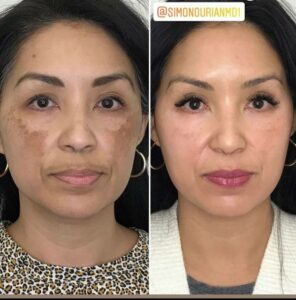
¿Qué pueden hacer las personas embarazadas para prevenir el melasma?
Para prevenir el melasma, las personas embarazadas pueden tomar las siguientes medidas:
- Aplicar protector solar de amplio espectro todos los días
- Usar ropa protectora y sombreros de ala ancha
- Evitar la exposición al sol
- Tener precaución con los productos para el cuidado de la piel y cosméticos que puedan desencadenar el melasma
- Buscar orientación de un profesional de la salud
Si el melasma ocurre durante el embarazo, ¿cuáles son las opciones de tratamiento seguras y efectivas disponibles?
Durante el embarazo, existen opciones de tratamiento efectivas limitadas para el melasma debido a los riesgos para el bebé en desarrollo, por lo que es aconsejable consultar con un profesional de la salud antes de intentar cualquier tratamiento. Después de dar a luz, los tratamientos no invasivos y productos tópicos pueden considerarse bajo la orientación de un dermatólogo calificado. En conclusión, los misterios que rodean el melasma durante el embarazo sirven como recordatorios de las transformaciones que experimentan nuestros cuerpos. Si bien las opciones de tratamiento seguras son limitadas durante el embarazo, buscar el consejo de un dermatólogo calificado siempre es la mejor decisión. Recuerde que la belleza de la maternidad supera cualquier preocupación sobre la pigmentación, y el resplandor del embarazo brilla independientemente del melasma. Contacte al Dr. Ourian para obtener más información.
Leer Artículo
November 15, 2023
¿Cómo superar el melasma? Transformando la piel con peelings químicos
El melasma, que se manifiesta como manchas gris-parduscas en la piel, representa un desafío. Este artículo tiene como objetivo descubrir el arte y la ciencia detrás de los peelings químicos, ilustrando cómo pueden mejorar significativamente el tono de la piel. A lo largo de este viaje transformador, lo animamos a descubrir la precisión, efectividad y arte de los peelings químicos para tratar el melasma. Con el conocimiento y el enfoque adecuados, lograr una piel más radiante se vuelve alcanzable.
¿Qué papel desempeñan los peelings químicos en el tratamiento del melasma?
Así es como funcionan realmente:1. Exfoliación: Los peelings químicos implican la aplicación de una solución que contiene agentes como alfahidroxiácidos (AHA), betahidroxiácidos (BHA) o ácido tricloroacético (TCA) en la piel. Estos agentes causan una exfoliación química controlada.2. Eliminación del pigmento: La solución química funciona eliminando la capa de la piel donde están concentradas las células pigmentadas. Este proceso ayuda a eliminar las células pigmentadas y fomenta el crecimiento de piel menos pigmentada.3. Estimulación de la renovación cutánea: los peelings químicos estimulan el proceso natural de renovación del cuerpo. Esto promueve el desarrollo de nuevas células cutáneas y colágeno, resultando en un tono de piel más suave y uniforme.Para el tratamiento del melasma, los peelings químicos pueden ser particularmente efectivos para abordar irregularidades superficiales causadas por la pigmentación. El tipo y la intensidad del peeling químico pueden ajustarse según la gravedad del melasma, y pueden ser necesarias múltiples sesiones para obtener resultados. Un dermatólogo puede determinar qué peeling es más adecuado para el tipo de piel y el subtipo de melasma de cada individuo.
¿Son efectivos los peelings químicos para tratar todos los tipos de melasma?
La efectividad de los peelings químicos varía según la profundidad y el tipo de melasma. Es importante consultar con un dermatólogo para evaluar el subtipo y las características de su melasma antes de considerar el tratamiento con peeling químico.
¿En qué se diferencian los distintos tipos de peelings químicos en su efectividad para tratar el melasma?
La efectividad de los peelings químicos depende de su profundidad;1. Peelings superficiales: Estos son menos invasivos y son adecuados para tratar niveles superficiales. Proporcionan una mejora más suave con un tiempo de recuperación mínimo.2. Peelings medios: Estos pueden tratar efectivamente algunos casos tanto a nivel superficial como más profundo, y ofrecen una mejora significativa pero pueden requerir un tiempo de recuperación más prolongado.3. Peelings profundos: Los peelings profundos rara vez se utilizan para tratar el melasma debido al mayor riesgo de complicaciones involucradas. Generalmente se reservan para casos que requieren supervisión médica estricta.La elección entre estos tipos de peelings químicos depende de factores como el tipo y la gravedad de su melasma, sus características cutáneas individuales y el nivel de mejora deseado. Es crucial tener una consulta con un dermatólogo para determinar qué tipo sería más adecuado para usted.
¿Cuáles son los peligros potenciales y efectos secundarios asociados con los peelings químicos?
Los peelings químicos para el melasma pueden presentar efectos como enrojecimiento, hinchazón, descamación y cambios en la pigmentación. Sin embargo, seguir las pautas de cuidado posterior al tratamiento y usar protección solar puede ayudar a minimizar estos riesgos. Es importante consultar con un dermatólogo para manejar efectivamente cualquier reacción.
¿Cuánto tiempo suele tomar observar mejoras en el melasma después de someterse a tratamientos con peelings químicos?
Típicamente puede observar mejoras en el melasma dentro de una semana a unos pocos meses después de recibir tratamientos con peelings químicos. La duración de los resultados varía de persona a persona; los tratamientos de mantenimiento consistentes junto con la protección solar son vitales para beneficios más duraderos.En resumen, a través de nuestra exploración de la precisión y efectividad de estos tratamientos, hemos descubierto un camino para lograr una piel más radiante. Es importante recordar que este viaje debe ser guiado por la experiencia de dermatólogos y seguido por una rutina de tratamiento que incluya protección solar adecuada y cuidados posteriores. Así que abrace las posibilidades que ofrecen los peelings químicos y descubra la radiancia que espera ser revelada en Epione en Beverly Hills.
Leer Artículo
November 15, 2023
Renovación de la piel mediante microneedling: Lo que necesita saber
En este artículo, nos adentraremos en el mundo del microneedling, un enfoque efectivo para rejuvenecer y tensar la piel. Descubra cómo esta técnica invasiva puede ayudarle a lograr una tez juvenil y revitalizada. Ya sea que esté buscando combatir los signos del envejecimiento, reducir cicatrices o realzar su belleza, este artículo le proporcionará conocimientos y métodos para ayudarle a lograr una apariencia radiante y rejuvenecida.
¿Qué es exactamente el microneedling?
El microneedling es un procedimiento que implica el uso de un dispositivo con agujas para crear pequeñas punciones en la superficie de la piel. Este proceso estimula la producción natural de colágeno de su piel, lo que conduce al tensado y rejuvenecimiento de la piel.
¿Cómo funciona en términos de tensar y rejuvenecer la piel?
El microneedling funciona creando microlesiones controladas en su piel, lo que activa la respuesta natural de curación de su cuerpo y promueve la producción de colágeno. Los niveles aumentados de colágeno mejoran la firmeza, elasticidad, textura y tono general de la piel.
¿Existen tipos de dispositivos y técnicas de microneedling? ¿Son seguros?
Existen dispositivos y técnicas para el microneedling, como derma-rollers y plumas motorizadas. La efectividad y seguridad de estos métodos pueden variar dependiendo de factores como la profundidad de las agujas, la tecnología utilizada y la experiencia del profesional. Una penetración más profunda tiende a producir resultados, pero también puede conllevar riesgos ligeramente mayores. Es importante consultar con un profesional para tomar la decisión más efectiva.
¿Existen efectos secundarios o riesgos asociados con el microneedling?
El microneedling puede tener algunos efectos secundarios temporales como enrojecimiento, hinchazón y molestias leves. Estos riesgos pueden minimizarse seleccionando un profesional, siguiendo las instrucciones de cuidado posterior al tratamiento diligentemente y discutiendo cualquier preocupación personal con un profesional de la salud.
¿Cuál es el proceso de recuperación habitual después de someterse a microneedling?
Después de una sesión de microneedling, es típico experimentar algunos días de enrojecimiento e hinchazón leve durante el proceso de recuperación. Para garantizar resultados óptimos, el cuidado posterior al tratamiento puede involucrar técnicas de limpieza, evitar la exposición directa al sol y usar productos de cuidado de la piel recomendados. Cumplir con estas instrucciones de cuidado junto con múltiples sesiones de tratamiento contribuirá a resultados a largo plazo. En resumen, ya sean líneas, cicatrices o piel flácida, el microneedling proporciona una solución. Al comprender cómo funciona el proceso, qué esperar durante la recuperación y considerar sus necesidades, puede comenzar un viaje hacia sentirse más seguro y mejorar su bienestar general con Dr. Ourian.
Leer Artículo
November 6, 2023
Tenso de piel ultrasónico: Descubra cómo el aprovechamiento de las ondas sonoras brinda luminosidad
En este artículo, exploraremos la tecnología de tensado de la piel, un procedimiento no invasivo que utiliza el poder de las ondas sonoras para revitalizar su piel.
¿Cómo funciona el tensado de piel ultrasónico?
El tensado de piel ultrasónico opera dirigiendo energía de ultrasonido hacia la piel, estimulando la producción de colágeno. Este aumento en el colágeno mejora la elasticidad de la piel y tensa el área tratada, resultando en una apariencia más luminosa.
¿Qué distingue al tensado de piel ultrasónico de otros métodos de rejuvenecimiento de la piel?
Las ventajas clave del tensado de piel sobre otras técnicas incluyen su naturaleza no invasiva, tiempo de recuperación limitado y su capacidad para alcanzar capas profundas de la piel sin comprometer la integridad de la superficie. Como resultado, promueve la elasticidad y una apariencia general más juvenil.
¿Cómo estimula el tensado de piel ultrasónico la producción de colágeno?
Al emitir energía de ultrasonido que genera calor controlado dentro de las capas de la dermis, los tratamientos ultrasónicos estimulan efectivamente la síntesis de colágeno. Este proceso conduce a una mayor elasticidad mientras mantiene la seguridad. Este calor intenso estimula el proceso natural de curación del cuerpo, llevando a un aumento en la producción de colágeno, lo que finalmente mejora la elasticidad de la piel.
¿Es seguro el tensado de piel ultrasónico?
Generalmente, el tensado de piel ultrasónico se considera seguro para todos los tipos y tonos de piel. Sin embargo, es crucial tomar en cuenta ciertos factores y consultar con un profesional de la salud para garantizar tanto la seguridad como la efectividad.
¿Cuánto tiempo duran típicamente los resultados después de someterse a tratamientos de tensado de piel?
Los resultados obtenidos a través de los tratamientos de tensado de piel típicamente perduran durante meses hasta un año o incluso más. Es importante cumplir con los requisitos de cuidado posterior para prolongar los resultados. En conclusión, el tensado de piel ultrasónico en Epione ha revelado el ámbito de los métodos no invasivos para revitalizar la piel. Al aprovechar el poder de las ondas, esta tecnología ofrece un camino eficiente hacia la consecución de una apariencia más juvenil y radiante. Con un tiempo de inactividad mínimo y resultados duraderos, el tensado de piel ultrasónico demuestra cómo la ciencia y la innovación trabajan juntas armoniosamente para realzar su luminosidad. Que su camino hacia una piel radiante sea tan placentero como las propias ondas sonoras relajantes.
Leer Artículo
November 6, 2023
Reafirmar su línea de la mandíbula: Explore las soluciones de tensado de la piel para la papada
Descubra una variedad de estrategias efectivas para restaurar una línea mandibular más juvenil y esculpida. Ya sea que esté lidiando con los efectos del envejecimiento o simplemente buscando un perfil mejorado, este recorrido le proporcionará información sobre métodos que pueden ayudar a aumentar su confianza y lograr una línea mandibular más firme y contorneada.
¿Cuáles son los principales factores que contribuyen a la formación de papada?
Los principales factores que conducen al desarrollo de papada incluyen el envejecimiento, la depleción de colágeno, la gravedad y la genética. La papada afecta la apariencia de una persona causando flacidez en el rostro, lo que resulta en una línea mandibular menos definida y un aspecto general más envejecido o fatigado.
¿Cuáles son algunos tratamientos no quirúrgicos comunes disponibles para tensar la piel de la papada?
Algunos tratamientos no quirúrgicos ampliamente utilizados para tensar la piel de la papada incluyen rellenos dérmicos, hilos tensores y terapia de radiofrecuencia. Estos métodos han mostrado resultados en lograr una apariencia mejorada mientras abordan las preocupaciones relacionadas con la papada. Estos métodos pueden proporcionar firmeza en la piel, reducción de la flacidez y una línea mandibular definida, con efectos que típicamente duran desde varios meses hasta un año o incluso más. En Epione, Dr. Simon Ourian utiliza un tratamiento de doble modalidad de rellenos dérmicos Neustem y USRF para obtener los mejores resultados. La clínica es conocida por producir resultados hermosos y naturales, siendo Dr. Ourian un escultor por vocación.
¿Las personas pueden combinar soluciones para tensar la piel y lograr resultados más duraderos?
Los individuos a menudo tienen la opción de combinar soluciones de tensado de la piel tales como tratamientos quirúrgicos y rutinas de cuidado de la piel para obtener resultados más completos y potencialmente más duraderos en términos de reafirmar la línea mandibular.
¿Cuál es el proceso de recuperación habitual después de someterse a procedimientos o tratamientos no quirúrgicos para la papada?
El proceso de recuperación después de procedimientos para la papada como los liftings faciales implica una semana de curación, durante la cual pueden ocurrir algunos moretones e hinchazón. Los tratamientos no quirúrgicos generalmente requieren un tiempo de inactividad mínimo. El cuidado post-tratamiento puede incluir el manejo de cualquier molestia o dolor, la aplicación de compresas de hielo según sea necesario, y seguir la orientación proporcionada por el profesional para lograr los mejores resultados. En resumen, al obtener una comprensión de los métodos, la recuperación y los factores individuales, puede embarcarse en un viaje hacia el aumento de su seguridad en sí mismo y su sentido general de bienestar. Que las soluciones que ha descubierto le permitan no solo redefinir la forma de su línea mandibular sino también mejorar su confianza en sí mismo, resultando en una apariencia esculpida y juvenil que refleja su energía y vitalidad interior.
Leer Artículo
November 6, 2023
A un tú más juvenil y cautivador: Conozca más sobre la tensión de la piel debajo de los ojos
En este artículo, exploraremos el mundo de la mejora del área debajo de los ojos, donde los signos del envejecimiento y la fatiga suelen ser notables. Acompáñenos en un viaje para descubrir una variedad de estrategias y tratamientos comprobados diseñados para tensar y revitalizar la piel del contorno de los ojos. Ya sea que esté lidiando con líneas, ojeras o hinchazón, este artículo le proporcionará información sobre métodos que pueden ayudarlo a lograr una apariencia renovada y más juvenil, dejando sus ojos brillantes y cautivadores.
¿Cuáles son los principales factores que contribuyen al desarrollo de problemas en la piel debajo de los ojos?
Los problemas de la piel debajo de los ojos pueden surgir de factores principales como el envejecimiento, la genética, el sueño insuficiente, la deshidratación, la exposición al sol, así como elecciones de estilo de vida como fumar y el estrés. Todos estos factores pueden desempeñar un papel en la formación de líneas, arrugas, ojeras e hinchazón.
¿Qué desafíos implica el tratamiento del área debajo de los ojos?
El área debajo de los ojos es bastante sensible, caracterizada por piel delgada y una red compleja de vasos sanguíneos. Cuando se trata de abordar esta área, hay desafíos que deben considerarse, como minimizar el riesgo de complicaciones y asegurar resultados de apariencia natural. Para abordar estos desafíos, es importante emplear tratamientos especializados, técnicas precisas y enfoques personalizados que prevengan el exceso de tensión o cualquier efecto adverso.
¿Cuáles son las opciones no quirúrgicas comunes para tensar la piel debajo de los ojos?
Los tratamientos no quirúrgicos comunes para tensar la piel debajo de los ojos incluyen rellenos dérmicos, peelings químicos y terapia láser. Estos métodos pueden llevar a resultados como la reducción de líneas finas, la mejora de la textura de la piel y la disminución de ojeras o hinchazón. Los efectos suelen durar desde varios meses hasta un año o más.
¿Cómo influye el tipo y tono de piel de un individuo en la elección del tratamiento?
El tipo y tono de piel de un individuo desempeñan un papel importante en la determinación de qué estrategias deben utilizarse para tensar la piel debajo de los ojos. Factores como la selección del tratamiento y la intensidad del procedimiento están influenciados por las características de la piel de cada persona. Por ejemplo, los tonos de piel más claros pueden encontrar ciertos tratamientos láser más adecuados, mientras que los tonos más oscuros podrían requerir enfoques personalizados para evitar problemas de pigmentación. Los tratamientos personalizados toman en cuenta las variaciones individuales para garantizar la seguridad y maximizar la efectividad.
¿Cuáles son los efectos habituales de recuperación después de someterse a procedimientos no quirúrgicos o quirúrgicos??
Típicamente, el proceso de recuperación para tratamientos no quirúrgicos es más corto e implica un tiempo de inactividad mínimo. Los pacientes pueden experimentar hinchazón o enrojecimiento, que generalmente desaparece en un día. Por otro lado, los procedimientos quirúrgicos como la cirugía de párpados pueden requerir un período de recuperación más largo y pueden resultar en hematomas e hinchazón. El cuidado posterior al tratamiento a menudo incluye mantener el área tratada limpia, aplicar ungüentos y evitar actividades extenuantes. Es importante programar citas de seguimiento con su proveedor de atención médica para monitorear el progreso y asegurar una curación adecuada. En conclusión, ya sea que elija tratamientos quirúrgicos u opte por procedimientos no quirúrgicos, puede embarcarse en un viaje transformador hacia la mejora de su confianza en sí mismo y bienestar general al comprender estas estrategias, procesos de recuperación y consideraciones personales. Que las soluciones que ha descubierto le ayuden a revitalizar no solo sus ojos, sino su perspectiva de la vida misma, dejándolo con una mirada radiante y renovada que refleja su vitalidad interior.
Leer Artículo
November 6, 2023
Comprendiendo el riesgo de cicatrización en el rejuvenecimiento con láser, si y cuándo se considera una posibilidad
El rejuvenecimiento cutáneo con láser es bien conocido por su capacidad para rejuvenecer la piel, reduciendo arrugas e imperfecciones. Sin embargo, es importante considerar el riesgo de cicatrización que acompaña estos resultados. En este artículo, exploramos el rejuvenecimiento con láser, arrojando luz sobre los factores que influyen en la cicatrización, los pasos para minimizar este riesgo y distinguiendo entre la decoloración y la cicatrización permanente. Al navegar por este tema, nuestro objetivo es proporcionar claridad y conocimiento para que las personas puedan tomar decisiones informadas sobre la salud y belleza de su piel.
¿Cómo funciona el rejuvenecimiento cutáneo?
El rejuvenecimiento cutáneo implica eliminar las capas superficiales de la piel para fomentar el crecimiento de una piel más saludable. Se utilizan diversas técnicas como láseres, peelings químicos o dermoabrasión para exfoliar o eliminar la piel dañada o envejecida. Este proceso estimula la producción de colágeno, lo que resulta en una mejor textura de la piel, reducción de arrugas y una apariencia más juvenil. El método específico empleado puede variar dependiendo de las preocupaciones que se estén abordando y los resultados deseados en Epione.
¿Cuál es el tiempo de recuperación típico para el rejuvenecimiento cutáneo con láser?
El tiempo de recuperación para el rejuvenecimiento cutáneo con láser puede variar según el láser utilizado y la profundidad del tratamiento. Generalmente, la fase de curación inicial caracterizada por enrojecimiento e hinchazón puede durar alrededor de 1 a 2 semanas. Sin embargo, la curación completa y el desvanecimiento de cualquier enrojecimiento o decoloración restante puede tomar varias semanas o un mes. Es crucial seguir las instrucciones de tratamiento proporcionadas por su médico para asegurar una curación óptima y lograr los resultados deseados.

¿Cuáles son las probabilidades de cicatrización por el rejuvenecimiento cutáneo con láser?
La probabilidad de cicatrización resultante del rejuvenecimiento cutáneo con láser puede variar significativamente según factores como el tipo de láser utilizado, el tipo de piel individual y la experiencia del médico que realiza el procedimiento. En manos de un buen médico y con el cuidado posterior correcto, el riesgo de cicatrización generalmente se reduce.
¿Es posible tratar o manejar la cicatrización si ocurre después del rejuvenecimiento cutáneo con láser?
La cicatrización que se desarrolla después de someterse al rejuvenecimiento cutáneo con láser a menudo puede abordarse eficazmente mediante intervenciones cosméticas. Sin embargo, el éxito puede depender de factores como el tipo y la gravedad de la cicatrización, por lo que es recomendable consultar con un dermatólogo o especialista para obtener orientación.
¿Existen preparaciones o rutinas de cuidado posterior que puedan ayudar a prevenir la cicatrización antes y después del rejuvenecimiento cutáneo con láser?
Ciertamente, hay medidas que puede tomar antes y después del rejuvenecimiento cutáneo con láser para minimizar las probabilidades de cicatrización. Estas medidas generalmente incluyen evitar la exposición al sol, seguir las recomendaciones indicadas y cumplir con la orientación proporcionada por su médico. En conclusión, tener una comprensión de los factores que afectan el riesgo de cicatrización en el rejuvenecimiento con láser permite a las personas tomar decisiones informadas sobre este procedimiento transformador. Al familiarizarse con las medidas preventivas, explorar las opciones de tratamiento y estar conscientes de lo que influye en la cicatrización, las personas pueden embarcarse con confianza en su camino hacia lograr una piel más saludable y radiante. Este conocimiento les permite tomar decisiones que priorizan la salud y belleza de su piel mientras minimizan el riesgo de cicatrización. Contáctenos hoy para obtener más información.
Leer Artículo
November 3, 2023
¿Es seguro el rejuvenecimiento cutáneo con láser? Lo que debe saber
La renovación cutánea con láser es un tratamiento muy solicitado, reconocido por su capacidad para revitalizar la piel, disminuir las arrugas y mejorar la textura general de la piel. Sin embargo, es esencial considerar los aspectos de seguridad antes de optar por esta opción de mejora cutánea. En este artículo, exploraremos la seguridad de la renovación cutánea con láser, destacando los factores que pueden ayudarle a tomar una decisión informada sobre este procedimiento cosmético. Contacte a Epione para conocer más hoy.
¿Qué es exactamente la renovación cutánea con láser? ¿Cómo funciona?
La renovación cutánea con láser se refiere a un procedimiento que emplea haces de luz láser para eliminar suavemente las capas externas de la piel. Al dirigirse y vaporizar las células cutáneas, estimula la producción de colágeno, resultando en una piel más suave y de apariencia más juvenil.
¿Cuáles son algunos riesgos y complicaciones asociados con la renovación cutánea con láser?
Los posibles riesgos y complicaciones relacionados con la renovación cutánea con láser pueden incluir enrojecimiento o inflamación, posibles cicatrices o infección, cambios en la pigmentación del área tratada, así como casos raros de quemaduras o daño menor a las capas subyacentes de la piel. Los riesgos asociados con la renovación cutánea con láser varían dependiendo del tipo de láser utilizado y del tipo de piel del individuo. Es crucial consultar con un profesional calificado para minimizar estos riesgos.
¿Qué tratamiento láser es el más comúnmente utilizado para la renovación cutánea? ¿Qué tan seguro es?
El tratamiento láser comúnmente utilizado es el Coolaser®. La seguridad de este tratamiento láser depende de factores como la intensidad del tratamiento, la habilidad del profesional y el tipo de piel individual. Por lo tanto, es esencial consultar con un profesional para garantizar la seguridad.

¿Cómo puede alguien evaluar eficazmente los beneficios en comparación con los aspectos de seguridad al decidir si la renovación cutánea con láser es adecuada para sus necesidades de cuidado de la piel?
Para evaluar eficazmente los beneficios versus las consideraciones de seguridad antes de decidirse por la renovación cutánea con láser, aquí hay algunas pautas:1. Busque orientación profesional: Programe una consulta con un dermatólogo certificado o profesional calificado que pueda evaluar sus necesidades y determinar si es un candidato adecuado para este procedimiento.2. Discuta sus objetivos: Comunique sus metas y preocupaciones de cuidado de la piel con el profesional para que puedan alinear el tratamiento láser elegido y el plan de tratamiento en consecuencia.3. Pregunte sobre los riesgos: Consulte sobre cualquier riesgo o complicación asociada con el tratamiento láser elegido y cómo podrían aplicarse específicamente a su tipo de piel.4. Revise cuidadosamente las fotografías que muestran los resultados de antes y después de casos previos. Esto le ayudará a comprender las ventajas y resultados del procedimiento.5. Tenga en cuenta el tiempo de inactividad esperado y el proceso de recuperación. Esta información es crucial ya que puede influir en su proceso de toma de decisiones.6. Evalúe la experiencia y calificaciones del profesional que llevará a cabo el procedimiento. Es importante elegir a alguien con experiencia sólida en este campo.7. Considere su salud y estilo de vida para asegurarse de que se alineen con los requisitos del procedimiento. Ciertos factores como fumar o medicamentos específicos pueden tener un impacto en la seguridad y la curación.Al considerar estos elementos y participar en una discusión con un profesional calificado, puede tomar una decisión informada sobre si la renovación cutánea con láser es adecuada para sus necesidades de cuidado de la piel mientras prioriza tanto la seguridad como los beneficios.
Conclusión
En conclusión, decidir si someterse a la renovación cutánea con láser implica encontrar un equilibrio entre sus ventajas y tomar precauciones por motivos de seguridad. Con la información adecuada y la orientación de profesionales calificados, puede embarcarse en este tratamiento revitalizador, priorizando sus necesidades de cuidado de la piel y su salud en general. Es esencial comprender las consideraciones de seguridad como parte fundamental del camino para lograr una piel radiante y más saludable para conocer más información específica. Puede programar una cita con nosotros hoy, haga clic aquí para comenzar.
Leer Artículo
November 3, 2023
Comprendiendo el valor de Coolaser en la reactivación cutánea: Lo que necesita saber
En el cambiante mundo de los tratamientos, las personas buscan constantemente formas de lograr una piel juvenil y radiante. Coolaser® en rejuvenecimiento cutáneo es una técnica que ofrece a las personas la oportunidad de rejuvenecer su complexión y abordar diversas preocupaciones de la piel. A medida que la demanda de procedimientos de rejuvenecimiento cutáneo continúa aumentando, se vuelve crucial evaluar el valor y los beneficios de tratamientos como Coolaser®. Ya sea que te apasione el cuidado de la piel o estés buscando una solución para imperfecciones cutáneas, acompáñanos mientras evaluamos el valor del rejuvenecimiento cutáneo con Coolaser® y brindamos información para ayudarte a tomar una decisión sobre tu belleza y bienestar.
¿Qué es el rejuvenecimiento cutáneo? ¿y qué beneficios ofrece?
Cuando hablamos de someterse a un rejuvenecimiento cutáneo, nos referimos a un procedimiento donde se utilizan técnicas como láser, exfoliaciones químicas o dermoabrasión para eliminar o tratar las capas de la piel. Este proceso tiene como objetivo mejorar la textura de la piel, disminuir la visibilidad de las arrugas, abordar condiciones de la piel y promover una apariencia más juvenil y rejuvenecida.

¿Puede el tratamiento láser mejorar efectivamente el rejuvenecimiento cutáneo?
El tratamiento láser ha demostrado ser altamente efectivo para mejorar el rejuvenecimiento cutáneo. Es un método reconocido para mejorar la textura de la piel, reducir las arrugas y abordar diversas preocupaciones cutáneas. Existen tipos de tratamientos láser, incluyendo el reconocido tratamiento Coolaser® en el consultorio del Dr. Simon Ourian. Sin embargo, su efectividad puede variar dependiendo del procedimiento, así como del tipo de piel único y los requerimientos de cada individuo. Para determinar el tratamiento láser adecuado para lograr los resultados deseados, es recomendable consultar con un dermatólogo calificado o especialista en cuidado de la piel.
¿Cómo funciona Coolaser®?
Durante un procedimiento Coolaser®, el área de tratamiento objetivo se enfría primero utilizando un dispositivo. Luego, se aplica suavemente una serie de pulsos a la superficie de la piel con el fin de estimular la reparación celular y fomentar el crecimiento de colágeno. Coolaser® puede abordar efectivamente líneas finas y arrugas, daño solar, problemas de pigmentación y cicatrices de acné. Además, antes de someterse a cualquier procedimiento láser cutáneo, es esencial consultar con un profesional.
¿Cuánto dura el tratamiento Coolaser®?
La duración de los efectos del tratamiento Coolaser® puede variar de persona a persona. Típicamente, los resultados del rejuvenecimiento cutáneo con Coolaser® pueden durar de meses a un año. Sin embargo, es importante tener en cuenta que factores como el tipo de piel del individuo, la edad, la exposición solar y la rutina de cuidado de la piel pueden influir en cuánto tiempo duran los resultados. Para obtener un estimado para tu caso específico, es mejor consultar con un dermatólogo cosmético o profesional del cuidado de la piel que pueda evaluar tu piel y proporcionar información personalizada. Al considerar las ventajas y evaluar la inversión involucrada, ten en cuenta que consultar exhaustivamente con un profesional es crucial para determinar si Coolaser® es la opción correcta; puedes programar una cita con nosotros–comienza haciendo clic aquí.
Leer Artículo
November 3, 2023
¿Es el Acné Estacional?

Las preocupaciones sobre la piel son prominentes entre personas de todas las edades, tamaños y apariencias. Mantener rutinas de cuidado de la piel puede ser sin duda una tarea, y no es raro sufrir de acné y otras condiciones irritantes. Muchos pacientes temen el acné debido a la apariencia que puede darle a la piel; las manchas rojas y erupciones pueden afectar la autoconfianza de alguien dependiendo de su gravedad. En Epione, comprendemos cuán serias pueden ser las preocupaciones sobre la piel. Y cuando se trata de acné, queremos proporcionar la información más precisa y actualizada posible para ayudarle a obtener control sobre su piel y su apariencia. Nuestro amable personal ha realizado algunas investigaciones para responder una pregunta común: ¿Es el acné estacional? Para obtener más información sobre el tratamiento del acné en Los Angeles, contacte al Dr. Ourian™ hoy.
¿Qué es el Acné Estacional?
El acné estacional se define como un tipo de acné que puede mejorar o empeorar durante ciertas estaciones en un patrón muy regular. La mayoría de los tipos de acné estacional son tan precisos que a menudo pueden marcarse en un calendario; en el momento en que comienza cierta estación, el acné mejorará o empeorará. Los meses cambiantes pueden traer a menudo una ronda sorpresiva y molesta de acné para cualquier persona que lidie con problemas de la piel. Si bien el acné estacional es más probable que afecte a adolescentes, cualquier persona puede presentar esta condición. Aunque el acné estacional puede ser impredecible y puede aparecer sin razón aparente, existen otros factores contribuyentes que pueden influir en la probabilidad de contraer acné estacional.
¿Qué Factores Pueden Influir en el Acné Estacional?
El acné estacional, que puede afectar a alguien en las estaciones de invierno, verano u otoño, puede aparecer por una variedad de razones. Si bien es genético para algunos, podría deberse a una variedad de factores ambientales para otros. Algunas de las razones por las que puede ocurrir el acné estacional: ● Falta de sueño ● Estrés ● Falta de rutina de higiene diaria ● Acumulación de piel seca ● Resequedad debido a unidades de calefacción central en el hogar ● Nuevos productos aplicados a la piel o cabello ● El uso de demasiadas bufandas y sombreros. El uso de ciertas prendas o productos puede hacer que la piel se vuelva mucho más oleosa de lo habitual, lo que generalmente es un catalizador para que ocurra el acné estacional. El acné estacional puede afectar a alguien que está estresado, o cuya piel está experimentando cambios desconocidos en ciertas condiciones ambientales.
¿Cómo se Puede Tratar el Acné Estacional?
Cuando experimenta brotes de acné, hay una variedad de cosas que puede hacer para tratar este acné. Dependiendo de qué tan grave sea el acné y qué lo causó en primer lugar, hay pasos que puede tomar que tratarán la piel y permitirán que el acné disminuya. Puede optar por limpiadores suaves y productos exfoliantes para ayudar a su piel a deshacerse del aceite y la suciedad que queda atrapada en los poros. De esa manera, no solo puede tratar el acné existente, sino que puede prevenir que el acné se acumule por completo. Asegúrese de lavarse la cara con agua tibia y jabón con más frecuencia. Puede hacer esto en la ducha o en el lavabo, y solo toma unos minutos. Se sentirá instantáneamente mejor con un lavado refrescante, y su piel estará libre de la amenaza de imperfecciones o brotes.
Tratamiento del Acné en Los Angeles
En Epione, nos apasiona ayudarle a tratar su piel de la manera correcta. Si tiene brotes serios de acné estacional y no está seguro de cuál es el mejor método para deshacerse de él, puede contactar a uno de nuestros profesionales para programar una consulta de inmediato. El acné puede ser una condición irritante y dolorosa que deja imperfecciones en la piel y una apariencia menos que deseable. Para comenzar sus tratamientos de cuidado de la piel lo más rápido posible, no dude en contactarnos en línea o llamarnos al (310) 651-6267 para hablar con un representante.
Leer Artículo
March 23, 2018
Cómo identificar lunares cancerosos
Cuando ves aparecer un lunar nuevo en tu piel, puede ser fácil asumir inmediatamente lo peor. Sin embargo, antes de comenzar a estresarte pensando que tu nuevo lunar es canceroso, es prudente aprender a identificar los lunares cancerosos de los que no lo son. Recuerda, solo tu médico puede hacer un diagnóstico firme, así que asegúrate de consultar al Dr. Ourian™ si tienes alguna preocupación. Encontrar un lunar canceroso tempranamente significa que el cáncer de piel a menudo es curable.
Aprende el ABCDE
Cuando aparece una nueva mancha en tu piel o una comienza a cambiar de apariencia, la Academia Estadounidense de Dermatología sugiere buscar estos signos de melanoma:• Asimetría: Si partes de la mancha son muy diferentes a otras partes, eso puede ser un signo de cáncer. Por ejemplo, si un lado es más oscuro y elevado y el otro lado es plano, puede ser canceroso.• Bordes irregulares: Al observar el lunar, verifica si el borde está claramente definido y es uniforme. Una señal de que podría ser canceroso es cuando el lunar tiene un borde que no está muy definido, es dentado o festoneado.• Cambios de color: Si la mancha tiene múltiples colores, entonces podría ser un signo de cáncer.• Diámetro: Observa qué tan grande es el ancho de la mancha. Si es más grande que el borrador de un lápiz, haz que un médico lo examine.• Evolución: Los lunares cancerosos generalmente cambian con el tiempo, ya sea en color, tamaño, borde, etc. Para algunos lunares cancerosos, este puede ser el único signo de que no es benigno.
Identificación de un Lunar No Canceroso
Si encontrar un lunar canceroso no conduce a ninguno de los síntomas anteriores, puede ser simplemente un lunar regular. Los lunares vienen en muchas formas y tamaños, y la mayoría de las veces no son cancerosos. Un lunar no canceroso tendrá las siguientes características:• Pequeño, aproximadamente del ancho del borrador de un lápiz• Redondo u ovalado, con un borde definido• Color uniforme, generalmente marrón, canela o rosado• Un lunar común generalmente comienza como una mancha plana y lisa que puede elevarse con el tiempoA medida que una persona envejece, los lunares pueden cambiar. Pueden volverse más planos, de un color diferente o incluso desaparecer completamente. Es una buena práctica tomar una fotografía de un lunar cada año para que puedas notar los cambios. La mayoría de las personas tienen al menos diez lunares, y algunas pueden tener hasta 40.
Prevención de Lunares Cancerosos
Los rayos ultravioleta, o rayos UV, del sol juegan un papel en la cantidad de lunares que puede tener una persona. Cuanta más exposición al sol recibe una persona, más lunares probablemente tendrá. Y cuantos más lunares tienes, más probabilidades tienes de tener un lunar canceroso. Para ayudar a prevenir la formación de melanoma, mantente alejado del sol tanto como sea posible. Cuando estés bajo la luz solar directa, usa ropa protectora, un sombrero y protector solar. Las camas de bronceado también pueden producir los mismos rayos UV dañinos que el sol, así que mantente alejado de ellas también.
¿Por qué Tenemos Lunares?
Los lunares generalmente se desarrollan en una persona dentro de los primeros 20 años de su vida; algunos también pueden aparecer más tarde en la vida. Tu piel naturalmente tiene grupos de melanocitos, células de la piel, que se adhieren a las células del tejido cutáneo circundante. Los melanocitos le dan pigmento a tu piel y están distribuidos uniformemente por todo el cuerpo. Un lunar se forma cuando hay capas adicionales de melanocitos en un área. Los lunares son muy probablemente un producto de la configuración genética y se determinan antes del nacimiento.Cuando ves aparecer un lunar nuevo en tu piel o ves que un lunar existente cambia de forma o colores, es fácil pensar lo peor. Sin embargo, utiliza la guía anterior para encontrar un lunar canceroso y acude a tu médico para determinar si es canceroso.Epione está ubicado en el corazón de Beverly Hills, CA y es un centro de cirugía láser y estética integral de última generación. El equipo de Epione trabaja en conjunto para restaurar o crear la apariencia deseada, y el personal se dedica a proporcionar a sus pacientes el más alto nivel de atención y cuidado. Utilizamos la última tecnología para el cabello, la piel y el contorno corporal, y nos esforzamos por ocupar un lugar especial y único en los corazones y mentes de nuestros pacientes.
Leer Artículo
July 7, 2017
Nuevo tratamiento prometedor para el melasma ofrece resultados duraderos
BEVERLY HILLS, California – Epione Medical Corporation, un centro de cirugía estética y láser de última generación con sede en Beverly Hills, anunció hoy que ha desarrollado un tratamiento combinado que puede reducir permanentemente, y en la mayoría de los casos eliminar, la condición de pigmentación conocida como melasma o máscara del embarazo. Utilizando Blue Light Therapy y Coolaser, ambos láseres aprobados por la FDA exclusivos de Epione, el centro ha tratado a más de 300 pacientes y ha logrado resultados duraderos. "La mayoría de los casos de melasma no han respondido a los tratamientos más tradicionales que están actualmente disponibles", afirmó el Dr. Simon Ourian™, director médico de Epione Medical Corporation. "Hemos desarrollado con éxito un régimen que finalmente traerá esperanza y sanación a los millones de mujeres en todo el mundo que son afectadas por esta condición". Según estadísticas publicadas recientemente, se estima que seis millones de mujeres en Estados Unidos viven actualmente con melasma, y casi 50 millones de mujeres en todo el mundo. La condición se presenta como manchas marrones o grises en el rostro, más comúnmente en las mejillas, nariz, frente, mentón y labio superior.
El Coolaser y Blue Light Therapy de Epione Demuestran Eliminar Eficazmente el Melasma Resistente y Tratar con Éxito Otras Condiciones de Decoloración de la Piel
El melasma es abrumadoramente predominante en mujeres y típicamente ocurre durante el embarazo. Las mujeres que toman anticonceptivos y ciertos otros medicamentos o se someten a terapia de reemplazo hormonal tienen un mayor riesgo de desarrollar esta hiperpigmentación. Para tratar el melasma, el Dr. Ourian™ utiliza una modalidad dual de láseres para reducir, y en algunos casos eliminar, los signos de la condición. Blue Light Therapy, que se repite en intervalos de tres a cuatro semanas, se utiliza para calentar capilares diminutos y material coloreado en la superficie de la piel, y luego absorberlos o hacer que se evaporen. Los láseres utilizados también hacen que los microporos en los capilares se encojan. El procedimiento Coolaser, que dura solo de 10 a 15 minutos, se utiliza para vaporizar células superficiales y eliminar tejido cutáneo dañado. Una vez que se elimina la piel dañada, crece nueva piel sana en su lugar. Al concluir el curso de tratamiento, los pacientes ven una piel más suave, sin enrojecimiento, con líneas más finas y una apariencia más joven y renovada. Los resultados son duraderos, y pueden no ser necesarios procedimientos o tratamientos de seguimiento adicionales. El nivel de incomodidad que se puede esperar es diferente para cada paciente. Los pacientes pueden experimentar hinchazón leve, enrojecimiento o irritación comparable a una quemadura solar, que puede tratarse con compresas de hielo, ungüentos y medicamentos para el dolor de venta libre o con receta. "El melasma y otras condiciones de la piel pueden impactar drásticamente la vida de una persona, y resultar en pérdida de autoestima que puede impedirles tener éxito personal y profesionalmente", afirmó el Dr. Ourian™. "El éxito de nuestro nuevo tratamiento para el melasma no solo es importante para la comunidad médica, sino también para los millones de mujeres que ahora tienen la oportunidad de enfrentar al mundo con confianza". Para más información sobre tratamientos para el melasma y otras condiciones de la piel, visite www.epione.com. Los videos de Blue Light Therapy y Coolaser están actualmente disponibles en el sitio.
Acerca de Epione Medical Corporation
Epione, ubicado en el corazón de Beverly Hills, es uno de los centros de cirugía estética y láser más completos y de última generación de su tipo en el mundo. Epione está diseñado para ofrecer a los clientes comodidad, conveniencia y privacidad. La práctica se especializa en la tecnología más actual disponible para piel, cabello y contorno corporal, y su personal está dedicado a brindar a nuestros clientes el más alto nivel de atención y cuidado personal. Para más información, llame a Epione al (888) 951-3377.
Leer Artículo
January 3, 2016
Elimine las ojeras con terapia de luz azul y Coolaser
BEVERLY HILLS, CA, 16 de noviembre de 2010 – Usted se cuida. Es activo y está en forma, la envidia de muchos de sus amigos en el gimnasio. Es exitoso en los negocios y sólido en casa. Trabaja todo el día para cerrar el gran negocio y aún tiene energía para jugar con los niños antes de dormir. Las presiones y el ritmo de la vida no lo desaniman y duerme bien. Entonces, ¿por qué está cargado con esas ojeras? Cualquiera que sea la causa, puede confiar en los tratamientos innovadores desarrollados por Dr. Simon Ourian™, director médico de Epione Medical en Beverly Hills. Muchos factores pueden contribuir a la apariencia de esas ojeras. Alergias alimentarias, especialmente a productos lácteos, trastornos renales, deficiencias cardiovasculares, toxicidad y envejecimiento pueden conducir a la apariencia cansada y agotada creada por las sombras reveladoras. Pero esas ojeras aún pueden aparecer, incluso cuando está saludable y manteniéndose firme contra la edad. De hecho, puede no ser nada que haya hecho o dejado de hacer: las ojeras a menudo son hereditarias, parte de la composición genética de una persona. "La cirugía de párpados y otros procedimientos invasivos pueden proporcionar los resultados deseados", dijo Dr. Ourian™, "pero nuestros tratamientos de Terapia de Luz Azul y Coolaser son rápidos, causan muy poca molestia y requieren un tiempo de recuperación relativamente corto". Los clientes indican que la Terapia de Luz Azul de Dr. Ourian es un procedimiento efectivo y no invasivo que elimina las ojeras sin tiempo de inactividad del trabajo u otras actividades. Cuando se trata de envejecer, un signo de envejecimiento puede ser el adelgazamiento significativo de la piel alrededor de los ojos y una pérdida del "acolchado de grasa" en el rostro, ambos pueden resultar en ojeras. Coolaser, un tratamiento láser avanzado desarrollado por Dr. Ourian™, puede combinarse con rellenos para obtener resultados óptimos cuando el adelgazamiento es una causa raíz de las ojeras.
La Terapia de Luz Azul de Dr. Ourian es un procedimiento efectivo y no invasivo que elimina las ojeras sin tiempo de inactividad del trabajo u otras actividades.
La piel se prepara para el tratamiento Coolaser con la aplicación de una crema tópica especial debajo de los ojos. Durante el procedimiento de 20 minutos, se utiliza un láser fino para fragmentar y destruir los pigmentos en las áreas más oscuras de la piel. El área típicamente sana en pocos días y el resultado es una apariencia más juvenil y menos cansada. Al encontrar poco o ningún tiempo de recuperación con cualquiera de las opciones, los clientes satisfechos han reportado excelentes resultados con los tratamientos Coolaser y Terapia de Luz Azul. "¡Definitivamente veo una diferencia!", dijo uno de los clientes de Dr. Ourian. "Mis ojeras se han aclarado aproximadamente un 70% — desearía que desaparecieran al 100% — pero estoy feliz. Mi cuñada se mudará pronto a EE. UU. La traeré también".
Acerca de Epione Medical Corporation
Epione, ubicado en el corazón de Beverly Hills, es uno de los centros médicos láser y estéticos más completos y de última generación de su tipo en el mundo. Epione está diseñado para ofrecer a los clientes comodidad, conveniencia y privacidad. La práctica se especializa en la tecnología más actual disponible para piel, cabello y contorno corporal, y su personal está dedicado a proporcionar a los clientes el más alto nivel de atención personal y cuidado. Para más información, llame a Epione al (888) 951-3377 o visite www.epione.com.
Leer Artículo
December 23, 2014
Seguridad de la Piel – La Relación Entre las Camas de Bronceado y el Cáncer de Piel
El cáncer de piel es un problema importante. Aunque es en gran medida prevenible, pocas personas dedican el tiempo necesario para tomar las medidas necesarias para evitar situaciones de riesgo. A medida que los investigadores dedican más tiempo a estudiar esta forma de cáncer, son capaces de determinar mejor qué actividades tienen más probabilidades de aumentar las posibilidades de desarrollar cáncer de piel. Si bien todo, desde los cosméticos hasta la conducción, puede relacionarse de una forma u otra, se ha demostrado que el uso de camas de bronceado es una de las actividades con mayor riesgo de causar cáncer de piel.
Un vínculo causal
Existe un vínculo causal muy real entre la radiación ultravioleta y el cáncer de piel. El factor más comúnmente asumido en el cáncer de piel es la exposición al sol, aunque esta no es la única fuente de radiación UV que una persona puede encontrar en su vida. La exposición a la radiación UV a lo largo del tiempo es acumulativa, lo que coloca la misma cantidad de riesgo en juego para las personas que realizan excursiones prolongadas en raras ocasiones, en comparación con aquellas que se exponen frecuentemente a la radiación de forma breve. Dado este factor, no debería sorprender que las camas de bronceado se hayan convertido en un factor importante en el cáncer de piel.
El problema de las camas de bronceado
La razón detrás del vínculo tiene menos que ver con el tipo de luz utilizada en las camas de bronceado, y más con la duración de la exposición. Quienes se broncean pueden exponerse a los rayos dañinos varias veces a la semana, en comparación con aquellos que se broncean naturalmente y con menos frecuencia. Como tal, el potencial de cáncer de piel aumenta debido al tiempo de exposición, más que al estilo de bronceado. Si bien quizás no sea una noticia agradable para quienes tienen membresías en salones de bronceado, esto ayuda a explicar la gravedad del vínculo entre el bronceado y el cáncer de piel, así como la edad promedio más baja de quienes desarrollan cáncer de piel.
Otras soluciones de bronceado
Si la exposición a los rayos UV es uno de los principales culpables del cáncer de piel, es lógico que uno deba tener cuidado de buscar soluciones cosméticas que eviten los rayos en primer lugar. El uso de soluciones de "bronceado artificial" proporciona una forma para que las personas oscurezcan su pigmentación sin exposición a camas de bronceado o al sol, aunque no proporciona un aspecto tan "natural". En cambio, uno podría querer limitar su exposición al buscar un aspecto natural, teniendo siempre en cuenta que el protector solar es una necesidad.
Cáncer de piel
Dado el problema real del cáncer de piel y su creciente vínculo con los salones de bronceado, los cosméticos parecen ser una opción más segura que usar cualquier fuente de luz UV. Si bien las camas de bronceado utilizadas con moderación no presentan más amenaza que el bronceado bajo el sol, es importante que los usuarios no asuman que están tomando la opción más segura. Si los usuarios comprenden que la radiación utilizada sigue siendo dañina y que la duración del uso puede llevar al empeoramiento de la salud, es completamente posible que los melanomas puedan evitarse más fácilmente.
Leer Artículo
May 27, 2014
Los beneficios a largo plazo del protector solar
Muchas celebridades y modelos admiten que su secreto de belleza número uno es usar protector solar. Usar protector solar ha sido durante mucho tiempo el consejo de muchas madres, pero realmente hay más en el uso del protector solar de lo que muchas personas consideran. El uso de protector solar es importante, y no solo en días soleados y cálidos.
La Historia de la Seguridad de la Piel bajo el Sol
La Administración de Alimentos y Medicamentos de los Estados Unidos introdujo el sistema de clasificación SPF para protectores solares hace más de 35 años. En 1985, el protector solar con un SPF superior a 15 se hizo disponible para su compra y los exámenes de detección de cáncer de piel se convirtieron en parte de la atención médica preventiva y de rutina. La primera campaña de concientización sobre el cáncer de piel también se lanzó ese mismo año. Las generaciones anteriores se untaban aceite bronceador y absorbían el sol. Esta generación tomó y aplicó protector solar antes de disfrutar de un día bajo el sol. Los aún más inteligentes lo aplicaban incluso en días nublados y en días en los que no estarían tanto al aire libre. Ahora, esta generación más cautelosa con su piel está llegando a la edad de determinar si el SPF ha cumplido o no su función prevista.
Una Generación sin Daño en la Piel
Una profesora clínica asistente de dermatología de la Universidad de California en San Francisco cree que el SPF ha cumplido efectivamente su función. Ella reporta que en su propia práctica ve mujeres de 30 años que parecen estar en sus 20. También ha notado que estas mujeres son pacientes con piel más pálida y especula que sus madres probablemente las bañaban en protector solar antes de cada aventura al aire libre. Una doctora en dermatología en Manhattan afirma que también nota este subgrupo de pacientes, ya que parecen no mostrar signos de fotoenvejecimiento, incluso en sus 30 años. Ella observa que estas pacientes no tienen pecas en las manos, cuellos y pechos, ni arrugas finas en la piel que muchas pacientes notan por el daño solar. Curiosamente, la doctora también señala algunas investigaciones que muestran que algunos monjes budistas que nunca han estado fuera del monasterio en toda su vida, parecen de 30 años, cuando realmente tienen 80.
Evaluación del Daño Solar
Las nuevas máquinas de análisis de cutis pueden mostrar qué daño solar ha sufrido una mujer y compararlo con otras de la misma edad y etnia. La máquina evalúa la textura, las arrugas, las áreas rojas y las manchas UV. Las mujeres de piel más oscura tienen más protección natural. Sin embargo, para las mujeres que tienen piel clara, la protección solar puede ser completa con un protector solar de alto SPF. Aunque una mala quemadura en alguien con piel clara puede causar mucho daño.
Tratamientos Láser para el Daño Solar
Para aquellos que han experimentado daño solar, un nuevo tratamiento láser cosmético fraccionado puede mejorar los signos del daño solar y también servir para mejorar la textura general y la plenitud de la piel. Incluso con estos tratamientos disponibles, las personas deben comprometerse a usar protector solar diariamente, llueva o haga sol, para protegerse contra el cáncer de piel y tener una piel más saludable y de apariencia más juvenil.
Leer Artículo
May 24, 2013
¿Son adictivos los rayos UV?
Aunque el daño solar es peligroso, las personas constantemente deciden recurrir a las camas de bronceado para obtener una apariencia bronceada. Existe una gran cantidad de productos para el cuidado de la piel que llenan los estantes de las tiendas. Los cosméticos, incluidos los bronceadores, han sido creados para lograr un aspecto besado por el sol sin los efectos dañinos. Los tiempos recientes también han visto una tendencia creciente hacia la piel pálida. A pesar de estos hechos, una gran cantidad de personas no puede abandonar el hábito del bronceado. Esto se debe a que los rayos UV pueden ser adictivos.
Los Rayos UV Son Tan Adictivos Como Las Drogas
Se han realizado investigaciones que muestran cómo los rayos UV estimulan ciertas partes del cerebro. Envían una señal de recompensa y placer similar a los efectos de las drogas. Durante años, los médicos estéticos han escuchado a pacientes que explican el efecto de "sentirse bien" que produce el bronceado. Los estudios han demostrado que las personas que sufren de T.A.E. (Trastorno Afectivo Estacional) usan las camas de bronceado como medio de medicación. Muchos psicólogos explican que los rayos UV actúan seductoramente y persuaden a una persona para que se sienta relajada. Este es el mismo sentimiento que atrapa a un adicto a las drogas. Es la misma forma en que los opiáceos brindan una sensación de felicidad al cerebro. Para respaldar esta teoría, los científicos han reunido un grupo de personas que se broncean regularmente y les han administrado un medicamento que bloquea la euforia causada por las drogas. Incluso después de continuar bronceándose, este grupo sufrió síntomas de abstinencia. Hay nuevas investigaciones que comienzan a estudiar los efectos de la dopamina en la adicción también.
Los Bronceadores A Largo Plazo Son Los Más Afectados
El bronceado no se convierte en una adicción después de una sola sesión en una cama de bronceado. Sin embargo, cuanto más regresa una persona a un lugar donde están presentes los rayos UV, mayor es la posibilidad de que ocurra la adicción. Las personas que se han bronceado durante muchos años son las más propensas a regresar una y otra vez, incluso después de conocer los peligros potenciales. De hecho, el cáncer de piel está en el nivel más alto de todos los tiempos.
Cómo Combatir La Adicción A Los Rayos UV
Se están desarrollando programas que intentarán intervenir con esta adicción. Intentarán dirigir a las personas que son adictas a los rayos UV hacia autobronceadores y otros productos para el cuidado de la piel que imitan los resultados del bronceado. Los bronceados en aerosol se están convirtiendo en una parte popular de los tratamientos de spa que proporcionan relajación. Las personas que tienen T.A.E. pueden recibir tratamiento con luz LED para revertir los cambios de humor negativos que están asociados con los cambios estacionales. Cada vez más personas se están volviendo adictas a los rayos UV. Se sabe que el bronceado causa efectos peligrosos en la salud del cuerpo. A pesar de las altas tasas de cáncer de piel, las personas continúan siendo atraídas por los rayos UV. Esta adicción puede ser tan fuerte y poderosa como la adicción a las drogas. La mejor manera de prevenir el abuso del bronceado es decir no desde el principio. No comenzar es la única forma segura de prevenir que ocurra la adicción.
Leer Artículo
May 23, 2013
La FDA propone señales de advertencia de cáncer en salones de bronceado
Los salones de bronceado son establecimientos que brindan servicios que permiten a las personas adquirir un bronceado en interiores. Generalmente, cuentan con varias camas donde las personas se recuestan durante un tiempo específico para broncear progresivamente la piel. Normalmente, para que un individuo logre el bronceado deseado, debe asistir a sesiones durante varias semanas o varios meses y para mantener la piel bronceada, debe asistir a sesiones regulares de bronceado.
El peligro de los rayos de luz UVA
Cuando los salones de bronceado se volvieron populares inicialmente, se creía que eran una opción más segura que el bronceado al aire libre debido a una exposición menos prolongada a la irradiación UVA y UVB. Los salones más establecidos utilizaban específicamente rayos UVB y esto exponía a los clientes a un riesgo considerable y a la posibilidad de daño cutáneo. Actualmente, la mayoría de los salones de bronceado utilizan rayos de luz UVA y aunque esto representa un menor riesgo de daño, todavía existe la posibilidad de daño cutáneo.
El requisito de la FDA para señales de advertencia sobre cáncer
La FDA quiere que los salones de bronceado coloquen señales de advertencia sobre cáncer y ha estado debatiendo el asunto durante algún tiempo. La idea detrás de advertencias más estrictas se basa en el hecho de que existe un creciente consenso científico general de que no existen bronceados seguros. Las regulaciones más estrictas también son resultado de preocupaciones sobre que los aparatos utilizados no funcionen correctamente y, por lo tanto, expongan a los clientes a demasiada radiación.
Medidas de control regulatorio por parte de la FDA
Actualmente, las camas de bronceado en interiores están categorizadas como equipos médicos de bajo riesgo y no están sujetas a ninguna auditoría o inspección por parte de la FDA. Sin embargo, las renovadas preocupaciones de seguridad han llevado a sugerencias por parte de la FDA de colocar a la industria en el grupo de clasificación de riesgo medio. Esto requeriría que las empresas que se dedican a los cosméticos y específicamente en el área del bronceado demuestren que su equipo ha incorporado los últimos desarrollos y que las cuestiones de seguridad ya no son una preocupación.
Empresas de cosméticos no comprometidas con las medidas de seguridad correctas
Esto también aseguraría que sus lámparas solares liberen la cantidad correcta de energía y que todos los determinantes de seguridad preventivos estén implementados. La FDA argumenta que, si bien la mayoría de las empresas de bronceado en interiores deberían estar realizando pruebas, actualmente no lo están haciendo. La FDA también cree que aquellas que realmente lo están haciendo lo están abordando de manera incorrecta o no están llevando a cabo medidas de prueba inteligentes suficientes.
La investigación respalda las afirmaciones de complacencia
La investigación también ha destacado el hecho de que la industria del bronceado ha pasado por alto en la mayoría de los casos el protocolo de seguridad, así como las regulaciones. Esto se debe particularmente a que los períodos de exposición al bronceado recomendados han sido superados por el 95% de las personas que se broncean en interiores, según ha indicado un informe del American Journal of Preventive Medicine. Cuando las empresas de cosméticos no publican advertencias para el consumidor y admiten a personas menores de 18 años para broncearse sin el permiso de los padres, esto pone a las personas en gran riesgo.
La importancia de las advertencias y los jóvenes de edad temprana
El argumento de la FDA se refuerza aún más por el hecho de que muchas personas corren el riesgo de contraer melanoma, una de las formas más prevalentes de cáncer de piel. Los estudios indican que el riesgo de melanoma aumenta en un 75% para las personas que usan camas de bronceado a una edad temprana. Si bien las camas de bronceado tienen algunas advertencias que las vinculan con el cáncer, los indicadores no son fácilmente detectables para los consumidores y no revelan específicamente sus riesgos para los clientes jóvenes.
Lo que la FDA visualiza para los consumidores
Se requieren medidas estrictas, así como advertencias más firmes, mayor regulación y una reclasificación de las camas de bronceado. Si bien la FDA reconoce que las personas seguirán usando las camas, les gustaría ver que estas camas se conviertan en opciones de menor riesgo posible. La FDA también quiere que los consumidores tengan acceso a información relevante sobre peligros críticos. Básicamente, la FDA busca una situación en la que los consumidores conozcan los peligros a los que se exponen para que puedan tomar decisiones informadas.
Leer Artículo
May 20, 2013
Cinta Facial – ¿Funciona?
Con todos los procedimientos cosméticos disponibles para eliminar las arrugas, la mayoría de las personas no piensan en la cinta adhesiva como su primera opción. Sin embargo, el tape facial es una técnica utilizada por actrices de Hollywood para mantener sus rostros firmes y libres de arrugas. No obstante, queda la pregunta de si la cinta adhesiva realmente funciona a largo plazo.
Frownies
Frownies son parches transparentes disponibles en varios tamaños y formas para adaptarse a diversas áreas del rostro. Frownies han existido durante más de un siglo y se pueden encontrar en numerosas farmacias y sitios web en línea. Recientemente han estado recibiendo competencia de Furlesse, otro parche antiarrugas. Frownies utilizan el concepto simple de que agregar cinta adhesiva a la piel puede hacer que permanezca plana, eliminando así las arrugas.
¿Funcionan los Parches?
Algunos creen que aplicar parches Frownies o Furlesse cada noche puede crear una diferencia positiva contra las arrugas. Durante el sueño, la piel se arruga y se comprime, empeorando las arrugas. El parche actúa como un retenedor, manteniendo la piel en su lugar y evitando que se estire.
¿Cuál es el Propósito del Tape Facial?
El tape facial se comercializa para dar a los compradores un lifting facial instantáneo. Aunque existen varias historias de éxito utilizando cinta adhesiva, los estudios han demostrado que esta técnica no funciona para todos. Para usar la cinta en público, el usuario necesita tener cabello largo que pueda cubrir los parches que están tirando de la piel hacia atrás. Sin cabello largo, el usuario no podrá ocultar el anclaje de la cinta.
¿Cuál es el Proceso para Aplicar el Tape Facial?
El rostro se limpia con crema exfoliante para eliminar las células muertas de la piel. Luego se aplica el tape facial para estirar la piel, creando una apariencia juvenil y natural. Utilizando cinta adhesiva, la línea de la mandíbula se empuja hacia la región del pómulo y la piel de la nariz se tira hacia las orejas. También se usa cinta en las cejas para tensar el área de los ojos. Se utiliza cinta adicional para cualquier línea restante alrededor de la frente y los labios. Este proceso se repite varias veces. En la última aplicación, los vendajes se humedecen para hidratar la piel.
¿Funciona?
Muchos spas que utilizan tape facial reportan que sus clientes ven una diferencia medible y visible. Para los usuarios que no están seguros de alguna diferencia, algunos spas les animan a tomar una fotografía de antes y después.
¿Qué Tipo de Problemas Faciales Puede Corregir la Cinta?
El tape facial se ha utilizado para tratar la piel flácida que cuelga de los ojos, papada caída, doble mentón, patas de gallo y cualquier arruga en el rostro. Sin embargo, una sesión generalmente no es suficiente para eliminar las arrugas visibles. Para personas que tienen arrugas severas, pueden ser necesarios cosméticos y otros tratamientos antiedad.
Leer Artículo
April 25, 2013
Secreto Anti-Edad – ¿Tomar una Copa de Vino Tinto Cada Día Ayudará a que tu Piel Luzca Más Joven?
Recientemente, una investigación dio a los amantes del vino otra razón para levantar sus copas – esta vez por sus supuestos beneficios antienvejecimiento. Resveratrol, un químico que se encuentra en el vino tinto y el cacao ya ha sido objeto de especulación para reducir la presión arterial en hombres y ayudar a mantener el equilibrio motor en personas mayores. Ahora con beneficios antienvejecimiento además, el resveratrol puede convertirse en el nuevo favorito de la industria cosmética.
¿Qué es el Resveratrol?
El resveratrol es un antioxidante con estructura polifenólica, que se encuentra naturalmente tanto en el vino tinto como en el cacao. Pertenece a un grupo de 600 compuestos químicos antimicrobianos llamados colectivamente fitoalexinas. Las plantas producen fitoalexinas para combatir infecciones, cambios climáticos, climas extremos, luz ultravioleta y otras condiciones severas. La investigación del resveratrol no está exenta de desafíos. La mayoría de los datos se recopilaron utilizando ratones de laboratorio y no humanos, por ejemplo. Un estudio de 2012 administró resveratrol a ratones con problemas de equilibrio, y después de recibir dosis altas durante al menos un mes; los ratones pudieron caminar sobre una viga de equilibrio sin problemas. Este mismo efecto sería problemático de medir en humanos simplemente porque se necesitarían 700 botellas de vino tinto para que los humanos obtengan la misma concentración de resveratrol en sus sistemas. Esta cantidad de alcohol es letal.
Empresas Cosméticas le Dan una Oportunidad al Resveratrol
Los estudios más destacados que vinculan el resveratrol con beneficios antienvejecimiento han existido solo durante unos pocos años. Sus beneficios antienvejecimiento aún no se han detallado, pero la industria cosmética parece estar persiguiéndolo con fuerza. Muchos spas alrededor del mundo, incluyendo Les Sources de Caudalie en Francia y Aire Ancient Baths en New York, han modificado sus infusiones tradicionales de baño de spa y las han reemplazado con tinas llenas de vino tinto. Una marca de cuidado de la piel llamada Resvology también vende productos con un éster del compuesto que afirman borran líneas finas y arrugas.
¿Cómo Debe Administrarse el Resveratrol?
La Mayo Clinic ha declarado que el cuerpo humano no absorbe fácilmente los suplementos orales de resveratrol. Diferentes estudios implican diferentes métodos para la ingesta del químico. Un estudio de 2005 publicado en los National Institutes of Health informa que cuando los investigadores aplicaron resveratrol externamente en la piel de animales y los expusieron a radiación ultravioleta, el compuesto protegió a los sujetos del daño cutáneo. Otro estudio publicado en octubre de 2012 en Clinical, Cosmetic and Investigational Dermatology reportó que un tratamiento de 60 días de resveratrol administrado oralmente mejoró la humectación, suavidad, elasticidad y complexión en los sujetos. El resveratrol es promocionado como quizás el bloqueador solar más efectivo que se encuentra en plantas y animales. Con beneficios antienvejecimiento, protección UV, prevención de cáncer y mejor control motor en su lista de beneficios, el resveratrol pronto podría convertirse en un antioxidante muy popular en la industria cosmética.
Leer Artículo
March 10, 2013
¿Qué son la Psoriasis, el Vitiligo y la Rosácea?
Psoriasis
Según los Institutos Nacionales de Salud, la psoriasis es una enfermedad cutánea crónica (de larga duración), no contagiosa, de descamación e inflamación que afecta a más del 3 por ciento de la población de Estados Unidos, o más de 5 millones de adultos. Existen cinco tipos de psoriasis, de los cuales la psoriasis en placas es la más común. Los síntomas típicos de la psoriasis en placas incluyen:
- Placas o lesiones de piel enrojecida que a menudo están cubiertas con escamas plateadas y sueltas. Las placas pueden causar picazón, dolor y a veces agrietarse y sangrar. La psoriasis es más común en las rodillas, codos, estómago, pies, manos y rostro
- Costras en el cuero cabelludo.
- Decoloración y pequeñas depresiones en las uñas de las manos y los pies. Las uñas también pueden desprenderse del lecho ungueal.
Existen diversas causas de la psoriasis, aunque se cree que alguna anomalía del sistema inmunológico es el principal culpable. Los episodios de psoriasis pueden desencadenarse por estrés y/o lesiones en la piel seca. La psoriasis también parece tener un componente genético, frecuentemente presente en familias aunque comúnmente saltándose una generación. El tratamiento para la psoriasis varía desde esteroides y ácido salicílico aplicados tópicamente; hasta fototerapia; hasta medicamentos sistémicos y biológicos para casos muy graves.
Vitíligo
Según los Institutos Nacionales de Salud, entre 1 y 2 millones de personas en Estados Unidos padecen este trastorno. La mitad de las personas que tienen vitíligo lo desarrollan antes de los 20 años; la mayoría lo desarrolla antes de cumplir 40 años. El trastorno afecta por igual a ambos sexos y todas las razas; sin embargo, es más notorio en personas con piel oscura. El vitíligo puede aparecer en la infancia. La aparición en adultos generalmente ocurre en hombres y mujeres al final de sus 30 años. El signo principal del vitíligo es una pérdida de pigmento que produce manchas blanco-lechosas o despigmentación en la piel. Esto ocurre cuando las células del cuerpo que producen melanina mueren o cesan la producción de melanina, resultando en manchas blancas que se agrandan lentamente en la piel. No existe una causa definitiva comprobada del vitíligo, aunque existen varias teorías. Algunos creen que es un trastorno del sistema inmunológico, aunque hay informes de desencadenantes de eventos únicos (estrés o quemadura solar, por ejemplo). También se cree que la mayor incidencia de vitíligo dentro de las familias indica un componente hereditario. No existe cura conocida para el vitíligo. El objetivo del tratamiento es detener o desacelerar la progresión de la pérdida de pigmento. A veces es posible intentar devolver algo de color a la piel. Las opciones de tratamiento incluyen esteroides aplicados tópicamente o tomados por vía oral y fotoquimioterapia. En casos extremos, la intervención quirúrgica puede ser una opción, incluyendo injertos de piel y trasplantes de melanocitos.
Rosácea
Los datos de los Institutos Nacionales de Salud indican que aproximadamente 14 millones de personas en Estados Unidos tienen rosácea. Esta enfermedad es más común en:
- Mujeres (especialmente durante la menopausia)
- Personas con piel clara
- Adultos entre 30 y 60 años.
Los signos de la rosácea incluyen enrojecimiento, pápulas e hinchazón en el rostro. Aunque a veces se confunde con acné adulto, los síntomas de la rosácea no incluyen puntos negros. La rosácea frecuentemente comienza como una tendencia a sonrojarse fácilmente y puede progresar a enrojecimiento persistente en el centro del rostro. Eventualmente esto puede extenderse a la frente, mejillas, nariz y mentón. En casos extremos, la nariz puede engrosarse para producir una condición llamada rinofima. No existe una causa conocida para la rosácea, aunque se han implicado factores ambientales, genéticos y vasculares. Se recomienda a quienes sufren de rosácea evitar cremas faciales a base de aceite y siempre protegerse del sol. También se recomienda mantener el rostro físicamente fresco evitando duchas, baños y habitaciones calientes.
Las opciones de tratamiento incluyen
- Antibióticos orales
- Tratamiento tópico como crema o gel de Metronidazol o cremas que contienen ácido azelaico
- Isotretinoína (Este medicamento tiene efectos secundarios graves y no es adecuado para todos.)
- Medicamentos para reducir el enrojecimiento
- Nutracéuticos que se dirigen al enrojecimiento facial, inflamación y rubor
- Agentes antiinflamatorios
- Agentes antiinflamatorios no esteroides orales
- Los láseres pueden usarse para reducir la apariencia de los vasos sanguíneos
Leer Artículo
September 8, 2009