







%201.avif)










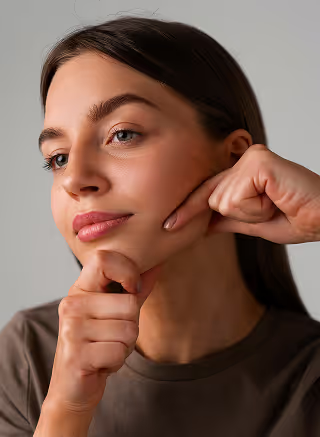
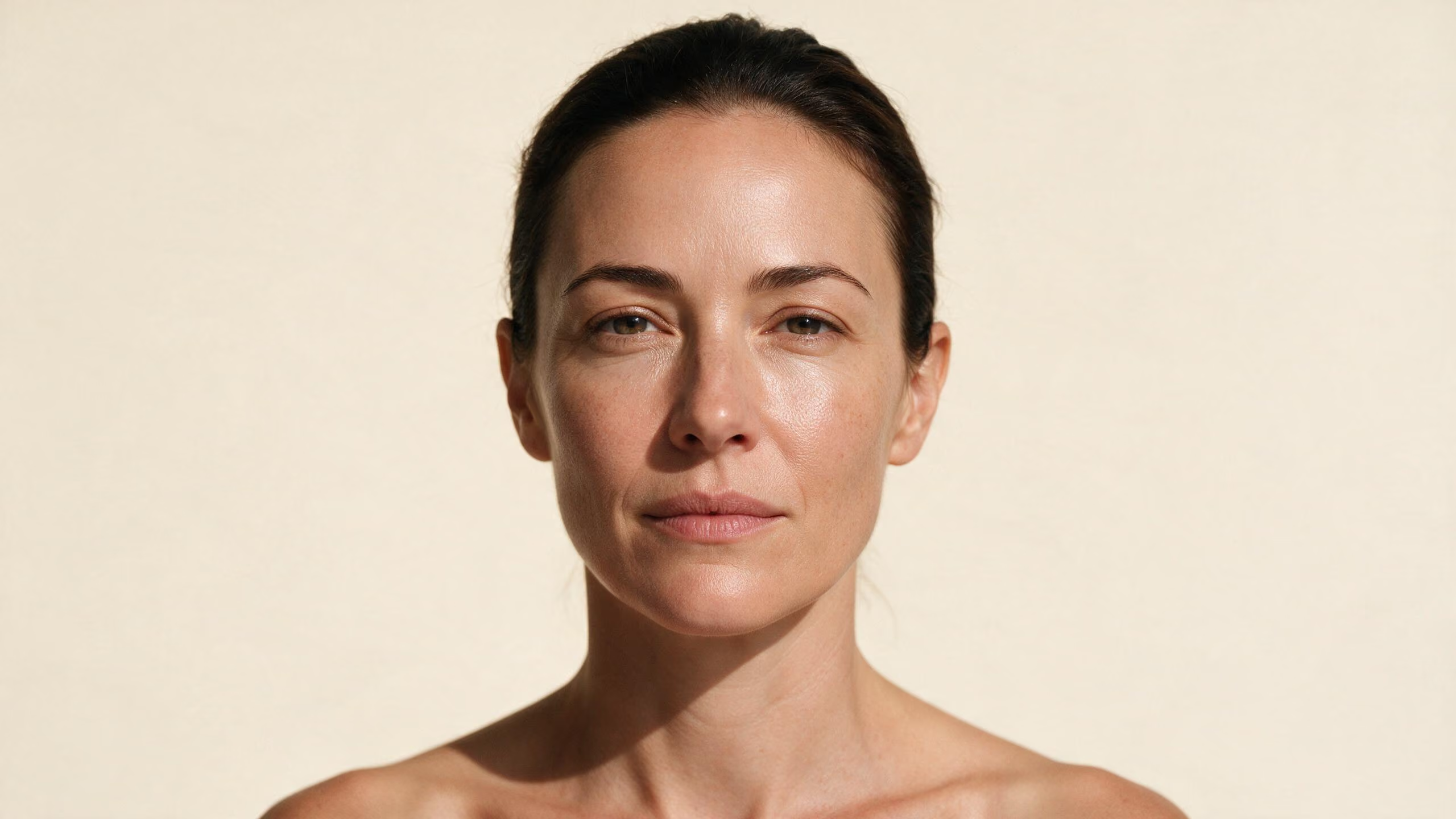
The world of non invasive aesthetics has transitioned from a focus on individual wrinkles to a more holistic view of facial architecture. In the early days of dermal fillers, the primary goal was often to "fill" lines, such as the nasolabial folds or marionette lines, without considering the overall shape of the face. This localized approach frequently led to a flat, heavy, or unnatural appearance because it ignored the underlying causes of facial aging. Today, a sophisticated practitioner uses an artist’s eye to look beyond the surface, treating the face as a complex structure of interconnected planes and volumes.
Facial architecture is fundamentally about the relationship between different features and how they catch the light. An artist understands that beauty is not found in a single feature, but in the proportions and transitions between them. For example, a sharp jawline is only attractive if it is in balance with the chin and the midface. If one area is over-augmented, it creates a visual dissonance that the human brain immediately identifies as artificial. By applying artistic principles like the Golden Ratio, the experts at Epione ensure that every adjustment serves the greater harmony of the face.
Preventing an overdone look requires a disciplined mastery of shadow. In a youthful face, shadows are soft and transitions are smooth. As we age, bone resorption and fat loss create deep, harsh shadows in the temples, under the eyes, and around the mouth. An untrained injector might try to erase these shadows entirely, leading to a bloated or "pillow-like" appearance. The artist’s eye approach, however, involves strategically placing small amounts of product to soften these shadows while maintaining the natural contours that give the face its character and depth.
The Interplay of Light and Anatomical Balance
When analyzing a face through the lens of architecture, the practitioner must consider how light interacts with the skin from every angle. A face that looks perfect in a front-facing photograph might look distorted in a profile view if the projection of the cheeks or chin is excessive. An artist’s eye evaluates the three-dimensional silhouette, ensuring that the volume added provides a lift rather than just bulk. At Epione, this involves a deep dive into the patient’s specific anatomy to determine where the "high points" of the face should naturally reside.
Anatomical balance also involves the concept of "negative space." In art, the areas between objects are just as important as the objects themselves. In facial aesthetics, the hollows under the cheekbones or the curve of the temple provide necessary contrast. If every hollow is filled to the brim, the face loses its structure and looks like a monolithic mask. A skilled practitioner knows that preserving some of these natural indentations is the key to a result that looks "undone" yet significantly improved. This nuance is what separates a medical procedure from a true aesthetic transformation.
The movement of the face is the final piece of the artistic puzzle. A face is not a static sculpture; it is a living, breathing entity that expresses emotion through constant muscular contraction. If a practitioner uses a product that is too rigid or places too much of it in a highly mobile area, the face will look "stiff" or "frozen" during a smile or a laugh. Dr. Simon Ourian emphasizes the use of products that integrate with the tissue, allowing the facial architecture to remain fluid and natural during all forms of social interaction.
- Initial Visual Assessment: The practitioner observes the face at rest and in motion to identify how shadows shift during different expressions.
- Proportional Mapping: Measurements are taken to ensure the distance between the eyes, nose, and chin adheres to classic aesthetic ratios.
- Volume Distribution: Small amounts of product are placed in the deep layers to provide a foundation before any superficial work is done.
- Final Refinement: The patient is viewed from multiple angles in varying light to ensure the transitions are seamless and no "steps" are visible.
The choice of density in the products used is a vital part of the architectural plan. Just as a building requires different materials for the foundation, the framing, and the finishing, the face requires different types of fillers. A high-density filler might be used to recreate the sharpness of a jawbone, while a lighter, more hydrated gel is used to soften the skin's texture. Using the wrong "building material" for a specific facial zone is a primary cause of the overdone look. The experts at Epione are meticulous in selecting the precise formulation for each anatomical layer.
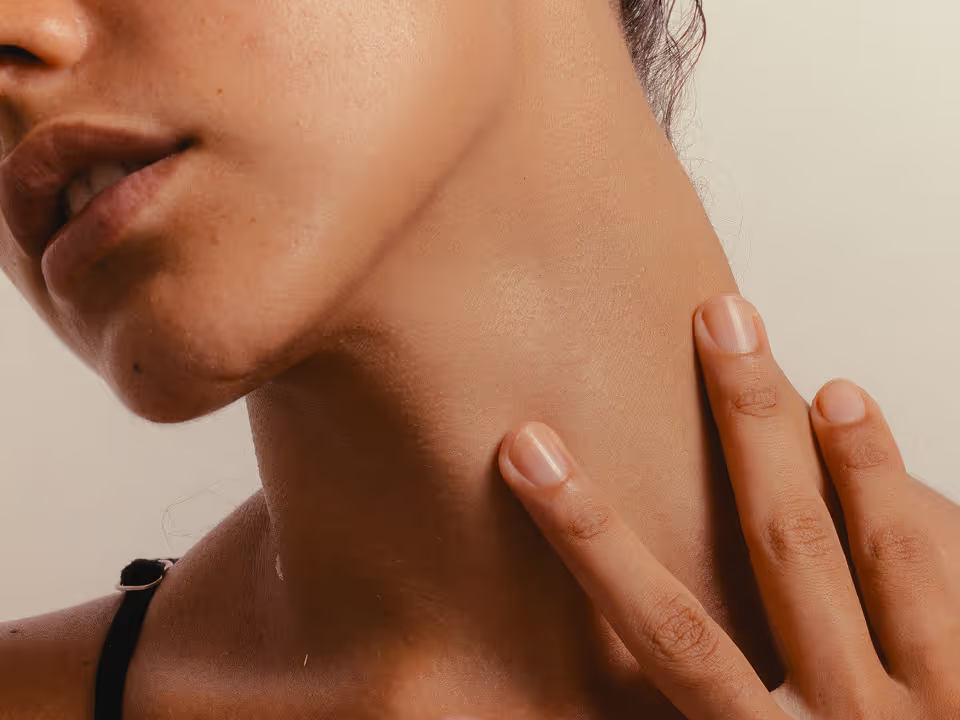
Furthermore, the artist’s eye approach recognizes that the face does not end at the jawline. The neck, the décolletage, and even the hands contribute to the overall impression of youth and vitality. If the face is heavily sculpted but the neck shows significant skin laxity, the result feels disconnected and "off." A holistic architectural plan includes these adjacent areas to ensure a consistent and believable appearance. This comprehensive strategy is a hallmark of the sophisticated care provided by the clinical team at Epione.
Strategic Under-Correction and the Value of Restraint
One of the most powerful tools in the artist’s toolkit is restraint. In a culture that often values "more," the decision to under-correct a feature can be the difference between a beautiful result and a catastrophic one. Over-treating the lips, for example, is a common error that disrupts the balance of the lower face. An artist understands that a subtle enhancement that respects the natural vermilion border is far more attractive than a massive increase in volume. Epione champions this philosophy of strategic under-correction to protect the integrity of the patient’s features.
Restraint also applies to the frequency of treatments. Facial architecture changes slowly over time, and the aesthetic response should be equally measured. Adding too much product too quickly does not give the tissues time to settle and integrate. By taking a patient, multi-session approach, the practitioner can "build" the face gradually, much like a sculptor adding thin layers of clay. This prevents the sudden, jarring changes that often lead to the "overdone" label and allows the patient to acclimate to their new look with confidence.
The goal of facial architecture is not to create a new face, but to reveal the best version of the one that already exists. This requires a level of empathy and intuition that goes beyond medical training. A practitioner must be able to see the "potential" in a face, including the hidden bone structure that has been obscured by age or fatigue. By focusing on these underlying strengths, Dr. Simon Ourian helps patients achieve a look that feels like a return to their true selves rather than a departure into something artificial.
- Strategic Shadows: Maintaining a slight hollow in the sub-malar region to emphasize the cheekbones.
- Horizontal Balance: Ensuring the width of the jawline does not exceed the width of the temples for a classic heart-shaped or oval face.
- Profile Harmony: Aligning the projection of the nose, lips, and chin to create a balanced side view.
- Texture Integration: Using skin-quality treatments alongside fillers so the surface looks as healthy as the structure.
The artist’s eye approach is about trust. The patient trusts that the practitioner will not only make them look younger but will also protect them from the pitfalls of aesthetic excess. This trust is built on a foundation of consistent, natural-looking results and an honest dialogue about what is possible. At Epione, the consultation process is an opportunity for the patient and the expert to align their visions, ensuring that the final architectural result is both beautiful and undetectable.
In the long term, this approach ensures that the face ages gracefully. Because the focus is on structural support rather than just "filling space," the results do not sag or become heavy over time. The filler acts as a scaffold that helps the skin maintain its position, even as natural aging continues. This foresight is a key component of facial architecture philosophy. By planning for the future, the team at Epione ensures that their patients look wonderful not just today, but for many years to come.
Practical Clarity on Facial Proportions
Achieving a masterpiece in facial sculpting requires a balance of science and soul. It is not enough to know the anatomy; one must also understand the emotion and the identity behind the face. When a patient feels that their outside appearance matches their internal energy, the treatment is a success. This psychological alignment is just as important as the physical symmetry achieved through the "artist’s eye" approach.
Perspective is everything when it comes to aesthetic longevity. By prioritizing the structural integrity of the face and avoiding the trends of over-inflation, you ensure a look that is timeless. The experts at Epione remain committed to this standard of excellence, providing a path to rejuvenation that is as safe as it is beautiful. Whether you are looking for a subtle lift or a more defined contour, the architectural approach offers a reliable way to achieve your goals without ever looking "done."
In a world filled with filtered images and unrealistic expectations, the artist’s eye serves as a necessary grounded influence. It reminds us that true beauty lies in the subtle details, like the way a cheekbone catches the light or the way a jawline defines the neck. By embracing these nuances, you can enjoy the benefits of modern aesthetic medicine while maintaining your unique and authentic self. This is the ultimate promise of the facial architecture methodology used by the experts at Epione.
Disclaimer Regarding Treatment Comparisons and AI-Generated Content
The opinions and comparisons expressed in this article are based on Dr. Simon Ourian's professionalexperience, clinical observations, aesthetic philosophy, and publicly available information at the timeof publication.
References to competing products, technologies, procedures, practitioners, or manufacturers are notintended to disparage any individual, company, or organization. Any comparisons reflect Dr. Ourian'sopinions and clinical experience and should not be construed as statements of fact regarding thesuperiority, inferiority, safety, efficacy, or performance of any competing product or treatment.Medical technologies, scientific research, treatment protocols, and regulatory guidance continue toevolve. Information presented in this article may become outdated over time and should not beconsidered comprehensive or definitive medical guidance.
Comparisons between products, procedures, technologies, treatment approaches, manufacturers, oraesthetic outcomes are provided for informational and educational purposes only. Individualpractitioners may have different experiences, preferences, treatment protocols, and opinionsregarding the products or procedures discussed.
No statement contained in this article should be interpreted as a guarantee, warranty, prediction, orpromise of any specific result. Individual outcomes vary significantly based on anatomy, age, skinquality, medical history, genetics, lifestyle factors, treatment technique, and adherence to pre- andpost-treatment instructions.
Portions of this article may have been generated, assisted, summarized, or edited using artificialintelligence (AI) tools. While reasonable efforts have been made to review and verify the content foraccuracy, completeness, and relevance, some information may be incomplete, outdated, inaccurate,or subject to interpretation. Readers should independently verify any information before relying uponit.
The content provided is for general educational and informational purposes only and is not intendedas medical advice, diagnosis, or treatment. Readers should consult with a qualified healthcareprofessional regarding their individual circumstances and treatment options before making anymedical or aesthetic decisions.
Results vary from patient to patient. No outcome is guaranteed. Some or all of this contentmay have been created, edited, or enhanced using artificial intelligence technology, anddespite review efforts, inaccuracies may exist.
Frequently asked questions
What exactly is the "Golden Ratio" in facial sculpting?
The Golden Ratio is a mathematical constant of approximately 1.618 that has been used for centuries to define ideal proportions in art and nature. In a clinical setting, the experts at Epione use this ratio to ensure that the width of the nose, the fullness of the lips, and the projection of the chin are in perfect balance with one another. By adhering to these universal principles of beauty, Dr. Simon Ourian creates results that the human eye naturally perceives as beautiful and harmonious.
How do I avoid getting the "duck lip" or "trout pout" look?
The "duck lip" look occurs when filler is injected too superficially or in excessive quantities, causing the lip to protrude horizontally rather than lifting vertically. Using an artist’s eye, the clinical team at Epione focuses on defining the borders and the "cupid's bow" while respecting the natural anatomy of the muscle. This ensures that the lips remain soft, hydrated, and proportional to the rest of the facial architecture.
Can facial architecture fix a face that already looks overdone?
Yes, it is often possible to "reset" the facial architecture by dissolving old, migrated filler with hyaluronidase. Once the distorted volume is removed, the experts at Epione can reassess the face as a clean canvas. Dr. Simon Ourian can then use a more strategic, structural approach to restore volume in the correct anatomical planes, resulting in a much more natural and refreshed appearance.
Does the artist’s eye approach take longer than a standard treatment?
A thorough architectural assessment may take slightly longer because it involves a more detailed analysis of the face from multiple angles and in different lighting. However, the team at Epione believes this extra time is essential for preventing the overdone look and ensuring the highest quality result. The actual injection process remains efficient, but the planning phase is where the artistry truly happens.
Why does my face look different in photos than in the mirror after treatment?
Cameras and mirrors translate three-dimensional objects differently, and certain lens focal lengths can distort facial proportions. The artist’s eye approach accounts for this by ensuring the facial architecture is balanced in "real world" conditions. By focusing on how light and shadow behave in 3D space, the experts at Epione ensure that you look your best whether you are seeing your reflection or appearing in a high-definition photograph.
How does a practitioner decide where the "shadows" should be?
Deciding where to keep or soften shadows requires a deep understanding of youthful versus aged facial topography. For example, a shadow under the cheekbone can be very attractive and slimming, whereas a shadow in the temple can make a person look tired. The clinical team at Epione uses their artistic training to determine which shadows to preserve for definition and which to soften for rejuvenation.
Will I look "frozen" if I get both filler and a neuromodulator?
When applied with an architectural mindset, combining these treatments actually leads to a more natural result. Fillers provide the structure, while neuromodulators (like Botox) soften the dynamic lines caused by muscle movement. Dr. Simon Ourian uses precise dosing to ensure that you retain your ability to express yourself naturally while your facial features remains sculpted and smooth.