
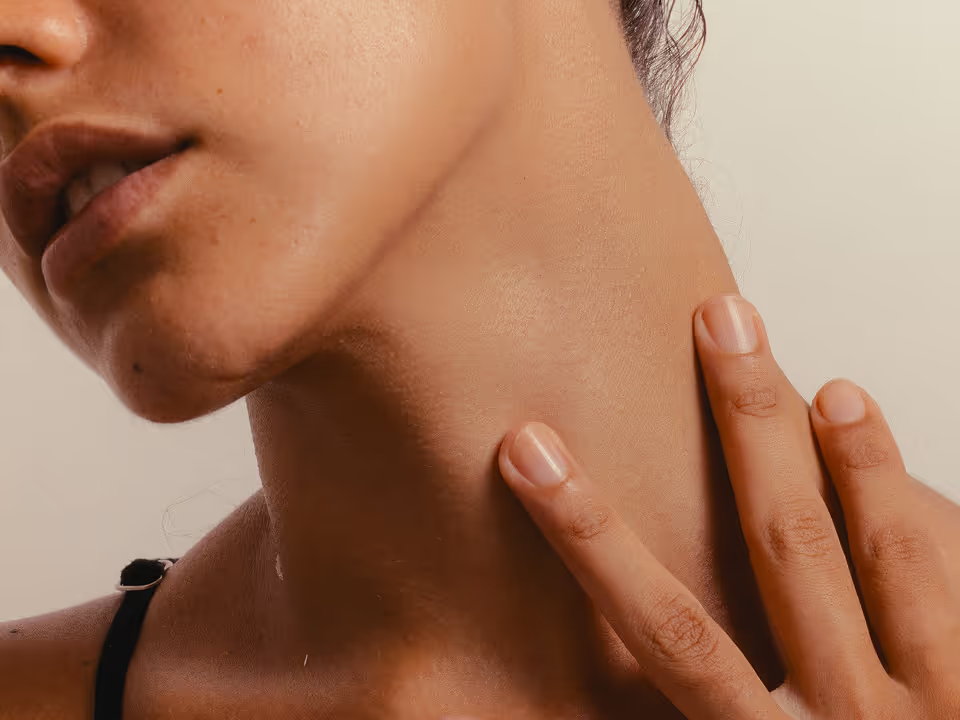









When is the chin or jawline the real problem?

Patients ask about the nose or the lips. The change that balances the face is often the chin.

Answered by

Dr. Simon Ourian, M.D.

Published

December 7, 2026

Reviewed

December 7, 2026

A face is read in proportion. When the chin is small, the nose looks larger and the lower face looks weaker. Dr. Ourian measures the thirds of the face first, then builds the chin or the angle of the jaw with injections and reduces fat along the jaw where needed. A small change in the chin often does more than the change a patient asked for.

Reading a face in proportion

He divides the face into thirds and looks at how the chin, nose, jaw, and cheeks relate to one another before treating any one of them.

“So, I'm going to try to create more of a proportion between the top and the bottom and the middle of the face in a very subtle way.”

Adding a little chin changes how the nose reads, without touching the nose.

“You don't have to do a lot to the face. You can make an optical illusion by adding a little bit of a chin and pushing the nose back. By adding a little bit of filler, chiseling away some of the fat pads in the face with different techniques that I use to create a better, more proportional face. When you look at them, you don't realize somebody looks different. This look more pleasant.”

When he suggests something you did not ask for

Patients often arrive asking for one feature. If another change would do more for the face, he says so.

“So I could look at your face and you may think that you want to make your lips bigger, but I could look at you and say, that is probably not going to give you the biggest bang for your buck and the biggest impact.”

How a chin or jawline is built

Two tools work together. Injections build projection at the chin and define the angle of the jaw. Ultrasound and radiofrequency reduce excess fat that softens the jawline.

“I'm going to I'm going to make this angle a little bit more straight so that the angle of the jaw becomes a little more like linear and you see the angle better.” “The radio frequency, USRF that we do to get rid of some of the fat pad we have in our face that's overly like, you know, we get fat in our face, and we have to get jawline we need to address that.”

What softens the lower faceWhat he uses
Small or retruded chinInjection for projection
Undefined jaw angleInjection along the angle
Fat along the jawUltrasound and radiofrequency (USRF)
AsymmetryMeasured correction side to side

How long it lasts

It depends on the product and the plan. Dr. Ourian gives each patient an expected duration at consultation, based on what was used and where.

Related reading: non-surgical chin contouring, Jawsome jawline enhancement, and the non-surgical nose job.

Back to Ask Dr. Ourian for more answers from Dr. Simon Ourian.

The figures in this answer reflect Dr. Ourian's observations in his own practice
and are not drawn from published research. This content is for information only
and is not a treatment recommendation. Book a consultation to discuss your own case.

Dr. Simon Ourian is founder and medical director of Epione Beverly Hills, with close to 30 years of practice.

Frequently asked questions

Can a chin change how big my nose looks?

Yes. When the chin is small, the nose looks larger by comparison. Adding a little projection to the chin can make the nose look smaller without treating the nose.

How is a jawline defined without surgery?

With injections that define the angle of the jaw and the chin, combined with ultrasound and radiofrequency to reduce fat along the jaw where needed.

How does Dr. Ourian decide proportions?

He measures the face in thirds and looks at how the chin, nose, jaw, and cheeks relate before treating any single feature.

Will Dr. Ourian treat the feature I ask for?

He will tell you if a different change would do more for your face. Patients asking for lips are sometimes better served by a small change to the chin.

How long does chin and jaw contouring last?

It depends on the product and the plan. Dr. Ourian explains the expected duration at consultation.