








%201.avif)










Introduction
Acne scars can be a lasting reminder of past skin troubles, impacting not only your physical appearance but also your self-confidence. Understanding the different types, causes, and available treatment options for acne scars is essential for achieving smoother, clearer skin. In this comprehensive guide, we will explore the world of acne scars and address key questions about their types, causes, and the treatment options available.
What Are the Different Types of Acne Scars?
This section explains the common types of acne scars, such as ice pick, boxcar, rolling, and hypertrophic scars, providing insights into how each type appears on the skin.
- Ice Pick Scars: These are deep, narrow, and pitted scars that resemble small, V-shaped punctures. They often result from deep, inflammatory acne lesions.
- Rolling Scars: Rolling scars create a wave-like texture on the skin. They are shallow and caused by the fibrous bands of tissue that tether the skin to deeper structures.
- Hypertrophic Scars: Unlike most acne scars that are depressions in the skin, hypertrophic scars are raised and thicker. They develop when the body produces excess collagen during the healing process.
Understanding the type of acne scars you have is essential for choosing the most appropriate treatment to improve their appearance.
What Causes Acne Scars to Form?
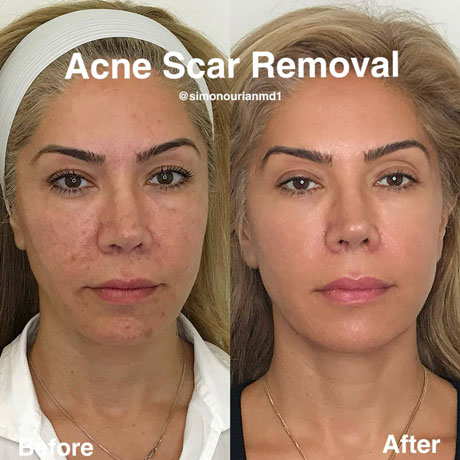
Acne scars form as a result of damage to the skin's collagen and tissue during the acne healing process. When the skin is injured by severe acne lesions, the body's natural response is to produce too much or too little collagen, leading to different types of scars. Inflammation, as seen in inflammatory acne, plays a significant role in the scarring process. The type and severity of acne, as well as how it's managed, can influence the likelihood of scars forming. Proper acne care and treatment can help minimize the risk of scarring.
What Professional Treatments Are Available for Acne Scars?
Several professional treatments are available for acne scars:
- Chemical Peels: Chemical solutions are applied to the skin to remove the top layer, revealing smoother skin.
- Microneedling: Fine needles create tiny injuries in the skin, promoting collagen production and reducing scar appearance.
- Dermal Fillers: Injected into pitted scars, fillers raise and smooth the skin's surface.
- Laser Therapy: Laser treatments target scar tissue, stimulate collagen production, and reduce scar visibility. Dr. Simon Ourian’s Coolaser® is an amazing laser treatment of choice to reduce the appearance of acne and acne scars.
- Dermabrasion: A surgical procedure that resurfaces the skin, often used for deep scars.
- Subcision: A minor surgical procedure that breaks the fibrous bands that tether the skin, helping to elevate rolling scars.
- Punch Excision: During this procedure, a dermatologist removes individual ice pick scars and sutures the wound.
Understanding acne scars is essential for effective treatment. With various types, causes, and treatment options available, you can make informed choices for achieving smoother, scar-free skin. Whether you opt for at-home remedies or professional treatments, the key is personalization to your unique needs and preferences.The choice of treatment depends on the type and severity of your acne scars. Consulting a professional is crucial for personalized recommendations. Schedule your consultation appointment with us: click here.
Disclaimer Regarding Treatment Comparisons and AI-Generated Content
The opinions and comparisons expressed in this article are based on Dr. Simon Ourian's professionalexperience, clinical observations, aesthetic philosophy, and publicly available information at the timeof publication.
References to competing products, technologies, procedures, practitioners, or manufacturers are notintended to disparage any individual, company, or organization. Any comparisons reflect Dr. Ourian'sopinions and clinical experience and should not be construed as statements of fact regarding thesuperiority, inferiority, safety, efficacy, or performance of any competing product or treatment.Medical technologies, scientific research, treatment protocols, and regulatory guidance continue toevolve. Information presented in this article may become outdated over time and should not beconsidered comprehensive or definitive medical guidance.
Comparisons between products, procedures, technologies, treatment approaches, manufacturers, oraesthetic outcomes are provided for informational and educational purposes only. Individualpractitioners may have different experiences, preferences, treatment protocols, and opinionsregarding the products or procedures discussed.
No statement contained in this article should be interpreted as a guarantee, warranty, prediction, orpromise of any specific result. Individual outcomes vary significantly based on anatomy, age, skinquality, medical history, genetics, lifestyle factors, treatment technique, and adherence to pre- andpost-treatment instructions.
Portions of this article may have been generated, assisted, summarized, or edited using artificialintelligence (AI) tools. While reasonable efforts have been made to review and verify the content foraccuracy, completeness, and relevance, some information may be incomplete, outdated, inaccurate,or subject to interpretation. Readers should independently verify any information before relying uponit.
The content provided is for general educational and informational purposes only and is not intendedas medical advice, diagnosis, or treatment. Readers should consult with a qualified healthcareprofessional regarding their individual circumstances and treatment options before making anymedical or aesthetic decisions.
Results vary from patient to patient. No outcome is guaranteed. Some or all of this contentmay have been created, edited, or enhanced using artificial intelligence technology, anddespite review efforts, inaccuracies may exist.