










%201.avif)










What is the difference between thin skin and loose skin?
They look the same in a mirror. One of them is not a skin problem at all.
Answered by
Dr. Simon Ourian, M.D.
Published
September 21, 2026
Reviewed
September 10, 2026
Thin skin has lost dermal thickness. Loose skin has lost the structure underneath it. Energy-based tightening acts on the dermis, so it can improve thin skin and can do very little for skin hanging over a foundation that has changed shape. Most of what patients call loose skin is not a surface problem, which is why treating the surface produces a result they cannot see.
The thirty second test
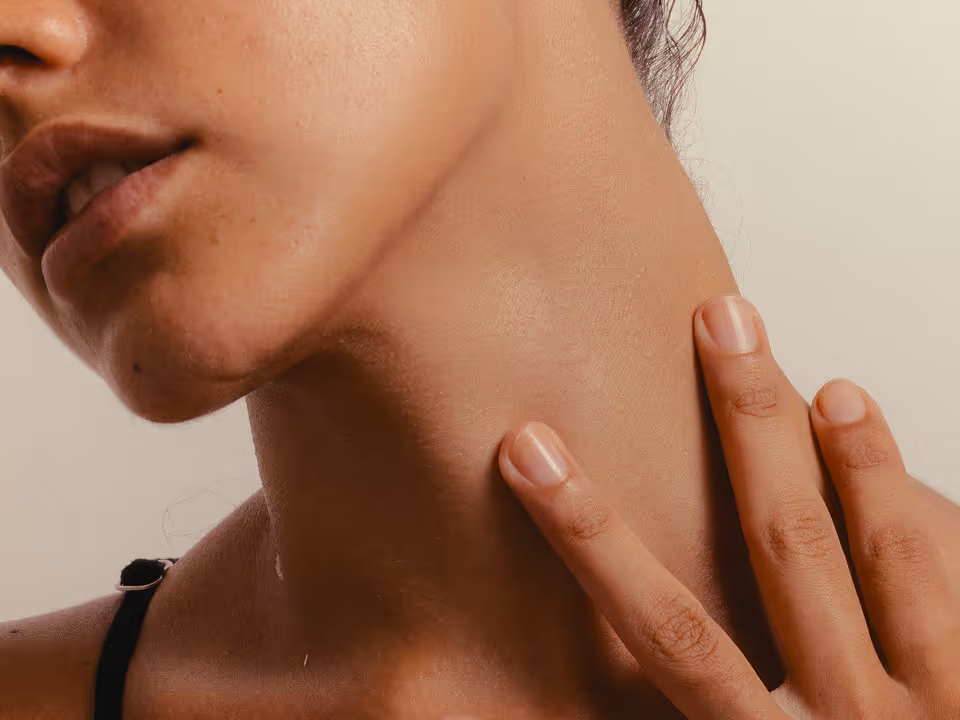
"I pinch the jawline. If the skin snaps back but feels like tissue paper, it's thin. If it pools in my hand, it's loose."
Two findings from one maneuver. Recoil speed reports dermal quality. Volume reports excess surface area relative to the structure beneath. Skin that snaps back quickly but feels insubstantial between the fingers is thin, and it responds to treatments that build dermal collagen. Skin that gathers and stays gathered is lax, and no amount of dermal remodeling reduces the quantity of it.
Why tightening treatments fail
Failed outside treatments arrive weekly.
"The industry treats aging like wrinkles, but it is actually structural bone loss. If the jaw angle has shrunk, tightening the surface does nothing."
This is why most non-surgical tightening disappoints, and it is not a device failure. The facial skeleton changes with age. The jaw angle opens, orbital rims widen, the midface loses projection. Soft tissue that fit a larger frame now has more surface than the frame requires, and it drapes. Tightening the drape does not address the frame.
This is also why skin tightening is assessed against the structure beneath it rather than against skin quality alone.
| What the patient sees | What is actually happening | Does tightening help |
|---|---|---|
| Skin looks crepey and thin | Reduced dermal thickness and collagen | Yes |
| Jawline has softened, jowling at the corner | Loss of jaw angle and bone projection | No |
| Neck skin hangs | Excess surface area, often with platysmal change | No |
| Fine lines with good recoil | Surface photoaging | Yes |
When he says no
"If someone in their 70s with a hanging neck wants a non-surgical miracle, I have no problem saying no. I'd rather be called a jerk than ruin a face."
There is a point past which non-surgical treatment cannot produce what the patient is asking for, and the honest response is a referral rather than an attempt. A patient who has already spent money on treatments that did nothing is usually being told what she wants to hear by people who know better.
What changed his practice
"Realizing aging is the skull shrinking, not just soft tissue dropping, completely changed my practice from filling faces to rebuilding bone structure."
The older model held that facial fat pads descend and that lifting or refilling them restores youth. That model produces the recognizable overfilled result, because volume is being added to compensate for a change in shape rather than a change in position. Once the skeleton is understood as the variable, placement changes. Less material, placed deeper, against structure rather than into the space where structure used to be.
That placement is what Neustem® regenerative injections were developed for, and results can last up to several years.
What the industry gets wrong about candidacy
The question usually asked is whether the patient's skin will respond. The question that decides the outcome is whether the patient's problem is skin at all. A candidate assessed only on skin quality will frequently pass the assessment and fail the treatment.
Back to Ask Dr. Ourian for more answers from Dr. Simon Ourian.
The figures in this answer reflect Dr. Ourian's observations in his own practice
and are not drawn from published research. This content is for information only
and is not a treatment recommendation. Book a consultation to discuss your own case.
Frequently asked questions
How can I tell if I have thin skin or loose skin?
Pinch the skin along the jawline. If it snaps back quickly but feels insubstantial between the fingers, it is thin. If it gathers and pools in the hand rather than springing back, it is loose. The two look similar in a mirror and respond to entirely different treatments.
Why did my skin tightening treatment not work?
The most common reason is that the problem was structural rather than dermal. Tightening acts on the collagen in the skin. If the underlying facial bone has lost projection, the skin has more surface area than the frame beneath it, and remodeling the dermis does not change that.
Does facial bone loss cause jowls?
It is a primary contributor. As the jaw angle opens and mandibular projection reduces with age, the soft tissue that previously fit that frame has nowhere to sit. The result reads as sagging skin, but the change originated in the skeleton.
Should I get filler or skin tightening first?
Dr. Ourian treats structure before surface. Surface work performed first is calibrated against a face that is about to change shape, so the sequence produces a less predictable result. Restoring structure first also frequently reduces how much surface work is needed.
Can non-surgical treatment fix a sagging neck?
Not past a certain point. Where there is significant excess skin and platysmal change, no non-surgical treatment produces what the patient is asking for, and Dr. Ourian declines rather than attempting it.
Is Neustem a dermal filler?
No. Neustem® is a family of proprietary regenerative injections tailored to the anatomy, developed at Epione. It is used to address structural contour rather than as a conventional hyaluronic acid filler, and results can last up to several years.