











%201.avif)










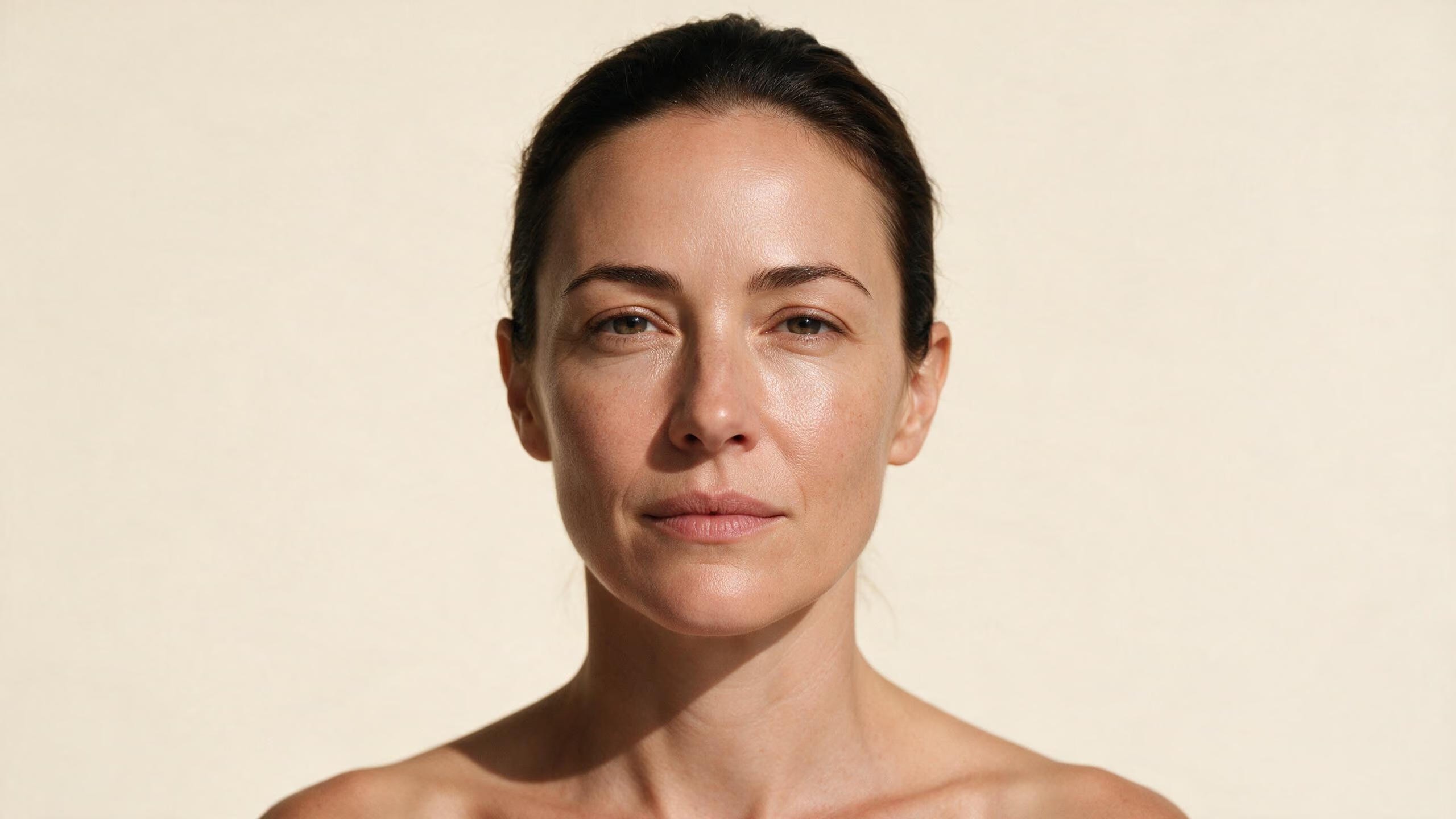
Dark spots, also referred to as sun spots, age spots, or hyperpigmentation, are a common cosmetic concern caused by prolonged exposure to ultraviolet (UV) rays. Over time, UV damage triggers melanin overproduction, resulting in uneven pigmentation that can affect the face, hands, chest, and other sun-exposed areas. Fortunately, there are several non-surgical treatments available to safely and effectively reduce dark spots, restore clarity, and improve overall skin tone.
Non-Surgical Treatments for Sun-Damaged Skin
Intense Pulsed Light (IPL) Therapy IPL is a versatile, non-invasive light-based treatment that targets pigmented lesions at various depths. By breaking down melanin clusters, IPL helps diminish dark spots, improves skin texture, and stimulates collagen production for overall rejuvenation. Multiple sessions are often recommended for optimal results.Q-Switched Lasers Q-switched lasers are designed to precisely target pigmented areas without affecting surrounding tissue. They deliver energy that fragments excess melanin, which is naturally eliminated by the body. This treatment is particularly effective for stubborn sun spots, freckles, and melasma.Chemical Peels Chemical peels use controlled exfoliating acids to remove damaged skin layers, revealing brighter, more even-toned skin underneath. Depending on the severity of pigmentation, superficial to medium-depth peels can be tailored to individual skin types and desired outcomes.Topical Therapies Prescription-strength creams containing ingredients such as hydroquinone, retinoids, vitamin C, and other brightening agents can complement in-office treatments. These topical solutions work by inhibiting melanin production and promoting cellular turnover, improving tone over time.
Dr. Simon Ourian’s Expert Approach at Epione
At Epione, Dr. Simon Ourian provides personalized, non-surgical treatment plans for patients struggling with sun-induced pigmentation. He carefully evaluates skin type, depth of pigmentation, and sun damage patterns to select the most effective combination of therapies. Dr. Ourian often integrates laser treatments, IPL, chemical peels, and topical regimens for a multi-modal approach that maximizes results while minimizing risk.
Benefits of Non-Surgical Sun Spot Treatments
- Minimal downtime compared to surgical procedures
- Customizable treatments based on pigmentation severity and skin sensitivity
- Natural, luminous results that maintain overall skin health
- Long-term improvement with ongoing maintenance and sun protection
Protecting Results and Preventing Future Sun Damage
Even after successful treatment, daily sun protection is critical to prevent recurrence. Broad-spectrum sunscreen, hats, and protective clothing are essential to maintain results and preserve youthful, even-toned skin.By combining advanced technology, expert precision, and individualized care, Epione ensures that patients achieve clearer, brighter skin with natural-looking results. Under Dr. Simon Ourian’s guidance, non-surgical treatments for sun-induced dark spots provide high-end, sophisticated solutions that reflect the standards of Los Angeles aesthetics.This article is based on publicly available online information and has not been independently reviewed for medical accuracy or safety. It is not a substitute for professional medical advice. Please consult your doctor or a qualified healthcare provider for personalized guidance and recommendations.
Disclaimer Regarding Treatment Comparisons and AI-Generated Content
The opinions and comparisons expressed in this article are based on Dr. Simon Ourian's professionalexperience, clinical observations, aesthetic philosophy, and publicly available information at the timeof publication.
References to competing products, technologies, procedures, practitioners, or manufacturers are notintended to disparage any individual, company, or organization. Any comparisons reflect Dr. Ourian'sopinions and clinical experience and should not be construed as statements of fact regarding thesuperiority, inferiority, safety, efficacy, or performance of any competing product or treatment.Medical technologies, scientific research, treatment protocols, and regulatory guidance continue toevolve. Information presented in this article may become outdated over time and should not beconsidered comprehensive or definitive medical guidance.
Comparisons between products, procedures, technologies, treatment approaches, manufacturers, oraesthetic outcomes are provided for informational and educational purposes only. Individualpractitioners may have different experiences, preferences, treatment protocols, and opinionsregarding the products or procedures discussed.
No statement contained in this article should be interpreted as a guarantee, warranty, prediction, orpromise of any specific result. Individual outcomes vary significantly based on anatomy, age, skinquality, medical history, genetics, lifestyle factors, treatment technique, and adherence to pre- andpost-treatment instructions.
Portions of this article may have been generated, assisted, summarized, or edited using artificialintelligence (AI) tools. While reasonable efforts have been made to review and verify the content foraccuracy, completeness, and relevance, some information may be incomplete, outdated, inaccurate,or subject to interpretation. Readers should independently verify any information before relying uponit.
The content provided is for general educational and informational purposes only and is not intendedas medical advice, diagnosis, or treatment. Readers should consult with a qualified healthcareprofessional regarding their individual circumstances and treatment options before making anymedical or aesthetic decisions.
Results vary from patient to patient. No outcome is guaranteed. Some or all of this contentmay have been created, edited, or enhanced using artificial intelligence technology, anddespite review efforts, inaccuracies may exist.