










%201.avif)











Pregnancy is often associated with a glow, but it can also bring forth the perplexing emergence of melasma, which is characterized by brown or gray-brown patches on the skin. This article aims to unravel the secrets behind why and when melasma appears during pregnancy. It offers insights to mothers and those planning for pregnancy as they navigate this fascinating yet challenging journey. Let us embark on a quest to understand the nature of melasma during pregnancy. Visit Epione in Beverly Hills for additional information.
How does melasma connect with the fluctuations experienced during pregnancy?
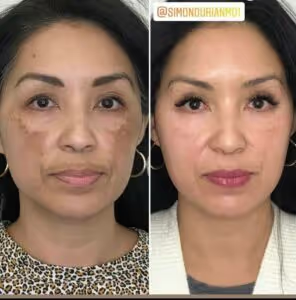
Melasma refers to a skin condition where brown or gray-brown patches develop on the skin of the face and are closely linked to the changes that occur during pregnancy. Melasma can be triggered by pregnancy hormones such as estrogen and progesterone. During pregnancy, melasma typically appears in the 2nd trimester, although it can manifest at any point during pregnancy and may persist after childbirth. The primary culprits behind melasma during pregnancy are hormonal fluctuations; elevated levels of estrogen and progesterone stimulate the production of Melanin, and the interaction between these hormones contributes to the development of melasma.
How do healthcare professionals diagnose melasma?
Healthcare professionals usually diagnose melasma by examining the skin. There are no tests needed for diagnosis.
What can pregnant individuals do to prevent melasma?
To prevent melasma, pregnant individuals can take the following measures:
- Apply broad-spectrum sunscreen every day
- Wear clothing and wide-brimmed hats
- Avoid sun exposure
- Be cautious about skincare products and cosmetics that might trigger melasma
- Seek guidance from a healthcare professional
If melasma occurs during pregnancy, what are the safe and effective treatment choices available?
During pregnancy, there are limited effective treatment options for melasma due to risks to the developing baby, so it is advisable to consult healthcare before attempting any treatment. After giving birth, non-invasive treatments and topical products may be considered under the guidance of a qualified dermatologist. In conclusion, the mysteries surrounding melasma during pregnancy serve as reminders of the transformations our bodies undergo. While safe treatment options are limited during pregnancy, seeking advice from a qualified dermatologist is always the best decision. Remember that the beauty of motherhood surpasses any concerns about pigmentation, and the radiance of pregnancy shines through regardless of melasma. Contact Dr. Ourian to learn more.
Disclaimer Regarding Treatment Comparisons and AI-Generated Content
The opinions and comparisons expressed in this article are based on Dr. Simon Ourian's professionalexperience, clinical observations, aesthetic philosophy, and publicly available information at the timeof publication.
References to competing products, technologies, procedures, practitioners, or manufacturers are notintended to disparage any individual, company, or organization. Any comparisons reflect Dr. Ourian'sopinions and clinical experience and should not be construed as statements of fact regarding thesuperiority, inferiority, safety, efficacy, or performance of any competing product or treatment.Medical technologies, scientific research, treatment protocols, and regulatory guidance continue toevolve. Information presented in this article may become outdated over time and should not beconsidered comprehensive or definitive medical guidance.
Comparisons between products, procedures, technologies, treatment approaches, manufacturers, oraesthetic outcomes are provided for informational and educational purposes only. Individualpractitioners may have different experiences, preferences, treatment protocols, and opinionsregarding the products or procedures discussed.
No statement contained in this article should be interpreted as a guarantee, warranty, prediction, orpromise of any specific result. Individual outcomes vary significantly based on anatomy, age, skinquality, medical history, genetics, lifestyle factors, treatment technique, and adherence to pre- andpost-treatment instructions.
Portions of this article may have been generated, assisted, summarized, or edited using artificialintelligence (AI) tools. While reasonable efforts have been made to review and verify the content foraccuracy, completeness, and relevance, some information may be incomplete, outdated, inaccurate,or subject to interpretation. Readers should independently verify any information before relying uponit.
The content provided is for general educational and informational purposes only and is not intendedas medical advice, diagnosis, or treatment. Readers should consult with a qualified healthcareprofessional regarding their individual circumstances and treatment options before making anymedical or aesthetic decisions.
Results vary from patient to patient. No outcome is guaranteed. Some or all of this contentmay have been created, edited, or enhanced using artificial intelligence technology, anddespite review efforts, inaccuracies may exist.