











%201.avif)











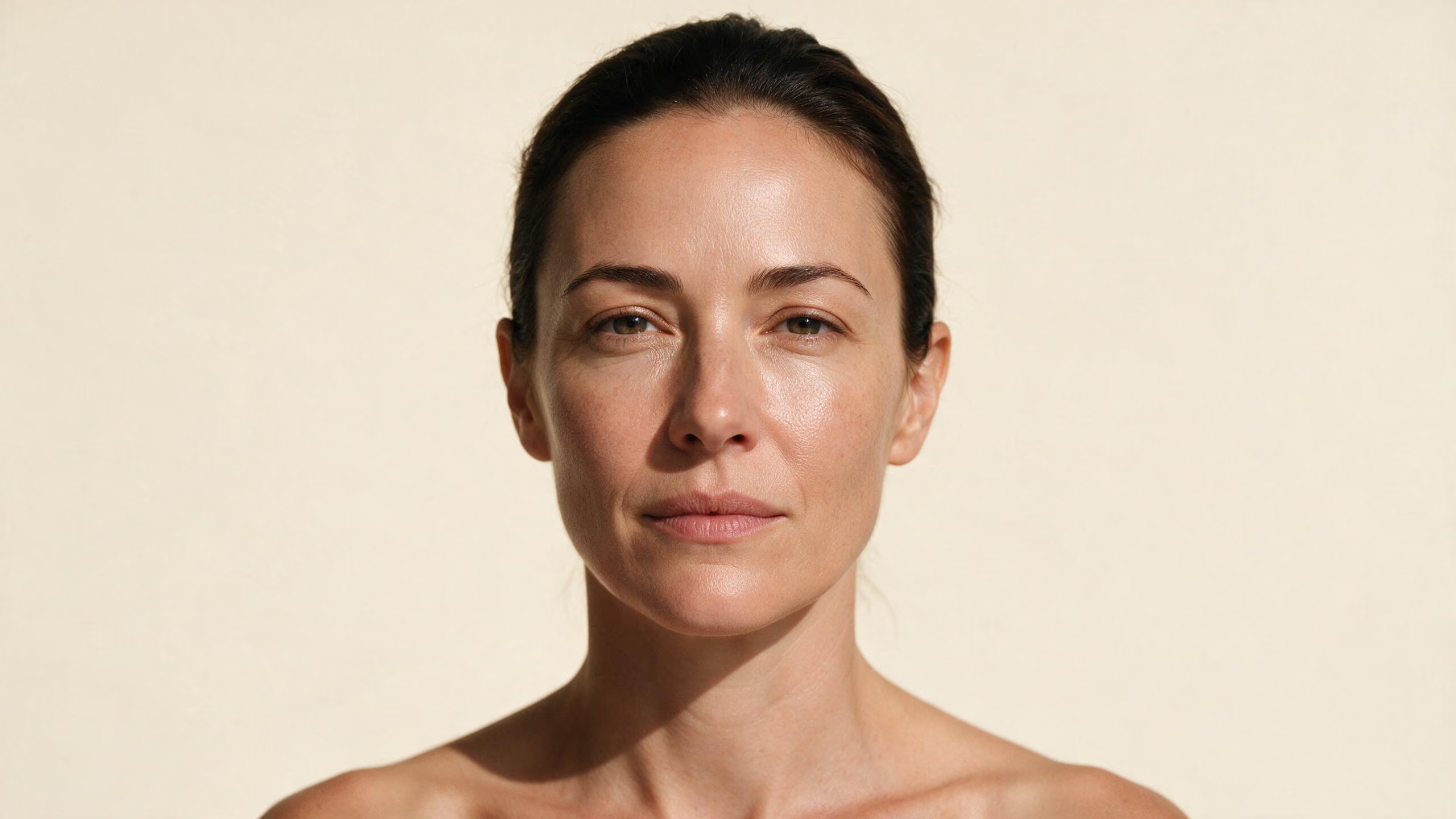
Forehead lines develop as repeated muscle contractions create permanent creases in the overlying skin. The frontalis muscle, responsible for raising the eyebrows and creating expression, becomes overactive over time, leading to horizontal lines across the forehead. These lines can make you appear tired, worried, or older than your actual age.
Botox works by temporarily blocking nerve signals to the frontalis muscle, reducing its ability to contract forcefully. This allows the overlying skin to smooth out while maintaining natural facial expressions. The key lies in using the right amount of Botox to achieve optimal results without creating a frozen or unnatural appearance.
The number of units required varies significantly between individuals based on muscle strength, line severity, and desired outcomes. Dr. Simon Ourian emphasizes that proper assessment of each patient's unique facial anatomy is essential for determining the appropriate dosage. Understanding these factors helps ensure both safety and satisfaction with your results.
Factors That Determine Your Botox Unit Requirements
Several anatomical and lifestyle factors influence how many units of Botox you'll need for effective forehead treatment. Muscle strength varies dramatically between individuals, with some people having naturally stronger frontalis muscles that require higher doses. Men typically need more units than women due to larger muscle mass and stronger contractions.
The depth and severity of existing lines also plays a crucial role in dosing decisions. Dynamic lines (visible only during movement) typically require fewer units than static lines (visible at rest). Age affects both muscle strength and skin elasticity, with older patients sometimes needing adjusted dosing strategies to account for these changes.
Previous Botox treatments can influence current requirements, as some patients develop tolerance over time while others may need fewer units as muscles adapt. The experts at Epione Beverly Hills track these patterns to optimize treatment plans for each individual. Your injection history provides valuable data for determining the most effective approach.
Key factors affecting your Botox unit requirements include:
- Muscle strength and size: Stronger frontalis muscles require higher doses to achieve adequate relaxation and line smoothing
- Line severity and depth: Deep static lines may need more units initially, with maintenance doses adjusted based on response
- Gender and age considerations: Men typically need 20-30% more units, while age affects both muscle activity and skin quality
- Treatment goals and expectations: Conservative approaches use fewer units for subtle results, while dramatic smoothing requires higher doses
Individual response to Botox varies based on metabolism, injection technique, and product quality. Some patients achieve excellent results with minimal units, while others require higher doses for the same effect. The team at Epione Beverly Hills uses advanced injection techniques to maximize effectiveness while minimizing the total units needed.
Your lifestyle and facial habits also influence treatment requirements. People who are very expressive or work in sunny conditions may need more frequent treatments or slightly higher doses. Stress levels, sleep quality, and skincare routines can all affect how long your results last and how many units you'll need for future treatments.
Standard Dosing Guidelines and Treatment Approaches
Most patients require between 15-25 units of Botox for comprehensive forehead treatment, though the range can extend from 10-30 units depending on individual factors. Conservative first treatments typically start with 15-20 units to assess response and avoid over-treatment. This approach allows for adjustment at follow-up appointments if additional smoothing is desired.
The injection pattern is as important as the total number of units used. Dr. Ourian distributes Botox across multiple injection points to ensure even muscle relaxation and natural-looking results. Typically, 4-6 injection sites are used across the forehead, with units allocated based on muscle activity in each area.
Timing between treatments affects dosing requirements, with most patients returning every 3-4 months for maintenance. Some individuals metabolize Botox more quickly and may need treatments every 2-3 months, while others maintain results for 4-6 months. The team at Epione tracks these patterns to optimize your treatment schedule and dosing.
Standard dosing approaches include:
- Conservative starter dose: 15-20 units distributed across 4-5 injection points for first-time patients or those preferring subtle results
- Standard maintenance dose: 20-25 units for most patients seeking moderate to significant line improvement with natural movement
- Higher dose requirements: 25-30 units for patients with very strong muscles, deep lines, or previous tolerance development
- Combination approaches: Coordinated dosing with crow's feet and frown line treatments for comprehensive upper face rejuvenation
The injection depth and technique significantly impact results regardless of unit count. Proper placement in the frontalis muscle ensures maximum effectiveness while avoiding complications like brow drooping. Advanced practitioners adjust injection angles and depths based on individual muscle anatomy and skin thickness.
Patient expectations must align with realistic outcomes based on their specific anatomy and dosing. While Botox effectively reduces forehead lines, it cannot completely eliminate very deep static lines or address skin texture issues. Some patients benefit from combining Botox with other treatments for comprehensive forehead rejuvenation and optimal aesthetic outcomes.
Maximizing Results and Managing Expectations
Proper preparation and aftercare significantly influence your Botox results regardless of the number of units used. Avoiding blood-thinning medications and supplements for one week before treatment reduces bruising risk and ensures optimal injection conditions. The experts at Epione Beverly Hills provide detailed pre-treatment instructions to maximize your outcome and minimize potential complications.
Results typically begin appearing 3-5 days after injection, with full effects visible by two weeks. During this period, avoid intense exercise, lying flat for extended periods, and rubbing the treated area. These precautions help ensure the Botox settles properly in the intended muscles and achieves the desired smoothing effect.
Long-term success with Botox requires consistent treatment timing and realistic expectations about what the treatment can achieve. While Botox excellently addresses dynamic lines and prevents new wrinkle formation, it cannot reverse significant skin damage or address volume loss. Dr. Ourian often discusses complementary treatments for patients seeking more comprehensive facial rejuvenation.
Optimization strategies for better Botox results include:
- Consistent treatment timing: Regular appointments every 3-4 months prevent line reformation and may reduce future unit requirements over time
- Proper aftercare compliance: Following post-treatment instructions ensures optimal settling and maximum duration of results from your investment
- Realistic expectation setting: Understanding Botox limitations helps avoid disappointment and guides decisions about complementary treatments
- Professional injection technique: Experienced practitioners achieve better results with fewer units through precise placement and appropriate dilution ratios
Some patients may benefit from combining Botox with skin resurfacing treatments to address both muscle activity and skin texture concerns. While Botox smooths dynamic lines, treatments like chemical peels or laser resurfacing can improve skin quality and reduce static wrinkles. This comprehensive approach often provides more dramatic and satisfying results than Botox alone.
Monitoring your response to treatment helps optimize future sessions and may allow for unit reduction over time. Some patients find they need fewer units as their muscles adapt to regular Botox treatments. The team at Epione Beverly Hills tracks these changes to continually refine your treatment plan and ensure you receive the most effective and economical care possible.
Disclaimer Regarding Treatment Comparisons and AI-Generated Content
The opinions and comparisons expressed in this article are based on Dr. Simon Ourian's professionalexperience, clinical observations, aesthetic philosophy, and publicly available information at the timeof publication.
References to competing products, technologies, procedures, practitioners, or manufacturers are notintended to disparage any individual, company, or organization. Any comparisons reflect Dr. Ourian'sopinions and clinical experience and should not be construed as statements of fact regarding thesuperiority, inferiority, safety, efficacy, or performance of any competing product or treatment.Medical technologies, scientific research, treatment protocols, and regulatory guidance continue toevolve. Information presented in this article may become outdated over time and should not beconsidered comprehensive or definitive medical guidance.
Comparisons between products, procedures, technologies, treatment approaches, manufacturers, oraesthetic outcomes are provided for informational and educational purposes only. Individualpractitioners may have different experiences, preferences, treatment protocols, and opinionsregarding the products or procedures discussed.
No statement contained in this article should be interpreted as a guarantee, warranty, prediction, orpromise of any specific result. Individual outcomes vary significantly based on anatomy, age, skinquality, medical history, genetics, lifestyle factors, treatment technique, and adherence to pre- andpost-treatment instructions.
Portions of this article may have been generated, assisted, summarized, or edited using artificialintelligence (AI) tools. While reasonable efforts have been made to review and verify the content foraccuracy, completeness, and relevance, some information may be incomplete, outdated, inaccurate,or subject to interpretation. Readers should independently verify any information before relying uponit.
The content provided is for general educational and informational purposes only and is not intendedas medical advice, diagnosis, or treatment. Readers should consult with a qualified healthcareprofessional regarding their individual circumstances and treatment options before making anymedical or aesthetic decisions.
Results vary from patient to patient. No outcome is guaranteed. Some or all of this contentmay have been created, edited, or enhanced using artificial intelligence technology, anddespite review efforts, inaccuracies may exist.
Frequently asked questions
How do I know if I need more or fewer Botox units for my forehead?
Your response to initial treatment determines optimal dosing adjustments. If movement persists after two weeks, you may need additional units, while over-relaxation suggests fewer units next time. The experts at Epione Beverly Hills assess your results and adjust accordingly. For patients needing comprehensive rejuvenation, combining Botox with Coolaser for skin texture or Neustem for volume restoration can address multiple aging concerns simultaneously and reduce reliance on higher Botox doses.
Can the number of Botox units be reduced over time?
Many patients find they need fewer units as muscles adapt to regular treatment. Consistent Botox use can lead to muscle weakening, potentially reducing future requirements. Dr. Ourian tracks these changes to optimize your treatment plan over time. Some patients combine Botox with Neustem treatments to stimulate collagen production and improve skin quality, which can enhance results and potentially reduce the number of units needed for forehead smoothing in subsequent sessions.
What happens if I use too many Botox units on my forehead?
Excessive units can cause brow drooping, forehead heaviness, or an unnatural frozen appearance. These effects are temporary but can last 3-4 months until the Botox wears off. The team at Epione Beverly Hills uses conservative dosing approaches to avoid over-treatment. For patients concerned about maintaining natural movement while addressing skin quality, combining moderate Botox doses with Coolaser treatments can improve overall forehead appearance without relying solely on muscle paralysis.
Is there a maximum number of Botox units safe for forehead treatment?
While individual tolerance varies, most practitioners limit forehead treatments to 30 units maximum per session. Higher doses increase risks of complications and unnatural results. Dr. Ourian prioritizes safety while achieving optimal outcomes through precise injection techniques. For patients requiring more dramatic improvement, combining Botox with Radiesse for structural support or Neustem for collagen stimulation can provide comprehensive results without exceeding safe Botox limits for the forehead area.
How do muscle strength differences affect Botox unit requirements?
Stronger frontalis muscles require more units to achieve adequate relaxation and line smoothing. Men typically need 20-30% more units than women due to increased muscle mass. The experts at Epione assess muscle strength during consultation to determine appropriate dosing. For patients with very strong muscles who want to minimize Botox requirements, combining treatments with Coolaser for skin tightening or Neustem for structural improvement can enhance overall results while using fewer neurotoxin units.
Can I start with fewer Botox units and add more if needed?
Starting conservatively with 15-20 units allows assessment of your response before adding more at a follow-up appointment. This approach minimizes over-treatment risks while ensuring satisfactory results. Dr. Ourian and his team often recommend this strategy for first-time patients. For those seeking comprehensive improvement, combining conservative Botox dosing with Radiesse for volume support or Coolaser for texture improvement can provide excellent results while maintaining natural facial expressions and movement patterns.
How does age affect the number of Botox units needed for foreheads?
Younger patients with primarily dynamic lines may need fewer units, while older patients with static wrinkles might require more. Age also affects metabolism and treatment duration. The team at Epione Beverly Hills adjusts dosing strategies based on age-related factors. For mature patients with significant skin changes, combining Botox with UltraPulse resurfacing for deep texture improvement or Neustem for comprehensive rejuvenation can address multiple aging concerns more effectively than increasing Botox units alone.
What factors might increase my Botox unit requirements over time?
Muscle adaptation, increased activity levels, or lifestyle changes can affect your dosing needs. Some patients develop tolerance requiring slightly higher doses for the same effect. Dr. Ourian monitors these changes to optimize treatment plans. For patients experiencing tolerance or requiring higher doses, combining Botox with Coolaser for skin tightening or Radiesse for structural support can maintain excellent results while managing neurotoxin requirements and providing comprehensive forehead rejuvenation through multiple treatment modalities.