








%201.avif)


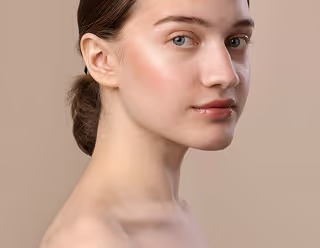








The evolution of aesthetic medicine has shifted away from the pursuit of dramatic, obvious changes toward a philosophy of "tweakments" and subtle refinement. For many years, the primary concern for patients seeking dermal fillers was the risk of looking overdone or losing the ability to express emotion naturally. Traditional injection methods often involved placing large volumes of filler in specific areas to create volume, which could sometimes lead to a heavy or distorted appearance. Microdroplet techniques have revolutionized this process by prioritizing precision and gradual enhancement over immediate, bulky correction.
At the core of the microdroplet philosophy is the understanding that the human face is a dynamic structure. When we smile, frown, or speak, our facial muscles move in complex patterns that require the overlying skin and fat pads to shift accordingly. If a dense pocket of filler is placed in an area of high movement, it may stay static while the rest of the face moves, creating the dreaded "frozen" or "pillowy" effect. By breaking down the total volume of filler into tiny, controlled droplets, a practitioner can integrate the product more harmoniously with the patient's unique anatomy.
This approach requires a sophisticated understanding of facial layers and the specific rheology of different filler products. It is not merely about using less product, but rather about where and how that product is distributed. When applied correctly, the microdroplet technique acts as a support system for the skin rather than a heavy mask. This ensures that the light reflects off the face naturally and that the transitions between different facial compartments remain smooth and youthful without looking artificial.
The Science of Tissue Integration and Dynamic Movement
One of the most significant advantages of microdroplet injections is the way the material integrates with the surrounding biological tissues. When a practitioner injects a single large bolus of hyaluronic acid, that mass occupies a distinct space and can sometimes feel like a firm lump under the skin. Microdroplets, however, create a mesh-like network of support. This distribution allows the filler to blend into the subcutaneous layers, making it nearly impossible to distinguish between the natural tissue and the cosmetic enhancement.
Furthermore, the microdroplet method respects the natural "give" of the skin. Skin elasticity decreases with age, and adding too much weight to a localized area can actually accelerate the appearance of sagging in the long term. By scattering the filler in smaller increments, the structural integrity of the skin is reinforced without adding unnecessary gravitational strain. This preserves the bounce and resilience of the dermis, which are the true hallmarks of a youthful face.
The safety profile of microdroplet injections is also a major consideration for both patients and providers. By using smaller needles and less volume per puncture site, there is often a reduction in the inflammatory response. This means that swelling and bruising are frequently minimized, allowing for a faster return to daily activities. Because the changes are so incremental, the practitioner has a higher degree of control over the final shape, reducing the likelihood of overcorrection or asymmetry.
- Initial Consultation: The process begins with a comprehensive analysis of the patient's bone structure and skin quality.
- Mapping the Face: Areas of volume loss or fine lines are identified and marked to guide the precise placement of droplets.
- Layered Injections: The practitioner uses a fine-gauge needle to deposit microscopic amounts of filler into the deep or superficial dermis.
- Manual Integration: After the injections, the area may be gently massaged to ensure the droplets are perfectly distributed.
- Assessment of Animation: The patient is asked to make various facial expressions to ensure the filler moves naturally with their muscles.
- Gradual Refinement: In some cases, a follow-up session is scheduled to add more droplets once the initial swelling has subsided.
Achieving a natural result is an iterative process that rewards patience. Many patients prefer this step-by-step journey because it allows them to adjust to their new look without the shock of a sudden transformation. It also provides the opportunity to assess how the filler settles into the tissues over the course of several days. This ensures that the final result is a perfect balance of correction and subtlety.
The psychological benefits of this gradual approach cannot be overstated. When a patient looks in the mirror and sees a refreshed version of themselves rather than a different person entirely, their confidence increases naturally. They no longer have to worry about friends or colleagues asking what "work" they had done. Instead, they simply appear well-rested and vibrant, which is the ultimate goal of modern aesthetic procedures.
Avoiding the Distortions of Traditional Bolus Injections
Traditional injection techniques often focused on filling specific folds, such as the nasolabial folds or the marionette lines, by "filling the ditch." While this may erase the wrinkle, it often ignores the underlying cause of the fold, which is usually volume loss in the midface. Simply filling a line with a large amount of product can lead to a heavy, unnatural look that flattens the face. Microdroplet techniques instead focus on restoring the architecture of the face by placing small amounts of filler where support has been lost.
When filler is placed in large quantities, it can also lead to "filler migration" over time. This occurs when the product moves from its original injection site due to the constant pressure of facial movements or gravity. Because microdroplets are so small and integrated into the tissue, they are much less likely to migrate. They stay exactly where they are placed, providing long-lasting and predictable results that maintain their shape for many months.
The "frozen" look often associated with injectables is frequently a result of over-treating the muscles with neurotoxins or over-filling the soft tissues with dermal fillers. Microdroplet filler techniques solve the latter by ensuring that the facial contours remain soft. Even when the face is at rest, the subtle shadows and highlights that define a human face are preserved. This prevents the "uncanny valley" effect where the face looks too smooth or too symmetrical to be natural.
- Reduced Migration Risk: Small increments of product are less likely to shift under the skin over time.
- Enhanced Softness: The treated area feels natural to the touch rather than firm or lumpy.
- Precision Targeting: Practitioners can address even the finest etched lines that larger boluses would miss.
- Balanced Symmetry: It is much easier to correct minor asymmetries when working with tiny volumes of filler.
The precision of these tiny injections allows for work in delicate areas that were previously difficult to treat. For example, the fine lines around the mouth or the thin skin of the lower eyelids require a master's touch. Using a standard injection technique in these zones often leads to visible ridges or the Tyndall effect, where the filler gives off a bluish hue. Microdroplets disperse the light differently, ensuring a clear and natural skin tone.
Practitioners who specialize in this method often view the face as a canvas, where each droplet is a brushstroke. This artistry is what separates a standard cosmetic procedure from a bespoke rejuvenation. By taking the time to place each droplet with intention, the provider can sculpt the face in a way that highlights the patient's best features while softening the signs of aging.
Maintaining Facial Expressions and Emotional Range
One of the greatest fears patients have is that they will lose their ability to communicate through facial expressions. We rely on the subtle movement of our eyebrows, the crinkle of our eyes, and the lift of our cheeks to convey empathy, joy, and concern. If the cheeks are over-filled, they can "push up" against the lower eyelids during a smile, making the eyes appear smaller and the expression look forced. Microdroplets prevent this by leaving enough "room" in the tissue for movement.
Because the microdroplet technique distributes volume so widely, no single area becomes a physical roadblock for muscle contraction. The skin remains flexible and responsive. This is particularly important for professionals who rely on their expressive capabilities, such as actors, teachers, or public speakers. They need to look their best, but they also need their face to function as a tool for communication.
Moreover, the gradual nature of microdroplet treatments allows for a customized "strength" of correction. Some patients may want a very conservative approach, while others may require more significant structural support. The microdroplet method is inherently scalable. By adding more or fewer droplets, the practitioner can tailor the intensity of the treatment to the specific needs and desires of the individual.
- Customized Depth: Droplets can be placed at varying depths to address different layers of aging.
- Natural Light Reflection: Restoring smooth contours helps the light hit the face in a youthful manner.
- Preserved Mobility: Muscles can move without being hindered by large masses of filler material.
- Subtle Transitions: There are no harsh lines between the treated area and the surrounding skin.
The result of this meticulous work is a face that looks "un-retouched." The goal is not to look twenty years younger, but to look like the best version of oneself at any age. This philosophy aligns with the modern preference for authenticity. People want to look healthy and vibrant, but they also want to look like themselves. Microdroplet filler is the primary tool used to achieve this delicate balance.
In the hands of an experienced injector, these small droplets can also stimulate the body's natural collagen production. The mechanical stretch placed on the fibroblasts by the filler can encourage the skin to produce its own structural proteins. Over time, this means that the patient may actually need less filler to maintain their results, as their skin becomes naturally thicker and more resilient.
Refined Contouring Without Surface Irregularities
Surface irregularities are a common side effect of older injection methods. When filler is placed too superficially in a large amount, it can create a visible bump or a "sausage" look, particularly in the lips or along the jawline. Microdroplet techniques mitigate this risk by spreading the volume across a wider area. This ensures that the transition from the treated area to the untreated area is completely seamless, with no visible edges or "shelf" effects.
This is especially crucial for the jawline and chin, where bone-mimicking fillers are often used. These products are generally thicker and more robust. If they are not placed with extreme care, they can look masculine or overly sharp on a female face. Microdroplets allow the practitioner to "feather" the edges of the filler, blending the new contour into the neck and cheeks for a sophisticated and elegant profile.
The lips are another area where microdroplets excel. Rather than just increasing the size of the lips, this technique can be used to define the vermillion border, lift the corners of the mouth, and smooth out vertical "smoker's lines" without creating the "duck lip" appearance. By using microscopic drops to hydrate and subtly shape the lip tissue, the results are soft, pillowy, and entirely believable.
- Feathering Technique: This involves placing smaller droplets at the periphery of the treatment area for a smooth blend.
- Hydration Focus: Sometimes the goal is not volume, but simply using microdroplets to pull moisture into the skin.
- Structural Reinforcement: Small drops can be placed deep against the bone to provide a "lift" from within.
The longevity of microdroplet fillers is often comparable to, or even better than, traditional methods. Because the filler is so well integrated, it breaks down slowly and evenly. There is no sudden "deflation" as the filler wears off; instead, the results fade gracefully over time. This makes the maintenance of the look much simpler and more cost-effective for the patient in the long run.
The success of the microdroplet technique depends on the skill and artistic eye of the injector. It is a more time-consuming process than traditional filling, but the results speak for themselves. It represents the pinnacle of precision in aesthetic medicine, offering a way to turn back the clock without losing the character and soul of the patient's face.
Artistic Precision and Long Term Results
The long-term satisfaction of patients who choose microdroplet fillers is significantly higher than those who undergo traditional "quick fix" injections. Because the changes are so subtle and the integration is so complete, patients rarely feel the need to "hide" their treatment. There is no recovery period where the face looks distorted or "weird," which is a common complaint with more aggressive filler applications.
Furthermore, the microdroplet approach allows for a "living" treatment plan. As a patient ages, their face changes, and their aesthetic goals may shift. Because microdroplets are placed with such high resolution, the treatment plan can be adjusted slightly at each visit to account for these changes. This ensures that the aesthetic enhancements remain appropriate for the patient's age and evolving facial structure.
The shift toward microdroplet filler techniques reflects a broader trend toward personalization and subtlety in the beauty industry. By respecting the natural anatomy and dynamic nature of the human face, these techniques provide a safe and effective way to enhance one's appearance. The days of the "frozen" or "fake" face are giving way to an era of refined, undetectable rejuvenation that celebrates individual beauty.
- Dynamic Assessment: Always evaluating how the face moves during the injection process.
- Layered Approach: Using different types of filler at different depths for a multi-dimensional result.
- Patient Comfort: Utilizing thin needles and careful techniques to make the experience as pleasant as possible.
The mastery of this technique is what defines a top-tier aesthetic practice. It requires a deep knowledge of anatomy, a steady hand, and an artistic sensibility. For patients, the result is the peace of mind that comes from knowing they will emerge from their treatment looking refreshed, youthful, and most importantly, like themselves. The future of facial rejuvenation is not about changing who you are, but about polishing the image you present to the world.
A Modern Philosophy of Aesthetic Enhancement
The transition from traditional filler methods to microdroplet techniques signifies a move toward a more medicalized and precise form of artistry. It is no longer enough to just "fill a hole" or "plump a lip." Today's patients demand a level of sophistication that mirrors the complexity of their own biology. Microdroplets provide this by acting at a granular level, addressing the very fabric of the skin's appearance rather than just its surface-level contours.
By choosing a practitioner who specializes in these advanced methods, patients are investing in the long-term health and beauty of their skin. The avoidance of the "fake" look is not just an aesthetic choice; it is a sign of a high-quality, safe, and ethically performed procedure. When filler is used as a tool for subtle support rather than radical alteration, the results are timeless.
As we look forward, the integration of microdroplet fillers with other modalities, such as laser therapy and skin boosters, will continue to refine our ability to achieve natural results. The goal remains the same: a radiant, healthy appearance that feels as good as it looks. In the hands of a skilled expert, microdroplet fillers are the key to unlocking a version of yourself that feels both youthful and authentic.
Disclaimer Regarding Treatment Comparisons and AI-Generated Content
The opinions and comparisons expressed in this article are based on Dr. Simon Ourian's professionalexperience, clinical observations, aesthetic philosophy, and publicly available information at the timeof publication.
References to competing products, technologies, procedures, practitioners, or manufacturers are notintended to disparage any individual, company, or organization. Any comparisons reflect Dr. Ourian'sopinions and clinical experience and should not be construed as statements of fact regarding thesuperiority, inferiority, safety, efficacy, or performance of any competing product or treatment.Medical technologies, scientific research, treatment protocols, and regulatory guidance continue toevolve. Information presented in this article may become outdated over time and should not beconsidered comprehensive or definitive medical guidance.
Comparisons between products, procedures, technologies, treatment approaches, manufacturers, oraesthetic outcomes are provided for informational and educational purposes only. Individualpractitioners may have different experiences, preferences, treatment protocols, and opinionsregarding the products or procedures discussed.
No statement contained in this article should be interpreted as a guarantee, warranty, prediction, orpromise of any specific result. Individual outcomes vary significantly based on anatomy, age, skinquality, medical history, genetics, lifestyle factors, treatment technique, and adherence to pre- andpost-treatment instructions.
Portions of this article may have been generated, assisted, summarized, or edited using artificialintelligence (AI) tools. While reasonable efforts have been made to review and verify the content foraccuracy, completeness, and relevance, some information may be incomplete, outdated, inaccurate,or subject to interpretation. Readers should independently verify any information before relying uponit.
The content provided is for general educational and informational purposes only and is not intendedas medical advice, diagnosis, or treatment. Readers should consult with a qualified healthcareprofessional regarding their individual circumstances and treatment options before making anymedical or aesthetic decisions.
Results vary from patient to patient. No outcome is guaranteed. Some or all of this contentmay have been created, edited, or enhanced using artificial intelligence technology, anddespite review efforts, inaccuracies may exist.
Frequently asked questions
How is the microdroplet technique different from traditional filler injections?
Traditional injections often involve placing larger amounts of filler, known as boluses, into specific areas to create volume quickly. The microdroplet technique, frequently used by Dr. Simon Ourian, involves injecting tiny, microscopic amounts of filler across a broader area. This ensures that the product integrates seamlessly with the tissue, preventing the heavy or "lumpy" look that can sometimes occur with traditional methods.
Will I still be able to make facial expressions after a microdroplet treatment?
Yes, one of the primary goals of the microdroplet method at Epione is to preserve the natural movement of the face. Because the filler is distributed in such small increments, it does not act as a barrier to muscle contraction. This allows you to smile, frown, and express emotions naturally without the "frozen" appearance often associated with over-treatment.
How long does it take to see the results of a microdroplet filler procedure?
While you will see some immediate improvement, the full results of a microdroplet treatment at Epione Beverly Hills typically become apparent after any minor swelling has subsided, usually within a few days. The beauty of this technique is its subtlety; the results continue to look more natural as the filler settles into the skin's layers over the first week.
Is the microdroplet technique safer than other injection methods?
The clinical team at Epione considers the microdroplet technique to be highly safe because it uses smaller needles and less volume per injection site. This typically results in less trauma to the tissue, which can reduce the risk of bruising, swelling, and vascular complications. The gradual nature of the treatment also allows for greater precision and control.
Can microdroplets be used to treat very fine lines around the eyes and mouth?
Absolutely. The precision afforded by the microdroplet technique makes it ideal for delicate areas like the "crow's feet" or vertical lip lines. By placing microscopic amounts of filler just below the surface, the experts at Epione can smooth out these fine lines without adding bulk, which is often difficult to achieve with standard injection techniques.
How often will I need to return for maintenance treatments?
The longevity of the results varies depending on the type of filler used and the individual's metabolism, but many patients at Epione find that their results last between six to twelve months. Because the microdroplet technique promotes excellent tissue integration, the filler tends to break down very slowly and evenly, allowing for a graceful transition between treatments.
Does the microdroplet technique require more time than a standard filler appointment?
Because of the high level of precision and the number of small injections required, a microdroplet session with Dr. Simon Ourian may take slightly longer than a traditional filler appointment. Most patients find that the extra time is well worth it for the superior, natural-looking results and the reduced risk of post-procedure complications.
Is there any downtime associated with this specific injection method?
Most patients at Epione Beverly Hills experience very little downtime and can return to their normal activities immediately. Some minor redness or pinprick marks may be visible at the injection sites for a few hours, but these are easily covered with makeup. The microdroplet approach is specifically designed to minimize the "social downtime" often linked to cosmetic injectables.