Facial Sculpting & Contouring
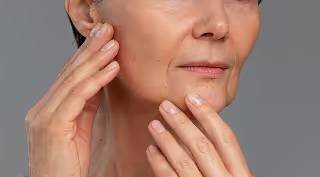
Refine facial structure and restore youthful definition without surgery.
Refine facial structure and restore youthful definition without surgery.

Advanced laser and dermatologic treatments to correct tone, texture, and visible damage.
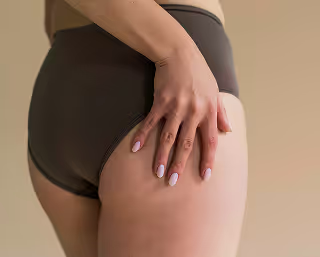
Sculpt, firm, and tone the body with non-invasive technology and precision treatments.
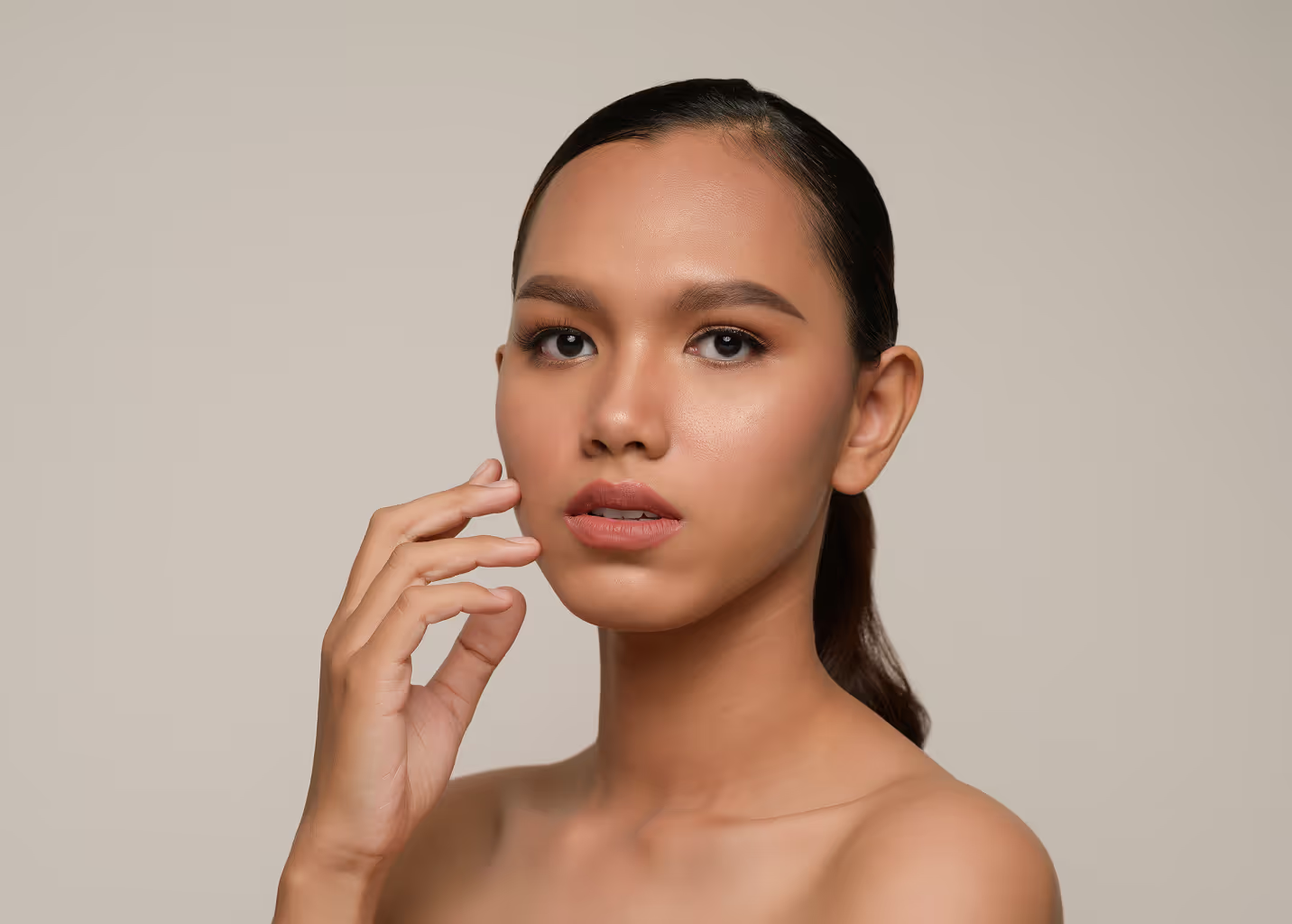
Targeted treatments designed to restore subtle youthfulness and skin vitality.

Acne most often occurs when sebaceous glands are overactive and generate too much oil which can then plug hair follicles in your skin. There is no absolutely perfect answer as to just why acne scars occur more often in some people than others, but it is well established that a number of factors including genetics, the environment, your lifestyle, and skin healthcare maintenance play a role. If you have had problems with acne in the past or are perhaps suffering from acne currently and would like to clear your skin or even remove facial acne scars, you should know that you have options. Before opting for any particular treatment you need to understand what makes an acne treatment effective so that you can achieve your goal of preventing further acne scar formation.It has been well established that the most important sources of acne are biological in nature. Appearing first in puberty, the skin cells of the facial hair follicles tend to shed very heavily, and the skin’s natural creation of oils is greatly expanded. The end result of these changes is that the hair follicles become blocked and allow acne to begin appearing on the skin, which can occasionally result in facial acne scars for which treatment may be appropriate. The severity of the acne that occurs seems to be dominantly controlled by genetics, as young people entering puberty whose parents also had severe acne when they were younger have been shown to be much more likely to have a similar facial acne scar problem in comparison with other people. Fortunately cosmetic doctors have made very impressive advances in the treatment of acne scars and can almost always provide services to help reduce many types of acne scars and may provide facial acne scar removal services if they are likely to be effective in a given case.There are several exacerbating factors that regularly contribute to the formation of acne including some types of medication. However, although, as a result of years of folk wisdom, oily skin and a fatty diet are popularly believed to be the dominant sources of acne the fact is that evidence suggests there is almost no reality to this popularly held belief. Oily skin in and of itself is best considered a symptom of the deeper real sources of acne than as a cause itself, and what is worse, heavy efforts to get rid of oil in the skin as with strong abrasives may actually damage your skin and cause worse acne which can then cause worse facial acne scars.Fortunately, acne is usually a passing condition and can be expected to improve as we grow older, unfortunately, severe acne can and will leave facial acne scars. In these cases your only hope is a cosmetic doctor who can provide a variety of services aimed at reducing the appearance of acne scars that may include treatments like a laser skin surfacing treatment, filler injections and, less often these days, a chemical peel that has been shown to be effective at reducing acne scars.
Scarring can result from any number of sources. Injuries are the most common source of scarring and there are very few people who manage to escape childhood without a scar somewhere. Very often children trip and fall, and scars on the chin are one of the most common reasons that people seek treatment for scars on skin.Historically there was very little that could be done in terms of treatment for scars on skin. Severe scarring could sometimes be reduced by surgically removing a piece of the scar tissue and closing the surrounding skin around it. Later chemical peels became an increasingly popular choice for treatment for scars on skin. Chemical peels work by eating away at the outer layer of the scar resulting in a smoother texture that more closely resembles the surrounding skin. With advances in modern technology newer even more effective options have become available for the treatment of scars on skin. Many cosmetic surgeons are successfully using laser technology to treat scar tissue with a great deal of precision. Laser treatments have a major advantage over most earlier treatments for scars on skin in that they have a low impact on the patient and a generally low risk of complications. This means that laser treatments may often be employed safely for treatment for scars on skin in patients of almost any age, and in patients they may have other health issues which would preclude them from seeking some other treatment for the scars on their skin.Scars on the skin almost never pose a health risk on their own, which means that most treatments for scars on skin will be considered an elective surgery and may not be covered by an insurance plan. These two items should be taken into consideration when you are determining whether or not a treatment is appropriate for your condition. If you do decide that you want to pursue a treatment for your scars then you should make your decision based primarily on the qualification and experience of the physicians available in your area. Be careful about any doctor who advertises their services as being cheaper than their competitors as you do not want to put your health, indeed, your very physical appearance in the hands of a doctor that you do not fully trust to do the best work for you that is possible. And always remember that no matter what sort of treatment you may elect to pursue to treat the scars on your skin, the single most important thing you can do is educate yourself about your condition, about the procedures that are available to treat it, and about the care that you will need to take both before and after your treatment in order to guarantee that you get the best result possible. The best candidates for treatments to remove scars are those that are emotionally and physically healthy with a reasonable and realistic idea of what treatments for scars on the skin will be able to achieve for them.
The cause of stretch marks is not entirely understood, but generally stretch marks appear during periods of rapid growth, weight gain, or pregnancy which indicates that when areas of skin are put under increased pressure these stretch marks are a common result. Some people seem to be much more prone to stretch marks than others, and this couple with a history of stretch marks in a family indicates that there is a genetic factor to stretch marks. For practical purposes, a stretch mark is similar in nature to scar tissue, and can be treated in many of the same ways with the same cosmetic procedures.Stretch marks do not generally pose any sort of health risk, and you should consider this before opting for any cosmetic procedures to reduce or remove your stretch marks. If you do wish to go forward with a cosmetic procedure to remove or reduce your stretch marks you should know that there are a wide variety of options available to you. Depending on the severity of your stretch marks you may opt for more or less invasive procedures to deal with your conditions. Many stretch marks will fade over time, and require little or no treatment. For this reason you may want to wait for a certain amount of time before you choose to undergo a cosmetic procedure to deal with your stretch marks.Minor stretch marks are often treated with topical creams that can reduce the appearance of a stretch mark to a negligible level. Modern advances in medical technology particularly involving the development of laser technology have created a myriad of more intensive options for dealing with more severe stretch marks, laser treatment may be appropriate for you depending on the severity of your stretch marks. Simon Ourian™ MD, is the Medical Director of Epione Medical Corporation of Los Angeles, and has revolutionized the treatment of stretch marks with the development of Coolbeam Laser Treatments.The best way to determine if you would be a good candidate for a cosmetic procedure to address your stretch marks is to educate yourself about available treatment options. By doing so you will be able to compare your stretch marks to those of other people who have undergone cosmetic procedures. This should give you a good idea about the limitations and benefits of the different treatment options that you have available. Most importantly you will be able to have realistic and reasonable expectations of the sort of results that various cosmetic procedures will achieve for you.Once you have taken steps to educate yourself about the different options available you should then make an effort to speak with a doctor so that you can have any remaining concerns and questions addressed. A doctor will also be able to help you determine what if any sort of cosmetic procedure would be appropriate for you depending on the condition of your stretch marks. Costs and time expenditure will vary depending on which option you select for treating your stretch marks, but most laser treatments take between 15 minutes an and hour, and you can generally return home immediately afterwards.
Wrinkles are among the most natural and dominant symptoms of aging everywhere on the face from the forehead, around the eyes, around the mouth, and also elsewhere on the body. Just where your wrinkles are will dominate the conversation about the options you have before you when you find yourself considering wrinkle removal. Also of huge concern is just how severe your wrinkles are, as most procedures are better than others at dealing with a specific sort of wrinkle. A conversation with a cosmetic doctor should be invaluable in resolving this issue. Above all, in your evaluations you should be aware that wrinkles are never a health threatening condition, and when you are making your decision of whether or not to submit to wrinkle removal you should keep this fact at the front of your mind.If you are in your thirties or forties and are just beginning to see the evidence of wrinkles your best choice is probably one that is aimed mostly at slowing or preventing the formation of wrinkles. Botox is a popular choice for achieving a preventative goal like this since it is low risk and works by relaxing the muscles of the face that will pull the skin of the face into the positions that result in the formation of wrinkles, Botox could help you avoid wrinkles before you ever have to see them. On the other hand, if your wrinkles are more firmly established you may opt for one of the many new injectable fillers available for this sort of problem. Most injectable fillers on the market currently are made out of substances that appear naturally in the human body, and, being natural, carry a very low risk of complications when used for wrinkle removal. An injectable filler such as Juvéderm, made of hyaluronic acid, for example may actually work to improve the health of the skin that they are injected into by promoting the transmission of nutrients and moisture to that area of your skin. This results in a bonus of greater benefit than simple wrinkle removal.If these options do not sound good to you, alternative surgical options like a face or eye lift have been proven methods of wrinkle removal employed for many years and may be a particularly solid option if your wrinkles are resulting mostly from the sagging skin that is a predominant feature coming with advanced age. Whichever option you are most considering for your own wrinkle removal the first step you should take is to gather as much information on the variety of procedures you have available for consideration so that you can achieve a reasonable and realistic expectation of the results and limitations that you will be able to achieve through the means of a wrinkle removal. This will prove invaluable to you when you do meet with a cosmetic doctor in order to determine what sort of wrinkle removal is most appropriate for you.

LOS ANGELES, Calif. — For many years, liposuction has been a popular choice for women who want to target problem areas and achieve a slimmer, smoother and firmer appearance. However, the procedure is not without its drawbacks, posing health dangers to some and short-lived results for others. To combat many of the ‘cons’ of liposuction, Epione Medical Corporation, a state-of-the-art aesthetic surgery center, now offers OptiLipo, a revolutionary alternative to liposuction. The procedure may successfully flush fat, block the ability to store fat and achieve long-lasting results, among other benefits.“At Epione, we offer the latest and most progressive technology and aesthetic procedures in order to help out clients achieve the results they want, and look and feel better than ever before,” said Dr. Simon Ourian™, medical director. “OptiLipo has quickly become the premier choice for women wanting to get rid of excess fat and cellulite without undergoing anesthesia or having to worry about future weight gain.”
Revolutionary OptiLipo Treatment Flushes Fat, Fights Cellulite and Post-Treatment Weight Gain and Achieves a Smoother, Firmer Skin Surface
During the OptiLipo procedure, problem areas are injected with microscopic quantities of natural plant extracts, homeopathic, pharmaceutical agents and vitamins. The procedure targets fat reduction in desired areas, flushes the fat out and over the course of several sessions, blocks the body’s ability to store fat in those areas, while simultaneously stimulating the body’s ability to burn fat.OptiLipo offers a number of benefits that liposuction does not:
On average, based on the patient’s condition, results can be seen in two to three sessions. Some patients will see immediate results. Treatments are minimally invasive and recovery is immediate.In addition to electing for OptiLipo as an alternative to liposuction, the treatment may also effective for aging skin, redundant or sagging skin, hand rejuvenation and neck rejuvenation.“OptiLipo is one of the most popular procedures for women who want to reverse the signs of aging, regain a more youthful appearance and look fantastic in their clothes and swimwear,” said Dr. Ourian™. “Schedule a consultation and let’s discuss how OptiLipo can help you get amazing results.”For more information about OptiLipo, or other non-surgical aesthetic treatments offered by Epione Medical Corporation, please call 310.598.2345.
BEVERLY HILLS, Calif. — Epione Medical Corporation now offers a solution for the millions of adults and adolescents suffering from the devastating effects of acne scars. The practice’s revolutionary new Coolaser treatment uses advanced laser technology to resurface the skin and reduce the appearance of acne scars. Finally, patients can put their best face forward after years of embarrassment.“Severe acne cases can leave unsightly and embarrassing scars, pitting and skin unevenness that can remain for a lifetime,” said Dr. Simon Ourian™, medical director. “While acne scars often vary greatly in shape, type and color, Coolaser resurfacing has proved effective in varying cases and has helped patients finally feel good about their skin.”
Epione’s New Coolaser Treatment Shows Remarkable Success in Diminishing Acne Scars and Pitting
The Coolaser treatment, typically an hour long, uses lasers to remove the outermost layer of the skin. First, the entire face is numbed, using a topical cream.After this is done, a series of light pulses are flashed on the surface of the skin. The skin cells absorb the energy of the light, which causes the instantaneous vaporization of the superficial cells and results in a smoother, clearer and more even skin tone.Though healing takes 10 to 12 days, a significant percent improvement in the appearance of the scars may be expected, depending on the type and extent of scarring. A single session may not treat the acne scars entirely if they are too deep. These deeper acne scars can be corrected by injections under the skin to fill in or build up the pitted areas. The injections are done with fillers such as Radiesse, Juvéderm or Restylane.At the initial consultation appointment Dr. Ourian™ will determine if Coolaser resurfacing alone will treat the acne scars, or if a combination of resurfacing and fillers are needed. For more information about Acne skin treatments and other aesthetic services available at Epione Beverly Hills visit please call 310.598.2345.
Much as many women may lament the amount of fat in their bodies, there's one place where not enough fat is sure to cause worries and woes: the breasts. Fat is the most important element in the size and shape of a woman's breasts, and without the breast size and shape they desire, many women begin to look into augmentation procedures.But is there perhaps a way to use one worry to resolve the other—a way to take excess fat from one part of a woman's body and use it to enhance her breasts?Dr. Simon Ourian™, Medical Director of Epione Beverly Hills, is investigating just such an innovative procedure that is making headlines throughout the medical community.The process involves transferring fat from one part of the body into the breasts. As one might expect, the procedure begins with liposuction. Liposuction using lasers almost always renders the fat unusable for transfer, while types that use ultrasound energy and pressurized water leave the fat ready for reuse elsewhere in the body.One would naturally ask: is this procedure safe?Naturally, many of the concerns that come from traditional implants, such as silicone, won’t occur with the fat transfer procedure. For example, as this augmentation is composed of body fat actually integrated into the existing tissue, one needn't worry about the augmentation material rupturing. Also, as the augmentation is derived from the body's own cells, there's no risk of the body rejecting it.That being said, Dr, Ourian™ is aware of the only recently lifted ban on using fat transfer for breast augmentation which raise valid questions concerning the safety of the procedure.One concern includes the worry that the fat injected into the breast could cause calcification to occur creating a physical barrier to the accuracy of standard mammography tests. The medical community has not reached a consensus on this question, but a large number of doctors have responded with overwhelming approval of the procedure, especially as compared to traditional implant augmentation. As one doctor reported, new digital mammograms can easily identify calcification in the breasts, thus the mammogram is hardly impaired. Plus, when compared with the consequences of traditional implant augmentation, which block more than half the breast from the view of the mammogram, fat transfer augmentation begins to appear as a potentially safer alternative.Another valid concern is whether or not enough of the fat transferred from one part of the body into the breasts will survive to call the procedure a success. Much like the first concern, there has not been an absolute consensus across the medical community about this question, but a large number of doctors agree that the likelihood of the fat surviving largely depends on the techniques used to acquire and then transfer the fat.Thus, if the doctor uses the old, banned techniques, one can expect that a large percentage of the fat transferred will not survive and a second procedure will be required. Conversely, if the doctor uses the new techniques, one can expect 85-90% of the transferred fat to survive. If the doctor also implements new stem cell techniques, the transfer becomes even more effective.
Tummy tuck scar revision is becoming more frequent. One of the most common side effects of having a tummy tuck (also called an abdominoplasty) is scarring. This is especially true if someone undergoes a full abdominoplasty, which will create a scar from hip to hip. Most of the time, the incision scar is hidden below the bikini line. For some people, though, the complete desired effect of having a tummy tuck is not complete until a tummy tuck scar revision procedure is performed to minimize the look of the scar. Like most types of scar revision, tummy tuck scar revision makes use of a variety of cosmetic and surgical techniques. All of these techniques are designed to hide the scar in a better location, even out the color and smoothness of the skin at the incision site, eliminate as much of the scar as possible.One of the more frequent tummy tuck scar revision methods used is chemical peel. The technique is designed to dissolve excess scar tissue through a chemical process. The procedure is also effective in evening out color in the surrounding skin.Steroid injections and filler are also an effective tummy tuck scar revision method. Steroid injection can help to reduce the size of scars. filler injection can help to smooth out the contour of scars. Laser scar revision for tummy tucks has really gained popularity in recent years. The technique makes use of laser light to burn away small layers of the scar tissue. Laser surgery is very precise, so it’s less likely to cause any damage to surrounding tissue. Laser revision is also good at evening out the color of scar tissue. The procedure is considered very safe and patients experience very few side effects after surgery.Tummy tuck scar revision may ultimately require surgery. This is very true for deep, large scars. If scar tissue develops abnormally, you might also need to consider a surgical option. Surgical tummy tuck scar revision makes use of state of the art micro surgery techniques, flap revision techniques, and multi layer closing procedures to eliminate deep scars, to cause tissue to heal normally, and even to move scars to new locations, to make them less obvious. As you might expect, having a secondary surgery will be a more expensive option, but it might be the only real option. You will need to consult with the person who did your original tummy tuck, to see what option might work best for you.The surgeon who performed your tummy tuck might not feel qualified to do the tummy tuck scar revision, so they might refer you on. But starting your evaluation with a follow up visit to your tummy tuck surgeon makes a lot of sense.
Lisa Kudrow and Tori Spelling had nose jobs at 16. 17 year old Britney Spears, with mom’s permission, got breast implants. When teens see celebrity peers getting plastic surgery, they may decide that their own looks need improving. Some, like Ashley Tisdale and Soleil Moon Frye, may need surgery for medical reasons, but most teen surgery is cosmetic, not corrective in nature.Teens only make up 2 percent of cosmetic surgery patients in the U.S., but according to the American Society of Plastic Surgeons, the number is getting larger. In 2008, 81,885 invasive surgeries were done on teens, ages 13–19, while 219,136 received minimally invasive treatment. Many people think that the average teen requesting this is probably spoiled, rich and overly obsessed with image, but not all fall into that category. The reasons for plastic surgery can vary depending on the circumstances.
Teens, being who they are, desire plastic surgery in order to fit in with their friends. They may feel that having bigger breasts or a more defined chin may finally give them the popularity they have always dreamed of. Of course, this is not always the case, and when it fails to change their social lives, they can be devastated.Unfortunately, there are other surgeons who are perfectly willing to do surgery on a teen without screening them first. Parents, too, are occasionally to blame; they may want “the perfect child” and insist that the surgery be done.Because of this, a good surgeon will carefully interview a candidate to make sure they are emotionally stable enough to handle the surgery. The surgeon must also be sure the teen’s expectations are realistic and their motives are correct. Teens with body dysmorphic disorder may not be good candidates; these patients will focus on a specific flaw or other defect (real or imagined), and convince themselves that surgery is the only way to treat it. This condition is best handled by a psychologist or other mental health care professional.
There are a number of procedures that teenagers should avoid. Breast enhancement, in particular with saline implants, is one. This is because the body may not yet be done developing, and the general rule is that the patient must be at least 18. There are a few exceptions, such as birth defects, trauma or diseases that may require breast reconstruction. Silicone can be used for reconstruction purposes by women of all ages, but is limited to 22 and older for enhancement.Since teens often lose baby fat with age, liposuction is not recommended. For teens that have a problem losing weight with just diet and exercise alone, however, it can be used for spot reduction purposes. It should not be used to treat obesity as a whole and is most definitely not a substitute for diet and exercise.
Rhinoplasty can be a suitable procedure for certain candidates. Broken or deformed noses can be fixed by this procedure. Breast reductions are also popular; in Soleil Moon Frye’s case, her large breasts were causing her back and shoulder pain, as well as breathing problems. Microdermabrasion and chemical peels can help teens with severe acne and skin irregularities, and laser hair removal can help those with excessive hair.
One can certainly come to that conclusion after reviewing these 2008 statistics from the American Society of Plastic Surgeons (ASPS).12.1 million total cosmetic procedures were performed that year, with the most popular surgical procedures being breast augmentation, eyelid surgery, liposuction, nose reshaping, and tummy tucks. Cosmetic minimally invasive procedures that were also very popular include Botox, chemical peels, laser hair removal, microdermabrasion, and hyaluronic acid injections (Restylane and Juvederm are two examples of this). Anti-cellulite treatment and laser treatment of leg veins were also part of the list.Gender wise, women preferred breast augmentation, liposuction and nose reshaping, followed by eyelid surgery and tummy tucks. Their favorite minimally invasive procedures were Botox, chemical peels, laser hair removal, hyaluronic acid injections, and microdermabrasion.Men, on the other hand, had their own preferences. For surgical procedures, their top five were nose reshaping, eyelid surgery, liposuction, breast reduction, and hair transplants. For non-surgical procedures, men underwent Botox treatments, laser hair removal, microdermabrasion, chemical peels, and laser skin resurfacing.Plastic surgery for Hispanics and other people of color increased by 11 percent. The surgery of choice was nose reshaping across the board, with liposuction and breast reduction a popular choice for both Hispanics and African Americans. Asian Americans chose eyelid surgery and breast augmentation. Minimally invasive procedures were the same for all ethnic groups—Botox, injectable fillers, and chemical peels.There is a marked difference between these statistics from the ASPS and those from the American Society for Aesthetic Plastic Surgeons (ASAPS). ASPS includes dermatology doctors and otolaryngologists in their surveys, and also includes reconstructive surgeries in their report. ASAPS does neither of these. As a result, ASAPS’ numbers paint a somewhat less optimistic picture.There are also many procedures that have increased in popularity. These are:
Reconstructive surgeries that increased the most included the following:
These experienced a three percent increase from 2007’s statistics.
Cosmetic dermatology is wonderful at improving facial and/or bodily features, but it is not permanent. Over time, you may need further treatments due to the effects of aging. So how can maintenance and treatment regimens help keep you looking as young as possible?The area(s) treated by cosmetic dermatology will still age right along with the rest of the skin. Because of this, it can be hard to determine exactly how long the results a treatment will last.
The skin is made up of three layers: the epidermis (surface), the dermis (below the skin) and the subcutaneous tissue layer (below the dermis). The epidermis is home to skin cells, amino acid chains, and pigment. The top of the dermis is made up of dead skin cells. Exfoliation gets rid of these dead cells, and improves its appearance. The dermis also has other parts to it, like oil, blood vessels, and hair follicles.The hypodermis has a very similar construction to the dermis, except that it contains fat as well. Connective tissue in both is supported by collagen fibers, which help support the skin in turn. Since collagen decreases as we get older, so does the elasticity of our skin. This can lead to thinning and sagging of the skin.
Certain types of treatments can become more visible as we age. Breast implants are an example of this. If an untreated area has less collagen than a treated area, there may be more sagging in the untreated region. Remember, the treated parts of your skin or body may look better, but it will age just like the rest.
Facial bones lose their density over time, which may make the bone structure shift or otherwise change shape. The loss of collagen also plays a role. As a result, treatments like facelifts can result in distorted features in some people as they get older.
Due to the fact that we constantly move our faces throughout our lifetimes, we are bound to create wrinkles and other lines. This applies even after plastic surgery. Laughing, smiling, and frowning are still part of our non verbal expression as human beings, and this will affect the results of our treatment in the long term.
There are a number of ways to treat these changes in our appearance as time passes. Non-invasive and minimally invasive procedures may require ongoing visits. For instance, Botox lasts for three to six months. Restylane may last for six months or longer, while laser treatments may last up to five years or longer.In the best of all possible situations, plastic surgery results will last for ten years or more. Neck lifts can last for five, while eyelid surgery lasts for ten as well. Mini or micro procedures will only last five years. Implantable devices can vary; for instance, breast implants have up to a 30 percent reoperation rate due to aging of the breast or the patient’s desire for larger ones.
There are a few things you will want to consider as you plan your treatments and comprehensive treatment plan. These are:
American Society for Aesthetic Plastic Surgery (ASAPS) statistics indicate that breast augmentation was the number one cosmetic surgical procedure performed on women in 2007 and breast reduction was number five on that list. Nearly 400,000 breast augmentation procedures were performed in 2007 and more than 150,000 breast reduction procedures. These numbers clearly indicate that many women have issues with the size and shape of their breasts and are willing to go under the knife to address them.Though not often discussed, it stands to reason that women opting for these surgeries are also concerned with the shape, size and location of the areola. The areola is the pigmented area of skin that surrounds the nipple. There are surgical procedures available to enlarge or reduce the areola and these are often performed in conjunction with the breast augmentation or reduction surgeries.There are now creative, new non-surgical options available to women that are unhappy with the shape or size of their nipples. It is important to many women that their areolae and nipples appear symmetrical, that they not be disproportionate or unmatched in size.Radiesse is a wrinkle filler that can be injected to create a larger nipple, enhancing its size and shape. Radiesse (formerly known as Radiance) is a filler FDA-approved for the correction of facial lines and wrinkles such as nasolabial folds. Radiesse is calcium-based microspheres suspended in a water-based gel and is injected into the skin through a simple, minimally invasive procedure offering immediate, visible improvement and providing long-lasting results.Radiesse can be injected to create a larger nipple and to smooth the texture of the nipple, addressing any asymmetries and improving the overall look of the breast. Radiesse can also be used to reduce the appearance of scars that were the result of previous surgical procedures.When used to treat facial folds and wrinkles, Radiesse is indicated to last for a year or more. Nipple augmentation or correction is a procedure that can be performed on an outpatient basis that takes only a few moments. And, as it is non-surgical there are none of the risks attendant with all surgical procedures.
Plastic surgery will not only affect your body, but it can also affect your mind, and this may not necessarily be a positive thing. Anticipation of the surgery, while exciting, can also be draining and stressful. If you are used to seeing your particular flaw every day, as much as you may not have liked it, its disappearance after plastic surgery may leave you disappointed and sad. In addition, family members may notice that the flaw is gone, and their hesitation to approve of your decision to remove it may make you uncomfortable. Lastly, the bruising and swelling, as well as overall pain and discomfort, may add to your depression.Depression after surgery is nothing new. In fact, the symptoms are similar to post partum depression. Disapproval from others, whether verbal or non-verbal, can make you feel angry and alone. Long stares from strangers can do the same. By the same token, the results can feel positive as opposed to negative.Those who are prone to depression and anxiety, as well as personality disorders, are more likely to experience postoperative depression. Many plastic surgeons provide pre- and postoperative counseling to help their patients make the transition, no matter how minor the surgery.
While plastic surgery can help improve self esteem, you must have a positive image of yourself before you ever undergo a procedure. Ideal candidates do not believe their lives will change completely for the better after surgery; they think positively about themselves in general, and see plastic surgery as a way to eliminate a flaw or problem area.
Having realistic expectations for your plastic surgery experience is crucial to having a positive mindset later. Remember, the point of plastic surgery is to improve a specific area of your body. It will not necessarily change your life, although this is often a pleasant side effect.In a study done in 2005, the American Society of Plastic Surgeons noted that 75 percent of the respondents stated that they chose the procedure for an improvement in appearance and a more active lifestyle. The same percentage felt they had many more emotional and psychological rewards after the procedure. 45 percent also noted that they felt more attractive, and felt that they were benefited by it.
Make sure you discuss what your expectations are with your doctor. This will help you and your doctor synthesize your information, and keep you from developing unrealistic ideas about your surgery. Your doctor will also be able to discuss different procedures with you that may give you the results you want. It is important to distinguish between liposuction and a tummy tuck, and your doctor can help you make that kind of clarification. This kind of communication can help you figure out exactly what type of surgery you need to get your desired look.In addition, you should go over your medical information with your doctor. Cosmetic surgery can be as small as cutting off a skin tag or as major as a facelift; it is in your best interest to give your doctor as much information as you can so he can do the best job possible. In addition, your doctor may need to know some important information that you may not think is important. Do you have sleep apnea? Are you a heavy bleeder? Do you have a family history of circulation problems? Answering these questions may not mean you are disqualified from surgery, but your honest responses could very well keep you alive on the operating table.Patients who may be subject to great emotional changes will be screened by the plastic surgeons during their first consultation. Again, if you show signs of this, you may still be able to get surgery, but you may also be given a few precautionary measures to keep you safe.For those who are a high risk, the surgeon may recommend counseling before agreeing to do surgery. These would include:
These precautions may seem time consuming and pointless, but as the saying goes, "an ounce of prevention is worth a pound of cure." It is better for the doctor to be fully prepared going into surgery than to have him attempt to rectify a potentially deadly situation.
Taken from Patients' Testimonials.When I meet Yolanda at Epione. I had been looking for someone who could help me for a long time. I have food allergies, was told I had Hyperglycemia, and was so frustrated. I have been working with Yolanda for 7 weeks and have already lost 11 pounds.I can't say enough about her program.When I started the program I knew it was different.I did not want a DIET. I wanted to loose weight by being educated on how to eat right.Her program looks at you as an individual. The best thing is Yolanda goes above and beyond what anyone else would do. She is always available and she helps you address the real reason why you put the weight on. It is hard to loose weight with no support. With Yolanda you have that support. It is worth every penny and more! No frozen pre-fixed meals, no pills that have side effects. Real ways to watch how you eat, find out why, and learn how to make smarter choices! That way, "I" can control keeping it off! I have more energy, feel more confident and am happy:) I have ten more pounds to go!! Oh and by the way, I was very adamant when I started that I did not want to workout. Anyone can workout 5 days a week, 2 hours a day and lose weight. I wanted to see how much I could lose without working out. I have so much energy I want to work out!!! That's the next step. If you have food allergies, Diabetes, or just want to lose weight I highly recommend working with Yolanda at Epione. You will not regret it!Thanks Yolanda!— Angela M
If you’ve ever had a problem with the shape of your nose, or had trouble breathing, rhinoplasty might be the solution to your problem. A rhinoplasty is simply a surgical alteration of your nose. Just about anything can be changed: the width of your nostrils, the shape of your nasal tip, and any irregularities in your nose shape. The bump in the middle of the bridge of your nose can be eliminated with a minor rhinoplasty.Rhinoplasty can also rid a patient of breathing problems, like ones that derive from a deviated septum. The septum is the wall in the nose that divides the nostrils. When it deviates, it can cause issues with breathing through the nose. Birth defects like cleft palates may require a rhinoplasty. Injuries such as a broken nose may also create breathing issues that require a surgical solution.
You may not eat or drink anything after midnight the night before your surgery. Try to quit smoking before you go in as well. One of the main reasons for this is because smoking can affect blood flow in the body. This, in turn, can affect the way your body heals. Drinking alcohol the week before surgery can have the same effect.Go over your medication with your doctor; he may ask you to stop taking certain prescriptions before surgery. NSAIDs, or Non Steroidal Anti Inflammatory Drugs, are an example. Other substances that may be contraindicated are Vitamin E, Omega 3 fatty acids and green tea. All of these can raise the possibility of increased bleeding. Remember, you must tell your doctor about all of the drugs and supplements you are taking, and never stop taking any medication without discussing it with your doctor first.
Open Rhinoplasty is when the incisions are made in the thin strip of skin that separates the nostrils, called the columella. The columella and the soft tissue are lifted off the rest of the nose to allow the surgeon to see more clearly. This is done for major surgery.Closed Rhinoplasty surgery is has incisions made in the nose. The skin is separated from the bone and cartilage. The latter then can be reshaped or changed in whatever way is needed. Closed rhinoplasty is done for minor reshaping.Secondary Rhinoplasty, aka revision rhinoplasty, fixes problems from a previous nose surgery. Some may be minor, but many of them are major issues. This makes a secondary rhinoplasty harder to do. This type of surgery can also be done as open or closed.Filler Rhinoplasty uses injectable fillers to even out irregularities. Fillers can fill in depressions or make a bump less noticeable. This is the only solution that is not permanent.
The first step is to see a doctor who specializes in this type of surgery. Your surgeon will take pictures of your nose at various angles. Your surgeon will also make sure that your expectations are realistic.Feel free to bring in photos of noses that you find attractive. This will help your surgeon establish what you are looking for, and give them an opportunity to show you pictures of people who have similar noses to yours, as well as noses that are similar to what you want. For the sake of balance, you may also want to consider chin augmentation as well.
Rhinoplasty is considered an outpatient procedure. It will take place in a hospital or surgical room. The length of time needed will depend on the type of rhinoplasty chosen. A primary version could take up to three hours, while a filler procedure can take 15 minutes or so.Your surgeon will use local anesthesia with sedation or general anesthesia for a primary rhinoplasty. Since a secondary rhinoplasty is more complicated, general anesthesia is often best. For a filler rhinoplasty, a local anesthetic is all that is needed. The surgeon will then perform an open or closed rhinoplasty, and reshape the nose accordingly. The incisions are then closed and the healing begins.
Results will not be visible right away. It could take up to a year to see the full effects. Right after surgery, your nose will be packed with gauze to reduce bleeding and swelling. Pain medicine will help with the discomfort, and you should be able to control it without medicine within two days. Nausea is also a common side effect of this surgery.The first few days may involve some bleeding. Cold compresses and elevation of the head can help. After the first three days, you may be asked back so the surgeon can remove your stitches. For the first week, avoid any trauma to the nose, which includes blowing it. Decongestants will help. After this, the cast will be removed, along with the gauze and any other dressings. Splints may be placed around and inside your nose to help it keep its shape. The swelling will be mostly gone within a month. Within a year, all of it will be gone. After a year, you may then consider a secondary rhinoplasty.THE PURPOSE OF THIS ARTICLE IS TO ENHANCE, NOT REPLACE THE DISCUSSION AND CONSULTATION WITH YOUR PHYSICIAN SO THAT YOU CAN MAKE AN INFORMED DECISION BASED UPON THE RISKS, BENEFITS, AND ALTERNATIVES FOR YOUR SPECIFIC NEEDS AND DESIRES. AFTER REVIEWING THIS ARTICLE YOU WILL BE ABLE TO HAVE A MORE MEANINGFUL DISCUSSION WITH YOUR DOCTOR. PATIENTS NEED TO READ ALL CONSENT FORMS FULLY, AS THEY CONTAIN IMPORTANT INFORMATION REGARDING THEIR TREATMENT.
According to the Nation Institutes of Health Psoriasis is a chronic (long-lasting), non-contagious, skin disease of scaling and inflammation that affects greater than 3 percent of the United States population, or more than 5 million adults. There are five types of psoriasis of which plaque is the most common. Typical symptoms for plaque psoriasis include:
There are a variety of causes of psoriasis though some abnormality of the immune system is thought to be key culprit. Psoriasis episodes may be triggered by stress and/or injury to dry skin. Psoriasis also appears to have a genetic component, often running in families though commonly skipping a generation.Treatment for psoriasis ranges from steroids and salicylic acid applied topically; to phototherapy; to systematic and biologic medications for very serious cases.
According to the National Institutes for Health 1 to 2 million people in the United States have this disorder. Half the people who have vitiligo develop it before age 20; most develop it before their 40th birthday. The disorder affects both sexes and all races equally; however, it is more noticeable in people with dark skin. Vitiligo may appear in childhood. Adult onset generally occurs in men and women in their late 30s.The main sign of vitiligo is a loss of pigment that produces milky-white patches or depigmentation on your skin. This occurs when the body's cells that produce melanin doe or cease melanin production resulting in slowly enlarging white patches on the skin.There is no proven definite cause of vitiligo though there are several theories. Some believe it's an immune system disorder though there are reports of single event triggers (stress or sunburn for example). It's also believed that the increased occurrence of vitiligo within families indicates a hereditary component.There is no known cure for vitiligo. The goal of treatment is to stop or slow the progression of pigment loss. Sometimes it is possible to attempt to return some color to the skin. Treatment options include steroids applied topically or taken orally and photochemotherapy. In extreme cases surgical intervention may be an option, including skin grafting and melanocyte transplants.
National Institutes for Health data indicates that approximatelyt 14 million people in the United States have rosacea. This disease is most common in:
Signs of rosacea include redness, papules, and swelling on the face. Though sometimes confused with adult acne, rosacea symptoms do not include blackheads. Rosacea frequently begins as a tendency to blush easily and may progress to persistent redness in the center of the face. Eventually this may spread to the forehead, cheeks, nose and chin. In extreme case the nose may thicken to produce a condition called rhinophyma.There is no known cause for rosacea though there environmental, genetic and vascular factors have been implicated. Rosacea suffers are urged to avoid oil-based facial creams and always protect themselves from the sun. Keeping the face physically cool by avoiding hot showers, baths and rooms is also recommended.
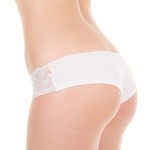
Cellulite is the appearance of small pockets of fat on the thighs, abdomen, and buttocks of 90 percent of post-adolescent women. This uneven dimpling makes is a cause of distress for many and can occur in women of all sizes and shapes.
Cellulite tends to develop mainly in women undergoing a hormonal change. Puberty, pregnancy, and menopause are all examples of this. Hormones control lymphatic tissue, blood flow, fat storage and connective tissue buildup, all of which are factors of cellulite. Many different changes may happen to the fat layer over time, which can result in cellulite. And, as time passes, its appearance may worsen. A healthy lifestyle may help ease this problem and other treatments are available as well.
Treatments for cellulite focus on its appearance, not its elimination. Also, cellulite can continue to develop throughout out lifetimes, so no treatment can truly get rid of it. However, the appearance of cellulite can be improved by promoting drainage of the lymph nodes, tightening the skin, and enhancing skin tone. A holistic approach is the best way to treat this unsightly problem.
Endermologie is a treatment that is FDA approved for cellulite reduction. Endermologie uses a set of rollers and regulated suction to massage away the cellulite. The massage stimulates blood flow and connective tissue growth, thus eliminating the cellulite. This procedure is non-invasive and non-surgical. It can also be used for skin toning.
OptiLipo is another treatment that involves small injections directly into the cellulite in order to dissolve it. The body then eliminates the fat with other waste. OptiLipo can be used on any section of the body that contains cellulite or smaller fat deposits, such as double chins or love handles.
Ultralipo is another advanced treatment for cellulite. It combines Transdermal Acoustic Therapy (TAT) and mesotherapy. The TAT treatment uses sonic waves to break up the collagen and releases the skin, smoothing out the texture. The mesotherapy then breaks down the fat tissue so that the body can rid itself of it. Patients may begin to see results soon after their last treatment, which can vary depending on the patient.
Massage in and of itself is excellent for increasing circulation and draining the lymph nodes. It can also relieve muscles spasms and gets rid of tissue buildup. Body wraps can cause temporary fluid loss due to compression and massage. They may use materials such as aloe, seaweed or mud. Unfortunately, massages alone will not decrease cellulite.
Electric muscle stimulators such as TENS units have occasionally been used to treat cellulite. The stimulators use a direct current to break up scar tissue below the skin, as well as fat cells and fluid pockets. Patients should be aware, however, that the FDA does not consider this type of treatment effective for cellulite.
Liposuction has been used to treat fat deposits and cellulite, but the focus is on fat areas, not the cellulite itself. Often, this distinction can be lost. In fact, when a great deal of fat is removed from an area that also contains cellulite it can make the cellulite look worse than it did prior to surgery.
Alpha-hydroxy acids and other creams and gels can help hasten the exfoliation process, which can help with new, tight skin growth. These are also not FDA approved for cellulite removal.
Losing weight can help shrink the size of fat cells, which will get rid of dimples. While diet and exercise can help reduce cellulite's appearance, they can never eliminate it completely. It can, however, make other treatments more effective.
Most people think of acne as something that affects only teens. But did you know that 50 percent of adult women and 25 percent of adult men suffer from it as adults? Regardless of age, you may find yourself with acne problems. Fortunately, there are plenty of new treatments on the market to help combat this issue.
So why is it, after using every cleaner and soap on the market, you can still find yourself with pimply skin? According to research, acne is caused when:
When a pore is blocked by bacteria and oil, it cannot function correctly. This can lead to whiteheads, swelling, pus or fluid filled bumps, and scars. As with teens, adult acne often affects the face. However, it can also affect the arms, buttocks, legs and torso.Adult acne can leave sore, itchy, burning spots on the face. It can also be physically distracting, leading to low self esteem. Adults who rely on their appearance for work or relaxation are especially interested in treatments and remedies.

Hair loss affects both men and women. Women who suffer from hair loss tend to aggravate their condition more than men due to the varying procedures they use to style their hair. Blow dryers, dyes, straighteners, perms, and other methods can result in alopecia (hair loss) of various kinds.Men typically experience male pattern baldness, which is defined as a receding hairline and thinning crown, while women with female pattern baldness lose hair from the entire crown. Normal hair loss consists of losing 60 to 100 hairs a day, but when more is lost, the scalp may have trouble replacing them. According to the American Academy of Dermatology, more than 30 million women have a problem with excessive hair loss.
There are many different reasons for hair loss, such as: skin diseases like lupus, hormone changes; major organ failure, such as kidney or liver; or any kind of cancer and chemotherapy. Other forms of alopecia include alopecia triggered by medication; traumatic alopecia or hair being pulled out of the scalp; and alopecia areata, hair loss in patches (which can often be reversed).Autoimmunity may also play a part in hair loss. Researchers have noted that autobodies can develop in the hair follicle for women with alopecia. In other words, the autoimmune system is destroying the hair follicles, which keeps them from producing hair. Figuring out exactly why hair is being lost is crucial to determining the best treatment.
Minoxidil is the only medication approved by the FDA to prevent hair loss. This solution, applied to the scalp, stimulates new growth on the crown and reverses shrinkage. Patients use it twice daily and may start seeing results in four months. Steroids, which can be used to combat autoimmunity, are sometimes prescribed for women with this problem. These steroids usually come in lotion form and can be used in concert with minoxidil.Lasers may also help minimize hair loss. Red LEDs, or Light Emitting Diodes, can stimulate some hair growth by increasing blood to the hair follicles.Preliminary findings have shown that Botox injections into the scalp may effectively delay hair loss and even prevent baldness. Doctor Simon Ourian™, Medical Director of Epione, an internationally recognized cosmetic dermatology destination in Beverly Hills has tested and refined the treatment over a period of three years with volunteer patients. "The idea behind the treatment is to reduce scalp tension and improve blood flow thereby improving the tissue environment surrounding the hair follicles," says Doctor Ourian™. Recently Doctor Ourian™ began adding a vitamin boost to these injections so as to enhance the efficacy of the treatments.According to Doctor Ourian™"In my experience Botox and vitamin injections for baldness are safe and potentially more effective than anything I have seen before. Potential side effects are similar to those associated with a typical cosmetic Botox treatment and include temporary swelling, pain and bruising."Many women are now exercising the option of hair transplants, once solely the realm of balding men. There are many different options available, and all of them may contribute to a full, natural looking head of hair. The procedure takes healthy hair follicles, usually from the back of the head, and transplants them to the balding area. According to Doctor Ourian™ though "a surgical treatment for baldness such as transplantation is a feasible option, it tend to be more costly than prescription medications or Botox injections."Drugs that stop the production of male hormones can also stop hair loss. Some women may experience a change in hormones with the onset of menopause or other conditions, and this can increase the amount of testosterone in their system. These drugs can block male hormones and keep them from interfering with hair growth.Other women may decide to use wigs and/or extensions, or other hairpieces, to hide their hair loss.
The saying goes, "An ounce of prevention is worth a pound of cure." The following list can help women reduce, or even eliminate, the effects of alopecia.
See a doctor at once if you think hair loss is an issue.
The fastest growing segment of cosmetic science has been in the area of fillers. Bovine collagen, porcine collagen, and synthetic versions of calciums and sugars in humans are the favored methods for plumping up lips and cheeks, as well as filling in wrinkles and facial folds."I'm not one to say no one should ever get a facelift," Dr. Ourian™ states, "but with the technology available now I do think it should be the final option, not the first. With fillers we can plump up areas of the face that have sunken with age. The results look natural rather than pulled."Bovine collagen was the most popular filler two decades ago, but patients lost interest due to potential side effects and allergy problems. Fillers using synthetic versions of hyaluronic acid, a natural sugar in the body, and calcium hydroxyapatite, or bone particles, were created to replace bovine collagen. Radiesse, Juvéderm, and Restylane are all examples of these types of fillers, and patients love them.Dr. Ourian™'s preference is the calcium hydroxyapatite filler Radiesse. This is because the bone particle fillers trigger the body to surround the material with naturally made collagen. Chin and cheek implants, once a fixture before fillers, tended to look unnatural. Fat transplants were also a method of filling in sags and wrinkles, but since natural fat is absorbed back into the body, more was needed for the injection than looked appropriate. Also, the fat would not necessarily dissolve evenly. As a result, some patients would suffer through uneven lumps at the site of injection after it started to break down.
Got a less than a perfect nose bridge? If you've always wanted to get rid of that little bump or indentation, it can be done in minutes by a doctor. A filler injection is made and smoothed out around the area. You'll even have time to grab a little food before heading back to work. Touch-ups may be required for the next couple of years, and by then, science may have evolved to the point that the next one is permanent.
How do you get rid of unwanted body hair? Depilatory creams came out first, but they only kept the hair away for a day or so. Waxing was more popular, but that lasted for two weeks and could be very uncomfortable. Electrolysis was permanent, but was just as painful as waxing, and required more than one lengthy session. This is partly because each hair had to be burned out with an electric current.Fortunately, we have moved to the next stage in hair removal. Laser hair treatments get rid of hair without burning the skin or using harsh chemicals. The laser targets the dark pigment in the hair and destroys the hair at the root. Touchups may be needed, but long term hair reduction is possible.
Because of the speed at which technology and medicine evolve, changes can happen in months, as opposed to years. In five years, Dr. Ourian™ feels, patients will be less likely to get a full scale surgical procedure and be much more interested in total body approaches to regaining the appearance of youth. Many practices have already started to include a holistic approach, with skin care, med-spa and non-invasive treatments available.Fat and blood stem cells will be used to stimulate rejuvenation of the face over the next five years, according to Dr. Ourian™. The fat can be harvested from anywhere, while the blood stem cells can be taken from near the belly button. The idea is to turn the body into a self healing organism. Dr. Ourian™ is also looking forward to great advances in treating cellulite using non-invasive procedures to treat the unsightly affliction that is said to impact 90% of all females.
Please complete the form below. We’ll do everything we can to respond to you as quickly as possible.