







%201.avif)










The traditional approach to aesthetic medicine often focused on the "erasing" of individual lines, treating the face as a flat canvas where every crease was a flaw to be filled. However, modern cosmetic science has revealed that an obsession with surface wrinkles can often lead to an unnatural or "overfilled" appearance that lacks the vibrancy of youth. True rejuvenation is rooted in the restoration of facial architecture, which encompasses the bone structure, fat pads, and muscle tone that provide the face with its three dimensional shape. When these foundational elements are addressed, the surface skin naturally drapes more elegantly, often resolving wrinkles as a secondary benefit.
As the body ages, the underlying support system undergoes significant changes including bone resorption and the downward migration of malar fat pads. This loss of structural integrity leads to a hollowed appearance in the midface and the formation of jowls along the jawline. If a practitioner simply fills the resulting folds without addressing the lost volume at the foundation, the face can become bottom-heavy and lose its natural light-reflecting properties. Dr. Simon Ourian and the team at Epione Beverly Hills prioritize the "Golden Ratio" of facial proportions, ensuring that every treatment enhances the structural harmony that defines a youthful and attractive profile.
Focusing on architecture allows for a "liquid lift" effect that mimics the results of surgical intervention without the associated downtime. By strategically placing biostimulators or dermal fillers at the supraperiosteal level, clinicians can recreate the scaffolding that time has diminished. This approach lifts the entire facial mask, softening the nasolabial folds and marionette lines naturally rather than filling them directly. At Epione, the goal is to create a refreshed version of the patient that looks structurally sound and biologically younger, rather than a face that simply has fewer lines.
The Three Pillars of Facial Structural Integrity
Understanding facial aging requires a multi-layered perspective that looks beyond the epidermis. The first pillar is the skeletal foundation, which provides the anchor points for all soft tissue. Over time, the orbits of the eyes widen and the jawbone recedes, causing the skin to lose its tension. The second pillar is the deep fat compartments, which act as the "cushioning" that gives the face its plumpness and smooth transitions. Finally, the muscular layer provides the movement and expression that give the face its character. Addressing all three pillars ensures a result that remains beautiful even when the face is in motion.
When a practitioner ignores these pillars and only targets "fine lines," they risk creating a face that looks static or distorted. For instance, over-filling the superficial dermis can lead to a "pillowy" look where the skin appears bloated rather than lifted. By contrast, building up the cheekbones or refining the chin provides a structural lift that pulls the skin tauter across the entire face. This methodology respects the natural anatomy of the patient while providing a sophisticated level of rejuvenation that is invisible to the untrained eye.
To achieve this level of architectural restoration, a specific sequence of evaluation and treatment is necessary. This ensures that the foundation is stabilized before any fine-tuning of the surface is attempted. Most successful structural transformations at Epione Beverly Hills follow a logical progression to ensure the face remains balanced and proportional throughout the process.
- Detailed 3D facial mapping to identify areas of bone recession and fat pad displacement.
- Restoration of the midface and cheek foundation to provide an upward lift for the lower face.
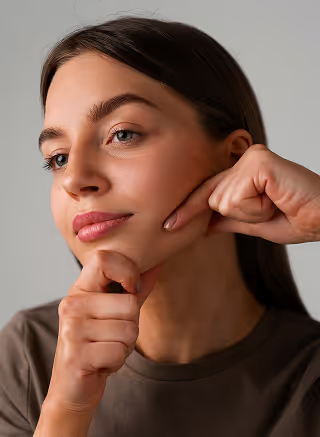
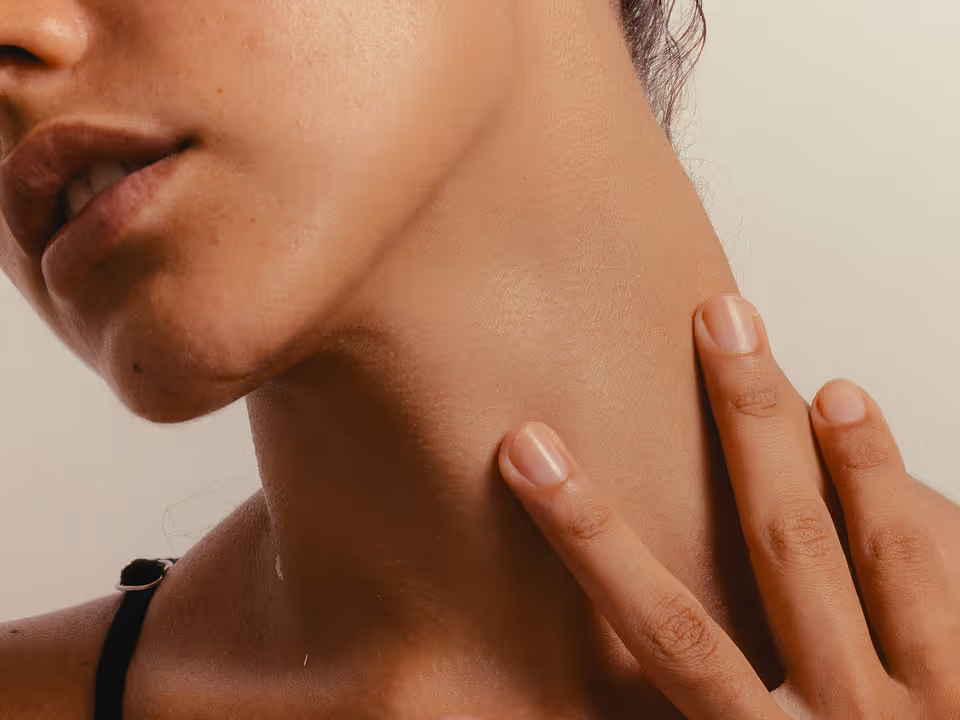
- Refinement of the jawline and chin to create a clear separation between the face and neck.
- Strategic volume replacement in the temples and forehead to soften the upper facial contours.
- Targeted smoothing of remaining surface lines using light-density fillers or neuromodulators.
- Application of energy-based skin tightening to shrink-wrap the skin to the new structural framework.
The results of an architecturally focused treatment plan are typically more durable and natural-looking than simple line filling. Because the products are placed in deeper planes of the face, they integrate with the natural anatomy and are less subject to the constant movement of the skin surface. Patients at Epione often report that they look more like their "younger selves" rather than looking like they have had a procedure. This is because the treatment restores the light and shadow patterns that are biologically associated with health and vitality.
Furthermore, this structural approach encourages the body to produce its own support. Many of the advanced products used by Dr. Simon Ourian act as biostimulators, prompting the skin to create new collagen and elastin fibers around the treatment site. This means that over time, the patient’s own biological architecture is being reinforced, providing a long-term benefit that goes far beyond the immediate volumizing effect. It is a fusion of medical art and biological science that redefines the aging process.
The Mathematical Proportions of Youthful Beauty
Aesthetic harmony is often a matter of mathematics and geometry. The "Heart-Shaped Face" or the "Triangle of Youth" refers to a facial structure where the widest point is at the cheekbones, tapering down to a defined chin. As gravity and volume loss take their toll, this triangle often inverts, with the base of the triangle shifting to the jawline. Filling wrinkles does nothing to reverse this inversion. Only by rebuilding the upper and midfacial architecture can a practitioner restore the youthful "V-shape" that signals vitality and attractiveness.
By focusing on these proportions, the clinical team at Epione can address "negative" shadows that make a person look tired or angry. Hollow temples, sunken eyes, and a receding chin create shadows that no amount of surface smoothing can eliminate. Reconstructing these areas with precision-placed fillers changes how light hits the face, creating a "radiance" that is purely structural. This highlights the importance of choosing an injector who understands light dynamics and facial symmetry as well as they understand medical science.
There are specific categories of structural enhancements that are commonly used to rebuild the facial frame. Each serves a unique purpose in the architectural plan, and they are often used in combination to achieve a holistic result. Understanding these categories helps patients appreciate the complexity of a non-surgical structural lift.
- Malar Augmentation: Rebuilding the cheekbones to provide a "hook" for the sagging skin of the lower face.
- Mandibular Refinement: Defining the jawline to eliminate the appearance of jowls and create a sharp profile.
- Temporal Volumization: Filling the hollows at the sides of the forehead to restore a smooth, oval facial shape.
- Periorbital Support: Reinforcing the area around the eyes to eliminate the "sunken" look of the orbital rim.
The precision required for these treatments is immense. If a jawline is made too wide or a cheekbone too high, the face can look masculine or feline. This is why Dr. Simon Ourian emphasizes a "less is more" philosophy during the initial structural phase. The goal is to restore what was lost, not to create a face that never existed. By following the natural bone structure of the individual, the result remains authentic to the person’s unique identity.
After a structural treatment, the face may feel slightly firmer, and there is often an immediate "wow" factor as the sagging tissues are lifted. Because these treatments target deeper layers, there is often less surface bruising than one might expect from multiple superficial injections. As the products settle over the following weeks, the architectural improvements become even more seamless, providing a foundation that can support the patient's aesthetic goals for many months to come.
Dynamic Rejuvenation and Muscle Interaction
Facial architecture is not a static concept; it must account for the way the face moves during speech and expression. Wrinkles are often the result of repetitive muscle contractions pulling on skin that has lost its structural support. By reinforcing the architecture, the skin is given more resistance against these muscular pulls, which can naturally decrease the depth of dynamic wrinkles. This is why a structural approach often reduces the amount of Botox or other neuromodulators a patient might eventually need.
When the midface is properly supported, the muscles of the lower face do not have to work as hard to maintain a smile or an upright expression. This "myomodulation" is a sophisticated benefit of architectural filling. By placing filler beneath certain muscles, a practitioner can either facilitate or inhibit their movement, further refining the patient’s expression. This level of detail is impossible to achieve if the focus is purely on the surface of the skin.
The interaction between the skin and the underlying structure is also influenced by the quality of the dermal tissues. Even the most perfect architectural foundation will be let down if the skin surface is damaged or thin. Therefore, a comprehensive plan always includes elements that improve the "cladding" of the facial building.
- Skin Thickening: Using lasers or biostimulators to ensure the skin is thick enough to hide the underlying filler.
- Hydration Support: Ensuring the hyaluronic acid levels in the dermis are high for a healthy, plump texture.
- Elasticity Promotion: Encouraging the growth of elastin fibers so the skin "snaps back" over the structural frame.
- Surface Refinement: Using chemical peels or light lasers to remove the fine lines that exist independently of structure.
By treating the face as a living structure rather than a series of isolated problems, the clinical team at Epione creates a result that is beautiful from every angle and during every expression. This holistic perspective is what allows patients to age with a level of grace and consistency that looks entirely natural. It shifts the focus from "anti-aging" to "age-management," where the goal is to maintain the integrity of the facial frame throughout the decades.
The investment in facial architecture is an investment in the longevity of one’s appearance. While surface treatments need to be repeated frequently, structural work provides a lasting scaffolding that can be maintained with minimal touch-ups. This makes it a more practical and effective long-term strategy for anyone serious about their aesthetic health. At Epione Beverly Hills, the focus remains on building beauty that lasts, one structural layer at a time.
The Philosophy of Holistic Facial Balance
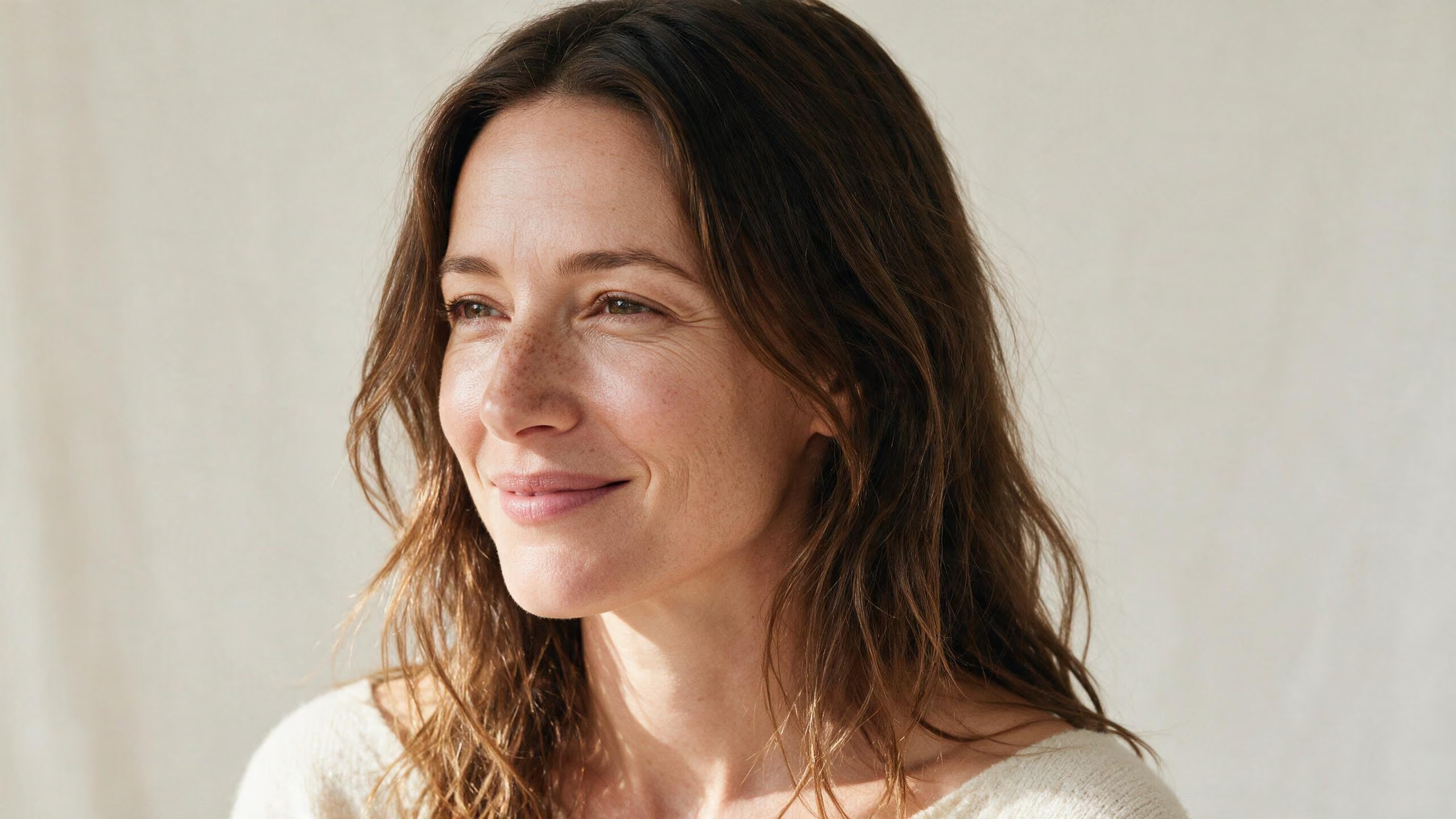
The final realization for many patients is that beauty is found in balance rather than perfection. A face that is completely devoid of wrinkles but lacks structural definition often looks "off" to the human eye. Conversely, a face with a few character lines but strong, youthful architecture is perceived as vibrant and healthy. This understanding is at the heart of the work done by Dr. Simon Ourian. By prioritizing the frame, he allows the patient's natural personality to shine through while removing the "noise" of age-related structural collapse.
Practical clarity is the hallmark of the consultation process at Epione. Patients are encouraged to look at their face as a whole and understand how the different parts interact. This education allows them to move away from the "line-chasing" mentality and embrace a more sophisticated approach to their own beauty. When a patient understands why their jawline is more important than their forehead lines, they are better equipped to make decisions that lead to long-term satisfaction.
Perspective is also essential when navigating the many options in the aesthetic market. Trends come and go, but the fundamental principles of facial anatomy and proportion remain constant. By sticking to these timeless rules of architecture, Dr. Simon Ourian ensures that his patients always look classic and elegant. The goal is a look that is beyond "trends" and that is simply, and structurally, beautiful.
Choosing to focus on architecture is a choice to respect the biology of the face. It is a commitment to a higher standard of care that values the long-term health and appearance of the patient above all else. At Epione Beverly Hills, every injection and every laser pulse is a deliberate step toward restoring the magnificent architecture of the human face. With this expert guidance, the process of aging becomes not a loss of beauty, but a transformation into a more refined and classic version of oneself.
Disclaimer Regarding Treatment Comparisons and AI-Generated Content
The opinions and comparisons expressed in this article are based on Dr. Simon Ourian's professionalexperience, clinical observations, aesthetic philosophy, and publicly available information at the timeof publication.
References to competing products, technologies, procedures, practitioners, or manufacturers are notintended to disparage any individual, company, or organization. Any comparisons reflect Dr. Ourian'sopinions and clinical experience and should not be construed as statements of fact regarding thesuperiority, inferiority, safety, efficacy, or performance of any competing product or treatment.Medical technologies, scientific research, treatment protocols, and regulatory guidance continue toevolve. Information presented in this article may become outdated over time and should not beconsidered comprehensive or definitive medical guidance.
Comparisons between products, procedures, technologies, treatment approaches, manufacturers, oraesthetic outcomes are provided for informational and educational purposes only. Individualpractitioners may have different experiences, preferences, treatment protocols, and opinionsregarding the products or procedures discussed.
No statement contained in this article should be interpreted as a guarantee, warranty, prediction, orpromise of any specific result. Individual outcomes vary significantly based on anatomy, age, skinquality, medical history, genetics, lifestyle factors, treatment technique, and adherence to pre- andpost-treatment instructions.
Portions of this article may have been generated, assisted, summarized, or edited using artificialintelligence (AI) tools. While reasonable efforts have been made to review and verify the content foraccuracy, completeness, and relevance, some information may be incomplete, outdated, inaccurate,or subject to interpretation. Readers should independently verify any information before relying uponit.
The content provided is for general educational and informational purposes only and is not intendedas medical advice, diagnosis, or treatment. Readers should consult with a qualified healthcareprofessional regarding their individual circumstances and treatment options before making anymedical or aesthetic decisions.
Results vary from patient to patient. No outcome is guaranteed. Some or all of this contentmay have been created, edited, or enhanced using artificial intelligence technology, anddespite review efforts, inaccuracies may exist.
Frequently asked questions
Why shouldn't I just focus on the lines around my mouth if they bother me the most?
The experts at Epione often find that the lines around the mouth are a symptom of volume loss in the cheeks and midface rather than an isolated issue. If you only fill those lines without addressing the falling architecture above them, the area can look heavy and unnatural. Dr. Simon Ourian recommends lifting the midface first to pull those lines upward naturally, which creates a much more balanced and youthful look that actually fixes the cause of the problem.
How does facial architecture affect the way my face reflects light?
Youthful facial architecture consists of smooth, high points, like the cheekbones and brow, that catch the light, and soft transitions that minimize shadows. As we age and the structure collapses, the face develops "dips" and hollows that create dark shadows, making the skin look dull and tired. By restoring the framework at Epione Beverly Hills, we recreate those high points and smooth surfaces, allowing your face to reflect light more evenly and giving you an instant "glow" that no cream can provide.
Will focusing on architecture make me look like I’ve had "work done"?
Actually, the opposite is true; a focus on architecture at Epione usually leads to a much more "un-done" and natural appearance. When you fill only wrinkles, you can end up with a face that looks flat or distorted, which is a common sign of aesthetic work. By rebuilding the bone and fat structure, Dr. Simon Ourian ensures that your facial proportions remain natural to your original anatomy, making it look as though you are simply aging exceptionally well.
Can structural fillers help if my skin is already quite saggy?
Yes, because providing a firmer foundation can take up the "slack" of sagging skin, much like a tent pole lifts the canvas. While extremely severe laxity might require a more intensive approach, many patients at Epione Beverly Hills are surprised at how much lift can be achieved just by reinforcing the jawline and cheeks. Dr. Simon Ourian uses these structural fillers to "anchor" the skin back into a more youthful position, providing a non-surgical alternative to a facelift for many individuals.
Is the recovery for structural work different than for filling fine lines?
The recovery is very similar, though you may feel a bit more "firmness" in the deeper layers of your face for a few days as the products settle. At Epione, we use advanced techniques that minimize surface trauma, so while we are working deeper, the outward signs of the procedure are usually minimal. Most patients return to their normal routines almost immediately, enjoying the fact that their new "lift" is working from the inside out.
How long do structural treatments last compared to surface wrinkle fillers?
Structural treatments often last significantly longer, sometimes up to two years, because the products are placed in areas with less movement and are often made of more durable, biostimulatory materials. The team at Epione Beverly Hills finds that once the foundation is stabilized, patients need less frequent "touch-ups" than those who only treat surface lines. Dr. Simon Ourian’s approach is designed for longevity, providing a stable framework that ages gracefully with you.
Can young people benefit from architectural treatments, or is it only for older patients?
Younger patients often visit Epione for "beautification" or "prejuvenation," which involves enhancing their natural architecture, like the chin or jawline, to create better facial balance. By reinforcing these structures early, you can also slow down the visible effects of aging before they even start. Dr. Simon Ourian works with patients of all ages to ensure their facial architecture is as strong and proportional as possible, providing a beautiful foundation for the future.
What is the "Golden Ratio" and how does Dr. Ourian use it?
The Golden Ratio is a mathematical formula (approximately 1.618 to 1) that is found in nature and is perceived by the human eye as the pinnacle of balance and beauty. Dr. Simon Ourian uses these specific proportions as a guide when sculpting the facial architecture at Epione Beverly Hills. By ensuring the height of the cheekbones, the width of the jaw, and the position of the chin align with these ratios, he creates a look that is universally recognized as harmonious and attractive.