






%201.avif)




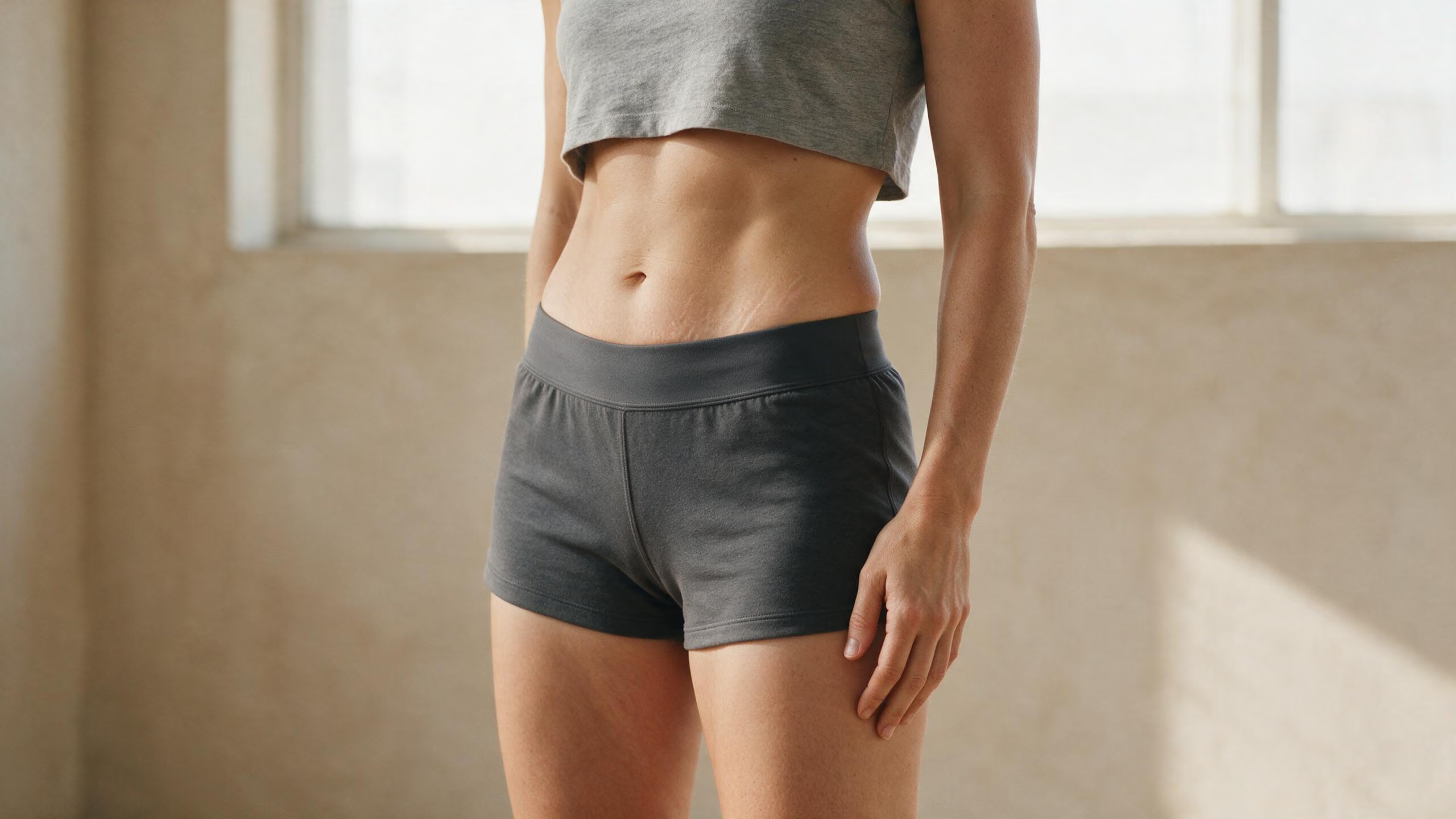




Significant weight loss is a monumental achievement that improves cardiovascular health, mobility, and overall longevity. However, for many individuals, the physical transformation is often accompanied by the presence of loose, sagging skin that fails to retract around the new body contours. This occurs because prolonged stretching from excess weight damages the collagen and elastin fibers within the dermis, stripping the skin of its natural "snap-back" ability. When the underlying volume is removed rapidly, the overstretched skin can hang in folds, leading to physical discomfort and self-consciousness.
Addressing redundant skin requires a shift from fat loss strategies to skin remodeling and tightening protocols. While exercise can build muscle to help fill out some of the empty space, it cannot physically shrink the surface area of the skin itself once the elastic threshold has been crossed. Clinical interventions are typically necessary to bridge the gap between a successful weight loss journey and the desired aesthetic outcome. These treatments focus on inducing a thermal or mechanical response that forces the skin to contract and manufacture new, high-quality supportive proteins.
The modern landscape of aesthetic medicine offers a spectrum of solutions ranging from completely non-invasive energy devices to minimally invasive surgical tightening. Selecting the right path depends on the degree of skin laxity, the specific area of the body being treated, and the patient's tolerance for recovery time. By understanding the biological limitations of topical creams and the power of professional medical technologies, individuals can make informed decisions to finally reveal the results of their hard work in the gym and kitchen.
Non-Invasive Energy Treatments for Skin Contraction
For patients with mild to moderate skin laxity, non-invasive energy-based treatments serve as a powerful first line of defense. These technologies utilize radiofrequency, ultrasound, or laser energy to heat the deeper layers of the skin while keeping the surface cool and protected. The controlled heat causes immediate contraction of existing collagen fibers and triggers a long-term healing response that results in the production of new elastin. This process, known as neocollagenesis, gradually pulls the skin tighter over a period of several months, providing a subtle yet noticeable lift.
One of the primary benefits of these non-surgical options is the lack of a traditional recovery period. Because the surface of the skin remains intact, patients can usually return to their daily routines immediately following the procedure. These treatments are particularly effective for areas like the neck, upper arms, and abdomen, where the skin may be thin or starting to show signs of "crepiness" after weight loss. Consistency is vital, as the best results are often seen after a series of sessions that build upon the collagen foundation created in previous visits.
- Radiofrequency (RF) Therapy: This modality uses electrical energy to heat the dermis, causing the skin to tighten and thicken over time.
- Micro-Focused Ultrasound: This technology targets the foundational layers of the skin to lift and firm the brow, neck, and under-the-chin areas.
- Infrared Laser Firming: High-intensity light energy is used to create deep thermal heating, which is ideal for smoothing out skin texture.
- Cryotherapy Stimulation: Brief exposure to cold temperatures can sometimes be used in conjunction with heat to shock the skin into a regenerative state.
The success of energy-based tightening is largely dependent on the patient's internal biology and their ability to produce new collagen. Factors such as age, smoking status, and nutritional intake play a significant role in how well the skin responds to these thermal stimuli. Clinicians often recommend a diet high in vitamin C and amino acids to provide the building blocks necessary for tissue repair. When combined with a healthy lifestyle, these non-invasive tools can significantly reduce the appearance of sagging without the need for incisions.
Furthermore, these treatments can be strategically layered to address different depths of the skin. By combining a surface-level laser with a deeper-reaching radiofrequency device, practitioners can achieve a "3D" tightening effect. This approach ensures that every layer of the tissue is stimulated, leading to a more comprehensive improvement in both the firmness and the overall quality of the skin. As the skin becomes thicker and more resilient, it naturally conforms better to the underlying muscle and bone structure.
Minimally Invasive and Surgical Solutions for Severe Laxity
In cases where the weight loss has been extreme, such as after bariatric surgery, the amount of redundant skin may exceed what non-invasive lasers can treat. Minimally invasive procedures like Renuvion or BodyTite offer a middle ground between lasers and major surgery. These techniques involve inserting a small probe beneath the skin to deliver targeted energy directly to the underside of the dermis. This "internal" heating provides a much more dramatic contraction of the fibrous septae, which are the connective tissues that anchor the skin to the body.
If the skin folds are significant, traditional excisional surgery, often referred to as a "body lift" or "tummy tuck", may be the most effective route. These procedures involve the physical removal of the excess skin and the tightening of the underlying abdominal muscles. While these surgeries require a longer recovery time and result in permanent scarring, they provide the most definitive and immediate change in body contour. For many, the trade-off of a scar is well worth the elimination of heavy, hanging skin that interferes with clothing and exercise.
- Subdermal Plasma Coagulation: A small probe is used to deliver helium plasma energy under the skin for maximum tissue contraction.
- Liposuction with Tightening: Excess stubborn fat is removed while simultaneously heating the skin from within to prevent sagging.
- Abdominoplasty (Tummy Tuck): A surgical procedure that removes large amounts of excess skin and fat from the midsection while tightening the fascia.
- Brachioplasty (Arm Lift): This surgery focuses specifically on the "bat wing" appearance of the upper arms by removing loose skin.
The decision to move toward a minimally invasive or surgical option is usually made after a thorough physical examination and a discussion of the patient's goals. Minimally invasive techniques have the advantage of smaller puncture sites and faster healing than full excisional surgery, making them an attractive option for those who are close to their goal but have persistent "looseness." These procedures are often performed under local anesthesia or light sedation, further reducing the risks associated with general anesthesia.
Post-operative care is a critical component of the surgical and minimally invasive path. Wearing compression garments as directed helps the skin adhere to the new contours and reduces swelling during the initial weeks of healing. Lymphatic drainage massages may also be recommended to flush out excess fluids and ensure a smooth, even result. By following a structured recovery plan, patients can ensure that the final contour of their body reflects the hard-earned muscles and silhouette they worked so hard to achieve through weight loss.
Optimizing Skin Health through Lifestyle and Topicals
While clinical treatments provide the heavy lifting for skin tightening, daily habits and topical support can enhance and maintain the results. Hydration is perhaps the most overlooked factor in skin elasticity; dehydrated skin is thinner and more prone to sagging and wrinkling. By maintaining high levels of internal hydration, the skin remains plump and better able to respond to professional tightening treatments. Similarly, avoiding excessive sun exposure prevents the breakdown of existing elastin, which is essential for maintaining a firm appearance.
Topical products containing retinoids, peptides, and growth factors can support the skin's surface integrity. While these creams cannot fix a "pouch" of loose skin, they can improve the "crepey" texture and thickness of the epidermis. This makes the skin look healthier and more vibrant, which complements the structural changes achieved through clinical procedures. Using a high-quality moisturizer that strengthens the skin barrier is also beneficial, as it prevents the trans-epidermal water loss that can make loose skin look more pronounced.
- Retinoid Integration: Vitamin A derivatives help thicken the skin over time by stimulating cell turnover and collagen synthesis.
- Peptide-Rich Creams: These formulations provide the skin with the signaling molecules needed to maintain its structural support.
- High-Protein Diet: Consuming adequate protein ensures the body has the amino acids necessary to rebuild dermal tissues.
- Sun Protection Habits: Daily application of sunscreen prevents UV rays from destroying the very collagen that clinical treatments aim to build.
The synergy between professional intervention and home care cannot be overstated. Think of clinical treatments as the "renovation" and home care as the "maintenance." Without proper upkeep, even the best surgical or laser results can be degraded by environmental stressors and poor nutrition. Patients who take a holistic approach by combining advanced technology with a skin-healthy lifestyle tend to see the most durable and satisfying improvements in their body's firmness.
The journey to tighter skin is a marathon, not a sprint. The biological reality is that skin takes time to remodel itself. Whether you are using lasers, radiofrequency, or undergoing a surgical lift, patience is required as the body slowly replaces old, damaged fibers with new, resilient ones. By staying committed to the process and working with experienced professionals, you can finally close the chapter on your weight loss journey with a body that feels as firm and youthful as it is healthy.
The Epione Perspective on Post-Weight Loss Contouring
At Epione Beverly Hills, we recognize that loose skin is often the final hurdle for patients who have successfully transformed their lives through weight loss. Our approach is rooted in providing high-tech, non-surgical alternatives that allow patients to reclaim their confidence without the trauma of major surgery. The experts at Epione specialize in using cutting-edge modalities to tighten the skin from both the inside and out. Dr. Simon Ourian has pioneered techniques that focus on precision and natural-looking results, ensuring that the skin follows the new, slimmer contours of the body seamlessly.
One of the standout options available at Epione is the use of specialized radiofrequency and ultrasound technologies that are calibrated to target specific areas of concern. We understand that skin laxity on the neck requires a different approach than sagging on the abdomen or thighs. By utilizing a personalized treatment protocol, the clinical team at Epione Beverly Hills can address the unique needs of each patient. Our goal is to provide a tightening effect that is not just visible, but also improves the overall health and thickness of the skin, making it more resilient against the effects of gravity and aging.
Choosing Epione means choosing a team that stays at the forefront of aesthetic innovation. We constantly evaluate and integrate new technologies that offer better results with less discomfort. From the moment you walk into our Beverly Hills office, our focus is on creating a comprehensive plan that honors your weight loss achievement. Dr. Simon Ourian and the entire Epione staff are dedicated to helping you achieve the smooth, firm skin you deserve, allowing your physical appearance to finally match the strength and vitality you feel on the inside.
Disclaimer Regarding Treatment Comparisons and AI-Generated Content
The opinions and comparisons expressed in this article are based on Dr. Simon Ourian's professionalexperience, clinical observations, aesthetic philosophy, and publicly available information at the timeof publication.
References to competing products, technologies, procedures, practitioners, or manufacturers are notintended to disparage any individual, company, or organization. Any comparisons reflect Dr. Ourian'sopinions and clinical experience and should not be construed as statements of fact regarding thesuperiority, inferiority, safety, efficacy, or performance of any competing product or treatment.Medical technologies, scientific research, treatment protocols, and regulatory guidance continue toevolve. Information presented in this article may become outdated over time and should not beconsidered comprehensive or definitive medical guidance.
Comparisons between products, procedures, technologies, treatment approaches, manufacturers, oraesthetic outcomes are provided for informational and educational purposes only. Individualpractitioners may have different experiences, preferences, treatment protocols, and opinionsregarding the products or procedures discussed.
No statement contained in this article should be interpreted as a guarantee, warranty, prediction, orpromise of any specific result. Individual outcomes vary significantly based on anatomy, age, skinquality, medical history, genetics, lifestyle factors, treatment technique, and adherence to pre- andpost-treatment instructions.
Portions of this article may have been generated, assisted, summarized, or edited using artificialintelligence (AI) tools. While reasonable efforts have been made to review and verify the content foraccuracy, completeness, and relevance, some information may be incomplete, outdated, inaccurate,or subject to interpretation. Readers should independently verify any information before relying uponit.
The content provided is for general educational and informational purposes only and is not intendedas medical advice, diagnosis, or treatment. Readers should consult with a qualified healthcareprofessional regarding their individual circumstances and treatment options before making anymedical or aesthetic decisions.
Results vary from patient to patient. No outcome is guaranteed. Some or all of this contentmay have been created, edited, or enhanced using artificial intelligence technology, anddespite review efforts, inaccuracies may exist.
Frequently asked questions
How long does it typically take to see results from non-surgical skin tightening?
Non-surgical skin tightening is a process that relies on the body’s natural ability to produce collagen, which is not an overnight occurrence. Most patients at Epione Beverly Hills begin to see a subtle change in skin firmness within four to six weeks following their first session. However, the most significant and dramatic results usually peak around the three-to-six-month mark. This timeline allows the newly formed collagen fibers to mature and strengthen, providing a durable lift. The experts at Epione often emphasize that the skin continues to improve for several months after the final treatment, as the biological remodeling process is cumulative and long-lasting.
Can Epione’s treatments replace the need for a surgical tummy tuck?
Whether a non-surgical treatment can replace surgery depends entirely on the degree of excess skin. For individuals with mild to moderate laxity, the advanced laser and radiofrequency technologies at Epione Beverly Hills can provide impressive tightening that avoids the need for incisions and scarring. However, if there is a very large amount of redundant, hanging skin, often seen after a loss of 100 pounds or more, surgical excision may still be the gold standard. Dr. Simon Ourian and the Epione’s clinical team provide honest assessments during consultations to determine if our non-invasive protocols can meet your specific goals or if a surgical referral is the more appropriate path for your needs.
Is there any downtime associated with the skin tightening procedures at Epione?
One of the primary reasons patients choose Epione for skin tightening is the minimal to non-existent downtime associated with our primary treatments. Most of our energy-based modalities, such as those used by the experts at Epione, allow patients to return to their normal daily activities immediately. You might experience some slight redness or a warm sensation in the treated area for a few hours, but this quickly dissipates. Unlike surgical options that require weeks of restricted movement, the non-invasive approach at Epione Beverly Hills is designed to fit seamlessly into a busy lifestyle while still delivering professional-grade firming and contouring results.
Does skin tightening also help with the appearance of stretch marks after weight loss?
While the primary focus of skin tightening is to address laxity, many of the treatments at Epione also improve the appearance of stretch marks. The laser technologies used by Dr. Simon Ourian stimulate collagen and elastin, which are the very fibers that break when stretch marks form. By thickening the dermis and smoothing the surface texture, the color and depth of stretch marks can be significantly reduced. Patients at Epione Beverly Hills often report that their skin not only feels tighter but also looks more uniform and "polished" overall, as the resurfacing properties of our devices address multiple concerns in a single treatment plan.
Are the results from professional skin tightening permanent?
The results of skin tightening at Epione Beverly Hills can be very long-lasting, as the new collagen your body produces is your own natural tissue. However, it is important to remember that these treatments do not stop the natural aging process. Over time, gravity and the breakdown of collagen will continue, though you will be starting from a much firmer baseline. Many patients of Dr. Simon Ourian choose to undergo "maintenance" sessions once a year to keep their results optimal. Additionally, maintaining a stable weight and a healthy skincare routine will ensure that the tightening achieved at Epione remains visible for many years to come.
Which areas of the body respond best to non-invasive tightening?
The experts at Epione have found that areas with thinner skin or localized laxity often show the most immediate improvement. This includes the neck, the jawline, the upper arms, and the area just above the knees. The abdomen also responds well to the technologies used at Epione Beverly Hills, especially when the goal is to tighten the "crepey" skin that can remain after fat loss. Dr. Simon Ourian tailors the energy levels and depth of treatment based on the specific thickness and elasticity of the skin in each zone, ensuring that the energy is delivered precisely where it will have the greatest impact on tissue contraction and firming.
Is the treatment painful for someone who has sensitive skin?
At Epione, we prioritize patient comfort and use various methods to ensure that skin tightening sessions are as pleasant as possible. Most patients describe the sensation as a deep warming or a light snapping feeling, but it is generally well-tolerated. For those with sensitive skin, Dr. Simon Ourian and the clinical team can adjust the settings or apply topical numbing agents if necessary. We also utilize advanced cooling technologies that protect the surface of the skin while the deeper layers are being treated. This allows the experts at Epione to achieve effective results without causing distress to the patient, making it a viable option even for those with lower pain thresholds.