


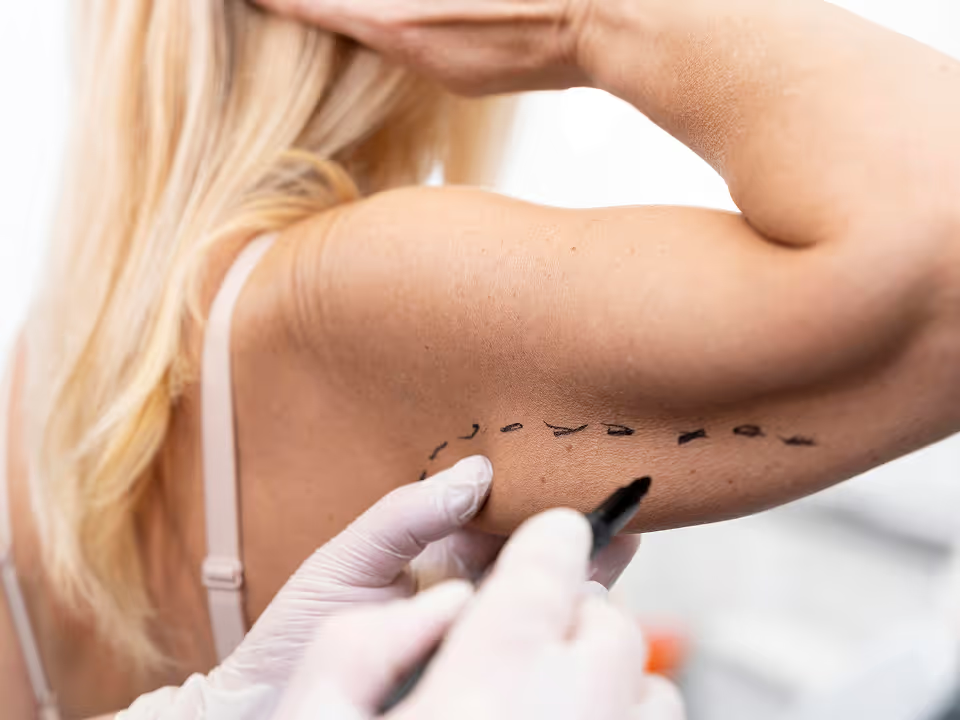


Recently, a review of the cosmetics industry in the United Kingdom revealed some concerning points on the use of injectable fillers. I the United States and in Great Britain, the sector of injectable anti-wrinkle fillers is a multibillion-dollar industry.
Warning Signs
In 2012, a French company called Poly Implant Prothese (PIP) gave over 40,000 British women low quality silicone implants. This scandal has caused uproar because these women were prevented from taking legal action as they not covered by any laws or regulations. These women are now forced to either live with substandard, potentially risky implants, or have another implant procedure done, which can prove to be very expensive.After the United Kingdom saw the PIP breast implant scandal in 2012, the British government commissioned an independent panel to review various practices and sectors of the cosmetics industry. The panel came to the conclusion that all fillers should require a prescription for use and that only trained and qualified professionals should be allowed to inject them. The medical director of the UK’s National Health Service reports that non-surgical cosmetic procedures such as fillers and laser therapies, accounted for nearly 90 percent of cosmetic procedures. However, most of these procedures were entirely unregulated.
Unlicensed Practitioners
In the United Kingdom, anyone can set up shop and inject fillers without having to file for a license or undergo any formal training. This has lead to exponential growth in the anti-wrinkle segment of the cosmetics industry. The review calls fillers "a crisis waiting to happen."
Regulating fillers
The FDA regulates fillers in the United States, allowing only fourteen fillers on the market, including products from Allergan, Valeant and Merz. By contrast, the United Kingdom currently has between 140 and 190 different types of fillers available on the market.The review strongly recommends that fillers be regulated just as if they were medical devices, like implantable pieces. It also recommends that all professionals performing cosmetic procedures, even filler injections, be registered and properly trained.
PIP Fallout
In addition, this review suggests that a national breast implant registry be created within the next 12 months. They believe that such a registry would help monitor and ensure the safety of breast implants. This suggestion comes on the heels of the PIP scandal.