








%201.avif)









El envejecimiento facial es un proceso multifacético que rara vez ocurre en una sola capa de la anatomía. Cuando los pacientes se miran al espejo y notan un cambio en su apariencia, a menudo les cuesta identificar si el problema principal es la falta de plenitud o un desplazamiento hacia abajo de las facciones. La pérdida de volumen suele manifestarse como un aspecto hundido o "demacrado", particularmente en la parte media del rostro, las sienes y alrededor de los ojos. Esto ocurre porque las almohadillas de grasa subcutánea que proporcionan el acolchado juvenil comienzan a encogerse y desplazarse, mientras que la estructura ósea subyacente retrocede gradualmente con el tiempo.
La flacidez, o ptosis, es una preocupación mecánica diferente impulsada por la pérdida de proteínas estructurales como el colágeno y la elastina. A medida que estas fibras se descomponen, la piel pierde su capacidad de "recuperar su forma" frente a la fuerza de la gravedad. Esto conduce a la característica caída de las mejillas, la profundización de los surcos nasolabiales y una línea de la mandíbula suavizada. Mientras que la pérdida de volumen se trata del agotamiento del "relleno", la flacidez se trata del fallo de la "envoltura" que mantiene todo en su lugar. Distinguir entre ambas es fundamental para seleccionar un tratamiento que proporcione un resultado natural.
En Epione, el proceso de diagnóstico implica una evaluación cuidadosa de la arquitectura facial para determinar la proporción de pérdida de volumen frente a la laxitud de la piel. Es muy común que una persona experimente ambos problemas simultáneamente, ya que la pérdida de volumen interno en realidad exacerba la apariencia de flacidez. Cuando el sistema de soporte interno desaparece, la piel suprayacente no tiene nada a qué aferrarse, lo que hace que se descuelgue más abajo en el rostro. Abordar estas preocupaciones con éxito requiere un enfoque sofisticado que restaure la base mientras tensa simultáneamente la superficie.
Los indicadores biológicos de la pérdida de volumen facial
La pérdida de volumen suele ser el primer signo de envejecimiento, apareciendo frecuentemente al inicio de la treintena. El área más afectada es la región malar, o las mejillas. En la juventud, las almohadillas de grasa están elevadas y concentradas, creando el "triángulo invertido" de la belleza donde la parte más ancha del rostro se encuentra en los pómulos. A medida que el volumen disminuye, este triángulo se invierte y el peso del rostro se desplaza hacia la línea de la mandíbula. Esta transición no es necesariamente un signo de que la piel se caiga, sino más bien una señal de que los pilares de soporte subyacentes simplemente están desapareciendo.
Las sienes y el área preorbitaria también son altamente susceptibles a la pérdida de volumen. Las sienes hundidas pueden crear una apariencia "esqueletizada" que envejece significativamente el rostro, incluso si la piel permanece relativamente tensa. Del mismo modo, la pérdida de grasa debajo de los ojos conduce a la formación de ojeras y surcos lagrimales, ya que la piel delgada se asienta directamente sobre el hueso orbital. Estos cambios son principalmente volumétricos y no pueden corregirse solo levantando la piel. La siguiente lista identifica las señales visuales específicas que apuntan a la pérdida de volumen como la preocupación principal.
Observe las sienes en busca de hendiduras o una apariencia cóncava que cree una transición brusca hacia la frente.
- Revise el área directamente debajo de los ojos en busca de un hundimiento profundo o un "valle" visible que no cambie con las expresiones faciales.
- Evalúe la parte media del rostro para ver si los pómulos han perdido su prominencia y la piel parece estar "colgando" por falta de soporte.
- Observe el área alrededor de la boca para ver si los labios se han vuelto más delgados o si las líneas de "marioneta" son causadas por la falta de acolchado.
- Note cualquier cambio en las manos o el cuello, ya que estas áreas a menudo pierden volumen al mismo ritmo que el rostro.
- Evalúe la forma general del rostro para determinar si ha pasado de una forma ovalada o de corazón a una apariencia más rectangular o con más peso en la parte inferior.
Una vez identificada la pérdida de volumen, el objetivo es reponer el tejido perdido utilizando materiales biocompatibles. Aquí es donde el arte del equipo clínico se vuelve primordial. El exceso de relleno puede conducir a una apariencia "inflada" que oculta las expresiones faciales naturales, mientras que un relleno insuficiente no proporciona el soporte necesario. Epione utiliza una variedad de rellenos y bioestimuladores para recrear los contornos naturales de la juventud, asegurando que el volumen se coloque en los compartimentos profundos donde existía originalmente.
La recuperación de la restauración de volumen es generalmente muy rápida, ya que implica inyecciones mínimamente invasivas. Los pacientes a menudo ven una mejora inmediata en sus proporciones, con un efecto de "estiramiento" que ocurre naturalmente porque la piel ahora está estirada sobre una base más completa. Es por esto que muchas personas confunden la pérdida de volumen con la flacidez; una vez que se reemplaza el volumen, la "caída" percibida a menudo desaparece sin necesidad de ningún tensado quirúrgico. Esta sinergia entre volumen y elevación es la piedra angular del rejuvenecimiento facial no quirúrgico moderno.
Identificación de la flacidez estructural y la laxitud de la piel
La flacidez es una etapa más avanzada del proceso de envejecimiento en la que el "pegamento" de la piel, la matriz extracelular, se fragmenta. Esto es más visible en el tercio inferior del rostro. Cuando la piel pierde su elasticidad, ya no puede resistir la tracción hacia abajo de los músculos y la gravedad. Esto da lugar a la formación de papada, que oculta la línea definida de la mandíbula, y a un cuello que parece tener exceso de piel. A diferencia de la pérdida de volumen, que puede hacer que el rostro luzca cansado, la flacidez a menudo hace que se vea "pesado" o triste.
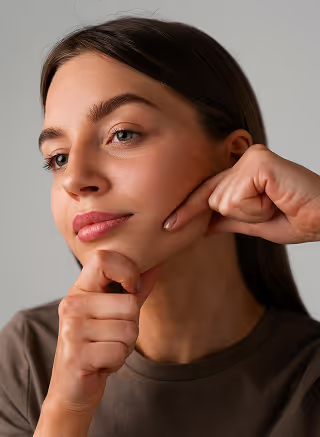
Una forma sencilla de comprobar la flacidez es la "prueba del pellizco" o la prueba de elevación manual. Si puede tirar suavemente de la piel hacia arriba, en dirección a las orejas, y los surcos nasogenianos o la papada desaparecen, es probable que el problema sea la laxitud cutánea. Si realiza esta elevación y el rostro sigue viéndose hundido o plano, también se enfrenta a una pérdida de volumen. La flacidez requiere tratamientos que eleven físicamente el tejido o estimulen una cantidad significativa de colágeno nuevo para "envolver" la piel y devolverla a su estructura facial. Los siguientes puntos describen los signos característicos de la flacidez estructural.
- Formación de papada: La piel cuelga sobre la línea de la mandíbula, rompiendo la curva continua desde la oreja hasta la barbilla.
- Profundización de los surcos nasogenianos: Los pliegues que van desde la nariz hasta la boca se vuelven más marcados porque el tejido de las mejillas se desplaza hacia abajo.
- Descenso de las cejas: Las cejas se sitúan más abajo en el reborde orbitario, lo que a veces hace que los párpados superiores parezcan encapotados.
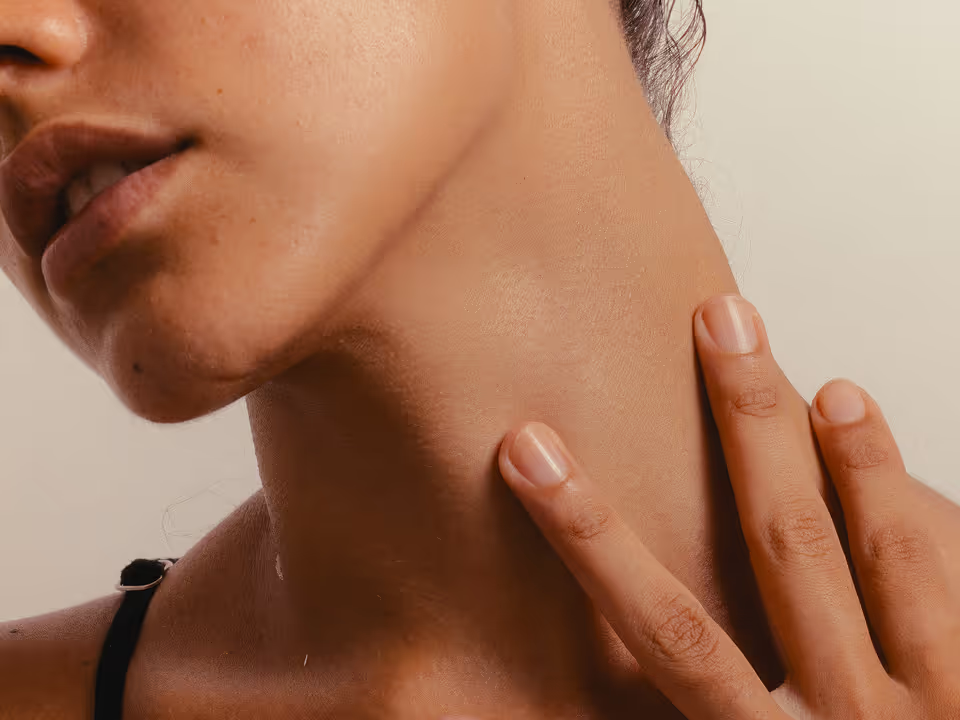
- Laxitud del cuello: La piel del cuello se vuelve flácida, creando a menudo "bandas" o una pérdida del ángulo definido bajo la barbilla.
- Rasgos alargados: Todo el rostro parece tener un estiramiento "vertical" en lugar de la plenitud horizontal propia de la juventud.
En Epione, la flacidez suele tratarse mediante dispositivos basados en energía, como ultrasonidos o radiofrecuencia, que calientan las capas profundas de la piel para inducir una contracción. Para una flacidez más pronunciada, los hilos tensores o las técnicas de inyección especializadas pueden proporcionar un efecto de elevación mecánica. Estos tratamientos no añaden volumen; en su lugar, se centran en reposicionar el tejido existente en una ubicación más juvenil. Es un juego de milímetros, pero esos pequeños cambios pueden transformar por completo la forma en que la luz incide sobre el rostro.
El desafío al tratar la flacidez es asegurar que la piel permanezca flexible y natural. Un tensado agresivo puede provocar a veces un aspecto "estirado" poco deseable. Al centrarse en la salud del colágeno de la piel, los especialistas pueden lograr un efecto de elevación que parece provenir del interior. Es por esto que muchos pacientes optan por combinar tratamientos de tensado con regímenes de cuidado de la piel que refuerzan la barrera cutánea y las fibras elásticas.
Cómo elegir el plan de tratamiento multicapa adecuado
Debido a que la pérdida de volumen y la flacidez están estrechamente relacionadas, los planes de tratamiento más exitosos en Epione suelen abordar ambos aspectos simultáneamente. Esto se conoce como un enfoque de rejuvenecimiento facial global. Al restaurar primero el volumen perdido en la zona media del rostro, el especialista puede proporcionar una "elevación" inicial que reduce la carga sobre la piel. Seguir esto con un tratamiento de tensado asegura que la "envoltura" esté firme y los contornos definidos. Este enfoque 3D del envejecimiento ofrece resultados muy superiores a los que se obtienen tratando cada problema de forma aislada.
El momento de realizar estos tratamientos también es un factor importante. Algunos pacientes prefieren abordar primero el problema que más les molesta, mientras que otros buscan una transformación integral. Durante la consulta, el Dr. Simon Ourian evalúa el grosor de la piel, el grado de pérdida de grasa y la estructura ósea del paciente para determinar la secuencia más lógica. Por ejemplo, un paciente con piel muy fina y flacidez significativa podría beneficiarse más de un relleno bioestimulador que, además de añadir volumen, mejore la calidad de la piel con el paso del tiempo.
Educar al paciente sobre el "porqué" de su apariencia envejecida es una parte fundamental de la filosofía de Epione. Cuando un paciente comprende que su papada es causada en realidad por una pérdida de volumen en las mejillas, es más probable que quede satisfecho con el tratamiento recomendado. Esta transparencia genera confianza y asegura que los objetivos estéticos estén alineados con las realidades biológicas del rostro. La siguiente lista detalla la progresión de un protocolo de tratamiento combinado para el volumen y la flacidez.
- Realice un análisis facial detallado para mapear las zonas específicas de hundimiento y flacidez.
- Restaure el volumen profundo en las sienes y el tercio medio facial para proporcionar un "andamio" estructural a la piel.
- Utilice inyecciones dirigidas para definir la línea de la mandíbula y el mentón, lo que ayuda a anclar el tercio inferior del rostro.
- Aplique tecnología de tensado basada en energía en el tercio inferior del rostro y el cuello para reafirmar la piel.
- Incorpore un agente bioestimulador para fomentar la producción a largo plazo de colágeno tipo I.
- Programe sesiones de mantenimiento para seguir el ritmo del proceso de envejecimiento natural y continuo.
Este enfoque integral garantiza que el rostro envejezca con elegancia. Al mantener el volumen y la elasticidad de la piel, los pacientes pueden evitar la necesidad de procedimientos quirúrgicos más invasivos en el futuro. Es una inversión en la "integridad estructural" del rostro. La mayoría de los pacientes descubren que, una vez restauradas la simetría y las proporciones, necesitan menos maquillaje y se sienten más seguros en entornos de alta definición.
La evolución de la medicina estética en 2026 nos ha proporcionado herramientas que eran inimaginables hace una década. Ahora podemos tratar con precisión diferentes profundidades de la piel con una exactitud increíble. Esto permite un nivel de personalización que respeta los antecedentes étnicos y genéticos únicos de cada paciente. En Epione, el objetivo no es cambiar quién es usted, sino restaurar la versión de sí mismo que recuerda con más cariño.
La perspectiva a largo plazo sobre la arquitectura facial
Comprender la diferencia entre la pérdida de volumen y la flacidez es una habilidad vital para quienes se interesan por el mantenimiento estético. A medida que avanzamos por las décadas, el equilibrio entre estos dos problemas cambiará. A los cuarenta años, la pérdida de volumen puede ser el factor principal, mientras que a los sesenta, la flacidez de la piel puede pasar a primer plano. Anticiparse a estos cambios con pequeños ajustes regulares es el secreto para una apariencia atemporal. Es mucho más fácil mantener el volumen que reemplazarlo una vez que se ha perdido por completo.
El impacto psicológico del rejuvenecimiento facial suele ser tan significativo como el cambio físico. Cuando un rostro se ve "simétrico" y "equilibrado", el cerebro lo percibe como saludable y vibrante. Este "efecto halo" puede mejorar la vida social y profesional de una persona, ya que proyecta una imagen de energía y competencia. Las opciones no quirúrgicas han democratizado este nivel de cuidado, haciendo posible que personas de todos los ámbitos de la vida se sientan lo mejor posible.
De cara al futuro, el enfoque seguirá centrándose en la estética "regenerativa": tratamientos que enseñan al cuerpo a repararse a sí mismo. Ya sea a través de rellenos avanzados o nuevas tecnologías láser, el objetivo sigue siendo el mismo: apoyar la arquitectura natural del rostro. En Epione, el equipo clínico sigue dedicado a esta misión, combinando la ciencia más reciente con un ojo artístico para ayudar a cada paciente a responder a la pregunta de si está perdiendo volumen o sufriendo flacidez y, lo que es más importante, cómo solucionarlo.
Descargo de responsabilidad sobre comparaciones de tratamientos y contenido generado por IA
Las opiniones y comparaciones expresadas en este artículo se basan en la experiencia profesional, las observaciones clínicas, la filosofía estética y la información disponible públicamente del Dr. Simon Ourian en el momento de la publicación.
Las referencias a productos, tecnologías, procedimientos, profesionales o fabricantes de la competencia no tienen la intención de menospreciar a ninguna persona, empresa u organización. Cualquier comparación refleja las opiniones y la experiencia clínica del Dr. Ourian y no debe interpretarse como afirmaciones de hecho con respecto a la superioridad, inferioridad, seguridad, eficacia o rendimiento de ningún producto o tratamiento de la competencia. Las tecnologías médicas, la investigación científica, los protocolos de tratamiento y la orientación regulatoria continúan evolucionando. La información presentada en este artículo puede quedar desactualizada con el tiempo y no debe considerarse una guía médica exhaustiva o definitiva.
Las comparaciones entre productos, procedimientos, tecnologías, enfoques de tratamiento, fabricantes o resultados estéticos se proporcionan únicamente con fines informativos y educativos. Los profesionales individuales pueden tener diferentes experiencias, preferencias, protocolos de tratamiento y opiniones con respecto a los productos o procedimientos discutidos.
Ninguna declaración contenida en este artículo debe interpretarse como una garantía, predicción o promesa de ningún resultado específico. Los resultados individuales varían significativamente según la anatomía, la edad, la calidad de la piel, el historial médico, la genética, los factores de estilo de vida, la técnica de tratamiento y el cumplimiento de las instrucciones previas y posteriores al tratamiento.
Partes de este artículo pueden haber sido generadas, asistidas, resumidas o editadas utilizando herramientas de inteligencia artificial (IA). Si bien se han realizado esfuerzos razonables para revisar y verificar el contenido en cuanto a su precisión, exhaustividad y relevancia, parte de la información puede estar incompleta, desactualizada, ser inexacta o estar sujeta a interpretación. Los lectores deben verificar de forma independiente cualquier información antes de confiar en ella.
El contenido proporcionado tiene fines educativos e informativos generales únicamente y no pretende ser un consejo médico, diagnóstico o tratamiento. Los lectores deben consultar con un profesional de la salud calificado sobre sus circunstancias individuales y opciones de tratamiento antes de tomar cualquier decisión médica o estética.
Los resultados varían de un paciente a otro. No se garantiza ningún resultado. Parte o la totalidad de este contenido puede haber sido creado, editado o mejorado utilizando tecnología de inteligencia artificial y, a pesar de los esfuerzos de revisión, pueden existir imprecisiones.
Preguntas frecuentes
¿Cómo puedo saber si mis papadas están causadas por pérdida de grasa o por flacidez de la piel?
La formación de papada es usualmente una combinación de ambos factores, pero usted puede distinguir la causa principal en Epione a través de un examen simple. Si sus mejillas se ven planas y sus sienes están hundidas, la papada probablemente es resultado de que la piel se "desliza" porque no tiene volumen que la sostenga. Si su zona media facial aún está llena pero la piel en la línea de la mandíbula se siente delgada y elástica, la flacidez es la culpable principal. Dr. Simon Ourian frecuentemente usa una combinación de relleno para levantar la mejilla y tensado para definir la mandíbula.
¿Perder peso hace que la flacidez facial se vea peor?
La pérdida significativa de peso a menudo puede hacer que la flacidez facial se vea más prominente porque elimina la grasa subcutánea que mantenía la piel estirada. Esta es una preocupación común para los pacientes de Epione que han alcanzado sus objetivos de peso corporal pero encuentran que su rostro se ve "desinflado". En estos casos, restaurar el volumen facial con rellenos bioestimuladores es esencial para "rellenar" la envoltura de la piel y reducir la apariencia de laxitud.
¿Existe una forma no quirúrgica de levantar las cejas caídas?
Sí, los expertos en Epione frecuentemente utilizan una combinación de neurotoxinas para relajar los músculos que tiran las cejas hacia abajo y rellenos estratégicamente colocados para proporcionar un "levantamiento" estructural desde el área de las sienes. Adicionalmente, se puede utilizar tensado basado en ultrasonido para reafirmar la piel de la frente, lo cual eleva naturalmente la posición de las cejas. Esto proporciona una apariencia refrescada y "abierta" a los ojos sin la necesidad de un levantamiento quirúrgico de cejas.
¿Pueden los ejercicios faciales ayudar con la pérdida de volumen o la flacidez?
Aunque los ejercicios faciales pueden fortalecer los músculos subyacentes, no abordan las causas principales de la pérdida de volumen (agotamiento de grasa y hueso) o la flacidez (pérdida de colágeno y elastina). En algunos casos, los movimientos faciales repetitivos pueden empeorar la apariencia de las arrugas dinámicas. La mayoría de los expertos clínicos de Epione recomiendan enfocarse en tratamientos de grado médico que aborden las proteínas estructurales de la piel y los compartimentos de volumen interno para obtener resultados medibles.
¿Cuál es la mejor edad para comenzar a tratar la pérdida de volumen facial?
No existe una edad "perfecta", pero muchos pacientes en Epione comienzan a notar un hundimiento sutil a principios o mediados de los treinta años. Comenzar tratamientos de "pre-juvenación" en esta etapa puede ser muy efectivo porque es más fácil mantener el volumen existente que reconstruirlo más adelante. La intervención temprana con bioestimuladores puede ayudar a mantener la densidad de la dermis, retrasando los signos visibles tanto de la pérdida de volumen como de la flacidez a medida que envejece.
¿Qué tratamiento en Epione proporciona el lifting más inmediato?
Los rellenos tradicionales de ácido hialurónico proporcionan el "lifting" más inmediato al reemplazar instantáneamente el volumen perdido en áreas estratégicas como los pómulos y la línea de la mandíbula. Para aquellos que buscan un lifting específicamente dirigido a la laxitud de la piel, ciertas técnicas de lifting con hilos o dispositivos de energía de contracción inmediata utilizados por Dr. Simon Ourian pueden mostrar resultados visibles poco después del procedimiento. Sin embargo, para la mayoría de los pacientes, un enfoque híbrido produce la transformación inmediata más natural y satisfactoria.
¿Es posible "sobrerellenar" el rostro al tratar de corregir la flacidez?
El sobrellenado es un error común cuando los profesionales tratan de "perseguir" la piel flácida agregando más y más volumen. Esto puede llevar a una apariencia antinatural y "hinchada". En Epione, la filosofía es usar la cantidad mínima de relleno necesaria para restaurar la base y luego depender de tecnologías de tensado de la piel para abordar cualquier flacidez restante. Esto asegura que el rostro mantenga su contorno y se mueva naturalmente durante el habla y la risa.
¿Se caerá más mi cara si dejo de recibir tratamientos de relleno?
No, su rostro no se descolgará más de lo que lo habría hecho naturalmente si suspende los tratamientos. De hecho, muchos de los rellenos utilizados en Epione, especialmente los bioestimuladores, dejan una red de nuevo colágeno que puede mantener la piel más firme de lo que habría estado si nunca hubiera tenido el tratamiento. Si suspende los tratamientos, su rostro simplemente reanudará el proceso natural de envejecimiento desde su línea base actual mejorada.