








%201.avif)








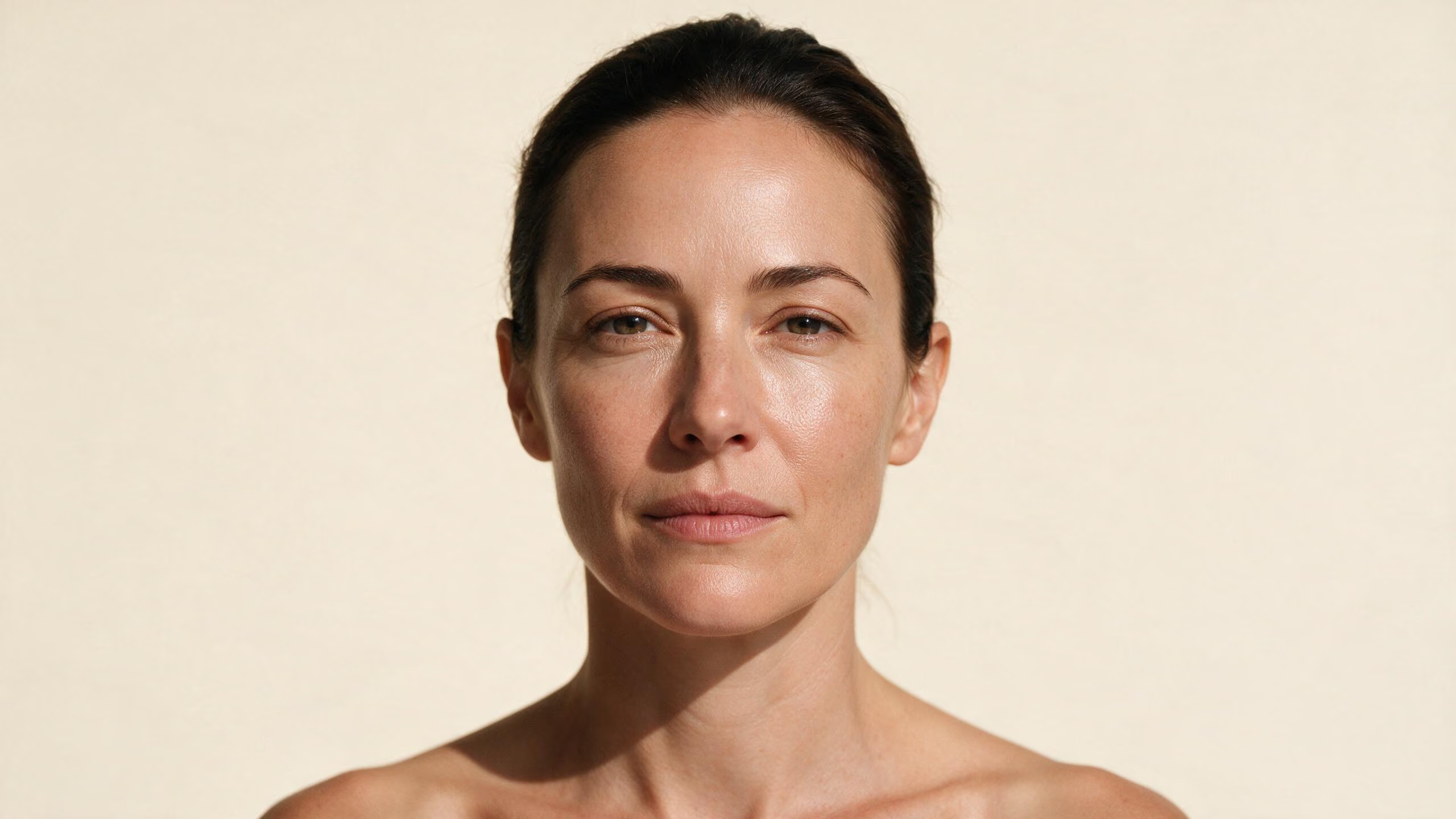
El concepto de simetría facial se ha asociado durante mucho tiempo con la percepción de belleza y salud en diversas culturas. Aunque ningún rostro humano es perfectamente simétrico, las desviaciones significativas pueden restar protagonismo a los rasgos de una persona y afectar su confianza. En el pasado, corregir estos desequilibrios a menudo requería cirugías invasivas de remodelación ósea o implantes permanentes. Sin embargo, el auge de la arquitectura facial no invasiva ha proporcionado una alternativa sofisticada, permitiendo a los especialistas "reconstruir" el rostro mediante herramientas líquidas y basadas en energía que ofrecen una precisión microscópica.
La arquitectura facial se refiere a la estructura subyacente de hueso, grasa y músculo que sostiene la piel. Cuando un lado del rostro carece del mismo soporte estructural que el otro, ya sea por genética, hábitos de sueño o traumatismos, el rostro puede parecer ladeado o desequilibrado. Las técnicas no invasivas abordan estos problemas añadiendo volumen a las zonas "débiles" o relajando los músculos hiperactivos que desplazan los rasgos. Esto crea una silueta más centrada y equilibrada que realza la belleza natural de los rasgos existentes del paciente.
Uno de los principales beneficios de este enfoque arquitectónico es la capacidad de realizar ajustes en tiempo real. Durante una sesión no quirúrgica, el paciente puede observar los cambios y dar su opinión, asegurando que el resultado final cumpla con sus objetivos estéticos específicos. Este nivel de personalización es casi imposible de lograr con la cirugía, donde el resultado final no es visible hasta que han pasado meses de recuperación. Al tratar el rostro como una estructura dinámica y tridimensional, la arquitectura no invasiva proporciona un nivel de refinamiento que es a la vez seguro y altamente eficaz para corregir incluso las asimetrías más sutiles.
Identificación de las causas fundamentales de la asimetría facial
Antes de comenzar cualquier trabajo correctivo, es esencial identificar por qué un rostro parece asimétrico. Para muchos, el problema es esquelético; la mandíbula o el hueso orbital pueden ser ligeramente diferentes en un lado. Otros pueden experimentar una "asimetría dinámica", donde los músculos de un lado del rostro son más fuertes o activos que los del otro, provocando una sonrisa ladeada o una ceja desigual. Comprender estos matices es fundamental, ya que el tratamiento para un desequilibrio óseo es muy diferente al tratamiento para uno muscular.
La distribución de los tejidos blandos también desempeña un papel importante en cómo se percibe la simetría. A medida que envejecemos, tendemos a perder grasa a ritmos diferentes en cada lado del rostro. Esto puede hacer que una mejilla parezca más hundida o que un lado de la mandíbula parezca más flácido. Factores externos, como el lado del rostro sobre el que se duerme o incluso la alineación dental, pueden exacerbar estas diferencias con el tiempo. La arquitectura no invasiva busca neutralizar estas variables restaurando el volumen y la tensión donde se han perdido o nunca estuvieron presentes.
Al adoptar una visión holística del rostro, el especialista puede determinar qué intervenciones producirán los resultados de aspecto más natural. El objetivo no es crear una imagen especular "perfecta", que a menudo puede parecer artificial, sino llevar los rasgos a un rango de armonía que resulte auténtico para la persona. Esto implica una comprensión profunda de los "vectores" faciales (las líneas de fuerza que dictan cómo se mueve y envejece el rostro) para garantizar que las correcciones luzcan bien tanto en estado estático como activo.
- Predisposición genética: Estructuras óseas heredadas que favorecen naturalmente un lado del rostro sobre el otro.
- Dominancia muscular: Uso excesivo de ciertos músculos al hablar o gesticular que desplaza los rasgos de su alineación.
- Atrofia de las almohadillas grasas: La pérdida desigual de grasa subcutánea que crea huecos o sombras en un lado del rostro.
- Traumatismos y lesiones: Accidentes o cirugías previas que han dejado la estructura facial ligeramente alterada.
- Factores ambientales: Hábitos a largo plazo, como masticar de un solo lado o la exposición al sol, que afectan la elasticidad de los tejidos de forma desigual.
El papel de los rellenos dérmicos en el equilibrio estructural
Los rellenos dérmicos son las herramientas principales en la arquitectura facial no invasiva para corregir asimetrías relacionadas con el volumen. A diferencia de los rellenos tradicionales que solo "rellenan" la piel, los rellenos estructurales están diseñados para imitar la densidad del hueso o la grasa profunda. Al colocar estos productos estratégicamente contra la mandíbula o el pómulo, un médico puede "expandir" eficazmente la estructura subyacente en el lado deficiente. Esto proporciona un levantamiento físico que puede nivelar la línea de la mandíbula o devolver una mejilla caída a una posición simétrica.
La precisión de estas inyecciones permite corregir áreas muy específicas, como la barbilla o la nariz. Una nariz ligeramente torcida a menudo puede enderezarse visualmente añadiendo pequeñas cantidades de relleno en el puente para camuflar las desviaciones. Del mismo modo, una barbilla descentrada puede realinearse añadiendo proyección al lado que carece de ella. Estas "microcorrecciones" se suman para crear una apariencia general mucho más equilibrada y agradable sin necesidad de una rinoplastia o genioplastia.
La integración del relleno en los tejidos naturales es lo que garantiza que el resultado parezca orgánico. Los rellenos de alta calidad son biocompatibles y se mueven con el rostro, lo que significa que la simetría se mantiene incluso cuando el paciente habla o ríe. Esta es una ventaja significativa sobre los implantes rígidos, que a veces pueden volverse visibles o desplazarse con el tiempo. Mediante el uso de la técnica Jawsome o protocolos estructurales similares, los profesionales pueden crear un marco definido y simétrico que sirve como base para el resto de los rasgos faciales.
- Evaluación volumétrica: Determinar exactamente cuántos mililitros de producto se necesitan para equilibrar ambos lados del rostro.
- Colocación en tejido profundo: Inyectar el producto cerca del hueso para asegurar que proporcione un "andamio" estructural en lugar de solo volumen superficial.
- Vectorización: Colocar el relleno de manera que cree un levantamiento direccional para contrarrestar la flacidez en el lado asimétrico.
- Sesiones de refinamiento: Añadir pequeñas cantidades de producto a lo largo de dos sesiones para asegurar que la simetría sea perfecta a medida que disminuye la inflamación.
- Eliminación de sombras: Usar relleno para iluminar los huecos oscuros que aparecen más prominentes en un lado del rostro debido a la pérdida de volumen.
- Definición de bordes: Definir el borde mandibular o el contorno de los labios para asegurar límites claros y simétricos en los rasgos faciales.
Neuromoduladores y la corrección de la asimetría dinámica
Mientras que los rellenos se encargan de los aspectos estructurales de la simetría, los neuromoduladores, como Botox o Dysport, son esenciales para corregir los desequilibrios dinámicos causados por la tensión muscular. Muchas personas tienen un lado "dominante" en el rostro donde los músculos son más expresivos. Esto puede provocar que una ceja se sitúe más alta que la otra o que un lado de la boca se eleve más al sonreír. Al inyectar cuidadosamente pequeñas cantidades de neuromoduladores en los músculos hiperactivos, un profesional puede "relajar" el lado dominante, permitiendo que los rasgos se sitúen a un nivel más uniforme.
Esta técnica es especialmente eficaz para las cejas y la mandíbula. Por ejemplo, si los músculos maseteros en la parte posterior de la mandíbula son más grandes en un lado debido al bruxismo, el rostro puede parecer más ancho en ese lado. Relajar ese músculo no solo estiliza el rostro, sino que también restaura una forma ovalada o de corazón simétrica. De igual manera, un "lifting químico de cejas" puede ajustarse para elevar una ceja caída lo suficiente como para igualarla con la otra, abriendo la mirada y creando una expresión más descansada y equilibrada.
La clave del éxito con los neuromoduladores en el trabajo de simetría es la sutileza. El objetivo no es paralizar el rostro, sino equilibrar el "tira y afloja" entre grupos musculares opuestos. Cuando se realiza correctamente, el paciente conserva toda su capacidad de expresión, pero sus rasgos permanecen más alineados durante esos movimientos. Esto requiere un conocimiento avanzado de la anatomía facial y la interacción muscular, ya que un error en la colocación puede empeorar temporalmente la asimetría en lugar de corregirla.
- Mapeo muscular: Identificación de los músculos específicos responsables de desalinear los rasgos durante la expresión.
- Debilitamiento selectivo: Uso de dosis mínimas de producto para reducir la fuerza de un músculo dominante sin detener su función por completo.
- Nivelación de cejas: Ajuste de la altura de las cejas para asegurar que enmarquen los ojos de forma simétrica.
- Corrección de la sonrisa: Equilibrio de la elevación del labio superior para mostrar una cantidad uniforme de dientes en ambos lados.
- Estilización de la mandíbula: Reducción del volumen de un músculo masetero agrandado para crear una parte inferior del rostro más simétrica.
- Suavizado de bandas cervicales: Tratamiento de las bandas platismales asimétricas que pueden tirar de la línea de la mandíbula de forma desigual.
El impacto de la textura y la salud de la piel en la simetría percibida
La simetría no depende solo de la posición de los rasgos, sino también de cómo la luz se refleja en la piel. Si un lado del rostro presenta más daño solar, poros más dilatados o una textura más profunda, puede crearse una ilusión de asimetría incluso si la estructura ósea subyacente es perfecta. La luz se refleja de forma desigual sobre una piel con textura, creando sombras que pueden hacer que el rostro parezca "pesado" o ladeado. Por lo tanto, mejorar la calidad de la piel mediante láseres y cuidado médico es una parte vital del proceso arquitectónico.
Los tratamientos con láser pueden ayudar a unificar el tono de la piel y tensar su "envoltura". Cuando la piel es firme y elástica, se adhiere mejor al trabajo estructural subyacente, haciendo que la simetría sea más evidente. Los tratamientos que estimulan la producción de colágeno aseguran que la piel se mantenga gruesa y resistente en ambos lados, evitando el aspecto "fino como el papel" que puede conducir a una flacidez prematura. Esta calidad uniforme de la piel proporciona un lienzo liso que permite que las correcciones estructurales realmente destaquen.
A nivel profesional, combinar el rejuvenecimiento cutáneo con inyecciones estructurales crea un enfoque de "capas múltiples" para la simetría. El relleno aporta la forma, el neuromodulador proporciona el equilibrio y el láser ofrece el acabado. Esta estrategia integral asegura que el rostro se vea equilibrado desde cualquier ángulo y bajo cualquier condición de iluminación. Aborda la totalidad del proceso de envejecimiento, garantizando que los resultados no solo sean simétricos, sino también vibrantes y juveniles.
- Uniformidad del colágeno: Uso de láseres para asegurar que las proteínas estructurales de la piel se produzcan al mismo ritmo en todo el rostro.
- Equilibrio de la pigmentación: Eliminación de manchas oscuras o rojeces que pueden estar más concentradas en el lado del rostro más expuesto al sol al conducir.
- Refinamiento de los poros: Garantizar una textura cutánea uniforme, lo que ayuda a que la luz se refleje de manera equilibrada y reduce la apariencia de sombras.
- Restauración de la elasticidad: Reafirmación de la flacidez cutánea en ambos lados de la mandíbula para lograr una apariencia simétrica y definida.
- Nivelación de la hidratación: Uso de potenciadores cutáneos para asegurar que ambos lados del rostro luzcan el mismo brillo saludable y radiante.
Lograr armonía y confianza a largo plazo
El objetivo final de la arquitectura facial no invasiva es proporcionar al paciente una sensación de armonía duradera. Cuando un rostro es simétrico, la mirada del observador se centra en los rasgos de la persona en lugar de distraerse con los desequilibrios. Este cambio en la percepción a menudo conduce a un aumento significativo en la autoestima del paciente. Ya no sienten la necesidad de ocultar un lado de su rostro en las fotos ni de inclinar la cabeza para disimular una mandíbula asimétrica.
El mantenimiento es una parte clave del proceso de simetría a largo plazo. Debido a que el rostro continúa envejeciendo y moviéndose, el trabajo arquitectónico debe renovarse periódicamente. Esto permite al profesional realizar ajustes menores a medida que la anatomía natural del paciente cambia con el tiempo. Es una forma proactiva de gestionar el envejecimiento, asegurando que el rostro permanezca equilibrado y hermoso en cada etapa de la vida. Esta filosofía de "envejecimiento lento" es mucho más efectiva que esperar a que se produzca una flacidez significativa antes de buscar una solución quirúrgica mayor.
Al elegir un camino no invasivo, los pacientes también evitan el estrés psicológico y físico de la cirugía. No hay cicatrices que ocultar ni largos periodos de aislamiento durante la recuperación. Los resultados se logran de forma elegante y sutil, permitiendo que la persona continúe con su vida sin interrupciones. En manos de un profesional experto, la arquitectura facial se convierte en una herramienta de autorrealización, ayudando a cada paciente a lucir tan equilibrado y vibrante por fuera como se siente por dentro.
Resiliencia psicológica y autoimagen estética
La conexión entre la simetría facial y el bienestar psicológico está bien documentada. Para muchas mujeres de alto perfil, mantener una apariencia simétrica está vinculado a su marca profesional y a su confianza personal. Cuando una mujer siente que su rostro está equilibrado, a menudo proyecta una mayor sensación de autoridad y tranquilidad en situaciones sociales. No se trata de vanidad, sino de alinear la imagen externa con el sentido interno de autoestima.
Un rostro simétrico suele percibirse como un rostro "saludable". La psicología evolutiva sugiere que estamos programados para encontrar atractiva la simetría porque tradicionalmente señalaba aptitud genética y salud. En el mundo moderno, esto se traduce en la percepción de estar "bien descansado" y "capaz". Al utilizar la arquitectura no invasiva, las mujeres pueden recuperar esta percepción, asegurándose de que su rostro refleje su vitalidad y energía en lugar de las tensiones del tiempo y el entorno.
A medida que avanzamos hacia una era de medicina personalizada, la capacidad de personalizar la arquitectura facial se está convirtiendo en una parte estándar del cuidado personal. Es una forma de tomar el control de la propia apariencia en un mundo cada vez más visual. Al priorizar la simetría y la armonía a través de medios no invasivos, las personas pueden disfrutar de una vida de confianza estética, sabiendo que su carta de presentación más importante es un fiel reflejo de su mejor versión.
Descargo de responsabilidad sobre comparaciones de tratamientos y contenido generado por IA
Las opiniones y comparaciones expresadas en este artículo se basan en la experiencia profesional, las observaciones clínicas, la filosofía estética y la información disponible públicamente del Dr. Simon Ourian en el momento de la publicación.
Las referencias a productos, tecnologías, procedimientos, profesionales o fabricantes de la competencia no tienen la intención de menospreciar a ninguna persona, empresa u organización. Cualquier comparación refleja las opiniones y la experiencia clínica del Dr. Ourian y no debe interpretarse como afirmaciones de hecho con respecto a la superioridad, inferioridad, seguridad, eficacia o rendimiento de ningún producto o tratamiento de la competencia. Las tecnologías médicas, la investigación científica, los protocolos de tratamiento y la orientación regulatoria continúan evolucionando. La información presentada en este artículo puede quedar desactualizada con el tiempo y no debe considerarse una guía médica exhaustiva o definitiva.
Las comparaciones entre productos, procedimientos, tecnologías, enfoques de tratamiento, fabricantes o resultados estéticos se proporcionan únicamente con fines informativos y educativos. Los profesionales individuales pueden tener diferentes experiencias, preferencias, protocolos de tratamiento y opiniones con respecto a los productos o procedimientos discutidos.
Ninguna declaración contenida en este artículo debe interpretarse como una garantía, predicción o promesa de ningún resultado específico. Los resultados individuales varían significativamente según la anatomía, la edad, la calidad de la piel, el historial médico, la genética, los factores de estilo de vida, la técnica de tratamiento y el cumplimiento de las instrucciones previas y posteriores al tratamiento.
Partes de este artículo pueden haber sido generadas, asistidas, resumidas o editadas utilizando herramientas de inteligencia artificial (IA). Si bien se han realizado esfuerzos razonables para revisar y verificar el contenido en cuanto a su precisión, exhaustividad y relevancia, parte de la información puede estar incompleta, desactualizada, ser inexacta o estar sujeta a interpretación. Los lectores deben verificar de forma independiente cualquier información antes de confiar en ella.
El contenido proporcionado tiene fines educativos e informativos generales únicamente y no pretende ser un consejo médico, diagnóstico o tratamiento. Los lectores deben consultar con un profesional de la salud calificado sobre sus circunstancias individuales y opciones de tratamiento antes de tomar cualquier decisión médica o estética.
Los resultados varían de un paciente a otro. No se garantiza ningún resultado. Parte o la totalidad de este contenido puede haber sido creado, editado o mejorado utilizando tecnología de inteligencia artificial y, a pesar de los esfuerzos de revisión, pueden existir imprecisiones.
Preguntas frecuentes
¿Cómo afecta la simetría facial la manera en que soy percibido en entornos profesionales?
Aunque el carácter y la competencia son lo más importante, los estudios demuestran que los rasgos simétricos a menudo se asocian subconscientemente con la salud y la confiabilidad. Los expertos de Epione entienden que para las mujeres de alto perfil, un rostro equilibrado puede realzar su presencia profesional al eliminar las distracciones visuales del envejecimiento o la asimetría. Dr. Simon Ourian se enfoca en crear una apariencia armoniosa que respalde una narrativa de disciplina y autocuidado en entornos de alta exigencia.
¿Puede la arquitectura no invasiva corregir una línea mandibular que es desigual en un lado?
Sí, corregir una línea de mandíbula irregular es una especialidad del equipo clínico de Epione. Utilizando la técnica Jawsome, Dr. Simon Ourian puede agregar relleno estructural al lado hundido o más débil de la mandíbula para que coincida con el lado más prominente. Esto crea una línea de mandíbula equilibrada y "esculpida" que se ve simétrica tanto desde la vista frontal como de perfil, proporcionando un marco claro y definido para el rostro.
¿Es posible corregir las cejas asimétricas sin un lifting quirúrgico de cejas?
Los expertos de Epione utilizan frecuentemente neuromoduladores para corregir cejas "asimétricas" o desniveladas. Al ajustar la tensión de los músculos que levantan o bajan las cejas, Dr. Simon Ourian puede nivelar las cejas para crear un área ocular más abierta y simétrica. Este enfoque no quirúrgico es altamente preciso y evita las cicatrices y la apariencia "sorprendida" que a veces puede resultar de los lifting de cejas quirúrgicos tradicionales.
¿Cuántas sesiones se requieren típicamente para lograr una simetría perfecta?
Aunque a menudo se observa una mejora significativa después de una sola sesión en Epione, lograr una simetría perfecta generalmente requiere un enfoque "por capas" durante dos o tres citas. Esto permite al Dr. Simon Ourian tener en cuenta la inflamación menor y observar cómo se mueve el rostro del paciente con la nueva arquitectura. Al realizar ajustes incrementales, el equipo clínico asegura que la simetría sea tanto precisa como de apariencia completamente natural.
¿Podrá la gente notar que me he hecho un tratamiento para equilibrar mi rostro?
Cuando la arquitectura facial es realizada correctamente por el equipo de Epione, los resultados deben ser "invisibles" para otros. El objetivo del Dr. Simon Ourian es hacer que te veas como una versión más equilibrada de ti mismo, no como una persona diferente. Los amigos y colegas podrían notar que te ves "mejor" o más "renovado", pero debido a que el trabajo respeta tu anatomía natural, es muy difícil identificarlo como una intervención cosmética.
¿El trabajo de simetría no invasivo es permanente?
Los resultados de los rellenos dérmicos y neuromoduladores utilizados en Epione son temporales, durando típicamente entre seis y dieciocho meses dependiendo del producto. Esto es en realidad una ventaja para el trabajo de simetría, ya que permite a los expertos de Epione ajustar su tratamiento a medida que su rostro envejece naturalmente con el tiempo. Las citas regulares de mantenimiento con Dr. Simon Ourian aseguran que su armonía facial se preserve y actualice a medida que sus estructuras óseas y de tejido subyacentes evolucionan.
¿Cuál es la mejor edad para comenzar a corregir la asimetría facial?
No existe una edad "perfecta", pero muchos pacientes en Epione comienzan a abordar la simetría al final de los veinte o en los treinta cuando se hacen evidentes los primeros signos de pérdida de grasa o predominio muscular. Al comenzar temprano con intervenciones sutiles, Dr. Simon Ourian puede prevenir que las asimetrías se vuelvan más pronunciadas con la edad. Este enfoque proactivo asegura que su arquitectura facial se mantenga fuerte y equilibrada durante toda su vida.
¿Existen riesgos asociados con el uso de rellenos para la simetría?
Aunque la arquitectura no invasiva es muy segura cuando es realizada por expertos, siempre existen riesgos menores como hematomas o hinchazón. El equipo clínico de Epione sigue protocolos de seguridad estrictos para minimizar estos riesgos y garantizar un resultado óptimo. Debido a que Dr. Simon Ourian utiliza técnicas avanzadas y materiales de alta calidad, la probabilidad de complicaciones es extremadamente baja, y los resultados son consistentemente confiables y de alta gama.