












%201.avif)


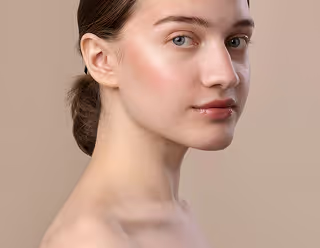









When it comes to achieving smoother and more refined skin, individuals with sensitive skin face their own set of challenges. While many people strive to reduce the appearance of pores, it is crucial for those with easily irritated skin to approach this goal with caution and consideration. In this article, we will explore effective strategies specifically designed for individuals with sensitive skin. Discover how you can achieve a smoother skin texture while prioritizing the health and comfort of your sensitive skin with Dr. Simon Ourian. Contact our office today.
What causes sensitivity in the skin?
Sensitive skin can be attributed to factors including:1. Genetics: Having a family history of sensitive skin can increase the likelihood of experiencing it.2. Skin conditions: Conditions like eczema, rosacea, or allergies can contribute to increased sensitivity in the skin.3. Environmental factors: Exposure to weather conditions such as pollution or allergens can trigger sensitivity reactions.4. Aging: As we age, our skin tends to become more sensitive due to reduced oils and elasticity.5. Hormonal changes: Hormonal fluctuations during pregnancy or menopause can also impact the sensitivity levels of your skin.
What methods to minimize pores for sensitive skin?
Here are a few recommendations:1. Use a cleanser that is specifically formulated for sensitive skin. This will help remove dirt and excess oil without causing irritation. Also, consider using an exfoliation method such as a chemical exfoliant or an enzyme-based product. 2. Make sure to apply a broad-spectrum sunscreen every day to protect your skin from sun damage, which can make pores more visible.3. If you are considering treatments like microdermabrasion or chemical peels, it is advisable to consult with a dermatologist who can provide guidance on the options for sensitive skin.4. Maintain a diet that includes plenty of antioxidants, vitamins, and minerals to support skin health and keep your skin hydrated by using a moisturizer that helps maintain its natural barrier.5. Seek advice from your trusted doctor: If you have concerns regarding your skin and the minimization of pores, it is advisable to consult a dermatology doctor who can provide recommendations. It is important to exercise caution when introducing skincare products, gradually incorporating them into your routine while conducting patch tests to ensure compatibility with your skin.
How often should individuals with sensitive skin engage in pore-reducing treatments?
Individuals with sensitive skin should limit pore-reducing treatments or routines to 1-2 times per week in order to avoid any irritation. Again, as modes of treatment vary from patient to patient, it is best to consult with a professional.In conclusion, when it comes to reducing pores for sensitive skin, taking a cautious and personalized approach is essential. By following the recommended strategies outlined in this article, individuals with sensitive skin can attain a more refined texture without any risk of irritation. Keep in mind that patience and consistency are allies on the journey towards more beautiful-looking skin.
Disclaimer Regarding Treatment Comparisons and AI-Generated Content
The opinions and comparisons expressed in this article are based on Dr. Simon Ourian's professionalexperience, clinical observations, aesthetic philosophy, and publicly available information at the timeof publication.
References to competing products, technologies, procedures, practitioners, or manufacturers are notintended to disparage any individual, company, or organization. Any comparisons reflect Dr. Ourian'sopinions and clinical experience and should not be construed as statements of fact regarding thesuperiority, inferiority, safety, efficacy, or performance of any competing product or treatment.Medical technologies, scientific research, treatment protocols, and regulatory guidance continue toevolve. Information presented in this article may become outdated over time and should not beconsidered comprehensive or definitive medical guidance.
Comparisons between products, procedures, technologies, treatment approaches, manufacturers, oraesthetic outcomes are provided for informational and educational purposes only. Individualpractitioners may have different experiences, preferences, treatment protocols, and opinionsregarding the products or procedures discussed.
No statement contained in this article should be interpreted as a guarantee, warranty, prediction, orpromise of any specific result. Individual outcomes vary significantly based on anatomy, age, skinquality, medical history, genetics, lifestyle factors, treatment technique, and adherence to pre- andpost-treatment instructions.
Portions of this article may have been generated, assisted, summarized, or edited using artificialintelligence (AI) tools. While reasonable efforts have been made to review and verify the content foraccuracy, completeness, and relevance, some information may be incomplete, outdated, inaccurate,or subject to interpretation. Readers should independently verify any information before relying uponit.
The content provided is for general educational and informational purposes only and is not intendedas medical advice, diagnosis, or treatment. Readers should consult with a qualified healthcareprofessional regarding their individual circumstances and treatment options before making anymedical or aesthetic decisions.
Results vary from patient to patient. No outcome is guaranteed. Some or all of this contentmay have been created, edited, or enhanced using artificial intelligence technology, anddespite review efforts, inaccuracies may exist.